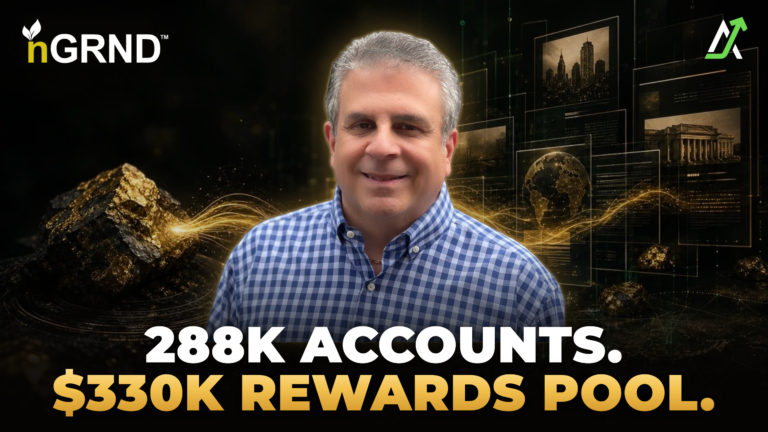
When we think of gold, we think of mining it, storing it or wearing it. nGRND is exploring another possibility: generating value while the gold stays underground. Its model connects two products: a platform for managing preserved gold, including a proposed gold token, and a live digital network that rewards participants for supporting the ecosystem. In this AGORACOM interview, Chairman David Lucatch explains how those pieces fit together, with management reporting more than 288,000 accounts and nearly 6 million completed activities since the network launched on August 6. With a rewards pool of approximately US $ 330,000 to 335,000 and First Class Metals identified as its first gold client, the discussion centres on how gold purchases, participation rewards and AGORACOM’s digital passport would work together.
WHAT YOU NEED TO KNOW
- Preserved Gold: nGRND seeks to create economic value from gold that remains underground through purchase arrangements, tokenisation and alternative uses of the land above it.
- Revenue Opportunities: Lucatch describes gold purchases as a potential source of revenue for participating resource companies, allowing them to retain their properties, subject to agreements and due diligence.
- Participation Is Live: Management reports more than 288,000 accounts, nearly 6 million completed activities and approximately US $ 330,000 to 335,000 in its rewards pool. That pool represents available rewards, rather than a disclosed amount already distributed.
- Two Distinct Tokens: The nGRND Gold Protocol token supports participation, staking and rewards. A separate proposed gold token would relate to nGRND’s rights and obligations over preserved gold.
- AGORACOM’s Role: A digital passport is intended to connect AGORACOM members with network activities and reward opportunities, while introducing participating companies to a broader international audience.
STRATEGIC IMPLICATIONS
Exploration companies often need fresh capital long before a deposit generates revenue. Lucatch argues that purchasing gold while it remains underground could provide another funding route, particularly for resources that are not currently economical to mine. Proceeds from completed purchases could support additional exploration or drilling while the company retains its property. The outcome depends on transaction terms, due diligence and nGRND’s ability to execute the model.
The approach also considers the land above the gold. Lucatch describes alternative land use monetisation involving environmental, sustainability and measured impact initiatives. He says nGRND works with geological reports, including NI 43‑101 reports, and legal advisers when assessing opportunities. The intended model complements gold production by exploring additional ways to generate value from exploration properties and retired mining sites.
The participation network builds an audience around that business. Members complete activities and earn points that can convert into rewards. Lucatch attributes the rewards pool to gold related revenue activities, including alternative land uses and money earned from gold sales. Rewards are intended to be paid in stablecoins representing US dollars. He describes that choice as a way to reduce selling pressure associated with paying rewards in the protocol’s own token, although it does not establish price stability or guaranteed returns.
His comparison is Amazon Prime: offer benefits that encourage participation and loyalty, then introduce members to additional products. Management reports participants across the United States, Canada, the United Kingdom, China, Brazil, Germany and Australia. That reach supports nGRND’s ambition to connect resource companies with audiences beyond their existing stock market following.
CHAIRMAN DAVID LUCATCH:
“We create revenue for the organization, not dilution of capital.”
Lucatch describes this as the intended benefit for participating companies, with transactions dependent on agreements and due diligence.
INVESTOR TAKEAWAY
First Class Metals provides the interview’s clearest example of the proposed gold model. Lucatch references approximately 386,000 ounces at its Kerrs property, citing its NI 43‑101 report, and says nGRND plans to begin with just over 77,000 ounces following its own risk analysis. Purchases would occur progressively, with tokenisation following those purchases. The interview does not establish that the entire proposed allocation has already been acquired or tokenised.
For resource investors, the question is whether completed transactions can deliver meaningful revenue while participating companies retain their properties. For digital asset participants, understanding the two products is essential. The protocol token would support the participation and rewards network. The separate gold token would relate to rights and obligations associated with gold in the ground. Its eventual trading value remains uncertain, with Lucatch identifying gold prices and confidence in the product as potential influences.
AGORACOM members would participate through a digital passport, described as a nontransferable membership token held in a digital wallet. It would provide access to activities and reward opportunities. Lucatch also outlines plans to introduce nGRND participants to AGORACOM companies, giving those businesses an opportunity to reach additional audiences.
Last modified: October 15, 2026