HPQ Silicon has completed the 50/50 ownership transaction with PyroGenesis that gives its fumed silica program a common commercial platform. Each company now owns half of HPQ Silica Polvere Inc. (HSPI), the rights holder of the proprietary Fumed Silica Reactor (FSR) technology. The transaction comes after independently validated pilot production of commercial grade material and alongside an update on four preliminary commercial opportunities. With discussions ranging from an industry leader to potential facilities in North America and the Middle East, the next milestone is converting interest into binding agreements.
WHAT YOU NEED TO KNOW
- 50/50 Alignment: PyroGenesis converted its 10% gross sales royalty into a 50% ownership interest in HSPI. Both partners now share ownership and commercialization responsibilities.
- Industry Leader: Discussions resumed with an industry leader in fumed silica production on a potential framework for the next phase of collaboration. An additional meeting is scheduled for this week.
- 1,000 TPY JV: Negotiations resumed on the previously announced proposed 1,000 tonne per year joint venture. Both sides received proposed changes favourably following a meeting at the potential partner’s U.S. facility.
- Large Asian Demand Scenario: A potential Asian customer exploring North American production previously indicated demand could require several 10,000 tonne per year FSR systems. It requested a meeting at PyroGenesis headquarters to accelerate discussions.
- Middle East Plant: Discussions remain planned with an existing PyroGenesis customer with significant Middle East operations. Previous discussions contemplated an approximately 10,000 TPY local facility.
STRATEGIC IMPLICATIONS
Fumed silica helps coatings, sealants, cosmetics and other products perform. Producing it conventionally involves a complex industrial chain, chlorosilane feedstock and hydrogen chloride byproduct. HPQ’s earlier disclosures cited approximately 2.4 kg of HCl per kilogram of fumed silica, energy requirements of 100,000 to 120,000 kWh per tonne across the conventional production chain, substantial capital requirements and an EBITDA margin benchmark around 20%. Those conditions help explain the commercial interest in a simpler alternative.
HPQ’s FSR uses plasma to convert quartz directly into fumed silica in a single step, eliminating chlorosilane feedstock and associated HCl generation. Earlier modelling projected energy consumption at commercial scale of 8,000 to 12,000 kWh per tonne, with savings of up to 92%. It also projected reductions in CO₂ emissions associated with production of up to 99.9% using Quebec electricity. The pilot has produced commercial grade “150” material, with independent testing validating performance. Tourillon said the team knows how to make 200 m²/g material. HPQ previously disclosed an approximately C$2 million pilot budget with about 33% federal and 30% Quebec government support.
The larger opportunity may be what lower costs allow customers to do with the material. In the interview, Tourillon explained that the FSR could make new applications economically viable, including replacing more expensive materials in certain end products. He described potential new markets that “could potentially dwarf” the traditional market. The Asian customer’s indication of demand for several 10,000 tonne per year systems illustrates the scale being explored. Realizing that opportunity would depend on achieving the required costs, meeting customer specifications and converting interest into commercial commitments.
CEO Bernard Tourillon:
“We can do 150 commercial, we know how to make 200.” Tourillon said extensive technical work has increased the team’s confidence in costing, with discussions moving toward practical operating requirements such as output, capacity and energy use. He explained that equal ownership simplifies negotiations and supports shared strategic decisions. He also said he has additional opportunities in his pipeline. On financing, he described how future offtake agreements or firm orders could support financing at the HSPI level.
INVESTOR TAKEAWAY
The ownership transaction gives HPQ and PyroGenesis a common framework for advancing the FSR. Both now hold an equal equity interest, while PyroGenesis remains the exclusive equipment supplier. Tourillon said that structure makes negotiations and strategic coordination easier. For potential partners evaluating production facilities, a clearer commercial structure is a practical step forward.
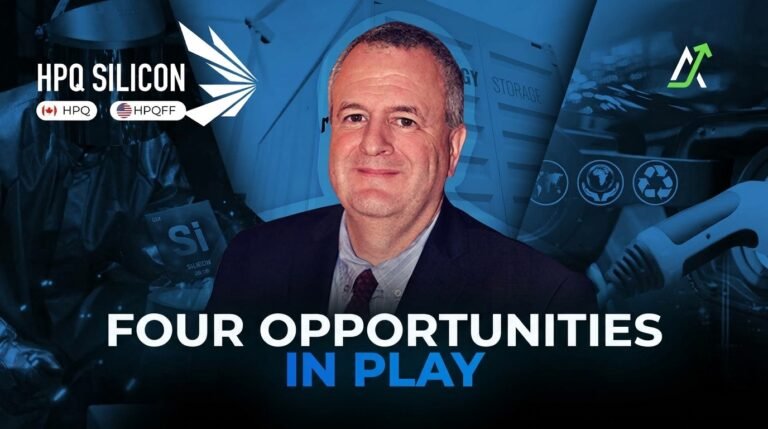
Four opportunities. Different stages. One shared commercial platform. One involves an industry leader that signed an LOI with HSPI in July 2024. Another concerns a proposed 1,000 TPY joint venture. Two involve potential demand or facilities at 10,000 TPY and above. HPQ has previously presented projected gross margins above 70%, subject to commercial execution, pricing and actual operating costs. None of the four opportunities has resulted in a definitive commercial agreement.
HPQ’s fumed silica story has moved beyond laboratory development. Pilot results have demonstrated commercial grade material, and an engineering review has strengthened confidence in projected operating parameters and commercial economics. The next test is execution: binding agreements, project financing and commercial deployment. A simpler production process with lower projected energy and capital requirements could expand market access and support new applications. The disclosed opportunities give investors concrete discussions to follow, while their outcome, timing and eventual production scale remain uncertain.
Last modified: September 29, 2026