Agoracom Blog Home

Author Archive

#OpenX and #ownerIQ to Bring Second-Party Data to #ProgrammaticAdvertising #adtech $GOOD.ca $TTD $RUBI $AT.ca $TRMR $FUEL

Posted by AGORACOM-JC at 2:41 PM on Thursday, November 15th, 2018
  • ownerIQ, the second-party, transparent data solutions, today announced of their new Audience Private Marketplace (PMP) feature in partnership with OpenX, the independent advertising exchange
  • This new product offering leverages the existing DealID infrastructure between Exchanges and DSPs to enable advertisers on almost any DSP to easily access transparent retailer and brand audiences via the OpenX exchange – reducing the complexity and costs of access, while bringing increased data quality and scale

ownerIQ, the second-party, transparent data solutions, today announced of their new Audience Private Marketplace (PMP) feature in partnership with OpenX, the independent advertising exchange. This new product offering leverages the existing DealID infrastructure between Exchanges and DSPs to enable advertisers on almost any DSP to easily access transparent retailer and brand audiences via the OpenX exchange – reducing the complexity and costs of access, while bringing increased data quality and scale.

ownerIQ’s second-party data platform, CoEx, allows advertisers to gain permissioned access to first-party consumer data from hundreds of retailers and brands. With the new Audience PMPs, advertisers that want to access the transparent, retail and brand data exclusively available in CoEx can now activate that audience on any DSP, on the same day they request access. The Audience PMP feature enables buyers that purchase inventory on the OpenX exchange via outside DSPs to use Deal ID’s to differentiate ownerIQ data in bid requests, and combine OpenX’s high quality, fraud-free inventory with ownerIQ’s unique second-party data sources at greater scale.

“The strategy of combining ownerIQ’s unique, transparent data assets directly with OpenX inventory has a number of benefits for advertisers. Passing data through DMPs or even directly into DSPs adds friction to the process resulting in lower cookie match rates impacting audience scale and delays in getting data from point A to point B. DMPs and DSPs also charge fees to data providers which results in increased costs for advertisers negatively impacting campaign ROI. This feature will significantly reduce that friction, lowering data costs, and improving scale,” Greg Loeffelholz, VP Platform Management, ownerIQ.

According to Loeffelholz, when ownerIQ data is passed from the CoEx platform to outside DSPs via a DMP the total addressable audience size can be cut by up to 50 – 70 percent due to poor match rates between platforms. Match rates for delivering cookie data from the leading DMPs to most DSPs has been around 40 percent and that’s on top of the scale lost by onboarding data from its source to an intermediary DMP. With the new ownerIQ Audience PMP, advertisers will be able to access ownerIQ’s second-party retail data at much larger scale, and this approach will shorten the time required to pass files between platforms making the data available to advertisers days or even weeks faster than previous solutions.

Early campaigns with Audience PMP show the audience match rates between ownerIQ and OpenX exceed the highest rates achieved on ownerIQ data via an outside DSP, and almost twice the rates of use cases where ownerIQ data had passed through a DMP to be made available on a buying platform. OpenX and ownerIQ sync more than 180 Million cookie IDs on an average day as a result of the tens of thousands of publishers the two companies reach, including top retailers. This is more than double the sync rate that ownerIQ has been able to achieve directly with any DMP or DSP via direct integrations.

Nathan Woodman, Chief Data Officer at Havas Media Group, sees the value to his clients in this approach.  According to Mr. Woodman,  “Working with media and data owners to optimize the programmatic supply path is important to Havas Media. ownerIQ as a key resource for second party data places our client’s dollars directly to the source of the data. The Audience PMP solution helps Havas Media spend our clients dollars in transparent and well lit environments.”

With multiple ad exchanges selling much of the same inventory, the need for differentiation among exchanges is always ideal. OpenX sees this strategy as an attractive approach to working with ownerIQ. “Working with ownerIQ on Audience PMP allows us to give advertisers a chance to use second party data in a way not before possible, and intelligently buy against ad opportunities that they otherwise would not have had any information about,” said Paul Sternhell SVP of Monetization and Platform at OpenX. “The combination of OpenX inventory, and our strong commitment to quality, with ownerIQ’s second party data, presents a compelling use case, and from a technical perspective, the ability to send an ad opportunity to a DSP regardless of whether that particular user has a synced cookie from that DSP will prove to be very valuable.”

Source: https://www.martechadvisor.com/news/bi-ci-decision-science/openx-and-owneriq-to-bring-secondparty-data-to-programmatic-advertising/

#Esports And Casual Games Race To The #Blockchain $GMBL $ATVI $TTWO $GAME $EPY.ca $TCEHF $Game.ca $EPY.ca

Posted by AGORACOM-JC at 11:43 AM on Thursday, November 15th, 2018

  • We’re by no means oracles at Crypto Briefing, but the future usage of cryptocurrency and blockchain in the video game industry looks as inevitable as the marriage of internet and gaming
  • It wasn’t that long ago that most video games were played offline, with online modes only sometimes being haphazardly added on.
  • These days, online gaming rules the roost.
  • Even more specifically, mobile gaming is predicted by Newzoo’s 2018 Global Games Market Report to account for over half of all gaming revenue.

By Brian Penny

We’re by no means oracles at Crypto Briefing, but the future usage of cryptocurrency and blockchain in the video game industry looks as inevitable as the marriage of internet and gaming.

It wasn’t that long ago that most video games were played offline, with online modes only sometimes being haphazardly added on. These days, online gaming rules the roost. Even more specifically, mobile gaming is predicted by Newzoo’s 2018 Global Games Market Report to account for over half of all gaming revenue.

Meanwhile, Newzoo’s 2018 Global eSports Market Report predicts approximately $900 million in revenues generated by eSports. The viewership for professional gaming is around 380 million people watching over 46 billion minutes of Twitch streams every month alone.

But will it be the blockchain or cryptocurrency that’s accepted by the video game industry first, and will it be casual games or esports that powers it?

The answer lies in the business model powering the gaming industry’s revenue.

Crypto Meets Esports

Cryptocurrencies are already making headway into Esports. The United Masters League has announced its backing for the first professional gaming tournament with a crypto pot. Sponsored by Unikrn, a global gambling and Esports brand backed by Mark Cuban, players in the ChallengeMe tournament will vie for prizes totalling $290,000, to be paid out in the company’s native cryptocurrency, Unikrn Gold.

The ChallengeMe tournament will last three months, and be fought between fourteen European teams in matches of Counterstrike:Global Offensive, Unikrn revealed in a press release.

With over 400 hours of gameplay and broadcasts in eight languages, the tournament indicates a serious shift towards virtual currencies and assets within the space of online gaming. Nor is it a one-off event; Unikrn had already begun a long-term pivot towards digital assets when it attained licensing for cryptocurrency as well as fiat betting last month.

Mobile Games Made Developers Depend on Microtransactions

While “hardcore” gamers ignored mobile gaming in its early days, revenues by mobile developers like Rovio, Supercell, and King made legacy console and PC developers take notice. It wasn’t long before Electronic Arts, Square Enix, and longtime holdout Nintendo were developing mobile games.

These mobile upstarts proved a freemium business model that was unheard of outside of South Korea’s online gaming market. Games and apps on mobile devices are developed and released in sprints, using an Agile development method. This allows them to be released to the consumer market and start generating revenue earlier in the development cycle.

Mobile games are often given away for free.

Over 80 percent of games today are free-to-play with in-app purchases, called microtransactions. When executed correctly these freemium models are very profitable – Candy Crush Saga and Clash of Clans (the two highest-grossing mobile games of all time) are pulling in approximately $1 million a day.

Anyone who’s played a video game on either mobile, PC, or console (which I have to assume from the statistics is everyone) knows the familiar format of earning gems or coins to purchase items within a game. Using those currencies to make real-world purchases would be a big deal to gamers everywhere.

This is what gaming platforms like GameCredits and LootForge are trying to do, but developers and publishers like Blizzard want to keep it in their own ecosystem with proprietary digital currencies like WoW Token.

It’s unlikely anyone will ever make any real money playing video games any time soon, aside from the professionals. But there’s still hope for video games and blockchain.

Blockchain Can Bring Games to the Next Level

The blockchain is about more than just cryptocurrencies. It also provides an immutable digital ledger that can be decentralized or distributed. Using blockchain technology, tracking video game scores, stats, and assets in everything from first-person shooters like “Call of Duty” and “Fortnite” to MMOs like “Minecraft” and “Fallout 76” can be done across all platforms, whether mobile, PC, or console.

This can be a big win for developers, who often have to deal with the servers of Microsoft, Sony, and Nintendo’s consoles, along with Valve’s Steam PC marketplace and Google and Apple’s mobile markets.

Cross-play isn’t made easier when the platform owners resist. Sony made waves in 2018 for hesitating to allow its PS4 players to play with gamers on other consoles. It finally succumbed to the bad press and released a press announcement in September, revealing that it’s considering cross-play on more of its games.

And tracking on the digital ledger isn’t all – thanks to Ethereum’s ERC-721 non-fungible token standard and the ERC-1155 reference implementation, digital collectibles can be created, tracked, and traded on the blockchain.

Games like “Fortnite” and “World of Warcraft” have a variety of items of varying rarity and value.

Roll chances on bosses determine drop rates of items, and this can all be calculated via blockchain for a much more enhanced loot distribution system. It’s not just currency – clothing, weapons, and other collectible items can be found in games.

Online black markets for resources in some games have existed as long as the games themselves. Platforms like Wax and OpenSea are already looking into these systems, and Decentraland built a blockchain specifically for VR using the concept of nonfungible tokenized smart contracts.

But let’s not forget the distribution system of the games themselves. Piracy is responsible for an estimated $8.1 billion in annual losses to the video game industry. Most games these days are sold through digital keys, and thefts of those keys have ravaged everyone from Valve’s Steam marketplace (a 2016 hack resulted in the loss of 33 million game codes) to developers like Gun Media (limited edition Friday the 13th Kickstarter codes were stolen in February 2018).

And anyone buying a game on the secondary market often loses out on most of the valuable online functionality.

Blockchain-based tracking of these codes can help combat piracy. In fact, the public/private key transaction system used in blockchain can secure game codes better, while the digital ledger helps trace who uses them.

Whether blockchain or cryptocurrency penetrates gaming first isn’t clear, but both technologies are poised gain acceptance from gamers before anyone else. Miners and gamers are forever conjoined in the battle for graphics cards with powerful GPUs, and it’s time everyone starts working together.

Source: https://cryptobriefing.com/esports-games-race-blockchain/

Three Ways #Blockchain Technology Will Revolutionize Real Estate in 2019 $IDK.ca $HIVE.ca $BLOC.ca $CODE.ca

Posted by AGORACOM-JC at 9:27 AM on Thursday, November 15th, 2018
  • Blockchain is poised to redefine how we make transactions in the same way that the internet has redefined how we communicate and share information
  • It was originally created a decade ago to support the cryptocurrency bitcoin, but has grown to be so much more. Blockchain has lead to the creation (and loss) of millions of fortunes, the launch of hundreds of new companies, billions of dollars in investor funding and, most commonly for the non-technical, a lot of confusion around its true benefits.

Hunter Perry

Senior Manager of Strategic Growth at Compass. Pairing the real estate industry’s top talent with best in class technology coast to coast.

Blockchain is poised to redefine how we make transactions in the same way that the internet has redefined how we communicate and share information.

It was originally created a decade ago to support the cryptocurrency bitcoin, but has grown to be so much more. Blockchain has lead to the creation (and loss) of millions of fortunes, the launch of hundreds of new companies, billions of dollars in investor funding and, most commonly for the non-technical, a lot of confusion around its true benefits.

In its most basic form, blockchain makes it possible for the first time ever for people and companies to make major transactions without going through an intermediary. Intermediaries like credit card service companies, stock exchanges, banks and governments can make transactions expensive, slow and illiquid and may open opportunities for fraud or crime.

Access to deals, the amount of time it takes to close, property title mistakes, high fees and fraud bog down the real estate industry. It is the largest asset class in the world and has had minimal innovation in the way of increased efficiency during transactions. Blockchain poses major opportunities for innovation in real estate. Here are three innovations that will change how real estate is done for the better in 2019.

Tokenization

Historically, owning the most lucrative hard assets required investors to already be wealthy and have the luxury of being able to wait years to liquidate. That changes with tokenization.

Tokenization democratizes ownership of assets by using cryptocurrency to split assets into tokens that are stored on the blockchain. Someone who wants to invest in a trophy real estate project now has the luxury of being able to resell their share on the open market through secondary trading. Also, people in different geographies and tax brackets now have access to attractive investment opportunities that they previously would not. Landlords now have the ability to sell off just a portion of their property to the crowd. In 2019, I believe we will see a major migration of real estate ownership moving to the blockchain.

One of the pioneers in the space is Templum Markets, the first federally regulated marketplace for the primary issuance and secondary trading of security tokens. It recently closed what is thought to be the first digital security tokenization of a trophy real estate asset: Investors had the opportunity to invest as little as $10,000 in the St. Regis Hotel in Aspen. Unlike with most major real estate investments, owners are not locked in until the building is sold. They will be able to sell their portion on the secondary market.

Smart Contracts

The current state of property agreements have a lot of moving parts and middlemen. A transaction using a smart contract is completed entirely between the buyer and the seller (or renter and landlord) and has no human interaction.

Transactions can be done in far less time with far less chance of fraud. The seller includes all of the details of the property and the buyer puts all of their necessary information on a 100% encrypted and secure block. Computer protocols check the legitimacy of the transaction and no agreement can be completed until all of the terms are met.

Propy is one of the most well-known incumbents in the space. It has built technology for buyers, sellers, brokers, title agents and notaries to come together through a suite of smart contracts on blockchain to facilitate transactions.

Real estate purchasing can be a very emotional decision for people. I believe that middlemen such as brokers and attorneys earn their commissions for people making potentially the largest financial decision of their lives. While smart contracts are currently being built to replace middlemen, I believe this technology will ultimately be utilized to make advisers in this space more efficient.

Property Title

Title insurance has grown to be a $15 billion revenue per year industry by ensuring buyers that their property is clear of old liens and debts. Every municipality has their own way of storing property data. Some cities and towns have put records online while others still use printed paper. If all property title was decentralized on the blockchain, an immense amount of time and money would be saved and, potentially, it could eliminate the need for title insurance altogether. It could also be possible to add information about construction, damages and improvements to the title, almost like Carfax for homes. This will help make it so that people truly know what they are buying.

Unfortunately, while having all title on the blockchain would be great for property buyers, inputting this amount of data from every municipality is an extremely laborious and expensive undertaking. There are a few exciting technology companies in the space, like State Title and Jetclosing, but it is unclear if they are up for the task. It will be interesting to see whether governments, corporations or a combination of both cough up the dollars to enhance the data quality for where we live, work and play.

The coming year will be an inflection point for blockchain usage in real estate. Private investment has been flowing in real estate technology, cryptocurrency wealth is massive, real estate professionals are being increasingly aware of blockchain and the underlying technology is improving. When it comes to the potential growth and adoption of blockchain technology, we are in the first inning. Similar to using the internet, blockchain usage may soon be so common that you forget you’re even using it.

Source: https://www.forbes.com/sites/forbesrealestatecouncil/2018/11/15/three-ways-blockchain-technology-will-revolutionize-real-estate-in-2019/#1cebb0c06d20

Tetra Bio-Pharma $TBP.ca Pilot Study to Investigate a Cannabinoid Derived Drug in Dogs $AERO $CBDS $CGRW $APH.ca $GBLX

Posted by AGORACOM-JC at 8:55 AM on Thursday, November 15th, 2018

Logo tetrabiopharma rgb web

Tetra Bio-Pharma and Panag Pharma Advance their Veterinary Drug Pipeline 

  • Announced the submission of a clinical research application to the Veterinary Drugs Directorate at Health Canada.
  • This first of a kind veterinary study will examine the use of a cannabinoid-based drug to treat ocular pain and inflammation in canines
  • The pilot study will be led by veterinary ocular care specialists

ORLEANS, Ontario, Nov. 15, 2018 — Tetra Bio-Pharma Inc. (“Tetra” or “TBP”) (TSX VENTURE: TBP) (OTCQB: TBPMF) and Panag Pharma Inc. (“Panag”) today announced the submission of a clinical research application to the Veterinary Drugs Directorate at Health Canada. This first of a kind veterinary study will examine the use of a cannabinoid-based drug to treat ocular pain and inflammation in canines. The pilot study will be led by veterinary ocular care specialists.

“Several companies are marketing cannabis-based treatments for aliments in companion animals, but there is a major gap in understanding the safety and efficacy of these drugs,” said Dr. Guy Chamberland, CEO and CSO of Tetra Bio-Pharma. “This study demonstrates our commitment to becoming a world leader in the field of cannabinoid-based therapies for vision health. Tetra continues to adhere to an evidence-based drug development model, consistent with bringing novel, efficacious and safe drug products to market, including the veterinary market. We look forward to launching this trial to investigate the use of cannabinoids to treat eye pain and inflammation in dogs.”

In addition to the pharmaceutical and natural health products markets, Tetra will also launch trials in the companion animal market.  If approved, these products will be destined for global sales. At present, world-wide revenues derived from the companion animal market exceeded $30 billion in 2017, and this is expected to grow to $41 billion by 2024.

About Tetra Bio-Pharma
Tetra Bio-Pharma (TSX-V: TBP) (OTCQB: TBPMF) is a biopharmaceutical leader in cannabinoid-based drug discovery and development with a Health Canada approved, and FDA reviewed, clinical program aimed at bringing novel prescription drugs and treatments to patients and their healthcare providers. The Company has several subsidiaries engaged in the development of an advanced and growing pipeline of Bio Pharmaceuticals, Natural Health and Veterinary Products containing cannabis and other medicinal plant-based elements. With patients at the core of what we do, Tetra Bio-Pharma is focused on providing rigorous scientific validation and safety data required for inclusion into the existing bio pharma industry by regulators, physicians and insurance companies.

For more information visit: www.tetrabiopharma.com

Source: Tetra Bio-Pharma

Neither the TSX Venture Exchange nor its Regulation Services Provider (as that term is defined in the policies of the TSX Venture Exchange) accepts responsibility for the adequacy or accuracy of this release.

Forward-looking statements
Some statements in this release may contain forward-looking information. All statements, other than of historical fact, that address activities, events or developments that the Company believes, expects or anticipates will or may occur in the future (including, without limitation, statements regarding potential acquisitions and financings) are forward-looking statements. Forward-looking statements are generally identifiable by use of the words “may”, “will”, “should”, “continue”, “expect”, “anticipate”, “estimate”, “believe”, “intend”, “plan” or “project” or the negative of these words or other variations on these words or comparable terminology. Forward-looking statements are subject to a number of risks and uncertainties, many of which are beyond the Company’s ability to control or predict, that may cause the actual results of the Company to differ materially from those discussed in the forward-looking statements. Factors that could cause actual results or events to differ materially from current expectations include, among other things, without limitation, the inability of the Company to obtain sufficient financing to execute the Company’s business plan; competition; regulation and anticipated and unanticipated costs and delays, the success of the Company’s research and development strategies, including this trial, the ability to obtain orphan drug status, the applicability of the discoveries made therein, the successful and timely completion and uncertainties related to the regulatory process, the timing of clinical trials, the timing and outcomes of regulatory or intellectual property decisions and other risks disclosed in the Company’s public disclosure record on file with the relevant securities regulatory authorities. Although the Company has attempted to identify important factors that could cause actual results or events to differ materially from those described in forward-looking statements, there may be other factors that cause results or events not to be as anticipated, estimated or intended. Readers should not place undue reliance on forward-looking statements. While no definitive documentation has yet been signed by the parties and there is no certainty that such documentation will be signed. The forward-looking statements included in this news release are made as of the date of this news release and the Company does not undertake an obligation to publicly update such forward-looking statements to reflect new information, subsequent events or otherwise unless required by applicable securities legislation.

#Platinum 2020 ‘Supply Deficit’ on ‘Solid’ #Auto Demand #PGM $NAM.ca $LIC.ca $LIX.ca

Posted by AGORACOM-JC at 1:09 PM on Wednesday, November 14th, 2018
  • DEMAND for platinum-group metals from their No.1 use – autocatalysts to reduce harmful engine emissions
  • looks solid for the next 15 years even as sales of electric vehicles grow, the bullion market’s premier industry event was told last month.
Platinum mining supply, in contrast, is set to fall the London Bullion Market Association’s annual conference – held for 2018 in Boston, Massachusetts – also heard.
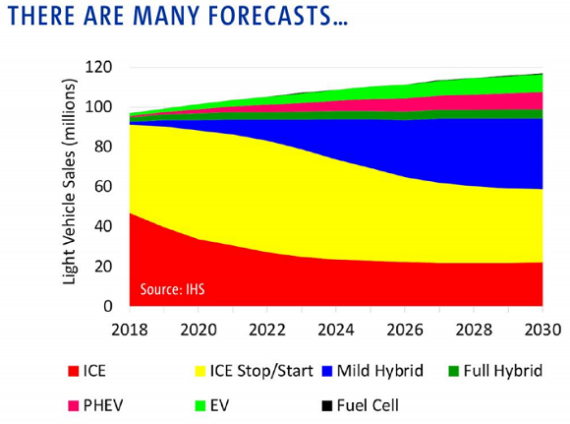
Speaking on Day 1 of the LBMA Boston 2018 event, Dr.Rahul Mital – technical specialist for diesel after-treatment at US auto giant General Motors (NYSE: GM) – forecast that more than 85% of new passenger cars sold in 2030 “are expected to have internal combustion engines with [catalytic] converters,” because all-electric cars won’t sell as strongly as hybrid vehicles using both technologies.
With environmental regulations growing tighter, hybrid electric vehicles are “typically be certified to lower emission levels,” Mital explained to the LBMA conference, so the quantity of platinum-group metals (PGM) loaded into the catalytic converter for their internal combustion engines “is not expected to decrease.”
Sales of Fuel Cell cars – a competitor green technology to electric vehicles, powered by energy made from mixing hydrogen and oxygen over a platinum catalyst – will meantime grow to perhaps 1 million units worldwide, Mital said.
That would prove enough to make a notable impact on auto-sector platinum demand, he said.
Noting there are “many different forecasts” analysts should consider, Mital said that on his assumptions global PGM usage by the auto sector “is expected to stay stable or decrease [only] marginally by 2030…with diesel sales [needing platinum catalysts] in the heavy-duty industry expected to stay steady with no change or [even a] slight increase in PGM usage as tougher regulations come into play.”
On the supply side meantime, 71% of global platinum-output comes from miners in South Africa, says a note from specialist consultants Metals Focus. So “with 90% of their costs in local currency terms, it is important to view prices in Rand terms,” and with the currency falling hard in 2018 “the Rand-denominated PGM basket price [for platinum, palladium, rhodium and gold] is up 11% for the year.”
That’s now “providing some relief to South African platinum producers,” Metals Focus says. More globally, and on an all-in sustaining costs basis for the first half of 2018, “24% of the industry is loss making, a marked improvement from 57% in H1 ’17.”
South Africa’s output of platinum-group metals rose in September, new data showed last week, beating a 1.8% total drop in all mineral production and a near one-fifth decline in gold output with 7.2% year-on-year growth.
Further ahead however, “Supply driven deficits [are] on the horizon” for platinum worldwide reckons Justin Froneman, chief financial officer for the US at gold and platinum-group miner Sibanye-Stillwater (JSE: SGL), also speaking at the LBMA event in Boston last month.
Since the global financial crisis of 2008 and the following drop in platinum prices, “Capital investment in South Africa has been insufficient to replace current production levels.”
“Without incentive-driven price growth, new supply coming on-stream seems unlikely or delayed,” Froneman went on, forecasting that South Africa’s primary platinum production will drop to 3.9 million ounces in 2025, down more than 25% from the 5.3moz produced in the peak year of 2006.
“The Western Limb [of South Africa’s giant Bushveld mineral complex] currently represents more than 70% of South African supply. No new production is expected from the Western Limb without a real basket price escalation exceeding 20-25%.”
All told, “Platinum is likely to remain in marginal surplus for the remainder of this decade,” Froneman concluded, “before reverting to increasing deficits as primary production from South Africa contracts.”
Platinum’s No.1 industrial use – greater than chemical, electrical, petroleum, medical and all other productive uses combined – autocatalyst demand  may slip 6% this year worldwide, buoyed by growing emerging-market usage but dented by the sharp fall in diesel passenger-vehicle sales seen in Europe since the emissions-test cheating scandal broke at VW and other leading manufacturers.


Adrian Ash is director of research at BullionVault, the physical gold and silver market for private investors online. Formerly head of editorial at London’s top publisher of private-investment advice, he was City correspondent for The Daily Reckoning from 2003 to 2008, and is now a regular contributor to many leading analysis sites including Forbes and a regular guest on BBC national and international radio and television news. Adrian’s views on the gold market have been sought by the Financial Times and Economist magazine in London; CNBC, Bloomberg and TheStreet.com in New York; Germany’s Der Stern; Italy’s Il Sole 24 Ore, and many other respected finance publications.

Source: https://www.bullionvault.com/gold-news/platinum-supply-demand-111420183

Bougainville Ventures $BOG.ca arranges $1M private placement $CROP.ca $VP.ca NF.ca $MCOA

Posted by AGORACOM-JC at 12:08 PM on Wednesday, November 14th, 2018

681747 5720 copy 2

  • Arranged a private placement of units at a price of 20 cents per unit for gross proceeds of up to $1-million.
  • Company has made an allowance for an oversubscription of up to 100 per cent of the expected gross proceeds of $1-million

Bougainville Ventures Inc. has arranged a private placement of units at a price of 20 cents per unit for gross proceeds of up to $1-million. The company has made an allowance for an oversubscription of up to 100 per cent of the expected gross proceeds of $1-million.

Each unit comprises one common share of the company and one common share purchase warrant. Each warrant entitles the holder to purchase one additional common share of the company at an exercise price of 30 cents per warrant share for a term that is 24 months from the date of closing of the private placement.

The proceeds of the private placement will be used for general working capital.

The company wishes to correct a typo in its news release dated Oct. 31, 2018, in which it announced the closing of a previously announced private placement with gross proceeds of $308,000 and 1,232,000 units. The previously announced private placement closed with gross proceeds of $320,500 and 1,282,000 units.

About Bougainville Ventures Inc.

Bougainville provides cannabis infrastructure and seed-to-sale services to I-502 tenant-growers leasing greenhouse facilities space and providing fully built out, turnkey solutions and ancillary services including processing, cannabis expertise, and marketing and sales resources. Greenhouse canopies provide a 50-per-cent saving in cultivation cost.

We seek Safe Harbor.

Revenues at #Cannabis Startups Surge as Demand Begins to Outstrip Supply $BOG.ca $NBUD.ca $MCOA $ACG.ca $ACB $WEED.ca $HIP.ca

Posted by AGORACOM-JC at 10:51 AM on Wednesday, November 14th, 2018

By Kevin Kelleher

7:30 PM EST

Three of the largest cannabis companies reported earnings this week, painting a portrait of a nascent industry enjoying surging demand as recreational pot becomes legalized in more places—but they’re also encountering some growing pains.

Aurora Cannabis said Monday its revenue rose 260% to $29.7 million Canadian dollars (US$22 million). Net income came in at C$105.5 million, up from C$3.56 million a year ago, largely because of unrealized gains on securities.

On Tuesday, Tilray said revenue rose 86% to C$10 million, while its net loss increased to C$19 million from C$1.8 million a year ago, driven largely by an increase in non-cash stock-based compensation charges.

Also on Tuesday, Cronos Group said revenue in the third quarter rose 186% to C$3.8 million, compared with C$1.3 million a year ago. Cronos lost 4 Canadian cents per share.

Both Tilray and Cronos said that the average price of weed per gram declined. Tilray attributed the decline to an increase in bulk sales as a percentage of total revenue.

However, the price of cannabis could increase in the future because demand is beginning to outstrip supply as Canada and many U.S. states have legalized marijuana. Much of the cannabis sales the three companies reported last quarter came from medicinal marijuana.

“Similar to other Canadian LPs, we are facing demand that outstrips supply,” Aurora’s chief corporate officer Cam Battley said during the company’s earnings conference call. “We anticipate this dynamic to continue for some time.”

Cannabis stocks surged through most of 2018 before encountering a selloff, once pot became legal in Canada, in a classic buy-on-rumor, sell-on-news scenario. Investors appear to be remaining cautious, despite the strong revenue growth last quarter. On Tuesday, Aurora’s stock on the NYSE fell 3.7%, while TIlray fell 1.9% and Cronos fell 1.7%.

Source: http://fortune.com/2018/11/13/revenue-cannabis-startups-surges-demand-outstrip-supply/

#Solar ‘charging ahead’ but ‘unprecedented’ investment action required, IEA warns $HPQ.ca

Posted by AGORACOM-JC at 10:15 AM on Wednesday, November 14th, 2018
  • Solar PV is “charging ahead” across the world as it outpaces other renewables, but far more significant action is required if a climate crisis is to be averted, the International Energy Agency (IEA) has warned
  • This morning the IEA has released this year’s edition of its World Energy Outlook (WEO), including a mix of worldwide energy trends and forecasts under different models and scenarios.

By Liam Stoker

Solar PV, the IEA has said, is “charging ahead” of other renewables in numerous markets and, alongside gas, is “re-shaping” the power sector entirely. IEA forecasts that solar PV capacity will overtake wind by 2025 and coal in the mid-2030s to become the second largest generation technology, behind only gas.

Such a surge in installed capacity is likely to have significant impacts on global generation mixes and, in turn, the entire power sector, thrusting huge importance on flexibility which the IEA has labelled the “new cornerstone” of electricity security.

The IEA has gone so far as to state that changes to the power mix will need to be addressed with “growing urgency” across the global, which will, in turn, require market reforms, more significant investments in national grids and more prolific adoption of demand-side response, smart metering and energy storage technologies.

But of a far starker nature are the agency’s warnings surrounding the pace of clean energy adoption, specifically if the world remains committed to limiting global warming to within two degrees.

In charting projections for electricity generation capacities and demand, the IEA has suggested there remains a significant gap between its forecasts and staying within those climate targets, requiring what the IEA has termed as a “systematic preference” for investments in sustainable energy technologies.

In simple terms, both developing and advanced economies can no longer invest in carbon-emitting power stations if the effects of climate change are to be limited to limited within two degrees.

Fatih Birol, executive director at the IEA, noted that with more than 70% of global energy investments set to be government-driven, the “world’s energy destiny” is intertwined with global politics.

“Crafting the right policies and proper incentives will be critical to meeting our common goals of securing energy supplies, reducing carbon emissions, improving air quality in urban centres, and expanding basic access to energy in Africa and elsewhere,” he said.

While the IEA’s absolute figures for solar power deployment have proven far too conservative in the past, the body has the ear of OECD governments adding weight to its overall message..

Source: https://www.pv-tech.org/news/solar-charging-ahead-but-unprecedented-investment-action-required-iea-warns

#Blockchain momentum is growing across Europe $HIVE.ca $BLOC.ca $CODE.ca

Posted by AGORACOM-JC at 9:16 AM on Wednesday, November 14th, 2018

Telefonica, Central Bank of Azerbaijan and others demonstrate that the blockchain momentum is growing across multiple industries in Europe

  • According to the IDC, “blockchain spending in Europe is now growing faster than anywhere else.”
  • Leading European companies are continuing to innovate with blockchain technology, progressing projects from proof of concept to production environments. And many, have selected IBM Blockchain as their partner of choice.

Blockchain in the enterprise

The attributes of blockchain technology are ideally suited to large networks of disparate partners. As such, it represents an attractive technology for large corporations and start-ups alike, with assets spread across the world in various forms.

The blockchain is a distributed ledger technology, which establishes a shared, immutable record of all the transactions that take place within a network. It then enables permissioned parties access to trusted data in real time.

‘By applying the technology to a variety of business processes, a new form of command and consent can be introduced into the flow of information, empowering multiple partners to collaborate and establishing a single shared view of a transaction without compromising details, privacy or confidentiality,’ according to an announcement released today by IBM.

IBM Blockchain

‘The hallmark of IBM’s blockchain business has been the ability to convene broad groups of network participants to embrace a collaborative platform approach to blockchain adoption,’ reads the announcement.

‘These clients are capitalising on the opportunity for greater trust and transparency using blockchain across a variety of industries, for example to better manage the reconciliation of international mobile phone roaming charges, securing digital identity for citizens, and complying with new European banking directives on customer communications.’

IBM has more than 500 blockchain projects globally, and is engaged across all industries. The company notes that European projects, in particular, are on the rise. According to the IDC, “blockchain spending in Europe is now growing faster than anywhere else”.

“From large enterprises to startups, across multiple industries, businesses across Europe are selecting IBM Blockchain,” said Andrew Darley, IBM Blockchain Platform Leader, Europe. “Clients are attracted by the production-readiness of the IBM Blockchain Platform, allowing them to run highly secure networks in any environment of their choosing, on premise, via IBM Cloud, or an increasing number of other industry cloud providers.”

Use cases

European clients are working with IBM to drive blockchain innovation in their industries:

Telefónica and IBM are collaborating in the development of a proof of concept based on IBM blockchain technology to help solve one of the major challenges of operators, the management of international mobile phone call traffic.

The project resolves in real time the veracity and traceability of the information generated by the different networks of the operators when they route an international call thanks to a decentralized platform to which all the operators that intervene in the process have access. As a consequence, fraudulent behaviors and discrepancies between the information recorded by each operator are significantly reduced.

The Central Bank of the Republic of Azerbaijan and IBM are developing a Digital Identification System based on Hyperledger Fabric for individuals and legal entities, to verify the reliability of the documents related to them, when individuals or legal entities turn to banks, credit providers and other organizations. The new system will simplify and automate the ‘Know Your Customer’ validation process, and will be used by both clients and credit organisations serving citizens of Azerbaijan.

Finnish retail cooperative S-Group is testing their Pike-perch radar solution, which is based on IBM Blockchain technology, as part of the retail group’s strategy to improve customer experience. Customers in Finland can trace a fillet of pike or perch freshwater fish back to its home waters using the QR Code on the package of “Kotimaista-kuhafile” fish, or by logging in to a tracking website.

PKO Bank Polski, together with KIR (Krajowa Izba Rozliczeniowa S.A. – Polish automated clearing house) and in partnership with IBM and Accenture, is using blockchain to help the bank achieve compliance with the European Union Payment Services Directive related to customer communication. Now the client documents and communications sent digitally to more than 5 million customers of the bank will be held in a highly secure blockchain-based repository.

The Central Securities Depository of Poland (Krajowy Depozyt Papierów Wartościowych, KDPW) has implemented their e-Voting solution in production, designed to encourage greater retail shareholder participation in company AGMs, and ensure transparency to regulators on the history of AGM agendas, and voting results.

Startup software developer Comgo.io, with support from IBM, is digitising the entire donation and spend process for NGOs using Hyperledger Fabric, a Linux Foundation project. NGO donors can see in real time what money has already been spent and the activities supported.

For example, when charity workers in India purchase hygiene products for the street children they support, the payment is tracked on a mobile phone, and written to the blockchain, allowing the approved people to see the transactions, and triggering the NGO responsible to verify that the children did actually receive the products.

The application enhances transparency to build a deeper connection between the donors and the charity, and helps donors to understand more about the work of the NGO. Comgo.io is implementing the application with 7 NGOs: Fundación Recover; Orden de Malta; Fundación Exit; Farmacéuticos sin Fronteras; KUBUKA; Itwillbe, and homelessentrepreneur.

Blockchain momentum

IBM attributes this blockchain momentum to the ease of use of the IBM Blockchain Platform and the open nature of the Linux Foundation’s Hyperledger Fabric blockchain framework, coupled with the deep industry expertise of the organisation.

Another factor is the availability of services and developer resources on the ground in Europe, supporting clients, according to IBM: IBM Client Centres and Blockchain Garages in London and Böblingen; IBM Client Innovation Centres in Paris, Nice and Gronningen; an Industry Solution Centre in Montpellier; IBM Food Trust operational in Frankfurt; IBM Research centers in Zurich and Dublin, focused on cryptography, innovations in AI and optical imaging to help prove the identity and authenticity of objects, detect anomalies and support preventative maintenance in industrial environments; and at the Watson IoT Center in Munich, clients are engaged on projects to explore the convergence of IoT and blockchain, and how clients can automate business processes, gain competitive advantage, and create new business models, by embedding end point and sensor data into blockchain networks, to trigger smart contracts.

IBM’s Blockchain Starter Plan on IBM Cloud is also helping developers, startups and enterprises build blockchain proof-of-concepts quickly and affordably with an end-to-end blockchain development experience: a secure test environment, suite of education tools and modules and one-click network provisioning.

Source: https://www.information-age.com/blockchain-momentum-europe-123476474/

#Programmatic advertising’s disruptive position $GOOD.ca $TTD $RUBI $AT.ca $TRMR $FUEL

Posted by AGORACOM-JC at 6:10 PM on Tuesday, November 13th, 2018

Laura Bakopolus November 13, 2018

We live in an age where we regularly talk about things in person with our friends, then see ads for those same products online. People are growing increasingly accustomed to seeing digital ads for items that appeal to them, to the point where some people are even starting to feel frustrated if an ad doesn’t apply to them. That is evidence of the power — and value — of programmatic advertising.

Programmatic advertising is a disruptive technology that recently took the digital advertising world by storm. As more key players contribute to its growth and development, we move into the acceleration phase of the disruption cycle in which disruptors move closer to fulfilling their vision and early adopters thrive on the use of the innovation. Here, we see a culture form around programmatic advertising in which first movers become thought leaders and grow strong foundations and processes around the technology, second movers make tweaks to advance the technology and build it out further and consumers begin to accept and welcome the product into their daily lives. The next step involves maturation of the innovation, as it evolves into the dominant design that will likely remain relatively stable for some time. Later stages involve saturation, in which the innovation permeates many or all channels or industries, and commoditization, in which the innovation becomes a commonplace must-have.

I don’t think programmatic is at the maturation stage yet, since such a revolutionary technology is still being iterated and tweaked and is not yet utilized by the broadest customer base (think slow movers or laggards, according to the diffusion of innovations theory). Instead, I think we are perhaps at the most exciting place to be: I would argue that programmatic advertising is somewhere among the first two stages of the disruption cycle; it is still close to its original disruptive form, bleeding into the acceleration phase as it moves rapidly toward validation.

Programmatic started as a B2C tool, forced its way into B2B and grew to be a powerhouse among the advertising industry. But we are still moving forward. We are still iterating, adjusting and tweaking. Data and privacy laws are rightfully curbing the direction in which programmatic grows; while some may think these guidelines are impeding the growth of the innovation, I would instead posit that the innovation is still evolving and moving forward, which is a win. It is simply moving forward in a way that will sustain its success. If programmatic moved forward without heeding privacy laws, it would not last. Instead, paying attention to what people want, removing deficiencies and tweaking the design, structure or product makeup toward the customer base’s preferences are smart moves because they together mitigate risk involved in any disruptive innovation.

Programmatic’s growth could be hindered by its guidelines — or it could be strengthened by them. If we listen to what people are telling us — that they are okay with it if X, Y, Z — then we can transform “yes, but” into just “yes.” Showing consumers that we are valuing their input and adjusting based on their needs will strengthen our value proposition, proving that we are fulfilling a need for our customers rather than pushing an unwanted product onto an unknowing person. Consumers are smart and savvy, and we need to give credit where credit is due. If they want privacy but also want ads that apply to their needs, we need to find a way to do that. Those who do will survive, and those who don’t will fall by the wayside. Listening to customers will dictate a new direction for the market, differentiating the successful companies from those that are not able to respond to customer demand. Which of the two are you?

Source: https://www.smartbrief.com/original/2018/11/programmatic-advertisings-disruptive-position