Agoracom Blog Home

Author Archive

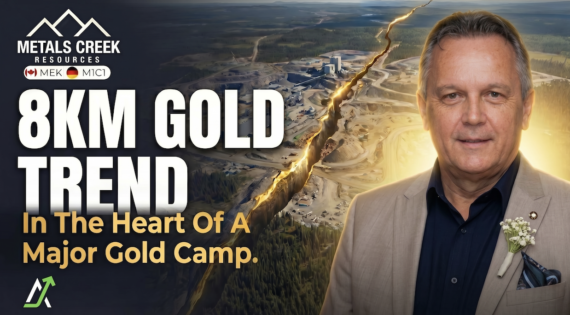
BEYOND THE MIC – The Fault That Produced Millions of Ounces – Metals Creek Controls 8km Along It

Posted by AGORACOM-JC at 10:49 AM on Wednesday, April 15th, 2026

In a recent long form video interview with AGORACOM (see link at the end of this article), Metals Creek Resources Corp. CEO Alexander (Sandy) Stares outlined the company’s flagship Ogden Gold Project in Ontario’s Timmins Gold Camp and discussed upcoming exploration plans targeting gold mineralization along the Porcupine-Destor Fault.

AGORACOM Beyond The Mic Feature Article Issued On Behalf of Metals Creek Resources Corp.

April 15, 2026

Key Highlights

  • Strategic Timmins Location – The Ogden project covers approximately 8 kilometers of strike length along the Porcupine-Destor Fault, a major gold-bearing structure in the Timmins Camp, located near existing and past-producing operations
  • 50/50 Joint Venture with Discovery Silver – Metals Creek operates the Ogden project as a 50/50 joint venture with Discovery Silver Corp., with Discovery contributing to exploration costs following its acquisition of Newmont’s Timmins assets
  • Historical Exploration Results – Previous drilling at the Thomas Ogden Zone reported high-grade gold intercepts, including 210.19 g/t gold over 12.53 meters (2013), and the property hosts the past-producing Naybob Mine
  • Planned 1,500-Meter Drill Program – Drilling is expected to commence shortly, targeting the Thomas Ogden Zone with updated drill orientations based on structural interpretation
  • Project Generator Model – The company advances a portfolio of projects through partnerships, including a recent option agreement on the Yellow Fox antimony property in Newfoundland

Leadership Perspective

“We’re basically looking for elephants in elephant country,” said Stares, referencing the Timmins Camp’s long history of gold production. “The dome mill is eight kilometers away, operated by Discovery Silver. Should we prove something up at Ogden, it could provide a nearby processing option.”

Stares also commented on exploration timing and activity in the region, noting increased interest following recent developments in the Timmins Camp.

Investor Context

Metals Creek is advancing exploration at Ogden with a joint venture partner and proximity to established infrastructure in one of Canada’s historically significant gold districts. The upcoming drill program is designed to test refined geological targets, with potential for expanded exploration depending on results.

TO WATCH THE FULL VIDEO GO TO: https://www.youtube.com/playlist?list=PLfL457LW0vdLbNNhvgydEAUPPQKSstr2B

AGORACOM Beyond the Mic is Powered by AGORACOM’s AI Content Agents.

Metals Creek Resources Corp. Is A Client Of AGORA Internet Relations Corp.

https://agoracom.com/ir/Agoracomupdates/forums/discussion/topics/796135-DISCLAIMER-AND-DISCLOSURE/messages/2399000

BEYOND THE MIC – BacTech Bugs Eat Rocks Highlighting A Potential ~$30M Annual Opportunity

Posted by AGORACOM-JC at 1:00 PM on Monday, April 13th, 2026

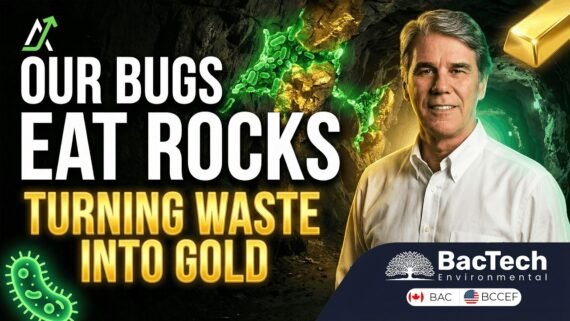
BEYOND THE MIC – BacTech Bugs Eat Rocks Highlighting A Potential ~$30M Annual Opportunity

In a recent long form video interview with AGORACOM (see link at the end of this article), BacTech Environmental CEO Ross Orr made the case for what might be one of the most elegant solutions in mining: using naturally occurring bacteria to unlock metals that conventional processes can’t economically touch.

The company’s pitch is simple but striking. “Our bugs eat rocks,” Orr explained — a reference to bioleaching, a biological process that uses microorganisms to break down sulfide minerals and release the valuable metals trapped inside. It’s not new science, but BacTech has spent decades proving it works at commercial scale. Now, the company is positioning itself to build and operate its own facilities, capturing the full value chain rather than licensing the technology to others.

AGORACOM Beyond The Mic Feature Article Issued On Behalf of BacTech Environmental Corp.

April 13, 2026 2:30 PM EST

A Proven Technology With a Commercial Track Record

Bioleaching has been around since the mid-1980s, when Gold Fields of South Africa pioneered the first commercial plant. BacTech’s lineage traces back to research conducted at King’s College in London during the energy crisis, initially aimed at removing sulfur from coal. Australian researchers saw broader potential and brought the technology to Perth, where BacTech built its first commercial bioleach plant in 1994.

Since then, the company has designed and built four commercial-scale plants — in Australia (1994), Tasmania at Beaconsfield (1997, which ran for 15 years until the mine was depleted), and two in China (2001, expanded in 2008). The technology works by feeding sulfide concentrates — the material that contains the metals — into tanks where bacteria consume the sulfur, breaking down the rock and freeing gold, silver, and other metals for recovery.

What sets bioleaching apart is what it avoids: high heat, toxic chemicals, and the environmental liabilities that come with conventional smelting. The process produces ferric arsenate, a stable form of arsenic that the U.S. Environmental Protection Agency has approved as landfillable. That’s critical in regions where arsenic-rich concentrates are otherwise difficult or impossible to process cleanly.

“This is not our first rodeo,” Orr said. “We’ve been there, we’ve done it, and we’ve scoped out the Ecuador project to the point where we know pretty much what the capex exactly is.”

The Ecuador Opportunity: Serving 100 Small Mines With Material No One Else Wants

BacTech’s flagship project is a fully permitted, construction-ready bioleach processing plant in Tenguel, Ecuador, strategically located near the Ponce Enriquez mining district. The region is home to over 100 small-scale mines producing high-arsenic, high-gold concentrates — material that virtually no one else will touch at fair prices.

The problem for these miners is stark. Chinese buyers currently dominate the market for arsenopyrite concentrates (a sulfide mineral containing arsenic, iron, and often gold). But in 2021, China imposed a 13% import tax on high-arsenic concentrates, and buyers passed that cost directly to the miners. Today, Ecuadorian miners receive roughly 50 cents on the dollar for the gold contained in their concentrates.

BacTech’s solution is to process the material in-country, pay the miners more, and eliminate the need to ship concentrates halfway around the world. The company completed a bankable feasibility study that modeled the project using conservative assumptions: $1,600 per ounce gold and $18 per ounce silver. Even at those prices, the study projected $22 million in capex, annual production of approximately 30,000 ounces of gold, and over $11 million in pre-tax annual profit.

With gold now trading above $4,600 per ounce, the economics look significantly stronger. Orr noted that at current gold prices, projected after-tax earnings could exceed $30 million per year for Phase 1 alone.

The project also benefits from an International Protection Agreement (IPA) with the Ecuadorian government, which grants BacTech a 12-year tax holiday and provides for international arbitration in the event of disputes. Government support has been strong, Orr explained, in part because BacTech’s process is cleaner than conventional methods and provides local employment and better compensation for regional miners.

“The Indigenous people in Ecuador are not big fans of mining,” Orr said. “By introducing a technology that is going to do it cleaner than what’s being done right now, we’re bringing something to the table that the government values.”

Phase 2 of the Tenguel project, which BacTech is committed to building under the IPA, would scale throughput from 50 tonnes per day to 250 tonnes per day — enough to handle the entire output of the Ponce Enriquez district. At that scale, the company projects annual production could reach 125,000 ounces of gold, generating substantial cash flow.

Beyond Gold: The Zero Tailings Platform

While the Ecuador project focuses on gold recovery from arsenopyrite concentrates, BacTech has developed a second platform that could have even broader applications: a patented Zero Tailings process that converts mine waste into multiple saleable products.

Mine tailings — the material left over after metals are extracted — are a massive global problem. An estimated 80 billion tonnes of tailings sit on surface worldwide, and the mining industry adds approximately 10 billion tonnes per year. These tailings often contain residual sulfides that oxidize over time, generating sulfuric acid that can leach into waterways and carry heavy metals with it. Tailings dam failures, like the catastrophic breach at Mount Polley in Canada and the Brumadinho disaster in Brazil, have caused loss of life and billions in environmental damage.

BacTech’s Zero Tailings process uses bioleaching to extract the residual metals from tailings while simultaneously producing high-purity magnetite iron (for steel production), ammonium sulphate fertilizer (an organic agricultural product), and critical minerals like nickel, copper, and cobalt. What’s left behind is inert silica sand that can be used for paste backfill or construction materials.

The process has been piloted in Sudbury, Canada, in partnership with MIRARCO Mining Innovation and Vale, one of the world’s largest mining companies. Vale provided pyrrhotite tailings for testing — a volatile iron-sulfide mineral that oxidizes rapidly and has historically been discarded as waste.

Orr emphasized that approximately 75% of the revenue from the Zero Tailings process comes from the iron and fertilizer byproducts, not the base metals. That diversification makes the economics far more resilient to commodity price swings and opens up applications across a wide range of mining operations.

“Imagine having your own internal fertilizer production,” Orr said. “Canada imports something like $150 million a year of organic fertilizer, mostly from the Far East. This is all about uncoupling yourself and your dependence on Chinese producers, much like we’re doing in critical minerals.”

The technology could also address a major financial burden for mining companies: the bonding requirements associated with tailings storage. By eliminating tailings and turning waste into revenue, companies could potentially free up hundreds of millions of dollars in balance sheet liabilities.

Licensing Strategy and Market Validation

BacTech does not plan to build and operate Zero Tailings facilities on its own balance sheet. Instead, the company intends to license the technology on a regional or country-by-country basis, collecting licensing fees and long-term royalties.

“We can’t do that on our balance sheet,” Orr said. “When there’s 80 billion tons of tailings sitting on surface globally, this is something that needs to be rolled out quickly.”

The company is in discussions with major mining companies and government entities. Following the recent PDAC mining conference in Toronto, BacTech signed multiple non-disclosure agreements with interested parties. Orr noted that the response has been strong, particularly from companies sitting on legacy tailings deposits that represent both environmental liabilities and stranded value.

In 2026, BacTech expects to advance toward building a demonstration plant, which Orr estimated could cost $40 to $50 million. That plant would not generate meaningful economic returns on its own but would serve as proof of concept at commercial scale, de-risking the technology for larger rollouts.

The company is also exploring partnerships with global engineering firms that could deploy the technology across multiple jurisdictions.

Financing: The Challenge and the Opportunity

When asked about risks, Orr was candid. The biggest challenge facing BacTech is securing financing for the Tenguel project. Unlike traditional mining companies, BacTech does not own an ore deposit, which eliminates the possibility of securing financing from royalty or streaming companies that require an asset to seize in the event of default.

“What am I going to do with a bioleach plant if you can’t make it work?” Orr recalled one financier asking. “I can sell it for scrap, but it’s going to be nowhere near $22 million.”

Additionally, Ecuador’s country risk — while improving — remains a concern for some institutional investors. Orr emphasized that he travels to the site regularly and has never encountered safety issues, and that the project has overwhelming local support. Employees currently working on the 100-acre Tenguel property (which includes a cocoa plantation) stand to see their annual incomes rise from roughly $2,000 per year to $60,000 per year once the plant is operational, thanks to a government-mandated 15% profit-sharing program.

Despite the financing challenges, Orr expressed confidence that a deal is within reach. The company is in active discussions with multiple parties, and recent activity suggests interest is building.

“I think we’re getting closer,” Orr said. “It may be a deal that’s not related to Ecuador at all. It might be something brand new. But all of them are situations where people are in production or near to production, so it’s not like it’s a five-year project.”

A Pipeline Beyond Tenguel

Orr described the Tenguel project as the first domino in a longer strategic rollout. Behind it are potential projects in Peru (both north and south), Chile, and even Canada, particularly in regions like Timmins and Val-d’Or, where arsenopyrite tailings and deposits remain untapped due to processing challenges.

When pressed on a five-year forecast, Orr recalled an internal projection that envisioned building one plant per year, eventually reaching combined annual production of 350,000 ounces of gold — worth over $1 billion at current prices. Net margins, he noted, could range around 20%, depending on jurisdiction and tax treatment.

“When you can sell something this small for $4,600, it doesn’t take you long to build up the revenue line,” he said.

PDAC Response and Near-Term Catalysts

Following the March 2026 PDAC conference, Orr reported strong interest from both major mining companies and government-backed entities. The company signed multiple NDAs and is advancing discussions around potential partnerships, licensing deals, and project collaborations.

While much of the pipeline remains under wraps due to confidentiality, Orr suggested that 2026 could bring material developments — though he was careful to avoid specifics.

“There’s so much stuff going on in the background that you can’t talk about until you actually ink something,” he said. “If the dominoes start to fall, we’re going to be busier than a one-armed paper hanger.”

Conclusion

In the interview, BacTech CEO Ross Orr discussed the company’s decades of commercial bioleaching experience and its strategy to build and operate its first own-account facility in Ecuador. He outlined the Tenguel project’s economics at current gold prices, the company’s Zero Tailings platform for critical minerals recovery and tailings remediation, and the strategic pipeline of potential projects across multiple jurisdictions. Orr acknowledged that securing financing remains the primary near-term challenge, while expressing confidence in the company’s technology, government support in Ecuador, and growing interest from major industry players following recent conference activity.

TO WATCH THE FULL VIDEO GO TO: https://www.youtube.com/playlist?list=PLfL457LW0vdLWQWy01mnNDAUxmUWQbxgU 

AGORACOM Beyond the Mic is Powered by AGORACOM’s AI Content Agents.

BacTech Environmental Corp. Is A Client Of AGORA Internet Relations Corp. https://agoracom.com/ir/Agoracomupdates/forums/discussion/topics/796135-DISCLAIMER-AND-DISCLOSURE/messages/2399000

VIDEO – BacTech Bugs Eat Rocks Unlocking A Potential ~$30M Annual Gold Opportunity

Posted by AGORACOM-JC at 5:43 PM on Wednesday, April 8th, 2026

What if one of the most compelling ideas in mining could be summed up in a single concept: bacteria breaking down rock to release trapped metals?

It may sound unconventional, but it’s already being applied in real-world operations.

BacTech Environmental uses naturally occurring bacteria to process sulphide-rich material, unlocking gold, silver, and other metals that would otherwise remain difficult and costly to recover. These microorganisms act on the rock itself, triggering reactions that separate valuable metals without relying on high heat or chemical-intensive methods.

The approach shifts how certain types of material can be viewed, turning what was once uneconomic or overlooked into something potentially viable.

This is not theoretical. Bioleaching has been used in commercial plants in Australia, Tasmania, and China, with BacTech involved in building and operating multiple facilities over time.

The company is now advancing its flagship project in Tenguel, Ecuador. The fully permitted, construction-ready plant is expected to serve more than 100 small mines, providing a processing solution for material that few others are equipped to handle.

WHAT YOU NEED TO KNOW

Bugs Eat: Bioleaching is a commercially established process, previously deployed in plants across Australia, Tasmania and China. BacTech’s 50 tpd Ecuador facility is designed to process material from over 100 small mines that currently lack viable treatment options.

Gold Math: Tenguel’s updated BFS outlines 30,900 oz/year of gold, a pre-tax NPV(5%) of US$60.7M and a 57.9% IRR at US$1,600/oz gold. With approximately US$22M in projected capex, annual earnings approach US$30M at higher gold prices.  Dr. Paul C. Miller, Ph.D., C.Eng., MIMM, is the Qualified Person.

Government Framework: An International Protection Agreement in Ecuador provides 12 years of tax relief and access to international arbitration, supporting project stability.

Zero Tailings: BacTech has filed patents on a process designed to convert mine waste into usable products like iron, fertilizer, and metals such as nickel and copper.

Global Waste: An estimated 80 billion tonnes of tailings exist globally, with roughly 12 billion tonnes added annually. BacTech is advancing a licensing model to address portions of this inventory.

STRATEGIC IMPLICATIONS

Conventional mining often relies on smelting, chemical processing, and tailings storage, which can create long-term environmental and financial liabilities. High-arsenic concentrates are increasingly difficult to process, with smelters applying penalties or refusing material altogether.

BacTech’s model uses bacteria to extract metals and stabilize contaminants, converting arsenic into ferric arsenate suitable for dry stacking, while producing additional outputs such as magnetite and fertilizer. The result is a multi-product flowsheet that differs from traditional single-commodity processing.

This approach intersects with several broader trends, including higher gold prices relative to feasibility assumptions, tightening environmental regulations, and increasing demand for critical minerals and alternative fertilizer sources.

CEO ROSS ORR

“People hear ‘our bugs eat rocks’ and think it’s some new science experiment. It’s not – we’ve designed and built bioleach plants four times before. Now we’re keeping more of the value for our shareholders. We’ve gone from proving the tech works to proving we can own and operate it ourselves.”

INVESTOR TAKEAWAY

This story combines a near-term operating asset with a longer-term platform opportunity.

Tenguel represents a fully permitted, 100% owned project with a defined development path, supported by a third-party feasibility study and projected annual production of approximately 30,900 ounces of gold. A planned Phase 2 expansion could increase throughput and output materially.

Separately, the Zero Tailings process introduces a potential licensing and royalty model tied to large-scale tailings remediation. Early test work suggests that a significant portion of revenue may come from iron and fertilizer outputs, rather than metals alone.

Execution remains dependent on financing and initial commercial deployments, but BacTech is now advancing from a technology validation phase toward potential project-level and platform-level scale.


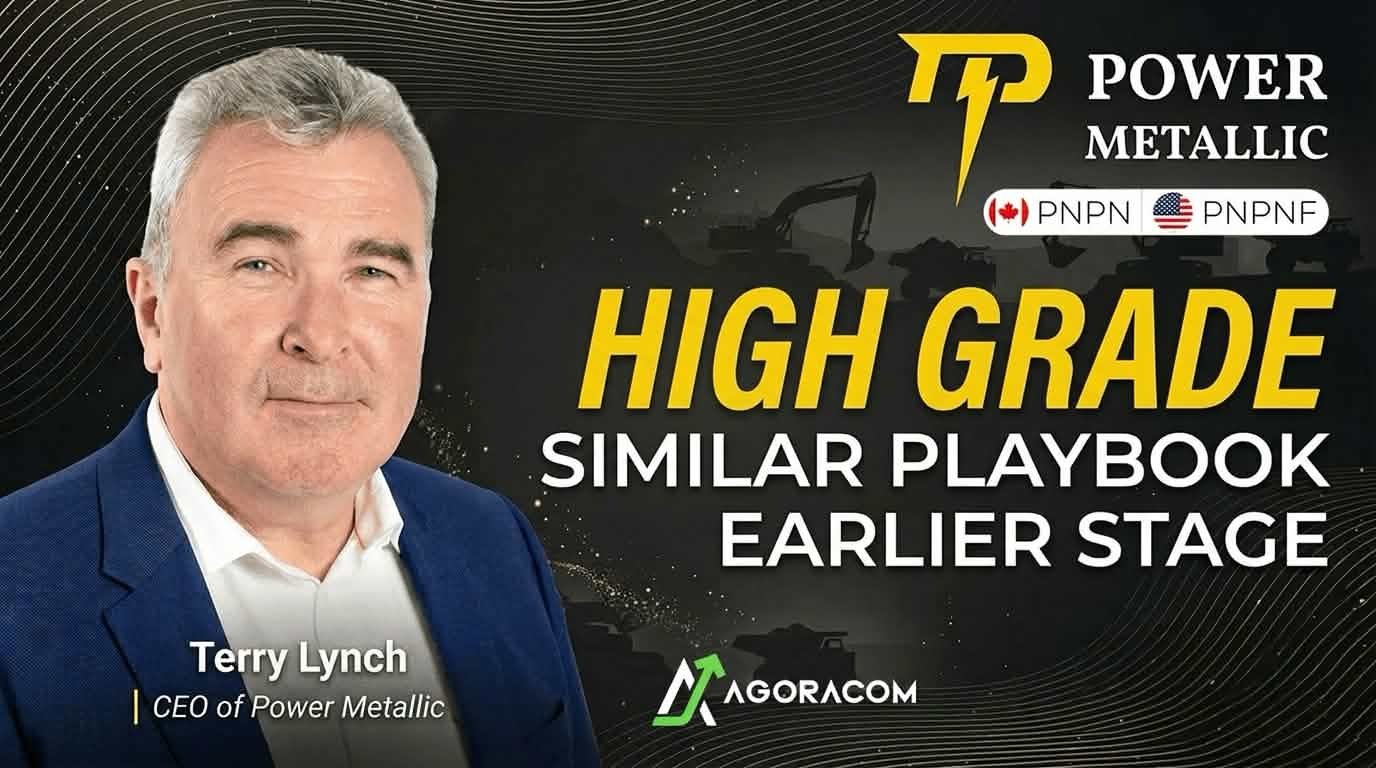
TRANSCRIPT – Power Metallic Targets Fall PEA Backed By High Grades And Strong Recoveries

Posted by AGORACOM-JC at 4:39 PM on Monday, March 16th, 2026


George Tsiolis:

Every once in a while in mining, you stumble onto something that doesn’t just become a mine — it becomes a district, sometimes even a giant.

The most famous example is Norilsk in Siberia, one of the largest and richest polymetallic deposits ever discovered, producing nickel, copper, platinum, palladium, and more for decades.

Now imagine the possibility that something with similar geological DNA might be emerging — not in Siberia, but in Quebec, Canada.

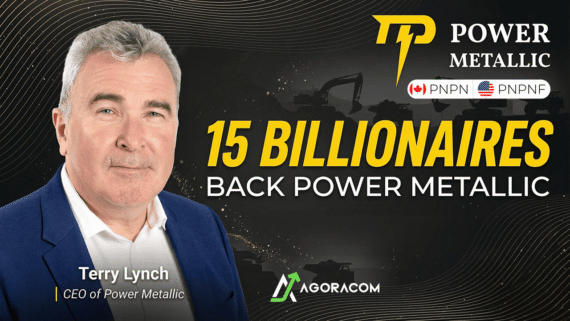
Power Metallic’s Nisk Project has already revealed high-grade nickel, copper, and platinum group metals, and with each new drill program, the footprint appears to be getting bigger. That’s why multiple billionaires have invested in Power Metallic, and some experts now believe this discovery could represent the early stages of a major polymetallic system.

Joining us today to talk about it is Terry Lynch, CEO of Power Metallic. Terry, welcome back, my friend.

Terry Lynch: Hey, great to see you again, George. It’s always a pleasure to be on your show.

George Tsiolis: It’s great to be talking to you because you’re doing so many things for the industry and for your shareholders.

Let’s talk about Nisk here. I opened the interview by mentioning Norilsk, one of the greatest polymetallic discoveries in history. Obviously you’re not there yet, but you are pretty far down the road. Your company says this on the front page: Nisk has the potential to be a polymetallic supergiant like Norilsk.

So tell us, what do you and your team see? You’re one of the most respected teams in the industry — you don’t say things lightly. What gives you the confidence to make that bold of a statement?

Terry Lynch: We basically looked at the scientific facts and compared our deposit — tenure, grade, concentration — with other deposits in the realm of orthomagmatic deposits.

There are really only two deposits in the world that have our concentration of copper and precious metals in this format. One is Oktyabrsky, which is the heart of Norilsk — that crazy one square kilometer at Norilsk that has a trillion dollars’ worth of metals. The other is the Sudbury Footwall deposits.

Both of those deposits are obviously in excess of 10 million tonnes of contained metal.

At Norilsk, grade-wise, we’re actually a little bit above them, but we don’t have a square kilometer. And if we’re being honest, it’s unlikely we’ll get to a square kilometer.

But the neat thing about mining discoveries like ours is you don’t know how big it is yet. The cool thing is that from what we’ve already found, we can say with certainty as a management team that we’ve already found a mine that’s going to be worth multiples of where we’re at right now. And we can give good peer evidence on that.

But we haven’t found nearly what we think we’ll ultimately be finding here.

The district commentary you mentioned is likely to happen. Nineteen out of twenty times in these orthomagmatic discoveries — which is what we’ve found, a super rare deposit type, but they are the world’s richest mines — there are multiple mines.

So Norilsk found Oktyabrsky several years into the Norilsk project, and you can imagine one square kilometer is very easy to miss. You think, holy cow, I missed a square kilometer and it has a trillion dollars’ worth of metals. It’s mind-blowing.

But it’s sort of like yesterday, when we released 16.5 meters of 15% copper equivalent. I mean, that’s $2,000 rock if you do the math on it. That’s crazy rock.

Red Cloud did an update today and said that on the 95 holes Power Metallic has released on the Lion Zone, 78 have intercepts of 11 meters or more with at least 4.5% copper equivalent.

George Tsiolis: For people at home, Terry, put that into a little bit of perspective. Seventy-eight of 95 holes have at least 11 meters of 4%-plus copper equivalent. What’s a typical good number for a copper project that would make people really happy?

Terry Lynch: The average grade of a copper-producing mine in the world today is 0.4%, so we’re talking about grades that are 10 times that, 11 times that.

That’s part of the challenge, George, if we’re being frank about our communication challenges. High grade is so unusual.

The last orthomagmatic deposit discovered was Sakatti by Anglo American 18 or 19 years ago. Before that was Voisey’s Bay. So it’s just so unusual. People see these crazy high grades — like 16.5 meters of 15.11% — and they probably think, “Did they miss a decimal point? Is it really 1.5%?” It just seems too good to be true.

I think there’s some of that in people’s minds.

Part of our challenge is that we were disappointed when we put out those metallurgical recovery numbers, because in mining you’ve got to find the rock, with enough tonnage and grade to become a mine. But then one of the big tests is: can you get the minerals out of the rock in an effective way? Is there a good recovery rate? Are there going to be good payables?

We had been using 80% recoveries, which we felt was a good, healthy recovery. Some people thought that was aggressive, but we felt it was justified based on the work we’d done on the high grades.

Then we ended up getting 95% across the board. Copper was 98.9%, almost 99%.

When we released that, it was mind-blowing. We thought that was the missing link, because we’d already put out the math on the assays and grades, so people should have been able to do the back-of-the-envelope math and say, “Here’s what this thing is worth,” which in our view is probably in the billions.

The stock went up to around $1.70 and change. We thought it was going to double or whatever. It didn’t. And it’s backed off since then, even on good exploration news.

So sometimes you have to listen to Mr. Market and take the message. The message we took was simple: they want more proof.

They don’t understand this deposit. We don’t know why they don’t understand it. We have to do a better job of communicating it.

I think there may be two things going on. One, the grade may just be mind-blowing for people. Two, when people think copper projects, they think multi-billion-dollar capex and a long way down the road to build. But this is going to be a $400 million to $600 million project to get through the first phase of 1,500 to 3,000 tonnes per day.

We believe it will pay for itself in year one, and the capex is very manageable, especially when you’ve got the tax credits in Canada, including the provincial abatements.

What will get this message through, we think, is getting the PEA out there. So we’ve expedited that. We’re planning to do it this fall rather than waiting much longer. There’s such a disparity between what we think is fair market value for our stock and where we’re trading that we think it’s important to shorten that gap by getting this information out sooner.

George Tsiolis: And it may be that that’s what the market is waiting for, right? They’re doing back-of-the-napkin math, but maybe it seems too good to be true, and they’re saying, “Let’s wait for the actual PEA — the Preliminary Economic Assessment.”

Terry Lynch: Yeah, exactly.

George Tsiolis: Right — the thing that tells everybody how viable this is.

I also think the scope of your press releases is part of it. They’re very technical, and they have to be. That’s the regulations and that’s the way the world works.

They’re so detailed because you’re trying to prove what you have and communicate it to the world. But you can’t do it in a press release the same way we can do it here, where we’re going to talk more in layman’s terms.

So I think it’s a challenge even for retail investors who are looking at each other saying, “I think this is great — what do you guys think?”

When do you think that PEA comes out, Terry? Ballpark — I’m not going to hold you to it.

Terry Lynch: We’re basically saying fall, and we’re targeting to get there before Beaver Creek if we can. I would expect we’ll get the technical report out hopefully by late August, and then the PEA shortly thereafter.

George Tsiolis: I remember we did an interview when you were still Power Nickel — not even Power Metallic — and the stock was trading at 20 or 25 cents.

You’d put out a bunch of good news, really solid news, like you’ve continued to do, and you gave a famous quote that we played everywhere for months. You said people one day will be embarrassed when they realize they could have bought Power Nickel for a quarter or less.

I don’t know if you want to make that kind of bold statement now, but are you feeling the same way now that you’ve gone to this next level?

Terry Lynch: I feel we’re a better deal now, from an asymmetric risk perspective, than we were at a quarter. Honest to God.

And not only do I feel it — I’ve shown I believe it with my checkbook. I bought 700,000 shares in the last 90 days, 100,000 shares in the last couple of days. And I’ve exercised my options. I’ve put about $1.3 million in over the last 90 days.

Why? Because I don’t know of a better investment opportunity anywhere.

Now of course, I’m the biggest investor here and I’m preaching in my own church. Maybe I’ve drunk the Kool-Aid. But I know this business, I know what we’re worth, and I know what we have.

We went one way with getting the exploration results out and all the facts out there, thinking people would follow the Great Bear and Foran approach to getting valued. But that wasn’t working for us.

Perhaps it’s a more complicated story because it’s Polymetallic. It’s not a gold story and it’s not a copper porphyry story. It’s a different animal.

So we realized: okay, let’s follow the Foran example. That team did an amazing job. They got acquired for roughly $3.8 billion.

How did they do that? Because metal in the ground — what we believe we’ll show — they got 25 million tonnes at 2.5%, which is roughly 650,000 tonnes of metal in the ground. They’ve got other prospects deeper, but we all have prospects.

We believe we have something similar in the ground right now at Lion. And we still have the nickel side as well, and our prospects.

If a Martian came to Earth and looked at those two deposits, I believe they would take ours all the time, because it’s smaller, near surface, off the road, more compact, more profitable in processing, and has a lot more upside.

That’s not to disparage Foran — they did an amazing job. Congratulations to them.

What did they do? They de-risked it in the investor’s mindset. That’s the lesson for us. They did a PEA, a PFS, a feasibility study. They got Agnico in as a strategic investor. They got designated as a project of merit in Canada. They got the Canadian Growth Fund to invest.

All of that de-risked it in investors’ minds and got them to the point where they were able to do that merger.

All those steps are repeatable for us, and those are the steps we’re going to go down now.

George Tsiolis: Follow the game plan, because you’ve got the goods.

Terry Lynch: Exactly. Either you have the goods or you don’t. Brother, we’ve got the goods.

That’s the point that shocks me. I’m not a trader — I’m an investor. I invest and I hold until I think my investment has reached value, and then I exit.

I look at this and think that in two years, worst case scenario, I believe we’re a Foran. We can go from where we are now to that $3.8 billion number based on where we are.

And I also believe that if history tells us anything about these orthomagmatic projects, there are going to be several times what we’ve already discovered found over the next few years.

George Tsiolis: And you’re talking about what you’ve got right now — not even what you might find later.

Terry Lynch: Exactly. It’s very asymmetric.

We’ve got the best scientists in the world on this type of deposit working for us — Steve Beresford, Joe Campbell. They’re using the best technology. We’re well-funded and we’re executing.

So why are people betting against these guys when it’s so cheap?

But we also have to accept the medicine and recognize that we’ve got to communicate better. We have to tell the story better. We have to recognize that people want more proof — so let’s give them more proof.

George Tsiolis: That’s very important, because I want to backtrack a little.

You talk about your geo team. You talk about putting your money where your mouth is. I call that third-party validation — it’s very important.

So let’s go back a few minutes to where you said you’ve bought hundreds of thousands of shares, over a million shares yourself.

But you’re not just the overly optimistic CEO drinking his own Kool-Aid. How many billionaires are in this deal with you? I’m not looking for names, but I remember you talking before about a dozen or so. How many billionaires are in this with you?

Terry Lynch: Fifteen.

George Tsiolis: Fifteen.

So for anyone new to Power Metallic, this isn’t Terry just betting all in because he’s the CEO. You’ve got 15 billionaires — pretty smart people, very well versed in the resource space — who understand all this and said, “Terry, we’re participating in your private placement.”

What should current investors, and maybe more importantly new investors around the world, take from the fact that you’ve got 15 billionaires in this who know their stuff and don’t want to lose money?

Terry Lynch: The one observation I’ve made, because I’ve met these guys over the years, one by one, face-to-face, is that they typically all come in small first and then in a bigger way.

These guys are not traders. They’ve got so much money they just can’t be bothered. They may be invested in some fund that trades, but they themselves aren’t traders.

So when they come into a deal like this, they come in with the mindset of, “I can buy at X and sell at 10X,” or whatever multiple they believe is valid.

They’ve got enough track record and experience that they’re prepared to be patient.

A lot of investors in our market get shaken out by volatility. Our stock in 2024 went from around 20 cents to a dollar, then in 2025 from about $1 to $2, then ended the year back at $1, and now it got up to $1.70 and is back around $1.15 or $1.20.

There is volatility. But the billionaires don’t let the volatility shake them out. They’re not trying to trade the swings.

They’re saying, “I believe this guy’s got a mine, and when he gets taken over or commercializes this, we’ll look at it then.”

Their first question is: do we think this is going to be a mine?

I think they bet early on that this was going to be a mine, and I think that’s a solid bet. I 100% believe this is going to be a mine, and that mine will be worth a lot of money.

You can see what the Foran project is worth. I believe we’ll be worth that. If we find more, which I believe we will, then it will be worth multiples of that.

That’s the wonderful thing about mining and about this project in particular — the upside is uncapped.

These orthomagmatic systems can be very, very big. I think that’s the mindset of the billionaires: they look at it and think, “I can leave this one alone, go to sleep on it, and just let it play out.”

George Tsiolis: Let Terry cook, as the kids say.

But last question before I move on from the billionaires: how have they been reacting to the continued news and developments since they made their investments?

Terry Lynch: It was funny — Rob McEwen has probably been one of our biggest supporters. He’s been in for three private placements.

I bumped into him at the BMO conference. He came over and hung out at the booth for 20 or 30 minutes. We were one of the 10 companies at BMO displaying our core, and our core was ridiculous — just beautiful.

I said, “Rob, what do you think about the stock price?” He said, “Yeah, you’re just not getting any love.”

One of the things he brainstormed was maybe we should start putting things out in gold-equivalent terms, because maybe copper-equivalent doesn’t resonate with people. Maybe if they saw gold-equivalent numbers it would help them understand.

He also suggested maybe doing a scatter diagram. He said when they were building Goldcorp, they had similar issues and one scatter diagram showing 1 gram holes, 5 gram holes, 10 gram holes, and 10-plus gram holes was a really powerful visual.

So maybe something like that.

It’s great to have billionaires brainstorming with you about how to communicate better. That’s one example of someone really leaning in and trying to help.

George Tsiolis: And on that point, I think he has a good one. Polymetallic is harder for retail. If they’re asking, “Is it nickel? Is it copper? Is it this?” maybe that advice helps.

Terry Lynch: Yeah. I sort of say to people: people buy chicken and people buy beef, but we’re the most protein per pound. How do you communicate that?

People are looking for chicken stories and beef stories, and we’re a protein story that may be better than both combined — but people aren’t looking for it that way.

We haven’t solved that yet, but we need to.

George Tsiolis: And maybe you don’t have to stick to one. You could say, “Here’s our copper equivalent, here’s our gold equivalent,” maybe give them three or four equivalents so everyone can latch onto what they understand.

Terry Lynch: Pretty easy equipment, for sure.

George Tsiolis: Let’s talk about capex, because one thing that often kills companies like yours is capital cost.

For people at home, that’s the amount of money required to get what you have out of the ground.

You don’t need the kind of massive capex some other projects do, because you’re near surface. I think you said earlier that Phase 1 might be ballpark $400 million or $500 million and you think the payback could be in a year.

Terry Lynch: Yeah. If you can pay back in eight years, you’re ecstatic. A one-year payback is incredible.

The PEA will show this, and we’ll get it out there.

I think one of the mistakes people make is they think of most copper stories as VMS or porphyry deposits, which tend to be more complicated and much more expensive — a couple billion dollars is not unusual.

That’s not going to be the case here. This is an at-surface deposit, which is great. Some parts of it will be open pit for sure, and much of the juice is right at the top.

So this thing will have a really speedy payback, we believe. And in Canada you’ve got the 30% federal tax credit you can turn into cash. There’s all sorts of money now to build these mines from a debt and subordinated debt perspective.

I don’t think financing the mine will be a problem if we want to build it ourselves, or with a contract miner, or with a strategic partner.

People often ask us whether we think we’ll sell out or be acquired.

George Tsiolis: That was going to be my question. Sell or build?

Terry Lynch: We’re going with the view that we’re going to build it, because that’s definitely the play here.

Now, if we get some outstanding offer that de-risks our shareholders and gives us a healthy piece of the upside, we’ll obviously look at it.

But our view is that this will be the first of many mines up there.

Now, we haven’t found the other mines yet, so maybe that’s all just a pipe dream in Terry’s head. But if we look at the other 20 orthomagmatic deposits in the history of the world, 19 of them had multiple mines.

So we’ve got 20-to-1 odds that we’re going to find multiple mines here.

George Tsiolis: I’d take those odds.

Terry Lynch: I’d take those odds too.

If you’ve been blessed enough to find one of these, which we have been, thank God for that blessing, do you really want to be out of it early?

There’s always a price where it makes overwhelming sense for shareholders and avoids a lot of risk, sure. We’d look at it. But there are also structures like a joint venture where we get paid, get carried, still own 50%, and stay in the game.

There are a lot of ways to skin the cat, and we don’t have to worry about that right now. We’ll do right by shareholders, because we’re all big shareholders ourselves and everyone wants to create value.

George Tsiolis: And you’re cashed up, right? You’re not the typical small cap that drills, goes back to market, gets diluted, drills again, and repeats the cycle.

Terry Lynch: We had $33 million in the bank at the end of last quarter, and we’ve got about $17 million of warrants and options that expire this year that are well in the money. We’ve already had a couple million come in.

So we’re good for cash.

And we think the strategic investor process that Foran and others have done is probably something we’ll explore. We won’t do it until after the PEA is out, because then hopefully we’ll have a big number on the table.

There’s a lot of interest from much bigger investors to write much bigger checks. So the idea is to make it a bit of a beauty contest and get the maximum price.

George Tsiolis: So if you wanted to raise $20 million right now, you probably could.

Terry Lynch: Oh yeah. In a heartbeat.

George Tsiolis: Let’s talk macro tailwinds before we sign off.

It seems like governments — finally including the Canadian federal government — want to help. We know the U.S. government is helping through the Department of Defense and other programs.

What do the political tailwinds behind you look like? They want less dependence on China, they’re willing to open up money, fast-track projects — how much better are those tailwinds than they were before?

Terry Lynch: There’s no question they’re better. Two years ago, nobody was really talking about critical minerals. Now it’s front-page news.

We’ve been working with the U.S. as well. We were down at Mar-a-Lago a couple of weeks ago getting to know the defense people looking for strategic supplies.

Whether they’re Canadian or American doesn’t really matter to them. That’s a process we’re involved in, and I think there are definitely opportunities there.

We’ve met with the PMO office in Ottawa. They’re supportive. We’ve met with the Canadian Growth Fund, Investissement Québec — all these groups are super supportive. They all want to get behind the project.

I think it’ll be easier to access that kind of capital once we have the PEA, because the PEA is the point where an independent third party says, “Under these assumptions, this project is worth X.”

It gives people something objective to rely on.

The real challenge when you’re talking to investors is that they don’t want to be fired. They don’t want to do something really stupid. So part of the de-risking process is making it easy for them to buy by laying out the evidence clearly.

The same thing applies to governments. They need paper. They need independent support. That’s just how the process works, and probably how it should work.

So yes, we’re definitely pursuing those routes, and that’s certainly positive for us.

George Tsiolis: And that also explains why you’re accelerating the PEA instead of waiting another year.

Terry Lynch: Exactly.

Back in 2024, we had visions that we could go the Great Bear and Foran route based purely on exploration results because the stock rocketed and it looked good.

But in 2025 and now, we’ve continued to execute. We’ve expanded our land package six-fold, improved recoveries from 80% to 95%, continued to grow the Lion Zone — all of that — but the market didn’t fully reward it.

So we have to learn from that. There are other pathways. Foran has given us a great example, as have others like Adriatic.

George Tsiolis: I think markets do go through lulls. You can lose momentum for a while, and people start chasing other stories.

Maybe while some investors are waiting for the PEA, they’re chasing little gold names that go from 15 cents to 50 cents in six months.

You almost can’t fault people for saying, “I’ll wait on Power Metallic and chase some of these penny stocks first.”

Terry Lynch: That’s a valid concern, and it’s been raised to us.

But we just changed strategy on this and publicly spoke about it at PDAC. The world is only now starting to learn that we’re going to do this PEA, and it’s not a year out — it’s in September. It’s imminent.

Our job is to communicate that to the market.

I believe the move starts before the PEA. The smart money should be doing the math themselves and buying the stock already.

And the other catalyst we haven’t talked about is the move to the U.S. markets.

George Tsiolis: Let’s talk about that. I didn’t know it was on the table.

Terry Lynch: It is.

Listen, you and I are both patriotic Canadians, but the Canadian capital markets are fraught with problems. We know that.

The Americans are now waking up to the fact that they need to shore up supply chains. They’re also waking up to the fact that they need exposure to precious metals and mining again.

So I think there’s going to be more and more interest in mining. Robert Friedland was at the White House the other day and mentioned that the S&P had only 1% in mining at one point versus something like 14% at its peak.

You can imagine what’s going to happen to the mining sector, especially high-quality companies like Power Metallic, when more money starts pouring in.

And it’s already starting.

I’ve done non-deal roadshows in New York recently, meeting with some of the biggest multi-strategy funds in the world. One fund manager told me that yes, we’re small for them, but if they want exposure to the sector, they have to come down the cap stack and buy names like ours because that’s where the growth is.

I think that’s going to happen.

To make that easier, it would be easier for us if we were listed on the NYSE or NASDAQ.

George Tsiolis: I’m sure they’ve told you that too.

Terry Lynch: They have.

We’ve applied to both. We were leaning toward New York, and that may still be the way we go, but NASDAQ approached us about their newer ADR route for Canadian companies, where we may not have to consolidate and could trade through an ADR structure.

That’s interesting. From what we understand of the technical requirements, we may qualify.

So we’re going through that process now and should know more in the next four weeks or so. Then we’ll decide.

I think a move to the U.S. makes a ton of sense, because it opens the stock up dramatically.

I was on a roadshow in South Florida through the Palm Beach Hedge Fund Association. We saw 90 investors in 3 days. Great response.

A lot of them said they’d buy the stock, but one issue was accessibility — they couldn’t buy it easily through Merrill Lynch and would need another broker.

When you’re listed on NYSE or NASDAQ, all of a sudden the world can buy it.

George Tsiolis: Exactly. Someone can just be on their phone and buy 50,000 or 100,000 shares through their existing broker. No friction.

Terry Lynch: Exactly. I think that will be a big catalyst when it happens.

So between messaging around the PEA, the eventual move to the U.S., and the fact that we’ve got six rigs turning every day, there’s a positive news cycle here.

We’re running 60 to 70 meters per rig per day, so 300 to 400 meters a day total. Every three or four weeks there should be more news, and we’re finding more stuff.

We never know when a true discovery hole on a new zone is going to happen — that happens when it happens — but we’re definitely growing resources, in our view.

Then you’ve got the move to U.S. markets, and then ultimately the PEA.

We’re also in a particularly heavy investor outreach cycle right now. I’m off to Zurich for Swiss Mining next week, then speaking at the Roth conference the following week. We’re in demand because people are very interested in the story.

Last time around, before we did that financing, we met an investor who didn’t want to wait for the financing and bought in the open market instead. That’s all it takes.

I was on with a huge fund yesterday that I know well and have spoken to for a year. I told them we’re not going to do a round below $1.45 — that’s where the last round was done.

If they want stock, now is a great time to buy. Do the math. This isn’t smoke — the evidence is there.

This thing is super undervalued, and we think we’re changing how we communicate that to the market. We think people will start to listen, do their due diligence, and make their own decisions.

George Tsiolis: And that’s why conversations like this matter so much.

Your press releases are highly technical because they have to be, but when we can speak like this — about near surface, location, government incentives, 15 billionaires, recoveries, grades that are 10 times the average copper mine around the world — that’s what investors need to hear.

Then they can go dig into the details if they want.

Terry Lynch: Exactly.

George Tsiolis: People should take those results and feed them into ChatGPT or Grok or whatever large language model they prefer and ask, “Is Terry blowing smoke, or how do these results compare globally?”

Terry Lynch: They should do that. I’ve done that. Grok loves us.

George Tsiolis: I’d encourage everybody to do that. I’m a shareholder, we’re all putting our money where our mouth is.

Terry, you’ve got the team, the project, the results, the third-party validation, and 15 billionaires behind you. You have it all. So now it’s just a case of—

Terry Lynch: Keep working, George.

That’s it. We’re going to keep working every day, get our message out, and eventually the market will weigh it properly.

One of our bigger investors sent me a Warren Buffett / Benjamin Graham-style quote recently — basically that in the short term, the market can be emotional, but in the long run it’s a weighing machine.

What’s really cool here is that this opportunity has been pretty thoroughly de-risked.

Before the met work came out, the stock got as low as around 80 cents last year. It’s obviously ripped back through that. So relatively speaking, the downside is pretty low compared to what we’ve accomplished in the last couple of years.

Yet the upside is uncapped.

So when you look at that risk-return curve, I think there’s a really compelling story there.

And I say to people: if you’re listening to this and you think, “It’s still a small cap, maybe too volatile for me,” then invest in a good mining fund.

What you don’t want to do is miss mining entirely right now.

Take money out of tech and put it into mining — or into a good cross-section of mining vehicles. There are lots of good funds out there. This sector is going to rip, in my opinion.

If you miss this, you’re going to regret it.

George Tsiolis: Last time you said that, it was Power Nickel at 20 cents.

We played that clip everywhere, and people saw that conviction.

Now you’re making the call again, and you’re putting your money where your mouth is. You have 15 billionaires seeing the same thing you’re seeing.

You’re not just talking your book and hoping for a short-term blip. You’re telling people that two years from now they may be saying, “I’m glad I watched that interview,” or, “I wish I had.”

Terry Lynch: And that’s why I brought up the funds too.

When we raised that $50 million a year ago, half of it came from Australia, 25% from Europe, and 25% from the U.S. The only Canadian investors were Robert McEwen and Robert Friedland.

Why? Because Canadian funds didn’t have enough available capital. They would have had to sell another position to buy us.

There are great funds out there — Scotia’s 1832, Palos Capital, BT Global and others run by smart people. If you don’t want to buy individual names, invest with them.

George Tsiolis: And they hold Power Metallic, hopefully?

Terry Lynch: Yes, they do.

Those are really good investors. But they need more capital to invest.

So if you want a more diversified approach, that’s perfectly fine. Everyone has their own risk scale. There are horses for courses. You find the right horse for you.

But don’t miss the horse.

George Tsiolis: Terry, all kidding aside, that’s big of you to say. You don’t have to invest in Power Metallic specifically — you can invest through funds.

Terry Lynch: I’m a big believer in mining. I’m on PDAC. I started Save Canadian Mining. I really believe in the space.

And I think we couldn’t be having a more epic setup than we do right now.

For long-suffering investors, I think this is the time. Find the quality names or quality funds you like and put a meaningful part of your portfolio into them. I think it’ll do very well.

George Tsiolis: And for everyone watching, throw Power Metallic’s numbers into ChatGPT and ask whether this is one of the horses you should be looking at.

Terry, thanks for joining us. We’ve gone 45 minutes and it flew by.

Now let’s give people a chance to really dig into the company, look at the website, look at the data, and do the digging for themselves. Then when we come back next time, we’ll get great feedback on what they found.

Last words to you before we sign off — what do you want to say to current shareholders and prospective shareholders?

Terry Lynch: I was talking to one of my shareholders today, and I said one reason I encourage shareholders to contact us if they have a question or concern is that I don’t want people to get shaken out by volatility.

I’m not a trader. I’m an investor. I buy at X with a view to selling at 10X, or whatever the case may be.

Maybe some people out there are traders and can do that well. I’ve never been good at it. I’m too busy working. I don’t have time to sit in front of a screen all day, and I want to sleep at night.

When it went down, I bought more, because I’m confident that ultimately the volatility is a mirage and the facts will win out in the end.

Rick Rule, one of the greats in the space, once told me that some of his 100-bagger or 1,000% return stories went down by more than 50% three times on the way up.

That’s called diamond hands.

Power Metallic went from $1.95 down to 80 cents — about a 60% retracement. Then back to $1.70, then back to $1.06 — another 40% retracement.

Does that frustrate you when you own it? Of course it does. I’m not saying I’m not frustrated by it.

But I can’t change the market. That’s just the nature of this market.

What I do know is that it’s a great horse. So don’t get shaken off the horse.

The horse is going to get to the endpoint here, and it’s going to be a great ride. Be at peace with whatever level of investment you’re prepared to make.

I feel the same way about the broader mining sector. Ride through it peacefully over the next five years, and I think you’ll harvest a great return.

George Tsiolis: And by the way, Nvidia, Tesla, Meta, Netflix — they all went through massive volatility too.

Not that we’re equating Power Metallic with the Magnificent Seven, but it has followed a similar pattern of trial and tribulation.

If they’ve got the goods — and only you at home can decide that, no one else can make that decision for you — then if you believe this is one of your horses, stay on that horse until something materially changes.

Terry, I like the Power Metallic horse myself. That’s my own personal opinion, and I’m with you.

Thank you for joining us, my friend. Can’t wait to have you back, because I know there will be more news to talk about.

Until then, I think everyone will appreciate that you took the time to speak to them like we were just sitting around in a bar or a backyard pool talking about Power Metallic.

Terry Lynch: All right, buddy. Good talking to you again, George. Cheers for now.

George Tsiolis: Thank you, Terry. And for everyone at home, thanks for joining us. Have a great day. See you next time.

Watch Interview Here: https://agoracom.com/ir/PowerNickel/forums/discussion/topics/819272-VIDEO—Power-Metallic-Targets-Fall-PEA-Backed-By-High-Grades-And-Strong-Recoveries/messages/2459975

AGORACOM RWA DBX and tZERO Partner To Tokenize Real-World Assets Of Small and Mid-Cap Public Companies

Posted by AGORACOM-JC at 12:39 PM on Thursday, January 22nd, 2026

tZERO – AGORACOM Partnership Establishes The First Institutional-Grade Framework Specifically Designed For Tokenizing Small- and Mid-Cap Public Company Assets

NEW YORK, NY – January 22, 2026 AGORACOM RWA DBX, the real-world asset (RWA) tokenization initiative of AGORACOM, and tZERO Group Inc, a leading innovator in blockchain-powered multi-asset infrastructure, today announced a strategic partnership to support the compliant tokenization of RWAs held by small- and mid-cap public companies.

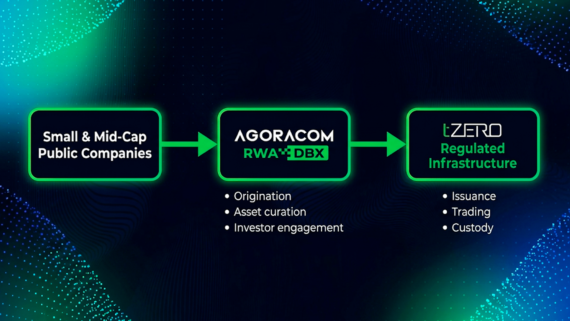
The partnership formally aligns AGORACOM’s issuer origination, asset curation, and investor engagement platform with tZERO’s institutional-grade capital markets infrastructure, creating a structured pathway for small-cap public companies to tokenize real-world assets that reach global investors within established regulatory frameworks.

tZERO: Regulated Capital Markets Infrastructure for the Tokenized Economy

tZERO operates one of the most comprehensive regulated digital securities infrastructures in the market today, providing end-to-end capabilities across issuance, secondary trading, settlement, and on-chain custody of tokenized securities. Built to integrate with traditional capital markets, tZERO’s platform is designed to support compliant digital representations of securities and asset-backed instruments across multiple asset classes and jurisdictions.

Through this partnership, tZERO will serve as the regulated infrastructure backbonewithin the AGORACOM RWA DBX ecosystem, supporting qualifying offerings with capital markets rigor, operational discipline, and regulatory oversight consistent with institutional standards.

“One of the challenges the tokenization space has been dealing with is attacking the historically illiquid, niche and opaque asset classes first. Public companies and their real-world asset bases – supported by existing disclosure market analysis and investor understanding – solve that issue.  And public companies need tokenization models that align with existing disclosure, governance, and regulatory requirements,” said Alan Konevsky, Chief Executive Officer at tZERO. “This partnership is designed to extend familiar capital markets principles into tokenization form, allowing issuers to evaluate tokenization of assets, intellectual property and revenue streams as a structured, compliant financing tool to unlock liquidity and raise non-dilutive capital.”

tZERO is one of only two firms in the United States approved as a Special Purpose Broker-Dealer, allowing it to custody digital securities within a regulated broker-dealer framework, with their infrastructure already being utilized across a growing set of regulated digital securities use cases, including:

  • Multiple live and completed regulated digital securities offerings, spanning private and public company issuers
  • Tens of millions of digital securities traded through regulated secondary market infrastructure
  • Operational issuance, trading, settlement, and custody under a U.S. broker-dealer framework
  • Active engagement with institutional issuers, investors, and market participants seeking compliant tokenization pathways
  • Years of direct regulatory engagement and approvals, reflecting sustained investment in compliance-first market infrastructure

These real-world deployments underscore tZERO’s role as a production-grade capital markets platform and provide the foundation required to support asset tokenization initiatives at institutional standards.

AGORACOM RWA DBX: A New Category Of Real-World Assets From Companies That Are Regulated

AGORACOM RWA DBX is pioneering a new RWA category by tokenizing the assets of small- and mid-cap public companies that are:

  • Real Growth Assets
  • Verified By Securities Filings
  • Supported By Audited Financials
  • Subject To Regulatory Oversight & Continuous Disclosure

Those assets, which have have historically lacked modern, institutional-grade pathways to capital formation and global investor visibility, include but are not limited to: 

  • Mineral and Resource Projects (Gold, Silver, Critical Minerals)
  • Specialty Materials
  • Energy Technologies
  • Intellectual Property
  • Fintech Platforms

AGORACOM and tZERO are addressing that gap by providing issuers with an effective, credible and institutional approach to tokenization, designed to expand financing and investor access options at scale while maintaining the regulatory rigor required by sophisticated market participants.

The partnership with tZERO provides the regulatory and operational foundation required to develop this category responsibly and at scale.

“This partnership is about giving small and mid-cap public companies better options,” said George Tsiolis, Founder of AGORACOM. “By combining AGORACOM RWA DBX’s issuer expertise and engagement capabilities with tZERO’s institutional-grade, regulated infrastructure, we are creating a serious, execution-ready framework for asset tokenization that sophisticated investors, funds and family offices around the world can trust.”

 What This Partnership Enables for Small and Mid-Cap Issuers

This partnership establishes a clear, institutional-grade pathway for small and mid-cap public companies to evaluate and implement asset-level tokenization as a legitimate capital markets strategy.

Through AGORACOM RWA DBX, supported by tZERO’s regulated infrastructure, issuers can now approach tokenization with the same level of rigor, compliance and credibility expected in traditional capital markets. This includes a disciplined process for identifying suitable operating assets, structuring compliant digital securities and introducing those instruments to global investor markets through regulated channels.

For management teams, this means tokenization is no longer theoretical or experimental. It becomes a practical, execution-ready option – designed to complement existing public listings by adding a regulated, asset-backed financing lane that preserves disclosure standards, governance, and institutional trust.

The objective is not to replace public markets, but to expand the toolkit available to serious public companies seeking modern, non-dilutive ways to unlock asset value and broaden investor access.

What This Means for Small and Mid-Cap Issuers

    • Expand global investor reach by introducing asset-backed digital securities through regulated infrastructure accessible to institutional, family office, and sophisticated investors across multiple jurisdictions
    • Unlock value from existing operating assets without relying exclusively on common share dilution, enabling capital formation strategies that are better aligned with long-term asset development
    • Strengthen balance-sheet and financing optionality by creating new, compliant funding lanes that can sit alongside traditional equity and debt markets
    • Increase investor understanding and confidence through transparent, asset-level structures supported by audited financials, public disclosure, and regulated custody and trading
    • Build a more resilient shareholder base by engaging investors who are aligned with asset performance and long-term company fundamentals, rather than short-term trading dynamics
    • Position the company as forward-looking and institution-ready, demonstrating governance discipline and strategic sophistication to boards, regulators, and capital providers

AGORACOM’s Role: Origination, Curation, and Engagement

AGORACOM RWA DBX sits at the center of the ecosystem as the category builder and origination platform, leveraging AGORACOM’s more than 25-year history working with small-cap public companies and investors.

AGORACOM RWA DBX is responsible for identifying and curating suitable issuers, supporting asset-level analysis, and delivering the education, communication, and investor-engagement infrastructure required for sustainable adoption. This includes moderated investor forums, digital content, and issuer-focused education designed to align market understanding with institutional expectations.

The initiative is already gaining momentum. AGORACOM has signed its first RWA letter of intent with a public company, hosted its inaugural RWA webcast with more than 200 small-cap CEOs and stakeholders, and announced ecosystem partnerships with Dubai Blockchain Center, BlockRidge, and Pegasus Fintech as it prepares for meaningful deal flow beginning in 2026 and accelerating through 2030.

Next Steps for Public Companies

AGORACOM RWA DBX is already working with a limited number of small and mid-cap public companies to evaluate asset-level tokenization opportunities within this newly established framework.

Management teams and boards interested in understanding whether their operating assets may be suitable for this approach are encouraged to engage in early exploratory discussions. These initial conversations are intended to assess asset characteristics, governance considerations, and strategic fit well before any formal structuring or execution decisions are made.  Please visit our website https://agoracomrwa.com/ 

About tZERO

tZERO Group, Inc. (tZERO) and its broker-dealer subsidiaries provide an innovative liquidity platform for private companies and assets. We offer institutional-grade solutions for issuers looking to digitize their capital table through blockchain technology, and make such equity available for trading on an alternative trading system. tZERO, through its broker-dealer subsidiaries, democratizes access to private assets by providing a simple, automated, and efficient trading venue to broker-dealers, institutions, and investors. All technology services are offered through tZERO Technologies, LLC. For more information, please visit our website www.tZERO.com 

About tZERO Digital Asset Securities, LLC

tZERO Digital Asset Securities, LLC is a broker-dealer registered with the SEC and a member of FINRA and SIPC. It is the broker-dealer custodian of all digital asset securities offered on tZERO’s online brokerage platform. More information about tZERO Digital Asset Securities may be found on FINRA’s BrokerCheck.

About tZERO Securities, LLC

tZERO Securities, LLC is a broker-dealer registered with the SEC and a member of FINRA and SIPC. It is the operator of the tZERO Securities ATS. More information about tZERO Securities may be found on FINRA’s BrokerCheck.

Forward-Looking Statements by tZero

This release contains forward-looking statements. In addition, from time to time, tZERO, its subsidiaries, or its representatives may make forward-looking statements orally or in writing. These forward-looking statements are based on expectations and projections about future events, which is derived from currently available information. Such forward-looking statements relate to future events or future performance, including financial performance and projections; growth in revenue and earnings; and business prospects and opportunities. You can identify forward-looking statements by those that are not historical in nature, particularly those that use terminology such as “may,” “should,” “expects,” “anticipates,” “contemplates,” “estimates,” “believes,” “plans,” “projected,” “predicts,” “potential,” or “hopes” or the negative of these or similar terms. In evaluating these forward-looking statements, you should consider various factors, including, without limitation: the ability of tZERO and its subsidiaries to change the direction; tZERO’s ability to keep pace with new technology and changing market needs; performance of individual transactions; regulatory developments and matters; and competition. These and other factors may cause actual results to differ materially from any forward-looking statement. Forward-looking statements are only predictions. The forward-looking events discussed in this release and other statements made from time to time by tZERO, its subsidiaries or their respective representatives, may not occur, and actual events and results may differ materially and are subject to risks, uncertainties and assumptions. tZERO, its subsidiaries, and its representatives are not obligated to publicly update or revise any forward-looking statement, whether as a result of uncertainties and assumptions, the forward-looking events discussed in this release and other statements made from time to time by tZERO, its subsidiaries or its representatives might not occur.

About AGORACOM RWA DBX

AGORACOM RWA DBX is a Dubai-based consulting agency that is focused on helping small and mid-cap public companies unlock growth capital by tokenizing real-world assets held in subsidiaries. Working with a network of leading independent legal, financial, and technical partners from around the world, the firm provides a fully coordinated process from structure and compliance to token issuance and listing on exchanges that reach primary and secondary markets. The tokenization program is designed to offer non-dilutive financing alternatives that preserve equity structure, increase asset liquidity, and open new access to global capital. AGORACOM RWA DBX does not provide virtual-asset services in or from the Emirate of Dubai and this announcement is not  an offer to the public.

By focusing on listed issuers in North America that are fully regulated and audited by multiple securities regulators, AGORACOM RWA DBX is creating a brand new asset class in Real World Asset Tokenization that provides investors around the world with access to growth assets of emerging public companies that are fully verifiable and conservatively projected to be a $10 billion market by 2030, with the entire RWA market projected to reach $16 trillion.  This new asset class represents a significant alternative for growth investors to current RWA Tokens which are largely limited to sovereign treasuries, mega real estate projects, stock of mega cap issuers and non-compliant or opaque tokens.  

AGORACOM RWA DBX collaborates with AGORACOM, the pioneer of online investor relations and a digital marketing platform with a 27 year track record of serving 500 public companies and  9,000,000 investors.   

Learn more at https://agoracomrwa.com/ 

The TSX Venture Just Made Your Company’s Market Data Available On 40 Blockchains

Posted by AGORACOM-JC at 10:10 AM on Tuesday, December 16th, 2025

Why This Shift Makes Small-Cap RWA Tokens Even More Attractive In 2026 

From AGORACOM — Your Partner in Asset Tokenization & Capital Markets Innovation

If you’re listed on the TSX Venture Exchange, you’re company’s official market data is now on over 40 blockchains around the world. How?

The TSX Venture Exchange has made official public company market data usable inside blockchain-based financial systems.  

For companies beginning to explore real-world asset tokenization, or even just trying to understand where capital markets are heading, this is a meaningful event that deserves attention.

Not because it forces change today, but because it quietly reshapes what becomes possible tomorrow.

If you’ve been paying close attention to AGORACOM RWA, this shouldn’t come as a surprise to you as it once again validates where we have been leading you.

If you weren’t paying close attention, or just didn’t believe / understand that this was possible, then it’s time to start paying closer attention by:

1.  Watching our RWA Tokenization Webcast Video 

2.  Visiting Our Newly Launched RWA HUB To Catch Up On Previous Articles

3.  Continue Reading Below

FINANCING IS NEVER GOING TO BE THE SAME

For decades, public companies have raised capital through a familiar set of channels: equity, debt, joint ventures, royalties, and project financing. Each comes with trade-offs, and for small-cap companies, those trade-offs often include dilution, complexity, or limited access to capital altogether.

For years we were willing to accept those trade-offs, until the system turned against us by manipulating our stock prices and valuations to the point of making financing untenable.

But one thing we know about systems that have fallen out of balance is that they revert to the mean, or new systems are formed.  That new system is Real World Asset Tokenization.

RWA Tokenization is a new form of capital infrastructure that has been developing in parallel to our eroding system.  RWA is designed to finance assets directly, distribute investment globally and operate continuously.

Until now, tokenization largely lived outside the public markets.

By making TSX Venture company data usable inside digital capital systems, the exchange has taken a first step toward connecting regulated public companies to this emerging infrastructure. Your company does not change. Your listing does not change. But your assets become visible and referenceable in a new financial environment.

That distinction is subtle but a major step forward in AGORACOM Real World Asset Tokenization.

WHAT THIS MEANS IN THE REAL WORLD FOR SMALL CAP

For a CEO just beginning to learn about real-world asset tokenization, this development helps answer a fundamental question: How does a public company actually participate in this without disrupting everything else?

Here are a few practical examples.

A mining company with a defined but underfinanced asset can explore tokenizing a specific project to raise development capital, while leaving its public equity structure untouched.

An energy or infrastructure company can isolate a revenue-producing asset and finance it independently, creating a new capital stream without issuing shares.

A technology company with valuable intellectual property can structure asset-level financing tied to that IP, rather than forcing all value creation through the stock.

In each case, the operating company remains the owner. The public listing remains intact. The asset simply gains access to a broader, more flexible pool of capital.

The TSX Venture’s move matters because it reinforces that this model can live alongside the public markets not outside them.

WHY THIS DEVELOPMENT IS A QUIET VOTE OF CONFIDENCE IN RWA TOKENIZATION

Asset tokenization only works at scale if it is anchored to real companies, real assets and real governance. That has always been the missing piece.

By enabling public-company data to function inside tokenized capital systems, the TSX Venture is effectively acknowledging what AGORACOM has been saying all along – that regulated public companies should be part of tokenization innovation by becoming the foundation of it.

This strengthens legitimacy, improves transparency, and builds confidence for investors who want exposure to tokenized assets + the safeguards of traditional markets … something we expressly stated in this video clip during our presentation:

Audited & Regulated Gives Small Cap RWA Tokens A Massive Advantage

For all of you, this signals that RWA Tokenization strategies are moving from the fringe toward the financial mainstream.

WHY AGORACOM IS ALREADY LEADING THE SHIFT TO REAL WORLD ASSET TOKENIZATION

AGORACOM did not arrive at real-world asset tokenization by chasing blockchain narratives or reacting to market hype.

We arrived here by listening to hundreds of small-cap CEOs wrestle with the same reality: great assets, constrained financing, and capital markets that too often fail to reflect long-term value.

That experience, combined with our work alongside Terry Lynch and Save Canadian Mining to expose market manipulation, led us to a clear conclusion. Fighting for fair markets is essential – but in case that wasn’t successful or moving fast enough, we needed a Plan B.

Real World Asset Tokenization became that plan.

Since February of 2023, AGORACOM has built the partnerships, compliance frameworks and operating model required to make asset tokenization viable for public companies – not crypto startups and offshore vehicles – but regulated issuers with real assets and real shareholders.

RWA Allows Small Caps To Reach The World's Biggest Markets

This TSX Venture development confirms that we were early and right. While others are still debating theory, the infrastructure is quietly aligning around the path AGORACOM has been pioneering.

BlackRock CEO Latest RWA Tokenization Comments Go Even Farther Than Ever Before

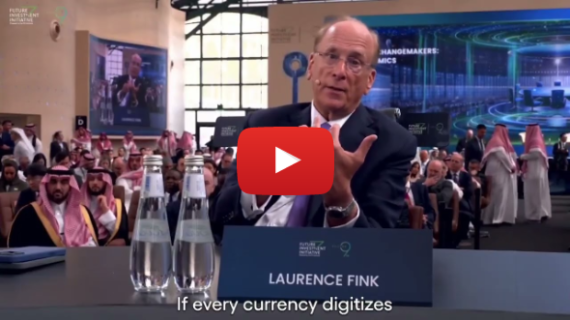
In previous updates we have quoted BlackRock CEO Larry Fink who is by far leading the transition towards tokenization of financial and real world assets.  Here are his latest comments with supporting videos:

“Tokenization is probably the most important component in the evolution of the world’s financial plumbing.”

“We’re not spending enough time talking about how quickly we’re going to tokenize every financial asset.”

BlackRock’s Larry Fink: Why Tokenization Will Redefine Global Markets

If You’ve Built Real Assets It’s Time to Capitalize on Them

The future of finance is changing very rapidly to the benefit of all of us – and AGORACOM is pioneering the path for small and mid cap companies.  With the world’s leading regulators and financial titans opening the door, AGORACOM is now positioned to connect public companies to global tokenized liquidity in a smart and compliant manner.

Fortune favours the bold.  Let’s go make history together.

Best Regards,

George Tsiolis, LL.B.

Founder

AGORACOM

AGORACOM Explainer Videos About 2026 Cashless Program

Posted by AGORACOM-JC at 5:49 PM on Thursday, December 4th, 2025

Good day to you all.  With only another 10 days or so before we all start slowly winding down operations for the holidays, most of you are starting to think about your 2026 marketing programs – but don’t have the time to dive into decks and proposals.

This is especially true in 2025 where AI is creating amazing new communications possibilities – but also moving too fast to keep up with and evaluate.

Don’t worry.  We’ve got you covered. 

ASK AND YOU SHALL RECEIVE – AGORACOM EXPLAINER VIDEOS

We’ve made it super easy for you and your management teams to understand exactly how AGORACOM can help you in 2026 by creating 4 short and visually powerful explainer videos that cover:

  • AGORACOM Overview (4 mins)
  • AGORACOM AI Content (3 mins)
  • AGORACOM Social Media Distribution (2 mins)
  • AGORACOM Verified Forums To End Trolls (2 mins)

Grab a coffee or your favourite beverage and watch them right now by clicking on their respective thumbs at the end of this email … or go directly to the master playlist on YouTube right now.

ALL OF OUR FIREPOWER – WITHOUT SPENDING $1 OF YOUR VALUABLE CASH

As the pioneer of online investor relations, marketing and AI content marketing since 1997, we have helped over 500 small cap companies communicate like Fortune 500 companies without having to spend $1 of their cash. 

And it’s 100% compliant.  No rule breaking and predatory cheque swaps.

The AGORACOM cashless and compliant shares for services program means you can add on all of our firepower in 2026 without having to spend $1 of your valuable cash.  

This is the friendliest structure in all of smallcap because we put our money where our mouth is to create a true partnership.   


Please reply here to schedule a Zoom call and launch your world class program in 10 days.

CLICK ON THE IMAGES BELOW TO WATCH OUR EXPLAINER VIDEOS RIGHT NOW

AGORACOM Launches It's Newest AI Product | AI CEO

AGORACOM Launches It's Newest AI Product | AI CEO

AGORACOM Launches It's Newest AI Product | AI CEO

AGORACOM Launches It's Newest AI Product | AI CEO

Thank you and I look forward to speaking with you soon.

George Tsiolis, LL.B.

Founder

AGORACOM

MOST RECENT BIG AGORACOM ANNOUNCEMENTS

JANUARY 7, 2025 – AGORACOM Partners With Dubai Blockchain Center

JANUARY 23, 2025 – AGORACOM AI Content Showcase Presentation  (VIDEO)

FEBRUARY 26, 2025 – AGORACOM Partners With Valuit (BlockRidge) To Tokenize Smallcap Assets 

APRIL 17, 2025 –  AGORACOM Launches AI CEO For Smallcaps

AUGUST 12, 2025 AGORACOM Real World Asset Tokenization Showcase (VIDEO)

NOVEMBER 10, 2025 – UAE Commits $10B to RWA Tokenization

NOVEMBER 18, 2025 – AGORACOM Secures First RWA Tokenization LOI with XTM

About AGORACOM www.AGORACOM.com 

AGORACOM is the pioneer of online investor relations, with the first ever annual campaign in 1997 and now provides marketing, broadcasting, conferences and investor relations services to North American small and mid-cap public companies on every exchange.  

AGORACOM has served over 900 million pages of information to more than 9 million investors, representing 75 million visits to over 500 clients. The average visit of 8min 43sec shatters industry standards and is more than double that of leading global financial sites, which can be attributed to the creation of industry leading content that is now led by AGORACOM Generative AI, which creates revolutionary content for small cap companies in ways never before seen, including AI movie trailers that transform how their stories are told.  

Watch now at https://agoracom.com/ 

Inquire about working with AGORACOM at https://agoracom.com/cashless-program 


BREAKING: AGORACOM Secures First Small-Cap RWA Tokenization LOI with XTM

Posted by AGORACOM-JC at 3:51 PM on Wednesday, November 19th, 2025

Good afternoon to you all, we have some big news to share with you today. 

As the pioneer of online investor relations, marketing and social media since 1997, AGORACOM has continuously helped over 500 small cap companies incorporate new and powerful technologies into their operations including the first ever:

  • Google Certified Search Engine Marketing Programs
  • YouTube Interviews
  • Podcasts
  • Content Partnerships With Yahoo Finance, Globe & Mail, AOL and others
  • Social Media Campaigns
  • Artificial Intelligence Generated Movie Trailers
  • Cashless & Compliant Shares For Services Programs
  • … and so much more

Today I’m happy to share with you another big first for our industry ….

XTM Inc. (PAID:CSE) Becomes the First Public Company to Sign an LOI With AGORACOM RWA DBX for Preferred Share Tokenization


XTM has signed a Letter of Intent with AGORACOM RWA DBX to explore the tokenization of Preferred Shares in its wholly owned U.S. subsidiary, XTM USA, by an arm’s-length organization for the purpose of structuring a potential Preferred Share tokenization. 

XTM USA holds the intellectual property for its Earned Wage Access solution and key operating contracts, representing a 2026 market of 150,000+ daily wage earners.

This proposed tokenization initiative relates strictly to Preferred Shares in a private subsidiary of XTM and does not represent or imply the creation of any blockchain token in association with or tied to XTM’s common equity or public listing.

WHY THIS MATTERS FOR SMALL-CAP CEOS

For our industry, it marks the first time a North American small-cap has formally stepped into a structured, compliant tokenization process with AGORACOM RWA DBX and our independent legal, technical, and exchange partners.

Here is what this means for you:

1. Access to Non-Dilutive Capital

Preferred Share tokenization enables companies to raise capital without issuing new common shares – preserving ownership structure and future value, while avoiding predatory dilution structures.

2. A New Pathway for Unlocking Asset Value

Many small caps have valuable assets trapped inside subsidiaries, contracts, licenses, resource projects, or divisions. Tokenization allows those assets to be structured, verified, and accessed by global capital without touching your public listing.

3. Reduced Reliance on Volatile or Suppressed Equity Markets

For companies impacted by illegal naked short selling or compressed share prices, tokenization provides an alternate route to funding that isn’t dependent on market dynamics.

4. A Compliant Gateway to Global Liquidity

When structured properly with independent legal, financial, and technical oversight – tokenized assets open the door to global investor participation not available in traditional markets.

This is not a replacement for capital markets. It’s a practical, responsible extension of them.

GLOBAL VALIDATION: THE WORLD IS MOVING TOWARD TOKENIZED FINANCE

A separate and equally important trend is happening around the world — and it strongly supports what AGORACOM is building for small caps.

United States: Regulatory Momentum Increasing

The CFTC has clarified pathways that allow U.S. traders to participate in compliant offshore exchanges and expandfuture liquidity for tokenized assets.

SEC “Project Crypto”

The SEC has already signaled that tokenized products will play an increasingly central role in the evolution of regulated markets.

BlackRock CEO Latest RWA Tokenization Comments Go Even Farther Than Ever Before

In previous updates we have quoted BlackRock CEO Larry Fink who is by far leading the transition towards tokenization of financial and real world assets.  Here are his latest comments with supporting videos:

“Tokenization is probably the most important component in the evolution of the world’s financial plumbing.”

“We’re not spending enough time talking about how quickly we’re going to tokenize every financial asset.

Each of these developments underscores the same reality: tokenization is rapidly becoming core market infrastructure

AGORACOM RWA DBX: BUILDING THE SMALL-CAP TOKENIZATION ECOSYSTEM

This milestone with XTM reflects work that began in February of 2023 when we recognized the critical need for small-cap companies to access global tokenized capital in a responsible and compliant manner, including:

  • A compliance-first tokenization structure specifically for public companies
  • Independent legal, accounting, and technical support for issuers
  • Partnership alignment with Dubai Blockchain Center
  • Tokenization execution and infrastructure partnership with BlockRidge
  • Structure, oversight, and compliance partnership with Pegasus Fintech Group
  • Early-stage alignment with RWA exchange partners for primary and secondary listing
  • A 2026 roadmap aligned with global regulatory developments

Our mission is simple: Enable emerging public companies to unlock real value from their real assets without diluting shareholders or relying on limited options tied to market dynamics.

XTM is the first. Several others are in the pipeline and the sector is now officially moving.

WHAT THIS MEANS FOR YOU AND HOW TO GET AHEAD OF THE CURVE

If you have built valuable assets including operating contracts, resource projects, IP, subsidiaries, or cash-flowing divisions – this is the time to understand how tokenization could work for your company. The companies that prepare early will be the ones ready to access this new global liquidity when the market fully opens in 2026.

  1. AGORACOM RWA INFORMATION AND EDUCATION VIDEOS

If you have not already done so, watch (or listen) to our RWA Tokenization Showcase attended by more than 200 CEO and industry stakeholders, which has been viewed 11,000+ times so far.

For your convenience we have also created a playlist of smaller topic clips. Click on the image below to be taken to the video and playlist.

  1. LET’S TALK

If you’d like to explore how this applies to your company, reply here and we’ll schedule a Zoom.

The future of finance is changing very rapidly to the benefit of all of us – and AGORACOM is pioneering the path for small and mid cap companies.  With the world’s leading regulators and financial titans opening their doors, AGORACOM RWA DBX is now positioned to connect public companies to global tokenized liquidity in a smart and compliant manner.

Fortune favours the bold.  Let’s go make history together.

Best regards,

George Tsiolis, LL.B.
Founder, AGORACOM

If You’ve Built Real Assets It’s Time to Capitalize on Them

UAE Commits $10B to RWA Tokenization Right As AGORACOM Accelerates Tokenization Of Small Cap Companies Assets

Posted by AGORACOM-JC at 1:12 PM on Monday, November 10th, 2025

GFG logo served with static path of public directory

The UAE just made it official: over $10 billion in real-world assets are being tokenized through regulated blockchain infrastructure.

Over two days in Abu Dhabi last week, more than 300 executives from traditional finance, the digital assets space and regulation gathered to map the deployment of tokenized finance at scale.

Tokenization Moves To Deployment

The core message of the event was that tokenization is moving from pilots to production.

It’s the clearest signal yet that tokenization is moving from concept to capital markets infrastructure. And while most of the world is focused on mega-cap use cases, AGORACOM is focused on ensuring public small and mid-cap companies will participate and thrive in this new financing model.

“The acceleration of RWA tokenization comes as no surprise to us given the fact we have spent the last two years building the partnerships, compliance guard rails and model that will make RWA tokenization possible for small and mid-cap sized public companies whose growth has been constrained by artificially depressed stock prices.” – AGORACOM Founder – George Tsiolis 

The traditional capital markets model has made it nearly impossible for small caps to grow without unnecessary dilution or inefficient financing structures. 

At AGORACOM, we’ve seen this firsthand through our work with hundreds of growth-stage CEOs, as well as our partnership with Terry Lynch and Save Canadian Mining, where we’ve helped the fight to expose the damage caused by predatory short selling.

We believe in that fight and will continue that fight – but any good plan also requires a Plan B.

Real-World Asset Tokenization Is The Solution

Through our partnerships with the likes of Dubai Blockchain Center, BlockRidge, Pegasus Fintech Group and others – AGORACOM is building an RWA framework tailored to the structure, compliance, and capital needs of emerging public companies with great assets but limited fair financing options..

If you have not already done so, watch our RWA Tokenization Showcase attended by more than 200 CEOs and industry stakeholders (click the image below)

WHY THIS UAE NEWS TURBOCHARGES AGORACOM’S RWA INITIATIVE 

  • First-Mover Advantage: AGORACOM is the only platform already building a robust AND compliant ecosystem for small-cap public companies to tokenize their assets.
  • Validation at the Highest Level: With the UAE regulators paving the way, the narrative around RWA is no longer theoretical – it’s officially endorsed by policy.
  • Liquidity at Scale: UAE capital can now flow directly into tokenized ecosystems, creating unprecedented access for small-cap issuers and investors.

The UAE’s commitment confirms what we’ve been building since George’s first visit to Dubai in February of 2023 in search of a blockchain based financing solution.

  • An Ecosystem Of Compliance, Structure and Token Experts
  • An RWA tokenization structure tailored to public companies
  • Primary and Seconday RWA Token Exchanges To Support Liquidity
  • A 2026 roadmap that aligns with a rapidly evolving RWA market
  • A trusted marketing and engagement platform already embedded in the ecosystem

BlackRock CEO Latest RWA Tokenization Comments Go Even Farther Than Ever Before

In previous updates we have quoted BlackRock CEO Larry Fink who is by far leading the transition towards tokenization of financial and real world assets.  Here are his latest comments with supporting videos:

“Tokenization is probably the most important component in the evolution of the world’s financial plumbing.”

“We’re not spending enough time talking about how quickly we’re going to tokenize every financial asset.”

If You’ve Built Real Assets It’s Time to Capitalize on Them

The future of finance is changing very rapidly to the benefit of all of us – and AGORACOM is pioneering the path for small and mid cap companies.  With the world’s leading regulators and financial titans opening the door, AGORACOM is now positioned to connect public companies to global tokenized liquidity in a smart and compliant manner. .

Fortune favours the bold.  Let’s go make history together.

VIDEO REPLAY -: AGORACOM Tokenized Financing Webcast

Posted by AGORACOM-JC at 2:52 PM on Wednesday, September 24th, 2025

Last month on August 12th, AGORACOM made history once again by holding our first ever Real World Asset Tokenized Financing Webcast, in partnership with BlockRidge, our Dubai-based RWA global partners – and over 200+ small cap executives.

To say the webcast went exceedingly well would be an understatement, considering the Q&A session went longer than the webcast itself. For those of you who were on the webcast, you again have our deepest thanks and appreciation for taking the time to watch and participate with such enthusiasm.

Given the timing of the webcast, many of you were on vacation and sent both your regrets for not being able to participate, as well as, requests for the replay video.  Many attendees also asked for the replay to share with members of their teams who could not attend.

Ask and you shall receive because the full replay is now available on demand.  Simply click on the image below to either watch the video … or even listen to it while driving or walking.

THE PARADIGM SHIFT HAS STARTED – MORE WEBCASTS ON THE WAY

Given the multiple layers of RWA tokenization and requests by many of you over the past month, we’re happy to announce that AGORACOM will be hosting further webcasts to inform and educate all of you on how to participate in the paradigm shifting power of tokenized financing.

As an example of just how fast this paradigm shift is moving, the following major stories broke over just the last 45 days:

What does this mean for small cap companies?  Issuers who want to use AGORACOM and tokenization as a way to raise money, access global investor bases and escape the grip of predatory traditional financing … are finally going to get their chance.  .

FINANCING DISCUSSIONS HAVE ALREADY STARTED – $350 MILLION +

Discussions are already under way with multiple companies from traditional gold to rural telecom networks representing just under $400M in potential financing.  If you need to raise a minimum of $20,000,000 against a current real world asset that is set to achieve commercialization within 24 months, then please reply to this message.

GET YOUR POPCORN READY AND WATCH OUR VIDEO

In the meantime for those of you who are just starting your RWA journey, please enjoy the webcast and we look forward to talking soon.  This isn’t theory. It’s a groundbreaking shift designed to rewrite the rules of capital raising.

AGORACOM is proud to be leading this transformation and we want you to be part of it. Don’t miss the chance to see how tokenization is reshaping the future of small cap markets.

✅ Solutions That Matter: RWA Tokenization tackles predatory terms & naked short selling
✅ Global Access: Compliant RWA infrastructure + blockchain technology opens doors to investors worldwide

Watch the Replay Now.