Agoracom Blog Home

Author Archive

National Crowdfunding & Fintech Association and #KABN Systems North America enter multi-year exclusive partnership to promote Digital Identity in Canada

Posted by AGORACOM-JC at 8:33 AM on Friday, February 14th, 2020
  • National Crowdfunding & Fintech Association of Canada (NCFA) and KABN Systems North America Inc. (KABN NA) announced a collaborative partnership to promote Digital Identity management and usage in Canada through a 3 year exclusive partnership launching at the 2020 Fintech and Financing Conference and Expo (FFCON20) to be held in downtown Toronto on March 23-24, 2020.

Digital Identity program to be launched at 20: RISE

TORONTO, ON / February 13, 2020 / The National Crowdfunding & Fintech Association of Canada (NCFA) and KABN Systems North America Inc. (KABN NA) announced today they have formed a collaborative partnership to promote Digital Identity management and usage in Canada through a 3 year exclusive partnership launching at the 2020 Fintech and Financing Conference and Expo (FFCON20) to be held in downtown Toronto on March 23-24, 2020.

View photos

With finance and fintech touching virtually every business and entity of people’s lives, the NCFA and KABN NA will be embarking on awareness and education programs on the value of having a secure, re-usable online identity that can reduce identity fraud and replace the need to show credentials every time you need to prove your online identity.

KABN Systems North America Inc. is a Canadian Fintech company that specializes in continuous online Identity Verification, Identity Management and Monetization and is currently in the launch phase of its digital banking and financial services platform, Pegasus Flyte.

KABN NA recently announced that it has executed Definitive Agreements with Torino Power Solutions (CSE:TPS), subject to all necessary approvals, Torino will acquire all of the issued and outstanding shares in the capital of KABN NA, which will constitute a fundamental change of the Company and that will result in a reverse takeover (the “RTO“) of Torino by KABN NA.

The theme for the 6th annual FFCON20 is RISE, focused on increasing the success and sustainability of Canada’s fintech and financial sector fostering partnerships between fintech companies and financial institutions, opening investment channels and connecting emerging talent with markets. KABN will be a prominent partner of this event and all other events that the NCFA presents over the next 3 years.

FFCON20 facilitates thought-provoking and relevant discussions, lively debates and personal networking for the cross-pollination of ideas and experiences. The two-day event also provides a variety of competitions where investors can find deal flow and companies can get direct access to prominent investors. FFCON20, at its core, brings markets to life and provides an open forum for collaboration between emerging companies and major stakeholders.

“Identity is a key component of the online fintech environment and consumers are becoming more aware of its value and vulnerability. We’re very excited to partner with KABN North America to educate consumers and businesses on the value of digital identity in the marketplace, how to protect it and how to manage it.” Craig Asano, Founder and CEO, NCFA

“We are excited to have the opportunity to partner and work with the NCFA and leverage their leadership in the Fintech sector and create leadership in the digital identity arena. KABN is focused on collaboration with industry stakeholders and supports educating North Americans about the value of digital identity, to create better use of our private data.” Ben Kessler, CEO, KABN Systems North American Inc.

For more information on FFCON20: RISE click here

The National Crowdfunding & Fintech Association (NCFA) is a financial innovation ecosystem that provides education, market intelligence, industry stewardship, networking and funding opportunities and services to thousands of community members and works closely with industry, government, partners and affiliates to create a vibrant and innovative fintech and funding industry in Canada. For more information, please visit: ncfacanada.org
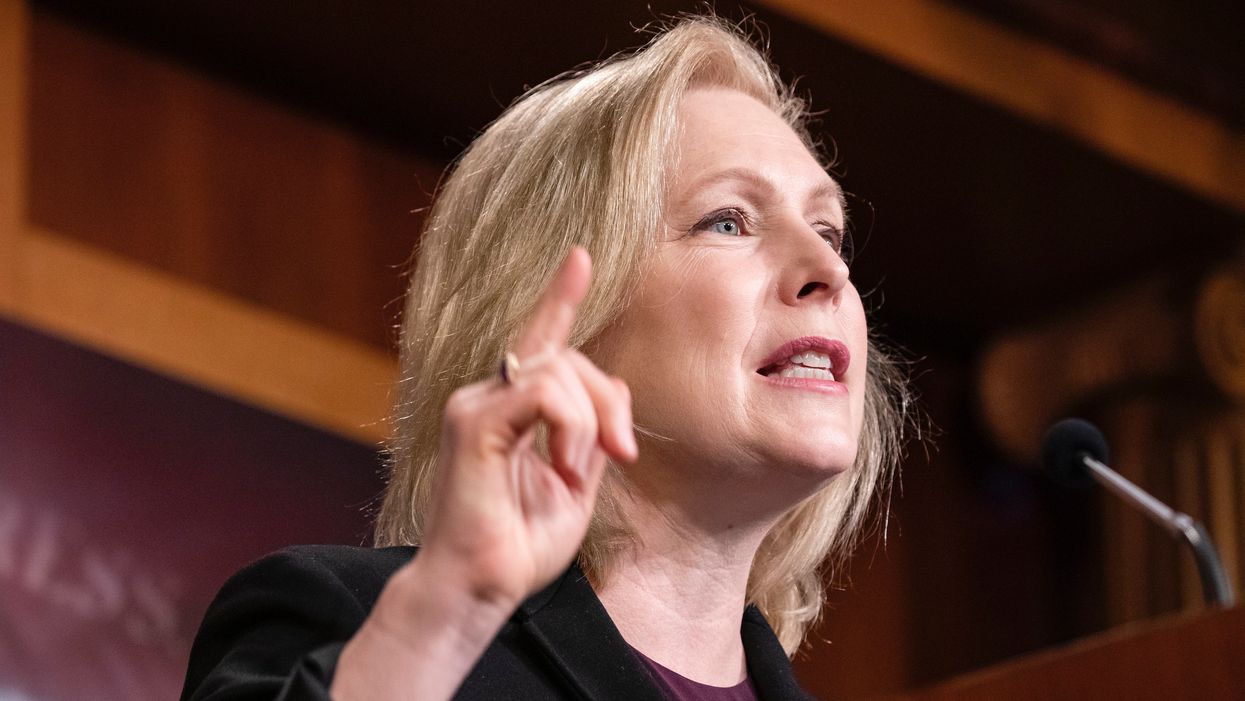
Kirsten Gillibrand’s new bill would establish a US data protection agency SPONSOR: #KABN Systems North America Inc.

Posted by AGORACOM-JC at 8:28 AM on Friday, February 14th, 2020

SPONSOR: KABN Systems North America Inc. A Fintech platform focused on Verifying, Managing & Monetizing Online Identity. KABN’s mission is to create a world-class suite of products and services that support the decentralized market economy, globally enabling consumers to manage their digital identity and other data to create value-based relationships in the financial and loyalty services arena.

Kirsten Gillibrand’s new bill would establish a US data protection agency

The Data Protection Agency would enforce federal privacy laws out of the hands of the FTC.Issie Lapowsky

  • Members of Congress still haven’t written the rules of the road for consumer privacy in America. But on Thursday, Democratic Sen. Kirsten Gillibrand introduced a new bill that would at least appoint a traffic cop.

February 13, 2020

Members of Congress still haven’t written the rules of the road for consumer privacy in America. But on Thursday, Democratic Sen. Kirsten Gillibrand introduced a new bill that would at least appoint a traffic cop.

The so-called Data Protection Act of 2020 would create the country’s first data protection agency to oversee how privacy laws in America are enforced and guide Congress on the development of those laws. The agency would be empowered to impose penalties on companies that violate people’s privacy, taken them to court, field consumer complaints, and launch investigations.

Get what matters in tech, in your inbox every morning. Sign up for Source Code.

In a blog post, Gillibrand wrote that the country faces an inflection point similar to the post-9/11 days when the government realized it needed to shore up national security and established the Department of Homeland Security to do it.

“As our country and economy continue to evolve with the digital age, we face a national crisis as our personal data gets targeted — and not just for marketing by brands, but also to establish if we can access certain jobs, loans, or prices on products,” Gillibrand wrote. “Americans should be able to go to an institution that will look out for, and actively work to protect, their privacy and freedom.”

The agency would enforce current privacy laws and any future laws Congress passes and have rule-making authority to determine how those laws are carried out. Specifically, the agency would be able to conduct impact assessments on companies deploying “high-risk practices” with regard to data. That includes companies using data to profile people on a large scale. The bill also gives the agency the power to regulate consumer scoring in sensitive areas like housing, employment and education.

The agency would have subpoena power and the ability to take companies to court over violations of federal privacy law. It would also closely monitor large companies — both in terms of revenue and in terms of the amount of data they collect — and ask for reports from these companies, to ensure they’re complying with the law. Meanwhile, the agency would be tasked with guiding Congress on emerging technologies and representing the United States in international deals regarding privacy.

Today, the federal privacy laws that do exist, like the Children’s Online Privacy Protection Act and the Fair Credit Reporting Act, are enforced by the Federal Trade Commission. The FTC Act also prohibits unfair or deceptive practices, a law that the agency has used to punish companies like Facebook for their privacy scandals. But consumer advocates have always said the FTC lacks teeth, primarily because the agency can’t levy fines on first-time offenders. Some federal privacy bills that have been introduced recently, including one sponsored by Washington Democrat Sen. Maria Cantwell, would change that, creating a new privacy bureau within the FTC and giving it more punitive powers.

But Gillibrand’s bill aims to start fresh with a brand-new agency, which would assume much of the enforcement power from the FTC. Privacy groups like the Electronic Privacy Information Center, which worked with Gillibrand’s office on the bill, view this as a welcome change.

“The FTC has failed over and over again to protect American consumers,” said Caitriona Fitzgerald, chief technology officer and policy director at EPIC. Fitzgerald points to the consent decree the FTC reached with Facebook over privacy issues in 2011. That didn’t stop Facebook from committing subsequent privacy violations that ultimately led to the Cambridge Analytica scandal. Last year, the FTC fined Facebook $5 billion, a penalty that Fitzgerald thinks was woefully inadequate. “The FTC did nothing to ensure this won’t happen again. And that’s only the latest example,” she said.

The agency Gillibrand seeks to create would be similar to the data protection authorities that oversee enforcement of the General Data Protection Regulations throughout Europe. The only difference is in the United States, there is no comprehensive data privacy law to enforce. The closest thing the U.S. has to GDPR is the California Consumer Privacy Act, which only concerns California residents. A new ballot initiative in California that seeks to rewrite CCPA would create an independent data protection agency, but that agency would still only protect Californians.

The avalanche of high-profile consumer privacy failures over the past few years has led to calls for a strong federal privacy law, including from the tech industry itself. Gillibrand’s proposal for a data protection agency is a response to that, but it stops short of proposing new limits on data use itself. In her blog post, Gillibrand pointed to an array of perceived privacy violations she wants to prohibit, from fitness apps sharing data with health insurance companies to Instagram giving advertisers access to data about its users. Her new Data Protection Agency would be able to do very little to stop that, unless Congress passed a law that said it could.

Fitzgerald says she thinks Gillibrand’s bill could be easily integrated into Cantwell’s comprehensive privacy bill in the Senate. Another comprehensive consumer privacy bill in the House that was introduced last year also calls for the creation of what it calls a “digital privacy agency.”

But some, like Mary Stone Ross, associate director of EPIC, say that even on its own, Gillibrand’s bill has value. Ross argues that it doesn’t matter what privacy laws Congress passes if there’s nobody who’s going to hold companies accountable. “On one hand it might seem a little backward, like you’re putting the cart before the horse, building the enforcement agency before you pass federal consumer privacy law, but in my mind it’s not,” Ross said. “I think the most important place to start is enforcement.”

Source: https://www.protocol.com/federal-privacy-agency-gillibrand-2645128272.amp.html?__twitter_impression=true

INTERVIEW: Empower $CBDT.ca Signs Exclusive Content Deal To Further Convert Its’ Database Of 165,000 Patients $WEED.ca $CGC $ACB $APH $CRON.ca $HEXO.ca $OGI.ca

Posted by AGORACOM-JC at 5:57 PM on Thursday, February 13th, 2020

With 165,000 patients, Empower Clinics (CBDT:CSE) (EPWCF:OTCQB) has a database that almost every medical cannabis and CBD company would kill for.  Add in the fact patient visits increased 351% in Q4 and it becomes the kind of company small cap investors have been dying to find as they watch pretender companies melt away.

But it doesn’t end there.

CBD extraction has been a key element of the company’s vertical integration. Producing its’ own hemp-derived CBD products for its own massive patient list just makes sense. However, thanks to an LOI (moving towards definitive agreement) to JV with extraction experts Heritage Cannabis, the Company’s 5,000 sq ft facility in Oregon is also planning to serve big brand 3rd party partners in the USA .  Empower brings the infrastructure, Heritage brings the expertise and balance sheet.  The result is a match made in shareholder heaven with initial annual capacity of 6,000 Kg at ~ $US 5,000 per Kg, which adds up to $US 30,000,000 in potential revenue.

But It Doesn’t End There

The Company’s CEO, Steven McAuley is Six Sigma certified under the quality initiative of legendary GE chairman Jack Welch. We’ve never seen a Six Sigma certified CEO in the Canadian small cap markets. Never …. which also explains how McAuley has brought Empower so far in just 11 months.

If anyone understands digital, it’s McAuley. So it should come as no surprise the Company just signed an exclusive multi-year, multi-national licensing deal with EuroLife to license its “Cannvas.me” cloud based online education platform for the US and Mexico.  Amongst other things, Empower plans to integrate the education platform into its clinics across the United States to help further convert their 165,000 patient database to CBD and medical cannabis through proper education.  

The site also contains premium content for physicians who need to educate themselves and comes with millions of page views already, as well as, 15,000 opted in subscribers, which explains the $460,000 in licensing over 3 years – but $210,000 of that is Empower stock priced at $0.10 (125% above current market prices, which gives you an idea of the confidence EuroLife principals have in the future of Empower.

P.S.  The interview takes place from the floor of the Arizona Cannabis Expo, where Empower has multiple booths and an actual pop-up clinic to acquire new customers in real-time.  That’s what happens when you have a company run by a Six Sigma Certified CEO.

Grab your favourite beverage and settle in to watch what may be your next great small cap investment.

Empower $CBDT.ca Signs Multi-Year Multi-National Licensing Deal with EuroLife $WEED.ca $CGC $ACB $APH $CRON.ca $HEXO.ca $OGI.ca

Posted by AGORACOM-JC at 4:18 PM on Thursday, February 13th, 2020
  • Empower Clinics to license online education technology to provide strategic value to their patients, retail locations, and to their expanding network of franchisees.

VANCOUVER BC / February 13, 2020 / EMPOWER CLINICS INC. (CSE:CBDT)(OTC:EPWCF)(Frankfurt:8EC) (“Empower” or the “Company“), a vertically integrated and growth-oriented CBD life sciences company is pleased to announce it has signed a letter of intent (the “LOI”) with EuroLife Brands Inc. (EURO) (3CMA) (EURPF) (“EuroLife”), a vertically integrated enterprise focused on the pan-European hemp, cannabinoid, and health and wellness sector, granting Empower an exclusive license of EURO’s “Cannvas.me” cloud based online educational platform in certain jurisdictions. The education technology is to be accessed by employees of Empower’s owned and franchised clinics, patients, and a network of nationwide retailers in the United States.

Under the terms of the LOI, Empower will be granted an exclusive license of the Cannvas.me platform in the United States and Mexico (expandable to other jurisdictions). It is envisioned that Empower will integrate and leverage the robust Cannvas.me platform with its burgeoning clinic network across the continental United States. The LOI contemplates a three-year term with a three-year renewable option. An annual $70,000.00 CAD licensing fee will be paid for the life of the proposed agreement, and the issuance of $250,000.00 CAD of Empower common stock at a price of $0.10 per share.

“This next phase in our partnership with Euro is the culmination of many months of collaboration to create access to the immense amount of educational content on the Cannvas.me platform.” said Steven McAuley, Chairman & CEO of Empower. “Empower, as thought leaders in the medical cannabis sector, need to lead consumer & physician education providing a branded curated experience starting with our 165,000 patients and then extending through our network of corporate and franchised clinics.”

“EuroLife’s SaaS based education technology platform will allow Empower Clinics to educate a consumer, retailer, and medical patient on an incredibly efficient basis,” said Shawn Moniz, Chief Executive Officer, EuroLife Brands Inc. “We look forward to working with Empower and their expanding clinic network in providing unencumbered access to our online technology solution.”

In 2018 EuroLife launched a consumer education portal for medical and recreational cannabis consumers. Through many discussions with industry stakeholders the management team discovered there was significant demand for a cloud-based education portal for licensed producers, retail dispensaries and other large to mid-sized companies in the cannabis sector. Executing on a renewed B2B technology model EuroLife recently delivered a redesigned budtender education portal for Aphria Inc. (see February 4, 2020 news release), the global cannabis leader with an unrelenting commitment to people, product quality and innovation. The portal allows Aphria to ensure retail employees across Canada are well-versed in Aphria’s line-up of adult-use brands and enabled with information to provide superior customer service.

ABOUT EMPOWER

Empower is a vertically-integrated health & wellness brand with it’s first hemp-derived CBD extraction facility under development, the Company produces its proprietary line of cannabidiol (CBD) based products and distributes products through company owned and franchised clinics, with wholesale partnerships, online channels and with new retail opportunities nationwide in the U.S. The company is a leading multi-state operator of a network of physician-staffed wellness clinics, focused on helping patients improve and protect their health, through innovative physician recommended treatment options. The company has commenced activity on how to connect its significant data, to the potential of the efficacy of alternative treatment options related to hemp-derived cannabidiol (CBD) therapies.

About EuroLife Brands Inc.

EuroLife Brands (CSE: EURO) (FSE: 3CMA) (OTCPK: EURPF) is a leading global markets cannabis brand empowering the medical, recreational and CPG cannabis industry worldwide through a data-driven CBD marketplace supported by exclusive and unbiased physician-backed cannabis education and detailed consumer analytics.

ON BEHALF OF THE BOARD OF DIRECTORS:

Steven McAuley
Chief Executive Officer

CONTACTS:

Investors: Steven McAuley
CEO
[email protected]
604-789-2146

Investors: Dustin Klein
SVP, Business Development
[email protected]
720-352-1398

For French inquiries: Remy Scalabrini, Maricom Inc., E: [email protected], T: (888) 585-MARI

DISCLAIMER FOR FORWARD-LOOKING STATEMENTS

This news release contains certain “forward-looking statements” or “forward-looking information” (collectively “forward looking statements”) within the meaning of applicable Canadian securities laws. All statements, other than statements of historical fact, are forward-looking statements and are based on expectations, estimates and projections as at the date of this news release.Forward-looking statements can frequently be identified by words such as “plans”, “continues”, “expects”, “projects”, “intends”, “believes”, “anticipates”, “estimates”, “may”, “will”, “potential”, “proposed” and other similar words, or information that certain events or conditions “may” or “will” occur. Forward-looking statements in this news release include statements regarding; the Company’s intention to open a hemp-based CBD extraction facility, the expected benefits to the Company and its shareholders as a result of the proposed acquisitions and partnerships; the effectiveness of the extraction technology; the expected benefits for Empower’s patient base and customers; the benefits of CBD based products; the effect of the approval of the Farm Bill; the growth of the Company’s patient list and that the Company will be positioned to be a market-leading service provider for complex patient requirements in 2019 and beyond. Such statements are only projections, are based on assumptions known to management at this time, and are subject to risks and uncertainties that may cause actual results, performance or developments to differ materially from those contained in the forward-looking statements, including; that the Company may not open a hemp-based CBD extraction facility; that legislative changes may have an adverse effect on the Company’s business and product development; that the Company may not be able to obtain adequate financing to pursue its business plan; general business, economic, competitive, political and social uncertainties; failure to obtain any necessary approvals in connection with the proposed acquisitions and partnerships; and other factors beyond the Company’s control. No assurance can be given that any of the events anticipated by the forward-looking statements will occur or, if they do occur, what benefits the Company will obtain from them. Readers are cautioned not to place undue reliance on the forward-looking statements in this release, which are qualified in their entirety by these cautionary statements. The Company is under no obligation, and expressly disclaims any intention or obligation, to update or revise any forward-looking statements in this release, whether as a result of new information, future events or otherwise, except as expressly required by applicable laws.

SOURCE: Empower Clinics Inc.

#Palladium rising while gold remains flat – SPONSOR: New Age Metals $NAM.ca $WG.ca $XTM.ca $WM.ca $PDL.ca $GLEN

Posted by AGORACOM-JC at 3:19 PM on Thursday, February 13th, 2020

SPONSOR: New Age Metals Inc. The company owns one of North America’s largest primary platinum group metals deposit in Sudbury, Canada. Updated NI 43-101 Mineral Resource Estimate 2,867,000 PdEq Measured and Indicated Ounces, with an additional 1,059,000 PdEq Ounces Inferred. Learn More.

Palladium rising while gold remains flat

Gary Wagner

It is a well-known rule of thumb that the safe haven asset class which includes gold typically trades with an inverse correlation to equities. There is an exception to that rule, and that is when the Federal Reserve eases their monetary policy with low rates and the accumulation of assets on their balance sheet to provide liquidity. This is because that action is considered bullish for both gold and U.S. equities. It seems that in this instance there is a unique divergence in the way gold and U.S. equities have reacted to statements made today by the Federal Reserve’s Chairman Jerome Powell.

In the run-up of 2008 to 2011 we had both U.S. equities and gold running to all-time record highs in unison as the Federal Reserve began their quantitative easing programs. Statements made by Chairman Jerome Powell up until today have been emphatic in his explanation of the slow and steady accumulation of $60 billion in assets each month not being a new round of quantitative easing.

That defensive posture and explanation by the chairman changed today when Chairman Powell said that the “central bank would use quantitative easing as a tool against the next economic downturn.” Although he did not go as far as saying that the recent asset accumulation was in any way a form of quantitative easing, today’s statement opens the door to increase asset accumulations aggressively if needed.

According to MarketWatch, “In testimony before the Senate Banking Committee, Powell said the Fed had two recession-fighting tools; buying government bonds, known as QE, and communicating clearly with markets about interest-rate policy, routinely considered as “forward guidance. We will use those tools — I believe we will use them aggressively should the need arise to do so.”

His testimony occurred on the same day that the U.S. Treasury announced that they recorded a $33 billion budget deficit in January. Analysts at Reuters forecasted that the deficit would only increase by 11.5 billion last year. More alarming than the underestimate by analysts was the fact a year ago the treasury announced a budget surplus of $9 billion.

U.S. equities all traded in record territory today is a direct result of data suggesting that there is a slowdown in the number of new cases of the coronavirus, now labeled as COVID-19 by the CDC. The Dow Jones Industrial Average gained 275 points today, and closed at a new all-time record high of 29,55.42. The NASDAQ composite also surged to a new all-time high of 9725.96, and the S&P 500 get a new record high at 3379.75.

At the same time, we saw gold trad fractionally lower on the day. As of 5 PM EST is currently trading down $1.30 and fixed at $1569 per ounce. With the exception of palladium all the other precious metals did close lower. However once again palladium was able to buck the trend as it gained over $63 in trading today and is currently fixed at $2329.

According to a report by Johnson Matthey one of the largest precious metals refiners in the world said that the palladium market “was in a supply/demand deficit of more than 1 million ounces in 2019, and the shortage is expected to be even worse in 2020.”

If the report by Johnson Matthey is accurate it could signal much higher prices and the possibility of palladium reaching as high as $2700 per ounce this year.

For those who would like more information, simply use this link.

Wishing you as always, good trading,

Source: https://www.kitco.com/commentaries/2020-02-12/Palladium-rising-while-gold-remains-flat.html

Deep Dive: Fake Profiles Threaten Social Media Networks – SPONSOR: Datametrex AI Limited $DM.ca

Posted by AGORACOM-JC at 11:45 AM on Thursday, February 13th, 2020

SPONSOR: Datametrex AI Limited (TSX-V: DM) A revenue generating small cap A.I. company that NATO and Canadian Defence are using to fight fake news & social media threats. The company announced three $1M contacts in Q3-2019. Click here for more info.

Deep Dive: Fake Profiles Threaten Social Media Networks

  • Fake profiles run rampant on sites such as Facebook, Twitter and YouTube, accounting for up to 25 percent of all new accounts, according to some estimates
  • The damage these fake profiles inflict is incalculable, resulting in billions of dollars lost or even altering the course of world politics.

By PYMNTS

Social media has become an integral part of everyday life, with a recent study finding that there were approximately 2.77 billion social media users around the world as of 2019. This number is projected to grow to more than 3 billion by the end of 2021 — almost half of the global population.

A good portion of these users is not real, however. Fake profiles run rampant on sites such as Facebook, Twitter and YouTube, accounting for up to 25 percent of all new accounts, according to some estimates. The damage these fake profiles inflict is incalculable, resulting in billions of dollars lost or even altering the course of world politics. Social media networks will need to step up their digital authentication games if they want to bring these fraudsters to heel.

How Fake Profiles Damage Social Media

Illegitimate social media profiles are strongly correlated with cybercrime, with researchers finding that bot-run fake profiles account for 75 percent of social media cyberattacks. Some of these crimes involve stealing personal information, like passwords and payment data, while others spread social propaganda or disseminate spam.

Social media networks are often negligent when removing fake profiles, too. Researchers at the NATO Strategic Communications Centre of Excellence conducted a study last year that tested the efficacy of Facebook’s, Google’s and Twitter’s fake profile detection protocols. The research team purchased 3,500 comments, 25,000 likes, 20,000 video views and 5,100 fake followers and found that 80 percent of their fake engagements were still online after one month. Approximately 95 percent of the remaining profiles were still online three weeks after the NATO team announced its findings to the public.

One might think that such an effort would cost a significant amount of time and money, but the study was relatively inexpensive. The researchers only spent €300 ($330) to purchase the comments, likes and followers — a Facebook ad of equivalent value would likely receive just 1,500 clicks. This makes fake profiles much more appealing to unscrupulous individuals and companies.

Fake social media profiles’ impacts became evident in the U.S. in 2016 when Russian hackers created thousands of fake Facebook and Twitter accounts to influence the former’s presidential election. These bots posted thousands of messages and fake news articles attacking candidate Hillary Clinton and sowing divisiveness within the Democratic Party, often promoting information from the Democratic National Committee’s (DNC) email hack.

Social sites often listed hashtags like #HillaryDown and #WarAgainstDemocrats as trending, inadvertently giving these bots a loudspeaker and letting their messages punch far above their weights. Special Counsel Robert Mueller’s 2018 investigation found that these hacker groups had multimillion-dollar budgets — a far cry from then-candidate Donald Trump’s characterization of the DNC hackers as “somebody sitting on their bed that weighs 400 pounds.”

Fake profiles’ threats are self-evident, but the solution to stopping them is not nearly as clear.

How Social Media Sites Can Fight Bots

Social media websites are reticent to disclose exactly how they identify and delete fake profiles — if fraudsters know too much about their prevention techniques, they will be able to circumvent them. Many brands, companies, advertisers and even congressional panels have demanded more information about how social media firms are working to stop the spread of fake profiles, however.

Third-party developers have also introduced solutions to curb the spread of illegitimate accounts, with many utilizing artificial intelligence (AI) and machine learning (ML). Thousands of social media profiles are created every day, making human analysis of each new registration impossible. AI and ML could reduce analytics teams’ burdens by employing pattern recognition to determine the details that all true profiles share, such as the frequency of their posts or what pages they tend to like. Profiles that do not adhere to this pattern could then be flagged for human review.

Social media networks could also utilize facial recognition biometrics to authenticate new accounts, requiring users to submit selfies or live smartphone videos for review to determine if their profiles are legitimate. Many new smartphones, including Apple’s iPhone 11, come with this technology right out of the box, meaning consumers are already familiar with it.

Facial recognition biometrics have fallen afoul of privacy advocates, however. Facebook has long been using facial recognition to identify its users in photographs — a practice that many condemned as privacy infringement. The website shifted this system to an opt-in model last year to appease these privacy advocates, meaning it would likely be reluctant to adopt facial biometrics during onboarding.

There is no obvious authentication solution that can completely prevent fake profiles. Social media sites, advertisers and governments all agree that they do need to be stopped; however — the next step is agreeing how to do it.

Source: https://www.pymnts.com/authentication/2020/fake-profiles-threaten-social-media-networks/

Medical Sensors Market Size to Reach US$ 27.7 Bn by 2026 – SPONSOR: CardioComm Solutions $EKG.ca – $ATE.ca $TLT.ca $OGI.ca $ACST.ca $IPA.ca

Posted by AGORACOM-JC at 11:15 AM on Thursday, February 13th, 2020

SPONSOR: CardioComm Solutions (EKG: TSX-V) – The heartbeat of cardiovascular medicine and telemedicine. Patented systems enable medical professionals, patients, and other healthcare professionals, clinics, hospitals and call centres to access and manage patient information in a secure and reliable environment.

Medical Sensors Market Size to Reach US$ 27.7 Bn by 2026

Transparency Market Research (TMR) has published a new report titled, “Medical Sensors Market – Global Industry Analysis, Size, Share, Growth, Trends, and Forecast, 2018–2026”. According to the report, the global medical sensors market is projected to reach US$ 27.7 Bn by 2026 at a CAGR of 9.9% from 2018 to 2026.

Factors such as increase in government initiatives for the adoption of mHealth products and rise in adoption of Internet of Things (IoT) and other medical advancements are propelling the global market. Moreover, increase in public and private investments in mHealth products and rise in adoption of smartphones and other electronics with sensor technology boost the growth of the global medical sensors market. The Americas is projected to dominate the global medical sensors market owing to availability of advanced health care infrastructure and high consumption of medical devices.

Asia Pacific and Europe, Middle East, and Africa (EMEA) are potential markets. The medical sensors market in Asia Pacific is expected to expand at a CAGR of 11.4% during the forecast period. Increase in focus on development of medical sensors in the past few years, improvement in health care infrastructure, and early detection of diseases fuel the growth of the medical sensors market in Asia Pacific and EMEA.

Rise in Government Initiatives for Adoption of mHealth Products and Increase in Public and Private Investments in Medical Sensor Companies to Drive Market

Increase in government initiatives for adoption of mHealth products drives the global market. The U.K. Government Department of Health started the NHS digitization initiative in 2016 and allocated over US$ 6.0 Bn for it. More than US$ 2.6 Bn was allotted to transfer paper records to a centralized electronic record system, implementation of wireless technologies, and addressing cyber security concerns in NHS IT ecosystem. New innovations in the health care industry in terms of medicine are fast and productive. IoT has emerged as the next wave in the industry. Google and Novartis launched their combined plan in 2014 to create a connected lens with the ability to monitor blood glucose levels by analyzing an individual’s tears.

Implantable Sensors to be Highly Lucrative Segment

Implantable sensors is an emerging segment of medical sensors. The segment is projected to account for 28.5% share of the market by 2026. It is anticipated to expand at a CAGR of 12.0% during the forecast period from 2018 to 2026. Advancements in sensor technology and rise in demand for continuous monitoring systems such as continuous glucose monitoring (CGM) are anticipated to boost the growth of the segment during the forecast period.

Home Care Settings to be Promising Segment

In terms of end-user, the global medical sensors market has been segmented into hospitals, clinics, home care settings, and others. The hospitals segment held the major share of the global market in 2017. The segment is projected to expand at a CAGR of 9.2% from 2018 to 2026. The home care settings segment is anticipated to expand at a CAGR of 12.7% during the forecast period. The segment is expected to gain market share by 2026. Rise in use of wearable health tracker for the measurement of blood pressure, heart rate, and metabolites such as glucose and lactate are the factors likely to boost the use of medical sensors in the home care settings segment.

Americas Projected to Dominate Global Market

The global medical sensors market has been divided into three major regions: the Americas, Europe, Middle East and Africa, Asia Pacific. The Americas dominated the global market in 2017. The market in the region was valued at US$ 6.27 Bn in 2017.

This is attributed to the availability of advanced health care infrastructure and high consumption of medical devices in the region. The medical sensors market in the Americas is projected to expand at a CAGR of 9.0% during the forecast period. Biosensors and wearable sensors are the two most promising segments in the region. The medical sensors market in Asia Pacific is expected to expand at a CAGR of 11.4% during the forecast period.

The region is likely to gain market share due to rise in prevalence of chronic disorders and surge in awareness about medical sensors among the people. Rise in disposable income of people also contributes to the growth of the market in Asia Pacific and EMEA. Increase in focus on development of medical sensors in the past few years, improvement in health care infrastructure, and early detection of diseases fuel the growth of the medical sensors market in APAC and EMEA. Read More http://techannouncer.com/medical-sensors-market-size-to-reach-us-27-7-bn-by-2026/

India’s #Vedantu scores $24M more for its online tutoring service #Edtech – SPONSOR: BetterU Education Corp. $BTRU.ca $ARCL $CPLA $BPI $FC.ca

Posted by AGORACOM-JC at 10:34 AM on Thursday, February 13th, 2020
SPONSOR:  BetterU Education Corp. aims to provide access to quality education from around the world. The company plans to bridge the prevailing gap in the education and job industry and enhance the lives of its prospective learners by developing an integrated ecosystem. Click here for more information.

India’s Vedantu scores $24M more for its online tutoring service

  • The fresh infusion to Series C, which Vedantu first unveiled in August last year, was led by global VC firm GGV Capital.
  • Some existing investors also participated in the round. The $24 million extension broadens the five-year-old startup’s Series C round to $66 million, and its total raise to date to $82 million.

By: Manish Singh

Vedantu, a Bangalore-based startup that operates a learning app aimed at students aged between 12 to 18, has secured an additional $24 million as part of its Series C financing round as it looks to serve more students and make its brand a household name.

The fresh infusion to Series C, which Vedantu first unveiled in August last year, was led by global VC firm GGV Capital. Some existing investors also participated in the round. The $24 million extension broadens the five-year-old startup’s Series C round to $66 million, and its total raise to date to $82 million.

Vedantu serves students in grade 6 to 12 and offers live and interactive courses. Students who have enrolled for the interactive sessions are required to answer questions every few minutes by tapping on their smartphone screen or on the desktop. They also can raise their doubts at the end of the session.

Some of these sessions are free for students, but a selection of it requires a subscription, Vamsi Krishna, co-founder and CEO of the startup, told TechCrunch in an interview.

The app has amassed over 75,000 paying subscribers, a figure that Krishna expects to surpass 100,000 this year, he said. The cost of these subscriptions can vary from Rs 100 ($1.4) for students looking for sessions around a particular topic, to Rs 50,000 ($700) for long-term courses that focus on training students for undergraduate-level courses. More than 25 million users, in total, come to Vedantu app or website each month to consume free lessons.

India has the largest school-age population in the world and households in the nation are willing to invest in their children’s education to advance their lives. About a million students look to pursue under graduate courses each year, for instance.

But the quality of education and its affordability are two major challenges that millions of students, especially those living in smaller cities and towns, have to confront. An offline coaching centre can have as many as 100 students sitting in the room, with most not getting a chance to engage with the teacher. But for some, it also means there aren’t many teachers left to teach them.

From right to left: Vamsi Krishna, CEO and co-founder; Anand Prakash, co-founder; and Pulkit Jain, co-founder and head of product

In recent years, a wave of tech startups including Byju’s, which was valued at $8 billion in its most recent fund raise last week, have emerged to tackle these challenges as low-cost Android handsets flood the Indian market and mobile data prices become incredibly affordable.

Vedantu allows students to interact with their teachers through the microphone and camera on their smartphone or desktop and also through a chat box on the app. These teachers also have assistants who work with students on their doubts.

Since it’s a virtual class, Vedantu is also able to accommodate more students in a session. A paid session may have as many as 600 students while the free lessons could have 2,000, said Krishna, who is a teacher himself, and ran Lakshya Institute that helped students prepare for undergraduate-level courses until early 2014 before selling a majority stake to Mumbai-based K-12 tutoring and test preparation firm MT Educare.

Running a tech platform has also enabled Vedantu to offer its subscription service at a more affordable price than a typical offline coaching equivalent that can cost users anything between a few hundred dollars to a few thousand.

To ensure that students are paying attention and identify their weaknesses, Vedantu says it has built a patented system called WAVE that evaluates about 70 parameters including whether the student is looking at the screen. More than 90% of its students engage with the session (raise and answer questions, for one), said Krishna.

Hans Tung, Managing Partner at GGV Capital, who is joining the board of Vedantu as part of the investment, said he thinks Vedantu has reached the inflection point with its WAVE product. WAVE enables teachers to deliver “superior results as it can offer personalized education to many students at once,” he said. “We are excited to partner with Vamsi and the Vedantu team and share GGV’s global expertise and network to help them scale and shape learning outcomes for millions of students in India and beyond.”

Krishna said the startup has grown phenomenally in recent years so it is beginning to spend some money to better market its brand. In December, the startup ran some commercials on TV channels. In addition to that, Vedantu has also started to add courses to serve even younger students. The new courses are in pilot stage and would be broadly launched in a few months, he said.

Source: https://uk.finance.yahoo.com/news/indias-vedantu-scores-24m-more-103453756.html?guccounter=1&guce_referrer=aHR0cHM6Ly93d3cuZ29vZ2xlLmNvbS8&guce_referrer_sig=AQAAAMXOkOqEb0PPmTQ5AXZ9ds53Eyl4lc40TefWUy_IU_8p7idep45E8kdorerUVQwNTif3ONR83s31zGGdDOkHVCs8ZcEvIDl3m78BgbSjf2tjBJyID8xFTFE3k-EW1a6vEDCOuyYxChw_vwoVoSAQpwViZBO3rsMAPEgZd78hldFZ

Coding Ninjas Bags $5.2 Mn From Info Edge To Expand Operations #Edtech SPONSOR: BetterU Education Corp. $BTRU.ca $ARCL $CPLA $BPI $FC.ca

Posted by AGORACOM-JC at 12:15 PM on Wednesday, February 12th, 2020
SPONSOR:  BetterU Education Corp. aims to provide access to quality education from around the world. The company plans to bridge the prevailing gap in the education and job industry and enhance the lives of its prospective learners by developing an integrated ecosystem. Click here for more information.

Coding Ninjas Bags $5.2 Mn From Info Edge To Expand Operations

  • Info Edge has invested INR 37.10 Cr in Series A round of Coding Ninjas
  • The funding will also be used in expanding business in newer geographies
  • Coding Ninjas was founded by Ankush Singla, Kannu Mittal and Dhawal Parate

New Delhi-based edtech startup Coding Ninjas, on Wednesday (February 12), announced that it has raised INR 37.10 Cr ($5.2 Mn) in a Series A funding from Info Edge, the parent company of online job listing platform Naukri.

With the recently raised funds, the startup plans to scale operations and hire new professionals in tech and content teams. The funding will also be used in expanding business in newer geographies. “As Naukri is one of the major recruitment platforms, the partnership will boost the placement side of our business,” said Ankush Singla, cofounder of Coding Ninjas.

Founded in 2016 by Singla, Kannu Mittal and Dhawal Parate, Coding Ninjas offers online computer language courses that are used to design applications, software, etc. It also offers educational courses related to new-age technologies such as artificial intelligence (AI), machine learning (ML), etc.

Moreover, Coding Ninjas is also planning to invest funds in its new offering Career Camp. Launched in 2019, Career Camp is a six-month-long online training programme that offers an option for students to pay for their fees from their salaries upon receiving a job offer. Coding Ninjas also offers a unique teaching assistant model which helps in addressing doubts of students in real-time. Ex-students of Coding Ninjas can also help current students in their doubt-clearing sessions.

Besides Coding Ninjas, there are various other edtech players in the space, which are offering similar courses. However, Coding Ninjas has differentiated itself from others by offering these courses in Hindi as well. The startup claims to have provided education classes to over 20K students. It also claims to have more than 2000 professors registered on the platform.

Info Edge’s CEO Hitesh Oberoi said that there are long term synergies between skill-based education and recruitment and this partnership allows the company to enter this segment.

According to DataLabs by Inc42’s latest report “The Future Of India’s $2 Bn Edtech Opportunity Report 2020”, a total of $1.802 Bn was raised by edtech startups across 303 deals between 2014 and 2019.

Among the edtech startups which have driven this growth in India are belong to K-12 and test prep segment, with certification products and services following.

In the edtech space in India, Coding Ninjas competes against Acadview which helps fresh graduates to enhance their employability by upskilling them with in-demand technologies through online live courses and industry projects. Acadview was acquired by Mumbai-based edtech startup UpGrad in October 2018. Other players in the space include Konfinity, Harappa Education, GreyAtom, among others.

Source: https://inc42.com/buzz/coding-ninjas-bags-5-2-mn-from-info-edge-to-expand-operations/

Empower Clinics $CBDT.ca Subsidiary Sun Valley Health to Lead Sponsor the Arizona #Cannabis Expo and Empower Board Member Andrejs Bunkse to Speak at Cannabis Industry Event in Phoenix Arizona $WEED.ca $CGC $ACB $APH $CRON.ca $HEXO.ca $OGI.ca

Posted by AGORACOM-JC at 11:53 AM on Wednesday, February 12th, 2020
  • Announced that its Sun Valley Health division will be a lead sponsor at the Arizona Cannabis Industrial Market Place expo February 13th & 14th, 2020 at the Phoenix Convention Center.
  • In addition, the Company will run an onsite Sun Valley Health POP-UP medical clinic, offering cannabis consultations, certifications and services by Sun Valley Health doctors.

EMPOWER CLINICS SUBSIDIARY SUN VALLEY HEALTH TO LEAD SPONSOR THE ARIZONA CANNABIS EXPO AND EMPOWER BOARD MEMBER ANDREJS BUNKSE TO SPEAK AT CANNABIS INDUSTRY EVENT IN PHOENIX ARIZONA

VANCOUVER B.C. FEBRUARY 12TH, 2020 – EMPOWER CLINICS INC. (CSE: CBDT) (OTC: EPWCF) (Frankfurt 8EC) (“Empower” or the “Company”), a vertically integrated and growth-oriented CBD life sciences company is pleased to announce that its Sun Valley Health division will be a lead sponsor at the Arizona Cannabis Industrial Market Place expo February 13th & 14th, 2020 at the Phoenix Convention Center. In addition, the Company will run an onsite Sun Valley Health POP-UP medical clinic, offering cannabis consultations, certifications and services by Sun Valley Health doctors.

“Our Sun Valley Franchising team has toured the U.S. over the past six months sharing our Scientific Approach to Alternative Medicine.” Said Dustin Klein, SVP Business Development and Director. “Being the title sponsor for the Cannabis Industrial Market Place national tour has brought us tremendous opportunities from around the globe. The upcoming Arizona CIMP Expo gives us the opportunity to share our growth and recent success with our dedicated community of patients, advocates, and business partners.”

The Company is also pleased to announce that Andrejs Bunkse, a Company Director, will be participating as an expert panelist in the “Growing Your Business in the Cannabis Industry” – Fireside Chat hosted by Rebel Rock Accounting of Phoenix Arizona.

https://www.eventbrite.com/e/growing-your-business-in-the-cannabis-industry-fireside-chat-registration-89899753583

“Being an active participant in our industry is imperative to our growth, it provides us greater connections to patients, plus early access to trends and new developments that allow us to be progressive thought leaders” Said Steven McAuley, Chairman & CEO.  

“We are delighted to host this event, bringing together many of Arizona’s successful cannabis operators “ Said Melissa Diaz, CFO & Co-Founder of Rebel Rock. “Our women owned business is at the forefront in helping the cannabis industry become more mainstream and appealing to women consumers and entrepreneurs.” 

ABOUT EMPOWER

Empower is a vertically-integrated health & wellness brand with it’s first hemp-derived CBD extraction facility under development, the Company produces its proprietary line of cannabidiol (CBD) based products and distributes products through company owned and franchised clinics, with wholesale partnerships, online channels and with new retail opportunities nationwide in the U.S. The company is a leading multi-state operator of a network of physician-staffed wellness clinics, focused on helping patients improve and protect their health, through innovative physician recommended treatment options. The company has commenced activity on how to connect its significant data, to the potential of the efficacy of alternative treatment options related to hemp-derived cannabidiol (CBD) therapies.

ABOUT REBEL ROCK

Rebel Rock was founded in 2019 by three accomplished female entrepreneurs to fill a clear and vast void in the cannabis industry. Rebel Rock puts confidence in cannabis, by helping emerging cannabis companies manage all their accounting, tax and operational efficiency needs.   The Company offers customized cloud accounting solutions and business system implementations that provide peace of mind, streamlined operations and improved profitability.

ON BEHALF OF THE BOARD OF DIRECTORS:

Steven McAuley
Chief Executive Officer

CONTACTS:

Investors:      Steven McAuley

                   CEO

                   [email protected]

                   604-789-2146

Investors:      Dustin Klein
SVP, Business Development
[email protected]
720-352-1398

For French inquiries: Remy Scalabrini, Maricom Inc., E: [email protected], T: (888) 585-MARI

DISCLAIMER FOR FORWARD-LOOKING STATEMENTS

This news release contains certain “forward-looking statements” or “forward-looking information” (collectively “forward looking statements”) within the meaning of applicable Canadian securities laws. All statements, other than statements of historical fact, are forward-looking statements and are based on expectations, estimates and projections as at the date of this news release. Forward-looking statements can frequently be identified by words such as “plans”, “continues”, “expects”, “projects”, “intends”, “believes”, “anticipates”, “estimates”, “may”, “will”, “potential”, “proposed” and other similar words, or information that certain events or conditions “may” or “will” occur. Forward-looking statements in this news release include statements regarding; the Company’s intention to open a hemp-based CBD extraction facility, the expected benefits to the Company and its shareholders as a result of the proposed acquisitions and partnerships; the effectiveness of the extraction technology; the expected benefits for Empower’s patient base and customers; the benefits of CBD based products; the effect of the approval of the Farm Bill; the growth of the Company’s patient list and that the Company will be positioned to be a market-leading service provider for complex patient requirements in 2019 and beyond. Such statements are only projections, are based on assumptions known to management at this time, and are subject to risks and uncertainties that may cause actual results, performance or developments to differ materially from those contained in the forward-looking statements, including; that the Company may not open a hemp-based CBD extraction facility; that legislative changes may have an adverse effect on the Company’s business and product development; that the Company may not be able to obtain adequate financing to pursue its business plan; general business, economic, competitive, political and social uncertainties; failure to obtain any necessary approvals in connection with the proposed acquisitions and partnerships; and other factors beyond the Company’s control. No assurance can be given that any of the events anticipated by the forward-looking statements will occur or, if they do occur, what benefits the Company will obtain from them. Readers are cautioned not to place undue reliance on the forward-looking statements in this release, which are qualified in their entirety by these cautionary statements. The Company is under no obligation, and expressly disclaims any intention or obligation, to update or revise any forward-looking statements in this release, whether as a result of new information, future events or otherwise, except as expressly required by applicable laws.