Agoracom Blog Home

Author Archive

From the #AI arms race to adversarial AI – SPONSOR: Datametrex AI Limited $DM.ca

Posted by AGORACOM-JC at 1:01 PM on Tuesday, January 14th, 2020

SPONSOR: Datametrex AI Limited (TSX-V: DM) A revenue generating small cap A.I. company that NATO and Canadian Defence are using to fight fake news & social media threats. The company announced three $1M contacts in Q3-2019. Click here for more info.

From the AI arms race to adversarial AI

  • The AI arms race is on, and it’s a cat and mouse game we see every day in our threat intelligence work
  • As new technology evolves, our lives become more convenient, but cybercriminals see new opportunities to attack users

(Image credit: Pixabay) By Michal Pěchouček

The AI arms race is on, and it’s a cat and mouse game we see every day in our threat intelligence work. As new technology evolves, our lives become more convenient, but cybercriminals see new opportunities to attack users. Whether it’s trying to circumvent antivirus software, or trying to install malware or ransomware on a user’s machine, to abusing hacked devices to create a botnet or taking down websites and important server infrastructures, getting ahead of the bad guys is the priority for security providers. AI has increased the sophistication of attacks, making it increasingly unpredictable and difficult to mitigate against.

Increased Systematic Attacks

AI has reduced the manpower needed to carry out a cyber-attack. As opposed to manually developing malware code, this process has become automated, reducing the time, effort and expense that goes into these attacks. The result: attacks become increasingly systematic and can be carried out on a larger, grander scale.

Societal Change and New Norms

Along with cloud computing services, the growth of AI has brought many tech advancements, but unless carefully regulated it risks changing certain aspects of society. A prime example of this is the use of facial recognition technology by the police and local government authorities. San Francisco hit the headlines this year when it became the first US city to ban the technology.

This was seen as a huge victory – the technology carried far more risks than benefits and question marks over inaccuracy and racial bias were raised. AI technology is not perfect and is only as reliable and accurate as the data that feeds it. As we head into a new decade, technology companies and law makers need to work together to ensure these developments are suitably regulated and used responsibly.

Changing the way we look at information

We’re now in the era of fake news, misinformation and deep fakes. AI has made it even easier to create and spread misleading and fake information. This problem is exacerbated by the fact that we increasingly consume information in digital echo chambers, making it harder to access unbiased information. 

While responsibility lies with the tech companies that host and share this content, education in data literacy will become more important in 2020 and beyond. An increasing focus on teaching the public how to scrutinise information and data will be vital.

More Partnerships to Combat Adversarial AI

In order to combat the threat from adversarial AI, we hope to see even greater partnerships between technology companies and academic institutions. This is precisely why Avast has partnered with The Czech Technical University in Prague to advance research in the field of artificial intelligence

Avast’s rich threat data from over 400 million devices globally have been combined with the CTU’s study of complex and evasive threats in order to pre-empt and inhibit attacks from cybercriminals. The goals of the laboratory include publishing breakthrough research in this field and to enhance Avast’s malware detection engine, including its AI-based detection algorithms.

As we head into a new decade AI will continue to impact and change technology and society around us, especially with the increase in smart home devices. However, despite the negative associations, there’s a lot more good to be gained from artificial intelligence than bad. 

Tools are only as helpful as those who wield them. The biggest priority in the years ahead will be cross-industry and government collaboration, to use AI for good and prohibit those who attempt to abuse it.

Source: https://www.techradar.com/nz/news/from-the-ai-arms-race-to-adversarial-ai

Top #edtech trends to rule India’s virtual learning space in 2020 SPONSOR: BetterU Education Corp. $BTRU.ca $ARCL $CPLA $BPI $FC.ca

Posted by AGORACOM-JC at 11:54 AM on Tuesday, January 14th, 2020
SPONSOR:  BetterU Education Corp. aims to provide access to quality education from around the world. The company plans to bridge the prevailing gap in the education and job industry and enhance the lives of its prospective learners by developing an integrated ecosystem. Click here for more information.

Top edtech trends to rule India’s virtual learning space in 2020

  • Today’s educators are completely aware of the fact that the 21st-century student is no longer receptive to the practice of offline learning, which limits them to textbooks and classrooms
  • Rather, they prefer online channels that are easily accessible and give them a much wider choice of self-learning. According to a recent KPMG report, the online education industry is anticipated to gain a user base of 9.6 million by 2021 as compared to 1.6 million in 2016

By Akhand Swaroop Pandit, Founder and CEO, Catalyst Group, Online Learning Platform.

Since time immemorial, we have been acclimatised to attain our educational goals through classroom-based learning, which is majorly based on a theoretical exam-driven system. From the very childhood, this archaic system pushes us to focus on scoring well, instead of practically understanding the concepts. However, now that this belief is changing with the advent of various online learning tools, educators are rapidly adopting online learning pedagogies, which involve the right mix of offline as well as online learning techniques.

Today’s educators are completely aware of the fact that the 21st-century student is no longer receptive to the practice of offline learning, which limits them to textbooks and classrooms. Rather, they prefer online channels that are easily accessible and give them a much wider choice of self-learning. According to a recent KPMG report, the online education industry is anticipated to gain a user base of 9.6 million by 2021 as compared to 1.6 million in 2016.

In fact, the scope of online learning is not only limited to school and competitive exams but has gone beyond these boundaries. A large number of online players have forayed into upskilling – helping job seekers acquire new skills and prepare for today’s evolving job market. That said, the education system in India is surely reshaping by leaps and bounds and is turning into a student-friendly ecosystem that focusses mainly on fostering effective learning.

On the back of this transformation, the education industry is witnessing several trends, and this is just the beginning! Here’s an outlook on the top trends that India is likely to witness in 2020:

Personalised learning

For ages, it has remained a challenge for educators to assess each and every student in the classroom. Even the practice of parent-teacher meeting has not been much of a success. However, players in the online learning space are highly focused on addressing this challenge. With the kinds of online tests these players conduct and the way they leverage the digital footprints of users, it has become both easy and efficient to cater to the needs of students as emphasising on their strengths and weaknesses that they would need to work upon.

Artificial intelligence (AI)

Although not every new to the human ears, AI is certainly redesigning the path of online education by automating and making the process more engaging than ever. The integration of AR and VR in the online space significantly adds an audio-visual factor to the overall learning process with elements such as 3D designs, animations, and sign languages, among others – making learning fun for both students and educators. It is clear how education has come out of the textbooks and is leaving digital imprints on the minds of learners, which was not the case a few years ago.

Gamification

While video games were one of the major causes why children once got scolded by parents, gamification has emerged as a new kind of learning technique that is widely being adopted and accepted by educators. A large number of players in this space are gamifying different concepts that can help students enhance their problem-solving power, retain information and improve their overall performance in a very engaging and fun-learning manner. Even in schools, this technique has been adopted by educators to teach valuable skills that they will need to fit into future job roles.

Mobile-based learning

With smartphones becoming an all-time tool for students to gain and collect information from the internet, edtech players are rapidly developing mobile-based content and online study materials that are easily accessible, anytime and anywhere. By leveraging tech advances, these new-age educators are able to expand their reach even to the rural geographies, where imparting education has majorly been an age-long challenge.

Video-based learning

Gone are the days when coaching classes were only seen as offline tutoring sessions. With mentors and educators coming online, students are now enabled to access the same offline sessions through online platforms, on their smartphones. The best part about video-based learning is that it can be replayed an infinite number of times, which naturally eliminates the probability of missing anything associated with the subject. Not only do students get access to live online lectures, but they also have the choice of watching a wide variety of rich and well-researched videos related to their respective subjects.

With the rise of technology disruptions, the future of online learning seems promising and filled with a barrage of opportunities for edtech players to innovate further. Not only are these new-age platforms ensuring quality education to student masses, but also making sure that learning reaches to every corner of the country. The aforementioned trends are gaining wider adoption and are already being implemented by several educational institutions across the country. Besides, it is anticipated that these advances will slowly but surely help India turn into a digital-first nation and make its citizens smart enough to secure future jobs, which would be largely driven by technology.

Source: https://www.how2shout.com/technology/top-edutech-trends-to-rule-indias-virtual-learning-space-in-2020.html

#KABN North America and Torino Power Announce Definitive Agreement for Proposed Reverse Takeover of Torino Power by KABN North America

Posted by AGORACOM-JC at 11:28 AM on Tuesday, January 14th, 2020
  • Announced that they have entered into a definitive agreement dated January 13, 2020 with respect to the previously announced proposed reverse takeover of Torino Power by KABN North America
  • Proposed Transaction will be structured as an amalgamation of KABN North America and a wholly-owned subsidiary of the Company whereby the shareholders of KABN North America will receive post-Consolidation common shares of the Company in exchange for their common shares of KABN North America

Toronto, Ontario–(January 14, 2020) –  KABN Systems North America Inc. (“KABN North America“) and Torino Power Solutions Inc. (CSE: TPS) (the “Company” or “Torino Power“) are pleased to announce that they have entered into a definitive agreement (the “Definitive Agreement“) dated January 13, 2020 with respect to the previously announced proposed reverse takeover of Torino Power by KABN North America. The Definitive Agreement outlines the terms and conditions pursuant to which KABN North America and the Company will effect a business combination that will constitute a fundamental change of the Company and will result in a reverse takeover of the Company by the security holders of KABN North America (the “Proposed Transaction“). The Definitive Agreement was negotiated at arm’s length.

KABN North America is a Canadian FinTech company that specializes in continuous online Identity Verification, Identity Management and Monetization and is currently in development to launch a digital banking and financial services platform. It is developing a financial services platform in North America (the “KABN NA Platform“) that consists of:

  • KABN ID: a blockchain and biometrically based, patent-pending, EU General Data Protection Regulations (GDPR) compliant, “always on” ID validation and verification process at its core.
  • KABN Card: new types of financial and related services through a payment card-approved, digital currency-linked prepaid card and mobile banking wallet program for a variety of digital currencies and multi-currency fiat transactions.
  • KABN KASH: a robust loyalty and customer engagement platform.

KABN North America is the exclusive licensee in Canada and the United States of America of the intellectual property (the “Licensed IP“) that is comprised in the KABN ID, KABN Card and KABN KASH programs. KABN North America’s key shareholders are KABN (Gibraltar) Limited and Crypto KABN Holdings Inc. of Vancouver, British Columbia, Canada, which are the licensors of the Licensed IP.

Summary of the Transaction

The Proposed Transaction will be structured as an amalgamation of KABN North America and a wholly-owned subsidiary of the Company whereby the shareholders of KABN North America will receive post-Consolidation common shares of the Company (“Torino Shares“) in exchange for their common shares of KABN North America (“KABN Shares“).

Completion of the Proposed Transaction is subject to a number of conditions, including receipt of all necessary shareholder and regulatory approvals, including approval of the existing shareholders of the Company, and conditional approval of the Canadian Securities Exchange (the “CSE“) for the listing of the common shares of the resulting issuer (the “Resulting Issuer“) following completion of the Proposed Transaction.

In connection with the Proposed Transaction, the Company will be required to, among other things: (i) change its name to a name requested by KABN North America and acceptable to applicable regulatory authorities (the “Name Change“), (ii) consolidate its outstanding Torino Shares on a basis of ten old Torino Shares for one post-Consolidation Torino Share (the “Consolidation“) and (iii) replace certain directors and officers of the Company on closing of the Proposed Transaction with nominees of KABN North America.

Management and Board of the Resulting Issuer

Upon completion of the Proposed Transaction, it is anticipated that the persons identified below will serve as directors and officers of the Resulting Issuer:

Houssam (Sam) Kawtharani – Director

Mr. Kawtharani is a director of KABN North America and the co-founder of Corl Financial Technologies Inc., a fintech that offers data-driven growth capital to startups. Prior to co-founding Corl Financial Technologies Inc. Mr. Kawtharani was the Head of Product at IOU Financial Inc., a publicly-listed online lender, where he supported the company in originating over $500 million in loans across the United States of America and Canada through continuous product development and innovation Mr. Kawtharani is also the founder and director of Sam Kay Consultancy Inc. o/a FinBlox Labs, a fintech and blockchain advisory services firm for startups, enterprises and financial institutions. Mr. Kawtharani is also currently an advisor at KABN, AuBit International, EzyStayz Holiday Rentals Pty Ltd., OmniPsarx PBC and Trusted Inc. Holdings Limited. Mr. Kawtharani has a Bachelor of Science in computer science and business administration from the American University of Beirut and a Masters in Engineering from Concordia University.

Benjamin Kessler – Director, Interim Chief Executive Officer

Mr. Kessler has over 20 years of account management, business development, marketing and partnership experience in the financial services sector. Mr. Kessler is currently Chief Executive Officer and a director of KABN North America, as well as Chief Executive Officer of KABN (Gibraltar) Limited. Most recently, Mr. Kessler served as Managing Director, Payments Solution Group – Banc of California from January 2016 to 2017. Prior to that, Mr. Kessler served as Vice President, Global Account Management at Earthport North America TLC from 2013 to 2015. Mr. Kessler has also served as Vice President, Emerging Verticals at Mastercard Worldwide from 2006 to 2011. Mr. Kessler has a Bachelor of Arts degree from Brandeis University and a Master of Business Administration from the New York University Stern School of Management.

David Lucatch – Director, President

Mr. Lucatch has more than 30 years inventing technology and business solutions in the international marketing arena and over 20 years of that developing and taking to market internet and mobile based platforms. Mr. Lucatch has held senior management posts and directorships at both private and public media and technology firms and is currently President and a director of KABN North America. Mr. Lucatch has a Bachelor of Arts degree with a double major in commerce and economics from the University of Toronto.

J. Patrick Mesina – Director

Mr. Mesina is currently a director of the Company, KABN North America and Cortland Credit Group Inc., as well as a director and audit committee member of TSX Venture Exchange-listed Brockton Ventures Inc. Mr. Mesina presently works as a director with a Canadian based institutional investment firm, Cortland Credit Group Inc. Mr. Mesina had served as Vice President with a Toronto based institutional investment firm AIP Private Capital Inc. from March 2012 to September 2017. Since September 2017 he has been a consultant for several companies, including Vive Crop Protection Inc. and Northern Lights Partners Inc. Mr. Mesina has an Honours Bachelor of Arts degree in economics and political science from the University of Toronto.

Craig McCannell – Interim Chief Financial Officer

Mr. McCannell is currently the Chief Financial Officer of KABN North America, Chief Executive Officer of KABN (Gibraltar) Limited, and the Chief Financial Officer of Pegasus Fintech Canada Inc., a full service blockchain, technology and growth accelerator advisory firm. Mr. McCannell had served as Chief Financial Officer at two publicly traded companies and was a senior manager at Ernst & Young LLP. Mr. McCannell has an Honours Bachelor of Business Administration from Wilfred Laurier University and obtained his Certified Professional Accountant (Chartered Accountant) designation in 2002.

Ravinder Mlait – Director

Mr. Mlait has served as director of the Company since February 2015 and Chief Executive Officer of the Company since December 2015. From December 2013 to present, Mr. Mlait has served as Chief Executive Officer of Cannabix Technologies Inc., an early stage technology company listed on the CSE. Mr. Mlait has served as director and officer of Brockton Ventures Inc., a capital pool company listed on the TSX Venture Exchange since February 22, 2018. From June 2010 to present, Mr. Mlait has served as Chief Executive Officer and President of Rockland Minerals Corp., a mineral exploration company listed on the TSX Venture Exchange. Mr. Mlait obtained a Bachelor of Arts degree (Economics) from Simon Fraser University in 1999 and obtained his Masters of Business Administration from Royal Roads University in Victoria, British Columbia in 2010.

Torino Shareholder Meeting

It is anticipated that a special shareholder meeting of the Company (the “Special Meeting“) will take place in Q1 of 2020 to approve, among other matters: (i) a special resolution authorizing the Name Change; and (ii) an ordinary resolution authorizing the fundamental change of the Company resulting from the Proposed Transaction. Assuming completion of a contemplated private placement of approximately 13 million shares by KABN North America prior to completion of the Proposed Transaction, the shareholders of Torino Power following the Proposed Transaction will hold approximately 9.3% of the shares of the Resulting Issuer and the shareholders of KABN North America will hold approximately 90.7% of the shares of the Resulting Issuer.

Other Conditions Precedent

Other conditions to completion of the Proposed Transaction include, but are not limited to:

  • The representations and warranties being true and correct in all material respects as of the closing of the Proposed Transaction.
  • No material adverse change prior to completion of the Proposed Transaction.
  • The Company not having undertaken any business, other than in connection with the completion of the Proposed Transaction, from and after November 21, 2019.
  • Conditional approval by the CSE of the listing of post-Consolidation Torino Shares.
  • Cancellation of the stock options of the Company held by certain officers and directors (and former officers and directors) of the Company.
  • Resignation of certain directors and officers of the Company and its subsidiaries without payment by or any liability to the Company, its subsidiary and KABN North America.
  • KABN North America having raised aggregate gross proceeds of at least $750,000 prior to and in connection with the Proposed Transaction through issuances of KABN Shares and share purchase warrants to purchase KABN Shares.
  • No order or decree restraining the Proposed Transaction.

Termination Rights

The Definitive Agreement may, with certain exceptions, be terminated prior to the closing of the Proposed Transaction:

  • by mutual consent of TPS, its subsidiary and KABN North America;
  • by a party if a condition in its favour or a mutual condition is not satisfied by April 30, 2020;
  • by the Company or KABN North America if:
    • there has been a breach of any of the representations, warranties, covenants and agreements on the part of the other party, which breach has or is likely to result in the failure of the conditions precedent set out in the Definitive Agreement and is not cured within ten business days following receipt by the breaching party of written notice of such breach by the non-breaching party;
    • any permanent order or decree preventing the consummation of the Proposed Transaction has become final and non-appealable;
    • the other party (or the board of directors or any committee of such party) withdraws or modifies in a manner adverse to the initial party its approval of the Definitive Agreement or its recommendation to shareholders to vote in favour of the resolutions necessary to the completion of the Proposed Transaction; or
    • the Proposed Transaction is not completed by April 30, 2020.

Trading Halt

Trading in the Torino Shares will remain halted until all the requirements of the CSE have been met and the resumption of trading is approved by the CSE.

For more information, please visit www.torinopower.com or contact Bryan Loree at 604-808-2225 or [email protected].

On behalf of the Board of Directors of Torino

“Rav Mlait”

CEO and Director
Torino Power Solutions Inc.

On behalf of the Board of Directors of KABN North America

“David Lucatch”

President and Director
KABN Systems North America Inc.

The CSE has not reviewed and does not accept responsibility for the adequacy or accuracy of this release.

As noted above, completion of the Proposed Transaction is subject to a number of conditions. The Proposed Transaction cannot close until the required shareholder approval is obtained in respect of the applicable matters. There can be no assurance that the Proposed Transaction will be completed as proposed or at all. Investors are cautioned that, except as disclosed in the management information circular or listing statement of the Company to be prepared in connection with the Proposed Transaction, any information released or received with respect to the Proposed Transaction may not be accurate or complete and should not be relied upon. Trading in the securities of Torino should be considered highly speculative.

This news release does not constitute an offer to sell, or a solicitation of an offer to buy, any securities under the KABN Financing in the United States. The securities have not been and will not be registered under the United States Securities Act of 1933, as amended (the “U.S. Securities Act”) or any state securities laws and may not be offered or sold within the United States or to U.S. Persons unless registered under the U.S. Securities Act and applicable state securities laws or an exemption from such registration is available.

Forward-Looking Information and Statements

This press release contains certain “forward-looking information” within the meaning of applicable Canadian securities legislation and may also contain statements that may constitute “forward-looking statements” within the meaning of the safe harbor provisions of the United States Private Securities Litigation Reform Act of 1995. Such forward-looking information and forward-looking statements are not representative of historical facts or information or current condition, but instead represent only the Company’s beliefs regarding future events, plans or objectives, many of which, by their nature, are inherently uncertain and outside of the Company’s control. Generally, such forward-looking information or forward-looking statements can be identified by the use of forward-looking terminology such as “plans”, “expects” or “does not expect”, “is expected”, “budget”, “scheduled”, “estimates”, “forecasts”, “intends”, “anticipates” or “does not anticipate”, or “believes”, or variations of such words and phrases or may contain statements that certain actions, events or results “may”, “could”, “would”, “might” or “will be taken”, “will continue”, “will occur” or “will be achieved”. The forward-looking information and forward-looking statements contained herein may include, but are not limited to, information concerning the Proposed Transaction, expectations regarding whether the Proposed Transaction will be consummated, including whether conditions to the consummation of the Proposed Transaction will be satisfied, the timing for holding the special meeting of shareholders of the Company and the timing for completing the Proposed Transaction, expectations for the effects of the Proposed Transaction or the ability of the combined company to successfully achieve business objectives, and expectations for other economic, business, and/or competitive factors.

By identifying such information and statements in this manner, the Company is alerting the reader that such information and statements are subject to known and unknown risks, uncertainties and other factors that may cause the actual results, level of activity, performance or achievements of the Company to be materially different from those expressed or implied by such information and statements. In addition, in connection with the forward-looking information and forward-looking statements contained in this press release, the Company has made certain assumptions. Among the key factors that could cause actual results to differ materially from those projected in the forward-looking information and statements are the following: the ability to consummate the Proposed Transaction; the ability to obtain requisite regulatory and shareholder approvals and the satisfaction of other conditions to the consummation of the Proposed Transaction on the proposed terms and schedule; the potential impact of the announcement or consummation of the Proposed Transaction on relationships, including with regulatory bodies, employees, suppliers, customers and competitors; changes in general economic, business and political conditions, including changes in the financial markets; changes in applicable laws; compliance with extensive government regulation; and the diversion of management time on the Proposed Transaction. Should one or more of these risks, uncertainties or other factors materialize, or should assumptions underlying the forward-looking information or statements prove incorrect, actual results may vary materially from those described herein as intended, planned, anticipated, believed, estimated or expected.

Although the Company believes that the assumptions and factors used in preparing, and the expectations contained in, the forward-looking information and statements are reasonable, undue reliance should not be placed on such information and statements, and no assurance or guarantee can be given that such forward-looking information and statements will prove to be accurate, as actual results and future events could differ materially from those anticipated in such information and statements. The forward-looking information and forward-looking statements contained in this press release are made as of the date of this press release, and the Company does not undertake to update any forward-looking information and/or forward-looking statements that are contained or referenced herein, except in accordance with applicable securities laws. All subsequent written and oral forward- looking information and statements attributable to the Company or persons acting on its behalf is expressly qualified in its entirety by this notice.

Not for distribution to United States newswire services or for release publication, distribution or dissemination, directly or indirectly, in whole or in part, in or into the United States.

#Visa to acquire #crypto-serving fintech unicorn #Plaid for $5.3B SPONSOR: ThreeD Capital $IDK.ca $HIVE.ca $BLOC.ca $CODE.ca

Posted by AGORACOM-JC at 10:54 AM on Tuesday, January 14th, 2020

SPONSOR: ThreeD Capital Inc. (IDK:CSE) Led by legendary financier, Sheldon Inwentash, ThreeD is a Canadian-based venture capital firm that only invests in best of breed small-cap companies which are both defensible and mass scalable. More than just lip service, Inwentash has financed many of Canada’s biggest small-cap exits. Click Here For More Information.

Visa to acquire crypto-serving fintech unicorn Plaid for $5.3B

by Yogita Khatri

  • Payments giant Visa is set to acquire Plaid, a crypto-serving fintech unicorn, for $5.3 billion.
  • Announced Monday, Visa said the acquisition would help it enter into new businesses and enhance its existing card business
  • The deal is expected to close in the next 3-6 months, pending regulatory approvals.

Plaid helps users to connect their bank accounts to apps, such as PayPal’s Venmo, to conveniently share their financial information. The startup also serves crypto firms, including Coinbase and Abra wallet.

Visa would pay $4.9 billion in cash and around $400 million of retention equity and deferred equity, according to a presentation deck. The payments giant is paying a significant premium over Plaid’s valuation which recently hit over $2.5 billion.

“The combination of Visa and Plaid will put us at the epicenter of the fintech world, expanding our total addressable market and accelerating our long-term revenue growth trajectory,” said Al Kelly, CEO and chairman of Visa.

The deal has the potential to help Visa add 80-100 basis points to its revenue growth by 2021, per the deck.

Both Visa and Mastercard invested an undisclosed sum in Plaid recently. Founded in 2012, the startup has raised over $350 million in venture capital funding to date.

Source: https://www.theblockcrypto.com/linked/52914/visa-to-acquire-crypto-serving-fintech-unicorn-plaid-for-5-3b

Tartisan #Nickel $TN.ca – Battery markets charge up for 2020 $ROX.ca $FF.ca $EDG.ca $AGL.ca $ANZ.ca

Posted by AGORACOM-JC at 5:00 PM on Monday, January 13th, 2020

SPONSOR: Tartisan Nickel (TN:CSE)  Kenbridge Property has a measured and indicated resource of 7.14 million tonnes at 0.62% nickel, 0.33% copper. Tartisan also has interests in Peru, including a 20 percent equity stake in Eloro Resources and 2 percent NSR in their La Victoria property. Click her for more information

Tc logo in black

Battery markets charge up for 2020

  • Our main area of focus is what we see as the critical minerals and metals in the battery supply chain – lithium, graphite, cobalt and nickel
  • There are a lot more minerals and metals that are used in the EV supply chain, but we focus on those four because they’re going to experience the most considerable growth from the emergence of EVs over the coming years

by Canadian Mining Journal

Why we’re headed toward a ‘tipping point’ for EVs

According to the International Energy Agency, in 2018, the global stock of EV passenger cars surpassed 5 million, a rise of 63% over the previous year. Nearly half of those EVs – 45% – were in China.

The growth over the past decade has encouraged investment in battery minerals and metals – lithium, graphite, cobalt and nickel. But interest in new projects has waned as prices have fallen – largely in response to a scale back of subsidies for EV’s in China and an oversupply of battery minerals.

To understand the disconnect between expected growth in the battery minerals markets and current prices, Canadian Mining Journal spoke with Andrew Miller, head of price assessments with Benchmark Mineral Intelligence, a consultancy and advisory firm that provides independent pricing and market data on battery minerals, in December.

Canadian Mining Journal: Which minerals and metals are considered EV minerals and metals – which ones does Benchmark track?

Andrew Miller: Our main area of focus is what we see as the critical minerals and metals in the battery supply chain – lithium, graphite, cobalt and nickel. There are a lot more minerals and metals that are used in the EV supply chain, but we focus on those four because they’re going to experience the most considerable growth from the emergence of EVs over the coming years. They’re susceptible to volatility because of the huge growth that they’re facing and the rigid supply structure in each of those markets. As you’ve seen with lithium and cobalt over the last three to four years, you have an extremely volatile pricing situation. So those are the four that we see as really critical in this supply chain and areas that are really going to have to develop to support electrification.

CMJ: Can you give us a sense of how big and fast–growing the EV market is right now?

AM: To date, the market has been driven by adoption of batteries in heavy duty vehicles, e-buses for instance have seen considerable growth. But we’re only in the very early stages of what’s really going to drive the market over the coming decade, which is the adoption of electric vehicles for passenger applications. We’re seeing considerable growth, particularly in the Chinese market.

China’s been very dominant in the supply chain because of some of the incentives they had in place to promote electrification and we’re now entering what we think is going to be a tipping point for that electric vehicle industry outside of China, as Western OEMs are committing a huge amount of their future fleet to electrified models. Ultimately, what that’s going to mean is the rampup of these OEMs and their electrification plans is really going to drive the battery sector forward outside of China and Asia.

The lithium-ion battery market right now is producing around 200 GWh and we’re forecasting it will grow to around 1,800 GWh by 2028, so that gives you some idea of scale – almost 10X growth in terms of battery output in the coming decade.

CMJ: At The Northern Miner’s Progressive Mine Forum in the fall, you forecast that we could see a deficit in cobalt in 2020 and lithium and graphite by 2022. That’s obviously not far off. What are the key factors that could swing those forecasts either way?

AM: With some of the cutbacks in cobalt production, there’s definitely going to be a tighter cobalt market going into the new year. (Glencore recently announced that it’s closing its Mutunda mine, a large cobalt producer, for two years.) Around that 2021/2022 time horizon, we’re expecting others – lithium and graphite for instance – will also become tighter markets.

The big factor in terms of demand in the short term, as I mentioned, is what’s been happening in China. And although you’ll hear a lot said about what slowing Chinese growth actually means, in reality, China’s still growing at quite a healthy rate – double digit growth in terms of its EV production. So it’s not bad, it’s just not as much as in previous years. And the reason for that is they’re phasing out their subsidies, which is forcing some liquidity issues and some consolidation along the supply chain.

Chinese policy can swing things quite considerably one way or the other, but as I mentioned, we’re entering a market in the next two to three years where demand isn’t so China-focused. Although China will remain an important driver of growth, we’re also going to see significant growth in Europe and North America, and that diversity of demand is going to see this story accelerate in terms of consumption numbers.

You’re also seeing some very pro-electrification policies being put in place in Europe at the moment, which are expected to have a positive impact and could see things grow at a faster speed. China is due to bring their subsidies to an end by next year – I think that’s already built into a lot of people’s demand models, but if Chinese growth dries up in the short term that still has a meaningful impact on global demand.

So I think there’s more on the upside in terms of where that outlook could go wrong, particularly when you look at the market balance of these raw materials and you consider that we’re really in a period where to support the growth of 2022, money needs to be going into those markets now. And investment has dried up because of the negative price environment for all of these key materials – investment has actually dried up at a time when it’s incredibly important that new supply is brought into the market. So things have a chance of becoming more fragile rather than less fragile over the coming years.

CMJ: There seems to be a bit of a disconnect between, as you say, that negative price environment and the actual projected increases in demand in the relatively near future – what’s causing that disconnect?

AM: It’s a short-term effect. What we saw around 2015/2016, particularly in the cobalt and lithium markets with the rapid increase in pricing that occurred, was a wave of investment that was based on the market at that point and the more considerable growth that was expected in the future. That led to this sort of transition period that we’re in in the moment where there’s still double-digit demand growth across all of these markets from the battery sector, but because we’ve been able to introduce some new supply that’s accelerated above the rate of new demand, you have this imbalance that is driving a correction in pricing. The spike in pricing and the highs in pricing we saw several years ago weren’t sustainable, but equally now, pricing we’re seeing in areas like lithium are unsustainable to allow for new supply in the future.

So unfortunately, the correction that’s happened because of this new supply is only making the longer-term outlook that much more fragile.

CMJ: In addition to that difficult market, many battery minerals are specialty minerals that are finicky to produce in a quality and specification that battery manufacturers need. What do new producers have to do to be successful in this market?

AM: I think it’s really an issue of time. Even the most established producers in the market, to expand their production of these refined materials takes time, even if you have the investment and infrastructure in place. So whether you’re an existing producer or a development stage project, you’re going to need time because it’s not a commodity game – it’s not just taking it out of the ground and worrying about the logistics, it really is more an issue of refining that product, working with the end user to make something they can use.

On that note, I think any type of partnership with your customer or any way of working with them in order to understand their requirements is helpful. That can be quite difficult in itself because we’re still in this period where people are trying to figure out what is the most cost-effective type of anode and cathode material to use and how much energy density can we squeeze out of this material. But the closer the relationship with their end user the better the chance of success for new companies, particularly as they introduce new suppliers.

So I think it’s a combination of time, expertise, knowing your market and your product and then coupling that with a strong relationship with the people that will ultimately be using your product.

CMJ: What is the dominant type of chemistry or lithium-ion battery in the EV market right now?

AM: On the anode side, it’s a bit more clean cut – you’re either using natural or synthetic graphite, and more typically now a combination of the two materials to maximize the cost/energy performance requirements of the anode.

It’s a little more varied on the cathode side. What was driving the market around the mid-2000s was the rise of consumer electronics, which required LCO (lithium cobalt oxide) cathodes, which is a cobalt-intensive cathode. What you’re seeing for electric vehicles and what’s really going to drive the market going forward is the use of either NCM (nickel cobalt manganese) or NCA (nickel cobalt aluminum) cathode types. Tesla use NCA.

These are more nickel-intensive cathode chemistries that still do use cobalt but in a lower intensity than LCO. For more heavy duty vehicles, like buses and trucks, you have LFP – lithium iron phosphate, a cathode that’s really grown to a lot of people’s surprise this year and continues to grow. It’s a lower-cost type of cathode – you get less energy density from it, but for some of the larger vehicle applications, it’s a very stable, reliable chemistry.

CMJ: Are there any advances that are happening in the EV battery space that you’re watching that could affect the market?

AM: There are a lot of exciting things that are happening in the EV market that you have to keep tabs on, particularly on the technology side. We’re reaching a point with the electric vehicle market where it’s really about fine tuning the existing chemistries – that’s going to be the real development that you see rather than a major overhaul or anything that could disrupt the future projection. Because if you look at the time to commercializing any of these technologies, to overcome the consistency, quality, performance and safety issues – it takes a huge amount of time to tick all of those boxes and to bring something new in.

CMJ: You’ve outlined a big supply challenge that looks like perhaps it can’t be met – we can’t necessarily speed up permitting to get projects developed faster, even if prices rise dramatically in the near term. How do you see that being resolved?

AM: It’s a big concern for the industry and ultimately you’ll have to see a huge influx of investment going in in quite a short amount of time. These projects do take time and it’s not going to be something that resolves itself overnight. There’s the potential for some of these industries to become major bottlenecks to the expansion of the electric vehicle market. On that note, I do think that’s being realized at the moment and even though investment may not be coming into the sector from public markets, you are seeing more joint venture partnerships in companies downstream, getting involved with the raw material supplies to ensure that that supply availability is there, so I think that will continue.

One area that we still haven’t seen come to maturity is battery recycling – bringing some of these materials back out of the battery and being able to use them again. In the longer term, though, these issues will be resolved because, with the possible exception of cobalt, these aren’t scarce materials geologically, it’s just getting them out of the ground and refining them in the right way.

There are definitely going to be some real teething issues over the coming years because you need continued and sustained investment to support this new production and at the moment it’s just not being forthcoming at the speed that’s required. But the hopeful side of that is we saw in 2015 and 2016 how quickly the prospect of this major battery growth can attract investment into the sector. It didn’t provide everything that was needed, but when prices start going up again and when there’s a tighter market, parties can turn their attentions to this very quickly, particularly when you’re moving into the real growth that we’re expecting come the mid-2020s.

Source: http://www.canadianminingjournal.com/features/battery-markets-charge-up-for-2020/

Spyder #Cannabis $SPDR.ca – DOPE! New cannabis compound 30 TIMES more potent than #THC found in one #marijuana variety $CGC $ACB $APH $CRON.ca $OGI.ca

Posted by AGORACOM-JC at 1:00 PM on Monday, January 13th, 2020

SPONSOR: Spyder Cannabis (SPDR:TSXV) An established chain of high-end vape stores. Aggressive expansion plan is already in place that will focus on Canadian retail and US Hemp derived kiosks in high traffic areas. Click here for more info.

DOPE! New cannabis compound 30 TIMES more potent than THC found in one marijuana variety

  • Compound is one of two newfound cannabinoids that have been discovered in the Cannabis plant glands of the sativa L species.

By: Charlotte Edwards

A NEW cannabis compound has been discovered and it may be 30 times more potent than THC.

Scientists aren’t yet sure whether the compound causes a high or has medical benefits so they’ve been conducting tests to try and figure this out.

The compound is one of two newfound cannabinoids that have been discovered in the Cannabis plant glands of the sativa L species.

Cannabinoids is the collective term for the group of diverse chemical compounds that act on the cannabinoid receptors of the brain.

THC is just one of these cannabinoids and it’s currently considered to be the principal psychoactive component of cannabis.

THC, or tetrahydrocannabinol, plugs into brain receptors and can alter our ability to co-ordinate movements, reason, record memories and perceive things like time and pleasure.

  THC in cannabis is what can give smokers a high feelingCredit: Getty – Contributor

It’s thought that cannabis contains over 140 similar chemicals that can interact with receptors all over the body.

However, THC is currently the only one we know can result in a high spaced out feeling.

Of the two new cannabinoids discovered, one looks similar to the compound CBD, which isn’t psychoactive.

The other appears similar to THC but may even produce stronger mind-bending effects.

This THC lookalike is called tetrahydrocannabiphorol (THCP).

Recent research suggests that it interacts with the same brain receptor as THC but has slight differences in its chain of atoms.

The slight difference in shape of THCP means it can technically fit more snugly into its preferred brain receptor than THC.

A test showed that the compound can actually bind 30 times more reliably than THC.

When given to lab mice, the THCP made them behave as if they were on THC with slower movements and decreased reactions to pain.

The mice reached this state with a much lower does than would have been required with THC meaning the new compound is stronger.

However, this lab experiment still doesn’t mean that the same effect would happen in humans.

THCP doesn’t appear to be present in large amounts in cannabis plants but even if it was, increased psychoactive properties would still not be guaranteed.

Source: https://www.thesun.co.uk/tech/10725348/new-cannabis-compound-more-potent-weed/

Young people buying into ‘fake news’- SPONSOR: Datametrex AI Limited $DM.ca

Posted by AGORACOM-JC at 12:15 PM on Monday, January 13th, 2020

SPONSOR: Datametrex AI Limited (TSX-V: DM) A revenue generating small cap A.I. company that NATO and Canadian Defence are using to fight fake news & social media threats. The company announced three $1M contacts in Q3-2019. Click here for more info.

Young people buying into ‘fake news’

By: Esther Cepeda

My son, his best friend, Dave, and I were chatting over a pizza last weekend when Dave dropped some (absolutely incorrect) information: The elderly are forgoing nursing homes for cruise ships, because the room and board cost about the same, plus you get entertainment and travel.

Again — this is not a real phenomenon. A few healthy, affluent retirees have spent a few years this way, but the cruise ship industry is in no way prepared to offer extended care for masses of frail elderly adults with complex medical conditions like chronic diseases and memory problems.

When I prompted our friend for more information, he said it made sense because cruise ships have onboard medical staff and morgues.

When further pressed — in my son’s spirited retelling, I’m described as in a rabid state, pouncing on his innocent pal — Dave said he’d definitely read a news story about it.

Errrrr, actually, he knew he’d definitely seen it somewhere.

Mmmmmm, maybe on Reddit?

My son acts like at this point I had fire blazing from my eyes. I’ll only admit that I was alarmed.

Dave is a bright young man who attended an excellent high school, just completed his first semester of college at a fancy East Coast university and is generally thoughtful and curious about the world.

But he passed on information he believed was fact because he saw “something” on a news aggregation and message board site, or “somewhere.”

This gem about retiring to a cruise ship has been around since at least 2003, according to the fact-checking site Snopes.com. It started out as a bit of viral e-lore, and there have been a few examples of real-life extended stays. But today, otherwise legitimate news-gathering organizations post branded, sponsored-content “articles” (these are paid advertisements) about how to plan such a retirement alongside real news that was reported by professional journalists and vetted by editors.

I’m not picking on a kid I care about — he’s just an example of how incredibly ill-equipped our young people are to navigate an internet that’s loaded with fake news, junk science and other “information” designed to fool them and everyone else.

In a 2018-19 national assessment of U.S. high school students, researchers at Stanford University found that two-thirds couldn’t tell the difference between reported news stories and advertisements set off by the words “sponsored content” on the homepage of a popular news website.

And more than one-third of middle school students in the U.S. said that they “rarely” or “never” learned how to judge the reliability of sources, according to an analysis of 2018 survey data from The Nation’s Report Card by the Reboot Foundation, a Paris-based nonprofit that promotes the teaching of evidence-based reasoning skills.

But while it’s clear that students must be taught media-literacy skills, there are few teachers prepared to do so. Many people, not just teachers, tend to believe that their maturity and life experience make them naturally media literate — i.e., not likely to fall for fake news or bad sources of information.

A small 2011 study of the effectiveness of teacher training on media literacy found that eight hours of in-person training — quite a lot by the common standards of professional development — prepared someone to pass on such skills. And the study also showed that, like anyone else, teachers need systematic, direct instruction on media literacy, and it must be practiced over time.

The bright side is that it’s not rocket science. For the average reader, becoming media literate is generally simple: Find some good sources, check bold assertions and be aware of any fine print, like the basis of an author’s expertise or their potential financial interest.

Now, no one can check every fact in every bit of text they read, but a high level of skepticism is warranted in this time of newsy advertisements and active disinformation campaigns. If it sounds too good (or too bad) to be true, it probably is. And since those types of pieces of “information” are what drive clicks, views and “reader engagement,” they’ve proliferated.

Do yourself and your loved ones a service, bookmark a few key fact-checking websites and use them regularly (an extensive list can be found in the appendix of the Reboot Foundation’s report, at reboot-foundation.org/fighting-fake-news).

Source: https://www.uticaod.com/opinion/20200113/young-people-buying-into-fake-news

How #Edtech Can Fill Gaps In Quality Education In Tier-3 Cities? SPONSOR: BetterU Education Corp. $BTRU.ca $ARCL $CPLA $BPI $FC.ca

Posted by AGORACOM-JC at 12:00 PM on Monday, January 13th, 2020
SPONSOR:  BetterU Education Corp. aims to provide access to quality education from around the world. The company plans to bridge the prevailing gap in the education and job industry and enhance the lives of its prospective learners by developing an integrated ecosystem. Click here for more information.

How Edtech Can Fill Gaps In Quality Education In Tier-3 Cities?

  • A majority of young Indians, mostly belonging to Tier-3 cities, are deprived of quality education due to a lack of accessible educational infrastructure and resources
  • Lack of committed educators, unavailability of textbooks, and a dearth of credible coaching centres are among a few of the problems underserved Indian students have to deal with on a daily basis

by Divya Jain

While there is some merit to heeding to your relatives’ advice of devoting more time to “self-study”, for a large number of students across the country it happens to be a singular necessity and unfortunate compulsion. A majority of young Indians, mostly belonging to Tier-3 cities, are deprived of quality education due to a lack of accessible educational infrastructure and resources. Lack of committed educators, unavailability of textbooks, and a dearth of credible coaching centres are among a few of the problems underserved Indian students have to deal with on a daily basis.

The absence of quality coaching centres in Tier-3 cities in India is a major reason why multiple youths preparing for competitive examinations like UPSC choose to migrate to Tier-1 and Tier-2 cities like Delhi, Nagpur, Pune, Jaipur, Mumbai, etc., in search of better learning prospects. However, in addition to offering greater learning resources and opportunities, and an improved lifestyle overall, the expense of living in metro cities also puts a magnified financial burden on to these students. Besides paying the fees of the institution they join, the basic outlay of living (surviving) alone, which includes food and rent of hostels or PGs, becomes unmanageable for all youths not belonging to the affluent class. Add to this the expenditure of buying study material and conveyance, at the minimum. All of these expenses together end up causing the students to go in debt.

The financial aspect aside, the teaching institutes and coaching centres accommodate a very large number of students and the curriculum in these places is designed to cater to those who are either fast-learners or those who have already had a solid academic foundation. A lack of individual teaching approach aimed at educating each and every student based on their individual learning abilities and sensibilities causes a majority of at-risk students to struggle with mental health problems. Impersonal teaching methods of the teachers bent upon drilling information into the students’ heads further adding to the tribulations of most of these students who find it difficult to cope with the vast and fast-paced nature of the syllabi.

It is here that EdTech presents itself as an impeccable solution to all of these problems.

By providing a personalised learning experience to students, EdTech platforms enhance their methods of self-study and self-assessment. Since most of the EdTech platforms contain video lectures on the same topic by multiple instructors, a student can choose to watch the video most agreeable to his or her style. The most empowering featuring of video lectures when compared with in-classroom lectures is that a video can be played, re-played, and paused as many times and as per the convenience of the viewer. Thus, a student can watch and re-watch a lecture until they get the wholesome understanding of a concept, something that is not possible in real-time.

This feature comes as a boon for shy students who find it difficult to engage in discussions during a lecture. For most youths, the overcrowded classroom atmosphere can feel overpowering and even suffocating. E-learning tools can solve their problem by letting them hold one-on-one interactions with senior students or subject experts over the cyberspace. In this way, online engagement gives a student a way out of the limiting classroom environment to get their queries resolved on their own terms as suits them best without them having to follow rigid classroom schedules that run on express speed.  

In addition to these facilities, most EdTech platforms also leverage advanced AI-based technologies like data analytics, machine learning and deep learning to map a student’s learning journey and produce recommendations accordingly. The e-learning platforms can then use this data to come up with personalised test series and assessment plans for individual students. Simultaneously, students can also utilize this facility to make self-assessments and accordingly work upon their weaknesses and strengths with respect to each subject.

EdTech is already disrupting the education sector the world over on the back of its exceptional accessibility, efficiency, and unparalleled convenience. For students belonging to a developing country like India, EdTech comes as both a welcome extension and a much-needed alternative to the existing educational infrastructure.

Source: http://www.businessworld.in/article/How-Edtech-Can-Fill-Gaps-In-Quality-Education-In-Tier-3-Cities-/11-01-2020-181523/

ThreeD Capital $IDK.ca – This Chart Shows the #Crypto Market Is On Verge of Bull Phase $HIVE.ca $BLOC.ca $CODE.ca

Posted by AGORACOM-JC at 10:45 AM on Monday, January 13th, 2020

SPONSOR: ThreeD Capital Inc. (IDK:CSE) Led by legendary financier, Sheldon Inwentash, ThreeD is a Canadian-based venture capital firm that only invests in best of breed small-cap companies which are both defensible and mass scalable. More than just lip service, Inwentash has financed many of Canada’s biggest small-cap exits. Click Here For More Information.

This Chart Shows the Crypto Market Is On Verge of Bull Phase

  • Murad Mahmudov, CIO of Bitcoin fund Adaptive Capital, recently drew attention to a textbook chart that applies to any financial market — including crypto — which shows what trends in an asset’s volume, open interest, and price means for said asset’s future trajectory.

By: Nick Chong

Over the past seven months, analysts have been wondering when the crypto market is going to revert back to a bull phase.

You see, when Bitcoin started rallying from $4,000 higher in early-2019, analysts and investors thought this was the start of a new bullish paradigm for the cryptocurrency market. But, they were sorely mistaken when BTC fell by 50% from its peak and crypto assets like Ethereum and XRP actually posted losses on the year.

Per a simple tried-and-true chart depicting trends in markets, the crypto market is likely on the verge of entering its next bull phase. Here’s more on why.

Crypto Market About to Enter Bull Phase

Murad Mahmudov, CIO of Bitcoin fund Adaptive Capital, recently drew attention to a textbook chart that applies to any financial market — including crypto — which shows what trends in an asset’s volume, open interest, and price means for said asset’s future trajectory.

The chart shows that the most optimistic scenario for any market is if the asset’s price, volume, and open interest for its futures market rise in tandem, suggesting “strength,” “bullish” price action, and an overall trend of prices rising.

And what do you know! Bitcoin, over the past few weeks, has seen its price, volume, and open interest increase all at once, showing effectively no signs of weakness. This suggests the crypto market is on the verge of entering into a serious uptrend for the first time in months. Related Reading: Key Bitcoin Sell Signal Flashes: Here’s Why Analysts Aren’t Concerned

Bitcoin Bull Case Builds

And it isn’t only this that has crypto traders optimistic.10 BTC & 20,000 Free Spins for every player in mBitcasino’s Winter Cryptoland Adventure!

Notably, there is a bull case for Bitcoin rapidly building. For instance, the Lucid Stop and Reversal indicator, which “signals a stop and an entry in the opposite direction” when it reverses, just printed an extremely bullish signal. The indicator shows that Bitcoin just saw its first buy signal since March 2019, with the trend as defined by the SAR turning bullish.

On the fundamental side of things, Bitcoin is now four or so months out from its next block reward reduction, known as a “halving” or “halvening.” Prominent investors, including former Goldman Sachs employees, have suggested that this event will affect BTC’s supply-demand dynamics in a way that will push prices dramatically higher.

With Bitcoin leading the rest of the crypto market, any strong increases in the price of BTC should lead to similar price action for altcoins. Of course, there is a growing expectation that altcoins will underperform the market leader, but a strong uptrend in BTC shouldn’t do anything but help the rest of the crypto market higher.

Source: https://www.newsbtc.com/2020/01/13/these-three-trends-suggest-crypto-market-bullish/

Clean-car push puts #palladium in the fast lane SPONSOR: New Age Metals $NAM.ca $WG.ca $XTM.ca $WM.ca $PDL.ca $GLEN

Posted by AGORACOM-JC at 9:50 PM on Sunday, January 12th, 2020

SPONSOR: New Age Metals Inc. The company owns one of North America’s largest primary platinum group metals deposit in Sudbury, Canada. Updated NI 43-101 Mineral Resource Estimate 2,867,000 PdEq Measured and Indicated Ounces, with an additional 1,059,000 PdEq Ounces Inferred. Learn More.

Clean-car push puts palladium in the fast lane

By: Henry Sanderson and Neil Hume

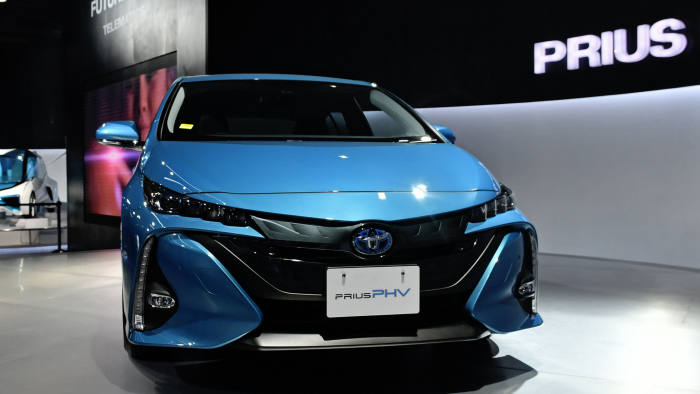
  • For more than a year the silvery-white metal has been more precious than gold Palladium is used in the production of hybrid cars such as Toyota’s Prius, and high prices for the precious metal have led to a rise in the theft of catalytic converters Palladium is used in the production of hybrid cars such as Toyota’s Prius, and high prices for the precious metal have led to a rise in the theft of catalytic converters

Global efforts to clean up petrol cars are driving a record surge in the precious metal palladium, which has rallied 8 per cent in the first week of the year to more than $2,000 a troy ounce. The precious metal, which is now more valuable than gold, has benefited from continued demand from the car industry for palladium-based catalytic converters on exhausts, along with limited supply from mines in South Africa and Russia. Prices for palladium have surged by about 25 per cent since the beginning of October. Demand for car catalysts has increased over the past few years due to stricter emissions regulations in Europe and plans in China to toughen standards.

Catalytic converters take toxic emissions and produce carbon dioxide, water and nitrogen. Palladium-based catalysts are also used in hybrid cars, which are powered by engines as well as batteries. Often hybrid cars require greater quantities of the metal, since the engine is required at short notice and does not have time to warm up the catalyst. The high price of palladium has led to a rise in the theft of catalytic converters from cars.

Last year Toyota, which makes the Prius hybrid car, warned drivers in the UK to take precautions to prevent theft by buying a “Catloc” device, which is fitted around the converter to stop it being cut out. Analysts at Bank of America Merrill Lynch expect carmakers to struggle to source more palladium in the next few years as global supply is set to remain flat, at about 10.2m ounces. Last year it rose to 10.5m ounces, from 9.9m.

The price of the silvery-white metal overtook gold in December 2018 for the second time, having been more expensive for a period spanning 2000 and 2001. On Thursday palladium was trading at $2108 a troy ounce, to gold’s $1546. Palladium’s price rise has boosted the stocks of South African miners, sending the FTSE/JSE African Platinum Mining index up 4 per cent already this year. Michael Widmer, an analyst at BofA, said big carmakers had begun to consider substituting palladium for other materials, such as platinum or rhodium, which are in the same family of precious metals. Rhodium prices are up by about 15 per cent this year, outpacing palladium.

“Carmakers are starting to look into substitution. It will probably take another 12 to 18 months,” Mr Widmer said. “You can get hold of palladium but you have to pay up for it.” He added: “The quicker they do the substitution, or re-jig the catalysts, the quicker the rally will ultimately come to an end.”

Source: https://www.ft.com/content/9101bd22-3233-11ea-a329-0bcf87a328f2