Agoracom Blog Home

Posts Tagged ‘small cap stocks’

Empower Clinics $CBDT.ca to Create #Psilocybin and Psychadelics Division Leveraging Corporate Wellness Clinics and Franchise Clinic Network $WEED.ca $CGC $ACB $APH $CRON.ca $HEXO.ca $OGI.ca

Posted by AGORACOM-JC at 6:10 AM on Tuesday, February 25th, 2020
  • Company intends to utilize its database of 165,000 patients to further psilocybin research, develop new products and partner with global leaders in the field
  • “Empower is uniquely positioned to immediately impact research, develop new products and bring advancements to plant-based therapies, under a framework of rapidly increasing awareness and a movement toward decriminalization of psychedelic treatment options.” said Steven McAuley, Chairman & CEO of Empower

VANCOUVER, BC / February 25, 2020 / EMPOWER CLINICS INC. (CSE:CBDT)(OTC:EPWCF)(Frankfurt:8EC) (“Empower” or the “Company“), a vertically integrated and growth-oriented life sciences company is pleased to announce it intends to leverage its existing clinic network, the developing franchise brand, its 165,000 patients and product development capability, to create psilocybin and psychedelics subsidiaries.

The Company has been conducting market research on advancements in psilocybin and psychedelics in North America and globally, along with building the business case internally on how to create greater shareholder value, utilizing Company assets that include clinics, patients, physicians and technology.

“There is an undeniable mental health crisis in our country and around the world, that has an ever-increasing, devastating affect on our society.” said Steven McAuley, Chairman & CEO of Empower. “Empower is uniquely positioned to immediately impact research, develop new products and bring advancements to plant-based therapies, under a framework of rapidly increasing awareness and a movement toward decriminalization of psychedelic treatment options.”

Studies conducted by nationally and internationally recognized medical institutions indicate that psilocybin has shown efficacy, tolerability, and safety in the treatment of a variety of mental health conditions, including but not limited to addiction, depression, anxiety disorders, and end-of-life psychological distress.

“Over the past seven years, we have assisted over one hundred thousand patients obtain access to alternative health care and medicinal cannabis. The provision of legal access to psilocybin therapies are perfectly in-line with our philosophy of providing a Scientific Approach to Alternative Medicine“, said Dustin Klein, SVP Business Development and Director, Empower Clinics Inc. “Clinical trials have shown that psilocybin therapies provide tremendous help with conditions we see everyday in our clinics. It is our responsibility, to make sure we are providing the most up-to-date alternative therapies to our patients and our community.”

The mental health crisis could cost the world $16 trillion by 2030 and according to Future Market Insights; the global behavioral health (non-pharmacological) market is expected to be valued at US$156 billion by 2028.

The United States Food and Drug Administration has determined that preliminary clinical evidence indicates psilocybin may demonstrate substantial improvement over other available therapies for treatment-resistant depression; and granted a Breakthrough Therapy designation for a treatment that uses psilocybin as a therapy for such depression.

The Company also announces it has issued to Haywood Securities Inc., 4,000,000 common shares of the Company (the “Work Fee Shares”) under the financial advisory agreement dated September 25, 2019 (the “Agreement”) based on Haywood Securities Inc. completing the final written SWOT analysis. The shares issued are priced at fair market value of the common shares of the Corporation as at the date of issuance of the Work Fee Shares.

ABOUT EMPOWER

Empower is a vertically-integrated health & wellness brand with it’s first hemp-derived CBD extraction facility under development, the Company produces its proprietary line of cannabidiol (CBD) based products and distributes products through company owned and franchised clinics, with wholesale partnerships, online channels and with new retail opportunities nationwide in the U.S. The company is a leading multi-state operator of a network of physician-staffed wellness clinics, focused on helping patients improve and protect their health, through innovative physician recommended treatment options. The Company has commenced activity on how to connect its significant data, to the potential of the efficacy of alternative treatment options related to hemp-derived cannabidiol (CBD) therapies, psilocybin and other psychedelic plant-based treatment options.

ON BEHALF OF THE BOARD OF DIRECTORS:

Steven McAuley
Chief Executive Officer

CONTACTS:

Investors: Steven McAuley
Chairman & CEO
[email protected]
604-789-2146

Investors: Dustin Klein
SVP, Business Development
[email protected]
720-352-1398

For French inquiries: Remy Scalabrini, Maricom Inc., E: [email protected], T: (888) 585-MARI

DISCLAIMER FOR FORWARD-LOOKING STATEMENTS

This news release contains certain “forward-looking statements” or “forward-looking information” (collectively “forward looking statements”) within the meaning of applicable Canadian securities laws. All statements, other than statements of historical fact, are forward-looking statements and are based on expectations, estimates and projections as at the date of this news release.Forward-looking statements can frequently be identified by words such as “plans”, “continues”, “expects”, “projects”, “intends”, “believes”, “anticipates”, “estimates”, “may”, “will”, “potential”, “proposed” and other similar words, or information that certain events or conditions “may” or “will” occur. Forward-looking statements in this news release include statements regarding; the Company’s intention to create psilocybin and psychedelics divisions, that market research on advancements in psilocybin and psychedelics in North America and globally will create greater shareholder value, the Company’s intention to open a hemp-based CBD extraction facility, the expected benefits to the Company and its shareholders as a result of the proposed acquisitions and partnerships; the effectiveness of the extraction technology; the expected benefits for Empower’s patient base and customers; the benefits of CBD based products; the effect of the approval of the Farm Bill; the growth of the Company’s patient list and that the Company will be positioned to be a market-leading service provider for complex patient requirements in 2019 and beyond. Such statements are only projections, are based on assumptions known to management at this time, and are subject to risks and uncertainties that may cause actual results, performance or developments to differ materially from those contained in the forward-looking statements, including; that the Company may not open a hemp-based CBD extraction facility; that legislative changes may have an adverse effect on the Company’s business and product development; that the Company may not be able to obtain adequate financing to pursue its business plan; general business, economic, competitive, political and social uncertainties; failure to obtain any necessary approvals in connection with the proposed acquisitions and partnerships; and other factors beyond the Company’s control. No assurance can be given that any of the events anticipated by the forward-looking statements will occur or, if they do occur, what benefits the Company will obtain from them. Readers are cautioned not to place undue reliance on the forward-looking statements in this release, which are qualified in their entirety by these cautionary statements. The Company is under no obligation, and expressly disclaims any intention or obligation, to update or revise any forward-looking statements in this release, whether as a result of new information, future events or otherwise, except as expressly required by applicable laws.

SOURCE: Empower Clinics Inc.

#Mhealth Device Market is Booming Worldwide – SPONSOR: CardioComm Solutions $EKG.ca – $ATE.ca $TLT.ca $OGI.ca $ACST.ca $IPA.ca

Posted by AGORACOM-JC at 11:30 AM on Friday, February 21st, 2020

SPONSOR: CardioComm Solutions (EKG: TSX-V) – The heartbeat of cardiovascular medicine and telemedicine. Patented systems enable medical professionals, patients, and other healthcare professionals, clinics, hospitals and call centres to access and manage patient information in a secure and reliable environment.

M-Health Device Market is Booming Worldwide

  • Mhealth field has emerged as a sub-segment of eHealth, the use of information and communication technology (ICT), such as computers, mobile phones, communications satellite, patient monitors, etc., for health services and information.
  • According to an analyst firm, around 2.8 million patients worldwide were using a home monitoring service based on equipment with integrated connectivity

By Orian Research on February 21, 2020

According to a Latest market research report titled, ‘M-Health Device Market’, added on Orian Research. The report has been processed on the basis of a comprehensive analysis with inputs from industry experts. The report presents the market scenario and its potential growth prospects during the forecast period. The report also presents the evaluation of the competitive landscape of the market. The leading strategies, collaborations, innovations, and market revenue of the major players has been elaborated in this report. The approvals and insights on the top companies prevalent in the market will enable the reader to get accustomed with the market opportunities that they can tackle with informed and favorable business strategies

mHealth is an abbreviation for mobile health, a term used for the practice of medicine and public health supported by mobile devices. The term is most commonly used in reference to using mobile communication devices, such as mobile phones, tablet computers and PDAs, and wearable devices such as smart watches, for health services, information, and data collection. The mHealth field has emerged as a sub-segment of eHealth, the use of information and communication technology (ICT), such as computers, mobile phones, communications satellite, patient monitors, etc., for health services and information.

According to an analyst firm, around 2.8 million patients worldwide were using a home monitoring service based on equipment with integrated connectivity at the end of 2013. The figure does not include patients that use monitoring devices connected to a PC or mobile phone. It only includes systems that rely on monitors with integrated connectivity or systems that use monitoring hubs with integrated cellular or fixed-line modems.

Global M-Health Device Industry 2020 Market Research Report is spread across 95 pages and provides exclusive vital statistics, data, information, trends and competitive landscape details in this niche sector.

Development policies and plans are discussed as well as manufacturing processes and cost structures are also analyzed. This report also states import/export consumption, supply and demand Figures, cost, price, revenue and gross margins. The report focuses on global major leading M-Health Device Industry players providing information such as company profiles, product picture and specification, capacity, production, price, cost, revenue and contact information.

The M-Health Device market report is a collection of the first-hand data, subjective, and quantitative assessment by industry experts and professionals, contributions from industry specialists and industry participants over the value chain. The report consists of a detailed analysis of the industry growth trends, micro- and macroeconomic components, and governing factors, along with the market attractiveness, within the market segments. The report likewise maps the subjective impact of the different market factors on the market segments, sub-segments, and geographies.

Major Players in M-Health Device Market are:
• Allscripts
• Apple
• Athenahealth
• Cerner
• Ge Healthcare
• Philips
• Medtronics

This report includes the estimation of market size for value (million USD) and volume (K Units). Both top-down and bottom-up approaches have been used to estimate and validate the market size of M-Health Device market, to estimate the size of various other dependent submarkets in the overall market. Key players in the market have been identified through secondary research, and their market shares have been determined through primary and secondary research.

All percentage shares, splits, and breakdowns have been determined using secondary sources and verified primary sources.

Source: https://www.instanttechnews.com/technology-news/2020/02/21/m-health-device-market-is-booming-worldwide-technology-trends-players-allscripts-apple-athenahealth-cerner-ge-healthcare-philips-medtronics/

#Mhealth Market growing due to increasing chronic disease menace according to a new research report – SPONSOR: CardioComm Solutions $EKG.ca – $ATE.ca $TLT.ca $OGI.ca $ACST.ca $IPA.ca

Posted by AGORACOM-JC at 1:40 PM on Friday, February 14th, 2020

SPONSOR: CardioComm Solutions (EKG: TSX-V) – The heartbeat of cardiovascular medicine and telemedicine. Patented systems enable medical professionals, patients, and other healthcare professionals, clinics, hospitals and call centres to access and manage patient information in a secure and reliable environment.

mHealth Market growing due to increasing chronic disease menace according to a new research report

  • The mHealth market is predicted to grow at a CAGR of 33.5% during the forecast period.

WhaTech Channel: Medical and Health

The increasing usage of smartphones and connected devices and surging geriatric population, prevalence of chronic diseases, focus on patient-centric healthcare services, and demand for remote patient monitoring services are driving the adoption of mobile health (mHealth). The mHealth market size generated $23.0 billion in revenue in 2017, which is predicted to grow at a CAGR of 33.5% during the forecast period (2018–2023), to ultimately reach $132.2 billion by 2023.

The term refers to the provision of healthcare services via mobile phones and other telecommunication devices.

Blood glucose monitors, blood pressure monitors, multiparameter monitors, electrocardiograph (ECG) monitors, sleep apnea monitors, and pulse oximeters are among the various connected devices available. Among these, blood glucose monitors are expected to experience the fastest growth in the market, at a CAGR of 31.9%, during the forecast period.

This would be due to the growing prevalence of diabetes, as a result of the changing lifestyle and food habits of people across the world.Blood glucose monitors, blood pressure monitors, multiparameter monitors, electrocardiograph (ECG) monitors, sleep apnea monitors, and pulse oximeters are among the various connected devices available. Among these, blood glucose monitors are expected to experience the fastest growth in the market, at a CAGR of 31.9%, during the forecast period.

This would be due to the growing prevalence of diabetes, as a result of the changing lifestyle and food habits of people across the world.

The rising incidence of chronic diseases, including diabetes, cancer, stroke, heart diseases, and chronic obstructive pulmonary disease (COPD), is one of the key mHealth market growth drivers. Patients suffering from such conditions need continuous monitoring and strict adherence to medication schedule.

With mHealth devices and apps, patients can not only monitor their own condition, but also receive timely advice from their doctors, without having to go anywhere. In addition, several mHealth apps alert patients about any anomalies and drug dose time.

The availability of 3G and 4G internet is also leading to the rising adoption of smartphones, which, together with the increasing awareness on the advantages of mHealth, is driving the market. Additionally, mobile devices are increasing penetrating across developing regions; as per the 2017 African Mobile Trends Paper, 960 million people or around 80% of the African population were mobile phone subscribers.

Further, the U.S. Food and Drug Administration (FDA) had claimed that around half of the total 3.4 billion smartphone and tablet users would download healthcare apps in 2018.

Therefore, as more people purchase mobile communication devices and realize their advantages in the area of health and wellbeing, the market for mHealth will keep prospering.

Source: https://www.whatech.com/market-research/medical/635295-mhealth-market-growing-due-to-increasing-chronic-disease-menace-according-to-a-new-research-report

Medical Sensors Market Size to Reach US$ 27.7 Bn by 2026 – SPONSOR: CardioComm Solutions $EKG.ca – $ATE.ca $TLT.ca $OGI.ca $ACST.ca $IPA.ca

Posted by AGORACOM-JC at 11:15 AM on Thursday, February 13th, 2020

SPONSOR: CardioComm Solutions (EKG: TSX-V) – The heartbeat of cardiovascular medicine and telemedicine. Patented systems enable medical professionals, patients, and other healthcare professionals, clinics, hospitals and call centres to access and manage patient information in a secure and reliable environment.

Medical Sensors Market Size to Reach US$ 27.7 Bn by 2026

Transparency Market Research (TMR) has published a new report titled, “Medical Sensors Market – Global Industry Analysis, Size, Share, Growth, Trends, and Forecast, 2018–2026”. According to the report, the global medical sensors market is projected to reach US$ 27.7 Bn by 2026 at a CAGR of 9.9% from 2018 to 2026.

Factors such as increase in government initiatives for the adoption of mHealth products and rise in adoption of Internet of Things (IoT) and other medical advancements are propelling the global market. Moreover, increase in public and private investments in mHealth products and rise in adoption of smartphones and other electronics with sensor technology boost the growth of the global medical sensors market. The Americas is projected to dominate the global medical sensors market owing to availability of advanced health care infrastructure and high consumption of medical devices.

Asia Pacific and Europe, Middle East, and Africa (EMEA) are potential markets. The medical sensors market in Asia Pacific is expected to expand at a CAGR of 11.4% during the forecast period. Increase in focus on development of medical sensors in the past few years, improvement in health care infrastructure, and early detection of diseases fuel the growth of the medical sensors market in Asia Pacific and EMEA.

Rise in Government Initiatives for Adoption of mHealth Products and Increase in Public and Private Investments in Medical Sensor Companies to Drive Market

Increase in government initiatives for adoption of mHealth products drives the global market. The U.K. Government Department of Health started the NHS digitization initiative in 2016 and allocated over US$ 6.0 Bn for it. More than US$ 2.6 Bn was allotted to transfer paper records to a centralized electronic record system, implementation of wireless technologies, and addressing cyber security concerns in NHS IT ecosystem. New innovations in the health care industry in terms of medicine are fast and productive. IoT has emerged as the next wave in the industry. Google and Novartis launched their combined plan in 2014 to create a connected lens with the ability to monitor blood glucose levels by analyzing an individual’s tears.

Implantable Sensors to be Highly Lucrative Segment

Implantable sensors is an emerging segment of medical sensors. The segment is projected to account for 28.5% share of the market by 2026. It is anticipated to expand at a CAGR of 12.0% during the forecast period from 2018 to 2026. Advancements in sensor technology and rise in demand for continuous monitoring systems such as continuous glucose monitoring (CGM) are anticipated to boost the growth of the segment during the forecast period.

Home Care Settings to be Promising Segment

In terms of end-user, the global medical sensors market has been segmented into hospitals, clinics, home care settings, and others. The hospitals segment held the major share of the global market in 2017. The segment is projected to expand at a CAGR of 9.2% from 2018 to 2026. The home care settings segment is anticipated to expand at a CAGR of 12.7% during the forecast period. The segment is expected to gain market share by 2026. Rise in use of wearable health tracker for the measurement of blood pressure, heart rate, and metabolites such as glucose and lactate are the factors likely to boost the use of medical sensors in the home care settings segment.

Americas Projected to Dominate Global Market

The global medical sensors market has been divided into three major regions: the Americas, Europe, Middle East and Africa, Asia Pacific. The Americas dominated the global market in 2017. The market in the region was valued at US$ 6.27 Bn in 2017.

This is attributed to the availability of advanced health care infrastructure and high consumption of medical devices in the region. The medical sensors market in the Americas is projected to expand at a CAGR of 9.0% during the forecast period. Biosensors and wearable sensors are the two most promising segments in the region. The medical sensors market in Asia Pacific is expected to expand at a CAGR of 11.4% during the forecast period.

The region is likely to gain market share due to rise in prevalence of chronic disorders and surge in awareness about medical sensors among the people. Rise in disposable income of people also contributes to the growth of the market in Asia Pacific and EMEA. Increase in focus on development of medical sensors in the past few years, improvement in health care infrastructure, and early detection of diseases fuel the growth of the medical sensors market in APAC and EMEA. Read More http://techannouncer.com/medical-sensors-market-size-to-reach-us-27-7-bn-by-2026/

#Mhealth Market Is Generating Revenue of $10.5 billion by 2020, at CAGR 33.5% Growth Rate – SPONSOR: CardioComm Solutions $EKG.ca – $ATE.ca $TLT.ca $OGI.ca $ACST.ca $IPA.ca

Posted by AGORACOM-JC at 1:15 PM on Monday, February 10th, 2020

SPONSOR: CardioComm Solutions (EKG: TSX-V) – The heartbeat of cardiovascular medicine and telemedicine. Patented systems enable medical professionals, patients, and other healthcare professionals, clinics, hospitals and call centres to access and manage patient information in a secure and reliable environment.

mHealth Market Is Generating Revenue of $10.5 billion by 2020, at CAGR 33.5% Growth Rate

  • Global mHealth market was valued at $10.5 billion in 2014 and is expected to grow at a CAGR of 33.5% during 2015-2020.

Mobile health provides health service and information through mobile communication devices to address the health priorities and concerns. The advanced mobile and wireless technologies have transformed the face of healthcare services across the globe and are rendering the growth of mHealth market.

Moreover, the continued growth in coverage of mobile cellular networks, rapid advances in mobile technologies & applications, increasing lifestyle diseases and growing awareness among patient population in emerging economies, are some of the key factors fostering the growth of mHealth market. On contrary, the lower accuracy of the devices, technology’s infancy in middle and lower income economies, weak reimbursement coverage, uncertainty in government regulations in certain regions, and low adoption among ageing population is hampering the market growth to a certain extent.

The major chunk of mHealth devices market – i.e. ~71% – is collectively commanded by BP monitors, blood glucose monitors and cardiac monitors. The largest share of these monitors can be attributed to increased affordability of mobile compatible devices, integration of innovative technologies in monitoring devices and the increasing lifestyle disease such as diabetes, stroke, COPD, ischemic heart to name a few. Within mHealth services, diagnostic, monitoring and treatment services collectively hold about 74% of the market. The rapid growth of mHealth services market is attributed to rising government initiatives, increasing mHealth awareness programs in underdeveloped regions etc.

Geographically, North America and Europe constitute the two largest markets for mHealth and collectively accounted for 67% of the market revenue in 2014. They are expected to continue its hold on the global market throughout the forecast period. Early adoption of innovative technology, large patient population and high capacity to pay for services are some of the key factors responsible for the growth of mHealth market in these regions. However, the market outlook across developing economies is looking favorable and strong owing to the increasing awareness of chronic diseases, favorable government regulations and increased healthcare expenditure. Philips healthcare, Bayer Healthcare and Sanofi are some of the key companies enjoying a strong foothold in mHealth market, especially in Asian countries.

Source: https://www.openpr.com/news/1925119/mhealth-market-is-generating-revenue-of-10-5-billion-by-2020

PyroGenesis $PYR.ca Comments on Recent Trading Activity and Stock Price $LMT $RTN $NOC $UTX $HPQ.ca $DDD.ca $SSYS $PRLB

Posted by AGORACOM-JC at 2:58 PM on Tuesday, February 4th, 2020

MONTREAL, Feb. 04, 2020 — PyroGenesis Canada Inc. (http://pyrogenesis.com) (TSX-V: PYR) (OTCQB: PYRNF) (FRA: 8PY), a high-tech company, (the “Company”, the “Corporation” or “PyroGenesis”) that designs, develops, manufactures and commercializes plasma atomized metal powder, plasma waste-to-energy systems and plasma torch products, issues this press release in response to recent trading activity in its shares, and stock price decline.

The Company does not usually opine on stock price and trading activity, however, given the recent decline, and inquiries from investors, the Company confirms the following:

Everything material has been disclosed by the Company in either its press releases or quarterly reports. PyroGenesis further confirms that none of the contracts press released are at risk. Last but not least, the Company wishes to reassure PyroGenesis’ shareholders that we remain on track with our current and prospective projects, and that all contracted projects are being worked on, and such activity will be reflected in Q1 2020 results.

About PyroGenesis Canada Inc.

PyroGenesis Canada Inc., a high-tech company, is the world leader in the design, development, manufacture and commercialization of advanced plasma processes and products. We provide engineering and manufacturing expertise, cutting-edge contract research, as well as turnkey process equipment packages to the defense, metallurgical, mining, advanced materials (including 3D printing), oil & gas, and environmental industries. With a team of experienced engineers, scientists and technicians working out of our Montreal office and our 3,800 m2 manufacturing facility, PyroGenesis maintains its competitive advantage by remaining at the forefront of technology development and commercialization. Our core competencies allow PyroGenesis to lead the way in providing innovative plasma torches, plasma waste processes, high-temperature metallurgical processes, and engineering services to the global marketplace. Our operations are ISO 9001:2015 and AS9100D certified, and have been since 1997. PyroGenesis is a publicly-traded Canadian Corporation on the TSX Venture Exchange (Ticker Symbol: PYR) and on the OTCQB Marketplace. For more information, please visit www.pyrogenesis.com.

This press release contains certain forward-looking statements, including, without limitation, statements containing the words “may”, “plan”, “will”, “estimate”, “continue”, “anticipate”, “intend”, “expect”, “in the process” and other similar expressions which constitute “forward- looking information” within the meaning of applicable securities laws. Forward-looking statements reflect the Corporation’s current expectation and assumptions and are subject to a number of risks and uncertainties that could cause actual results to differ materially from those anticipated. These forward-looking statements involve risks and uncertainties including, but not limited to, our expectations regarding the acceptance of our products by the market, our strategy to develop new products and enhance the capabilities of existing products, our strategy with respect to research and development, the impact of competitive products and pricing, new product development, and uncertainties related to the regulatory approval process. Such statements reflect the current views of the Corporation with respect to future events and are subject to certain risks and uncertainties and other risks detailed from time-to-time in the Corporation’s ongoing filings with the securities regulatory authorities, which filings can be found at www.sedar.com, or at www.otcmarkets.com. Actual results, events, and performance may differ materially. Readers are cautioned not to place undue reliance on these forward-looking statements. The Corporation undertakes no obligation to publicly update or revise any forward- looking statements either as a result of new information, future events or otherwise, except as required by applicable securities laws. Neither the TSX Venture Exchange, its Regulation Services Provider (as that term is defined in the policies of the TSX Venture Exchange) nor the OTCQB accepts responsibility for the adequacy or accuracy of this press release.

SOURCE PyroGenesis Canada Inc.

For further information please contact:
Rodayna Kafal, Vice President Investors Relations and Strategic Business Development,
Phone: (514) 937-0002, E-mail: [email protected]

www.pyrogenesis.com

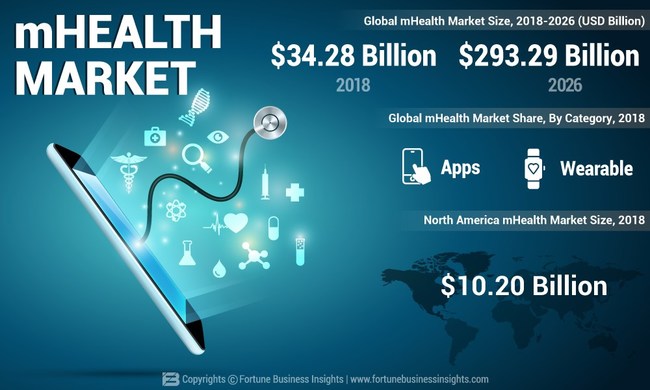
Mhealth Market to Reach USD 293.29 Billion by 2026; Increasing Smartphone Penetration to Contribute Healthy Growth, States Fortune – SPONSOR: CardioComm Solutions $EKG.ca – $ATE.ca $TLT.ca $OGI.ca $ACST.ca $IPA.ca

Posted by AGORACOM-JC at 3:20 PM on Friday, January 31st, 2020

SPONSOR: CardioComm Solutions (EKG: TSX-V) – The heartbeat of cardiovascular medicine and telemedicine. Patented systems enable medical professionals, patients, and other healthcare professionals, clinics, hospitals and call centres to access and manage patient information in a secure and reliable environment.

Mhealth Market to Reach USD 293.29 Billion by 2026; Increasing Smartphone Penetration to Contribute Healthy Growth, States Fortune

  • The global mHealth market size is expected to reach USD 293.29 billion by 2026, exhibiting a CAGR of 29.1% during the forecast period.
  • Increasing penetration of smartphones and smart devices will boost the mHealth market trends during the forecast period.

The increasing penetration of smartphones and smart devices will boost the mHealth market trends during the forecast period. According to Pew Research Center’s first survey of smartphone ownership conducted in 2011, 96% of Americans own a cell phone. Out of which ,81% of the American use smartphones. While roughly three-quarters of U.S. adults own desktop or laptop computers, furthermore, the launch of technologically advanced smartphones and wearable devices will consequently aid the mHealth market share, sates our lead analysts at Fortune Business Insights. For instance, OnePlus launched a new concept phone, the OnePlus Concept One McLaren Edition has various features including electrochromic glass technology. In addition, Fitbit CEO James said in a statement, “We see ourselves evenly split between being a consumer company and being a health company.”

mHealth Market Analysis, Insights and Forecast, 2015-2026

According to the report, published by Fortune Business Insights in a report, titled “mHealth Market Size, Share & Industry Analysis, By Category (By Apps {Disease & Treatment Management, Wellness Management}, By Wearable {Body & Temperature Monitors, Sleep Trackers, Fitness Trackers, Glucose Monitors, BP Monitors, Cardiac Monitors}) By Services Type (Monitoring Services, Fitness & Wellness Solutions, Diagnostic Services, Treatment Services) By Service Provider (mHealth App Companies, Pharmaceutical Companies, Hospitals, Health Insurance) and Regional Forecast, 2019-2026″ the market size stood at USD 34.28 billion in 2018. The mHealth market report implements a PESTEL study and SWOT analysis to reveal the stability, restrictions, openings, and threats in the smart building market. Combined with the market analysis proficiencies and data integration with the relevant findings, the report has foretold the robust future growth of the market, and all articulated with geographical and merchandise segments. Moreover, it also shows different procedures and strategies, benefactors and dealers working in the market, explores components convincing market development, generation patterns, and following systems. Additionally, the figures and topics covered in this report are both all-inclusive and reliable for the readers.

Growing Geriatric Population to Spur Business Opportunities for the Market

The increasing demand for mHealth solutions around the globe, owing to its user-friendly benefits and high calling efficiency in handling an emergency situation, will aid the mHealth market revenue in the forthcoming years. The increasing number of mHealth applications such as chronic disease management, remote monitoring owing to its cost-effective advantage will further fuel demand for mHealth solutions in the foreseeable future. The growing geriatric population will also contribute positively to the growth of the market. For instance, people above the age of 65, are more prone to chronic ailments; in the U.S., 40 million people, i.e., around 12.9% of the population is above 65 years. Thus, there is a colossal scope for the mHealth market in the countries where the geriatric population is surging. 

Source: https://www.prnewswire.com/news-releases/mhealth-market-to-reach-usd-293-29-billion-by-2026-increasing-smartphone-penetration-to-contribute-healthy-growth-states-fortune-business-insights-300993421.html

How #Mhealth apps are providing solutions to the healthcare market’s problems – SPONSOR: CardioComm Solutions $EKG.ca – $ATE.ca $TLT.ca $OGI.ca $ACST.ca $IPA.ca

Posted by AGORACOM-JC at 2:00 PM on Wednesday, January 29th, 2020

SPONSOR: CardioComm Solutions (EKG: TSX-V) – The heartbeat of cardiovascular medicine and telemedicine. Patented systems enable medical professionals, patients, and other healthcare professionals, clinics, hospitals and call centres to access and manage patient information in a secure and reliable environment.

How mHealth apps are providing solutions to the healthcare market’s problems

  • Mobile health is the monitoring and sharing of health information via mobile technology – such as wearables and health tracking apps
  • The use of mobile devices and wireless technology to monitor symptoms and deliver care allows physicians to make diagnoses quicker and with fewer errors

By: Alicia Phaneuf

Today’s consumers don’t want to solely rely on yearly physicals or scattered drop-in appointments to monitor their health – they are seeking more individualized control over the way healthcare is accessed so that they can analyze personal health data and talk to healthcare professionals at all times.

By embracing mobile health, or mHealth, patients are able to keep track of their own health data in real time and inform healthcare providers of any abnormalities at the push of a button.  

What is mHealth (mobile health)?

Mobile health is the monitoring and sharing of health information via mobile technology – such as wearables and health tracking apps. The use of mobile devices and wireless technology to monitor symptoms and deliver care allows physicians to make diagnoses quicker and with fewer errors. 

And as tech giants like Apple and Google continue pushing their way into healthcare, mHealth will likely grow in popularity.

mHealth vs telehealth

Telehealth uses technology to extend the reach of healthcare professionals beyond traditional clinical settings. It’s a broad term describing how the healthcare market is taking advantage of digital development to enable remote care. Samsung Health is a platform where individuals can view activity trends, health insights and access telehealth services. Steve Kovach/Business Insider

Comparatively, mHealth is a subset of telehealth, referring specifically to the use of mobile technology to inform and educate consumers on healthcare. It uses mobile devices to monitor patients’ exercise, heart rate, and medication adherence.

Examples of different types of mHealth apps

Mobile health is gaining steam among consumers as Apple and Google continue to offer an array of mHealth applications on their app stores; there were more than 318,000 mHealth apps available for download worldwide as of November 2017. Some of the most common categories of mHealth apps include: 

  • Diabetes 
  • Pregnancy 
  • Weight loss 
  • Chronic illness 

Top mHealth apps on the market

With increasing consumer demand to monitor their own health comes the opportunity for healthcare companies and tech giants to develop mHealth applications. Here are some of the top mobile health apps on the market: AliveCor’s KardiaMobile allows users to take an EKG and have data stored directly onto their smartphone. Alivecor

  • Fitbit
  • Apple Heart Study
  • GoogleFit
  • Samsung Health 
  • AliveCor’s KardiaMobile
  • BlueStar

Benefits of mHealth app solutions

Stakeholders across the healthcare industry are looking to tap into the mHealth opportunity as Mobile health applications are beginning to integrate electronic health records (EHRs) and other wearable tech devices

According to Business Insider Intelligence, nearly half of all mHealth app publishers integrate with EHRs in order to provide a detailed representation of a patient’s health or medical history. Stakeholders across the healthcare industry are looking to tap into the mHealth opportunity. Business Insider Intelligence

Healthcare providers could reduce appointment costs by taking advantage of mHealth applications – which lowers the risk of patient rehabilitation. Instead of staying in a healthcare facility post surgical discharge, patients could utilize mHealth apps for recovery instructions and medication reminders. 

Payers – which handle the financial aspects of healthcare – can also capitalize on mHealth cost benefits. According to a 2018 Leavitt Partners report, clinical care only accounts for 20% of health, and social determinants account for the remainder. 

Health insurance providers could develop mobile apps that provide consumers with health education and send reminders to purchase healthy food – keeping patients largely responsible for their own healthcare.

mHealth industry trends & technologies

One concern consumers have regarding mHealth solutions has to do with data-sharing practices among multiple technologies and applications. According to Business Insider Intelligence, 79% of 24 top-rated mHealth apps shared user data with 55 entities, like app developers and third parties. 

Despite privacy concerns however, Business Insider Intelligence predicts that as big tech companies like Apple and Samsung continue to generate their own health features in smartphones, the adoption of mHealth apps will continue to grow.

In fact, Apple grew wearable revenue 42% year-over-year in 2018 and has the potential to hit $15 billion in healthcare-related revenue by 2021. 

Source: https://www.businessinsider.com/mhealth-apps-definition-examples

CLIENT FEATURE: CardioComm Solutions $EKG.ca – Connecting Your Heart To The Cloud $EKG.ca – $ATE.ca $TLT.ca $OGI.ca $ACST.ca $IPA.ca

Posted by AGORACOM-JC at 11:15 AM on Tuesday, January 21st, 2020

Global Leaders in Mobile  ECG Connectivity

  • 20 years of medical credibility licensing technologies to hospitals, physicians, remote patient monitoring  platforms, research groups and commercial call centers
  • Sold into > 20 countries, with the largest customer base located in the US
  • Class II medical device clearances and device agnostic for collecting, viewing, recording, analyzing and  storing of ECGs for management of patient and consumer health
  • ECG solutions for both consumer (OTC) and medical (Rx) markets
  • Owns all IP and source code
  • Market expert contributor for reports in m‐health, mobile cardiac monitoring and new advances in  consumer health and wellness monitoring

Recent Highlights

Physician Groups Order The Heartcheck(TM) Cardibeat For In-Home Arrhythmia And Atrial Fibrillation Monitoring

  • Confirms market traction with orders being placed by physician groups for the newly launched HeartCheck™ CardiBeat Handheld ECG monitor and GEMS™ Mobile Smartphone app for prescribed in-home arrhythmia monitoring.
  • Partners in Advanced Cardiac Evaluation, the largest arrhythmia practice in Ontario (Canada) placed a first order of the HeartCheck™ CardiBeat Handheld ECG monitors and is recommending its patients to use the devices for one year of in-home, self-monitoring with an emphasis on detecting a recurrence of Atrial Fibrillation following cardiac ablation treatment for AF.

Industry News

Company Accolades

FULL DISCLOSURE: CardioComm Solutions Inc. is an advertising client of AGORA Internet Relations Corp.

Scripps Researchers Use #Mhealth Wearables to Track Flu Outbreaks – SPONSOR: CardioComm Solutions $EKG.ca – $ATE.ca $TLT.ca $OGI.ca $ACST.ca $IPA.ca

Posted by AGORACOM-JC at 9:30 PM on Sunday, January 19th, 2020

SPONSOR: CardioComm Solutions (EKG: TSX-V) – The heartbeat of cardiovascular medicine and telemedicine. Patented systems enable medical professionals, patients, and other healthcare professionals, clinics, hospitals and call centres to access and manage patient information in a secure and reliable environment.

Scripps Researchers Use mHealth Wearables to Track Flu Outbreaks

The study used data from Fitbit users over two years to determine who was experiencing a flu-like illness. It shows that mHealth wearables could be used to identify and possibly even anticipate viral outbreaks.

  • Led by digital health expert Eric Topol, MD, researchers at the Scripps Research Translational Institute used data from roughly 50,000 people wearing Fitbits between 2016 and 2018 and were able to plot outbreaks of seasonal respiratory infections like the flu.
  • Researchers found they could identify and possibly even anticipate an outbreak by the activities of Fitbit users who became sick.

By Eric Wicklund

January 17, 2020 – Researchers have found a way to use mHealth wearables to tackle population health concerns.

Led by digital health expert Eric Topol, MD, researchers at the Scripps Research Translational Institute used data from roughly 50,000 people wearing Fitbits between 2016 and 2018 and were able to plot outbreaks of seasonal respiratory infections like the flu.

The first-of-its-kind study tracked sleep patterns, resting heart rate (RHR) and activity among users in Texas, California, New York, Illinois and Pennsylvania, and compared that data to influenza-like illnesses (ILIs) recorded by the US Centers for Disease Control in those states.

Researchers found they could identify and possibly even anticipate an outbreak by the activities of Fitbit users who became sick. People who develop the flu, they noted, tend to have an elevated RHR, sleep more and move around less.

“Activity and physiological trackers are increasingly used in the USA and globally to monitor individual health,” Topol and his colleagues said in a study published this week in The Lancet. “By accessing these data, it could be possible to improve real-time and geographically refined influenza surveillance. This information could be vital to enact timely outbreak response measures to prevent further transmission of influenza cases during outbreaks.”

Joining Topol in the research were Jennifer M. Radin, PhD; Nathan E. Wineinger, PhD, and Steve R. Steinhubl, MD, all of the San Diego-based organization, which has conducted dozens of mHealth and telehealth studies over the past decade.

This study, funded in part by the National Institutes of Health, aims to improve population health management for a virus that annually affects 20 percent of children and 7 percent of adults in the US, and which causes as many as 650,000 deaths worldwide. Traditional surveillance methods usually lag one to three weeks behind the outbreak, putting healthcare providers at a disadvantage in curbing the spread of the virus.

Topol and his colleagues are looking at mHealth to reduce that disadvantage and give providers and public health officials an opportunity to stop and outbreak earlier.

There are some challenges. While roughly 10 percent of the US population, according to a 2016 study, now uses wearables, that percentage has to be higher to make the results more meaningful. In addition, any connected health platform used to gather data shoud be able to draw information from a wide variety of wearables, including smart watches and smart clothing.

And finally, such a platform would need to be careful to distinguish behaviors caused by the onset of the flu with normal behaviors, and sensitive enough to detect those changes in behavior at the earliest possible moment.

“In the future, wearables could include additional sensors to prospectively track blood pressure, temperature, electrocardiogram, and cough analysis, which could be used to further characterize an individual’s baseline and identify abnormalities,” the study concluded. “Capturing physiological and behavioral data from a growing number of wearable device users globally could greatly improve timeliness and precision of public health responses and even inform individual clinical care. It could also fill major gaps in regions where influenza surveillance data are not available.”

Source: https://mhealthintelligence.com/news/scripps-researchers-use-mhealth-wearables-to-track-flu-outbreaks