Posted by AGORACOM-JC
at 10:28 AM on Wednesday, December 4th, 2019
“These results signal the beginning of the long-awaited breakout that we have been anticipating…’ These are the words of PyroGenesis CEO, Peter Pascali, and they are backed up by Q3 results that included a 91% increases in revenue and a 492% increase in signed contracts that are now in backlog to the tune of $29.5M, thanks to a monster contract win in October.
If that wasn’t enough, after already having sold two plasma torch based systems to the US Navy for installation on two aircraft carries, the Company has already been advised by the US Navy that 2 more orders are coming for two more aircraft carriers to the tune of $13.5M.
Even the Head of TSX Venture noticed the results on Linkedin recently:
If you are just discovering PyroGenesis (PYR:TSXV) then grab your favourite drink and watch this powerful video …. or listen in via podcast when you want to tune out the world and learn about an incredible company.
Posted by AGORACOM-JC
at 8:55 AM on Tuesday, December 3rd, 2019
Karlsruhe, Germany-based start-up ZANA Technologies GmbH entering into a business collaboration where CardioComm
ECG technologies to be tested within ZANA’s remote patient monitoring platform in 2020
Toronto, Ontario–(December 3, 2019) – CardioComm Solutions, Inc. (TSXV: EKG) (“CardioComm” or the “Company” or “CCS“), a global provider of consumer heart monitoring and electrocardiogram (“ECG“) acquisition and management software solutions, and Karlsruhe, Germany-based start-up ZANA Technologies GmbH (“ZANA“) confirm entering into a business collaboration where CardioComm’s GEMS™ ECG reviewing and HeartCheck™ ECG monitoring technologies are being evaluated to support ZANA’s novel, voice-directed, remote patient monitoring and patient management platform.
Through the use of deployable versions of the GEMS™ Mobile
Smartphone, the GUAVA ECG viewer and GEMS™ ECG management software, ZANA
will embed CardioComm’s ECG management technologies into its mobile app
and patient engagement platform. ZANA users will be able to download
one Smartphone app through which ECG recordings and clinical feedback
will be provided using ZANA’s cloud-based patient engagement platform
where CardioComm’s hospital ECG management software technologies will
have been incorporated.
ZANA has decided to partner with CardioComm Solutions and its
HeartCheck™ CardiBeat ECG device and GEMSTM software solutions to be
evaluated by multiple medical centres throughout Europe in ZANA’s bid to
become a preferred vendor for telemedicine solutions for monitoing a
patient’s post-hospital discharge. ZANA’s disruptive patient enagement
platform uses an intelligent, voice-/chat-based assistant with
interactive and learning technologies that permit home-based, continuous
health monitoring, designed to improve the health outcomes of its
patients. As patient ECG monitoring requirements evolve, CardioComm will
provide ZANA support in expanding the user’s access to other ECG
monitoring methodologies that may be requested as part of any
comprehensive physician-directed hospital discharge plan. This will
include the use of 12 lead ECGs and long-term continuous ECG monitoring
devices.
The companies will provide updates on the clinical testing results as
they become available. To learn more about CardioComm’s products and
for further updates regarding HeartCheck™ ECG device integrations,
please visit the Company’s websites at www.cardiocommsolutions.com and www.theheartcheck.com.
About CardioComm Solutions
CardioComm Solutions’ patented and proprietary technology is used in
products for recording, viewing, analyzing and storing
electrocardiograms for diagnosis and management of cardiac patients.
Products are sold worldwide through a combination of an external
distribution network and a North American-based sales team. CardioComm
Solutions has earned the ISO 13485:2016 MDSAP certification, is HIPAA
compliant and holds clearances from the European Union (CE Mark), the
USA (FDA) and Canada (Health Canada).
About ZANA
Zana Technologies GmbH is an award-winning digital health start-up
based in Germany that offers cutting-edge conversational AI and
wearables integration for remote health monitoring. The main product
offering is an intelligent voice assistant that establishes a direct
bridge between patients and doctors. The innovative remote care solution
is designed to improve and lower costs of post-operative and chronic
care. ZANA combines active conversation in natural language with
real-time monitoring through connected devices, all from the comfort of a
patient’s home through a Smartphone or smart home device. ZANA’s
backend collects and presents the monitored patient’s data through an
innovative dashboard system that updates doctors about their patient’s
health continuously and securely.
This release may contain certain forward-looking statements and
forward-looking information with respect to the financial condition,
results of operations and business of CardioComm Solutions and certain
of the plans and objectives of CardioComm Solutions with respect to
these items. Such statements and information reflect management’s
current beliefs and are based on information currently available to
management. By their nature, forward-looking statements and
forward-looking information involve risk and uncertainty because they
relate to events and depend on circumstances that will occur in the
future and there are many factors that could cause actual results and
developments to differ materially from those expressed or implied by
these forward-looking statements and forward-looking information.
In evaluating these statements, readers should not place undue
reliance on forward-looking statements and forward-looking information.
The Company does not assume any obligation to update the forward-looking
statements and forward-looking information contained in this release
other than as required by applicable laws, including without limitation,
Section 5.8(2) of National Instrument 51-102 (Continuous Disclosure Obligations).
Neither TSX Venture Exchange nor its Regulation Services Provider (as
that term is defined in policies of the TSX Venture Exchange) accepts
responsibility for the adequacy or accuracy of this release.
Tags: EKG, mhealth, small cap stocks, stocks, tsx, tsx-v Posted in CardioComm Solutions | Comments Off on CardioComm $EKG.ca Collaborates with ZANA Technologies GmbH to Integrate Mobile #ECG Management and Smartphone App Technologies #Mhealth $TLT.ca $OGI.ca $ACST.ca $IPA.ca
Posted by AGORACOM-JC
at 1:22 PM on Friday, November 29th, 2019
SPONSOR: CardioComm Solutions (EKG: TSX-V)
– The heartbeat of cardiovascular medicine and telemedicine. Patented
systems enable medical professionals, patients, and other healthcare
professionals, clinics, hospitals and call centres to access and manage
patient information in a secure and reliable environment.
21st Century Cures Act’s Authors to Focus on mHealth in Cures 2.0
A second iteration of the landmark 21st Century Cures Act, which was
passed in 2016, will set its sights on support for mHealth technology,
like digital therapeutics, to improve care management.
Reps. Fred Upton and Diana DeGette, who helped usher the original bill to passage in 2016, have issued a “Call to Action†for what they’re calling Cures 2.0. And they’re focusing much of their efforts on connected health platforms that will “modernize coverage and access to life-saving cures in the United States and across the globe.â€
“We believe that digital health technologies hold the promise of
modernizing U.S. health care in ways that transform how Americans access
medical services,†Upton, a Republican from Michigan, and Degette, a
Democrat from Colorado, said in a recent bulletin.
“Digital technologies have helped to transform other sectors of the
U.S. economy in ways that improve access to products and services and
decrease their costs without harming quality. It is time for that same
transformation to occur in health care.â€
“Recognition of digital platforms as sources of medical services
combined with reforms to how digital products may be covered and
reimbursed for by payers such as Medicare will be critical to realizing
this potential,†they added.
Other aspects of Cures 2.0, the lawmakers said, would target improved
Medicare coding, coverage and payment for digital health, better
methods for collecting and using real world evidence, and improvements
in how families and caregivers can aid in care management.
Signed into law by President Barack Obama at the end of 2016, 21st Century Cures, targeted, for a large part, various healthcare industry initiatives
aimed at improving treatment for conditions like cancer and Alzheimer’s
disease. It also called for more effective use of electronic health
records and health information technology.
Specifically, the bill called for the Secretary of Health and Human
Services to “establish a goal with respect to the reduction of
regulatory or administrative burdens (such as documentation
requirements) relating to the use of electronic health records,†and
subsequently create a strategy to achieve such a goal.
Additionally, it asked the Office of the National Coordinator for
Health Information technology to work on progressing certified EHR
technology and health IT, specifically in the realm of information
blocking. By making clear distinctions about what constitutes
information blocking as well as consequences for the practice, ONC will
play its role to improve healthcare technology use.
The bill included funding to use health data to drive cures,
allocating $4.8 billion to the National Institutes of Health to be split
among different goals: $1.8 billion will go toward the Cancer Moonshot,
$1.4 billion will fund the Precision Medicine Initiative, and $1.6 billion will go toward the BRAIN Initiative which contributes Alzheimer’s research.
And it allocated $500 million to the US Food and Drug Administration
to streamline the regulation of certain drugs and $1 billion in grants
to help fight the opioid crisis.
With Cures 2.0, Upton and DeGette want o pay more attention to how
technology can be used to improve care management. They’ve set a
December 16 deadline for comments on those topics, as well as
suggestions for other reforms.
Posted by AGORACOM-JC
at 1:56 PM on Thursday, November 28th, 2019
SPONSOR: CardioComm Solutions (EKG: TSX-V)
– The heartbeat of cardiovascular medicine and telemedicine. Patented
systems enable medical professionals, patients, and other healthcare
professionals, clinics, hospitals and call centres to access and manage
patient information in a secure and reliable environment.
Mhealth Tools Help Providers Access Data When They Most Need It
Healthcare providers are using mHealth platforms to access and
transmit vital health data from the field – including accident sites,
homes and ambulances – back to the ED, and vice versa.
Moving forward (literally), telehealth advocates see ambulances and
other rescue vehicles as more than transportation, but rather,
extensions of the hospital. Armed with mHealth and telemedicine
technology, they can replicate the ED and begin treatment long before
the patient transfers into the hospital
With mobile devices like smartphone, tablets, laptops and even wearable devices
that can gather and transmit information at a moment’s notice, health
systems are finding new ways to improve care in the field, whether it be
an accident site, someone’s home or the ambulance.
November 27, 2019 – Healthcare providers are finding that mHealth can
help them better prepare for and treat critical care patients coming
into their Emergency Department
At King’s Daughters Medical Center in Brookhaven, MS, first responders are using an mHealth platform
from DrFirst called Backline, which enables them to scan the barcode on
a patient’s driver’s license to access six months’ worth of medication
history. The tool gives EMS providers a better understanding of the
healthcare needs of a patient, especially one who’s unconscious or
unable to remember his or her medication history.
“You can’t get a history from a patient who isn’t responsive,†says
Lee Robbins, director of emergency medical services at the 99-bed
community hospital. “In the past, we could only get information from
(patients) who are awake or are willing to give us that information.
Knowing this information gives us a much better chance at a good
outcome.â€
In addition, EMS providers can use the connected health platform to
send that data back to the hospital, giving ED and trauma staff a better
idea of what that patient will need. That’s valuable time they can use
to update the patient’s chart or order tests, such as CT scans or
electrocardiograms.
“Time is very important – minutes or even seconds can have an impactâ€
on a patient’s life, says Robbins, who would like to see tools like
this integrate with the hospital’s EMR platform and include real-time
communication between first responders and the hospital.
At Montefiore St. Luke’s Cornwall Hospital in Newburgh, NY, meanwhile, care providers are using an mHealth app called PreDX
to get alerts on opioid abuse outbreaks in their community. When a
number of overdoses or other data points is detected in a cluster by the
platform, they’ll know to alert and prepare first responders as well as
the ED.
“If we get that information on the front line, then we can mobilize,â€
says Kathleen Sheehan, the hospital’s director of emergency and trauma
services. “It gives us a better chance to respond to an emergency and
treat these people more quickly.â€
With mobile devices like smartphone, tablets, laptops and even wearable devices
that can gather and transmit information at a moment’s notice, health
systems are finding new ways to improve care in the field, whether it be
an accident site, someone’s home or the ambulance.
But as with all other telehealth programs, the key lies in making
sure the right information is gathered and sent to the right recipient.
Information on opioid abuse or disease outbreaks will only help
providers if they know what outbreak to address, and medication data
sent from the ambulance to the ED will help providers if that medication
history has a chance of interfering with care.
For example, a male patient being transported to a hospital might not
readily admit that he’s taking Viagra or Cialis, yet those medications
contain sildenafil and tadalafil, which could cause one’s blood pressure
to drop excessively if a paramedic uses nitroglycerin to treat chest
pain. A quick scan of the patient’s medication history would prevent
that from happening.
Moving forward (literally), telehealth advocates see ambulances and
other rescue vehicles as more than transportation, but rather,
extensions of the hospital. Armed with mHealth and telemedicine
technology, they can replicate the ED and begin treatment long before
the patient transfers into the hospital.
“Any tool that we can use that improves patient safety, care quality and patient experience is a positive,†says Robbins.
Posted by AGORACOM-JC
at 1:28 PM on Wednesday, November 27th, 2019
91% increase in revenues to $2.1MM for the quarter over the same period in 2018
gross margin of 45% representing an increase of 22% over the same period in Q3 2018
492% increase in backlog to $29.5MM over Q2 2019 ($6MM)
MONTREAL, Nov. 27, 2019 — PyroGenesis Canada Inc. (http://pyrogenesis.com) (TSX-V: PYR) (OTCQB: PYRNF) (FRA: 8PY), a high-tech company (the “Company”, the “Corporation†or “PyroGenesis”) that designs, develops, manufactures and commercializes plasma atomized metal powder, plasma waste-to-energy systems and plasma torch products, is pleased to announce today its financial and operational results for the third quarter ended September 30, 2019.
“The 492% increase in backlog to $29.5MM at the end of Q3, from $6MM
at the end of Q2, signals the beginning of the long-awaited breakout
that we have been anticipating,†said Mr. P. Peter Pascali, President
and CEO of PyroGenesis. “Separately, the $13.5MM US Navy Contract has
also gained momentum in the second half of 2019, which we expect will
also be added to the backlog soon. Notwithstanding some minor delays,
2019 is turning out to be all that we had expected it to be.â€
Q3, 2019 results reflected the following highlights:
91% increase in revenues to $2.1MM for the quarter over the same period in 2018,
gross margin of 45% representing an increase of 22% over the same period in Q3 2018,
492% increase in backlog to $29.5MM over Q2 2019 ($6MM),
a modified EBITDA loss of $614K compared to a Modified EBITDA loss of $1.6MM over the same period in Q3 2018,
fair value of investments increased to $70,717, versus a decrease of
$756,750 over the same period in Q3 2018 an increase of $827,467.
The following is an overview of PyroGenesis’ quarterly results.
Outlook
The second half of 2019 has seen the beginning of the long awaited
breakout that we have been anticipating ever since the Company embarked
on a strategy, in 2017 and 2018, to (i) develop two new business lines
and partner with multi-billion-dollar corporations to effectively
accelerate commercialization in these new segments, and (ii) focus on
recurring revenue streams in all business lines.
In the second half of 2019, the Company successfully increased
backlog of signed contracts by approximately 500% to $29.5MM from $6MM
at the end of Q2 2019. The cash flow from this increased backlog is
expected within Q4 2019.
Separately, the long-anticipated US Navy contract for two PAWDS
systems, with approx. $13.5MM in anticipated revenues over 18 months,
has also gained momentum in the second half of 2019. After a period in
which only the longest lead items were contracted for by the US Navy,
PyroGenesis’ PAWDS system’s turn in the queue arrived. We are happy to
report that, as of this writing, the Company recently completed the last
formal steps before final procurement.
With this additional contract in hand, and the resultant backlog in
excess of $40MM, the Company will be well positioned to then embark on
previously announced projects specifically aimed at increasing
shareholder value (up-listing, spin-offs, and stock buy-back
initiatives), which could not have started in earnest until the stock
reacted to the news of these contracts. Once the above-mentioned
contracts have been successfully signed, with deposits received, the
resultant effect on the Company’s valuation can be determined, as this
will play a significant role in dictating the optimum strategy to
execute.
Separately, the Company will now also focus on accelerating paying
projects which had been delayed as a result of the Company’s decision to
divert assets from such projects to those non-paying efforts which
resulted in winning these breakout contracts.
In addition to the above developments, there are several smaller
projects the Company is pursuing (for instance the Swedish torch
transaction geared towards iron ore pelletization) which are very
promising in their own right and should get traction over the next 12
months.
In short, 2019 is turning out to be all that it had been billed to
be, and events are developing in such a way as to make 2019 the first of
many years which will bear the fruit of strategic decisions made in the
recent past.
Financial Summary
Revenue
PyroGenesis recorded revenue of $2,097,437 in the third quarter of
2019 (“Q3 2019â€), representing an increase of 91% compared with
$1,097,726 recorded in the third quarter of 2018 (“Q3 2018â€). Revenues
recorded in Q3 2019 were generated primarily from:
(i)
PUREVAP™ related sales of $328,733 (2018 – $2,249,859),
(ii)
torch related sales of $1,932,353 (2018 – $Nil),
(iii)
the development and support related to systems supplied to the U.S. Military for $500,946 (2018 – $825,151).
Cost of Sales and Services and Gross Margins
Cost of sales and services before amortization of intangible assets
was $1,145,080 in Q3 2019, representing an increase of 35% compared with
$845,575 in Q3 2018.
In Q3 2019, employee compensation and subcontracting decreased to
$514,203 compared to 746,054 in Q3 2018, while the cost of direct
materials and manufacturing overhead & other increased to $731,319
(Q3, 2018 – $187,796).
The gross margin for Q3 2019, was $947,090, or 45% of revenue. This
compares with a gross margin of $252,151 (23% of revenue) for Q3 2018.
As a result of the type of contracts being executed, the nature of
the project activity had a significant impact on the gross margin and
the overall level of cost of sales and services reported in a period, as
well as the composition of the cost of sales and services, as the mix
between labour, materials and subcontracts may be significantly
different.
The amortization of intangible assets of $5,267 in Q3 2019 and $Nil
for Q3 2018 relates to patents and deferred development costs. Of note,
these expenses are non-cash items and will be amortized over the
duration of the patent lives.
Selling, General and Administrative Expenses
Included within Selling, General and Administrative expenses
(“SG&Aâ€) are costs associated with corporate administration,
business development, project proposals, operations administration,
investor relations and employee training.
SG&A expenses for Q3 2019 excluding the costs associated with
share-based payments (a non-cash item in which options vest over a
four-year period), were $1,485,803, representing a decrease of 12%
compared with $1,696,158 reported for Q3 2018.
The decrease in SG&A expenses in Q3 2019 over the same period in 2018 is mainly attributable to the net effect of:
a decrease of 14% in employee compensation,
a decrease of 21% for professional fees, primarily due to a decrease in consulting fees,
a decrease of 63% in office and general expenses, is primarily due
to the reclassification of rent expense to depreciation right of use
assets,
travel costs increased by 107%, due to an increase in travel abroad,
depreciation on property and equipment increased by 4% due to higher amounts of property and equipment being depreciated,
depreciation on right of use assets increased by 100% due to
reclassification of rent expense to depreciation right of use assets,
investment tax credits increased by 100% due to the investment tax
credits being recorded against the respective expenses in cost of goods
sold, selling and general expenses and research and development expenses
versus all of the investment tax credits of Q3 2018 being recorded
against cost of goods sold only,
government grants decreased by 16% due to lower level of activities supported by such grants and,
other expenses decreased by 38%, primarily due to a decrease in costs of freight and shipping.
Separately, share based payments decreased by 93% in Q3 2019 over the
same period in 2018 as a result of the vesting structure of the stock
option plan including the stock options granted in 2018.
Research and Development (“R&Dâ€) Costs
The Company incurred $236,535 of R&D costs in Q3 2019, compared
with $177,405 in Q3 2018, representing an increase of 33%. The increase
in Q3 2019 is related to torch development and plasma atomization
related expenses.
In addition to internally funded R&D projects, the Company also
incurred R&D expenditures during the execution of client funded
projects. These expenses are eligible for Scientific Research and
Experimental Development (“SR&EDâ€) tax credits. SR&ED tax
credits on client funded projects are applied against cost of sales and
services (see “Cost of Sales†above).
Net Comprehensive Loss
The net comprehensive loss for Q3 2019 of 965,032 compared to a loss
of $2,758,835 in Q3 2018, represents a decrease of 65% year-over-year.
The increase of $1,793,803 in the comprehensive loss in Q3 2019 is
primarily attributable to the factors described above, which have been
summarized as follows:
(i)
an increase in product and service-related revenue of $999,711 arising in Q3 2019,
(ii)
an increase in cost
of sales and services totaling $304,772, primarily due to an increase
in direct materials and manufacturing overhead and other,
(iii)
a decrease of
SG&A expenses of $399,590 arising in Q3 2019 is primarily due to a
decrease in office and general, other expenses, professional fees and
employee compensation,
(iv)
an increase in R&D expenses of $59,130 primarily due to an increase in materials and equipment and subcontracting,
(v)
a decrease in net finance costs of $758,404 in Q3 2019, primarily due to the fair value adjustment of investments.
EBITDA
The EBITDA loss in Q3 2019 was $556,963 compared with an EBITDA loss
of $2,538,215 for Q3 2018, representing a decrease of 78%
year-over-year. The $1,981,252 decrease in the EBITDA loss in Q3 2019,
compared with Q3 2018, is due to the decrease in comprehensive loss of
$1,793,803, an increase in depreciation on property and equipment of
$1,627, an increase in depreciation of right of use assets of $111,492,
an increase in amortization of intangible assets of $5,267 and an
increase in finance charges of $69,063.
Adjusted EBITDA loss in Q3 2019 was $542,814 compared with an
Adjusted EBITDA loss of $2,334,831 for Q3 2018. The decrease of
$1,792,017 in the Adjusted EBITDA loss in Q3 2019 is attributable to a
decrease in EBITDA loss of $1,981,252 and a decrease of $189,235 in
share-based payments.
Modified EBITDA loss in Q3 2019 was $613,531 compared with a Modified
EBITDA loss of $1,578,081 for Q3 2018, representing a decrease of 61%.
The decrease in the Modified EBITDA loss in Q3 2019 is attributable to
the decrease as mentioned above in the Adjusted EBITDA loss of
$1,792,017 and a decrease in the change of fair value of investments of
$827,467.
Liquidity
The Company has incurred, in the last several years, operating losses
and negative cash flows from operations, resulting in an accumulated
deficit of $55,163,886 and a negative working capital of $8,509,212 as
at September 30, 2019 (December 31, 2018 – $51,066,540 and $4,101,428
respectively). Furthermore, as at September 30, 2019, the Company’s
current liabilities and expected level of expenses for the next twelve
months exceed cash on hand of $276,067 (December 31, 2018 – $644,981).
The Company has relied upon external financings to fund its operations
in the past, primarily through the issuance of equity, debt, and
convertible debentures, as well as from investment tax credits.
Revenue generated from active projects does not yet produce
sufficient positive cash flow to fund operations. However, based on
current backlog of $29.5MM at November 27, 2019, together with the
pipeline of prospective new projects, cash flow from operations are
expected to become positive in the very near future.
About PyroGenesis Canada Inc.
PyroGenesis Canada Inc., a high-tech company, is the world leader in
the design, development, manufacture and commercialization of advanced
plasma processes and products. We provide engineering and manufacturing
expertise, cutting-edge contract research, as well as turnkey process
equipment packages to the defense, metallurgical, mining, advanced
materials (including 3D printing), oil & gas, and environmental
industries. With a team of experienced engineers, scientists and
technicians working out of our Montreal office and our 3,800 m2
manufacturing facility, PyroGenesis maintains its competitive advantage
by remaining at the forefront of technology development and
commercialization. Our core competencies allow PyroGenesis to lead the
way in providing innovative plasma torches, plasma waste processes,
high-temperature metallurgical processes, and engineering services to
the global marketplace. Our operations are ISO 9001:2015 and AS9100D
certified, and have been since 1997. PyroGenesis is a publicly traded
Canadian Corporation on the TSX Venture Exchange (Ticker Symbol: PYR)
and on the OTCQB Marketplace. For more information, please visit www.pyrogenesis.com.
This press release contains certain forward-looking statements,
including, without limitation, statements containing the words “may”,
“plan”, “will”, “estimate”, “continue”, “anticipate”, “intend”,
“expect”, “in the process” and other similar expressions which
constitute “forward- looking information” within the meaning of
applicable securities laws. Forward-looking statements reflect the
Corporation’s current expectation and assumptions and are subject to a
number of risks and uncertainties that could cause actual results to
differ materially from those anticipated. These forward-looking
statements involve risks and uncertainties including, but not limited
to, our expectations regarding the acceptance of our products by the
market, our strategy to develop new products and enhance the
capabilities of existing products, our strategy with respect to research
and development, the impact of competitive products and pricing, new
product development, and uncertainties related to the regulatory
approval process. Such statements reflect the current views of the
Corporation with respect to future events and are subject to certain
risks and uncertainties and other risks detailed from time-to-time in
the Corporation’s ongoing filings with the securities regulatory
authorities, which filings can be found at www.sedar.com, or at www.otcmarkets.com.
Actual results, events, and performance may differ materially. Readers
are cautioned not to place undue reliance on these forward-looking
statements. The Corporation undertakes no obligation to publicly update
or revise any forward- looking statements either as a result of new
information, future events or otherwise, except as required by
applicable securities laws. Neither the TSX Venture Exchange, its
Regulation Services Provider (as that term is defined in the policies of
the TSX Venture Exchange) nor the OTCQB accepts responsibility for the
adequacy or accuracy of this press release.
SOURCE PyroGenesis Canada Inc.
For further information please contact: Rodayna Kafal, Vice President Investors Relations and Strategic Business Development Phone: (514) 937-0002, E-mail: [email protected] RELATED LINK: http://www.pyrogenesis.com/
Posted by AGORACOM-JC
at 10:07 AM on Tuesday, November 26th, 2019
SPONSOR: CardioComm Solutions (EKG: TSX-V)
– The heartbeat of cardiovascular medicine and telemedicine. Patented
systems enable medical professionals, patients, and other healthcare
professionals, clinics, hospitals and call centres to access and manage
patient information in a secure and reliable environment.
Mhealth Market is Presumed To be Valued at US$118.4 billion by 2025
According to experts from TMR, the global mHelath market stood at US$23.9 bn in 2017.
This revenue is expected to gain an impressive value of US$118.4bn by the end of 2025.
Experts project this growth to occur with a meteoric CAGR of 22.1% during the forecast period from 2017 to 2025.
The global mHelath market bears a highly fragmented vendor landscape, says Transparency Market Research (TMR) in a recently published report. This is solely because of the existence of large, medium, and small-scale players in the market. Withings, FitBit, Apple Inc., Jawbone, and Dexcom are the dominant players working in the global mHelath market.
Out of the various strategic alliances
adopted by players in the global mHelath market to hold a sizeable
stakes, capitalizing on the emerging opportunities and acquiring latest
technologies and tools has gained maximum popularity. The level of
competition among leading vendors is getting escalated with rising use
of technologies and smart devices such as wearables. The global mHelath
market is expected to grow steadily due to the presence of highly
established players who are concentrating on improving their product
quality, facilitating product differentiation, and enhancing
geographical reach. These companies are also attempting to introduce
advanced and new products into the industry on a daily basis.
According to experts from TMR, the
global mHelath market stood at US$23.9 bn in 2017. This revenue is
expected to gain an impressive value of US$118.4bn by the end of 2025.
Experts project this growth to occur with a meteoric CAGR of 22.1%
during the forecast period from 2017 to 2025.
Among various products in the global
mHelath market, connected medical devices hold substantial share, which
is expected to boost the global mHelath market during the forecast
period. This is because of rising focus towards fitness and increasing
use of heart rate monitors among people. Region wise, North America is
expected to lead the global mHelath market in the coming years. This is
attributed to a strong technological infrastructure along with high
healthcare expenditure in the region.
Integration of Wireless Technologies to Fuel mHealth Market’s Growth
Health-related technologies and mobile
applications are often known as mHealth, which helps in managing
patients’ experiences. Such health mobile technologies and apps utilize
advanced data analytics to help medical professionals in providing their
patients best care at low cost. These health mobile applications
facilitate easy and better health management through simple apps such as
diet, exercise trackers, and calorie-counting.
Such USPs are driving the global mHelath
market. Along with this, rising penetration of internet connections and
smartphones, and rapid technological advancements in healthcare
industry are the factors majorly fueling growth in the global mHelath
market.
Furthermore, mHelath ensures continuous
communication between medical professionals and patients, thereby allow
physicians to monitor, and diagnose patients without seeing them in
person. Such benefits are also boosting the global mHelath market. Apart
from these, rapid adoption of connected devices for monitoring various
chronic diseases, and increasing demand for cost-effective medical
services are also propelling expansion in the global mHelath market.
Tags: EKG, mhealth, small cap stocks, stocks, tsx, tsx-v Posted in CardioComm Solutions | Comments Off on CardioComm Solutions $EKG.ca – #Mhealth Market is Presumed To be Valued at US$118.4 billion by 2025 $ATE.ca $TLT.ca $OGI.ca $ACST.ca $IPA.ca
Posted by AGORACOM-JC
at 3:33 PM on Monday, November 25th, 2019
SPONSOR: Tartisan Nickel (TN:CSE)
Kenbridge Property has a measured and indicated resource of 7.14
million tonnes at 0.62% nickel, 0.33% copper. Tartisan also has
interests in Peru, including a 20 percent equity stake in Eloro
Resources and 2 percent NSR in their La Victoria property. Click her for more information
Nickel prices seen driven by Indonesia export ban, auto industry demand — Fitch Solutions
NICKEL prices are expected to gradually increase between 2020 and 2022 due to tight supply as a result of the export ban imposed by Indonesia, the mineral’s top producer, and the growing demand from the automotive industry, Fitch Solutions Macro Research said.
“While prices could still head lower in the coming weeks, we believe that they will rebound from spot levels as we move into 2020 and remain elevated throughout next year, buoyed by a tight fundamental picture,†Fitch Solutions said in its Commodity Price Forecast published on Nov. 22.
In 2020, it projects average nickel prices of $15,000 per ton,
upgrading a previous estimate of $14,500. This is expected to increase
to $15,500 in 2021 and 2022, then easing to $15,250 in 2023.
Fitch noted that the increase in price will be influenced by Indonesia’s nickel export ban starting January.
“In the longer term, we believe that prices will continue heading
higher up until 2022 as the market will remain in deficit or balanced,â€
it said, and added that the ban could also limit refining activity in
China next year. Chinese refining output is now expected to grow an
average of 2.5% year-on-year, down from 3% projected for 2019.
However, supply concerns due to the ban have started to dissolve due
to a realization that the Philippines could fill part of the gap as
suspended mines resume their operations.
The United States Geological Survey noted in a report published
February that Indonesia produced 560,000 tons of nickel last year,
making it the top producer, followed by the Philippines with 340,000
tons.
The Philippine Mines and Geosciences Bureau (MGB) said that in the
first half of the year, nickel ore production increased 3% to 11.306
million dry metric tons (DMT).
Nickel prices will also be influenced by demand from the automotive
industry, a major user of stainless steel, which is the main application
for nickel. Automotive demand will come into greater prominence amid an
expected slowdown in the Chinese construction industry.
“Vehicle production will continue to record positive average annual
growth of 1.0% over 2020-2028, lending some support to nickel demand.
Other major nickel-consuming markets such as South Korea and India will
also provide an upside to demand due to strong average vehicle
production growth of 9.1% and 11.4%, respectively, over the next 10
years,†Fitch Solutions said.
The booming electric vehicle market will also drive demand for
nickel, with most of the demand coming from China for the production of
lithium-ion batteries. China is expected to expand the minimum range of
vehicles eligible for subsidies to 150 kilometers (km) from 100 km. This
will increase demand for nickel since longer-range electric vehicles
need higher nickel content in their batteries.
“We forecast China to witness average EV sales growth of 10.9%
year-on-year over 2019-2028, which will drive global electric vehicle
sales growth and lead to an additional nickel demand during the period,â€
Fitch Solutions said. — Vincent Mariel P. Galang
Posted by AGORACOM-JC
at 2:58 PM on Thursday, November 21st, 2019
SPONSOR: CardioComm Solutions (EKG: TSX-V)
– The heartbeat of cardiovascular medicine and telemedicine. Patented
systems enable medical professionals, patients, and other healthcare
professionals, clinics, hospitals and call centres to access and manage
patient information in a secure and reliable environment.
Big Trends in MHealth Solutions Market to Make Great Impact in Near Future over 2023
The market is growing rapidly because of the widespread need for health care around the world. According to the KD market Insights Market is expected to achieve CAGR of 23.1% during the forecasted period
The mHealth solutions or mobile healthcare solutions are a wireless
device to improve healthcare services. The market is growing rapidly
because of the widespread need for health care around the world.
According to the KD market Insights, the market is
expected to achieve CAGR of 23.1% during the forecasted period of 6
years i.e. 2018-2023. Further, the increasing occurrence of healthcare
needs has encouraged the market for mobile healthcare services. These
devices are directly delivered to the patient home and used by the
hospital to monitor patients directly through this system.
The mHealth solutions market reports
aim to provide the in-depth report of the demand of the infant formula
in the market, market size, segmentation of the market, availability of
the product, acquisition process, Insights, product type, supply chain
analysis, macroeconomic and regional trends impacting cost and
opportunities in the mhealth solutions market.
The mHealth solutions market is segmented on the basis of the end
user, by offering and by geography. By offering it is divided into
connected medical devices, applications and services. Further connected
medical devices it is divided into heart rate monitors, activity
monitors, electrocardiograph, fetal monitoring and neuromonitoring and
others. Applications have been divided further divided into fitness and
wellness, diabetes, cardiovascular diseases, Central nervous system
diseases, respiratory diseases, musculoskeletal diseases, smoking
cessation and medication adherence and others. On the basis of services,
it is divided into health monitoring, consultation, diagnostic service,
treatment service, emergency response and others. The end users are
public/private health care institutions, physicians, mhealth care worker
and individuals
The mHealth solutions market provides the current scenario of the
market, the major key stakeholders of the market and their competitive
dynamics so that the plans, policies and strategies of the competitors
are evaluated in advance so that strategies can be modified according to
the need of the market. The major market players are Vodafone Group
Plc., AT&T Inc., Apple Inc., Boston Scientific, Airstrip
technologies Inc., Cerner Corporation, Soft Serve Inc, Honeywell,
Symantec Corporation, and Koninklijke Philips N.V. and Other Prominent
Players.
Tags: EKG, mhealth, small cap stocks, stocks, tsx, tsx-v Posted in CardioComm Solutions | Comments Off on CardioComm Solutions $EKG.ca – Big Trends in #Mhealth Solutions Market to Make Great Impact in Near Future $ATE.ca $TLT.ca $OGI.ca $ACST.ca $IPA.ca
Posted by AGORACOM-JC
at 9:11 AM on Thursday, November 21st, 2019
If you are a small cap CEO, Director or Investor Relations Officer in North America, my 23 minute interview with James Black of the Canadian Securities Exchange (CSE) is the most important podcast you will listen to in 2019. Not because I am the guest but because of what I have to say.
Why does what I say matter? AGORACOM surpassed 600 million page views this year, we’re averaging over 4.5M views per month on Twitter and we’ve served over 300 clients. As such, the powerful information in this podcast comes from a deep understanding of both social media, why small cap companies are failing at it and what the serious implications are of that failure.
Make no mistake about it, this isn’t some generic social media discussion. James and I go deep and I hit hard because that is what good friends do. I’m sounding the alarm because of the massive implications if I don’t.
The good news is that, if you are not an AGORACOM client, you can turn this ship around but you have to do it now and that can only be done by understanding why small caps are failing today.
I suggest that your entire management team listens to it and discusses it. Then let’s have a call to discuss what can be done.
The beauty of this audio format is you can listen to it at work or in your car / subway to and from work. I’ve done the hard work presenting this powerful information, all you have to do is press play.
Thank-you and I look forward to discussing this with you and potentially working together in 2020. Our cashless and fully compliant shares for services program should make the decision an easy one.
Posted by AGORACOM-JC
at 5:36 PM on Wednesday, November 20th, 2019
SPONSOR: CardioComm Solutions (EKG: TSX-V)
– The heartbeat of cardiovascular medicine and telemedicine. Patented
systems enable medical professionals, patients, and other healthcare
professionals, clinics, hospitals and call centres to access and manage
patient information in a secure and reliable environment.
mHealth Market Is Projected To Expand At A CAGR Of 25.7% By 2025
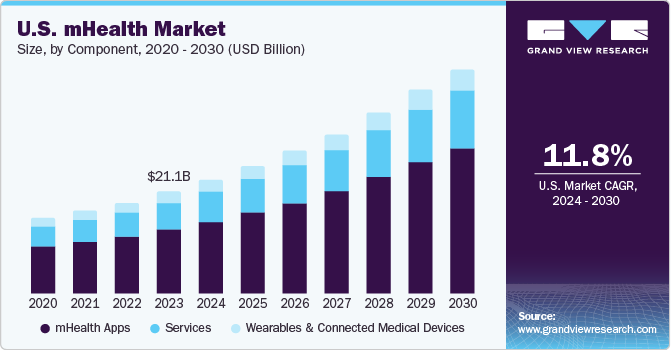
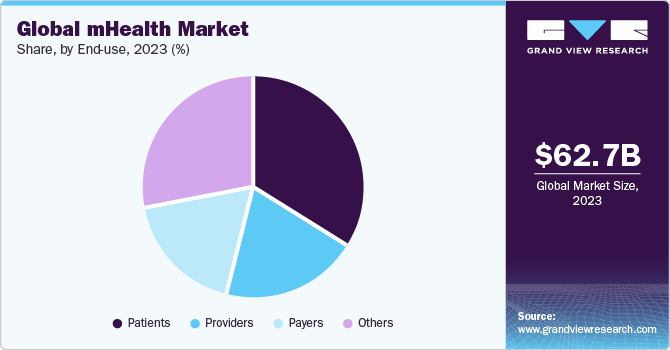
Global mHealth market size is expected to reach USD 151.57 billion by 2025, progressing at a CAGR 25.7% over the forecast period, according to a new report by Grand View Research, Inc
The market is majorly driven by growing geriatric population, rising prevalence of chronic diseases, and increasing penetration of smartphones and internet connections
According to a report, “ mHealth Market Analysis Report By Participants (Mobile Operators, Device Vendors, Healthcare Providers), By Service (Diagnosis, Monitoring, Healthcare Systems), And Segment Forecasts, 2018 – 2025 â€, published by Grand View Research, Inc.,The global mHealth market size is expected to reach USD 151.57 billion by 2025, progressing at a CAGR 25.7% over the forecast period, according to a new report by Grand View Research, Inc. The market is majorly driven by growing geriatric population, rising prevalence of chronic diseases, and increasing penetration of smartphones and internet connections. Technological advancements are leading to product innovations in the area of mHealth, which in turn will bode well for the market.
Growing inclination towards preventive
healthcare and subsequently rising subscription to mHealth apps have
been working in favor of the market. mHealth apps exhibit several
features that offer healthcare benefits to healthcare providers as well
as patients. mHealth apps provide accessibility to health related
information. mHealth apps also ensure continuous communication between
patients and providers, thereby allowing providers to diagnose,
recommend, and monitor patients without even seeing them in person.
Key players in this space
include Apple Inc.; AT&T; Airstrip Technologies; Allscripts
Healthcare Solutions; Google Inc; Orange; Soft Serve; mQure; and Samsung
Electronics.
Adoption of smartphones with
subscription to mHealth apps among adult population in the U.S. is
rising in order to maintain routine check. For instance, according to a
paper published in NCBI in February 2016, around 91.0% of adult
population in the U.S. own a mobile phone, with 61.0% of them possessing
smartphones.
Further Key Findings From the Report Suggest:
In 2017, monitoring services held the largest revenue share owing to
growing adoption of mhealth solutions for monitoring health conditions
such as diabetes
The healthcare system strengthening services segment is likely to register the highest CAGR of 27.7% over the forecast period
Healthcare providers will be the most promising participant segment
during the forecast period, mainly due to adoption of digital technology
by healthcare facilities in order to optimize care management process
In 2017, Europe accounted for the largest revenue share in the market
owing to rising research initiatives in the area of mHealth
Participants Insights
The mobile operators segment dominated
the mHealth market in 2017. Increasing number of partnerships of mobile
network operators with mHealth service providers is one of the key
factors contributing to the growth of the segment. Rising involvement of
mobile operators in the healthcare sector is also supplementing the
growth of the segment. According to a GSMA survey 2012, nearly 794
mobile operators were involved with mHealth in some way. This survey
also showed that in 2012, there were nearly 269 mHealth services or
products that were led by mobile operators.
The device vendors segment witnessed the
second largest revenue share in 2017. Growing involvement of device
vendors in mHealth is augmenting the . Device vendors are actively
participating by providing security systems to the smartphones for
reducing the incidences of data breaches pertaining to health records of
the patients. This further results in growing adoption of mHealth by
the general population.
Tags: EKG, mhealth, small cap stocks, stocks, tsx, tsx-v Posted in CardioComm Solutions | Comments Off on CardioComm Solutions $EKG.ca – #mHealth Market Is Projected To Expand At A CAGR Of 25.7% By 2025 $ATE.ca $TLT.ca $OGI.ca $ACST.ca $IPA.ca