Technology continues widespread disruption of education industry
EdTech (education technology) is the latest and greatest innovation to hit the academic field, and it is changing the industry from the inside out, from every possible angle.
In short, it is a complete digital revitalisation.
The entire world has faced its many challenges in the form of technological evolution and advanced digitalisation. For example, education is
an inherently traditional faction all around, but the weight of global
evolution in the gravitational shift towards complete digitalisation
around the world, has forced education to rethink its approach, to
rewire itself to realign with the way of the modern world. It took some
time (and a lot of apprehension on the academic industry’s part), but we
are finally beginning to see the start of technological disruption in
the education industry.
EdTech (education
technology) is the latest and greatest innovation to hit the academic
field, and it is changing the industry from the inside out, from every
possible angle. In short, it is a complete digital revitalisation.
Education today is more efficient, more easily accessible, and faster
than ever. It has not been an easy road, and there are still challenges
that lurk around hidden bends in the road, but this is the beginning of
an exciting journey for education and its future in the wake of
widespread digitalisation and technological advancement.
Breaking down geographical barriers in global academics
One of the most
consistently ongoing problems in traditional education has always been
the lack of inclusivity in terms of access to education in general.
Traditional academic institutions operated mostly (if not solely) on the
basis of students having to have access to the campuses, as well as the
time to dedicate to the studies that those campuses were obviously
there to serve for. EdTech has introduced online learning, a modern
function in education that allows students to study from anywhere in the
world – all they need is a stable internet connection and a reliable
device to use to complete their studies. That is the power of EdTech in
vivid, brilliantly vibrant motion.
Taking EdTech to all-new heights
EdTech is so exciting because it opens students and educators alike
to a whole new frontier in learning and teaching, making it easier than
ever for everyone to have complete and exciting reach. Not only is
learning itself available online now as well as traditionally, but so
are the learning materials and the course information. Students can
literally do it all, from anywhere in the world, on their own time and
their own terms. Additionally, EdTech is bringing in personalised
learning on an unprecedented scale, making it easier than ever for
students to absorb content at their own pace. This ensures no student is
left behind, or forgotten, in what can be a chaotic environment for
anyone.
Finally, EdTech
introduces a whole new facet to the education industry for potential
career trajectory later in life. A new faction in education inevitably
introduces new jobs, and the generations currently experiencing EdTech
will have a strong grasp on its potential and its depth by the time it
comes to their own career decisions. These days, students can study a
whole new league of course offerings, as well as traditional courses, as
part of their own professional trajectory. Whether that means studying
courses in PGP in AI and Machine Learning,
or going to arts schools to obtain a degree in the arts, modern
learners can have it all, thanks to EdTech development and further
advancement.
Posted by AGORACOM-JC
at 9:00 PM on Sunday, May 26th, 2019
SPONSOR: Tartisan Nickel (TN:CSE)Â Kenbridge Property has a measured and indicated resource of 7.14 million tonnes at 0.62% nickel, 0.33% copper. Tartisan also has interests in Peru, including a 20 percent equity stake in Eloro Resources and 2 percent NSR in their La Victoria property. Click her for more information
Nickel Prices Could “Go Through The Roof”; Watch For Signs – Expert
In the next five to ten years, the electric vehicle (EV) revolution will likely dominate the nickel space and will be sending prices much higher…
Guest(s): Alex Laugharne Principal Consultant, CRU Group
Laugharne said that nickel sulfide producers and the metallurgical laterite producers, who are most closely linked to EVs, are undergoing technological changes that may leave a supply gap in the nickel market.
“I think you’re seeing a lot of people being hesitant to invest in
new supply in the space because of this potential latent capacity. If
they do encounter technical difficulties, may fail to materialize, and
in that scenario, we may end up with a real crunch that could cause
nickel prices, and in particular, nickel sulfide prices, or pure nickel
prices to go through the roof,†he told Kitco News on the sidelines of
the Mines and Money New York conference.
Posted by AGORACOM-JC
at 4:43 PM on Friday, May 24th, 2019
Revenue for the three and nine-month periods ended March 31, 2019 was US$2.75 million and US$9.93 million, respectively (unaudited)
Revenue was generated from sales of the Recolor app, the in-app sale of virtual goods from the My Hospital game and in-app ad revenue.
TORONTO, May 24, 2019 — Kuuhubb Inc. (“Kuuhubb†or the “Companyâ€) (TSX- V: KUU), a mobile game development and publishing company targeting the female audience with bespoke mobile experiences, has reported its unaudited financial results for the three and nine-month periods ended March 31, 2019. The Company’s unaudited consolidated financial statements as at, and for, the three and nine months ended March 31, 2019 and related management’s discussion and analysis can be found on the Company’s SEDAR profile at www.sedar.com. The Company’s financial year end is June 30.
Highlights for the Fiscal Third Quarter Ended March 31, 2019:
Revenue for the three and nine-month periods ended March 31, 2019
was US$2.75 million and US$9.93 million, respectively (unaudited). This
revenue was generated from sales of the Recolor app, the in-app sale of
virtual goods from the My Hospital game and in-app ad revenue.
The non-GAAP adjusted EBITDA during the three and nine-month periods
ended March 31, 2019 was negative US$539,205 and negative US$848,137,
respectively.
During the three and nine months ended March 31, 2019, the Company
incurred consulting and professional fees of $447,479 and $1,084,368,
respectively compared to $237,780 and $693,652, respectively, during the
three and nine months ended March 31, 2018. The consulting and
professional fees were higher for the three and nine months ended March
31, 2019 when compared to the same periods of the prior fiscal year
mainly due to the now settled shareholder proxy dispute (refer to press
release dated March 25, 2019), preparation of the annual general meeting
(“AGMâ€) of shareholders and related election of the new Board of
Directors.
During the three and nine months ended March 31, 2019, the Company
incurred $366,470 and $2,201,874, respectively, in sales and marketing
expenses related to the promotion of the Recolor App and the My Hospital
game, compared to $2,981,991 and $8,606,688, respectively, during the
three and nine months ended March 31, 2018. The significant decrease is
due to an effort to control expenditures and optimize product features
at the same time. Therefore, the user acquisition activities have been
reduced and related costs decreased, resulting in decreased revenues as
well.
During the three-month period ended March 31, 2019, the Company
recorded a net loss of $2,665,002, compared to a net loss of $2,073,774
incurred during the three-month period ended March 31, 2018. Net loss is
significantly higher than prior quarter due the now settled shareholder
proxy dispute (refer to press release dated March 25, 2019),
preparation of the annual general meeting (“AGMâ€) and related election
of the new Board of Directors.
The Company had a cash position of US $1.29 million for the period ended March 31, 2019.
Limited User Acquisition (UA) Spending Impacting Revenue: Jouni
Keränen, CEO of Kuuhubb stated, â€Revenues declined due to the
significantly reduced marketing budget related to user acquisition
spending. We spent nearly 90 percent less in the third quarter compared
to the corresponding quarter in 2018. In addition, the shareholder
requisition in the third quarter consumed substantial resources that
would have ideally been deployed in furthering our user acquisition
marketing efforts. With some challenging quarters behind us, Kuuhubb is
now better positioned to move forward with our growth initiatives and
focus on achieving our new product roll-out strategy.â€
Board of Directors Changes: On February 27, 2019,
the Company announced that it had reached an amicable settlement with
the shareholders and certain former directors that had sent a
shareholder requisition to the Company. As part of the amicable
settlement, the Company announced the resignation from the Board of
Directors of Messrs. Arnold Kondrat, Maurice Colson, Philip Chen and
Carl-Gustaf von Troil. The Company refers to the press release issued on
February 27, 2019 about the settlement agreement between the Company
and certain of its shareholders and directors.
Subsequent to the resignation of the afore-mentioned board members,
the Company appointed to its Board of Directors a group of high quality,
dedicated individuals with the necessary and relevant industry
knowledge to help the Company focus on achieving its long-term strategic
objectives. Appointed were Messrs. Garner Bornstein, an entrepreneur
with a proven track record of creating successful companies in the world
of disruptive technology; Elmer Kim, an accomplished private equity,
family office and investment management executive with over 25 years of
investment and technology industry experience; and Andre Lüdi, an
investment bank and private wealth management executive with over 30
years of experience in the European financial sector.
Financing: In February 2019, Business Finland, a
Finnish governmental agency, granted Kuuhubb Oy a loan in the amount of
Euro 963,000 to support the Company’s new game project and platform
development. The loan is expected to have a seven-year maturity period
with an interest rate of 1 percent.
New Product Launches and Partnership Agreements: On
February 14, 2019, the Company announced the soft launch of its new
mobile game, “Dancing Diariesâ€. The app combines Match 3 gameplay with a
unique dancing meta game and has shown itself to be a perfect
complement to Kuuhubb’s growing portfolio.
Kuuhubb announced on February 6, 2019, a new cross marketing
partnership agreement with a global toy brand. The partnership, signed
with a worldwide leader in toys and family products design, manufacture,
marketing and content creation, covers a series of interactive
campaigns to be prepared for the Partner’s properties and executed in
Kuuhubb’s Recolor app.
The Company will continue to focus on its return to growth strategy
by utilising the enhanced development capabilities of its new Helsinki
studio to roll out a number of commercially available products. In
addition to the global commercial launch of “Dancing Diariesâ€, Kuuhubb
is anticipating the commercial release of multiple titles this year,
including “Recolor by Numbersâ€, “Tiles and Tales†and “Incolourâ€. The
Company will also add new features and improvements to its current
titles, “Recolor†and “My Hospitalâ€, as it looks to build on the
progress shown through the start of the 2019 calendar year.
About Kuuhubb Kuuhubb is a publicly listed
mobile game development and publishing company, targeting female
audience with bespoke mobile experiences. Our Mission is to become a top
player in the female mobile game space. We believe in empowering women
by creating games and apps that will have our female audience relax,
express and entertain themselves every day. Through our games and
partnerships with selected developers, we explore new lifestyle trends
that can be converted into games and apps which will bring value to our
users, employees, and shareholders. Headquartered in Helsinki, Finland,
Kuuhubb has a global presence with a strong focus on U.S. and Asian
markets.
Cautionary Note Concerning Forward-Looking Information This
press release contains forward-looking information. All statements,
other than statements of historical fact, that address activities,
events or developments that the Company believes, expects or anticipates
will or may occur in the future (including, without limitation,
statements relating to future revenue, products and development and
growth of the Company’s business) are forward-looking information. This
forward-looking information reflects the current expectations or beliefs
of the Company based on information currently available to the Company.
Forward-looking information is subject to a number of risks and
uncertainties that may cause the actual results of the Company to differ
materially from those discussed in the forward-looking information, and
even if such actual results are realized or substantially realized,
there can be no assurance that they will have the expected consequences
to, or effects on the Company. Factors that could cause actual results
or events to differ materially from current expectations include, among
other things, risks related to the growth strategy of the Company, the
possibility that results from the Company’s growth and development plans
will not be consistent with the Company’s expectations, the early stage
of the Company’s development, competition from companies in a number of
industries, the ability of the Company to manage expansion and
integrate acquisitions into its business, future business development of
the Company and the other risks disclosed under the heading “Risk
Factors” in the Company’s annual information form dated November 8, 2018
filed on SEDAR at www.sedar.com. Forward-looking information speaks
only as of the date on which it is provided and, except as may be
required by applicable securities laws, the Company disclaims any intent
or obligation to update any forward-looking information, whether as a
result of new information, future events or results or otherwise.
Although the Company believes that the assumptions inherent in the
forward-looking information are reasonable, forward-looking information
is not a guarantee of future performance and accordingly undue reliance
should not be put on such information due to the inherent uncertainty
therein.
Neither TSX Venture Exchange nor its Regulation Services Provider
(as that term is defined in the policies of the TSX Venture Exchange)
accepts responsibility for the adequacy or accuracy of this release.
For further information, please contact:
Kuuhubb Inc. Jouni Keränen – CEO [email protected] Office: +358 40 590 0919
Bill Mitoulas Investor Relations [email protected] Office: +1 (416) 479-9547
Posted by AGORACOM-JC
at 1:42 PM on Friday, May 24th, 2019
4 weeks ago we interviewed BetterU (BTRU:TSXV) CEO Brad Loiselle from his head office in Ottawa with the title “BetterU On The Move In India With Partnerships, Products and Personnel†Â
2 weeks ago we interviewed him again from India where he and Gurmit Singh were on a whirlwind tour of meetings with large potential customers
Today, we finished our BTRU tour with Brad in London and, specifically, in the back seat of a good old black cab as he raced for the airport after his final meeting. He simply couldn’t wait to be back in Ottawa on Monday because – as you can see from his energy – it appears the trip went exceedingly well from a customer acquisition point of view as Brad expects to be closing meaningful deals in the very near future. Moreover, the London meetings were tied to financing pitches with VERY big family offices. Â
This last few weeks has put a new light on BTRU, with significant advances in product and personnel, which appear to be preparing for highly anticipated new customers. Only time will tell but how many CEO’s would be speaking with their shareholders from 3 different countries over the last 4 weeks if they weren’t feeling pretty confident? Â
Grab a coffee, watch this great interview with Brad Loiselle and let us know what you think.
Posted by AGORACOM-JC
at 4:54 PM on Thursday, May 23rd, 2019
When it went public in September of last year, Bougainville Ventures (BOG:CSE) started out as a cannabis real estate company, providing turnkey greenhouse solutions to tenant growers with a long-term goal of emulating the McDonald’s real estate model. That model is still at the core of BOG but company principals are using their expertise to slowly but surely create a vertically integrated powerhouse. More than just lip service, the Company has announced the following in 2019 and we haven’t even hit June yet:
April 15 – Acquired an interest in 5 Alberta retail locations
April 25 – Binding LOI to construct a Canadian Hemp/CBD processing facility
May 14 – Signed A Sponsored Research Agreement With Israeli R&D Company For A CBD Energy Drink
May 23 – Acquired An American Hemp production and processing company to produce high-quality CBD extracts
We sat down with Bougainville Director, Richard Cindric to find out
how these significant developments all tie in together as the Company
races towards becoming a vertically integrated player.
Posted by AGORACOM-JC
at 2:40 PM on Thursday, May 23rd, 2019
SPONSOR: Esports Entertainment
$GMBL Esports audience is 350M, growing to 590M, Esports wagering is
projected at $23 BILLION by 2020. The company has launched VIE.gg
esports betting platform and has accelerated affiliate marketing
agreements with 190 Esports teams. Click here for more information
GMBL: OTCQB
———————–
Q1 2019’s Most Impactful PC Videogames: The Year of Growth
Both the Overwatch League and NBA 2K League have expanded. Viewership for Western League of Legends
pro leagues is up year-over-year. Across the esports industry, leagues
are being revamped and prize pools are growing. Overall, 2019 is shaping
up to be a year of growth for the industry.
This growth is reflected in The
Esports Observer’s PC Games Impact Index report for the first quarter of
2019. For a detailed breakdown of the key performance indicators that
determine a game’s index score, click here to review last year’s initial Impact Index report.
The Big Four
For the last several years, the esports industry has been consistently led by Counter-Strike , League of Legends, and Dota 2 ,
commonly referred to as the “Big Three.†Over the last year, with its
consistently high viewership and $100M USD overall prize pool for its
first season, Fortnite
has forced its way onto equal footing with the Big Three. This is
clearly reflected in the large gap between these games and the next
title in the impact rankings. The fifth place game (Overwatch) is separated from the Big Four by 21.84 – the largest gap separating any two games on the list.
The scores of each of the games in the Big Four have increased year-over-year.
While it is worth noting that the Overwatch League
did not begin until mid-February, thus putting the game at a
significant disadvantage in esports activity compared to the Big Four, Overwatch was unable to break into the top four at any point during the inaugural OWL season in 2018.
In fact, the Overwatch League itself may be a limiting factor for Overwatch’s
impact. Activision Blizzard has effectively eliminated all third-party
activity related to the game, drastically reducing both the number of
tournaments and available prize money within a given quarter. While the
league still generates viewership that frequently places highly on
weekly Twitch rankings, the lack of prominent streamers or other
tournaments ultimately hurts Overwatch’s impact score, which has declined slightly year-over-year.
By contrast, the scores of each of the games in the Big Four have increased year-over-year, with Fortnite
jumping from 13.64 points in Q1 2018 to 51.70. These games continue to
iterate on their structures while also providing opportunities for
streamers and third-party tournament organizers to drive growth for
their respective esports scenes.
On The Rise
Four games are particularly noteworthy for growing their impact scores by more than 100% year-over-year. Call of Duty , FIFA , and World of Warcraft each saw a surge in popularity in the latter half of 2018 due to the release of new titles: Black Ops 3, FIFA 19, and the expansion Battle for Azeroth,
respectively. The popularity of these games (and by extension their
viewership and esports interests) operate on a regular content cycle.
Interest peaks when a new entry is released, and then declines over time
until it spikes again with the next release.
That said, all three games are also now in the midst of a renewed focus on their esports systems. Call of Duty is gearing up for its move to a franchise system, FIFA
has enjoyed a boom in its ecosystem with more third-party tournaments
and organizers entering the space, and Activision Blizzard overhauled
the structure for both of WoW’s competitive modes as well as increasing their prize pools. Additionally, WoW continues to see large spikes in viewership during World First raid races led by esports organization Method.
Credit: Ubisoft
Although Rainbow Six Siege did not benefit from a major new game release, it was still able to see impact growth on par with the other three titles. Rainbow Six Siege is the product of steady growth and frequent content updates
which have driven more esports viewership, prize money, and
organization interest over the last 18 months. While the game is likely
to continue growing as an esport, its impact score may have peaked for
the year as its most prominent tournament, the Six Invitational,
concluded in February. However, the game’s ability to see such strong
year-over-year growth without relying on a new release gives it more in
common with the games in the Big Four, and suggests a potential to one
day contend with the impact of those titles if its current growth rate
continues into 2020.
Still Not Enough
The final game of note stands out for its absence in the top 15 – Apex Legends. Apexdominated Twitch
following its release on Feb. 4, 2019, and saw tournament support from
the streaming platform in the form of two $100K USD Twitch Rivals
events. Unfortunately, developer Respawn Entertainment and publisher EA
failed to capitalize on the game’s successful launch. By
March, the lack of a developer-supported tournament ecosystem or
significant content update had driven many of the game’s top streamers
back to other titles, primarily Fortnite. With the $30M Fortnite World Cup on the horizon, it is unlikely that Apex Legends will be able to pull top competitive Fortnite streamers away.
That said, with top streamers such as Turner “Tfue†Tenney stating that they would quit competing in Fortnite
tournaments after the World Cup due to frustration with the game, a
significant esports investment from EA in the latter half of 2019 could
be enough to draw disenfranchised Fortnite streamers to Apex Legends, giving the game a second chance to dethrone the current king of battle royales.
Posted by AGORACOM-JC
at 11:58 AM on Thursday, May 23rd, 2019
SPONSOR: ThreeD Capital Inc. (IDK:CSE) Led by
legendary financier, Sheldon Inwentash, ThreeD is a Canadian-based
venture capital firm that only invests in best of breed small-cap
companies which are both defensible and mass scalable. More than just
lip service, Inwentash has financed many of Canada’s biggest small-cap
exits. Click Here For More Information.
——————-
Despite Crypto Rally Pause, This Billionaire Still Expects Bitcoin at $250,000
Tim Draper, a prominent venture capitalist known for sporting an “offensive†purple Bitcoin tie, recently told The Street that now’s still an optimal time to purchase Bitcoin.
He goes on to state that by 2022, “maybe 2023â€, he expects for each BTC to be valued at $250,000, explaining his prediction as an estimate of the market share that Bitcoin will obtain as a viable currency and digital store of value.
Bitcoin
(BTC) may have dropped by 4% in the past 24 hours, receding to $7,600
in an interday drop, but many analysts and investors are still
optimistic. The thing is, the fact that BTC collapsed to $6,100 and then
skyrocketed to tap $8,000 for a second time was deemed by many to be
wildly positive, as it asserts that the bulls have control of the
cryptocurrency wheel.
One prominent investor claims that this is just the start though. He
recently asserted that Bitcoin’s runway is a lot longer than some expect
and that BTC can easily reach a value in the sextuple-digit range.
Bitcoin Rally Is Just Getting Started
Tim Draper, a prominent venture capitalist known for sporting an “offensive†purple Bitcoin tie, recently told The Street
that now’s still an optimal time to purchase Bitcoin. In a comment
characteristic of his long-term expectations for this space, the
investor quipped that it may be wise to “buy the dip [or] buy the
reboundâ€, hinting at his belief that whether your BTC cost basis is
$5,000 or $10,000 in years from now won’t matter.
He goes on to state that by 2022, “maybe 2023â€, he expects for each
BTC to be valued at $250,000, explaining his prediction as an estimate
of the market share that Bitcoin will obtain as a viable currency and
digital store of value.
This is far from the first time he touted such a lofty prediction.
Speaking to CoinTelegraph, the staunch permabull remarked that 2018’s
sell-off to $3,150 from $20,000 was simply a “fluctuationâ€, musing that
the move was catalyzed by manipulators looking to turn a quick buck.
Explaining why buying cryptocurrency whenever is logical, Draper opines:
“All times are good times to enter the crypto market. If you are
forward-thinking, you’re going to look and say ‘this is just better
currency’, so it’s just a matter of time before the world adopts it.
[This will happen] when everything I can do with fiat, I can do with
Bitcoin.â€
Indeed, many have expressed that the simple adoption of Bitcoin as a
digital currency, potentially the money of the future, is what will
drive such long-run growth. Researcher Filb Filb expressed
four months ago that if Bitcoin’s supply schedule, BTC’s adoption
rates, its share of global financial transactions, and worldwide debt
continues to follow his in-depth model, BTC could hit $250,000 by as
soon as 2022, lining up with Draper’s forecast.
He then added that Bitcoin’s fair value (at that time) was $5,500, meaning that the spot market was then undervaluing the asset.
What’s Crypto’s Endgame?
What comes after Bitcoin hits $250,000? Well, in the extremely long
run, like in the coming decades, Draper expects for the value of all
digital assets to begin to make a move on the $100 trillion hegemony of
fiat, government-issued money. While fiat makes up a vast majority of
global capital flows, Draper argues
that using such “poor†currencies is illogical, citing their
controllability, lack of transparency, and subjectivity to political and
social whims on the day-to-day.
With the brightest developers, engineers, and academics working on digital assets — Blockchain Capital’s Spencer Bogart would agree — Draper notes that there could be a capital flight from fiat to crypto over time. He elaborates:
“My belief is that over some period of time, the cryptocurrencies
will eclipse the fiat currencies. That would be a 1,000 times higher
than what we have now.â€
In a subsequent comment, Draper quipped that in five years’ time,
when consumers walk into Starbucks using fiat, the baristas will “laugh
at you.†He’s effectively implying that Bitcoin and other media of
exchange digital assets will be used in the place of traditional payment
rails, like U.S. dollars, Euros, or Yen on Visa or Mastercard.
What Will Bring BTC Higher?
Although the aforementioned commentators seem to be 100% sure that
fresh highs are in Bitcoin’s cards, what could kick off the adoption of
Bitcoin as a currency. Theses on this matter very, but many are coming
to the conclusion that a reduction in supply (the halving), growing
interest in BTC, and capital flight from traditional assets is what will
cause this embryonic industry to see massive adoption.
Per previous reports
from NewsBTC, quantatative analyst PlanB writes that money from silver,
gold, negative interest rate economies, authoritarian and capital
control-rife states, billionaires looking for a quantitative easing
hedge, and institutional investors will be what pushes Bitcoin to
$55,000 after 2020’s halving. This inflow could potentially kick off
what many call “hyperbitcoinizationâ€, which is when fiat currencies
rapidly lose value as Bitcoin supplants it.
Posted by AGORACOM-JC
at 10:44 AM on Thursday, May 23rd, 2019
Announced the receipt of a video from PyroGenesis Canada Inc (TSX-V:Â PYR) demonstrating a Silicon Metal Melt Drainage (Tapping) test
Part of the continuous development testing with Gen2 PUREVAP™ Commercial Scalability Proof of Concept platform.
HPQ Silicon Resources Inc. – (www.HPQSilicon.com) (TSX-V: HPQ), (OTCPink: URAGF), (FWB: UGE) is pleased to announce the receipt of a video from PyroGenesis Canada Inc (“PyroGenesisâ€) (TSX-V: PYR) demonstrating a Silicon Metal Melt Drainage (Tapping) test, which is part of the continuous development testing with our Gen2 PUREVAP™ Commercial Scalability Proof of Concept platform.
DRAINAGE OF LIQUID SILICON MELT AT THE BOTTOM OF REACTOR (TAPPING) CRITICAL TO PROCESS
Drainage of silicon metal (tapping) is one of the most important
aspects of the disruptive process being developed. In order to test
design efficiency and to generate computational studies to predict the
tapping behaviour of liquid silicon in the Gen3 pilot plant, a few
silicon melting and tapping tests using the Gen2 reactor have been
conducted to date. The video was produced during one of these tests.
SIMULATED TAPPING DONE USING GEN2
The Gen2 reactor was ramped up to operating parameters and once it
reached operating temperature, as-received Si was introduced into the
reactor for effective melting. The video sequence starts when the
reactor is opened until all the liquid silicon metal is drained out.
Mr. Bernard Tourillon, President and CEO of HPQ Silicon Resources Inc stated: “We
are very excited to be able to present to our stakeholders our first
ever video of the Gen2 in action. This video gives life to our tests.
Tests that are demonstrating the incredible versatility of our Gen2
PUREVAPTM QRR platform, highlighting the advancement being made on the
project and toward de-risking the Gen3 commercial scalability testing
phaseâ€.
Pierre Carabin, Eng., M. Eng., Chief Technology Officer and Chief
Strategist of PyroGenesis has reviewed and approved the technical
content of this press release.
This News Release is available on the company’s CEO Verified Discussion Forum, a moderated social media platform that enables civilized discussion and Q&A between Management and Shareholders.
About HPQ Silicon
HPQ Silicon Resources Inc. is a TSX-V listed resource company focuses
on becoming a vertically integrated and diversified High Purity, Solar
Grade Silicon Metal (SoG Si) producer and a manufacturer of multi and
monocrystalline solar cells of the P and N types, required for
production of high performance photovoltaic conversion.
HPQ’s goal is to develop, in collaboration with industry leaders,
PyroGenesis (TSX-V: PYR) and Apollon Solar, that are experts in their
fields of interest, the innovative PUREVAPTM “Quartz Reduction Reactors
(QRR)â€, a truly 2.0 Carbothermic process (patent pending), which will
permit the transformation and purification of quartz (SiO2) into high
purity silicon metal (Si) in one step and reduce by a factor of at least
two-thirds (2/3) the costs associated with the transformation of quartz
(SiO2) into SoG Si. The pilot plant equipment that will validate the
commercial potential of the process is on schedule to start in 2019. Shares outstanding: 222,284,053
Disclaimers:
This press release contains certain forward-looking statements,
including, without limitation, statements containing the words “may”,
“plan”, “will”, “estimate”, “continue”, “anticipate”, “intend”,
“expect”, “in the process” and other similar expressions which
constitute “forward-looking information” within the meaning of
applicable securities laws. Forward-looking statements reflect the
Company’s current expectation and assumptions, and are subject to a
number of risks and uncertainties that could cause actual results to
differ materially from those anticipated. These forward-looking
statements involve risks and uncertainties including, but not limited
to, our expectations regarding the acceptance of our products by the
market, our strategy to develop new products and enhance the
capabilities of existing products, our strategy with respect to research
and development, the impact of competitive products and pricing, new
product development, and uncertainties related to the regulatory
approval process. Such statements reflect the current views of the
Company with respect to future events and are subject to certain risks
and uncertainties and other risks detailed from time-to-time in the
Company’s on-going filings with the securities regulatory authorities,
which filings can be found at www.sedar.com. Actual results, events, and
performance may differ materially. Readers are cautioned not to place
undue reliance on these forward-looking statements. The Company
undertakes no obligation to publicly update or revise any
forward-looking statements either as a result of new information, future
events or otherwise, except as required by applicable securities laws.
Neither the TSX Venture Exchange nor its Regulation Services
Provider (as that term is defined in the policies of the TSX Venture
Exchange) accepts responsibility for the adequacy or accuracy of this
release.
For further information, contact Bernard J. Tourillon, Chairman, President and CEO Tel (514) 907-1011 Patrick Levasseur, Vice-President and COO Tel: (514) 262-9239 www.HPQSilicon.com
Photos accompanying this announcement are available at:
Posted by AGORACOM-JC
at 7:03 AM on Thursday, May 23rd, 2019
Further to the letter of intent with Worm Castings Farms Inc. Company signed a definitive agreement to complete the acquisition
Under the terms of the Worm Castings Transaction, Bougainville will provide total consideration of 10 million common shares of Bougainville at a deemed price of CAD$0.12 and a cash payment of USD$350,000 in return for 70% of Worm Castings profits.
VANCOUVER, British Columbia, May 23, 2019 — BOUGAINVILLE VENTURES INC. (“Bougainville” or the “Company”) (CSE: BOG) (8BV-FF:Frankfurt Stock Exchange) is pleased to announce that further to the letter of intent (“LOIâ€) with Worm Castings Farms Inc. (“Worm Castingsâ€) announced in the Company news release dated October 29, 2018 the Company signed a definitive agreement to complete the acquisition of Worm Castings (“the Worm Castings Transactionâ€). Worm Castings is the sole owner of an Oregon State Hemp production and processing license, issued by the Oregon State Regulatory approval board, for total consideration consisting of 10 million common shares of Bougainville at a deemed price of CAD$0.12 per share and a cash payment of USD$350,000.
TERMS OF THE TRANSACTION
Under the terms of the Worm Castings Transaction, Bougainville will
provide total consideration of 10 million common shares of Bougainville
at a deemed price of CAD$0.12 and a cash payment of USD$350,000 in
return for 70% of Worm Castings profits.
Subject to completion of the Worm Castings Transaction the board of
directors of Bougainville Director’s will approve the Company to deliver
the final outstanding payment of $USD120,000 to Worm Castings which
will complete the USD$350,000 deposit, which will satisfy Bougainville’s
obligation under the Worm Castings Transaction. Bougainville plans to
invest up to USD$1,000,000 to expand the capacity of Worm Castings in
agriculture, associated infrastructure, and working capital.
Bougainville has secured the services of the Worm Castings founders for a
period of a minimum of five years to aid with the anticipated expansion
of the business in Oregon and the rest of the United States.
President & CEO, Andy Jagpal Comments:
“This acquisition of Worm Casting is a means to further our strategy
of providing large quantities of high-quality CBD extracts. The Worm
Casting Transaction provides Bougainville with a vertically-integrated
and licensed cultivator. In addition to having 10 acres worth of
industrial hemp ready for processing, they possess a premium high
quality cloned feminized hemp plants with 10-15% CBD and 0.3% THC
resulting in maximized CBD oil content within each plant.â€
PRIVATE PLACEMENT FINANCING
Bougainville is also pleased to announce that it has arranged a
private placement (the “Private Placementâ€) of units (each a “Unitâ€) at a
price of $0.12 per Unit basis for gross proceeds of up to $500,000.
Each unit is comprised of one common shares (each a “Shareâ€) of the
Company and one common share purchase warrant (each a “Warrantâ€). Each
Warrant entitles the holder to purchase one additional common share
(each “Warrant Shareâ€) of the Company at an exercise price of $0.25 per
Warrant Share for a term that is 24 months from the date of closing of
the Private Placement.
The Company wishes to correct an error in its news release dated May
1, 2019 in which the Company announced the closing of an oversubscribed
private placement for which 3,166,666 Units were issued at a price of
$0.06 per Unit for $190,000 in gross proceeds (the “Closed Private
Placementâ€). The Closed Private Placement resulted in the issuance of
3,316,666 Units of the Company at a price of $0.06 per Unit for $199,000
in gross proceeds
About Bougainville Ventures, Inc.
Bougainville provides cannabis infrastructure and seed-to-sale
services to I-502 tenant-growers leasing greenhouse facilities space and
providing fully built-out, turnkey solutions and ancillary services
including processing, cannabis expertise and marketing and sales
resources. Greenhouse canopies provide a 50% saving in cultivation cost.
Bougainville has 10,000 square feet of space being prepared for
production in Oroville, Washington state. Bougainville possesses
sufficient land for two more pods of the same size.
For further information, please contact the IR department at [email protected] or by phone at 1-888-395-6399.
FORWARD LOOKING STATEMENTS: This news release
contains certain forward-looking statements within the meaning of
Canadian securities laws. Forward-looking statements are based on the
expectations and opinions of the Company’s management on the date the
statements are made. The assumptions used in the preparation of such
statements, although considered reasonable at the time of preparation,
may prove to be imprecise and, as such, undue reliance should not be
placed on forward-looking statements. The Company expressly disclaims
any intention or obligation to update or revise any forward-looking
statements whether as a result of new information, future events or
otherwise. No regulatory authority has approved or disapproved the
information contained in this news release.
Posted by AGORACOM-JC
at 2:39 PM on Wednesday, May 22nd, 2019
SPONSOR: Esports Entertainment
$GMBL Esports audience is 350M, growing to 590M, Esports wagering is
projected at $23 BILLION by 2020. The company has launched VIE.gg
esports betting platform and has accelerated affiliate marketing
agreements with 190 Esports teams. Click here for more information
GMBL: OTCQB
———————–
Understanding the esports ecosystem
Broadcasters aren’t the only demographic trying to figure out what impact esports might have on their industry: based on a number of very well attended sessions at the recent SportsPro Live event in London, professional sport is too
Esports is emerging as an exciting new market bringing together
players from the broadcasting, gaming and sports industries, writes Ian
Volans.
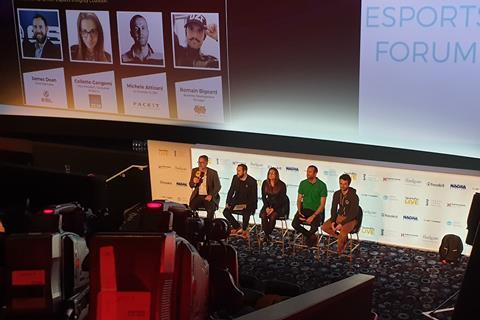
L-R, Esports integrity commissioner (moderator) Ian Smith; ESL UK CEO
James Dean; New York Excelsior OWL VP of consumer products Collette
Gangemi; FACE IT co-founder & CBO Michele Attisani; Riot Games
business development manager Romain Bigeard.
Broadcasters aren’t the only demographic trying to figure out what
impact esports might have on their industry: based on a number of very
well attended sessions at the recent SportsPro Live event in London,
professional sport is too.
For the benefit of novices, speakers agreed that the term “esportsâ€
is not entirely useful. Introducing a panel discussion on where the
esports and gaming business is heading, Ian Smith Integrity Commissioner
at the Esports Integrity Coalition described the term as a slightly
misleading umbrella term covering a variety of games that are lumped
together in the same way that the Olympics lumps together 26 or 28
different sports. “Just like the Olympics, we have the 100m men’s final
at one end watched by 1.2 billion people and we have synchronized
swimming at the other end watched by 12 people. Esports is exactly like
that,†said Smith.
Smith placed Counter-Strike Global Offensive (CS: GO), League of Legends and Defense of the Ancients 2 (Dota2) at the Usain Bolt end of the esports spectrum, with Overwatch and Rainbow 6 being in a second tier not too far behind while other games such as Starcraft,
which was massive until a few years ago, are in decline. Each game has
its own characteristics, attracting its own community. It’s the
engagement of these communities which is of interest to professional
sporting bodies, and a potential competitor for the attention of
broadcasters’ viewers.
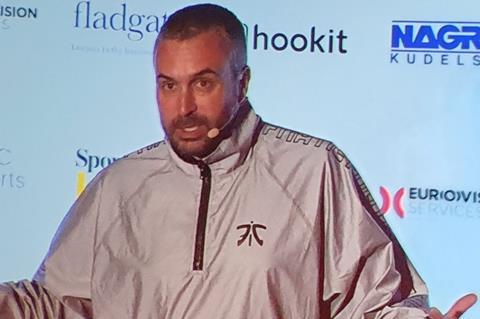
In a keynote, Wouter Slijffers, CEO of Fnatic said he felt
“professional gaming†is a more intuitive description. Fnatic owns ten
professional teams across the globe, including a League of Legends team which won the world championship in 2011 and was runner up in 2018
Wouter Slijffers is CEO of Fnatic, owner of ten pro esports games worldwide
Slijffers suggested that the estimated esports audience of 1.8
billion represented a quarter of world population or 40% of the online
population. The sector is projected to be worth US$1.1 billion in 2019
rising to US$1.8 billion in 2022, a very healthy compound annual growth
rate of 22%. The excitement about esports rests on adage that “there’s
money in eyeballs.â€
Media rights market There are four key
stakeholder groups at the core of the esports ecosystem: the publishers
who develop and release the games; platforms that facilitate the
broadcast of games to audiences worldwide; organisers of live events
that are filling arenas with increasing regularity; and pro teams.
Associations are emerging as the maturing ecosystem recognizes a need
for governance structures. For example, World esports Association
(WESA) is an open and inclusive organization that aims to
professionalize esports in areas such as player representation,
standardized regulations, revenue shares for teams as well as
establishing predictable schedules for fans, players, organizers and
broadcasters. The Esports Integrity Coalition is a not-for profit
members’ association that works with esports stakeholders to protect the
integrity of competition, investigate all forms of cheating including
match manipulation and doping and impose sanctions on offenders.
Slijffers outlined the increasingly diverse revenue streams that help
fund professional esports teams. Sponsorship and partnerships are key
with brands keen to tap into esports for content-led campaigns. To
support this, Fnatic has an in-house content studio and offers talent
services. Having protected its trademarks in key markets worldwide, fans
are monetized through merchandising – Fnatic has its own global e-shop
and opened Bunkr, the world’s first esports concept store, in London’s
Shoreditch tech district in 2016.
A media rights market is beginning to develop but Slijffers said that
it was “yet to be proven†how teams would share revenues with the
leagues who were doing the deals. Twitch has paid $90 million for
exclusive streaming rights for the Overwatch League for two years but BAMTech’s $350 million six-year deal reported in December 2016 for exclusive rights to stream League of Legends unraveled before it started. In May 2018, ESPN+ stepped in with a replacement deal of undisclosed value.
Sponsorship and partnerships are key with brands keen to tap into esports for content-led campaigns.
One area which highlights the similarities between sport and esports
and the cultural differences between North America and Europe is in
commercial relationship between leagues and teams. Depending on the
game, open leagues and tournaments are more common in Europe while the
model in North American is more often closed franchise,
publisher-controlled, leagues.
Romain Bigeard, business development manager at Riot Games, was one
of the SportsPro Live panelists. Riot Games released debut title League of Legends in 2009 and it has gone on to become one of the most played computer games and a driver of the esports phenomenon.
Bigeard’s career started in the open leagues with promotion and
relegation in Europe. One of the downsides of the European approach was
that because of the short esport business life cycle – six to nine
months – a team could get relegated three months into a sponsorship
deal. When he moved to America, he realized that the franchise system
gave teams – the “weak-link in the overall ecosystem†– time to
negotiate and activate sponsorship deals that work for partner brands.
Michele Attisani, co-founder of FACEIT, agrees with Bigeard: “From a
commercial standpoint, and from a business standpoint, I think a
franchise is brilliant because it gives the ability to invest for the
long term.†FACEIT is a global online esports platform with 12 million
users playing more than 15 million game sessions each month. Key
objectives in developing the platform were to make it as social as
possible in order to build communities around the games they support and
to integrate Twitch, YouTube. The company has also branched into
hosting major live events such as the FACEIT CS:GO Major which
sold-out the Wembley Arena in September 2018 and was broadcast live on
Sky Sports’ website, YouTube and Facebook channels.
With more money coming in, Attisani says that with the approach adopted by Riot with League of Legends and Blizzard with the Overwatch League
there is greater stability for the teams, the players, the brands and
the leagues. However, he cautions that the long-term consequences of the
model are not fully understood. Stability comes at a cost: at the time
of the ESPN+ deal, Bloomberg reported that League of Legends teams were paying between $10 million and $13 million for franchises.
The FACEIT founder firmly believes that esports success depends on
having a strong and very engaged competitive community and large fan
bases for the games. “You need to make sure that as you build a
franchise you also maintain the overall health of the ecosystem for the
game.â€
Open ecosystem James Dean is CEO of the UK
subsidiary of Turtle Entertainment GmBH, owner and operator of the ESL
brand which runs a number of esports platforms, national and
international pro leagues and produces and broadcasts gaming events live
and globally. He warns that it is easy to lose sight of the fact that
all games publishers are some sort of commercial entity and that unlike
die-hard football fans who are unlikely to abandon their club, esports
fans can quite easily move away from one game to another. Dean believes
that an open ecosystem below community-based franchises is the best
combination to sustain an aspirational path for talent from lower
levels. “We have to encourage the talent, but you need the commercial
infrastructure to sustain the business model,†he said.
ESL created the World esports Association (WESA) to create an
alternative structure capable of giving players that aspirational path
to the top, but with sustainability. ESL’s CS-GO Pro League will be run under the auspices of WESA in 2019.
Collette Gangemi, VP of consumer products and merchandising for New York Excelsior, a pro team in the Atlantic Division of the Overwatch League
team, owns a community-based franchise in New York City. She observes
that having the IP rights combined with the ability to create fandom and
a community is hugely important and gives confidence for investment.
“We’re New York and will continue to invest in franchise-based models:
first with the Overwatch League and with others launching very soon.â€
There is growing interest in esports among traditional sports: for
example, FACEIT has been working with NHL. Attisani says the NHL Gaming
World Championship which enters second year in 2019 has been
“phenomenal†in revitalising the NHL brand and its relevance to younger
audiences.
2018 was the second year of Formula 1’s involvement in esports, and
the first year of official teams: nine out of ten of the F1 teams
participated. A total of 66,000 entered the four qualifying rounds and
the final was watched live by 1.2 million on TV and a further 3.2
million on a dedicated livestream. The competition generated 100 million
social media impressions and 20 million online views of F1 esports
content. For F1, esports creates “material fan engagement and commercial
opportunities.â€
Soccer has also jumped on the bandwagon: FIFA has revamped its FIFA eWorld Cup for 2019 with qualification through EA Sports FIFA19 Global Series. While in England, the ePremier League 2019 final was broadcast live on Sky Sports in March.
Leicester City footballer Christian Fuchs owns a pro esports team and
is planning to build a dedicated esports arena in New York City
Christian Fuchs, a member of the 2015-16 Leicester City squad that
famously disrupted the oligopoly that has dominated the English Premier
League, has set-up his own pro team – #NoFuchsGiven – that competes in FIFA19
tournaments. Fuchs told delegates at SportsPro Live that he has bought a
36-acre sports complex in New York and is planning to build a dedicated
thousand-seater esports arena which will be the biggest in the city.
For digitally native younger demographics there is little doubt that
esports is a rival to both broadcast and traditional sports. Only time
will tell how the three sectors will learn to co-exist.