Agoracom Blog Home

Author Archive

Copper, The Most Critical Metal SPONSOR: Candente Copper $DNT.ca $CN.ca $FCX.ca $TECK.ca $FSUGY $PER.ca

Posted by AGORACOM at 10:20 AM on Tuesday, December 8th, 2020
http://blog.agoracom.com/wp-content/uploads/2020/08/candente-copper-for-blog1.jpg

SPONSOR: Candente Copper owns 100% of the Canariaco copper project, which includes the Feasibility stage Canariaco Norte deposit. Canariaco is included in Goldman Sachs 84 Top Copper Projects Worldwide and Fortesque is a 19% owner of Candente.
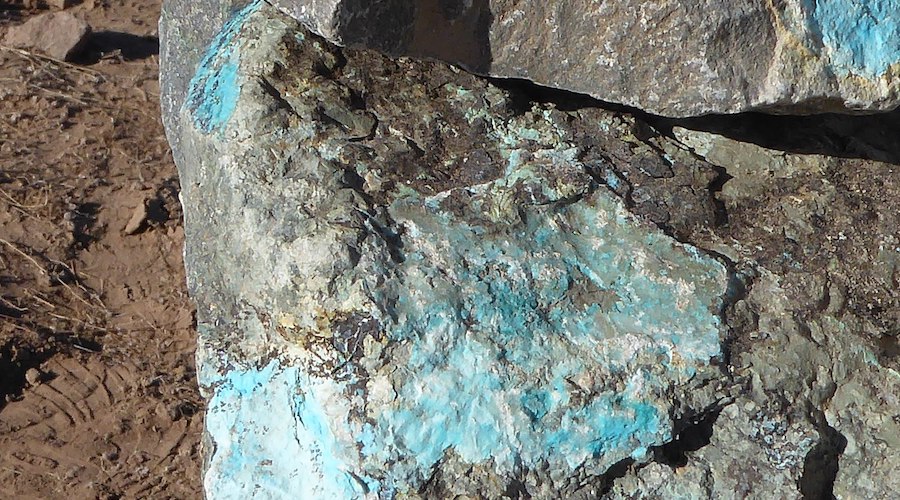
Copper ore from La Viñita, Valle del Elqui, Chile. (Image by S. Rae, Wikimedia Commons)

  • Over 200 copper mines are expected to run out of ore before 2035, with not enough new mines in the pipeline to take their place.

In 2018, before the trade war between the US and China put the boots on copper demand, and covid-19 mine closures/ abandoned expansion plans crimped supply, we made a bold prediction: that copper supply is NOT going to be able to keep up with demand in the long-term.  Even with expansions at existing mines and the ramp-up of the relatively few new copper mines like Cobre Panama, Radomiro Tomic and Toquepalain, it will not be enough to meet the onslaught of demand that is coming from China as it continues to modernize and urbanize, and electric vehicles, which use three times as much copper as regular ones. In 2016 Chinese automakers sold 28 million cars. If China follows through on its promise to go 100% electric, that would mean 2,380,000,000 kilograms of copper. At the current production rate of 20 million tonnes a year, that’s 119 years worth of copper! Just to produce enough copper for electric cars in China.

Do we expect 100% EV penetration? No. But the shift to electrification of our transportation system is real, it’s not going to go away or stop. Because it’s as real as the shift from wood to coal to fossil fuels and now to lithium. That means massive new copper supplies are needed just for Chinese EVs, whatever the EV penetration eventually turns out to be. And remember there’s the rest of the world to supply for EVs, charging infrastructure, and all of copper’s other uses.

Bottom line? We gotta find more copper. 

‘Future-facing metals’ 

That sentiment is clearly shared by some of the world’s largest copper companies, who are doing everything they can to expand existing mines and acquire prospective new deposits, as they seek to replace their rapidly depleting copper reserves and resources. 

In 2017 the Chilean government approved a $2.5 billion expansion of BHP’s Spence copper mine – the diversified miner’s second largest copper mine behind Escondida, the biggest copper operation in the world. 

That followed closely behind BHP’s 2016 decision to raise its annual exploration budget by 29%, allocating nearly all of its $900 million budget to finding new copper and oil deposits – two commodities the world’s largest miner thinks it needs to bolster future growth. Potential acquisition targets include copper deposits in Peru, the US, Canada and South Australia. 

In February of this year, chief executive Mike Henry said the company needs more “future-facing metals” such as copper. Last year, BHP became the top shareholder in SolGold, an Australian miner developing the Cascabel copper-gold project in Ecuador. 

Last week, BHP announced it is ramping up work on the Spence mine expansion, to reach its production objective in the first half of 2021 (the project has been delayed due to covid-19 restrictions). 

It’s interesting to note that BHP is planning to “go green” at Spence, with a focus on running the operation entirely on renewable energy by 2022. The Melbourne, Australia-based company also aims to stop drawing water from aquifers in Chile by 2030 – a reference to the problems mining companies are facing getting enough water in the bone-dry Atacama desert of northern Chile, the base of operations for several major copper and lithium mines. 

The $2.5 billion expansion contemplates a concentrator plant to increase production, and extend the life of the deposit by about 20 years. The new mine will also feature an $800 million desalination plant located in the port city of Mejillones, about 60 km north of Antofagasta, that treats and pumps seawater at 1,000 liters per second. 

BHP isn’t the only large mining firm taking a serious look at copper. Barrick Gold is interested in diversifying into the red metal from the yellow. CEO Mark Bristow sees Indonesia’s Grasberg, the second-largest copper mine in the world, as a potential buy-out target for Barrick. The company already owns the Porgera mine in Papua New Guinea, which borders Indonesia to the east, with China’s Zijin Mining. In May, Bristow told the Financial Times he was keen to expand in Asia, despite a recent dispute with the government of PNG over a renewal of Porgera’s license, which led Barrick and Zijin to shut the mine.

Meanwhile the CEO of Anglo American, another major diversified miner, indicated that South Africa would be a good jurisdiction to explore for base metals. “We will explore base metals across South Africa… We are already in Zambia and other places, we want to do more in South Africa so we are looking for adjustments in legislation there,” Mark Cutifani said during the 2020 Joburg Mining Indaba conference.

Copper, nickel, lead and zinc are among the base metals Anglo American is focusing its global discovery strategy in greenfield and brownfield projects.  

Running out of ore 

Why are major mining companies so intent on securing new supplies of copper? Quite simply, they’re running out of ore. 

As we have reported, without new capital investments, Commodities Research Unit (CRU) predicts global copper mined production will drop from the current 20 million tonnes to below 12Mt by 2034, leading to a supply shortfall of more than 15Mt. Over 200 copper mines are expected to run out of ore before 2035, with not enough new mines in the pipeline to take their place.

Some of the largest copper mines are seeing their reserves dwindle; they are having to dramatically slow production due to major capital-intensive projects to move operations from open pit to underground. 

Grasberg in Indonesia, the world’s second-largest copper mine, is emblematic of the problems copper miners are facing. The mine began as a large open pit but after decades of extracting the easy-to-reach ore is gone and future production is expected to come from a deep cave deposit known as the Deep Mill Level Zone. Copper concentrate exports have plunged dramatically as operations shift from open pit to underground.

Major South American copper miners have also been forced to cut production. State-owned Codelco has said it will scale back an ambitious $40-billion plan to upgrade its mines over the next decade, after reporting a drop in earnings, a prolonged strike at its Chuquicamata mine, and lower metals prices. The world’s largest copper company also said it will reduce spending through 2028 by 20%, or $8 billion. 

Chuquicamata is expected to see a 40% fall in production by 2021. A $5 billion expansion, moving from open pit to underground, will take five years to reach full output of 300,000 tonnes per annum – this is not new production. 

Shipments from BHP’s Escondida mine took a hit in 2019 due to operations moving from open pit to underground. The largest copper mine on the planet is expected to take until 2022 to re-gain full production, again not new production. 

These cuts are significant to the global copper market because Chile is the world’s biggest copper-producing nation — supplying 30% of the world’s red metal. Adding insult to injury, for producers, copper grades have declined about 25% in Chile over the last decade, bringing less ore to market. 

Country-wide protests over transit prices and perceived inequality have disrupted mining supply chains. The social unrest, along with a newly invigorated resource nationalism, has spooked would-be foreign investors in a country that only a few years ago was touted as an economic tiger. 

Chile also has problems with water. The country’s underground reservoirs need to be recharged by rainfall and snowmelt from the Andes, but a study found more water was leaving the salars (salt flats) than returning, prompting water restrictions affecting both lithium and copper mines in the extremely arid Salar de Atacama, in northern Chile. In 2019 Chile’s water authority said it would double the number of areas off-limits to mining, from 30 to at least 70. 

Escondida will stop drawing fresh water from the salt flat. Instead, the huge mine will bring desalinated water from the coast, where in 2018 BHP spent $3.4 billion on a desalination plant. Two pipelines transport water a steep 3,200m above sea level. 

Antofagasta’s Zaldivar mine is nearing its mine life at 2029, and may be forced to close earlier if its water permits to draw water from the salar are not renewed. 

A 2019 report by Moody’s Investors Service said that some of the worst droughts in half a century have led to tougher environmental regulations that are hiking miners’ costs and risks. Among the countries with mines exposed to decreasing water availability are Peru, Chile, Australia, South Africa and Mongolia. 

On top of all this, there is the ongoing threat of strikes at South American copper mines which every year strip out some percentage of output. In a recent article, Bloomberg reports how a confluence of factors, including copper prices at a seven-year high, productivity gains (Chile is producing at similar levels to last year with fewer workers) and weak local currencies, are swelling industry margins, emboldening unions to down tools and ask for more pay/ benefits. Look for labor disruptions next year, when 31 contracts are due to expire in Chile, including at BHP’s Escondida, hit by a 44-day strike in 2017. 

What about new copper mines? Surely mineral exploration companies are identifying new ore bodies, cueing up the next generation of copper producers? 

Well, they are trying. Problem is, they are having to go further afield and dig deeper to find copper at the grades needed to economically produce copper products for end-users. This usually means riskier jurisdictions that are often ruled by shaky governments with an itchy trigger finger on the resource nationalism button. Combine that with production problems and you have the makings of a supply shortage.

In fact, new supply is concentrated in just five mines – Chile’s Escondida, Spence and Quebrada Blanca, Cobre Panama and the Kamoa-Kakula project in the DRC. And while these mines are expected to account for 80% of base-case output increases until 2022-23, their profitability depends on the copper price staying above $5,000 a tonne, according to analysts at Bank of America Merrill Lynch.

The current copper pipeline is the lowest it’s been in a century, and not improving. In 2018 Colin Hamilton, the director of commodities research at BMO Capital Markets, said that after the delivery of first copper from Cobre Panama (285-310,000t per year), BMO doesn’t see the next batch of +200,000-tonnes projects until 2022-23 — “when the likes of Kamoa (501,000t per year), Oyu Tolgoi Phase 2, and QB2 (316,000t per year) are likely to offer meaningful supply growth.” 

Electrification 2.0

Copper’s widespread use in construction wiring & piping, and electrical transmission lines, make it a key metal for civil infrastructure renewal. 

The continued move towards electric vehicles is a huge copper driver. In EVs, copper is a major component used in the electric motor, batteries, inverters, wiring and in charging stations. An average electric vehicle contains about 4X as much copper as regular vehicles. Electrification includes not only cars, but trucks, trains, delivery vans, construction equipment and two-wheeled vehicles like e-bikes and scooters. 

The latest use for copper is in renewable energy, particularly in photovoltaic cells used for solar power, and wind turbines. The base metal is also a key component of the global 5G buildout. Even though 5G is wireless, its deployment involves a lot more fiber and copper cable to connect equipment.

The big question is, will there be enough copper for future electrification needs, globally? And remember, in addition to electrification, copper will still be required for all the standard uses, including copper wiring used in construction and telecommunications, copper piping, and copper needed for the core components of airplanes, trains, cars, trucks and boats. 

The short answer is no, not without a massive acceleration of copper production worldwide. 

A recent research report from Jefferies Research LLC concluded: “The copper market is heading into a multiyear period of deficits and high demand from deployment of renewable energy and electric vehicles. Secular demand driver in copper is electric passenger vehicles as the average EV is about four times as copper intensive as the average ICE automobile. Renewable power systems are at least five times more copper intensive than conventional power.” 

President-elect Joe Biden plans a major shift away from fossil fuels to wind and solar power, and from gas/ diesel vehicles to EVs. In what would be a significant scale-up of President Obama’s 2009 plan to electrify the US transportation system, a kind of “electrification 2.0”, Biden aims to spend up to $1.7 trillion over 10 years on boosting renewable power and speeding introduction of electric vehicles. 

Dubbed “Clean Energy Revolution”, the plan calls for installation of 500,000 electric vehicle charging stations by 2030, and would provide $400 billion for R&D in clean technology.

One of the largest manufacturers of public charging stations, ChargePoint, is targeting a 50-fold increase in its global network of loading spots by the mid-2020s. The group in which German companies BMW, Daimler and Siemens hold stakes, aims to operate 2.5 million charging points by 2025, from 53,000 in 2018. A Level 2 charging station requires 7 kg of copper, a direct current fast charger (DCFC) or Level 3 station uses 25 kg. 

BloombergNEF forecasts by 2040 there will be a need for 12 million charging points, each requiring about 10 kg of copper. The number of EV charging stations recently passed the one million mark.   

Biden has also promised a $1.3 trillion infrastructure improvement plan, including: a $50 billion investment in repairs to roads and bridges; $10 billion for transit construction in poor areas of the country; a doubling of BUILD and INFRA grants, and more funding for the US Army Corps of Engineers.

The plan includes investments in high-speed rail, public transit, bicycling, school construction, expansion of rural broadband, and replacement of pipes and other water infrastructure — all of which will require millions more tonnes of copper, along with other infrastructure metals such as nickel, zinc and aluminum. 

Is this going to happen for the US? Well if it is, it isn’t going to come cheap, as existing metal sources run dry. Across the Atlantic, the UK government has set a target of replacing all of its 31.5 million cars with electrics by 2050. A team of scientists led by the Natural History Museum’s head of earth sciences, Professor Richard Herrington, took the government to task and calculated how much raw materials that number of EVs would require.  

The researchers found that to build 31.5 million EVs would take a jaw-dropping 207,900 tonnes of cobalt, 264,600 tonnes of lithium carbonate, at least 7,200 tonnes of neodymium and dysprosium, and 2,362,500 tonnes of copper — about 10% of global production. Just mining the amount of raw materials required to replace 2 billion cars globally would require four times the United Kingdom’s total annual electrical output. 

Prof. Herrington told AutoExpress that, while there is urgency in cutting carbon dioxide emissions, “society needs to understand that there is a raw material cost of going green”. 

US and UK copper needs, of course, have to be put in context with global demand for the essential base metal.Total copper mine production worldwide from 2006 to 2019 (in 1,000 metric tons)
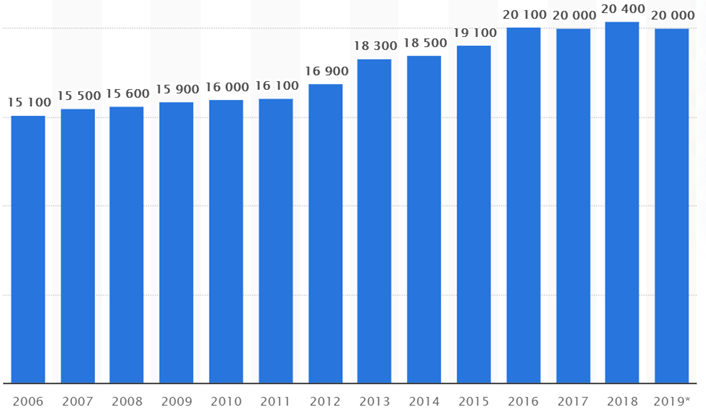
According to BloombergNEF, there are currently about 7 million electric vehicles in the world today. By 2040, they estimate around 30% of the world’s passenger cars will be electric. To me that’s a conservative and reasonable number. It means 500 million EVs will be on the road in 20 years, out of a total vehicle fleet of 1.6 billion. If each EV contains 85 kg of copper, that is 42,500,000,000 kg, or 42,500,000 tonnes of copper, roughly twice the current volume of copper produced by all of the world’s copper mines. 

Just so we’re clear — in 20 years, BloombergNEF says copper miners need to double the amount of global copper production (20Mt), just to meet the demand for a 30% penetration rate of electric vehicles. That means an extra million tonnes a year, over and above what we mine now, every year for the next 20 years!  The world’s copper miners need to discover the equivalent of two Kamoas, at 500,000t, each and every year, while keeping current production at 20Mt. 

Remember we still need to cover all the copper demanded by electrical, construction, power generation, charging stations, renewable energy, 5G, high-speed rail, etc., plus infrastructure maintenance/ buildout of new infrastructure. 

That might be another 5-7Mt. So not only is there a 20Mt increase in copper usage required for a 30% EV penetration, but another (we estimate) 5-7Mt increase to meet demand for all of copper’s other applications. To keep up, the industry will need to find an additional two to three Kamoas a year, each producing 500,000t, for the next 20 years! Remember – Over 200 copper mines are expected to run out of ore before 2035, with not enough new mines in the pipeline to take their place. It’s going to be hard enough to keep up the current 20mt per year let alone add so much more production. 

Where is this new, and replacement, supply going to come from? When copper becomes so rare it hits $10,000 a tonne, what’s going to happen to 30% EV penetration? High-speed rail? 5G? We suggest that without new copper deposits, these well-intentioned plans are in jeopardy. 

Did we mention China’s Belt and Road Initiative (BRI), consisting of a vast network of railways, pipelines, highways and ports that would extend west through the mountainous former Soviet republics and south to Pakistan, India and southeast Asia? 

Research by the International Copper Association found BRI is likely to increase demand for copper in over 60 Eurasian countries to 6.5 million tonnes by 2027, a 22% increase from 2017 levels.

Another report by Roskill forecasts total copper consumption will exceed 43 million tonnes by 2035, driven by population and GDP growth, urbanization and electricity demand. Remember total world mine production in 2019 was only 20Mt. In many countries it takes 20 years to go from discovery through permitting to mining. 

Copper goes critical 

But there’s a weird thing happening. The message of a looming copper shortage that could bring the global electrification shift to a screeching halt, and/or make copper so dear that only the rich can afford to buy finished products made from it, like EVs, isn’t getting through to the mining audience, because copper is not considered a critical mineral. 

That term is reserved for minerals like lithium, cobalt, graphite, rare earths etc., which despite their presumed rarity, are actually fairly common. What makes them critical, is the fact that North America (and Europe) have virtually no domestic supply; without mines and a pipeline of deposits under development, and the smelters and know-how to process them, we are hopelessly reliant on foreign countries. Our supply chains are vulnerable and can be exploited at will by the countries that dominate production, through policies like domestic ore beneficiation, export restrictions, tariffs and quotas. 

For years North America didn’t bother to explore for these minerals and build mines. Globalization brought with it the mentality that all countries are free traders, and friends. Dirty mining and processing? NIMBY. Let China do it, let the DRC do it, let whoever do it. This has to change, if the US and Canada are to regain control of their critical minerals stockpiles. 

For example, according to the US Geological Survey, of the 7 million tonnes of cobalt reserves available globally, nearly half — 3.6Mt — are in the Democratic Republic of the Congo (DRC). The DRC is the world’s leading cobalt supplier by far, in 2019 producing 100,000 tonnes of the EV battery ingredient. China locked up supply from the DRC with infrastructure for off-take, brings it home and refines it to sell to the world. But there is a lot of cobalt found elsewhere. Australia has 310,000 JORC-compliant tons of cobalt but only mined 5,100t last year. Canada has a reserve of 300,000t but only produced 3,000t. Of the 55,000 tonnes of cobalt reserves identified in the US, only 0.01% was mined in 2019, or 550t. 

North America is well endowed with huge, quality rare earth deposits, enough to supply us with decades and decades of production. Examples include Commerce Resources’ (TSXV:CCE) Ashram rare earths deposit in Quebec, and Ucore Rare Metals’ (TSXV:UCU) Bokan Mountain REE project in Alaska. Graphite One (TSX.V:GPH) has an excellent graphite project in Alaska. 

What we lack is processing and larger-scale manufacturing, ie. nearly all of the world’s mined rare earth oxides are processed in China; only very recently has REE processing started happening outside that country: 

  • Mountain Pass in California expects to start processing REEs by the end of 2020.
  • Lynas signed a joint venture agreement with Blue Line Corp. to build a rare earths processing plant in Texas.
  • Saskatchewan is setting up a processing facility.

(Europe is also starting to get smart and deal with its lack of critical minerals mined and processed on the continent. The EU recently launched the European Raw Materials Alliance, a partnership of over 300 companies, business associations and governments, that will focus on breaking Europe’s dependence on imports from China and other resource-rich countries. Analysts estimate the group of 29 nations will need about 60 times more lithium and 15 times more cobalt for EV batteries and energy storage by 2050.)

Graphite is another mineral that is mined and processed under a near monopoly by China but exists in large quantities elsewhere. According to the USGS, China in 2019 produced nearly three-quarters of the world’s graphite — 700,000 tonnes of the 1.1Mt total. The country indeed has a large proportion of global graphite reserves, 73Mt out of 300Mt. But China doesn’t host the majority of the world’s graphite. In fact Turkey has more, 90Mt, yet last year only mined 2,000t. 25 million tonnes are held by Mozambique but the African country only produced 100,000t. Brazil has nearly as much graphite as China, 72Mt, but in 2019, produced just 96,000 tonnes, about 13% of China’s mine production. Other countries with significant graphite reserves, are India (8Mt), Madagascar (1.6Mt), Mexico (3.Mt), Tanzania (18Mt) and Vietnam (7.6Mt). 

Certainly the above-mentioned metals, and the rest of the 23 mineral commodities identifed by the US Department of the Interior, are critical, in that they are all important to the country’s economic and military security. You cannot, for example, make a lithium-ion battery without lithium, graphite and cobalt. But most of these metals are labeled critical because so much quantity comes from China, Russia or the DRC. Too much supply is coming from one country and China is where most of the refining is done. When we start mining and processing here in the West, or work with our mining country allies, some degree of ‘criticality’ will be removed. Why can’t we start mining all these minerals here? We have these materials in North America, South America, Australia and to a lesser extent, Europe. The next step is unfettered access and the creation of strong supply chains to get these metals from mine to market. 

Copper, however, is different. Arguably, the red metal is the most critical of all critical metals, because of its necessity in electrification, and the fact that there is an actual shortage of copper coming. 

There is no shift from fossil fuels to green energy without the red metal, which has no substitutes for its uses in EVs (electric motors and wiring, batteries, inverters, charging stations) wind and solar energy, and 5G.  

Even with a 30% penetration of EVs, a relatively conservative estimate, we need to find another 20 million tonnes per year over 20 years. 

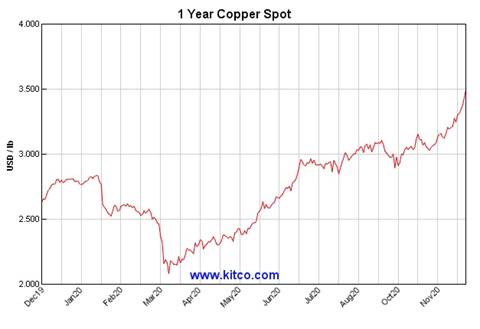
On Tuesday, Nov. 24 copper prices hit a fresh 2020 pinnacle of $3.52 per pound on the Comex in New York. The red metal’s best performance in seven years was on the strength of Chinese manufacturing and construction expanding at its fastest in a decade. The country’s manufacturing PMI for November, seen as a leading indicator of copper usage, rose to 52.1 while the Caixin manufacturing PMI, which includes both large and small firms, jumped to a 10-year high of 54.9. The construction index leapt from 59.8 in October to 60.5.
Iron ore has also been on a tear of late. The steelmaking ingredient hit $132.13 a tonne last Tuesday, a six-year high. 

The numbers are so good, some market observers are pulling up charts from the “mining supercycle”. Reuters quotes Goldman Sachs predicting a return to the “structural bull market” of the 2000s, when most mined commodity prices got a lift due to demand (especially in China and India) outstripping available supplies. In a report the investment bank states: 

“Covid is already ushering in a new era of policies aimed at social need instead of financial stability [which] will likely create cyclically stronger, more commodity-intensive economic growth, that should create the elusive cyclical upswing in demand.”

Metal traders say copper is looking like it did at the start of the ’03 supercycle start, having surged this year on a wave of bullish factors including a weakened dollar, optimism over covid vaccines, a move toward low-carbon power sources, and virus-related supply disruptions in the key copper-producing countries of Chile, Peru and Mexico. Prices are up more than 70% from a mid-March low, and Morgan Stanley predicts a substantial increase next year, to an average $7,716 a ton ($3.85/lb) in the fourth quarter. 
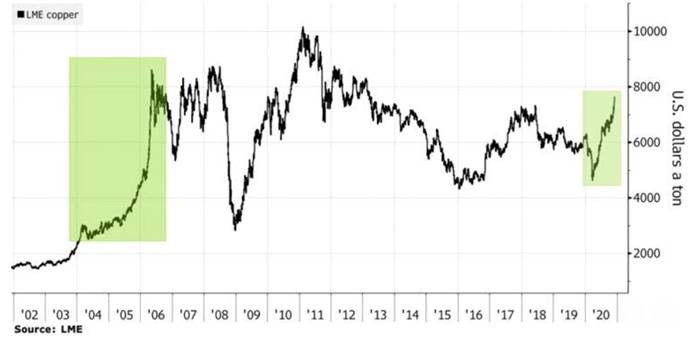
However unlike the previous supercycle, which depended on China, Goldman says the next structural bull market will be driven by spending on green energy, for which copper is a key ingredient: 

“Spending on green infrastructure could be as significant as the BRIC (Brazil-Russia-India-China) investment boom of that decade while the redistributive push in developed markets “is likely to lead to a large boost to consumer spending, comparable to the lending-fuelled consumption increase in the 2000s”.

The path of least resistance to the price of copper is, imo, higher.

SOURCE: https://www.mining.com/web/copper-the-most-critical-metal/

Tartisan Nickel Corp. $TN.ca Expands Kenbridge Nickel Project Property Position, Kenora Mining Division, Ontario $RNX.ca $TSLA $NOB.ca $SHL.ca $CNC.ca $FPC.ca $NICO.ca

Posted by AGORACOM at 9:57 AM on Tuesday, December 8th, 2020
Tc logo in black

Tartisan Nickel Corp. (CSE:TN)(OTC PINK:TTSRF)(FSE:A2D) (“Tartisan”, or the “Company”) is pleased to announce that Tartisan has staked an additional 71 single-cell mining claims contiguous to the Company’s flagship Kenbridge Nickel Deposit patented and unpatented mining claim group. The newly acquired claims bring the total claim count to 114 single-cell mining claims adjoining the Kenbridge patented mining claim group. Each single-cell mining claim covers an area of approximately 20.92 ha. for a total area of 1,485.3 ha. The Kenbridge Nickel Project now has a combined total of 3632.7 ha. of patented and unpatented mining claims.

Recent reinterpretation of historical geophysical and geological data has identified areas which appear to have similar characteristics to those exhibited at the Kenbridge Nickel Deposit. Three dimensional modeling of historical airborne magnetic data suggests that several individual magnetic features identified at surface appear to be connected at depth. Additionally, a recent reinterpretation of airborne EM data has led to the recognition of subtle features which may require additional exploration. Tartisan is now evaluating which ground geophysical surveys should be completed over the new claims and the northern portion of the patented claims in the upcoming winter exploration program.

CEO Mark Appleby states, “The suggestion that several magnetic features identified at surface appear to be connected at depth makes follow up an essential next step. The potential to increase the Kenbridge Nickel Resource would anecdotally improve project economics and we are encouraged by opportunities that have the potential to increase the Kenbridge Nickel Deposit”.

About Tartisan Nickel Corp.

Tartisan Nickel Corp. is a Canadian based mineral exploration and development company which owns; the Kenbridge Nickel Project in Northwestern Ontario; the Sill Lake Silver Property in Sault Ste. Marie, Ontario as well as the Don Pancho Manganese-Zinc-Lead-Silver Project in Peru. The Company has an equity stake in; Eloro Resources Limited, Class 1 Nickel and Technologies Limited and Peruvian Metals Corp.

Tartisan Nickel Corp. common shares are listed on the Canadian Securities Exchange (CSE:TN; OTC:TTSRF; FSE:A2D). Currently, there are 101,603,550 shares outstanding (107,203,550 fully diluted).

For further information, please contact Mark Appleby, President & CEO and a Director of the Company, at 416-804-0280 ([email protected]). Additional information about Tartisan Nickel Corp. can be found at the Company’s website at www.tartisannickel.com or on SEDAR at www.sedar.com.

Dean MacEachern P. Geo is the Qualified Person under NI 43-101 and has read and approved the technical content of this News Release.

This news release may contain forward-looking statements including but not limited to comments regarding the timing and content of upcoming work programs, geological interpretations, receipt of property titles, potential mineral recovery processes, etc. Forward-looking statements address future events and conditions and therefore, involve inherent risks and uncertainties. Actual results may differ materially from those currently anticipated in such statements.

The Canadian Securities Exchange (operated by CNSX Markets Inc.) has neither approved nor disapproved of the contents of this press release.

SOURCE: Tartisan Nickel Corp.

California Cannabis Businesses Praise The Action Taken In Washington On Decriminalization SPONSOR: Harborside $HBOR.ca $VFF.to $HARV.ca $ACB.to

Posted by AGORACOM at 9:37 AM on Tuesday, December 8th, 2020
https://s3.amazonaws.com/s3.agoracom.com/public/companies/logos/564690/hub/Harborside_Inc2_logo.png

SPONSOR: Harborside is a California-focused, vertically integrated, fully licensed cannabis company with its business consisting of three primary segments, Retail Dispensaries, Cultivation and Processing and Wholesale Sales (including branded product sales). Harborside operates the only drive through dispensary in California

SAN DIEGO — On Friday the United States House of Representatives passed a bill decriminalizing marijuana at the federal level. Although it is unlikely to pass the Senate, it has industry leaders here in California excited that the conversation towards decriminalization is rolling in Washington.

After receiving some rare bi-partisan support, the Marijuana Opportunity Reinvestment and Expungement or MORE Act passed the House of Representatives by a large margin. Highlights of the bill include:

  • Decriminalizing marijuana federally
  • Establishing a 5% federal tax on all cannabis products
  • Prohibiting the denial of federal benefits to people convicted of cannabis-related crimes
  • The bill would start the process of expunging the records of those convicted of Cannabis-related offensives

Will Senn is the founder of Urbn Leaf, a marijuana dispensary in San Diego. He says that the bill has been a long time coming and that it was a historic win for the industry. He went on to say that attitudes towards marijuana are shifting around the country. “I think the writing is on the wall, right? Everybody is voting for cannabis legislation nationwide. You had five more states pass some legislation in the last election year. There’s a number of upcoming bills in the near future here.”

Marijuana has been decriminalized in California since 1996 but attitudes about the plant differ drastically around the country. According to the FBI and the Pew Research Center, in 2018 40% of the 1.65 million drug arrests from around the country were marijuana-related and 92% of them were for possession.

Jason Ortiz from the Minority Cannabis Business Association said, “So, I mean, there are thousands at the very minimum, especially on the federal level. But as you start to extend the impact statewide, it could be upwards of millions of records that would get affected.”

Ortiz added that the potential expungement of cannabis-related crimes off a person’s record  could change the lives of thousands of people, “And having that on your record denies you access to housing, to jobs, to other sorts of social services.

Although the bill passed in the House, it’s unlikely that it will see a vote in the Senate. Still, business owners like Senn see it as an important benchmark of just how far the conversation around decriminalizing marijuana has come since he entered the industry.

SOURCE: https://www.cbs8.com/article/news/local/marijuana-opportunity-reinvestment-and-expungement-act/509-a4567228-ad82-4f48-85b3-556e282aa8ed

Red Light Holland $TRIP.ca Announces Logo Redesign Contest with Russell Peters and Khloë Including $15,000 in Prizes $SHRM.ca $RVV.ca $MMED $PLNT.ca $HALO.ca $PSYC.ca

Posted by AGORACOM at 9:17 AM on Tuesday, December 8th, 2020
https://i.ibb.co/ZdKv64V/Red-Light-Holland-Square.jpg

Toronto, Ontario–(Newsfile Corp. – December 8, 2020) – Red Light Holland Corp. (CSE: TRIP) (FSE: 4YX) (OTC: TRUFF) (“Red Light Holland“) is pleased to announce the company will be launching a Logo Redesign Contest on December 14th, 2020 at 8:30am, on multiple social media channels. The premise of the Red Light Holland Logo Redesign Contest is to receive input from graphic designers, artists, day dreamers, psychedelic advocates, influencers, brand builders, creative types, even non creative types – essentially anybody and everybody, who would like to contribute to helping build Red Light Holland’s Brand, reflecting those who support our mission of providing access, while being inclusionary and giving back.

Red Light Holland will announce the rules and regulations for the Logo Redesign Contest on December 14th, 2020 at 8:30am where it is expected that participants will be encouraged to go to social media to make their best pitch as to why they should be a part of the Red Light Holland Logo Redesign Committee, joining Chief Creative Officer Russell Peters (4 million Twitter followers, 1.1 million Facebook likes, and 399,000 Instagram followers), and Clothing Brand Ambassador Khloë Terae, (2.4 million followers on Instagram, 2.2 million likes on Facebook, and 647,000 followers on Twitter.) Ultimately, three (3) winners will be chosen before the new year to join the Redesign Committee. Each of the three (3) winners will receive C$5000.00 for their participation in helping Red Light Holland design a new logo, expected to premier early in 2021.

“When Todd pitched this idea to me, my initial response was a rare one because I replied – that’s not a bad idea at all!” said Russell Peters, Red Light Holland Chief Creative Officer. “We are excited to hear, read and see participants’ reasons on Social Media as to why they should be chosen to be a part of this committee with Khloë and me for Red Light Holland’s Logo Redesign Contest. We are elated to put up $15,000 (CND) to the winners for their creative input. This is right up our alley because it’s outside of the box, it connects with people, it’s collaborative and it’s fun.”

“As our Brand grows, I really wanted to have a logo that represented and reflected those who support us and believe in the future of legal access to psychedelics through education and information. Also, because of the current tough economic times, collectively as a company we were thinking of ways to give back, especially during the holiday season,” said Todd Shapiro, Red Light Holland CEO and Director. “Personally the original/retro logo will always be special to me, but creating a committee with the likes of Russell Peters and Khloë is amazing. This creative initiative to add three winners, who no doubt will be extremely talented people, is heart-warming and to be in a position to help provide our three ultimate winners with $5000 (CND) each for their input is music to my ears. Red Light Holland is proud to help reward people for their feedback and hard work. I can’t wait to meet the winners!”

Further details of Red Light Holland’s Logo Redesign Contest, through multiple social media channels with Russell Peters and Khloë, including rules and regulations will be announced once made available. The Logo Redesign Contest will launch on social media on December 14th, 2020 8:30am. Red Light Holland’s 2020 Collection is available now at www.iMicrodose.ca

The Company also announces that it has engaged Octagon Media Corp. (Parent Company of Wall Street Reporter) to provide online marketing, social media, and presentation services for a term of six months. In consideration, the Company has completed cash payments totaling US$125,000, and has granted 750,000 incentive stock options exercisable at a price of C$0.15 and 750,000 options exercisable at a price of C$0.20, each for a period of 12 months.

About Red Light Holland Corp.

Red Light Holland is an Ontario-based corporation positioning itself to engage in the production, growth and sale (through existing Smart Shops operators and an advanced e-commerce platform) of a premium brand of magic truffles to the legal market within the Netherlands, in accordance with the highest standards, in compliance with all applicable laws.

For additional information on Red Light Holland:
Todd Shapiro
Chief Executive Officer & Director
Tel: 647-204-7129
Email: [email protected]
Website: https://redlighttruffles.com/

American Creek: A Positive Impact For The Sulphurets Hydrothermal System $AMK.ca $TUD.ca $SII.ca $GTT.ca $AFF.ca $SEA.ca $SA $PVG.ca $AOT.ca $ESK.ca

Posted by AGORACOM at 11:58 AM on Monday, December 7th, 2020

On Friday December 4th, Seabridge Gold (SEA) announced its intentions to purchase the Snowfield deposit from Pretium Resources (PVG), details here.  As a result, we experienced a high volume of emails and calls as to how this may affect Treaty Creek.  In our opinion, we think it’s a positive move for all three projects located in the Sulphurets Hydrothermal System. Our analysis of the transaction and the associated benefits is as follows:
 
Below is an image created by Seabridge showing the KSM and Snowfield deposits and the relative gold grades/value of those deposits.  Technically, the Snowfield is the top part of the Mitchell deposit, which it sits beside. 

On its own, the Snowfield added no present value to Pretium in the near term for a few reasons: The Snowfield has a very low-grade halo that on its own, at present gold values, isn’t profitable to produce.  It has a higher-grade core but that core isn’t large enough to justify the costs to get it out at today’s gold price. Logistics.  Because the Snowfield is located upslope above the Mitchell deposit in the Mitchell valley, mine construction would have been very difficult due to the terrain combined with the proximity to the Mitchell deposit located below owned by Seabridge. Access.  Even if the gold grades were higher and there was room to develop the Snowfield on its own, there appears to be no feasible way to get the ore to market except through the proposed Mitchell Teigen Tunnels (MTT) which (if built) would be owned by Seabridge.  The above, and perhaps some other reasons as well, is why the Snowfield deposit has been sitting there with no progression for many years, which in its present state added zero value to Pretium.  It could be argued that a sale worth $3 USD per ounce in the ground is a lot better than $0 per ounce while it sits dormant.  We think this was a great deal for PVG as they get: $100m up front in working capital $20m down the road A Net Smelter Royalty (NSR) of 1.5% down the road

By combining the Snowfield with the KSM, SEA removed the “higher grade core isn’t big enough on its own” problem, the “no room” problem, and the “access” problem.  We think this was a great deal for SEA as it helps them accomplish their goals:

  1. Improve their ounces/share ratio
  2. Improve the NPV and IRR on the KSM
  3. Allow them to defer underground operations until later in the production schedule
  4. Pay down the Cap-X for the KSM quicker

 
We think this a great deal for Treaty Creek (TC) shareholders (TUD, AMK, TUO) because anything that improves Seabridge’s chances of going into production is potentially beneficial to us:

  1. The only route for the KSM to go into production is through the use of the MTT which closely follows both the Kyba Line and the Sulphurets Thrust Fault through most of TC (this is the most heavily mineralized trend though TC including the Perfect Storm (PSZ), the Goldstorm (GS), and orpiment (GS2) zones as seen on the image above.
    1. If SEA is able to find a route through TC without disturbing potential deposits then it will build important infrastructure (bridge, roads, power, etc.) right onto TC.
    2. If SEA isn’t able to find a route through TC without disturbing potential deposits then SEA potentially will form an agreement with TC owners (benefiting TC shareholders) followed by building important infrastructure right onto TC.
  2. A second mine, especially one of this magnitude, going into production within the Sulphurets Hydrothermal System will undoubtedly capture the attention of investors and mining companies and shine a spotlight on the third project advancing in the same system; Treaty Creek.

 
The $3 USD per ounce paid for the Snowfield was a good deal for both companies and has no real bearing on potential insitu gold deposits and associated valuations at TC.  It’s all a question of grade, logistics, and potential buyers.  The Snowfield has low grade, horrible logistics (to be developed on its own) and potential for only one buyer (SEA).  TC sits “on the right side of the mountain” only 20km away down a valley from the highway and the cheapest power in the world.  The Goldstorm zone also has its highest gold grades right at surface (300 zone) over a very extended area opposed to dipping steeply into the ground. The logistics, and therefor potential Cap-X and Op-X, are completely different at TC vs both the Snowfield and the KSM.

In conclusion, we believe that the Snowfield purchase by Seabridge will positively impact every company located within the Sulphurets Hydrothermal System. We view this as another very positive development in the rapid progression of Treaty Creek’s development. 

-Kelvin Burton

European Commission Reverses Course, Says CBD Should Not Be Regulated As A Narcotic SPONSOR: Thoughtful Brands $TBI $APH.ca $GBLX $PFE $ACG.ca $ACB.ca $WEED.ca $SHRM.ca $RVV.ca $NOVA.ca

Posted by AGORACOM at 12:28 PM on Friday, December 4th, 2020
https://s3.amazonaws.com/s3.agoracom.com/public/companies/logos/564664/hub/Throught_brands_logo.png

SPONSOR: Thoughtful Brands is an established natural health products company focused in the CBD and psychedelic medicine sectors. Through their powerful eCommerce business Thoughtful is a leading direct-to-consumer provider of a wide range of natural health products throughout the United States and Europe. Click Here For More Info

  • Makers of CBD foods and supplements no longer face the prospect of a blanket ban in Europe after the European Commission revised its preliminary stance that CBD should be treated as a narcotic.

The Commission sent a statement to the European Industrial Hemp Association and at least one other Novel Food authorization applicant on Wednesday that hemp-derived cannabidiol should not be regulated as a narcotic and therefore can qualify as a food.

The decision comes as a relief to Europe’s hemp industry, reassuring processors and manufacturers that their CBD edible products will not be banned from the EU market.

CBD was included in the EU’s Novel Food Catalogue in January 2019, and since then has required extensive testing and authorization from food safety authorities before it can be included in products and marketed as food across the bloc’s 27 member states.

The European Commission, the executive branch of the European Union, said in July it had stopped reviewing applications for pre-market authorization of CBD products while it decided whether CBD should be regulated as a narcotic.

The Commission cited last month’s Court of Justice ruling, which said CBD derived from the entire hemp plant is not a narcotic under an international drug treaty and is therefore subject to EU law on the free movement of goods among member states.

The Commission’s full statement to Novel Food authorization applicants reads as follows:

“In light of the comments received from applicants and of the recent Court’s judgment in case C-663/184, the Commission has reviewed its preliminary assessment and concludes that cannabidiol should not be considered as drug within the meaning of the United Nations Single Convention on Narcotic Drugs of 1961 in so far as it does not have psychotropic effect. As a consequence, cannabidiol can be qualified as food, provided that also the other conditions of Article 2 of Regulation (EC) No178/2002 are met.”

SOURCE: https://hempindustrydaily.com/breaking-european-commission-reverses-course-says-cbd-should-not-be-regulated-as-a-narcotic/

Not Enough Class 1 Nickel In The Pipeline – Sherritt CEO SPONSOR: Tartisan Nickel $TN.ca $RNX.ca $TSLA $NOB.ca $SHL.ca $CNC.ca $FPC.ca $NICO.ca

Posted by AGORACOM at 11:01 AM on Friday, December 4th, 2020
Tc logo in black

SPONSOR: Tartisan Nickel Corp’s flagship asset, the Kenbridge Nickel Deposit, hosts an updated resource estimate of 7.5 Mt of 0.58% nickel and 0.32% copper for a total of 95 Mlb of contained nickel. Tartisan also owns equity stakes in Eloro Resources Ltd. that is exploring the ISKA ISKA project, and the low-sulphidation epithermal La Victoria Gold/Silver Project in Ancash, Peru. Class 1 Nickel & Technologies Limited who are advancing the Alexo-Kelex Dundonald nickel project near Timmins Ontario and Peruvian Metals Corporation who are operating a toll mill in Peru. Click Here For More Info

With the spotlight shining on nickel, Canadian miner Sherritt International’s (TSX:S) CEO David Pathe sees brighter days ahead.

Sherritt, which has significant assets in Cuba, has weathered storms ever since Pathe’s predecessor gambled on partnering with Havana’s communist government in the 1990s, and the miner was pushed to the brink during president Trump’s tenure, when early last year, the White House began ramping up sanctions on Cuba.

Nickel has been a tough business since the financial crisis, and Sherritt’s market value sunk to a record low C$29.8 million ($22.8 million) in March from its 2008 peak of C$4.8 billion, trading at a low of eight Canadian cents.

In February, Sherritt had announced a proposed transaction designed to improve its capital structure and reduce the company’s debt by half, and at the end of August, Pathe said it closed a “significant restructuring” of all of its debt tied to exiting the costly Ambitovy project in Madagascar, eliminating C$300 million in debt and pushing out loan payments due next year to 2026.

Pathe said covid-19 pandemic disruptions haven’t had any material effect on operations, after making some adaptations, and the company is on track to hit production targets.

The world needs more battery metals

Given the chasm between future demand for battery raw materials used in electric vehicles and new supply entering the market over the next decade, the current low price environment for lithium, cobalt, graphite and less so nickel is not likely to endure.

At its much-hyped Battery Day event in September, automaker Telsa CEO Elon Musk called on the world’s miners to make more nickel, while hardly mentioning cobalt.

“There isn’t any new, meaningful capacity in class 1 nickel anywhere in the pipeline, because the price of nickel over the last ten years hasn’t supported it”

David Pathe, CEO, Sherritt International

While Pathe is optimistic about nickel demand, he said reducing cobalt by volume will continue, but doesn’t see it being eliminated from the battery metals supply chain.

“There isn’t any other metal that does what cobalt does in terms of stability and seeing a battery through temperature changes and the thermodynamics of charging,” Pathe told MINING.COM. “We don’t think you’ll see cobalt eliminated from batteries any time soon.”

While Musk’s call for miners to produce more nickel lifted prices, California-based Tesla couldn’t buy from Sherritt without violating the US embargo on Cuba.

“We are expecting to see a bit of an inflection point in nickel prices,” Pathe told Bloomberg, adding the attention Musk is drawing “is good for the industry as a whole, including us.”

Pathe said he is hoping that now, the differentiation between class 1 nickel for batteries and nickel pig iron, which accounts for most of the supply in the market, will strengthen class 1 nickel price.

“The challenge with the whole automobile industry now is that they are looking at their plants to ramp up electric vehicle production in the next 5 to 20 years, and if you look at global nickel production – class 1 nickel, used for batteries, and the capacity just isn’t there, and there isn’t any new, meaningful capacity in class 1 nickel anywhere in the pipeline, because the price of nickel over the last ten years hasn’t supported it. ”

Pathe said automakers are “coming to appreciate that, and seeing how different the mining industry is from the automobile industry.”

Mines will be needed to feed new industrial production, and Pathe said automakers are getting their minds around their nickel supply strategy and what it’s going to look like.

Pathe said there isn’t enough class 1 nickel production in the pipeline, and said plants need metals supply to ensure the viability of the auto (EV) industry, while North America catches up with Europe and China.

“That is the way the world is going, and I think its further evidence that we are getting closer and closer to a tipping point. Disruptive changes take a while to build momentum,” Pathe said.

SOURCE: https://www.mining.com/not-enough-class-1-nickel-production-in-the-pipeline-sherritt-ceo/

Red Light Holland $TRIP.ca Names Internationally Renowned & Award-Winning Designer Karim Rashid as Head of Design $SHRM.ca $RVV.ca $MMED $PLNT.ca $HALO.ca

Posted by AGORACOM at 2:27 PM on Thursday, December 3rd, 2020
https://i.ibb.co/ZdKv64V/Red-Light-Holland-Square.jpg

Toronto, Ontario–(Newsfile Corp. – December 3, 2020) –  Red Light Holland Corp. (CSE: TRIP) (FSE: 4YX) (OTC: TRUFF) (“Red Light Holland” or the “Company”) is pleased to name Karim Rashid – Head of Design, for the design and development of the Wisdom Truffle companion. Karim Rashid who has 1.1 million Facebook followers, 210,000 Instagram followers and 29,000 Twitter Followers, has been described by Time Magazine as the “most famous industrial designer in all the Americas”.

Pictured Karim Rashid

If you cannot view this image, please visit:
https://orders.newsfilecorp.com/files/2017/69459_affa6d480485ab83_001full.jpg

“We are thrilled to name world-renowned designer Karim Rashid, Head of Design at Red Light Holland. While focusing on our core business in the Netherlands, our goal is to create alternative revenue streams while building a global brand that oozes every inch of our ethos, which encourages a lifestyle of healthy daily habits including disconnecting from technology and reconnecting with nature and ourselves for mental clarity. Karim, who has worked with global brands such as Giorgio Armani, HUGO BOSS, Veuve Clicquot and Samsung, believes in our vision and together we will bring it to life through the Wisdom Truffle Companion,” said Red Light Holland CEO and Director, Todd Shapiro. “It’s an honour for our company to work with Karim, a beloved, insanely talented and premium designer.”

“When I first met Todd Shapiro I thought he was crazy!” Said Karim Rashid. “But the more I talked to him, the more I knew – to be candid – his team found the perfect person for the job! As Head of Design, I’m elated to design and promote the Wisdom Truffle and help bring it to life. I’m proud to be a part of a creative initiative, that starts a conversation, promotes positivity and provides comfort – it feels like we need that more than ever right now.”

The Wisdom Truffle is expected to be designed by Karim Rashid. The Wisdom Truffle will be a figurine expected to be produced in three different sizes and which can potentially be sold across the world in approximately late 2021. The idea of the Wisdom Truffle is to work through Red Light Holland’s Augmented Reality to encourage people to leave their phone behind and instead recommend one goes for a “walk” or go outside to “exercise” and to “live in the moment”. The Wisdom Truffle’s intention is to highlight an iMicrodose lifestyle which promotes positivity, help put a smile on one’s face and connect people to an enlightened community.

Pictured Wisdom Truffle from Red Light Holland’s VR experience developed by RadixMotion

To view an enhanced version of this image, please visit:
https://orders.newsfilecorp.com/files/2017/69459_affa6d480485ab83_002full.jpg

In light of the partnership, Red Light Holland issued Karim Rashid 1,052,631 shares pursuant to the Company’s share issuance plan at $0.095 per share. The shares will be subject to a 4-month hold as per Canadian Securities Exchange rule. In addition, Karim Rashid will be paid a fee of US$50,000 over two phases of product development, as well as a 5% Royalty Fee of net sales.

About Karim Rashid:

Karim Rashid is one of the most prolific and colourful designers of his generation. Over 4,000 designs in production, over 300 awards and working in over 40 countries. His renowned work includes products designed for some of the world’s most prominent brands, such as Christofle, Veuve Clicquot, Alessi, Umbra, Bobble, 3M, Samsung, Asus, Kenzo and Hugo Boss. Karim exhibits art in galleries worldwide and is a winner of the Red Dot Award, Chicago Athenaeum Good Design Award, I. D. Magazine Annual Design Review and IDSA Industrial Design Excellence Award.

About Red Light Holland Corp.

The Company is an Ontario-based corporation positioning itself to engage in the production, growth and sale (through existing Smart Shops operators and an advanced e-commerce platform) of a premium brand of magic truffles to the legal market within the Netherlands, in accordance with the highest standards, in compliance with all applicable laws.

For additional information on the Company:

Todd Shapiro
Chief Executive Officer & Director
Tel: 647-204-7129
Email: [email protected]
Website: www.RedLightTruffles.com

House Gets Ready For Historic Vote On Federal Marijuana Prohibition SPONSOR Harborside $HBOR.ca $VFF.to $HARV.ca $ACB.to

Posted by AGORACOM at 1:03 PM on Thursday, December 3rd, 2020
https://s3.amazonaws.com/s3.agoracom.com/public/companies/logos/564690/hub/Harborside_Inc2_logo.png

SPONSOR: Harborside is a California-focused, vertically integrated, fully licensed cannabis company with its business consisting of three primary segments, Retail Dispensaries, Cultivation and Processing and Wholesale Sales (including branded product sales). Harborside operates the only drive through dispensary in California

This week the U.S. House of Representatives is expected to vote on a bill that would remove marijuana from the Controlled Substances Act and require federal courts to expunge many prior marijuana offenses. It will be the first time the full House will vote on ending the federal prohibition of cannabis.

Morgan Fox with the National Cannabis Industry Association says House passage would “send a really strong message to not only the rest of Congress, but to a lot of other states that the time to end prohibition has come.”

The Marijuana Opportunity Reinvestment and Expungement Act (MORE Act), introduced by Rep. Jerry Nadler (D., N.Y.), would eliminate conflict between state and federal law and allow states to set their own marijuana policies.

 “We don’t need to have one size fits all. We just need to get rid of prohibition and then let the states do what the states are doing. It’s essentially what the states have done already. They haven’t waited for the federal government, which is why we have a lot of these discrepancies and challenges,” said Rep. Earl Blumenauer (D., Ore.), who has long pushed for marijuana legalization.

 Blumenauer and Rep. Barbara Lee (D., Calif.) — who also wrote parts of the legislation — told Yahoo Finance the bill is a racial justice issue.

 “It’s coming at a time when Americans are recognizing how hopelessly flawed the criminal justice system is,” said Blumenauer.

‘You’ve got to repair the damage’

The MORE Act would impose a 5% sales tax on marijuana and marijuana products. The revenue would go toward a new trust fund for grant programs designed to help people “adversely impacted by the War on Drugs” access job training, re-entry services, legal aid, treatment and more. The bill would also provide protections prohibiting denial of federal benefits based on use, possession or conviction for a marijuana offense.

“Regardless of who you are, if you’ve been incarcerated and if you’ve done your time and you get out, you should be provided for a second chance,” Lee told Yahoo Finance. “When you’ve been incarcerated or when you have have a record based on unjust laws — they’re really targeted in many ways, Black and Brown people — then you’ve got to make restitution, you’ve got to repair the damage. This fund is about the time that was lost because of barriers to employment, because of incarceration.”

The MORE Act would open up more opportunities for marijuana businesses, including access to Small Business Administration funding. It would also require the Bureau of Labor Statistics to gather demographic data on cannabis business owners and employees to ensure people of color and economically disadvantaged people are taking part in the industry.

“That really sets out a process for equity in the industry. This is a job-creating industry, and it also provides economic opportunities for minority-owned business owners,” said Lee.Graphic by David Foster/Yahoo Finance

The House Judiciary Committee passed the MORE Act last year 24 to 10 — Rep. Matt Gaetz (R., Fla.) and Rep. Tom McClintock (R., Calif.) were the only Republicans who voted for the bill.

In an interview with Yahoo Finance, McClintock said while he didn’t endorse marijuana, it’s clear U.S. marijuana laws have “not accomplished their goals.”

“These laws have done far more harm than good. They’ve created a violent underground economy and ruined the lives of so many young people who’ve had a youthful marijuana conviction, follow them and ruin their lives,” said McClintock.

The House was scheduled to vote on the bill in September, but Democratic leadership postponed the vote because some members in tight races worried passing the MORE Act before a stimulus package could hurt them at the polls.

Nearly a month after the election, there is still no additional coronavirus relief and many Republicans are again slamming Democrats for what they see as prioritizing the cannabis bill over coronavirus relief efforts.

Democrats have already passed two versions of the Heroes Act and argue it’s the Trump administration and Republican Senate that’s holding up stimulus talks.

SOURCE: https://finance.yahoo.com/news/house-gets-ready-for-historic-vote-on-federal-marijuana-prohibition-192829701.html

Copper Shines, Gold Struggles as Investors Chase Riskier Assets SPONSOR: Candente Copper $DNT.ca $CN.ca $FCX.ca $TECK.ca $FSUGY $PER.ca

Posted by AGORACOM at 12:01 PM on Thursday, December 3rd, 2020
http://blog.agoracom.com/wp-content/uploads/2020/08/candente-copper-for-blog1.jpg

SPONSOR: Candente Copper owns 100% of the Canariaco copper project, which includes the Feasibility stage Canariaco Norte deposit. Canariaco is included in Goldman Sachs 84 Top Copper Projects Worldwide and Fortesque is a 19% owner of Candente.

  • Industrial metal boosted by China’s economic rebound and ‘green stimulus’ expectations

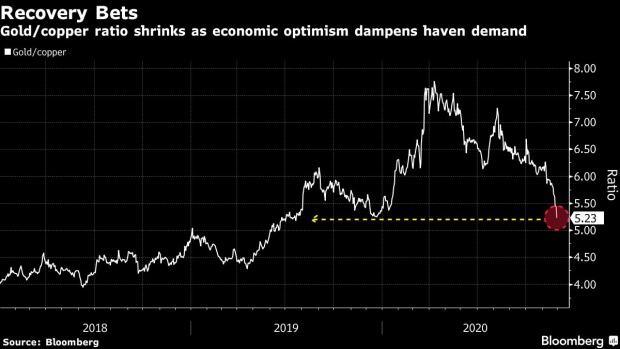
(Bloomberg) — Copper powered to a seven-year high as the rush for growth played out in metals markets, with traditional haven gold dropping amid growing optimism for an end to the coronavirus pandemic.

Bullion extended losses below $1,800 an ounce and copper added to a four-week surge on bets the looming roll-out of Covid-19 vaccines will help drive an economic recovery. The moves deepen a wider pivot into risk assets in November, with global stocks heading for a record month.

“Robust price rallies in industrial commodities like copper point to an ongoing rotation from a risk-averse to risk-on asset market regime,” Citigroup Inc. analysts including Aakash Doshi wrote in an emailed note. Gold faces a “more uncertain path in 2021” as global growth prospects improve, they said.

The latest boost for risk appetite came over the weekend, when two of America’s top health officials said a vaccine will be deployed across the U.S. before the end of the year. Elsewhere, an index of China’s manufacturing sector rose to a three-year high on Monday and the country is taking steps to boost domestic consumption, including of autos and home appliances.

“Macro factors are driving copper trading,” Chinese brokerage Jinrui Futures Co. wrote in note on Monday. “The market sentiment is really bullish right now amid a combination of vaccines, economic recovery, and a smooth U.S. presidential transition.”

  • Copper rose as much as 2.6% to $7,692.50 a ton, the highest since March 2013. The metal traded at $7,634 by 9:55 a.m. London time and is heading for the biggest monthly gain since 2016.
  • Iron ore also joined the rally, with Singapore futures up 1.3% and heading for a monthly gain of more than 11%. Prices briefly spiked more than 9% to touch $140 a ton, the highest since futures began trading in 2013, before swiftly paring gains.
  • Gold fell 0.8% to $1,773.59 an ounce, on track for a fourth straight monthly loss. Silver dropped 1.8%.

Bullion is suffering as investors reverse this year’s hunt for havens amid deep economic ruptures and a fractious U.S. general election. But other factors that favor gold — ultra-dovish monetary policy and the risk of steeper inflation — remain in place.

”The current weakness of gold is all the more remarkable given that the U.S. dollar is likewise weak,” Carsten Fritsch, an analyst at Commerzbank AG, said in an emailed note. “After the price fell below the support level at $1,800 on Friday, the technical picture became even more gloomy, which no doubt has prompted further short-term-oriented investors to withdraw.”

SOURCE: https://www.bnnbloomberg.ca/copper-shines-gold-struggles-as-investors-chase-riskier-assets-1.1529338