Agoracom Blog Home

Author Archive

Else Nutrition $BABY.ca Announces the U.S. Launch of Trial Samples of its Plant-based Nutrition Product for Toddlers $KMB $BMY $ABT $WYE

Posted by AGORACOM-JC at 7:15 AM on Monday, June 22nd, 2020
http://blog.agoracom.com/wp-content/uploads/2020/03/else-square-150x150.png
  • Plant-based Complete Nutrition for Toddlers Trial Pouches to be widely available on ElseNutrition.com e-store
  • (1.27 oz) will be available at no charge, with customers covering only the shipping costs
  • The sampling campaign will be promoted via Else social media channels and will precede the launch of the full-size version of the product, which will be available for pre-orders on our e-store this July

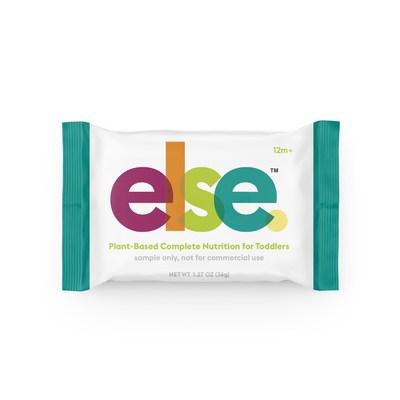
VANCOUVER, BC, June 22, 2020 - ELSE NUTRITION HOLDINGS INC. (TSXV: BABY) (OTCQB: BABYF) (FSE: 0YL) (“Else” or the “Company“), is pleased to announce the U.S. launch of trial-sized pouches of Else Plant-based Complete Nutrition for Toddlers.

Following successful production, the trial samples of Else’s proprietary product will now be widely available for order via the elsenutrition.com e-store.

“We are thrilled to hit this key milestone and to be sharing our product with the world. It is indeed a major inflection point as we continue down the path toward commercialization of our first product. We are excited to get the samples in the hands of eager parents looking for clean label, plant-based nutrition alternatives for their children,” said Ms. Hamutal Yitzhak, CEO & Co-Founder.

Else Plant-Based Complete Nutrition for Toddlers trial pouches (1.27 oz) will be available at no charge, with customers covering only the shipping costs. The sampling campaign will be promoted via Else social media channels and will precede the launch of the full-size version of the product, which will be available for pre-orders on our e-store this July.

Samples can be ordered at: www.elsenutrition.com.

About Else Nutrition Holdings Inc.

Else Nutrition GH Ltd. is an Israel-based food and nutrition company focused on developing innovative, clean and plant-based food and nutrition products for infants, toddlers, children, and adults. Its revolutionary, plant-based, non-soy, formula is a clean-ingredient alternative to dairy-based formula. Else Nutrition (formerly INDI) won the “2017 Best Health and Diet Solutions” award at the Global Food Innovation Summit in Milan. The holding company, Else Nutrition Holdings Inc, is a publicly-traded company, listed as TSX Venture Exchange under the trading symbol BABY and is quoted on the US OTC Markets QB board under the trading symbol BABYF and on the Frankfurt Exchange under the symbol 0YL. Else’s Executive and Advisory Board includes leaders hailing from Abbott Nutrition, Mead Johnson, Boston Children’s Hospital, ESPGHAN (European Society for Pediatric Gastroenterology, Hepatology and Nutrition), University Hospital Brussels, Tel Aviv University’s Sackler Faculty of Medicine, and Gastroenterology & Nutrition Institute of RAMBAM Medical Center, Plum Organics.

For more information, visit: elsenutrition.com or @elsenutrition on Facebook and Instagram.

TSX Venture Exchange

Neither the TSX Venture Exchange nor its regulation services provider (as that term is defined in the policies of the TSX Venture Exchange) accepts responsibility for the adequacy or accuracy of this release.

Caution Regarding Forward-Looking Statements

This press release contains statements that may constitute “forward-looking statements” within the meaning of applicable securities legislation. Forward-looking statements are typically identified by words such as “will”, “expect” or similar expressions. Forward-looking statements in this press release include statements with respect to the anticipated dates for filing the Company’s financial disclosure documents.  Such forward-looking statements reflect current estimates, beliefs and assumptions, which are based on management’s perception of current conditions and expected future developments, as well as other factors management believes are appropriate in the circumstances. No assurance can be given that the foregoing will prove to be correct. Forward-looking statements made in this press release assume, among others, the expectation that listing on the FSE will create additional liquidity and attract additional investors in the European market.  Actual results may differ from the estimates, beliefs and assumptions expressed or implied in the forward-looking statements.  Readers are cautioned not to place undue reliance on any forward-looking statements, which reflect management’s expectations only as of the date of this press release. The Company disclaims any obligation to update or revise any forward-looking statements, whether as a result of new information, future events or otherwise, except as required by law.

Else Nutrition $BABY.ca – A Novel Product for Child Nutrition MAT $KMB $BMY $ABT $WYE

Posted by AGORACOM-JC at 4:18 PM on Friday, June 19th, 2020

Else Nutrition Holdings Inc. (TSX-V: BABY) The award winning, plant-based nutrition company for small cap investors. The company has a $10,000,000 cash balance for US product launch In Q3 2020 with International agreements to follow. Learn More

http://blog.agoracom.com/wp-content/uploads/2020/03/else-square-150x150.png

A Novel Product for Child Nutrition

  • ELSE stands out as a unique supplemental beverage for 3-12 year-olds
  • It has the essential vitamins and nutrients that many children lack in their usual diets
  • Unlike competitor products, ELSE contains no milk or soy proteins, also making it ideal for kids with such allergies

by Dr. Leah Alexander

Ensuring that a child has a balanced, healthy diet can be a challenge for parents.  Every family situation is different, but a variety of factors can prevent children from eating nutritious foods.  Some families live in communities where access to fresh food markets is limited.  Instead, fast food establishments and convenience stores are the only local food sources.  Other families live in areas of food shortages due to climate effects, civil unrest, or poverty.  In other cases, it is simply that a child has developed taste preferences for high fat, sweetened, and salty foods due to introduction during the toddler years.  Whatever the reason, a report by The United Nations Children’s Fund (UNICEF), “State of the World’s Children 2019,” shows some startling statistics (source):  

  • 1 in 3 children under the age of 5 are either undernourished or overweight, resulting in stunting of growth, muscle wasting, and obesity
  • 1 in 2 children suffers from “hidden hunger,” deficiencies in vitamins and essential nutrients
  • 1 in 5 children aged 5 to 19 are considered overweight (BMI >19)

The World Health Organization’s analysis provides similar results (source).  Children worldwide are not consuming the proper nutrients in their diets.

A healthy diet is important for optimal growth and cognitive development.  Calcium absorption for maximum bone density, increase in muscle mass, and brain maturation occurs throughout childhood.  If the appropriate nutrients are lacking, these important milestones are affected.  Iron, in particular, is important for brain function;  research has shown reduced academic achievement in the presence of iron deficiency (source).  Unfortunately, children are not consistently eating enough of the right kinds of foods.  According to the Centers for Disease Control and Prevention (CDC), calories from added sugars and fats contribute to 40% of the daily caloric intake for children aged 2 to 18 (source).  The primary sources of these calories come from soda, fruit drinks, desserts, pizza, and whole milk.  Based on this, it is clear that improvements need to be made regarding global child nutrition.

The WHO recommends a balanced diet of grains or tubers (i.e. potatoes, yams), legumes, vegetables, fruits, and proteins (source).  Vegetables and fruits provide essential vitamins, minerals, fiber, plant protein, and antioxidants.  These all lower the risk of obesity, heart disease, type II diabetes, and some forms of cancer.  A diet with adequate protein is important for both muscle and tissue building.  How much of each food group a child should eat varies by age, gender, and amount of physical activity (source).  When too much or too little are consumed, the risk of health-related illness increases.

A Pediatric Perspective 

In clinical practice, I have witnessed a variety of childhood eating habits.  In the best scenario, some children seem to naturally be “healthy eaters,” enjoying any food put on the plate.  Other kids prefer only fruits, therefore, missing the nutrients vegetables would provide.  Then, there are children who will only eat a few foods from each food group.  While some of these “selective eaters” have a diagnosed developmental disorder or autism, many do not.  Additionally, there seems to be a preference for what I call the “Kid Junk Food Trifecta”:  chicken nuggets, macaroni and cheese, and pizza.  The chicken nuggets are typically from a fast-food establishment, the macaroni is the “boxed” version, and, by pizza, it means only dough, sauce, and cheese.  Although there are many theories as to why children may refuse healthy foods, research has shown an association of food marketing with unhealthy food choices.  Advertisers promote products that are kid-friendly but often low in nutritional value (source).  When seen often enough, children find the advertised food to be more appealing, choosing it over healthier options.

Efforts to Improve the Current Trends in Child Nutrition 

In order to address the UNICEF concerns about stunted growth during the early childhood years, nutritional beverages have been developed by infant baby formula companies.  In theory, by offering a supplement with vitamins, proteins, fats, and carbohydrates, parents have another way to provide essential nutrients.  Creative marketing has convinced many parents that these products are nutritious and beneficial.  Examining the ingredients, however, there are some concerns.  The second or third ingredient is often sugar.  While this added sugar may give an appealing taste to the product, it can promote tooth decay and obesity.  It also increases the likelihood of developing type II diabetes later in life.  Although it may not have been the intention of the developers, the high sugar content of these beverages puts them in the category of a “sugary drink,” something the American Academy of Pediatrics discourages  (source).  The CDC agrees, stating that no more than 10% or 200 calories of one’s total daily calories should come from sugar (source).  The currently available nutritional beverages contain 12-18% sugar, much more than is recommended.  Fortunately, there is a much better option, ELSE.

Else Plant-Based Kids Nutritional Drink

ELSE stands out as a unique supplemental beverage for 3-12 year-olds.  It has the essential vitamins and nutrients that many children lack in their usual diets.  Unlike competitor products, ELSE contains no milk or soy proteins, also making it ideal for kids with such allergies.  Those who follow a vegan diet will find this aspect appealing as well (some versions of the competitor product contain tuna oil).  There are no artificial flavors in ELSE.  As an added bonus, ELSE contains the essential fatty acids docosahexaenoic acid (DHA) and arachidonic acid (ARA).  Although most important during the first 2 years of life, there is growing evidence of the benefits of DHA in older children and adults (source).

There are some special situations where ELSE may be beneficial.  For example, children with inflammatory bowel disease often eat less due to abdominal pain, and their bowel inflammation impairs nutrient absorption.  ELSE could be a source of nutrients that are difficult for these children to get.  Young cancer patients suffering from anorexia during chemotherapy treatments may benefit from this product as well.  In situations of food scarcity, such as during a natural disaster, ELSE could be a temporary, supplemental source of nutrition. 

The WHO has set goals for child nutrition with the hope of meeting them by 2025.  They seek to lower the rates of stunted growth under age 5, to reduce childhood wasting to less than 5%, and to stop the rise of childhood obesity (source).  A healthier nutritional supplement such as ELSE may be just the product needed to help achieve these goals.

Source: https://elsenutrition.com/blogs/news/else-a-novel-product-for-child-nutrition

Why the Olympics should add #Esports – SPONSOR: Esports Entertainment Group $GMBL $DKNG $PENN $GAN $ESPO

Posted by AGORACOM-JC at 5:53 PM on Thursday, June 18th, 2020

SPONSOR: Esports Entertainment Group (GMBL:NASDAQ) – Millions of people from around the world tune in to watch teams of video game players compete with each other. In first quarter 2020, YouTube reported 1.1 billion hours watched, an increase of 13% when compared to fourth quarter 2019. Wagering on Esports is projected to hit $23 BILLION this year although that number will likely be eclipsed due to the recent pandemic. Esports Entertainment Group is the next generation online gambling company designed for the purpose of facilitating as much of this wagering as possible.  LEARN MORE.

Why the Olympics should add Esports

  • The IOC should act fast, though. It won’t be long until esports figures this whole thing out and once they do, the Olympic games won’t have anything to offer this emerging media powerhouse.

By: Brandon Byrne

I recently sat on a panel for gaming website Pocket Gamer that was focused on esports and the Olympics. We were debating whether esports were filling the gap in sporting events, including the Olympic games, which have been paused due to the COVID-19 pandemic.

It was an interesting conversation that started out like most esports panels. The only difference here is that instead of the typical question, “When will esports catch up to traditional sports?” it was, “Will esports become mainstream enough to make it into the Olympics?” A slightly different question, but the same sentiment: The international games are one of televised sports’ marquee events, and esports companies hope to earn a seat at the grown-up’s table.

In truth, the Olympics have been dropping in ratings relatively steadily in the U.S. for a long time. The only Olympic games that scored in the top five ratings going back to 1992 were the Salt Lake City Winter Olympics, presumably because they were held in the United States. Overall, viewership has been declining in recent years and the games don’t hold the prestige they once did.

Additionally, audiences are slowly becoming worth less and less to advertisers because the age of the average viewer is rising rapidly, a trend we are seeing in almost all traditional sports.

I doubt it would surprise anyone to learn that the average age of almost all traditional sports viewership skews older than esports’ audience. Even then, I think the actual data will be quite surprising. Only one professional sport (women’s tennis) actually saw its average viewers age come down in the last decade or so. Even in that context, the average age of a Women’s Tennis Association home spectator is 55 years old.

The average age of esports viewership looks to be around 26 years old. Think about that from a marketer’s perspective. Traditional sports are just missing young people, by a wide margin.

Where are the kids?

But there are more factors at play than just a lack of interest from millennials and Gen Z driving this trend: There’s also a question of access.

The IOC made the decision in recent years to stream the Olympics (the way most younger people consume content), but it capped the ability to watch online to 30 minutes if viewers didn’t sign in with their cable company (a relationship many millennials don’t have) to continue watching.

Additionally, the IOC made the laughable decision to “ban” GIFs with the press covering the event, which qualifies as one of the more stupid things a governing body has ever tried to do. First, it won’t work. Secondly, and more to the point, it demonstrates how out of touch the IOC is with the ways in which media has evolved in the last 20 years.

However, unlike the Olympics, where no corporation owns the rights to volleyball or the pole vault, all esports companies own the IP associated with the game itself. That means, by default, the IOC would not have carte blanche when making decisions about how to represent the games, programming, licensing rights and other factors it has enjoyed for a long time.

Finally, it’s worth noting that the IOC doesn’t like the idea of “violent” games being added to the Olympic roster. It would prefer to see current sports transformed into virtual competitions. But anyone who knows anything about esports understands that this isn’t how esports works. Before a game ascends to esports royalty, it needs to be a good game. If nobody plays it, it’s unlikely anyone will want to watch it.

Secondly, it has be digestible as a viewing experience. World of Warcraft Arena is a game that draws a lot of players, but it’s almost impossible to know what is going on unless you’re an expert at the game or you have a godly shoutcaster who can translate the on-screen action. You can’t make track and field an esport and hope audiences will want to watch.

The IOC Solution

The IOC has taken steps to try and stave off declining youth viewership trends by adopting sports considered “young” in the past few years. Five sports recently added to the Olympic games include:

  • Sport climbing
  • Surfing
  • Skateboarding
  • Karate
  • Baseball/softball

The baseball/softball addition notwithstanding, I think you would have to live under a rock if you thought that competitive sport climbing held a candle to Fortnite or League of Legends in terms of generating youth interest. Frankly, this seems like an idea that came from an old person trying to find a way to “get the kids back.”


To the IOC’s credit, it has begun to hold panels and conferences with esports experts and game publishers, but the deals that will come from these will look REALLY different than what they are used to. It seems to me that we have a long way to go here.

For my part of the panel, I argued that the Olympics need esports much more than esports need the Olympics. Media companies are only going to overpay for broadcasting rights for traditional sports for so long. At some point, someone is going to notice that the “inside the demo” group isn’t there and move on.

The thing that esports CAN get from the Olympics is understanding a better way to monetize its audience, something that the Olympics do well and esports doesn’t do well right now. A report from Goldman Sachs shows the audience size and monetization based on that audience, showing that esports dramatically underindex on monetization relative to their more established sports league equivalents. It is clear that esports is immature from a monetization perspective and, while the Olympics aren’t on this chart, I would assume that it punches WAY above its weight, much like MLB does, trading on its reputation more than on actual results these days.

The IOC should act fast, though. It won’t be long until esports figures this whole thing out and once they do, the Olympic games won’t have anything to offer this emerging media powerhouse.

Read More: https://techcrunch.com/2020/06/18/why-the-olympics-should-add-esports/

Nickel in batteries to take ‘significant’ market share – SPONSOR Tartisan #Nickel $TN.ca – $ROX.ca $FF.ca $EDG.ca $AGL.ca $ANZ.ca

Posted by AGORACOM-JC at 4:38 PM on Thursday, June 18th, 2020

SPONSOR: Tartisan Nickel (TN:CSE)  Kenbridge Property has a measured and indicated resource of 7.14 million tonnes at 0.62% nickel, 0.33% copper. Tartisan also has interests in Peru, including a 20 percent equity stake in Eloro Resources and 2 percent NSR in their La Victoria property. Click her for more information

Tc logo in black

Nickel in batteries to take ‘significant’ market share from 2023

  • “We see total nickel demand from the battery market (all end-uses) much higher than that with the ongoing trend towards higher nickel cathode technology in EVs,” Miller said.

By: Angela East

The rapidly growing demand for more nickel in electric vehicle (EV) batteries is expected to see the base metal take a much bigger market share in just three years.

“In terms of when the shift towards nickel intense cathodes starts to take effect, we expect batteries using high nickel cathodes (namely NCM 811) start to really develop significant market share from 2023 onwards,” Benchmark Mineral Intelligence analyst Gregory Miller told Stockhead.

NCM 811 has a chemistry make-up of 80 per cent nickel, 10 per cent cobalt and 10 per cent manganese.

For some time now, car and battery makers have been working to reduce the amount of cobalt that goes into their batteries because it is one of the most expensive parts and there is a shortage of the commodity.

“Some of this technology is just starting to filter into the industry now following many years of development yet it still faces technical challenges in being able to deploy into the EV market,” Miller explained.

“By increasing nickel in the cathode, you decrease the life of the battery (i.e. how many cycles you can put it through) and increase safety issues linked to thermal stability.

“This transition will be significant for the industry as demand grows, by 2035 demand could be roughly as big as the industry was in 2019.”

Major players like South Korean battery materials maker Posco are now producing cathodes with greater nickel content to meet demand for greater energy density and longer driving range in the next generation of EVs.

A recently completed 25,000-tonne-per-year plant expansion will mass produce cathodes with 65 per cent nickel content, Posco says.

Fellow South Korean battery maker Samsung says that nickel will make up more than 80 per cent of the cathode materials in its fifth-generation EV batteries when commercial production begins in early 2021.

While Wood Mackenzie is predicting demand for nickel sulphate from the EV market to reach around 800,000 tonnes a year by 2035, Benchmark Minerals Intelligence is expecting it to far exceed that.

“We see total nickel demand from the battery market (all end-uses) much higher than that with the ongoing trend towards higher nickel cathode technology in EVs,” Miller said.

“In Benchmark Minerals most recent quarterly nickel forecast we see nickel demand from lithium-ion batteries reaching 2,250,000 tonnes by 2035.”

Market could open up for multiple nickel products

Miller says it has been suggested that the rise of EV demand could result in a “bifurcation” of the nickel market, with a split between higher-grade nickel for the EV industry and lower-grade (mainly ferronickel and nickel pig iron) nickel to supply stainless steel mills.

But this all depends on the success of high-pressure acid leach (HPAL) operations being built in South East Asia.

“The history of HPAL operations is littered with technical and operational challenges, and if these projects fail to bring sufficient nickel units to market, a wider spectrum of nickel feedstocks may become economically viable in the production of nickel sulphate due to a higher price environment,” Miller explained.

However, the nickel sulphate market is expected to remain in oversupply for a few years yet.

“Benchmark Minerals forecasts the nickel sulphate market to remain in surplus until 2024, where we expect a deficit to emerge thereafter where rapid demand growth will set in as EV penetration rates rise quickly,” Miller said.

“This is likely to be exacerbated by increasing use of high nickel cathodes (NCM 811).”

Spurring a price rise

Although the nickel price is on an upward trend, it is still off the five-and-a-half-year high of $US18,620 ($27,097) per tonne it reached in September last year.

It currently sits at $US12,930 per tonne, only about 17 per cent higher than its recent bottom in March.

However, longer term Benchmark sees prices rising to between $US15,000 and $US20,000 per tonne as supply struggles to match the significant ramp up in demand from EV’s over the coming decade.

“Indeed, with the next generation of supply suitable for use in batteries set to come from capital intensive HPAL projects in South East Asia, a higher pricing environment will be necessary to incentivise both the development and operation of these projects.”

Source: https://stockhead.com.au/resources/nickel-in-batteries-to-take-significant-market-share-from-2023/

You’re Invited! $KABN.ca North America Showcase presented by KABN Leadership Team $MOS.ca $MOGO.ca $CTZ.ca $PTO.ca $PAY.ca

Posted by AGORACOM-JC at 2:25 PM on Thursday, June 18th, 2020
This image has an empty alt attribute; its file name is image-3.png

We’re inviting you to join our KABN North America Showcase

Join us as we provide the business, technology and investment community with an overview of the KABN North America platform   KABN believes that ownership of identity is a basic human right and individuals should be the primary beneficiary of any use of their identity.   KABN’s product suite offers:

KABN North America has 4 primary products that enable users to verify, manage and monetize their digital identity:

  • KABN ID: a reusable, Always On, compliant, biometrically based, identity   verification and validation platform that forms the engine of the KABN Network.
  • LIQUID AVATAR: a digital image-based “wallet and keyring” platform that allows users to manage their digital identity.
  • KABN Card: an approved prepaid Visa card that includes a mobile banking wallet that supports both digital and traditional currencies.
  • KABN KASH: a robust loyalty and engagement platform with cashback and card-linked programs. 

Join Us on Tuesday, July 7th from 12 pm to 1 pm Eastern

$KABN.ca North America to Present Company and Product Showcase

Posted by AGORACOM-JC at 8:45 AM on Thursday, June 18th, 2020
This image has an empty alt attribute; its file name is image-3.png
  • Live online overview and demonstration with Q & A – July 7th and 8th – 12 pm to 1 pm Eastern
  • With the evolving macroenvironment and the increasing amount of time spent online, the Company believes that digital identity will become more important as users look to work, play, educate, game and shop virtually and will need to protect, manage and control the use of their digital identity

Toronto, Ontario–(June 18, 2020) – KABN Systems NA Holdings Corp. (CSE: KABN) (the “Company” or “KABN” or “KABN North America“), a Canadian Fintech company that specializes in continuous online identity verification, management and monetization, is pleased to announce that the Company will be holding an online overview and demonstration of its product suite on July 7th and 8th at 12 pm Eastern. Participants will also have the opportunity to ask questions.

With the evolving macroenvironment and the increasing amount of time spent online, the Company believes that digital identity will become more important as users look to work, play, educate, game and shop virtually and will need to protect, manage and control the use of their digital identity.

KABN North America is currently in development to beta launch its suite of products later this month. These include:

KABN North America Product Suite

KABN North America has 4 primary products that enable users to verify, manage and monetize their digital identity:

  • KABN ID: a reusable, Always On, compliant, biometrically based, identity verification and validation platform that forms the engine of the KABN Network.
  • LIQUID AVATAR: a digital image-based “wallet and keyring” platform that allows users to create high quality digital icons representing their online personas in order to manage their digital identity.
  • KABN Card: an approved prepaid Visa card that includes a mobile banking wallet that supports both digital and traditional currencies.
  • KABN KASH: a robust loyalty and engagement platform with cashback and card-linked programs.

KABN believes that ownership of identity is a basic human right and individuals should be the primary beneficiary of any use of their identity. The KABN North America platform provides, at no cost to consumers, the ability to create a digital identity with our Liquid Avatar platform (www.liquidavatar.com), verify their identity through KABN ID and create value for the use of their identity through KABN North America’s cashback, engagement and loyalty program, KABN KASH, as well as the KABN Visa card.

KABN North America generates revenue by providing our users with, at no cost, high value services and delivering permission-based offers that fit their aggregated public data profiles. KABN never rents, sells or provides data to outside parties without permission, and complies with jurisdictional privacy rules and regulations.

To Register for the KABN Showcase, please visit the following:

For July 7th at 12 pm to 1 pm Eastern:

https://aw14bfc0.aweb.page/p/d4e2ce95-8957-4fc7-be5c-3384a511398e

For July 8th at 12 pm to 1 pm Eastern:

https://aw14bfc0.aweb.page/p/b82604b4-cc9e-4e7a-86ba-ebcec20ab856

For more information on KABN North America and its suite of products, please visit:

www.kabnnaholdco.com or www.kabnsystemsna.com

About KABN – www.kabnnaholdco.com

KABN Systems NA Holdings Corp. through its wholly owned subsidiary KABN Systems North America Inc. focuses on the verification, management and monetization of digital identity, empowering users to control and benefit from its use of their online identity. KABN propriety technology suite includes 4 key products:

KABN ID is an Always On, biometric and blockchain based digital identity validation and verification platform allowing users to continuously and confidently prove themselves throughout the online community.

Liquid Avatar allows users to create high quality digital icons representing their online personas. These icons, in conjunction with KABN ID, allows users to use Liquid Avatars to share public and permission based private data when they want and with whom they want. www.liquidavatar.com

KABN Card is a Visa approved prepaid card program allowing users to manage both digital and fiat currencies and earn cashback and other loyalty incentives.

KABN KASH is a cashback, loyalty and engagement program that powers the KABN revenue ecosystem.

KABN provides its products and services at no cost to consumers and generates revenues through permission-based partner programs.

KABN Systems NA Holdings Corp. is publicly traded on the Canadian Securities Exchange under the symbol: KABN

For more information, please visit www.kabnnaholdco.com or www.kabnsystemsna.com

For further information, please contact:

Ben Kessler
Chief Executive Officer
647-725-7742 Ext. 700

[email protected]

The CSE has not reviewed and does not accept responsibility for the adequacy or accuracy of this release.

This news release does not constitute an offer to sell, or a solicitation of an offer to buy, any securities under the KABN Financing in the United States. The securities have not been and will not be registered under the United States Securities Act of 1933, as amended (the “U.S. Securities Act”) or any state securities laws and may not be offered or sold within the United States or to U.S. Persons unless registered under the U.S. Securities Act and applicable state securities laws or an exemption from such registration is available.

Forward-Looking Information and Statements

This press release contains certain “forward-looking information” within the meaning of applicable Canadian securities legislation and may also contain statements that may constitute “forward-looking statements” within the meaning of the safe harbor provisions of the United States Private Securities Litigation Reform Act of 1995. Such forward-looking information and forward-looking statements are not representative of historical facts or information or current condition, but instead represent only the Company’s beliefs regarding future events, plans or objectives, many of which, by their nature, are inherently uncertain and outside of the Company’s control. Generally, such forward-looking information or forward-looking statements can be identified by the use of forward-looking terminology such as “plans”, “expects” or “does not expect”, “is expected”, “budget”, “scheduled”, “estimates”, “forecasts”, “intends”, “anticipates” or “does not anticipate”, or “believes”, or variations of such words and phrases or may contain statements that certain actions, events or results “may”, “could”, “would”, “might” or “will be taken”, “will continue”, “will occur” or “will be achieved”. The forward-looking information and forward-looking statements contained herein may include, but is not limited to, information concerning the ability of the Company to generate revenues, roll out new programs and to successfully achieve business objectives, and expectations for other economic, business, and/or competitive factors.

By identifying such information and statements in this manner, the Company is alerting the reader that such information and statements are subject to known and unknown risks, uncertainties and other factors that may cause the actual results, level of activity, performance or achievements of the Company to be materially different from those expressed or implied by such information and statements. In addition, in connection with the forward-looking information and forward-looking statements contained in this press release, the Company has made certain assumptions. Among the key factors that could cause actual results to differ materially from those projected in the forward-looking information and statements are the following: changes in general economic, business and political conditions, including changes in the financial markets; changes in applicable laws; compliance with extensive government regulation. Should one or more of these risks, uncertainties or other factors materialize, or should assumptions underlying the forward-looking information or statements prove incorrect, actual results may vary materially from those described herein as intended, planned, anticipated, believed, estimated or expected.

Although the Company believes that the assumptions and factors used in preparing, and the expectations contained in, the forward-looking information and statements are reasonable, undue reliance should not be placed on such information and statements, and no assurance or guarantee can be given that such forward-looking information and statements will prove to be accurate, as actual results and future events could differ materially from those anticipated in such information and statements. The forward-looking information and forward-looking statements contained in this press release are made as of the date of this press release, and the Company does not undertake to update any forward-looking information and/or forward-looking statements that are contained or referenced herein, except in accordance with applicable securities laws. All subsequent written and oral forward- looking information and statements attributable to the Company or persons acting on its behalf is expressly qualified in its entirety by this notice.

MedX $MDX.ca Announces Executive Changes

Posted by AGORACOM-JC at 8:09 AM on Thursday, June 18th, 2020
Home - MedX Health
  • President and CEO Scott Spearn has resigned for family reasons, effective immediately
  • Rob von der Porten, Chairman of the Board, has been named interim Executive Chair.

MedX Health Corp. (“MedX”) (MDX – TSXV), announced today that President and CEO Scott Spearn has resigned for family reasons, effective immediately. Rob von der Porten, Chairman of the Board, has been named interim Executive Chair. Mr. Spearn will also be retiring from the Board at or prior to the next AGM. The Board will commence a search for suitable candidates to take on the CEO position.

“The Board thanks Scott for his service and leadership, but we understand his decision to step down,” said Mr. von der Porten. “During his tenure as President and CEO, MedX has completed the development of its SIAscopy™ on DermSecure™ Telemedicine platform, has entered into major distribution arrangements and has significantly strengthened its balance sheet. We wish him the very best. I am confident that under the direction of MedX’s executive leadership team, the Company will enjoy continued success in the future.”

Mr. Spearn noted, “It has been a privilege to have led MedX during an important period of transformation and growth. I am proud to have worked with my MedX colleagues who are so committed to the development of the SIAscopy™ technology and the DermSecure™ Telemedicine platform that represents such a significant development in the diagnosis process for early detection of melanoma.”

About MedX

MedX, headquartered in Mississauga, Ontario, is a leading medical device and software company focused on skin cancer with its DermSecure™ telemedicine platform, utilizing its SIAscopy technology. SIAscopy is also imbedded in its products SIAMETRICS™, SIMSYS™, and MoleMate™, which MedX manufactures in its ISO 13485 certified facility. SIAMETRICS™, SIMSYS™, and MoleMate™ include hand-held devices that use patented technology utilizing light and its remittance to view up to 2 mm beneath suspicious moles and lesions in a pain free, non-invasive manner, with its software then creating real-time images for physicians and dermatologists to evaluate all types of moles or lesions within seconds. These products are Health Canada, FDA (US), ARTG and CE cleared for use in Canada, Brazil, the US, Australia, New Zealand, the European Union and Turkey. MedX also designs, manufactures and distributes quality photobiomodulation therapeutic and dental lasers to provide drug-free and non-invasive treatment of tissue damage and pain. www.medxhealth.com

Neither TSX Venture Exchange nor its Regulation Services Provider (as that term is defined in policies of the TSX Venture Exchange) accepts responsibility for the adequacy or accuracy of this release.

This Media Release may contain forward-looking statements, which reflect the Company’s current expectations regarding future events. The forward-looking statements involve risks and uncertainties.

View source version on businesswire.com: https://www.businesswire.com/news/home/20200618005215/en/

Rob von der Porten, Chairman
MedX Health Corp
[email protected]

Datametrex $DM.ca Sold $1.5m Test Kits and Provides 90 Day Corporate Update on #COVID19 With Sales Outlook

Posted by AGORACOM-JC at 8:01 AM on Thursday, June 18th, 2020
  • Company has sold approximately 30,000 test kits and 7 PCR (Polymerase Chain Reaction) machines to several Canadian companies
  • Total gross sales of approximately $1.5 million CAD
  • Datametrex has little or no upfront costs associated with the sale of these test kits
  • Company’s project pipeline is significant on both the COVID-19 test kits and Personal Protective Equipment based on multiple projects in various stages of development across Canada, US, Africa, Asia, Australia and the EU

TORONTO, June 18, 2020 – Datametrex AI Limited (the “Company” or “Datametrex”) (TSXV: DM, FSE: D4G, OTC: DTMXF) is pleased to share a corporate update that since announcing on April 16, 2020, that it secured the rights to import and sell high-quality South Korean manufactured Nucleic Acid COVID-19 test kits.

Datametrex continues supporting companies through facilitating COVID-19 test kits, along with big data AI analytics tools that can help target future outbreaks, potentially source fake news that can be detrimental to the operations, or even visualize the audience that needs the fastest response in these critical times.

NEW REVENUE

The Company has sold approximately 30,000 test kits and 7 PCR (Polymerase Chain Reaction) machines to several Canadian companies, for total gross sales of approximately $1.5 million CAD. Datametrex has little or no upfront costs associated with the sale of these test kits.

HIGHLIGHTS

  • Since May 15th, Datametrex has generated gross sales of $500,000 with the sale of 10,000 test kits and one (1) PCR machine to a large Canadian mining company with operations in West Africa.
     
  • Since June 8th, Datametrex has sold $810,000 with initial orders comprising of 12,000 test kits and six (6) PCR machines to two Canadian companies.

  • On June 9th the Company arranged with lab partner Transpharm Canada Inc. (“TCI”) to conduct ongoing testing for a private Quebec metal mining company with an initial order of 2,000 test kits generating gross sale of approximately $250,000 for Datametrex.

“With the resurgence of a second wave of COVID-19 in multiple countries, and with a worldwide attempt to reduce lockdown measures to get citizens back to work, the demand for testing will only increase. These rapid antibody-based tests are a vital tool for jumpstarting the economy,” says Marshall Gunter, CEO of the Company. “Datametrex is pleased to facilitate the sale of these test kits globally providing worldwide, the opportunity to use top quality test kits to flatten the curve and get back to the “new normal” safely.”

Advisory Board and New Personnel

On May 4th, Todd Shapiro consented to join the Board of Directors of Datametrex. After being a top rated Radio Show host & a brilliant marketing Entrepreneur with over 20 years of experience, he has recently moved on from main stream media to concentrate his efforts on being the CEO of Red Light Holland. Todd currently sits on the Board of Directors for Red Light Holland, JamStacked and Mogul Productions.

On May 19th, Datametrex added President and Dean of the Toronto Institute of Pharmaceutical Technology (“TIPT”) and Clinical Pharmacologist, Dr. Alexander MacGregor, Ph.D., to the Company’s Medical Advisory Board.

On June 10th, the Company welcomed Edward Choi, to head up the sales team in Seoul, South Korea. Edward was a Vice President at LOTTE for leading Lotte’s cyber security division.

Datametrex Pipeline

The Company’s project pipeline is significant on both the COVID-19 test kits and Personal Protective Equipment (“PPE”) based on multiple projects in various stages of development across Canada, US, Africa, Asia, Australia and the EU. We are waiting for PO approvals with specified COVID-19 sales and or tender proposal process. The Company will recognize revenue upon sale and shipment of the test kits. The Company will also receive additional revenue streams as we secure new business and continue to provide Ai services, fullfill contracts and or supply agreements to goverments, corporate customers upon fulfillment.

About Transpharm Canada Inc.

Transpharm Canada Inc. provides pharmaceutical education, technology, and research opportunities to students through its subsidiary, Toronto Institute of Pharmaceutical Technology, North America’s premier pharmaceutical training institute. The facility is also fully compliant Health Canada licensed Good Manufacturing Practice (“GMP”) manufacturing and testing facility and is a full-service clinical development business that provides clinical trial services to biotechnology companies. Additional information on TIPT is available at www.tipt.com

About Datametrex

Datametrex AI Limited is a technology focused company with exposure to Artificial Intelligence and Machine Learning through its wholly owned subsidiary, Nexalogy (www.nexalogy.com). Datametrex’s mission is to provide tools that support companies in fulfilling their operational goals, including Health and Safety, with predictive and preventive technologies. By working with companies to set a new standard of protocols through Artificial Intelligence and health diagnostics, the Company provides progressive solutions to support the supply chain. Additional information on Datametrex is available at www.datametrex.com.

For further information, please contact:

Marshall Gunter – CEO
Phone: (514) 295-2300
Email: [email protected]

Neither the TSX Venture Exchange nor it’s Regulation Services Provider (as that term is defined in the policies of the TSX Venture Exchange) accepts responsibility for the adequacy or accuracy of this release.

Forward-Looking Statements

This news release contains “forward-looking information” within the meaning of applicable securities laws.  All statements contained herein that are not clearly historical in nature may constitute forward-looking information. In some cases, forward-looking information can be identified by words or phrases such as “may”, “will”, “expect”, “likely”, “should”, “would”, “plan”, “anticipate”, “intend”, “potential”, “proposed”, “estimate”, “believe” or the negative of these terms, or other similar words, expressions and grammatical variations thereof, or statements that certain events or conditions “may” or “will” happen, or by discussions of strategy.

Readers are cautioned to consider these and other factors, uncertainties and potential events carefully and not to put undue reliance on forward-looking information. The forward-looking information contained herein is made as of the date of this press release and is based on the beliefs, estimates, expectations and opinions of management on the date such forward-looking information is made. The Company undertakes no obligation to update or revise any forward-looking information, whether as a result of new information, estimates or opinions, future events or results or otherwise or to explain any material difference between subsequent actual events and such forward-looking information, except as required by applicable law.

Video games, #Esports ‘skyrocket’ in popularity during pandemic – SPONSOR: Esports Entertainment Group $GMBL $DKNG $PENN $GAN $ESPO

Posted by AGORACOM-JC at 6:00 PM on Wednesday, June 17th, 2020

SPONSOR: Esports Entertainment Group (GMBL:NASDAQ) – Millions of people from around the world tune in to watch teams of video game players compete with each other. In first quarter 2020, YouTube reported 1.1 billion hours watched, an increase of 13% when compared to fourth quarter 2019. Wagering on Esports is projected to hit $23 BILLION this year although that number will likely be eclipsed due to the recent pandemic. Esports Entertainment Group is the next generation online gambling company designed for the purpose of facilitating as much of this wagering as possible.  LEARN MORE.

Video games, esports ‘skyrocket’ in popularity during pandemic

With people stuck at home, gaming companies report record sales and unprecedented engagement time

  • Game spending totalled a record-breaking $10.5 billion US in April 2020, according to Nielsen’s SuperData
  • That same month, gamers scrambled like never before to buy hardware, like the new Nintendo Switch, Xbox Ones, and PlayStation 4s, according to NPD Group, an industry tracking firm

By: Bonnie Allen

As an avid gamer, 38-year-old Steve Vomacka would often play the video game Fortnite, a multiplayer shooter game, for an hour each day just to unwind after work.

That was before the COVID-19 pandemic, back when Vomacka still had a job at a Saskatoon autobody shop, access to his kickboxing gym and fun places to take his three kids.

The unemployed father has tripled his gaming time in search of a “release” ever since pandemic restrictions came into effect in March.

“I wake up in the morning. I play some video games while I’m eating breakfast, then I do some of my [school] work, then go back to playing video games. Do a quick work-out; more video games,” Vomacka said, with a chuckle. “It’s a good escape for me.”

The shuttering of businesses and schools forced millions of existing and would-be gamers to stay home, prompting a spike in demand for what is already one of the most popular forms of entertainment on the planet and a multi-billion dollar industry. People aren’t just buying and playing games like never before, they’re also tuning in as spectators to stream highly-skilled players do battle in various esports, also known as competitive gaming.

It’s about escapism and curing boredom; it’s also about seeking connection. 

With so many other sports cancelled, it’s also about embracing the one sports realm that could flourish in a physical distancing world.

Record sales

Game spending totalled a record-breaking $10.5 billion US in April 2020, according to Nielsen’s SuperData. That same month, gamers scrambled like never before to buy hardware, like the new Nintendo Switch, Xbox Ones, and PlayStation 4s, according to NPD Group, an industry tracking firm.

Blockbuster games like Nintendo’s Animal Crossing and Playstation 4’s Final Fantasy VII Remake, both released during the pandemic, have soared in popularity, and there’s much anticipation for the PS4 action-adventure game The Last of Us Part II, set for release on June 19. Caption New Horizons, the latest game in Nintendo’s Animal Crossing series, launched in late March on the Switch gaming console — just as many people around the world were settling into quarantine. (Nintendo)

Websites that track gaming activity reported a record number of concurrent players and spectators in March and April, with numbers dipping slightly from that peak in more recent weeks.

“As people have been forced indoors, usage has skyrocketed, popularity has skyrocketed,” said Adrian Montgomery, CEO of Enthusiast Gaming, a video game media and eSports company in Toronto.

Enthusiast Gaming is reporting a “dramatic surge” in traffic — up 25 to 40 per cent — on its gaming-related websites and YouTube channels since early March. Montgomery said the pandemic hasn’t increased how many gamers it serves — about 160 million unique visitors a month — but rather how much time existing gamers are spending on their hobby.

Video games are the new social network. It’s how you make friends. It’s how you connect with your friends every night.

– Adrian Montgomery, CEO of Enthusiast Gaming

“They have doubled down on their passion through the pandemic and just spent more and more and more time on our sites,” Montgomery said.

Noodlecake Studios, a Saskatoon-based mobile gaming company that develops and publishes video games, is reporting a 20 per cent boost in free downloads in March and April. In-game analytics also reveal that people are playing much longer than usual. 

The company, best known for its free golf creations Super Stickman Golf and Golf Blitz, makes its money from sustained use and in-game purchases. Ryan Holowaty, Noodlecake’s head of marketing, said he’ll be watching to see whether new players stick around long-term.

“The longer that a player stays within a game the more likely they are to purchase items because they like it and they want to keep playing,” he said. So, you can see kind of a direct tie to to the engagement of a player to the revenue.”

Social connection

Industry insiders and analysts seem to agree that while gamers want to game, the surge in popularity during the pandemic is directly related to people’s desire for human connection.

“Video games are the new social network. It’s how you make friends. It’s how you connect with your friends every night,” Enthusiast Gaming’s Montgomery said. “As young people, like all of us, have been unable to meet up in person they’ve been able to continue to meet up online over video games.”  Caption Saskatoon father Steve Vomacka likes to play outdoors with his three children, but finds his strongest connection with his son Harley, 10, comes online through video games. (Submitted by Steve Vomacka )

Steve Vomacka  is proof of that. 

He lives in a downtown Saskatoon apartment and teams up online with his 10-year-old son Harley, who lives with his mother in the suburbs, to play Fortnite together from their separate locations. They talk and laugh on headsets, and often play with Harley’s friends.

“Video games is totally Harley’s thing. So that’s how him and I connect,” Vomacka â€‹â€‹â€‹â€‹said. “I’ve also had a chance to play with his friends, and get to know them, and I wouldn’t have had this opportunity if it wasn’t for, unfortunately, the coronavirus.”

‘The show has gone on’

Esports has continued at a time when other professional sports have been suspended.

Large in-person events, such as esports championships staged in packed stadiums, have been cancelled. However, video game competitions are better positioned to return to their online roots than other professional sports leagues, said Montgomery, whose company owns several professional esports teams.

Esports betting has taken off even more during the pandemic, he added.

“The show has gone on,” said Montgomery. “Esports has filled a void for content right now for sports content.” Caption Fans look on at Seattle’s KeyArena during the 2017 edition of the International Seattle gaming competition. These in-person esports competitions are on hold at the moment. (Elaine Thompson / The Associated Press)

Professional players compete for cash prizes and earn additional revenue from sponsorship and social media.  

University of Regina computer science professor David Gerhard has observed that people have been drawn to esports that highlight other professional sports which have been suspended — including NASCAR, football, soccer, and hockey.

I dropped out of university to pursue it. So I kinda got to give it my best​​​​​​.

– Travis Letwiniuk, aspiring professional gamer

Gerhard said esports competitions are likely the only high-level sporting events which can “carry on more or less unchanged with the distancing restrictions.”

That’s what aspiring pro-gamer Travis Letwiniuk is counting on.

The Saskatoon man’s skill at Overwatch, a team-based multiplayer shooter game, earned him a full scholarship to play on Harrisburg University’s esports varsity team in Pennsylvania in 2018. Letwiniuk competed on stage in front of cheering crowds in LAN events, where multiple players connect on a local area network (LAN) to compete in the same location.

In May, after the pandemic was well under way, Letwiniuk decided to move home to Canada to pursue a career as a professional gamer. He was confident that esports competitions would continue with online tournaments. The biggest challenges so far have been internet speeds and time zone differences.

“I’m really hoping that esports just takes off … I’m hoping to see it more on television, more on radio being broadcast with commentators, like hockey or football,” he said. Saskatoon’s Travis Letwiniuk moved to Pennsylvania in 2018 to join the Harrisburg University’s esports varsity team. Now he’s decided to quit university in order to try to go pro. (Submitted by Travis Letwiniuk )

Letwiniuk — who goes by “AutumnSouls” in Overwatch — plays for 10 to 12 hours a day in his Calgary apartment.

“I dropped out of university to pursue it. So I kinda got to give it my best,” he said. “It’s basically a full-time job in terms of hours. The money’s not there just yet.”

Steve Vomacka’s aspirations are more simple. 

Even after he returns to work, he plans to carve out enough playing time to stay connected with his children.

The only problem?

He said his son, Harley, and his son’s friends are spending so much time playing video games at the moment that he can’t keep up.

“I can tell their skill level has gone up way higher. Like, before I was getting whooped a little bit by the younger generation, and now I’m really getting whooped.”

Source: https://www.cbc.ca/news/canada/saskatchewan/video-games-and-esports-fill-void-in-pandemic-1.5612488

Can #Edtech Replace Traditional Classroom Learning Post-COVID Outbreak? – SPONSOR: BetterU Education Corp. $BTRU.ca $ARCL $CPLA $BPI $FC.ca

Posted by AGORACOM-JC at 5:41 PM on Wednesday, June 17th, 2020

SPONSOR:  BetterU Education Corp. aims to provide access to quality education from around the world. The company plans to bridge the prevailing gap in the education and job industry and enhance the lives of its prospective learners by developing an integrated ecosystem. betterU / Ottolearn launch FREE COVID-19 mobile resource toolkit to fight the global crisis – Click here for more information.

Can Edtech Replace Traditional Classroom Learning Post-COVID Outbreak?

  • The traditional classroom-based education system needs to accept its insufficiency and join forces to refine knowledge and learning in the post COVID era

By: Divya Jain CEO & Co-Founder, Safeducate

  • The COVID-19 pandemic is wreaking havoc globally and nothing can be done until a feasible vaccination is curated.
  • The health crisis has demolished the link between students and the education system and brought the cycle to an abrupt halt.
  • However, the edtech sector is regaining its powerful traction and has stirred up thoughts about the digital education system amid the pandemic.
  • Google Trends graph for edtech queries of the past 90 days has witnessed a 60 per cent boost in the user search patterns.

Edtech platforms have mushroomed over the past three-four years with a compelling teaching system that is intuitive and rewarding. They have succeeded in jolting the audience with a diverse curation of practicable courses. Riding high on the USP of not being reliant on a physical location for existence, the outreach of these platforms is massive as they only require a computer with an Internet connection.

The credibility of proficiency is a major focus while hiring professionals for study programmes. The edtech platforms inhibit the teachers to skip classes, pass time, and stay employed without visible contributions. This lack-luster approach has been eradicated and only competent teachers are retained for the gig. There is no dearth of qualified teachers seeking jobs and such platforms are creating work from home jobs that pay well.

The edtech platforms are crafting a community where teachers can express opinions, solve problems and share experiences that bolster the quality of learning.  Organizing congregations that serve a purpose with no communication barrier, supplements a qualitative approach towards education. Moreover, such platforms are also compelling the education governing bodies to reiterate methods that promote advanced education methods. This includes removing the physical barriers that bind students to rely on a particular institution for knowledge gathering. An interconnected education system that does not inhibit learning, where students gather whatever knowledge they seek, feels possible. The construction of an online repository of information with public access can point knowledge seekers in a precise direction.

India’s classroom-based learning has been plagued with obsolete practices that leave little room for curiosity. The idea of education has always been a cumbersome practice that requires physical movement. The knowledge disbursed in even higher institutions lacks actual implementation in the real world. It remains limited to the school curriculum that hinders the development of inquisitiveness in children. Moreover, the system is incapable of catering to every student’s needs due to overwhelming batch size and a limited number of proficient faculties.

That said, education is a virtue that should not be confined to an institution or a physical location. The advancements in technology and communication relay methods can be used to enable information sharing. This approach can incorporate students that would be otherwise left out due to migratory constraints. The idea that a degree or certification is a must-have for a successful career is not encouraged by pioneers of science and technology.

Edtech infrastructure is not tethered by climate change. The information is readily available round-the-clock. It experiences periodic revamping of the content and further branches out to industry level courses. The diversity of knowledge that edtech platforms are providing to their users at the click of a button is unparalleled. The traditional classroom-based education system needs to accept its insufficiency and join forces to refine knowledge and learning in the post COVID era.

Source: https://www.entrepreneur.com/article/352003