Agoracom Blog Home

Author Archive

NORTHBUD $NBUD.ca – #Cannabis may be helping some #Canadians cope with #PTSD symptoms: study $CGC $ACB $APH $CRON.ca $HEXO.ca $TRST.ca $OGI.ca

Posted by AGORACOM-JC at 10:30 AM on Wednesday, November 6th, 2019

SPONSOR: NORTHBUD (NBUD:CSE) Sustainable low cost, high quality cannabinoid production and procurement focusing on both bio-pharmaceutical development and Cannabinoid Infused Products. Learn More.

NBUD: CSE
—————————–

Cannabis may be helping some Canadians cope with PTSD symptoms: study

  • Cannabis use could be helping Canadians cope with some of the effects of post-traumatic stress disorder, according to new research from the BC Centre on Substance Use and University of British Columbia. 

By: Jeremiah Rodriguez

Cannabis use could be helping Canadians cope with some of the effects of post-traumatic stress disorder, according to new research from the BC Centre on Substance Use and University of British Columbia. 

Cannabis use could be helping Canadians alleviate some of the effects of post-traumatic stress disorder, according to new research from the BC Centre on Substance Use and University of British Columbia.

The study, published in the Journal of Psychopharmacology, found people with PTSD who were not using cannabis were “far more likely” to have suicidal thoughts and suffer from severe depression than self-proclaimed pot users, according to data taken from Statistics Canada’s 2012 Canadian Community Health Survey – Mental Health.

People who suffered trauma — including survivors of acute injury, violence, conflict and disasters — suffer at disproportionately higher rates of depression, suicide and substance abuse than the general population.

The research team found that among non-cannabis users, PTSD was “significantly associated” with a major recent depressive episode and suicidal thoughts.

More specifically, PTSD sufferers who didn’t use pot were seven times more likely to have a depressive episode and nearly five times more likely to have suicidal thoughts compared to non-cannabis users without PTSD.

“Among the cannabis-non-using population, there was a strong association between having PTSD and experiencing these indicators of severe mental distress,” lead author Stephanie Lake said during a phone interview with CTVNews.ca, adding that pot users didn’t see this same association.

Her research was the first to track the relationship between PTSD, cannabis use and “severe mental health outcomes” among the average Canadian population, according to a university press release.

Lake, a research assistant at the British Columbia Centre on Substance Use, said this was the first study examining how PTSD’s connection to suicidal thoughts or severe depression “could be interrupted by the use of cannabis.”

Her study also found one in four Canadians with PTSD said they used cannabis — which is “remarkably high” compared to the prevalence of pot use among the general Canadian population (which is an estimated 11.4 per cent).

STUDY DIDN’T SHOW CAUSAL LINK BETWEEN POT, PTSD RATES

Lake stressed her study didn’t outright show a definitive, causal link between cannabis use and decreased PTSD symptoms.

The PhD candidate at UBC’s School of Population and Public Health said the study “didn’t tell us whether people are successfully using cannabis to treat PTSD … but it is a promising signal that there might be a therapeutic (benefit) to cannabis use.”

Of the 24,089 respondents to the 2012 Canadian Community Health Survey – Mental Health, 420 people had a clinical diagnosis of PTSD.

From those with PTSD, 106 of them — 28 per cent — said they used cannabis. This rate is nearly three times the rate of pot users without PTSD (11.2 per cent).

Lake’s overall findings could be extremely helpful to many Canadians, as the study mentions that 9.2 per cent of Canadians have PTSD — one of the highest prevalence rates for the disorder in the world.

HOW CANNABIS POTENTIALLY HELPED WITH PTSD

Lake explained that cannabinoid receptors in people’s bodies help regulate mood and sleep, and some research suggests that trauma from PTSD could compromise this endocannabinoid system.

“So when you introduce external cannabinoids (from pot products) to the body, it might help to get the system working as normal again,” she suggested.

Lake also noted that, according to the study, PTSD patients did have cannabis-use disorders at a higher rate than the general population.

In a press release, senior author Dr. M-J Milloy, BCCSU research scientist and Canopy Growth Professor of Cannabis Science at UBC, said that “we’re only just beginning to understand what the therapeutic potential of cannabis may be for a variety of health conditions.”

“These findings are promising, and merit further study in order to fully understand the benefits of cannabis for people living with PTSD,” he added.

Lake added that UCB researchers are currently conducting a clinical trial looking at the effectiveness of cannabis products in specifically treating PTSD.

Source: https://www.theloop.ca/ctvnews/cannabis-may-be-helping-some-canadians-cope-with-ptsd-symptoms-study/

ThreeD Capital Inc. $IDK.ca – #China reverses decision to ban #crypto mining in 2020 $HIVE.ca $BLOC.ca $CODE.ca

Posted by AGORACOM-JC at 9:47 AM on Wednesday, November 6th, 2019

SPONSOR: ThreeD Capital Inc. (IDK:CSE) Led by legendary financier, Sheldon Inwentash, ThreeD is a Canadian-based venture capital firm that only invests in best of breed small-cap companies which are both defensible and mass scalable. More than just lip service, Inwentash has financed many of Canada’s biggest small-cap exits. Click Here For More Information.

IDK: CSE

China reverses decision to ban crypto mining in 2020

  • The plan to include cryptocurrency mining in China into a list of industries that would be banned in the country has reportedly been scrapped.
  • Earlier this year, the National Development and Reform Commission (NDRC) in China revealed it was considering putting crypto mining on a list of banned industrial activities, which would have effectively phased out the industry from the country.

By: Priyeshu Garg

The plan to include cryptocurrency mining in China into a list of industries that would be banned in the country has reportedly been scrapped. Earlier this year, the National Development and Reform Commission (NDRC) in China revealed it was considering putting crypto mining on a list of banned industrial activities, which would have effectively phased out the industry from the country.

Crypto mining industry now safe in China

The future of the crypto mining industry in China has been uncertain for the past six months, as the country’s State Council has been considering implementing guidelines that would have forced the entire industry out.

Back in April, the Chinese National Development and Reform Commission (NDRC) published a draft proposal of its Industry Restructuring Catalog, in which it recommended that crypto mining be put on a list of industries to be restricted in the country.

While just a draft, the proposal garnered a lot of negative reactions in China, with many industry leaders arguing that it could be detrimental to China’s dominance in the field. The country is not only home to some of the largest mining hardware manufacturers, including Bitmain, Canaan, and Ebang, but also has some of the largest mining operations in the world.

However, the country seems to have scrapped its plans to blacklist crypto mining, as NDRC has published an updated version of its guidelines that come into effect on Jan. 1, 2020.

According to local media reports, NDRC, which works under China’s State Council, has removed cryptocurrency mining from the list of industries that should be removed from the country. The catalog contains detailed descriptions of what constitutes “virtual currency mining.”

Half of Bitcoin’s hashpower will remain in China

Officials from NDRC held a press conference on Wednesday, Nov. 6, where they explained their decision behind updating the draft they published back in April. The commission said they received over 2,500 suggestions on how to deal with various issues raised by the draft catalog, adding that most of them were “taken into consideration.”

While there were no comments on NDRC’s decision to scrap plans for phasing out crypto mining, the commission was most likely responding to overwhelming pressure from the industry.

It’s important to note that even if the commission hadn’t changed its draft proposal, crypto mining wouldn’t have been immediately banned from the country. The proposal only included guidelines for local governments advising them on how to gradually phase out the burgeoning industry from the country, not legislation outlawing it.

When the news about the potential “ban” broke earlier this year, many argued that it could ultimately be beneficial to the industry, especially Bitcoin mining. The problem with Bitcoin mining centralization has been a looming one and dethroning China as the place responsible for more than half of Bitcoin’s hashpower could have brought much-needed decentralization to the space.

But, the latest NDRC guidelines show that Bitcoin mining will continue to be centralized in China—at least for now.

Source: https://cryptoslate.com/china-reverses-decision-to-ban-crypto-mining-in-2020/

Tartisan #Nickel $TN.ca – Nickel Is Hot Right Now – The Nickel Boom May Have Just Begun $ROX.ca $FF.ca $EDG.ca $AGL.ca $ANZ.ca

Posted by AGORACOM-JC at 5:57 PM on Tuesday, November 5th, 2019

SPONSOR: Tartisan Nickel (TN:CSE)  Kenbridge Property has a measured and indicated resource of 7.14 million tonnes at 0.62% nickel, 0.33% copper. Tartisan also has interests in Peru, including a 20 percent equity stake in Eloro Resources and 2 percent NSR in their La Victoria property. Click her for more information

Tc logo in black
TN: CSE
—————————-

Nickel Is Hot Right Now – The Nickel Boom May Have Just Begun

  • Indonesia announced they will ban nickel ore exports beginning 2020.
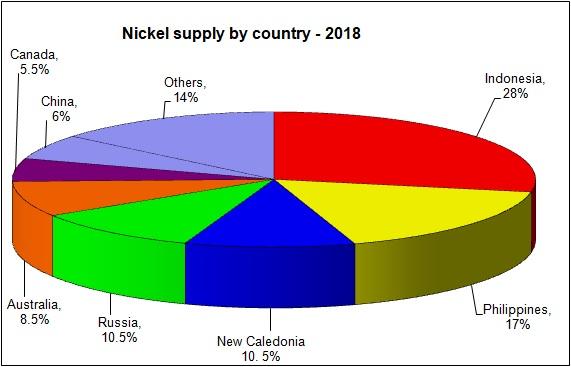
  • Indonesia currently accounts for about 27-28% of global nickel ore supply.
  • Other sources of nickel supply appear somewhat constrained, while demand for nickel looks strong, especially boosted by EVs.

Nov. 5, 2019

By: Matt Bohlsen

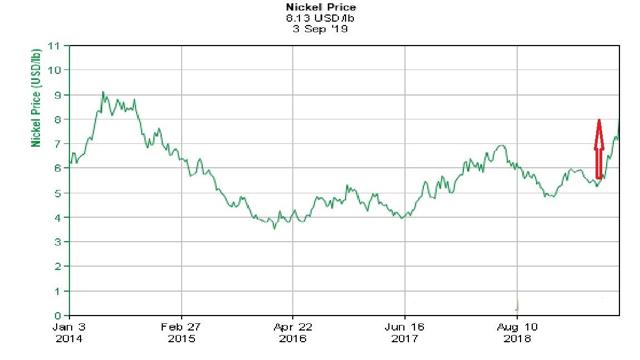
Indonesia has declared that they will ban nickel ore exports as of January 1st, 2020 (previously scheduled for 2022). However, on Monday, September 2, 2019, Indonesia’s Energy and Mineral Resources Ministry confirmed plans to move the ban up and place it ahead of schedule. Indonesia currently accounts for about 27-28% of global nickel ore supply. Nickel prices surged higher on the news.

Source: InfoMine

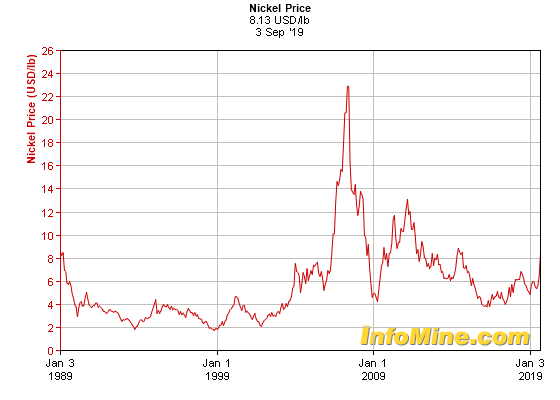
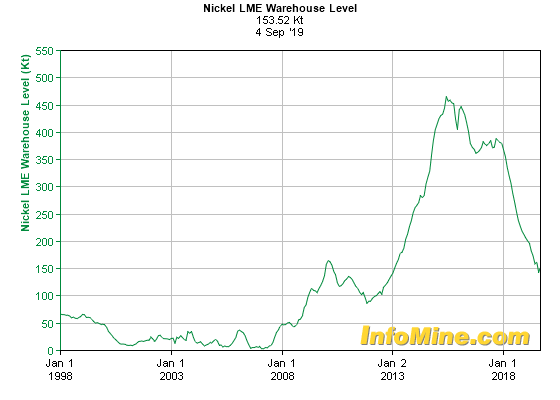
The 2007/08 nickel spike coincided with record low LME nickel inventory levels (see chart below) and a China construction boom. Today, LME nickel inventory is at 153,000 tonnes and has been falling steadily for some time now. The Indonesia export ban could easily send nickel inventories back below 50,000 tonnes in 2020 and cause another huge nickel price spike.

Nickel 30-year price chart

Source: InfoMine

LME nickel inventory levels are heading to lows not seen in a decade

Source: InfoMine

Indonesia’s Coal and Minerals Director General Bambang Gatot Ariyono stated: “The government decided, after weighing all the pros and cons, that we want to expedite smelter building. So we took the initiative to stop exports of nickel ores of all quality.”

Indonesia will soon have 36 smelters, and if exports were to continue, there would have been only enough reserves for seven to eight years. These smelters can process low-grade nickel ores and they can be used for batteries to help Indonesia meet its electric-vehicle goals. Bambang continued: “We already exported 38 million tons up until July this year. At this rate, we would need to think about our reserves especially if we keep issuing exports permits.”

Put simply, Indonesia has long wanted to encourage investments within Indonesia that can value-add to their nickel ore. The end game would be for Indonesia to be able to produce their own finished nickel, stainless steel, and lithium-ion batteries (NMC batteries require plenty of nickel).

Last month Reuters reported:

“Indonesia currently has 13 operating nickel smelters with input capacity of 24.52 million tonnes. Government data showed that 22 more nickel miners are currently under development with additional capacity of 46.33 million tonnes. Lengkey said the installed capacity will not be enough to process the country’s ore output.”

Nickel supply by country

Source: Own chart with data sourced from Investing News

Other sources of nickel supply

The Philippines is the number two global nickel supplier. No doubt Philippine nickel miners will try to boost ore production next year when the Indonesia export ban kicks in. The Philippines has 29 nickel mines and two nickel processing plants. However, strict environmental law changes in the Philippines in recent years have reduced their nickel supply. Also, it is said that many Chinese buyers prefer higher-grade ores from Indonesia. Current Philippine nickel ore production has dropped to about 340,000 tonnes in 2018 due to the closure of 23 mines as the government seeks to curb environmental damage from mines in the Philippines.

Perhaps the boost will come from New Caledonia, Russia, Australia, Canada, China and some contributions from the new Indonesian smelters. But will this be enough?

Overall, it appears for now that very large new sources of nickel supply appear somewhat constrained, especially given the Philippines recent focus on environmental protection and nickel mine closures.

Nickel demand looks set to increase boosted by electric vehicles

All experts agree that demand for nickel sulphate is set to go through the roof as electric vehicles [EVs] take off. Fastmarkets stated last year:

“Demand for nickel in the EV space is expected to total 36,000 tonnes in 2018… That figure is expected to surge to 350,000-500,000 tonnes by 2025.”

That’s more than a tenfold increase, in just 7 years. Wow!

The best source of nickel sulphate will come from the nickel sulphide miners.

No doubt new sources of nickel will start to fill the supply gap that Indonesia will leave, but this takes time. Indonesia will also step up their processing of ores, but this will take several years to raise capital and then build out the processing plants. Many companies that halted nickel sales due to the recent bear market years for base metals will start to come back online, as will new nickel projects assuming the nickel price stays strong. Will we see nickel over USD 10/lb in 2020? Yes, I would say this is very possible, as with most severe supply disruptions, the industry usually takes a couple of years to catch up.

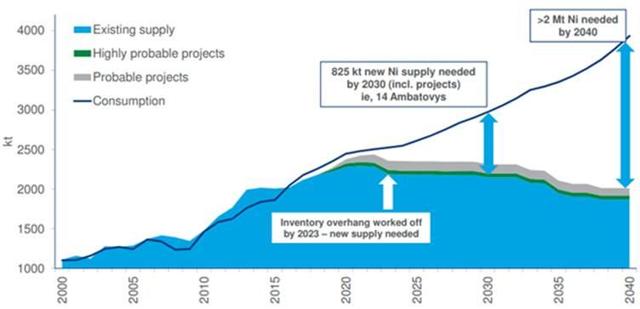
The chart below shows nickel is forecast to be in deficit after ~2020-2022 (and this was before factoring in the Indonesia ban).

Source: Wood Mackenzie

Nickel Companies to consider

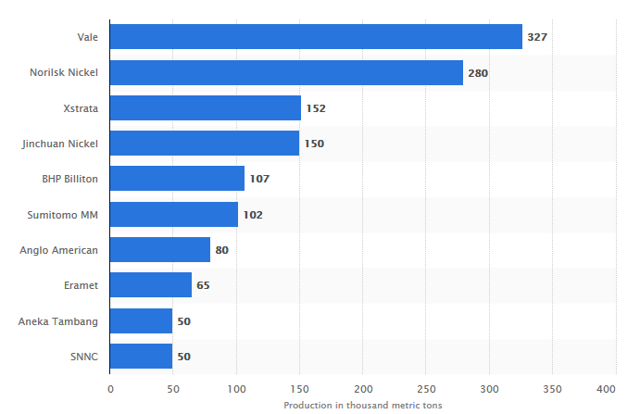
The top global nickel producers by nickel production volume are Vale [BZ: VALE3](NYSE:VALE), Norilsk Nickel [LSX: MNOD] (OTCPK:NILSY), Jinchuan International Group Resources [HK:2362], Glencore (OTCPK:GLCNF)[LSX:GLEN], and BHP Group [ASX:BHP] (NYSE:BHP). Good smaller producers include Independence Group [ASX:IGO] (OTC:IIDDY) and Western Areas [ASX:WSA](OTCPK:WNARF). Some top nickel developers with very large resources include RNC Minerals [TSX:RNX] (OTCQX:RNKLF), Ardea Resources [ASX:ARL] (OTCPK:ARRRF), and Australian Mines [ASX:AUZ].

Rather than repeat information from my other recent nickel articles here, I refer to the further reading section below that gives plenty of company information.

Forecast leading companies based on finished nickel production worldwide in 2020 (in 1,000 metric tons)

Source: Statista

Note: Glencore took over Xstrata’s nickel assets.

Risks

  • A China or global slowdown could reduce demand for nickel. China and the stainless steel industry are by far the largest consumers of nickel.
  • Nickel prices falling. Indonesia may reverse their decision, or other countries may bring on excess new supply. Also, the new Indonesian smelters once running will be a new source of nickel supply from Indonesian nickel ore. Noting Indonesia already has 13 operating smelters.

Further Reading

Conclusion

This article is for the purpose of alerting Trend Investing members that the nickel boom may have just begun. Certainly all the signs are there.

The further reading section above gives plenty of good information on the better nickel plays. My standout nickel miner continues to be Norilsk Nickel due to their massive (sulphide) resources, very low cost of production when taking into account by-products (palladium, copper), low valuation (2020 PE of 8.3), and high dividend yield (2020 estimate 10.9%). Vale offers some attraction right now after recent price falls, but is mostly an iron ore miner. My top nickel developers are RNC Minerals, Ardea Resources, and Australian Mines.

Source: https://seekingalpha.com/article/4302579-nickel-hot-right-now-nickel-boom-may-just-begun

NORTHBUD $NBUD.ca – #Cannabis Canada: #Pot industry added nearly $8B to #GDP in August, #StatsCan says $CGC $ACB $APH $CRON.ca $HEXO.ca $TRST.ca $OGI.ca

Posted by AGORACOM-JC at 4:31 PM on Tuesday, November 5th, 2019

SPONSOR: NORTHBUD (NBUD:CSE) Sustainable low cost, high quality cannabinoid production and procurement focusing on both bio-pharmaceutical development and Cannabinoid Infused Products. Learn More.

NBUD: CSE
—————————–

Cannabis Canada: Pot industry added nearly $8B to GDP in August, StatsCan says

Cannabis sales in Canada expected to double next year to $3.16B: analyst 

Canaccord Genuity cannabis analyst Matt Bottomley expects revenue in Canada’s legal pot sector to more than double next year despite slower-than-expected growth. Bottomley said in a research note to clients that Canada’s cannabis industry should expect $3.16 billion in revenue in 2020, up from the $1.46 billion forecast for 2019. He added Canada’s cannabis retail figures should see a five per cent reduction in overall sales in September from the prior month to $121 million, but said subsequent growth should advance at a five-per-cent monthly clip. Bottomley expects growth in the recreational market to increase by just 7.5 per cent in 2020. Alongside its latest estimates for the Canadian cannabis industry, Canaccord’s analysts have revised sales projections for some of the country’s largest licensed producers such as Canopy Growth, Aphria and Aurora Cannabis.

BRNT secures multiyear white label deal with Valens GroWorks for 2.2M vape pens

BRNT Group, a company which has made its name making high-end cannabis accessories, is getting into the vape game. The company announced on Thursday a partnership with Valens GroWorks to produce a minimum of 2.2 million vape pens over the next two years. The deal, which is believed to be one of the largest publicly announced multi-year white label agreements, is expected to generate over $50-million in gross revenue for Valens, according to a statement released by both companies. The vape devices are expected to be available in select markets starting in the first quarter of next year and roll out across Canada later in the year.

Canadian pot producer hires helicopter to avoid possible frost on outdoor grow

Looking for a novel way to ensure your outdoor crop won’t be impacted by frost? Give your local helicopter pilot a call. That’s what 48North did, according to an Instagram post published by Devin Piche, the company’s master grower. A helicopter is able to float above an agricultural crop and essentially suck up cold air upward away from plants which could be damaged by a potential frost. “The helicopter was used to move warm air in a temperature inversion down into the crop area to keep the temperature above freezing,” according to Connor Whitworth, a 48North spokesperson. The cannabis producer is harvesting the remaining cannabis plants it is growing in its Good:Farm facility. Whitworth declined to further comment on 48North’s outdoor harvest, which it has previously stated expects to yield 40,000 kilograms of cannabis.

Alberta eyes 500 pot shops by 2021, no consumption lounges planned: regulatory official

Alberta is already the country’s market leader in the pot retail space – and it looks like it could get even larger.  Alberta Gaming, Liquor and Cannabis expects its store count to grow to over 500 within two years, according to the Calgary Herald, citing an official with the provincial regulator. The regulator has already green lit 306 retail outlets across the province, a number that will likely grow by 200 by 2021. However, cannabis consumption lounges don’t appear yet to be coming out anytime soon and would require legislative approval to establish those types of facilities, the official said.

Canada’s cannabis industry contributed nearly $8B to GDP in August: StatsCan

Canada’s cannabis sector – both the legal and illegal market – contributed $7.92 billion to the country’s gross domestic product in August, a figure that continues to grow from the $7.02 billion last October when recreational cannabis was legalized and above the revised $7.79 billion mark made in July, according to new data published by Statistics Canada on Thursday. The StatsCan figures also show Canada’s legal cannabis industry has grown by 116 per cent in the first 11 months since recreational marijuana was legalized. The black market’s cannabis output has fallen by 22 per cent in that same time, according to StatsCan estimates.

Source: https://www.bnnbloomberg.ca/cannabis-canada-pot-industry-added-nearly-8b-to-gdp-in-august-statscan-says-1.1341044

New Age Metals $NAM.ca – The #Lithium Even #ElonMusk Couldn’t Buy $LIC.ca $LIX.ca $LI.ca $ELR.ca $ATL.ca

Posted by AGORACOM-JC at 1:36 PM on Tuesday, November 5th, 2019

SPONSOR: New Age Metals Inc. The company’s Lithium Division has already made significant acquisitions in Canada and the USA. The company also owns one of North America’s largest primary platinum group metals deposit in Sudbury, Canada. Updated NI 43-101 Mineral Resource Estimate 2,867,000 PdEq Measured and Indicated Ounces, with an additional 1,059,000 PdEq Ounces in the Inferred. Learn More.

The Lithium Even Elon Couldn’t Buy

  • Bloomberg NEF forecasts global demand for lithium will double by 2025 to about 800,000 tons. Electric vehicle batteries will make up the lion’s share of that demand, followed by consumer electronics and energy storage.
  • With this booming demand, the U.S. is desperate to dominate the lithium production market.

By Jon LeSage 

Demand for lithium will be booming over the next few years, and the US wants to increase its share in the global market for the metal used in electric vehicle and cell phone batteries, energy storage, and consumer products.

Bloomberg NEF forecasts global demand for lithium will double by 2025 to about 800,000 tons. Electric vehicle batteries will make up the lion’s share of that demand, followed by consumer electronics and energy storage. With this booming demand, the U.S. is desperate to dominate the lithium production market.

San Diego-based company EnergySource is taking on this challenge by bringing a new lithium extraction technique to market that can reduce lithium costs when compared to importing the metal from a small number of global markets capable of keeping the cost high. It also taps into a specific lithium supply that companies have been trying to access for decades.

This supply is nested beneath geothermal power plants that have been operating next to one of the world’s geothermal hot spots — the Salton Sea in the California desert, where the plants have been operating since the 1980s. It’s such a hot market that, not long ago, Tesla chief Elon Musk made a bid on a competitor — Simbol Materials — for $325 million. The company went bust shortly after and Tesla and its competitors have had to wait for another supplier from the rare metal market.

Major lithium projects underway in the US include Piedmont Lithium’s hard rock lithium project in North Carolina; Standard Lithium’s Arkansas Smackover lithium brine project; and Lithium Americas’ Thacker Pass lithium claystone project in Nevada. In addition, output last year came from a Nevada-based brine operation, most likely in the Clayton Valley, which hosts Albemarle’s Silver Peak mine.

The actual production in the US can only be estimated, with top lithium producers in the US choosing to withhold production numbers from Investment News to avoid disclosing proprietary company data. The US is one of the nine largest lithium producers in the world, with Australia, Chile, China, and Argentina leading the global industry.

It was the focus of a May conference in Washington featuring speakers from Tesla, the US Dept. of State and Dept. of Energy, as well as Standard Lithium Ltd. and other companies working to develop U.S. lithium mines.

Tesla, Volkswagen, other carmakers, and battery manufacturers are expanding their EV and lithium-ion battery output. They’re frustrated with being reliant on mineral imports without a major push to develop more domestic mines and processing facilities.

US Senator Lisa Murkowski, the Alaska Republican who is chair of the Senate’s Energy and Natural Resources Committee, said at the May conference that she would be introducing the American Mineral Security Act with Senator Joe Manchin, a West Virginia Democrat. The legislation was written to streamline regulation and permitting requirements for the development of mines for lithium, graphite, and other EV supply chain minerals. The senators see it as part of a plan to offset China’s dominance in the space. 

“Our challenge is still a failure to understand the vulnerability we are in as a nation when it comes to reliance on others for our minerals,” Murkowski said.

The Senate’s Committee on Energy and Natural Resources is looking at an amended version of the American Mineral Security Act. A similar version of the bill is now being considered in the House of Representatives.

Making electric vehicles has been costly mainly due to the battery packs and the precious lithium used in nearly all of them. Solid-state batteries and other options for EV batteries are being developed, yet lithium is expected to dominate the EV battery space for years. Harvesting that metal inside the US is expected to be a stepping stone to compete with the huge Chinese EV market.

While U.S. lithium production is slowly ramping up, breakthroughs like exploiting the Salton Sea could end up being a game-changer for the industry. The energy division of Berkshire Hathaway has been working with the US Dept. of Energy to resolve the challenges that have blocked lithium extraction at the Salton Sea, and one day soon we may see a true American lithium revolution.

Source: https://oilprice.com/Energy/Energy-General/The-Lithium-Even-Elon-Couldnt-Buy.html

Empower Clinics $CBDT.ca Is Laser Focused On The U.S. #CBD Opportunity $WEED.ca $CGC $ACB $APH $CRON.ca $HEXO.ca $OGI.ca $FAF.ca

Posted by AGORACOM-JC at 11:41 AM on Tuesday, November 5th, 2019

Empower Clinics Is Laser Focused On The U.S. CBD Opportunity

  • A leading owner/operator of physician staffed health and pain management clinics.
  • Patient database of over 165,000 patients 
  • Platform generating $4MM USD in revenue annually (2019)
  • Proprietary technology platforms including Electronic Health Records portal and e-Commerce for CBD product distribution
  • Launching CBD extraction facility
  • First extraction system capacity = 6,000 Kg per year.
  • CBD based products are poised to be a $20B global industry by 2022
  • Medical cannabis is poised to be a $100B global industry by 2025

By Anthony Varrell

The last few months have been difficult for the cannabis sector and the recent decline has caught the attention of new capital. Over the last few months, we attended several conferences and met with new venture and private equity funds that are taking a hard look at the cannabis sector following the recent pullback.

Following our meeting with these funds, we became increasingly excited about how the sector will perform during 2020. During the final quarter of the year, we expect to see more tax loss selling and this is a trend to be monitoring. On average, we have seen a drastic improvement from a fundamental standpoint when analyzing companies that are focused on the cannabis sector. This is a trend that we expect to continue on a going forward basis and believe the recent weakness has created opportunity.

The US represents one of the most exciting cannabis markets and we have noticed a significant increase in the amount of interest in this burgeoning market. Over the next year, we expect to see further interest in the US market and expect deregulation to be a catalyst for the businesses that are levered to this opportunity.

During the last month, we have been highly focused on the US cannabis market and have been working to identify companies with specific criteria. When analyzing these cannabis businesses, we are looking for companies that are: 1) led by a management team that is focused on execution and creating value for shareholders; 2) have visible growth prospects and substantial potential catalysts for growth; 3) are attractively valued or misunderstood by the market; and 4) that are levered to states with burgeoning cannabis markets.

One company that we believe that meets this criteria is Empower Clinics (CBDT.CN) (EPWCF) and today, we have issued on the US cannabis business. The company has substantial growth prospects, a diverse business model, and represents a multi-faceted growth opportunity. Over the next year, Empower is expected to report strong revenue growth as the management team continues to execute on its expansion and advance the franchise model aspect of the business.

Growing Through Strategic Partnerships

One of the reasons we are excited about Empower is due the focus on securing strategic partners to support growth. From a resource’s standpoint, the company has been able to expand into markets that are both efficient and effective. Going forward, we expect to see Empower benefit from the relationships that it has formed and believe that the market underappreciates this aspect of the story.

A few weeks ago, Empower announced a major milestone and entered into a letter of intent to form a joint venture with Heritage Cannabis Holdings (CANN.CN) for the extraction of hemp for CBD oil production, and formulated CBD products. The joint venture will be owned 50/50 by each company and we are bullish on the growth prospects associated with this initiative.

Heritage, via its wholly owned subsidiary Purefarma Solutions, will install extraction units and related downstream extraction equipment inside Empower’s existing 5,000 sq. ft. licensed hemp processing facility. Purefarma will also train and supervise the staff on the proprietary methods of extraction and oil production that it produces in Canada.

We are favorable on the expertise that each company brings to the joint venture and expect this to play a key role in the success of the operation. Going forward, the joint venture plans to secure high quality hemp supply from local growers as construction is completed on the facility. Once operational, the joint venture will start producing proprietary branded products for Empower’s corporately owned physician staffed health clinics in Washington State, Oregon, Nevada, and Arizona.

Highly Focused on the US CBD Market

Another attractive aspect of the Empower story is related to the hemp-derived CBD extraction facility in Oregon. The company is in the process of constructing a facility equipped with a state-of-the-art extraction system (expected to produce approx. 6,000 kg of extracted product per year) and this should prove to be a major revenue driver in 2020.

Empower has commenced the process to access the more than 1,300 licensed hemp farmers in Oregon and we are favorable on this. These cultivators are known to produce some of the highest quality hemp bio-mass in the US and we find this be significant. Quality of products has become very important following the issues over at Juul and we believe that the joint venture has done a great job by focusing of safety and consistency.

From a distribution standpoint, the footprint that Empower has throughout the US will play a key role in the success of the CBD business. Through Sun Valley Health, a subsidiary of Empower, the company has access to more than 165,000 patients. Through company owned and franchised cannabis clinics, Empower will be able to market to large potential customer base that is clearly open to cannabis.

Empower recently launched an e-commerce platform to sell company branded hemp-derived CBD based products as well as premium health and wellness supplements. Over the next year, we expect to see the company’s CBD product line gain traction within its clinic network and will monitor this aspect of the story.

An Opportunity that is Flying Under the Radar

Over the next year, we expect to see Empower benefit from having a multi-faceted growth model and additional revenue streams. Going forward, we are most excited about the growth prospects associated with the CBD market and the clinic franchise opportunity. Empower has visible growth prospects and we expect 2020 to be a banner year for the business.

One of the most significant developments of 2019 for Empower was the change in the management team. We believe that the transition has been smooth and are favorable on the verticals that the new leadership team has the business focused on. We believe that the new management team better understands how to utilize its assets to capitalize on the cannabis industry and find this to be significant.

During the last year, Empower has transitioned from being only focused on cannabis clinics to being a multi-faceted growth story with leverage to the CBD market. We believe that the CBD opportunity represents low hanging fruit for the company and this is primarily due to the relationships it has with consumers through the clinics.

Source: https://technical420.com/cannabis-article/empower-clinics-is-laser-focused-on-the-u-s-cbd-opportunity/#

CardioComm Solutions $EKG.ca – #Wearable Devices Useful for Predicting Patient Health Outcomes #Mhealth $ATE.ca $TLT.ca $OGI.ca $ACST.ca $IPA.ca

Posted by AGORACOM-JC at 10:11 AM on Tuesday, November 5th, 2019

SPONSOR: CardioComm Solutions (EKG: TSX-V) – The heartbeat of cardiovascular medicine and telemedicine. Patented systems enable medical professionals, patients, and other healthcare professionals, clinics, hospitals and call centres to access and manage patient information in a secure and reliable environment.

EKG: TSX-V
———————-

Wearable Devices Useful for Predicting Patient Health Outcomes

Wearable devices and accelerometers can be used to estimate health status and death risks in older patients more accurately than other methods used by physicians, experts say.

Source: Thinkstock  

By Samantha McGrail

October 30, 2019 – Wearable devices and accelerometers worn like a watch, belt, or bracelet to track movement are a more reliable measure of physical activity and better for assessing five-year risk of death in older adults than more traditional methods, according to a new study by Johns Hopkins Medicine. Researchers say that an objective accounting of physical activity outperforms traditional predictors of mortality within five years, such as age, smoking, diabetes, alcohol use, or history of cancer or heart disease.

“We’ve been interested in studying physical activity and how accumulating it in spurts throughout the day could predict mortality because activity is a factor that can be changed, unlike age or genetics,” says Ciprian Crainicanu, PhD, professor of biostatistics at the Johns Hopkins Bloomberg School of Public Health, who is also a member of the research team. 

Using data from the National Health and Nutrition Examination Survey (NHANES) conducted by the Centers for Disease Control and Prevention (CDC), researchers looked at 33 predictors of five-year all-cause mortality, including 30 objective measures of physical activity, such as total activity, amount of time not moving, or amount of time doing moderate to vigorous activity. 

“People can overestimate on surveys how much and when they move, but wearable devices provide accurate data that cuts through bias and guesswork,” explained Jacek Urbanek, PhD, assistant professor of medicine at Johns Hopkins Medicine and a member of the research team. 

All 3,000 adult participants between 50 and 85 years old wore an accelerometer device at the hip for seven consecutive days to track physical activity. Individual data came from responses to demographic, socioeconomic, and health-related survey questions, along with information accessed from medical records and clinical laboratory test results. 

With a focus on fragmented activity, researchers also collected data for two-hour spans throughout the day, and their analysis showed that physical activity, or lack thereof, between noon and two in the afternoon was the highest predictor of mortality risk. 

“The most surprising finding was that a simple summary of measures of activity derived from a hip-worn accelerometer over a week outperformed well-established mortality risk factors such as age, cancer, diabetes and smoking,” says Ekaterina Smirnova, MS, PhD, assistant professor of biostatistics at Virginia Commonwealth University and the lead author on the paper. 

While gender proportion was even, men made up 51 percent, and 65 percent of the men died within five years of the study’s follow up efforts.

When comparing the data of those who died within five years and those who survived, researchers said they were able to correctly rank the mortality risk using accelerometers 30 percent more accurately than using information about smoking status, and 40 percent better than using information about whether a person suffered a stroke or had cancer. 

As a result, physicians feel confident that these devices could be used as fitness profiles to help patients change unhealthy behaviors, increase physical activity, and potentially extend healthy lifespan. However, using wearable technology it does not guarantee that one’s risk of mortality is going to be lower with more physical activity.

Consumer-grade mHealth wearables are finally beginning to make their mark in remote patient monitoring programs. 

For example, the extremely popular and user-friendly Fitbit tracker can be used in some RPM programs and also used to identify trends that call for clinical intervention.

A study done by the researchers at Cedars-Sinai Medical Center and UCLA in May of 2018 recruited 200 patients with ischemic heart disease (IHD) and had them wear Fitbit Charge 2 trackers for 90 days. 

The average number of steps recorded per day correlated with the patient’s self-reported overall health, physical function, fatigue, and the results that the study found. The findings suggested relationships between physical activity and health, as well as physical function. 

“Our study used a single device with high unity, which simplifies the task of remote monitoring for both researchers and patients,” the researchers reported. “The ability of the device to simultaneously record multiple variables such as heart rate and accelerometer data, also allowed us to more accurately determine the patient’s state, whether he/she is active, sedentary, asleep, or not currently using the device.” 

Because researchers were able to easily access activity data, clinicians monitoring these patients through their Fitbits can get a real-time glimpse of their health and physical function, enough to spot dangerous trends and intervene. 

Wearables to track patient health has a significant correlation, according to the evidence found in recent research.

“An accurate measure of physical activity is a more reliable way for doctors and patients to assess physical activity and intervene to increase it as a potential way to improve health,” noted Andrew Leroux, a PhD candidate at Johns Hopkins and co-author of the study report.

Source: https://mhealthintelligence.com/news/wearable-devices-useful-for-predicting-patient-health-outcomes

BetterU Education Corp. $BTRU.ca – #Gradeup Raises $7M To Expand Its Online Exam Prep Platform In #India #Edtech $ARCL $CPLA $BPI $FC.ca

Posted by AGORACOM-JC at 9:30 AM on Tuesday, November 5th, 2019
SPONSOR:  Betteru Education Corp. aims to provide access to quality education from around the world. The Company plans to bridge the prevailing gap in the education and job industry and enhance the lives of its prospective learners by developing an integrated ecosystem. Click here for more information.
BTRU: TSX-V

Gradeup Raises $7M To Expand Its Online Exam Prep Platform In India

  • Delhi-based EdTech startup Gradeup has raised $7 million A Series by Times Internet. The venture capital is the first and only external investor of Gradeup.
  • The online platform helps the students to prepare for most of the undergraduate and postgraduate exams in India with very engaging services.

by StartupWorld Staff         

Delhi-based EdTech startup Gradeup has raised $7 million A Series by Times Internet. The venture capital is the first and only external investor of Gradeup. The online platform helps the students to prepare for most of the undergraduate and postgraduate exams in India with very engaging services.

Founded in 2015 by Sanjeev Kumar, Shobhit Bhatnagar, and Vibhu Bhushan, Gradeup was only a platform to discuss exams in the beginning. Understanding the importance of making an all-in-one platform for competitive exams in India, the founders implemented several advancements in the startup. 

Currently, over 10 million aspirants are using the platform for various exam preps. The platform is useful in four ways. The primary function is to provide an opportunity for exam prep communities. The users can interact with other students who also prepare for the same. Besides, the expert guidance via live sessions improves the students’ potential. 

Students also get the opportunity to learn through daily mock tests. The question papers are designed in the latest form by exam experts. Students can also compare the answers, test ranks, and so on. Gradeup keeps the users updated with the latest exam announcements, as well. 

Gradeup has two Google’s Play Store applications: Gradeup: Exam Preparation App and NCERT Solutions, CBSE & State Board 6th-12th Class. If the former one covers the overall exam preps and solutions, the latter is exclusively for school students of 6th to 12th standards.

SSC, Banking, Railways, Teaching, JEE, GATE, NEET, UPSC, Defense, and State level exams are the major exams the platform focuses on. The fee of coaching depends on the duration and complexity of the exam. However, the price mostly ranges between Rs 5,000 ($70) and Rs 35,000 ($500).

Over 30 million people enroll for the competitive exams in India. The growing EdTech startups helped many students to crack the exams with the practical method of learning at an affordable fee. The sector is booming, along with the performance of students appearing exams. Aiming more students, Gradeup is planning to strengthen the services and extend the platform all over India.

Source: https://www.startupworld.com/news/gradeup-raised-7m-dollars/

PRIMO Nutraceuticals Inc. $PRMO.ca – Ask Our Experts: What’s The Big Deal About #CBD? $CROP.ca $VP.ca NF.ca $MCOA

Posted by AGORACOM-JC at 5:54 PM on Monday, November 4th, 2019

SPONSOR:  PRIMO NUTRACEUTICALS INC. (CSE: PRMO) (OTC: BUGVF) (FSE: 8BV) (DEU: 8BV) (MUN: 8BV) (STU: 8BV) provides strategic capital to the thriving cannabis cultivation sector through ownership and development of commercial real estate properties. The company also offers fully built out turnkey facilities equipped with state-of-the-art growing infrastructure to cannabis growers and processors. Click here for more info.

Ask Our Experts: What’s The Big Deal About CBD?

  • CBD is used by all types of consumers, purchasing CBD-infused products for a variety of reasons
  • A recent Gallup survey found that one in seven Americans report using CBD for a range of medical and therapeutic purposes

By New Frontier Data

Q: There is a lot of media coverage about CBD, and it seems to be appearing all over the place. Who is buying all the CBD products?

A: CBD stands for cannabidiol, the second-most popular among active ingredients of the cannabis sativa plant. Cannabis contains hundreds of cannabinoids, each of which presents unique qualities and potential benefits.

CBD is used by all types of consumers, purchasing CBD-infused products for a variety of reasons. A recent Gallup survey found that one in seven Americans report using CBD for a range of medical and therapeutic purposes.

With passage of the 2018 U.S. Farm Bill which federally legalized hemp for the first time since World War II, the market for hemp-derived CBD products has seen explosive growth. Mass-marketed, hemp-derived CBD products have found their way onto retail shelves everywhere from grocery stores, coffee shops, and cosmetics retailers to veterinarians’ offices and nutritional supplement shops nationwide.

That said, there remains confusion regarding to what extent CBD is legal. The DEA has asserted that only GW Pharmaceutical’s patented Epidiolex is legally permitted to incorporate CBD oil in products. Yet attorney Garrett Graff of Hoban Law Group, who specializes in cannabis law and is part of a group who brought an appeal against the DEA ruling, has challenged that.

“It’s our understanding that cannabinoids derived from industrial hemp so long as below the 0.3 percent THC threshold are, in fact, lawful pursuant to the farm bill under federal law,” Graff posited. Since the FDA has not approved any CBD products at all, “at this point, we simply agree to disagree, and those products remain on the marketplace,” he explained.

New Frontier Data is engaged in several ongoing CBD research projects examining the marketplace in the United States and globally, and expects to release several reports about CBD consumer behaviors, patterns of use, and engagement with the market. Among the first slated for release as part of New Frontier Data’s upcoming Cannabis Consumer Insight Series of white papers is Marijuana Consumers’ CBD Use, examining the preferences and behaviors of consumers already familiar with cannabis and cannabis-derived products.

Findings from the research indicate that nearly a third (30%) of cannabis consumers are using CBD products, or nearly twice the previously reported rate among the general population. Such consumers also tend to be women (57%), especially under the age of 35 (43%), consistent with much of the current marketing of CBD products as health and wellness brand targeted specifically to women consumers.

Other key insights from the report found that:

Cannabis consumers who purchase CBD-only products are high-retention customers: Among cannabis consumers who purchased a CBD product, the overwhelming majority (85%) indicated that they were likely to make additional CBD purchases within the next six months. The current market is at an inflection point for CBD brands, as consumers are enthusiastically purchasing and trying these products, but most likely have weak brand loyalty. Identifying core consumers and developing a unique brand identity in the CBD space is am imperative for success in the near term.

Understanding the specific cannabis consumers who are most interested in CBD will be key to capturing the most lucrative consumer segment: New Frontier Data has identified nine fundamental “Cannabis Consumer Archetypes“. Among those categorized cannabis consumers, it is the Modern Lifestylers, Medical Purists, and Functional Dependents who are most likely to have purchased a CBD product. However, as access to CBD products increases, it is expected that a broader base of consumers will integrate CBD into both their daily lives and as a complement to current cannabis use.

Source: https://www.benzinga.com/markets/cannabis/19/11/14717727/ask-our-experts-whats-the-big-deal-about-cbd

CLIENT FEATURE: Tartisan Nickel $TN.ca Kenbridge Property Hosts M&I Resource of 7.14 Million Tonnes of 0.62% Nickel + 0.33% Copper $ROX.ca $FF.ca $EDG.ca $AGL.ca $ANZ.ca

Posted by AGORACOM-JC at 4:04 PM on Monday, November 4th, 2019

Investment Highlights

  • Kenbridge property has a measured and indicated resource of 7.14 million tonnes at 0.62% nickel, 0.33% copper
  • 17.5 (21.8 fully diluted) percent equity stake in Eloro Resources and 2 percent NSR in their La Victoria property

Kenbridge Ni Project (ON, Canada)

  • Advanced  stage  deposit  remains open  in  three  directions,  is  equipped with a 623m  deep  shaft  and  has  never  been  mined. 
  • Preliminary  Economic Assessment completed and updated returned robust project 
    economics and operating costs including  a  NPV  of  C$253M  and  cash costs of US$3.47/lb of nickel net of  copper credits.
  • Plans for Kenbridge include updating PEA, advancing the project through to feasibility and exploring the open mineralization at depth

FULL DISCLOSURE: Tartisan Nickel Corp. is an advertising client of AGORA Internet Relations Corp.