Agoracom Blog Home

Author Archive

CLIENT FEATURE: Star Navigation $SNA.CA Real-Time Flight Tracking and Monitoring Technology

Posted by AGORACOM-JC at 10:52 AM on Monday, February 11th, 2019

RECENT HIGHLIGHTS

SIGNED A COOPERATION AGREEMENT FOR THE EMERGENCY MEDICAL SERVICES MARKETS

  • Will enable them to provide real-time monitoring of patients while in transit on the ground or in the air.
  • CHUSJ is one of the top 10 mother-child hospitals in the World, with over 3500 births a year.
  • Has over 1500 nurses, over 500 Doctors and over 200 researchers on staff.

COMPLETED SALE OF FIVE STAR-A.D.S SYSTEMS TO ALMASRIA UNIVERSAL AIRLINES

  • Announced that AlMasria Universal Airlines of Egypt has decided to proceed with the installation and activation of the STAR-A.D.S.® System across all five (5) of its current aircraft fleet, which includes A-320, A-321, A330 and B737 aircraft.

BOMBARDER JOINT RESEARCH AND DEVELOPMENT PROGRAM

  • Joint research and development program with Bombardier and other industrials and universities of Canada is progressing very positively.
  • The STAR-A.D.S. ® system which is at the heart of the program, after having been validated and extensively used by the aircraft manufacturer, has now been transferred to another flight test vehicle to complete the flight testing and the data collection.

EMERGENCY MEDICAL SERVICES APPLICATIONS

  • Star’s Land System Aided Medical Monitoring system for ground ambulance applications has undergone a series of demonstrations by a care organization in North America.
  • Its airborne parent system, the In-Flight System Aided Medical Monitoring system (STAR-ISAMM™â€), has now been demonstrated to several stakeholders of the commercial and civil air ambulance market.

CHECK OUT OUR RECENT INTERVIEW

FULL DISCLOSURE: Star Navigation Systems Group Ltd. is an advertising client of AGORA Internet Relations Corp.

This #AI Company Is the Future of #Gold Exploration $IDK.ca

Posted by AGORACOM-JC at 8:53 AM on Monday, February 11th, 2019

February 8, 2019

Press Release: U.S. Global Investors Announces Quarterly Results Webcast

By Frank Holmes
CEO and Chief Investment Officer
U.S. Global Investors

Gold mining is one of the very oldest human occupations. The earliest known underground gold mine, in what is now the country of Georgia, dates back at least 5,000 years, when people were just starting to develop written language.

Over the centuries, a number of innovations have emerged that disrupted and forever changed how we explore and mine for gold and other metals. Think dynamite, or the steam engine.

Lately, however, innovation has slowed. Mining companies are in cost-cutting mode, and many producers have favored generating short-term cash flow, often to the detriment of longer-term value. In last year’s “Tracking the Trends” report, Deloitte analysts observed that “miners from 50 years ago would find little has changed if they entered today’s mines, a situation that certainly doesn’t hold true in other industries.”


click to enlarge

Consider the earth-shattering change that’s taken place in oil and gas over the past two decades. Fracking and horizontal drilling have completely revolutionized how we extract resources from the ground, making hard-to-reach oil and natural gas accessible for the first time.

No equivalent technology exists in precious metals. Some companies are now using cutting-edge technology like blockchain to improve supply chain efficiency and transparency, but to date there’s no “gold fracking” method. As a result, metal ore grades are decreasing, and large-scale gold discoveries are becoming fewer and farther between.

One company thinks it has the formula to reverse this trend. I think it could be sitting on a gold mine, pun fully intended.

Meet Goldspot Discoveries

“Some people call it ‘peak gold,’ but I tend to think of it more as ‘peak discovery,’” says Denis Laviolette, the brains behind Goldspot Discoveries, a first-of-its-kind quant shop that aims to use artificial intelligence (AI) and machine learning to revolutionize the mineral exploration business.

A geologist by trade, Denis conceived of Goldspot while serving as a mining analyst with investment banking firm Pinetree Capital. His vision, as he described it to me, was to disrupt mineral exploration as profoundly as Amazon disrupted retail and Uber the taxi business.

“We have more data at our fingertips than ever before, yet new discoveries have been on the decline despite ever increasing exploration spending on data collection,” Denis continues. “We believe Goldpsot can change that. Harnessing a mountain’s worth of historic and current global mining data, AI can identify patterns necessary to fingerprint geophysical, geochemical, lithological and structural traits that correlate to mineralization. Advances in AI, cloud computing, open source algorithms, machine learning and other technologies have made it possible for us to aggregate all this data and accurately target where the best spots to explore are.”

Hence the name Goldspot—though I should point out that Denis considers the Montreal-based company “commodity agnostic,” meaning it collects and aggregates data for all metals, including base metals, not just gold.

Moneyball for Mining

Denis has the record to back up his extraordinary claims. In 2016, Goldspot took second place in the Integra Gold Rush Challenge, a competition with as many as 4,600 worldwide applicants. After consolidating more than 30 years of historical mining and exploration data into a 3D geological model, the company was able to identify several target zones with the highest potential for gold mineralization in Nevada’s Jerritt Canyon district, among several others.

Goldspot’s targeting approach was a complete success. New zones were discovered by AI, validating the company’s models of finding patterns in the data that humans alone couldn’t have seen.

The exercise stands as an example of what can be unlocked when machine learning is applied to geoscience.

“When I first entered the field, geologists were still using pen and paper, and I’m not even that old,” Denis says. “We were paying for all this data, but no one was really doing anything with it.”

Denis’ quant approach to discovery reminds me a lot of Billy Beane, the former general manager of the Oakland A’s and subject of the 2003 bestseller and 2011 film Moneyball. Beane was among the first in sports to pick players, many of them overlooked and undervalued, based on quantitative analysis. His strategy worked better than anyone anticipated.

Although the A’s had one of the lowest combined salaries in Major League Baseball—only the Washington Nationals and Tampa Bay Rays had lower salaries—the team finished the 2002 season first in the American League West.

Similarly, Goldspot seeks to help mining companies cut some of the costs and risks associated with discovering high-quality deposits—something it’s managed to do for a number of its clients and partners, including Hochschild Mining, McEwen Mining and Yamana Gold.

And speaking of teams, Denis has assembled an impressive roster of PhDs and experts in geology, physics, data science and other fields.

But Wait, There’s More…

The company, not yet three years old, does more than assist in exploration. It also invests in and acquires royalties from exploration companies, similar to the business model practiced by successful firms such as Franco-Nevada, Wheaton Precious Minerals, Royal Gold and others.>

The difference, though, is that Goldspot has developed an AI-powered screening platform to identify the very best and potentially most profitable investment opportunities.

For this, Goldspot has also received accolades. It was one of only five finalists in Goldcorp’s 2017 #DisruptMining challenge, for “revolutionizing the investment decision model by using the Goldspot Algorithm to stake acreage, acquire projects and royalties, and invest in public vehicles to create a portfolio of assets with the greatest reward to risk ratio.”

I’ll certainly have more to say about Goldspot in the coming weeks. For now, I’m excited to share with you that the company is scheduled to begin trading on the TSX Venture Exchange early next week. The future belongs to those that can mine data and harness the power of AI, and I’m convinced that what Denis and his partners have created fits that bill. Congratulations, and the best of luck to Denis Laviolette and Goldspot Discoveries!

#Esports Versus Traditional Sports, U.S. Versus China – Let the Games Begin $EGLX.ca $ATVI $TTWO $GAME $EPY.ca $TCEHF

Posted by AGORACOM-JC at 8:50 AM on Monday, February 11th, 2019
  • Total eSports revenues reached US $869 million in 2018 and are expected to surpass US$6 billion by 2028, according to Fact.MR.
  • NewZoo estimated the global eSports audience at 380 million for 2018, made up of 165 million Esports enthusiasts and 215 million occasional viewers.

POINT ROBERTS, Wash., Feb. 11, 2019 — Investorideas.com, a leading investor news resource covering gaming and eSports stocks issues a special edition of Play by Play looking at the explosive growth of the sector and how battles are playing out; eSports versus traditional sports and the U.S. versus China bid for leadership.

Total eSports revenues reached US $869 million in 2018 and are expected to surpass US$6 billion by 2028, according to Fact.MR.

NewZoo estimated the global eSports audience at 380 million for 2018, made up of 165 million Esports enthusiasts and 215 million occasional viewers. Meanwhile, Activate projects that by 2021 eSports will have more US viewers than all other professional sports leagues, with the exception of the NFL.

With all this money and viewership at stake, you can expect the big boys to enter the playing field; and yes they certainly have.  On July 2018, ESPN, Disney XD and Blizzard Entertainment, a division of Activision Blizzard (Nasdaq: ATVI), announced an exclusive multiyear agreement for live television coverage of the Overwatch League™, the world’s first major global city-based eSports league.

Seeing the future shift in sports and eSports, Robert Kraft of the New England Patriots, Jeff Wilpon of the New York Mets and the LA Rams’ Stan Kroenke invested heavily into their own franchises within Activision Blizzard’s Overwatch eSports league.

Overwatch franchise valuations are $60 million to $80 million, depending on country and city according to a Forbes article. Adding to its value, news hit on Friday that Coca-Cola signed a deal with Activision Blizzard Esports Leagues to become the official non-alcoholic beverage of Overwatch League and all other Overwatch properties. 

With North America as the largest eSports market in 2018, Enthusiast Gaming (TSXV: EGLX.V) (OTCQB: EGHIF), a gaming company building the world’s largest community of authentic gamers.  strategically announced yesterday that it opened a US-based office and hired a sales team to drive advertising sales and increase annual revenue.

According to the news, “The US-based sales team is based in San Francisco and will be responsible for leading North American sales. This expands the company’s current reach with a sales team in San Francisco, London, UK, and the corporate head office in Toronto. The company kicked off the opening of the sales office with a West Coast advertising roadshow, meeting with top gaming publishers, global brands, and media agencies.”

Undaunted by the fact that they are a smaller company, Enthusiast Gaming is building their network and has positioned themselves at the forefront of the market, led by Menashe Kestenbaum, Founder and CEO. The numbers speak for themselves, with a platform of more than 80 owned and affiliated websites reaching 75 million monthly visitors and 900 YouTube channels with an additional 50 million monthly visitors.

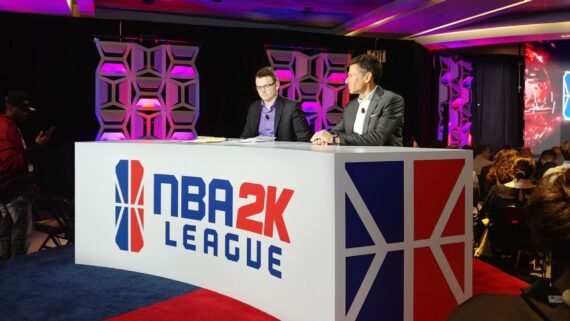
Other major deal flow in the US; Take-Two Interactive Software’s deal with the NBA and Electronic Arts Inc.’s partnerships with the NFL and ESPN. The massive streaming player growth on YouTube and Amazon is yet another indication this industry is not going away anytime soon. 

The China eSports market is second to the United States and according to Dragon Social: “Live streaming, combined with video games has become one of the most popular forms of entertainment for people in China.”

China-based Tencent Holdings Ltd (OTCMKTS: TCEHY) (HKG: 0700) is the biggest gaming company in the world, spending $150 million a year to maintain that dominance. Bloomberg noted, “Along with Activision Blizzard Inc., Tencent’s become one of the most aggressive promoters of pro-gaming. It’s hard to overstate the mania that’s gripped China in particular: at least 10,000 teams exist across the country despite just 12 spots in this year’s marquee King Pro League tournament.”

Streaming video player Huya (NYSE: HUYA) provides a live-streaming platform for gamers to share their experiences and has been dubbed, the ‘Twitch of China’ and says they are the largest in China. Reporting on its NYSE IPO, Forbes said, “HUYA is known for its sticky gaming community who engage in interactive social media features such as gifting and adding commentary during online streaming sessions.”

US company Twitch is a live streaming video platform bought by Amazon in 2014 for $970 million. Twitch viewers between Wednesday, 30th January and Tuesday, 5th February: lowest viewers 625,376 (Monday, 4th 09:00) and peak viewers 2,240,001 (Saturday, 2nd 19:00). 

It’s game on for the US versus China and eSports versus traditional sports. Let the games begin.

For investors following gaming & eSports stocks, Investor Ideas has created a directory of gaming stocks.

Read previous editions of Play by Play

About Investorideas.com – News that Inspires Big Investing Ideas
https://www.investorideas.com/About/

Social Media
Follow us on Twitter https://twitter.com/Investorideas
Follow us on Facebook https://www.facebook.com/Investorideas
Follow us on YouTube https://www.youtube.com/c/Investorideas

Get free news alerts

Disclaimer/Disclosure: Our site does not make recommendations for purchases or sale of stocks, services or products. Nothing on our sites should be construed as an offer or solicitation to buy or sell products or securities. All investment involves risk and possible loss of investment. This site is currently compensated for news publication and distribution, social media and marketing, content creation and more. Contact each company directly regarding content and press release questions. Disclosure is posted for each compensated news release, content published /created if required but otherwise the news was not compensated for and was published for the sole interest of our readers and followers. More disclaimer info: https://www.investorideas.com/About/Disclaimer.asp. Disclosure: this article is a paid for service on Investorideas.com. Learn more about costs and our services: https://www.investorideas.com/News-Upload/

Additional info regarding BC Residents and global Investors: Effective September 15 2008 – all BC investors should review all OTC and Pink sheet listed companies for adherence in new disclosure filings and filing appropriate documents with Sedar. Read for more info: https://www.bcsc.bc.ca/release.aspx?id=6894. Global investors must adhere to regulations of each country.
Investorideas.com privacy policy: https://www.investorideas.com/About/Private_Policy.asp

Contact Investorideas.com
800-665-0411

Esports Entertainment Group $GMBL – #Overwatch League to air on #ESPN, #Disney XD, #ABC $ATVI $TTWO $GAME $EPY.ca $TCEHF

Posted by AGORACOM-JC at 3:05 PM on Friday, February 8th, 2019
SPONSOR: Esports Entertainment $GMBL Esports audience is 350M, growing to 590M, Esports wagering is projected at $23 BILLION by 2020. The company has launched VIE.gg esports betting platform and has accelerated affiliate marketing agreements with 190 Esports teams. Click here for more information
GMBL: OTCQB

———————–

Overwatch League to air on ESPN, Disney XD, ABC

  • Overwatch League announced the broadcast schedule for Season 2, which begins Feb. 14.
  • Three matches per week will be broadcast on Disney XD: the final match each Thursday beginning at 11:30 p.m. ET along with the first two matches every Sunday at 3 p.m. and 4:30 p.m. ET.

All matches will be available on the ESPN app. Three matches per week will be broadcast on Disney XD: the final match each Thursday beginning at 11:30 p.m. ET along with the first two matches every Sunday at 3 p.m. and 4:30 p.m. ET.

The semifinals and finals for Stages 1 and 2 as well as the All-Star Game will air on ABC. ESPN2 will broadcast the Stage 3 finals, with the broadcast schedules for Homestand Weekends, season playoffs and the finals to be announced at a later date.

Season 2 of the OWL kicks off on Feb. 14 with the Philadelphia Fusion facing the London Spitfire in a rematch of the Grand Finals from the inaugural season.

Field Level Media

Source: http://www.espn.com/esports/story/_/page/overwatchseason2schedule/overwatch-league-air-espn-disney-xd-abc

Tartisan Nickel Corp. $TN.ca Appoints Chief Financial Officer $ROX.ca $FF.ca $EDG.ca $AGL.ca $ANZ.ca

Posted by AGORACOM-JC at 2:30 PM on Friday, February 8th, 2019

.

  • Announced the appointment of Mr. Aamer Siddiqui as Chief Financial Officer (CFO) of the Company.
  • Mr. Siddiqui is a Chartered Professional Accountant(CPA) and Chartered Accountant(CA), Chartered Professional Accountants of Canada.

TORONTO, ON / February 8, 2019 / Tartisan Nickel Corp. (CSE: TN, FSE: A2DPCM) (“Tartisan”, or the “Company”) is pleased to announce the appointment of Mr. Aamer Siddiqui as Chief Financial Officer (CFO) of the Company. Mr. Siddiqui is a Chartered Professional Accountant(CPA) and Chartered Accountant(CA), Chartered Professional Accountants of Canada.

Additionally, the Company reports that Tartisan Nickel has engaged Marrelli Support Services Inc. to provide accounting support services to the Company.

The Board of Directors of Tartisan Nickel would like to thank outgoing CFO, Mr. Dan Fuoco, for his support and efforts during his tenure and wish him well in his new endeavours.

About Tartisan Nickel Corp

The Company is a Canadian mineral exploration and development company which owns the Kenbridge Nickel-Copper- Cobalt project in Ontario, Canada. In addition, Tartisan owns a 100% stake in the Don Pancho Zinc-Manganese Project and a 100% stake in the Ichuna Copper-Silver Project, both located in Peru. Tartisan Nickel Corp also owns an equity stake (6 million shares and 3 million full warrants at 40c per share), in Eloro Resources Ltd. which is exploring the low-sulphidation epithermal La Victoria Gold/Silver Project, located in Ancash, Peru.

The Company also owns 1,750,000 common shares of VaniCom Resources Ltd. a private Australian exploration and development resource company.

Tartisan Nickel Corp. common shares are listed on the Canadian Securities Exchange (CSE: TN, FSE: A2DPCM). Currently, there are 99,703,550 shares outstanding (108,803,550 fully diluted).

For further information, please contact Mr. D. Mark Appleby, President & CEO and a Director of the Company, at 416-804-0280 ([email protected]). Additional information about Tartisan can be found at the Company’s website at www.tartisannickel.com or on SEDAR at www.sedar.com.

Jim Steel MBA P.Geo. is the Qualified Person under NI 43-101 and has read and approved the technical content of this News Release.

This news release may contain forward-looking statements including but not limited to comments regarding the timing and content of upcoming work programs, geological interpretations, receipt of property titles, potential mineral recovery processes, etc. Forward-looking statements address future events and conditions and therefore, involve inherent risks and uncertainties. Actual results may differ materially from those currently anticipated in such statements.

The Canadian Securities Exchange (operated by CNSX Markets Inc.) has neither approved nor disapproved of the contents of this press release.

SOURCE: Tartisan Nickel Corp.

Tartisan Nickel Corp. $TN.ca – #Megafactories buildout could up #nickel demand in batteries 19 fold—Benchmark

Posted by AGORACOM-JC at 1:21 PM on Friday, February 8th, 2019

SPONSOR: Tartisan Nickel (TN:CSE) The company’s Kenbridge Property has a measured and indicated resource of 7.14 million tonnes at 0.62% nickel, 0.33% copper. Tartisan also has interests in Peru, including a 20 percent equity stake in Eloro Resources and 2 percent NSR in their La Victoria property. Click her for more information

TN:CSE

———————

Megafactories buildout could up nickel demand in batteries 19 fold—Benchmark

  • Moores said that these megafactories are being built almost exclusively to make lithium ion battery cells using two chemistries: nickel-cobalt-manganese (NCM) and nickel-cobalt-aluminium (NCA)
  • “Under this scenario, lithium demand will increase by over eight times, graphite anode by over seven times, nickel by a massive 19 times

Amanda Stutt

It was encouraging for miners when Simon Moores, managing director, Benchmark Mineral Intelligence, testified before the U.S. Senate Committee on Energy and Natural Resources on Tuesday.

Moores was summoned by the Senate Committee to testify on the lithium, cobalt, nickel and graphite supply chains for energy storage.

“Benchmark Mineral Intelligence is now tracking 70 lithium ion battery megafactories under construction across four continents, 46 of which are based in China with only five currently planned for the US. When I gave my last testimony in October 2017, the global total was at 17,” Moores said.

Moores said that these megafactories are being built almost exclusively to make lithium ion battery cells using two chemistries: nickel-cobalt-manganese (NCM) and nickel-cobalt-aluminium (NCA).

“This means the supply of lithium, cobalt, nickel and manganese to produce the cathode for these cells, alongside graphite to produce battery anodes, needs to rapidly evolve for the 21st century,” Moores testified.

Moores presented a chart based on the assumption that all of these megafactories are built and run at 100% capacity utilization.

“Under this scenario, lithium demand will increase by over eight times, graphite anode by over seven times, nickel by a massive 19 times, and cobalt demand will rise four-fold, which takes into account the industry trend of reducing cobalt usage in a battery,” Moores testified.

Also on Tuesday, Benchmark Mineral Intelligence launched lithium carbonate and hydroxide price indexes, which draw from the data collected by analysts across 11 market prices. See more on price boosts here.

Moores’ full testimony is available here.  

Read more here. 

Enthusiast Gaming $EGLX.ca – Esports Playing in the Big Leagues Now $ATVI $TTWO $GAME $EPY.ca $TCEHF

Posted by AGORACOM-JC at 11:21 AM on Friday, February 8th, 2019

SPONSOR: Enthusiast Gaming Holdings Inc. (TSX-V: EGLX) Uniting gaming communities with 80 owned and affiliated websites, currently reaching over 75 million monthly visitors. The company partial 2018 reported revenue of $7.4 million representing a 625% increase over the same period in 2017.

Images
EGLX: TSX-V
———————————-

Esports Playing in the Big Leagues Now

  • In 2018, esports captured the attention of nearly 400 million viewers worldwide—and cable and OTT platforms took note, with media rights revenues topping $180 million.
  • Total esports revenues reached $869 million in 2018, and is forecast to more than triple by 2022, reaching $2.96 billion, according to an October 2018 report by Goldman Sachs.

By Lucy Koch

In 2018, esports captured the attention of nearly 400 million viewers worldwide—and cable and OTT platforms took note, with media rights revenues topping $180 million.

Total esports revenues reached $869 million in 2018, and is forecast to more than triple by 2022, reaching $2.96 billion, according to an October 2018 report by Goldman Sachs.

More modestly, a report from PwC (cited by the Goldman Sachs report) projected worldwide esports revenues of $1.58 billion by 2022—an 18.4% compounded annual growth rate.

Ad Revenue

According to PwC, esports revenues totaled $805 million in 2018, with the largest portion coming from sponsorships ($277 million), followed by media rights and streaming advertisements.

PwC estimated that over the next three to five years, media rights revenue would grow 11.5%—to roughly $449 million by 2022. That’s more than twice the growth rate of sponsorship and advertising, at 5.5%.

As audiences grow, so do expectations. Esports viewers want to be able to watch their favorite teams, players and tournaments on any screen, at any time—and this will push profitability.

Paul Verna, principal analyst at eMarketer, explains: “Marketers who try to reach esports fans through video ads will be able to tap into the sophisticated targeting and measurement capabilities that streaming services offer. In that sense, there’s more value to a marketer in attaching itself to game streams than sponsoring an event or team. It’s all about harnessing data.”

And there’s plenty of data to harness.

Esports Viewers

There were approximately 380 million esports viewers in 2018, and that’s expected to surge to roughly 557 million viewers by 2021, according to a report from Newzoo. Of those 557 million projected viewers, 307 million will identify as “occasional viewers” and 250 million will consider themselves “esports enthusiasts”.

Breaking Down Key Players

Occasional Viewers: People who watch professional esports content less than once a month.

Esports Enthusiasts: People who watch professional esports content more than once a month.

What’s more, Asia-Pacific leads the global esports market and is projected to capture the largest market share, with $1.5 billion by 2022, according to a study from Activate. Close behind, Europe and the US tie for second at $1.2 billion.

“The US is a natural growth opportunity for esports because of the strong gaming culture here, the ties between gaming and sports, and the country’s natural inclination toward competitive endeavors. The same is true of Western European markets, particularly the UK, Germany, and France,” Verna said.

Somewhat behind the curve due to the lack of fixed broadband, Latin America will account for just $100 million of esports market share by 2022. However, growth is expected in Brazil and Mexico, where esports is officially recognized as a sport.

What This Means for Marketers

With such expansive reach, it’s no surprise that marketers have taken note. According to Newzoo, global “brand investment revenues”—including advertising and scholarships—will nearly double from $694 million in 2018 to $1.39 billion by 2021.

But in today’s fast-paced society, it’s necessary to mirror esports’ form when it comes to implementing advertisements in that space.

Joshua Dyck, associate professor and co-director of the Center for Public Opinion at the University of Massachusetts, Lowell, says that people—teens specifically—can be receptive to esports marketing depending on execution. Dyck explains that “the important thing to look at is whether the ad slows down play performance. If the ad forces people to watch a 30-second spot, it will probably make them angry. Part of the enjoyment comes from the continuous play.”

Verna adds that the majority of the esports market is young and is “therefore less likely to be reached through traditional ad channels than an older TV audience,” saying that “sponsorships and endorsements are equally viable for marketers whose brands align with the target audience.”

Source: https://www.emarketer.com/content/esports-disrupts-digital-sports-streaming

Bougainville Ventures Inc $BOG.ca – #POT Ticker Generates Frenzy As WHO Softens Stance On Marijuana $CROP.ca $VP.ca NF.ca $MCOA

Posted by AGORACOM-JC at 10:12 AM on Friday, February 8th, 2019
SPONSOR:  Bougainville Ventures Inc (CSE: BOG) Converting irrigated farmland to greenhouse-equipped farmland. Bougainville does not “touch the plant” and only provides agricultural infrastructure as a landlord for licensed marijuana growers. Click here for more info.
BOG:CSE
—————————————

POT Ticker Generates Frenzy As WHO Softens Stance On Marijuana

  • Little illustrates the mania for cannabis investments better than the unprecedented demand over the stock symbol POT.
  • But new recommendations from the World Health Organization suggest some of that frenzy may not be unwarranted.

Tiny Vancouver-based cannabis company Weekend Unlimited saw its stock gain as much as 148% Feb. 1 after winning out over 40 other companies in the first-ever lottery for a stock ticker held by Canadian exchanges. Weekend Unlimited, which previously traded under YOLO, short for “you only live once,” wasn’t exactly lacking a memorable ticker before it won the POT ticker.

In a weird twist, the YOLO symbol may find new life in another pot-related security, as the AdvisorShares Pure Cannabis ETF has filed to trade on the New York Stock Exchange under YOLO.

In more serious news, the WHO is recommending that cannabis and its resin be removed from Schedule IV, the most restrictive category of a 1961 drug convention that governs international treaties. The WHO is also moving to clarify that CBD containing less than 0.2% THC is not under international control at all.

If adopted, these recommendations would recognize changing attitudes toward the drug and its medical properties, potentially encouraging fence-sitting politicians to speed up the pace of legalization. They could also be a “catalyst for Big Pharma to further assess the global medical cannabis opportunity,” according to BMO analyst Tamy Chen.

Advertising Challenges

“The treaty’s recommended cannabis rescheduling provides countries additional political cover to re-examine their current state on cannabis, given it serves as the regulatory framework for many,” writes Bloomberg Intelligence analyst Kenneth Shea.

The proposals will now go to the United Nations’ Commission on Narcotic Drugs, whose 53 member nations will have the chance to vote on them, likely in March.

POT hype and WHO recommendations aren’t making it any easier to advertise cannabis brands, at least not yet. Earlier this month, CBS declined to air a commercial touting the benefits of medical marijuana during the Super Bowl and Facebook (FB) has booted some pot sellers off Instagram, Bloomberg’s Craig Giammona reported last week.

The restrictions are even tighter in Canada, where nearly all forms of marketing and branding are prohibited.

Canadian Supply

The Canadian government reported that total cannabis sales in December were up 4% from the month before, a muted gain given that November sales marked a 42% decline in per-day recreational pot sales from October, when legalization took effect.

The fact that total inventory continues to grow, hitting nearly two months’ worth of dried pot and five months’ of cannabis oil at the end of December, indicates that Canada’s ongoing supply shortage is more a function of supply-chain problems than a lack of product, according to Eight Capital analyst Graeme Kreindler.

“The process of getting products from vault to shelf remains a key step in alleviating supply issues in the Canadian market,” Kreindler said.

Edibles Question

The ongoing shortages, whatever their root cause, have raised concerns among some in the industry that it won’t be ready to meet demand for edibles and concentrates, which were expected to join dried flower and oils on store shelves by October of this year. However, Justin Trudeau’s pot czar told Bloomberg’s Josh Wingrove last week that sales may lag regulations, citing the 17-week gap between the federal pot law passing last June and the formal market opening in October.

According to Keith Merker, CEO of WeedMD, “It’s classic cannabis industry stuff; you’re operating in this mist of uncertainty and trying to make business decisions that are appropriate.”

The lack of clarity isn’t deterring big U.S. funds from sniffing around the industry. Funds with $100 billion or more in assets under management are exploring lending to Canadian cannabis companies as a way to gain expertise in the burgeoning market ahead of potential legalization.

The idea is to provide first-lien loans, which are first to be repaid when a company fails, to mid-tier pot firms, according to Cormark Securities’ Alfred Avanessy. This would open up a whole new world of financing to the industry, which has largely relied on equity raises and convertible debt to date.

Source: https://www.investors.com/etfs-and-funds/etfs/pot-ticker-frenzy-who-marjijuana-stance/

ThreeD Capital Inc. $IDK.ca – #Ripple Adds 11 New University #Blockchain Research Initiative Partners To Fund Research And Education

Posted by AGORACOM-JC at 9:07 AM on Friday, February 8th, 2019

SPONSOR: ThreeD Capital Inc. (IDK:CSE) Led by legendary financier, Sheldon Inwentash, ThreeD is a Canadian-based venture capital firm that only invests in best of breed small-cap companies which are both defensible and mass scalable. More than just lip service, Inwentash has financed many of Canada’s biggest small-cap exits. Click Here For More Information.

Idk large
——————-

Ripple Adds 11 New University Blockchain Research Initiative Partners To Fund Research And Education

  • Ripple, one of the most mature companies in the blockchain space, is currently helping lead development for blockchain-focused academia and research
  • Blockchain based global settlements network launched its University Blockchain Research Initiative (UBRI) in June of last year to accelerate academic research, technical development and innovation in the blockchain, cryptocurrency and digital payments space

Rachel Wolfson Contributor 

Ripple, one of the most mature companies in the blockchain space, is currently helping lead development for blockchain-focused academia and research.

The blockchain based global settlements network launched its University Blockchain Research Initiative (UBRI) in June of last year to accelerate academic research, technical development and innovation in the blockchain, cryptocurrency and digital payments space. Ripple has committed over $50 million in funding, subject matter expertise and technical resources to UBRI’s first wave of university partners, which includes 17 prestigious institutions from around the world.

Announced today, Ripple has added 11 new universities to the UBRI program. The company is now supporting a total of 29 partners to accelerate academic research.

The new institutions include:

  • Carnegie Mellon University
  • Cornell University
  • Duke University
  • Georgetown University
  • University of Kansas
  • University of Michigan
  • Morgan State University
  • National University of Singapore
  • Northeastern University
  • University of Sao Paulo
  • Institute for Fintech Research, Tsinghua University

These programs, driven by the university partners, are poised to prepare the next generation of engineers, business leaders, entrepreneurs and other professionals to apply these technologies in practice. This should  increase positive awareness of the transformative impact that blockchain technology will have across all industries, while giving back to the community as part of an ongoing philanthropic effort.

We launched UBRI back in June of 2018 to provide support for 17 different universities around the world to help progress their study of blockchain technology, cryptography, digital assets and fintech. Blockchain is an incredibly transformational technology and helping advance the best minds in the world, who are already showing interest in this field, is sure to benefit the entire ecosystem. We’ve added 11 new universities this time around and now have 29 schools involved with the program. Expanding the ecosystem to a more global, diversified network of UBRI partners will only continue to enrich these projects,” said Eric van Miltenburg, SVP of Global Operations at Ripple.

Funding from Ripple’s UBRI program is intended to support a variety of efforts, across different educational sectors spanning from law, finance, engineering, business and other fields. The support aims to help universities develop curricula, expand or launch courses, host conferences and award scholarships to faculty and students pursuing work in blockchain, cryptocurrency, digital payments and related topics.

We are placing full faith in these universities, knowing that the students and faculty are the most capable individuals in the field. Therefore, it’s under their discretion to deploy the funds in ways they see fit to help advance the study of blockchain research. There are also a variety of factors that go into choosing which schools we partner with. We are working with institutions that have already shown an interest and commitment to blockchain. We want to help accelerate what is already a spark by turning that into a flame to help these schools move forward,” explained Miltenburg.

Fostering Innovation Through Academia

While Ripple’s UBRI program has only been up and running for less than a year, all of the partner institutions are already showing signs of progress, demonstrating Ripple’s goal to foster innovation in the broad blockchain space.

For example, the partnership with the University of California, Berkeley has resulted in cross-departmental collaboration, as several schools within the university expanded relevant course-offerings, funded research projects and supported student-led activities and events, including an upcoming blockchain UI/UX hackathon.

According to Laura Tyson, Faculty Director of the Institute for Business and Social Impact at the Haas School of Business at U.C. Berkeley, the university has awarded seven faculty research grants and eight research proposals from students through the UBRI program funding.

We are excited by the momentum that the Ripple UBRI Partnership has fostered at Berkeley Haas and throughout U.C. Berkeley in the development of blockchain, digital payments and cryptocurrency-related research and innovation, said Tyson.  In December, we awarded the first round of Ripple-funded faculty and student blockchain, digital payments and cryptocurrency-focused research grants. Also, we are sponsoring numerous student-led activities this semester, including partnering with Blockchain at Berkeley to host a blockchain/fintech industry Spring speaker series at Haas.”

The University of Texas at Austin is another institution that is part of Ripple’s UBRI program. According to Professor Cesare Fracassi who leads the UBRI presence at University of Texas at Austin and serves as the director of the university’s blockchain initiative, the funding from Ripple has allowed U.T. Austin to initiate three important objectives.

First, UBRI has allowed us to provide funding to faculty and Ph.D. students that are interested in researching blockchain technology. Secondly, it has let us increase our curriculum on blockchain, enabling students to learn more through specific classes. Finally, the funding has allowed us to conduct important research that lets us act as a connector for companies, journalists and others outside of the university that are interested in this sector. We are making progress in each of these objectives and have held several events to highlight the research done by our faculty on blockchain. Additionally, we have put out a call for proposals for people who need funding for blockchain-related research and have developed three classes focused entirely on this sector from both a technical and business perspective,” said Professor Fracassi.

From a student perspective, the UBRI program has helped greatly in terms of conducting professional research in this space.

“The donation provided through UBRI has allowed students at U.T. Austin to learn about blockchain technology at an accelerating rate. By funding initiatives such as the Texas Blockchain undergraduate group, graduate courses, and on-campus validators, I believe U.T. is quickly becoming a powerhouse in the blockchain space,” said Alan Orwick, a computer science student at U.T. Austin who also serves as the president of Texas Blockchain.

According to Miltenburg of Ripple, students in particular have benefited from this program, as the funding from UBRI has helped accelerate their research.

“One of the common themes across all the schools we’ve spoken with is that the demand coming from students far outweigh the ability for the faculty administration to meet that demand. There is no surprise that both the students and faculty at these schools are very excited about UBRI.”

At Duke University and Georgetown University, UBRI will support expanding curriculum and teaching, research and technical projects and collaboration across disciplines. Internationally, the University of Sao Paulo is receiving funding for a blockchain innovation program, which will serve as an interdisciplinary forum across its schools of engineering, law, mathematics and economics and business administration.

A Powerful Network Effect

In addition to the progress being made on campuses throughout the world, a powerful network effect has been created through UBRI that is not only spanning across specific college campuses, but also within each partner institution.

There is really a growing interest in blockchain, cryptocurrency and digital payment systems among the best students and faculty in the world. I think that this will continue to flourish, as there is a real interest in this broad space and the application of this technology to solve major social challenges. Moreover, the students and faculty conducting work in this area are creating a powerful network effect in terms of learning and research, both on the Berkeley campus and across the campuses that Ripple has funded. For example, people are now able to identify others working on something similar to what they are researching, which they might not have known otherwise. There is real opportunity here to foster innovation and forward leading research through this network effect,” explained Tyson from U.C. Berkeley.

Tyson believes the real question to consider now is how to ensure that this research continues. Fortunately, Ripple’s UBRI program appears to be the answer.

An individual company can only do so much. Yet the idea of taking funding and supporting a whole research network across universities spanning over five continents is a way to foster development that could be of great interest not only to Ripple, but also to the entire sector and the world, said Tyson. I really believe in Ripple’s message of advancing research to foster innovation for this very important set of new technologies. What a great mission.”

You can follow Rachel Wolfson on Twitter and LinkedIn to stay up to date on the latest cryptocurrency happenings.

Source: https://www.forbes.com/sites/rachelwolfson/2019/02/07/ripple-adds-11-new-university-blockchain-research-initiative-partners-to-fund-research-and-education/#7011459b6727

Good Life Networks $GOOD.ca – How #Blockchain Integration Will Evolve #Programmatic RTB for Smart TV $TTD $RUBI $AT.ca $TRMR $FUEL

Posted by AGORACOM-JC at 4:23 PM on Thursday, February 7th, 2019
SPONSOR: Good Life Networks (GOOD:TSX-V) Video advertising is the future! Company’s A.I. makes 80,000 calculations / second, targeting 750 million users to deliver higher prices and volume. Company announced combined trailing 12 month revenue at just over $40 Million, $7.9M EBITDA, $3 Million net income. Click here for more information.
GOOD: TSX-V

—————————

How Blockchain Integration Will Evolve Programmatic RTB for Smart TV

  • Programmatic RTB(Real-time bidding) is set to become a leading method for advertising on Smart TV.
  • The global Smart TV market, according to Grand View Research, was valued at $145 billion in 2017,
  • Is anticipated to grow at a CAGR of 9.5% during the forecast period and reach $292.55 billion by 2025.

Alex Bornyakov, founder of Adtelligent, talks about how the growth of blockchain will help in the transformation of programmatic advertising through RTB for Smart TV.

The programmatic advertising industry is rife with issues, including fraud, manipulation of data, low traffic quality, and lack of transparency of the bidding process. Despite these issues, programmatic RTB(Real-time bidding) is set to become a leading method for advertising on Smart TV. The global Smart TV market, according to Grand View Research, was valued at $145 billion in 2017, is anticipated to grow at a CAGR of 9.5% during the forecast period and reach $292.55 billion by 2025.

I, along with other leaders in the digital advertising space, believe that blockchain integration has the potential to satisfy the market demand for transparency and reinstate trust in programmatic advertising. This will be achieved by creating a new blockchain-based RTB protocol for Smart TV that propels industry growth, meets required thresholds for transaction speeds, and fights fraud through irrefutable smart contracts.

Big potential for industry growth

Programmatic and RTB have had a tremendous impact on the web, becoming the most popular and widely-used types of digital display advertising in the USA and the UK in 2015. In the US alone, $27.47 billion was spent on programmatic digital display advertising just last year.

Programmatic RTB for Smart TV has the potential to scale into an increasingly valuable ad channel. 32% of TV buyers today own Smart TVs, totalling 1 billion devices worldwide. Yet, this form of advertising has several new roadblocks when it comes to growth. One such example is the current low availability of premium inventory. Publishers today have to adapt quickly to the latest media buying trend if they want to remain on board.

Blockchain removes intermediaries, meaning that brands and content owners can directly transact with one another. Content owners, as a result, are faced with fewer restrictions and will be able to attract with smaller and niche brands of all shapes and sizes. Due to the nature of P2P transactions through blockchain and less funds going to middlemen, brands will have the opportunity to place targeted advertisements at lower costs than ever before. With all transactions recorded on an irrefutable ledger, blockchain ensures marketing budgets are used effectively, another compelling impetus to advertise and for industry growth.

A need for speed

One of the central issues with executing blockchain RTB for Smart TV today is transaction speed. A system does not yet exist that allows large enough volumes. This inhibits the potential for advertisers.

What’s needed is a new protocol that can handle sending sufficient volumes of data to the blockchain.. With transaction volumes up to speed, brands will be able to optimize their costs, better target clients, and choose the time and amount of advertising scrolling at suitable prices. In turn, enabling brands to not only pay for the number of scrolls, but also the displayed duration which cannot be done today. As an example, this approach would allow advertising at a time when a television is being viewed across many devices, increasing audience coverage and the overall effectiveness of advertising.

Enforcing safeguards to fight fraud

Trust is eroding in the ecosystem for a number of reasons. For one, ad fraud is alive and well across OTT channels, typically in the format of masking n techniques that go undetected. In fact, Pixalate, the first MRC accredited vendor of detecting and filtering invalid traffic in OTT, reported that global OTT fraud rates average 19% and that Marketers may lose $10 billion annually in OTT ad spend by 2020.

Due to the aforementioned issues, advertisers are demanding transparency from partners to ensure fair value. Blockchain integration would allow brands to control pricing and manipulation of data, ensure transparency of the bidding process, target users at the right time through access to user data via blockchain smart contracts.

Today, there are a few major players working to make RTB for Smart TV a reality.

In September 2017, The Interactive Advertising Bureau (IAB) Technology Lab announced version 3.0 of their OpenRTB framework which was, “evolving to handle new kinds of programmatic buying and selling, such as header bidding, content sales, product recommendations, Smart TV, or perhaps even products.” It was the biggest revision to the protocol in seven years and has recently been rolled out in beta, with mass adoption projected for 2019.

Such innovative types of the business models which combine B2B marketplaces and blockchain technology has created a new system that allows accumulating a large volume of events, and after that sends this data to blockchain in one package. In other words, it’s not necessary for B2B advertising marketplace to save each transaction from RTB to the blockchain due to the fact that customers of such type of platforms will use an independent verification accounting system that will be able to benefit from internal RTB. Not all data will be saved into blockchain, but only critical resulting events such as division of profits among participants.

Integrating blockchain technology into the RTB system for Smart TV shows promise for growth of the advertisement industry and the elimination of fraud and lack of transparency. By eliminating intermediaries and introducing smart contracts to the platform, brands large and small have more opportunity to be profitable and are granted access to accurate analytics and data.

Source; https://www.martechadvisor.com/articles/ads/how-blockchain-integration-will-evolve-programmatic-rtb-for-smart-tv/