Posted by AGORACOM
at 9:20 AM on Tuesday, December 31st, 2019
Cardston, Alberta–(December 31, 2019) – American Creek Resources
Ltd. (TSXV: AMK) (OTC Pink: ACKRF) (“American Creek”) (“the
Corporation”) is pleased to report that Canadian billionaire Eric Sprott
has invested an additional $2,900,000 in our JV partner Tudor Gold for
the upcoming 2020 drill program on Treaty Creek, located in the “Golden
Triangle” of Northwestern British Columbia.
The 2019 drilling at Treaty Creek was very successful and produced
some of the most significant gold intercepts in the exploration
industry. The focus has been on the gold enriched Goldstorm Zone which
is on trend with Seabridge Gold’s Iron Cap Zone located approximately
five kilometers to the southwest. Drilling was designed to define a gold
deposit with the potential of being open pit mined.
The Treaty Creek Project is a joint venture with Tudor Gold owning
3/5th and acting as project operator. American Creek and Teuton
Resources each have a 1/5th interest in the project. American Creek and
Teuton are both fully carried until such time as a Production Notice is
issued, at which time they are required to contribute their respective
20% share of development costs. Until such time, Tudor is required to
fund all exploration and development costs while both American Creek and
Teuton have “free rides”.
Darren Blaney, CEO of American Creek stated: “Mr. Sprott has now made
multiple significant investments in Tudor Gold in 2019 for the
development of the Treaty Creek property. On December 13, 2019 Mr.
Sprott stated: “Treaty Creek has a great shot at having 20 million
ounces, the holes are so deep, they have a thousand-meter holes that are
running close to a gram a ton and it’s wide open, so I’m very excited
about the opportunity there”. He continues to put his money where
his mouth is and has given another huge endorsement to the Treaty Creek
project with this latest significant injection of cash. He also made two
prior $1,000,000 investments in American Creek earlier in 2019.”
The Treaty Creek Project lies in the same hydrothermal system as
Pretium’s Brucejack mine and Seabridge’s KSM deposits however, the
Treaty Creek project has far better logistics.
On December 27, 2019 Sprotts “Weekly Roundup” show hosted Bob
Thompson, Senior Vice President of Raymond James in Vancouver who does
an excellent job at describing where we are on the “Mining Clock” along
with other valuable insights into the precious metals industry.
We highly recommend you take a few minutes to listen:
About American Creek
American Creek is a Canadian mineral exploration company with a
strong portfolio of gold and silver properties in British Columbia.
Three of those properties are located in the prolific “Golden Triangle”;
the Treaty Creek and Electrum joint venture projects with Tudor
Gold/Walter Storm as well as the 100% owned past producing Dunwell Mine.
The Corporation also holds the Gold Hill, Austruck-Bonanza, Ample
Goldmax, Silver Side, and Glitter King properties located in other
prospective areas of the province.
For further information please contact Kelvin Burton at: Phone: 403 752-4040 or Email: [email protected]. Information relating to the Corporation is available on its website at www.americancreek.com
Posted by AGORACOM-JC
at 5:29 PM on Monday, December 30th, 2019
Investment Highlights
Kenbridge property has a measured and indicated resource of 7.14 million tonnes at 0.62% nickel, 0.33% copper
17.5 (21.8 fully diluted) percent equity stake in Eloro Resources and 2 percent NSR in their La Victoria property
Kenbridge Ni Project (ON, Canada)
Advanced stage deposit remains open in three directions, is
equipped with a 623m deep shaft and has never been mined
Preliminary Economic Assessment completed and updated returned robust project economics and operating costs including a NPV of C$253M and cash costs of US$3.47/lb of nickel net of copper credits
Plans for Kenbridge include updating PEA,
advancing the project through to feasibility and exploring the open
mineralization at depth
Proprietary technology platforms including Electronic Health Records portal and e-Commerce for CBD product distribution
Recently launched CBD extraction facility
First extraction system capacity = 6,000 Kg per year.
CBD based products are poised to be a $20B global industry by 2022
Medical cannabis is poised to be a $100B global industry by 2025
CBD 2020 Outlook: How the Cannabidiol Forecast Looks in the New Decade
The 2020 outlook for CBD forecasts a beautiful and bright upside with a slight chance of raining on the cannabis oil craze parade
As 2019 made cannabidiol a household name, what will the new decade bring in terms of new cannabinoids CBG, CBN and THC-V discoveries, science and regulatory advancements
Cannabidiol, or CBD, won the supplement ingredient of the year by surpassing all other herbal extracts and products in the world in terms of popularity, demand and sales. The impressive rise of CBD cannabis oil extract has been quite an adventure in the past few years and seems to only have more upside in 2020 and beyond.
It was only a year ago now, where the 2018 Farm Bill was passed that
legalized hemp-derived cannabidiol and essentially opened the floodgates
to all kinds of oils, edible gummies and skincare
to name a few. And now, many are projecting the CBD use to continue to
grow in demand, projecting it to be a $22 billion dollar industry by
2022/2023.
The 2020 CBD forecast calls for a bright, sunny and green landscape
as the next few years are set to be highly lucrative and innovative for
the coveted cannabis oil substance. However, let’s focus on the smaller
scope of its industry and talk about the 2020 CBD outlook before we
attempt to paint a ten year prediction.
First, a recap of what happened in 2019, where the CBD craze in
America and the world really picked up momentum, and then a peak around
the corner as to what can happen in 2020 as science, commercial and
consumer interest intensifies across the globe as legal barriers come
down and studies reveal results.
Let’s paint a picture of where CBD is today and what the first year
of a new decade can bring to the emerging cannabis (hemp and marijuana)
markets.
Year 2019 – Strides in CBD
This year came with a lot of major changes for the CBD industry as it
rose to the top of the charts for being the most popular and sold
herbal ingredient. It was the first full year that hemp-based CBD was
legalized after the 2018 Farm Bill, which introduced a wild world of
controversies and other issues, though there have been many supporters
to make big changes. For instance, the legalization of CBD alone has
spurred substantial cannabis reform efforts.
In 2019, cannabis reform legislation was brought forth by 27 states for either recreation or medical use. Arizona was one of the most major states to push for these changes and will see legal recreational use on next year’s ballot. Florida joins Arizona in the efforts, though Mississippi
is amongst the few states that have still yet to legalize medical
marijuana, which could change with this year’s proposal. Other states included in this list are Nebraska, Idaho, New Jersey, Pennsylvania, and more.
Politically, many Democratic presidential hopefuls have discussed
legalization, but Bernie Sanders released a comprehensive plan that
would effectively legalize state and federal marijuana use, while
pushing for the expungement of marijuana-related convictions. The plan,
released in October, would take place within 100 days of taking the
presidential office, if Sanders were to be elected.
Lowell Farms was part of the substantial progress of 2019, launching
the first cannabis cafe to ever reach the US market. Located in California,
the new restaurant has been created to offer a safe public place to
cannabis users, while still offering an area for non-users of the
substance. While partaking, patrons can snack on a variety of infused
dishes, including everything from the grilled peach salad to a cold
beer.
Experts from Brightfield believe that this year will reach $5 billion
in the CBD industry for sales alone, increasing by over 2,500% since
2015. The growth that happened this year has been almost unbelievable
and, while 2019 may have come with a few bumps, there have been major
milestones reached by the new industry. But what’s next?
Year 2020 – What’s Coming for CBD?
The cannabis industry already saw a surge in the number of states
seeking legalization, so what might happen to them next? Since 1996,
medical use of cannabis has already been approved by 33 states, and a
third of those states pushed forward even further by legalizing
recreational use. Many huge votes will take place in 2020, and experts
at CBD Origin predict that several states will end up legalizing
recreational cannabis as a result of CBD’s influence – New York, New Mexico, New Jersey, Arizona, Idaho, and Arkansas.
While Florida is still gathering signatures for the Florida Marijuana
Legalization Initiative, it appears as though the efforts will fall
short, meaning that the proposal probably won’t even be on the ballot.
Missouri could end up on the ballot with enough signatures by May 3rd,
the support from local voters has not been strong enough to provide a
clear idea of which side they will choose. South Dakota, while it pushed
to add cannabis legalization to the ballot, fell short, as did Ohio.
The Effects of Regulation on Quality
Right now, there’s a substantial missing piece in the CBD industry –
regulation. Without regulation, many consumers are fearful of even
getting involved, since there are many companies that are publicly
dishonest with their business practices. As a result, there are only a
few brands that can even prove their product’s potency. Based on the
predictions of CBD Origin, it is likely that the public will aim to
learn more about CBD with its legalization, seeking out higher standards
and greater transparency from companies.
Along with the demand for lab tests to come with higher standards,
consumers will likely give more attention to terpenes and cannabinoids.
This information allows consumers to learn more about the products that
they choose, and a common theme throughout the CBD industry will likely
be the desire for quality products and honesty.
New Options and Less Vaping
As CBD blends become more diverse, and as the industry progresses,
the innovations in the market will likely lead to new options for
consuming CBD. Brands will be pushed to offer more value and benefits to
remain competitive, and additional markets will likely be developed to
push for this grown.
With these new options, especially as consumers seek to be excited
about these opportunities, prominent media outlets are predicting that
the strains available to consumers will likely see an extended “dessert
craze,†as products like Gushers and Runtz become more appealing flowers
than the savory flavors, like GMO Cookies. However, with this
opportunity, there’s a chance that CBD will be seen as more of a potent
medicine and wellness product, rather than a recreational option.
Basically, consumers will start to understand what is offered to them
more effectively.
Vaping became a big concern in 2019, and many industry experts and
authoritative publications don’t believe the heat is wearing off any
time soon. Multiple states have already implemented bans, regardless of
the use of cannabis or tobacco vaping products, which will probably push
users to choose edibles and natural options instead. The idea of a
clean and tamper-proof product will be in higher demand. While the FDA is expected to impose on the industry with new vaping regulations, it may still survive at a minuscule level.
Ethical Practices
The CBD market is still filled with a lot of “unknown†factors,
regarding what is actually in the products that consumers use. After
all, this industry is still very new, and the creation of proper
guidelines was rather difficult as the industry started to expand. There
were many brands that manage to have integrity in their work with
ethical business practices, but there are even more brands that directly
went the opposite direction.
Mark Case, the founder and CEO of the International Hemp Auction and
Market in Knoxville, Tennessee, makes a good point about the way that
the market has changed, warning,
“2020 is not a year for gamblers. Rather, it will be successful only
for those who are wise and prudent, fully integrated and who work with a
good business plan to go the long haul.â€
Unethical business practices will likely be more heavily criticized
and regulated through the next year, as consumers start to expect more
reliable lab testing and authentic lab reports with new regulations.
Consumers have educated themselves, and it will become harder to fool
that average CBD user.
CEO of Validcare, Patrick McCarthy, pointed out,
“The U.S. consumer is going to wake up to the fact that certification
and dosing matters. They’re going to get particular, where they’ve been
trying things in the past. They’re going to start really paying
attention to, what is the product I’m taking? How do I know that it’s
safe? How do I know how much that I should take, and who says it’s
safe?â€
Since the market is projected to be more effectively regulated, it
wouldn’t be a stretch to say that major brands and retailers will be
prepared to get involved. The market alone is set to reach over $25
billion by 2025, and companies like Walmart, Amazon, and Whole Foods will likely want a piece of the action.
Move Over CBD, Make Room for CBG, CBN and THC-V Cannabinoids
CBD became the cannabis industry’s global leader in recognition,
sales and popularity – but what about any of the 100 plus cannabinoids
found in marijuana and hemp plants? The new decade may lead with CBD as
the prized cannabis compound, but there are a few cousin cannabinoids
like CBN, CGB and THC-V which may follow CBD’s growth path.
As mentioned, with the passing of the Farm Bill last year and the
constant mention of cannabis in politics, pretty much everyone has
already heard of CBD by now. The non-intoxicating substance comes from
both hemp and cannabis, and it is touted as a solution to wellness,
pain, and a million other purposes. Even when its popularity and
niche-ness wears off, CBD will likely remain a staple of this industry,
just like THC. However, THC and CBD are two of over 100 cannabinoids
that presently exist in the cannabis plant, and others could easily line
up to offer benefits to the public, according to the latest science and
research.
CBG, or cannabigerol, is considered to be the “mother cannabinoid,â€
earning the nickname because nearly all other cannabinoids that are
presently known start with CBG as their preceding letters. Ultraviolet
(UV) light transforms a part of CBGA that then becomes CBCa, CBDA, or
THCA.
The creators of the various cannabinoids and cannabis strains haven’t
been very interested in maximizing this compound since its presence
inherently means that there is less THC. While cannabinoids largely have
the same properties, CBG seems to offer an elevated antibacterial,
antispasmodic, and vasodilation effect, which is why it is the first one
on this list to watch out for. While there’s a possibility that CBG
could take CBD’s place, it is equally likely that the two will be able
to coexist for their various purposes.
CBG has a unique ability to become something much different than its
natural state, according to some growers. Though THC is restricted by
the percentage it offers in a cannabis plant, CBG is not governed by the
same rules, and breeding a genotype with high CBG levels is relatively
easy, as is harvesting it. With the right synthase, making CBG into
multiple other cannabinoids is simple for producers.
CBN, or cannabinol, is another cannabinoid getting a lot of
attention. CBN comes from the degradation of THC-A, which happens as a
result of air and UV light exposure. Part of the reason that attention
has been on this cannabinoid has been for its ability to push users into
sleep, which is why old cannabis tends to make users tired. A dose of 5
mg of CBN was found to be as effective as a 10 mg dose of Diazepam in
making consumers fall asleep. Sleep concerns are among the most common
reasons for non-users to take up cannabis.
THC-V, or tetrahydrocannabivarin, may be currently popular, but it
was originally recognized in 1970 as “skinny weed,†since it helps to
reduce the user’s appetite. It suppresses the CB1 receptor, while THC
and CBG tend to stimulate the appetite. When used with the proper
timing, it can balance the effects of THC and improve insulin
resistance.
Unlike CBD, THC-V offers a clear and focused high with the right
dose, albeit short-lived. There’s very little research on the
cannabinoid, but the information available suggests that the dosage
seems to be the key to actually getting all of the effects that this
compound can offer. With a dose of 3 mg to each kilogram of body weight
in mice, insulin resistance improved, and weight loss was stimulated.
For the average adult, that would mean a 200-mg dose is necessary, which
seems rather difficult to reach in the market today. However, if the
market shifts to the need for this cannabinoid, access to this much
THC-V may become a reality.
For consumers that prefer the lack of intoxication that they get from
CBD, the use of THC-A may hit the spot. This variation of THC is in the
acid form, which basically means that it is structured the same way as
THC before being heated. Research shows that this variation is highly
effective in reducing inflammation, and it offers both neuroprotective
and anti-cancer effects. Plus, the user can take high doses without the
risk of feeling intoxicated.
THC-A has earned a lot of accolades from medical circles, which
source the compound from juicing either fresh or frozen cannabis fan
leaves. Many people believe it is easiest to source THC-A from this
state, comparing it to other foods with broader nutritional profiles
that preserve their nutrients by avoiding heat and creating cold-pressed
juices.
Even the biggest fans of CBD and THC could end up finding a new
favorite as the industry progresses. The stigma surrounding cannabis is
slowly dying down, and the broad legalization happening throughout the
country will likely pave the way for researchers to learn and develop
more options for the public to try.
Get Ready 2020, CBD Is Coming!
It is clear CBD made its mark in 2019, becoming a household name and
topping the charts in terms of most herbal supplement sales. As the
election year begins the new decade, the 2020 CBD outlook has many
catalysts that could kickstart the new calendar year off in a big way.
From new CBD product research and develop innovations
(applications/product types), to accumulating scientific studies and
supportive medical literature, to regulatory clarity and beneficial
policy updates, to advancing third-party lab testing verification and
certification of analysis proof standardization, cannabidiol is bound to
have an incredible 2020 year as the cannabis green rush powers onward
into the new decade.
Posted by AGORACOM-JC
at 12:30 PM on Monday, December 30th, 2019
SPONSOR: BetterU Education Corp.
aims to provide access to quality education from around the world.
The company plans to bridge the prevailing gap in the education and job
industry and enhance the lives of its prospective learners by developing
an integrated ecosystem. Click here for more information.
Entrepreneurs experiment as edtech catches on in India
The need for online intervention has existed for a long time in India, but it’s in the last two years that edtech has scaled up
Edtech has proved to be a slippery slope for entrepreneurs in the past, but 2020 may offer a vision of new horizons
BENGALURU : Chirag Arya comes from a family of
teachers. Now the Georgia Tech graduate is building a “digital
classroom” called PaperVideo, which he launched a few months back.
There are big players in this space, including the unicorn Byju’s
that offers courses from kindergarten to class XII as well as for
competitive exams. Another Bengaluru-based startup Vedantu, catering to
middle and high school students, raised $42 million in a funding round
led by Tiger Global in August. Unacademy, which is also based in
Bengaluru and focuses on competitive exams, had a $50 million funding
round in June.
But Arya feels there remains huge scope for entrepreneurs to
experiment with new technology and design to make online learning more
engaging and effective in such a massive, underserved market.
India has the largest population in the age group of five to 24, with
250 million school-going students, according to the India Brand Equity
Foundation, a government trust.
The poor standard of school education, with a scarcity of good
teachers, also makes a case for online resources. The Annual Status of
Education report for 2018 found that three out of five eighth-graders in
India struggle with simple math, such as subtraction.
One of the ways PaperVideo hopes to make a difference is by using
machine learning to track a student’s activity on the portal.
“Technology can give actionable insights to students and teachers on
skill gaps they need to close,” explains Arya. “We can then create
question sets, explanations and videos very quickly for concept-based
learning.”
DIFFERENTIATION IS KEY
Apart from adaptive learning, a key area for differentiation is the
way that content is delivered to raise the engagement level of students,
doing away with the force-feeding usually associated with study. “The
concepts remain the same, but we’ve done a lot of A/B testing to see how
to present them in a way that students can relate to and retain,” says
Arya.
The need for online intervention has existed for a long time in
India, but it’s in the last two years that edtech has scaled up. This is
reflected in the $1.1 billion that edtech startups in India raised in
2018 and 2019, compared to a little over half a billion dollars in the
previous three years, according to data from Tracxn. One of the main
reasons for the uptick is internet penetration.
“Due to the Jio effect, a large number of people are now on the
internet. That has made it more feasible for edtech companies to scale
than in the past,” says Rutvik Doshi, managing director of VC firm
Inventus. An Inventus portfolio startup, Funtoot, which provides online
tutorials for personalised learning in science and maths, recently got
acquired by Mumbai-based Embibe, which was itself acquired last year by
Reliance. The Mukesh Ambani conglomerate had committed an investment of
$180 million to scale up Embibe, and its acquisitions are a part of that
effort.
Most of the edtech tools in India are outcome-oriented to improve
grades, crack exams or get certifications. Doshi sees that as a natural
offshoot of the market.
“Your marks in school determine where you will do college, and your
marks in college decide what kind of job you end up doing. That part of
India is unlikely to change in the near future. So the primary focus of
any kind of intervention has to be outcome-driven for mass-scale
adoption,” says Doshi.
Where the differentiation comes is in the nature of intervention.
Polish edtech startup Brainly, for example, claims that 20 million of
its 150 million users are in India within a year of its launch in this
country. It’s a crowd-sourced platform where students and teachers post
questions and get answers. Like many other edtech startups, it uses a
freemium model where paying users get special features or freedom from
ads.
FINDING TAKERS ABROAD
The reverse is also happening, where Indian startups find takers
abroad for edtech tools in tune with holistic learning. Bengaluru-based
Quizizz, for example, finds that the largest number of adopters of its
multiplayer quiz game is in US middle schools.
Gurugram-based Studypath has a game-based learning product called
Splash Math for kids in kindergarten to grade 5. It claims to be the
fastest-growing elementary math programme in the US with a presence in
77,000 schools.
Another emerging area is corporate training. MindTickle, which had a
$40 million funding round in July, doubled its revenue this year by
notching up clients like Ola, Cloudera, and MongoDB. Its platform
coaches sales reps with simulated scenarios and gamified lessons.
Edtech has proved to be a slippery slope for entrepreneurs in the past, but 2020 may offer a vision of new horizons.
Posted by AGORACOM-JC
at 11:26 AM on Monday, December 30th, 2019
SPONSOR:ThreeD Capital Inc. (IDK:CSE)
Led by legendary financier, Sheldon Inwentash, ThreeD is a
Canadian-based venture capital firm that only invests in best of breed
small-cap companies which are both defensible and mass scalable. More
than just lip service, Inwentash has financed many of Canada’s biggest
small-cap exits. Click Here For More Information.
Bitcoin demand is strong affirms prominent crypto-trader
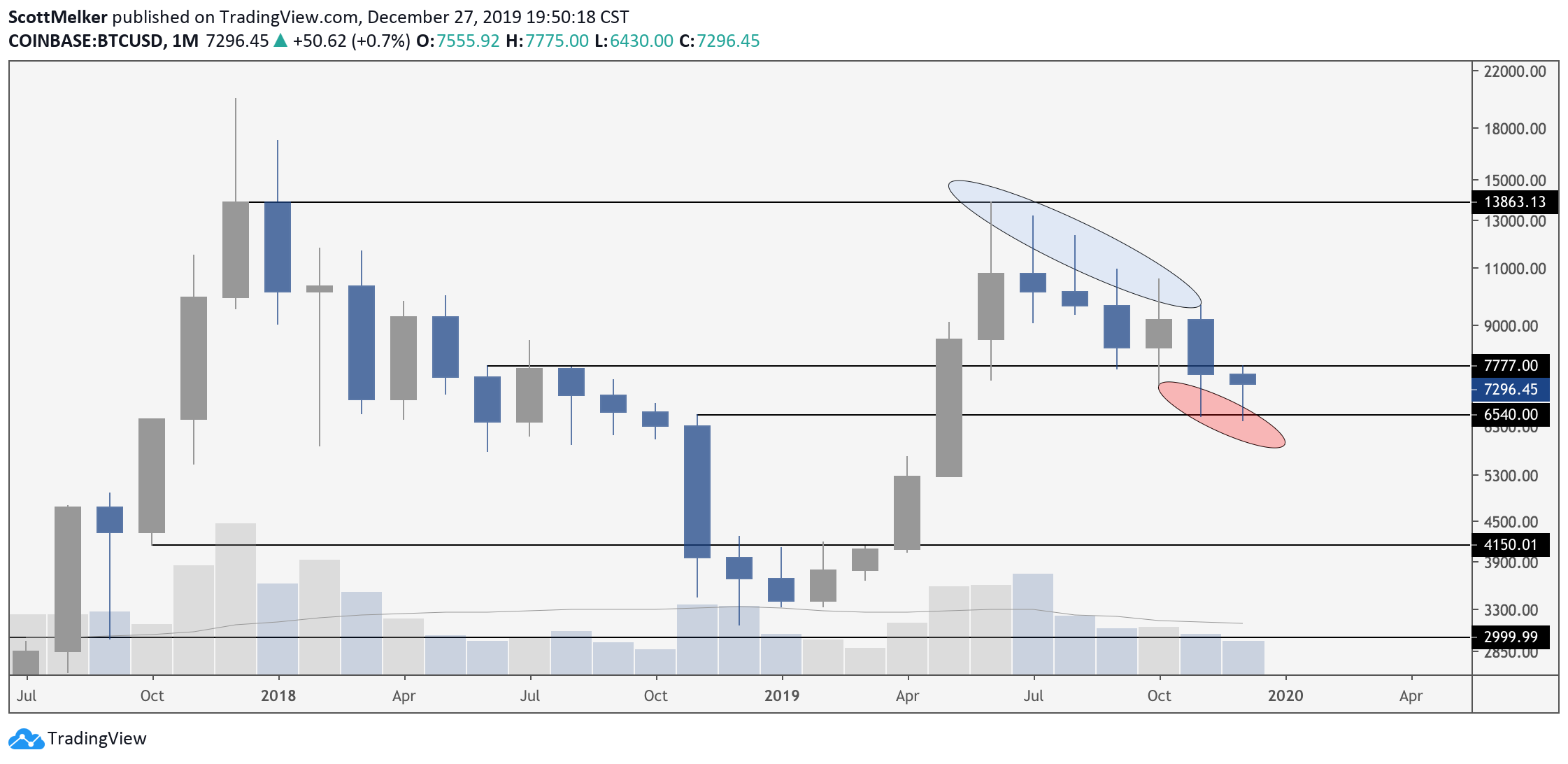
In a recent thread on Twitter, popular cryptocurrency trader, Scott
Melker, posted his findings on analyzing candle wicks on the monthly Bitcoin charts.
Wicks usually show the extent to which an asset’s price fluctuated
between the open and close of the candle’s time frame. Long upper wicks
near a peak indicate market participants are trying to sell as high as
possible, increasing selling pressure and driving the price down. Long
lower wicks near a valley, however, show traders are looking to buy at
the lowest price possible, increasing buying pressure and driving the
price up.
Melker, who goes by ‘The Wolf of All Streets’ on Twitter, noted that since May, when BTC
nearly touched $14,000, the successive monthly candles’ upper wicks
have been receding in length, becoming shorter and shorter toward
October.
In a similar fashion, he pointed out how the monthly candles after
October showed increasing lengths in their lower wicks, with the month
of October itself showing a balance in length between upper and lower
candle wicks. According to Melker, this indicated strong BTC selling pressure during the rally earlier this year, as well as stronger buying on dips.
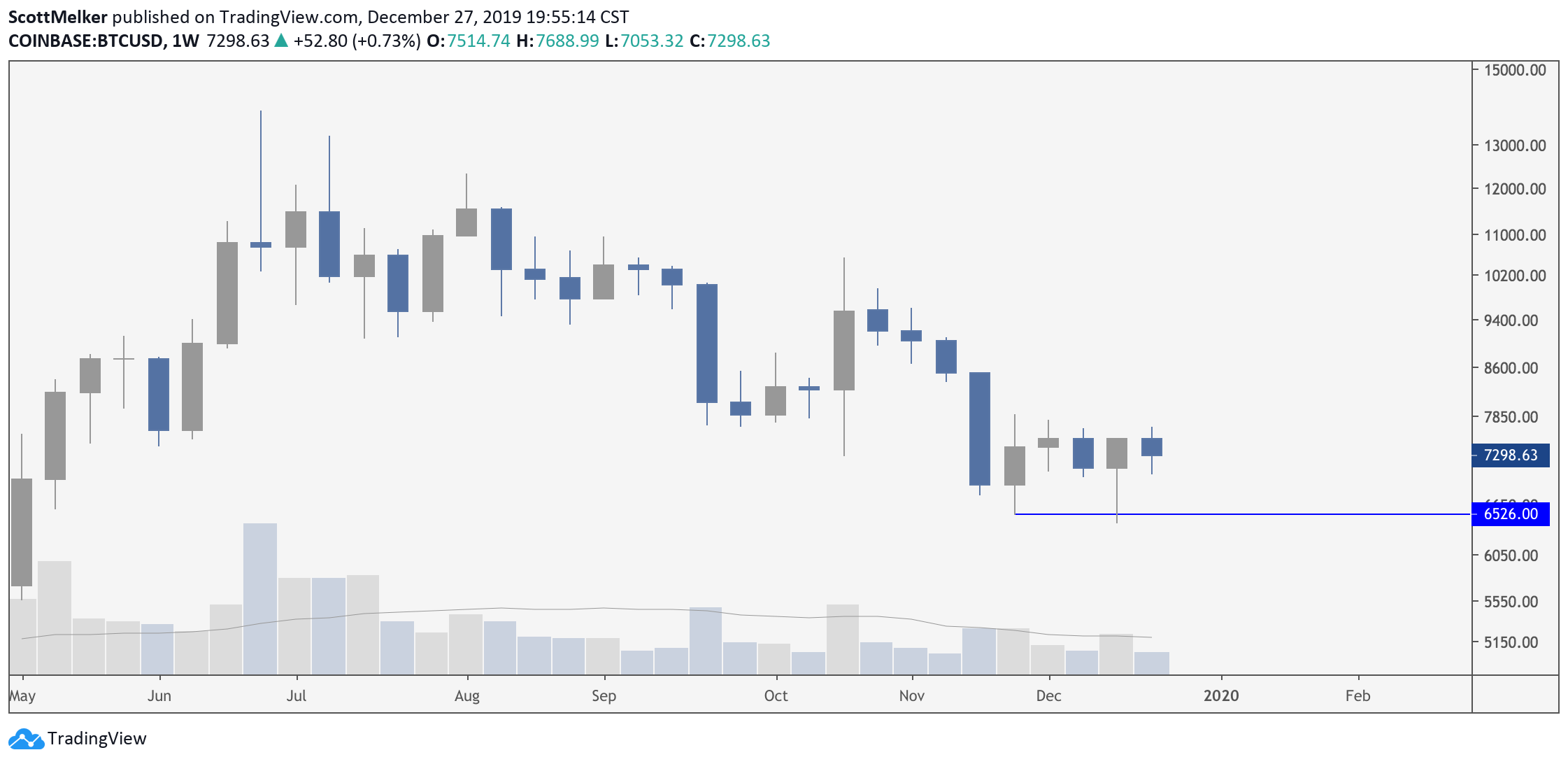
Additionally, Melker affirmed his hypothesis that demand is strong by
drawing attention to the previous week’s swing failure pattern.
Further, he claimed that BTC‘s
last weekly candle’s wick crossing under the last swing’s low indicated
the “price was pushed down to fit orders — engineered liquidity.â€
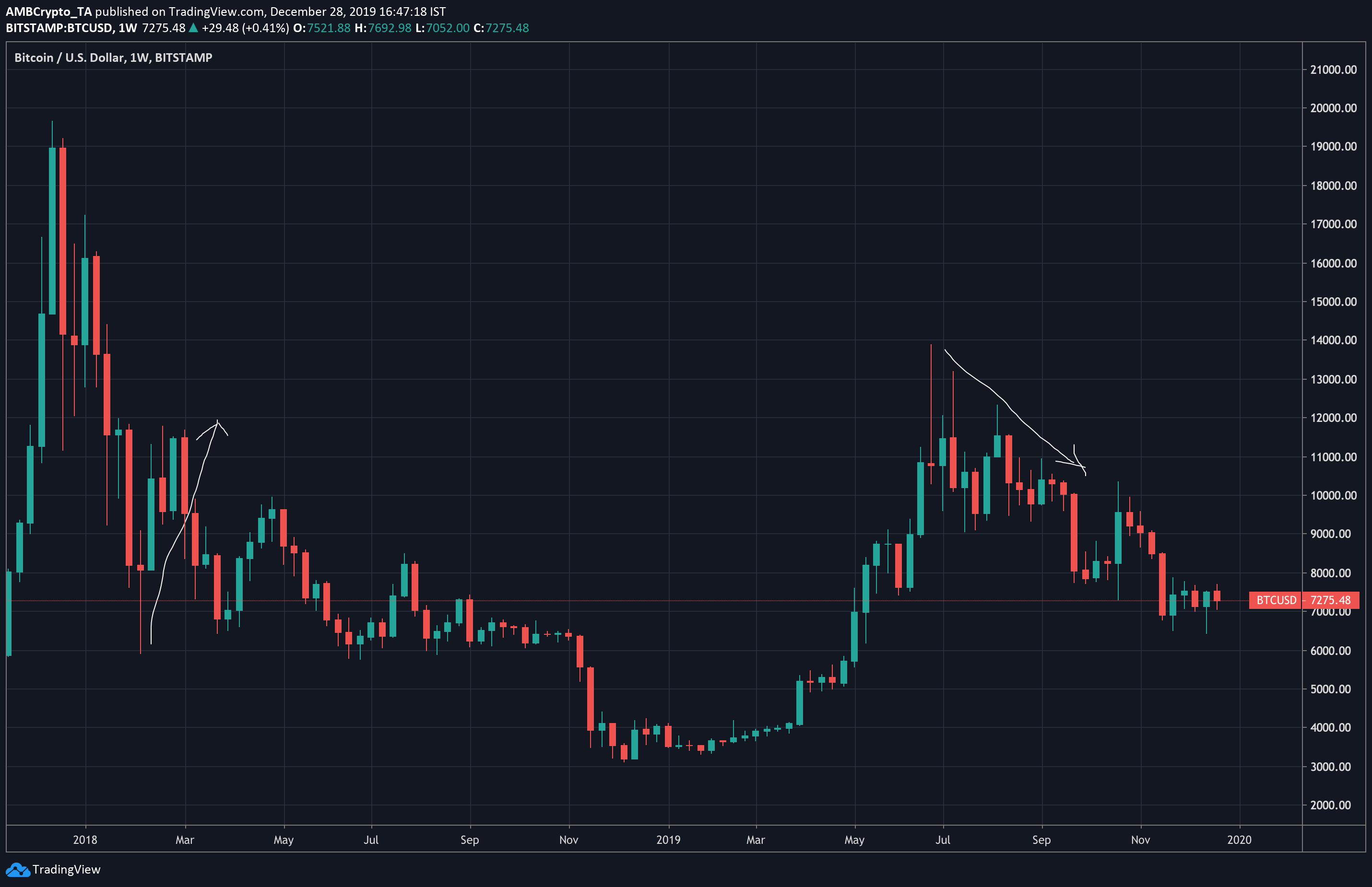
While not a flawless basis on which to expect a bull market, a look at the historical data for Bitcoin‘s weekly price shows candles with long wicks have tended to precede considerable movement in BTC
value. As the market looks to buy at lower and lower levels, it seems
likely that sellers will continue to prop the price up higher and
higher, possibly leading to a gradual rise in Bitcoin value over the coming weeks and months.
Proprietary technology platforms including Electronic Health Records portal and e-Commerce for CBD product distribution
Recently launched CBD extraction facility
First extraction system capacity = 6,000 Kg per year.
CBD based products are poised to be a $20B global industry by 2022
Medical cannabis is poised to be a $100B global industry by 2025
Marijuana On The 2020 Ballot: These States Could Vote
By:Tom Angell
Ever since Colorado and Washington became the first two states to
approve marijuana legalization initiatives in 2012, additional states
have joined them in each biennial election that has followed. And 2020
could be a banner year for cannabis on the ballot.
There are at least 16 states where advocates believe marijuana
measures could go before voters next year—some considering full-scale
recreational legalization while others would focus on medical cannabis.
Getty
Some of these would be citizen-led voter initiatives where activists
collect signatures to qualify a measure for the ballot, while others
would be referendums that lawmakers place before voters.
“Since the first adult-use legalization ballot initiative victory in
2012, the marijuana reform movement has successfully maintained its
momentum,†Matthew Schweich, deputy director of the Marijuana Policy
Project, said. “For four elections in a row there has been a
legalization victory at the ballot box, and the upcoming election could
deliver more victories in one day than ever before.â€
Of course, not every initiated effort will end up securing enough
funding, or formulating solid enough campaign plans, to collect
sufficient signatures to qualify their measures for voters’
consideration on Election Day—but these are all states where activists
or lawmakers have talked seriously about putting cannabis questions on
ballots.
It’s not feasible to list every measure that activists took the
modest trouble to initially file, and this overview looks primarily at
efforts that seem most poised to advance. This post also doesn’t include
the long list of states that might legalize marijuana through actions
by lawmakers, as opposed to citizens via the ballot—which will be the
focus of a separate piece.
In alphabetical order, here’s a comprehensive overview of the states where marijuana could be on the ballot in 2020.
Arizona
Voters in Arizona narrowly rejected a marijuana legalization measure
in 2016, thanks in part to sizable campaign contributions from the
pharmaceutical industry. In 2020, though, the state’s medical
cannabis companies will be working to pass an initiative making marijuana legal for adults.
The effort, known as Smart & Safe Arizona,
would allow people 21 and older to possess, consume, cultivate and
purchase cannabis from licensed retailers. It would also create a
pathway for individuals with prior convictions to have their records
expunged, and it proposes using some tax revenue from legal sales to
invest in communities disproportionately impacted by prohibition.
Dispensary chains MedMen, Harvest Health and Recreation and Curaleaf
Holdings are helping to fund the campaign. Advocates must collect
237,645 valid signatures from voters by July 2 in order to put the
measure on the ballot.
Arkansas
In 2016, Arkansas voters approved a constitutional amendment allowing
patients to have legal access to medical cannabis. Now, activists are
floating separate measures to more broadly end marijuana prohibition and expunge past records.
In order to place the measures on the ballot, Arkansans for Cannabis Reform must gather 89,151 signatures by July 3, including required minimums in at least 15 counties.
Under the legalization proposal, adults over 21 would be allowed to
to possess up to four ounces of marijuana, two ounces of cannabis
concentrate and edible products containing cannabis with THC content of
200 mg or less. They could also cultivate up to six cannabis seedlings
and six cannabis flowering plants for personal use.
A system of legal and regulated sales would be created, with tax
revenue funding the program’s implementation, public pre-kindergarten
and after school programs as well as the University of Arkansas for
Medical Sciences.
Under the separate expungements measure, people with certain prior
marijuana convictions would be able to petition courts for relief,
including release from incarceration, reduction of remaining sentences
and restoration of voting rights.
But while Connecticut doesn’t have the initiative process where
activists can collect signatures to place a question on the ballot, some
elected officials have floated the idea of advancing a referendum that
would let voters weigh in on ending prohibition.
Most activists would prefer that lawmakers go ahead and just pass a
legalization bill—because running a public education campaign to ensure a
ballot measure passes would be expensive at a time when resources are
needed in other states. A general referendum question would also require
subsequent implementation legislation, and even putting it on the
ballot in time for 2020 would take a supermajority of 75 percent of
legislators.
Florida
Florida voters approved a constitutional amendment to legalize
medical cannabis in 2016. Now, a group called Make It Legal Florida is
working to place a full-scale marijuana legalization measure on the key swing state’s 2020 presidential ballot.
The proposed amendment to the state constitution would allow adults
21 and over to possess up to 2.5 ounces of cannabis. Existing medical
marijuana dispensaries would be permitted to sell marijuana to adults.
While the measure doesn’t mention a licensing system to establish
separate recreational shops, lawmakers will likely enact detailed
regulations should it pass, as they did with the prior medical cannabis
measure.
The campaign is being backed by cannabis companies such as MedMen and Parallel (formerly known as Surterra Wellness).
A separate group, Regulate Florida, recently acknowledged that its
lesser-funded effort wouldn’t be be able to successfully collect enough
signatures to qualify for the ballot.
Idaho
Idaho is one of only a handful of states in the U.S. that doesn’t
even allow patients to access CBD medications with low-THC content. That
could change, however, under a proposed medical marijuana ballot
measure for which activists are currently collecting signatures.
The Idaho Cannabis Coalition’s
proposal would let approved patients and their caregivers possess up to
four ounces of marijuana. A system of licensed and regulated growers,
processors, testers and retail dispensaries would be established.
Patients would not be allowed to grow their own medicine unless they
qualify for a hardship exemption for those who have have a physical,
financial or distance difficulty in acquiring marijuana at a dispensary.
Those patients could grow up to six plants.
Organizers need to collect 55,057 valid signatures from voters in order to qualify the measure for the ballot.
If the initiative is approved, patients with any of 22
conditions—including cancer, chronic pain and post-traumatic stress
disorder—be allowed to possess up to 2.5 ounces of cannabis per 14-day
period.
The secretary of state is expected to announce whether organizers
collected a sufficient number of signatures for ballot access early in
2020.
Now, activists are looking to expand on that with a broader marijuana
legalization. Several different proposed measures to end cannabis
prohibition have been filed
with the secretary of state, but the campaigns at this point seem to be
operating largely under the radar, so it remains to be seen whether any
group will have the funding needed to mount a successful signature
gathering drive.
Last year three separate medical cannabis measures ended up qualifying for the ballot, but two were rejected by voters.
Montana
Montana already has a medical cannabis program, and activists are
looking to expand that to include legal adult use of marijuana in 2020.
The group New Approach Montana is currently in the process of drafting two separate legalization measures—one constitutional and one statutory.
The details of the proposals aren’t yet publicly available, but the
statutory proposal will need roughly 25,500 valid voters signatures to
qualify for ballot access, while the constitutional amendment would
require nearly 51,000 signatures.
The national groups Marijuana Policy Project and New Approach PAC are backing the effort.
A separate group, MontanaCan, has already filed its own legalization proposal.
Under the referendum adopted by the Senate and Assembly, the November
2020 ballot will contain a question that reads, “Do you approve
amending the Constitution to legalize a controlled form of marijuana
called cannabis?â€
If the proposed constitutional amendment is approved, lawmakers would
then get to work adopting regulations for the legal cannabis industry.
New York
Gov. Andrew Cuomo (D) put marijuana legalization language in his
budget submission earlier this year but, despite support for the idea
from leading lawmakers, disagreement over particulars such as how to
spend tax revenue meant that the proposal didn’t get over the finish
line.
“The opposition Senate position is there is no state that has passed
it without a referendum. It’s never been done just by the legislature,â€
he said in a radio interview this year. “I believe Jersey may be moving
to a referendum also, but Massachusetts, et cetera, the legislature
acted after a referendum. So that’s what the senators who oppose it
say—they think it’s an overreach by the legislature.â€
If lawmakers can’t agree on the details of legalization again this
year, Cuomo may call skittish legislators’ bluff and seek to advance a
cannabis referendum to fulfill what he has said is one of his top agenda
items.
North Dakota
North Dakota voters approved a medical cannabis ballot measure in
2016 and two years later swiftly defeated a proposal to more broadly
legalize marijuana.
But advocates may have another chance in 2020.
While the unsuccessful 2018 measure contained no limits on the amount
of cannabis people could possess or grow, the new initiative, written by
the same group of activists, has robust regulations—including a ban on
home cultivation.
Legalization supporters hope more voters will agree to the narrower proposal this time around.
There is also another proposed legalization measure vying to collect the 13,452 valid signatures needed for ballot access.
Ohio
In 2015, Ohio voters overwhelmingly rejected a marijuana legalization
measure that even many longtime activists opposed due its proposed
regulatory structure that would have granted control over cannabis
cultivation to the very same group of wealthy individuals who paid to
put it on the ballot.
Advocates have cited the Buckeye State as a potential target for another try in 2020, though no proposals have yet been filed.
Voters in number of communities throughout the state have in recent years approved measures to decriminalize marijuana possession on a local basis, indicating that there is public support for cannabis reform if placed on the state ballot again next year.
That said, Ohio is a large state, and qualifying initiatives there is
very expensive, so any successful effort will likely need to have
industry support.
Backed by the national New Approach PAC, the new effort will have to
collect 178,000 valid signatures from registered voters to qualify for
ballot access.
Under the measure as initially filed, adults 21 and older would be
allowed to possess, cultivate and purchase cannabis from licensed
retailers. There would be a 15 percent excise tax on marijuana sales,
revenue from which would cover implementation costs and fund schools,
drug treatment programs and other public service programs.
Personal possession would be capped at one ounce and individuals
could grow up to six plants. The proposal would also provide
expungements for those with prior marijuana convictions.
Backers recently withdrew
the initial measure, but plan to redraft it with feedback from the
medical cannabis community, with a new version expected to be filed
soon.
Rhode Island
Lawmakers in Rhode Island have filed marijuana legalization bills for
the last several sessions but they have never been brought to a vote.
In 2019, Gov. Gina Raimondo (D) went so far as to put legalization language in her budget proposal, but it was removed by legislative leaders.
The governor has indicated she will make another attempt in 2020, but if that doesn’t pan out, lawmakers may consider putting the question to voters via a referendum.
In 2016, Raimondo said she is “open to†giving voters a chance to
decide on legalization via a ballot question. And House Speaker Nicholas
Mattiello (D), said that he was “considering the possibility of placing
a non-binding referendum question on the ballot regarding the use of
recreational marijuana.â€
A bill for a marijuana referendum
that was filed in 2018 never received a vote, but it’s an avenue the
legislature might consider pursuing next year as legalization comes
online in more nearby states.
Nebraska
Lawmakers in Nebraska have repeatedly rejected medical cannabis
legislation. Frustrated with their colleagues’ unwillingness to change
the law to let patient legally medicate, two senators in the state’s
unicameral legislature are partnering with local and national advocacy
groups to put the question directly to voters through a ballot initiative.
Under the proposed constitutional amendment,
physicians or nurse practitioners would be able to issue
recommendations to patients, who would then be allowed to “use, possess,
access, and safely and discreetly produce an adequate supply of
cannabis, cannabis preparations, products and materials, and
cannabis-related equipment to alleviate diagnosed serious medical
conditions without facing arrest, prosecution, or civil or criminal
penalties.â€
The measure would also provide for a system of legal and regulated cannabis distribution through dispensaries.
Organizers must collect valid signatures from roughly 122,000 voters in order to make the ballot.
South Dakota
The South Dakota secretary of state’s office certified this month that activists collected more than enough signatures to qualify a medical cannabis measure for the November 2020 ballot.
If approved, patients suffering from debilitating medical conditions
would be allowed to possess and purchase up to three ounces of marijuana
from a licensed dispensary with approval from their doctors. They could
also grow at least three plants, or more if authorized by a physician.
That measure would allow adults 21 and older to possess and
distribute up to one ounce of marijuana and cultivate up to three
cannabis plants. The state Department of Revenue would issue licenses
for manufacturers, testing facilities and retailers.
South Dakota voters rejected medical cannabis ballot measures in 2006
and 2010, but advocates hope that the changing national and regional
climate on marijuana reform means that voters will be more supportive
this time around.
Non-Marijuana Initiatives On State Ballots
Activists in a few states are taking steps to bring broader drug policy reform questions to voters’ ballots in 2020.
A group called Decriminalize California is preparing to soon begin collecting signatures in support of a measure to legalize psilocybin mushrooms.
Separate from the huge number of states where cannabis and drug
policy reform questions could appear before voters on ballots, lawmakers
in many states are expected to consider bills to legalize marijuana.
And with presidential candidates increasingly embracing cannabis
legalization and other far-reaching reforms, 2020 is poised to be the
biggest year for marijuana yet.
“In 2020, hundreds of thousands of Americans will turn out to vote
not for the top of the ticket, but for the rights of cannabis consumers
in upwards of a dozen states,†said NORML Political Director Justin
Strekal. “As we have seen in previous elections, marijuana initiatives
increase voter turnout in nearly every demographic. With public support
growing by the day, 2020 will be the biggest year yet for expanding the
freedoms and liberties of cannabis consumers.â€
Posted by AGORACOM-JC
at 11:07 PM on Monday, December 23rd, 2019
Announced today that it completed a financing in which the Company received funding pursuant to a Term Loan Agreement with R & D Capital Inc. for a total of CAN $247,500
Loan is guaranteed by an existing security interest in favor of R & D.
MONTREAL, Dec. 23, 2019 — PyroGenesis Canada Inc. (http://pyrogenesis.com) (TSX-V: PYR) (OTCQB: PYRNF) (FRA: 8PY), a high-tech company, (the “Company”, the “Corporation†or “PyroGenesis”) that designs, develops, manufactures and commercializes plasma atomized metal powder, plasma waste-to-energy systems and plasma torch products, announced today that it completed a financing in which the Company received funding pursuant to a Term Loan Agreement with R & D Capital Inc. (“R & Dâ€) for a total of CAN $247,500 with respect to its Scientific Research and Experimental Development Tax credits (“SR&ED Tax Creditsâ€) for the Company’s fiscal year ending December 31, 2019, (the “Loanâ€).
The Loan is guaranteed by an existing security interest in favor of R
& D. The security interest is on the universality of the Company’s
assets excluding its Intellectual Property but including the refundable
portion of its SR&ED Tax Credits for the fiscal years ending
December 31, 2019.
“This financing, which we did today, is similar to previous SR&ED
type of financings that the Company has entered into which is entirely
non-dilutive to shareholders,†said Mr. P. Peter Pascali, President and
CEO of PyroGenesis.
In connection with the Loan, the Company paid R&D, fees of $22,275 CAD.
Separately, with respect to the recent decline in the stock price, Mr. P. Peter Pascali commented as follows:
“We have no knowledge of any material news which could explain the
recent decline in the Company’s stock price, and we have reported these
observations to the appropriate authorities,†said Mr. Pascali. “In
fact, this recent decline is even stranger given the recent news the
subject of which is even more imminent than it was when we first
disclosed it, which stands to reason. On a separate note, we expect to
build a solid DROSRITE™ business on top of the recent news as we are
actively working on a number of DROSRITE™ deals in Europe.â€
About PyroGenesis Canada Inc.
PyroGenesis Canada Inc., a high-tech company, is the world leader in
the design, development, manufacture and commercialization of advanced
plasma processes and products. We provide engineering and manufacturing
expertise, cutting-edge contract research, as well as turnkey process
equipment packages to the defense, metallurgical, mining, advanced
materials (including 3D printing), oil & gas, and environmental
industries. With a team of experienced engineers, scientists and
technicians working out of our Montreal office and our 3,800 m2
manufacturing facility, PyroGenesis maintains its competitive advantage
by remaining at the forefront of technology development and
commercialization. Our core competencies allow PyroGenesis to lead the
way in providing innovative plasma torches, plasma waste processes,
high-temperature metallurgical processes, and engineering services to
the global marketplace. Our operations are ISO 9001:2015 and AS9100D
certified, and have been since 1997. PyroGenesis is a publicly-traded
Canadian Corporation on the TSX Venture Exchange (Ticker Symbol: PYR)
and on the OTCQB Marketplace. For more information, please visit www.pyrogenesis.com.
This press release contains certain forward-looking statements,
including, without limitation, statements containing the words “may”,
“plan”, “will”, “estimate”, “continue”, “anticipate”, “intend”,
“expect”, “in the process” and other similar expressions which
constitute “forward- looking information” within the meaning of
applicable securities laws. Forward-looking statements reflect the
Corporation’s current expectation and assumptions and are subject to a
number of risks and uncertainties that could cause actual results to
differ materially from those anticipated. These forward-looking
statements involve risks and uncertainties including, but not limited
to, our expectations regarding the acceptance of our products by the
market, our strategy to develop new products and enhance the
capabilities of existing products, our strategy with respect to research
and development, the impact of competitive products and pricing, new
product development, and uncertainties related to the regulatory
approval process. Such statements reflect the current views of the
Corporation with respect to future events and are subject to certain
risks and uncertainties and other risks detailed from time-to-time in
the Corporation’s ongoing filings with the securities regulatory
authorities, which filings can be found at www.sedar.com, or at
www.otcmarkets.com. Actual results, events, and performance may differ
materially. Readers are cautioned not to place undue reliance on these
forward-looking statements. The Corporation undertakes no obligation to
publicly update or revise any forward- looking statements either as a
result of new information, future events or otherwise, except as
required by applicable securities laws. Neither the TSX Venture
Exchange, its Regulation Services Provider (as that term is defined in
the policies of the TSX Venture Exchange) nor the OTCQB accepts
responsibility for the adequacy or accuracy of this press release.
SOURCE PyroGenesis Canada Inc.
For further information please contact: Rodayna Kafal, Vice President Investors Relations and Strategic Business Development, Phone: (514) 937-0002, E-mail: [email protected]
Posted by AGORACOM-JC
at 5:26 PM on Monday, December 23rd, 2019
Announce that it has acquired 3,000,000 units of St-Georges Eco-Mining Corp. at a price of $0.10 per Unit
In consideration, the Company has issued an aggregate of 5,000,000 common shares of the Company at a deemed price of $0.05 per common share and made a cash payment in the amount of $50,000.
TORONTO, Dec. 23, 2019 – ThreeD Capital Inc. (the “Companyâ€) (CSE:IDK), a Canadian-based venture capital firm focused on investments in promising, early stage companies and ICOs with disruptive capabilities, is pleased to announce that it has acquired 3,000,000 units (the “Unitsâ€) of St-Georges Eco-Mining Corp. (“St-Georgesâ€) at a price of $0.10 per Unit. In consideration, the Company has issued an aggregate of 5,000,000 common shares of the Company at a deemed price of $0.05 per common share (the “Offeringâ€) and made a cash payment in the amount of $50,000. Each Unit of St-Georges consists of one common share (the “Shareâ€) of St-Georges and one share purchase warrant (the “Warrantâ€) of St-Georges, with each Warrant being exercisable to acquire one additional Share at an exercise price of C$0.185 for a period of 9 months following the date of issuance.
“ThreeD is very pleased to deepen its relationship with St-Georges,â€
said ThreeD Capital’s Founder, Chairman and CEO Sheldon Inwentash.
“We are pleased to have the continuous support of ThreeD in our
financing efforts. The company has been a supportive partner helping us
expand our different business silos and making valuable introductions,â€
commented Mark Billings, Chairman of St-Georges.
All securities issued and issuable in connection with the Offering
are subject to a statutory hold period expiring on April 24, 2020.
About ThreeD Capital Inc.
ThreeD is a publicly-traded Canadian-based venture capital firm
focused on opportunistic investments in companies in the Junior
Resources, Artificial Intelligence and Blockchain sectors. ThreeD seeks
to invest in early stage, promising companies and ICOs where it may be
the lead investor and can additionally provide investees with advisory
services, mentoring and access to the Company’s ecosystem.
Posted by AGORACOM-JC
at 10:47 AM on Monday, December 23rd, 2019
Spyder has two current Development Permits in Calgary, Alberta to build cannabis retail stores and has received the building permit for one of the two locations
The second building permit has been submitted and awaiting approval
Vaughan, Ontario–(December 23, 2019) – Spyder Cannabis Inc. (TSXV: SPDR) (“Spyder Cannabis” or the “Company“), an established Canadian cannabis accessory and an alternative to smoking retailer, provides an update to the corporate business development. Founded in 2014 Spyder is an established chain of three high-end alternative to smoking stores and two cannabis accessory stores in Ontario, with locations in Woodbridge, Scarborough, Burlington, Niagara Falls and Pickering. The Spyder brand is defined by its high-quality proprietary line of e-juice, liquids and exclusive retail deals, dispensed in uniquely designed stores creating the optimal customer experience. Spyder is building off this leading retail, distribution and branding platform by pursuing expansion into the legal cannabis market.
Spyder has two current Development Permits in Calgary, Alberta to
build cannabis retail stores and has received the building permit for
one of the two locations. The second building permit has been submitted
and awaiting approval.
Two weeks ago the government of Ontario announced it will abandon the
current lottery system for cannabis retail and move towards an open
licensing system beginning January 6, 2020. Store authorizations will be
issued starting in April, at the rate of 20 per month. Spyder will be
submitting applications on January 6, 2020 for some of the stores
currently operating. These stores are already built out and Spyder does
not expect major renovations will be required to conform to the Ontario
specifications for licenced stores.
Spyder is currently pursuing other locations in Ontario for aggressive expansion of its scalable retail platform.
The Company’s common shares will resume trading on the TSXV at market open on December 24, 2019
FOR ADDITIONAL INFORMATION, PLEASE CONTACT:
For more information, please contact:
Spyder Cannabis Inc. Dan Pelchovitz President & Chief Executive Officer Contact: Investor Relations Phone: 1-888-504-SPDR (1-888-504-7737) Email: [email protected]
Cautionary Statements
Neither the TSX Venture Exchange nor its Regulation Services
Provider (as that term is defined in the policies of the TSX Venture
Exchange) accepts responsibility for the adequacy or accuracy of this
release.
Certain statements contained in this press release constitute
forward-looking information. These statements relate to future events or
future performance. The use of any of the words “could”, “intend”,
“expect”, “believe”, “will”, “projected”, “estimated” and similar
expressions and statements relating to matters that are not historical
facts are intended to identify forward-looking information and are based
on the Company’s current belief or assumptions as to the outcome and
timing of such future events. Actual future results may differ
materially. In particular, this release contains forward-looking
information relating to the satisfaction of the closing conditions
contemplated under the Agreement. Various assumptions or factors are
typically applied in drawing conclusions or making the forecasts or
projections set out in forward-looking information. Those assumptions
and factors are based on information currently available to the Company.
Risk factors that could cause actual results or outcomes to differ
materially from the results expressed or implied by forward-looking
information include, among other things: the TSX Venture Exchange
declining to accept the transaction, the landlord not consenting to the
Lease Assignment, changes in tax laws, general economic and business
conditions; and changes in the regulatory regulation. The Company
cautions the reader that the above list of risk factors is not
exhaustive. The forward-looking information contained in this release is
made as of the date hereof and the Company is not obligated to update
or revise any forward-looking information, whether as a result of new
information, future events or otherwise, except as required by
applicable securities laws. Because of the risks, uncertainties and
assumptions contained herein, investors should not place undue reliance
on forward-looking information. The foregoing statements expressly
qualify any forward-looking information contained herein.
Posted by AGORACOM-JC
at 10:30 AM on Monday, December 23rd, 2019
SPONSOR: BetterU Education Corp.
aims to provide access to quality education from around the world.
The company plans to bridge the prevailing gap in the education and job
industry and enhance the lives of its prospective learners by developing
an integrated ecosystem. Click here for more information.
How Education Technology Has Evolved In 2010s
EdTech (or Education Technology) industry in India, according to a KPMG report, was worth about $247million and could reach $1.96 billion by 2021.
New Delhi:
When Byju Raveendran set up his company, Think & Learn, in 2011,
offering online lessons before launching his main app in 2015, he
wouldn’t have imagined that the decade would end with him becoming a
billionaire. Mr Byju, who developed an education app (Byju’s app )
that’s grown to a valuation of almost $6 billion in about seven years, joined the rarefied club after his company scored $150 million
(roughly Rs. 1,000 crores) in funding in in July this year. That deal,
according to Bloomberg, conferred a value of $5.7 billion (roughly Rs.
39,000 crores) on the company in which the founder owns more than 21
percent.
The business signed up more than 35 million of whom about 2.4 million
pay an annual fee of 10,000 to 12,000 rupees, helping it became
profitable in the year ending March 2019.
EdTech (or Education Technology) industry in India, according to a
2016 KPMG report, was worth about $247million and could reach $1.96
billion by 2021.
A survey done by Gradeup indicated that 70% of students would shift
to online learning if given access to live online classes. Of these,
over 80% cited ‘access to expert faculty’ as the primary reason.
‘A decade ago, EdTech industry did not even exist’
Beas Dev Ralhan, Co-Founder and CEO, Next Edcuation India, says the
industry is engaging latest technologies such as experiential learning
tools, Artificial Intelligence (AI) and Gamification of Learning which
are revolutionising the preparation strategies of students currently and
will continue to do so.
Mr Ralhan says the educational landscape of India has been
transformed by a series of developments in new-age pedagogies and their
popularity is expected to continue in the coming years.
“Conventional methods of education have mostly lost their appeal
among students who are now exploring new strategies to learn and prepare
for exams,” he added.
The increased mobile penetration in the country especially in rural
areas was a major breakthrough for the development of this industry.
“A decade ago, EdTech industry did not even exist. Getting
accessible, affordable and a quality education for students preparing
for competitive exams, especially, in Tier 2,3 cities was a big
challenge. This was the opportunity that Ed-tech industry resolved to
address. This also coincided with the increased mobile penetration in
the country especially in rural areas,” says Shobhit Bhatnagar, CEO and
Co-Founder, Gradeup.
‘Interactive and result-oriented’
Once the issue of accessibility was solved, the startups, which boomed in last one decade, concentrated on the delivery side.
“The preparation had to be effective and result-oriented, for which,
EdTech players introduced live online courses from some of India’s best
teachers through their platform. Classes are interactive, engaging and
allowed students the freedom and privacy to learn at their convenience
from the best. With a structured methodology and day-wise study plan,”
Mr Bhatnagar details how the industry evolved.
Shweta Sastri, Managing Director, Canadian International School,
Bangalore, says the penetration of internet-based smartphones and
gadgets is taking quality learning to students across geographies in
India.
The teacher connect
According to Ms Sastri, by using the internet or software tools,
students can create online groups that connect them in real time with
students and teachers.
“They can receive feedback from their teachers and share questions
and concerns about their lessons. Hence teachers need to integrate
technology seamlessly into the curriculum instead of viewing it as an
add-on,” she adds.
“Technology has become a crucial aspect of enabling learning and
empowering teachers with the usage of multiple tools to improve teaching
methodology. With the use of technology, learning and teaching not only
become more interactive and exciting, but also become personalized to
suit the needs of every individual student,” she said.
Classroom experience
The smart boards are gradually replacing the black-boards in the
classrooms wherein the teacher can bring the world inside a classroom,
which broadens the horizons of teaching and learning, says Niru Agarwal,
Trustee, Greenwood High International School.
“Through technology”, Ms Agarwal says “the teacher and students are
always connected which enhances their preparation strategies. Media
presentations are designed in a student-friendly manner, and which can
also be shared easily. Calendar applications help in creating a schedule
for the student, thereby making their goals achievable”.
“Experiential learning tools are being implemented in India in the
form of virtual labs and virtual and augmented reality tools. Virtual
and augmented reality creates immersive, real-life experiences in the
classroom through graphical simulations. On the other hand, virtual
labs help them conduct simulated experiments based on real-world
phenomena via a computer interface,” says Mr Ralhan.
The outcome
According to Zishaan Hayath, CEO and Founder, Toppr , efficient use
of tech in education has led to a reduction in the need for a human
advisor, improving affordability for the student.
“There are about 350 million school-going students in India, one of
the largest population in the world. Stronger implementation of AI and
ML have helped bring out truly adaptive and personalized platforms
addressing real learning needs. The main purpose of these assistive
technologies is to provide a more accessible and on-demand experience
for students that need immediate assistance with certain issues. Tech
tools and software have also allowed to streamline the educational
experience, improve accessibility and offer new resources to students,”
he adds.
However, psychologists and educationists are arguing the
implementation of large scale technological solutions in school
education needs detailed studies on how it’s affecting the cognitive
abilities of a student in the era of “digital natives”.
“In the era of ‘digital natives’, the role of technology in teaching
cannot be overlooked,” says Muhsina Lubaiba, a psychologist who works
among school children.
“As Prensky says,.. rapid dissemination of digital technology…
changed the way students think and process information, making it
difficult for them to excel academically using the outdated teaching
methods of the day. In other words, children raised in a digital,
media-saturated world, require a media-rich learning environment to hold
their attention,” she quoted Marc Prensky, the writer of the book
‘Digital Natives, Digital Immigrants’.
She also said the quality and efficiency of the educational apps available today is debatable.
“I’m of the opinion that, even if genuine and expert evaluated apps
are used by children, it is by no means a substitute for the classroom
teaching. The issue here is that the teachers need to be updated and
should find ways to engage these digital natives using technology, but
their role cannot be completely neglected,” she said.