Agoracom Blog Home

Archive for the ‘All Recent Posts’ Category

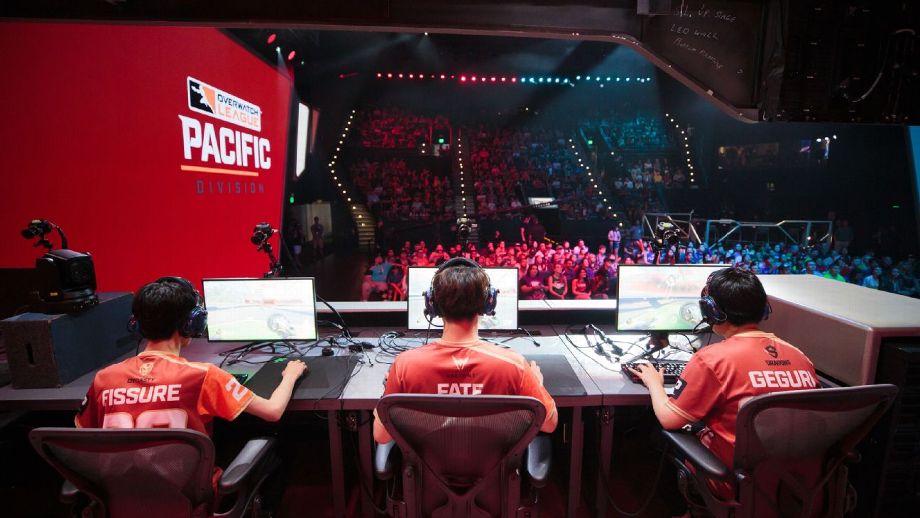
Enthusiast Gaming $EGLX.ca – Esports Playing in the Big Leagues Now $ATVI $TTWO $GAME $EPY.ca $TCEHF

Posted by AGORACOM-JC at 11:21 AM on Friday, February 8th, 2019

SPONSOR: Enthusiast Gaming Holdings Inc. (TSX-V: EGLX) Uniting gaming communities with 80 owned and affiliated websites, currently reaching over 75 million monthly visitors. The company partial 2018 reported revenue of $7.4 million representing a 625% increase over the same period in 2017.

Images
EGLX: TSX-V
———————————-

Esports Playing in the Big Leagues Now

  • In 2018, esports captured the attention of nearly 400 million viewers worldwide—and cable and OTT platforms took note, with media rights revenues topping $180 million.
  • Total esports revenues reached $869 million in 2018, and is forecast to more than triple by 2022, reaching $2.96 billion, according to an October 2018 report by Goldman Sachs.

By Lucy Koch

In 2018, esports captured the attention of nearly 400 million viewers worldwide—and cable and OTT platforms took note, with media rights revenues topping $180 million.

Total esports revenues reached $869 million in 2018, and is forecast to more than triple by 2022, reaching $2.96 billion, according to an October 2018 report by Goldman Sachs.

More modestly, a report from PwC (cited by the Goldman Sachs report) projected worldwide esports revenues of $1.58 billion by 2022—an 18.4% compounded annual growth rate.

Ad Revenue

According to PwC, esports revenues totaled $805 million in 2018, with the largest portion coming from sponsorships ($277 million), followed by media rights and streaming advertisements.

PwC estimated that over the next three to five years, media rights revenue would grow 11.5%—to roughly $449 million by 2022. That’s more than twice the growth rate of sponsorship and advertising, at 5.5%.

As audiences grow, so do expectations. Esports viewers want to be able to watch their favorite teams, players and tournaments on any screen, at any time—and this will push profitability.

Paul Verna, principal analyst at eMarketer, explains: “Marketers who try to reach esports fans through video ads will be able to tap into the sophisticated targeting and measurement capabilities that streaming services offer. In that sense, there’s more value to a marketer in attaching itself to game streams than sponsoring an event or team. It’s all about harnessing data.”

And there’s plenty of data to harness.

Esports Viewers

There were approximately 380 million esports viewers in 2018, and that’s expected to surge to roughly 557 million viewers by 2021, according to a report from Newzoo. Of those 557 million projected viewers, 307 million will identify as “occasional viewers” and 250 million will consider themselves “esports enthusiasts”.

Breaking Down Key Players

Occasional Viewers: People who watch professional esports content less than once a month.

Esports Enthusiasts: People who watch professional esports content more than once a month.

What’s more, Asia-Pacific leads the global esports market and is projected to capture the largest market share, with $1.5 billion by 2022, according to a study from Activate. Close behind, Europe and the US tie for second at $1.2 billion.

“The US is a natural growth opportunity for esports because of the strong gaming culture here, the ties between gaming and sports, and the country’s natural inclination toward competitive endeavors. The same is true of Western European markets, particularly the UK, Germany, and France,” Verna said.

Somewhat behind the curve due to the lack of fixed broadband, Latin America will account for just $100 million of esports market share by 2022. However, growth is expected in Brazil and Mexico, where esports is officially recognized as a sport.

What This Means for Marketers

With such expansive reach, it’s no surprise that marketers have taken note. According to Newzoo, global “brand investment revenues”—including advertising and scholarships—will nearly double from $694 million in 2018 to $1.39 billion by 2021.

But in today’s fast-paced society, it’s necessary to mirror esports’ form when it comes to implementing advertisements in that space.

Joshua Dyck, associate professor and co-director of the Center for Public Opinion at the University of Massachusetts, Lowell, says that people—teens specifically—can be receptive to esports marketing depending on execution. Dyck explains that “the important thing to look at is whether the ad slows down play performance. If the ad forces people to watch a 30-second spot, it will probably make them angry. Part of the enjoyment comes from the continuous play.”

Verna adds that the majority of the esports market is young and is “therefore less likely to be reached through traditional ad channels than an older TV audience,” saying that “sponsorships and endorsements are equally viable for marketers whose brands align with the target audience.”

Source: https://www.emarketer.com/content/esports-disrupts-digital-sports-streaming

Bougainville Ventures Inc $BOG.ca – #POT Ticker Generates Frenzy As WHO Softens Stance On Marijuana $CROP.ca $VP.ca NF.ca $MCOA

Posted by AGORACOM-JC at 10:12 AM on Friday, February 8th, 2019
SPONSOR:  Bougainville Ventures Inc (CSE: BOG) Converting irrigated farmland to greenhouse-equipped farmland. Bougainville does not “touch the plant” and only provides agricultural infrastructure as a landlord for licensed marijuana growers. Click here for more info.
BOG:CSE
—————————————

POT Ticker Generates Frenzy As WHO Softens Stance On Marijuana

  • Little illustrates the mania for cannabis investments better than the unprecedented demand over the stock symbol POT.
  • But new recommendations from the World Health Organization suggest some of that frenzy may not be unwarranted.

Tiny Vancouver-based cannabis company Weekend Unlimited saw its stock gain as much as 148% Feb. 1 after winning out over 40 other companies in the first-ever lottery for a stock ticker held by Canadian exchanges. Weekend Unlimited, which previously traded under YOLO, short for “you only live once,” wasn’t exactly lacking a memorable ticker before it won the POT ticker.

In a weird twist, the YOLO symbol may find new life in another pot-related security, as the AdvisorShares Pure Cannabis ETF has filed to trade on the New York Stock Exchange under YOLO.

In more serious news, the WHO is recommending that cannabis and its resin be removed from Schedule IV, the most restrictive category of a 1961 drug convention that governs international treaties. The WHO is also moving to clarify that CBD containing less than 0.2% THC is not under international control at all.

If adopted, these recommendations would recognize changing attitudes toward the drug and its medical properties, potentially encouraging fence-sitting politicians to speed up the pace of legalization. They could also be a “catalyst for Big Pharma to further assess the global medical cannabis opportunity,” according to BMO analyst Tamy Chen.

Advertising Challenges

“The treaty’s recommended cannabis rescheduling provides countries additional political cover to re-examine their current state on cannabis, given it serves as the regulatory framework for many,” writes Bloomberg Intelligence analyst Kenneth Shea.

The proposals will now go to the United Nations’ Commission on Narcotic Drugs, whose 53 member nations will have the chance to vote on them, likely in March.

POT hype and WHO recommendations aren’t making it any easier to advertise cannabis brands, at least not yet. Earlier this month, CBS declined to air a commercial touting the benefits of medical marijuana during the Super Bowl and Facebook (FB) has booted some pot sellers off Instagram, Bloomberg’s Craig Giammona reported last week.

The restrictions are even tighter in Canada, where nearly all forms of marketing and branding are prohibited.

Canadian Supply

The Canadian government reported that total cannabis sales in December were up 4% from the month before, a muted gain given that November sales marked a 42% decline in per-day recreational pot sales from October, when legalization took effect.

The fact that total inventory continues to grow, hitting nearly two months’ worth of dried pot and five months’ of cannabis oil at the end of December, indicates that Canada’s ongoing supply shortage is more a function of supply-chain problems than a lack of product, according to Eight Capital analyst Graeme Kreindler.

“The process of getting products from vault to shelf remains a key step in alleviating supply issues in the Canadian market,” Kreindler said.

Edibles Question

The ongoing shortages, whatever their root cause, have raised concerns among some in the industry that it won’t be ready to meet demand for edibles and concentrates, which were expected to join dried flower and oils on store shelves by October of this year. However, Justin Trudeau’s pot czar told Bloomberg’s Josh Wingrove last week that sales may lag regulations, citing the 17-week gap between the federal pot law passing last June and the formal market opening in October.

According to Keith Merker, CEO of WeedMD, “It’s classic cannabis industry stuff; you’re operating in this mist of uncertainty and trying to make business decisions that are appropriate.”

The lack of clarity isn’t deterring big U.S. funds from sniffing around the industry. Funds with $100 billion or more in assets under management are exploring lending to Canadian cannabis companies as a way to gain expertise in the burgeoning market ahead of potential legalization.

The idea is to provide first-lien loans, which are first to be repaid when a company fails, to mid-tier pot firms, according to Cormark Securities’ Alfred Avanessy. This would open up a whole new world of financing to the industry, which has largely relied on equity raises and convertible debt to date.

Source: https://www.investors.com/etfs-and-funds/etfs/pot-ticker-frenzy-who-marjijuana-stance/

Good Life Networks $GOOD.ca – How #Blockchain Integration Will Evolve #Programmatic RTB for Smart TV $TTD $RUBI $AT.ca $TRMR $FUEL

Posted by AGORACOM-JC at 4:23 PM on Thursday, February 7th, 2019
SPONSOR: Good Life Networks (GOOD:TSX-V) Video advertising is the future! Company’s A.I. makes 80,000 calculations / second, targeting 750 million users to deliver higher prices and volume. Company announced combined trailing 12 month revenue at just over $40 Million, $7.9M EBITDA, $3 Million net income. Click here for more information.
GOOD: TSX-V

—————————

How Blockchain Integration Will Evolve Programmatic RTB for Smart TV

  • Programmatic RTB(Real-time bidding) is set to become a leading method for advertising on Smart TV.
  • The global Smart TV market, according to Grand View Research, was valued at $145 billion in 2017,
  • Is anticipated to grow at a CAGR of 9.5% during the forecast period and reach $292.55 billion by 2025.

Alex Bornyakov, founder of Adtelligent, talks about how the growth of blockchain will help in the transformation of programmatic advertising through RTB for Smart TV.

The programmatic advertising industry is rife with issues, including fraud, manipulation of data, low traffic quality, and lack of transparency of the bidding process. Despite these issues, programmatic RTB(Real-time bidding) is set to become a leading method for advertising on Smart TV. The global Smart TV market, according to Grand View Research, was valued at $145 billion in 2017, is anticipated to grow at a CAGR of 9.5% during the forecast period and reach $292.55 billion by 2025.

I, along with other leaders in the digital advertising space, believe that blockchain integration has the potential to satisfy the market demand for transparency and reinstate trust in programmatic advertising. This will be achieved by creating a new blockchain-based RTB protocol for Smart TV that propels industry growth, meets required thresholds for transaction speeds, and fights fraud through irrefutable smart contracts.

Big potential for industry growth

Programmatic and RTB have had a tremendous impact on the web, becoming the most popular and widely-used types of digital display advertising in the USA and the UK in 2015. In the US alone, $27.47 billion was spent on programmatic digital display advertising just last year.

Programmatic RTB for Smart TV has the potential to scale into an increasingly valuable ad channel. 32% of TV buyers today own Smart TVs, totalling 1 billion devices worldwide. Yet, this form of advertising has several new roadblocks when it comes to growth. One such example is the current low availability of premium inventory. Publishers today have to adapt quickly to the latest media buying trend if they want to remain on board.

Blockchain removes intermediaries, meaning that brands and content owners can directly transact with one another. Content owners, as a result, are faced with fewer restrictions and will be able to attract with smaller and niche brands of all shapes and sizes. Due to the nature of P2P transactions through blockchain and less funds going to middlemen, brands will have the opportunity to place targeted advertisements at lower costs than ever before. With all transactions recorded on an irrefutable ledger, blockchain ensures marketing budgets are used effectively, another compelling impetus to advertise and for industry growth.

A need for speed

One of the central issues with executing blockchain RTB for Smart TV today is transaction speed. A system does not yet exist that allows large enough volumes. This inhibits the potential for advertisers.

What’s needed is a new protocol that can handle sending sufficient volumes of data to the blockchain.. With transaction volumes up to speed, brands will be able to optimize their costs, better target clients, and choose the time and amount of advertising scrolling at suitable prices. In turn, enabling brands to not only pay for the number of scrolls, but also the displayed duration which cannot be done today. As an example, this approach would allow advertising at a time when a television is being viewed across many devices, increasing audience coverage and the overall effectiveness of advertising.

Enforcing safeguards to fight fraud

Trust is eroding in the ecosystem for a number of reasons. For one, ad fraud is alive and well across OTT channels, typically in the format of masking n techniques that go undetected. In fact, Pixalate, the first MRC accredited vendor of detecting and filtering invalid traffic in OTT, reported that global OTT fraud rates average 19% and that Marketers may lose $10 billion annually in OTT ad spend by 2020.

Due to the aforementioned issues, advertisers are demanding transparency from partners to ensure fair value. Blockchain integration would allow brands to control pricing and manipulation of data, ensure transparency of the bidding process, target users at the right time through access to user data via blockchain smart contracts.

Today, there are a few major players working to make RTB for Smart TV a reality.

In September 2017, The Interactive Advertising Bureau (IAB) Technology Lab announced version 3.0 of their OpenRTB framework which was, “evolving to handle new kinds of programmatic buying and selling, such as header bidding, content sales, product recommendations, Smart TV, or perhaps even products.” It was the biggest revision to the protocol in seven years and has recently been rolled out in beta, with mass adoption projected for 2019.

Such innovative types of the business models which combine B2B marketplaces and blockchain technology has created a new system that allows accumulating a large volume of events, and after that sends this data to blockchain in one package. In other words, it’s not necessary for B2B advertising marketplace to save each transaction from RTB to the blockchain due to the fact that customers of such type of platforms will use an independent verification accounting system that will be able to benefit from internal RTB. Not all data will be saved into blockchain, but only critical resulting events such as division of profits among participants.

Integrating blockchain technology into the RTB system for Smart TV shows promise for growth of the advertisement industry and the elimination of fraud and lack of transparency. By eliminating intermediaries and introducing smart contracts to the platform, brands large and small have more opportunity to be profitable and are granted access to accurate analytics and data.

Source; https://www.martechadvisor.com/articles/ads/how-blockchain-integration-will-evolve-programmatic-rtb-for-smart-tv/

North Bud Farms Inc. $NBUD.ca – Canada’s top marijuana enforcer stands by Liberals’ new pot policy $ACB $WEED.ca $HIP.ca

Posted by AGORACOM-JC at 12:26 PM on Thursday, February 7th, 2019

SPONSOR: North Bud Farms Inc. (NBUD:CSE) Sustainable low cost, high quality cannabinoid production and procurement focusing on both bio-pharmaceutical development and Cannabinoid Infused Products. Click Here For More Information

NBUD: CSE

—————

Canada’s top marijuana enforcer stands by Liberals’ new pot policy

By Kory Dragon

  • A former police chief and narcotics enforcement officer, federal Minister of Border Security and Organized Crime Reduction Bill Blair is convinced Canada has done the right thing with its new marijuana decriminalization and regularization laws.
Martin C. Barry

As the federal minister responsible for the implementation and enforcement of Canada’s new marijuana legalization and regularization laws, there’s no mistaking the fact Bill Blair stands one hundred per cent behind the Trudeau Liberal government’s groundbreaking policy.

If anybody might be in a position to question the government’s stance, it could easily be Blair. The veteran policeman and former chief of the Toronto Police Service spent years fighting on the front lines against drug-related crime as a narcotics squad officer.

Former narcotics cop

“As a police officer for 40 years, I was involved in drug enforcement,” Blair, who is Minister of Border Security and Organized Crime Reduction, said in an interview with Newsfirst Multimedia while on a ministerial stopover in Montreal.

As chair of the Canadian Association of Chiefs of Police’s Organized Crime Committee, he said he was “well aware of the impact that illegal drug trafficking as controlled by organized crime was having in all of our communities.”

Drugs and violence linked

While noting that the link between organized crime and illegal drug trafficking had a lot do with an escalation of violence in Canadian cities these past few decades, Blair also pointed out that organized crime was earning billions of dollars in profits each year being the sole purveyors of a range of illegal substances that included marijuana.

Since the only means of controlling the situation available to society was criminal sanction, young people got swept up in the overall enforcement of the country’s drug laws, “which was disproportionate,” added Blair, “and was actually causing in many cases more harm. We wanted to discourage their use of the drug. But we also did not want to saddle that child with a criminal record for the rest of their life.”

Approached by Trudeau

According to Blair, all of this transpired long before he was asked by Justin Trudeau to run in the suburban Toronto riding of Scarborough Southwest in the October 2015 election. Blair and the future Prime Minister discussed the possibility of radically changing Canada’s cannabis laws.

“We talked about Canada’s control of cannabis. And he said ‘What do you think of legalizing it?’ And I said if we lift the criminal prohibition it gives the opportunity to get the situation back under control. Because currently the situation we were in was we had the highest rates of use among our kids in the world. And this is a dangerous drug for children. This is a drug that can have very serious implications for children.”

One third were breaking law

Leading up to the changes last October by the Liberal government to the country’s longstanding prohibition on cannabis, more than a third of Canada’s population had been breaking the law, Blair added. As such, “we began the process of looking at how do we reduce the harm of this drug.

“Some people say to me, ‘Well you’ve legalized cannabis.’ And I say no – we’ve regulated the daylights out of it. We’ve brought in all sorts of new rules – enforceable, proportionate, sensible rules – that control every aspect of its production, its sale and its consumption.

Says no to other drugs

“Whereas before we had only one tool and it was like a sledgehammer and we were trying to drive a nail. And no one wanted to swing the sledgehammer. But now we have the right suite of tools to control the system. And I believe it’ll result in a healthy situation for our children and a safer situation for our communities.”

Blair insisted that neither he nor the Liberal government would ever consider going down the same route with other street drugs as it has done with marijuana. “Cannabis is not a drug that kills people,” he said.

“But unfortunately with other more serious drugs which are deadly – the opioid crisis, for example, crystal methamphetamine, which is ravishing some of our prairie and northern communities – those drugs represent such a significant risk. And we don’t have a system of regulated production and control.

Meth and fentanyl out

“There is no alternative. We can go to a Health Canada-regulated production facility for marijuana, for cannabis. But we’re not going to create a similar thing for crystal methamphetamine. So there will be no other source other than the criminal source.” For drugs like methamphetamine and fentanyl, Blair said an important of the approach for dealing with them is to “interdict the supply to keep those drugs out of our country. We need to be very effective at restricting the supply. But we also have an enormous amount of work to do – and we have embarked as a government on this – to reduce the demand for those drugs. And that’s to prevent people from beginning to use them in the first place.”

Source: https://www.lavalnews.ca/2019/02/06/bill-blair-marijuana/

ThreeD Capital Inc. $IDK.ca – Major Swiss Stock Exchange SIX to Launch New #Blockchain – Powered Digital Exchange $HIVE.ca $BLOC.ca $CODE.ca

Posted by AGORACOM-JC at 11:16 AM on Thursday, February 7th, 2019

SPONSOR: ThreeD Capital Inc. (IDK:CSE) Led by legendary financier, Sheldon Inwentash, ThreeD is a Canadian-based venture capital firm that only invests in best of breed small-cap companies which are both defensible and mass scalable. More than just lip service, Inwentash has financed many of Canada’s biggest small-cap exits. Click Here For More Information.

Idk large
——————-

Major Swiss Stock Exchange SIX to Launch New Blockchain-Powered Digital Exchange

  • Switzerland‘s principal stock exchange SIX Swiss Exchange will test blockchain integration for its forthcoming parallel digital trading platform SDX in the second half of this year.

By Marie Huillet

Switzerland‘s principal stock exchange SIX Swiss Exchange will test blockchain integration for its forthcoming parallel digital trading platform SDX in the second half of this year. The news was reported by Cointelegraph Deutschland Feb. 4.

SIX Swiss Exchange sees roughly 5.19 billion Swiss Francs (CHF) (~$5.18 billion) in daily turnover, and has a market capitalization of over 1.67 trillion CHF ~($1.6 trillion).

CEO Jos Dijsselhof told Cointelegraph Deutschland in an interview that the company had chosen the technology for the time efficiency and improved security it can offer across all stages of stock trading and settlement:

“The fact is, it takes two days for the buyer of a stock to become the owner. The trade itself only takes a fraction of a second, but after that payments have to be settled and titles transferred. If we put it all on our digital exchange, then the whole process takes only a few seconds. This makes the market more efficient, but at the same time also takes risks out of the system. “

Dijsselhof added that wholly digital, blockchain-powered stock trading will not only minimize risks, but widen the range of tradable titles, affirming his ambition that SIX would succeed in building “a whole new stock market on the blockchain with completely integrated trading, handling and custody of digital assets”.

In an interview with Reuters published Feb. 6, SIX exchange chairman Romeo Lacher noted that the exchange aims to finalize a launch date for the new platform in late summer — with the exact date remaining subject to legal and regulatory clarification with Swiss market watchdog the Financial Market Supervisory Authority.

Reuters further reported that SIX expects its blockchain-based SDX digital exchange to supersede its existing marketplace within a decade. Lacher said the company also has plans to launch its own Security Token Offering, which will offer investors an equity stake in exchange for capital.

Unnamed SIX officials told Reuters that SDX will begin by rolling out support selected stocks, followed by bonds, and possibly exchange-traded-funds (ETFs).

As Cointelegraph has previously reported, SIX listed a pioneering multi-crypto-based exchange-traded product (ETP) in November, which tracks five major cryptocurrencies.

Other major global exchanges are similarly looking to rehaul their platforms — in whole or in part — with blockchain. In January, major global securities marketplace Deutsche Börse reported it was “making significant progress” on its blockchain-based securities lending platform, which will use blockchain consortium R3’s Corda technology.

Source: https://cointelegraph.com/news/major-swiss-stock-exchange-six-to-launch-new-blockchain-powered-digital-exchange

CLIENT FEATURE: CardioComm Solutions $EKG.ca – The heartbeat of Cardiovascular Medicine and Telemedicine

Posted by AGORACOM-JC at 3:54 PM on Wednesday, February 6th, 2019
Logo large

The heartbeat of cardiovascular medicine and telemedicine

  • Specializing in the software engineering of computer based electrocardiogram (heart monitoring) management and reporting software
  • Software permits physician interpretations of ECGs and supports private and public payer fee-for-service billings
  • ECGs are electrical recordings of the heart and performing an ECG is one of the most common diagnostic tests performed
  • Successfully launched technologies that enable the use of new medical devices and communication portals utilizing internet and cellular based technologies for the recording, transmission and viewing of ECGs

Recent Highlights

CardioComm Solutions’ HeartCheck(TM) Device Enters Final FDA Review Phase Read More

  • Completed a request for additional information from the US Food and Drug Administration (“FDA”) for the Company’s premarket notification 510(k), Class II medical device clearance application for the HeartCheck™ CardiBeat and GEMS™ Mobile Application.
  • Company had submitted a letter of revocation of their supplementary information submission on December 26, 2018 in compliance with the FDA’s directive

CardioComm Solutions’ HeartCheck(TM) CardiBeat and Smart Phone App Enter Final Stage of FDA 510(k) Review Read More

  • Market Release of HeartCheck(TM) CardiBeat and GEMS(TM) Mobile Application Set For Early 2019
  • Completed its response to the USA Food and Drug Administration for additional information following the Company’s filing of its premarket notification 510(k)
    • Class II medical device clearance application for the HeartCheck™ CardiBeat and GEMS™ Mobile Application
  • HeartCheck™ CardiBeat is the second of several planned Bluetooth-enabled ECG recording devices to be marketed by the Company

Launched 12-Lead ECG Smart Wearable Garment Monitoring Solution Read More

  • Announced joint partnership sales plans for the commercial launch of its newest software release designed to support an innovative and easy to use wireless, 12 lead ECG, vital signs, arrhythmia and ischemia monitoring wearable smart garment manufactured by Israel-based HealthWatch Technologies Ltd.

Company to Receive Royalty Payments from Biotricity Read More

  • Confirmed progress on a royalty licencing agreement with Biotricty Inc.
  • Royalty payment phase became active following confirmation that all necessary clearance and software development pre-conditions have been achieved
  • Royalty fees are due from the use of the ECG software Cardiocomm developed, or any derivative products, on a per patient monitored basis

First Company to Receive Approval for ECG Product Sales Direct to Consumers Read More

  • CardioComm was the first company to be approved to sell an ECG product directly to consumers in North America as evidenced by OTC Class II medical device clearances by both the United States Food and Drug Adminstration and Health Canada in 2012
  • HeartCheck ECG PEN is currently available for OTC sales on the shelves of Canadian pharmacy chain Shoppers Drug Mart.

Completed HeartCheck(TM) Clinical Validation for Long-Term, Self-Managed, Remote Monitoring of Atrial Fibrillation Patients Post-Ablation Read More

  • Moved into routine clinical use following completion of a long-term, remote arrhythmia monitoring pilot in high risk patients.
  • PACE cardiologists have been prescribing use of the HeartCheck™ ECG PEN and ECG Handheld Monitor to their patients to provide up to one year of enhanced remote patient monitoring for arrhythmias in addition to use of conventional but term-limited Holter and event monitoring.

Products

HeartCheck™ Pen

The HeartCheck™ PEN handheld ECG device is the only device of its kind cleared by the FDA for consumer use.


✓ Monitor For Arrhythmias Anywhere
✓ Web Access to a Qualified Physician
✓ No Prescription Required

 
The pocket-sized PEN allows you to take heart readings from anywhere, the moment symptoms appear.

The HeartCheck™ ECG Device

The FDA-cleared HeartCheck™ ECG device is portable, easy to use and can store up to 200 thirty second ECG readings.

Whether at home, the gym or at the office, the HeartCheck™ ECG Device with SMART Monitoring can help detect and monitor arrhythmias from wherever you are.  

  Features & Benefits
✓ SMART Monitoring ECG Interpretations
✓ Cleared by the Food and Drug Administration (FDA)
✓ Easy to use
✓ Accurate heart readings in only 30 seconds
✓ Store up to 200 ECGs

Company Accolades


FULL DISCLOSURE: CardioComm Solutions Inc. is an advertising client of AGORA Internet Relations Corp.

Esports Entertainment Group $GMBL – China recognizes #esports as a profession $ATVI $TTWO $GAME $EPY.ca $TCEHF

Posted by AGORACOM-JC at 2:03 PM on Wednesday, February 6th, 2019
SPONSOR: Esports Entertainment $GMBL Esports audience is 350M, growing to 590M, Esports wagering is projected at $23 BILLION by 2020. The company has launched VIE.gg esports betting platform and has accelerated affiliate marketing agreements with 190 Esports teams. Click here for more information
GMBL: OTCQB

China recognizes esports as a profession

  • China’s Ministry of Human Resources and Social Security (CMHRSS) announced 15 new professions on Jan. 25, including “esports professional” and “esports operator.”
  • The world’s most populous nation has finally recognized esports as a legitimate profession, and the ministry has officially identified it in the courts.

Jerome Heath

China’s Ministry of Human Resources and Social Security (CMHRSS) announced 15 new professions on Jan. 25, including “esports professional” and “esports operator.”

The world’s most populous nation has finally recognized esports as a legitimate profession, and the ministry has officially identified it in the courts. It comes as news following last year, when the Chinese government issued its support and interest in the esports industry.

The term “esports professional” is defined as players who compete in esports tournaments, perform at esports events, or train with other professional players, according to the CMHRSS. While “esports operator” is explicitly classified as those who organize or develop content for esports tournaments.

Additionally, the CMHRSS noted that “account boosting” is one of the main jobs accompanying the esports profession. Account boosting and cheating are punishable offenses in League of Legends, Overwatch, and a number of other esports titles, and have caused controversy in the past. A lack of communication between the Chinese government and the esports industry could be the reason for the term account boosting being used, or it could just be a misunderstanding.

The term account boosting could have been used by the CMHRSS to reference players using their teammates’ account during professional play, but generally “account boosting” is defined as the act of one player logging into another player’s account with the intent of boosting their rank.

Former LMQ League of Legends player Yu “XiaoWeiXiao” Xian received a one-year ban for account boosting in Aug. 2015, Philadelphia Fusion player Su-min “SADO” Kim was suspended from the Overwatch League after accusations of taking part in a boosting scheme in Nov. 2017, and 1,400 Overwatch accounts were banned for boosting in Aug. 2018.

It is not clear yet if the ministry’s use of the word account boosting will be revised. However, the announcement of the inclusion of esports professional and esports operator as official jobs is a positive step for the growth of esports in China. It means that Chinese players will have extended working rights, giving them easier access to working visas, and allow them more freedom of movement.

Source: https://dotesports.com/business/news/china-recognizes-esports-as-profession

ThreeD Capital Inc. $IDK.ca – A Technical Breakdown Of Google’s $GOOG New #Blockchain Search Tools $HIVE.ca $BLOC.ca $CODE.ca

Posted by AGORACOM-JC at 12:34 PM on Wednesday, February 6th, 2019

SPONSOR: ThreeD Capital Inc. (IDK:CSE) Led by legendary financier, Sheldon Inwentash, ThreeD is a Canadian-based venture capital firm that only invests in best of breed small-cap companies which are both defensible and mass scalable. More than just lip service, Inwentash has financed many of Canada’s biggest small-cap exits. Click Here For More Information.

Idk large
——————-

A Technical Breakdown Of Google’s New Blockchain Search Tools

  • Google is now in the blockchain search business
  • Less than a day after Forbes broke the story that the internet search giant would be launching a suite of tools built by, and for, open source developers, those tools are live.

Michael del Castillo Forbes Staff

Google is now in the blockchain search business. Less than a day after Forbes broke the story that the internet search giant would be launching a suite of tools built by, and for, open source developers, those tools are live.

In addition to loading data sets for all the transactions and metadata in eight cryptocurrencies, including bitcoin and ethereum, Google Cloud developer advocate Allen Day and his team of open source developers from around the world are launching a number of tools designed to do to blockchain, what Google search did to the internet.

“I’m very interested to quantify what’s happening so that we can see where the real legitimate use cases are for blockchain,” said Day, who manages the cloud portion of the project. “So people can acknowledge that and then we can move to the next use case and develop out what these technologies are really appropriate for.”

Last year Day and lead developer Evgeny Medvedev discreetly loaded transaction data for the bitcoin and ethereum blockchains, along with some basic search tools, to Google’s BigQuery data analytics platform and have been studying how developers are using the software. As of today, they’re taking what they’ve learned and making data sets available for bitcoin cash, ethereum classic, litecoin, zcash, dogecoin and dash, along with an expanded suite of search tools.

Dubbed Blockchain ETL (extract, transform, load), the software, which was created by independent developer Medvedev with support from the rest the team, includes features such as integration with Google’s BigQuery ML (machine learning) tool, which was launched into a test, or “beta” version last year. By searching for patterns in transaction flows, the machine learning integration will automatically give the user basic information about how a cryptocurrency address is being used.

For example, the tool might be used to analyze transaction flows to determine whether an address is holding funds for a cryptocurrency mining pool, in which users contribute unused computer power to audit blockchain transactions in exchange for cryptocurrency. In the future, the BigQuery ML integration could also identify cryptocurrency addresses owned by a single entity, for example an exchange, and condense those addresses into a single data point, simplifying comparisons.

Also included in the launch, the blockchain data sets have been standardized into what Day calls a “unified schema,” meaning the data is structured in a uniform, easy-to-access way. By ensuring this level of consistency across data sets, Day hopes to make it easier for data scientists, auditors, and investigators to make comparative statements about transactions in the supported blockchains. “And others going forward will use the same architecture,” Day adds. 

Another new search feature is what Day calls a “double entry book view,” designed to simplify the way users can search for the cumulative balance of an account over a particular time, accurate to the eight decimal places, which is the smallest possible bitcoin denomination, called a satoshi, named after the cryptocurrency’s pseudonymous inventor.

Data sets that fall into what is called the “Satoshi family,” meaning they structurally resemble bitcoin, will be searchable by two criteria: block and transactions. Whereas support for the ethereum and ethereum classic blockchains, with their more complicated smart contract functionality, includes five additional tables designed to enable more sophisticated searches.

The first terabyte of inquiries for these and other data sets are free each month, with additional fees charged per byte or a flat $40,000 monthly rate for high-volume users. Amazon, Google’s biggest cloud computing competitor, entered blockchain last year in a big way, and fellow cloud leader Microsoft is now considered a seasoned veteran of the burgeoning space. As startups like Storj and Perlin aim to use cryptocurrency as a way to incentivize users to adopt their decentralized versions of cloud computing, Day says the industry, expected to reach $411 billion next year, is primed to experience a blockchain renaissance.

“Some people are more theoretical, and the importance of their work becomes fully manifested decades after they’re dead,” says Day. “I guess I’m just more interested in seeing things play out in front of me, as opposed to doing anything deeply theoretical.”

To incentivize as much participation as possible, Medvedev and Day have partnered with the nonprofit Ethereum Community Fund, which is in turn offering cryptocurrency rewards to developers who find and fix bugs in the code. “There are around ten core contributors that helped implement various components of the system,” says Medvedev, who leads the developers and was previously the lead data engineer at cryptocurrency intelligence firm Coinfi. “They are spread around the globe: some live in Russia, others in Singapore or China.”

Perhaps unsurprisingly, Day’s role as customer zero means his interest in helping create the blockchain search features goes beyond theory. He believes the tools will enable more advanced econometric calculations including the Gini coefficient, which measures the distribution of wealth in a given system, and could eventually be used to understand which nations are using the cryptocurrency. While blockchain data doesn’t natively include information about where a transaction occurs, Day is personally exploring how BigQuery ML might be leveraged to reveal transaction locations.

“This is not some kind of dependency on government agency reporting,” says Day. “We have all the data, and we can pull metrics and and look at them and reason about them over time.”  

To show how Blockchain ETL could result in improvements to the cryptocurrency economy, Day is also using the suite of tools to examine a number of cryptocurrencies, most notably bitcoin cash and ethereum classic. While both the cryptocurrencies resulted from a dispute about how to enable smaller, cheaper transactions, Day found, according to the report published today, that the cryptocurrencies are being hoarded in much the same way as their predecessors.

From the report:

“Bitcoin Cash was purportedly created to increase transfer-of-value use cases through lower transaction fees, which should ultimately lead to a lower Gini coefficient of address balances. However, we see that the opposite is true—Bitcoin Cash holdings have actually accumulated since Bitcoin Cash forked from Bitcoin. Similarly, the Ethereum Classic currency was rapidly accumulated post-divergence and remains so.”

And it’s not just Day who has been using the cryptocurrency data sets. So far, the largest group of users are coming from within Google itself. In March 2017 Google purchased data science collaboration startup Kaggle for an undisclosed amount. Comprising a community of data scientists, including Day, Kaggle is now hosting more than 500 bitcoin projects and 16 ethereum projects, many of which are for educational purposes. Projects include Day’s own effort to track the bitcoin transactions of the 10,000-bitcoin pizza purchase widely believed to be the first ever use of bitcoin to buy goods, and some early work to calculate the Gini coefficient for ethereum.

“We saw a very warm reception from that community,” says Day.

Such successes are giving Day a cult following of sorts. In December 2018 Day met Tomasz Kolinko, a computer scientist and creator of the Eveem software for analyzing code, called smart contracts, designed to transparently and immutably execute any number of tasks. The two were attending the EthSingapore hackathon when Kolinko expressed his frustration at having to wait for hours to get results from some of his searches.

Within a month of the two meeting, Kolinko published the results of his analysis using BigQuery, showing the potential benefits and dangers of putting such tools in the hands of the public. Kolinko used the Google BigQuery ethereum dataset to look for a smart contract feature called a “selfdestruct” designed to limit how long a contract can be used. In 23 seconds he was able to search 1.2 million smart contracts and found that almost 700 of them had left open a selfdestruct feature that would let anyone instantly kill the smart contract, regardless of who might be using it. “The scary part is,” said Kolinko, “if there is a new vulnerability, in the past you couldn’t just easily check all the contracts that were using it.”

That same month Day reached out to engineer Will Price, whose work using Google BigQuery to classify the 40,000 richest ethereum addresses with 25 criteria he had seen online. Using the basic search tools previously made available, Price identified ten distinct patterns for how ethereum addresses are being used, but was only able to classify three of them into what he called “archetypes”: exchanges, miners and initial coin offering (ICO) wallets. “The other archetypes are just as valid,” says Price, who is now listed as a member of the developer team. “But I don’t have enough information to say what they are.”

Increasingly, it’s not just cryptocurrency data sets loaded by Day that are being used on Google BigQuery. In November 2018 independent Dutch developer Wietse Wind followed Day’s lead and uploaded his own data set, and similarly gave it away to the open source community. Best known for building the XRP Tip Bot, which has 5,500 active users. Wind invested $20,000 to buy two of his own “bare metal machines”—meaning he’s not using cloud for this work—and helps validate data about XRP transactions. Then, in November, he loaded that data to Google BigQuery; he regularly updates it for public use.

In what is perhaps one of the most visually striking uses of Google BigQuery to analyze cryptocurrency data, graphic designer Thomas Silkjaer exported Wind’s data to a special graphical database, called Neo4J, that visually renders data in ways that make patterns more apparent. By merging his skills as a graphic designer for Bibles with Wind’s data, Silkjaer gives a glimpse of what is possible. His graphs show simple transactions between wallets but give what is perhaps the most memorable answers to the question, what is a blockchain?

“You now have public access to view all transactions on a payment network,” said Silkjaer, “We have never had that before with banks, because each bank is secretive.” Silkjaer is now working to classify the transaction clusters into categories and visually paint a picture of which addresses are being used for trading, for making purchases, or for sending collateral to loan providers. Day sees Silkjaer’s work as an example of things to come. “That’s what I’m actively working on right now,” he adds. “Getting the data available in graph data structures to enable those types of queries.”

While Day’s job as Google Cloud developer advocate puts him in a unique position to build bridges between the search giant and developers, he is not alone in his blockchain interest at the company. Going back to at least to September 2016, Google has reportedly filed more than 20 patents for blockchain-related technology, including one in 2018 for using a “lattice” of interoperating blockchains to increase security. Among Google’s earliest forays into blockchain were a number of high-profile strategic investments, including Blockchain Inc., Ripple, and Veem.

Then, in July 2018, Google revealed it would be supporting development internally using the ethereum blockchain and Hyperledger Fabric and that it had formally partnered with financial infrastructure provider Digital Asset, which counts the Australian Securities Exchange (ASX) among its customers, and enterprise ethereum app developer BlockApps, which was an early partner with Microsoft, and recently started working with Amazon Web Services and Red Hat, now owned by IBM.

BlockApps CEO Kieren James-Lubin says that while Google was relatively late to publicly commit resources to blockchain, the company will benefit from watching from the sidelines as the cryptocurrency market collapsed in 2018. To help make up for that lost time James-Kiernen says his team is working “in the trenches” with Google to help their sales and pre-sales teams understand the value proposition of enterprise ethereum applications.

In the meantime, Google has amped up its presence in the global event space, hosting a number of private events that nonetheless attracted standing room only audiences. In August 2018, Aya Miyaguchi, the president of the Ethereum Foundation, joined Day and others on stage at Google’s Asia headquarters in Singapore and discussed how Day’s work might be used to help businesses make better decisions about how customers are using—or not using—their crypto products.

“Allen’s work helps by providing public data sets for businesses or products to make decisions for their implementations,” says Miyaguchi. In December, Google hosted its first blockchain on Google Cloud event in New York City, with startups on stage including partners BlockApps and Digital Asset as well as enterprise blockchain developer Blockdaemon and ethereum investor ConsenSys Ventures. At the next Google Cloud NEXT event in April 2019 partner Digital Asset plans to reveal a number of new developments related to the partnership.

As for Allen, he’s working to put together a cash prize for a contest to use Google BigQuery to calculate cryptocurrency Gini coefficients around the world, and is continuing his work using BigQuery ML to seek out new artificial intelligence in blockchain data, and trying to identify what exactly those seemingly coordinated robots are actually up to? 

“This is the general trend that you’re going to be see going forward,” says Day, referring to the most sophisticated forms of search. “The community that I’m building around this is mostly machine learning people, and they’re thinking about all kinds of other stuff, and it’s gonna start coming out.”

Source: https://www.forbes.com/sites/michaeldelcastillo/2019/02/05/google-launches-search-for-bitcoin-ethereum-bitcoin-cash-dash-dogecoin-ethereum-classic-litecoin-and-zcash/#41e5d4a4c789

CLIENT FEATURE: Tartisan Nickel $TN.ca Kenbridge Property Hosts M&I Resource of 7.14 Million Tonnes at 0.62% Nickel, 0.33% Copper $ROX.ca $FF.ca $EDG.ca $AGL.ca $ANZ.ca

Posted by AGORACOM-JC at 11:09 AM on Tuesday, February 5th, 2019

Investment Highlights

  • Kenbridge property has a measured and indicated resource of 7.14 million tonnes at 0.62% nickel, 0.33% copper
  • 17.5 (21.8 fully diluted) percent equity stake in Eloro Resources and 2 percent NSR in their La Victoria property

Kenbridge Ni Project (ON, Canada)

  • Advanced  stage  deposit  remains open  in  three  directions,  is  equipped with a 623m  deep  shaft  and  has  never  been  mined. 
  • Preliminary  Economic Assessment completed and updated returned robust project 
    economics and operating costs including  a  NPV  of  C$253M  and  cash costs of US$3.47/lb of nickel net of  
    copper credits.
  • Plans for Kenbridge include updating PEA, advancing the project through to feasibility and exploring the open mineralization at depth

FULL DISCLOSURE: Tartisan Nickel Corp. is an advertising client of AGORA Internet Relations Corp.

ThreeD Capital Inc. $IDK.ca – Facebook’s $FB latest move proves it’s betting big on #blockchain tech $HIVE.ca $BLOC.ca $CODE.ca

Posted by AGORACOM-JC at 10:21 AM on Tuesday, February 5th, 2019

SPONSOR: ThreeD Capital Inc. (IDK:CSE) Led by legendary financier, Sheldon Inwentash, ThreeD is a Canadian-based venture capital firm that only invests in best of breed small-cap companies which are both defensible and mass scalable. More than just lip service, Inwentash has financed many of Canada’s biggest small-cap exits. Click Here For More Information.

Idk large

Facebook’s latest move proves it’s betting big on blockchain tech

Chris Smith

Over the years, Mark Zuckerberg has made a number of smart moves that only helped him expand the reach of Facebook and improve the outlook of the business going forward. Purchases including WhatsApp, Instagram, and Oculus allowed Facebook to grow its customer base and monetize even more user data via ads, compete better against other image and video-based social networks, and develop new hardware and software experiences targeting VR users. The next major objective on Facebook’s roadmap seems to be the blockchain. The company has already confirmed its working on blockchain technology, and reports said Facebook will release its own cryptocurrency in the future, in the form of a stable coin that will be pegged against the dollar. It’s unclear when that will happen, but Facebook just made a significant move that further proves it’s serious about the blockchain.  No matter where the Bitcoin price will go next, blockchain technology is here to stay, as it offers a number of advantages for payments and other applications. Facebook’s team is led by former PayPal president David Marcus, who’s been working on Messenger before that. And Facebook’s blockchain team has just gotten significantly bigger, as the company acqui-hired the team behind Chainspace.

The startup was founded by researchers from University College London, according to Cheddar, and was working on “smart contracts” technology that would leverage blockchain tech for payments and other services.

Four of the five researchers behind Chainspace’s white paper are joining the Facebook blockchain group, people familiar with the matter said. Two of them, including Alberto Sonnino and George Danezis, already list Facebook as their employer. Chainspace’s website was also updated to note that the team is “moving on to something new.”

Facebook confirmed that it hired employees from Chainspace without disclosing any other details about the move.

Following Cheddar, Mashable also reported that Facebook acquired four key people behind the Chainspace tech. That tech, however, isn’t the scope of Facebook’s purchase, as the company only acquired the researchers behind it.

“Chainspace code and documentation will still be open source, and all previously published academic work remains available,” the note on the startup’s website says.

Source: https://bgr.com/2019/02/05/facebook-vs-bitcoin-facebook-buys-team-behind-chainspace-startup/