Posted by AGORACOM-JC
at 9:15 PM on Sunday, August 25th, 2019
WHY SPYDER CANNABIS?
Targeted and disciplined retail distribution strategy focusing on high quality, high traffic peripheral areas
Focused strategy aimed at vertical, horizontal and geographic diversification with demonstrated operations expertise and proven retail roll-out
Opened two additional stores in July for a total of 5 locations (11 by end of year)
Signed its first hemp agreement for the supply of full spectrum products to support Spyder’s debut of a hemp infused product line to be sold across the U.S. under its SPDR(R) brand
Received approval of development permit for a flagship cannabis retail location in the heart of Calgary
Announced an arrangement through which
Spyder will open 5 hemp boutique locations with potential for more at
Tanger Outlet centers throughout the United States
Agreement will expand Spyder’s physical
footprint to a projected 11 total locations by the end of this year,
with the potential for additional locations in the future
Tanger Outlet operates 39 upscale
outlet shopping centers located in 20 states coast to coast and will
allow us access to millions of consumers
WATCH OUR RECENT INTERVIEW
FULL DISCLOSURE: Spyder Cannabis is an advertising client of AGORA Internet Relations Corp.
Posted by AGORACOM-JC
at 7:12 PM on Sunday, August 25th, 2019
Intends to expand the non-brokered private placement announced on Friday in order to include an additional $1,000,000 investment by Eric Sprott.
Darren Blaney, President & CEO of American Creek stated: “We welcome Mr. Sprott’s further support and additional significant contribution. We greatly appreciate not only his endorsement but also his enthusiasm for the future potential of American Creek’s vision and projects.”
Cardston, Alberta–(August 25, 2019) – American Creek Resources Ltd. (TSXV: AMK) (“the Corporation”) (“American Creek”) is pleased to announce that it intends to expand the non-brokered private placement announced on Friday in order to include an additional $1,000,000 investment by Eric Sprott.
Darren Blaney, President & CEO of American Creek stated: “We
welcome Mr. Sprott’s further support and additional significant
contribution. We greatly appreciate not only his endorsement but also
his enthusiasm for the future potential of American Creek’s vision and
projects.”
The offering (“Offering”) is now comprised of 5,666,666 flow-through
units (“FT Units”) at a price of $0.09 per FT Unit for gross proceeds of
up to $510,000 and 15,625,000 non-flow-through units (“NFT Units”) at a
price of $0.08 per NFT Unit for gross proceeds of up to $1,250,000.
Each FT Unit will consist of one flow-through common share of the
Corporation (“FT Share”) and one non-transferable common share purchase
warrant (a “Warrant”). Each Warrant entitles the holder to purchase one
non-flow-through common share (“NFT Share”) at an exercise price of
$0.12 for a period of two years from the closing date of the Offering
except that, from and after the date that is four months and one day
after the closing date, if the closing price of the Corporation’s shares
exceeds $0.15 for 30 consecutive days, the Corporation may, at any time
thereafter, accelerate the expiry date of the Warrants to the date that
is 15 days following the date on which the Corporation issues notice to
all the Warrant holders of the new expiry date.
Each NFT Unit will consist of one NFT Share and one non-transferable
common share purchase warrant (a “Warrant”). Each Warrant entitles the
holder to purchase one NFT Share at an exercise price of $0.12 for a
period of two years from the closing date of the Offering except that,
from and after the date that is four months and one day after the
closing date, if the closing price of the Corporation’s shares exceeds
$0.15 for 30 consecutive days, the Corporation may, at any time
thereafter, accelerate the expiry date of the Warrants to the date that
is 15 days following the date on which the Corporation issues notice to
all the Warrant holders of the new expiry date.
Units will be offered to qualified purchasers in reliance upon
exemptions from prospectus and registration requirements of applicable
securities legislation. Proceeds from the sale of the FT Share portion
of each FT Unit will be used to incur expenditures which qualify as
Canadian Exploration Expenses and will be spent on the Corporation’s
projects located in British Columbia. Proceeds from the NFT Units will
be used for general operating purposes as well as advancing the
Corporation’s portfolio of mineral properties.
The Offering is subject to acceptance by the TSX Venture Exchange
(the “Exchange”) and if permitted under applicable securities laws and
by the Exchange, the Corporation will pay a finder’s fee to arm’s length
third parties (a “Finder”) equal to 7% of the gross proceeds realized
from the sales made to purchasers referred to the Corporation by a
Finder, payable in cash, together with a non-transferrable warrant
(“Finder’s Warrant”) to purchase the number of NFT Shares equal to 7% of
the gross number of shares from the sales made to purchasers referred
to the Corporation by a Finder at a price of $0.12 per Common Share for a
period of two years from the closing date of the Offering except that,
from and after the date that is four months and one day after the
closing date, if the closing price of the Corporation’s shares exceeds
$0.15 for 30 consecutive days, the Corporation may, at any time
thereafter, accelerate the expiry date of the Finder’s Warrants to the
date that is 15 days following the date on which the Corporation issues
notice to all the Warrant holders of the new expiry date.
About American Creek
American Creek is a Canadian junior mineral exploration company with a
strong portfolio of gold and silver properties in British Columbia.
Three of those properties are located in the prolific “Golden
Triangle”; the Treaty Creek and Electrum joint venture projects with
Tudor Gold/Walter Storm as well as the 100% owned past producing Dunwell
Mine.
A major drill program is presently being conducted at Treaty Creek by
JV partner and operator Tudor Gold. There are now two drills working on
the Goldstorm zone with the objective of defining a significant maiden
gold resource. The last hole reported included a 780 meter intercept of 0.683 g/t gold including a higher grade upper portion of 1.095 g/t over 370.5 meters.
The Treaty Creek Project is a Joint Venture with Tudor Gold owning
60% and acting as operator. American Creek and Teuton Resources each
have 20% interests in the project. American Creek and Teuton are both
fully carried until such time as a Production Notice is issued, at which
time they are required to contribute their respective 20% share of
development costs. Until such time, Tudor is required to fund all
exploration and development costs while both American Creek and Teuton
have “free rides”.
A drill program also recently commenced on the 100% owned Dunwell Mine property located near Stewart.
The Corporation also holds the Gold Hill, Austruck-Bonanza, Ample
Goldmax, Silver Side, and Glitter King properties located in other
prospective areas of the province.
For further information please contact Kelvin Burton at: Phone: 403 752-4040 or Email: [email protected]. Information relating to the Corporation is available on its website at www.americancreek.com
Neither the TSX Venture
Exchange nor its Regulation Services Provider (as that term is defined
in the policies of the TSX Venture Exchange) accepts responsibility for
the adequacy or accuracy of this release.
This news release contains forward-looking statements. These
statements are based on current expectations and assumptions that are
subject to risks and uncertainties. Readers should not place undue
importance on forward-looking information and should not rely upon this
information as of any other date. Actual results could differ materially
because of factors discussed in the Corporation’s management discussion
and analysis filed with applicable Canadian securities regulators,
which can be found under the Corporation’s profile on www.sedar.com. The
Corporation does not assume any obligation to update any
forward-looking statements.
Posted by AGORACOM-JC
at 12:37 PM on Friday, August 23rd, 2019
SPONSOR: Esports Entertainment
$GMBL Esports audience is 350M, growing to 590M, Esports wagering is
projected at $23 BILLION by 2020. The company has launched VIE.gg
esports betting platform and has accelerated affiliate marketing
agreements with 190 Esports teams. Click here for more information
Three weeks ago, Kyle “Bugha†Giersdorf, a 16-year-old esports athlete, won the 2019 Fortnite World Cup, winning $3 million and cementing himself as the 10th wealthiest esports athlete of all time.
Also, recently, professional streamer and esports athlete Ninja signed a deal with Mixer, a Microsoft-owned livestreaming company, that paid him $50 million to stream exclusively on their site.
Esports have been the topic of a lot of public discussion lately, with new developments within the tournament scene of the popular video game “Fortnite.†Three weeks ago, Kyle “Bugha†Giersdorf, a 16-year-old esports athlete, won the 2019 Fortnite World Cup, winning $3 million and cementing himself as the 10th wealthiest esports athlete of all time. Also, recently, professional streamer and esports athlete Ninja signed a deal with Mixer, a Microsoft-owned livestreaming company, that paid him $50 million to stream exclusively on their site.
Until the past couple of years, there hasn’t been a lot of money
in esports; many players had to grind at endless tournaments to achieve
pro status, and climb the ranks to be the richest esports athlete of
their respective game. While prize money payouts have been lower in
previous years, due to the influx of competitors in modern esports, new
players should also get the respect they deserve for doing well in their
games.
Esports encompasses athletes from all different types of competitive
video games, and there have been top players of almost every age,
ethnicity, gender and sexual orientation. In fact, some of the
wealthiest esports athletes have overcome adversity based on some of
these aspects of their identities.
Here are some of the current richest esports athletes. (This list
does not include income earned from streaming or sponsorship deals, and
is only based on the players’ tournament placing.)
KuroKy is a professional “Dota 2†player from Germany
and is the wealthiest esports athlete of all-time; he has made over $4.2
million from 103 tournaments. He is known as one of, if not the best
“Dota 2†player ever to play the game. Team Liquid, a premier esports
team, signed KuroKy in 2015. They were the 10th team to sponsor KuroKy, a
testament to his skill and future legacy.
KuroKy has many impressive wins at major tournaments; however, his
most impressive win is his first-place finish at The International 2017,
the largest tournament series for “Dota 2.†He had never gotten a
first-place finish at any previous International tournaments, and this
victory netted him over $2.1 million, an amount that only the top
esports athletes have obtained.
Scarlett is the wealthiest female esports athlete and hails from
Canada. She made her breakout performance at IPL 4, with an impressive
open-bracket run, defeating many difficult opponents only to get knocked
out in the fifth round of losers. She truly put her name on the map
when she won the 2012 Starcraft II World Championship Series Canada
tournament, making her the best Canadian “Starcraft II†player. She then
won the 2012 Starcraft II World Championship Series North America
tournament and became the best North American player.
Scarlett is an extremely well-known player in the “Starcraft IIâ€
community and inspires female gamers around the world. She’s also the
richest transgender esports athlete. She is currently placed ninth on
the WCS Circuit ranking, and 27th on the WCS Korea ranking. Scarlett
most recently won the Intel Extreme Masters Season XII — PyeongChang SC2
tournament, earning $50,000
“Dota 2†is the esports game with the most money in it, by far.
Forty-three of the top 50 richest esports athletes have made the
majority of their earning playing “Dota 2.†It’s a team-based,
Multiplayer Online Battle Arena (MOBA) video game, which means that
competitions take place among teams — “Dota 2,†specifically, in teams
of five. It wouldn’t be fair to the rest of Team Liquid not to include
Miracle.
Miracle is the highest-earning esports athlete from Jordan, and the
second-wealthiest esports athlete of all time. He accompanied KuroKy on
Team Liquid for their first-place finish at The International 2017, and
Miracle, along with their three other teammates GH, Matumbaman and MinD_ContRol,
all won the same amount as KuroKy in that tournament. Miracle also has
three other first-place finishes at tournaments that have earned him
over $550,000. Given the fact that he is only 22 years old and has only
been playing “Dota 2†competitively for five years, this young star’s
potential is only beginning to grow.
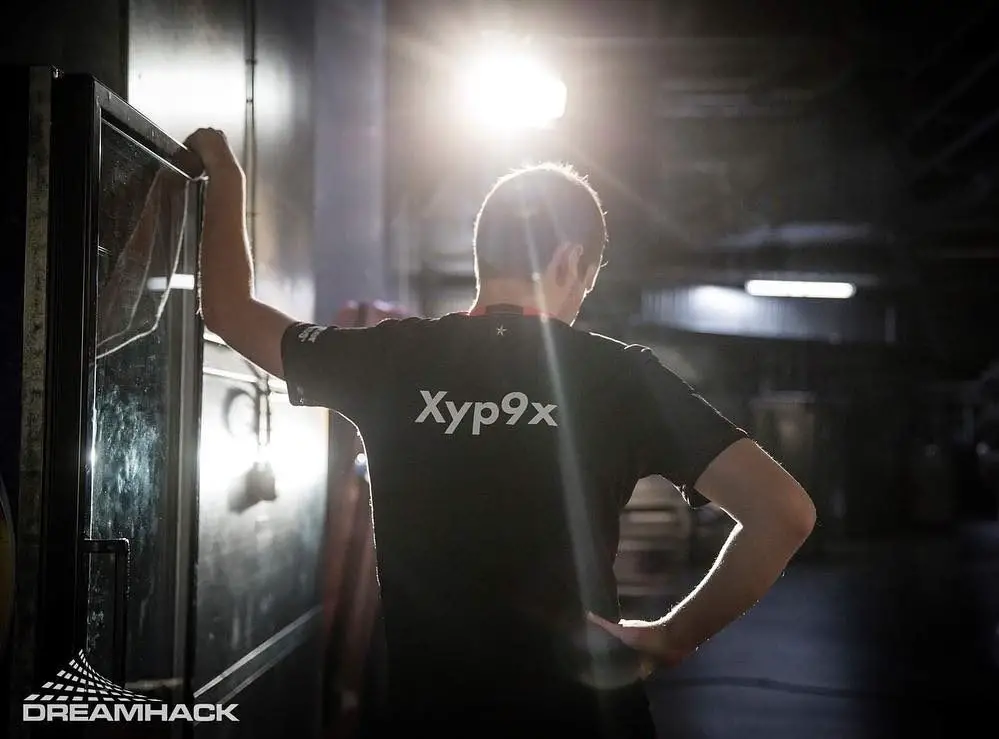
Xyp9x is the wealthiest “Counter-Strike: Global Offensive†player,
and the third-richest esports athlete from Denmark. He has earned over
$1.45 million from “CS:GO†and currently plays support, as a rifler for
Astralis. He has come in first place at 43 tournaments and had his
biggest win recently, at Intel Grand Slam Season 1, in which he earned
$200,000. Before Xyp9x was even 18, he had already won over $5,000 in
esports competitions, setting him up as one of the youngest athletes to
look out for, and now that he is 23 years old, he has broken
expectations and has built a legacy on continuing to break expectations
to this day.
Faker is the No. 1 ranked “League of Legends†player and
the richest esports athlete in South Korea. “League†is a popular MOBA
game inspired by “DOTA†and “Warcraft III†and, like other popular
esports games, “League†has a variety of players from all around the
world; however, the most dedicated fanbase is in South Korea. “Leagueâ€
has always been one of the most-viewed games on Twitch.tv, and it has
been that way since its release in 2009, when it really blew up.
To be the top player at a game like this proves Faker’s prowess. He
has earned over $1.2 million from “League†competitions, and has made
first-place finishes in major tournaments since 2013; his most notable
win was at the League of Legends 2016 World Championship. While Faker
might be an extremely talented player, like in “DOTA 2,†you play as a
team, so his team, SK Telecom T1 K, deserves props too.
Karma is the eighth highest-earning gamer from Canada and the richest
“Call of Duty†player, having taken the prize money at tournaments for
nine different games in the series. He has had consistent results in
each “COD†game, with peak years in 2013, 2014 and 2017, but he has also
done well within the past few months, earning over $65,000 in prize
money.
For many people, “COD†was the first game
through which they heard about esports and major-league gaming. The
game inspired countless kids to compete in esports, so being the richest
player in the game is quite a title. Karma has won 59 tournaments,
winning the most from the 2017 Call of Duty World League Championship
tournament as a member of OpTic Gaming.
Of course, there’s plenty of other wealthy esports athletes out there, and there are lots of top players
to admire. Esports are still an emerging medium, and it is likely that
the current wealthiest and best players will soon be dethroned. With new
money flowing in and more public attention toward esports than ever, it
is likely that future tournaments will be even bigger and more
competitive.
Video game entertainment is a big market, and many competitors record
and stream videos to supplement their incomes, which can sometimes earn
them more money than actual tournament revenue. It’s clear that gaming
has a lot to look forward to in the future.
Posted by AGORACOM-JC
at 6:07 PM on Thursday, August 22nd, 2019
At 165,000 patients, Empower Clinics (CBDT:CSE) (EPWCF:OTCQB) has a database that almost every medical cannabis and CBD company would kill for. Add in the fact it is now on a ~ $USD 4,000,000 annualized revenue run rate for 2019 and it becomes the kind of company small cap investors have been dying to find. Â
But it doesn’t end there.  Â
The Company is set to expand rapidly by taking its proven model into the franchise world for rapid expansion across the USA, with 4 applications already received in the last 30 days, as well as, launch its CBD extraction facility with an initial capacity of 6,000 Kg per year. Â But it doesn’t end there. Â
The Company’s new CEO, Steven McAuley, who replaced the previous management team in January, is Six Sigma certified under the quality initiative of legendary GE chairman Jack Welch. We’ve never seen a Six Sigma certified CEO in the Canadian small cap markets. Never. Â
Grab your favourite cold beverage here in hot August and settle in for what may be your next great small cap investment.
Posted by AGORACOM-JC
at 4:40 PM on Thursday, August 22nd, 2019
TN: CSE —————————-
Investment Highlights
Kenbridge property has a measured and indicated resource of 7.14 million tonnes at 0.62% nickel, 0.33% copper
17.5 (21.8 fully diluted) percent equity stake in Eloro Resources and 2 percent NSR in their La Victoria property
Kenbridge Ni Project (ON, Canada)
Advanced stage deposit remains open in three directions, is
equipped with a 623m deep shaft and has never been mined.
Preliminary Economic Assessment completed and updated returned robust project economics and operating costs including a NPV of C$253M and cash costs of US$3.47/lb of nickel net of copper credits.
Plans for Kenbridge include updating PEA,
advancing the project through to feasibility and exploring the open
mineralization at depth
located in a prolific polymetallic mineral belt in Central Peru.
Trevali Mining Corporation’s Santander Silver-Lead-Zinc mine is located 9 kilometers to the east of the Project.
The world class Iscaycruz and Yauliyacu Polymetallic Mines operated
by Glencore-Xstrata plc.are located 50 kilometres to the north-northwest
of the Project.
Buenaventura’s Silver-Lead-Zinc Uchucchacua mine is located 63 kilometres north of the Project.
Located adjacent and less than 3 km from Buenaventura’s San Gabriel
(Canahuire) Deposit (2.5 million ounce gold: 50% Indicated-50%
Inferred*) in Southern Peru.
A new emerging mineral camp Blind Discovery Hole drilled in September 2008 – targeted IP anomaly
Excellent infrastructure with easy road access, abundant water and an industrial power corridor some 4.3 km from the site.
The project is within 50 km of several large low-cost producing
mines including: the Tahoe Resources Inc.’s La Arena & Shahuindo
gold deposits; Barrick Gold’s Lagunas Norte (Alto Chicama) gold deposit
and past-producing Pierina gold deposit; and, the Santa Rosa gold-copper
mine, owned by Compañia Minera Aurifera Santa Rosa (COMARSA).
FULL DISCLOSURE: Tartisan Nickel Corp. is an advertising client of AGORA Internet Relations Corp.
Posted by AGORACOM-JC
at 11:04 AM on Thursday, August 22nd, 2019
In 2015, HPQ Silicon (HPQ:TSXV) began its quest to completely change the economics of the global silicon market, which would also significantly impact the solar and battery markets. Quite frankly, it almost seemed like an audacious goal that HPQ had no business even thinking about. Â
Fast forward to today and the following quote from CEO, Bernard Tourillon, says it all:  “We are ready to start commercializing our PUREVAP™ QRR technology.
We are aiming to completely revolutionize the economics of the $24B silicon industry and create significant cash flow†Â
It now seems that HPQ didn’t just think about this audacious goal, they are on the cusp of actually achieving it.  Â
If you’re still skeptical, then you also need to know that HPQ Silicon hasn’t gone at this alone. Their world class technology consortium includes Pyrogenesis Canada (a global leader in plasma torch technologies) and Apollon Solar (one of the world’s leaders in renewable energies).  Â
With partners of this calibre, you have to take the statements of HPQ Silicon very seriously – and now keep a very close eye on them as they begin to enter their commercialization stage over the next 6 months. Â Grab your favorite beverage, get comfortable and watch this interview with CEO, Bernard Tourillon.
Posted by AGORACOM-JC
at 8:32 AM on Thursday, August 22nd, 2019
Announced that Luminosity Gaming has signed international Fortnite influencers, “Spencerâ€, “Beaksâ€, and “Plu†to its roster of over 50 professional esports players and video gaming influencers.Â
The three influencers will continue creating and sharing content around the popular video game, Fortnite, to their combined network of 2.7 million followers.
TORONTO, Aug. 22, 2019 – Enthusiast Gaming Holdings Inc. (TSXV: EGLX) (OTCQB: EGHIF), (“Enthusiast†or the “Companyâ€), one of the largest vertically integrated video gaming media companies in North America, is excited to announce that Luminosity Gaming (“Luminosityâ€) has signed international Fortnite influencers, “Spencerâ€, “Beaksâ€, and “Plu†to its roster of over 50 professional esports players and video gaming influencers.Â
The three influencers will continue creating and sharing content
around the popular video game, Fortnite, to their combined network of
2.7 million followers. Luminosity continues to grow its combined reach
of 60 million followers through signing new professional players and
influencers and capitalizing on the 8 professional esports teams managed
under the brand.
On May 31, 2019, Enthusiast announced a merger with Luminosity and
Aquilini GameCo. and the combined entity will consist of over 85 gaming
websites, 900 YouTube Channels, 8 professional esports teams and over 50
influencers. The network reaches over 200 million viewers on a monthly
basis and has become one of the leading networks for advertisers wanting
to target the sought after gaming demographic. These signings allow
Enthusiast to continue to build customized sponsorship and marketing
programs for large brands across its website network, esports teams and
players and live events business.
Luminosity’s successful esports organization is an important
component of the Enthusiast platform. One of the Company’s key growth
priorities is Luminosity’s franchise appreciation through the growth of
the talent roster and the continued development of content rich channels
through players and influencers. Enthusiast will continue to leverage
Luminosity’s leading industry presence, brand affinity, and growing
roster of esports players and influencers to provide brands marketing
and promotional strategies and partnerships.
Menashe Kestenbaum, CEO of Enthusiast commented, “With
the rapid growth of esports, we are thrilled to have such a strong team
of content creators and esports professional athletes under the
Luminosity brand. Between Enthusiast’s online gaming communities and
live events and Luminosity’s dominance in esports, there are significant
synergies for growth and cross promotion across the entire platform. We
are building a powerful integrated video game and esports ecosystem and
continue to provide our brand partners customized marketing programs to
effectively reach these gaming communities.â€
About Enthusiast Gaming
Enthusiast Gaming is one of the largest vertically integrated video
game companies and has the fastest-growing online community of video
gamers. Through the Company’s organic and acquisition strategy, it has
amassed a platform of over 150 million monthly visitors across its
network of websites and YouTube channels. Enthusiast also owns and
operates Canada’s largest gaming expo, Enthusiast Gaming Live Expo,
EGLX, (eglx.ca) with approximately 55,000 people attending in 2018. For more information on the Company, visit www.enthusiastgaming.com.
About Luminosity Gaming
Luminosity Gaming is one of the largest globally recognized esports
organizations in the world, with over 50 professional esports players
and influencers reaching 60 million collective followers. Luminosity has
8 world class esports teams competing across top games such as
Fortnite, Apex, Rainbow Six: Seige, Counter Strike, Call of Duty,
Madden, Smite, etc. For more information visit www.luminosity.gg
CONTACT INFORMATION:
Investor Relations: Julia Becker Head of Investor Relations & Marketing [email protected] (604) 785.0850
This news release contains certain statements that may constitute
forward-looking information under applicable securities laws. All
statements, other than those of historical fact, which address
activities, events, outcomes, results, developments, performance or
achievements that Enthusiast anticipates or expects may or will occur in
the future (in whole or in part) should be considered forward-looking
information. Such information may involve, but is not limited to,
comments with respect to strategies, expectations, planned operations
and future actions of the Company. Often, but not always,
forward-looking information can be identified by the use of words such
as “plans”, “expects”, “is expected”, “budget”, “scheduled”,
“estimates”, “forecasts”, “intends”, “anticipates”, or “believes” or
variations (including negative variations) of such words and phrases, or
statements formed in the future tense or indicating that certain
actions, events or results “may”, “could”, “would”, “might” or “will”
(or other variations of the forgoing) be taken, occur, be achieved, or
come to pass. Forward-looking information is based on currently
available competitive, financial and economic data and operating plans,
strategies or beliefs as of the date of this news release, but involve
known and unknown risks, uncertainties, assumptions and other factors
that may cause the actual results, performance or achievements of
Enthusiast to be materially different from any future results,
performance or achievements expressed or implied by the forward-looking
information. Such factors may be based on information currently
available to Enthusiast, including information obtained from third-party
industry analysts and other third-party sources, and are based on
management’s current expectations or beliefs regarding future growth,
results of operations, future capital (including the amount, nature and
sources of funding thereof) and expenditures. Any and all
forward-looking information contained in this press release is expressly
qualified by this cautionary statement. Trading in the securities of
the Company should be considered highly speculative.
Neither the TSX Venture Exchange nor its Regulation Services
Provider (as that term is defined in the policies of the TSX Venture
Exchange) accepts responsibility for the adequacy or accuracy of this
release.
The securities of the Corporation have not been and will not be
registered under the United States Securities Act of 1933, as amended
and may not be offered or sold in the United States absent registration
or an applicable exemption from the registration requirement. This press
release shall not constitute an offer to sell or the solicitation of an
offer to buy nor shall there be any sale of the securities in any
jurisdiction in which such offer, solicitation or sale would be
unlawful.
Posted by AGORACOM-JC
at 9:22 PM on Wednesday, August 21st, 2019
BTRU: TSX-V
By Brad Loiselle, President/CEO and Kate O’Neil, Director International Partnerships, betterU
Dreamers,
visionaries and sustainability enthusiasts imagine a world where
everyone is equal, where the water runs clean, where a child never goes
without a meal, where people of different countries, religions, and
cultures respect each other’s beliefs, and where the word hate is no
longer part of our vocabulary. This is a world we all want for our
children, but unfortunately this utopia is never going to exist if we
don’t join and commit to building a better future for all.
In
2015, the United Nations defined a set of 17 global development goals
that, if achieved, would have the power to eradicate poverty, fight
inequality and stop the climate crisis we are now faced with. The 2030
Agenda for Sustainable Development was created as a “universal call to actionâ€
to inspire us to come together to enact change that will result in a
safer and more sustainable planet for future generations. In September
of that same year, 193 UN member states adopted the Agenda and committed
to supporting the 169 targets identified in the global framework of
action.
The challenges to achieving the Agenda
Many
critics of the 2030 Agenda for Sustainable Development will tell you
that the goals are failing and that there is no evidence of
transformative change in any of the 17 focus areas. Truth be told, it
was exciting and encouraging to see so many UN nations and world leaders
sign their commitment to achieve the Agenda but as we gather speed
towards 2030 it is evident that something critical is missing; something
hindering progress on a global scale.
When
we look at those who are leading the charge, we see world leaders who
are talking about why this global movement is important but then calling
on other governments, educators, corporations and private enterprises
to take action, to collaborate and work together to put in place systems
and solutions. Many global leaders emphatically committed to the cause,
but it is becoming clearer that most do not fully grasp both the
importance of the Agenda or the measures required to act and impart
change.
Upon
review of the Agenda, it is evident that there has been a breakdown
along the way. Firstly, the goals were developed without clear plans for
execution, division of labour, or assignment of responsibility not only
from the people that have committed to the movement, but their
respective governments. The Addis Ababa Action Agenda supported the SGDs
by taking the steps to identify action areas and implementation, but
the statements within the document are vague and do not hold any one
person or group accountable for seeing each action item through. The
goals then become more inspirational and generalized statements that do
not demonstrate an understanding for how to achieve results country by
country, which is fundamental for global adoption and advancement.
Secondly,
timelines for accomplishing the goals span more then a decade and much
can change over that time. A country’s political leadership, governance
and policies can change every few years. Leaders who were initially
instrumental in establishing and monitoring commitments for the Social
Development Goals, along with relationships that were formed as part of
the vision to achieve the goals may no longer be stakeholders in the
fight for global action. Furthermore, by the time some or all the SDGs
are realized, many of the worlds most vulnerable will not be around to
benefit. Change needs to happen now!
Finally,
when looking at the actions taken over the years towards impacting
change, it is evident that many are working in silos, ignoring the
importance of collaboration. SGD17 – Partnerships for the Goals,
identifies the importance of collaboration by aiming to “strengthen the means of implementation and revitalize the global partnership for sustainable development (*1).†Furthermore, it has been stated that “the
Global Goals can only be met if we work together. International
investments and support are needed to ensure innovative technological
development, fair trade and market access, especially for developing
countries. To build a better world, we need to be supportive,
empathetic, inventive, passionate, and above all, cooperative (*2).â€
When we take a step back and review what has been accomplished since
the Agenda’s inception it is fair to say that many, if not most of the
targets under SDG17 have not been addressed on a global scale and that
the call for collaboration and partnerships has not been answered.
With
a timeline of 15 years to fulfill the targets set out in the SDGs, but
no executable action plan or singular governing body to hold each of the
signatories and their countries accountable, achievement of the goals
becomes less tangible.
Access to education – A focus on SDG4
As
the years passed and people got to work to achieve the targets set out
in the global goals, the importance of one goal started to come to
light; Goal 4 – Quality Education. According to UNESCO, “Education
is a human right and a force for sustainable development and peace.
Every goal in the 2030 Agenda requires education to empower people with
the knowledge, skills and values to live in dignity, build better lives
and contribute to their societies (*3).â€
Education has the potential to spark creativity, innovation, and
critical thinking in an individual, paving the way forward to solving
the problems faced in the world today and in the future.
The Global Goals for Sustainable Development states that “Education
liberates the intellect, unlocks the imagination and is fundamental for
self-respect. It is the key to prosperity and opens a world of
opportunities, making it possible for each of us to contribute to a
progressive, healthy society. Learning benefits every human being and
should be available to all (*4).â€
However, the barriers to making quality education accessible to all are
complicated and overcoming them has proven to be a challenge for many.
In
order to solve SDG4 we must call on government and key stakeholders in
every country to promote the welfare of their people by supporting all
targets outlined in the Agenda. When it comes to education specifically,
efforts as defined by the SDG4 goals need to be made in several areas;
· Government
and industry need to enact policies that will provide compulsory free
access to primary and secondary education as well as pre-primary program
development and support with a focus on literacy and numeracy.
· Government
and industry must create opportunities that encourage learners to
continue into post-secondary education. Removing financial barriers
though scholarships and subsidies and focusing support on the most
vulnerable demographics will encourage learners to continue their path
of lifelong learning.
· Governments
and industry must commit to developing supportive and sustainable
infrastructure and technologies to support a growing population and
ensure every student has access to a safe and accessible learning
environment.
· Government
and industry leaders need to source, create and maintain a curriculum
that is relevant, evolving, and value based to ensure all students are
receiving a world-class and globalized education.
· Government
and industry need to invest in the recruitment and development of
qualified teachers and facilitators. Job training, job satisfaction, and
retention must remain a key focus.
· Government
and industry must create opportunities for equity within the education
landscape. Ensuring that boys and girls, women and men, have equal
access to education and equal skill development opportunities will
change the current state of inequity we experience in many countries.
· Government
and industry must commit to removing barriers to education through the
creation and enactment of policies and programs nationwide.
· Government
need to work with other governments and industry to leverage already
developed and proven learning models, content, policies, frameworks and
other such structures that can advance developing countries more
efficiently.
A strained education system – a focus on India
betterU
was created with a mission to change the world through equitable and
universal access to education. During the initial stages of the
company’s development it was quite clear that many of the world’s
education systems were facing substantial challenges. School systems are
fragmented, curriculum is outdated, governance is money-driven, methods
of delivery are inadequate for globalization and for many, a quality
education is completely inaccessible. Countries that have more mature
education systems, do not seem to be working closely enough with
countries that need the support. Re-emerging countries like India for
example have significant pressures to skill upwards of hundreds of
millions of people across all industries.
With
a population of over a billion people and a strong desire to globalize
their economy though improved access to quality education, betterU
decided to bring their ‘Education for All’
efforts to India first. For many years our small but passionate team
has worked tirelessly to show the world that inclusive and equitable
educational opportunities are possible for everyone, everywhere with the
right foundation, global collaborations, technologies and a vision for
scale. In 2013, the Prime Minister of India called for international
educators to help support the education needs of his country. Like a
Prime Minister’s vision for his country’s future, every parent’s
priority is to ensure that they can provide their child with access to
the best education available. However, in countries like India, the
educational system is strained and under pressure to support the growing
population. The barriers faced by many are overwhelming and often
insurmountable in today’s education landscape. With 29 states, 7
territories and over 650,000 villages, as well as a gap of over 350,000
qualified teachers needed to support the country, the options available
to those looking for a better life through education are bleak without
immediate action.
Many
international educators and Ed-Tech companies have since flocked to
India and other emerging markets in the hopes of tapping into the
potentially massive revenue opportunities without first understanding
the many barriers and requirements for access and delivery. These
companies and organizations, while ambitious, ultimately face
unanticipated challenges; eventually pushing them to abandon their
pursuits. betterU however, did not abandon efforts in India and in fact,
advanced to become an opportunity to support the entire country.
betterU has been aligning efforts with like-minded organizations around
the world partnering with those who are working to advance access to
quality education in India. Most recently the National Skills
Development Corporation (NSDC), a not-for-profit public limited company
under the Ministry of Skills Development and Entrepreneurship, partnered
with betterU to help achieve the objectives set out in the Skill India
initiative.
Overcoming barriers – together
Many
global educators have a misunderstanding of emerging markets and
believe that with their small international team they can service an
entire country. Companies looking to quickly tap into a market the size
of India, Africa, Indonesia and others without fully understanding the
complexities and intricacies of the country and the industry are going
to be greatly disappointed. Through conferences, keynote speeches,
lectures, and personal meetings, betterU has been working to educate
global leaders on the unique requirements of emerging markets to truly
illustrate the types of barriers that must be considered and pillars
that need to be put in place to fully support mass populations.
Not
all of us come from the same upbringing, have access to the same
technologies, can afford the same programs, learn the same way, have the
same interests, or have the right resources in place for quality
learning such as shelter, food, clean water, and facilities within a
safe and supportive learning environment. Collectively all these
variables should be considered when creating a solution for access to ‘Education for All’.
Additional barriers also include the location of students, language,
literacy level, social systems, availability of qualified teachers and
availability of suitable learning facilities. Without a comprehensive
understanding by educators, service providers, technology, corporate and
government SDG4 will be impossible to solve.
Pioneering change
There
are endless amounts of technologies, educators, and support services
available in today’s global education landscape. The following model
helps illustrate the scope of the education and what it would take to
solve access to ‘Education for All’.
This is important because if the scope of education in its entirety is
not being addressed, no solution can be provided that suits the needs of
the world. The Scope of Education model has been segmented into 5
sections, as defined below, representing each stage of a learner’s
development throughout their lifetime. Please note, this model is not a
complete representation of the scope of education required but simply an
illustration of the complexities of requirements.
1. Solving
for SDGs requires a level of knowledge and understanding that starts
from an early age. This needs to be the foundation of all educational
programs. We need to educate the world on what it means to eradicate
poverty, have zero hunger, live in good health, have access to quality
education, live in an equitable society, have access to clean water and
sanitation as well as affordable and clean energy. We need to take the
lead and show how we can all live in a world with decent work and
economic growth, healthy industries, innovation and infrastructure,
sustainable cities and communities while being responsible for
sustainable consumption and production. We need to be educated on
climate action, life below water, life on land, peace and justice, and
strong institutions and partnerships to achieve the Agenda. By educating
everyone from the start we set values and an awareness for a
sustainable and prosperous future.
2. Basic
school programs are essential because they teach our children the right
skills, behaviours, tolerance and fundamentals to support not only
their futures, but the world as a whole. As individuals move through
each level of education, they begin to focus their efforts and
individualize their learning path. Most emerging markets do not have the
ability to support the basic schooling requirements for their
population. There are hundreds of millions of people without access to
quality education and millions more who are not even receiving the
basics to live a healthy and prosperous life.
3. In
general, most countries around the world have the same or similar
industries. Each industry has their own educational requirements and
while most post secondary programs align with industry in developed
countries, this is often not the case in emerging markets. What this
means is that students entering the workforce might not have access to
the knowledge and skills to support their career aspirations. This
creates is higher unemployment and a skill gap within the country that
now must be addressed after the core education system that has failed
the learner.
4. Skills
development is changing everyday due to the advancement of new
technologies and emerging innovations. Even after a learner starts a
job, there will be an ongoing requirement for skills
development. Depending on the employee’s skill levels, their job role,
the company’s goals and the industry’s requirements, an employer can be
faced with hundreds of learning and skilling variables to contend with
across their organization. In today’s employment landscape, there are
tens of thousands of skills development solutions to choose from. What
makes this more complicated for a corporate is that each provider could
be using difference technologies, have different methods of access,
focus on only partial part of the skilling requirements or struggle to
track the learner’s progress. These additional variables add to the
complexity of the solution.
5. Global
relevance is critical to the education and skills of an individual.
Education and skill development need to be aligned not only with
industry, but also with global standards. The closer this alignment is
to global standards, the more opportunities for the globalization of an
economy and its people.
The
Scope of Education model represents, for the most part, what the
education landscape looks like in developed countries. There are many
additional variables and challenges that need to be considered for
emerging markets, but the point of the model is to illustrate the scope
of education so that people understand SDG4 requires a lot more than
what is out there and available today.
Education and Delivery
When we look at being able to provide ‘Education for All’,
we need to understand that bringing together the breath and depth of
education across primary learning, post secondary education, industry
specific training, and ongoing skills development requires an inclusive
view of everyone’s needs and abilities.
Many
of the world’s leading companies such as Google, Facebook, Microsoft,
Alibaba, Amazon and more have been investing in those who can contribute
to providing access to education on a global level. Many others have
chosen to focus on methods for delivering education. Furthermore, there
is an overwhelming number of educators, Ed-Tech providers, assessors,
consultants, tutors and more all competing for the same students. There
is so much noise in the market that anyone looking to access global
education can quickly become overwhelmed. All believe they are
addressing the barriers to providing access to quality education,
however these efforts, while important, are singular efforts competing
for a share of the market. Education and technology giants all want to
come out on top and dominate the industry but are falling short because
they are not considering the importance of balancing their strengths
with the strengths of another to provide a solution that truly addresses
the totality of the issues. When solving the problem of ‘Education for All’,
we must look at the solution from both sides of ‘Education’ and
‘Delivery’. Without one, access to quality education will fail.
‘Education’ is the Who, Why and What
which encompasses the materials required to support educating the
masses, including all ages, demographics, education levels, genders,
industry requirements and cultural diversities. ‘Education for All’
must include education that can support the variable needs of a country
while also supporting the requirements of an individual. This part of
the puzzle is far more difficult to solve because of the level of global
complexities and is the reason why so many have not even attempted to
focus on it.
‘Delivery’ is the When, Where and How
to connect the potential learner to the relevant education they need.
This includes such things as the use of technology, classroom
facilities, internet connectivity and associated infrastructure,
facilitators, teachers, schedules, and system sustainability. ‘Delivery’
should also include a combination of online and offline solutions as
online education is still in an early growth stage for many emerging
markets. Delivery is about providing access to quality education through
the best possible method required to support the individual.
Accessibility and the delivery of education must take into consideration
the circumstances of everyone to be effective.
Overcoming
these challenges can be a daunting thought. There is not one educator,
one technology company, not one government or one social good enterprise
anywhere in the world that can provide education across so many age
groups, educational categories, and industries to support the multitude
of barriers and obstacles. There are simply too many challenges and
variables from country-to-country and person-to-person for one educator
to be everything to everyone.
The Solution – Collaboration is key
The
only way to solve SDG4 is through global collaboration in one inclusive
system that brings together the full scope of education and delivery
options. Through collaboration, emerging markets would not have to start
from scratch. Emerging markets and developing countries could leverage
the world’s leading education programs and work with global educators to
establish the necessary frameworks, content and alignment with
industry. One world, one education system!
betterU has created an asset-light ecosystem that we believe supports ‘Education for All’. This
multi-layered model includes a collaboration of education providers,
assessment and support providers, multiple delivery methods, teachers,
facilitators and coordinators accessible to all types of learners who
are integrated into an online marketplace supported by global partners
and technology.
To
support inclusion of global educators, we needed our providers to
embrace the idea of coming together on one platform and to share the
common goal of educating everyone, everywhere. In order to accomplish
this, we had to create a system that was technology agnostic to support
all types of global educators’ learning environments, the technologies
they use and their methods of delivery. The asset-light model also
needed to be scalable and easy to replicate across all developing and
developed countries.
Our
solution also had to consider that not all learners accessed education
in the same way. While we are seeing an upswing in the adoption of
online learning, many around the world still rely on in-class learning
or a blended approach. Many educators typically do not work together
directly, either for competitive reasons or because their goals are not
aligned. Convincing each educator of the value of bringing them together
onto one online platform was important. We spent many years travelling
the world and speaking at global events to educate educators to the
importance of collaboration and bringing together quality education from
around the world. While one educator might not have the solution for
all individuals, hundreds and thousands of educators would. Working
together, hand in hand, towards common goals as set out by the Agenda
will truly benefit all.
betterU’s asset-light model (for global scale)
Conclusion
According to a United Nations report presented by Secretary-General António Guterres, “If
the world is to eradicate poverty, address climate change and build
peaceful, inclusive societies for all by 2030, greater efforts are
needed to accelerate progress on the Sustainable Development Goals
(SDGs) (*5).â€
While SDG4 may be headed toward failure, betterU has been working for
many years to put in place the foundation on which the world can
leverage, collaborate and advance their efforts to meet the global goal
requirements. We have the opportunity to succeed at SDG4 and the
remaining SDGs, but we need to work together. Global leaders need to
collaborate and support each other to achieve ‘Education for All’.
If global leaders and influencers invest their efforts and energy in
companies who can help solve a portion of the issues facing education,
we can to work together to leverage their successes for the world. We
need to collaborate now because as they say, “Time and tide wait for no manâ€.
About betterU
Through
partnerships with leading global job portals, industry partners,
employment service providers and top global educators, betterU provides
access to quality education, employment and career services for all.
betterU
enables learners to access education from global leaders through their
easy-to-use marketplace. With over 53,000 programs currently available
through 75 global educators, betterU supports access to KG-12, higher
education, skills development, job preparation and a lifetime of
learning. They provide learning programs across multiple age groups,
careers paths and industries. betterU also connects learners to support
systems, such as their Upskill Engine, designed to help individualize
skill learning to help them make informed decisions about their required
skills and their future.
betterU
evolves with the market to meet the growing needs of the industry. They
have focused exclusively on India, spending years researching and
understanding how to bring global education to the country. Most
recently, betterU has partnered with the National Skills Development
Corporation to support and enable of the people of India to reach the
goals set out in the Skill India initiative and secure a better
livelihood.
Posted by AGORACOM-JC
at 11:34 AM on Wednesday, August 21st, 2019
SPONSOR: Betteru Education Corp.
aims to provide access to quality education from around the world. The
Company plans to bridge the prevailing gap in the education and job
industry and enhance the lives of its prospective learners by developing
an integrated ecosystem. Click here for more information.
BTRU: TSX-V
Students prefer edtech resources to parents when it comes to homework help
A global survey gauges parents’ opinion of how edtech resources are impacting student learning and modern parenting
By Laura Ascione, Managing Editor
Smarter technology and edtech resources are helping students become independent learners and problem solvers, according to new research.
In fact, many of today’s students first turn to technology for answers to their questions, and they aren’t depending on their parents for homework help as often as in past generations.Â
The research from Lenovo surveyed more than 15,000 people across the
globe. Overall, 75 percent say their children are more likely to look
something up online than to ask them for help with schoolwork.
It also offers interesting insight on how different countries view edtech resources and technology in general.
India (89 percent) and China (85 percent) both have the highest rate
of parents reporting their children turn to edtech resources for
homework help. Those two countries have also seen a rise in parents using technology to assist with their kids’ learning in recent years.
Posted by AGORACOM-JC
at 10:24 AM on Wednesday, August 21st, 2019
SPONSOR: North Bud Farms Inc. (NBUD:CSE)
Sustainable low cost, high quality cannabinoid production and
procurement focusing on both bio-pharmaceutical development and
Cannabinoid Infused Products. Learn More.
NBUD: CSE
CBD usage in beverages; functionality, cultural acceptance and legislation
growth of the legal cannabis industry has opened doors to new product innovations, particularly in beverages, with no signs of slowing down.
According to Zenith Global, the CAGR forecast for 2018- 2023 volume sales is 75%, with 5.2 million litres of CBD drinks consumed in the US in 2018.Â
The growth of the legal cannabis industry has opened doors to new product innovations, particularly in beverages, with no signs of slowing down. According to Zenith Global, the CAGR forecast for 2018- 2023 volume sales is 75%, with 5.2 million litres of CBD drinks consumed in the US in 2018.Â
Although CBD is being included in alcoholic drinks such as low ABV beer,
with a trending decline in alcohol consumption, new CBD categories such
as RTD coffee, sodas and water-based drinks are posed to be a high
growth market for the beverage sector.
The culture of cannabis is evolving
from a product associated with negative, psychoactive effects to being
full of medically-backed health benefits previously unexplored and
underappreciated.
To better understand why the CBD use
in beverages is enjoying a recent boom, we should examine where it comes
from and how the body utilises it.
Defining Cannabis, CBD, THC, marijuana and hemp
Cannabis – or more the more biologically correct Cannabis Sativa – is the umbrella term for both marijuana and hemp.
They are of the same genus and species with the main divertive being
the THC content of each. They look nearly identical, with marijuana
being illegal and hemp being legal. There are many strands of Cannabis,
however we will touch base on just the two mentioned, which contain both
the cannabinoids (plant oils) THC and CBD in different concentrations.
Cannabis makes most of its cannabinoids in its flowers, which are more
commonly referred to as “budsâ€.
Marijuana
tends to contain high levels of THC and lower levels of CBD and
requires certain sometimes controlled conditions to grow fruitfully. It
also has a higher concentration of cannabinoids per gram so generates a
better yield. Hemp
will contain higher levels of CBD and trace amounts of THC with a lower
yield of cannabinoids, so it tends to take more plants to extract the
same amount of CBD.
Difference between CBD and THC and how they function in the body
Since research on cannabis is still
fresh as it was only partially legalised recently, most of its
functionality is yet unknown. Cannabis is theorised to work like many
other drugs, binding to receptors in our body.
Interestingly, our bodies are set up
to accept cannabinoids already. The endocannabinoid system (ECS) is a
complex cell-signalling system in the body that we so far understand to
play a role in regulating a range of functions in the body such as
sleep, mood and memory, according to an article by Healthline.com.
The ECS actively exists in our body
and we already naturally produce endocannabinoids, even if we do not
consume cannabis. A similar comparison of a process in the body that
does a similar process would be the pancreas produce insulin for our
blood sugar regulation.
So not only do we produce our own
endocannabinoids, we have two main receptors that accept them; CB1
receptors mainly found central nervous system and CB2 receptors found
mainly in the peripheral nervous system. Once bound to either of these
receptors, the endocannabinoids can then tell the ECS system the action
needs to happen i.e., boost our mood, relieve pain or go to sleep.
Once our endocannabinoids have served
their purpose, they must be broken down by enzymes in the body, which
are regularly regenerating.
It appears the main function of the
endocannabinoid system is to maintain bodily homeostasis, states a
report by the Facultad de Medicina at University of Buenos Aires.
So now that we defined the difference
between THC and CBD, what do they actually do when they are in the
body? Since we know that the ECS receptors are linked with the nervous
system, it’s understandable that the sides effects we hear about
cannabis tend to be related to relaxation.
THC –
tetrahydrocannabinol- the compound which can get you ‘high’, binds to
the CB1 and CB2 receptors just like our bodily endocannabinoids, almost
like a substitute.
THC can have positive effects such as
stimulating appetite, which can be great for medical patients who find
it difficult to eat, but it is also responsible for side effects such as
paranoia. THC is more frequently used for therapy since is similarity
to our own endocannabinoids is nearly identical. Currently there is not a
way to separate the two effectively, but research is continuing.
CBD – cannabidiol–
which typically doesn’t have any negative effects, would be seen to be
the superior compound and used more widely. So why bother using THC if
CBD is better and easier to regulate? CBD actually works best in
conjunction with THC, because CBD doesn’t appear to interact with our
ECS the way THC does by binding to receptors.
Though experts aren’t quite sure,
it’s believed that CBD may work by preventing our endocannabinoids from
being broken down and allowing them to have a longer effect on the
body.
As CBD is more widely accepted and
there are less legal restrictions on this compound currently, it is
being more readily used in beverages as opposed to THC.
Cultural acceptance and legalisation worldwide
Regulation is ongoing, and constantly
changing worldwide. As of press time, CBD is legal in all 50 of the US,
as long as it contains less than 0.3 % of THC, though some states
require you to have a prescription to purchase it, such as Virginia.
THC is legal in 10 states with a
prescription, and in an additional 23 states with a doctor’s
prescription. The US Food and Drug administration has approved four
cannabis related drug products, however they are only available with a
prescription from a licenced healthcare provider.
Press and recent legalisation,
particularly in the US, has brought CBD to the public’s attention while
increasing demand for new, innovative ways to consume it. For those
unfamiliar with the drug but curious to try it, beverages are seemingly
the most accessible (and perhaps culturally acceptable) way to consume
the cannabis-based product. The category is still in early stages, with
fragmented legislation fuelling conflicting information from multiple
sources about usage, benefits and dosages.
The most popular way to consume CBD
it is through oil, as CBD is naturally soluble and most effective
delivered in fat. It is also easy to control dosages this way which is
handy for consumers. This easy-to-consume format comes in dropper
applications called tinctures. Though with the rise in innovation
through beverages and food, this could change in the next few years.
CBD is now popping up in snacks and even ice cream
with doses ranging per serving of 10-50mg. As CBD is still very new to
the market there aren’t many regulations on quantities in food and
beverage due to its minimal side effects, though the expense of the
ingredient will affect the price point of the product. It’s always best
to check the label and research the effects of CBD before consumption.