Posted by AGORACOM-JC
at 2:00 PM on Thursday, June 6th, 2019
SPONSOR: Enthusiast Gaming Holdings Inc.
(TSX-V: EGLX) Uniting gaming communities with 80 owned and affiliated
websites, currently reaching over 75 million monthly visitors. The
company exceeded 2018 target with $11.0 million in revenue. Learn More
The esports market is estimated to surpass US$1 billion (€890 million) by 2020, and onto US$1.8 billion (€1.6 billion) by 2023.
This is according to the latest
“Esports Opportunity for the Broadcast, Pro-AV and IT Industries†study
by Futuresource Consulting.
The report claims that key events
will start to attract viewing figures comparable to ‘tier 1 sporting
competitions’, such as the FIFA World Cup and the Olympics. This will
mean that securing exclusivity of major esports events will become
strategically important for both traditional sports broadcasters and the
largest esports streaming platforms.
Revenues are expected to be in excess
of $900 million (€799.2m) in 2019. In addition, an 18 per cent 2019-23
CAGR is also expected.
One contributing factor is the growth
of collegiate esports, with many universities heavily investing in
esports as a part of the curriculum and in their own arenas. With
collegiate sports being such a profitable area of sports broadcasting,
particularly in the US, esports has the possibility to benefit.
The report also argues that esports
growth will serve as a boon to major IT and AV suppliers, with the
global education esports PC installed base including universities,
colleges and K-12 schools expected to reach 117,000 units in 2020.
In addition, major vendors are
looking to become sponsors of key tournaments and are aiming to get on
the most popular gamers’ equipment lists.
Posted by AGORACOM-JC
at 1:46 PM on Thursday, June 6th, 2019
SPONSOR: Tartisan Nickel (TN:CSE)
Kenbridge Property has a measured and indicated resource of 7.14
million tonnes at 0.62% nickel, 0.33% copper. Tartisan also has
interests in Peru, including a 20 percent equity stake in Eloro
Resources and 2 percent NSR in their La Victoria property. Click her for more information
Nickel market participants should invest in production for electric vehicle (EV) batteries soon or they will eventually regret not doing so, EV sector experts said at Fastmarkets’ 7th International Nickel Conference in Amsterdam on Wednesday June 5
EV market penetration will reach 22-30% between 2019 and 2030, according to Ken Hoffman, of management consultant McKinsey,
AMSTERDAM — Nickel market participants should invest in production for electric vehicle (EV) batteries soon or they will eventually regret not doing so, EV sector experts said at Fastmarkets’ 7th International Nickel Conference in Amsterdam on Wednesday June 5.
Panel experts believed the risk of not investing in nickel production was greater than choosing not to take that option because of their bullish prognosis for nickel demand and the three-month price of nickel on the London Metal Exchange.
EV market penetration will reach 22-30% between 2019 and 2030, according to Ken Hoffman, of management consultant McKinsey, and Thomas Hohne-Sparborth, of specialist consultant Roskill. This will be driven by cleaner, greener European regulations affecting the automotive sector.
But this will not be confined to Europe. EV demand is growing in Asia, with 2.1 million units sold in China alone in 2018 and a projected 3 million units to be sold in 2019. This would constitute a huge increase over 2012, when fewer than 50,000 units were sold, one panelist noted.
Indeed, EV sales in the first quarter of 2019 rose by 118% year on year to 254,000 units in China alone, with 500 factories in the country supporting EV production.
The EV panel experts also believe producers are on the verge of providing batteries with better energy density and vehicles with a 1,000km range, making them more desirable for consumers.
Battery production must increase to meet this demand and panelists indicated that nickel is the EV battery metal of choice. They forecast this will likely remain the case for the next five to seven years at least, leading to an increase in nickel demand, along with the price.Â
“I am very bullish [on the price of nickel],†Hohne-Sparborth said. “Over the medium term, three to five years, you can get enough nickel units out of some active plants in Indonesia. Tsingshan [Holding’s Indonesian smelter on the island of Sulawesi] can come on-stream very quickly [and] $12,500-13,000 per tonne
[for nickel]
would be a good price incentive for such projects.â€
Tsingshan Group produces around 170,000 tonnes per year of nickel in
metal in Indonesia from its three NPI output phases, which have 20
rotary kiln electrical furnace (RKEF) lines. The group’s fourth NPI
production phase will come on stream in early 2019, taking its total NPI
output to 200,000-210,000 tpy of nickel in metal.
Despite the
potential for a short-term oversupply of nickel, pressure on Class 1
refined nickel products will arise following this projected growth in
battery demand. As a result, nickel prices are expected to move higher.
The LME’s three-month nickel contract closed the official session at
$11,800 per tonne on June 5.
“Some of the higher-cost
producers might need a slightly higher incentive price. We estimate
$17,000 per tonne,†Hohne-Sparborth said.
“In the longer term,
from 2025 onward, with all the projects that we are currently aware of
the gap in the market [caused by demand outstripping supply] could only
be filled with an incentive price in the $20,000-per-tonne range. We
think, long term, the price of nickel will be in the
mid-$20,000-[per-tonne] range,†he added.
The experts on the
panel did not believe that competing battery technologies that do not
use nickel, such as hydrogen fuels cells, were a threat.
“Even if technology changes,†Hoffman said, “there will be a shortage of nickel for batteries by 2025 whatever happens.â€
The promise of edtech has been there for a long time.
Last two years, the sector has been getting attention and it is turning into real opportunities,†says GV Ravishankar, managing director of Sequoia Capital in India, who has several investments in edtech firms in Asia.
Tan Zhai Yun  Â
Technology has changed the way people learn. From massive open online courses (MOOCs) to virtual classrooms such as Blackboard and on-demand video tutors, education technology (edtech) has emerged as a rapidly growing sector, especially in Asia. It has also attracted a lot of investor interest.
“The promise of edtech has been there for a long time. But I think in
the last two years, the sector has been getting attention and it is
turning into real opportunities,†says GV Ravishankar, managing director
of Sequoia Capital in India, who has several investments in edtech
firms in Asia.
Edtech refers to technology that is used to develop tools for the
education sector. For example, it could be in the form of classroom
management software that enables virtual classrooms, interactive apps
that educate users on various topics or platforms that connect tutors
and students virtually.
The recent boom in Asia is driven by factors such as the growing
mobile penetration rate, affordable internet access, willingness by
parents to pay for education and a strong demand for supplementary
education materials.
One of Sequoia’s investee companies is BYJU’S, an Indian edtech that
is attempting to fill the gap left by a lack of good teachers. It offers
students a personalised learning journey into subjects such as maths
and science via online videos, animations and illustrations in a mobile
app.
Sequoia also has an investment in Edusys, which provides professional
certification and test preparation courses in online, classroom and
hybrid formats. “We are quite bullish on the trend because we are seeing
consumers adapt to online learning models quickly. The younger
generation is very comfortable learning online. So, from our
perspective, we think the market is ripe [for investments],†says
Ravishankar.
Jeffrey Paine, managing partner of Golden Gate Ventures (GGV), sees
the edtech sector as a relatively new segment. Investors must choose
carefully, depending on the country and target market, whose needs may
differ widely. GGV is invested in KooBits, a Singapore-based edtech firm
that teaches math online.
“China is leading the way with edtech. The US tends to have
alternative high schools or universities, whereas India tends to have a
bit more video-based learning and a lot of focus on K-12 [kindergarten
to 12th grade] maths and science,†says Paine.
“In Southeast Asia, Vietnam is growing fast, from K-12 content and
corporate training on how to use Microsoft Excel to online video-based
English tutoring. In Malaysia, one example is a company called
EduAdvisor, which helps inform people who are going overseas to apply
for schools.â€
EduAdvisor has received venture capital funding from 500 Startups and
the KK Fund, according to Pitchbook, a US-based data provider in the
areas of venture capital, private equity and mergers and acquisitions.
According to a 2016 report by UK-based consultancy IBIS Capital, the
edtech market is projected to grow at a compound annual growth rate of
17% to US$252 billion in 2020 globally. While the US previously led the
pack, Asia is currently experiencing the fastest growth in investments
in the sector, going from 46% of the global market to 54%.
This is particularly true for China. According to a 2017 report by
Pitchbook, the biggest edtech venture capital deals had been found in
Greater China in the past five years. Three of the top five edtech
investments since 2012 have also been in the country.
This has led to the birth of several edtech unicorns, including
VIPKid and Yuanfudao. The former is an online English learning platform
while the latter is a homework assistance app. Users can take a picture
of their arithmetic homework, for instance, and the app will use
artificial intelligence to check the answers.
India has an edtech unicorn in BYJU’S, which received Chan Zuckerberg
Initiative’s first investment outside of the US. Some of the big
players in Indonesia and Vietnam are Ruangguru, a marketplace for
private tutoring, and Topica Edtech Group, whose offerings include live
English tutoring and bachelor’s degree programmes online.
Ravishankar believes that the edtech trend is being driven by the
prevalence of computing and smartphones in the hands of end-consumers.
“For example, a huge population in India began to have access to really
affordable broadband in recent years and this is the first time they are
experiencing the internet. That has allowed many companies to reach out
to hundreds of millions of people and it enables consumers to
experience the power of education through technology,†he says.
The other major factor driving edtech investments in Asia is the high
value that parents attach to education. This results in a greater
willingness to pay for education in markets such as China, India and
Southeast Asia.
“Perhaps this goes back to the market structure some of these
countries have. In the US, most people go to public schools, which have
delivered reasonably good quality education. That is why people there
are not as used to paying for education. But in China and India, people
are willing to pay so their children can find jobs. In India, education
is seen as a way of getting out of poverty and getting a well-paying
job,†says Ravishankar.
This means the kinds of edtech companies serving Asian and Western
countries are different. In the US, many edtech firms focus on selling
to school districts whereas in Asia, they may target parents.
“We have seen an example in China in the form of VIPKid. It has a
very interesting model of teaching English to Chinese students through
teachers who are in the US. It leverages the language advantage that
English-speaking countries have to teach students in China, where there
is a huge demand to learn English. That is possible because high-quality
internet access is widely available,†says Ravishankar.
Opportunities in edtech
Edtech companies with the most potential for growth tend to be those
that serve consumers directly or provide content that supplements the
school curriculum. “That is because there are so many students in that
age group and younger people are more comfortable with technology,†says
Ravishankar.
This is especially true for subjects such as English and maths, the
mastery of which can boost the chances of a child getting a good job in
the future. There are many popular edtech companies in the region
targeting those who want to learn English such as the Topica Edtech
Group in Vietnam and Globish Academia in Thailand.
“In Singapore and Malaysia, students learn from courses provided by
edtech companies just like they would by going for offline tuition
classes. You have to take your SPM, so you need to go for tuition
classes where they teach you how to pass your exam,†says Paine.
“The services provided by these companies may be homework-driven. It
could be that I am stuck doing my homework and I need a social network
to teach me how to solve problems. It could be a live video tutoring
session or online curriculum.â€
GGV invested in KooBits because of its track record over the years.
The latter is now used by students in countries such as the Philippines
and Indonesia. The reputation of the Singaporean maths curriculum —
which has been ranked the best in the world by some international
agencies — has increased the attractiveness of the company in the eyes
of its potential customers.
There are also opportunities in the working adults segment, a group
that could comprise more serious learners with a greater willingness to
pay for these services. Sequoia invested in India-based Eruditus, which
partners Ivy League Schools in the US and top universities in the UK to
offer online courses for professionals.
“It [Eruditus] puts some of its undergraduate education programmes
online. This is for professionals who want to learn things such as data
science or the new generation of technology tools that are impacting
management today,†says Ravishankar.
While this idea is not new — it was popularised through MOOCs run by
those like Coursera and Khan Academy — a new set of players, such as
Eruditus, have changed the game for this sub-segment of providers, says
Ravishankar. Users learn online together in a virtual class, listening
to the same teacher in the same time period. They have projects, group
work and online discussion sessions.
“It is an online application of the offline student environment. I
think they have created models that allow for substantially higher
completion rates compared with MOOCs because this creates familiarity
among the cohort. These companies came up in the last few years and we
are pretty optimistic about what that means for edtech and higher
education,†says Ravishankar.
Edtech companies in Asia face a few common challenges. One of them is
gaining the trust of users. Second, the cost of acquiring customers can
be quite high because of the online competition for users.
The business-to-consumer market is where the future of edtech is, in
Ravishankar’s view. That is because business-to-business edtech
companies face challenges in selling their solutions. “That model has
been traditionally hard to scale because you have school networks that
are highly disorganised. Selling to them and collecting money from them
have been tough,†he says.
Posted by AGORACOM-JC
at 9:09 AM on Thursday, June 6th, 2019
Announced that PyroGenesis Canada Inc (TSX-V: PYR) has started construction required for the HPQ dedicated section of it’s facility where the Gen3 PUREVAP™ will be operated.
Mr. Bernard Tourillon, President and CEO of HPQ Silicon Resources stated: “We are now very close to the start of the most exciting and potentially rewarding phase of the project: validating commercial scalability.
MONTREAL, June 06, 2019 – HPQ Silicon Resources Inc. – (www.HPQSilicon.com) (TSX-V: HPQ), (OTCPink: URAGF), (FWB: UGE) is pleased to announce that PyroGenesis Canada Inc (“PyroGenesisâ€) (TSX-V: PYR) has started, on June 4th, the construction required for the HPQ dedicated section of it’s facility, where the Gen3 PUREVAP™ will be operated.
PILOT PLANT ASSEMBLY ENTERING FINAL STAGE
The need to reinforce the concrete floor underneath the pilot plant
combined with final design improvements done to the Gen3 PUREVAP™ pilot
plant design changed our original timeline, but assembly work is now
currently underway. Final assembly of the pilot plant at its permanent
location in the PyroGenesis facility should be completed in Q3. The
Gen3 PUREVAP™ pilot plant testing program, including plant
commissioning, will start in Q4.
Mr. Bernard Tourillon, President and CEO of HPQ Silicon Resources Inc stated: “We are now very close to the start of the most exciting and potentially rewarding phase of the project:
validating commercial scalability. Our pre-commercialization work
leading up to this point has allowed us to identify additional segments
beyond solar energy applications where the PUREVAPTM QRR process is game
changing. The idea now is to use to produce material with our Gen2 for
samples for various clients in multiple industries. We expect that we
will be able to fulfill orders from production at the pilot plant and
begin to generate revenue in the months following the start of the pilot
plant.â€
IMAGES BEFORE AND AFTER START OF CONSTRUCTION WORK AT PYROGENESIS PLANT:
This News Release is available on the company’s CEO Verified Discussion Forum, a moderated social media platform that enables civilized discussion and Q&A between Management and Shareholders.
About HPQ Silicon
HPQ Silicon Resources Inc. is a TSX-V listed resource company focuses
on becoming a vertically integrated and diversified High Purity, Solar
Grade Silicon Metal (SoG Si) producer and a manufacturer of multi and
monocrystalline solar cells of the P and N types, required for
production of high performance photovoltaic conversion.
HPQ’s goal is to develop, in collaboration with industry leaders,
PyroGenesis (TSX-V: PYR) and Apollon Solar, that are experts in their
fields of interest, the innovative PUREVAPTM “Quartz Reduction Reactors
(QRR)â€, a truly 2.0 Carbothermic process (patent pending), which will
permit the transformation and purification of quartz (SiO2) into high
purity silicon metal (Si) in one step and reduce by a factor of at least
two-thirds (2/3) the costs associated with the transformation of quartz
(SiO2) into SoG Si. The pilot plant equipment that will validate the
commercial potential of the process is on schedule to start in 2019.
Disclaimers:
This press release contains certain forward-looking statements,
including, without limitation, statements containing the words “may”,
“plan”, “will”, “estimate”, “continue”, “anticipate”, “intend”,
“expect”, “in the process” and other similar expressions which
constitute “forward-looking information” within the meaning of
applicable securities laws. Forward-looking statements reflect the
Company’s current expectation and assumptions, and are subject to a
number of risks and uncertainties that could cause actual results to
differ materially from those anticipated. These forward-looking
statements involve risks and uncertainties including, but not limited
to, our expectations regarding the acceptance of our products by the
market, our strategy to develop new products and enhance the
capabilities of existing products, our strategy with respect to research
and development, the impact of competitive products and pricing, new
product development, and uncertainties related to the regulatory
approval process. Such statements reflect the current views of the
Company with respect to future events and are subject to certain risks
and uncertainties and other risks detailed from time-to-time in the
Company’s on-going filings with the securities regulatory authorities,
which filings can be found at www.sedar.com. Actual results, events, and
performance may differ materially. Readers are cautioned not to place
undue reliance on these forward-looking statements. The Company
undertakes no obligation to publicly update or revise any
forward-looking statements either as a result of new information, future
events or otherwise, except as required by applicable securities laws.
Neither the TSX Venture Exchange nor its Regulation Services
Provider (as that term is defined in the policies of the TSX Venture
Exchange) accepts responsibility for the adequacy or accuracy of this
release.
For further information contact Bernard J. Tourillon, Chairman, President and CEO Tel (514) 907-1011 Patrick Levasseur, Vice-President and COO Tel: (514) 262-9239 www.HPQSilicon.com
HPQ Pilot Plant Udate
Before Pictures of work area were Gen3 PUREVAP™ pilot plant will be assembled at PyroGenesis plant
Posted by AGORACOM-JC
at 7:41 AM on Thursday, June 6th, 2019
Applied to list its common shares on the NASDAQ Capital Market
Listing of the Company’s common shares on the NASDAQ remains subject to the approval of NASDAQ and the satisfaction of all applicable listing and regulatory requirements.Â
Company will continue to maintain the listing of its common shares on the OTCQB under the symbol “GMBL”.
BIRKIRKARA, Malta, June 06, 2019 — via OTC PR WIRE – Esports Entertainment Group, Inc. (OTCQB: GMBL) (or the “Company”), a licensed online gambling company with a specific focus on esports wagering and 18+ gaming, is pleased to announce that it has applied to list its common shares on the NASDAQ Capital Market. The listing of the Company’s common shares on the NASDAQ remains subject to the approval of NASDAQ and the satisfaction of all applicable listing and regulatory requirements. The Company will continue to maintain the listing of its common shares on the OTCQB under the symbol “GMBL”.
This application to list on NASDAQ follows the Company’s announcement
on May 3, 2019 of the filing of a registration statement on Form S-1
with the Securities and Exchange Commission relating to a proposed
offering of its securities. Though the number and type of securities to
be offered and the price range for the offering have not yet been
determined, the proposed maximum aggregate offering is $11,500,000.
Investors can review details and the full press release at http://esportsentertainmentgroup.com/back-esports-entertainment-group-announces-filing-of-s-1-registration-statement/
Grant Johnson, CEO of Esports Entertainment Group stated “Given the tremendous progress of our esports betting platform, including partnering with more than 190 esports teams from around the world, we believe the Company is now well positioned to pursue additional growth opportunities. A NASDAQ listing, if successful, will broaden our access to a larger and international group of investors as we seek to become a truly global company.â€
This press release is available on our Online Investor Relations
Community for shareholders and potential shareholders to ask questions,
receive answers and collaborate with management in a fully moderated
forum at https://agoracom.com/ir/EsportsEntertainmentGroup
Redchip investor relations Esports Entertainment Group Investor Page: http://www.gmblinfo.com
About Esports Entertainment Group
Esports Entertainment Group, Inc. is a licensed online gambling
company with a specific focus on esports wagering and 18+ gaming.
Esports Entertainment offers bet exchange style wagering on esports
events in a licensed, regulated and secure platform to the global
esports audience at vie.gg.
In addition, Esports Entertainment intends to offer users from around
the world the ability to participate in multi-player mobile and PC video
game tournaments for cash prizes. Esports Entertainment is led by a
team of industry professionals and technical experts from the online
gambling and the video game industries, and esports. The Company holds
licenses to conduct online gambling and 18+ gaming on a global basis in
Curacao, Kingdom of the Netherlands. The Company maintains offices in
Malta, Curacao and Warsaw, Poland. Esports Entertainment common stock is
listed on the OTCQB under the symbol GMBL. For more information visit www.esportsentertainmentgroup.com . FORWARD-LOOKING STATEMENTS The
information contained herein includes forward-looking statements. These
statements relate to future events or to our future financial
performance, and involve known and unknown risks, uncertainties and
other factors that may cause our actual results, levels of activity,
performance, or achievements to be materially different from any future
results, levels of activity, performance or achievements expressed or
implied by these forward-looking statements. You should not place undue
reliance on forward-looking statements since they involve known and
unknown risks, uncertainties and other factors which are, in some cases,
beyond our control and which could, and likely will, materially affect
actual results, levels of activity, performance or achievements. Any
forward-looking statement reflects our current views with respect to
future events and is subject to these and other risks, uncertainties and
assumptions relating to our operations, results of operations, growth
strategy and liquidity. We assume no obligation to publicly update or
revise these forward-looking statements for any reason, or to update the
reasons actual results could differ materially from those anticipated
in these forward-looking statements, even if new information becomes
available in the future. The safe harbor for forward-looking statements
contained in the Securities Litigation Reform Act of 1995 protects
companies from liability for their forward-looking statements if they
comply with the requirements of the Act.
Posted by AGORACOM-JC
at 2:00 PM on Wednesday, June 5th, 2019
SPONSOR: New Age Metals Inc.
The company’s new Lithium Division has already made significant
acquisitions in Canada and the USA. The company also owns one of North
America’s largest primary platinum group metals deposit in Sudbury,
Canada. Updated NI 43-101 Mineral Resource Estimate 2,867,000 PdEq
Measured and Indicated Ounces, with an additional 1,059,000 PdEq Ounces
in the Inferred. Learn More.
NAM: TSX-V
———————
These Mining Superpowers Supply the World’s Lithium. Now They Want to Make Batteries, Too.
The race by Tesla Inc., Samsung SDI Co. and other technology giants
to secure supplies of lithium — a key ingredient in batteries for
electric vehicles and smartphones — is creating a unique chance for two
global mining superpowers to reap more value from their natural
resources.
Australia and Chile are looking to lithium to help them escape a
cycle that for decades has had the two nations digging out minerals such
as iron ore and copper, only to see them refined and turned into
valuable products abroad.
Almost three-quarters of the world’s lithium raw materials come from
mines in Australia or briny lakes in Chile, giving them leverage with
customers scrambling to tie-up supplies. The mining nations hope to
bring refining and manufacturing plants that could help kickstart
domestic technology industries.
The first moves in that plan are beginning to take shape.
Scraping a shovel into a patch of dirt near the Australian port city
of Bunbury in March, an executive for U.S.-based lithium leader
Albemarle Corp. heralded a A$1bn ($690m) plan to build the world’s
biggest processing plant of its type. Meanwhile, in Mejillones, northern
Chile, South Korea’s Samsung SDI and Posco are planning to jointly
develop a facility to make chemical components used in batteries.
“Chile and Australia have the advantage,†said Daniela Desormeaux,
chief executive officer at Santiago-based consulting firm SignumBOX.
They have the lithium and “at the same time state incentives, so
companies transforming the raw material can set up shop there.”
Mining rock and exporting it is a familiar story for Australia and
Chile. Australia, the world’s biggest producer of iron ore, has shipped
billions of tons of the steelmaking raw material to mills in Japan and
China since the 1960s. Chile, the world’s largest source of copper,
exports over half of its shipments as semi-refined concentrate.
“It’s an interesting economic model,†Peter Klinken, chief scientist
of Western Australia and an adviser to the state’s government, told a
February conference in Perth. “Take a big rock, make a little rock, put
it on a ship, and then buy something really expensive back in return.â€
The supply of lithium-ion batteries will need to jump more than
10-fold by 2030, BloombergNEF forecasts, with electric vehicles to
account for more than 70 percent of that demand. That’s prompting end
users to act, and Volkswagen AG and Volvo Cars have both struck
long-term supply deals since April.
Where’s the Value?
The first step on the lithium value ladder is refining the raw
material, something that’s currently done mostly in China. Ore from
mines or lithium-rich saline solution from underground lakes in South
America is concentrated into a silvery-gray powder that is sent to be
purified and refined into lithium hydroxide and lithium carbonate. Those
chemicals in turn are processed with materials such as nickel or cobalt
to produce battery electrodes, or with solvents to make electrolytes,
the key parts of the cells that are assembled into batteries.
Each step up the ladder affords more opportunity for profit. By 2025,
the market for mined lithium raw material may be worth $20bn, compared
with $43bn for refined products and $424bn for battery cells, according
to a base case scenario outlined in a 2018 study published by the
Australia-based Association of Mining and Exploration Companies.
Two major lithium miners operating in Chile, Sociedad Quimica &
Minera de Chile SA, or SQM, and Albemarle were only allowed to expand
production on condition that they sell a quarter of their output at the
lowest market price to companies that will develop the materials within
the country. SQM, which already carries out some processing in Chile, is
expanding its domestic capacity.
The strategy is “a golden key†to build a higher-value lithium
industry in Chile, said Sebastian Sichel, executive vice president of
government development agency Corfo, which owns the lithium concessions
in the Atacama desert and issues licenses to miners.
Three separate groups — Chile’s Molibdenos y Metales SA, or Molymet,
China’s Sichuan Fulin Industrial Group Co., and a consortium of Samsung
SDI and Posco — last year pledged to invest a total of about $754m to
build lithium-cathode and lithium-cell factories in Chile to win access
to Albemarle’s material. A second auction in April offered similar
access to SQM’s product, with winners expected to be announced early
next year.
New refining and chemical production capacity will offer Chile
additional revenue, while earnings from lithium exports are also
forecast to rise. The commodity has the potential to become one of the
country’s largest exports after copper, salmon and wine, Sichel said.
Australia could generate more than A$50bn ($35bn) in annual revenue
and support about 100,000 jobs by developing a battery materials sector,
according to a 2018 study for a regional development agency. That
compares with about A$1bn currently in annual lithium exports.
Australia’s government in April pledged A$25m to support a five-year
research program to expand its battery supply chain.
China’s Tianqi Lithium Corp. will later this year begin selling
lithium hydroxide from a new processing facility in Kwinana, south of
Perth. Tesla, battery maker LG Chem Ltd. and Mitsui & Co. have
agreed to supply deals for output from a rival plant nearby that’s being
built by Chile’s SQM and an Australian partner.
Efforts by Australia and Chile to wrest more control over refining
from China are being helped by trade tensions. “They could definitely
challenge China†in the next-step processing of lithium, said James
Jeary, an analyst at CRU Group in London. Lithium producers will
increasingly integrate mining and refining capacity, he said.
“We are hearing more and more that diversity of supply is critical,â€
said Phil Thick, Tianqi’s general manager in Australia. The producer’s
Kwinana plant will mainly supply customers in North America and Europe,
or carmakers in those regions via their suppliers in South Korea and
Japan, he said.
China’s in Charge
The producers plan to do more than just first-stage refining. Western
Australia has developed a “Lithium Valley†strategy to span the supply
chain. Chile also hopes to manufacture battery cells.
But there are major hurdles. Neither country has a major car
industry, and the auto sector typically prefers component suppliers to
be close to manufacturing hubs. The technical challenge of producing
battery components may require imported expertise. Costs and
environmental concerns are also factors.
A dispute between Corfo and Albemarle has already delayed progress
for Molymet, the Samsung SDI and Posco consortium, and Sichuan Fulin in
Chile, prompting concern the groups could opt to invest in battery
projects elsewhere. In Australia, lithium producer Neometals Ltd. has
delayed a plan to build a refinery, citing higher-than-expected costs.
There may only be a brief window for Chile or Australia to get a
foothold in the battery industry as rival mining nations join the fray.
Argentina and Bolivia have saline deposits near the border with
Chile. Countries from Serbia to Mali are keen to extract deposits in
their territory, and Russia, which has been producing lithium products
for more than 60 years for its nuclear industry, is already trying to
attract higher-value investment by setting up one of the world’s largest
lithium-ion battery plants in Novosibirsk with Chinese partner Thunder
Sky Group.
Persuading battery makers to set up operations in Australia or Chile
will require state incentives, said Vivas Kumar, a principal consultant
at industry adviser Benchmark Mineral Intelligence and previously a
member of Tesla’s battery supply chain team.
Lowering the cost of battery cells “continues to be the most
important focus area across all major companies,†Kumar said. Automakers
“are increasingly becoming involved with their cell manufacturing
partners’ supply chains in recognition of this.â€
Sichel at Corfo believes lithium offers Chile a chance to escape the
so-called resources curse, where mineral booms suck in investment at the
expense of manufacturing.
If we don’t do this, “there is a gigantic risk that our growth keeps
depending on the next hot commodity,†he said. “We remain stuck, unable
to make the jump to developed-nation status.â€
Posted by AGORACOM-JC
at 11:01 AM on Wednesday, June 5th, 2019
SPONSOR: Esports Entertainment
$GMBL Esports audience is 350M, growing to 590M, Esports wagering is
projected at $23 BILLION by 2020. The company has launched VIE.gg
esports betting platform and has accelerated affiliate marketing
agreements with 190 Esports teams. Click here for more information
GMBL: OTCQB
———————–
Betting is esports’ biggest and most underappreciated opportunity
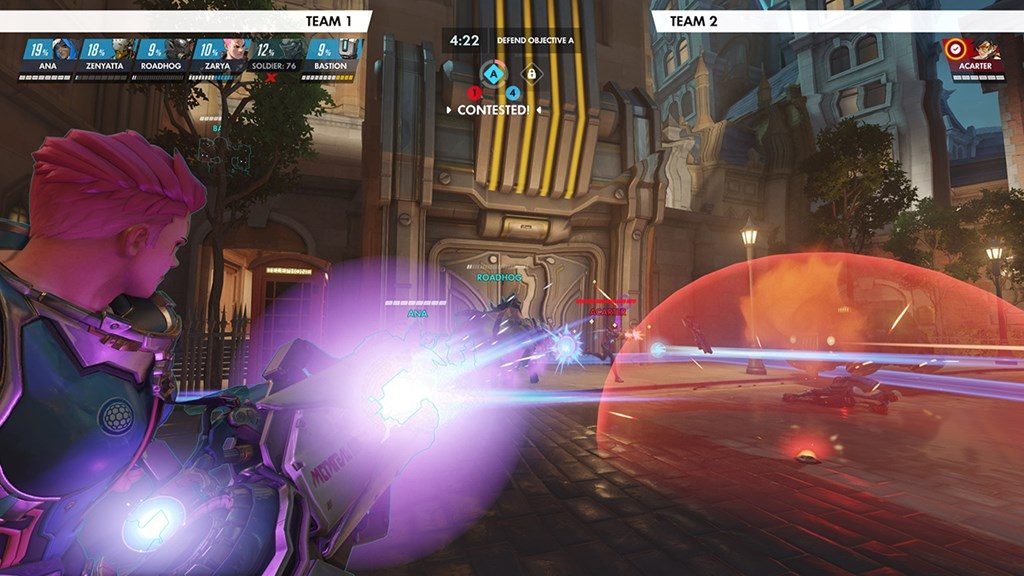
Above: Overwatch League
Image Credit: Robert Paul for Blizzard Entertainment
As one of the fastest growing categories in online gambling, esports betting is on pace to reach up to $8 billion USD in total wagers this year, equating to $560 million in revenue at an industry average margin of 7%.
Growth estimates point to more than $16 billion in annual wagers in coming years.
Betting is the single biggest opportunity in esports. It has uncapped upside and is one of the least encumbered by the video game publisher…but it’s also one of the least talked about. The recent investment wave in esports has been primarily focused on the most visible assets in the space being esports organizations, influencer agencies, and content/competition assets. I believe it’s important people understand that verticals like betting are a huge part of the potential of esports now that interest in the space has skyrocketed.
As one of the fastest growing categories in online gambling, esports betting is on pace to reach up to $8 billion
USD in total wagers this year, equating to $560 million in revenue at
an industry average margin of 7%. Growth estimates point to more than $16 billion in annual wagers in coming years. This compares to an estimated $1 billion
in revenue to be earned in 2019 for the rest of esports, however, when
adjusting for publisher owned/operated assets revenue, I believe the
number is closer to half that. This adjustment nets out game publisher
fees, merch and ticketing at major publisher run events, a proportion of
media rights, and a percentage of sponsorship and advertising.
The benefits of esports betting
We make this adjustment as the investable esports ecosystem,
everything making headlines lately, is non-publisher assets, companies
building around the IP of publishers. Unlike these categories, betting
is IP-agnostic as it requires no franchise or licensing fees paid to the
publisher, which is seen in categories such as esports teams or
tournament organizers. It is also game-agnostic, not being exposed to
game cyclicality, which is the mark of the video game industry and
esports.
Gamers are fickle and it’s impossible to predict the longevity of a
new title. Betting is a platform that can easily offer whatever is being
watched. Lastly, it is API-agnostic, seeing no reliance on publisher
logins or other third-party API’s such as Twitch which can be found in
other verticals. This is why I believe the magnitude of the opportunity
in betting exceeds every other vertical in esports and will continue to
do so long-term.
The rapid & challenging rise of esports betting
How did it begin? The first major wave came with the use of virtual
in-game aesthetics as unregulated casino chips back in 2013/2014. Valve
games, Counter Strike: Global Offensive and Dota 2, the second and third
most popular esports (behind League of Legends), have highly liquid
real money economies using in-game aesthetics termed skins, which fans
began to use for gambling on esports.
Nearly all the skins gambling sites were operating illegally, rarely
doing any requisite Know Your Customer (KYC) compliance to ensure the
customer is in a legal jurisdiction and over 18, had little to no
Anti-Money Laundering (AML) controls, and certainly no gambling license.
Unfortunately, this meant many underage kids often from illegal markets
gambled, and the skins betting market quickly swelled to $5 billion in total wagers. After multiple scams and a class action lawsuit, Valve sent cease & desist notices to all major skins gambling sites toward the end of 2016, resulting in a material reduction in skins betting.
Although the illegal skins sites did not directly make the transition
to regulated esports betting, they were a key step in the process. The
advantage of those sites is they were totally unregulated. You could
build one and get it up and running in 30 days. A regulated gambling
site takes a year if you move quick. As a consequence, we saw
effectively nobody switch. However, the companies making regulated
esports specific betting products took product and marketing cues from
those sites as they serve the same customer base.
That unregulated market kicked off regulated wagering on esports. At
one point, before it was shut down, the skins betting market was an
estimated ten times bigger than the regulated esports betting market.
Without the skins betting market its unlikely esports betting would have
taken off as quickly, and then when it eventually got shut down by
regulators it created a big wave into regulated esports betting. This
created much of the opportunity we are discussing in this article. Like a
lot of new tech, it starts off in the unregulated side before it
matures.
Now in 2019 esports betting is one of the most exciting categories in
the regulated gambling industry. Even more so when combined with a U.S.
sports betting market opening up state by state. With the nature of
esports being video games, it creates unlimited possibilities for unique
bets such as round-by-round betting in first person shooters, or
hyper-contextual bets like first Baron kill (provides a team buff) in
the world’s most popular esport game, League of Legends. With new game
titles constantly being released, and an ever-increasing population of
esports fans, the trend is clear.
Many ways to bet on esports
The current options available
for esports fans to bet with is varied. You have legacy sportsbooks
with an esports offering, purist esports sportsbooks sites, crypto
betting offerings, and still some illegal skins betting sites. The
challenge and opportunity as I see it is not attracting the gambler to
bet on esports, but rather attracting and onboarding the esports fan.
What appeals to a 23-year-old esports fan that has less experience with
betting is different from what is currently being offered to a
35-year-old football fan.
Similar to any traditional service being offered to a new generation
requiring a major user experience overhaul (as financial tech has). I
believe it isn’t enough to just display the odds. Sportsbooks need to
offer more contextual betting, team/match data, content/community
offerings, deep partnership engagements and more. The exciting thing is
that the code has not been cracked, and the room for innovation is vast.
Significant opportunity for new sportsbooks
Online gambling has spent more than 20 years focused on traditional
sports. Creating and curating the optimal offering, marketing schemes,
and bonus/reward programs. Converting brick and mortar bettors to online
ones. Over that period gambling regulation has evolved, sports fans
have aged, and the market has become relatively saturated with
operators.
The emergence of esports as a sport, and consequently, a betting
market, represents the first instance in a long time of a new generation
entering the fold. This is unprecedented and the interest from the
traditional gambling world is immense. For the first time they are
facing a generation born and bred on the internet. Solving for that when
you have spent so long solving for the inverse is challenging. It means
a window of opportunity is open for new operators, new investors, new
strategies, new ideas, and it’s incredibly exciting. All that said, it’s
a thrilling time to be in esports, betting, and the development of
sports and media for the next generation. This is just the beginning.
Kevin Wimer was a professional gamer in the early 2000’s, and is
currently Chief Marketing Officer at esports sportsbook Rivalry.
Addressing India’s Reskilling Challenge – A Report By AIM
Even with the third-largest developer base and a substantial tech-savvy talent pool, India lags behind its peers on major AI indicators.
This is despite a thriving startup ecosystem, high-growth companies which have made a substantial investment in setting up CoEs and the Government investing in building a robust tech infrastructure.
Behind the AI and data analytics boom, lies the story of a massive talent gap as workforce struggles to remain employable. The skills’ shelf life has shortened, with technology changing exponentially over the last decade, skills that were relevant at the beginning of the career have become obsolete. In order to remain employable, the workforce needs to reskill to take advantage of new opportunities. The rise of edtech companies in India is not surprising, given the huge clamour for continuous learning that has taken root in the professional sphere. This is backed by the rise of emerging technologies — artificial intelligence, its subset machine learning and data science which has spawned a booming job market revolving around new technologies that has substantially transformed India’s IT labour market.
The changing job economy has resulted in new opportunities for the
Indian workforce. As estimated by a consulting major, AI has the
potential to add US$957 billion, or 15 percent of India’s current gross
value in 2035. The booming economy, fuelled by AI and advanced analytics
requires more Indians to enter the workforce with a different
skill-set. As per our estimate, close to 97,000 AI positions lie vacant
in India.
But,
the challenges are also increasing multifold — on the one hand India
Inc is struggling with disruptions like automation that are redefining
jobs and secondly, it is grappling with finding the right talent with
the right skillset for AI/ML and data science teams. Meanwhile, the
upcoming generation that will enter the workforce soon is fed on an
outdated curriculum that hasn’t kept up with the industry’s demands.In
our report, we dig into the educational stakeholder landscape to see how
they are transforming the skills market by developing training courses
and certification programmes that correspond to in-demand skills
required today. We look at the type of educational institutions offering
data and analytics programs; how the educational landscape is changing
in response to the heightened demand for analytics skills and what needs
to be done to fill the skill gap.
The second half of the report looks at our last three years ranking
data to find out the winning attributes that have helped analytics
institutes rank on top consistently and how other training institutes
have fared over the last three years.Key Highlights
The online reskilling market is estimated to be $93 million and is expected to grow at a rate of 38%.
As compared to other educational categories (secondary supplemental
education providers and GMAT/ GRE/GATE test preparation providers) the
reskilling market is more mature
Current market is largely B2C driven but educational stakeholders are also actively catering to the B2B segment
Reskilling market in India is driven by the needs of a large working population looking for industry-relevant skills
Online key players are also moving towards blended educational
solutions by creating offline touchpoints to provide peer interaction
Emphasis on personalised learning has led to mentorship and offline
touchpoints that helps students gain handson experience for particular
concepts
Business Analytics course was the starting point, besides this,
other courses that are gaining traction are Artificial Intelligence,
Machine Learning, Data Science & Analytics & Data Engineering
Partnerships between analytics education providers and universities in offering niche courses
Higher demand for short-term diploma courses in in-demand areas such as Blockchain, Data Science and Machine Learning
Virtual classroom concept that began in 2014 has brought high quality analytics education more accessible
Key tools learnt are R, SAS, Python, on big data end Hive, Pig, Hadoop and in AI/ML end Tensorflow and Keras
Key Players In The Reskilling Market
In order to capitalise on these opportunities, IT companies,
educators and policymakers need to develop a deeper understanding of the
existing workforce, the skill-set required in the future, and the gaps
that will need to be addressed. This implies that these three key
players need to align the broader economic developer agenda with the
shifting job market and work towards building a strong talent that has
the baseline and digital skills required for current landscape. At the
Government level, policy makers will have to assess secondary and
postsecondary education and align it with the skills that are required
for tomorrow. Many leading Indian IT majors have undertaken
employer-training initiatives, pre-employment training and have also
provided their own courseware. Collectively, the key stakeholders can
foster a workforce development ecosystem and provide domain specific
training with a job-first approach. Given this scenario — educational
stakeholders have made a very strong business case for reskilling the
workforce and have actively partnered with renowned educational
institutions to launch technical certifications and degree programmes
tailored to fill the skill gap.
Analytics Education Landscape
The nature of analytics education has evolved over the last few years
and a mix of models have emerged in the online and offline space to
accommodate the changing requirements of students. Learners seek a
career-focused analytics education augmented by classroom setting that
prepare them for job functions in data analytics space.
• In cases where learning is delivered purely online, participants
look for realtime learning in a format that allows learners to pursue it
at their own pace
• Candidates look for course content created by top instructors, with
industry and university collaboration to provide a well-rounded
analytics education
• Executive programs are also in high demand as these are intended
for senior professionals who want to renew their skillset and understand
how data can be helpful in managerial decision making
• In case of executive analytics courses, technical skills such as
data management are augmented by soft skills such as business
understanding and communication
• Analytics education providers in India mostly offer Business
Analytics (BA) and Business Intelligence (BI) programs that combine
analytical number crunching, reporting and visualization techniques
Learning Formats
The learning formats can be broadly put under 4 categories:
Self-paced learning delivered via recorded video content
Instructor-Led live classroom sessions delivered online
Blended learning format with classroom and online delivery
Bootcamps for intensive, in-person learning that provides a hands-on experience
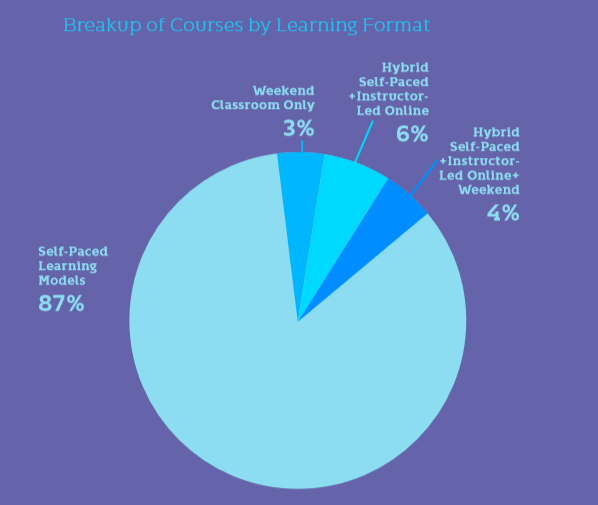
Around 87 percent of analytics courses from private training institutes are delivered in the self-paced learning models
6 percent are delivered in the hybrid (Self-paced and Instructor-Led
online) format and 4 percent in Instructor Led weekend and self-paced
format
There’s only a 3 percent uptake for weekend classroom format
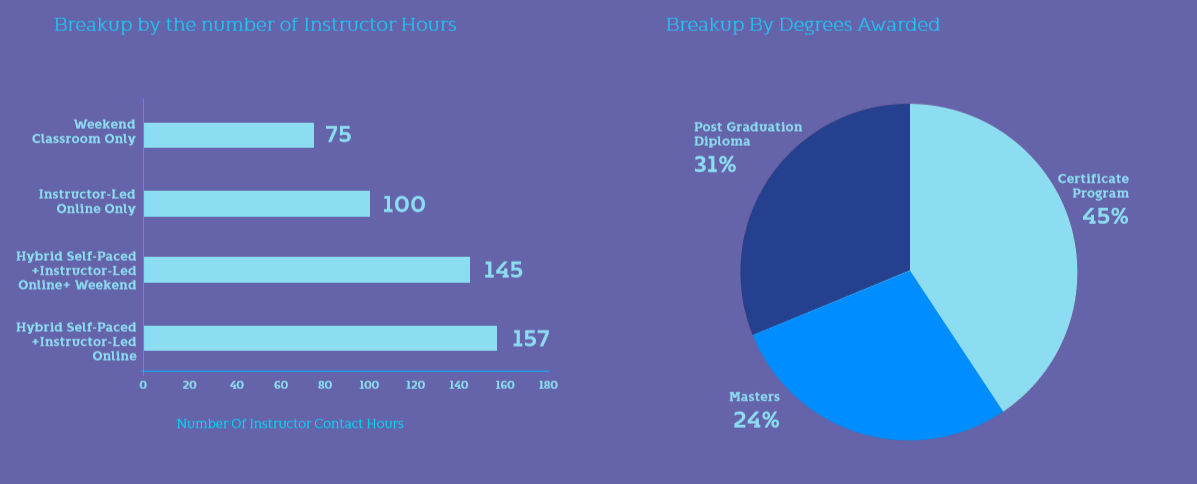
On average, analytics courses by private institutes offer 105 hours of instructor contact hours
The hybrid model of self-paced + online Instructor-Led courses has the highest number of contact hours at 157.
The blended learning opportunity allows learners to get continuous feedback and participate in real-time assessment
Weekend-only model has the least contact hours at 75
For those looking for face-to-face learning environment, weekend model is the best fit
Posted by AGORACOM-JC
at 2:07 PM on Tuesday, June 4th, 2019
1,198 patient visits generating revenue of $152,846
“Our cost cutting and restructuring efforts are now showing in the financial statements and balance sheet, so our shareholders, investors and partners should take comfort knowing the Company is substantially more stable and poised to execute on the main growth initiatives we have identified.â€
VANCOUVER, June 4, 2019 –EMPOWER CLINICS INC. (CSE: CBDT) (Frankfurt 8EC) (“Empower” or the “Company“) has filed today its unaudited interim condensed consolidated financial statements and related management’s discussion and analysis, both of which are available at www.SEDAR.com. All financial information in this press release is reported in United States dollars, unless otherwise indicated.
“After the complete overhaul of our accounting, audit and financial control systems to complete the December 31st,
2018 year end audit, our outstanding accounting team had a much easier
job in preparing our Q1 results, with a solid and professional finance
team in place,” said Steven McAuley, Chairman & CEO of Empower.
“Our cost cutting and restructuring efforts are now showing in the
financial statements and balance sheet, so our shareholders, investors
and partners should take comfort knowing the Company is substantially
more stable and poised to execute on the main growth initiatives we have
identified.”
Q1 2019 Highlights
1,198 patient visits generating revenue of $152,846, compared to 2,242 patient visits generating $302,142 for Q1 2018.
Net loss of $398,541, compared to $2,282,676
for Q1 2018, which was primarily driven by significantly reducing
operating costs through aggressive headcount cuts and facility changes
and lower stock based compensation expense.
Cash used in operating activities was $219,212, compared to $202,712 for Q1 2018.
Cash at March 31, 2019 of $1,974,483, compared to $157,668 at December 31, 2018, which was primarily driven by equity financings during the three months ended March 31, 2019.
Recent Highlights
Strategic redirection: The Company has been
re-positioning its overall strategy to become a vertically integrated
health and wellness company that connects to its 120,000 patients using a
data driven focus to improve patients’ lives with products, technology
and health systems.
Strengthened Management Team: In January 2019, seasoned entrepreneur and executive officer and former GE Capital Managing Director Steven McAuley
was appointed as Empower’s Chairman & CEO. The Empower management
team has since been augmented with critical hires made from the ranks of
investment banking, accounting, marketing and clinic operations among
other disciplines. CFO Mat Lee, appointed on March 19, 2019,
is an experienced accounting and finance executive. To further support
financial and accounting restructuring, the Company engaged the services
of Invictus Accounting Group, a top-tier boutique advisory firm based
in Vancouver, BC.
Strategic Acquisition: On April 30, 2019, the Company completed the acquisition of Sun Valley Certification Clinics Holdings LLC (“Sun Valley”) from Andrea Klein and Dustin Klein
and a minority shareholder, through its wholly-owned subsidiary,
Empower Healthcare Assets Inc., for cash and share consideration having
an aggregate value of $3,835,000 (CAD$5,160,376). Sun Valley operates a network of professional medical cannabis and pain management practices, with five clinics in Arizona, one clinic in Las Vegas, a tele-medicine platform serving California, and a fully developed franchise business model for domestic and international markets.
Strategic Development: On February 28, 2019 the Company announced that it intends to open a fully functioning hemp-based CBD extraction facility in greater Portland, Oregon
in Q2 2019 with the first extraction system expected to have the
capacity to produce 6,000 kg of extracted product per year. The new
facility has been secured and the Company takes possession June 1, 2019.
2019 Outlook and Catalysts
Enhanced Corporate Governance: The Company has
prioritized strengthening corporate governance practices under the
leadership of its Board of Directors and Chairman Steven McAuley, in order to address certain best practices suggested by North American securities regulators and senior stock exchanges.
Improved Capital Markets Profile: Empower is
diversifying its business model to become a vertically integrated
operator in the global cannabis sector with a focus on patient care, CBD
product distribution, research & development and CBD product
extraction. The Company believes this will appeal to a broader base of
shareholders and investors and provide greater access to capital and
improved trading liquidity.
Increased Patient Access: With a rapidly expanding company-owned clinic network and significant expansion opportunity through the Sun Valley
franchise model, Empower anticipates it will grow its total patient
list substantially in the years ahead. This is expected to provide
greater opportunity for treatment analysis using artificial intelligence
(AI), validating the Company as a leader in understanding the efficacy
of cannabis-related therapies.
Focus on CBD Product Sales: Empower’s patient base and
customers are expected to benefit from access to high margin derivative
products, including CBD lotion, tinctures, spectrum oils, capsules,
lozenges, patches, e-drinks, topical lotions, gel caps, hemp extract
drops and pet elixir hemp extract drops. Patients and customers will be
able to access Empower’s customer service, home delivery and e-commerce
platform.
Market Leading Technology: Empower utilizes a
market-leading patient electronic management and POS system that is
HIPAA compliant and provides deep insight to patient care. The Company
supports remote patients using its tele-medicine portal, enabling
patients who do not live near one of its clinic locations, or are
disabled or unable to come to a location, to still benefit from a doctor
consultation.
Financial Summary
$, except where noted
Three months endedMarch 31,
2019
2018
Patient visits
1,198
2,242
Clinic Revenues
152,846
302,142
Direct Clinic Expenses
(39,413)
(105,165)
Loss from operations
(279,308)
(2,051,463)
Net loss
(398,541)
(2,282,676)
Net loss per share
(0.01)
(0.05)
Financial Performance
Clinic revenues for Q1 2019 was $152,846, compared to Q1 2018 revenues of $302,142. This decrease over prior year is attributable to three factors. The introduction of recreational cannabis to Oregon,
a reduction in marketing spend while we reposition our brand and its
treatment through online, social and mobile upgrades and competitive
introduction and pressure. The Company believes all three areas are
being addressed effectively and will be reflected in future revenues.
Direct clinic expenses for Q1 2019 was $39,413, compared to Q1 2018 direct clinic expenses of $105,165. This decrease over prior year is attributable to the decrease in number of patient visits described above.
Net loss from operations for Q4 2019 was $113,433, compared to Q1 2018 net loss of $2,051,463.
This decrease in loss below prior year is primarily attributable two
factors. Operating expense decreased due to a decrease in salaries and
benefits as a result of aggressive headcount cuts and facility changes.
Additionally, share-based payments decreased as the RTO in Q1 2018
resulted in options being granted to Adira Energy Ltd. option holders
and new members of management.
Net loss for Q1 2019 was $398,541, respectively, compared to Q1 2018 net loss of $2,282,676.
This decrease below prior year is primarily attributable to the
decrease in operating expenses and share-based compensation expense.
During the three months ended March 31, 2019, the Company used $219,212
in cash from operations after changes in non-cash working capital. The
Company invested $nil towards property and equipment and raised $2,036,027 via proceeds from various issuances of shares and notes.
Please refer to the Company’s unaudited condensed interim
consolidated financial statements, related notes and accompanying
Management Discussion and Analysis for a full review of the operations.
About Empower
Empower is a leading multi-state operator of a network of
physician-staffed clinics focused on helping patients improve and
protect their health through innovative physician recommended treatment
options. It is expected that Empower’s proprietary product line
“Sollievo” will offer patients a variety of delivery methods of doctor
recommended cannabidiol (CBD) based products in its clinics, online and
at major retailers. With over 165,000 patients, an expanding clinic
footprint, a focus on new technologies, including tele-medicine, and an
expanded product development strategy, Empower is undertaking new growth
initiatives to be positioned as a vertically integrated, diverse,
market-leading service provider for complex patient requirements in 2019
and beyond.
ON BEHALF OF THE BOARD OF DIRECTORS: Steven McAuley Chief Executive Officer
DISCLAIMER FOR FORWARD-LOOKING STATEMENTS
This news release contains certain “forward-looking statements”
or “forward-looking information” (collectively “forward looking
statements”) within the meaning of applicable Canadian securities laws.
All statements, other than statements of historical fact, are
forward-looking statements and are based on expectations, estimates and
projections as at the date of this news release. Forward-looking
statements can frequently be identified by words such as “plans”,
“continues”, “expects”, “projects”, “intends”, “believes”,
“anticipates”, “estimates”, “may”, “will”, “potential”, “proposed” and
other similar words, or information that certain events or conditions
“may” or “will” occur. Forward-looking statements in this news release
include, but are not limited to, statements regarding the direction and
growth prospects of the Company, the expansion of the company’s clinic
and distribution network, the expected effect of the Vendors in their
new roles with the Company, the effect on the lives of patients, the
growth into a national brand, the effect of the Transaction, the
diversification of the Company’s business model, the potential appeal to
shareholders, the growth of the Company’s patient list and the effect
thereof, the expected benefits for the company’s patient base and
customers, the release of the cash consideration, the release of Shares
being held in escrow in connection with the Transaction and statements
regarding the Company’s proprietary product line “Sollievo”. Such
statements are only projections, are based on assumptions known to
management at this time, and are subject to risks and uncertainties that
may cause actual results, performance or developments to differ
materially from those contained in the forward-looking statements,
including that the Company may not be able to expand, that the
Transaction may not have the expected results, and other factors beyond
the Company’s control. No assurance can be given that any of the events
anticipated by the forward-looking statements will occur or, if they do
occur, what benefits the Company will obtain from them. Readers are
cautioned not to place undue reliance on the forward-looking statements
in this release, which are qualified in their entirety by these
cautionary statements. The Company is under no obligation, and expressly
disclaims any intention or obligation, to update or revise any
forward-looking statements in this release, whether as a result of new
information, future events or otherwise, except as expressly required by
applicable laws.
Investors: Steve Low, Boom Capital Markets, 647-620-5101; Steven McAuley, CEO, 604-789-2146, [email protected]; French inquiries: Remy Scalabrini, Maricom Inc., 604-789-2146, [email protected] CNW Group 2019
Posted by AGORACOM-JC
at 12:31 PM on Tuesday, June 4th, 2019
7,607 patient visits generating revenue of $1,091,386
Company has been re-positioning its overall strategy to become a vertically integrated health and wellness company that connects to its 120,000 patients using a data driven focus to improve patients’ lives with products, technology and health systems
VANCOUVER, June 4, 2019 – EMPOWER CLINICS INC. (CSE: CBDT) (Frankfurt 8EC) (“Empower” or the “Company“) has filed today its audited consolidated financial statements and related management’s discussion and analysis, both of which are available at www.SEDAR.com. All financial information in this press release is reported in United States dollars, unless otherwise indicated.
“The Company has worked extremely hard over the past few months to
vastly improve its overall efficiency by significantly reducing
operating costs with aggressive headcount cuts and facility changes,
resulting in a much leaner organization that is positioned for new
growth. We dramatically improved financial accounting and reporting
controls to ensure we have the best possible corporate governance
systems in place to protect our shareholder interests.” Said Steven McAuley, Chairman & CEO of Empower.
“With our improved stable foundation, the closing of our two recent
financings and the closing of the Sun Valley Clinics acquisition, we are
positioned to take advantage of the many growth initiatives ahead of
us, as we continue on our path to becoming a growth-oriented global
health & wellness brand.”
2018 Highlights
7,607 patient visits generating revenue of $1,091,386 or $0.02 per share, compared to 9,705 patient visits generating $1,507,050 or $0.03 per share for fiscal 2017.
Net loss of $3,789,918 or $0.06 per share, compared to $3,109,921 or $0.06 per share for fiscal 2017, which was primarily driven by the Company’s listing fee of $1,308,808 as part of the Company’s listing on to the Canadian Securities Exchange.
Cash used in operating activities was $2,835,710 or $0.04 per share, compared to $1,587,760 or $0.03 per share for fiscal 2017.
Cash at December 31, 2018 of $157,668, compared to bank indebtedness of $7,148 at December 31, 2017, which was primarily driven by equity and debt financings during the year ended December 31, 2018.
On April 23, 2018, the Company completed its previously
disclosed reverse takeover transaction (“RTO”) of Adira Energy Ltd.
Following the RTO, on April 30, 2018 the Company listed on
the Canadian Securities Exchange (the “CSE”) under ticker symbol “CBDT”,
on the OTC, part of the OTC Markets Group, under the ticker “EPWCF” and
on the Frankfurt Stock Exchange under the ticker “8EC”. On closing of
the RTO, the Company’s name was changed from Adira Energy Ltd to Empower
Clinics Inc.
Recent Highlights Subsequent to Year End
Strategic redirection: The Company has been
re-positioning its overall strategy to become a vertically integrated
health and wellness company that connects to its 120,000 patients using a
data driven focus to improve patients’ lives with products, technology
and health systems.
Strengthened Management Team: In January 2019, seasoned entrepreneur and executive officer and former GE Capital Managing Director Steven McAuley
was appointed as Empower’s Chairman & CEO. The Empower management
team has since been augmented with critical hires made from the ranks of
investment banking, accounting, marketing and clinic operations among
other disciplines. CFO Mat Lee, appointed on March 19, 2019,
is an experienced accounting and finance executive. To further support
financial and accounting restructuring, the Company engaged the services
of Invictus Accounting Group, a top-tier boutique advisory firm based
in Vancouver, BC.
Strategic Acquisition: On April 30, 2019,
the Company completed the acquisition of Sun Valley Certification
Clinics Holdings LLC (“Sun Valley”) from Andrea Klein and Dustin Klein
and a minority shareholder, through its wholly-owned subsidiary, Empower
Healthcare Assets Inc., for cash and share consideration having an
aggregate value of $3,835,000 (CAD$5,160,376). Sun Valley operates a
network of professional medical cannabis and pain management practices,
with five clinics in Arizona, one clinic in Las Vegas, a tele-medicine
platform serving California, and a fully developed franchise business
model for domestic and international markets.
Strategic Development: On February 28, 2019 the Company announced that it intends to open a fully functioning hemp-based CBD extraction facility in greater Portland, Oregon
in Q2 2019 with the first extraction system expected to have the
capacity to produce 6,000 kg of extracted product per year. The new
facility has been secured and the Company takes possession June 1, 2019.
2019 Outlook and Catalysts
Enhanced Corporate Governance: The Company has
prioritized strengthening corporate governance practices under
the leadership of its Board of Directors and Chairman Steven McAuley, in order to address certain best practices suggested by North American securities regulators and senior stock exchanges.
Improved Capital Markets Profile: Empower is
diversifying its business model to become a vertically integrated
operator in the global cannabis sector with a focus on patient care, CBD
product distribution, research & development and CBD product
extraction. The Company believes this will appeal to a broader base of
shareholders and investors and provide greater access to capital and
improved trading liquidity.
Increased Patient Access: With a rapidly expanding
company-owned clinic network and significant expansion opportunity
through the Sun Valley franchise model, Empower anticipates it will grow
its total patient list substantially in the years ahead. This is
expected to provide greater opportunity for treatment analysis using
artificial intelligence (AI), validating the Company as a leader in
understanding the efficacy of cannabis-related therapies.
Focus on CBD Product Sales: Empower’s patient base and
customers are expected to benefit from access to high margin derivative
products, including CBD lotion, tinctures, spectrum oils, capsules,
lozenges, patches, e-drinks, topical lotions, gel caps, hemp extract
drops and pet elixir hemp extract drops. Patients and customers will be
able to access Empower’s customer service, home delivery and e-commerce
platform.
Market Leading Technology: Empower utilizes a
market-leading patient electronic management and POS system that is
HIPAA compliant and provides deep insight to patient care. The Company
supports remote patients using its tele-medicine portal, enabling
patients who do not live near one of its clinic locations, or are
disabled or unable to come to a location, to still benefit from a doctor
consultation.
Financial Summary
$, except where noted
Three months endedDecember 31,
Year ended December 31,
2018
2017
2018
2017
Patient visits
1,314
1,893
7,607
9,705
Clinic Revenues
196,909
291,721
1,091,386
1,507,050
Direct Clinic Expenses
(115,655)
(114,252)
(417,047)
(638,834)
Loss from operations
(592,899)
(560,231)
(4,309,373)
(2,408,638)
Net income (loss)
1,342,930
(814,539)
(3,789,918)
(3,109,921)
Net income (loss) per share
0.01
(0.02)
(0.06)
(0.06)
Financial Performance
Clinic revenues for Q4 and full year 2018 were $196,909 and $1,091,386, respectively, compared to Q4 and full year 2017 revenues of $291,721 and $1,507,050, respectively. This decrease over prior year is attributable to three factors. The introduction of recreational cannabis to Oregon,
a reduction in marketing spend while we reposition our brand and its
treatment through online, social and mobile upgrades and competitive
introduction and pressure. The Company believes all three areas are
being addressed effectively and will be reflected in future revenues.
Direct clinic expenses for Q4 and full year 2018 were $115,655 and $417,047, respectively, compared to Q4 and full year 2017 direct clinic expenses of $114,252 and $638,834, respectively. This decrease over prior year is attributable to the decrease in number of patient visits described above.
Net loss from operations for Q4 and full year 2018 were $592,899 and $4,309,373, respectively, compared to Q4 and full year 2017 net loss of $560,231 and $2,408,638,
respectively. This increase over prior year is primarily attributable
two factors. Operating expense increased due to an increase in salaries
and benefits during fiscal 2018 as a result of additional senior
management joining the Company in conjunction with the RTO.
Additionally, share-based payments increased as a result of the RTO
which resulted in options being granted to Adira option holders and new
members of management.
Net income for Q4 and net loss for the full year 2018 were $1,342,930 and $3,789,918, respectively, compared to Q4 and full year 2017 net loss of $814,539 and $3,109,921, respectively. This increase over prior year is primarily attributable to the listing fee of $1,308,808 as a result of the RTO, share-based compensation expense of $892,417
and restructuring expenses incurred during the year as the Company
completed several changes towards its new strategic direction. Partially
offsetting these one-time expense is a $1,598,425 gain on change in fair value of the warrant liability and a $890,136
gain on change in conversion option on convertible debentures that
resulted from the decrease in the Company’s share price and therefore
the value of the warrants and convertible debentures exercisable.
During the year ended December 31, 2018, the Company used $2,835,710 in cash from operations after changes in non-cash working capital. The Company invested $100,227 towards property and equipment and raised $3,093,604 via proceeds from various issuances of shares, notes, and convertible debentures.
Please refer to the Company’s audited consolidated financial
statements, related notes and accompanying Management Discussion and
Analysis for a full review of the operations.
About Empower
Empower is a leading multi-state operator of a network of
physician-staffed clinics focused on helping patients improve and
protect their health through innovative physician recommended treatment
options. It is expected that Empower’s proprietary product line
“Sollievo” will offer patients a variety of delivery methods of doctor
recommended cannabidiol (CBD) based products in its clinics, online and
at major retailers. With over 165,000 patient records, an expanding
clinic footprint, a focus on new technologies, including tele-medicine,
and an expanded product development strategy, Empower is undertaking new
growth initiatives to be positioned as a vertically integrated,
diverse, market-leading service provider for complex patient
requirements in 2019 and beyond.
ON BEHALF OF THE BOARD OF DIRECTORS: Steven McAuley Chief Executive Officer
DISCLAIMER FOR FORWARD-LOOKING STATEMENTS
This news release contains certain “forward-looking statements”
or “forward-looking information” (collectively “forward looking
statements”) within the meaning of applicable Canadian securities laws.
All statements, other than statements of historical fact, are
forward-looking statements and are based on expectations, estimates and
projections as at the date of this news release. Forward-looking
statements can frequently be identified by words such as “plans”,
“continues”, “expects”, “projects”, “intends”, “believes”,
“anticipates”, “estimates”, “may”, “will”, “potential”, “proposed” and
other similar words, or information that certain events or conditions
“may” or “will” occur. Forward-looking statements in this news release
include, but are not limited to, statements regarding the direction and
growth prospects of the Company, the expansion of the company’s clinic
and distribution network, the expected effect of the Vendors in their
new roles with the Company, the effect on the lives of patients, the
growth into a national brand, the effect of the Transaction, the
diversification of the Company’s business model, the potential appeal to
shareholders, the growth of the Company’s patient list and the effect
thereof, the expected benefits for the company’s patient base and
customers, the release of the cash consideration, the release of Shares
being held in escrow in connection with the Transaction and statements
regarding the Company’s proprietary product line “Sollievo”. Such
statements are only projections, are based on assumptions known to
management at this time, and are subject to risks and uncertainties that
may cause actual results, performance or developments to differ
materially from those contained in the forward-looking statements,
including that the Company may not be able to expand, that the
Transaction may not have the expected results, and other factors beyond
the Company’s control. No assurance can be given that any of the events
anticipated by the forward-looking statements will occur or, if they do
occur, what benefits the Company will obtain from them. Readers are
cautioned not to place undue reliance on the forward-looking statements
in this release, which are qualified in their entirety by these
cautionary statements. The Company is under no obligation, and expressly
disclaims any intention or obligation, to update or revise any
forward-looking statements in this release, whether as a result of new
information, future events or otherwise, except as expressly required by
applicable laws.
Investors: Steve Low, Boom Capital Markets, 647-620-5101; Steven McAuley, CEO, 604-789-2146, [email protected]; French inquiries: Remy Scalabrini, Maricom Inc., 604-789-2146Copyright CNW Group 2019
Tags: Cannabis, CSE, Hemp, Marijuana, stocks, tsx, tsx-v, weed Posted in Empower Clinics Inc. | Comments Off on Empower Clinics $CBDT.ca Reports Fiscal 2018 Results – Over $1M in 2018 Revenues $WEED.ca $CGC $ACB $APH $CRON.ca $HEXO.ca $TRST.ca $OGI.ca