Posted by AGORACOM-JC
at 4:00 PM on Wednesday, March 13th, 2019
SPONSOR: ThreeD Capital Inc. (IDK:CSE) Led by
legendary financier, Sheldon Inwentash, ThreeD is a Canadian-based
venture capital firm that only invests in best of breed small-cap
companies which are both defensible and mass scalable. More than just
lip service, Inwentash has financed many of Canada’s biggest small-cap
exits. Click Here For More Information.
——————-
Kakao’s Blockchain Arm Raises $90 Million in Private Token Sale
Ground X, the blockchain subsidiary of South Korean messaging giant Kakao, has raised $90 million in a private coin offering.
As reported by Bloomberg on Monday, Ground X CEO Jason Han said that IDG Capital, Cresendo Equity Partners and Translink Capital had participated in the round.
The firm is also reportedly planning to raise “a similar sum†in another round starting Tuesday, before launching its blockchain platform in June.
Kakao first revealed its plan to set up a blockchain subsidiary back in March 2018, soon after confirming that it had launched Ground X to develop a blockchain-powered platform as a foundation for application developers. Kakao’s top execs said at the time that the plan was to integrate future blockchain-based services with Kakao’s existing internet offerings, such as the Kakao Talk messaging app.
Ground X launched
a test network (or testnet) for its proprietary blockchain network,
dubbed Klaytn, last autumn. It has already partnered with 26 companies
that aim to run apps on Klaytn, Han told Bloomberg. These include South
Korean video game developer Wemade and video streaming platform Watcha,
as well as a unit of Chinese travel agency Zanadu.
The subsidiary has also said it
will work with the Seoul Digital Foundation, an organization created by
the Seoul Metropolitan Government, to develop blockchain projects
focusing on social and public services.
Ground X could be summed up as “partial or gradual decentralization,†Han told CoinDesk Korea last year, adding that some of Kakao’s services could be decentralized.
He added:
“The token economy is a business model that no one could have
imagined before. Until now, Kakao has only operated in Korea, but
through blockchain we could expand into the global market. That means
taking a portion of the profits we earn as an intermediary and using it
to expand our market by sharing it with users.â€
Posted by AGORACOM-JC
at 11:18 AM on Wednesday, March 13th, 2019
Tartisan Nickel (TN:CSE) Kenbridge Property has a measured and indicated resource of 7.14 million tonnes at 0.62% nickel, 0.33% copper. Tartisan also has interests in Peru, including a 20 percent equity stake in Eloro Resources and 2 percent NSR in their La Victoria property. Click her for more information
TN:CSE
———————
Dear Tartisan Investors,
The recently published article below
is a preamble to a more comprehensive report on the Nickel sector which
will be published on March 31st. The Case for Nickel is being made
……….happy reading.
Regards,
Mark
The Case For Nickel: (Roskill Information Services)
The
nickel price had another volatile year in 20‌18, averaging US$13,‌116/t
compared to US$10,‌408/t in 20‌17. The price still swung wildly over
the course of the year, however, rising from around US$12,‌700/t at the
beginning of 20‌18 to over US$15,‌700/t by early June. From there,
however, the price slumped and by the end of 20‌18, the LME nickel cash
price was trading at around US$10,‌600/t. Early 20‌19 has seen a
recovery and by early March, the price was trading back above
US13,‌000/t.
The market was in deficit for the second year
running in 20‌18, despite a 6.8% y-on-y jump in supply that came mainly
from China and Indonesia. China’s output of refined nickel jumped based
on an increase in nickel pig iron (NPI) production, thanks to increased
availability of nickel ores from Indonesia. The supply growth from
Indonesia, driven by the ramp-up of domestic NPI capacity, has been
stellar: the country became the second-largest producer of refined
nickel in 20‌18; three years previously, it was the tenth largest.
The
growth in supply in 20‌18 was still not sufficient to offset the 6.3%
y-on-y rise in demand, however. Demand from the stainless steel sector,
which accounted for 70% of global primary nickel demand, continued to
grow. The rise in crude stainless production in 20‌18 came mainly from
China and Indonesia, two countries that rely heavily on primary nickel
units rather than scrap, to produce stainless steel.
At the other
end of the first-use spectrum, the battery sector only accounted for 3%
of global primary nickel usage in 20‌18. The use of nickel in batteries
is expected to grow particularly strongly in the next decade, thanks to
the rise in electric vehicle use. Roskill estimates that by 20‌28, the
battery sector will be the second-largest consumer of primary nickel.
The
upshot of the second-consecutive market deficit has been a rapid
drawdown in exchange stocks. Inventories of nickel on the LME and ShFE
combined dropped by 189kt in 20‌18, more than the market deficit. This
could indicate that some producers picked up material in order to boost
their production inventory in anticipation of tighter market conditions.
The scale of the drawdown, however, leads us to believe that some of
this material has merely been moved by financiers away from the
statistical clarity of exchange storage to the statistical darkness of
off-warrant warehouses, with the aim of returning this material to the
market when prices have risen further.
Tartisan will endeavour to
forward you the full March 31st report – and presumably doesn’t hurt to
remind all that Tartisan Nickel owns one of the premier assets in
Canada in this space ! (100mm lbs Ni, 50mm lbs Cu)
Regards,
Tartisan Nickel Corp. (CSE:TN) D. Mark Appleby Suite1060, 44 Victoria Street Toronto, Ontario M5C 1Y2 www.tartisannickel.com Ph: 416-804-0280
Posted by AGORACOM-JC
at 9:00 PM on Tuesday, March 12th, 2019
SPONSOR: Good Life Networks (GOOD:TSX-V)
Video advertising is the future! Company’s A.I. makes 80,000
calculations / second, targeting 750 million users to deliver higher
prices and volume. Company announced combined trailing 12 month revenue
at just over $40 Million, $7.9M EBITDA, $3 Million net income. Click here for more information.
GOOD: TSX-V
—————————
Persistence Market Research (PMR), in its report, projects the global programmatic advertising platform market to register a staggering expansion at 33.3% CAGR during the forecast period 2017 to 2025.
In 2016, the market was evaluated at US$ 1,926.4 Mn, and is further estimated to reach nearly US$ 30,000 Mn by 2025-end.
Surging Utilization of Mobile Advertising to Propel Growth
With growing market for mobile phones, wide utilization of mobile
advertising is witnessed, coupled with surging demand for more
sophisticated technology. Emergence of tools to monitor & measure
relevant data on mobile devices is influencing bright prospects for
programmatic mobile video. There has been a wide adoption of digital
technologies & devices for innovation in business processes and
revenue producing opportunities. In addition, several government and
international events have generated an incremental online advertising
spending, which in turn has influenced adoption of programmatic
advertisements. The aforementioned factors are expected to fuel growth
of the market during the forecast period. In addition, social media
marketers are running more effective campaigns through automated buying,
reaching precise audiences with highly relevant messages. This is
further estimated to propel market growth.
North America to be Largest Market for Programmatic Advertising Platform by 2025-End
North America is projected to be the largest market for programmatic
advertising platform, followed by Europe and Asia Pacific (APAC). Market
in this region will account for revenues worth US$ 1,683.30 Mn in 2017,
and is further estimated to surpass US$ 13,000 Mn by 2025-end. However,
Middle East & Africa (MEA) is anticipated to register fastest
growth in the global programmatic advertising platform market, followed
by Latin America.
Based on transaction mode, real-time bidding segment will remain
preferred in the market during the forecast period. This transaction
mode is expected to surpass US$ 16,000 Mn in revenues by 2025-end. In
contrast, private marketplace transaction mode is projected to exhibit
the fastest expansion at 46.7% CAGR through 2025. This segment is
further estimated to create an incremental opportunity of US$ 5,787.71
Mn between 2017 and 2025.
Mobile Video Ad Format to Register Highest CAGR in the Market through 2025
By ad format, revenues generated by mobile video is expected to reach
US$ 8.682.57 Mn by 2025, and is projected to register the highest CAGR
in the market, followed by mobile display. In terms of revenues, desktop
video will be the second largest ad format segment by 2025-end. On the
basis of enterprise size, although large enterprises are expected to
remain dominant over the market, SMBs are projected to register the
fastest growth through 2025. PMR’s report estimates large enterprises to
expand from US$ 2,190.55 Mn in 2017 to more than US$ 16,000 Mn by
2025-end. SMBS are estimated to exhibit a CAGR of over 40% during the
forecast period.
Key market players identified in PMR’s report include AppNexus Inc.,
AOL Inc. (Verizon Communications Inc.), Yahoo! Inc., DataXu Inc.,
Adroll.com, Google Inc. (Doubleclick), Adobe Systems Incorporated,
Rubicon Project Inc., Rocket Fuel Inc., MediaMath Inc., IPONWEB Holding
Limited (BidSwitch), Between Digital, Fluct, Adform, The Trade Desk,
Turn Inc., Beeswax, Connexity, Inc., Centro, Inc., RadiumOne, Inc.
Innovation Continues as the FDA Clears CardioComm Solutions’ Novel
ECG Smartphone App and Heartcheck(TM) Device for Direct to Consumer
Sales Read More
Received approval from the US Food and Drug Administration for the
over-the-counter sales and marketing of their device agnostic GEMS™
Mobile smartphone app and their newest handheld, heart rhythm monitor,
the HeartCheckTM CardiBeat
Both have been cleared as a Class II medical device and are available for sale direct to consumers.
CardioComm Solutions’ HeartCheck(TM) Device Enters Final FDA Review Phase Read More
Completed a request for additional information from the US Food and
Drug Administration (“FDA”) for the Company’s premarket notification
510(k), Class II medical device clearance application for the
HeartCheck™ CardiBeat and GEMS™ Mobile Application.
Company had submitted a letter of revocation of their supplementary
information submission on December 26, 2018 in compliance with the FDA’s
directive
CardioComm Solutions’ HeartCheck(TM) CardiBeat and Smart Phone App Enter Final Stage of FDA 510(k) Review Read More
Market Release of HeartCheck(TM) CardiBeat and GEMS(TM) Mobile Application Set For Early 2019
Completed its response to the USA Food and Drug Administration for
additional information following the Company’s filing of its premarket
notification 510(k)
Class II medical device clearance application for the HeartCheck™ CardiBeat and GEMS™ Mobile Application
HeartCheck™ CardiBeat is the second of several planned Bluetooth-enabled ECG recording devices to be marketed by the Company
An Innovator in the Mobile ECG Industry
Company Accolades
FULL DISCLOSURE: CardioComm Solutions Inc. is an advertising client of AGORA Internet Relations Corp.
Posted by AGORACOM-JC
at 1:37 PM on Tuesday, March 12th, 2019
NORTHBUD (NBUD:CSE) is already a late stage applicant at the
“Confirmation of Readiness” stage for 25,000 square feet of indoor and
500,000 square feet of outdoor growing space, for the sole purpose of
growing GMP pharma-grade cultivation and food-grade extracted inputs.
But Ryan Brown didn’t get this far in the cannabis space by sitting
still … and he has made one hell of a great deal with the $20 MILLION
acquisition of Eureka Vapor, a multi-state licensed operator in the
USA. The acquisition is subject to typical closing and due diligence
but Ryan has a close relationship with the CEO and is confident it will
close.
If and when it does close, Eureka will bring about $11.5 million in
revenue at a 16% profit margin, which will be immediately accretive to
the bottom line of NORTHBUD. Accretive is actually an understatement.
I also love this acquisition because of its’ terms, which shows the
confidence that both sides have in each other. For example, the Eureka
team can earn an extra $25 million if they hit certain milestones. That
says a lot about how Eureka may grown once it is a part of NORTHBUD.
On the flipside, the Eureka group only gets 10% of their shares on
closing, with the rest dripped out over the next 24 months. That says a
lot about the confidence Eureka has in NORTHBUD.
Find out more about NORTHBUD and this great deal in this interview
with Ryan, who has already made a name for himself and is now on his way
to growing that success, pun intended.
Posted by AGORACOM-JC
at 12:07 PM on Tuesday, March 12th, 2019
Presenting at this year’s Spring Investor Summit on April 1st and 2nd in New York City.
PyroGenesis Canada, Inc. will be presenting at 10:30am on April 1st.
NEW YORK, NY / March 12, 2019 / PyroGenesis Canada, Inc. (TSX-V: PYR.V) will be presenting at this year’s Spring Investor Summit on April 1st and 2nd in New York City. PyroGenesis Canada, Inc. will be presenting at 10:30am on April 1st.
CONFERENCE OVERVIEW AND STRUCTURE
The Spring Investor Summit (formerly The MicroCap Conference) is an
exclusive event dedicated to connecting small and micro cap companies
with high-level, institutional and retail investors.
The Spring Investor Summit will take place in New York City at the
Essex House on April 1st and 2nd. The upcoming conference will feature
200 presenting companies, 1200 institutional and retail investors, 2000
one-on-one meetings, expert speakers, and industry panels.
REGISTRATION FOR INVESTORS
To request free registration, please go to our website (www.springinvestorsummit.com), and click the “Registration” button
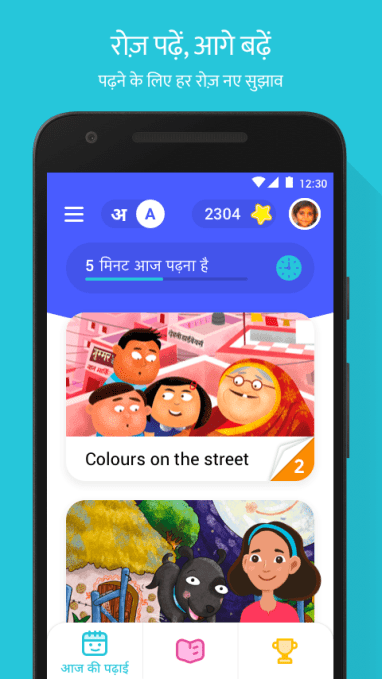
Google is expanding its suite of apps designed for the Indian market with today’s launch of a new language-learning app aimed at children, called Bolo.
The app, which is aimed at elementary school-aged students, leverages technology like Google’s speech recognition and text-to-speech to help kids learn to read in both Hindi and English.
Google is expanding its suite of apps designed for the Indian market with today’s launch of a new language-learning app aimed at children, called Bolo. The app, which is aimed at elementary school-aged students, leverages technology like Google’s speech recognition and text-to-speech to help kids learn to read in both Hindi and English.
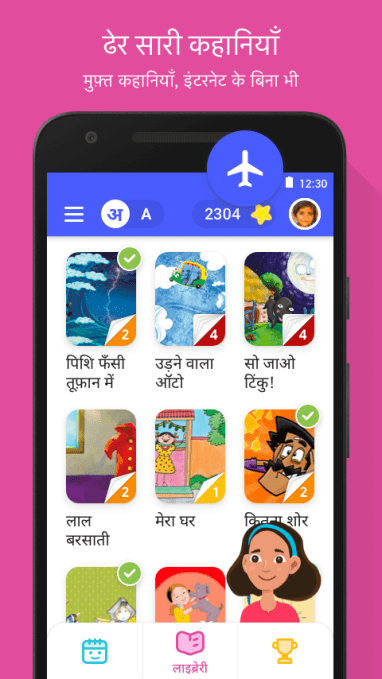
To do so, Bolo offers a catalog of 50 stories in Hindi and 40 in English, sourced from Storyweaver.org.in. The company says it plans to partner with other organizations in the future to expand the story selection.
Included in the app is a reading buddy, “Diya,†who encourages and
corrects the child when they read aloud. As kids read, Diya can listen
and respond with feedback. (Google notes all personal information
remains on-device to protect kids’ privacy.) Diya can also read the text
to the child and explain the meaning of English words. As children
progress in the app, they’ll be presented with word games that win them
in-app rewards and badges to motivate them.
The app works offline — a necessity in large parts of India — where
internet access is not always available. Bolo can be used by multiple
children, as well, and will adjust itself to their own reading levels.
Google says it had been trialing Bolo across 200 villages in Uttar Pradesh, India, with the help of nonprofit ASER Centre. During testing, it found that 64 percent of children who used the app showed an improvement in reading proficiency in three months’ time.
To run the pilot, 920 children were given the app and 600 were in a control group without the app, Google says.
In addition to improving their proficiency, more students in the
group with the app (39 percent) reached the highest level of ASER’s
reading assessment than those without it (28 percent), and parents also
reported improvements in their children’s reading abilities.
Illiteracy remains a problem in India. The country has one of the
largest illiterate populations in the world, where only 74 percent are
able to read, according to a study by ASER Centre
a few years back. It found then that more than half of students in
fifth grade in rural state schools could not read second-grade textbooks
in 2014. By 2018, that figure hadn’t changed much — still, only about
half can read at a second-grade level, ASER now reports.
While Google today highlights its philanthropic efforts in education,
it’s worth noting that Google’s interest in helping improve India’s
literacy metrics benefits its bottom line, too. As the country continues
to come online to become one of the largest internet markets in the
world, literate users capable of using Google’s products like Search,
Ads, Gmail and others are of increased importance to Google’s business.
Bolo is available now on the Google Play Store in
India, and works on Android smartphones running Android 4.4 (Kit Kat)
and higher. The app is currently optimized for native Hindi speakers.
Tags: edtech, google, stocks, tsx, tsx-v Posted in All Recent Posts, betterU Education Corp | Comments Off on BetterU Education Corp. $BTRU.ca – Google $GOOG introduces educational app Bolo to improve children’s literacy in India $ARCL $CPLA $BPI $FC.ca
Posted by AGORACOM-JC
at 9:22 AM on Tuesday, March 12th, 2019
SPONSOR: ThreeD Capital Inc. (IDK:CSE) Led by
legendary financier, Sheldon Inwentash, ThreeD is a Canadian-based
venture capital firm that only invests in best of breed small-cap
companies which are both defensible and mass scalable. More than just
lip service, Inwentash has financed many of Canada’s biggest small-cap
exits. Click Here For More Information.
——————-
Gold-Backed Cryptocurrency Is Almost Here
Investors will soon be able to buy gold and stocks in the form of cryptocurrency, the same way they might buy Bitcoin.
Paxos, a New York-based firm that already offers a dollar-backed cryptocurrency (known as a stablecoin) as well as Bitcoin trading services, plans to introduce digital tokens backed by precious metals and publicly traded stocks sometime in 2019.
The company launched its stablecoin, Paxos Standard,
six months ago by tying cash reserves to a blockchain—a digital ledger
of transactions that is the backbone of any cryptocurrency. Now, it
wants to take “any type of asset and put it into a blockchain,†Paxos
CEO Chad Cascarilla told Fortune’s“Balancing the Ledger.†The goal is to move assets and settle transactions more quickly and securely and with lower fees, he added.
In order to make it work, Paxos has to ensure that it holds the same
amount of inventory—whether that’s dollars, precious metals, or
stocks—in the “real world†as are registered on the blockchain. “How you
do it with a gold token is how much gold you have in a vault equals how
many gold tokens outstanding,†Cascarilla explained. “How do you do it
with stocks? How many stocks do I have sitting in an account, equals how
many stocks in the blockchain.â€
Closest to reality is likely the tokenization of stock market
equities and bonds, assets which Paxos has already successfully tested
in blockchain transactions, Cascarilla said. “We’re getting pretty
close, and I think we’ll see it in 2019.â€
Cascarilla believes Paxos is the only cryptocurrency company with an
account at the Depository Trust Company, which holds the vast majority
of U.S. stocks and bonds, positioning the firm to potentially become the
first to bring stock trading to the blockchain. Still, Paxos, which was
the first virtual currency company to be licensed in New York, needs
additional approval from the U.S. Securities and Exchange Commission
before it can roll out cryptocurrencies tied to more traditional
securities. It’s currently awaiting that approval—something the lengthy government shutdown did not help speed along.
Putting commodities on the blockchain is also underway, and “gold is
probably the most obvious,†Cascarilla said, adding that it would be
introduced “definitely this year.â€
Tokenizing precious metals opens up new possibilities that are
currently physically difficult—such as dividing up a gold bar into
smaller denominations, transporting heavy quantities more easily, or
lending the assets out more efficiently, Cascarilla explained. “Having
it sit in a vault but also having it be on a blockchain kind of bridges
those two worlds,†he said.
Posted by AGORACOM-JC
at 1:00 PM on Monday, March 11th, 2019
SPONSOR: Esports Entertainment
$GMBL Esports audience is 350M, growing to 590M, Esports wagering is
projected at $23 BILLION by 2020. The company has launched VIE.gg
esports betting platform and has accelerated affiliate marketing
agreements with 190 Esports teams. Click here for more information
GMBL: OTCQB
———————–
Five eSports Predictions: What Does The Year Hold For Companies And Developers?
Between League of Legendsappearing in the Asian Games and worldwide phenomenon Fortnite
dominating headlines, 2018 has been a formative year for eSports. Never
before have games had such an assertive presence in mainstream media
and entertainment.
As the CEO of a mobile eSports platform for developers, venues and
sponsors, I don’t believe the trajectory of eSports is slowing anytime
soon — bigger, better things lie ahead. Whether you’re an industry
veteran or just starting to explore how eSports fits into your business,
these are five key trends to keep in mind while planning your business
strategy for the remainder of 2019.
1. New titles will shake up the top five eSports rankings.
This year, new games will likely challenge incumbents for supremacy.
Prominent 2018 launches include the inaugural season of Activision
Blizzard’s Overwatch League, the introduction of the NBA 2K League, and new battle royale title Call of Duty: Black Ops 4. With fresh content flooding the market, the most popular eSport of the future has likely yet to be created.
Given increasing eSports democratization, consumers will be hungry
for innovative content, and top rankings are ripe for the taking.
Currently, the most popular consumer trends I’ve seen include shooters,
multiplayer competition and mobile experiences — so future blockbusters
may feature these elements.
Why does this matter? Understanding what games are trending and why
is essential for anyone in the space, whether you’re running a gaming
company or a non-endemic brand looking to access the growing eSports
audience. For game developers, keeping a pulse on community reactions
and responses to new industry trends is critical to developing relevant
themes for future titles. Watch closely to see which games are picking
up traction. Industry analyst studies, focus groups and preliminary beta
testing are all useful options to consider for additional insight.
2. Brand investments in eSports will increase.
With eSports viewership projected to grow to about 600 million by 2020 (paywall),
sponsorships could become more valuable to brands looking to gain an
advantage in an increasingly lucrative and competitive market.
Sponsors like Coca-Cola, Mercedes-Benz, T-Mobile, Adidas and even the U.S. Navy
have already invested in eSports. Given the positive results of
engaging with this global audience, brand investments will likely
increase this year, with even more non-endemic corporate sponsors coming
aboard.
Gamers are arguably one of the most sought-after audiences — many are young (paywall) and often loyal to their games of choice. According to Dot Esports,
research firm Newzoo estimates that global eSports awareness will reach
2 billion by 2021. If you’re in the eSports business, I recommend
looking to capitalize on this influx of interest in 2019.
For developers looking to grab a slice of the audience, focus on
creating a game that’s simple to pick up, complex to master and fun to
watch. The combination of these elements is what I’ve found makes a
great spectator sport — and once you get viewers on board, the sponsors
will likely follow.
3. Mobile eSports will go mainstream and sell out professional stadiums.
With an estimated 2.3 billion mobile gamers worldwide (paywall)
in 2019, mobile is an incredibly popular gaming platform. As mobile
eSports become an increasingly important part of the ecosystem, even
more competitors could view it as mainstream entertainment.
This year, you may see more players earning sizable salaries and
collegiate scholarships from mobile eSports. In addition, mobile eSports
events could sell out more professional sports stadiums. In countries
like China, mobile gaming is already taking center stage.
Keep an eye on your smartphones, because they’re growing at breakneck
speeds in terms of both technical capability and consumer adoption —
GSMA estimates
that there will be 5.9 billion unique mobile subscribers in
2025. Developers — especially those that may have overlooked mobile in
the past — should consider how rapidly advancing mobile technology can
help them achieve a blockbuster hit and reach the largest subset of
gamers. I believe the key to breaking into this industry is creating a
game that is easy to learn, has a compelling core loop, and offers its
players strategic depth in terms of game mastery. This stimulates player
acquisition and new user performance metrics — ultimately driving
player retention and deeper game monetization.
4. The industry will experience heightened cheating risks.
While eSports growth has been impressive, it’s not without risk.
Similar to offline sports, the growing fame and fortune of athletes can
also attract cheaters.
In 2018, BattlEye banned over a million PUBG accounts for hacking. According to PCGamer, banning cheaters is also the “highest priority†for Fortnite developer Epic Games. In Asia, hackers are facing jail time and multimillion-dollar fines
for developing and distributing cheats. Although the industry is
working tirelessly to prevent cheating, it’s likely that as eSports
grow, so too will fraudulent efforts.
This year, I expect more eSports to institute fairer environments for
their games, just like we see in offline sports. Whether it’s by
integrating increasingly comprehensive third-party anti-cheating
software or developing their own, developers creating the next big
eSport will have to keep cheating at bay. Otherwise, their game might be
over before it begins.
5. A boom in availability and production value could occur for eSports broadcasts.
Now featured on YouTube, ESPN and more, eSports are quickly becoming a
hot area of growth in digital entertainment. ESL, a large eSports
league that runs CS:GO and Dota 2 tournaments, signed an exclusive streaming deal with Facebook in 2018 for an undisclosed amount. Twitch’s exclusive rights to stream the Overwatch League is purportedly worth as much as $90 million.
Both traditional and emerging channels are vying to showcase
tournaments to viewers. I’d count on seeing even more significant
broadcasting collaborations among both cable networks and social media
juggernauts in 2019.
Companies and developers planning to break into eSports broadcasting
in 2019 should keep the growing number of distribution options in mind
to ensure they’re picking the best channel for their content.
The eSports landscape is shifting quickly, and I project the coming
months to be some of the most important for the industry’s future. As
eSports viewership is expected to grow and mobile devices are becoming
more widespread, businesses should consider how they can take advantage
of this growing sector.