Agoracom Blog Home

Author Archive

The #Tech That Could Be Our Best Hope for Fighting #COVID19 —and Future Outbreaks SPONSOR: CardioComm Solutions $EKG.ca – $ATE.ca $TLT.ca $OGI.ca $ACST.ca $IPA.ca

Posted by AGORACOM-JC at 2:45 PM on Thursday, March 19th, 2020

SPONSOR: CardioComm Solutions (EKG: TSX-V) – The heartbeat of cardiovascular medicine and telemedicine. Patented systems enable medical professionals, patients, and other healthcare professionals, clinics, hospitals and call centres to access and manage patient information in a secure and reliable environment.

The Tech That Could Be Our Best Hope for Fighting COVID-19—and Future Outbreaks
By Alice Park

  • Battling a pandemic as serious as COVID-19 requires drastic responses, and political leaders and public-health officials have turned to some of the most radical strategies available.
  • The key to early response lies in looking beyond centuries-old strategies and incorporating methods that are familiar to nearly every industry from banking to retail to manufacturing, but that are still slow to be adopted in public health
  • Smartphone apps, data analytics and artificial intelligence all make finding and treating people with an infectious disease far more efficient than ever before

What began with a lockdown of one city in China quickly expanded to the quarantine of an entire province, and now entire countries including Italy. While social isolation and curfews are among the most effective ways to break the chain of viral transmission, some health experts say it’s possible these draconian measures didn’t have to become a global phenomenon. “If health officials could have taken action earlier and contained the outbreak in Wuhan, where the first cases were reported, the global clampdown could have been at a much more local level,” says Richard Kuhn, a virologist and professor of science at -Purdue University.

The key to early response lies in looking beyond centuries-old strategies and incorporating methods that are familiar to nearly every industry from banking to retail to manufacturing, but that are still slow to be adopted in public health. Smartphone apps, data analytics and artificial intelligence all make finding and treating people with an infectious disease far more efficient than ever before.

“The connectivity we have today gives us ammunition to fight this pandemic in ways we never previously thought possible,” says Alain Labrique, director of the Johns Hopkins University Global -mHealth Initiative. And yet, to date, the global public–health response to COVID-19 has only scratched the surface of what these new containment tools offer. Building on them will be critical for ensuring that the next outbreak never gets the chance to explode from epidemic to global pandemic.

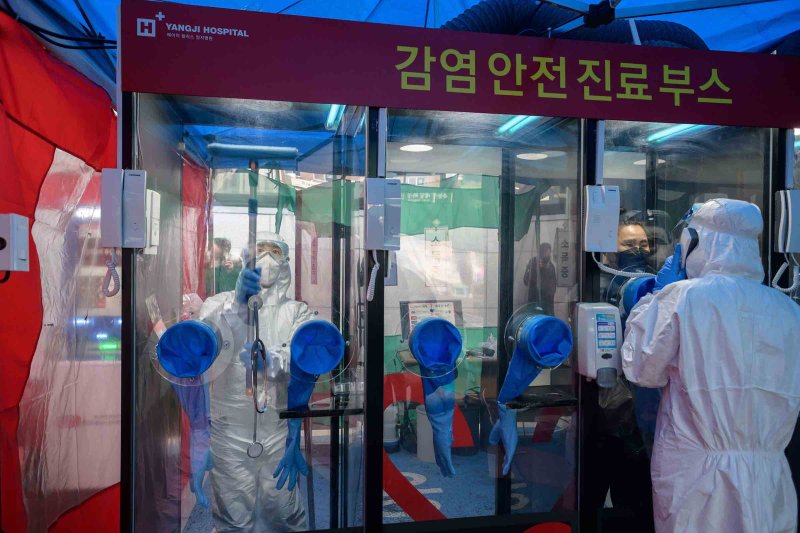
Consider how doctors currently detect new cases of COVID-19. Many people who develop the hallmark symptoms of the -disease—fever, cough and shortness of breath—-physically visit a primary-care doctor, a health care provider at an urgent-care center or an emergency room. But that’s the last thing people potentially infected with a highly contagious disease should do. Instead, health officials are urging them to connect remotely via an app to a doctor who can triage their symptoms while they’re still at home.

“The reality is that clinical brick-and-mortar medicine is rife with the possibility of virus exposure,” says Dr. Jonathan Wiesen, founder and chief medical officer of MediOrbis, a telehealth company. “The system we have in place is one in which everyone who is at risk is potentially transmitting infection. That is petrifying.” Instead, people could call a telemedicine center and describe their symptoms to a doctor who can then determine whether they need COVID-19 -testing—without exposing anyone else.

In Singapore, more than a million people have used a popular telehealth app called -MaNaDr, founded by family physician Dr. Siaw Tung Yeng, for virtual visits; 20% of the physicians in the island country offer some level of service via the app. In an effort to control escalating cases of coronavirus there, people with symptoms are getting prescreened by physicians on MaNaDr and advised to stay home if they don’t need intensive care. Patients then check in with their telehealth doctor every evening and report if their fever persists, if they have shortness of breath or if they are feeling worse. If they are getting sicker, the doctor orders an ambulance to take those people to the hospital. Siaw says the virtual monitoring makes people more comfortable about staying at home, where many cases can be treated, instead of flooding hospitals and doctors’ offices, straining limited resources and potentially making others sick. “This allows us to care across distance, monitor patients across distance and assess their progression across distance,” says Siaw. “There is no better time for remote care monitoring of our patients than now.”

Other at-home devices and services currently being used in the U.S. allow patients to measure dozens of health metrics like temperature, blood pressure and blood sugar several times a day, and the results are automatically stored on the cloud, from which doctors get alerts if the readings are abnormal.

Telemedicine also serves as a powerful communication tool for keeping hundreds of thousands of people in a specific region up to date with the latest advice about the risk in their communities and how best to protect themselves. That can go a long way toward reassuring people and preventing panic and runs on health centers and hospitals.

Beyond individual-level care, the data gathered by telemedicine services can be mined to predict the broader ebb and flow of an epidemic’s trajectory in a population. In the U.S., Kaiser Permanente’s tele-medicine call centers are now also serving as a bellwether for an anticipated surge in demand for health services. Dr. Stephen Parodi, national infectious–disease leader at Kaiser Permanente, was inspired by a Google project from a few years ago in which the company created an algorithm of users’ flu–related search terms to determine where clusters of cases were mounting. Parodi started tracking coronavirus–related calls from the health system’s 4.5 -million members in Northern California in February. “We went from 200 calls a day to 3,500 calls a day about symptoms of COVID-19, which was an early indicator of community–based transmission,” he says. “Our call volume was telling us several weeks before the country would have all of its testing online that we have got to plan for a surge in cases.”

On the basis of the swell in calls nationwide, the hospital system is considering suspending elective surgeries based on local circumstances, in part to ensure that ventilators and other critical equipment would be available for an anticipated influx of COVID-19 patients with severe symptoms. Kaiser doctors also postponed appointments for routine mammograms and other cancer–screening tests and cut back on in-person appointments by turning most noncritical visits into virtual visits.

The COVID-19 pandemic may be the trial by fire that telemedicine finally needs to prove its worth, especially in the U.S. Despite the fact that apps and technology for virtual health visits have existed for several decades, uptake in the country has been slow. Medicare only recently began reimbursing for telemedicine visits at rates comparable to in-person visits, and states have just begun to relax licensing regulations that prevent doctors in one state from -remotely treating patients in another state. “This -pandemic is almost like us crossing the Rubicon,” says Wiesen of MediOrbis. “It’s a clarion call for America and for the world on how important telemedicine is.” Parodi agrees. “I think this pandemic will bring in a fundamental change in the way we practice medicine and in the way the health care system functions in the U.S.,” he says. “We’re going to come out of this and -realize a lot of health care visits don’t have to be in person.”

Other tech innovations that haven’t fully made their way to the public-health sector could also play a critical role in controlling this -pandemic—and future outbreaks. Taking a closer look at health-related data, such as electronic health records or sales of over-the-counter medications, can provide valuable clues about how an infectious disease like COVID-19 is moving through a population. Retail drugstores track inventory and sales of nonprescription fever reducers, for example, and any trends in those data might serve as an early, albeit crude, harbinger of growing spread of disease in a community. And given the proliferation of health–tracking apps on smartphones, analyzing data trends like a rise in average body temperature in a given geographical area could provide clues to emerging clusters of cases.

Geotracking on phones, while controversial because of privacy issues, can also streamline the tedious task of contact tracing, in which scientists try to manually trace infected patients’ whereabouts to find as many people with whom they had direct contact and who could have been infected. In South Korea, this strategy helped identify many of the contacts of members of a Seoul church that formed the first major cluster of infections in the country. In countries with a less robust health care infrastructure, smartphones can be critical for gathering information about emerging infections on the ground. In Bangladesh, says Labrique, programs created to canvass for noncommunicable diseases like hyper-tension and diabetes are now being modified to include questions about COVID-19 symptoms. These types of real-time data can rapidly provide a snapshot of where and how fast the disease might be spreading, to distribute health care workers and -equipment where they’re needed most.

It’s all about catching these cases as early as possible, to minimize the peak of a pandemic so the health system doesn’t get overwhelmed. But it’s not just about seeing the trends. Flattening the surge of an infectious disease also requires action, and that’s where the advice gets -muddier—but also where Big Data and artificial intelligence (AI) can provide clarity.

By deeply analyzing the care that every COVID-19 patient receives, for example, AI can tease out the best treatment strategies. Jvion, a health care analytics company, is using AI to study 30 million patients in its data universe to identify people and communities at highest risk of COVID-19 on the basis of more than 5,000 variables that include not just medical history but also lifestyle and socioeconomic factors such as access to stable housing and transportation. Working with clients that include large hospital systems as well as small remote health centers, Jvion’s platform creates lists of people who should be contacted pro-actively to warn them about their vulnerability so health providers can create a care plan for them.

In the case of COVID-19, that might include social distancing and avoiding large public gatherings. To help public-health departments better prepare communities for this and future outbreaks, the company has communicated with the U.S. Centers for Disease Control and Prevention to share what it has learned.

Privacy issues, however, nest in every single byte of data about a person’s health. So the power of AI methods in controlling outbreaks depends on how effectively data can be anonymized. Only when people are assured of privacy can algorithms help to navigate the next big hurdle: predicting surges in cases that strain health care personnel and availability of supplies like ventilators, masks and gowns.

If COVID-19 teaches public-health officials one thing, it’s that there are now tools available to help contain an infectious disease before radical measures like quarantines and curfews are needed. “What we were doing 10 years ago and what we are doing now is vastly different,” says Wiesen. “There is a tremendous opportunity here, and hopefully by [the next pandemic], the use of technology and data analytics is going to be light-years ahead of where it is today.”

Source: https://time.com/5805622/coronavirus-pandemic-technology/

Focus On Survival Amid #Coronavirus: Lightspeed’s Lessons From #China For #Indian Startup Founders – SPONSOR: BetterU Education Corp. $BTRU.ca $ARCL $CPLA $BPI $FC.ca

Posted by AGORACOM-JC at 1:57 PM on Thursday, March 19th, 2020
SPONSOR:  BetterU Education Corp. aims to provide access to quality education from around the world. The company plans to bridge the prevailing gap in the education and job industry and enhance the lives of its prospective learners by developing an integrated ecosystem. Click here for more information.

Focus On Survival Amid Coronavirus: Lightspeed’s Lessons From China For Indian Startup Founders

By: Bhumika Khatri

  • The VC’s partners from China and India suggested startups work on reducing cash burn, spending
  • Lightspeed China’s James Mi said the Chinese ecosystem is focussing on extending runway through cost-cutting
  • Mi advised founders to have at least six months of runway

The Indian startup ecosystem has joined the fight against the coronavirus pandemic, as over 125 confirmed cases have emerged in India. With three deaths so far, India has not yet seen the worst of the outbreak. While many startups have advised employees to work from home, some are also offering medical support, while helping employees take up self-quarantine for Covid-19 and creating contingency plans — life has truly changed in the age of the pandemic for many people, startup founders included.

Many are saying that India is in the same place as China was almost 30-45 days back when the coronavirus had not yet been given the pandemic status. So startups may have a few lessons to learn from their Chinese counterparts. To make this happen Lightspeed India hosted a closed-door founders-only online session recently to facilitate interactions between Indian startup founders and venture capitalists in China so that each group can learn from their experiences.

The discussions were led by James Mi, partner, Lightspeed China, Udaan cofounder Amod Malviya with Lightspeed India partners’ Bejul Somaia and Hemant Mohapatra. The VC fund received over 200 questions from founders, with over 60 founders joining the session.

A founder who was part of the interaction told Inc42 that the session focused on fundraising, business environment and work from home. From the experience of China, James Mi noted that the strategy was first to focus on containment and as a result, hospitality businesses saw decline while businesses like grocery delivery grew. However, logistics was impacted negatively.

Other businesses that saw high adoption, traction and growth were digital content, video streaming, edtech among others. Mi also said that enterprise SaaS businesses saw some downturn due to the lack of face-to-face meetings, which are crucial for large sales contracts.

Shoring Up The Runway

In terms of fundraising, Mi advised founders to have at least six months of runway and first focus on optimising unit economics. However, if they don’t have such a runway, they should aim to reduce burn by cutting down unnecessary expenses on marketing and even reduce headcount if need be. Founders were also advised to find alternative financing options like bank loans.

Mi also urged startups to lock any existing offers and secure the funding to support the runway as VC funding is expected to slow down in the next quarter. He also suggested that businesses should go back to decisions taken at earlier stages to reduce burn and work on unit economics, rather than increasing market reach.

Lightspeed India’s Somaia shared a similar sentiment and said that fears in financial markets are similar to the consumer market as the capital gets scarce and selective. He said that even though financing won’t stop, it would now be more selective, focussing on quality and business fundamentals.

He noted that in such situations, reckless spending isn’t appreciated and that startups should plan in a way where they can spend 2020 without external funding. Somaia advised that the startups can top-up from the recent funding round as well if there is an interest. The trio emphasised that founders should focus on survival on priority.

The three experienced VCs also noted that the conditions are benign today but may become severe tomorrow. The impact on business from the pandemic is expected to last at least two quarters. The responsibility of businesses has changed from being equitable and fair employers to taking precautions ranging from temperature checks to masks and sanitisers.

Mi recollected that in China, even though factories were allowed to work, they didn’t have the infrastructure like masks and other sanitary needs set up to fulfil recommendations, which meant many workers couldn’t come in. So founders need to provision for all manner of things that they had not earlier.

Udaan cofounder Malviya shared the experience of work from home saying that it needs a planned approach and should be embraced correctly. He said that it becomes important to document decisions and startups should have well-defined touchpoints on a daily and weekly basis for different groups.

He said that work from home requirements are different for teams which are in operations and are on managerial work etc. Among the challenges with work from home for operational teams that Malviya noted was a drop in productivity. He advised founders to rely on products like Notion for documentation, Kettle.ai to track daily productivity and Hangouts and Zoom for video collaboration.

Source: https://inc42.com/buzz/focus-on-survival-amid-coronavirus-lightspeeds-lessons-from-china-for-indian-startup-founders/

betterU $BTRU.ca Trading Reinstated, Message from the CEO, Business Update and Annual General Meeting $ARCL $CPLA $BPI $FC.ca

Posted by AGORACOM-JC at 11:11 AM on Thursday, March 19th, 2020
  • Announced the reinstatement of BTRU to trading effective as of March 23rd , 2020
  • Company is providing an update on the business and notice of the Annual General Meeting of shareholders

OTTAWA, March 19, 2020 – betterU Education Corp. (TSX VENTURE: BTRU, Frankfurt: 5OGA) (the “Company” or “betterU”) has been working with the TSX Venture Exchange to file all necessary outstanding filings and is now pleased to announce the reinstatement of BTRU to trading effective as of March 23rd , 2020. The Company is providing an update on the business and notice of the Annual General Meeting of shareholders.

Message from the CEO –

“Our company has gone through a lot of turmoil over the last year, and I want to thank all of you – our shareholders and extended stakeholders – for weathering this storm with us. The good news is that we are emerging stronger – more operationally and commercially focused – than ever. While the company’s trading was suspended over the last six-months we redoubled our efforts to build value for the Company and our shareholders.

I am pleased to announce the official launch of our enterprise B2B SaaS platform for skills development called ‘Ready-To-Go”, which is the first mobile platform on the market to bring together everything an employer needs to continually assess and skill any employee from entry level to executive in an integrated manner. Ready-To-Go is proving valuable to corporate customers globally, and we will be announcing contracts with companies in Canada, US, India and beyond in the coming months.  Ready-To-Go completely aligns with our founding vision to provide best in class education-to-employment solutions for individuals and companies globally. What is different from the past was the realization while in stealth mode over the last few months, that we are not in the business of selling courses, we are in the business of building better people (hence our brand ‘betterU’). As such we have shifted our business model away from a pay-per-course (transactional) model to a pay-per-employee (software-as-a-service) model – whereby employers pay monthly subscriptions per employee for continual skills improvement and tracking.

This simple shift in framing – which is both on brand and on mission – is resonating strongly with public sector partners, private enterprise customers, and with individuals as end-user beneficiaries. While our focus has become more global in nature, we continue to maintain dedicated staff and skilling platforms for India, which inspired all of our hard work up to this point. There is still a lot of hard work ahead of us, but we now have a solid foundation to become a more sustainable company.”  Brad Loiselle, President and CEO betterU.

Business UpdateThe following are additional updates on the business:

  • Cancelled Shares for Debt – As previously reported on July 26th, 2019 and November 29, 2019 as part of ongoing efforts to reduce the Company’s debt and operational liabilities that its board of directors had approved the settlement of $125,000 of debt through the issuance of common shares of the Company (the “Debt Settlement”). The Company had since decided not to move forward with the Debt Settlement due to the downward pressure of the stock price and the level of dilution it would have created. The Company continues to look at debt reduction options.
     
  • Board approved restructuring plan – On December 2, 2019 betterU’s board of directors approved a plan to restructure the Company’s existing debts and liabilities in efforts to deleverage its balance sheet. The restructuring would take place over the course of 2020 i n connection with a planned subordinated secured convertible debenture offering and subsequent private equity placement to fund a global rollout of the Company’s Enterprise SaaS skilling platform and also convert or otherwise pay down the Company’s currently existing liabilities to a sustainable level.
     
  • betterU Enterprise SaaS Platform ‘Ready-To-Go’ – is fully operational and has been showcased to multiple corporate clients in Canada, USA, UK and India. The Company has begun contracting with several enterprise users, which will be announced in the week to come. betterU has built over the last several months a database from interested parties of 400+ Directors of Learning and Development, VPs and HR heads from companies around the world. To support such growing demand the Company would first have to raise additional capital through its planned subordinated secured debenture offering. For more details about betterU’s recently launched Enterprise SaaS ‘Ready-To-Go’ platform, please visit  https://readytogo.betteru.ca/
     
  • Partnerships – Adding to our existing content partnerships encompassing tens of thousands of courses from 100+ of the world’s leading online education and training providers, betterU has been expanding its offering of assessment tools required to support employers in determining their employee skill gaps.  We are pleased to announce the Company has entered a partnership with Cyprus firm Byrq to support betterU’s Enterprise SaaS Platform for pre-hiring candidates. With a proven I/O psychology framework that is scientifically validated and EEOC compliant, betterU will now be able to measure cognitive skills including numerical, verbal, problem solving and attention to detail as well as 16 personality traits. betterU is also pleased to announce they have entered a partnership with USA based firm eSkill, providing betterU with access to 600+ assessments across job roles, subject base and modular. This partnership enables betterU to support entire departments and job roles across organizations in determining the skills required per employee and mapping them to their skills on betterU’s Enterprise SaaS Platform Ready-To-Go.
  • Corporate Portal –  betterU has developed and launched a corporate website  https://corporate.betteru.ca/, that provides access to more details about betterU’s history, leadership, 2020 focus, Investor Relations and more information on the Company’s ongoing activities. betterU’s corporate website will support more visibility, transparency and access to current and relevant details about how the business is moving forward.  Please visit the site regularly so that you are kept current.
     
  • Stock Option Grants – The following stock options were issued to an insider on December 13th 2017, Positive Venture Group for 125,000 at an exercise price of $0.335 for a 5 year term, with 1/3rd allowed to exercise on the 1st, 2nd and 3rd anniversary date.
     
  • AGORA Internet Relations Corp. – The Company has issued the following number of shares in connection with settlement of $56,500 owed to Agoracom for marketing services according to the terms of the agreement disclosed on April 12, 2017.          
 
  Marketing ServicesPrice per ShareNumber of Shares  
 15-Mar-17$11,3000.4525,111 
 15-Jun-17$11,3000.5719,824 
 15-Sep-17$11,3000.3829,736 
 15-Dec-17$11,3000.3829,736 
 15-Mar-18$11,3000.7914,303 
 Total $56,500 118,710 
 
  • Annual General Meeting (“AGM”) Notice – Take notice that the annual general meeting (the “Meeting”) of shareholders of betterU Education Corporation (the “Corporation”) will be held at 1 Hunt Club Rd, Ottawa, ON K1V 1B9 on Thursday May 28th, 2020 at 11:00 a.m. (Ottawa time) for the following purposes:
  1. To receive the financial statements of the Corporation for its fiscal year ended March 31st 2019 and the report of the auditor thereon;
  2. To elect directors of the Corporation for the ensuing year;
  3. To appoint an auditor of the Corporation for the ensuing year;
  4. To consider and if thought fit to pass, with or without variation, an ordinary resolution to approve the Corporation’s Stock Option Plan allowing the granting of up to 10% of the Corporation’s issued and outstanding common shares at any time; and
  5. To transact such other business as may properly come before the Meeting or any adjournment thereof.

The Corporation has elected to use the notice-and-access (“Notice-and-Access”) provisions under National Instrument 54-101 Communications with Beneficial Owners of Securities of a Reporting Issuer and National Instrument 51-102 Continuous Disclosure Obligations to distribute Meeting materials to shareholders. Notice-and-Access is a new set of rules that allow issuers to post electronic versions of proxy-related materials on SEDAR and on one additional website, rather than mailing paper copies to shareholders. Shareholders have the right to request hard copies of any proxy-related materials posted online by the Corporation under Notice-and-Access.

Meeting materials, including the Circular, will be available under the Corporation’s profile at www.sedar.com and also at https://corporate.betteru.ca/ by April 29th 2020. The Corporation will provide to any shareholder, upon request to the Corporation’s transfer agent, a paper copy of the Circular and any financial statements or management discussion and analysis of the Corporation filed with the applicable securities regulatory authorities during the past year. In order to allow reasonable time for you to receive and review a paper copy of the Circular or other document prior to the proxy deadline, you should make your request for a paper copy by April 13th 2020.

A shareholder who is unable to attend the Meeting in person and who wishes to ensure that such shareholder’s shares will be voted at the Meeting is requested to complete, date and sign the form of proxy for the Meeting, or voting information form (“VIF”), and deliver the form of proxy, or VIF, in accordance with its instructions. 

About betterU Education Corp.

betterU is an education-to-employment technology company offering an end-to-end solution leveraging business intelligence to automate skilling, reskilling and upskilling for companies operating on domestic and global scales.

betterU has integrated into its platform the content, technology and support for tailored skills assessments, learning pathways and training modules from 100+ of the world’s leading online education providers. betterU’s eco-system includes detailed job, skill, employer, and educational profiles spanning 3,000+ standardized jobs. betterU’s integrated platform is the most efficient solution to address evolving skilling challenges for employers and employees through the employment lifecycle from entry level to executive. We don’t sell content, we help build better people.  

For more information, please visit https://corporate.betteru.ca/corporate-gov/

Contact:

Brad Loiselle, CEO
1-613-695-4100

betterU Education Corp.
Investor Relations
Email: [email protected]

Neither TSX Venture Exchange nor its Regulation Services Provider (as that term is defined in policies of the TSX Venture Exchange) accepts responsibility for the adequacy or accuracy of this release.

Empower Clinics $CBDT.ca Daily Patient Count Continues at Record Pace with Medical Cannabis Certifications Deemed an Essential Service $WEED.ca $CGC $ACB $APH $CRON.ca $HEXO.ca $OGI.ca

Posted by AGORACOM-JC at 7:24 AM on Thursday, March 19th, 2020

Empower Clinics adapts operational processes to manage continued record patient counts during COVID-19 outbreak

  • Patient visits in corporate clinics continue at record pace, with patients demonstrating an even greater need for plant-based medicine, as the impact of COVID-19 becomes more pervasive
  • State’s of Arizona and Oregon have declared a State of Emergency over the novel coronavirus outbreak therefore, as a medical service provider, Empowers corporate medical clinics are considered an essential service and are not subject to certain mandated closures

VANCOUVER, BC / March 18, 2020 / EMPOWER CLINICS INC. (CSE: CBDT) (OTC: EPWCF) (Frankfurt 8EC) (“Empower” or the “Company“), a vertically integrated and growth-oriented life sciences company, announces that patient visits in corporate clinics continue at record pace, with patients demonstrating an even greater need for plant-based medicine, as the impact of COVID-19 becomes more pervasive.

“The coronavirus crisis is impacting all aspects of our lives, but our clinics remain incredibly busy, as patients show how important their medical cannabis treatment options are to manage increased levels of anxiety, stress, chronic pain and PTSD” said Steven McAuley, Chairman & CEO of Empower. “We had to quickly adapt clinic operating procedures to ensure optimum safety for employees and patients, updated cleaning and sanitation protocols, and provided extensive new communications to our team and patients.”

The State’s of Arizona and Oregon have declared a State of Emergency over the novel coronavirus outbreak therefore, as a medical service provider, Empowers corporate medical clinics are considered an essential service and are not subject to certain mandated closures.

The Company has made changes to clinic operations and patient management based on the most recent recommendations from the (CDC) Centers for Disease Control and Prevention, and their guidance for healthcare facilities.

https://www.cdc.gov/coronavirus/2019-ncov/healthcare-facilities/guidance-hcf.html
https://www.cdc.gov/coronavirus/2019-ncov/healthcare-facilities/index.html

ABOUT EMPOWER

Empower is a vertically-integrated health & wellness brand with it’s first hemp-derived CBD extraction facility under development, the Company produces its proprietary line of cannabidiol (CBD) based products and distributes products through company owned and franchised clinics, with wholesale partnerships, online channels and with new retail opportunities nationwide in the U.S. The company is a leading multi-state operator of a network of physician-staffed wellness clinics, focused on helping patients improve and protect their health, through innovative physician recommended treatment options. The company has commenced activity on how to connect its significant data, to the potential of the efficacy of alternative treatment options related to hemp-derived cannabidiol (CBD) therapies.

ON BEHALF OF THE BOARD OF DIRECTORS:

Steven McAuley
Chief Executive Officer

CONTACTS:

Investors: Steven McAuley

CEO

[email protected]

604-789-2146

Investors: Dustin Klein

SVP, Business Development

[email protected]

720-352-1398

For French inquiries: Remy Scalabrini, Maricom Inc., E: [email protected], T: (888) 585-MARI

DISCLAIMER FOR FORWARD-LOOKING STATEMENTS

This news release contains certain “forward-looking statements” or “forward-looking information” (collectively “forward looking statements”) within the meaning of applicable Canadian securities laws. All statements, other than statements of historical fact, are forward-looking statements and are based on expectations, estimates and projections as at the date of this news release.Forward-looking statements can frequently be identified by words such as “plans”, “continues”, “expects”, “projects”, “intends”, “believes”, “anticipates”, “estimates”, “may”, “will”, “potential”, “proposed” and other similar words, or information that certain events or conditions “may” or “will” occur. Forward-looking statements in this news release include statements regarding; the Company’s intention to open a hemp-based CBD extraction facility, the expected benefits to the Company and its shareholders as a result of the proposed acquisitions and partnerships; the effectiveness of the extraction technology; the expected benefits for Empower’s patient base and customers; the benefits of CBD based products; the effect of the approval of the Farm Bill; the growth of the Company’s patient list and that the Company will be positioned to be a market-leading service provider for complex patient requirements in 2019 and beyond. Such statements are only projections, are based on assumptions known to management at this time, and are subject to risks and uncertainties that may cause actual results, performance or developments to differ materially from those contained in the forward-looking statements, including; that the Company may not open a hemp-based CBD extraction facility; that legislative changes may have an adverse effect on the Company’s business and product development; that the Company may not be able to obtain adequate financing to pursue its business plan; general business, economic, competitive, political and social uncertainties; failure to obtain any necessary approvals in connection with the proposed acquisitions and partnerships; and other factors beyond the Company’s control. No assurance can be given that any of the events anticipated by the forward-looking statements will occur or, if they do occur, what benefits the Company will obtain from them. Readers are cautioned not to place undue reliance on the forward-looking statements in this release, which are qualified in their entirety by these cautionary statements. The Company is under no obligation, and expressly disclaims any intention or obligation, to update or revise any forward-looking statements in this release, whether as a result of new information, future events or otherwise, except as expressly required by applicable laws.

Mota Ventures $MOTA.ca Announces Successful Launch of New “Immune Support” Product $APH.ca $GBLX $PFE $ACG.ca $ACB.ca $WEED.ca $HIP.ca $WMD.ca $CGRW

Posted by AGORACOM-JC at 5:23 PM on Wednesday, March 18th, 2020
http://blog.agoracom.com/wp-content/uploads/2020/03/Mota-Square-Logo-For-Blog.jpg
  • First Class CBD has launched a new “immune support” product that has generated significant demand since it was released
  • This is the first of a number of new CBD products aimed at promoting personal immune health that First Class is developing
  • During the first four days, company acquired over 1,000 customers and will be scaling rapidly

VANCOUVER, BC / March 18, 2020 / Mota Ventures Corp. (CSE:MOTA)(FSE:1WZ1)(OTC:PEMTF) (the “Company“) announces that First Class CBD has launched a new “immune support” product that has generated significant demand since it was released. This is the first of a number of new CBD products aimed at promoting personal immune health that First Class is developing.

One of our primary competitive advantages as a business is our ability to adapt to market changes. With the immense demand in the market for products to promote personal immune system health, we launched a First Class immune product; during the first four days, we acquired over 1,000 customers and will be scaling rapidly. Next week we will be launching a complete line of immunity products, including a CBD oil plus B-vitamins, Vitamin C and Zinc.

Our mission is to provide pure and efficacious products to our customers that depend upon us throughout the United States and Europe. Our supply chain is functioning uninterrupted. The Company has personally met with suppliers in the United States and are confident in its ability to continue to meet the demands of the current sales volume, and new product lines for March 2020 and beyond.

“I am extremely pleased with the success of our launch of our new product line. Our ability to adapt and innovate is stronger than ever. Demand for our new immune category has been exceptional and I believe this will be a significant driver to revenue in 2020,” stated Ryan Hoggan, CEO of the Company.

About Mota Ventures Corp.

Mota is seeking to become a vertically integrated global CBD brand. Its plan is to cultivate and extract CBD into high-quality value-added products from its Latin American operations and distribute it both domestically and internationally. Its existing operations in Colombia consist of a 2.5-hectare site that has optimal year-round growing conditions and access to all necessary infrastructure. Mota is looking to establish sales channels and a distribution network internationally through the acquisition of the Sativida and First Class CBD brands. Low cost production, coupled with international, direct to customer sales channels will provide the foundation for the success of Mota.

ON BEHALF OF THE BOARD OF DIRECTORS

MOTA VENTURES CORP.
Ryan Hoggan
Chief Executive Officer

For further information, readers are encouraged to contact the President of the Company, Joel Shacker, at +604.423.4733 or by email at [email protected] or www.motaventuresco.com

Neither the Canadian Securities Exchange nor its Regulation Services Provider (as that term is defined in the policies of the Canadian Securities Exchange) accepts responsibility for the adequacy or accuracy of this press release, which has been prepared by management.

Cautionary Note Regarding Forward-Looking Statement

All statements in this press release, other than statements of historical fact, are “forward-looking information” with respect to the Company within the meaning of applicable securities laws, including with respect to the business prospects of First Class CBD and its new product lines, its plans to become a vertically integrated global CBD brand, its plans to cultivate and extract cannabis to produce CBD and high-quality value added CBD products in Latin America for distribution domestically and internationally. The Company provides forward-looking statements for the purpose of conveying information about current expectations and plans relating to the future and readers are cautioned that such statements may not be appropriate for other purposes. By its nature, this information is subject to inherent risks and uncertainties that may be general or specific and which give rise to the possibility that expectations, forecasts, predictions, projections or conclusions will not prove to be accurate, that assumptions may not be correct and that objectives, strategic goals and priorities will not be achieved. These risks and uncertainties include but are not limited those identified and reported in the Company’s public filings under the Company’s SEDAR profile at www.sedar.com. Although the Company has attempted to identify important factors that could cause actual actions, events or results to differ materially from those described in forward-looking information, there may be other factors that cause actions, events or results not to be as anticipated, estimated or intended. There can be no assurance that such information will prove to be accurate as actual results and future events could differ materially from those anticipated in such statements. The Company disclaims any intention or obligation to update or revise any forward-looking information, whether as a result of new information, future events or otherwise unless required by law.

SOURCE: Mota Ventures Corp.

PyroGenesis $PYR.ca Announces Closing of a $903K Loan and Provides Situation Update $RTN $NOC $UTX $HPQ.ca $DDD.ca $SSYS $PRLB

Posted by AGORACOM-JC at 4:22 PM on Wednesday, March 18th, 2020
  • Closed a $903,000 non-brokered secured convertible loan at 12% per annum, with a related party
  • Loan is secured by a subordinated Hypothec on the Universality of Movable Property over all of the present and after acquired moveable property and assets of the Company.

MONTREAL, March 18, 2020 – PyroGenesis Canada Inc. (http://pyrogenesis.com) (TSX-V: PYR) (OTCQB: PYRNF) (FRA: 8PY), a high-tech company, (the “Company”, the “Corporation” or “PyroGenesis”) that designs, develops, manufactures and commercializes plasma atomized metal powder, plasma waste-to-energy systems and plasma torch systems, is pleased to announce today that it has closed a $903,000 non-brokered secured convertible loan at 12% per annum (the “Loan”), with a related party.

The Loans bears interest at the rate of 12% per annum, with interest payable in cash on a quarterly basis in arrears and matures September 17th, 2021. The Loan is convertible into common shares of the Company (each, a “Common Share”) at a conversion price of $0.28 per Common Share (the “Conversion Price”). The Common Shares issuable on conversion of the Loan will be subject to a statutory hold period of four months and one day from the closing date.

The Loan is secured by a subordinated Hypothec on the Universality of Movable Property over all of the present and after acquired moveable property and assets of the Company.

PyroGenesis intends to use the net proceeds from the Offering for general corporate purposes. The Offering is subject to the final approval of the TSXV.

P. Peter Pascali, CEO and President of PyroGenesis, provides the following situation update:

“As a global Covid-19 pandemic sweeps across the globe, it would be an understatement to suggest that these are trying times.  The world finds itself in uncharted and precarious territory, a show that has no script. What is certain is that the future is not as certain as we thought it was mere weeks ago. At PyroGenesis, the health, safety and wellbeing of our people, and community, is our number one priority.  As such, we immediately implemented an emergency work-from-home policy and, as such, work continues without material interruption.  We have also secured our supply lines which, to date, seem to be in order. As a cautionary second step, we managed to secure this loan which we announced today, from a related party, to shore up any unforeseen events that may arise from the current situation.  We thought this to be prudent under the circumstances.

Current events are presenting a unique set of challenges to businesses. The economic and social impact is already on a scale not seen in the post war era. This uncertain future is leading companies to have to make difficult decisions.  At PyroGenesis, we will do our part to ensure all our employees are employed, safe, and healthy.  We are also doing our part to source limited supplies from our international contacts to augment the needs of our community health care system.

Times like these require us as entrepreneurs and businesses leaders to come together to help our communities assist each other. After all, we are skilled leaders and decision makers having operated in this type of arena all our live; making decisions on limited information, ascertaining risk, executing and adjusting as the case may be.

It is not business as usual, that is for sure. However, a measure of a team is how they manage crisis.  At Pyogenesis, we have a seasoned team of business veterans when it comes to innovation and crisis management.  I am proud of my team in how they handle challenges, and never more than I am these days.

Be safe and we will keep you up to date with any material developments.”

The Corporation did not file a material change report more than 21 days before the excepted closing of the Offering as the details of the participation therein by related parties of the Corporation were not settled until shortly prior to the closing of the Offering.

The securities have not been, and will not be, registered under the United States Securities Act of 1933, as amended (the “1933 Act”), or any state securities laws and may not be offered or sold in the United States or to, or for the account or benefit of, U.S. persons (as defined in Regulation S under the 1933 Act), except pursuant to an exemption from the registration requirements of those laws. This press release shall not constitute an offer to sell or the solicitation of an offer to buy securities in the United States, or for the account or benefit of U.S. persons (as such term is defined in Regulation S under the 1933 Act).

About PyroGenesis Canada Inc.

PyroGenesis Canada Inc., a high-tech company, is the world leader in the design, development, manufacture and commercialization of advanced plasma processes and products. We provide engineering and manufacturing expertise, cutting-edge contract research, as well as turnkey process equipment packages to the defense, metallurgical, mining, advanced materials (including 3D printing), oil & gas, and environmental industries. With a team of experienced engineers, scientists and technicians working out of our Montreal office and our 3,800 m2 manufacturing facility, PyroGenesis maintains its competitive advantage by remaining at the forefront of technology development and commercialization. Our core competencies allow PyroGenesis to lead the way in providing innovative plasma torches, plasma waste processes, high-temperature metallurgical processes, and engineering services to the global marketplace. Our operations are ISO 9001:2015 and AS9100D certified, and have been since 1997. PyroGenesis is a publicly-traded Canadian Corporation on the TSX Venture Exchange (Ticker Symbol: PYR) and on the OTCQB Marketplace. For more information, please visit www.pyrogenesis.com.

This press release contains certain forward-looking statements, including, without limitation, statements containing the words “may”, “plan”, “will”, “estimate”, “continue”, “anticipate”, “intend”, “expect”, “in the process” and other similar expressions which constitute “forward- looking information” within the meaning of applicable securities laws. Forward-looking statements reflect the Corporation’s current expectation and assumptions and are subject to a number of risks and uncertainties that could cause actual results to differ materially from those anticipated. These forward-looking statements involve risks and uncertainties including, but not limited to, our expectations regarding the acceptance of our products by the market, our strategy to develop new products and enhance the capabilities of existing products, our strategy with respect to research and development, the impact of competitive products and pricing, new product development, and uncertainties related to the regulatory approval process. Such statements reflect the current views of the Corporation with respect to future events and are subject to certain risks and uncertainties and other risks detailed from time-to-time in the Corporation’s ongoing filings with the securities regulatory authorities, which filings can be found at www.sedar.com, or at www.otcmarkets.com. Actual results, events, and performance may differ materially. Readers are cautioned not to place undue reliance on these forward-looking statements. The Corporation undertakes no obligation to publicly update or revise any forward- looking statements either as a result of new information, future events or otherwise, except as required by applicable securities laws. Neither the TSX Venture Exchange, its Regulation Services Provider (as that term is defined in the policies of the TSX Venture Exchange) nor the OTCQB accepts responsibility for the adequacy or accuracy of this press release.

SOURCE PyroGenesis Canada Inc.

For further information please contact:
Rodayna Kafal, Vice President Investors Relations and Strategic Business Development
Phone: (514) 937-0002, E-mail: [email protected] 

RELATED LINK: http://www.pyrogenesis.com/

Tartisan #Nickel $TN.ca – #Volkswagen to start using high- #nickel #EV #batteries $ROX.ca $FF.ca $EDG.ca $AGL.ca $ANZ.ca

Posted by AGORACOM-JC at 3:46 PM on Wednesday, March 18th, 2020

SPONSOR: Tartisan Nickel (TN:CSE)  Kenbridge Property has a measured and indicated resource of 7.14 million tonnes at 0.62% nickel, 0.33% copper. Tartisan also has interests in Peru, including a 20 percent equity stake in Eloro Resources and 2 percent NSR in their La Victoria property. Click her for more information

Tc logo in black

—————————-

Volkswagen to start using high-nickel EV batteries

  • Volkswagen is aiming to produce 3 million electric cars by 2025.
  • Company is also embarking on producing EV battery as well.

Reuters

FRANKFURT: Volkswagen will raise the amount of nickel used in it electric car battery cells to 80% in the next year from 65% at present, Frank Blome, head of battery cells at the carmaker said on Tuesday.

Volkswagen’s current electric car battery cell contains 65% nickel, 15% cobalt and 20% manganese. Next generation batteries will have 80% nickel, 10% cobalt and 10% manganese, Blome told analysts on a call.

Volkswagen is embarking on a mass production push to build 3 million electric cars by 2025, requiring 300 gigawatt hours worth of battery cells, mainly in Asia and Europe, he said.

Ramping up manufacturing battery packs at scale will help the carmaker to cut battery cell costs far below $100 per kilowatt hour by 2025, he said.

Source: https://auto.economictimes.indiatimes.com/news/auto-components/volkswagen-to-start-using-high-nickel-ev-batteries/74684883

IMPORTANT: #betterU $BTRU.ca Provides Free #COVID19 Toolkit

Posted by AGORACOM-JC at 2:50 PM on Wednesday, March 18th, 2020
SPONSOR:  BetterU Education Corp. aims to provide access to quality education from around the world. The company plans to bridge the prevailing gap in the education and job industry and enhance the lives of its prospective learners by developing an integrated ecosystem. Click here for more information.

FROM THE DESK OF BRAD LOISELLE:

I hope you are well.  betterU, in partnership with several of our content partners, have decided to assemble a COVID-19 All-In-One resource toolkit available on mobile through betterU’s Ready-To-Go platform. We have decided to make it available for FREE to support you, your families, coworkers, employees, friends and our communities. We want to get this in the hands of as many people as possible so feel free to share the link.

Simple go to https://readytogo.betteru.ca/get-started/ to start the process. It is very simple! The COVID-19 package will be automatically added to your profile. 

The noise of the media is creating confusion, fear and panic, while becoming more difficult to determine what is true or false. The app includes access to all the most relevant COVID-19 information assembled from leading sources around the world such as the World Health Organization, CDC and more. It includes content in the form of videos, text, PDFs, graphics and links. It also includes resources to support your personal well-being as well as professional challenges of working from home. We will be adding more content to continue to support community needs.  

Be well, be safe and stay informed.

Brad

Why #5G enabled healthcare #Mhealth is important for patients and spatial computing SPONSOR: CardioComm Solutions $EKG.ca – $ATE.ca $TLT.ca $OGI.ca $ACST.ca $IPA.ca

Posted by AGORACOM-JC at 1:03 PM on Wednesday, March 18th, 2020

SPONSOR: CardioComm Solutions (EKG: TSX-V) – The heartbeat of cardiovascular medicine and telemedicine. Patented systems enable medical professionals, patients, and other healthcare professionals, clinics, hospitals and call centres to access and manage patient information in a secure and reliable environment.

Why 5G enabled healthcare is important for patients and spatial computing

By Health Europa

By empowering new tools, 5G enabled healthcare may help aid in caring for patients and preparing for complex medical procedures.

  • While augmented reality (AR), virtual reality (VR) and spatial computing are already being used in healthcare on a limited basis, 5G enabled healthcare may eventually further enhance a doctor’s ability to deliver innovative, less invasive treatments.
  • Among 5G’s many ultimate potential applications, some of the most exciting involve its role in simulating complex medical scenarios and enabling alternative treatments for the critically ill.

5G enabled healthcare

5G is the fifth generation of cellular wireless technology, which can offer massive connection power and fast internet speed for data transfer. Implementation of 5G technology accelerated the demand for various healthcare technologies such as the Internet of Medical Things, AR/VR, artificial intelligence (AI), remote medical learning, and remote patient monitoring to name a few.

Patient real time information is important data for doctors to take decisions in a critical situation. This has accelerated the demand for advanced technologies in the healthcare sector. For instance, telemedicine requires an advanced network that offers support in real time, providing high-quality video communication without slowing down the facility’s network. Integration of 5G network in existing infrastructure provides real time data transfer of images, documents, and real time videos for video-based medical consultations, to improve the quality of care.

North America held a dominant share of the global 5G enabled healthcare services market in 2019. It is expected to continue its dominance throughout the forecast period. The US and Canada are the major countries that drive the 5G enabled healthcare services market in the region.

Demand for 5G

The aging population is expected to increase the demand for advanced solutions such as mHealth solutions, and home healthcare, which require high-speed internet. According to the Population Reference Bureau, in 2018, 15% of the total North American population was above the age of 65 and is expected to reach 23% by 2050. Hence, the increasing aging population is accelerating the demand for 5G enabled healthcare services.

The 5G enabled healthcare services market in Asia Pacific is expected to expand at a fast-paced CAGR during the forecast period. India, China, Japan, and Australia are major countries of the 5G enabled healthcare services market in the region.

Increasing adoption of advanced communication solutions in the healthcare industry, majorly in developing countries where health care systems are often unprepared to tackle the challenges of a growing elderly population, has raised the need for high-speed internet services in the healthcare sector. Hence, this augments the adoption rate of 5G services in the healthcare industry.

Source: https://www.healtheuropa.eu/why-5g-enabled-healthcare-is-important-for-patients-and-spatial-computing/98656/

This stance-detecting #AI will help us fact-check fake news – SPONSOR: Datametrex AI Limited $DM.ca

Posted by AGORACOM-JC at 12:53 PM on Wednesday, March 18th, 2020

SPONSOR: Datametrex AI Limited (TSX-V: DM) A revenue generating small cap A.I. company that NATO and Canadian Defence are using to fight fake news & social media threats. The company announced three $1M contacts in Q3-2019. Click here for more info.

This stance-detecting AI will help us fact-check fake news

By: Ben Dickson
  • Fighting fake news has become a growing problem in the past few years, and one that begs for a solution involving artificial intelligence
  • Verifying the near-infinite amount of content being generated on news websites, video streaming services, blogs, social media, etc. is virtually impossible

There has been a push to use machine learning in the moderation of online content, but those efforts have only had modest success in finding spam and removing adult content, and to a much lesser extent detecting hate speech.

Fighting fake news is a much more complicated challenge. Fact-checking websites such as Snopes, FactCheck.org, and PolitiFact do a decent job of impartially verifying rumors, news, and remarks made by politicians. But they have limited reach.

It would be unreasonable to expect current artificial intelligence technologies to fully automate the fight against fake news. But there’s hope that the use of deep learning can help automate some of the steps of the fake news detection pipeline and augment the capabilities of human fact-checkers.

In a paper presented at the 2019 NeurIPS AI conference, researchers at DarwinAI and Canada’s University of Waterloo presented an AI system that uses advanced language models to automate stance detection, an important first step toward identifying disinformation.

The automated fake-news detection pipeline

Before creating an AI system that can fight fake news, we must first understand the requirements of verifying the veracity of a claim. In their paper, the AI researchers break down the process into the following steps:

  • Retrieving documents that are relevant to the claim
  • Detecting the stance or position of those documents with respect to the claim
  • Calculating a reputation score for the document, based on its source and language quality
  • Verify the claim based on the information obtained from the relevant documents

Instead of going for an end-to-end AI-powered fake-news detector that takes a piece of news as input and outputs “fake” or “real”, the researchers focused on the second step of the pipeline. They created an AI algorithm that determines whether a certain document agrees, disagrees, or takes no stance on a specific claim.

Using transformers to detect stance

This is not the first effort to use AI for stance detection. Previous research has used various AI algorithms and components, including recurrent neural networks (RNN), long short-term memory (LSTM) models, and multi-layer perceptrons, all relevant and useful artificial neural network (ANN) architectures. The efforts have also leveraged other research done in the field, such as work on “word embeddings,” numerical vector representations of relationships between words that make them understandable for neural networks.

However, while those techniques have been efficient for some tasks such as machine translation, they have had limited success on stance detection. “Previous approaches to stance detection were typically earmarked by hand-designed features or word embeddings, both of which had limited expressiveness to represent the complexities of language,” says Alex Wong, co-founder and chief scientist at DarwinAI.

The new technique uses a transformer, a type of deep learning algorithm that has become popular in the past couple of years. Transformers are used in state-of-the-art language models such as GPT-2 and Meena. Though transformers still suffer from the fundamental flaws, they are much better than their predecessors in handling large corpora of text.

Transformers use special techniques to find the relevant bits of information in a sequence of bytes instead. This enables them to become much more memory-efficient than other deep learning algorithms in handling large sequences. Transformers are also an unsupervised machine learning algorithm, which means they don’t require the time- and labor-intensive data-labeling work that goes into most contemporary AI work.

“The beauty of bidirectional transformer language models is that they allow very large text corpuses to be used to obtain a rich, deep understanding of language,” Wong says. “This understanding can then be leveraged to facilitate better decision-making when it comes to the problem of stance detection.”

Transformers come in different flavors. The University of Waterloo researchers used a variation of BERT (RoBERTa), also known as deep bidirectional transformer. RoBERTa, developed by Facebook in 2019, is an open-source language model.

Transformers still require very large compute resources in the training phase (our back-of-the-envelope calculation of Meena’s training costs amounted to approx. $1.5 million). Not everyone has this kind of money to spare. The advantage of using ready models like RoBERTa is that researchers can perform transfer learning, which means they only need to fine-tune the AI for their specific problem domain. This saves them a lot of time and money in the training phase.

“A significant advantage of deep bidirectional transformer language models is that we can harness pre-trained models, which have already been trained on very large datasets using significant computing resources, and then fine-tune them for specific tasks such as stance-detection,” Wong says.

Using transfer learning, the University of Waterloo researchers were able to fine-tune RoBERTa for stance-detection with a single Nvidia GeForce GTX 1080 Ti card (approx. $700).

The stance dataset

For stance detection, the researchers used the dataset used in the Fake News Challenge (FNC-1), a competition launched in 2017 to test and expand the capabilities of AI in detecting online disinformation. The dataset consists of 50,000 articles as training data and a 25,000-article test set. The AI takes as input the headline and text of an article, and outputs the stance of the text relative to the headline. The body of the article may agree or disagree with the claim made in the headline, may discuss it without taking a stance, may be unrelated to the topic.

The RoBERTa-based stance-detection model presented by the University of Waterloo researchers scored better than the AI models that won the original FNC competition as well as other algorithms that have been developed since.

Fake News Challenge (FNC-1) results: The first three rows are the language models that won the original competition (2017). The next five rows are AI models that have been developed in the following years. The final row is the transformer-based approach proposed by researchers at the University of Waterloo.

To be clear, developing AI benchmarks and evaluation methods that are representative of the messiness and unpredictability of the real world is very difficult, especially when it comes to natural language processing.

The organizers of FNC-1 have gone to great lengths to make the benchmark dataset reflective of real-world scenarios. They have derived their data from the Emergent Project, a real-time rumor tracker created by the Tow Center for Digital Journalism at Columbia University. But while the FNC-1 dataset has proven to be a reliable benchmark for stance detection, there is also criticism that it is not distributed enough to represent all classes of outcomes.

“The challenges of fake news are continuously evolving,” Wong says. “Like cybersecurity, there is a tit-for-tat between those spreading misinformation and researchers combatting the problem.”

The limits of AI-based stance detection

One of the very positive aspects of the work done by the researchers of the University of Waterloo is that they have acknowledged the limits of their deep learning model (a practice that I wish some large AI research labs would adopt as well).

For one thing, the researchers stress that this AI system will be one of the many pieces that should come together to deal with fake news. Other tools that need to be developed in the area of gathering documents, verifying their reputation, and making a final decision about the claim in question. Those are active areas of research.

The researchers also stress the need to integrate AI tools into human-controlled procedures. “Provided these elements can be developed, the first intended end-users of an automated fact-checking system should be journalists and fact-checkers. Validation of the system through the lens of experts of the fact-checking process is something that the system’s performance on benchmark datasets cannot provide,” the researchers observe in their paper.

The researchers explicitly warn about the consequences of blindly trusting machine learning algorithms to make decisions about truth. “A potential unintended negative outcome of this work is for people to take the outputs of an automated fact-checking system as the definitive truth, without using their own judgment, or for malicious actors to selectively promote claims that may be misclassified by the model but adhere to their own agenda,” the researchers write.

Image credit: Depositphotos

This is one of many projects that show the benefits of combining artificial intelligence and human expertise. “In general, we combine the experience and creativity of human beings with the speed and meticulousness afforded by AI. To this end, AI efforts to combat fake news are simply tools that fact-checkers and journalists should use before they decide if a given article is fraudulent,” Wong says. “What an AI system can do is provide some statistical assurance about the claims in a given news piece.  That is, given a headline, they can surface that, for example, 5,000 ‘other’ articles disagree with the claim whereas only 50 support it. Such as distinction would serve a warning to the individual to doubt the veracity of what they are reading.”

One of the central efforts of DarwinAI, Wong’s company, is to tackle AI’s explainability problem. Deep learning algorithms develop very complex representations of their training data, and it’s often very difficult to understand the factors behind their output. Explainable AI aims to bring transparency to deep learning decision-making. “In the case of misinformation, our goal is to provide journalists with an understanding of the critical factors that led to a piece of news being classified as fake,” Wong says.

The team’s next step is to tackle reputation-assessment to validate the truthfulness of an article through its source and linguistics characteristics.

Source: https://thenextweb.com/neural/2020/03/14/this-stance-detecting-ai-will-help-us-fact-check-fake-news-syndication/