Posted by AGORACOM-JC
at 7:34 AM on Saturday, February 22nd, 2020
Announced a transition after the definitive close of First Class CBD acquisition
Appointed Ryan Dean Hoggan to Chief Executive Officer
Acquisition of First Class CBD coupled with the upcoming U.S. roll out of the Company’s European CBD brand, Sativida, made the appointment of Mr. Hoggan to Chief Executive Officer a natural fit
Mr. Hoggan brings more than 18 years of leadership, global business development and entrepreneurship experience in the health equipment, medical devices and natural health products sectors
VANCOUVER, BC / February 22, 2020 / Mota Ventures Corp. (CSE:MOTA)(FSE:1WZ:GR)(OTC:PEMTF) (the “Company” or “Mota“) is pleased to announce a transition after the definitive close of First Class CBD acquisition, the Company’s Board of Directors has appointed Ryan Dean Hoggan to Chief Executive Officer. The acquisition of First Class CBD coupled with the upcoming U.S. roll out of the Company’s European CBD brand, Sativida, made the appointment of Mr. Hoggan to Chief Executive Officer a natural fit. Ryan brings a wealth of expertise to this role, being one of the founders of Unified Funding LLC and First Class CBD. Ryan is an experienced strategist, with a strong understanding of building high value consumer brands with significant annual revenue. Ryan’s extensive background in the online e-commerce space will continue to drive the Company’s rapid growth in the US and spearhead its expansion into the European market. The Company intends to continue its roll up strategy of acquiring profitable, well-known CBD brands globally.
Mr. Hoggan brings more than 18 years of leadership, global business
development and entrepreneurship experience in the health equipment,
medical devices and natural health products sectors. Early in his
career, Ryan took on a leadership role in his family business, HOGGAN
Health Industries, where he led operations, business development and
marketing efforts. After identifying an untapped niche in the market, he
founded Hoggan Medical where he went on to launch over 100 health,
fitness and medical device products and negotiated contracts with big
and small customers including the Mayo Clinic, Boeing, Daimler AG and
the Los Angeles Lakers (NBA).
In 2014, Ryan discovered the power of CBD and essential oils – both
personally and professionally – after a personal health scare prompted
him to research and subsequently try holistic products to improve his
health. The experience ultimately led him to become a Partner and
President of Offer Space, LLC and Real Oil, LLC, two rapidly growing
E-commerce and technology companies focused on serving U.S. based and
international consumers in the CBD and natural health products market.
In June 2019, Mr. Hoggan led a strategic divestiture of the businesses
to Unified Funding, LLC to help continue an impressive growth trend.
Through the operations of Unified Funding, LLC, the business has
generated a database of over 4.5 million customer records and
facilitated over $200 million in consumer transactions from more than
one million paying customers in sectors such as beauty, nutrition and
CBD products.
Mr. Hoggan holds a Bachelor of Business Administration (BBA) from
Westminster College, an MBA from The University of Arizona and a Master
of Global Management (MGM) from the Thunderbird School of Global
Management at Arizona State University.
In connection with Ryan’s appointment to CEO, Joel Shacker will
transition to the role of President of the Company and will remain a
member of the board of directors.
“I am very excited to take on the CEO role at Mota and focus the
operations on becoming a global E-commerce CBD company. I am also
excited about the partnership between Unified and Sativida. Unified’s
extensive experience in the U.S. and strong logistics and supply chain
will provide significant support for the launch of the Sativida line in
the U.S. I believe through the direct-to-consumer online platforms we
will become a leader in the CBD space. We plan to aggressively expand
First Class’s existing operations in the U.S. as well as launch a
European expansion, which we anticipate will yield similar results to
our U.S. operations last year,” stated Ryan Hoggan, CEO of the Company.
“We are extremely happy to have someone with Ryan’s extensive
experience stepping into this role. I am confident in his ability to
execute on expanding operations and generating further revenue. I look
forward to continuing to build the Company in my new role as President
and to working with Ryan during his transition to CEO of Mota.” stated
Joel Shacker.
About Mota Ventures Corp.
Mota is seeking to become a vertically integrated global CBD brand.
Its plan is to cultivate and extract CBD into high-quality value-added
products from its Latin American operations and distribute it both
domestically and internationally. Its existing operations in Colombia
consist of a 2.5-hectare site that has optimal year-round growing
conditions and access to all necessary infrastructure. Mota is looking
to establish sales channels and a distribution network internationally
through the acquisition of the Sativida and First Class CBD brands. Low
cost production, coupled with international, direct to customer sales
channels will provide the foundation for the success of Mota.
ON BEHALF OF THE BOARD OF DIRECTORS
MOTA VENTURES CORP. Joel Shacker
President
For further information, readers are encouraged to contact Joel Shacker, President & CEO at +604.423.4733 or by email at [email protected] or www.motaventuresco.com
Neither the Canadian Securities Exchange nor its Regulation Services
Provider (as that term is defined in the policies of the Canadian
Securities Exchange) accepts responsibility for the adequacy or accuracy
of this press release, which has been prepared by management.
All statements in this press release, other than statements of
historical fact, are “forward-looking information” with respect to the
Company within the meaning of applicable securities laws, including with
respect to the Company’s rapid growth in the US and expansion into the
European market,its plans to become a vertically
integrated global CBD brand, its plans to cultivate and extract cannabis
to produce CBD and high-quality value added CBD products in Latin
America for distribution domestically and internationally and its plans
to acquire revenue-producing CBD brands and operations in Europe and
North America. The Company provides forward-looking statements for the
purpose of conveying information about current expectations and plans
relating to the future and readers are cautioned that such statements
may not be appropriate for other purposes. By its nature, this
information is subject to inherent risks and uncertainties that may be
general or specific and which give rise to the possibility that
expectations, forecasts, predictions, projections or conclusions will
not prove to be accurate, that assumptions may not be correct and that
objectives, strategic goals and priorities will not be achieved. These
risks and uncertainties include but are not limited those identified and
reported in the Company’s public filings under the Company’s SEDAR
profile at www.sedar.com. Although the Company has attempted to identify
important factors that could cause actual actions, events or results to
differ materially from those described in forward-looking information,
there may be other factors that cause actions, events or results not to
be as anticipated, estimated or intended. There can be no assurance that
such information will prove to be accurate as actual results and future
events could differ materially from those anticipated in such
statements. The Company disclaims any intention or obligation to update
or revise any forward-looking information, whether as a result of new
information, future events or otherwise unless required by law.
SOURCE: Mota Ventures Corp.
Tags: Cannabis, CSE, Hemp, Marijuana, stocks, tsx, tsx-v, weed Posted in Featured, Mota Ventures Corp. | Comments Off on Mota Ventures $MOTA.ca Announces Transition After Definitive Close of First Class #CBD Acquisition; Ryan Hoggan is New CEO $WEED.ca $CGC $ACB $APH $CRON.ca $HEXO.ca $OGI.ca $FAF.ca
Posted by AGORACOM-JC
at 1:00 PM on Friday, February 21st, 2020
SPONSOR: KABN Systems North America Inc.
A Fintech platform focused on Verifying, Managing & Monetizing
Online Identity. KABN’s mission is to create a world-class suite of
products and services that support the decentralized market economy,
globally enabling consumers to manage their digital identity and other
data to create value-based relationships in the financial and loyalty
services arena.
Fintech Trends Everyone Should Look For in 2020
These statistics can’t go wrong as fintech is expected to grow further with companies from around the world pouring in their investments in this sector
A report on these shares that investments in the fintech industry is expected to number over $30 billion in 2020.
2020 is unofficially considered a defining year for various reasons.
Tons of estimations on the growth of industries and sectors across the
globe have 2020 as the year, where things will go uphill. Fintech is no
exception. Pull out any information or statistics on the growth of
fintech, this year stands as the pinnacle of the industry’s growth.
These statistics can’t go wrong as fintech is expected to grow
further with companies from around the world pouring in their
investments in this sector. A report on these shares that investments in
the fintech industry is expected to number over $30 billion in 2020.
With several fintech market players reinvesting in strengthening
their service delivery and IT infrastructure, they are involuntarily
setting up new trends in the market. They are all becoming increasingly
customer-centric, aiming to get more things done in less time with the
help of disruptive technologies.
Here, we break downtrends in the fintech industry to look out for in 2020.
Big Data and Artificial Intelligence for Personalization
Speaking of disruptive technologies, we cannot overlook the impact
concepts like Big Data, artificial intelligence, machine learning, and
deep learning have left on various industries. If an online streaming
platform knows more about our movie preferences than our best friend, it
is only because of complex artificial intelligence algorithms at work.
With the advent of Big Data, it has also become easier for companies
to handle massive amounts of data generation and processing. Now,
fintech companies can understand more about us through our online
behaviour, browsing history and app usage on our likes and dislikes,
preferences, credit and repayment history and more.
With AI being omnipresent across multiple channels, fintech companies
are looking to combine the power of both to deliver better services and
experiences to their users through personalization. If you’ve been into
marketing, you would know the impact personalization has among
consumers. With the combination of these two technologies, we can
experience a one-to-one, focused banking experience in the coming
months.
Blockchain To Shake Up the Industry
Financial institutions have always been eyeing optimum security and
safety and with the onset of Blockchain, they are a step closer to
achieving this. A decentralized and distributed concept that is
fool-proof, Blockchain is everything the fintech industry could ask for.
Some of the plaguing concerns in the fintech industry include frauds
and identity thefts, which cause billions of dollars of losses to
companies every year. With the implementation of Blockchain in this
industry, companies can pave the way for a smarter and safer transaction
and operation.
Besides, it is also revealed that the investments in blockchain are anticipated to hit $6,700mn by the year 2023.
So, in the coming years, we could expect jargons of today like smart
contracts, trading shares, identity management and more to become
mainstream.
Chatbots
Chatbots are AI-powered bots that replicate human interactions. They
have access to the internet and are designed to accurately pull out
specific information depending on the question asked. Most of us are
already talking to a chatbot in a number of scenarios and we aren’t
aware of it. Close to cracking the Turing Test, the implementation of
chatbots will continue to soar to new heights in the coming months.
By the year 2023, it is also expected that close to 826 million hours would be saved by banks with their chatbots
deployment. Also, over 79% of the successful interactions using
chatbots will be through mobile applications in the coming three years.
With the fintech industry being prone to queries and questions from
potential leads, new customers, existing customers and others, chatbots
are the way forward to save time on redundant tasks and use manpower to
focus on niche tasks.
RPA
RPA stands for Robotic Process Automation. In the year 2020, more
companies will invest in deploying RPAs into their systems to optimize
operations and make service delivery more effective. An advanced version
of chatbots, RPA is more like an artificially intelligent colleague
working with you at your workplace.
They were one of the biggest trends to watch out for in the year 2018
and in a span of two years, they have become mainstream enough to be
deployed in companies. With their implementation, companies can further
make their data aggregation and processing more streamlined, offer
better customer service, find and fix loopholes in workflow and take
care of specific tasks like:
Onboarding customers
Verifying and conducting background checks
Data analytics and reporting
Managing compliance processes
Assessing risk and more
Cybersecurity
With digital implementation comes enormous risks. That’s a giveaway.
When companies, especially fintech companies, go digital in terms of
applications and progressive websites, they open up new avenues for
attacks and threats. According to research, over 98% of the top 100 fintech companies across the globe have vulnerabilities despite having proper tech infrastructure in place.
There are also issues of identity theft, fraudulent transactions,
access to sensitive user data and more in this sector. That’s why
cybersecurity stands as one of the priority implementations for the year
2020. Blockchain, AI and other technologies we discussed earlier are
all simultaneously working on optimizing security in this sector.
So, these are the top fintech trends to look out for in the year
2020. If you intend to get a fintech app launched, you need to take care
of all the factors we just discussed. They are trends because they are
inevitable this year.
Tags: canadian fintech, crypto, fintech, Kabn Posted in KABN | Comments Off on Fintech Trends Everyone Should Look For in 2020 – SPONSOR: #KABN Systems North America Inc.
Posted by AGORACOM-JC
at 11:30 AM on Friday, February 21st, 2020
SPONSOR: CardioComm Solutions (EKG: TSX-V)
– The heartbeat of cardiovascular medicine and telemedicine. Patented
systems enable medical professionals, patients, and other healthcare
professionals, clinics, hospitals and call centres to access and manage
patient information in a secure and reliable environment.
M-Health Device Market is Booming Worldwide
Mhealth field has emerged as a sub-segment of eHealth, the use of information and communication technology (ICT), such as computers, mobile phones, communications satellite, patient monitors, etc., for health services and information.
According to an analyst firm, around 2.8 million patients worldwide were using a home monitoring service based on equipment with integrated connectivity
By Orian Research on February 21, 2020
According to a Latest market research report titled, ‘M-Health Device
Market’, added on Orian Research. The report has been processed on the
basis of a comprehensive analysis with inputs from industry experts. The
report presents the market scenario and its potential growth prospects
during the forecast period. The report also presents the evaluation of
the competitive landscape of the market. The leading strategies,
collaborations, innovations, and market revenue of the major players has
been elaborated in this report. The approvals and insights on the top
companies prevalent in the market will enable the reader to get
accustomed with the market opportunities that they can tackle with
informed and favorable business strategies
mHealth is an abbreviation for mobile health, a term used for the
practice of medicine and public health supported by mobile devices. The
term is most commonly used in reference to using mobile communication
devices, such as mobile phones, tablet computers and PDAs, and wearable
devices such as smart watches, for health services, information, and
data collection. The mHealth field has emerged as a sub-segment of
eHealth, the use of information and communication technology (ICT), such
as computers, mobile phones, communications satellite, patient
monitors, etc., for health services and information.
According to an analyst firm, around 2.8 million patients worldwide
were using a home monitoring service based on equipment with integrated
connectivity at the end of 2013. The figure does not include patients
that use monitoring devices connected to a PC or mobile phone. It only
includes systems that rely on monitors with integrated connectivity or
systems that use monitoring hubs with integrated cellular or fixed-line
modems.
Global M-Health Device Industry 2020 Market Research Report is spread
across 95 pages and provides exclusive vital statistics, data,
information, trends and competitive landscape details in this niche
sector.
Development policies and plans are discussed as well as manufacturing
processes and cost structures are also analyzed. This report also
states import/export consumption, supply and demand Figures, cost,
price, revenue and gross margins. The report focuses on global major
leading M-Health Device Industry players providing information such as
company profiles, product picture and specification, capacity,
production, price, cost, revenue and contact information.
The M-Health Device market report is a collection of the first-hand
data, subjective, and quantitative assessment by industry experts and
professionals, contributions from industry specialists and industry
participants over the value chain. The report consists of a detailed
analysis of the industry growth trends, micro- and macroeconomic
components, and governing factors, along with the market attractiveness,
within the market segments. The report likewise maps the subjective
impact of the different market factors on the market segments,
sub-segments, and geographies.
Major Players in M-Health Device Market are: • Allscripts • Apple • Athenahealth • Cerner • Ge Healthcare • Philips • Medtronics
This report includes the estimation of market size for value (million
USD) and volume (K Units). Both top-down and bottom-up approaches have
been used to estimate and validate the market size of M-Health Device
market, to estimate the size of various other dependent submarkets in
the overall market. Key players in the market have been identified
through secondary research, and their market shares have been determined
through primary and secondary research.
All percentage shares, splits, and breakdowns have been determined using secondary sources and verified primary sources.
Posted by AGORACOM-JC
at 10:54 AM on Friday, February 21st, 2020
SPONSOR: Datametrex AI Limited
(TSX-V: DM) A revenue generating small cap A.I. company that NATO and
Canadian Defence are using to fight fake news & social media
threats. The company announced three $1M contacts in Q3-2019. Click here for more info.
Latest AI could one day take over as the biggest editor of Wikipedia
“There are so many updates constantly needed to Wikipedia articles. It would be beneficial to automatically modify exact portions of the articles, with little to no human intervention,†said Darsh Shah, a PhD student in MIT’s Computer Science and AI Laboratory, who is one of the lead authors.
Researchers have developed an AI that can automatically rewrite
outdated sentences on Wikipedia, drastically reducing the need for human
editing.
Despite thousands of volunteer editors dedicating many hours towards keeping Wikipedia up to date, editing an estimated 52m articles
seems like an almost impossible task. However, researchers from MIT are
set to unveil a new AI that could be used to automatically update any
inaccuracies on the online encyclopaedia, thereby giving human editors a
robotic helping hand.
In a paper presented at the AAAI Conference on AI, the researchers
described a text-generating system that pinpoints and replaces specific
information in relevant Wikipedia sentences, while keeping the language
similar to how humans write and edit.
The idea is that humans could type an unstructured sentence with the
updated information into an interface, without the need to worry about
grammar. The AI then searches Wikipedia for the right pages and outdated
information, which it then updates in a human-like style.
The researchers are hopeful that, down the line, it could be possible
to build an AI that can do the entire process automatically. This would
mean it could scour the web for updated news on a topic and replace the
text.
Taking on ‘fake news’
“There are so many updates constantly needed to Wikipedia articles.
It would be beneficial to automatically modify exact portions of the
articles, with little to no human intervention,†said Darsh Shah, a PhD
student in MIT’s Computer Science and AI Laboratory, who is one of the
lead authors.
“Instead of hundreds of people working on modifying each Wikipedia
article, then you’ll only need a few, because the model is helping or
doing it automatically. That offers dramatic improvements in
efficiency.â€
Looking beyond Wikipedia, the study also put forward the AI’s
potential benefits as a tool to eliminate bias when training detectors
of so-called ‘fake news’. Some of these detectors train on datasets of
agree-disagree sentence pairs to verify a claim by matching it to given
evidence.
“During training, models use some language of the human-written
claims as ‘give-away’ phrases to mark them as false, without relying
much on the corresponding evidence sentence,†Shah said. “This reduces
the model’s accuracy when evaluating real-world examples, as it does not
perform fact-checking.â€
By applying their AI to the agree-disagree method of disinformation
detection, an augmented dataset used by the researchers was able to
reduce the error rate of a popular detector by 13pc.
Posted by AGORACOM-JC
at 10:15 AM on Thursday, February 20th, 2020
Announced that it is planning a spring drilling campaign as soon as the weather is conducive for entry into the Bonnie Claire Lithium Deposit in Nevada
Iconic has received an update from St-Georges Eco-Mining Corp. regarding Phase 2 metallurgical testing of the lithium-rich sediment from Iconic’s Bonnie Claire lithium deposit in Nevada
Vancouver, British Columbia–(February 20, 2020) – Iconic Minerals Ltd. (TSXV: ICM) (OTC Pink: BVTEF) (FSE: YQGB) (“Company” or “Iconic”) is pleased to announce that it is planning a spring drilling campaign as soon as the weather is conducive for entry into the Bonnie Claire Lithium Deposit in Nevada.
Iconic has received an update from St-Georges Eco-Mining Corp. (“St-George”)
(CSE: SX) regarding Phase 2 metallurgical testing of the lithium-rich
sediment from Iconic’s Bonnie Claire lithium deposit in Nevada. Iconic
is encouraged by this update and is sending additional drill cuttings to
meet St-Georges’ requests and allow further progress toward completing
the Phase 2 report.
St-Georges is proceeding with the next stages of tests within Phase
2, where its current focus is the optimization of chemicals consumption
and purification steps to meet the requirements for lithium hydroxide.
Iconic looks forward to receiving further metallurgical results from St
Georges.
The Bonnie Claire Lithium Property Characteristics:
The Property is located within Sarcobatus Valley that is
approximately 30 km (19 miles) long and 20 km (12 miles) wide.
Quartz-rich volcanic tuffs, that contain anomalous amounts of lithium,
occur within and adjacent to the valley. Geochemical analysis of the
local salt flats has yielded lithium values up to 340 ppm. The gravity
low within the valley is 20 km (12 miles) long, and the current
estimates of depth to basement rocks range from 600 to 1,200 meters
(2,000 to 4,000 feet). The current claim block covers an area of 35 km2
(13.5 mi2) with potential to be underlain by lithium-rich sediments.
On behalf of the Board of Directors
SIGNED: “Richard Kern“
Richard Kern, President and CEO Contact: Keturah Nathe, VP Corporate Development (604) 336-8614
For further information on ICM, please visit our website at www.iconicminerals.com The Company’s public documents may be accessed at www.sedar.com
Neither the TSX Venture Exchange nor its Regulation Services
Provider (as that term is defined in the policies of the TSX Venture
Exchange) accepts responsibility for the adequacy or accuracy of this
release.
Proprietary technology platforms including Electronic Health Records portal and e-Commerce for CBD product distribution
Recently launched CBD extraction facility
First extraction system capacity = 2,300 Kg per year.
CBD based products are poised to be a $20B global industry by 2022
Medical cannabis is poised to be a $100B global industry by 2025
Cannabis Extraction Stocks Best Profit Play for Marijuana Investors
Cannabis Extraction Stocks on Pace for Massive Growth
Cannabis extraction companies are at the center of the hottest trend to hit the legal cannabis industry in years: marijuana derivatives
Those include cannabis-infused products like edibles, vapes, concentrates, beverages, tinctures, and topicals.
By John Whitefoot, BA
In the lead-up to the October 2018 legalization of recreational cannabis in Canada, all eyes were on marijuana growers. It made sense. They were the companies that were going to supply the industry with dried flower. And demand for weed was expected to go through the roof.
While 2019 was a tough year for some pot stocks, 2020 is shaping up
to be much better. Not all pot stocks are created equal though. One area
that looks like it’s poised to outstrip the broader weed stock market
is cannabis extraction stocks.
In 2019, global pot sales soared 48% year-over-year to $15.0 billion.
In 2020, marijuana sales are expected to climb 38%. By 2024, global
weed sales are projected to top $43.0 billion. (Source: “Global Cannabis Sales Grow 48% to $15 Billion in 2019,†BDS Analytics, January 16, 2020.)
A compound annual growth rate of 23% is pretty hard to dismiss.
Legal marijuana is a young industry that is providing investors with a
lot of choices. In addition to the marijuana producers, there are
companies that serve or support those producers—with elements such as
hydroponics, processing, extraction, financing, set-up, e-commerce, and
operating dispensaries.
So far they have mostly been serving the relatively small Canadian
market (Canada has a population less than that of California)—one that,
as of September 2019, had yet to generate $1.0 billion in annual legal
pot sales. (Source: “The Retail Cannabis Market in Canada: A Portrait of the First Year,†Statistics Canada, Statistics Canada, December 11, 2019.)
That number will likely jump considerably once the Canadian marijuana
market matures. Investors who do not want to wait for that to happen,
however, might want to consider cannabis extraction stocks.
Why? Cannabis extraction companies are at the center of the hottest
trend to hit the legal cannabis industry in years: marijuana
derivatives. Those include cannabis-infused products like edibles,
vapes, concentrates, beverages, tinctures, and topicals.
Cannabis-Infused Products Are Crucial for the Pot Industry
Cannabis-infused products are opening up a whole new revenue stream
for the legal marijuana industry. That’s because these items are being
introduced to consumers who may have been reluctant to try traditional
cannabis products. Some people like the buzz or the medicinal properties
but don’t want to inhale smoke.
That is a godsend for marijuana companies looking to juice their top
and bottom lines. That’s because cannabis-infused products have higher
margins than traditional dried cannabis does.
Providing products that have high demand and a high profit margin is a no-brainer.
Cannabis Extract Industry Will Be Huge
In January 2020, cannabis-infused products legally hit store shelves
in Canada for the first time. That came just a year after the Canadian
government approved the sale of recreational marijuana in the form of
dried flower, oils, and sprays.
The cannabis extraction industry will be massive, because the sales projections for pot-infused products are huge.
According to one study, the total legal marijuana market in Canada
will reach $11.0 billion by 2025. Of that, 54% is expected to come from
sales of edibles and other cannabis-extract products. (Source: “One-in-five Canadians will consume cannabis in 2025: Ernst & Young,†Yahoo! Finance Canada, March 26, 2019.)
Now, many cannabis companies do not have in-house extraction
facilities. To make marijuana-infused products, they need to outsource
the work. That’s where cannabis extraction companies come into play.
Instead of growing marijuana, they take hemp and cannabis biomass and
process it for the resins, concentrates, distillates, and targeted
cannabinoids.
Admittedly, some of the bigger licensed marijuana growers in Canada
already have—or are constructing—their own extraction facilities, but it
won’t be enough to meet the future demand for cannabis oils.
In fact, some cannabis growers have signed multi-year, renewable
extraction agreements with the bigger cannabis extraction companies in
Canada.
Analyst Take
Cannabis extraction stocks could be a huge profit opportunity for
marijuana investors. Marijuana-infused products became legal in Canada
at the start of 2020, and the industry is expected to experience
double-digit growth over the coming years.
Thanks to higher margins, more and more companies are looking to
produce cannabis-infused products. If marijuana-derivative products sell
well, cannabis extract stocks should rise in value.
Tags: CSE, Hemp, Marijuana, stocks, tsx Posted in Empower Clinics Inc. | Comments Off on Empower Clinics $CBDT.ca – #Cannabis Extraction Stocks Best Profit Play for #Marijuana Investors $WEED.ca $CGC $ACB $APH $CRON.ca $HEXO.ca $OGI.ca
Posted by AGORACOM-JC
at 5:10 PM on Wednesday, February 19th, 2020
SPONSOR: Tartisan Nickel (TN:CSE)
Kenbridge Property has a measured and indicated resource of 7.14
million tonnes at 0.62% nickel, 0.33% copper. Tartisan also has
interests in Peru, including a 20 percent equity stake in Eloro
Resources and 2 percent NSR in their La Victoria property. Click her for more information
EV Predictions Show Strained Metal Supply
As sales of electric vehicles continue to climb (also electric buses, trains and e-bikes), among the metals we are most bullish on, are lithium, nickel, cobalt and copper.
By Rick Mills
One of the most prevalent current trends concerning mined
commodities is the shift, driven by the effort to reduce our carbon
footprint, is towards the electrification of the global transportation
system.
Electrification is part of the solution to averting further global
environmental damage/collapse due to tailpipe emissions from the burning
of fossil fuels in internal combustion engines. The Union of Concerned
Scientists says cars and trucks account for nearly one-fifth of all US
air pollution, emitting 24 pounds of CO2 and other greenhouse gases for
every gallon of gas.
As sales of electric vehicles continue to climb (also electric buses,
trains and e-bikes), among the metals we are most bullish on, are
lithium, nickel, cobalt and copper.
Copper is utilized in an EV’s electric motor and wiring. An electric
vehicle contains four times as much copper as a fossil-fueled model. We
also can’t forget residential chargers and public charging stations
which require a lot of copper – consultancy Wood Mackenzie estimates
that by 2030 there will be more than 20 million residential EV charging
stations requiring 250% more copper. One of the largest manufacturers of
public charging stations is targeting a 50-fold increase by 2025.
Lithium is obviously crucial in electrification due to its use in EV
batteries. There is no substitute for lithium and it is expected to
remain the foundation of all lithium-ion EV battery chemistries for the
foreseeable future.
Nickel is popular with EV battery-makers because it provides the
energy density that gives the battery its power and range. Increasing
the amount of nickel in a battery cathode ups its power/range, but add
too much of it and the battery becomes unstable, ie. vulnerable to
overheating and a shortening of its lifespan.
Nickel is used in both of the dominant battery chemistries for EVs,
the nickel-manganese-cobalt (NMC) battery used in the Chevy Bolt (also
the Nissan Leaf and BMW i3) and the nickel-cobalt-aluminum (NCA) battery
manufactured by Panasonic/Tesla.
Cobalt is a necessary ingredient in the battery cathode to provide
stability and to maintain the battery’s cycle life – ie, how many times
the battery can be discharged and recharged without loss of capacity.
Lately we have been writing a lot about current and expected supply
crunches in several of the metals we’re following. That made us wonder,
is electrification at the scale required to reduce our carbon footprint
enough to make a differenceeven possible? Given all the current demands
for them, do we have enough battery metals and copper required for the
construction of electric vehicles, and all the associated charging
infrastructure? Is the massive shift required to move transportation
from internal combustion engine (ICE) vehicles to electrics setting
ourselves up for gigantic bust, as scarcity of raw materials pushes the
prices of EVs beyond the reach of the average consumer?
In this article we’re getting out our calculators and crunching the numbers.
EV predictions – low and high
Currently, less than 1% of the world’s vehicles are electric, but by
2030 they are expected to represent about 11% of new car sales,
according to consultancy Wood Mackenzie in a 2019 report. In 2018 global
EV sales were just over 2 million units, about 2% of 86 million total
vehicle sales including EVs and ICE vehicles. 11 million EVs is over
five times as many, in a decade. Will demand, and sales, be that high?
We can’t know for sure – many EV predictions appear wildly
optimistic. But we got to thinking, why not take a low end and a high
end, pick two target years, in the not too distant future, then see how
many tonnes of metals that would require?
On the low end is UBS, whose 2017 case study report ‘UBS Evidence Lab
Electric Car Teardown – Disruption Ahead?’ is required reading for
anybody concerned or curious about the effects of electric vehicles on
their industry.
The report “tears down†the Chevrolet Bolt, a mass-marketed,
affordable electric vehicle, analyzing just about every Bolt component.
Its base case scenario for EV metals demand expects 14.2 million EVs to
be sold in 2025, a penetration rate of 13.7% (of global car sales).
This compares to a recent report by New York-based Investment
Management, forecasting a much more ambitious 37 million units will be
sold in 2025.
We decided to use that 37-million-unit figure and push it out to a
more conservative 2035, for our high-end, long-term scenario, and use
the UBS figure for our low-end, short-term scenario. (By the way, an
in-between forecast from the oft-quoted McKinsey’s Future Mobility
Initiative has global EV production at 13-18 million units by 2025 and
26-36 million by 2030. So we’re in the ballpark)
Lithium
A Tesla S with a 70kWh battery uses 63 kilograms of lithium carbonate
equivalent (LCE) – the standard industry measure of lithium production
which includes lithium carbonate and lithium hydroxide, both used in EV
batteries. The Chevy Bolt has a 60kWh battery so the weights are
comparable.
According to Fastmarkets, a specialty metals industry data provider,
global lithium supply in 2019 was expected to reach 363,000 tonnes per
year. Using UBS’ 14 million-EV figure, the amount of new lithium
carbonate required is:
14M EVs x 63kg = 882,000,000kg (882,000 tonnes) divided by 363,000t = 2.4 yrs of 2019 production.
By 2025 demand for lithium (just for EV batteries, not counting in
any other demand), at the low end of our projected EV market
penetration, could hit 871,000 t/yr, leaving a whopping great shortfall,
unless 508,200 tonnes of new supply comes online between now and then.
Now suppose the 14-million EV figure is light, and after 10 years of
Gigafactories and EV-makers pumping out more and more EVs, the number is
37M EVs in 2035.
37M EVs x 63kg = 2,331,000,000kg (2,3331,000t) divided by 363,000t = 6.4 yrs of 2019 production.
It’s true the lithium market is currently oversupplied, at about
300,000 tonnes of demand versus 363,000 tonnes of supply. This accounts
for the price slippage in the lithium market recently. Some lithium
miners are pulling in their sails, holding off on expanding operations
until better prices return. Albemarle and SQM, the two biggest lithium
producers, are both delaying plant expansions.
Australia’s Mineral Resources ((MIN)) said earlier this month
it is pausing operations at its Wodgina lithium project, a joint venture
with US-based Albemarle, due to “challenging lithium market
conditions.â€
Market conditions are difficult primarily for two reasons: low prices
due to oversupply from Australian hard-rock lithium producers, most of
whom sell their spodumene concentrate to China; and reduced Chinese
demand for lithium, after Beijing cut EV subsidies that made electric
vehicles more affordable.
Demand has also been dented by bottlenecks in Chinese chemical
conversion facilities that make lithium hydroxide from spodumene
concentrate.
A few years ago, Australian lithium producers thought they could make
a profit mining pegmatites (lithium host rock) despite the higher
capital and production costs of this “hard rock†lithium mining. Many
ramped up production to take advantage of record-high prices, creating a
supply overhang.
In 2017 top producer Chile lost its crown to Australia, home to the
largest hard-rock lithium mining operation in the world, Greenbushes.
According to Benchmark Mineral Intelligence, by mid-2018, spodumene
had overtaken brine as the leading source of lithium chemical feedstock
production. From just one spodumene mine in 2016 – Greenbushes in
Australia – the number of active hard-rock mines grew to nine by 2018
year-end.
Since then, the $400 plunge in spodumene prices has really hurt
Australian lithium miners. They might be wishing they hadn’t all jumped
on the spodumene wagon at the same time.
A more “political†obstacle is the social unrest happening in
Chile, along with a newly invigorated resource nationalism, that has
spooked would-be foreign investors. A uniform royalty and tax regime is
also lacking.
Since lithium prices started climbing in 2014, Wealth Minerals is the
only new player to receive permitting required to complete exploration
work in the Salar de Atacama, having partnered with Chilean state mining
company Enami.
The second largest producer also has problems with water. Chile’s
underground lithium reservoirs need to be recharged by rainfall and snow
melt from the Andes, but a study found more water was leaving the salar
than returning, prompting water restrictions.
Neighboring Argentina is considered to be a risky place for mining
companies to do business. Despite the end of 12 years of leftist rule, a
shaky economy and a lack of regulatory clarity has meant the mining
industry and its investors are hesitant.
In September thousands of protesters hit the streets of Buenos Aires
demanding the government take action to address the deepening economic
crisis, amid reports of rising hunger.
Also, lithium grades in Argentina are low, around 600 milligrams a
liter, compared to Chile’s Salar de Atacama – the main production area –
which average 863 mg/l.
How about Bolivia, the third side of the “lithium triangle†stretched
across Chile, Argentina and Bolivia? Lithium contained in Bolivian
salars are higher in altitude, not as dry, and contain more impurities,
magnesium and potassium, than in neighboring Chile, making the
extraction process much more complicated, and costly.
Recently a German company, ACI Systems, tried to kickstart lithium
mining in Bolivia through a joint venture with state-owned lithium
company YLB. The agreement had them planning to install four lithium
extraction plants in the Salar de Uyuni – known to hold the world’s
second largest lithium deposit – but Bolivia canceled the deal following
a change of leadership at YLB, following the resignation of President
Evo Morales.
That 737,000 tonnes of new lithium supply required to meet demand in
2025? It looks to be in serious jeopardy. Chile has become consumed with
resource nationalism as it protects its national treasure, lithium, by
denying processing plant expansions and restricting water usage. Lithium
miners have joined in solidarity with protesters in country-wide work
stoppages, as Chile is gripped with a wave of social unrest due to
perceived and actual inequality. Mining unions in Chile frequently
strike and there is no reason to suggest they won’t continue to walk
picket lines in support of fellow workers.
The country has lost marketshare to its competitors; it now produces
about 20% of the world’s lithium compared to 36% four years ago.
It’s no better in Bolivia, which just canceled a German-Bolivian
joint venture, or Argentina, whose economy is a basket case. Australia’s
lithium miners are hurting due to low spodumene prices and have already
started cutting production in response. Canada’s upstart Nemaska
Lithium recently filed for bankruptcy.
With prices for hard-rock lithium mines low until the supply overhang
can get sopped up, it falls to lower-cost lithium brine and claystone
operations to meet the industry’s long-term supply challenges. But as
we’ve just outlined, there are problems in South America’s salt flats,
too.
Nickel
In September 2019, the average new passenger EV contained 14
kilograms of nickel in its battery, an increase of 20% over October
2018, according to Adamas Intelligence’s latest ‘EV Battery Nickel
Monthly’ report. 2018 nickel production was 2.3 million tonnes.
14M EVs x 14kg = 196,000,000kg (196,000t) divided by 2.3M = 8.5% of 2018 production.
37M EVs x 14kg = 518,000,000kg/ (518,000t) divided by 2.3M = 22% of 2018 production.
Nickel deposits come in two forms: sulfide or laterite. About 60% of
the world’s known nickel resources are laterites. The remaining 40% are
sulfide deposits.
Large-scale sulfide deposits are extremely rare. Historically, most
nickel was produced from sulfide ores, including the giant (>10
million tonnes) Sudbury deposits in Ontario, Norilsk in Russia and the
Bushveld Complex in South Africa, known for its platinum group elements
(PGEs). However, existing sulfide mines are becoming depleted, and
nickel miners are having to go to the lower-quality, but more expensive
to process, as well as more polluting, nickel laterites such as found in
the Philippines, Indonesia and New Caledonia.
Nickel sulfide deposits provide ore for Class 1 nickel users which
includes battery manufacturers. These battery companies purchase the
nickel product known as nickel sulfate, derived from high-grade nickel
sulfide deposits. It’s important to note that less than half of the
world’s nickel is suitable for the biggest growth market – EV batteries.
Tesla recently expressed concern over whether there will be enough
high-purity “Class 1†nickel needed for electric-vehicle batteries.
According to BloombergNEF, demand for Class 1 nickel is expected to
out-run supply within five years, fueled by rising consumption by
lithium-ion electric vehicle battery suppliers. It’s clear that nickel
is facing some growing pains since the industrial metal was burnished by
its new-found use in the transportation mode of the future.
Nickel’s inroads are due mainly to an industry shift towards “NMC
811†batteries which require eight times the other metals in the
battery. (first-version NMC 111 batteries have one part each nickel,
cobalt and manganese).
But a lot of nickel will still need to be mined for stainless steel
and other uses. Will annual world production of around 2.3 million
tonnes be enough for everything? It seems unlikely. Consider that less
than half of the total nickel output is Class 1 product, suitable for
conversion into nickel sulfate used in battery manufacturing.
Class 1 nickel powder for sulfate production enjoys a large premium
over LME nickel prices, but for miners to switch from lower-grade to
battery-grade material requires huge investments to upgrade refining and
processing facilities.
Last year, only around 6% of nickel ended up in EV batteries, as 70% of supply went into making stainless steel.
The nickel industry’s dilemma is therefore how to keep the
traditional market intact, by producing enough nickel pig iron (NPI) and
ferronickel to satisfy existing stainless steel customers, in
particular China, while at the same time mining enough nickel to surf
the coming wave of EV battery demand?
One possibility is to keep mining the more plentiful laterites and
convert the nickel product into nickel sulfate, as the Chinese are
planning to do in Indonesia.
Reuters reported on the $4 billion Chinese-led project to produce
battery-grade nickel chemicals, that Indonesia hopes will attract
electric-vehicle makers into the country, which is the second-largest
car-maker in Southeast Asia.
However there is no simple separation technique for nickel laterites.
As a result, laterite projects have high capital costs and therefore
require large economies of scale to be viable. The technology for
producing battery-grade nickel from nickel laterite ores is – despite
being available since the late 1950s – unreliable.
High Pressure Acid Leaching (HPAL) involves processing ore in a
sulfuric acid leach at temperatures up to 270ºC and pressures up to 600
psi to extract the nickel and cobalt from the iron-rich ore.
The advantage of HPAL is its ability to process low-grade nickel
laterite ores, to recover nickel and cobalt. However, HPAL is unable to
process high-magnesium or saprolite ores, it has high maintenance costs
due to the sulfuric acid (average 260-400 kg/t at existing operations),
and it comes with the cost, environmental impact and hassle of disposing
of the magnesium sulfate effluent waste.
Now, considering all the challenges in increasing nickel production,
due mostly to the dearth of nickel sulfide deposits and the expense and
disposal nightmare of mining laterites for conversion into nickel
sulfate, pile on the amount of nickel required for EV batteries.
We’re talking 8.5% of 2018’s total nickel production of 2.3 million
tonnes. That works out to 195,500 tonnes – more than the combined
production of Canada and the US (179,000t). Go with the high-end EV
penetration scenario, 22% of total production, and the amount of nickel
demanded, 518,000 tonnes, is nearly as much as Indonesia, the top
producer’s output of 560,000 tonnes. One mine takes 10 to 15 years to
develop. In that time is it really possible to bring online nearly as
much new nickel as the current two largest producers – Vale and Norilsk
Nickel – which in 2017 mined a combined 536,000t? The possibility is
incredibly unlikely.
Cobalt
The average Tesla consumes about 4.5 kg of cobalt, according to
Benchmark Mineral Intelligence. 2018 production of cobalt was 140,000
tonnes.
14M EVs x 4.5kg = 63,000,000kg (63,000t) divided by 140,000t = 45% of 2018 production.
37M EVs x 4.5kg = 1,665,000,000kg (1,665,000t) divided by 140,000t = 11.8 yrs of 2018 production.
According to Adamas Intelligence’s EV Battery Capacity and Battery
Metals Tracker, in April 2019 the NMC 811 cathode chemistry saw a 251%
increase in deployment year over year. Despite holding just 1% of the
passenger EV market by gigawatt hour deployed (GWh), the percentage of
811s is expected to rise further due to the release of the Nio ES6
battery electric vehicle (BEV) and the GAC Aion S BEV, both equipped
with NMC 811 battery cells from China’s CATL, the largest EV battery
manufacturer in the world.
EV-makers want to reduce the amount of cobalt in their batteries
because it is over twice the cost of nickel, and the battery accounts
for around half the price of an EV. Therefore, cathodes with
nickel-manganese-cobalt chemistries (NCA) with ratios of 8 parts nickel
to one part cobalt and one part aluminum (NMC 811) are expected to be
the battery of choice for EV-makers going forward.
Apart from cost considerations, cobalt is likely to attract unwanted
attention to the awful conditions of cobalt mining in the DRC, the
world’s largest producer, including the use of child and slave laborers;
the unstable African country has made cobalt the “blood diamonds†of
the EV industry.
Tech giants like Apple, Microsoft, Dell and Samsung are increasingly
being asked to defend their supply chains to ensure they are sourcing
cobalt responsibly. In December Cnet reported that International Rights
Advocates, a non-profit, filed a lawsuit in a Washington court on behalf
of 14 plaintiffs – guardians of children either killed or seriously
injured in tunnel or wall collapses. The defendants in the suit, writes
Cnet, are Apple, Microsoft, Dell, Tesla and Alphabet, Google’s parent
company.
Because it is mostly mined as a by-product of nickel and copper, end
users are at the mercy of those markets. If the price of either base
metal should fall, the incentive for mining cobalt will decrease,
potentially making it hard to source supply.
For all of these reasons, some industry observers think cobalt’s days
are numbered, but they’re wrong. That’s because cobalt is actually the
“safe†element in the battery cathode. Reducing the amount of cobalt
shortens the life of the battery cell. The battery has to last at least
eight years – the industry standard – if not, the owner can replace it
under warranty. Those battery replacement costs would likely negate any
savings gained from using less cobalt.
A lithium battery for electric vehicles has to be both strong and
long-lasting, through many charging cycles. It’s mostly the nickel that
gives the battery its strength, and the cobalt that gives it stability
and resilience, to ensure an industry-standard 8-year lifespan.
So, while Elon Musk claims Tesla can reduce the amount of cobalt in
its Tesla 3 batteries to zero, to cut costs, the reality is that cobalt
is an indispensable battery ingredient.
Formerly used mostly in superalloys for jet engines and hardware,
over 50% of cobalt demand now comes from the battery sector. Expect that
percentage to increase, not decrease, over time.
The vast majority of cobalt resources are locked within stratiform
copper deposits in the DRC and Zambia. The remaining tonnage is found in
nickel-bearing laterites in Australia and Cuba. The DRC accounts for
about two-thirds of cobalt supply.
Indeed no metal exemplifies “supply insecurity†better than cobalt.
China is heavily invested in the DRC, as it works towards its goal of
mass EV adoption. China imports 98% of its cobalt from the DRC and
produces around half of the world’s refined cobalt. For that reason
cobalt could easily be targeted by China for export restrictions or an
embargo (same as rare earths have been threatened), which would harm
end-users that depend on a reliable, price-competitive cobalt supply
chain.
The demand for cobalt is now directly correlated to the growth of
lithium-ion batteries and electric vehicles. According to Argus Media,
the battery industry’s cobalt demand in 2018 grew 102% from 2017, to
16,629 tonnes.
Simon Moores, managing director of Benchmark Minerals, told the US
Senate he thinks that cobalt demand will quadruple by 2028, as EV market
penetration deepens. Benchmark projects global cobalt demand at 276,401
tonnes by 2028 – more than double the 105,000 tonnes of refined cobalt
produced in 2017.
Returning to our electrification forecasts, 14 million EVs on the
road by 2025 will require almost half (45%) of current annual cobalt
production. The largest cobalt producer is the DRC, at 90,000 tonnes.
All the other producers combined produce just 43,000 tonnes – ie.
<63,000t required for 14 million EVs.
And that’s the low-end scenario.
Mining companies in the DRC and elsewhere will either have to
significantly scale up production – notwithstanding big tech companies
wanting to stay away from the “blood cobalt†DRC – or new deposits have
to be found which will take several years to develop. If either fails to
occur, demand is sure to outstrip supply. Cobalt prices will continue
to rise – to the chagrin of battery – and EV-makers – who will pass on
the higher costs to EV buyers.
Copper
Conventional gas-powered cars contain 18 to 49 pounds of copper while
a battery-powered EV contains 183 pounds or 83kg. 2018 global copper
production was 21 million tonnes.
14M EVs x 83kg = 1,162,000,000kg (1,162,000) divided by 21M = 5% of 2018 production
37M EVs x 83kg = 3,071,000,000kg (3,071,000) divided by 21M = 14% of 2018 production
Copper is used for electrical applications because it is an excellent
conductor of electricity. That, combined with its corrosion resistance,
ductility, malleability, and ability to work in a range of electrical
networks, makes it ideal for wiring. Among electrical devices that use
copper are computers, televisions, circuit boards, semiconductors,
microwaves and fire prevention sprinkler systems.
In telecommunications, copper is used in wiring for local area
networks (LAN), modems and routers. The construction industry would not
exist without copper – it is used in both wiring and plumbing. The red
metal is also used for potable water and heating systems due to its
ability to resist the growth of water-borne organisms, as well as its
resistance to heat corrosion.
EVs contain about four times as much copper as regular vehicles.
Copper is a crucial component for auto-makers because it is a
fraction of the cost compared to silver and gold, which also conduct
electricity. There is about 80% more copper in a Chevy Bolt compared to a
Volkswagen Golf; an electric motor contains over a mile of copper
wiring. According to Visual Capitalist, by 2027, copper demand for EVs
is expected to rise by 1.7 million tonnes – almost the entire copper
production of China in 2017.
Notable and likely unknown to most people is the amount being
invested in public charging infrastructure, to deal with drivers’ range
anxiety.
Wood Mackenzie states that US utilities have invested nearly $2.3
billion in EV charging infrastructure. The consultancy predicts that by
2030 there will be more than 20 million (residential) charging points
consuming over 250% more copper than in 2019.
With each residential charger using about 2 kg of copper, that’s 42
million tonnes, or double the current amount of copper mined in one
year.
One of the largest manufacturers of public charging stations,
ChargePoint, is targeting a 50-fold increase in its global network of
loading spots by the mid-2020s. A Level 2 charging station requires 7kg
of copper, a DCFC station uses 25kg.
How are we going to find that much more copper? As we have written about extensively, copper is facing a supply crunch.
The base metal is heading for a supply shortage by the early 2020s;
in fact the copper market is already showing signs of tightening –
something we at AOTH have covered extensively.
Supply is tightening owing to events in Indonesia and South America, where most of the world’s copper is mined.
Copper concentrate exports from Indonesia’s Grasberg, the world’s
second biggest copper mine, have plunged dramatically as operations
shift from open pit to underground.
Major South American copper miners have also been forced to cut
production. State-owned Codelco has said it will scale back an ambitious
$40-billion plan to upgrade its mines over the next decade, after
reporting a drop in earnings, a prolonged strike at Chuquicamata and
lower metals prices. The world’s largest copper company also said it
will reduce spending through 2028 by 20%, or $8 billion.
Shipments from BHP Group’s ((BHP)) Escondida mine were
expected to drop by 85% in 2019 due to operations moving from open-pit
to underground. The largest copper mine on the planet is expected to
take until 2022 to re-gain full production.
These cuts are significant to the global copper market because Chile
is the world’s biggest copper-producing nation – supplying 30% of the
world’s red metal. Adding insult to injury, for producers, copper grades
have declined about 25% in Chile over the last decade, bringing less
ore to market.
Exacerbating falling inventories, grades and copper market tightness,
Chinese smelting companies have reportedly indicated they will cut
smelter output this year, burdened by low fees they charge mining
companies to process copper ores.
Meanwhile demand for copper keeps going up and up. Copper products
are needed in homes, vehicles, computers, TVs, microwaves, public
transportation systems (trains, airplanes) and the latest copper
consumable, electric vehicles.
Consider the amount of copper needed to fix the global infrastructure deficit.
According to the American Society of Civil Engineers (ASCE), the US
needs to spend $4.6 trillion between 2016 and 2024 in order to upgrade
all its infrastructure to an acceptable standard. But only $2.6T has
been earmarked, leaving a funding gap of $2 trillion.
Infrastructure is the physical systems – the roads, power
transmission lines and towers, airports, dams, buses, subways, railways,
ports, bridges, power plants, water delivery systems, hospitals, sewage
treatment, etc. – that are the building blocks, the Lego pieces, which
fuel a country’s, city’s or community’s economic, social and financial
development.
Economic growth necessitates building more infrastructure to meet
increasing demands on power, heat, water, roads and the like. As
populations grow, they need more houses, hospitals, subway lines, roads,
recreational facilities, sports stadiums.
How much metal will be required to upgrade US freight and passenger
rail? We can only estimate but consider the amount of copper it takes to
build a high-speed train network: 10 tonnes per kilometer of track.
Powerful electric locomotives contain over eight tonnes of copper,
according to the Copper Alliance.
Public transit is lacking in the US compared to Canada and Europe.
New subway and light-rail systems are badly needed to get motorists out
of their cars. Buses will also be in high demand.
A hybrid electric bus has 196 pounds, and 814 pounds of copper go
into a hybrid-electric bus, mostly the battery. The Copper Alliance
states that the largest EV maker, China’s BYD, used an estimated 26
million pounds of copper in 2016.
China’s Belt and Road Initiative (BRI) consists of a vast network of
railways, pipelines, highways and ports that would extend west through
the mountainous former Soviet republics and south to Pakistan, India and
Southeast Asia.
Research by the International Copper Association found BRI is likely
to increase demand for copper in over 60 Eurasian countries to 6.5
million tonnes by 2027, a 22% increase from 2017 levels.
There’s also the global 5G buildout. Upgrading cellular networks from
4G to 5G is expected to result in a vast improvement in service,
including nearly 100% network availability, 1,000 times the bandwidth
and 10 gigabit-per-second (Gbps) speeds. With 5G, it’s possible to
download a movie in less than 4 seconds compared to about 6 minutes on
4G.
However 5G isn’t only about mobile speeds, it’s also the foundation
for the “Internet of Things†that connects a multitude of industrial
computer networks, and virtual reality (VR) applications across a wide
swath of industries.
Microwave Journal explains:
The result of this is that, even though 5G is a wireless
technology, its deployment will involve a lot more fiber and copper
cable to connect equipment, both within the radio access network domain
and back to the routing and core network infrastructure. Furthermore, 5G
will require many more antennas than 4G ever did. That’s why this
continuous demand for faster and more efficient connectivity across the
world calls for state-of-the-art cable infrastructure to make 5G
possible and to break down these barriers.
Artificial intelligence is not often associated with mining, but
according to a 2019 report titled ‘The Geopolitics of Critical Metals’,
[AI and 5G] will form the backbone of the next “industrial†revolution and their complex systems are voracious consumers of critical materials.
In Japan, demand for copper cables is seen growing 2.6% from 696,000
tonnes in 2018 to 714,000t in 2022, and copper for rolled copper alloy
products growing 6% to 690,000t during the same period, according to the
state-run Japan Oil, Gas and Metal National Corporation, or JOGMEC.
S&P Global Platts quotes the chairman of the Japan Mining
Industry Association saying that the demand for electric vehicles and
the rollout of 5G telecommunication infrastructure will support future
demand for copper, zinc, lead and nickel.
Another report by Roskill forecasts total copper consumption will
exceed 43 million tonnes by 2035, driven by population and GDP growth,
urbanization and electricity demand. Electric vehicles and associated
network infrastructure may contribute between 3.1 and 4Mt of net growth
by 2035, according to Roskill.
American lifestyle
It has been estimated that by the year 2050 our global population will reach 10 billion people.
The developing world’s urban centers are expected to burgeon, drawing
96% of the additional 1.4 billion people by 2030. Due to the overall
growing global population – but especially an exploding urban population
(urban populations consume much more food, energy, and durable goods
than rural populations) – demand for water, food, housing, heat, energy,
clothing, and consumer goods is going to increase at an astounding
rate.
We already have one billion people out of today’s current population slated to become significant consumers by 2025.
Another 2.8 billion people will be added to the world between now and
2050. Most will not be Americans but they are going to want a lot of
things that we in the Western developed world take for granted –
electricity, plumbing, appliances, AC etc.
But what if all these new one billion consumers were to start
consuming, over the next 10 years, just like an American? What’s going
to happen to the world’s mineral resources if one billion more
‘Americans’ are added to the consuming class? Here’s what each of them
would need to consume, per year, to live the American lifestyle…
One billion new consumers by 2025. Can everyone who wants to, live an
American lifestyle? Can everyone everywhere else have everything we in
North America have?
If we mined every last discovered, and undiscovered, pound of
land-based copper, the expected 8.2 billion people in the developing
world would only get three quarters of the way towards copper use parity
per capita with the US.
Of course the rest of us, the other 1.8 billion people expected to be
on this planet by 2050, aren’t going to be easing up, we’re still going
to be using copper at prestigious rates while our developing world
cousins play catch up.
Now add an extra 1.1 million tonnes of copper demanded by 14 million
EVs by 2025 – just five years away – in the low-EV scenario of 14
million units. And another 42 million tonnes of copper to be deployed
for the 20 million charging points predicted by Wood Mackenzie? The
numbers are starting to get stupid.
Critical minerals collaboration
The mining of critical minerals is finally getting the attention it
deserves after many years of neglect by Canada and the United States.
The lack of a plan to build a domestic supply chain of metals to serve
the clean, green economy of the future has put North America far behind
China, a country that has prioritized having a ready and plentiful
supply of materials deemed essential to the economy and defense of a
nation.
The deficiency is a fact North American politicians have just woken
up to, and a subject we at AOTH have been writing about for over a
decade.
On Jan. 9, Canada and the United States announced the Canada-US Joint
Plan on Critical Minerals Collaboration, to advance “our mutual
interest in securing supply chains for the critical minerals needed for
important manufacturing sectors, including communication technology,
aerospace and defence, and clean technology,†reads a press release from
Natural Resources Canada.
The announcement follows a June 2019 commitment by Prime Minister
Trudeau and President Trump to collaborate on critical minerals.
Reducing dependence
In fact the Trump administration was ahead of Canada in pin-pointing
the lack of domestic supply and how that poses a threat to national
security.
In 2017 Trump signed an executive (presidential) order to develop a
strategy to ensure a secure and reliable supply of critical minerals,
within 180 days. The directive was issued the day after the US
Geological Survey published an updated assessment of the country’s
critical minerals resources. In its report, the USGS said of 23 minerals
analyzed, the US relies on foreign supplies for at least 50% of all but
two: beryllium and titanium. The list was later widened to 35 critical
minerals.
What collaboration means
Cutting through the government-speak, the main points of interest to mining investors are:
The Joint Plan will guide efforts to secure critical minerals supply chains for “strategic industries†(undefined) and defence.
The Canadian mining sector is setting up a task force to work with
Ottawa and Washington, to identify critical minerals projects and study
“how to overcome some of the R&D challenges to drive down costs and
be competitive with China,†the Globe and Mail reported, quoting Pierre
Gratton.
In December Canada joined the US-led Energy Resource Governance
Initiative, which aims, through multiple countries, to promote supply
chains for critical energy minerals such as uranium.
Along with Canada, the US is seeking alliances with Australia, Japan
and the European Union, which also fear mineral dependency on China.
Canada supplies 13 of the 35 minerals the US has identified as critical. They are:
This is about the U.S. wanting to make sure it has access to a
reliable supply of metals for its defence industries and manufacturing
sector,†Pierre Gratton, president of the Mining Association of Canada,
told the Globe and Mail.
Gratton said Canada is well-positioned to benefit from collaborating
with the US, and the US-Canada collaboration on critical minerals is
particularly interesting to us at AOTH.
Conclusion
At the start of this article we asked a simple question: Given the
current demands for copper, nickel, lithium and cobalt, do we have
enough supply required for the construction of electric vehicles, and
all the associated charging infrastructure? Is the massive shift
required to move transportation from internal combustion engine (ICE)
vehicles to electrics setting ourselves up for gigantic bust, as
scarcity of raw materials pushes the prices of EVs beyond the reach of
the average consumer?
The answer, in our humble opinion is while it’s within the realm of
possibility (though highly unlikely) for the mining industry to meet the
metals demand required by a low-EV scenario of 14 million units by
2025, anything beyond that is virtually impossible.
For lithium, there are supply problems in all the main producer
countries – Australia, Chile and Argentina. China has pretty well
cornered the market on nickel sulfate production, with all the nickel
processing facilities it is planning for Indonesia. Even if somehow
laterite nickel ores could be en masse converted to battery-grade
nickel, without destroying nickel companies and the environment, at the
very least nickel sulfate prices will eventually spike to unsustainable
levels.
The cobalt supply is likely to get tighter as more companies shun the
DRC and try to get the essential EV ingredient elsewhere. Copper’s
long-term structural supply deficit plus skyrocketing demand for
infrastucture build-outs, EVs, 5G networks and insatiable demand for
Western-type consumer goods, will likely support higher copper prices
for a long time.
Posted by AGORACOM-JC
at 2:45 PM on Wednesday, February 19th, 2020
SPONSOR: Datametrex AI Limited
(TSX-V: DM) A revenue generating small cap A.I. company that NATO and
Canadian Defence are using to fight fake news & social media
threats. The company announced three $1M contacts in Q3-2019. Click here for more info.
The Rise of Deepfakes
Deepfakes are synthetic media in which a person in an existing image or video is replaced with someone else’s likeness
In recent months videos of influential celebrities and politicians have surfaced displaying a false and augmented reality of one’s believes or gestures
Deepfakes leverage powerful techniques from machine learning and
artificial intelligence to manipulate and generate visual and audio
content with a high potential to deceive. The purpose of this article is
to enhance and promote efforts into research and development and not to
promote or aid in the creation of nefarious content.
Introduction
Deepfakes are synthetic media in which a person in an
existing image or video is replaced with someone else’s likeness. In
recent months videos of influential celebrities and politicians have
surfaced displaying a false and augmented reality of one’s believes or
gestures.
Whilst deep learning has been successfully applied to solve various
complex problems ranging from big data analytics to that of computer
vision the need to control the content generated is crucial alongside
that of it’s availability to the public.
Within recent months, a number of mitigation mechanisms have been
proposed and cited with the use of Neural Networks and Artificial
Intelligence being at the heart of them. From this, we can distinguish
that a proposal for technologies that can automatically detect and
assess the integrity of visual media is therefore indispensable and in
great need if we wish to fight back against adversarial attacks.
(Nguyen, 2019)
Early 2017
Deepfakes as we know them first started to gain attention in December
2017, after Vice’s Samantha Cole published an article on Motherboard.
The article talks about the manipulation of celebrity faces to
recreate famous scenes and how this technology can be misused for
blackmail and illicit purposes.
The videos were significant because they marked the first notable
instance of a single person who was able to easily and quickly create
high-quality and convincing deepfakes.
Cole goes on to highlight the juxtaposition in society as these tools
are made free by corporations for students to gain sufficient knowledge
and key skills to enhance their general studies at University and
school.
Open-source machine learning tools like TensorFlow, which Google
makes freely available to researchers, graduate students, and anyone
with an interest in machine learning. — Samantha Cole
Whilst deepfakes have the potential to differ in general quality from
previous efforts of superimposing faces onto other bodies. A good
deepfake, created by Artificial Intelligence that has been trained on
hours of high-quality footage creates such extremely high-quality
content humans struggle to understand whether it is real or not. In
turn, researches have shown interest in developing neural networks to
help understand the accuracy of such videos. From this, they are able to
then distinguish them as fake.
In general, a good deepfake can be found where the insertions around
the mouth are seamless alongside having smooth head movements and
appropriate coloration to surroundings. Gone have the days of simply
superimposing a head onto a body and animating it by hand as the
erroneous is still noticeable leading to dead context and mismatches.
Early 2018
In January 2018, a proprietary desktop application called FakeApp was
launched. This app allows users to easily create and share videos with
their faces swapped with each other. As of 2019, FakeApp has been
superseded by open-source alternatives such as Faceswap and the command
line-based DeepFaceLab. (Nguyen, 2019)
With the availability of this technology being so high, websites such
as GitHub have sprung to life in offering new mythologies of combatting
such attacks. Within the paper ‘Using Capsule Networks To Detect Forged Images and Videos’
Huy goes on to talk about the ability to use forged images and videos
to bypass facial authentication systems in secure environments.
The quality of manipulated images and videos has seen significant
improvement with the development of advanced network architectures and
the use of large amounts of training data that previously wasn’t
available.
Later 2018
Platforms such as Reddit start to ban deepfakes after fake news and
videos that started circling from specific communities on their site.
Reddit took it on themself to delete these communities in a stride to
protect their own.
A few days later BuzzFeed publishes a frighteningly realistic video
that went viral. The video showed Barack Obama in a deepfake. Unlike the
University of Washington video, Obama was made to say words that
weren’t his own, in turn helping to raise light to this technology.
Below is a video BuzzFeed created with Jordan Peele as part of a campaign to raise awareness of this software.
Early 2019
In the last year, several manipulated videos of politicians and other
high-profile individuals have gone viral, highlighting the continued
dangers of deepfakes, and forcing large platforms to take a position.
Following BuzzFeed’s disturbingly realistic Obama deepfake, instances
of manipulated videos of other high-profile subjects began to go viral,
and seemingly fool millions of people online.
Despite most of the videos being even more crude than deepfakes —
using rudimentary film editing rather than AI — the videos sparked
sustained concern about the power of deepfakes and other forms of video
manipulation while forcing technology companies to take a stance on what
to do with such content. (Business Insider, 2019).
Posted by AGORACOM-JC
at 2:23 PM on Wednesday, February 19th, 2020
SPONSOR: New Age Metals Inc.
The company owns one of North America’s largest primary platinum
group metals deposit in Sudbury, Canada. Updated NI 43-101 Mineral
Resource Estimate 2,867,000 PdEq Measured and Indicated Ounces, with an
additional 1,059,000 PdEq Ounces Inferred. Learn More.
Palladium Surges to Record Despite Slowdown Concerns in China
Palladium prices have surged on high demand from automakers seeking to meet stricter emission standards as world governments look to combat climate change and growing pollution levels.
The palladium ETF rallied Tuesday, with palladium prices hitting
record highs, even as the coronavirus outbreak threatens to shutdown
carmakers and delay industrial plants in China, the world’s biggest
consumer of the precious metal.
Palladium prices have surged on high demand from automakers seeking
to meet stricter emission standards as world governments look to combat
climate change and growing pollution levels.
Meanwhile, the coronavirus outbreak has disrupted normal car
production in China as factors were forced to stop operations to curtail
the spread of the contagion, the Wall Street Journal
reports. For example, Germany’s Volkswagen AG postponed production at
some of its Chinese-operated plants until next week as the quarantine of
nearly 60 million people limits transportation of both parts and
workers.
While the work has diminished short-term demand, palladium prices
still jumped to record highs on ongoing supply constraints, with miners
producing less of the precious metal.
“It’s the most dysfunctional market I’ve ever seen in my life,â€
Michael Widmer, an analyst at Bank of America, told the WSJ, adding that
car manufacturers could be forced to electrify their vehicle fleets
faster than previously planned if palladium keeps getting more
expensive.
Palladium demand has surged in recent years as the European Union and
China implemented stricter car emission standards, amid concerns over
the impact of certain pollutants on public health. Consequently,
palladium, which applied to catalytic converters that are fitted to
gasoline-driven cars, is in high demand as a highly effective way to
convert toxic gases like carbon monoxide into substances that are less
toxic to inhale.
Almost all gasoline cars manufactured in China this year will be held
to the new emissions standards, or up from two-thirds in 2019.
Consequently, U.K.’s Johnson Matthey calculated that this will increase
the average amount of palladium required in each catalyst and could lift
global demand for the precious metal in the auto sector above 10
million ounces.
On the other hand, supply has not been as quick to meet the rise in
demand. Palladium is typically produced as a byproduct of palladium, and
miners don’t want to inundate the weak platinum market with even more
supply.
Consequently, Anglo American Platinum Ltd projected that global
demand for palladium will exceed production by 1.9 million ounces in
2020.









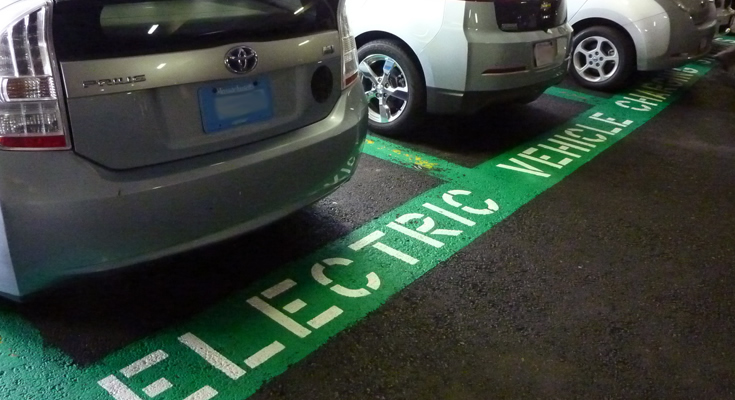
.jpg)
.jpg)
.jpg)
.jpg)
.jpg)
.jpg)
.jpg)
.jpg)
.jpg)

