Agoracom Blog Home

Archive for the ‘All Recent Posts’ Category

Betteru Education Corp. $BTRU.ca – #Naspers To Invest Almost $1bn In #Indian Online Businesses #Edtech

Posted by AGORACOM-JC at 10:17 AM on Friday, December 21st, 2018
SPONSOR:  Betteru Education Corp.Connecting global leading educators to the mass population of India. BetterU Education has ability to reach 100 MILLION potential learners each week. Click here for more information.
————————————–

Naspers To Invest Almost $1bn In Indian Online Businesses

  • A day after it said it would lead a $540 million investment in education startup BYJU’S, Naspers announced it was making a $660 million investment in Swiggy, India’s largest food delivery platform
  • It is leading a nearly $1 billion Series H round in Swiggy, along with existing investors DST Global, Meituan Dianping and Coatue Management, and new investors Tencent, Hillhouse Capital and Wellington Management.

Toby Shapshak Contributor Enterprise & Cloud

Naspers is the most valuable listed company in Africa.Naspers

It’s been a busy week for Naspers, the largest public company in Africa, as it announced its listing on a secondary exchange in South Africa and nearly $1 billion in two significant online investments in India.

A day after it said it would lead a $540 million investment in education startup BYJU’S, Naspers announced it was making a $660 million investment in Swiggy, India’s largest food delivery platform. It is leading a nearly $1 billion Series H round in Swiggy, along with existing investors DST Global, Meituan Dianping and Coatue Management, and new investors Tencent, Hillhouse Capital and Wellington Management.

The BYJU’S investment – which includes a “significant portion” by the Canadian Pension Plan Investment Board (CPPIB) – aims to grows the learning app, which has seen over 30 million students use it. It has over 2 million cumulative annual paid subscriptions, with an average engagement of 64 minutes per student daily.

Although it began as a newspaper business over 100 years ago, Naspers has diversified into pay television, ecommerce and owns a third of Tencent, the Chinese messaging and gaming giant. It is the largest emerging markets media and internet company in the world.

It has a large portfolio of investments in India, including online classifieds business OLX, leading online travel company MakeMyTrip, and payments company, PayU.

“Indian online consumers will be a significant driver of online growth in the world, and in addition to food and education,” Naspers said. “The quality of the best Indian entrepreneurs and their ability to build innovative businesses that address the unique needs of the Indian consumer offer unparalleled growth opportunities.”

In May, Naspers offloaded its stake in Flipkart, India’s largest ecommerce retailer, to Walmart.

Naspers is the largest listed company on the Johannesburg Stock Exchange (JSE), and was the first company in Africa to reach the magical R1 trillion figure. It is headquartered in Cape Town.

The secondary listing on 27 December on the A2X Markets exchange, which does not carry additional costs for companies listed in South Africa, is because A2X offers cheaper transaction fees and is more tech-savvy.

“A2X is one of a growing number of new exchanges that are leveraging technology in an effort to reduce trading costs and increase market transparency,” said Naspers CEO Bob van Dijk. “As one of the world’s leading technology investors we understand the value of technology and are pleased to support these efforts by also listing on A2X. We believe our shareholders will appreciate the added choice of trading venues.”

Earlier this year Naspers sold a 2% stake in Tencent for nearly $10 billion – to invest in more ecommerce ventures it said at the time – and announced in September it would spin off its MultiChoice satellite television unit into a separate company, to be called MultiChoice Africa. MultiChoice’s DStv is the largest satellite pay-television operator in Africa, using a network of satellites to deliver its signal across the continent.

Three years ago Naspers launched its own Showmax streaming service, which now operates in 36 countries in Africa and operates a pure-play streaming service in Poland.

I write about how innovation is better in Africa. I define innovation as solving problems, like the real problems we have in Africa. And solving those problems, solves them for the rest of the world. Africa isn’t just mobile-first, it’s mobile-only. I spoke about this at TED…

Shapshak is editor-in-chief and publisher of Stuff magazine. Based in Johannesburg, his TED talk on innovation in Africa has had more than 1.4m views.

Source: https://www.forbes.com/sites/tobyshapshak/2018/12/21/naspers-to-invest-almost-1bn-in-indian-online-businesses/#49783b5a1f2d


Tetra $TBP.ca Successfully Completes Phase 1 Study With Vaporized Version of PPP001

Posted by AGORACOM-JC at 4:17 PM on Thursday, December 20th, 2018

Planning for Phase 2 Clinical Trial Underway

  • Announced that its Phase 1 clinical trial in healthy volunteers using vaporized PPP001 has been successfully concluded.
  • This trial was aimed at determining the pharmacokinetics (PK) and safety of a 4-day titration followed by a single dose of vaporized PPP001 in 12 healthy volunteers.

OTTAWA, Dec. 20, 2018 — Tetra Bio-Pharma Inc. (“Tetra” or “TBP”) today announced that its Phase 1 clinical trial in healthy volunteers using vaporized PPP001 has been successfully concluded. This trial was aimed at determining the pharmacokinetics (PK) and safety of a 4-day titration followed by a single dose of vaporized PPP001 in 12 healthy volunteers.   Preliminary review of the human clinical data indicates that the treatment was well tolerated. Based on these positive results, Tetra Bio-Pharma expects to move into Phase 2 clinical trials in fibromyalgia patients. 

Tetra Bio-Pharma also completed a first series of analyses of the cannabis vapor generated by the Mighty Medic vaporizer manufactured by Storz & Bickel, thus providing a deeper understanding of the process of administering cannabinoids to patients. This gives health regulators like Health Canada, a detailed view of the efficiency of the delivery system.

“We are thrilled with the results of this trial which was completed both on time and on budget,” stated Dr. Guy Chamberland, CEO and CSO of Tetra Bio-Pharma. “We look forward to investigating this vaped version of PPP001 in patients who suffer from the debilitating pain of fibromyalgia.  The Mighty Medic technology provides an alternative delivery method for PPP001, along with a new therapeutic indication for fibromyalgia which will give us access to a much larger patient population. According to the National Fibromyalgia Association there are more than 10 million people who suffer from this disease in the U.S. alone.”

About Tetra Bio-Pharma
Tetra Bio-Pharma (TSX-V: TBP) (OTCQB: TBPMF) is a biopharmaceutical leader in cannabinoid-based drug discovery and development with a Health Canada approved, and FDA reviewed, clinical program aimed at bringing novel prescription drugs and treatments to patients and their healthcare providers. The Company has several subsidiaries engaged in the development of an advanced and growing pipeline of Bio Pharmaceuticals, Natural Health and Veterinary Products containing cannabis and other medicinal plant-based elements. With patients at the core of what we do, Tetra Bio-Pharma is focused on providing rigorous scientific validation and safety data required for inclusion into the existing bio pharma industry by regulators, physicians and insurance companies.

For more information visit: www.tetrabiopharma.com

Source: Tetra Bio-Pharma

Neither the TSX Venture Exchange nor its Regulation Services Provider (as that term is defined in the policies of the TSX Venture Exchange) accepts responsibility for the adequacy or accuracy of this release.

Forward-looking Statements
Some statements in this release may contain forward-looking information. All statements, other than of historical fact, that address activities, events or developments that the Company believes, expects or anticipates will or may occur in the future (including, without limitation, statements regarding potential acquisitions and financings) are forward-looking statements. Forward-looking statements are generally identifiable by use of the words “may”, “will”, “should”, “continue”, “expect”, “anticipate”, “estimate”, “believe”, “intend”, “plan” or “project” or the negative of these words or other variations on these words or comparable terminology. Forward-looking statements are subject to a number of risks and uncertainties, many of which are beyond the Company’s ability to control or predict, that may cause the actual results of the Company to differ materially from those discussed in the forward-looking statements. Factors that could cause actual results or events to differ materially from current expectations include, among other things, without limitation, the inability of the Company to obtain sufficient financing to execute the Company’s business plan; competition; regulation and anticipated and unanticipated costs and delays, the success of the Company’s research and development strategies, including this trial, the ability to obtain orphan drug status, the applicability of the discoveries made therein, the successful and timely completion and uncertainties related to the regulatory process, the timing of clinical trials, the timing and outcomes of regulatory or intellectual property decisions and other risks disclosed in the Company’s public disclosure record on file with the relevant securities regulatory authorities. Although the Company has attempted to identify important factors that could cause actual results or events to differ materially from those described in forward-looking statements, there may be other factors that cause results or events not to be as anticipated, estimated or intended. Readers should not place undue reliance on forward-looking statements. While no definitive documentation has yet been signed by the parties and there is no certainty that such documentation will be signed. The forward-looking statements included in this news release are made as of the date of this news release and the Company does not undertake an obligation to publicly update such forward-looking statements to reflect new information, subsequent events or otherwise unless required by applicable securities legislation.                              

For further information, please contact Tetra Bio-Pharma Inc.
Robert (Bob) Bechard     
Executive Vice President, Corporate Development and Licensing
514-817-2514
[email protected]   
Media Contact 
energi PR
Carol LevineStephanie Engel
[email protected]  [email protected] 
514-288-8500 ext. 226 416-425-9143 ext. 209

Good Life Networks $GOOD.ca – Understanding the programmatic advertising ecosystem $TTD $RUBI $AT.ca $TRMR $FUEL

Posted by AGORACOM-JC at 2:55 PM on Thursday, December 20th, 2018
SPONSOR: Good Life Networks (GOOD:TSX-V) Video advertising is the future! Company’s A.I. makes 80,000 calculations / second, targeting 750 million users to deliver higher prices and volume. Revenue was $10,000,650 for the nine months ended September 30th, 2018, a 142% increase from $4,133,231 reported for the six months ended September 30th, 2017.  Click here for more information.
————–

Understanding the programmatic advertising ecosystem

  • In a generation digital marketing has evolved to become the primary way many brands run their campaigns all over the world.
  • But none of it would be possible without the underlying technology infrastructure that has subsequently developed around programmatic advertising. 

To practitioners the language of programmatic may well be second nature, but for many in the sector the programmatic landscape can seem confusing hard to penetrate.

This is the case even for experienced traditional marketers, and even digital marketers who may understand the technology beneath owned media, but struggle with advertising technology which sustains paid media.

To help marketers build their expertise Oracle recently hosted a webinar which steps marketers wanting to understand more about the programmatic advertising landscape through all the key elements of the programmatic landscape.

In part one of this report we look at that landscape and in part two, we describe programmatic strategies available to markets.

But lets start with the basic question, what is programmatic advertising?

Programmatic 101

Put simply it is a marketing approach that delivers the most relevant message to the right person on the right device at the right time to achieve a desired action.

It is optimised in real time based on data that allows the marketer to focus on individual impressions instead of block buying advertising slots. This is what makes it very different to traditional advertising. 

Instead of static inventory with analytics derived from surveys and panels, the programmatic approach allows advertisers to serve impression that are both dynamic and relevant – because they are based on who is viewing the impressions. 

Importantly, as this is based on the idea of one on one advertising it also allows markets to derive one on one user insights.

Underpinning the programmatic advertising landscape are digital platforms and exchanges which enable the buying and selling of advertising inventory across mobile, desktop, search, display and video advertising.

Advertisers and publishers can transact in real time just like on the stock exchange, although the amount of transaction the ad tech sector supports each day dwarfs the volume on a financial exchange!

Advertisers interact through what is called a data management platform via a supply side platform (SSP) while marketers interacting with the DMP through demand side platforms (DSPs).

These interactions are facilitated by add exchanges the middle.

Like most other forms of digital marketing, the success of these interactions and the effectiveness of programmatic campaigns is based upon the quality of the data.

First, second and third party data 

The most valuable information for any advertiser is the first party data which is basically the data that is proprietary to them and found in places like the advertiser’s web site, its customer relationship management platform or even the email data to which it already has access.

Various platforms like Eloqua, CXD and Blue Kai allow marketers to integrate this information into their programmatic activity.

Second party data on the other hand comes from when the advertiser has a direct relationship with a publisher and is able to use their data as and when required. 

Sometimes, however, the reach provided by the first and second party data simply isn’t enough. Then, marketers and their agencies use third party data is important to expand the reach of a campaign.

Third party aggregators and publishers collate data they collect in the form of cookies from their 100s of web sites and sell it to advertisers. 

Various vendors like Nielsen, Iota and Data Logic provide the demographic, geographic and other types of data needed to supplement the first and second party information.

The data sets can be huge and the sheer amount of data can be overwhelming. It needs to be managed which is where a data management platform comes into the conversation.

A DMP is the backbone of data driven marketing. It serves as a unifying platform to collect, organise and activate first, second, and third party audiences data from any source including online, offline, mobile and beyond. 

Once the demand side data is aligned we can then use various DSPs like Dataxu, TradeDesk, or Rocketfuel to work with the various advertising exchanges to purchase relevant inventory from the supply side.

Here’s a simple example of how this all folds together.

Imagine a campaign where a brand uses its first party data but determines that much more reach is required. The brand then purchases third party data that matches its specific geographic and demographic requirements.

These two pieces of data are then combined through a DMP. And all of this comes together in a matter of milliseconds.

Imagine next that a consumer goes to a publisher’s web site. The publisher calls its web server likely before the consumer’s page has fully loaded. The ad server checks its rules and determines what ad it can serve and at what price. The ad sever then instructs the consumer’s browser to call the advertiser’s ad server, and then the publisher’s ad server counts an impression .

The advertiser’s ad server knows it can serve the specific creative and an impression is counted to that site. Placement, combination and the campaign spend is logged for that impression.

And the user sees the advertisement. This all happens in real time.

Of course, this being a programmatic campaign, another consumer viewing the same page at the same time will potentially see a completely different ad based on the persons characteristics. 

Pixels and cookies

A tagging pixel is essentially a piece of code that is placed on a web site by a marketer and it generates a notice of visits to the page by a browser. Pixels often work in conjunction with cookies recording when a particular computer visits a specific page and they can be played across the site or on certain conversion pages only.

The placement is determined by what you want to measure.

It is important to understand that different types of pixels do different thing.

Conversion pixels for instance capture conversion events. This is the only way markers can record view-through conversions and post click conversions. The conversion pixels are installed on the page where the marketing goal is achieved such as a form page or a landing page.

Optimisation pixels on the other hand are installed across an entire site and used to better identify ideal targets in prospecting and site retargeting campaigns.

Finally, data collection pixels allow data collection companies to anonymously identify and classify web site visitors into various categories.

All of these pixels help programmatic vendors track the success of a campaign. And they are used to build look alike profiles so that a brand’s programmatic vendor can find more of its ideal audience online.

Pixels also provide rich insights into your audience such as the type of websites they list and their interesting certain categories 

So what is a cookie? Put simply it is a mechanism specified by a http protocol that is implemented by the browser for web sites to store data locally.

For instance cookies are used to help a site remember that a visitors logged in rather than making them login every time they come back.

They are also important for saving shopping cart information and for tracking other behaviour online.

From a security perspective cookies can only be sent to the domain that originally sent them. For instance only oracle.com can set oracle.com cookies. 

In part two, we will look at different programmatic strategies brands can employ in their campaigns.

Mandar Dadegaonkar

Source: https://which-50.com/understanding-the-programmatic-advertising-ecosystem/

St-Georges $SX.ca Lithium-In-Clay Extraction Technology Update

Posted by AGORACOM-JC at 1:36 PM on Thursday, December 20th, 2018
  • Successful selective leaching to remove Magnesium Oxide (MgO) and Calcium Oxide (CaO) was achieved
  • This allows the potential recovery of High Purity MgO and eliminates the need for membranes and other purification steps required to make high purity lithium that can be used to make lithium carbonate, lithium hydroxide and/or lithium metal.

Montreal, QC / December 20, 2018 St-Georges Eco-Mining Corp. (CSE: SX) (OTC: SXOOF) (FSE: 85G1) is pleased to provide an update on the development of its lithium-in-clay extraction technology.

Successful selective leaching to remove Magnesium Oxide (MgO) and Calcium Oxide (CaO) was achieved. This allows the potential recovery of High Purity MgO and eliminates the need for membranes and other purification steps required to make high purity lithium that can be used to make lithium carbonate, lithium hydroxide and/or lithium metal.

“(…) Selective leaching of Magnesium, Calcium and Sodium is an interesting breakthrough that helps to make the down stream processing for lithium purification simpler with fewer challenges on water/acid balances, reduction in chemical usage and lower energy requirements. (…) We are still investigating converting problem elements into valuable salable by-products helping our cost structure and ecological focus (…)” said Enrico Di Cesare, St-Georges’ Vice-President Research & Development.

St-Georges tested its metallurgical process in a simulated industrial environment using large quantity of material received in September from the Bonnie Claire deposit owned 100% by its partner Iconic Minerals Ltd. (TSX-V: ICM). Approximately 100kg of Bonnie Claire material was used in the current test phase. 5 independent laboratories participated in the effort. The initial mechanical separation step was tested with an equipment vendor in Pennsylvania. The results show that 55% of the mass can be removed while concentrating the lithium without the use of water and chemicals.

St-Georges is working on the filing of two provisional patents in relation to the first phase of development of the process. Further testing is underway to optimize and firm up the patent applications. The current developments simplify and improve the process flow sheet. It eliminates the need to use membranes and it is expected to decrease total chemicals used.

In mutual agreement with Iconic Minerals, St-Georges’ management is revising the initial planning allowing to accelerate the development of the technology and should deliver a report to Iconic in January that will include elements that were initially expected in the second development report. Additional testing is currently underway for that purpose. St-Georges also expects to issue an additional press release in early January after it receives the results to the verification tests that it has just commissioned following this potential breakthrough.

Joel Scodnick, P.Geo, and Herb Duerr, P.Geo both qualified persons under NI 43-101 have reviewed and approved the technical content of this release.

ON BEHALF OF THE BOARD OF DIRECTORS

“Frank Dumas”

FRANCOIS (FRANK) DUMAS, DIRECTOR & COO

About St-Georges

St-Georges is developing new technologies to solve the some of the most common environmental problems in the mining industry.

The Company controls directly or indirectly, through rights of first refusal, all of the active mineral tenures in Iceland. It also explores for nickel on the Julie Nickel Project & for industrial minerals on Quebec’s North Shore and for lithium and rare metals in Northern Quebec and in the Abitibi region. Headquartered in Montreal, St-Georges’ stock is listed on the CSE under the symbol SX, on the US OTC under the Symbol SXOOF and on the Frankfurt Stock Exchange under the symbol 85G1.

The Canadian Securities Exchange (CSE) has not reviewed and does not accept responsibility for the adequacy or the accuracy of the contents of this release.

Esports Entertainment Group $GMBL – #Esports Legends Launch #Popdog With $9 Million Funding Round $ATVI $TTWO $GAME $EPY.ca $TCEHF

Posted by AGORACOM-JC at 4:29 PM on Wednesday, December 19th, 2018
SPONSOR: Esports Entertainment $GMBL – Esports audience is 350M, growing to 590M, Esports wagering is projected at $23 BILLION by 2020. The company has launched VIE.gg esports betting platform and has accelerated affiliate marketing agreements with an additional 42 Esports teams, bringing total to 176 Esports teams. Click here for more information.
————–

Esports Legends Launch Popdog With $9 Million Funding Round

By GERA

  • The company is called Popdog, and will be starting things out with a $9 million Series A funding round led by Makers Fund and Korea Investment Partners.
  • “We’re building our company around the core belief that eSports and gaming video content, born more from technology than any other sports or entertainment verticals we’ve seen, need better technology in order to be properly understood, monetized, and optimized,” says company CEO 

Evil Geniuses CEO Alexander Garfield is heading a new eSports technology and services company which will develop products aimed at optimizing live streaming for tournaments, talent, and publishers, it was announced today.

The company is called Popdog, and will be starting things out with a $9 million Series A funding round led by Makers Fund and Korea Investment Partners.

“We’re building our company around the core belief that eSports and gaming video content, born more from technology than any other sports or entertainment verticals we’ve seen, need better technology in order to be properly understood, monetized, and optimized,” says company CEO Garland in a prepared statement.

“The industry needs a backend, and our mission is to be that backend by supporting the ecosystem as a whole with a comprehensive offering of technology and services. This funding brings us one step closer to fulfilling that mission. We’ve already assembled an incredible team of industry leaders, product experts, and eSports veterans, and
we’re excited to begin rolling out a suite of products that we think will make operating in the space transparent and scalable, as opposed to opaque and speculative.”

Alexander Garfield, a two-time winner of The International tournament, is perhaps best known for his role in helping to build pro-gaming organizations Evil Geniuses and Alliance into eSports heavyweights. Garfield later sold the teams’ parent company GoodGame to Twitch in 2014.

Alongside Garfield, Popdog’s co-founders include CTO and CPO Andreas Thorstensson, a former Counter-Strike world champion who Co-Founded SK Gaming; CSO Niles Heron, consultant who has taught and mentored at accelerators such as TechStars, Gener8tor and Detroit’s TechTown; and CCO Colin DeShong, the former COO of GoodGame, Evil Geniuses, and Alliance, where he was Garfield’s long-time partner.

Source: https://variety.com/2018/gaming/news/esports-alexander-garfield-ninja-popdog-1203092901/

Betteru Education Corp. $BTRU.ca – Online Higher Education in India Comes Full Circle $ARCL $CPLA $BPI $FC.ca

Posted by AGORACOM-JC at 3:23 PM on Wednesday, December 19th, 2018
SPONSOR:  Betteru Education Corp.Connecting global leading educators to the mass population of India. BetterU Education has ability to reach 100 MILLION potential learners each week. Click here for more information.
—————

  • Ever since the 2012 report stated that India needed thousands of new colleges and universities, it has been evident that India should instead focus on building disruptive innovations to rethink education by offering a service that is far more affordable, accessible, and convenient than the existing options.
  • That meant using online learning to serve people who would otherwise have no access to higher education.

By Brian Warren and Michael B. Horn (Columnist)  

In 2012, the government of India stated that it would need to build 1,000 new universities and an astounding 50,000 new colleges by 2020 to meet expected demand as its population and workforce continued to grow.

With over 750 universities and more than 38,000 colleges today—compared to roughly 650 universities and 25,000 colleges in 2012—the country looks unsurprisingly unlikely to meet that objective.

And that’s not necessarily a bad thing. Surveys and sources suggest many college graduates are unprepared for the workforce. For example, according to the All India Council for Technical Education, a whopping 60 percent of engineering graduates from India’s technical colleges remain unemployed each year.

Instead of replicating systems of higher education found elsewhere, India ought to be taking this opportunity to leapfrog the current state of higher education.

Ever since the 2012 report stated that India needed thousands of new colleges and universities, it has been evident that India should instead focus on building disruptive innovations to rethink education by offering a service that is far more affordable, accessible, and convenient than the existing options. That meant using online learning to serve people who would otherwise have no access to higher education.

And India did initially leverage online learning by allowing its universities and colleges to launch a wide range of online programs. But there were two problems. First, because existing higher-ed institutions drove the launch, their programs replicated aspects of Indian higher education online, rather than invent new ways to serve students who had no access previously—similar to what has happened in the United States in many cases.

Second, the initial online programs were of widely varying quality. Some reports suggested students didn’t learn much of anything, and were certainly not prepared to tackle real-world problems.

As a result, India cracked down on all online learning, with a moratorium on accredited universities offering online degrees in December of 2016.

Although this halted universities from innovating, it didn’t stop other Indian entities from innovating in online learning across the education spectrum. Corporations continued to offer online certificates, particularly in the coding and data analytics realms, and India’s largest education company, Byju’s, developed everything from next-generation interactive online simulations to top-of-the-line animation online video lessons. India’s higher-education system fell further behind when it came to leveraging online learning innovations.

This past August, India dipped its toe back into the online learning regulatory waters. But just its little toe.

The University Grants Commission, the national regulatory body for higher education that helps maintain standards and delegates funds to recognized universities and colleges, announced it will permit certain institutions to offer fully online certificate, diploma and degree programs in the 2018–2019 academic year.

To be eligible, institutions must be at least five years old, awarded a minimum score by the National Assessment and Accreditation Council, and rank among the top 100 colleges and universities, based on a national evaluative framework, for two of the past three years. The degree program must also mirror pre-made, face-to-face courses that have already graduated a cohort of students and have been previously approved by the statutory councils—in other words, replicate the existing system.

These new rules sound like those of yesteryear’s—and that’s a problem.

By replicating a system that India’s citizens and employers already say doesn’t produce workforce-ready graduates, it’s not clear why this wave of online learning will work better than the last. Although the Commission is allowing only the top 100 institutions in India in an effort to control quality, it’s really just cementing in place the current system of higher education.

That input-based approach to regulation, in which the resources and processes of a class are controlled, will, by definition, freeze innovation because it limits how programs may deliver their services. It also ignores the question of student outcomes at the program level, such that there will be little accountability.

There’s a better approach.

Lost amidst the changing rules and regulations is a focus on student outcomes—and, in this case, critical measures that connect education to the economy. (Some of these measures are outlined in a quality assurance framework that we researched and developed.) The government of India ought to incentivize institutions to compete on delivering what’s best for students, while keeping costs down to increase value and promote access. By maintaining a quality threshold, the Commission could invite many players to enter the online higher education market and innovate around quality and access, which could help India meet its demand to educate more citizens for the workforce.

India could also be the first in the world to pioneer such a progressive approach—and it could do so by first targeting the policy at online universities, not the entire system, which would be far too revolutionary at this stage.

The Commission ought to reconsider its choice. They can stay with the status quo and implement piecemeal adjustments in the hope that the outcomes match their intentions, or they can adopt a strategy of bold innovation with robust student-outcome protocols that don’t leave students’ success up to chance. From our standpoint, that shouldn’t be a choice.

Michael Horn (@michaelbhorn) is an EdSurge columnist and Principal Consultant for Entangled Solutions. Brian Warren is a consultant at Entangled Solutions.

Source: https://www.edsurge.com/news/2018-12-19-online-higher-education-in-india-comes-full-circle

CLIENT FEATURE: Tartisan Nickel $TN.ca Kenbridge Property Hosts M&I Resource of 7.14 Million Tonnes at 0.62% Nickel, 0.33% Copper

Posted by AGORACOM-JC at 10:19 AM on Wednesday, December 19th, 2018

Investment Highlights

  • Kenbridge property has a measured and indicated resource of 7.14 million tonnes at 0.62% nickel, 0.33% copper
  • 17.5 (21.8 fully diluted) percent equity stake in Eloro Resources and 2 percent NSR in their La Victoria property

Kenbridge Ni Project (ON, Canada)

  • Advanced  stage  deposit  remains open  in  three  directions,  is  equipped with a 623m  deep  shaft  and  has  never  been  mined. 
  • Preliminary  Economic Assessment completed and updated returned robust project 
    economics and operating costs including  a  NPV  of  C$253M  and  cash costs of US$3.47/lb of nickel net of  
    copper credits.
  • Plans for Kenbridge include updating PEA, advancing the project through to feasibility and exploring the open mineralization at depth

FULL DISCLOSURE: Tartisan Nickel Corp. is an advertising client of AGORA Internet Relations Corp.

CLIENT FEATURE: Kuuhubb $KUU.ca Mobile Video Gaming And Apps For Women; $US 4.9M Quarterly Revenues, +50M Downloads, 14M Quarterly Users $TCEHY $ATVI $CYOU

Posted by AGORACOM-JC at 4:05 PM on Tuesday, December 18th, 2018
KUU: TSX-V

Why Kuuhubb?

  • All time app downloads of +50M
  • Quarterly* sessions of +200M
  • Quarterly* active users of +14M
  • Quarterly gross* revenue of $4.9M
  • Partnerships: Kellogg’s and Samsung
  • Aggressive Global Growth Plans Now Underway
  • Japan Already Established Japan Mobile Revenues
  • Have Surpassed The USA For 3 Consecutive Years
  • India, Korea and China Are Forthcoming
  • Global Social App Comparables Are Trading At $58/Monthly Active User (MAU) (Excluding Facebook)

The Company’s Differentiator? Kuuhubb Delivers Mobile Gaming & Lifestyle Apps Geared Towards Female Audiences. KUU Is Now Focusing On Asian Markets, The World’s Largest & Fastest Growing Mobile Games Market

Portfolio

Kuuhubb growth is undeniable, with rapid growth in revenues quarter over quarter.  The company’s flagship app (Recolor) has experienced strong growth in downloads, sessions and monthly active users, indicating a winning product

Hub On AGORACOM /Corporate Profile

FULL DISCLOSURE: Kuuhubb is an advertising client of AGORA Internet Relations Corp.

Esports Entertainment Group $GMBL – Investing In #Esports: The Five Winning Stocks $ATVI $TTWO $GAME $EPY.ca $TCEHF

Posted by AGORACOM-JC at 1:24 PM on Tuesday, December 18th, 2018
SPONSOR: Esports Entertainment $GMBL – Esports audience is 350M, growing to 590M, Esports wagering is projected at $23 BILLION by 2020. The company has launched VIE.gg esports betting platform and has accelerated affiliate marketing agreements with an additional 42 Esports teams, bringing total to 176 Esports teams. Click here for more information
————-
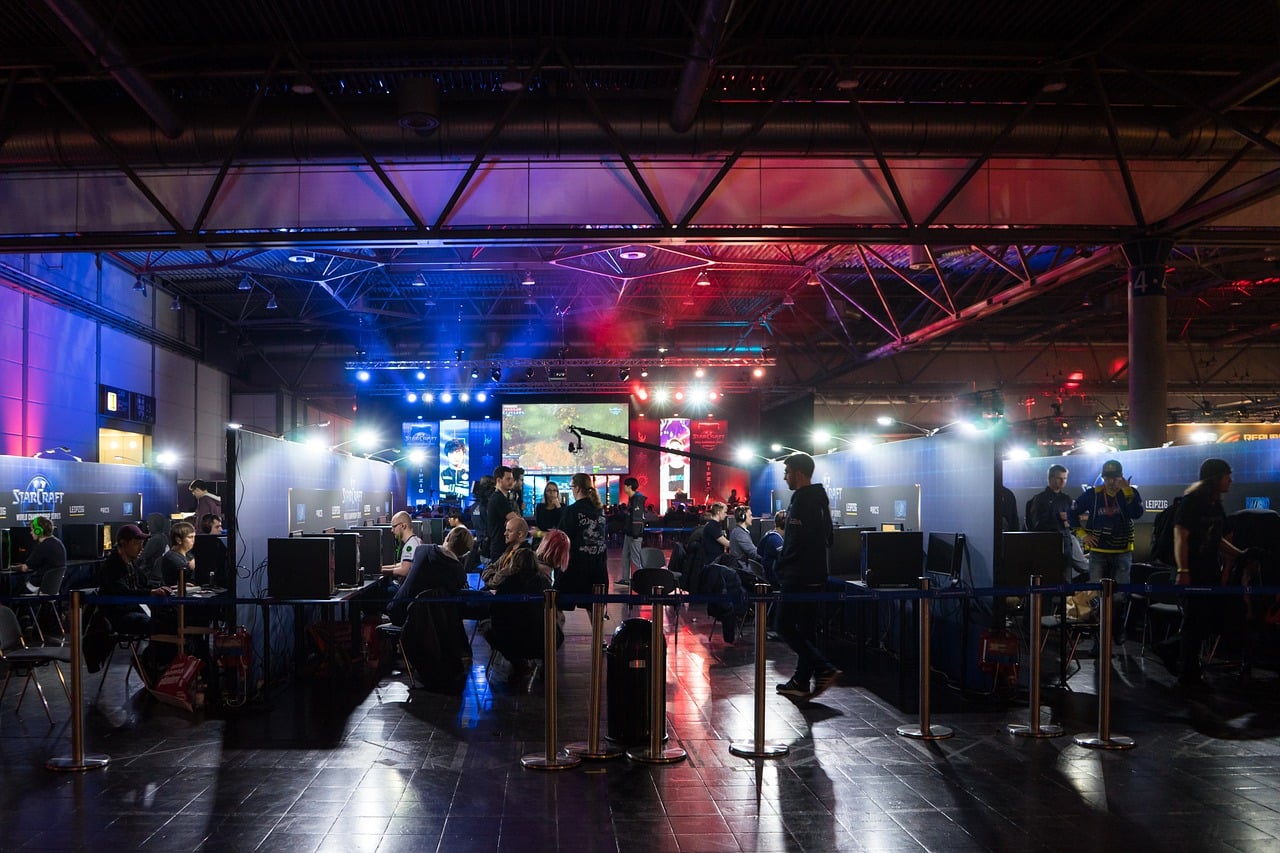
  • Esports has come from nowhere to become one of the most exciting entertainment trends in the world.
  • What began as a fairly niche activity in South Korea has grown to become a world beater, and the esports industry is expected to hit $180 billion in revenues by 2021.

by Ankur Shah

Esports has come from nowhere to become one of the most exciting entertainment trends in the world. What began as a fairly niche activity in South Korea has grown to become a world beater, and the esports industry is expected to hit $180 billion in revenues by 2021.

But what is esports and how can you take advantage of its remarkable growth? Simply put, esports is competitive video gaming where individuals compete on video games like League of Legends, Counter Strike Global Offensive and Overwatch. There’s a more detailed guide to esports here, but basically esports is like any traditional sport, except that it’s played on video games. 

Given esports’ impressive revenues, there will be many people questioning which esports stocks have the most potentially lucrative returns. Whilst the esports industry might not be included in many of the value stocks for 2019, some of these stocks could be well worth keeping an eye on.

It’s the games publishers and developers who could provide the greatest amount of stability in this rapidly changing realm. EA Sports is one of the most widely respected games publishers in the esports domain with titles like the Madden franchise and FIFA being amongst its biggest hits. And with the news that EA Sports are teaming up with the Premier League to launch the ePremier League, it shows that there is plenty of value here.

Activision Blizzard have also provided some of the biggest titles in the competitive gaming realm. Alongside classics like Call of Duty and Quake, Blizzard have also successfully launched the Overwatch League and Overwatch World Cup tournaments which have added plenty of professionalism to the fledgling industry.

All shrewd investors will know how China holds the key for understanding the future of many industries. As a result, it could be wise to invest in Tencent as this multibillion dollar Chinese investment company bought Riot Games. Why is this important? Riot Games created League of Legends which is probably the biggest esports game around, and with over 60 million unique viewers for the 2017 League of Legends World Championship finals, it shows just how popular esports has become.

Esports wouldn’t have grown to become a world-beater were it not for the incredible hardware that the gamers compete on. As a result, many investors have been charting the rapid progress of Nvidia. This semiconductor company has a separate NVDA gaming division that was responsible for developing the world’s speediest graphics processing unit. As a result, this brand have proven to offer plenty of stability when working out how to overcome any unexpected stock market turbulence.

Similarly, Logitech have won many fans as a result of their gaming hardware, and it could be wise to invest early in this Swiss manufacturer. Logitech’s revenues have steadily been growing the past few years, and with growth figures of 27% in 2017, it seems as though gamers’ hunger for quality keyboards, mice and other hardware is showing no signs of slowing down.

Source: https://www.valuewalk.com/2018/12/investing-in-esports-the-five-winning-stocks/

Good Life Networks Inc. $GOOD.ca Announces The Closing of Impression X Acquisition $TTD $RUBI $AT.ca $TRMR $FUEL

Posted by AGORACOM-JC at 8:37 AM on Tuesday, December 18th, 2018
  • Announced today that is has closed the acquisition of Impression X, Inc., a leading connected television (“CTV”) advertising technology company.
  • Under the terms defined by the definitive agreement, GLN has acquired all of the issued and outstanding shares of Impression X for an aggregate purchase price of up to USD $4,500,000

VANCOUVER, Dec. 18, 2018 - Good Life Networks Inc. (“GLN“, or the “Company“) (TSXV: GOOD) (FSE: 4G5), a programmatic advertising technology company, announced today that is has closed the acquisition of Impression X, Inc. (“Impression X“), a leading connected television (“CTV“) advertising technology company. Under the terms defined by the definitive agreement (the “Definitive Agreement“), GLN has acquired all of the issued and outstanding shares (the “Purchased Shares“) of Impression X for an aggregate purchase price of up to USD $4,500,000.

“This acquisition gives us more revenue horsepower during the biggest quarter of the year in the advertising industry and a great start to 2019” said Jesse Dylan, CEO of GLN. “GLN and Impression X are highly complementary businesses, and we are pleased to capitalize on this unique opportunity to create a larger, more diversified and successful company.”

Under the terms of the Definitive Agreement, consideration for the Purchased Shares consists of the following:

a) USD $500,000 in cash, payable to the shareholders of Impression X (the “Vendors“);

b) USD $400,000 in common share purchase warrants of the Company (“Warrants“), payable to the Vendors at closing, based upon the greater of: (i) the 10-day volume weighted average trading price of the Company’s common shares on the TSX Venture Exchange (“TSX-V“) immediately prior to the date of issuance; and (ii) the lowest price permitted by the policies of the TSX-V;

c) a performance earn-out of up to USD $1,000,000 in cash based on agreed-upon milestones; and

d) a performance earn-out of up to USD $2,600,000 in Warrants based upon the greater of: (i) the 10-day volume weighted average trading price of the Company’s common shares on the TSX-V immediately prior to the date of issuance; and (ii) the lowest price permitted by the policies of the TSX-V.

In partial satisfaction of the purchase price, the Company issued an aggregate of 2,914,622 Warrants to the Vendors at closing exercisable to purchase common shares of the Company at a price of C$0.1836 per share for a period of five years from the closing date.

“The combination of Impression X expertise and relationships in CTV backed by GLN’s technology and world class team will allow us to capture an even larger portion of the $31 billion-dollar industry,” stated Impression X CEO Matt Hopkins.

The IAB (Interactive Advertising Bureau) Changing TV Experience report indicates that 56% of consumer TVs are now IP connected. The IAB anticipates CTV ad revenues are projected to hit $31.5 billion in 2018, up 275 percent from $8.4 billion in 2015.

The GLN Story

GLN is a patent pending machine learning programmatic video advertising technology company that does not collect PII (Personal Identifiable Information).  GLN serves millions of online video ads daily 3 times faster than IAB (Interactive Advertising Bureau) standards through multiple server to server integrations with both publishers and advertisers. GLN is headquartered in Vancouver, Canada with offices in the US and UK. 

Digital ad revenue rose by 16.8%, more than double TV’s in January of 2018 according to Forbes Magazine.

GLN trades on the TSX Venture Exchange under the stock symbol “GOOD” and The Frankfurt Stock Exchange under the stock symbol 4G5.

Neither the TSX Venture Exchange nor its Regulation Services Provider (as that term is defined in the policies of the TSX Venture Exchange) accepts responsibility for the adequacy or accuracy of this release.

Forward Looking Statements:

Forward-looking statements relate to future events or future performance and reflect the expectations or beliefs regarding future events of management of GLN. This information and these statements, referred to herein as “forward‐looking statements”, are not historical facts, are made as of the date of this news release and include without limitation, statements regarding discussions of future plans, estimates and forecasts and statements as to management’s expectations and intentions with respect to the Company’s acquisition of Impression X. These statements generally can be identified by use of forward-looking words such as “may”, “will”, “expect”, “estimate”, “anticipate”, “intends”, “believe” or “continue” or the negative thereof or similar variations. These forward‐looking statements involve numerous risks and uncertainties and actual results might differ materially from results suggested in any forward-looking statements. Important factors that may cause actual results to vary include without limitation, risks relating to the  acquisition of Impression X, GLN maintaining its projected growth and general economic conditions or conditions in the financial markets. In making the forward‐looking statements in this news release, the Company has applied several material assumptions, including without limitation that the assimilation of Impression X will generate the anticipated revenue and expand GLN’s global reach per management’s expectations. GLN does not assume any obligation to update the forward-looking statements, or to update the reasons why actual results could differ from those reflected in the forward looking-statements, unless and until required by applicable securities laws. Additional information identifying risks and uncertainties is contained in GLN’s filings with the Canadian securities regulators, which filings are available at www.sedar.com.

SOURCE Good Life Networks Inc.

View original content to download multimedia: http://www.newswire.ca/en/releases/archive/December2018/18/c4050.html

[email protected] or call 604 265 7511Copyright CNW Group 2018