Agoracom Blog Home

Archive for the ‘All Recent Posts’ Category

Explor $EXS.ca Completes Preliminary Metallurgical Testwork on #Timmins Porcupine West #Gold Property $EXN.ca $HBE.ca $OSK.ca

Posted by AGORACOM-JC at 3:18 PM on Thursday, May 31st, 2018

Exs logo

  • Announced completion of Preliminary Metallurgical Testing on the low grade near surface gold ore on the Timmins Porcupine West Property
  • Selected a representative sample from diamond drill holes in the area of the potential open pit
  • 5 kilogram composite sample of mineralized diamond drill core was sent to SGS Minerals Services in Lakefield, Ontario for metallurgical test-work

ROUYN-NORANDA, Quebec, May 31, 2018 – Explor Resources Inc. (“Explor” or “the Corporation”) (TSX-V:EXS) (OTCQB:EXSFF) (FSE:E1H1) (BE:E1H1) is pleased to announce the completion of Preliminary Metallurgical Testing on the low grade near surface gold ore on the Timmins Porcupine West Property (the “TPW Property” or  the “Property”). Explor selected a representative sample from diamond drill holes in the area of the potential open pit. A 45 kilogram composite sample of mineralized diamond drill core was sent to SGS Minerals Services in Lakefield, Ontario for metallurgical test-work.

The test program included sample preparation, characterization, and flowsheet development testing. Ore characterization included grindability, mineralogy by QEM-RMS (QEMSCAN) rapid mineral scan, and chemical head grade analysis. Flowsheet development testwork focused on gravity separation, as well as flotation and cyanidation of gravity separation tailing.

In summary, the composite sample was analyzed by a screened metallics protocol and resulted in a head grade of 2.64 g/tonne gold. Testing indicated very little silver and negligible arsenic in the composite sample. It was noted that most of the sulphide sulfur was present as Pyrite (3.07%), Chalcopyrite (approximately 0.12%) and Pyrrhotite (0.02%). The Bond Mill work index was determined to be 13.1 Kwh/tonne. A gravity test was conducted and it was determined that the 37.5% of the gold exists as microscopic free gold, indicating that in any future mill design a gravity circuit will be necessary at the front end of the concentrator. Flotation testing indicated that up to 93% of the gold can be recovered as a pyrite concentrate. Cyanide leach test were conducted on the pyrite concentrate and greater than 94% gold extraction was achieved over a 24 hour period. The gold is not refractory and is not locked within the pyrite. A testing of the tailings product (ABA and NAG testing) indicates that there is no potential for acid generation in the flotation tailings material.

Chris Dupont, President and Chief Executive Officer of Explor Resources Inc. commented: “We are very excited about these preliminary Metallurgical results. The low Bond work index combined with the high percentage of free gold and potential greater than 93% gold recovery and with the fact that there is no potential for acid generation in the tailings material make this property very valuable from a development perspective.”

The highlights of the reported test-work includes the following results:

  • Gold analysis by screened metallics protocol at +/-150 mesh (106 μm) yielded a head grade of 2.64 g/t Au with >20% of the gold in the coarse fraction indicating favorable recovery by gravity.
  • Silver reported at less than the AAS detection limit of +/-0.5 g/t while sulphide sulphur, total carbon and arsenic were assayed at 1.48%, 0.7% and <0.001%, respectively.
  • Based on the semi-quantitative QEM-RMS analysis, most of the sulphide sulphur was present as pyrite (3.07%). Chalcopyrite was the second most abundant sulphide mineral at ~0.12% and pyrrhotite was third at 0.02%.
  • The Bond ball mill grindability test results indicated that the ore fell in the low medium range of hardness, at 13.1 kWh/tonne. The ore fell at the 36th  percentile compared to the SGS database.
  • In a batch gravity separation test completed, gravity gold recovery to a low mass concentrates (~0.04% of the feed mass) yielded a gold recovery of 37.5% at a primary grind size P80 of ~130 μm. These initial results suggest a high probability of significant potential for the use of gravity circuit at the front end of the mill. Additional gravity separation testwork is recommended in any future studies.
  • Rougher flotation tests on gravity separation tailings indicated that gold recoveries in the ~93% range (including the gold recovered by gravity separation) were achievable in ~5% mass pull at a P80 of ~130 μm. There appeared to be an improvement in gold recovery with finer grinding (to P80 = 59 μm).
  • Additional testing will be required to optimize the primary grind size for optimal rougher flotation performance. Additional test work is recommend, examining the cleaning characteristics of the rougher concentrate. It may be possible to generate a cleaner flotation concentrate approaching 50 g/tonne Au, compared to the ~30 g/t generated preliminary metallurgical in the preliminary rougher flotation testwork. Locked cycle flotation testing is also recommended to establish a more realistic understanding of potential gold recovery in closed-circuit in a flotation plant.
  • Cyanide leach tests examining the impact of grind size on gold recovery from the gravity separation tailings indicated gold extractions >94% (including gravity separation gold recovery) at P80’s of 74 μm or finer. Although the gold appears to be associated with pyrite and floats well with pyrite, it is not refractory and locked in the pyrite. Gold leaching appeared to be essentially complete within 24 hours.
  • Further testing to optimize cyanide leach parameters is recommended. This testing should address the optimization of feed particle size, leach retention time, pulp density, and cyanide dosage. This testing should encompass leaching of both whole ore (gravity tailings) as well as float concentrates. Subsequent work is recommended to evaluate the gold recovery circuit (CIP or CIL) and establish preliminary design criteria.
  • Baseline environmental evaluation (ABA and NAG testing) of a tailing representing a gravity +rougher flotation flowsheet indicated there is no potential for acid generation in flotation tailings material.

Chris Dupont, P.Eng is the qualified person responsible for the information contained in this release.

Explor Resources Inc. is a publicly listed company trading on the TSX Venture (EXS), on the OTCQB (EXSFF) and on the Frankfurt and Berlin Stock Exchanges (E1H1).

This Press Release was prepared by Explor. Neither the TSX Venture Exchange nor its Regulation Services Provider (as that term is defined in the Policies of the TSX Venture Exchange) has reviewed or accepts responsibility for the adequacy or accuracy of this release.

About Explor Resources Inc.

Explor Resources Inc. is a Canadian-based natural resources company with mineral holdings in Ontario, Québec, Saskatchewan and New Brunswick. Explor is currently focused on exploration in the Abitibi Greenstone Belt. The belt is found in both provinces of Ontario and Québec with approximately 33% in Ontario and 67% in Québec. The Belt has produced in excess of 180,000,000 ounces of gold and 450,000,000 tonnes of Cu-Zn ore over the last 100 years. The Corporation was continued under the laws of Alberta in 1986 and has had its main office in Québec since 2006.

For further information please contact:            

Christian Dupont, President    
Tel: 888-997-4630 or 819-797-4630    
Fax: 819-797-1870    
Website: www.explorresources.com    
Email: [email protected]


Sales of electric cars #EV soar – over 3 million on the road! #Tesla $TSLA $NAM.ca $LIC.ca $LIX.ca

Posted by AGORACOM-JC at 11:05 AM on Thursday, May 31st, 2018

By Matthew H Tong / 31 May 2018 7:32 pm

  • Demand for cobalt and lithium is increasing and could rise tenfold unless technological advances reduce that figure
  • Over 60% of cobalt in the world is mined in the Democratic Republic of the Congo, where child labour still occurs.

The International Energy Agency (IEA) has released its Global Electric Vehicles Outlook report for this year, which stated that there are currently 3.1 million electric vehicles (EV) on the road today. In fact, the encouraging uptake of EVs over the past year has become the basis for the IEA’s projection that, by 2030, there will be 220 million of such vehicles on public roads.

According to the report, about 1.1 million electric cars were sold in 2017, representing a 54% jump from 2016. Interestingly, over 50% or approximately 580,000 units were sold in China alone. The US also showed significant growth – EV sales more than doubled in 2017 compared to 2016, with over 280,000 units sold in the course of 12 months. In 2016, the figure stood at 120,000 units.

In terms of market share for new sales, Norway tops the chart with 39%, followed by Iceland with 11.7% and Sweden with 6.3%. However, over 99% of electric bus and electric two-wheelers were sold in China.

Given the growth in demand for electric vehicles, it’s not surprising that the demand for charging stations have also been on the rise. In 2017, approximately three million private chargers have been installed at residential and commercial/business properties, whereas nearly 430,000 public charging stations – 25% of which are fast chargers – have been installed as well.

On average, EV sales could climb by 24% each year till 2030. The problem is keeping up with demand – to keep up, the world requires at least 10 more battery gigafactories, Bloomberg said. Demand for cobalt and lithium is increasing and could rise tenfold unless technological advances reduce that figure. Over 60% of cobalt in the world is mined in the Democratic Republic of the Congo, where child labour still occurs.

The IEA credited the growth of EV to “government policy, including public procurement programs, financial incentives reducing the cost of purchase of EVs, tightened fuel-economy standards and regulations on the emission of local pollutants, low- and zero-emission vehicle mandates and a variety of local measures.”

Source: https://paultan.org/2018/05/31/sales-of-electric-cars-soar-over-3-million-on-the-road/

St-Georges Eco-Mining $SX.ca $SXOOF Signs Agreement to Spin-Out Subsidiary #ZeU $HIVE.ca $BLOC.ca $CODE.ca

Posted by AGORACOM-JC at 9:50 AM on Thursday, May 31st, 2018

Sx large

  • Announced the signing of an arrangement agreement providing for the spin-out of its subsidiary ZeU Crypto Networks Inc
  • Intend to list ZeU on the Canadian Securities Exchange
  • Shareholders will receive 11,249,825 shares of Zeu,
    • representing one share of ZeU for every eight common shares of St-Georges held

Montreal, QC / May 31, 2018 – St-Georges Eco-Mining Corp. (CSE: SX) (OTC: SXOOF) (FSE: 85G1) is pleased to announce the signing of an arrangement agreement providing for the spin-out of its subsidiary ZeU Crypto Networks Inc. with the intent of listing ZeU on the Canadian Securities Exchange.

Under the terms of the Arrangement Agreement, shareholders of St-Georges at the time of the completion of the Spin-Out, anticipated to be the latter part of July, will receive 11,249,825 shares of Zeu, representing one (1) share of ZeU for every eight (8) common shares of St-Georges held based on the current issued and outstanding share capital. A St-Georges Shareholders’ meeting to approve the Arrangement Agreement is set for July 5, 2018 and proxy materials related to the meeting will be delivered to shareholders and made available on SEDAR in June 2018. A copy of the Arrangement Agreement will also be filed on SEDAR. The Arrangement Agreement is subject to the acceptance of the CSE.

ZeU holds an exclusive license to use Qingdao Tiande Technologies Limited and Beijing Tiande Technologies Limited’s (collectively “Tiande”) proprietary technologies, patents and know-how to develop and commercialize novel mineral commodity production chain control, tracking and trading exchanges, and has entered into a binding asset purchase agreement with Tiande, and the intervention Guiyang Tiande Technologies Limited, to acquire substantially all the intellectual property of Tiande, as more particularly described in St-Georges February 26 and May 22, 2018 press releases.

ON BEHALF OF THE BOARD OF DIRECTORS

“Frank Dumas”

FRANK DUMAS, PRESIDENT & CEO

About St-Georges

St-Georges is developing new technologies to solve the some of the most common environmental problems in the mining industry.

The Company controls directly or indirectly, through rights of first refusal, all of the active mineral tenures in Iceland. It also explores for nickel on the Julie Nickel Project & for industrial minerals on Quebec’s North Shore and for lithium and rare metals in Northern Quebec and in the Abitibi region. Headquartered in Montreal, St-Georges’ stock is listed on the CSE under the symbol SX, on the US OTC under the Symbol SXOOF and on the Frankfurt Stock Exchange under the symbol 85G1.

The Canadian Securities Exchange (CSE) has not reviewed and does not accept responsibility for the adequacy or the accuracy of the contents of this release.

The release contains forwarding looking information and statements as defined by law including, without limitation, Canadian securities laws and the “safe harbor” provisions of the US Private Securities Litigation Reform Act of 1995 (“forward-looking statements”), respecting St-Georges’ plans to spin-out its subsidiary ZeU. which is intended to be listed on the Canadian Securities Exchange. Forward-looking statements involve risks, uncertainties and other factors that may cause actual results to materially differ from those expressed or implied by the forward-looking statements including that the spin-out may not be completed as planned or at all due to failure to obtain shareholder or regulatory approval ,the inability to complete the Acquisition, raise sufficient capital to adequately fund ZeU or a decision of the board of St-Georges not to proceed, which decision can be made at any time prior to closing. Forward-looking statements are based on the opinions and estimates of management at the date the statements are made and a number of assumptions that may prove to be incorrect, including, without limitation, assumptions about general business and economic conditions, the timing and receipt of required approval and continued availability of capital and financing. Readers are cautioned not to place undue reliance on the forward-looking statements contained herein. The foregoing list is not exhaustive and St-Georges undertakes no obligation to update any of the foregoing except as required by law.

Monarques $MQR.ca Undertakes a Feasibility Study for its Wasamac #Gold Project $MUX.ca $SII.ca

Posted by AGORACOM-JC at 8:50 AM on Thursday, May 31st, 2018

Monarquesgold hub large

  • The BBA study for the custom milling option was positive and identified several processing plants able to provide the service.
  • Based on those results, the Corporation has retained BBA to conduct a feasibility study whose base scenario includes a mill and tailings facility near Wasamac, which will also allow to better assess the custom milling option.
  • The goal is to maximize the value of the Wasamac deposit, which contains a measured and indicated resource of 2,587,900 ounces of gold, and to bring it into production at the lowest possible cost.

MONTREAL, May 31, 2018 – MONARQUES GOLD CORPORATION (“Monarques” or the “Corporation”) (TSX-V:MQR) (OTCMKTS:MRQRF) (FRANKFURT:MR7) is pleased to announce that it has retained BBA to conduct a feasibility study for its Wasamac gold project. The study will cover the assessment, design, engineering and costing of the mine, mill, tailings management facility and all related services and infrastructure needed to develop and mine the Wasamac deposit. This new feasibility study will be based on an upgraded measured and indicated resource of 2,587,900 ounces of gold (see press release of October 26, 2017).

Monarques management’s priority is to examine every possible way of making Wasamac profitable at a gold price significantly lower than the scenario contemplated by the previous owner. The feasibility study will therefore consider the option of hauling the mineralized material underground to the vicinity of the rail line using the Rail-Veyor transport system, a promising technology currently in use at Agnico Eagle’s Goldex operation in Val-d’Or (see a Goldex Rail-Veyor system), which would eliminate the significant capital expenditures required to sink a shaft.

“The results of the updated Wasamac resource estimate were very positive and compare favourably with other similar deposits currently in production,” said Jean-Marc Lacoste, President and Chief Executive Officer of Monarques. “We have therefore decided to proceed to the next stage with this feasibility study, which will include a base scenario of a mill and tailings facility near Wasamac and several options for hopefully improving mine profitability, including custom milling at one of the sites identified in the BBA study (see map of potential sites). We will then decide on the best strategy for Monarques. With a measured and indicated resource of 2,587,900 ounces of gold, the Wasamac gold project is the crown jewel of our transaction with Richmont Mines, and we are committed to putting it into production at the best possible cost, which could be a game-changer for Monarques in the long term.”

The Corporation expects to receive the results of the feasibility study by the end of 2018.

The technical and scientific content of this press release has been reviewed and approved by Marc-André Lavergne, P.Eng., the Corporation’s qualified person under National Instrument 43‑101.

ABOUT MONARQUES GOLD CORPORATION

Monarques Gold Corporation (TSX.V:MQR) is an emerging gold producer focused on pursuing growth through its large portfolio of high-quality projects in the Abitibi mining camp in Quebec, Canada. The Corporation currently owns close to 300 km² of gold properties (see map), including the Beaufor Mine, the Croinor Gold (see video), Wasamac, McKenzie Break and Swanson advanced projects, and the Camflo and Beacon mills, as well as six promising exploration projects. It also offers custom milling services out of its 1,600 tonne-per-day Camflo mill. Monarques enjoys a strong financial position and has more than 150 skilled employees who oversee its operating, development and exploration activities.

ABOUT BBA

BBA is a Canada-wide consulting engineering firm that offers multidisciplinary consulting services in engineering, project management and environment. Thanks to its cutting-edge expertise in the energy, mining and metals, biofuels, and oil and gas sectors, BBA is now recognized for the excellence of its services, from pre-study to onsite commissioning support and detailed engineering.

The firm relies on a team of over 750 professionals from its 11 offices across Canada to carry out local, national and international mandates, thereby helping its industrial clients implement the most reliable, profitable and eco-friendly solutions.

Forward-Looking Statements

The forward-looking statements in this press release involve known and unknown risks, uncertainties and other factors that may cause Monarques’ actual results, performance and achievements to be materially different from the results, performance or achievements expressed or implied therein. Neither TSX Venture Exchange nor its Regulation Services Provider (as that term is defined in the policies of the TSX Venture Exchange) accepts responsibility for the adequacy or accuracy of this press release.

View original content with multimedia:http://www.prnewswire.com/news-releases/monarques-undertakes-a-feasibility-study-for-its-wasamac-gold-project-300657127.html

SOURCE Monarques Gold Corporation

#Gold Market Will Remain Healthy In The Next 30 Years; Investors Won’t Be Disappointed – WGC $AMK.ca $EXS.ca $GZD.ca $GGX.ca $GR.ca $MQR.ca $HPQ.ca

Posted by AGORACOM-JC at 4:56 PM on Wednesday, May 30th, 2018
Wednesday May 30, 2018 09:23

  • While the face of the gold market might change in the next 30 years as technology develops, the asset class and its safe-haven appeal will remain solid
  • Kitco News, John Reade head of market research said that he does not expect gold’s role as an alternative asset and portfolio diversifier to be replaced by another asset like a cryptocurrencies within the next 30 years.

(Kitco News) – While the face of the gold market might change in the next 30 years as technology develops, the asset class and its safe-haven appeal will remain solid, according to the World Gold Council (WGC).

In an exclusive interview with Kitco News, John Reade head of market research said that he does not expect gold’s role as an alternative asset and portfolio diversifier to be replaced by another asset like a cryptocurrencies within the next 30 years. Reade added that it would take a complete disruption of the entire financial marketplace before gold is usurped as a world-class asset.

“The capital market structure as we see it will probably continue,” he said. “Gold is part of the financial system. It is a mainstream financial asset and it too will continue.”

Reade noted that the remaining question is around the venue where gold is traded – whether its traded in over-the-counter markets, through futures contracts or something else. Reade’s comments come as fin-tech firms develop new platforms for gold, including Tradewind, which has created a new digital platform Vaultchain Gold, which allows investors to buy fractional quantiles of gold. While the market is digital, the platform is backed 100% by physical gold, held by the Royal Canadian Mint.

In a WGC report that looks at the gold market all the way up to 2048, Reade said that so far there is no front runner in the digital gold market but there is growing potential.

“If one (or more) is successful, it could be as big a change to the gold markets as the development of ETFs, but with the added advantage of appealing to younger generations too,” he said.

Not only can digital gold markets help to democratize the precious metal, Reade said that they are seeing evolving technology in mobile application space that could be a game-changer for consumers in developing nations.

Reade noted that app-based saving accounts that let people store their savings in gold, is growing in popularity, especially in regions that have an under-developed banking system.

“I think opening up the gold market for investment purposes to the billions of people… who don’t have wide access to financial products is going to be a major development for the market,” he said.

China Will Play An Important Role In Gold And Global Financial Markets

While access to the gold market is expected to enter the digital realm, Reade said that they still expect to see a healthy physical demand, especially as China and India become more prominent players in the global marketplace with its growing middle class.

In his report, Reade said that the WGC expects the Chinese economy to surpass the U.S. and become, with its growing consumer sector, the biggest influence on global markets.

“Our research has shown that as nations become wealthier, consumers spend more money on gold,” he said. “The growth we see out of China is going to be good for gold demand. The U.S.’s loss in dominance will lead to a weaker currency that will also be good for gold.”

However, while, Reade sees potential for the U.S. dollar to lose some influence in the global market, he does not expect the greenback to completely lose its reserve currency status. China’s closed capital markets and currency restrictions make it impossible for the yuan to be a reserve currency, he added.

“If you want to become a reserve currency you have to allow people to hold that currency in size and let them transact freely. Until we get to that stage, there is no way China can take over as the new reserve currency of the world,”

Ultimately, while the market will see ebbs and flows in investor demand, Reade said that the gold market will remain healthy through the next 30 years. Not only will the yellow metal see consistent demand but, Reade added that the WGC’s research shows declining supply through the next 30 years.

“I don’t think people will be disappointed in the gold market 30 years from now,” he said. “You [can’t] take something that has 6,000 years of value and replace it with something new,” he added in his interview.

Source: http://www.kitco.com/news/2018-05-30/Gold-Market-Will-Remain-Healthy-In-The-Next-30-Years-Investors-Won-t-Be-Disappointed-WGC.html

INTERVIEW: Augusta Industries $AAO.ca Discusses Sale of FOX-TEK Canada to Mooncor for up to $21.5M $HIVE.ca $BLOC.ca $CODE.ca

Posted by AGORACOM-JC at 4:05 PM on Wednesday, May 30th, 2018

On May 27th, Augusta Industries had a market capitalization of approximately $6.5 Million.

On May 28th, the Company announced the sale of one of its’ two subsidiaries for up to $21.5 Million consisting of $9,500,000 in common stock of the acquiror (Mooncor) and additional potential royalties of $12,000,000.

Augusta plans to “distribute a portion of the consideration shares to shareholders” and though no official plan is in place, CEO Allen Lone believes it will be in the 25% range. If you do the math, 25% of $9.5M is $2.37M being returned to shareholders. At a market cap of $6.5, that amounts to an approximate 35% return to current shareholders.

Plus, the remaining shares go on the balance sheet of the company and royalty payments could add substantial cash to the company in the coming years. Not bad. Not bad at all.

If that were it, you’d have no reason to watch the interview – but there is more. A lot more with respect to the remaining subsidiary (Marcon) and other plans.

A new page is turning for Augusta and investors both old and new will want to watch what Allen has to say.

Marijuana Company of America $MCOA and Global Hemp Group $GHG.ca Provide Update on New Brunswick Hemp Project $AERO $CBDS $CGRW $APH.ca $GBLX

Posted by AGORACOM-JC at 8:40 AM on Wednesday, May 30th, 2018

15233 mcoa

  • Planting of the seeds on the first 77 acres will be completed this week
  • Remaining 48 acres will be seeded over the next two weeks, once the farmers receive soil test results for this acreage and are able to determine fertilizer requirements for this year’s cultivation

Escondido, California–(May 30, 2018) – MARIJUANA COMPANY OF AMERICA INC. (OTC Pink: MCOA) (“MCOA” or the “Company“), an innovative hemp and cannabis corporation, is pleased to provide an update on its 125-acre industrial hemp project in northeast New Brunswick with joint venture partner Global Hemp Group Inc. (CSE: GHG) (OTC Pink: GBHPF) (FSE: GHG).

The planting of the seeds on the first 77 acres will be completed this week. The remaining 48 acres will be seeded over the next two weeks, once the farmers receive soil test results for this acreage and are able to determine fertilizer requirements for this year’s cultivation.

The Department of Aquaculture Agriculture and Fisheries (DAAF) will also be conducting fertility trials on reserved plots at participating farms. DAAF will contribute the fertilizers to the project as part of these trials. The trials will be conducted at no cost to the project and are a clear indication of the collaborative relationship that has been established with DAAF.

In addition, there is an organic certification trial underway on an additional two-acre plot at the project. It will take three years to complete the organic certification process for this field. As part of the process, the plot will begin a three-year cultivation rotation of hemp, oats and a green manure crop to be defined at a later date. In three years this plot will produce certified organic CBD and organic oats, a crop with an excellent market.

Project managers are currently evaluating drying equipment that will be required to process the biomass after it is harvested. Drying will prepare the biomass for shipment to processors for extraction of the cannabinoids. Management is in discussions with a number of potential processing partners for this material. A final decision will be made in the coming weeks.

About Marijuana Company of America, Inc.
MCOA is a corporation which participates in: (1) product research and development of legal hemp-based consumer products under the brand name “hempSMART™”, that targets general health and well-being; (2) an affiliate marketing program to promote and sell its legal hemp-based consumer products containing CBD; (3) leasing of real property to separate business entities engaged in the growth and sale of cannabis in those states and jurisdictions where cannabis has been legalized and properly regulated for medicinal and recreations use; and, (4) the expansion of its business into ancillary areas of the legalized cannabis and hemp industry, as the legalized markets and opportunities in this segment mature and develop.

About Global Hemp Group Inc.
Global Hemp Group Inc. (CSE: GHG) (OTC Pink: GBHPF) (FSE: GHG), is headquartered in Vancouver, British Columbia, Canada, with base operations in Montreal and Los Angeles. The Company is focused on a multi-phased strategy to build a strong presence in the industrial hemp industry in both Canada and the United States. The first phase of this strategy is to develop hemp cultivation with the objective of extracting cannabinoids (CBD, CBG, CBN & CBC) and creating a near term revenue stream that will allow the Company to expand and develop successive phases of the strategy. The second phase of the plan will focus on the development of value-added industrial hemp products utilizing the processing of the whole hemp plant, as envisioned in the Company’s Hemp Agro-Industrial Zone (HAIZ) strategy.

Forward Looking Statements
This news release contains “forward-looking statements” which are not purely historical and may include any statements regarding beliefs, plans, expectations or intentions regarding the future. Such forward-looking statements include, among other things, the development, costs and results of new business opportunities and words such as “anticipate”, “seek”, intend”, “believe”, “estimate”, “expect”, “project”, “plan”, or similar phrases may be deemed “forward-looking statements” within the meaning of the Private Securities Litigation Reform Act of 1995. Actual results could differ from those projected in any forward-looking statements due to numerous factors. Such factors include, among others, the inherent uncertainties associated with new projects, the future U.S. and global economies, the impact of competition, and the Company’s reliance on existing regulations regarding the use and development of cannabis-based products. These forward-looking statements are made as of the date of this news release, and we assume no obligation to update the forward-looking statements, or to update the reasons why actual results could differ from those projected in the forward-looking statements. Although we believe that any beliefs, plans, expectations and intentions contained in this press release are reasonable, there can be no assurance that any such beliefs, plans, expectations or intentions will prove to be accurate. Investors should consult all of the information set forth herein and should also refer to the risk factors disclosure outlined in our annual report on Form 10-12G, our quarterly reports on Form 10-Q and other periodic reports filed from time-to-time with the Securities and Exchange Commission. For more information, please visit www.sec.gov.

For more information, please visit the Company’s websites at:

MarijuanaCompanyofAmerica.com
hempSMART.com
NetworkNewsWires/MCOA

Corporate Communications Contact:
NetworkNewsWire (NNW)
New York, New York
www.NetworkNewsWire.com
212.418.1217 Office
[email protected]

#Cannabis and #CBD Markets are Set to Increase in Value $N.ca $NXTTF $TBP.ca $MCOA

Posted by AGORACOM-JC at 3:59 PM on Tuesday, May 29th, 2018
  • U.S. medical cannabis market is projected to reach $19.48 billion by 2024
  • Projected growth is driven by the increasing acceptance of medical advantages associated with cannabis, particularly for patients dealing with cancer, diabetes and chronic pain

NEW YORK, May 29, 2018 — According to a report by Hexa Research, the U.S. medical cannabis market is projected to reach $19.48 billion by 2024. The projected growth is driven by the increasing acceptance of medical advantages associated with cannabis, particularly for patients dealing with cancer, diabetes and chronic pain. Symptoms and conditions that may be treated with cannabis products include cancer, HIV, AIDS, Alzheimer’s disease, and multiple sclerosis. Chronic pain accounted for 46 percent of the U.S. cannabis medical market share in 2016. According to the research, the solid cannabis edibles segment in 2016, within the U.S. market generated $2.47 billion in revenue and is expected to continue to dominate the cannabis industry to 2024. Chineseinvestors.com, Inc. (OTC: CIIX), Kush Bottles, Inc. (OTC: KSHB), General Cannabis Corporation (OTC: CANN), Isodiol International Inc. (OTC: ISOLF), PotNetwork Holdings, Inc. (OTC: POTN)

A major portion of the legal cannabis industry Cannabidiol products. Cannabidiol, or CBD, is one of at least 113 active cannabinoids identified in cannabis. The CBD market is growing rapidly in recent years due to CBD’s medical benefits. Sean Murphy, the Founder and Publisher of Hemp Business Journal, said: “Hemp Business Journal estimates the total retail value of all hemp products sold in the U.S. to be at least $688 million for 2016. We estimate the hemp industry will grow to $1.8 billion in sales by 2020, led by hemp food, body care, and CBD-based products. The data demonstrates the hemp industry is growing quickly at 22% five year CAGR and being led by food and body care products, with Hemp CBD products showing a 53% AGR.”

Source: https://www.prnewswire.com/news-releases/cannabis-and-cbd-markets-are-set-to-increase-in-value-683935941.html

Forget #Bitcoin: #Blockchain is the Future $SX $SX.ca $SXOOF $IDK.ca $AAO.ca $HPQ.ca

Posted by AGORACOM-JC at 11:52 AM on Tuesday, May 29th, 2018
By Nathan Reiff | May 27, 2018 — 5:55 AM EDT

Cryptocurrencies of all types make use of distributed ledger technology known as blockchain. Blockchains act as decentralized systems for recording and documenting transactions that take place involving a particular digital currency. Put simply, blockchain is a transaction ledger that maintains identical copies across each member computer within a network.

Any party is able to both review previous entries and record new ones, although most blockchain networks have complex rules for the addition of new groups of records, “blocks,” to the chain of previous records. The blocks and the contents within them are protected by powerful cryptography, which insures that previous transactions within the network cannot be either forged or destroyed. In this way, blockchain technology allows a digital currency to maintain a trusted transaction network without relying on a central authority. It is for this reason that digital currencies are thought of as “decentralized.” (See also: How Does Blockchain Work?)

While blockchain is most famous for its role in facilitating the rise of digital currencies over the past several years, there are also many other non-cryptocurrency uses for this technology. Indeed, some blockchain proponents believe that the technology could far outpace cryptocurrencies themselves in terms of its overall impact, and that the real potential of blockchain is only just now being discovered. As such, it’s likely that financial advisors and many others in the investing world will encounter blockchain technology much more in the years to come, whether it is linked with a specific cryptocurrency or if it’s being utilized in any number of other applications. Below, we’ll explore some of the most exciting and popular use cases likely to bring blockchain further into the world of mainstream business and finance.

Cross-Border Payments

Traditionally, the transfer of value has been both expensive and slow, according to a report by Deloitte, and especially for payments taking place across international borders. One reason for this is that, when multiple currencies are involved, the transfer process typically requires multiple banks in multiple locations before the intended recipient can actually collect his or her money. There are existing services to help facilitate this process in a faster way, but these tend to by quite expensive.

Blockchain technology has the potential to provide a much faster and cheaper alternative to traditional cross-border payments methods. Indeed, while typical money remittance costs might be as high as 20% of the transfer amount, blockchain may allow for costs as low as 2%, as well as guaranteed and real-time transaction processing speeds. There are hurdles to be passed, including regulation of cryptocurrencies in different parts of the world and security concerns. Nonetheless, this is one of the most promising and talked about areas of blockchain technology application. (For more, see: Bitcoin’s Most Profitable Use: the $600 Billion Overseas Remittance Business?)

Smart Contracts

Smart contracts are often seen as a highly powerful application of blockchain technology. These contracts are actually computer programs that can oversee all aspects of an agreement, from facilitation to execution. When conditions are met, smart contracts can be entirely self-executing and self-enforcing. For proponents of smart contracts, these tools provide a more secure, more automated alternative to traditional contract law, as well as an application that is faster and cheaper than traditional methods.

The potential applications of smart contract technology are essentially limitless and could extend to almost any field of business in which contract law would normally apply. Of course, while highly touted, smart contracts are not a magical substitute for old-fashioned diligence. In fact, the case of the Decentralized Autonomous Organization (DAO) is a cautionary tale and a warning to investors to not assume that smart contracts are any better than the information and organization that a user puts into them. Nonetheless, smart contracts remain one of the most exciting ways that blockchain technology has already extended beyond the cryptocurrency space and into the broader business world. (See also: Understanding Smart Contracts.)

Identity Management

One of the most problematic results of the internet age has been identity security. As diligent as many individuals and organizations are in maintaining their online identities and securing private information, there are always nefarious actors looking to steal and profit off of these digital items. Blockchain technology has already demonstrated the potential for transforming the way that online identity management takes place.

Blockchain offers a tremendous level of security, thanks to independent verification processes that take place throughout member computers on a blockchain network. In digital currency cases, this verification is used to approve transactions before they are added to the chain. This mechanism could just as easily be applied to other types of verification procedures, including identity verification and many other applications as well.

At this point, blockchain is a technology with an exceptionally broad set of potential uses. Although blockchain is most famous for its connections to the blossoming cryptocurrency world, several other applications have already been explored. Perhaps even more exciting, though, is that new ways of utilizing blockchain emerge every day. As such, whether you are directly involved in the digital currency space or not, it’s essential to develop an understanding of blockchain and how it may be used to transform the business and investment worlds. (For additional reading, check out: All About Amazon’s New Blockchain Service.)

Read more: Forget Bitcoin: Blockchain is the Future | Investopedia https://www.investopedia.com/tech/forget-bitcoin-blockchain-future/#ixzz5GtuZEx4l

$GGX.caGGX Gold Drill Intersects – 14.6 g/t Gold and 150 g/t Silver including 102 g/t Telluride – Over 2.1 Meters at COD Vein – Greenwood BC

Posted by AGORACOM at 9:35 AM on Tuesday, May 29th, 2018

https://s3.amazonaws.com/s3.agoracom.com/public/companies/logos/564602/hub/ggx_large.png

  • Phase III diamond drilling program on the Gold Drop Property near Greenwood, BC.
  • Program designed to test and further define the COD Vein, a Dentonia/Jewel style quartz vein, located in the Gold Drop Southwest Zone
  • Intersected 14.6 g/t Gold and 150 g/t Silver – Over 2.1 Meters at COD Vein


Vancouver, British Columbia (FSCwire)GGX Gold Corp. (TSXV: GGX), (OTCQB: GGXXF), (FRA: 3SR2) (the “Company” or “GGX”) is pleased to announce the receipt of the first batch of analytical results from this seasons Phase III diamond drilling program on the Gold Drop Property near Greenwood, BC.

To view the graphic in its original size, please click here

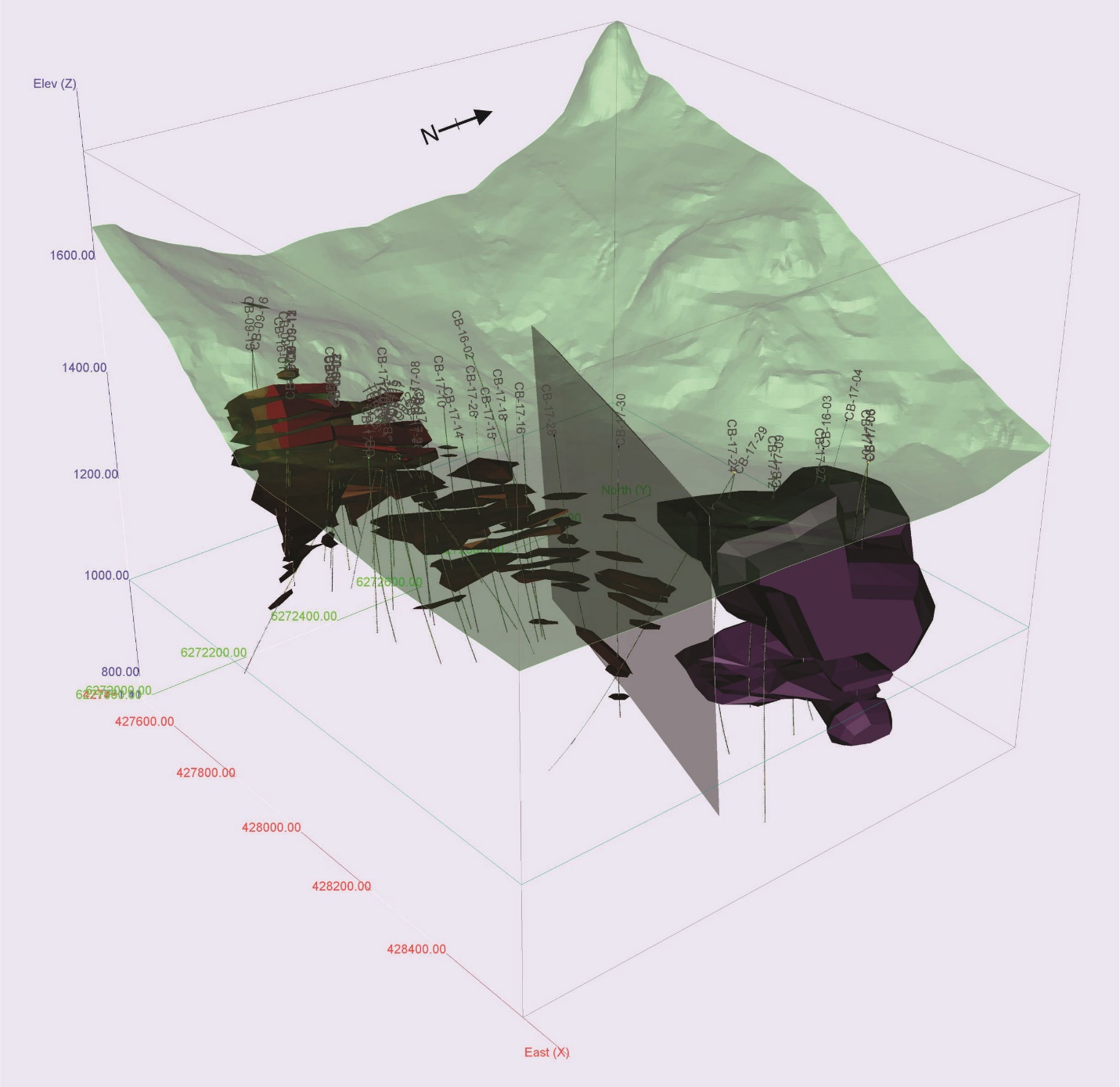
The ongoing diamond drill program is designed to test and further define the COD Vein, a Dentonia/Jewel style quartz vein, located in the Gold Drop Southwest Zone. Trenching during 2017 has exposed the northeast – southwest striking COD Vein for over 160 meter strike length.

The analytical results reported in this News Release are for the first three holes of the 2018 drilling program, which were completed from a pad north of the COD Mineshaft. DDCOD16-1 was drilled at a 86° azimuth and a 45° dip. DDCOD16-2 was completed at a 136°azimuth and a 60° dip. DDCOD18-3 was drilled at a 60° dip and a 91° azimuth. The pad was designed to test the veins from a stepped back position following up on the results during the 2017 drill program. The drilling targeted the COD vein 10-20 m north of the COD mineshaft. The initial 3 drill holes all intercepted the COD vein at depth. The DDCOD18-1 intercepted the vein at an in-hole depth of 31.1m, or true depth of 22 m. DDCOD18-2 intercepted the vein at an in-hole depth of 41.2 m, or true depth of 35 m. DDCOD18-3 intercepted the vein at an in-hole depth of 49 m or 42 m true depth.

To view the graphic in its original size, please click here

The analytical results listed below are from holes DDCOD18-1 to DDCOD18-03, testing the COD Vein. Since true widths cannot be accurately determined from the information available the core lengths (meters) are reported. The Gold and Silver analyses are reported in grams per tonne (g/t equals parts per million). The intervals listed in the table below are from the gold and silver bearing vein and / or adjacent low grade mineralized host rock.

Hole ID From (m) To (m) Interval Length (m) Au (g/t) Ag (g/t) Te (g/t)
COD18-1 31.1 32.3 1.2 5.51 46.3 32.6
including
COD18-1 31.1 31.6 0.5 4.65 49.9 32.1
COD18-1 31.6 32.3 0.7 6.12 43.7 32.9
COD18-2 39.9 41.25 1.35 0.64 7.04 4.67
COD18-2 41.25 42.15 0.9 7.81 70.3 46.9
COD18-2 42.15 42.78 0.63 0.48 4.83 3.22
COD18-3 46.35 47.02 0.67 0.83 5.45 3.73
COD18-3 49 51.1 2.1 14.62 150.2 102.0
including
COD18-3 49 49.55 0.55 3.14 17.9 3.73
COD18-3 49.55 49.95 0.4 4 36.6 26.30
COD18-3 49.95 51.1 1.15 23.8 253 170.50

The most significant gold mineralization is found in the COD Dentonia/Jewel style quartz vein. The vein is mineralized with pyrite and trace chalcopyrite and telluride minerals. The hostrock near the vein is often altered and carries anomalous silver and gold values, such as at 39.9-41.25 m and 42.15-42.78 m in DDCOD18-2 and 46.35-47.02 m in DDCOD18-3. This silicification and chlorite alteration is texture and magnetite destructive. Strong fine disseminated pyrite is often found in these alteration zones.

To view the graphic in its original size, please click here

Observed core vein contact angles indicate the COD vein is sub-vertical being structurally controlled by the host rock. The predominant host rock for the COD vein is a massive and competent medium grain granodiorite of the Antsey Pluton. Faulting does occur however the general north south trend of the vein is predictable.

In 2017 the Company had received analytical results for 68 trench channel samples collected at the COD Vein. These samples returned anomalous to high grade values for gold, including high values of 43.2 grams / tonne (g/t) Gold and 224 g/t Silver (News Release of July 26, 2017). The first batch of 2017 drill core samples for the COD Vein returned up to 24.1 g/t Gold and 192 g/t Silver (News Release of Aug 28, 2017). The second batch of drill core samples also returned significant gold and silver values including a broad intersection in hole COD17-14 grading 4.59 g/t Gold and 38.64 g/t Silver over 16.03 meters core length with a high grade core grading 10.96 g/t Gold and 89.86 g/t Silver over 5.97 meters core length (News Release of Sept 7, 2017).

Drill core is being geologically logged and sampled at the Greenwood facility. Drill core is sawn in half with half core samples submitted for analysis and remaining half core stored in a secure location. Core samples were delivered to the ALS Minerals laboratory in Vancouver to be analyzed for gold by Fire Assay – AA. The samples are also being analyzed for 48 Elements by Four Acid and ICP-AES / ICP-MS. Quality control (QC) samples are inserted at regular intervals.


To view the graphic in its original size, please click here

David Martin, P.Geo., a Qualified Person as defined by NI 43-101, is responsible for the technical information contained in this News Release.

On Behalf of the Board of Directors,

Barry Brown, Director

604-488-3900

Investor Relations: 

Mr.  Jack Singh: 604-488-3900     E-mail: [email protected]