Agoracom Blog Home

Archive for the ‘All Recent Posts’ Category

Durango Looking at Additional Labrador Nickel Prospects

Posted by AGORACOM-JC at 1:49 PM on Tuesday, October 6th, 2015

  • Looking at other prospects with positive historical results in and around the Voisey’s Bay area.
  • Recent announcement of the claims adjacent to anomaly D of Equitas Resources Corp. Labrador nickel-copper project (TSX.V-EQT) has prompted prospectors in the area to contact Durango 
  • Company will be reviewing these properties

Vancouver, BC / October 6, 2015 – Durango Resources Inc. (the “Company” or “Durango”) is looking at other prospects with positive historical results in and around the Voisey’s Bay area.

The recent announcement of the claims adjacent to anomaly D of Equitas Resources Corp. Labrador nickel-copper project (TSX.V-EQT) has prompted prospectors in the area to contact Durango and the Company will be reviewing these properties.

An update on the status of the Decouverte property in Quebec will be provided within the next week. Durango is still proceeding with its plans to complete the geophysical exploration on the property as announced on September 18, 2015.

The Company is currently working on a business plan for the Mayner’s Fortune property located near the Shell Canada LNG site in Kitimat. The Company is moving ahead with the limestone projects and an update will be provided as soon as it becomes available.

About Durango

Durango is a natural resources company engaged in the acquisition and exploration of mineral properties. The Company has a 100% interest in the Mayner’s Fortune and Smith Island limestone properties in northwest British Columbia, the Decouverte and Trove gold properties in the Abitibi Region of Quebec, and the Buckshot graphite property near the Miller Graphite mine in Quebec and three sets of claims in Labrador approximately 30km southeast of Vale’s Voisey’s Bay mine.

For further information on Durango, please refer to its SEDAR profile at www.sedar.com.

Marcy Kiesman, Chief Executive Officer

Telephone: 604.428.2900

Facsimile: 888.266.3983

Email: [email protected]

Website: www.durangoresourcesinc.com

Forward-Looking Statements

This document may contain or refer to forward-looking information based on current expectations, including, but not limited to timing of mineral resource estimates, future exploration or project development programs, execution of a definitive agreement, raising of funds, obtaining regulatory approvals and the impact on the Company of these events. Forward-looking information is subject to significant risks and uncertainties, as actual results may differ materially from forecasted results. Forward-looking information is provided as of the date hereof and we assume no responsibility to update or revise them to reflect new events or circumstances. For a detailed list of risks and uncertainties relating to Durango, please refer to the Company’s prospectus filed on its SEDAR profile at www.sedar.com.

Neither TSX Venture Exchange nor its Regulation Services Provider (as that term is defined in the policies of the TSX Venture Exchange) accepts responsibility for the adequacy or accuracy of this release.

CLIENT FEATURE: Urban Barns (URBF: OTCQB) Capitalizing on Evolution of Cubic Farming

Posted by AGORACOM-JC at 11:24 AM on Tuesday, October 6th, 2015

What is Cubic Farming?

  • A revolution in Controlled Environment Agriculture (CEA)
  • Propriety, patent-pending, looped conveyer growing system
  • Advanced uniform LED technology
  • Automated watering and nutrients
  • Optimal conditions for crops to transition from seeds to maturity through pre-set germination, growing and harvesting phases.

Why Urban Barns Foods?

  • Unknown story due to no previous IR = best opportunity to get in
  • Tier-1 Customers = Commercial Acceptance
  • 320 square feet = 3 acres of farm production
  • $6M Market Cap = Great Risk/Reward
  • Watch this video clip to see what production looks like
  • Watch this video clip to see what the Executive Chef at Chateau Frontenac has to say

Marquee Customers Include:

Strong Institutional Ownership, 39% Owned By:

Modern Agriculture Needs Green Innovation

The Cubic Farming Advantage

  • 100% controlled environment
  • Growing 365 days a year
  • No pesticides, herbicides or fungicides
  • No GMOs
  • Minimal water requirements
  • Superior nutritional values
  • Longer shelf life
  • Consistency

Consumers Demand Clean Food

  • Globally, the BFY (BETTER FOR YOU) food category is projected to grow by 25% to over $199.8 billion in 2015.
  • GMOs, a major concern for North American consumers
  • 72% of consumers say it is important to avoid GMOs when they shop
  • 40% of consumers say they look for non-GMO claims on food
  • Natural & clean foods are increasingly mainstream
  • Not only for higher income, most educated privileged segment. It is becoming a social movement.

Urban Barns Is the Solution


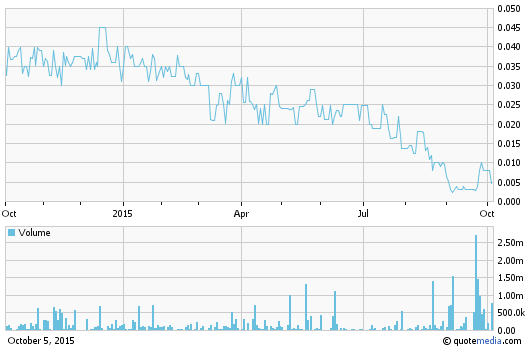
12 Month Stock Chart

urbfchart

Durango Acquires Ground in Labrador Adjacent to Equitas Resources (EQT) with Historic Drill Results of 12.9m of 0.24% Nickel

Posted by AGORACOM-JC at 5:30 PM on Monday, October 5th, 2015
 
 
  • Acquired a 100% interest in 3 claim blocks adjacent to, and near, Equitas Resources Corporations’ (TSX.V-EQT) Labrador Ni/Cu project
  • One claim block is located adjacent to, and to the northwest of, anomaly D of the Equitas Garland property which is located approximately 30km southeast of Vale’s Voisey’s Bay mine

Vancouver, BC / October 5, 2015 – Durango Resources Inc. (the “Company” or “Durango”) is pleased to announce it has acquired a 100% interest in 3 claim blocks adjacent to, and near, Equitas Resources Corporations’ (TSX.V-EQT) Labrador Ni/Cu project.

One claim block is located adjacent to, and to the northwest of, anomaly D of the Equitas Garland property which is located approximately 30km southeast of Vale’s Voisey’s Bay mine. On September 23, 2015 Equitas Resources Corp. announced via www.sedar.com, “Springdale Forest Products has commenced drilling with borehole GP15-001. This NQ borehole is designed to test VTEM Anomaly D, part of a two-kilometre trend of variable conductivity, coincident with a nickel-copper-cobalt lake sediment anomaly and resident in an east-west structure of the Gardar-Voisey’s Bay fault set.”

Two other claim blocks, described below, are approximately 90km to the north of Voisey’s Bay, and have historic work results reported.

E ZONE

One claim block covers the “E” Zone, where National Mineral Inventory Number (NMIN): 14E/01/Ni 002, Record ID Number: 4499, reports wide, deep, intersections of “disseminated to massive sulphide layering” including: drill intersections of 12.9 m of 0.24% Ni, 0.20% Cu, and 0.06% Co, and 54 m of 0.4% Ni, 0.43% Cu and 0.11% Co. It is not stated in the report if the second intersection is continuous like the first one (Canadian States Resources, PR, August 21, 1996). “Generally, the grades are higher than those from the adjacent Cirque (NMI File No. 14E/01/Ni003), although such comparisons may be complicated by differences in averaging techniques (Kerr and Smith, 1997).”

KRINOR

Another claim block covers the occurrence known as “Krinor”, NMIN: 14E/01/Ni 008 Record ID Number: 4511, “The best assay (probably a grab sample) from the property was 1.31% Ni, 0.52% Cu and 0.21% Co (Castle Rock Exploration, PR, October 4, 1995). Geophysical surveys were conducted during the summer of 1996, and diamond drilling commenced in mid-August 1996. According to the NMIN file no information was released at that time concerning drilling results, but three holes intersected sulphide mineralization, over widths up to 14 m. (J. O’Sullivan, personal communication, 1997) (Kerr and Smith, 1997).”

Further due diligence evaluation of historic data, derived mainly from the Voisey’s Bay discovery and subsequent staking rush and exploration follow up by the many companies involved, will be carried out over the next few months.

In consideration for 100% interest in the properties, with no net smelter royalty, the Company will issue one million shares to an arm’s length vendor, subject to TSX Venture Exchange approval. The shares will be subject to a hold period of four months plus one day from the date of issuance.

The technical and scientific data in this news release was approved by Mr. Peter Dimmell, P.Geo. (NL, ON, SK, QC(SP), a qualified person as defined by National Instrument 43-101.

About Durango

Durango is a natural resources company engaged in the acquisition and exploration of mineral properties. The Company has a 100% interest in the Mayner’s Fortune and Smith Island limestone properties in northwest British Columbia, the Decouverte and Trove gold properties in the Abitibi Region of Quebec, and the Buckshot graphite property near the Miller Graphite mine in Quebec.

For further information on Durango, please refer to its SEDAR profile at www.sedar.com.

Marcy Kiesman, Chief Executive Officer

Telephone: 604.428.2900

Facsimile: 888.266.3983

Email: [email protected]

Website: www.durangoresourcesinc.com

Forward-Looking Statements

This document may contain or refer to forward-looking information based on current expectations, including, but not limited to timing of mineral resource estimates, future exploration or project development programs, execution of a definitive agreement, raising of funds, obtaining regulatory approvals and the impact on the Company of these events. Forward-looking information is subject to significant risks and uncertainties, as actual results may differ materially from forecasted results. Forward-looking information is provided as of the date hereof and we assume no responsibility to update or revise them to reflect new events or circumstances. For a detailed list of risks and uncertainties relating to Durango, please refer to the Company’s prospectus filed on its SEDAR profile at www.sedar.com.

Neither TSX Venture Exchange nor its Regulation Services Provider (as that term is defined in the policies of the TSX Venture Exchange) accepts responsibility for the adequacy or accuracy of this release.

Property Transactions in Jan-Aug Period Surge on Rising Ownership, Easy Mortgage

Posted by AGORACOM-JC at 3:56 PM on Friday, October 2nd, 2015

PROPERTY TRANSACTIONS IN JAN-AUG PERIOD SURGE ON RISING OWNERSHIP, EASY MORTGAGE

  • Rising trend of property ownership and easy access to mortgage, the sultanate’s real-estate market is witnessing a robust growth this year despite persistent lower oil prices.
  • Total value of property transactions surged 53.2 per cent to RO2.94bn during the period from January–August this year from RO1.91bn in the corresponding period of 2014

By Gulam Ali Khan

September 30, 2015

MUSCAT –

With the rising trend of property ownership and easy access to mortgage, the sultanate’s real-estate market is witnessing a robust growth this year despite persistent lower oil prices.

The total value of property transactions surged 53.2 per cent to RO2.94bn during the period from January–August this year from RO1.91bn in the corresponding period of 2014.

The sharp rise in transactions comes on the back of robust growth in mortgage contracts. Traded value of mortgage contracts jumped 79.6 per cent to RO2.05bn from RO1.14bn a year ago, statistics released by National Centre for Statistics and Information (NCSI) showed.

“The growth is more due to a combination of factors including population growth leading to demand-based activity, desire of property ownership in more uncertain economic times and better availability and competitively priced mortgage options,” said Christopher Steel, managing partner at Savills Oman.

“We believe that property ownership is increasing in appeal as there have been a lack of other real investment opportunities for the Oman population at large. There have been no significant rights issues over the period and the stock market is showing signs of sensitivity, therefore property becomes a viable route for investment,” he said.

The number of mortgage contracts rose by 13.2 per cent to 15,001 in the first eight months this year from 13,249 a year earlier.
Steel said mortgages are now more accessible for the population at large with banks and finance houses having tailored their products to meet the requirements of end-borrowers.

“Islamic financing options have certainly appealed to a large segment of the market that previously was not comfortable with traditional mortgage solutions. Also, the financial logic of mortgaging property is now better understood by certain classes of investors.

With most mortgages costing below five per cent per annum and rental returns from most property higher than this, property become basically self financing when geared at circa 70-80 per cent.”

In addition to mortgage transactions, NCSI statistics shows that the traded value of property in sales contracts rose 13.3 per cent to RO867mn from 765mn. The number of sales contracts decreased by 2.3 per cent to 54,220 in first eight months of 2015 compared to 55,521 last year.

Unlike the UAE – where property transaction levels have been falling across Abu Dhabi, Dubai and Sharjah – lower oil prices have not been negatively impacting Oman’s property market.

“There has been no discernable negative affect on the property market as a result of lower oil prices. Certainly, a slowdown in some larger infrastructure projects as a result of reduced government expenditure could negatively impact on some areas of secondary real estate but we believe this will be balanced by the push for diversification into other areas of the economy,” Steel said.

The number of properties issued for GCC states citizens dropped by 25 per cent to 1,670 from 2,233 in first eight months of 2014.

Read more:http://www.muscatdaily.com/Archive/Business/Property-transactions-in-Jan-Aug-period-surge-on-rising-ownership-easy-mortgage-4bye#ixzz3nLZniGS8
Follow us:@muscat_daily on Twitter|muscatdaily on Facebook

INTERVIEW: Partnership with Pyrogenesis puts Uragold in Position to Turn Quartz Projects into Highest Purity, Lowest Cost Supplier to Solar Industry

Posted by AGORACOM-JC at 10:37 AM on Wednesday, September 30th, 2015

  • Patent Filed
  • Worldwide Exclusive Rights Granted
  • Pilot Plant Already Funded
  • Technology Partner Takes First Royalty Payment In Stock
  • In Position To Become Vertically Integrated Producer Of Solar Grade Silicon Metal & Major Participant In Global Solar Industry

There is no other way to say it. This technology represents a potential quantum leap forward for the solar panel industry.” (URAGOLD CEO QUOTE)

Watch Interview Now!

Partnership with Pyrogenesis puts Uragold in Position to Turn Quartz Projects into Highest Purity, Lowest Cost Supplier to Solar Industry

Posted by AGORACOM-JC at 8:38 AM on Wednesday, September 30th, 2015

EXCLUSIVE GLOBAL PARTNERSHIP PUTS URAGOLD IN POSITION TO TURN QUARTZ PROJECTS INTO LOWEST COST SUPPLIER TO SOLAR INDUSTRY

  • Patent Filed
  • Worldwide Exclusive Rights Granted
  • Pilot Plant Already Funded
  • Technology Partner Takes First Royalty Payment In Stock
  • In Position To Become Vertically Integrated Producer Of Solar Grade Silicon Metal & Major Participant In Global Solar Industry

There is no other way to say it. This technology represents a potential quantum leap forward for the solar panel industry.” (URAGOLD CEO QUOTE)

Montreal, Quebec / September 30, 2015 – Uragold (TSX Venture: UBR), is pleased to announce that it has entered into a Memorandum of Understanding (“MOU”) with, PyroGenesis Canada Inc. (http://pyrogenesis.com) (TSX-V: PYR), a TSX Venture 50(R) clean-tech company (“PyroGenesis”) that designs, develops, manufactures and commercializes plasma torch products. Under the terms of a Memorandum of Understanding (“MOU”), PyroGenesis has granted Uragold a worldwide exclusive right to the usage of the PUREVAP (TM) Quartz Vaporization Reactor technology, in return for 10% of sales, with set minimums, as royalty payments. The exclusivity is limited to the transformation of quartz covered by the provisional patent.

PyroGenesis has filed a provisional patent for a new and novel process for the One Step Production of Metallurgical Grade Silicon Metal (mg Si), Solar Grade Silicon Metal (UMG Si) and Polysilicon from Quartz. The “PUREVAP (TM) Quartz Vaporization Reactor is a proprietary process that uses a plasma arc within a vacuum furnace. This unique technology should allow Uragold to convert its world-class Quartz Projects into the highest purity, lowest cost supplier of Solar Grade Silicon Metal and Polysilicon to the solar industry.

Bernard Tourillon, Chairman and CEO of Uragold stated: “The “PUREVAP (TM) Quartz Vaporization Reactor is based on strong scientific basis. The literature is very clear; A Plasma arc base process can transform High Purity Quartz into Metallurgical Grade Silicon Metal. In addition, the literature also validates the fact that Plasma arc base process can be used to purify Metallurgical Grade Silicon Metal into higher value materials such as Solar Grade Silicon Metal. What is unique and ground breaking about the PyroGenesis approach is the combination of these two proven processes into one step.”

Metallurgical testing and validation, which has already been funded and scheduled, are expected to be completed by Q1 2016.

GLOBAL COMPETITIVE ADVANTAGE FOR URAGOLD, QUANTUM LEAP FOR SOLAR INDUSTRY

Bernard Tourillon, Chairman and CEO of Uragold further stated, “The filing of the provisional patent combined with our Memorandum of Understanding (“MOU”) with PyroGenesis gives Uragold a unique competitive advantage versus all others quartz exploration ventures and will allow Uragold to go much higher in the High Purity Quartz value chain by becoming a vertically integrated silicon metal, solar grade silicon metal and polysilicon producer and becoming a major participant in the global solar industry. There is no other way to say it; this technology represents a potential quantum leap forward for the solar panel industry becoming a more competitive source of renewable energy.”

$USD 12 BILLION ANNUAL INDUSTRY, GROWING BY 6%+ PER YEAR

The Silicon Metal, Solar Grade Silicon Metal and Polysilicon markets are a $USD 12 billion a year industry. Metallurgical Grade Silicon Metal world consumption topped 2.25Mt in 2014, exceeding $US 6 billion in sales1. About 10% of 2014 global Metallurgical Grade Silicon Metal production was further refined into Solar Grade Silicon Metal and Polysilicon, worth another $US 6 billion. Propelled by increased demand for Solar Grade Silicon Metal and Polysilicon for photovoltaic solar panels, global Silicon Metal demand is expected to grow by 6%+ per Annum.

A DISRUPTIVE TECHNOLOGY – FOR MAKING SILICON METAL

Quartz may well be the second most abundant element in the earth’s crust, High Purity Quartz deposits that can be used to make Metallurgical Grade Silicon Metal using the traditional arc furnace approach are rare, since in addition to being resistant to thermal shocks, the quartz must meet the following minimum SiO2 quality and maximum impurity levels:


Click Image To View Full Size

The PUREVAP (TM) quartz vaporization reactor should allow manufacturing of Metallurgical Grade Silicon Metal using raw Quartz, from either Quartzsite and Quartz veins type deposits, with lower SiO2, higher impurity levels and lower resistance to thermal shock then the maximum threshold allowed by traditional manufacturing process, thereby allowing the transformation of material presently only good to manufacture either Frac sand, quartz counter tops or Ferrosilicium into Metallurgical Grade Silicon Metal and, potentially, Solar Grade Silicon Metal and Polysilicon.

Presently, Metallurgical Grade Silicon Metal at 98.5% purity sells for $USD 2,750 per Mt2. However, costs to manufacture it range between $USD 1,750 – 2,250 per Mt due to intensive capital and energy costs3. After Q2 2016, Uragold will provide the marketplace with its cash costs estimates under our new process.

A DISRUPTIVE TECHNOLOGY FOR SOLAR GRADE Si AND POLYSILICON MANUFACTURING

Metallurgical Grade Silicon Metals (98.5% purity) is the raw material used to make Solar Grade Silicon Metal (6N to 8N purity) and Polysilicon (9N Purity). Under current methods, refining Metallurgical Grade Silicon Metal to Solar Grade Silicon Metal and Polysilicon is a capital intensive, environmentally unfriendly and very energy demanding process, with best in class cash cost ranging between $USD 10,000 to 13,000 per Mt4.

The average Capital investment required to build a new 16,000 MT per year plant to make Solar Grade Silicon Metal and Polysilicon is between $USD 900M and $USD 1B 5. After Q2 2016, Uragold will provide the marketplace with its capital costs estimates for our new process.

Solar Grade Silicon (6N to 8N purity) presently sells for $USD 12.81 per Kg ($USD 12,810 per Mt), while Polysilicon (9N Purity) sells for $USD 14.86 per Kg ($USD 14,860 per Mt)6. After Q2 2016, Uragold will provide the marketplace with its cash costs estimates under our new process.

The PUREVAP (TM) quartz vaporization reactor distributive potential advantages is its one step direct transformation of Quartz into Solar Grade Silicon and/or Polysilicon, thereby potentially allowing Uragold to manufacture high value material (Solar Grade Silicon and Polysilicon) for the same operating cost presently being paid by traditional producers to make Metallurgical Grade Silicon using the traditional arc furnace approach.

Patrick Levasseur, President and COO of Uragold concluded, “The interest we are receiving from global silicon metal producers for our quartz demonstrates the exceptional quality of the Roncevaux quartz and the lack of supply of High Purity Quartz. When combining our technology partnership and our properties portfolio, we are well positioned to determining the full potential of our industry leading quartz.”

MOU BETWEEN PYROGENESIS AND URAGOLD

Salient points of the MOU, Including final terms agreed on September 28, 2015 are:

  • -Uragold paid $207,000 to PyroGenesis for a series of metallurgical test of our quartz, including material not suitable to produce Silicon metal using the traditional approach.-PyroGenesis has granted Uragold a worldwide exclusive right to the usage of the PUREVAP (TM) Quartz Vaporization Reactor technology in return for 10% of sales royalty payments
    • -In order to maintain its Exclusive Global Right, Uragold will need to make the following minimal payments to PyroGenesis:
      • -For 2016, the greater of 10% of Uragold sales of Si or $50,000 CAD;-For 2017, the greater of 10% of Uragold sales of Si or $100,000 CAD;-For 2018, the greater of 10% of Uragold sales of Si or $150,000 CAD;-For 2019 and beyond, the greater of 10% of Uragold sales of Si or $200,000 CAD per annum;

      -The Parties have agreed that the 2016 payment will be made immediately through the issuance of 1,000,000 Unit of Uragold Capital. Each Unit will be comprised of one (1) common share and one (1) common share purchase warrant (“Warrant”) of Uragold. Each Warrant will entitle the holder thereof to purchase one common share of the capital stock of Uragold at an exercise price of $ 0.07 during a period of 36 months from the date of the issuance of the Units. Each Unit issued pursuant to this agreement will have a mandatory four (4) month holding period from the date of the issuance of the Units. The Unit issuance is subject to standard regulatory approvals.

About Uragold

Uragold, with is world wide exclusive usage of the PUREVAP (TM) quartz vaporization reactor, is endeavouring to become a vertically integrated Silicon Metal, Solar Grade Silicon Metal and Polysilicon producer.

Uragold is also the largest holder of High Purity Quartz properties in Quebec, with over 3,500 Ha under claims. Despite the abundance of quartz, very few deposits are suitable for high purity applications. High Purity Quartz supplies are tightening, prices are rising, and exponential growth is forecasted. Quartz from the Roncevaux property successfully passed rigorous testing protocols of a major silicon metal producer confirming that our material is highly suited for their silicon metal production.

About PyroGenesis Canada Inc.

PyroGenesis is a publicly traded Canadian company on the TSX Venture Exchange (Ticker Symbol: PYR). For more information, please visit www.pyrogenesis.com

This press release contains certain forward-looking statements, including, without limitation, statements containing the words “may”, “plan”, “will”, “estimate”, “continue”, “anticipate”, “intend”, “expect”, “in the process” and other similar expressions which constitute “forward-looking information” within the meaning of applicable securities laws. Forward-looking statements reflect the Company’s current expectation and assumptions, and are subject to a number of risks and uncertainties that could cause actual results to differ materially from those anticipated. These forward-looking statements involve risks and uncertainties including, but not limited to, our expectations regarding the acceptance of our products by the market, our strategy to develop new products and enhance the capabilities of existing products, our strategy with respect to research and development, the impact of competitive products and pricing, new product development, and uncertainties related to the regulatory approval process. Such statements reflect the current views of the Company with respect to future events and are subject to certain risks and uncertainties and other risks detailed from time-to-time in the Company’s on-going filings with the securities regulatory authorities, which filings can be found at www.sedar.com. Actual results, events, and performance may differ materially. Readers are cautioned not to place undue reliance on these forward-looking statements. The Company undertakes no obligation to publicly update or revise any forward-looking statements either as a result of new information, future events or otherwise, except as required by applicable securities laws.

Neither the TSX Venture Exchange nor its Regulation Services Provider (as that term is defined in the policies of the TSX Venture Exchange) accepts responsibility for the adequacy or accuracy of this release.

For further information contact

Bernard J. Tourillon, Chairman and CEO

Tel (514) 907-1011
Patrick Levasseur, President and COO

Tel: (514) 262-9239
www.uragold.com

1 Roskill: Silicon and Ferrosilicon: Global Industry Markets & Outlook report (2014)

2 http://www.metalprices.com/p/SiliconFreeChart

3 Globe Specialty Metals Investor_Presentation_June_2012

4 Polysilicon 2012-2016: Supply, Demand & Implications for the Global PV Industry GTMResearch.com

5 http://fortune.com/2015/09/16/solar-startup-iceland-factory/

6 http://pvinsights.com/

CLIENT FEATURE: Durango Resources (DGO: TSX:V) Capitalizing on the Future of LNG

Posted by AGORACOM-JC at 4:57 PM on Friday, September 25th, 2015

Recent Highlights

  • Acquired two limestone properties in north western British Columbia which have been strategically chosen in an effort to coincide with the LNG projects near Kitimat and Prince Rupert.
  • Both the Mayner’s Fortune property and the Smith Island property have historical occurrences of limestone which will fast track the exploration to production timeline since they are near term producing properties.
  • Mayner’s Fortune property is located 50km away via CN Rail line from the Kitimat Shell Consortium LNG proposed site and hosts a series of 6 north east striking limestone beds which have been reported to be grades as high as 96%.
  • Historical workings have indicated a preliminary 454,000 tonnes of limestone in the first limestone bed nearest to the rail road. The Company has been contacted by CN Rail and they look forward to working with Durango to help move the project forward.

PROJECTS


Decouverte (Discovery) property

  • Over 51km(2), is located 100km north of Chibougamau in the Frotet – Evans greenstone belt.
  • Company carried out a 439 line kilometer helicopter borne DIGHEM EM/magnetic airborne geophysical survey on the property in 2011 (NR Nov 24, 2011).
  • Property benefits from very favorable infrastructure including road accessibility (within 10km of Route du Nord and a myriad of logging roads), and a power line which bisects the property.
  • Mineralized target area is located to the east of Lac Pasquale and consists of two significant aero-magnetic anomalies, with some electromagnetic coincidence possibly associated with linear structural features, in the Frotet-Evans greenstone belt

Robert Creek Property

  • 1,222 hectares located near the Alberta / Saskatchewan border.
  • Company holds a 100% interest in a property in the emerging, southwest portion, of the Athabasca Basin in Saskatchewan adjacent to NexGen Energy Ltd. (TSX.V-NXE).
  • Athabasca Basin proving to the world to be a premier uranium district with average grades that are ten times greater than elsewhere in the world, highly skilled labour and infrastructure in place for milling and transport.
  • Historical GSC lake sediment values of 1.6 ppm, 1.2 ppm and 0.8 ppm uranium were reported with two samples only one kilometre apart. developing a major uranium deposit, was 3.5 ppm uranium as reported in the news release on April 12, 2010.

Trove, Quebec

  • 100% interest in a 1,500 hectare property located approximately 15km to the southwest of Eagle Hill’s (EAG – TSX.V) Windfall Lake Gold Property.
  • Eagle Hill has completed over 330 diamond drill holes with results as high as 52.3 oz/t over 4.8 metres.
  • 2010 summer drill program hit wide gold mineralization showing 14.51 g/t gold over 52.0 metres (hole EAG 10-196) and 3.35 g/t of gold over 24.6 metres (hole EAG 10-238).

AGORACOM Welcomes Durango Resources (DGO: TSX-V) Capitalizing on the Future of LNG

Posted by AGORACOM-JC at 2:28 PM on Wednesday, September 16th, 2015

Recent Highlights


  • Acquired two limestone properties in north western British Columbia which have been strategically chosen in an effort to coincide with the LNG projects near Kitimat and Prince Rupert.
  • Both the Mayner’s Fortune property and the Smith Island property have historical occurrences of limestone which will fast track the exploration to production timeline since they are near term producing properties.
  • Mayner’s Fortune property is located 50km away via CN Rail line from the Kitimat Shell Consortium LNG proposed site and hosts a series of 6 north east striking limestone beds which have been reported to be grades as high as 96%.
  • Historical workings have indicated a preliminary 454,000 tonnes of limestone in the first limestone bed nearest to the rail road. The Company has been contacted by CN Rail and they look forward to working with Durango to help move the project forward.

PROJECTS

Decouverte (Discovery) property

  • Over 51km(2), is located 100km north of Chibougamau in the Frotet – Evans greenstone belt.
  • Company carried out a 439 line kilometer helicopter borne DIGHEM EM/magnetic airborne geophysical survey on the property in 2011 (NR Nov 24, 2011).
  • Property benefits from very favorable infrastructure including road accessibility (within 10km of Route du Nord and a myriad of logging roads), and a power line which bisects the property.
  • Mineralized target area is located to the east of Lac Pasquale and consists of two significant aero-magnetic anomalies, with some electromagnetic coincidence possibly associated with linear structural features, in the Frotet-Evans greenstone belt

Robert Creek Property

  • 1,222 hectares located near the Alberta / Saskatchewan border.
  • Company holds a 100% interest in a property in the emerging, southwest portion, of the Athabasca Basin in Saskatchewan adjacent to NexGen Energy Ltd. (TSX.V-NXE).
  • Athabasca Basin proving to the world to be a premier uranium district with average grades that are ten times greater than elsewhere in the world, highly skilled labour and infrastructure in place for milling and transport.
  • Historical GSC lake sediment values of 1.6 ppm, 1.2 ppm and 0.8 ppm uranium were reported with two samples only one kilometre apart. developing a major uranium deposit, was 3.5 ppm uranium as reported in the news release on April 12, 2010.

Trove, Quebec

  • 100% interest in a 1,500 hectare property located approximately 15km to the southwest of Eagle Hill’s (EAG – TSX.V) Windfall Lake Gold Property.
  • Eagle Hill has completed over 330 diamond drill holes with results as high as 52.3 oz/t over 4.8 metres.
  • 2010 summer drill program hit wide gold mineralization showing 14.51 g/t gold over 52.0 metres (hole EAG 10-196) and 3.35 g/t of gold over 24.6 metres (hole EAG 10-238).

CLIENT FEATURE: Dusolo (DSF: TSX-V) Capitalizing on Brazil’s Growing Demand for Fertilizer

Posted by AGORACOM-JC at 1:58 PM on Wednesday, September 9th, 2015

BY BEING A DOMESTIC FERTILIZER PRODUCER, DUSOLO IS ABLE TO OFFER A PREMIUM PRODUCT AT A SIGNIFICANTLY LOWER COST

  • Direct Application Natural Fertilizer (DANF) product is in demand in the region
  • Flagship asset, the Bomfim Project, is 100% owned and located in one of the world’s fastest growing agrarian regions
  • Bomfim Processing Plant operating at full capacity
  • On track to produce at least ~100,000 tonnes of DANF in 2015
  • Sales contracts in place for 2015 planting season: 81,100 tonnes for ~C$8.5 million
  • Starting to generate revenue

MANY NEAR TERM CATALYSTS EXPECTED

  • Entering into additional DANF product sales contracts
  • Doubling capacity at our processing facility to 160,000 tonnes per year
  • Updating the National Instrument 43-101 Resource Estimate to include results from the 2015 drill campaign – Recent drill results confirm presence of additional high-grade phosphate mineralization beyond areas identified in initial resource estimate
  • Third Party Economic Evaluation of Operations Planned for 2015
  • Strong Financial Backing

Company entered into an agreement with Mineração Batalha e Participações Ltda. to acquire the São Roque Phosphate Project in southeast Brazil.

The Project’s highlights include:

  • Located within the agribusiness region of Minas Gerais and São Paulo states, with many coffee, orange and sugar-cane (ethanol) plantations in the surrounding area.
  • At surface, high-grade phosphate mineralization has been identified with multiple grab samples from outcrops confirming >20% P2O5.
  • Geophysics anomalies very well defined and confirmed by surface sampling.
  • Close proximity to infrastructure, including roads, rail, water and power, and existing fertilizer producers. City of Piumhi is 40 km from the Project.
  • 70% interest earned through commitment to invest in exploration and project development. No direct payment to JV Partner.

BRAZIL’S DOMESTIC FERTILIZER SUPPLY DOES NOT MEET CURRENT DEMANDS

  • World’s largest exporter of sugar, coffee and orange juice and the 2nd largest in soybean exports
  • Brazil imports more than 50% of phosphate fertilizers used overseas
  • Significant transportation and logistic-related costs are added to imported fertilizers
  • DuSolo’s is increasing the supply of domestically produced fertilizers
  • Helping the country achieve agricultural self-sufficiency

FLAGSHIP ASSET LOCATED IN ONE OF THE WORLD’S LARGEST AGRICULTURAL REGIONS

  • The Cerrado region is home to one of the largest arable landmasses in the world
  • Majority of future increases in global food production is expected to come from this region
  • The tropical rains in the Cerrado wash away nutrients, leaving the soil poor for farming and needing to be fertilized frequently
  • Cerrado is land locked, therefore making fertilizer imports very expensive


STRONG DEMAND FOR DANF EXISTS IN THE REGION

Within a 500 km radius of DuSolo’s processing facility:

  • 1.2 million tonnes of phosrock is being consumed every year
  • 585 farms and agricultural centres exist
  • DANF consumption is growing at a compound annual growth rate of 6%
  • No domestic production

Oman Is Like a Flawless Topaz Hidden Under the Gaudy Jewel Box of the Emirates

Posted by AGORACOM-JC at 12:02 PM on Wednesday, September 2nd, 2015

The thinking person’s Dubai

Wadi Bani Khalid, 203 km from Muscat. Photo: 123Rf
 

Clad in the blazing oranges and yellows and turquoises of the desert, Bedouin women are shouting numbers at little boys leading camels around an enclosure. Grey-bearded men in long white robes and turbans are circling around the narrow streets of the small, dusty town, where camels are hitched to posts like horses in a cowboy movie. The women are wearing hawk-faced black masks over their faces—whitened, to protect them from the sun, and made vivid with eyeliner and mascara—so they might be countesses just emerging from a Venetian costume ball. This Thursday-morning camel auction has been taking place in the Omani town of Sinaw for centuries, but only recently can newly bought humped creatures be seen in the backs of Toyota pick-up trucks, being driven away together with watermelons, sacks of dates and clumps of grass.

Three hours later, I am being driven across great dunes of sand, stretching out as far as I can see in every direction. My guide Hilal zigzags across the emptiness till, gears grinding over whorled hilltops of sand, we see a small cluster of domed white tents far below. Pulling up at the Desert Nights Camp in Wahiba Sands, we’re met with glasses of chilled mango juice. Then I’m led across to my tent, the silence stretching all around. I find myself in a three-room suite with a mini-bar, air-conditioning and a highly welcome rainforest shower.

Unlike Arab Emirates

I suppose I’d been visiting Oman long enough not to be shocked by the rare mix of exoticism and extravagant comfort; for years now, the sultanate tucked between Saudi Arabia, Yemen and the United Arab Emirates, has been at once remote and luxurious, full of adventure and strikingly safe. For many, it’s the thinking person’s Dubai—low-key and elegant, where its neighbour looks like the bastard child of Beverly Hills and Las Vegas. If you want malls, go to the city of Lamborghinis in the sand; if you want walls—a reserved, mysterious and protected place that invites you into centuries of sophistication—head to Oman. With a population a fifth of Mumbai’s scattered across a country larger than Britain, it’s like the flawless topaz hidden under the gaudy jewel box of the emirates.

As soon as Sultan Qaboos bin Said, now 70, came to power in 1970, he decided to proceed with the care and caution demonstrated even today by local drivers on their largely empty roads. Learning from the mistakes of other oil-rich states and determined not to lose the old and the distinct, even as he brought much-needed modernity to his land, he slowly fashioned a tasteful, bespoke, understated version of Arabia that did not aim to erase tradition so much as to heighten and clarify it with the help of the new.

As late as the 1960s, there were exactly three schools, two hospitals and nine kilometres of sealed roads in all of Oman; the sultan of the time, the current ruler’s father, had retreated to his palace in the southern city of Salalah, banned sunglasses and radios, and even locked the doors of Old Muscat at night in an effort to preserve his nation. Now, Muscat has opened up—and all its buildings are white, or painted pastel colours, constructed in traditional style and less than nine storeys high. The result is a city that looks like a bone-white vision of a fairy-tale Arabia, even as it now has an opera house, a new airport under construction and fresh hotels coming up.

“Ladies here in Oman work—and drive,” Hilal told me as we passed the palaces of Old Muscat. “Not like Saudi Arabia.” Sultan Qaboos realised that oil would be gone soon, so he encouraged his people to engage with the modern world, and fashion lives that would not run out when the oil did. “Here in Oman, the taxi drivers are Omani,” Hilal continued, with unfeigned pride. “The construction workers are Omani. Seventy-five percent of the population is Omani. Only we have tailors, foreigners. Laundry. Hairdressing…” The contrast with the other emirates did not need to be spelled out.

I’d visited Oman before and savoured the misty, even mystical monsoon season, the khareef, in the south, which turns the Dhofar region into a cool, green sanctuary for Arabs from across the peninsula. Less than three hours by daily flight from Mumbai, with beaches more unspoiled than Thailand’s, forts as glamorous as Rajasthan’s, and deserts and mountains as spectacular as anything you’d see in Australia or the American West, Oman struck me as a treasure waiting to be discovered.

Now, returning 10 years on, I thought I’d spend a week travelling around the north to see what kind of pleasures might await a visitor today. The rare place of deep foreignness, where no shopkeeper hassles you and taxi drivers patiently count out their notes in your palm to make sure they’re not short-changing you, Oman continues somehow to open its doors to everyone without ever quite losing its soul. The only challenge is to see it before the rest of the world gets in on the secret.

A Shangri-La in the sands

Shangri-La’s Barr Al Jissah Resort and Spa

Al-Waha hotel at Shangri-La’s Barr Al Jissah Resort and Spa.

I based myself on this trip at the Shangri-La’s Barr Al Jissah Resort and Spa, tucked behind dramatic limestone cliffs and around a private beach a few miles outside of Muscat. Taking over a largely forgotten bay at Bandar Jissah, the Shangri-La came up with the idea of opening three separate properties, linked at the core: al-Waha, aimed at families (complete with its own souq, amphitheatre and archaeological site); al-Husn, a sumptuous ‘six-star’, adults-only castle; and, in the middle, the more businesslike al-Bandar. All three have 17 restaurants scattered across them. But those staying in al-Husn, as I did, can enjoy a stately afternoon tea in a palatial courtyard while families with kids can romp around a river and an Omani Heritage Village not far away.

Within 10 hours of arriving in the country, I was out on the water, watching schools of dolphins flourishing through the air, five of them knifing through the waves like synchronised swimmers and 30 in all, on every side of our little vessel, cresting over the blue-green bay. Oman has long been home to some of the world’s most accomplished sailors; Sindbad was said to have come from here, and between the 18th and 19th centuries, its navies had brought parts of Pakistan, Zanzibar and Kenya under Omani control. As a sweet-smiling teenager from Oman’s shipbuilding capital of Sur piloted us through the water, the stony, sand-coloured landscape of the interior was broken up by green waters and headlands, red and golden in the sun.

The old town of Muscat, 15 minutes away by car, is most notable for its calm: if you walk through the small souq in the Muttrah area, you will hear none of the clamour of Istanbul or Old Delhi. And when you are finished at the Bait Al Zubair museum, you can look at the nearby sultans’ palaces and government offices—as stately and pristine as when they were built. One of the grand pleasures of Muscat is walking along the corniche in the dusk—spotlit castles above you and hilltop restaurants such as the Mumtaz Mahal waiting to impress.

Driving through

Grand Mosque, Oman.

The Grand Mosque. Photo: 123Rf
 
The next morning, Hilal and I drove a little out of town to visit the Grand Mosque, completed in 2001, and one of the largest Muslim houses of prayer in the world. A group of pilgrims from Thailand had arrived just as we did, and we walked together in silence under eight-tonne chandeliers from Austria, over the 21-tonne carpet handwoven by 600 women in Isfahan, between its Indian sandstone walls and Carrara marble surfaces and the great ceilings made of Burma teak. It seemed at once lavish and deeply quiet, up-to-the-minute and full of practised devotion: Oman, you could say, in miniature.

Then, very quickly, we were off, into the depths of the country. We were bouncing for 90 minutes up a scrabbly, sandy path through the high mountains. On one side was a sheer drop, of a thousand feet or more; all around the Al Hajar range was a landscape of black mountains and buttes worthy of Arizona. At the end of the road loomed the country’s highest peak, the 9,000ft Jabal Shams, and Wadi Ghul, a stunning array of 3,000ft vertical cliffs and depths that Omanis call their Grand Canyon. I checked into a little stone house at the British-run Jebel Shams Resort and heard nothing but silence for the next many hours. That sense of quiet is one of the singular blessings of Oman still, and even as the Arab world was experiencing convulsions this spring, Oman was barely disturbed.

Set, like most of Oman’s 500 forts, above an oasis, the Jabrin Castle, a 17th-century centre of learning, is a complex of courtyards, hidden rooms, twisting staircases, a constantly evolving study in light and shade. In one corner was a breeze-softened library—in another, the castle’s jails and holes, through which hot date oil might be poured upon invaders. Jabrin was a reminder of Oman’s exquisite beauty and fierce sense of protectiveness, as it, at once, cultivates its inner treasures and remains on guard against invasion. I listened to the excited cries of a group of schoolgirls—all dressed in black abayas and white head-scarves—and watched a girl in an emerald gown tending to the date palms through the palace windows.

An hour or so later, we were in Nizwa Fort, home to a celebrated cattle auction every Friday morning (cows are brought 965km from Salalah in the south and sold for US$500 or Rs32,000s apiece). Not very far away was the Wadi Bani Khalid, where locals delightedly picnicked under pavilions and frolicked in deep green water pools. Whether passing the stunning new palaces that are schools and hospitals set up in remote areas or overtaking blue water trucks ferrying to villagers still living in spiky mountains, we saw how Oman seems to be concerned still with sustaining its own life and not turning itself into something else—a modern Macau.

The climax of my tour came as Hilal and I drove six hours north of Muscat, passing through the United Arab Emirates en route and then—in the middle of a lunar landscape, all grey limestone valleys and emptiness—saw a small, almost invisible brown sign by the side of the road. We passed through a security post and then took a 5km, 15-minute drive along a narrow, unpaved path, up and over a mountain. At the top, suddenly, we saw a blue-green bay below with a traditional village on one side, and on the other, a set of structures that honoured the village’s architecture in a more lavish form.

When we arrived at the gorgeous Six Senses Zighy Bay resort, I was shown to my private villa, which (like all the 79 others here) came with its own plunge pool, own traditional Omani summer hut, its own outdoor and indoor showers, its own bathtub (this, in a country where water is famously scarce and in a resort where a swimming pool and a mile-long stretch of empty beach were less than a minute’s walk away). The Six Senses even has its own time-zone—one hour ahead of Oman time—so that you can watch the sun rise and set at an hour convenient for your sleeping.

The next day, a villager called Humeid took me out on the water to explore the secret bays and coves all around and then led me on a drive through the mega-stalagmites that are like mountains here, teaching me to read the landscape. (“This was a wild fox-trap,” he pointed out to a scatter of stones. “That was where black Omani honey was made,” he motioned.) We looked out on a vast landscape of rocks. “How many villages are here?” he asked. I could see none. “Seven,” he said and pointed out one stone house camouflaged on a cliff and another designed to fade into the background.

We drove up to a lonely hut on top of a peak and went in for some coffee and halwa with an old man who lived alone here. “He never married?” I asked. “No,” said Humeid. “He likes just to live with his goats. With the silence. Watching the mountains, thinking about God.” The man, toothless, smiled at me and begged me to eat more. Alone, at the top of the mountain, surveying a huge landscape of emptiness and silence, I had arrived at Oman’s Oman, the still point at the centre of one of the most untouched and stirring places I have seen.

Source: http://www.cntraveller.in/story/thinking-person-s-dubai