Agoracom Blog

DuSolo Acquires New High-Grade Phosphate Project

Posted by AGORACOM-JC at 5:49 PM on Wednesday, September 9th, 2015

  • Entered into an agreement with Mineração Batalha e Participações Ltda. to acquire the São Roque Phosphate Project in southeast Brazil
  • At surface, high-grade phosphate mineralization has been identified with multiple grab samples from outcrops confirming >20% P2O5.
  • Geophysics anomalies very well defined and confirmed by surface sampling.

VANCOUVER, BRITISH COLUMBIA–(Sept. 9, 2015) – DuSolo Fertilizers Inc., (TSX VENTURE:DSF) (“DuSolo” or “the Company”) is pleased to announce that it has entered into an agreement (“the Agreement“) with Mineração Batalha e Participações Ltda. (“the JV Partner“) to acquire the São Roque Phosphate Project (“São Roque” or “the Project”) in southeast Brazil. The Project’s highlights include:

  • Located within the agribusiness region of Minas Gerais and São Paulo states, with many coffee, orange and sugar-cane (ethanol) plantations in the surrounding area.
  • At surface, high-grade phosphate mineralization has been identified with multiple grab samples from outcrops confirming >20% P2O5.
  • Geophysics anomalies very well defined and confirmed by surface sampling.
  • Close proximity to infrastructure, including roads, rail, water and power, and existing fertilizer producers. City of Piumhi is 40 km from the Project.
  • 70% interest earned through commitment to invest in exploration and project development. No direct payment to JV Partner.

“São Roque is an excellent addition to the Company’s portfolio of projects. With this acquisition, DuSolo has phosphate assets throughout the Cerrado, one of the world’s fastest growing agricultural regions,” said Darren Bowden, Chief Executive Officer. “Despite the current downturn in Brazilian fertilizer demand, the Company remains optimistic about demand recovering in the mid to long term and therefore continues to pursue its expansion strategy within Brazil.”

Under the terms of the Agreement, DuSolo will carry out an estimated C$100,000 drill program in lieu of payment to the JV Partner. The Company will drill a minimum of 200 meters to test the thickness and extension of the mineralized profile. Contingent upon receipt of positive results, the parties will then form a partnership with participation interest allocated at 70% to DuSolo and 30% to the JV Partner. The newly formed partnership will carry out an exploration program aimed at defining a resource that can be added to DuSolo’s future development pipeline. The cost of exploration will be funded in full by DuSolo, while any future production costs will be distributed amongst the partners in accordance with their participation interest. At any given time, DuSolo can choose to end the partnership or alternatively, exercise a call option to acquire the remaining 30% for a cash payment of US$3 million.

ABOUT DUSOLO

DuSolo Fertilizers Inc. is focused on developing a fully integrated process to produce phosphate based fertilizers within the Cerrado region of Brazil as part of a nationwide effort, incentivized by the government, to increase supply of domestically sourced fertilizers and achieve agricultural self sufficiency.

On behalf of DuSolo Fertilizers Inc.

Darren Bowden, Chief Executive Officer

Forward-looking statements

Certain information contained in this press release constitutes “forward-looking information”, within the meaning of Canadian legislation. Generally, these forward-looking statements can be identified by the use of forward-looking terminology such as “plans”, “expects” or “does not expect”, “is expected”, “budget”, “scheduled”, “estimates”, “forecasts”, “intends”, “anticipates” or “does not anticipate”, or “believes”, or variations of such words and phrases or statements that certain actions, events or results “may”, “could”, “would”, “might” or “will be taken”, “occur”, “be achieved” or “has the potential to”. Forward looking statements contained in this press release may include statements regarding the future operating or financial performance of DuSolo which involve known and unknown risks and uncertainties which may not prove to be accurate. Actual results and outcomes may differ materially from what is expressed or forecasted in these forward-looking statements. Such statements are qualified in their entirety by the inherent risks and uncertainties surrounding future expectations. Among those factors which could cause actual results to differ materially are the following: market conditions and other risk factors listed from time to time in our reports filed with Canadian securities regulators on SEDAR at www.sedar.com. The forward-looking statements included in this press release are made as of the date of this press release and DuSolo disclaims any intention or obligation to update or revise any forward-looking statements, whether as a result of new information, future events or otherwise, except as expressly required by applicable securities legislation.

Neither the TSX Venture Exchange Inc. nor its Regulation Service Provider (as that term is defined in the policies of the TSX Venture Exchange Inc.) accepts responsibility for the adequacy or accuracy of this press release.

DuSolo Fertilizers Inc.
[email protected]
(604) 331-9853
www.DuSolo.com

CLIENT FEATURE: Dusolo (DSF: TSX-V) Capitalizing on Brazil’s Growing Demand for Fertilizer

Posted by AGORACOM-JC at 1:58 PM on Wednesday, September 9th, 2015

BY BEING A DOMESTIC FERTILIZER PRODUCER, DUSOLO IS ABLE TO OFFER A PREMIUM PRODUCT AT A SIGNIFICANTLY LOWER COST

  • Direct Application Natural Fertilizer (DANF) product is in demand in the region
  • Flagship asset, the Bomfim Project, is 100% owned and located in one of the world’s fastest growing agrarian regions
  • Bomfim Processing Plant operating at full capacity
  • On track to produce at least ~100,000 tonnes of DANF in 2015
  • Sales contracts in place for 2015 planting season: 81,100 tonnes for ~C$8.5 million
  • Starting to generate revenue

MANY NEAR TERM CATALYSTS EXPECTED

  • Entering into additional DANF product sales contracts
  • Doubling capacity at our processing facility to 160,000 tonnes per year
  • Updating the National Instrument 43-101 Resource Estimate to include results from the 2015 drill campaign – Recent drill results confirm presence of additional high-grade phosphate mineralization beyond areas identified in initial resource estimate
  • Third Party Economic Evaluation of Operations Planned for 2015
  • Strong Financial Backing

Company entered into an agreement with Mineração Batalha e Participações Ltda. to acquire the São Roque Phosphate Project in southeast Brazil.

The Project’s highlights include:

  • Located within the agribusiness region of Minas Gerais and São Paulo states, with many coffee, orange and sugar-cane (ethanol) plantations in the surrounding area.
  • At surface, high-grade phosphate mineralization has been identified with multiple grab samples from outcrops confirming >20% P2O5.
  • Geophysics anomalies very well defined and confirmed by surface sampling.
  • Close proximity to infrastructure, including roads, rail, water and power, and existing fertilizer producers. City of Piumhi is 40 km from the Project.
  • 70% interest earned through commitment to invest in exploration and project development. No direct payment to JV Partner.

BRAZIL’S DOMESTIC FERTILIZER SUPPLY DOES NOT MEET CURRENT DEMANDS

  • World’s largest exporter of sugar, coffee and orange juice and the 2nd largest in soybean exports
  • Brazil imports more than 50% of phosphate fertilizers used overseas
  • Significant transportation and logistic-related costs are added to imported fertilizers
  • DuSolo’s is increasing the supply of domestically produced fertilizers
  • Helping the country achieve agricultural self-sufficiency

FLAGSHIP ASSET LOCATED IN ONE OF THE WORLD’S LARGEST AGRICULTURAL REGIONS

  • The Cerrado region is home to one of the largest arable landmasses in the world
  • Majority of future increases in global food production is expected to come from this region
  • The tropical rains in the Cerrado wash away nutrients, leaving the soil poor for farming and needing to be fertilized frequently
  • Cerrado is land locked, therefore making fertilizer imports very expensive


STRONG DEMAND FOR DANF EXISTS IN THE REGION

Within a 500 km radius of DuSolo’s processing facility:

  • 1.2 million tonnes of phosrock is being consumed every year
  • 585 farms and agricultural centres exist
  • DANF consumption is growing at a compound annual growth rate of 6%
  • No domestic production

Oman Is Like a Flawless Topaz Hidden Under the Gaudy Jewel Box of the Emirates

Posted by AGORACOM-JC at 12:02 PM on Wednesday, September 2nd, 2015

The thinking person’s Dubai

Wadi Bani Khalid, 203 km from Muscat. Photo: 123Rf
 

Clad in the blazing oranges and yellows and turquoises of the desert, Bedouin women are shouting numbers at little boys leading camels around an enclosure. Grey-bearded men in long white robes and turbans are circling around the narrow streets of the small, dusty town, where camels are hitched to posts like horses in a cowboy movie. The women are wearing hawk-faced black masks over their faces—whitened, to protect them from the sun, and made vivid with eyeliner and mascara—so they might be countesses just emerging from a Venetian costume ball. This Thursday-morning camel auction has been taking place in the Omani town of Sinaw for centuries, but only recently can newly bought humped creatures be seen in the backs of Toyota pick-up trucks, being driven away together with watermelons, sacks of dates and clumps of grass.

Three hours later, I am being driven across great dunes of sand, stretching out as far as I can see in every direction. My guide Hilal zigzags across the emptiness till, gears grinding over whorled hilltops of sand, we see a small cluster of domed white tents far below. Pulling up at the Desert Nights Camp in Wahiba Sands, we’re met with glasses of chilled mango juice. Then I’m led across to my tent, the silence stretching all around. I find myself in a three-room suite with a mini-bar, air-conditioning and a highly welcome rainforest shower.

Unlike Arab Emirates

I suppose I’d been visiting Oman long enough not to be shocked by the rare mix of exoticism and extravagant comfort; for years now, the sultanate tucked between Saudi Arabia, Yemen and the United Arab Emirates, has been at once remote and luxurious, full of adventure and strikingly safe. For many, it’s the thinking person’s Dubai—low-key and elegant, where its neighbour looks like the bastard child of Beverly Hills and Las Vegas. If you want malls, go to the city of Lamborghinis in the sand; if you want walls—a reserved, mysterious and protected place that invites you into centuries of sophistication—head to Oman. With a population a fifth of Mumbai’s scattered across a country larger than Britain, it’s like the flawless topaz hidden under the gaudy jewel box of the emirates.

As soon as Sultan Qaboos bin Said, now 70, came to power in 1970, he decided to proceed with the care and caution demonstrated even today by local drivers on their largely empty roads. Learning from the mistakes of other oil-rich states and determined not to lose the old and the distinct, even as he brought much-needed modernity to his land, he slowly fashioned a tasteful, bespoke, understated version of Arabia that did not aim to erase tradition so much as to heighten and clarify it with the help of the new.

As late as the 1960s, there were exactly three schools, two hospitals and nine kilometres of sealed roads in all of Oman; the sultan of the time, the current ruler’s father, had retreated to his palace in the southern city of Salalah, banned sunglasses and radios, and even locked the doors of Old Muscat at night in an effort to preserve his nation. Now, Muscat has opened up—and all its buildings are white, or painted pastel colours, constructed in traditional style and less than nine storeys high. The result is a city that looks like a bone-white vision of a fairy-tale Arabia, even as it now has an opera house, a new airport under construction and fresh hotels coming up.

“Ladies here in Oman work—and drive,” Hilal told me as we passed the palaces of Old Muscat. “Not like Saudi Arabia.” Sultan Qaboos realised that oil would be gone soon, so he encouraged his people to engage with the modern world, and fashion lives that would not run out when the oil did. “Here in Oman, the taxi drivers are Omani,” Hilal continued, with unfeigned pride. “The construction workers are Omani. Seventy-five percent of the population is Omani. Only we have tailors, foreigners. Laundry. Hairdressing…” The contrast with the other emirates did not need to be spelled out.

I’d visited Oman before and savoured the misty, even mystical monsoon season, the khareef, in the south, which turns the Dhofar region into a cool, green sanctuary for Arabs from across the peninsula. Less than three hours by daily flight from Mumbai, with beaches more unspoiled than Thailand’s, forts as glamorous as Rajasthan’s, and deserts and mountains as spectacular as anything you’d see in Australia or the American West, Oman struck me as a treasure waiting to be discovered.

Now, returning 10 years on, I thought I’d spend a week travelling around the north to see what kind of pleasures might await a visitor today. The rare place of deep foreignness, where no shopkeeper hassles you and taxi drivers patiently count out their notes in your palm to make sure they’re not short-changing you, Oman continues somehow to open its doors to everyone without ever quite losing its soul. The only challenge is to see it before the rest of the world gets in on the secret.

A Shangri-La in the sands

Shangri-La’s Barr Al Jissah Resort and Spa

Al-Waha hotel at Shangri-La’s Barr Al Jissah Resort and Spa.

I based myself on this trip at the Shangri-La’s Barr Al Jissah Resort and Spa, tucked behind dramatic limestone cliffs and around a private beach a few miles outside of Muscat. Taking over a largely forgotten bay at Bandar Jissah, the Shangri-La came up with the idea of opening three separate properties, linked at the core: al-Waha, aimed at families (complete with its own souq, amphitheatre and archaeological site); al-Husn, a sumptuous ‘six-star’, adults-only castle; and, in the middle, the more businesslike al-Bandar. All three have 17 restaurants scattered across them. But those staying in al-Husn, as I did, can enjoy a stately afternoon tea in a palatial courtyard while families with kids can romp around a river and an Omani Heritage Village not far away.

Within 10 hours of arriving in the country, I was out on the water, watching schools of dolphins flourishing through the air, five of them knifing through the waves like synchronised swimmers and 30 in all, on every side of our little vessel, cresting over the blue-green bay. Oman has long been home to some of the world’s most accomplished sailors; Sindbad was said to have come from here, and between the 18th and 19th centuries, its navies had brought parts of Pakistan, Zanzibar and Kenya under Omani control. As a sweet-smiling teenager from Oman’s shipbuilding capital of Sur piloted us through the water, the stony, sand-coloured landscape of the interior was broken up by green waters and headlands, red and golden in the sun.

The old town of Muscat, 15 minutes away by car, is most notable for its calm: if you walk through the small souq in the Muttrah area, you will hear none of the clamour of Istanbul or Old Delhi. And when you are finished at the Bait Al Zubair museum, you can look at the nearby sultans’ palaces and government offices—as stately and pristine as when they were built. One of the grand pleasures of Muscat is walking along the corniche in the dusk—spotlit castles above you and hilltop restaurants such as the Mumtaz Mahal waiting to impress.

Driving through

Grand Mosque, Oman.

The Grand Mosque. Photo: 123Rf
 
The next morning, Hilal and I drove a little out of town to visit the Grand Mosque, completed in 2001, and one of the largest Muslim houses of prayer in the world. A group of pilgrims from Thailand had arrived just as we did, and we walked together in silence under eight-tonne chandeliers from Austria, over the 21-tonne carpet handwoven by 600 women in Isfahan, between its Indian sandstone walls and Carrara marble surfaces and the great ceilings made of Burma teak. It seemed at once lavish and deeply quiet, up-to-the-minute and full of practised devotion: Oman, you could say, in miniature.

Then, very quickly, we were off, into the depths of the country. We were bouncing for 90 minutes up a scrabbly, sandy path through the high mountains. On one side was a sheer drop, of a thousand feet or more; all around the Al Hajar range was a landscape of black mountains and buttes worthy of Arizona. At the end of the road loomed the country’s highest peak, the 9,000ft Jabal Shams, and Wadi Ghul, a stunning array of 3,000ft vertical cliffs and depths that Omanis call their Grand Canyon. I checked into a little stone house at the British-run Jebel Shams Resort and heard nothing but silence for the next many hours. That sense of quiet is one of the singular blessings of Oman still, and even as the Arab world was experiencing convulsions this spring, Oman was barely disturbed.

Set, like most of Oman’s 500 forts, above an oasis, the Jabrin Castle, a 17th-century centre of learning, is a complex of courtyards, hidden rooms, twisting staircases, a constantly evolving study in light and shade. In one corner was a breeze-softened library—in another, the castle’s jails and holes, through which hot date oil might be poured upon invaders. Jabrin was a reminder of Oman’s exquisite beauty and fierce sense of protectiveness, as it, at once, cultivates its inner treasures and remains on guard against invasion. I listened to the excited cries of a group of schoolgirls—all dressed in black abayas and white head-scarves—and watched a girl in an emerald gown tending to the date palms through the palace windows.

An hour or so later, we were in Nizwa Fort, home to a celebrated cattle auction every Friday morning (cows are brought 965km from Salalah in the south and sold for US$500 or Rs32,000s apiece). Not very far away was the Wadi Bani Khalid, where locals delightedly picnicked under pavilions and frolicked in deep green water pools. Whether passing the stunning new palaces that are schools and hospitals set up in remote areas or overtaking blue water trucks ferrying to villagers still living in spiky mountains, we saw how Oman seems to be concerned still with sustaining its own life and not turning itself into something else—a modern Macau.

The climax of my tour came as Hilal and I drove six hours north of Muscat, passing through the United Arab Emirates en route and then—in the middle of a lunar landscape, all grey limestone valleys and emptiness—saw a small, almost invisible brown sign by the side of the road. We passed through a security post and then took a 5km, 15-minute drive along a narrow, unpaved path, up and over a mountain. At the top, suddenly, we saw a blue-green bay below with a traditional village on one side, and on the other, a set of structures that honoured the village’s architecture in a more lavish form.

When we arrived at the gorgeous Six Senses Zighy Bay resort, I was shown to my private villa, which (like all the 79 others here) came with its own plunge pool, own traditional Omani summer hut, its own outdoor and indoor showers, its own bathtub (this, in a country where water is famously scarce and in a resort where a swimming pool and a mile-long stretch of empty beach were less than a minute’s walk away). The Six Senses even has its own time-zone—one hour ahead of Oman time—so that you can watch the sun rise and set at an hour convenient for your sleeping.

The next day, a villager called Humeid took me out on the water to explore the secret bays and coves all around and then led me on a drive through the mega-stalagmites that are like mountains here, teaching me to read the landscape. (“This was a wild fox-trap,” he pointed out to a scatter of stones. “That was where black Omani honey was made,” he motioned.) We looked out on a vast landscape of rocks. “How many villages are here?” he asked. I could see none. “Seven,” he said and pointed out one stone house camouflaged on a cliff and another designed to fade into the background.

We drove up to a lonely hut on top of a peak and went in for some coffee and halwa with an old man who lived alone here. “He never married?” I asked. “No,” said Humeid. “He likes just to live with his goats. With the silence. Watching the mountains, thinking about God.” The man, toothless, smiled at me and begged me to eat more. Alone, at the top of the mountain, surveying a huge landscape of emptiness and silence, I had arrived at Oman’s Oman, the still point at the centre of one of the most untouched and stirring places I have seen.

Source: http://www.cntraveller.in/story/thinking-person-s-dubai

DuSolo Announces Fiscal 2015 Third Quarter Results

Posted by AGORACOM-JC at 10:00 PM on Monday, August 31st, 2015

  • Three months ended June 30, 2015, DuSolo produced 7,756 tonnes of Direct Application Natural Fertilizer product of varying grades. For the nine month period ended June 30 2015, the Company produced 11,164 tonnes of DANF product of varying grades
  • Three month period ended June 30, 2015, the Company sold 3,462 tonnes of DANF product of varying grades. For the nine month period ended June 30, 2015, 4,155 tonnes of DANF of varying grades was sold

VANCOUVER, BRITISH COLUMBIA–(Aug. 31, 2015) – DuSolo Fertilizers Inc. (TSX VENTURE:DSF)(OTC PINK:ELGSF)(FRANKFURT:E6R) (“DuSolo” or “the Company”) is pleased to announce its production, sales and financial results for the third quarter of fiscal 2015.

For the three months ended June 30, 2015, DuSolo produced 7,756 tonnes of Direct Application Natural Fertilizer (“DANF”) product of varying grades. For the nine month period ended June 30 2015, the Company produced 11,164 tonnes of DANF product of varying grades.

During the three month period ended June 30, 2015, the Company sold 3,462 tonnes of DANF product of varying grades. For the nine month period ended June 30, 2015, 4,155 tonnes of DANF of varying grades was sold.

Revenue for the three and nine month periods ending June 30, 2015 are $365,528 and $476,295, respectively. Gross profit for the same time periods are $144,661 and $200,044, respectively. Net loss for the three month period ended June 30, 2015 is $632,807 and net loss for the nine month period ended June 30, 2015 is $2,796,053. This translates to a loss per common share (basic and diluted) of $0.01 for the three month period ended June 30, 2015, and a loss per common share (basic and diluted) of $0.02 for the nine month period ended June 30, 2015.

The Company’s cash position as at June 30, 2015 was $659,339 (including $92,341 that was restricted). Working capital as of June 30, 2015 was $154,835.

“The Company remains focused on growing its operations and optimizing its production processes to become a Brazilian fertilizer producer,” said Darren Bowden, Chief Executive Officer. “Current Brazilian phosphate production does not meet domestic demand, and this shortfall is expected to continue in the coming years. DuSolo is uniquely positioned to capitalize on this and participate in this market.”

For more information, please refer to the management discussion and analysis and financial statements filed on SEDAR at www.sedar.com.

On behalf of DuSolo Fertilizers Inc.

Darren Bowden, Chief Executive Officer

Forward-looking statements

Certain information contained in this press release constitutes “forward-looking information”, within the meaning of Canadian legislation. Generally, these forward-looking statements can be identified by the use of forward-looking terminology such as “plans”, “expects” or “does not expect”, “is expected”, “budget”, “scheduled”, “estimates”, “forecasts”, “intends”, “anticipates” or “does not anticipate”, or “believes”, or variations of such words and phrases or statements that certain actions, events or results “may”, “could”, “would”, “might” or “will be taken”, “occur”, “be achieved” or “has the potential to”. Forward looking statements contained in this press release may include statements regarding the future operating or financial performance of DuSolo which involve known and unknown risks and uncertainties which may not prove to be accurate. Actual results and outcomes may differ materially from what is expressed or forecasted in these forward-looking statements. Such statements are qualified in their entirety by the inherent risks and uncertainties surrounding future expectations. Among those factors which could cause actual results to differ materially are the following: market conditions and other risk factors listed from time to time in our reports filed with Canadian securities regulators on SEDAR at www.sedar.com. The forward-looking statements included in this press release are made as of the date of this press release and DuSolo disclaims any intention or obligation to update or revise any forward-looking statements, whether as a result of new information, future events or otherwise, except as expressly required by applicable securities legislation.

Neither the TSX Venture Exchange Inc. nor its Regulation Service Provider (as that term is defined in the policies of the TSX Venture Exchange Inc.) accepts responsibility for the adequacy or accuracy of this press release.

DuSolo Fertilizers Inc.
[email protected]
(604) 331-9853
www.dusolo.com

Omagine, Inc. Appoints Alan M. Matus as Director

Posted by AGORACOM-JC at 2:03 PM on Friday, August 28th, 2015

Omag

New York –August 28, 2015 –Omagine, Inc. [OTCQB: OMAG] today announced that Alan M. Matushasbeen appointed as an independent Director of Omagine, Inc. (“Omagine” or the “Company”) effective September 1, 2015.With Mr. Matus’ appointment, the majority of the Company’s Board of Directors now consists of non-executive independent outside directors.

Mr. Matushas five decades of residential, hospitality and commercial real estate development experience. He is a seasoned real estate industry executive and owner who has personally directed the development, planning, architectural design, financing, construction and marketing of many public and private developments both internationally and in the U.S.Mr.  Matus graduated as a Chartered Accountant (a CPA equivalency) from the University of Witwatersrand, Johannesburg, South Africa.

Mr. Matus is an owner and operator of Acqualina Residences and Resort, a beachfront luxury resort just north of Miami, Floridawhich he developed and opened in 2006 (www.Acqualinaresort.com). Its Mediterranean villa décor offeringocean and Intracoastal viewswas designed witha distinct European feel. The resort, including the 20,000 square foot Acqualina Spa by global spa leaders ESPA, is a recipient of the coveted Forbes Travel Guide Five Star Award, the AAA Five Diamond Award and the Andrew Harper’s Reader’s Choice Award for Top 20 Beach and Family Resorts worldwide. In 2015 Acqualina Mansions, comprising 79 ultra-luxurious residences, was added to the resort and an additional 265 residences are currently being planned for the future.

Mr. Matus joined Williams Island as its President and Chief Executive Officer in the 1980’s to conceive, develop, build and manage this two billion dollar landmark residential and resort community on the Intracoastal Waterway in Aventura, Florida (http://www.williamsislandclub.com).This renowned 80-acre community has been heralded worldwide as a “world unto itself”. It is also known as the “Florida Riviera”. Mr. Matus currently resides in Williams Island and is active in professional industry organizations.

Omagine’s president, Frank J. Drohan, remarked:“Alan brings a highly diverse skill set to the Board and to our business with his development, ownership and operational expertise, finance experience and other relevantreal estate development skills.He has international experience, great taste and a terrific design sense. Alan’sfocus on customer amenities and experiencesand his distinguished professional accomplishments in the real estate development business will greatly benefit our Company, its shareholders and our vision for the Omagine Project. I am greatly pleased that we were successful in recruiting someone of Alan’s stature andproven ability to our Board and we look forward to his contributions to our continued success.”

About Omagine, Inc.

Omagine, Inc. is a publicly traded U.S. company (Stock Symbol: OMAG). The Company is focused on real-estate, entertainment and hospitality opportunities in the Middle East and Northern Africa (the “MENA Region”) and on the design and development of unique tourism destinations that are thematically imbued with culturally aware, historically faithful, and scientifically accurate entertainment experiences. Governments in the MENA Region are highly focused on diversifying their economies to create employment opportunities for their citizens via the development of tourism destination projects. It is the Company’s opinion that this governmental strategic vision combined with the enormous financial resources in the MENA Region will continue to present superb development opportunities.

Investors or interested parties may visit Omagine’s website at www.omagine.com for more information about the Company or http://agoracom.com/ir/omagine which is the Company’s investor relations website.

This press release may contain forward-looking statements within the meaning of the Private Securities Litigation Reform Act of 1995. Statements contained in this press release that are not historical facts, may be deemed to be forward-looking statements and are subject to risks and uncertainties. Forward-looking statements are based on current facts and analyses and other information that are based on forecasts of future results, estimates of amounts not yet determined and assumptions of management. Readers are urged not to place undue reliance on the forward-looking statements, which speak only as of the date hereof. Additional information on risks and other factors that may affect the business and financial results of Omagine, Inc. can be found in the “SEC Filings” of Omagine, Inc. with the United States Securities and Exchange Commission (“SEC”). Investors are urged to review the Company’s SEC Filings.

Contact:

Omagine, Inc.

Corporate Inquiries

Charles P. Kuczynski, Vice-President

Telephone:+1-212-563-4141 — Ext. 208

Email:[email protected]

CLIENT FEATURE: Urban Barns (URBF: OTCQB) Capitalizing on Evolution of Cubic Farming

Posted by AGORACOM-JC at 12:05 PM on Friday, August 28th, 2015

What is Cubic Farming?

  • A revolution in Controlled Environment Agriculture (CEA)
  • Propriety, patent-pending, looped conveyer growing system
  • Advanced uniform LED technology
  • Automated watering and nutrients
  • Optimal conditions for crops to transition from seeds to maturity through pre-set germination, growing and harvesting phases.

Why Urban Barns Foods?

  • Unknown story due to no previous IR = best opportunity to get in
  • Tier-1 Customers = Commercial Acceptance
  • 320 square feet = 3 acres of farm production
  • $6M Market Cap = Great Risk/Reward
  • Watch this video clip to see what production looks like
  • Watch this video clip to see what the Executive Chef at Chateau Frontenac has to say

Marquee Customers Include:

Strong Institutional Ownership, 39% Owned By:

Modern Agriculture Needs Green Innovation

The Cubic Farming Advantage

  • 100% controlled environment
  • Growing 365 days a year
  • No pesticides, herbicides or fungicides
  • No GMOs
  • Minimal water requirements
  • Superior nutritional values
  • Longer shelf life
  • Consistency

Consumers Demand Clean Food

  • Globally, the BFY (BETTER FOR YOU) food category is projected to grow by 25% to over $199.8 billion in 2015.
  • GMOs, a major concern for North American consumers
  • 72% of consumers say it is important to avoid GMOs when they shop
  • 40% of consumers say they look for non-GMO claims on food
  • Natural & clean foods are increasingly mainstream
  • Not only for higher income, most educated privileged segment. It is becoming a social movement.

Urban Barns Is the Solution


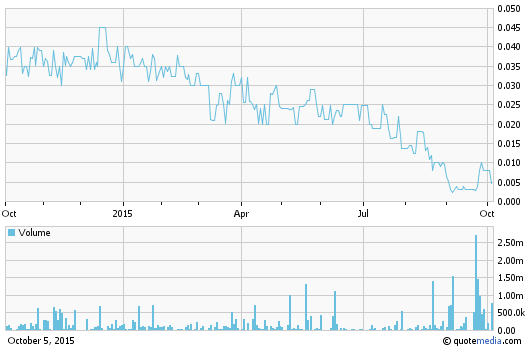
12 Month Stock Chart

Tourism contribution to GDP rises

Posted by AGORACOM-JC at 5:14 PM on Thursday, August 27th, 2015

Tourism contribution to GDP rises

  • Direct and indirect contribution of the Sultanate’s tourism sector to Gross Domestic Product (GDP) is estimated to exceed six per cent this year, according to a high ranking official of the Ministry of Tourism
  • Maitha Bint Saif al Mahrouqiya, Undersecretary, Ministry of Tourism, said tourism accounts for nearly 2.5 per cent of GDP and contributes RO 650 million annually to economic activity as against RO 273 million in 2005, thus achieving an average growth rate of around 11 per cent per year (2005-2014).

By Hasan Kamoonpuri — MUSCAT: August 26: The direct and indirect contribution of the Sultanate’s tourism sector to Gross Domestic Product (GDP) is estimated to exceed six per cent this year, according to a high ranking official of the Ministry of Tourism. In comments to Oman Observer recently Maitha Bint Saif al Mahrouqiya, Undersecretary, Ministry of Tourism, said tourism accounts for nearly 2.5 per cent of GDP and contributes RO 650 million annually to economic activity as against RO 273 million in 2005, thus achieving an average growth rate of around 11 per cent per year (2005-2014).

“Oman’s tourism industry has seen considerable development and progress in recent times, which is reflected in the increase in all tourism indicators,” she added.

“Specifically, one of the milestones is related to the implementation of the Integrated Tourism Complexes, namely, The Wave, Salalah Beach Resort and Jabel Al Sifa Resort. These ITCs are in part operational with world class hotels, golf courses, marinas and residential units.

“Another milestone is the establishment of a completely new department which caters for the provision of miscellaneous services and a comprehensive set of information for investors, both domestic and foreign.

The market-based representative offices opened in most tourist markets is yet another milestone in tourism development”.

The launching of the Oman Tourism Strategy project in mid-2014 is a landmark that provides a roadmap to guide “our efforts on sound scientific and progressive basis”, thus reaping the benefits and many opportunities that are now made available through international tourism.

The preparation of the long-term tourism strategy (2016–2040) has entered a very advanced stage and it is scheduled to be unveiled in September this year.

The Sultanate’s tourism sector launched itself into 2015 on a high, fuelled by strong bookings by hotels and resorts and a strong line-up of projects that are currently underway.

The revenues of hotels during 2014 stood at RO 216,526, 000 compared to RO198, 835, 000 in 2013, thus indicating that hotels’ revenues grew by RO 17.7m in 2014, according to the National Centre for Statistics and Information (NCSI).

The Sultanate’s tourism revenue from international visitors exceeded $1 billion for the first time in 2012, making it one of the top tourism destinations in the Gulf region, according to a report published by the United Nations World Tourism Organisation (UNWTO).

The tourism undersecretary said there are a number of mega projects that are currently underway such as the Convention Centre, Omagine, Palm Mall and Ras Al Hadd Resort. Omagine and Palm Mall are located in Muscat Governorate (Wilayat As’ Seeb) while Ras Al Hadd Resort is located in South Sharqiyah Governorate.

Source: http://omanobserver.om/tourism-contribution-to-gdp-rises/

A 2nd Major Silicon Metal Producer Requests High Purity Quartz Samples From Uragold

Posted by AGORACOM-JC at 10:12 AM on Thursday, August 27th, 2015

  • Announced that a second major silicon metal producer (“2nd Producer”) has requested samples of High Purity Quartz
  • Patrick Levasseur, President and COO of Uragold stated, “The interest we are receiving from global silicon metal producers for our quartz demonstrates the exceptional quality of the Roncevaux quartz and the lack of supply of High Purity Quartz. We are now even more focused on determining the full potential of our industry leading quartz portfolio.”

Montreal, Quebec / August 27 2015 – Uragold Bay Resources Inc. (“Uragold”) (TSX Venture: UBR), is pleased to announce that a second major silicon metal producer (“2nd Producer”) has requested samples of High Purity Quartz from our Roncevaux property located in the Matapedia Valley in the Gaspe region of Quebec.

ADDITIONAL THIRD PARTY VALIDATION BODES WELL FOR ADVANCEMENT OF URAGOLD HIGH PURITY QUARTZ PROPERTIES IN QUEBEC

In order to perform their test, the 2nd Producer requires 30 kg of quartz material be sent to a laboratory in Switzerland for thermal and mechanical stability tests in addition to chemical purity analysis. Discussions remain confidential as well as tests and results, which will be proprietary to the 2nd Producer.

Patrick Levasseur, President and COO of Uragold stated, “The interest we are receiving from global silicon metal producers for our quartz demonstrates the exceptional quality of the Roncevaux quartz and the lack of supply of High Purity Quartz. We are now even more focused on determining the full potential of our industry leading quartz portfolio.”

FIRST PRODUCER HAS CONFIRMED INTEREST IN PURCHASING SIGNIFICANT TONNAGE OF HIGH PURITY QUARTZ FROM URAGOLD

On March 2nd 2015, Uragold announced that a major silicon metal producer (“1st Producer”) had confirmed their interest in purchasing a significant tonnage of High Purity Quartz from our Roncevaux property in Quebec.

The Producer had confirmed that the Quartz material from our Roncevaux property successfully passed their rigorous testing protocol, which determined that the material is highly suited for their silicon metal production plant.

SUCCESSFUL COMPLETION OF FINANCING – INSIDERS ACCOUNT FOR 49% OF FUNDS

Uragold announces that it has closed the new non-brokered private placement of 6,619,000 units (“Unit”) at $0.05 per Unit for gross proceeds of $330,950 previously announced on August 19, 2015. The net proceeds from the Private Placement will be used for general corporate expenditures and to enhance the Company’s balance sheet.

Each Unit is comprised of one (1) common share and one (1) common share purchase warrant (“Warrant”) of the Company. Each Warrant will entitle the holder thereof to purchase one common share of the capital stock of the Company at an exercise price of $ 0.07 during a period of 36 months from the date of closing of the placement. Each share issued pursuant to the placement will have a mandatory four (4) month holding period from the date of closing of the placement. The placement is subject to standard regulatory approvals.

SHARES FOR SERVICES PROGRAM

The Corporation also announced that it has issued 565,000 common shares at a deemed price of $0.05 per share and therefore paid a debt of $28,250 for services rendered during the period from January 16, 2015 ending July 15, 2015.

MODIFICATION TO STOCK OPTION PLAN

Uragold announces that its Board of Directors has approved the modification of the total number of shares that may be issued pursuant to its stock option plan, which is increased from 4,400,000 shares to 10,800,000 shares. The maximum number of common of shares that may be issued under the plan shall be equivalent to less than 10% of the issued and outstanding common shares of the Corporation. The modification is subject to regulatory approval.

About UBR – Quebec Quartz

UBR – Quebec Quartz is the largest holder of High Purity Quartz properties in Quebec, with over 3,500 Ha under claims. Despite the abundance of quartz, very few deposits are suitable for high purity applications. High Purity Quartz supplies are tightening, prices are rising, and exponential growth is forecasted. Quartz from the Roncevaux property successfully passed rigorous testing protocols of a major silicon metal producer confirming that our material is highly suited for their silicon metal production.

In addition to becoming a supplier of lump quartz for silicon metal production, Quebec Quartz’s objective is to transform its High Purity Quartz into Ultra High Purity Quartz Sands to generate significantly greater profits and become a leading supplier of Ultra High Purity Quartz.

About Uragold Bay Resources Inc.

Uragold Bay Resources is a TSX-V listed Gold and High Purity Quartz exploration junior focused on generating free cash flow from mining operations. Our business model is centered on developing mining projects suited for smaller-scale start-up and that could potentially generate high yield returns. Uragold will reach these goals by developing Quebec’s first paleoplacer mine in 50 years, the Beauce Placer Project and, in partnership with Golden Hope Mines, the Bellechasse-Timmins Gold Deposit.

Neither the TSX Venture Exchange nor its Regulation Services Provider (as that term is defined in the policies of the TSX Venture Exchange) accepts responsibility for the adequacy or accuracy of this release.

This news release does not constitute an offer to sell or a solicitation of an offer to buy nor shall there be any sale of any of the securities in any jurisdiction in which such offer, solicitation or sale would be unlawful. The securities have not been and will not be registered under the United States Securities Act of 1933, as amended (the “U.S. Securities Act”) or the securities laws of any state of the United States and may not be offered or sold within the United States or to, or for the account or the benefit of, U.S. persons (as defined in Regulation S un der the U.S. Securities Act) unless registered under the U.S. Securities Act and applicable state securities laws or pursuant to an exemption from such registration requirements.

For further information contact

Bernard J. Tourillon, Chairman and CEO
Patrick Levasseur, President and COO

Tel: (514) 846-3271
www.uragold.com

Avalon Rare Metals Discusses Pilot Plant Program on Separation Rapids Lithium Project

Posted by AGORACOM-JC at 2:10 PM on Wednesday, August 26th, 2015

Avalon recently announced that a $750,000 pilot plant program has commenced on the Company’s Separation Rapids Lithium Project located near Kenora, Ontario. The 2015 pilot plant program will provide a trial of the new lithium minerals process flow sheet developed at the bench scale over the past year.

Hub On AGORACOM / Corporate Profile / Read Release

DuSolo Provides Corporate Update

Posted by AGORACOM-JC at 8:17 PM on Tuesday, August 25th, 2015

  • “In the coming months, the Company plans to implement a number of sales and production strategies in an attempt to increase revenues, while managing its production costs. DuSolo’s long term focus remains unchanged, as we continue to build the Company into a domestic Brazilian phosphate producer.”

VANCOUVER, BRITISH COLUMBIA–(Aug. 25, 2015) – DuSolo Fertilizers Inc., (TSX VENTURE:DSF)(OTC PINK:ELGSF)(FRANKFURT:E6R) (“DuSolo” or “the Company”) is pleased to provide a corporate update for its Brazilian operations.

After a longer than anticipated rainy season, the Company has been excavating and processing Direct Application Natural Fertilizer (“DANF”) product at Bomfim since June. DANF product sales, however, have been less than anticipated due to soft fertilizer demand in Brazil. This is a result of weaker crop prices, the lower purchasing power of the Real and delayed credit availability from the government to farmers and agri-businesses.

“In light of the current market conditions in Brazil, and the effect it has had on the Company’s performance, DuSolo’s new board and management have undertaken a strategic review of all operations,” said Darren Bowden, CEO of DuSolo. “In the coming months, the Company plans to implement a number of sales and production strategies in an attempt to increase revenues, while managing its production costs. DuSolo’s long term focus remains unchanged, as we continue to build the Company into a domestic Brazilian phosphate producer.”

The following strategic initiatives will be undertaken:

  • Drawdown of Bridge Loan facility. Funds have already been received and will be used as working capital as DuSolo begins to accept forward sales contracts.
  • Plans to reconfigure Bomfim Processing Plant in order to increase DANF product output without installing additional hammer mills, saving the Company C$400,000.
  • Looking at alternative sales strategies, including forward sales contracts and expanding sales into other regions in Brazil.

Sales

Year to Date, 2015, DuSolo produced and sold the following amounts of DANF product (all figures are in tonnes):

Mine Production Plant Production Delivery of Sales To Be Delivered
52,931 29,939 7,373 3,363

Of the 81,100 tonnes in signed commitments, approximately 3,290 tonnes of product has already delivered, and an additional 3,363 tonnes will be delivered in the short term. All of these contracts are still in good standing, though buyers have been slow to perform due to the market conditions described above.

To smooth upcoming sales revenue, the Company will implement a number of sales strategies in order to ensure that DANF product sales continue, including accepting forward sales contracts, while continuing to receive proceeds from sales on delivery.

Operations

The material processed to date has come from the Santiago project (“Santiago”). Further analysis and characterization has confirmed that mineralization at Santiago is softer and more fine that previously thought. This has led to the primary screen being under utilized and the secondary screen being over loaded causing a production bottleneck. DuSolo, at minimal cost, will reconfigure the Bomfim Processing Plant (“the Plant”) to better handle this material.

The reconfiguration includes a plate change in the existing hammer mills to increase final product top size from 1.5mm to 2mm, which has already been completed. In addition, the screen decks will be resized to redirect material to different stockpiles, reducing rehandle and increasing primary and secondary screen efficiency. Once both of these changes are in place, the Plant is expected to achieve a sustainable throughput of 80 tonnes per hour versus the current maximum of 60 tonnes per hour.

The optimization of the Plant will allow for higher production, without having to install the additional hammer mills as previously planned. This will result in a C$400,000 savings for DuSolo. The Company will complete the reconfiguration in September, and expects DANF product inventory stockpiled to meet September sales demand. The Plant is expected to recommence production with the new screens and mills for a short period in October in order to test the upgrades and build sufficient product stock to meet low season sales.

Other Phosphate Opportunities

DuSolo maintains its focus on growth through building its operations, as well as assessing new phosphate opportunities in other regions of Brazil. The Company is of the opinion that current market conditions in the fertilizer market are temporary and are likely to improve in the mid to long term. It is therefore evaluating investment opportunities created by the weakness in phosphate demand, and looking to expand into new agricultural areas in Brazil as part of its strategy to become a mid-tier Brazilian fertilizer producer.

ABOUT DUSOLO

DuSolo Fertilizers Inc. is focused on developing a fully integrated process to produce phosphate based fertilizers within the Cerrado region of Brazil as part of a nationwide effort, incentivized by the government, to increase supply of domestically sourced fertilizers and achieve agricultural self sufficiency.

The Company’s shares are publicly traded on the TSX Venture Exchange under the symbol DSF, on the OTC Pink Sheets under the symbol ELGSF and on Frankfurt Stock Exchange under the symbol E6R.

On behalf of DuSolo Fertilizers Inc.

Darren Bowden, CEO

Forward-looking statements

Certain information contained in this press release constitutes “forward-looking information”, within the meaning of Canadian legislation. Generally, these forward-looking statements can be identified by the use of forward-looking terminology such as “plans”, “expects” or “does not expect”, “is expected”, “budget”, “scheduled”, “estimates”, “forecasts”, “intends”, “anticipates” or “does not anticipate”, or “believes”, or variations of such words and phrases or statements that certain actions, events or results “may”, “could”, “would”, “might” or “will be taken”, “occur”, “be achieved” or “has the potential to”. Forward looking statements contained in this press release may include statements regarding the future operating or financial performance of DuSolo which involve known and unknown risks and uncertainties which may not prove to be accurate. Actual results and outcomes may differ materially from what is expressed or forecasted in these forward-looking statements. Such statements are qualified in their entirety by the inherent risks and uncertainties surrounding future expectations. Among those factors which could cause actual results to differ materially are the following: market conditions and other risk factors listed from time to time in our reports filed with Canadian securities regulators on SEDAR at www.sedar.com. The forward-looking statements included in this press release are made as of the date of this press release and DuSolo disclaims any intention or obligation to update or revise any forward-looking statements, whether as a result of new information, future events or otherwise, except as expressly required by applicable securities legislation.

Neither the TSX Venture Exchange Inc. nor its Regulation Service Provider (as that term is defined in the policies of the TSX Venture Exchange Inc.) accepts responsibility for the adequacy or accuracy of this press release.

DuSolo Fertilizers Inc.
(604) 331-9853
[email protected]