Posted by AGORACOM-JC
at 3:37 PM on Wednesday, March 27th, 2019
SPONSOR: Good Life Networks (GOOD:TSX-V)
Video advertising is the future! Company’s A.I. makes 80,000
calculations / second, targeting 750 million users to deliver higher
prices and volume. Company announced combined trailing 12 month revenue
at just over $40 Million, $7.9M EBITDA, $3 Million net income. Click here for more information.
GOOD: TSX-V
—————————
Pandora expands programmatic offering with Adobe integration as digital audio space grows
As the digital audio space grows, Pandora has made its audio, video and display inventory available programmatically through an integration with Adobe Advertising Cloud.
As the digital audio space grows, Pandora has made its audio, video and display inventory available programmatically through an integration with Adobe Advertising Cloud.
Sahil Gupta, director of global partnerships at Adobe Ad Cloud, said
Pandora’s purchase of audio adtech company AdsWizz last May helped bring
the offering to market.
Over the next year, about a quarter of consumers plan to spend more time listening to podcasts, Adobe found.
Gupta said he’s seeing advertisers experiment in digital audio as they try “to figure out where in the funnel” it sits.
“One thing is, a lot of these audio ads, especially in the mobile
apps, can be paired to a display call to action, so that lends itself
really well there,” said Gupta.
Brian Gilbert, senior director of programmatic operations at Pandora,
said he’s seeing “a cultural shift” resulting from the growth of
digital audio, and that’s impacting how advertisers approach their media
strategy.
According to a report from Adobe, nearly half of the organizations
surveyed plan to increase their digital audio ad spend by an average of
35% compared to last year.
However, the problem with the reach and scale that programmatic
buying promises is that it can come at the cost of personalization.
Since Pandora touts its ability to offer brands targeted
addressability, Scott Walker, senior vice-president of strategy and
analytics at Pandora, recommends that advertisers take a hybrid
approach.
“Our recommendation is always to build a hybrid of both [scale and
personalization], and to test and learn as you go with the capabilities
of running experiments, gaining insights and looking at analytics to see
what’s the right messaging strategy,” said Walker.
Walker added that a “vast majority” of audio ads are played through
to completion, and display and video ads have high viewability numbers
because Pandora triggers them only when a user interacts with the app
when it’s in the foreground.
Pandora also rolled out its podcast offering in December. Walker said
the company is “focused on monetizing” podcasts as quickly as possible.
“For podcasts to become as big an ad market as it potentially can as
adoption grows, they have to trade in a currency that the market trades
in at scale, at that’s impressions and CPM,” said Walker.
Walker added that right now podcasts are primarily sponsor-driven, as
the challenge of injecting ads into podcasts could cost the medium its
“colloquial,” host-read feel.
Adobe found that for digital audio as a whole, conversion (47%) and
awareness (28%) are advertisers’ primary measurement tactics.
Tags: adtech, programatic, stocks, tsx, tsx-v Posted in Good Life Networks | Comments Off on Good Life Networks $GOOD.ca – Pandora $PANDY expands programmatic offering with #Adobe $ADBE integration as digital audio space grows $TTD $RUBI $AT.ca $TRMR $FUEL
Posted by AGORACOM-JC
at 9:11 AM on Tuesday, March 26th, 2019
Announced that 495 Communications LLC., a GLN digital property, has increased its portfolio of Connected Television Roku channels by 40% since the acquisition in December 2018
Currently, more than 164 million U.S. internet users access video content via CTV, with this number predicted to grow up to 204.1 million viewers in 2022
Vancouver, British Columbia–(March 26, 2019) – Good Life Networks Inc. (TSXV: GOOD) (FSE: 4G5) (“GLN“, or the “Company“), a Vancouver-based programmatic advertising technology company is excited to announce that 495 Communications LLC. (“495“), a GLN digital property, has increased its portfolio of Connected Television (“CTV“) Roku channels by 40% since the acquisition in December 2018.
Currently, more than 164 million U.S. internet users access video
content via CTV, with this number predicted to grow up to 204.1 million
viewers in 2022(1). GLN anticipated the growth of CTV (and associated
decline of traditional cable TV) and transitioned into the space through
the acquisition of 495 and ImpressionX. Since the acquisition in
December 2018, 495 has significantly grown its platform of Roku channels
capitalizing on the increase of consumers using CTV. The increase in
channels will provide more monetization opportunities for 495, and
potentially add to GLN’s combined annual revenue. 495’s platform is now
being powered by GLN’s proprietary technology, with channels across a
variety of subjects including: sports, cooking, comedy, music and
movies.
“Disney just acquired FOX to create the streaming service, Disney+(2), Apple just announced its new streaming service, Apple+(3), and The Trade Desk’s CTV revenue increase of over 525% last year(4), all positive indicators for significant growth of the CTV sector,” stated Jesse Dylan, CEO of GLN.
“495 is ideally positioned to see additional ad revenue opportunities
from their continued CTV channel development. I’m impressed with the
teams progress so far this year and look forward to continued future
growth!”
Both 495 and ImpressionX are leading CTV advertising technology
companies. 495 focuses on content marketing, through building and
developing CTV and Over the Top (“OTT“) channels for
the sake of monetization and content distribution. CTV refers to any
smart TV that can be connected to the internet and can stream OTT
content beyond what is available from a traditional cable provider. OTT
refers to any device (Roku, PlayStation, Xbox, Apple TV) that can be
connected to a TV to allow for the delivery of video from the internet.
Roku pioneered streaming for the TV(5) and plans to be a billion-dollar
company in 2019. Roku also reported 40 percent year-over-year active
user growth, with 27.1 million active users by year-end, and a 69
percent year-over-year increase in streaming hours, which reached 7.3
billion(6).
The GLN Story
GLN’s patent pending technology is the engine that sits between
advertisers and publishers. A highlight of GLN’s tech is that it does
not collect PII (Personal Identifiable Information). Built for cross
device video advertising: Mobile, In-App, Desktop and CTV (Connected
Television) the GLN Programmatic Video Advertising Platform has among
the lowest fraud rates of similar vendors in the industry. Advertisers
make more money by reaching their target audience more effectively. GLN
makes money by retaining a percentage of the advertiser’s fee.
GLN is headquartered in Vancouver, Canada with offices in Newport
Beach and Santa Monica California, New York and UK and trades on the
TSXV under the stock symbol “GOOD” and The Frankfurt Stock Exchange
under the stock symbol 4G5. For further information on the Company,
visit www.glninc.ca
Neither the TSX Venture Exchange nor its Regulation Services
Provider (as that term is defined in the policies of the TSX Venture
Exchange) accepts responsibility for the adequacy or accuracy of this
release.
Forward Looking Statements:
Forward-looking statements relate to future events or future
performance and reflect the expectations or beliefs regarding future
events of management of GLN. This information and these statements,
referred to herein as “forwardâ€looking statements”, are not historical
facts, are made as of the date of this news release and include without
limitation, statements regarding discussions of future plans, estimates
and forecasts and statements as to management’s expectations and
intentions with respect to the performance of 495. These statements
generally can be identified by use of forward-looking words such as
“may”, “will”, “expect”, “estimate”, “anticipate”, “intends”, “believe”
or “continue” or the negative thereof or similar variations.
These forwardâ€looking statements involve numerous risks and
uncertainties and actual results might differ materially from results
suggested in any forward-looking statements. Important factors that may
cause actual results to vary include without limitation, risks relating
to the continued growth of CTV opportunities, the performance of digital
channels created by 495 or the successful completion and monetization
of additional channels.
In making the forwardâ€looking statements in this news release,
the Company has applied several material assumptions, including without
limitation that 495 will generate the anticipated revenue and expand
GLN’s global reach per management’s expectations. GLN does not assume
any obligation to update the forward-looking statements, or to update
the reasons why actual results could differ from those reflected in the
forward looking-statements, unless and until required by applicable
securities laws. Additional information identifying risks and
uncertainties is contained in GLN’s filings with the Canadian securities
regulators, which filings are available at www.sedar.com.
Posted by AGORACOM-JC
at 3:12 PM on Thursday, March 21st, 2019
SPONSOR: Good Life Networks (GOOD:TSX-V)
Video advertising is the future! Company’s A.I. makes 80,000
calculations / second, targeting 750 million users to deliver higher
prices and volume. Company announced combined trailing 12 month revenue
at just over $40 Million, $7.9M EBITDA, $3 Million net income. Click here for more information.
GOOD: TSX-V
—————————
It used to be about cutting time off content, but that’s changed
Using longer videos in strategies may be the future of this sect of the industry.
Just when creatives wrapped their heads around data and programmatic,
new technology is about to reshape storytelling again. While those
first disruptive trends changed display and rich media ads, video ads
remained largely unaffected. In fact, video ads haven’t actually changed
in decades, aside from getting shorter and running on different types
of screens.
Whereas innovation used to be measured in the seconds shaved—from
60-second to 30-second to 15-second to 6-second—now we’re seeing the
actual video ad formats evolve as two new trends converge: advance TV
and identity. These powerful forces have already reshaped media buying
as more ad dollars shift from offline to digital formats, but now they
are in the midst of transforming the creative experience. Here’s how:
Pause-vertising
Creative agencies now need to begin thinking about longer form
videos and know they can break up the content into mini-episodes of ads.
As more video is viewed on advance TV media formats, such as CTV and
OTT services that run on computers or phones, new possibilities have
emerged. Whereas linear television ads were built around filling
scheduled commercial breaks, CTV and OTT experiences have built-in,
widely-used pausing functionality, creating a new form of commercial
break and screen layout. Imagine seeing an ad for your favorite brand
appear quickly when you hit pause (or unpause) for quick breaks to
respond to a message or grab a snack. Hulu and AT&T’s Xandr
advertising business both plan to introduce a form of this
“pause-vertising†this year.
Second screen
Another idea is second screen ads where a brand wants to take
advantage of the fact that viewers are often watching TV while using
another device. Nowadays, many devices can be connected through an
identity graph (from a telco, a data provider, etc.) that links
registration information like billing addresses for different signed in
services on different devices. The possibilities now include using
addressable television media buying to target TVs registered to
households that have been shown to have the brand’s app so that you can
run TV ads that encourage specific interaction with apps or drive users
to the app for info rather than trying to cram everything into a TV
spot.
Ad episodes
Perhaps an even more powerful application of identity is creating
episodic ads where, rather than trying to cram all the content into one
spot, you can tell a story over several ad episodes across different
screens and time. Historically with TV ads and even digital video ads,
brands had no idea whether a viewer had already seen an ad or not. Now
with cross-device IDs, brands can keep track of whether a viewer or
household had been served an episode already, and if so, to move on to
the next episode in the sequence even if the user is switching between
devices. Without a people-based identity graph, message sequencing would
be a nightmare of repeat instances of the first ad episode because the
advertiser wouldn’t realize it’s the same household or viewer.
To make these ideas possible, brands will need to work with creative
agencies and video media inventory owners that have invested in
addressable television, OTT and identity. Creative agencies will need to
adapt creative for the new pause-vertising formats, knowing that it
could be on loop until a user returns, or focus messaging around what to
do during this explicit viewing break. Platform owners will need to
identify what percentage of a brand’s app users it can reach with TV
media so that the brand can determine if TV campaigns should be for app
acquisition or designed to drive second screen usage or execute
addressable buys for both. Creative agencies now need to begin thinking
about longer form videos and know they can break up the content into
mini-episodes of ads.
Executing these new forms of creative don’t change what makes a good
story, but they do give brands new ways of telling a good story beyond
the standard 30-second one-size-fits-all spots. As more video watching
moves from pure linear to more digital, the industry is at a pivotal
moment to reinvent the ad experience and make it fit more natively in
the new technology. Only then can video ads reach their full new
potential.
Posted by AGORACOM-JC
at 9:15 PM on Tuesday, March 19th, 2019
SPONSOR: Good Life Networks (GOOD:TSX-V)
Video advertising is the future! Company’s A.I. makes 80,000
calculations / second, targeting 750 million users to deliver higher
prices and volume. Company announced combined trailing 12 month revenue
at just over $40 Million, $7.9M EBITDA, $3 Million net income. Click here for more information.
GOOD: TSX-V
—————————
By: Jose Pacheco
The competitive diversity scenario i.e. all-against-all will greatly intensify across the global television advertising market throughout 2019.
Global platforms with bottomless pockets will quickly penetrate local
markets; local traditional players will produce and license premium
content for big platforms; technology will accelerate the
disintermediation from large producers and rights holders to audiences;
successful subscription models will be accompanied by new
non-advertising formulas; traditional and virtual aggregators with tools
for content discovery
will lead to increased fragmentation, and emerging content producers
and distributors designing and bundling targeted proposals for thematic content and audience niches.
All of this will play in a ‘muddy pitch’ within Europe. There will be
problems with audience measurement, demanding regulations for the use
of personal data, concerns around transparency and ad fraud, convulsed advertising markets, and heterogeneous social, cultural and political environments.
Within this highly complex scenario, we will find interesting emergent trends across European markets for programmatic advertising, and AdTech advanced solutions for television.
Below are three core trends to keep an eye out for:
1. IPTVs
Telecommunications companies that are well positioned in distribution
and aggregation can start experimenting without too many restrictions
or opportunity costs, and with predominant positions (direct access to
homes, high penetration, in-house content, advertising money where to
diversify its current businesses, innovation with which to differentiate
competitively, etc.).
In Spain, key players in this field are likely to be involved in the
TV offering of the large IPTV operators, such as Movistar, Vodafone,
Orange and Euskaltel, benchmarking programmatic and addressable ad
solutions, which are already developed in the United States and the
United Kingdom.
The local broadcasters and content producers, as original sources of
content, should assume a collaborative role in these models, and take
full advantage of the value of shared experimentation —eEmerging
advanced advertising monetization of a currently non-efficient
distribution channel, access to technology and new processes and
acquisition of knowledge.
2. OTTs
There is a clear opportunity for the development of an
advertising-based OTT market (Ad Supported Video or ASV OTT) for several
reasons:
The focus around the subscription monetization for this distribution
model, the loss of an important share of the free ad-inventory dragged
by the content licensed to the OTTs with SVoD models, the possibilities
of thematic segmentation of product niches and profiling of targets due
to the technology, more and more advanced and cost-effective
distribution technologies, and, of course, relevant AdTech solutions
already in place: programmatic, dynamic, Artificial Intelligence
and addressable advertising based on data, new formats and models
(rewarded video for example) and anti-fraud controls (current tools and
new to explore, as blockchain).
As is happening in the United States, OTT proposals focused on the
advertising market are foreseeable across a wide variety of models:
premium and niche content, generalistic and segmented targets, pure and
hybrid (freemium) monetization, local and global approaches.
3. Broadcasters
In this market, the development of programmatic and advanced
advertising on television does not seem that it could be led by local
traditional TV operators.
This is due to complex (and decreasing) main advertising markets,
limited premium inventories for non-advertising models (subscription,
production and licensing for platforms, etc.), limited technological
capabilities and resources, old-business organizations and structures,
short-term objectives, defense of traditional models, local focus, etc.
Therefore, in this area, it is interesting to follow up on one of the
few announced global initiatives, the pan-European platform of the RTL
Group, which although with a very complex integration (global approach
with specific local implementations), is planned from a strategy that
responds to two of the challenges: on the one hand, a strong
technological component (mainly via acquisitions as SpotX, Smartclip,
Yospace and several MCVNs) and, on the other hand, an international
approach to the market.
Posted by AGORACOM-JC
at 2:33 PM on Monday, March 18th, 2019
SPONSOR: Good Life Networks (GOOD:TSX-V)
Video advertising is the future! Company’s A.I. makes 80,000
calculations / second, targeting 750 million users to deliver higher
prices and volume. Company announced combined trailing 12 month revenue
at just over $40 Million, $7.9M EBITDA, $3 Million net income. Click here for more information.
GOOD: TSX-V
—————————
Three trends shaping programmatic advertising in 2019
Programmatic customisation is now common practice, allowing teams to
improve performance and provide greater relevancy with personalised
messaging. Vast amounts of data also mean that advertising creative can
dynamically change to be all the more relevant to users, with ads
adapting to factors like location, device, weather, time, and
demographics.
One of the main benefits of the technology behind this is that it
generates a lot of quick feedback, which allows marketers to optimise
creative in real time, and to change what’s in front of consumers’ eyes
at a rapid rate.
Case studies have illustrated the effectiveness of personalisation in
programmatic campaigns. Mindshare Indonesia, for example, developed an always-on retargeting campaign
using dynamic creative optimisation technology for AirAsia, which
allowed its programmatic team to dynamically serve thousands of ad
versions based on the last destination travellers searched for on its
website. Mindshare created over 5,500 ad versions in three months,
saving an estimated 276 days of production time, and generating a higher
ROI for the airline.
Programmatic TV
Within the industry, there appears to be a growing desire for a
solution to bridge the gap between television advertising and online
advertising.
Consequently, with traditional TV advertising slowing in pace, and
programmatic TV advertising buying increasing, TV ads could increasingly
be purchased programmatically. Indeed, PWC predicts that programmatic TV will represent approximately one third of global TV ad revenue by 2021.
There are certainly challenges that come along with programmatic TV.
First, there is the need for greater diversity in terms of the inventory
available. Second, there are concerns around transparency and brand
safety, although this issue is continually improving.
On the other hand, there are big benefits to programmatic TV, the
main one being new format types on connected TVs, such as unskippable
15- and 30-second video ads (which can be both immersive and engaging).
Connected TV ad campaigns also allow for precision targeting based on
more accurate consumer data.
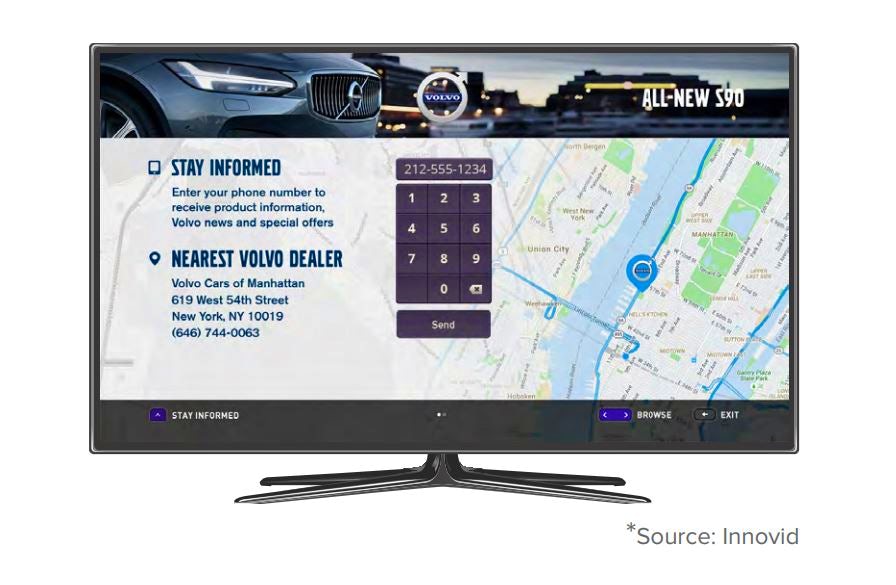
For automotive brand Volvo, a programmatic TV campaign generated
significant sales lift. It involved delivering interactive video ads
through Roku boxes and Samsung TVs, which were personalised by location
(and local deal information).
The campaign
produced nearly 526,000 unique engagements across approximately 95,000
homes. Impressively, the exposed group saw a 35% sales lift compared
with the control group.
In-housing
In-housing is not a new practice, but it is one that’s certainly
growing in popularity. In 2019, brand owners have an increased desire to
own and operate their own data, largely motivated by the opportunity to
gain more value from advertising spend (by utilising resources more
effectively).
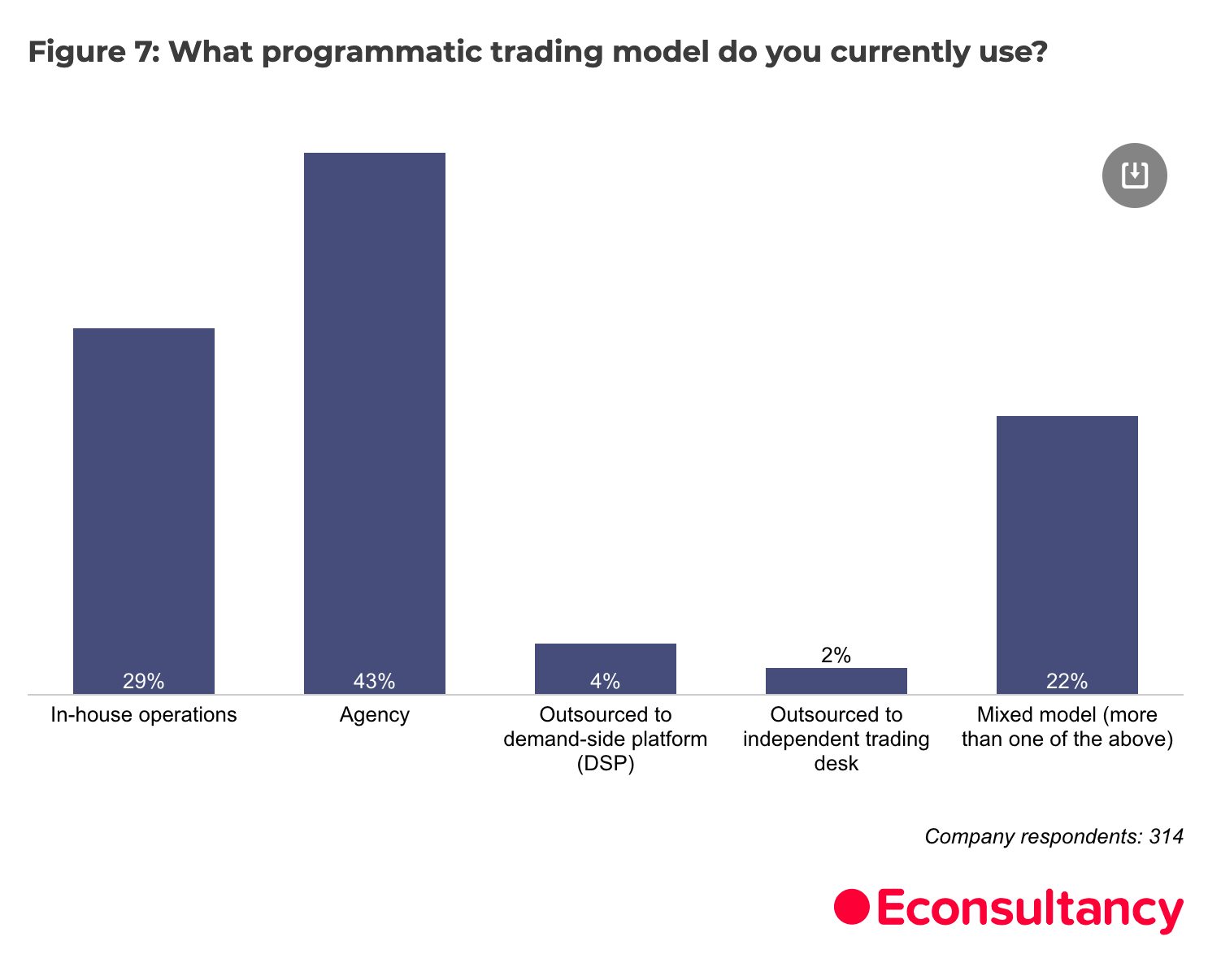
In Econsultancy’s survey, 22% of respondents reported using a ‘mixed’
programmatic trading model, with 29% running with solely in-house
operations. Forty-three percent reported still running entirely with an
agency.
As well as value from ad spend, another reason companies are
transferring in-house is to do with transparency and brand safety.
Negotiating and buying all digital media in-house allows for greater
control and visibility over where advertising is placed.
That being said, in-housing also come with its own challenges.
Finding the right talent is undoubtedly one of the biggest, as the role
of a programmatic trader not only requires in-depth knowledge of
multiple platforms and the optimisation strategies available, but also a
deep understanding of client and consumer needs.
In this case, experts advise not to blindly jump onto the trend for
in-housing, but to first ensure that they realise both the work
involved, and the skillset required in order to effectively overtake
agency involvement.
Tags: adtech, stocks, tsx Posted in All Recent Posts, Good Life Networks | Comments Off on Good Life Networks $GOOD.ca – Three trends shaping programmatic advertising in 2019 $TTD $RUBI $AT.ca $TRMR $FUEL
Posted by AGORACOM-JC
at 9:15 PM on Sunday, March 17th, 2019
https://youtu.be/lkYWl6n_dAs
Jesse Dylan, Founder & CEO of Good Life Networks (TSXV: GOOD)
(FSE: 4G5) sits down with former Global TV anchor, Steve Darling of
Proactive Investors to discuss GLN’s significant growth over the last
year, how the company plans to drive 2019 projected revenues of $67M and
the importance of brand safety and protecting consumers Personally
Identifiable Information.
With the recent controversy around brands using PII and the
implementation of new regulations designed to protect consumers, GLN
prides itself on having built its patent pending technology from the
ground up without using consumers private information to target
advertisements. GLN continues to focus on the importance of brand
integrity and consumer privacy.
Posted by AGORACOM-JC
at 9:00 PM on Tuesday, March 12th, 2019
SPONSOR: Good Life Networks (GOOD:TSX-V)
Video advertising is the future! Company’s A.I. makes 80,000
calculations / second, targeting 750 million users to deliver higher
prices and volume. Company announced combined trailing 12 month revenue
at just over $40 Million, $7.9M EBITDA, $3 Million net income. Click here for more information.
GOOD: TSX-V
—————————
Persistence Market Research (PMR), in its report, projects the global programmatic advertising platform market to register a staggering expansion at 33.3% CAGR during the forecast period 2017 to 2025.
In 2016, the market was evaluated at US$ 1,926.4 Mn, and is further estimated to reach nearly US$ 30,000 Mn by 2025-end.
Surging Utilization of Mobile Advertising to Propel Growth
With growing market for mobile phones, wide utilization of mobile
advertising is witnessed, coupled with surging demand for more
sophisticated technology. Emergence of tools to monitor & measure
relevant data on mobile devices is influencing bright prospects for
programmatic mobile video. There has been a wide adoption of digital
technologies & devices for innovation in business processes and
revenue producing opportunities. In addition, several government and
international events have generated an incremental online advertising
spending, which in turn has influenced adoption of programmatic
advertisements. The aforementioned factors are expected to fuel growth
of the market during the forecast period. In addition, social media
marketers are running more effective campaigns through automated buying,
reaching precise audiences with highly relevant messages. This is
further estimated to propel market growth.
North America to be Largest Market for Programmatic Advertising Platform by 2025-End
North America is projected to be the largest market for programmatic
advertising platform, followed by Europe and Asia Pacific (APAC). Market
in this region will account for revenues worth US$ 1,683.30 Mn in 2017,
and is further estimated to surpass US$ 13,000 Mn by 2025-end. However,
Middle East & Africa (MEA) is anticipated to register fastest
growth in the global programmatic advertising platform market, followed
by Latin America.
Based on transaction mode, real-time bidding segment will remain
preferred in the market during the forecast period. This transaction
mode is expected to surpass US$ 16,000 Mn in revenues by 2025-end. In
contrast, private marketplace transaction mode is projected to exhibit
the fastest expansion at 46.7% CAGR through 2025. This segment is
further estimated to create an incremental opportunity of US$ 5,787.71
Mn between 2017 and 2025.
Mobile Video Ad Format to Register Highest CAGR in the Market through 2025
By ad format, revenues generated by mobile video is expected to reach
US$ 8.682.57 Mn by 2025, and is projected to register the highest CAGR
in the market, followed by mobile display. In terms of revenues, desktop
video will be the second largest ad format segment by 2025-end. On the
basis of enterprise size, although large enterprises are expected to
remain dominant over the market, SMBs are projected to register the
fastest growth through 2025. PMR’s report estimates large enterprises to
expand from US$ 2,190.55 Mn in 2017 to more than US$ 16,000 Mn by
2025-end. SMBS are estimated to exhibit a CAGR of over 40% during the
forecast period.
Key market players identified in PMR’s report include AppNexus Inc.,
AOL Inc. (Verizon Communications Inc.), Yahoo! Inc., DataXu Inc.,
Adroll.com, Google Inc. (Doubleclick), Adobe Systems Incorporated,
Rubicon Project Inc., Rocket Fuel Inc., MediaMath Inc., IPONWEB Holding
Limited (BidSwitch), Between Digital, Fluct, Adform, The Trade Desk,
Turn Inc., Beeswax, Connexity, Inc., Centro, Inc., RadiumOne, Inc.
Posted by AGORACOM-JC
at 9:25 PM on Sunday, March 10th, 2019
SPONSOR: Good Life Networks (GOOD:TSX-V)
Video advertising is the future! Company’s A.I. makes 80,000
calculations / second, targeting 750 million users to deliver higher
prices and volume. Company announced combined trailing 12 month revenue
at just over $40 Million, $7.9M EBITDA, $3 Million net income. Click here for more information.
GOOD: TSX-V
—————————
Global Native Advertising Market Set to Be Worth over $400 Billion by 2025
Analysis of overall digital ad spend growth, combined with native advertising trends per market, globally, has revealed that native advertising spend is expected to increase by 372% from 2020 to 2025.
This represents an increase in the native advertising market from $85.83 Billion in 2020 to a total global value of $402 Billion by 2025.
ADYOULIKE, the leading in-feed Native Advertising technology, has released in-depth research forecasting the global growth of the native advertising market to 2025.
Analysis of overall digital ad spend growth, combined with native
advertising trends per market, globally, has revealed that native
advertising spend is expected to increase by 372% from 2020 to 2025.
This represents an increase in the native advertising market from $85.83 Billion in 2020 to a total global value of $402 Billion by 2025.
The US will continue to be the biggest native advertising market by 2025, up from $29.56 Billion in 2020, to $139.5 Billion by 2025. The market in Western Europe is predicted to grow to be worth $92.37 Billion by 2025, with the UK, Germany and France predicted to be the biggest native advertising markets. The UK market will be the largest native advertising market in Europe, estimated to grow from $5.81 Billion in 2020 to $27.42 Billion by 2025. Meanwhile Germany will increase from $4.43 Billion to $20.90Bn by 2025. France will increase from $2.03Bn in 2020 to an estimated global value of $9.58 Billion by 2025.
Central to the growth in advertising spend on native up to 2025 is
the proliferation of infeed native, often referred to as native display,
which will continue to be driven over the coming years by programmatic
native and wider use of outstream native video advertising formats.
This form of native advertising, with strong mobile, programmatic and
video distribution credentials is anticipated to continue to drive
native advertising growth in the years to come. According to eMarketer,
two-thirds of all programmatic ad dollars will go to mobile, not desktop
ads, by 2020. In addition, 83.6% of all digital video ad dollars in the
US, will move via automated channels in the next twelve months. These
major trends in digital advertising buying habits augur well for all
things native.
“We are entering a new phase in native advertising’s journey –
universal acceptance and global domination. Our research shows major
increases in native advertising spend in all continent’s globally. The
value of infeed native advertising formats is now undisputed.
Advertisers are increasingly recognising the value of the format and the
performance for most campaigns backs out, which is why native is
predicted to experience significant annual growth rates every year
globally up to 2025.
“Thanks to continued technical innovation, easily traded
programmatically, with video and display capabilities, the future is
strong for native ads in general. Native advertising will be the number
one digital advertising format of the 2020s. Our research and wider
market trends back this up. We are excited to share with the market our
findings.â€
Tags: adtech, Good life networks, stocks, tsx, tsx-v Posted in Good Life Networks | Comments Off on Good Life Networks $GOOD.ca – Global Native Advertising Market Set to Be Worth over $400 Billion by 2025 $TTD $RUBI $AT.ca $TRMR $FUEL
Posted by AGORACOM-JC
at 5:00 PM on Tuesday, March 5th, 2019
SPONSOR: Good Life Networks (GOOD:TSX-V)
Video advertising is the future! Company’s A.I. makes 80,000
calculations / second, targeting 750 million users to deliver higher
prices and volume. Company announced combined trailing 12 month revenue
at just over $40 Million, $7.9M EBITDA, $3 Million net income. Click here for more information.
GOOD: TSX-V
—————————
Mobile accounted for almost 80 per cent of programmatic spend in China last year
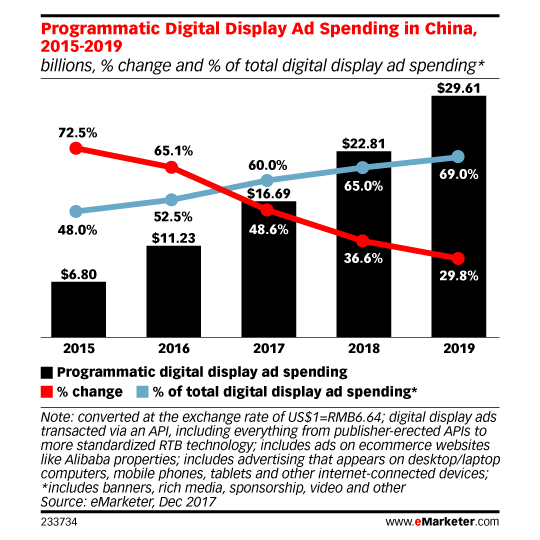
Programmatic spending in China has surged over the past year, increasing by 48.6 per cent year-on-year to hit a total of $16.7bn (£11.9bn) in 2017, according to new figures from eMarketer.
Spending was driven by local internet giants like Baidu, Alibaba and
Tencent, who are expected to continue to dominate the programmatic ad
landscape. The so-called ‘BAT companies’ cast a large shadow over
digital publishing in the region, with most advertisers buying directly
through one of the BAT companies.
As a result, direct sales accounted for 63.5 per cent of programmatic
digital display ad spending last year, compared to just 36.5 per cent
through real-time bidding.
With many Chinese consumers considered mobile-first, digital
advertisers in the region have followed suit, with 79.9 per cent of
programmatic spend dedicated to mobile advertising, and mobile expected
to keep driving total programmatic growth.
Despite this rapid growth, programmatic’s share of overall display ad
spending in China lags behind the US and the UK, at 60 per cent,
compared to 78 per cent and 79 per cent respectively. This is largely
due to the limited options available to advertisers in China, compared
to the more competitive spread of publishers in the US and UK, which
enables more spending.
eMarketer’s forecast for the region predicts that growth will
continue to slow over the next few years but will remain healthy,
dropping to 36.6 per cent this year, and 29.8 per cent in 2019. By 2019,
programmatic is expected to account for 69 per cent of all digital
display ad spending, with spending of around $29.6bn.
Tags: adtech, good life netwrks, programatic, tsx Posted in Good Life Networks | Comments Off on Good Life Networks $GOOD.ca – Mobile accounted for almost 80 per cent of programmatic spend in China last year $TTD $RUBI $AT.ca $TRMR $FUEL
Posted by AGORACOM-JC
at 2:59 PM on Friday, February 15th, 2019
SPONSOR: Good Life Networks (GOOD:TSX-V)
Video advertising is the future! Company’s A.I. makes 80,000
calculations / second, targeting 750 million users to deliver higher
prices and volume. Company announced combined trailing 12 month revenue
at just over $40 Million, $7.9M EBITDA, $3 Million net income. Click here for more information.
GOOD: TSX-V
—————————
6 ad trends you need to know
With colourful banner ads and video content competing for eyeballs, it can be easy for advertisers to forget about the power of audio.
But as we enter 2019, this programmatic opportunity is becoming harder to ignore.
With the holidays over, this is the time to reflect and fine-tune strategies for the year ahead. 2018 was a whirlwind of changes, and it continues to be a challenge differentiating your brand and maintaining trust in a world where everyone is vying for attention. The more you can stay ahead of the curve, the better equipped you will be to adapt to those changes as they occur. So what should advertisers and marketers start taking note of?
Ad Technology: Artificial Intelligence
Artificial intelligence (AI) is completely reshaping advertising as
we know it, and is now a standard part of an advertising company’s
repertoire. So how’s AI going to be different in 2019? For the past
couple of years, it has been widely considered a transformative
technology on the verge of disrupting every major industry; however, it
hasn’t yet been implemented broadly enough to unlock its true value.
That’s all going to change. AI is expected to be widely adopted
across the digital ad landscape in 2019, from being the basis for
cutting-edge AI-based ad targeting solutions, to building personalized
consumer experiences on a daily basis. Advertisers are even using AI in
the production process: a recent survey found that almost two-thirds of
enterprise marketers expect to use AI in their content marketing
strategy this year, mostly to better understand their customers, drive
productive and create personalized message
Sound of success
With colourful banner ads and video content competing for eyeballs,
it can be easy for advertisers to forget about the power of audio. But
as we enter 2019, this programmatic opportunity is becoming harder to
ignore. In fact, audio takes up the largest proportion of mobile phone
usage, with the average consumer listening for 52 minutes every day.
Driven by growing mobile device ownership – and compounded by the rise
in streaming radio, podcasts, audiobooks and voice assistants – digital
audio is here to stay.
Spotify was an early-mover in offering programmatic audio, and other
streaming services are following suit. Growing adoption rates among
voice-activated smart home speakers and subscription services lend
further momentum to this trend, and as these technologies evolve, so do
the opportunities for brands to connect with audiences in new and
exciting ways.
This year, digital audio is expected to reach marketplace maturity as
an ad medium. If advertisers want to tap into today’s key trends and
reach audiences more effectively, they need to consider programmatic
audio as part of any well-rounded campaign.
The explosive growth of eCommerce
According to an eMarketer study, the ecommerce sector is estimated to
experience double-digit growth until 2021, with sales expected to
exceed $4 trillion by 2010. Few industries can boast such an illustrious
future, and businesses need to initiate innovative changes to take
advantage of the ecommerce boom, or risk falling behind.
In particular, expanding middle class populations, extensive mobile
and internet penetration as well as improving logistics and
infrastructure in the Asia-Pacific has led to it becoming the world’s
largest retail ecommerce market, with sales expected to reach $2.725
trillion by 2020.
A surge in video content, personalized ads, advanced filtering and
immersive digital experiences are just a few of the changes in ecommerce
that will affect the advertising industry over the next few years. The
potential here is massive, and if implemented correctly, can completely
change how users interact with advertisements altogether.
Everything is now on-the-go (OTG)
Less than 50 years ago, mobile phones didn’t exist. But today, it’s
near impossible to imagine life without one. In fact, an estimated 84%
of people can’t go a single day without their phones! We use them on a
daily basis for communicating, navigating and even shopping, dubbed
mCommerce.
The Asia Pacific region is leading the drive for mCommerce, with
India, Thailand and Indonesia having the highest mobile wallet adoption
rates. Mobile payments in China alone dwarfed those in the U.S. by more
than 25,000% over a recent 10-month period, with USD 12.8 trillion
changing hands in China compared to only USD 49.3 billion in the U.S.
The rate of adoption across sectors such as retail, financial and
on-demand services –from food delivery to ride sharing – has played a
crucial role in this rapid growth.
Before, it was mobile phones that drove more online screen time. But
now the human behaviour of doing everything while on the go is driving
mobile phones sales.
Less ads, more storytelling
A 2015 report by Nielsen found that respondents trusted
recommendations from people they know the most. This was followed by
branded websites, editorial content, such as newspaper articles, and
consumer opinions posted online. By comparison, obvious advertisements
trailed behind in the list of advertising format that people trusted.
As part of an effort to increase trust and authenticity, brands are
starting to work with micro-influencers as opposed to social media
personalities with larger followings. Micro-influencers appear more
relatable, engaging and reliable to their audience, and tends to be more
knowledgeable or have followers more suited to a brand’s particular
niche.
In addition, content has to be relevant. It might sound like common
sense but it’s easy for brands to forget that the story they tell won’t
be hugely exciting for everyone. Our experience has shown that brands
needs to be smart with their storytelling or risk getting lost amongst
the clutter.
With this in mind, advertisers are adapting by creating content that
consumers enjoy. Short, 6-second video ads and longer interactive ads
that can’t be skipped tend to have higher rates of interaction from
consumers. A new type of ad has also emerged in China to play during
breaks of online TV dramas. These ads utilize the TV shows’ original
content and narrative arcs, and feature the same actors in their
on-screen costumes, piquing the audience’s interest by making the ad
almost indistinguishable from the original content. This type of
advertising was projected to surpass 2 billion yuan (US$311 million) in
sales revenue this year alone, and we predict this figure will only
continue to grow over the next year.
The establishment of the outcome media economy
A recent report looking into digital marketers’ top media investment
priorities for the next 12-24 months found that 86% of respondents
around the world expect to increase their investment in outcome-driven
media over this period. The term ‘outcome-driven media’ refers to
planning and optimizing campaigns against KPIs – often tailor-made for
an advertiser or campaign – that are much more closely aligned to the
marketer’s ultimate marketing and business goals.
While results showed some variation across regions, industries, and level of digital media investment, there is a clear trend that marketers across the globe are united in their desire to continuously improve and the way that they measure the value of their efforts.
Anyone tasked with growing a brand’s exposure needs to be able to
confidently address growing media complexity and understand the impact
of campaigns on business results. So it’s no surprise that marketers in
our day and age hunger for new ways to measure their efforts and
demonstrate the real effect their media placements have on their
company’s bottom line.
In conclusion
As with any industry, advertising isn’t perfect, and it will never
be. But the future of advertising is bright. As advertisers become more
familiar with the full potential of AI and mobile, they will deliver
more personalized experiences to consumers, as well as improved results
and more sophisticated insights to clients. And as advertisers start to
tap into greater creativity, brands will find it easier to draw genuine
interest and build closer connections with consumers.
These are my top trends to look out for as you think about your
advertising or marketing strategy for the upcoming year. While there’s
no magic formula to building the perfect advertising strategy, paying
attention to these six areas will help you stay ahead of the pack.