Posted by AGORACOM
at 2:06 PM on Tuesday, January 21st, 2020
SPONSOR: ZEN Graphene Solutions: An emerging advanced materials and graphene development company with a focus on new solutions using pure graphene and other two-dimensional materials. Our competitive advantage relies on the unique qualities of our multi-decade supply of precursor materials in the Albany Graphite Deposit. Independent labs in Japan, UK, Israel, USA and Canada confirm this. Click here for more information
The battery race shows no sign of letting up, even though the gains
feel increasingly marginal. Whether it’s phones or portable consoles,
maximising the life eked out of a slim lithium-ion battery is getting
harder and harder.
For some time, graphene has been touted as one possible solution, a
material that hasn’t been efficiently harnessed yet but which could help
improve charging times and battery life in one fell swoop. Now Real
Graphene, a tech business from Los Angeles, is apparently preparing to
change that.
It has a range of portably power banks on
the market, and ambitious plans to crowdfund the wider production of
banks that go even further with their use of Graphene. For now, Real
Graphene’s banks come in two sizes, a 10,000mAh version and another with
20,000mAh, and have a number of apparent advantages over lithium banks.
For one thing, they charge far more quickly themselves, with the
smaller variant charging completely in 50 minutes, far less time than
the hours most banks need to power themselves up.
Graphene as a material is also extremely lightweight, so down the
line it could lead to lighter batteries, always a welcome change.
However, for now, even Real Graphene’s own batteries are not pure
graphene — they’re a blend of graphene and lithium which gains in speed
but remains affordable to build and sell.
Even so, the reality is that graphene-enhanced batteries will be more
expensive than current lithium equivalents, to the tune of a 30% bump
in cost at Real Graphene’s own estimation. That’s a sizeable leap, so it
shouldn’t be a huge surprise if the tech can’t make too many mainstream
waves until it’s even more affordable in comparison.
Posted by AGORACOM
at 12:26 PM on Tuesday, January 21st, 2020
SPONSOR: Lomiko Metals is focused on the exploration and development of minerals for the new green economy such as lithium and graphite. Lomiko owns 80% of the high-grade La Loutre graphite Property , Lac Des Iles Graphite Property and the 100% owned Quatre Milles Graphite Property. Lomiko is uniquely poised to supply the growing EV battery market. Click Here For More Information
Swedish automaker Volvo announced plans to build an electric battery plant at its assembly factory in Ridgeville, South Carolina to support the launch of electrified Volvo models for the U.S. market. Construction of the battery assembly plant will be completed by the end of 2021.
While many people consider Detroit home of the automobile, the
southeast region of the U.S. is becoming a hotbed for auto
manufacturing. Automakers BMW,
Mercedes Benz, Volvo, Toyota, Honda and Hyundai built assembly plants
in the region to manufacture vehicles for the U.S. and global markets.
Most recently, Toyota and Mazda recently announced they will be
opening a new $1.6 billion plant in Huntsville, Alabama, adding around
4,000 new jobs to the region. Now Volvo becomes the latest automaker to
expand its U.S. manufacturing with a new electric vehicle battery plant.
The automaker announced plans to build an electric battery plant at
its assembly plant in Ridgeville, South Carolina to support the launch
of electrified Volvo models for the U.S. market. Construction of the
battery assembly plant will be completed by the end of 2021, a Volvo
spokeswoman said to Automotive News.
The battery production plant is part of a previously announced $600
million project that is already underway at Volvo’s plant in Ridgeville,
S.C., which includes adding a second production line and Volvo Car
University. The 2.3 million sq. ft. facility includes a body shop, paint
shop, final assembly, a vehicle processing center and an office
building.
The Ridgeville plant is Volvo’s first in the U.S. Construction began in 2015.
At that facility, employees will assemble and test the lithium ion
battery packs that will power the electric XC90. By assembling the packs
on at the plant, Volvo hopes to reduce shipping costs involved in
transporting the heavy batteries.
Dallas Bolen, a manager with Volvo’s product launch group, told local
media outlet the Post and Courier that local battery production would
be more cost-effective than building batteries off-site then having to
transport them to the factory.
The Ridgeville plant is currently the production home of the Volvo
S60 sedan. The U.S.-built S60s are exported around the world through the
Port of Charleston, one of the busiest ports in the U.S.
Volvo’s next EV will be the XC40 Recharge. It will arrive at U.S. dealers later this year.
The South Carolina plant will become the global production center for
the third-generation XC90 flagship crossover. Volvo plans to build the
next generation XC90 sport utility vehicle in 2022, along with a
fully-electric version. The plant has the capacity to build 150,000
vehicles annually.
Volvo has not said how much of the XC90’s production at the $1.1
billion factory will be devoted to the battery-electric variant.
That next-generation XC90 will be built on the next version of
Volvo’s Scalable Product Architecture platform, referred to as SPA2. The
new electric vehicle architecture is designed to make it easy to add
new technology, such as microprocessors, sensors and camera technology.
Volvo declined to release its production capacity for the battery
assembly plant or say how many jobs it will create. Overall, the planned
XC90 production line is expected to create about 1,000 jobs.
The XC90 would be Volvo’s third battery-powered model following the
electric version of the popular XC40 compact crossover, was unveiled in
October.
The electric XC40
is expected to arrive in U.S. dealerships in the fourth quarter of
2020. The crossover will be competitively priced under $48,000, after
the $7,500 federal tax credit, Volvo said.
The new battery plant will support Volvo’s push to electrify around
half of its lineup. The automaker aims for EVs to account for half of
its global sales by 2025. Over the next five years, Volvo expects to
launch a fully electric vehicle every year.
“A Volvo built in 2025 will leave a carbon footprint that is 40
percent lower than a car that we build today,” Volvo CEO Hakan
Samuelsson said during a press event in October. “We made safety part of
the brand. We should do the same with sustainability.”
In November 2019, Volvo Cars announced it will be the first carmaker
to implement global traceability of cobalt used in its batteries by
applying blockchain technology,
ensuring that customers can drive battery-powered Volvos knowing the
raw materials for the batteries has been responsibly sourced.
Definitive Graphene Manufacturing Process License Agreement–
This agreement licenses to ZEN the intellectual property created
by scientists and laboratories in collaboration with ZEN, and provides
that a royalty is payable by ZEN based on the annual amount of material
processed under the intellectual property.
Signed an 18-month
exclusive initial option agreement with the University of Guelph for
intellectual property regarding an electrochemical exfoliation (ECE)
process to produce Graphene Oxide.
Collaborative Research
Agreement (CRA) Template – Forms the basis of each agreement with
various UBC researchers and Universities.
Each contributing
significantly to unlocking the value of the Albany Graphite deposit and
creating a strong intellectual property foundation.
Graphene Aerogel Battery Development Program:
Coordinating with the German Aerospace Center–
A proprietary aerogel formulation containing
doping with either ZEN’s reduced Graphene Oxide (rGO) or Graphene produced via
ZEN’s licensed process was tested. The unoptimized results are believed to be
better than those currently reported in the literature for Graphene Aerogel
batteries.
Graphene-containing aerogels could have the
potential to be a low-cost, low-weight, high-performance composite materials
for near future energy storage applications.
Results extremely positive, and DLR applied for
and received federal funding to create a new Innovation Lab (the Center
for Aerogels) to work with industrial partners on the development of Aerogels
and other graphene-based products.
Albany Graphite:
Significantly outperforms both flake/sedimentary graphite and
synthetic graphite, demonstrating the uniqueness of ZEN’s graphite and
its superior performance to exfoliate into graphene products.
ZEN
currently has an inventory of approximately 110 tonnes of
graphite-mineralized material with an average grade of 6% graphitic
carbon (Cg), 110 kilograms of 86% Cg material, 18 kilograms of 99.8% Cg,
and 300 grams of GO.
The Company will continue to process
material and manufacture graphene-related products on an as-needed basis
for research and development (R&D) and marketing
ZEN’s is
developing a proposed webstore which has an anticipated launch date in
the first quarter of 2020, for which it is developing an inventory in
advance of sales.
Graphene-Enhanced Materials for Next-Level Performance.
About ZEN Graphene Solutions Ltd.
ZEN Graphene Solutions Ltd. is an emerging advanced materials and
graphene development company with a focus on new solutions using pure
graphene and other two-dimensional materials. Our competitive advantage
relies on the unique qualities of our multi-decade supply of precursor
materials in the Albany Graphite Deposit. Independent labs in Japan, UK,
Israel, USA and Canada have demonstrated that ZEN’s Albany
Graphite/Naturally PureTM easily converts (exfoliates) to graphene,
using a variety of simple mechanical and chemical methods.
Posted by AGORACOM
at 10:37 AM on Thursday, January 16th, 2020
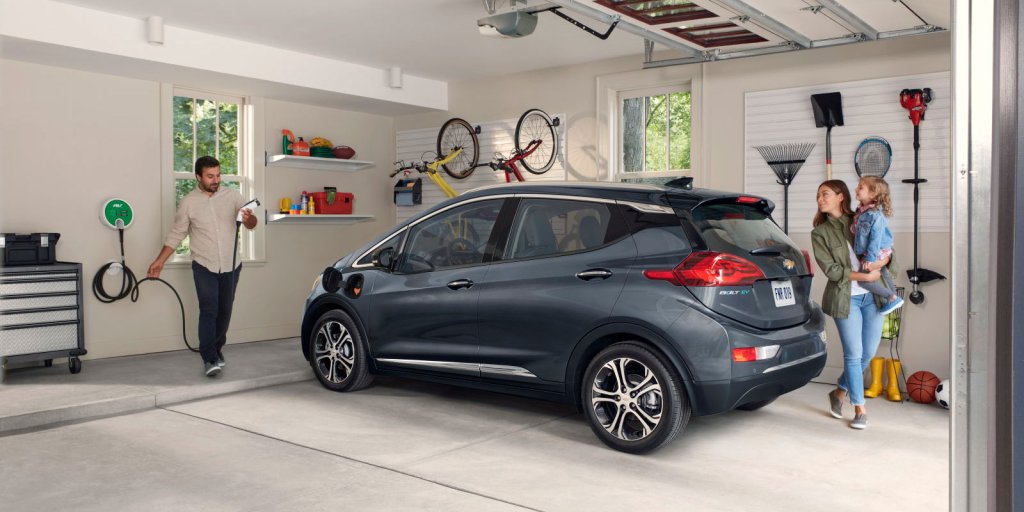
Building codes are a labyrinth of national, state, and municipal
rules. While California since 2015 has required new homes to have the
necessary conduit and service-panel capacity for EV-charging, guidelines
in the rest of the country are spotty. That could soon be fixed because
the International Code Council (ICC) – which provides widely adopted
best practices and standards for construction – approved putting
EV-readiness in its latest guidelines.
The new guidelines equate to a ready-made, consistent national
approach for EV-charging capabilities for new homes and apartment
buildings.
While all states follow the principles outlined by the ICC’s building
codes, the provisions are voluntary until incorporated into state or
local laws. Quartz reports that about half of US states are expected to adopt the ICC’s new EV-readiness requirements.
Forward-looking municipalities – notably Atlanta, Denver, Palo Alto,
and Seattle – already have EV-friendly construction codes in place.
Estimates for the cost of compliance for a newly constructed home vary widely from less than $100 to nearly $1,000.
A 2016 study
pegged the price in San Francisco to be $920 (for a building with 10
parking spaces). But that’s significantly less than adding charging
capabilities after the fact. The same research indicates that
retrofitting sites by expanding electrical panels and adding wiring,
could cost as much as $3,550.
The ICC explains, “The proposed code [now adopted] will allow current
and future EV-owners to avoid the cost of electrical equipment
upgrades, demolition, and permitting for future retrofits.â€
ELECTRIC VEHICLE SUPPLY EQUIPMENT (EVSE). The conductors, including
the ungrounded, grounded, and equipment grounding conductors, and the
Electric Vehicle connectors, attachment plugs, and all other fittings,
devices, power outlets, or apparatus installed specifically for the
purpose of transferring energy between the premises wiring and the
Electric Vehicle.
EV CAPABLE SPACE. Electrical panel capacity and space to support a
minimum 40-ampere, 208/240-volt branch circuit for each EV parking
space, and the installation of raceways, both underground and surface
mounted, to support the EVSE.
EV READY SPACE. A designated parking space which is provided with
one 40-ampere, 208/240-volt dedicated branch circuit for EVSE servicing
Electric Vehicles. The circuit shall terminate in a suitable termination
point such as a receptacle, junction box, or an EVSE, and be located in
close proximity to the proposed location of the EV parking spaces.
While builders will make sure that there’s access to a 240-volt
supply, it’s up to owners or tenants to buy and install the charging
equipment.
The ICC says there will need to be 9.6 million new EV charging ports by 2030, with nearly 80% located in single and multi-family residential buildings. As any EV driver knows, home is where the vast majority of electric-car charging takes place.
Posted by AGORACOM
at 9:18 AM on Wednesday, January 15th, 2020
Vancouver, British Columbia–(Newsfile Corp. – January 15, 2020) – Lomiko Metals Inc.
(TSXV: LMR) would like to cordially invite you to visit us at Booth
#1030 at the Vancouver Resource Investment Conference (VRIC) to be held
at the Vancouver Convention Centre West (1055 Canada Place, Vancouver)
on Sunday January 19 – Monday January 20, 2020.
The Vancouver Resource Investment Conference has been the bellwether
of the junior mining market for the last twenty-five years. It is the
number one source of information for investment trends and ideas,
covering all aspects of the natural resource industry.
Each year, the VRIC hosts over 60 keynote speakers, 350 exhibiting companies and 9000 investors.
Investment thought leaders and wealth influencers provide our
audiences with valuable insights. C-suite company executives covering
every corner of the mineral exploration sector as well as metals, oil
& gas, renewable energy, media and financial services companies are
available to speak one on one. This is a must-attend for investors and
stakeholders in the global mining industry.
Posted by AGORACOM
at 2:03 PM on Wednesday, January 8th, 2020
SPONSOR: Lomiko Metals is focused on the exploration and development
of minerals for the new green economy such as lithium and graphite.
Lomiko owns 80% of the high-grade La Loutre graphite Property , Lac Des
Iles Graphite Property and the 100% owned Quatre Milles Graphite
Property. Lomiko is uniquely poised to supply the growing EV battery
market. Click Here For More Information
Graphite Market to hit $27.03 Billion by 2025 – Analysis by Demand, Size, Share, Price, Growth Drivers and Business Opportunities: Adroit Market Research
The staggering
growth in hybrid and fully electric vehicles to be an influential
driving factor for the futuristic graphite industry expansion. Synthetic
graphite market is projected to account for a revenue share of >85%
of the total market in 2025
The global graphite market projected to be valued at around USD 27.03 billion by 2025. Furthermore, global graphite demand is anticipated to grow at a remarkable pace at a CAGR of 6.3% over the forecast period. Graphite finds numerous applications in refractories, steel making, foundries, as lubricating agent among many others. Presently, usage of graphite in car batteries for electric and hybrid electric vehicles is estimated to significantly boost the demand for graphite over the forecast period.
The Adroit Market Research recently published its research study on the graphite industry. The report covers all the major aspects of the graphite industry. The study is a comprehensive dataset which also includes qualitative aspects pertaining to the graphite industry. The market data is provided from 2015-2025 where 2015 to 2017 is the historic data, 2018 is considered as the base year and forecast period is from 2019 to 2025. The report provides a holistic view of the supply chain of the graphite industry which includes insights relevant to all the players in the graphite market value chain.
The research report on global graphite market is segmented on the basis of type, application, and region. The report includes the industry landscape in the form of market drivers, restraints and market opportunities. The study also highlights the impacts of related industries on graphite and analyses the market for various aspects using the Porter’s five forces analysis, PESTEL analysis and value chain.
Graphite is a naturally occurring allotropic form of carbon. It is a non-metal with several beneficial properties such as high melting point, thermal resistance, and high electrical and thermal conductivity. Also, graphite is available in adifferent form, owing to which it finds high usage across several industry verticals.
Graphite is either derived naturally or produced synthetically. Natural graphite mines are majorly found in China which is followed by Brazil and India. Flake, amorphous, and vein graphite are the major types of natural graphite forms which are commercially available at present. Flake graphite accounts for the highest demand in the global graphite industry with ~1.6x times growth expected further during the forecast period.
Synthetic graphite is produced by using several processes such as pyrolitic process and graphitization owing to which price of this type is much higher than natural graphite. Synthetic graphite is of high purity which is used in graphite electrodes, carbon fibers, and carbon blocks among other applications. Graphite electrode is projected to continue its dominance owing to the high degree of usage in steel making process.
By application, the batteries segment is projected to offer substantial growth owing to its applicability for new generation electric and hybrid electric vehicles. Constant technological innovations for making fully autonomous cars is projected to emerge as the biggest application which will drive the future demand for graphite. The battery segment is estimated to show a staggering growth with a 7.9% CAGR over the forecast period.
By region, Asia Pacific is estimated to continue its dominance owing to high demand from end use segments such as construction, automotive, and packaging industries. Increasing spending power is projected to further support the growth. North America and Europe are projected to show positive growth owing to high demand for hybrid and fully electric vehicles. Middle East is also projected to offer lucrative opportunities owing to high demand in the automotive industry.
The global graphite market is expected to be highly competitive, owing to a significant fragmentation in the industry. Large number of players are present across the value chain which are into manufacturing of synthetic graphite types. Boom in the natural graphite has also led to a growth in number of mining companies outside China. Showa Denko K.K., Toray Industries, Inc., Teijin Limited, Northern Graphite Corporation, Asbury Carbons are some of the key players in the graphite industry. Acquisition and capacity expansion are the key strategies followed by these players to maximize their presence in market.
For more information on the Company, please visit our website at www.lomiko.com, contact A. Paul Gill at 604-729-5312 or email: [email protected]
Posted by AGORACOM
at 1:14 PM on Monday, January 6th, 2020
SPONSOR: Lomiko Metals is focused on the exploration and development of minerals for the new green economy such as lithium and graphite. Lomiko owns 80% of the high-grade La Loutre graphite Property , Lac Des Iles Graphite Property and the 100% owned Quatre Milles Graphite Property. Lomiko is uniquely poised to supply the growing EV battery market. Click Here For More Information
Nissan will show its Ariya EV concept to the tech-oriented audience.
The former Consumer Electronics Show, now known simply as CES, lacks
the new-model cachet of a premiere world auto show. And automakers are
not yet using the Las Vegas electronics extravaganza to shine the
spotlight on their newest creations. But as the auto industry grapples
with technology-fueled disruption from electrification, autonomous
driving and upstart business models, CES is becoming the venue of choice
for brands to prove to consumers, and each other, that they are
embracing the future of mobility.
More than 160 automotive technology companies, including 10 major
automakers, will attend this year looking to forge partnerships and
recruit hard-to-find tech and engineering talent. Several top auto
industry executives will attend, including Daimler CEO Ola Kallenius,
Ford Chief Technology Officer Ken Washington and BMW r&d boss Klaus
Frohlich. U.S. Secretary of Transportation Elaine Chao will deliver a
keynote address on the state of innovation and DOT initiatives to
integrate new technologies into U.S. transportation systems.
Here’s a roundup of what automakers expect to show at CES.
BMW will tease an interior concept for its i3 EV.
The “BMW i3 Urban Suite,” said to have the “relaxed feel of a boutique
hotel,” features a large seat with footrest, a screen that flips down
from the headliner and a “personal Sound Zone.”
Fisker will debut the Ocean all-electric crossover,
powered by an 80-kWh lithium ion battery pack and with an expected range
of up to 300 miles. Production should begin at the end of 2021.
Ford will show its 2021 Mustang Mach-E crossover.
The highly anticipated mass-market EV, with a 300-mile range, is Ford’s
answer to Tesla, General Motors and others that beat it to the electric
market with long-range EVs.
GM will demo integration of Amazon’s Alexa Auto voice-controlled virtual assistant in a new Cadillac CT5.
Honda will showcase technologies being jointly
developed by its incubator Honda Xcelerator and startups focused on
improving workplace ergonomics and manufacturing efficiency. Honda will
demo exoskeleton devices and a voice-enabled, AI-powered personal
assistant developed with SoundHound. And it will show its “Smartphone as
Brain” technology, which allows motorists to safely use their phones
while on the road.
Hyundai will reveal details about a
flying vehicle concept and a “highly customizable” prototype car with
autonomous-driving capabilities. The automaker has said it plans to
evolve into a “smart mobility solution provider” by 2025 and will invest
more than $50 billion in electric and fuel cell cars, autonomous
driving, flying taxis and mobility services.
Mercedes will reveal a concept
vehicle it described as “envisioning a completely new form of
interaction between humans, technology and nature,” and show its EQ EVs.
Mercedes said it expects to introduce a fleet of 10 EVs by 2022,
starting with the EQC electric compact crossover set to arrive in the
U.S. in 2021.
Nissan will showcase its Ariya
electric crossover concept. A production version of the five-seater
could arrive in the U.S. in 2021. U.S. dealers briefed on the product
last summer said the new EV will have a 300-mile battery range and go
from 0 to 60 mph in less than 5 seconds.
Renault will demonstrate technology
that allows connected devices in the home to be controlled from a car
dashboard. The company also plans to show a battery-powered EV with a
hydrogen system that triples a zero-emission vehicle’s range.
Toyota will reveal details around its new mobility ecosystem and demo several concept vehicles.
Posted by AGORACOM
at 10:51 AM on Tuesday, December 31st, 2019
SPONSOR: Lomiko Metals is focused on the exploration and development of minerals for the new green economy such as lithium and graphite. Lomiko owns 80% of the high-grade La Loutre graphite Property , Lac Des Iles Graphite Property and the 100% owned Quatre Milles Graphite Property. Click Here For More Information
Volkswagen AG said Friday that its Volkswagen brand has raised the 2025 target for the production of electric cars.
The
German car maker is forecasting that it will have reached its brand
target of one million electric cars by the end of 2023, which is two
years earlier than planned.
The brand now expects 1.5 million electric cars to be produced in 2025, Volkswagen said.
Volkswagen group said earlier this year that it was ramping up its spending on electric and hybrid vehicles and digitalization, with about 33 billion euros ($3 )
Posted by AGORACOM
at 8:33 AM on Friday, December 20th, 2019
ZEN Graphene Solutions Ltd. (TSXV: ZEN) (“ZEN” or the “Company“)
has closed its previously announced private placement of flow-through
common shares of the company and reports that it was oversubscribed. The
company raised $1.21-million in respect of the offering, which will be
used to finance the 2020 environmental baseline field program and
community engagement work on the company’s Albany graphite project.
The offering consisted of the issuance of 3.025 million flow-through
common shares at a price of 40 cents per flow-through common share for
aggregate gross proceeds of $1.21 million. Finders’ fees in an aggregate
amount of $54,840 were paid by the company in connection to the
offering.
The flow-through common shares issued in connection with the offering
will be subject to a hold period until April 20, 2020, in accordance
with applicable securities laws.
Graphene Production and Graphene Oxide Research Update
The Company is moving forward with graphene production and
anticipates that small-scale graphene related production will commence
before the end of Q1 2020. The first batch of equipment for the
purification small-scale pilot plant was delivered this week. In the
coming months, ZEN is aiming to setup small-scale graphite purification
and graphene-related production facilities including Graphene Quantum
Dots (GQDs) and Graphene Oxide (GO). These products will be available
for research and development, application development and for commercial
use.
In addition, the Company reports that Prof. Aicheng Chen and his team
at the University of Guelph was recently awarded a $310,000, three-year
NSERC CRD grant to continue developing an environmentally friendly and
commercially scalable electrochemical process to produce GO and GQDs.
ZEN looks forward to continuing its strong collaborative relationship
with Prof. Chen and his team.
Graphene in Aluminum Products $450,000 Alliance Grant
The Company together with an industrial collaborator in the aluminum
business are jointly supporting a Natural Sciences and Engineering
Research Council (“NSERC”) Alliance grant application by Dr. Lukas
Bichler, a materials engineer from the University of British Columbia in
Okanagan. This application followed promising results earlier this year
where Dr. Bichler and his team used ZEN’s graphene products in aluminum
alloys. NSERC recently approved the $450,000, three-year Alliance
grant. ZEN looks forward to working with its aluminum industrial
collaborator and Dr. Bichler to create innovative aluminum products for
the automotive industry.
Environmental Baseline Program Update
The Company reports that in late November, the first full open water
field season for the environmental baseline program for the Albany
Project came to a successful close. All the program objectives were met
with a wide range of data collected over a period of eight months. The
collected data initiates the physical and biological characterization of
the site needed for project development planning and regulatory
permitting. ZEN is working closely with ERM Canada Ltd.’s (“ERM”) team
of scientists, biologists, and engineers. Members from the Constance
Lake First Nation (“CLFN”) were also important members of the field
teams providing local knowledge and supported the process of data
collection (click here
to see CLFN videos of the various field activities). ERM is leading the
desktop and fieldwork associated with this program on behalf of ZEN.
ERM is a leading global provider of environmental, health, safety,
social and sustainability consulting services with over three decades of
experience in the Canadian mining industry.
About ZEN Graphene Solutions Ltd.
ZEN is an emerging graphene technology solutions company with a focus
on the development of graphene-based nanomaterial products and
applications. The unique Albany Graphite Project provides the company
with a potential competitive advantage in the graphene market as
independent labs in Japan, UK, Israel, USA and Canada have independently
demonstrated that ZEN’s Albany Graphite/Naturally PureTM is an ideal
precursor material which easily converts (exfoliates) to graphene, using
a variety of mechanical, chemical and electrochemical methods.
Posted by AGORACOM
at 9:20 AM on Thursday, December 5th, 2019
Imerys and Lomiko Step Up Battery Materials Development As The Decade of the Electric Vehicle Revolution Begins
Lomiko Metals Inc. (TSX-V: LMR, OTC: LMRMF, FSE: DH8C)(Lomiko or the “Companyâ€) has
identified spherical graphite production as a key goal in plans to
supply graphite anodes for Electric Vehicles (EV) Li-ion battery
mega-factories in the North American market as highlighted in Lomiko’s
July 16th, 2019
release. Testing for spherical graphite is to be included in the
upcoming Lomiko Preliminary Economic Assessment (PEA) which is planned
for the La Loutre graphite project located in Quebec, Canada.
The development of a strategy that identifies a way to create
value-added products is necessary to establish a long-term, profitable
business model prior to extensive capital outlay and is crucial to the
success of the company. A large multinational conglomerate, Imerys
Carbon and Graphite has also been working on new developments in the
graphite space with innovative products for the EV Industry.
Imerys Graphite & Carbon has a strong history in the production
of high-quality natural and synthetic graphite powders, conductive
carbon blacks and water-based graphite dispersions with the parent
company posting €4.6 billion in revenue and approximately 17,000
employees worldwide.
“New developments in automotive and in the consumer electronics
markets are driving a need for improved performance of lithium-ion
batteries in diverse operating conditions. QX products [graphite
additive tradename] enable fast kinetics during charging and can
significantly improve the performance of active materials.â€
“We are at the beginning of the battery materials bull market with
100+ Lithium-ion, mega-factories built or scheduled to be built
worldwide,†said Lomiko’s CEO A. Paul Gill. “Lomiko sees a tremendous
opportunity in creating a stable and integrated North American value
supply chain for North American EV manufacturers. This opportunity
represents a significant increase of confidence to the Quebec
government, Lomiko, and other companies to see Imerys step into the EV
field despite being close to closing their twenty-year operation at the
Lac-des-ÃŽles facility.â€
Graphite Sector Analysis
The price for 95% C (purity), 15 microns Spherical Graphite is
$2,700-2,800 USD/tonne, far above the price of other forms of graphite
as indicated by the Industrial Minerals.
Lomiko’s Preliminary Economic Assessment (PEA) will include costs and
the potential market for this key product. In order to start the PEA,
Lomiko must first deliver its second resource prepared in compliance
with NI 43-101 Regulations from La Loutre.
On November 4, 2019, Imerys announced:
[Natural and synthetic graphite] subject to general inflationary
pressures and will, therefore, be subject to some price increases to
reflect those inflation effects.
On October 18, 2019,
A recently opened mine in Mozambique owned by Syrah Resources, which
primarily produces 94% C, -100 mesh material since 2017, significantly
reduced their workforce and cut production targets for 2020.
The production cut will likely curtail the supply of natural flake
graphite supporting a general conclusion that an uptrend in graphite
prices may be imminent after a multi-year low in demand and price.
For more information on Lomiko Metals, review the website at www.lomiko.com, contact A. Paul Gill at 604-729-5312 or email: [email protected].
On Behalf of the Board,
“A. Paul Gillâ€
Chief Executive Officer
We seek safe harbor. Neither TSX Venture Exchange nor its
Regulation Services Provider (as that term is defined in the policies of
the TSX Venture Exchange) accepts responsibility for the adequacy or
accuracy of this release