Posted by AGORACOM-JC
at 5:24 PM on Wednesday, May 1st, 2019
HPQ Silicon (HPQ:TSXV) has been quietly moving towards its major goal of becoming the world’s lowest cost and cleanest producer of solar grade silicon metal. That sounds like a pipedream … until you consider its two technical partners, PyroGenesis Canada (a global leader in plasma torch technologies) and Apollon Solar (one of the world’s leaders in renewable energies). These globally renown technology leaders aren’t going to lend their name to a project that isn’t capable of becoming world class. Moreover, PyroGenesis joined the Province of Quebec to invest $5.2 million into HPQ in mid-2018.
Together, they’ve created a process that converts quarts into high purity silicon metal, with the ultimate goal of producing their own solar cells …. and they are doing it at cost leves, both CAPEX and OPEX, that are set to blow the doors off the world’s incumbent players and could position HPQ as a serious player in the solar world. On top of that, they are all but evaporating the dirty dirty (not a typo) process of producing solar grade silicon metal that most regular people never knew about.
HPQ Silicon is about to commence pilot plant testing in mid-2019 but were able to achieve one more major milestone with their 2nd Generation testing machine. If you love discovering solar or renewable energy companies, watch this HPQ Interview and make sure to do your due diligence at https://agoracom.com/ir/HPQ-SiliconResources
Posted by AGORACOM-JC
at 9:25 AM on Thursday, January 24th, 2019
MONTREAL, Jan. 24, 2019 — HPQ Silicon Resources Inc. (HPQ) (TSX-V “HPQâ€) is pleased to provide investors this corporate overview of the milestones attained since our 2014 entry in the Quartz exploration business and our 2015 decision to become a vertically integrated producer of Solar Grade Silicon Metal through the development of the PUREVAP™ Quartz Reduction Reactor (QRR). Shareholders and prospective investors are encouraged to review the following information in its entirety to understand the progress made and plans being implemented to transform HPQ into the lowest cost and greenest producer of Solar Grade Silicon Metal, as we commence 2019 with the final assembly of the PUREVAP™ Pilot Plant, “Gen 3†and it’s mid 2019 start-up.
Mr. Bernard J. Tourillon, President and CEO of HPQ-Silicon provides
his responses in the following Q&A format. The questions, for the
most part, are derived from inquiries received from investors,
investment professionals and industry participants. A table summarizing
the Purevap™ milestones appears on page 2 of this summary:
Q. To start,could you please briefly describe the focus and objectives of HPQ going forward?
A. Most certainly. Following the successful closing
of our $ 5,250,000 Financing in August 2018 and the December 2018
completion of our Beauce Gold Field assets spinout, HPQ is now entirely
focused on becoming a vertically integrated producer of solar grade
silicon metal. In 2019, we intend to:
Use our 50 tpa (tonnes per year) Pilot Plant, developed by our
partners PyroGenesis Canada Inc. (“PyroGenesis†or “PYRâ€), to
demonstrate the commercial potential of the PUREVAPTM “Quartz Reduction Reactors†(QRR)
process (patent pending), and its ability to convert Quartz (Silicon
Dioxide or SiO2) into High Purity Silicon Metal of 99.9% to 99.99% Si,
(referred to as 3N and 4N, respectively) in just one step;
Use the material produced by the Pilot Plant to finalize the best metallurgical pathway (UMG) to upgrade “HPQ PUREVAP™ Siâ€
(Silicon Metal) to Solar Grade Silicon Metal (SoG Si), through
collaboration with PYR and Apollon Solar (“Apollonâ€), and in doing so
becoming the world’s leading Low Cost, Low Carbon Footprint producer of
SoG Si;
HPQ expects to confirm that PUREVAPTM and UMG processes will:
Reduce CAPEX to transform Quartz to SoG Si by between 60% (China) and 86% (“Rest of the World†or “ROWâ€) 1;
Reduce OPEX to transform Quartz to SoG Si by between 30% (China) and 60% (ROW)1;
Reduce the Carbon Footprint to transform Quartz to SoG Si by up to 96%2;
Investigate new opportunities for high value niche applications that need the High Purity Silicon Metal that our PUREVAPTM QRR produces in one step.
Q. Could you please briefly describe what started HPQ
interest in becoming a vertically Integrated Producer of Solar Grade
Silicon metal?
A. Well, the short answer is: “Necessity is the
Mother of Inventionâ€. The long answer is that in 2014 HPQ had a number
of gold properties that contained extensive quartz veins with which gold
is typically associated. Quartz (Silicon Dioxide or SiO2) is the key
ingredient required for making Silicon Metal (Si).
Silicon Metal (Si), is one of today’s key strategic metals, like
Lithium and Cobalt, that is needed to fulfil the renewable energy
revolution presently under way.
By early 2015, HPQ management came to the realization that in order
for HPQ to succeed in the Quartz business, HPQ needed to transform its
low value quartz resources into a higher value material, Silicon Metal,
and ultimately Solar Grade Silicon Metal (SoG Si), which is a higher
purity form of Silicon Metal that allows the transformation of the sun’s
energy into electricity in photovoltaic (PV) modules.
In short, we needed to find a pathway to become a vertically
integrated producer of Si, and preferably SoG Si. That is when we
discovered PyroGenesis.
Q. Ok, its one thing to say “HPQ wants to become a
vertically integrated producer of Solar Grade Silicon metal†but
implementing is another. Could you please describe what makes the HPQ
plan unique?
A. Certainly. From the start we knew that HPQ could
not afford the time or money required to assemble a world-class
technical team with Silicon Metal (Si) or Solar Grade Silicon Metal (SoG
Si) expertise. To reach our goal, our choices were either a)
collaborate with a university, knowing that it would take years just to
pass the proof of concept phase, or b) outsource our R&D with a
technological partner that possesses proven expertise with high
temperatures processes, and a track record of successfully taking new
concepts, from the lab to commercialization phase.
During 2015, HPQ concluded that to convert our Quartz into Si, and
possibly SoG Si, we needed to convince PyroGenesis Canada Inc
(“PyroGenesisâ€), with their vast expertise on high temperature plasma
base processes, to partner with us.
PyroGenesis has an impressive track record of successfully taking new
concepts from the lab to commercialization, including but not limited
to, the following:
The US Navy, developing the PAWDS™ technology from lab scale to
finally being specified in the design of the new US Aircraft Carriers,
Plasma atomization for 3D printing;
More recently with the deployment of their DROSRITE™ technology.
PyroGenesis expertise is of such high level that:
In addition to the US Navy, during the last 2 months, PyroGenesis
has concluded exclusive partnerships with two multi-billion
conglomerates to commercialize specific applications they have
developed, from lab to commercial scale, on a global basis.
In 2015, HPQ’s Board of Directors accepted a testing proposal from
PyroGenesis regarding laboratory scale, proof of concept, metallurgical
testing of the PUREVAPTM QRR. The proposed program was to
validate its capacity to produce high purity silicon metal from HPQ
quartz in just one step (September 30, 2015 release).
In June 2016, the first successful lab scale tests were completed and
by test #6, results confirmed the game changing potential of the PUREVAPTM QRR process.
HPQ immediately approached PyroGenesis regarding additional testing
and the development of a pathway to building a pilot plant that could
validate the commercial scalability of the process as quickly as
possible. As they say, the rest is history.
Q. What motivated HPQ to move so fast to validate the commercial scalability of the PUREVAPTM QRR process?
A. The decision was simple; the first bench test
showed all equipment and data analyzers worked. By test #6, not only
did the system operate as designed, but also the PUREVAPTM QRR
process was already reaching its first major milestones, the ability to
transform quartz into high purity Silicon Metal (Si) exceeding 99.9+% Si
“3N†(June 29, 2016 release).
HPQ and PyroGenesis came to an agreement whereby HPQ would invest
100% of project costs for 90% of the revenues to be generated by
PUREVAPTM QRR and, with that, HPQ obtained the participation of a world
class technical team to work on our project of becoming a vertically
Integrated producer of Solar Grade Silicon Metal (SoG Si).
Fundamentally, the agreement allows both Parties to reap the rewards of
the new process to make High Purity Silicon Metal (Si) and eventually
SoG Si using HPQ Quartz and the PyroGenesis PUREVAPTM QRR.
On August 2, 2016, PyroGenesis and HPQ announced the terms under which HPQ would invest the funds and own the PUREVAPTM QRR’s
Intellectual Property3 (August 2, 2016 release), with PyroGenesis
taking responsibility for the bench testing, process design,
fabrication, assembly, and cold commissioning of the Pilot Plant.
Q. In your press releases you refer to Gen 1 and Gen 2 can you please describe Gen 1 and the testing milestones?
A. As we outlined above, the project started in 2015
with PyroGenesis’ technical team designing and building a laboratory
scale proof of concept PUREVAPTM QRR, the Gen1 reactor.
The Gen1 PUREVAPTM QRR laboratory scale equipment completed
15 tests between March 29th and July 22th 2016 under the scope of the
“Phase 1 – Proof of Concept Metallurgical Tests Programâ€. These tests
confirmed that the PUREVAP™ QRR concept of combining different
known steps into a one step process works at lab scale. With this
milestone achieved, we then agreed to expand our collaboration to go all
the way to Pilot Plant.
In September 2016, while initial Pilot Plant design was underway, HPQ
also ordered a new series of lab scale R&D tests using the Gen1 PUREVAPTM QRR
to provide invaluable input toward the design of the pilot plant, as
well as, determine the most efficient way of scaling up the PUREVAPTM QRR process to commercial scale production.
In November 2016, another key milestones was reached as Gen1 testing
results demonstrated that the PUREVAP™ QRR was capable of using SiO2
feed material below minimum industry specifications to produce Silicon
Metal (Si) of greater purity than what could be achieved by traditional,
status quo processes used to make Metallurgical Grade (98.5% to 99.5% Si) Silicon Metal4 today.
By the end of January 2017, in tests using a modified and expanded
Gen1 PUREVAP™ QRR reactor, the yield increased from less than 0.1 g to
8.8 g (test #32), an increase of approximately 9,000% (roughly one
hundred-fold), thereby confirming the potential scalability of the
process.
Ongoing work to the end of Q2 2017 validated our systematic and
methodical approach to the project and allowed PyroGenesis to advance
the detailed engineering and design of the pilot plant.
By the end of Q2 2017, it was clear that the Gen1 PUREVAP™ QRR had
reached its maximum usefulness so the decision was made to build a Gen2
PUREVAP™ QRR, pushing the design envelope of the lab scale system to a
point that will allow it to be operated in a semi-batch mode to increase
Silicon Metal (Si) yields. This would provide further insight into
process improvements needed for the Pilot Plant, thereby saving millions
of dollars in future development work.
Q. Now during 2017 you announced an agreement with
Apollon Solar, can you diverge a bit and tell us how that came about,
and the impact?
A. In 2017, we attracted the attention of Apollon
Solar SAS, (“Apollonâ€). This is significant because Apollon is a private
French company with longstanding expertise in Silicon Purification and
Crystallisation, Solar Silicon, Photovoltaic Cells and Photovoltaic
Modules. The team at Apollon has become one of the world leaders in the
development of processes to refine Solar Grade Silicon Metal “SoG Si
UMGâ€. They achieved, an independently confirmed, world record
conversion efficiency of 21.1% with a monocrystalline ingot, for a solar
cell made with 100% “SoG Si UMGâ€.
Apollon first completed a technological audit of the Gen1 PUREVAP™
QRR results to evaluate the potential of the innovative PUREVAP™ QRR
process. They concluded that successful commercial scaling-up of the
PUREVAP™ process could lead to the production of solar quality silicon
at a significantly lower cost compared to those of competing process
technologies (examples include Siemens chemical process, Elkem Solar,
Silicor Materials, etc.).
As a result, in December 2017, HPQ and Apollon announced the signing
of a consultancy agreement whereby Apollon agreed to transfer knowledge
it has acquired in solar silicon over the last 20 years for the benefit
of HPQ and PyroGenesis.
Q. That’s all very exciting, now can you discuss Gen 2 and the commercial scalability of the PUREVAPTM QRR process?
A. The Gen2 PUREVAP™ QRR incorporates important
process modifications identified during Gen1 testing and is designed to
be a scale replica of the planned larger pilot plant (Gen3 PUREVAP™
QRR). In Q2 of 2017 we set about constructing the newly redesigned
reactor while awaiting the final report from the Gen1 work. In Q4, as
Gen2 was being finalized, HPQ received a final report on the Gen1
PUREVAP™ QRR testing and we learned that:
The highest silicon tested for bulk purity was produced in test #75 and measured 99.92% Silicon Metal (Si)5.
Si yield could be increased by increasing production yield, which had been constrained around an average of about 3% in Gen1.
Theoretical calculations indicated that purity of the Si produced
under various conditions could range from 3N (99.984 % Si) to 4N (99.996
% Si) with the addition of volatilization agents for low purity
feedstock, to over 4N (99.998 % Si) when using high purity feedstock5.
These results were incorporated into Gen2 and, by November 2017, the
Gen2 PUREVAP™ QRR was operational, allowing the de-facto start of the
pilot plant testing and commissioning, thereby reducing the risk profile
of the project and allowing additional process modifications and
further proof of commercial scalability work to be done in parallel with
major plant fabrication, to keep advancing work.
JANUARY 2018
PyroGenesis confirmed that the Gen2 PUREVAP™ QRR was operating as
designed and yielding results that were in line with expectations. By
this time, we had also arranged monthly meetings with Apollon and
PyroGenesis to benefit from the backend expertise of Apollon in our
ongoing test work as we continued to plan for the Gen3 Pilot Plant
design.
Gen2 PUREVAP™ demonstrated it could be operate and perform under the
conditions demanded for optimum operational parameters to produce the
purities required in one step. Again, this was another major milestone
because, to our knowledge, there is no other process that does this in
the world.
With the main design and equipment performance characteristics reached, significantly increasing the Yield6 and the Production Yield7 of the Gen2 PUREVAP™ became the next key objectives in contributing to final purity.
FEBRUARY 2018
By mid February 2018, the Gen2 PUREVAP™ was proving to be an
invaluable bench test platform and the results were used to scale back
on the size of the planned Pilot Plant from 200 tonnes per year to 50
tonnes per year. This had a massive benefit on our planned costs,
timing, and on locating the Pilot Plant test site – right inside the
PyroGenesis testing facility, another huge cost saver.
By the end of February 2018, the Gen2 reactor was operating within
the 90th percentile of its achievable production yield. By mid April
2018, as a direct result of continuous process improvements done by
PyroGenesis, Gen2 PUREVAP™ test #14 attained Yield and Production Yield
numbers that surpassed theoretical expectations. The total mass of
Silicon Metal (Si) produced (yield) during test 14 was 101.45 gr; and
conversion of material, referred to as Production Yield, of 34.3%, the
highest to date.
APRIL 2018
PyroGenesis completed a scheduled audit of the Gen2 PUREVAP™
equipment for wear and tear following test#14. The audit was needed to
help identify critical operational parameters for the PUREVAP™ Pilot
Plant and allowed the evaluation of additional design modifications that
could be implemented for further tests using the Gen2 PUREVAP™.
JULY 2018
By the end of July 2018, the Gen2 PUREVAP™ equipment had been
refurbished, re-assembled and modified to incorporate the latest design
modifications and was ready to start a new series of at least 8
additional tests focused on:
Continuing to optimize conditions for the Gen2 PUREVAP™ and the planned Gen3 PUREVAP™ Pilot Plant operation;
Increasing the Yield and the Production Yield;
Testing the Purity range of the Silicon Metal (Si) from low purity
feed stock (98.84% SiO2) and ultra high purity feed stock (> 99.9%
SiO2), analyzed using ICP-OES8;
Q. It sounds like Gen2 is giving great results and
contributing to the Pilot Plant final parameters. You mentioned CO2
(“Greenhouse Gas†or “GHGâ€) reductions as another positive feature of
the PUREVAP™ process can you elaborate on that?
A. Yes we are very excited about this aspect of the project. First, readers must understand that: “It’s
not because photovoltaic solar panels do not emit CO2 (GHG) while
producing electricity that solar energy is not a significant source of
GHGâ€.9 In fact solar power has its greenhouse gas issues that lurk
behind the scenes. Seventy percent (70%) of the GHG generated when
building a new solar farm10 comes from the production of the Solar Grade
Silicon Metal (SoG Si) needed for the fabrication of the solar panels.
Manufacturing SoG Si in China, the world’s largest producer,
generates an astounding 141 kg of CO2 per kg of SoG Si produced. In
Germany that ratio is reduced to 87.7 kg CO2 per kg of SoG Si produced.
What we see is that solar power is not that panacea of low carbon if one
looks at the entire process from start to finish.
96% REDUCTION IN CARBON FOOTPRINT – OPPORTUNITY TO RESOLVE SOLAR PARADOX
In August 2018, PyroGenesis prepared a report11 that found that the
PUREVAPtm QRR process operated in Quebec should only produce 5.4 kg CO2
per kg of SoG Si produced, a 96% reduction in the carbon footprint
compared to existing processes. This is why we are so excited about this
“green†opportunity revolutionizing the solar energy industry.
Q. Technically it sounds like great progress is being made, how is HPQ set financially today?
Thanks to these new financings HPQ, in collaboration with its
technical partners, will now be able to dedicate its efforts and
energies toward the fulfilment of the ambitious commercial validation of
the PUREVAPtmQRR process and the production of Solar Grade Silicon Metal (SoG Si) at the Pilot Plant level.
Q. Sounds like you have the financing under control. You
mentioned at the onset that HPQ and partners are targeting a Pilot
Plant, with bench test work well in hand and financing complete, can you
give a status update of the Pilot Plant that you are now referring to
as Gen3?
As of the date of this corporate update, the Gen2 PUREVAP™
equipment is still being used by PyroGenesis to test different
operational conditions in order to gain more information about future
Gen3 PUREVAP™ operation and testing is also ongoing to find new ways of increasing the Yield and the Production Yield of the Gen2 PUREVAP™.
Finally, a new progress report on the test results completed in 2018 with the Gen2 Purevap should be ready soon.
Q. How transferable are the results obtained from Gen2 to the pilot plant?
A. We believe they are very transferable. In fact,
we expect the results to be even better at larger scale. By increasing
the scale, we are increasing the production rate. As you can imagine, we
are already extremely excited about the results we have had with Gen2,
and at a larger scale, the production rate is automatically higher
which, as we have already proven with Gen1, should lead to a higher
conversion yield and better purity.
Q. HPQ has started talking about using a metallurgical process to transform the Si produced via the PUREVAPTM QRR to produce SoG Si. Is this just a semantic change or is HPQ changing its objectives?
A. It is more semantic than anything else; the
project is advancing towards meeting our stated objectives when we
started it in 2015:
“The “PUREVAP ™ Quartz Reduction Reactor is a proprietary process
that uses a plasma arc within a vacuum furnace. This unique technology
should allow HPQ (Uragold then) to convert its (…) Quartz Projects into
the highest purity, lowest cost supplier of Solar Grade Silicon Metal
(…) to the solar industry.
But this may be a good opportunity to explain in detail what makes the PUREVAPtm QRR such a game changing technology and why we have started to refer to it as a “Second Generation (2.0) Carbothermic processâ€.
Presently, using the status quo to produce Solar Grade Silicon Metal
(SoG Si), you first need to transform Quartz (Silicon Dioxide or SiO2)
into Metallurgical Grade Silicon Metal (MG Si) and then the MG Si needs
to be further purified produce SoG Si.
PRESENT LEGACY CARBOTHERMIC PROCESS
The first step in making SoG Si involves mixing Pure Quartz (99.5%+
SiO2), Low Ash Carbon and Wood Chips and heating the mixture to very
high temperatures in an electric arc furnace to create the Carbothermic
process required to reduce the SiO2 to Metallurgical Grade Silicon Metal
(MG Si).
The traditional smelter process to make MG Si requires six (6) tonnes
of raw material to produce one (1) Tonne of Silicon Metal (Si).
By its design, the impurities contained in the raw material end up
being concentrated in the final product, that is why traditional
smelters need (99.5%+ SiO2) to produce 98.0% Si.
The maximum purity that can be attained in traditional smelters is
around the 99.5% Si threshold, but that requires additional post
treatments. On average these postproduction processes can increase the
purity of the MG Si by a factor ranging from ½ N to 1 N.
For Silicon Metal (Si) to be used in the Solar and High Tech
Industries, higher purity levels than what can be attained by standard
carbothermic reduction are required. Presently, less then twenty
percent (20%) of MG SI produced by smelter meets the demanding feedstock
purity specs required for the different additional purifications steps.
CHEMICAL DISTILLATIONS PROCESS (Siemens)
Chemical distillations process (Siemens process) to purify MG Si to
purity required for Solar Grade applications or electronic applications
has become the gold standard, with over 95% of the world SoG Si produced
through chemical distillations, even with it negative environmental
footprint.
Producing SoG Si (Polysilicon) via chemical distillations requires
between 72,000 KWh/T up to 120,000 kWh/t and as the term clearly
indicates chemical distillation implies that further refinement involves
the use of harsh chemicals like hydrochloric acid, and the final
products include liquid silicon tetrachloride and polysilicon. Each ton
of polysilicon is manufactured at the cost of three to four tons of
these hazardous by-products. When silicon tetrachloride is exposed to
water it releases hydrochloric acid, which causes acidification of soil
as well as the emission of toxic fumes.12
For many years, companies have been searching and investing funds
looking for a metallurgical alternative to Chemical distillations
process to transform MG Si into SoG Si.
Two groups, Elkem and Ferroglobe have been able to demonstrate, at
commercial scale, the technical viability of using metallurgical process
to further purify what is essentially 2N MG Si (99.0% Si) into a 5N+
SoG Si (UMG) that can be used to produce solar cells that deliver
efficiencies and yield ratios which compare very favourably with
photovoltaic industry benchmarks.13
The main advantage of a metallurgical process is the low operational
cost, (for each individual step and total) combined with lower energy
consumption for producing the UMG SoG Si (35,000 kWh/t versus a minimum
of 72,000 KWh/t).
The biggest drawback of this process and the reason why, until now,
it has not become the industry standard is that the CAPEX cost
associated with every operational step (Slag Treatment, Leaching,
Solidification and Post Treatment) are high, due to size and capacity
needed to purify what is essentially 2N MG Si (99.0% Si) into a 5N+ SoG
Si (UMG).
The fact that the operational cost saving are marginal on relative
term while the CAPEX (Cost per kg of annual capacity matrix) associated
with a complete metallurgical process to make UMG SoG Si is equivalent
to the CAPEX (Cost per kg of annual capacity matrix) of building a
chemical distillation process (Siemens) plant, is the only reason why
metallurgical processes to make UMG SoG Si have not become mainstream in
the industry.
Q. Now that is all very interesting, but if big companies
like Elkem and Ferroglobe have not been able to make metallurgical
processes work, why should we believe that HPQ with it’s PUREVAPTM QRR can?
A. It really comes down to big corporate culture.
Our approach to the problem is disruptive; we are not looking at
tweaking existing process to transform Quartz (Silicon Dioxide or SiO2)
to Metallurgical Grade Silicon Metal (MG Si) or developing a new process
that will be more efficient at removing the impurities from MG Si to
produce Solar Grade Silicon Metal (SoG Si). We are looking for a new
pathway of reducing Quartz (Silicon Dioxide or SiO2) to Solar Grade
Silicon Metal (SoG Si) by developing the PUREVAP™ QRR a “Second Generation (2.0) Carbothermic processâ€.
Imagine a young engineer walking into a meeting and telling his
bosses that the billions of dollars invested in the technology assets of
the company should be scrapped for a brand new concept. Those bosses
grew up, as it were, on the existing technology. There is no way that
is going to happen, so big corporations spend all their effort tweaking
the existing process.
It takes an upstart that is unencumbered with this corporate culture
to bring about change. Examples include Microsoft with IBM, Tesla and
GM, as simple examples of this concept.
This is what we are working on accomplishing and we believe that the PUREVAPtm QRR is that game changing disruptive technology for Solar Grade Silicon Metal.
Q. Ok, its one thing to say: the PUREVAPTM QRR is a game changing disruptive technology, but why and more important when will HPQ be in a position to demonstratethat the project is truly advancing toward that tipping point?
A. We, HPQ and technical partners PyroGenesis and Apollon Solar, have identified the following reasons why the PUREVAPtm QRR process will become the game-changing technology that could revolutionize the solar energy industry:
Using metallurgical process to purify 2N MG Si (99.0% Si) into a 5N+ SoG Si (UMG) is technically feasible;
The costs (CAPEX and OPEX) of removing, with metallurgical
processes, multiple N of impurities from MG Si to produce 5N+ SoG Si
(UMG) are prohibitive and make these process not financially feasible at
present;
Increasing by one (1) or better yet two (2) N the purity of the
Silicon Metal (Si) produced during the carbothermic phase of converting
Quartz (Silicon Dioxide or SiO2) to Si, for the same (CAPEX and OPEX)
costs as traditional smelters incur to produce 2N MG Si (99.0% Si),
should generate significant reductions of (CAPEX and OPEX) costs to make
UMG SoG Si;
This is what our Gen1 PUREVAPtm QRR results indicated should happen at commercial scale, and that is what the Gen3 PUREVAPtm QRR was built to demonstrate at commercial scale.
So, during 2019, as the Gen3 PUREVAPtm QRR pilot plant
confirms the key working hypothesis of the November 2017 Gen1 based
theoretical calculations is working at commercial scale, is when we expect to start receiving inquires from players in Silicon Metal and Solar Grade Silicon Metal industries.
If we can demonstrate a capacity to produce, in one step, a Silicon
Metal (Si) with a purity that range from 3N+ to 4N+ from low purity
Quartz (Silicon Dioxide or SiO2) feedstock, interest may also come from
Solar players, since we would be starting to validate our claim that our
PUREVAPtm QRR and UMG process will be the cheapest and greenest way to produce SoG SI in the world.
This does not mean that they are not looking at what we are doing,
“au contraireâ€â€¦ But presently, we are attracting mostly interest from
industry participants that have invested significant funds developing
Quartz resources looking for ways of increasing the economic model of
their projects.
Finally, shareholders and prospective investors would be wrong to
assume that nothing will happen until then. As stated above, the Gen2
PUREVAP™ equipment is still being used to test different operational
conditions in order to gain more information about future Gen3 PUREVAP™
operations and testing, to find new ways of increasing the Yield and the
Production Yield of the Gen2 PUREVAP™.
A new progress report on the test results completed in 2018 with the Gen2 Purevap should be ready soon.
Q. With Solar Energy Prices now at Parity with Natural Gas and Coal, is there still a need for a new process like thePUREVAPTM (QRR)?
A. Yes, actually more than ever, as the size and
speed of future investment in renewables energy is dependent on an
ever-declining cost per watt model going forward, while the GHG concerns
are becoming more challenging to governments and industry.
Over the last 40 years, solar energy innovations, financed mostly by
government incentives, have allowed solar energy prices to reach parity
with most fossil fuels today14. While this type of approach has
generated phenomenal success regarding the cost per watt matrix, this
approach is also responsible for phenomenal long term and short term
market dislocation.
One of the most important dislocations is related to the costs (CAPEX
and OPEX) of making Solar Grade Silicon Metal (SoG Si). Process
improvements for making SoG Si have plateaued while returns for
producing SoG Si are vanishing for investors, making financing of new
high purity silicon capacity using old processes to turn MG Si into SoG
Si difficult. HPQ solves this problem.
As figures 5 and 6 demonstrates, without new processes (like the
PUREVAPTM QRR) that can bring about a new leg down in the cost (CAPEX
and OPEX) of making SoG Si, this situation will either lead to
production bottlenecks and potential shortage of SoG Si to meet demand.
As with all commodities, this will result in a surge in the price of
silicon, causing an unexpected increase in the price of solar energy.
CAPEX reduction as it pertains to the cost of making SoG Si have
plateaued around the US $35 Cost per Kg of annual Capacity in China and
US$ 50 Cost per Kg of annual Capacity in the Rest of the World.
Figure 5 clearly demonstrates the disruptive Capex potential (US$) of the PUREVAPTM QRR process.
Figure 6 for its part demonstrates that, even in 2018, the cost curve
for SoG SI suggests that reductions in the OPEX costs had now plateaued
and that a longâ€term SoG Si price below USD 14/Kg is simply not
feasible. It is clear that to break this plateau, new processes like
the PUREVAPTM QRR will need to reach commercial viability.
Q. According to a specialized publication15, Solar Grade Silicon Metal (SoG Si) consumption should decline to 3g/W by 2022, from 4g/W in 2018, how will this new reality affect HPQ Business Model?
A. My answer may sound counter intuitive, but HPQ sees this as a
positive factor for our PUREVAPTM QRR + UMG project going forward. The
effect of the decline will negatively impact mainly the highest cost
producer, but a new process that can cut CAPEX and OPEX costs as much as
our PUREVAPTM QRR + UMG project appears to be on the threshold of
doing, will definitively benefit the entire industry and future
consumers, possibly leading to the breakout needed to catapult solar
energy ahead of carbon based energy for future generations.
What is important to realize is that demand for SoG Si is a
combination of demand for each new GW of solar energy for the consumer
and the SoG Si consumption needed to produce that new GW.
What is also shown in Figure 6 is the demand need for increased
amounts of SoG Si required to meet the demand growth for solar energy:
2018 was projected at 97 GW @ 4.0 g per W; ≈ 388,000 MT of SoG Si demand;
2019 was projected at 113 GW @ 3.7 g per W; ≈ 418,000 MT of SoG Si demand;
2020 was projected at 129 GW @ 3.5 g per W; ≈ 451,000 MT of SoG Si demand.
Future demand projections for solar energy is such that even at 3.5 g
thresholds, demand for SoG Si in 2020 should exceed the 451,000 MT
mark, and that can be directly related to the fact that Solar Energy
demand grows from its present two percent (2%) market share of the
global electricity generation capacity to the ten percent (10%)
threshold anticipated by 203016.
This translates into a demand in US$ for SoG Si that will grow from US$ 7.1 B in 2018 to over the US$ 11.8 B mark by 202817.
Q. An often-asked question is, how comfortable are you with the patent application?
A. The short answer is: very comfortable. PyroGenesis is leading the
patent application, which is progressing as expected. Given PyroGenesis
vast experience in obtaining patents and their $1,950,000 investment in
HPQ at a premium in August, this question should be put to rest once
and for all.
Q. Some investors/shareholders are skeptical about the whole process. Do you have any comments?
A. Well, they should meet the engineers! Now there is a skeptical
bunch and that is natural with any new process as groundbreaking as
this. Every step of the way has brought its share of challenges but has
also brought about many more positive surprises and developments. This
is the immense competitive advantage HPQ has as a result of bringing
together the engineering brainpower of PyroGenesis and Apollon Solar.
Seriously, we are talking about a process that potentially could be game
changing by several magnitudes. Who wouldn’t be skeptical? You would
have to be a fool not to be. Adding to this is the fact that the
results to date are beyond our expectations, which, in a weird way,
fuels the “too good to be true†skepticism, no? On the other hand, how
many chances do you get to invest into such potential, at 6 cents a
share and market cap of CAD$13 million, when our strategic partner and
the Government have invested CAD$5,250,00 at a Company valuation of
CAD$26 million? Food for thought!
Q. What about the quartz properties? The last we heard about
quartz exploration was in Q4 2017 when you announced a drilling
campaign on the Ronceveaux?
A. We are still fully invested in our 100% owned Martinville and
Ronceveaux quartz properties. However we decided to hold off on quartz
exploration to allocate exploration funds for geophysics and geology
work on the Beauce Gold property.
Now that the spin-off of Beauce Gold Fields is done, we intend to go
back to Martinville and Ronceveaux properties to bulk sample quartz as
test feed for the Gen3 PUREVAP reactor. For the next twelve (12) to
twenty-four (24) mounts our need in Quartz as feedstock is limited to
about 150 MT for 2019-2020.
Q. Ok so you have talk a lot about your plans for the solar
market but in your first answer you mentioned silicon for batteries,
what is that about?
A. From phones to electric cars, batteries play important role for
just about everyone on earth, and Si usage in the batteries space is
increasing. The most promising new type of battery being developed
presently is Lithium Silicon Anode Batteries (Li-Si
Batteries). Researchers have found that by replacing the graphite with
silicon in a standard lithium battery, your drastically improve
performance. Anyone who owns a mobile phone or for that matter, an
electric car, wishes that the battery would charge faster and last
longer.
For everybody involved in this project it has given an appreciation
of silicon metal, and some surprises have included opportunities that
may have an impact on the lithium ion battery industry. We will not
retire the Gen2 reactor as we did Gen1 but we will use it to pursue some
of the interesting ‘accidental outcomes’ from our efforts to develop a
new pathway to make clean energy cleaner and more cost efficient.
Q. Conclusion?
A. There is no other way to say it, our belief that PUREVAP™ process
is going to become a game-changing event that has the potential to
revolutionize the solar energy industry has not waned one bit since we
made our first bold statements in 2015. The project is advancing, the
success we have attained in less than 3 years is spectacular and the
de-risking that has occurred with every successful phase is significant.
In short, all three partners are happy with the progress to date and
stand firmly behind the project. We are more convinced than ever that
we will be successful in having a commercially viable process at the end
of the 2019. Investors need to remember that we are just at the start
of this process and that we have more exciting developments moving
forward then what we have already accomplished to this point. The future
of HPQ is very bright – no pun intended.
This News Release is available on the company’s CEO Verified Discussion Forum, a moderated social media platform that enables civilized discussion and Q&A between Management and Shareholders.
About HPQ Silicon
HPQ Silicon Resources Inc. is a TSX-V listed resource company
planning to become a vertically integrated and diversified High Purity,
Solar Grade Silicon Metal (SoG Si) producer and a manufacturer of multi
and monocrystalline solar cells of the P and N types, required for
production of high performance photovoltaic conversion.
HPQ’s goal is to develop, in collaboration with industry leaders,
PyroGenesis (TSX-V: PYR) and Apollon Solar, that are experts in their
fields of interest, the innovative PUREVAPTM “Quartz Reduction Reactors
(QRR)â€, a truly 2.0 Carbothermic process (patent pending), which will
permit the transformation and purification of quartz (SiO2) into high
purity silicon metal (Si) in one step and reduce by a factor of at least
two-thirds (2/3) the costs associated with the transformation of quartz
(SiO2) into SoG Si. The pilot plant equipment that will validate the
commercial potential of the process is on schedule to start mid-2019.
Disclaimers:
This press release contains certain forward-looking statements,
including, without limitation, statements containing the words “may”,
“plan”, “will”, “estimate”, “continue”, “anticipate”, “intend”,
“expect”, “in the process” and other similar expressions which
constitute “forward-looking information” within the meaning of
applicable securities laws. Forward-looking statements reflect the
Company’s current expectation and assumptions, and are subject to a
number of risks and uncertainties that could cause actual results to
differ materially from those anticipated. These forward-looking
statements involve risks and uncertainties including, but not limited
to, our expectations regarding the acceptance of our products by the
market, our strategy to develop new products and enhance the
capabilities of existing products, our strategy with respect to research
and development, the impact of competitive products and pricing, new
product development, and uncertainties related to the regulatory
approval process. Such statements reflect the current views of the
Company with respect to future events and are subject to certain risks
and uncertainties and other risks detailed from time-to-time in the
Company’s on-going filings with the securities regulatory authorities,
which filings can be found at www.sedar.com. Actual results, events, and
performance may differ materially. Readers are cautioned not to place
undue reliance on these forward-looking statements. The Company
undertakes no obligation to publicly update or revise any
forward-looking statements either as a result of new information, future
events or otherwise, except as required by applicable securities laws.
Neither the TSX Venture Exchange nor its Regulation Services
Provider (as that term is defined in the policies of the TSX Venture
Exchange) accepts responsibility for the adequacy or accuracy of this
release.
For further information contact
Bernard J. Tourillon, Chairman and CEO Tel (514) 907-1011 Patrick Levasseur, President and COO Tel: (514) 262-9239 www.HPQSilicon.com
Shares outstanding: 222,284,053
1 PyroGenesis Budgetary cost number for a 2,5K TPA Purevap, Apollon Rough Order of Magnitude Costing for a 2,5K UMG process 2 PyroGenesis Canada Inc. Technical Memo: “TM-2016-707 REV 01, (July 2018),- Purevap system – Carbon Footprint study 3
PyroGenesis retains a royalty-free, exclusive, irrevocable worldwide
license to use the process for purposes other than the production of
silicon metal from quartz. Should PyroGenesis develop any other such
application, HPQ Silicon shall have a right of first refusal in the
event of any sale or otherwise disposal. 4 http://pyrometallurgy.co.za/Pyro2011/Papers/083-Xakalashe.pdf5 PyroGenesis Canada Inc. Technical Memo: “TM-2017-830 REV 00, – Final Report-Silicon Metal Purity Enhancement 6 Total mass of Si produced during one test 7 Production Yield is the conversion efficiency of Quartz into Silicon Metal of the process 8 Inductive coupled plasma optical emission spectrometry 9 https://www.economist.com/news/science-and-technology/21711301-new-paper-may-have-answer-how-clean-solar-power10 Assessing the lifecycle greenhouse gas emissions from solar PV and wind energy: A critical meta-survey, Energy Policy , February 2014, Pages 229-244 11 PyroGenesis report – Silicon SoG Carbon Footprint TM-2016-708, revision #2 12 https://www.azocleantech.com/article.aspx?ArticleID=831 13 Ferroglobe PLC, Aug. 14, 2018 release. 14 http://news.mit.edu/2018/explaining-dropping-solar-cost-1120 15 https://www.pv-tech.org/editors-blog/china-531-to-accelerate-demise-of-multi-polysilicon-consumption-decline-to 16 (Canadian Solar latest investor presentation) 17
(Deutsche Bank, Future Market Insights report titled, “Polysilicon
Market: Global Industry Analysis 2013-2017 and Opportunity Assessment
2018-2028”)
Figure 1 – Quartz to MG Si process
Figure 1 – Quartz to MG Si process
Figure 2 – Chemical Process (Mg SI to SoG)
Figure 2 – Chemical Process (Mg SI to SoG)
Figure 3 Metallurgical Process (MG si to SoG Si)
Figure 3 Metallurgical Process (MG si to SoG Si)
Figure 4 PUREVAP
Figure 4 PUREVAP
Figure 5 CAPEX analysis (US$ Cost per Kg of annual Capacity)
Figure 5 CAPEX analysis (US$ Cost per Kg of annual Capacity)
Posted by AGORACOM-JC
at 2:47 PM on Thursday, November 8th, 2018
Management wishes to confirm that the Company’s management is unaware of any material change in the Company’s operations that would account for this activity
Management knows of no reason that would give rise to such unusual trading and has no significant information to disclose which could lead to such activity
MONTREAL, Nov. 08, 2018 — HPQ Silicon Resources Inc (“HPQâ€) (TSX Venture:HPQ)  (FRANKFURT:UGE) (OTC PINK:URAGF) announces that it has observed significant and unusual trading in its common stock in recent days.  Management wishes to confirm that the Company’s management is unaware of any material change in the Company’s operations that would account for this activity. Management knows of no reason that would give rise to such unusual trading and has no significant information to disclose which could lead to such activity.
“We wish to reassure all of our stakeholders, and market participants, that the fundamentals of HPQ, in terms of activities previously reported on, as well as the progress being made thereon, are not only sound but are moving forward as expected†said Bernard Tourillon, President and CEO of HPQ Silicon. “As such, we wish to provide the following Company snapshot.â€
PUREVAP Gen2:
Yield testing phase completed
Awaiting final analysis results and report
Additional testing before Gen3 is operational mid-2019 possible
PUREVAP Gen3 Pilot Plant:
Equipment assembly on schedule
Plant build-up on schedule
Permitting received for pilot plant operations
Patent applications progressing as expected
HPQ Pilot Plant program still fully funded:
IQ $1,800,000, 5% and 5 years unsecure convertible debenture closed in August 2018 not affected by government changes in Quebec
$1,950,000 equity investment done at 100% premium to yesterday close not affected by recent market variation
$1,500,000 equity line of credit for potential project cost overrun not affected by recent market variation
HPQ still owns > 500,000 shares of PyroGenesis (PYR: TSX-V)
HPQ – Beauce Gold Field Spin out:
Spin out on schedule to be completed
BGF “Placer to Hard Rock†potential well received
Demand for PP Financing strong, institutional participation, closing soon
Date of record will be established after financing closes
Investors selling before record date not entitled to receive BGF shares
As per plan of arrangement the HPQ ratio ≈ 4.80%, represent an 8% dividend yield based on yesterday close. (100,000 HPQ = 4,800 new shares of BGF)
HPQ lead technical partner and largest individual shareholder commented:
“From a technical perspective we cannot understand the recent decline in the value of the stock of HPQ,†said Peter Pascali CEO of PyroGenesis Inc. “I just want to confirm that should we see that there is no commercial outcome possible we would not continue pursuing this project. It would not make any sense. We have limited resources and as such we must not only dedicate this scarce commodity to profitable projects but to projects that have a future revenue stream. The longer we are on this project, the more we are de-risking it. With our recent investment in HPQ and the Quebec Government’s support I cannot for the life of me understand the recent decline in the stock. You can rest assured it is not from any undisclosed technical failure.â€
Additional information on the Company is available on SEDAR at www.sedar.com.
HPQ Silicon Resources Inc. is a TSX-V listed resource company planning to become a vertically integrated and diversified High Purity, Solar Grade Silicon Metal (SoG Si) producer and a manufacturer of multi and monocrystalline solar cells of the P and N types, required for production of high performance photovoltaic conversion.
HPQ’s goal is to develop, in collaboration with industry leaders, PyroGenesis (TSX-V: PYR) and Apollon Solar, that are experts in their fields of interest, the innovative PUREVAPTM “Quartz Reduction Reactors (QRR)â€, a truly 2.0 Carbothermic process (patent pending), which will permit the transformation and purification of quartz (SiO2) into high purity silicon metal (Si) in one step and reduce by a factor of at least two-thirds (2/3) the costs associated with the transformation of quartz (SiO2) into SoG Si. The pilot plant equipment that will validate the commercial potential of the process is on schedule to start mid-2019.
Disclaimers:
This press release contains certain forward-looking statements, including, without limitation, statements containing the words “may”, “plan”, “will”, “estimate”, “continue”, “anticipate”, “intend”, “expect”, “in the process” and other similar expressions which constitute “forward-looking information” within the meaning of applicable securities laws. Forward-looking statements reflect the Company’s current expectation and assumptions, and are subject to a number of risks and uncertainties that could cause actual results to differ materially from those anticipated. These forward-looking statements involve risks and uncertainties including, but not limited to, our expectations regarding the acceptance of our products by the market, our strategy to develop new products and enhance the capabilities of existing products, our strategy with respect to research and development, the impact of competitive products and pricing, new product development, and uncertainties related to the regulatory approval process. Such statements reflect the current views of the Company with respect to future events and are subject to certain risks and uncertainties and other risks detailed from time-to-time in the Company’s on-going filings with the securities regulatory authorities, which filings can be found at www.sedar.com. Actual results, events, and performance may differ materially. Readers are cautioned not to place undue reliance on these forward-looking statements. The Company undertakes no obligation to publicly update or revise any forward-looking statements either as a result of new information, future events or otherwise, except as required by applicable securities laws. Neither the TSX Venture Exchange nor its Regulation Services Provider (as that term is defined in the policies of the TSX Venture Exchange) accepts responsibility for the adequacy or accuracy of this release.
For further information contact
Bernard J. Tourillon, Chairman, President and CEO HPQ Tel (514) 907-1011
Patrick Levasseur, COO HPQ, President and CEO BGF Tel: (514) 262-9239 www.HPQSilicon.com
Posted by AGORACOM-JC
at 2:36 PM on Monday, May 28th, 2018
Silicon is one of the most unknown materials that’s used in everything from solar to pharmaceuticals
Also becoming an increasingly crucial component in the electric vehicle (EV) revolution, gaining fame as another prong in the battle against carbon emissions.
Silicon, found abundantly just beneath the planet’s surface, is the second most abundant element in the Earth’s crust.
Traditionally used in the construction of alloys for welding and brazing, its relatively newfound celebrity arrived in the late 20th century with the rise of silicon-based technologies in the Santa Clara Valley, which gave the region its well-known moniker: Silicon Valley.
Transcending microchips, new uses for silicon have transformed it into an essential component in the move towards renewable energy. Unlike typical metals, silicon is an excellent semiconductor which becomes more conductive as its temperature increases, making it critical in harvesting solar energy.
This INNspired Article is brought to you by:
HPQ Silicon (TSXV:HPQ) is a technology and resource company working towards becoming a vertically integrated producer of high-purity, solar-grade silicon metal.Send me an Investor Kit
“Silicon is one of the most unknown materials that’s used in everything from solar to pharmaceuticals,†HPQ Silicon (TSXV:HPQ) CEO Bernard Tourillon told INN. HPQ holds a portfolio of high-grade quartz properties in Quebec, Canada. Working towards becoming a vertically-integrated company across the quartz-to-solar cell value chain, HPQ has also partnered with PyroGenesis Canada (TSXV:PYR) to create a new carbothermic process to transform quartz into solar grade silicon in one step alone.
Silicon is also becoming an increasingly crucial component in the electric vehicle (EV) revolution, gaining fame as another prong in the battle against carbon emissions. The addition of silicon in the battery’s anode allows for the construction of longer-lasting lithium-silicon batteries. Projections from Persistence Market Research see lithium-silicon batteries remaining dominant through 2024 and beyond.
The reign of renewable energy
Solar power is now the most popular new form of electricity generation today. In a 2017 report, the Renewable Energy Policy Network for the 21st Century tallied the amount of energy generated by newly built power sources in 2016. The report found that more electricity was being generated by newly built solar panels than by any other method, surpassing wind, coal, gas and nuclear power for that year.
One reason for solar’s rise may be its cost. Renewable energy like wind and solar are now cost-competitive almost everywhere and are expected to become even cheaper. Whereas hydro power requires dams and other infrastructure, and biofuels require vast amount of crop residue, solar power and wind are virtually unlimited resources. The rise of wind and solar power has been so astronomical that other clean-energy technologies have only a limited chance of challenging their position for the next decade.
In 2018, BP forecasted a 400 percent growth in global renewable energy use by 2040, with solar power predicted to experience significant growth. Besides being cost-effective, solar power also ranks incredibly high in opinion polls. The Pew Research Center found in 2016 that “89 percent of Americans favor more solar panel farms,†while only nine percent oppose them.
Renewable countries and corporations
Helping to pave the way for a renewable energy future are corporations like Facebook (NASDAQ:FB). The globally-reaching company announced its aim to derive a minimum of 50 percent of its energy consumption from clean energy sources by 2018. Microsoft (NASDAQ:MSFT), in conjunction with Dominion Virginia Power, is also working with state officials to create a 20-megawatt solar project in the state.
In international rankings, the undisputed national leader in renewable capacity growth is China. The nation’s work towards counteracting air pollution due to industrial output has led to China accounting for the over 40 percent of global renewable capacity growth. Today, Chinese companies manufacture approximately 60 percent of all solar cells annually while China accounts for half of all solar photovoltaic power demand globally. The United States places second in the global rankings of solar power production, with Japan, India and Germany close behind.
Silicon in the EV revolution
Research by the Okinawan Institute of Science and Technology found silicon to offer “great advantages over carbon graphite for lithium batteries in terms of capacity,†adding that, although six atoms of carbon are needed to bind a single atom of lithium, a single silicon atom can bind four atoms of lithium simultaneously, essentially “multiplying the battery capacity by more than 10-fold.â€
The downside to silicon anodes is that they expire more quickly, but companies like Sila Nanotechnologies are building prototypes which combine silicon and graphite to store as much as 20 to 40 percent more power than contemporary lithium-ion batteries, with BMW aiming to incorporate the technology into their designs by 2023.
Australian tech-firm 1414 Degrees announced in 2017 that they had designed a prototype molten silicon storage device which could easily surpass the Tesla 14KWh Powerwall 2 lithium ion battery’s capabilities. According to the company’s chairman, Kevin Moriarty, the prototype could store roughly 36 times as much energy while being roughly the same size as Tesla’s design.
Silicon in the energy metals market
In March 2018, Fortune reported that the transition from lithium-ion batteries to lithium-silicon could someday increase rechargeable battery life by as much as 30 percent, resulting from silicon anodes’ ability to hold more charge than their graphite counterparts.
Thanks to the EV revolution, the lithium, vanadium and cobalt markets are also greatly benefiting from the shift towards zero-emissions energy. The advantage silicon holds over its competitors, however, is its abundance.
Cobalt, one component of lithium-ion batteries, is seeing an uptick in interest in 2018. Prices rose in the first quarter thanks to an increasing demand from the battery sector, alongside more traditional uses of cobalt in superalloys. However, over fifty percent of the metal is sourced from the conflict-stricken DRC where questionable labor practices and a lack of transparency are commonplace. Coupled with increased mining royalties and an insurgency in the east, unease over cobalt supply abound.
The lithium market faces different concerns, namely potential oversupply, as well as the sector’s history of delays in mine ramp ups and processing problems. Addressing investors’ concerns at the 2018 PDAC convention, Alex Laugharne, a principal consultant at CRU Group, said the lithium market is “moving from a deficit into a sort of fairly balanced situation through 2018 to 2019, and that will keep prices relatively well elevated around where they are at moment.â€
Vanadium prices rose in 2017, increasing from $25 per kilogram in the first quarter to $27 per kilogram in the second. Used primarily to produce high-strength steel and chemical catalysts, Vanadium is generating excitement based on its potential capabilities within vanadium redox flow batteries.
When compared to metals like lithium in the green-tech space, silicon is growing enormously. Global production of silicon reached 7.2 million metric tons in 2016, of which China produced 4.6 million metric tons. “The silicon market its already a $6 billion per year market and its growing 10 percent year over year, so it’s already six times the size of the lithium market,†said Tourillon.
Takeaway
Silicon’s abundance, combined with its applications in technologies like solar-panels and microchips, makes it one of the preeminent components of innovation in the 21st century. With the ongoing shift towards green energy driving solar farm and rechargeable battery production, the silicon market seems on-track to continue its tremendous growth.
This INNspired article is sponsored by HPQ Silicon (TSXV:HPQ). This article was written according to INN editorial standards to educate investors.
Posted by AGORACOM-JC
at 8:07 AM on Tuesday, May 16th, 2017
New Scaling Up Milestones
62% Increase in Impurity Removal Using Low Purity Feedstock
531% Conversion Yield Increase
HPQ Silicon Resources Inc(“HPQ”) (TSX VENTURE:HPQ)(FRANKFURT:UGE)(OTC PINK:URAGF) is pleased to inform its shareholders that PyroGenesis Canada Inc (“PyroGenesis”) has submitted a new stage report entitled “Update on The PUREVAPtm Process Characterization Testing #2” pertaining to tests completed since our last technical PR (26/01/17). The objectives of test #37 to #74 was increasing Si yield at lab scale by continuously improving process parameter and implementing alternative purification routes while still using low purity feed stock. The salient points of the report are significant in that they validate our systematic and methodical approach to our bench scale test purification work and scaling up our process of converting quartz into high purity silicon metal.
PROCESS IMPROVEMENT SHOWING SIGNIFICANT POTENTIAL TOWARD REACHING HIGHER PURITY
The report confirms that ongoing modifications to the PUREVAP™ QRR process have resulted in a 62% improvement in the impurity removal capacity of the system. This outcome is based on third party laboratory results1, comparing the total average impurities count of 856.6 ppm (99.91%) for the Si produced by test #24 completed prior the modification with the total impurity count result of 328.98 ppm (99.97%) for the Si produced by test #51 completed after, using the same low purity quartz feedstock with total impurity count of 18,900 ppm (98.14 SiO2).
Bernard Tourillon, Chairman and CEO of HPQ-Silicon stated, “These results demonstrate that the PUREVAPtmQRR quartz purification process can continue to be successfully improved while using low purity feedstock at the bench scale. This represents yet more important technical milestones being reached in our path toward production of Solar Grade Silicon Metal. At this stage of our development, we continue to pass critical milestones consistently and must continue our ‘iterative’ approach of incrementally increasing size, and purity step by step”.
Table 1: Removal efficiency of main impurities from Si Sample
Removal efficiency
Element
Test#24
Test#51
Al
72.0%
93.9%
Ca
95.5%
98.8%
Fe
98.1%
99.3%
Mg
97.0%
99.9%
Mn
98.5%
99.5%
Na
99.6%
100.0%
K
96.4%
100.0%
Ti
-15.0%
79.8%
P
44.7%
53.1%
S
99.9%
100.0%
W
55.6%
100.0%
B
34.0%
44.3%
Average
73.0%
89.1%
1
Analyses completed by Evans Analytical Group, (“EAG” of Liverpool, NY, USA) – using Glow Discharge Mass Spectrometry (“GDMS”)
Results for key impurities from test 51 indicate that the process modification implement are now allowing removal efficiencies of 100% for Na, K, S and W, > 99% for Fe, Mg and Mn, 98.8% for Ca, 93.9% for Al, 79.8 % for Ti (one of the most difficult impurity to remove), 53.1% for P and 44.3% for B.
Final results regarding process improvement using lower quality feedstock in test #54 to #74 will be reported once analysed by third party laboratory. PyroGenesis will submit a technical proposal to HPQ shortly, highlighting the best way to proceed with the final batch, based upon process and test results to date.
TESTING USING FEEDSTOCK WITH 99.5% SiO2Â (500 PPM OF IMPURITIES) BECOMES KEY FOCUS
Once the results from samples #54 to #74 are completed, the effort will focus on applying purification techniques to higher purity quartz feedstock. Presently the industry produces standard grade Si (MG-Si 98-99% Si) using as feedstock a quartz with no more then 500 ppm of impurities (99.5% SiO2) and a maximum iron oxide (Fe) content of 0.1-0.15 wt%.
With the exception of the proof of concept phase, all of the tests to date that produced 99.9+% Si were completed using quartz feed stock with a total impurity count of 18,900 ppm (98.14 SiO2) and iron oxide (Fe) content of 0.9 wt%, or 9 times greater than the industry standard for Fe.
Having successfully secured access to high purity Quartz (99.5% SiO2) from both HPQ – owned quartz deposits and from outside suppliers, the next phase will apply the high efficiency impurities removal techniques to the higher purity feedstock. The objective of using the higher purity feedstock is to test the ability to reach the 5N threshold at the bench scale, and provide more data necessary for the final design of the pilot plant. These tests will commence as soon as the latest process improvements announced in our May 4, 2017 PR, are completed on the lab scale PUREVAPâ„¢ QRR.
“We are pleased with the progress to date,” said Pierre Carabin, Chief Technology Officer of PyroGenesis. “We have now reached a stage where we can start testing using high purity feedstock which will allow us to validate the impurity removal capacity of the lab scale reactor and ultimately, to further improve the product purity.”
TESTING CONTINUES TO CONFIRMS BENCH TEST SCALABILITY OF PUREVAPâ„¢ QRRPROCESS
The report confirms that process modifications done to the PUREVAPâ„¢ QRR are responsible for a 531% increase in yield of the Si produced. This is based on the fact that the process modifications has made it possible to produce the same quantity of material as produced by test #32 (PR January 26, 2017) using smaller batch size (55 wt% less) without sacrificing the purity of the final product.
Bernard J. Tourillon, Chairman and CEO of HPQ Silicon stated, “Building on our scaling up success to date, the coming months should allow us to continue to make improvements to our scaling up program, while simultaneously testing for the best and greenest pathway to produce 5N (99.999% Si) Solar Grade Silicon Metal at lab scale, prior to start-up of the Pilot plant scheduled for 2018.”
Pierre Carabin, Eng., M. Eng., has reviewed and approved the technical content of this press release.
HPQ Silicon Resources Incis a TSX-V listed junior exploration company planning to become a vertically integrated and diversified High Value Silicon Metal (99.9+% Si), and Solar Grade Silicon Metal (99.999+% Si) producer.
Our business model is focused on developing a disruptive High Purity and Solar Grade Silicon Metal manufacturing process (patent pending) and becoming a vertically – integrated High Value Silicon Metal and Solar Grade Silicon producer that can generate high yield returns and significant free cash flow within a relatively short time line.
Disclaimers:
This press release contains certain forward-looking statements, including, without limitation, statements containing the words “may”, “plan”, “will”, “estimate”, “continue”, “anticipate”, “intend”, “expect”, “in the process” and other similar expressions which constitute “forward-looking information” within the meaning of applicable securities laws. Forward-looking statements reflect the Company’s current expectation and assumptions, and are subject to a number of risks and uncertainties that could cause actual results to differ materially from those anticipated. These forward-looking statements involve risks and uncertainties including, but not limited to, our expectations regarding the acceptance of our products by the market, our strategy to develop new products and enhance the capabilities of existing products, our strategy with respect to research and development, the impact of competitive products and pricing, new product development, and uncertainties related to the regulatory approval process. Such statements reflect the current views of the Company with respect to future events and are subject to certain risks and uncertainties and other risks detailed from time-to-time in the Company’s on-going filings with the securities regulatory authorities, which filings can be found at www.sedar.com. Actual results, events, and performance may differ materially. Readers are cautioned not to place undue reliance on these forward-looking statements. The Company undertakes no obligation to publicly update or revise any forward-looking statements either as a result of new information, future events or otherwise, except as required by applicable securities laws.
Neither the TSX Venture Exchange nor its Regulation Services Provider (as that term is defined in the policies of the TSX Venture Exchange) accepts responsibility for the adequacy or accuracy of this release.
Posted by AGORACOM-JC
at 9:19 AM on Thursday, May 4th, 2017
Signed a contract for CAN$170,000 with HPQ Silicon Resources Inc
PyroGenesis will provide a second phase of Process Characterization Testing using a newly upgraded version of the lab scale PUREVAPâ„¢ Quartz Reduction Reactor
Purpose of Testing to build upon the bench scale success made to date and to push the design of the lab scale Reactor to a point that will allow it to operate in a semi-batch mode to produce silicon (Si) samples
MONTREAL, QUEBEC–(May 4, 2017) –PyroGenesis Canada Inc. (http://pyrogenesis.com) (TSX VENTURE:PYR)(OTCQB:PYRNF), a high-tech company (the “Company” or “PyroGenesis”) that designs, develops, manufactures and commercializes plasma waste-to-energy systems and plasma torch products, is pleased to announce today that it has signed a contract for CAN$170,000 with HPQ Silicon Resources Inc. (“HPQ”), wherein PyroGenesis will provide a second phase of Process Characterization Testing (the “Testing”), using a newly upgraded version of the lab scale PUREVAPâ„¢ Quartz Reduction Reactor (the “Reactor”).
The purpose of the Testing is to build upon the bench scale success made to date and to push the design of the lab scale Reactor to a point that will allow it to operate in a semi-batch mode to produce silicon (Si) samples. The Testing will use higher purity feedstock (99.5% SiO2.) with a goal of producing at least 5N (99.999% Si) Solar Grade Silicon Metal at lab scale.
This Testing program will take place over the next several months, and will be in conjunction with the delivery of the pilot plant Reactor scheduled for October 2017. The objectives of these metallurgical tests will be, amongst others, to: (i) generate and collect data that can be used for the scale-up of the lab scale Reactor and ultimately, for the commercial scale-up of the PUREVAPâ„¢ process; and (ii) to continue testing different purification alternatives.
PyroGenesis will provide HPQ with samples for third party independent purity validation as well as a milestones report and final report summarizing the results and analysis.
“We are eager to start this additional testing phase,” said Pierre Carabin, Chief Technology Officer of PyroGenesis. “This new testing will allow us to validate the design of pilot plant Reactor and to further improve the product purity.”
“The further we proceed in this project, the more confident we are that we have found a plasma-based application that can be applied to quartz in a commercial setting,” said P. Peter Pascali, President and CEO of PyroGenesis. “We are very pleased with the results to date. That is not to say we have succeeded, will succeed, or that there won’t be challenges ahead. To the contrary, we fully expect there will be challenges as in any project; however we are certain that we will meet those challenges as we have with other projects, and find the best possible solution, if any. Once again, we are extremely pleased with the success of the project to date and the results that we have achieved.”
About PyroGenesis Canada Inc.
PyroGenesis Canada Inc. is the world leader in the design, development, manufacture and commercialization of advanced plasma processes. PyroGenesis provides engineering and manufacturing expertise, cutting-edge contract research, as well as turnkey process equipment packages to the defense, metallurgical, mining, additive manufacturing (3D printing), oil & gas, and environmental industries. With a team of experienced engineers, scientists and technicians working out of our Montreal office and our 3,800 m2 manufacturing facility, PyroGenesis maintains its competitive advantage by remaining at the forefront of technology development and commercialization. Its core competencies allow PyroGenesis to lead the way in providing innovative plasma torches, plasma waste processes, high-temperature metallurgical processes, and engineering services to the global marketplace. Its operations are ISO 9001:2008 certified, and have been ISO certified since 1997. PyroGenesis is a publicly-traded Canadian company on the TSX Venture Exchange (Ticker Symbol: PYR) and on the OTCQB Marketplace (Ticker Symbol: PYRNF). For more information, please visit www.pyrogenesis.com
This press release contains certain forward-looking statements, including, without limitation, statements containing the words “may”, “plan”, “will”, “estimate”, “continue”, “anticipate”, “intend”, “expect”, “in the process” and other similar expressions which constitute “forward-looking information” within the meaning of applicable securities laws. Forward-looking statements reflect the Company’s current expectation and assumptions, and are subject to a number of risks and uncertainties that could cause actual results to differ materially from those anticipated. These forward-looking statements involve risks and uncertainties including, but not limited to, our expectations regarding the acceptance of our products by the market, our strategy to develop new products and enhance the capabilities of existing products, our strategy with respect to research and development, the impact of competitive products and pricing, new product development, and uncertainties related to the regulatory approval process. Such statements reflect the current views of the Company with respect to future events and are subject to certain risks and uncertainties and other risks detailed from time-to-time in the Company’s ongoing filings with the securities regulatory authorities, which filings can be found at www.sedar.com, or at www.otcmarkets.com. Actual results, events, and performance may differ materially. Readers are cautioned not to place undue reliance on these forward-looking statements. The Company undertakes no obligation to publicly update or revise any forward-looking statements either as a result of new information, future events or otherwise, except as required by applicable securities laws.
Neither the TSX Venture Exchange, its Regulation Services Provider (as that term is defined in the policies of the TSX Venture Exchange) nor the OTC Markets Group Inc.accepts responsibility for the adequacy or accuracy of this press release.
Posted by AGORACOM-JC
at 10:41 AM on Tuesday, March 7th, 2017
Completed the second and final tranche closing of its previously announced non-brokered private placement consisting of the issuance and sale of an aggregate amount of 2,488,234 units at $0.17 per Unit for gross proceeds of $423,000
MONTREAL, QUEBEC–(March 7, 2017) –HPQ Silicon Resources Inc(“HPQ”) (TSX VENTURE:HPQ)(FRANKFURT:UGE)(OTC PINK:URAGD) is pleased to inform its shareholders that it has completed the second and final tranche closing of its previously announced non-brokered private placement consisting of the issuance and sale of an aggregate amount of 2,488,234 units (“Unit”) at $0.17 per Unit for gross proceeds of $423,000. The Net proceeds of the placement will be used for on-going R&D investments related to the development of 200 Ton/Year Solar Grade Silicon Metal PUREVAPâ„¢ Quartz Reduction Reactor Pilot equipment, general corporate expenses, legal expenses and placement fees.
Each Unit is comprised of one (1) common share and one (1) common share purchase warrant (“Warrant”) of the Company. Each Warrant will entitle the holder thereof to purchase one common share of the capital stock of the Company at an exercise price of $ 0.25 during a period of 24 months from the date of closing of the placement. Each share issued pursuant to the placement will have a mandatory four (4) month holding period from the date of closing of the placement. The placement is subject to standard regulatory approvals.
Bernard Tourillon, Chairman and CEO of HPQ Silicon stated: “Demand for participation in HPQ private placements continues to be strong, and it exceeded the over allocation allotment mentioned in our February 3, 2017 press release. Since December 2016, the Corporation as raised close to $3 million. These financings are key as they provide HPQ-Silicon the funds required to continue the development of the Pilot Plant project with Pyrogenesis, and the necessary time required for our discussions with Government based agencies that manage funding programs for which the PUREVAPâ„¢QRR is eligible.”
OTHER CORPORATE MATTERS Shares have been issued to pay an outstanding debt of $28,250 for services rendered during the period from July 16, 2016 ending Jan 15, 2017.
HPQ Silicon Resources Incis a TSX-V listed junior exploration company planning to become a vertically integrated and diversified High Value Silicon Metal (99.9+% Si), and Solar Grade Silicon Metal (99.999+% Si) producer.
Our business model is focused on developing a one step High Purity and Solar Grade Silicon Metal manufacturing process (patent pending) and becoming a vertically – integrated Solar Grade Silicon producer that can generate high yield returns and significant free cash flow within a relatively short time line.
Disclaimers:
This news release does not constitute an offer to sell or a solicitation of an offer to buy nor shall there be any sale of any of the securities in any jurisdiction in which such offer, solicitation or sale would be unlawful. The securities have not been and will not be registered under the United States Securities Act of 1933, as amended (the “U.S. Securities Act”) or the securities laws of any state of the United States and may not be offered or sold within the United States or to, or for the account or the benefit of, U.S. persons (as defined in Regulation S under the U.S. Securities Act) unless registered under the U.S. Securities Act and applicable state securities laws or pursuant to an exemption from such registration requirements.
This press release contains certain forward-looking statements, including, without limitation, statements containing the words “may”, “plan”, “will”, “estimate”, “continue”, “anticipate”, “intend”, “expect”, “in the process” and other similar expressions which constitute “forward-looking information” within the meaning of applicable securities laws. Forward-looking statements reflect the Company’s current expectation and assumptions, and are subject to a number of risks and uncertainties that could cause actual results to differ materially from those anticipated. These forward-looking statements involve risks and uncertainties including, but not limited to, our expectations regarding the acceptance of our products by the market, our strategy to develop new products and enhance the capabilities of existing products, our strategy with respect to research and development, the impact of competitive products and pricing, new product development, and uncertainties related to the regulatory approval process. Such statements reflect the current views of the Company with respect to future events and are subject to certain risks and uncertainties and other risks detailed from time-to-time in the Company’s on-going filings with the securities regulatory authorities, which filings can be found at www.sedar.com. Actual results, events, and performance may differ materially. Readers are cautioned not to place undue reliance on these forward-looking statements. The Company undertakes no obligation to publicly update or revise any forward-looking statements either as a result of new information, future events or otherwise, except as required by applicable securities laws.
Neither the TSX Venture Exchange nor its Regulation Services Provider (as that term is defined in the policies of the TSX Venture Exchange) accepts responsibility for the adequacy or accuracy of this release.
Shares outstanding: 164,704,382
Bernard J. Tourillon
Chairman and CEO
(514) 907-1011
Patrick Levasseur
President and COO
(514) 262-9239
www.HPQSilicon.com




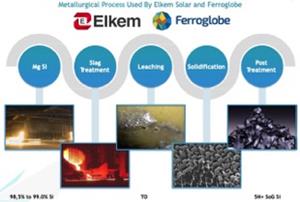
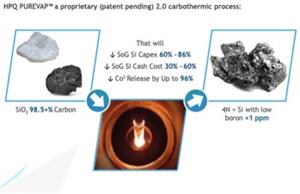
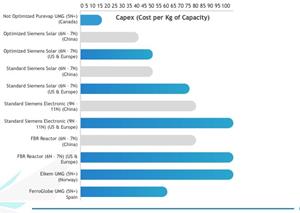
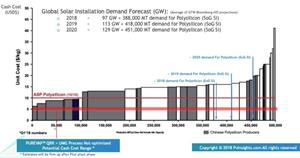
 This INNspired Article is brought to you by: