Agoracom Blog Home

Posts Tagged ‘nickel’

Tartisan #Nickel $TN.ca – Nickel soars on talk of #Indonesia export ban $ROX.ca $FF.ca $EDG.ca $AGL.ca $ANZ.ca

Posted by AGORACOM-JC at 10:50 AM on Thursday, August 8th, 2019

SPONSOR: Tartisan Nickel (TN:CSE)  Kenbridge Property has a measured and indicated resource of 7.14 million tonnes at 0.62% nickel, 0.33% copper. Tartisan also has interests in Peru, including a 20 percent equity stake in Eloro Resources and 2 percent NSR in their La Victoria property. Click her for more information

Tc logo in black
TN: CSE
Fact Sheet
—————————-
  • Nickel prices shot up on Thursday, with London nickel set for its biggest one-day gain in a decade
  • Three-month nickel on the London Metal Exchange rallied as much as 12.7%

SINGAPORE — Nickel prices shot up on Thursday, with London nickel set for its biggest one-day gain in a decade and Shanghai nickel touching a record high amid worries that major supplier Indonesia could soon ban exports of ore.

Three-month nickel on the London Metal Exchange rallied as much as 12.7%, its strongest one-day jump since 2009, while the most-traded nickel contract on the Shanghai Futures Exchange rallied to 124,890 yuan ($17,736.53) a tonne, its highest on record.

Traders and analysts cited market chatter that major nickel ore supplier Indonesia, which also supplies tin, would soon ban exports of some ores.

“I just heard that there will be a regulation released in the near future, but details are unclear,” said a nickel analyst.

London tin rallied 2.3% and Shanghai tin jumped 2.1% by 0200 GMT.

“People believe the ban is coming,” said an executive at a major nickel producer in Indonesia.

Source: https://business.financialpost.com/pmn/business-pmn/nickel-soars-on-talk-of-indonesia-export-ban

Tartisan #Nickel $TN.ca – There’s One Metal Worrying #Tesla $TSLA and #EV Battery Suppliers #Nickel $ROX.ca $FF.ca $EDG.ca $AGL.ca $ANZ.ca

Posted by AGORACOM-JC at 10:05 AM on Tuesday, August 6th, 2019

SPONSOR: Tartisan Nickel (TN:CSE)  Kenbridge Property has a measured and indicated resource of 7.14 million tonnes at 0.62% nickel, 0.33% copper. Tartisan also has interests in Peru, including a 20 percent equity stake in Eloro Resources and 2 percent NSR in their La Victoria property. Click her for more information

Tc logo in black
TN: CSE
Fact Sheet
—————————-

There’s One Metal Worrying Tesla and EV Battery Suppliers

  • Nickel is now the focus of supply concerns: Independence CEO
  • Demand for high-purity metal seen outstripping supply by 2025

By David Stringer

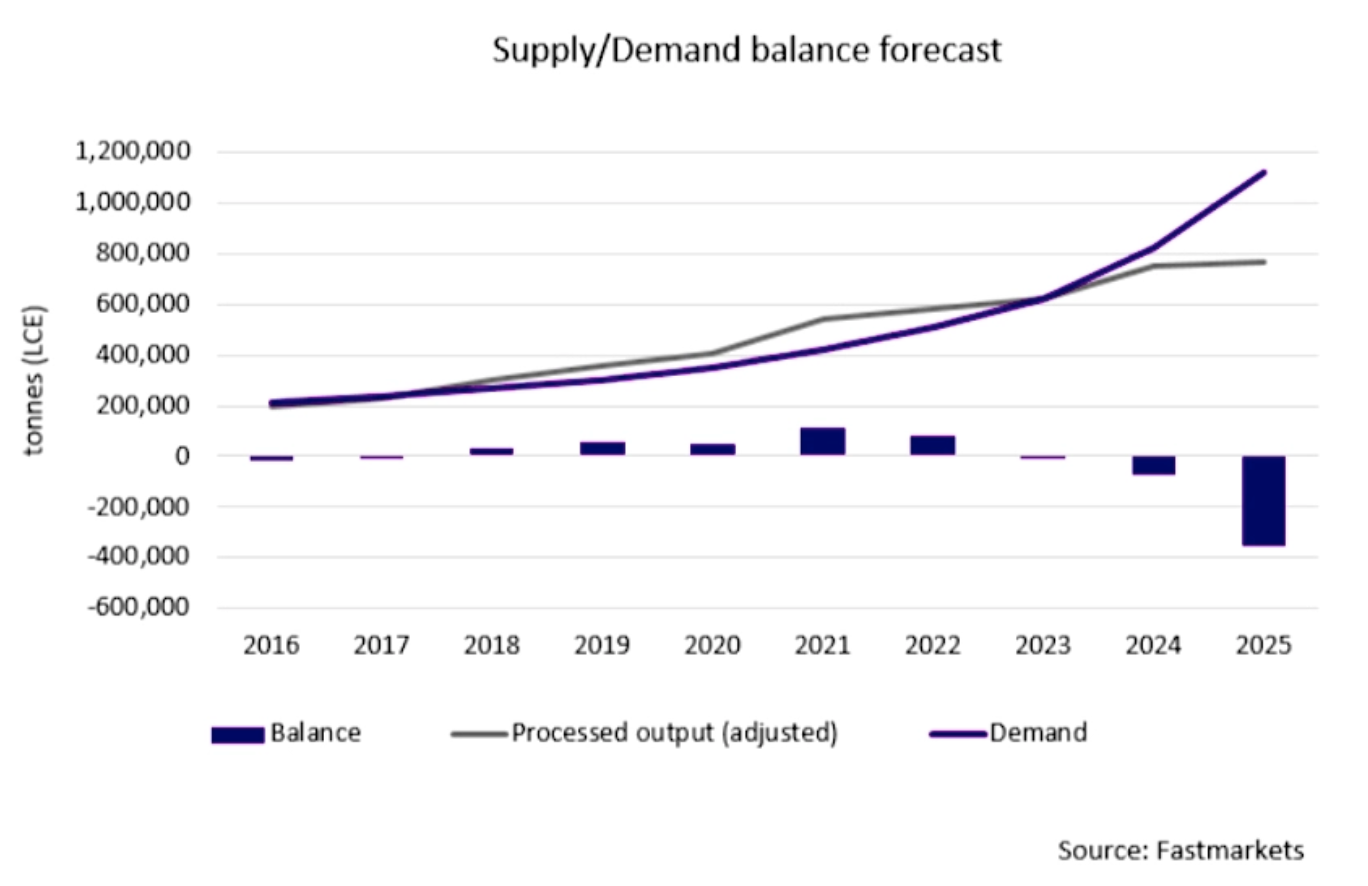
Battery producers and electric automakers, including Tesla Inc., are concerned over longer-term supplies of nickel, a key material in their supply chain that’s forecast to fall into deficit, according to an Australian miner that’s held recent talks with the sector.

The need for the high-purity material used in batteries, known as class-one nickel, is likely to outstrip supply within five years, fueled mainly by rising consumption in the EV industry, according to BloombergNEF.

It’s a concern shared by Tesla, according to Peter Bradford, chief executive officer of nickel producer Independence Group NL, who last week met with a member of the car producer’s battery metals supply chain team.

“They are getting ready to have the new factory in China, and are at full capacity in North America,’’ Bradford said. “They recognize the biggest risk from a strategic supply point of view is nickel.’’

There’s been a lack of sufficient investment in new mines for materials including nickel, a factor that could spur prices as battery sector demand builds, Tesla’s global supply manager of battery metals Sarah Maryssael, told a Washington meeting in May. Tesla didn’t immediately respond to a request for comment on its outlook for nickel and other metals.

Demand for nickel from lithium-ion batteries is forecast to surge about 16 times to 1.8 million tons of contained metal by 2030, BNEF said in a July report. Batteries will account for more than half of demand for class one nickel by that date, shifting a market that’s currently focused on stainless steel.

Perth-based Independence last year increased nickel output from its Nova mine in Western Australia by about a quarter and is spending as much as A$75 million ($51 million) on exploration in an effort to extend the asset’s life and find new deposits.

Nickel in London has jumped more than a third in 2019 and last month touched the highest in more than a year. Future battery demand will add further pressure on prices, according to Bradford, who is awaiting delivery this month of his own Tesla Model S.

“The dramatic price rise we’ve seen will pale into insignificance compared to the future,’’ Bradford said in the Friday phone interview.

Japan’s Sumitomo Metal Mining Co., said in June the nickel market faces a deficit of 51,000 tons in 2019, raising an earlier forecast. Last month, First Quantum Minerals Ltd. confirmed it’ll reopen the Ravensthorpe mine in Western Australia –- shuttered since 2017 — in the first quarter of 2020 amid the strength of interest from potential nickel and cobalt customers.

Western Areas Ltd. recently visited China’s Contemporary Amperex Technology Co. Ltd., a leading battery maker, and is winning interest from the EV sector for nickel supply contracts, the Perth-based producer said Monday in a presentation. Contracts with BHP Group and Tsingshan Holding Group Co. are scheduled to expire in January.

Meetings with companies in the EV supply chain in China and South Korea in the past month, including battery suppliers and producers of key raw materials and chemicals, had also underscored the industry’s concerns about supply, Bradford said.

“The big question everyone will be asking in a year’s time is where does the nickel come from to satisfy the demands for nickel in stainless steel, as well as the increasing demand for nickel into electric vehicle batteries?’’ he said. (Adds Western Areas’ comment in 11th paragraph.)  

Source: https://www.bloomberg.com/news/articles/2019-08-05/there-s-one-metal-worrying-tesla-and-the-ev-battery-supply-chain

Tartisan #Nickel $TN.ca – BHP confident nickel will surf EV wave better than lithium $ROX.ca $FF.ca $EDG.ca $AGL.ca $ANZ.ca

Posted by AGORACOM-JC at 9:00 PM on Sunday, August 4th, 2019

SPONSOR: Tartisan Nickel (TN:CSE)  Kenbridge Property has a measured and indicated resource of 7.14 million tonnes at 0.62% nickel, 0.33% copper. Tartisan also has interests in Peru, including a 20 percent equity stake in Eloro Resources and 2 percent NSR in their La Victoria property. Click her for more information

Tc logo in black
TN: CSE
Fact Sheet
—————————-

BHP confident nickel will surf EV wave better than lithium

  • BHP is optimistic about the decision to keep its Nickel West division and lean into the commodity to get a slice of the impending battery boom.
  • Speaking at the company’s nickel refinery in Kwinana on Friday Nickel West asset president Eddy Haegel said the company reviewed battery materials such as lithium and cobalt but they weren’t as attractive as nickel.
By Hamish Hastie

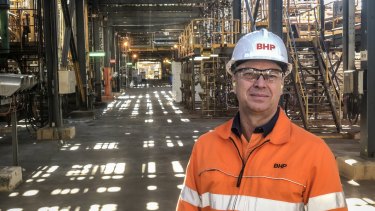
BHP Nickel West assett president Eddy Haegel.Credit:Hamish Hastie

“I think it would come as no great surprise that we didn’t think that

was attractive … because 70 per cent of it comes out of Democratic Republic of Congo and we’re not in a hurry to go and invest into DRC,” he said.

“In the case of lithium, there’s a lot of lithium in the world, it’s a very widely available mineral. Advertisement

“There will be periods of time when supply and demand don’t naturally match but we anticipate that there will be no sustainable premium in the lithium sector.

“Whereas we think that’s not the case with nickel.

“We think that in the medium to longer term that there will be a margin that will be sticky for nickel, so we think that’s an attractive commodity.”

The sale or shutdown of Nickel West has been on the cards for nearly a decade but in May its future seemed secure within BHP after chief executive Andrew Mackenzie indicated it was a valuable asset with high growth potential.

In 2015 none of Nickel West’s product went to the battery sector, now those customers gobble up 80 per cent of its output.

Nickel West is hedging its success on nickel sulphate, a crystalised version of nickel favoured by battery makers.

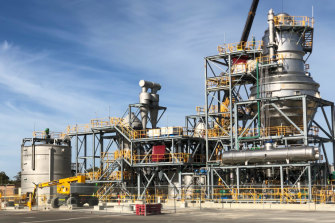
It is currently building a 100,000 tonnes per annum nickel sulphate plant in Kwinana, when it starts production next year it will be one of the biggest in the world.

The new nickel sulphate plant.Credit:Hamish Hastie

The original cost of the plant was $62 million but Mr Haegel confirmed it was tracking above that.

He would not reveal how much the plant will cost now.

Nickel West is a major partner of the $135 million battery materials research centre based in Perth.

Mr Haegal said they would probably provide nickel sulphate to researchers for free so they can test how capable Australia is of making high value battery prescursor materials.

“We’re really excited about the work that will get conducted in that space,” he said.

Source: https://www.smh.com.au/business/companies/bhp-confident-nickel-will-surf-ev-wave-better-than-lithium-20190802-p52dem.html

Tartisan #Nickel $TN.ca – Monthly Nickel News For July 2019 $ROX.ca $FF.ca $EDG.ca $AGL.ca $ANZ.ca

Posted by AGORACOM-JC at 4:19 PM on Wednesday, July 31st, 2019

SPONSOR: Tartisan Nickel (TN:CSE)  Kenbridge Property has a measured and indicated resource of 7.14 million tonnes at 0.62% nickel, 0.33% copper. Tartisan also has interests in Peru, including a 20 percent equity stake in Eloro Resources and 2 percent NSR in their La Victoria property. Click her for more information

Tc logo in black
TN: CSE
Fact Sheet
—————————-

Summary

  • Nickel spot prices were up sharply in July, and the LME inventory was lower and remains near a 7 year low.
  • Nickel market news – Forecasters are generally bullish on the outlook for nickel.
  • Nickel company news – Anglo American to return up to $1 billion to shareholders.

Matt Bohlsen Investment advisor, portfolio strategy, growth at reasonable price

Welcome to the nickel miners news for July. The past month saw nickel prices rise sharply and LME inventories fall again and remain near a ~7 year low. Most other base and EV metals declined but nickel is rising, most likely due to the very low inventory levels and strong demand boosted by the EV sector.

Nickel price news

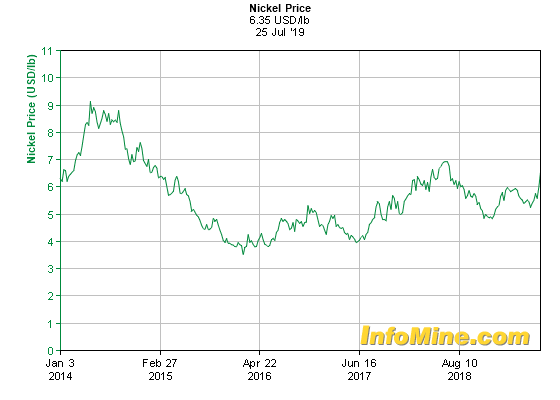
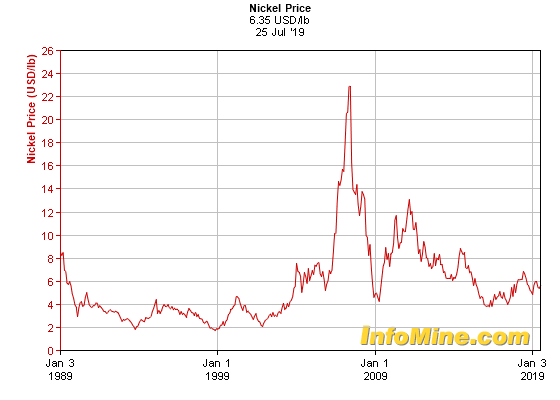
As of July 25, the nickel spot price was US$6.35/lb, up sharply (13%) from US$5.62 last month.

The following charts show that the excess nickel inventories since 2013 have been worked off now and nickel prices are finally starting to respond higher. It may still take a few months to play out, but 2020 should be a good year for nickel (assuming China does ok).

On March 2018 I “Top 5 Nickel Miners To Consider Before The Nickel Boom” stating:

2016 was lithium’s year, 2017 was cobalt’s year, and 2018-2020 are likely to be nickel’s years as nickel inventories decline and nickel prices finally start to rise. Strong Chinese and global stainless steel demand and ever increasing demand from electric vehicles [EVs] using higher nickel content batteries NMC (8:1:1).

Note: The US-China trade war has subdued China’s growth and reduced sentiment, which has not helped nickel prices the past year.

Nickel spot prices – 5-year chart – USD 6.35/lb

Source: InfoMine.com

Nickel 30 year price chart

Source: InfoMine.com

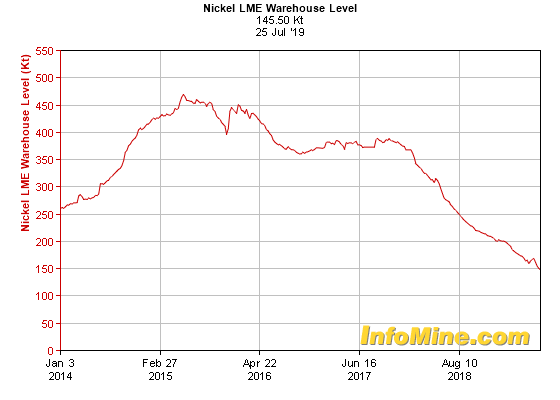
London Metals Exchange [LME] nickel 5 year inventory

The chart below shows LME nickel inventory was lower in July at a ~7 year low.

Source: InfoMine.com

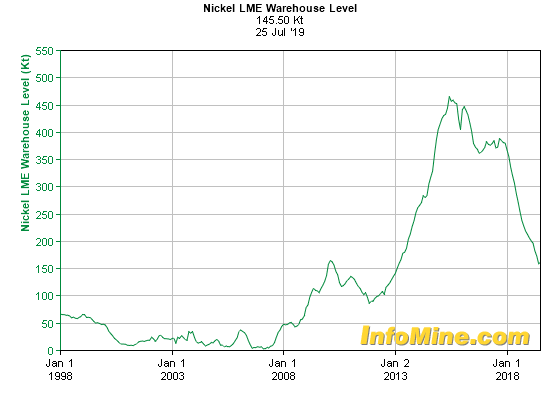
10 year nickel inventory – Nickel at a ~7 year low

Source: InfoMine.com

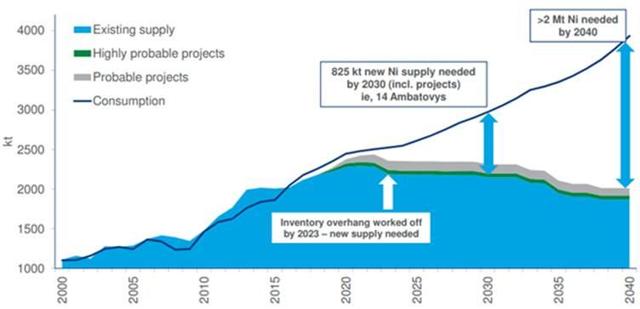
Nickel demand v supply

The chart below shows nickel is forecast to be in deficit after ~2020-2022 (or at least require new supply to come online).

Source: Wood Mackenzie

Note: Some others such as BMI have been forecasting a nickel surplus by 2020 due to increased Indonesian production and reduced Asian demand.

As a reminder the November 2017 McKinsey report stated: “If annual electric vehicle [EV] production reaches 31 million vehicles by 2025 as expected then demand for high-purity class 1 nickel is likely to increase significantly from 33 Kt in 2017 to 570 Kt in 2025.” That is a 17 fold increase in just 8 years, albeit only on Class 1 nickel.

Source: https://seekingalpha.com/article/4279565-nickel-monthly-news-month-july-2019

Tartisan #Nickel $TN.ca – #EV Makers Have A New Favorite Metal… Nickel $ROX.ca $FF.ca $EDG.ca $AGL.ca $ANZ.ca

Posted by AGORACOM-JC at 2:44 PM on Tuesday, July 30th, 2019

SPONSOR: Tartisan Nickel (TN:CSE)  Kenbridge Property has a measured and indicated resource of 7.14 million tonnes at 0.62% nickel, 0.33% copper. Tartisan also has interests in Peru, including a 20 percent equity stake in Eloro Resources and 2 percent NSR in their La Victoria property. Click her for more information

Tc logo in black
TN: CSE
Fact Sheet
—————————-

EV Makers Have A New Favorite Metal…Nickel

By MINING.com – Jul 12, 2019, 12:00 PM CDT

  • Battery metals tracker Adamas Intelligence says electric vehicle manufacturers deployed 57 percent more nickel in passenger EV batteries in May this year, compared to 2018.

The Toronto-based research company, which tracks EV registrations and battery chemistries in more than 80 countries says the nickel metal equivalent used in lithium-ion batteries (primarily in the form of nickel sulphate) increased by 69 percent whereas the amount used in nickel metal hydride (NiMH) batteries (primarily in the form of nickel hydroxide and AB5 nickel-REE alloy) increased by 26 percent.

The deployment of nickel also outpaced the growth of the EV market overall. In May this year, total passenger EV battery capacity deployed globally was 48 percent higher year-on-year, according to Adamas data.

Nickel’s inroads are mainly due to shifting chemistries of nickel-cobalt-manganese (NCM) battery cathodes.

First generation NCM111 batteries had a chemical composition of 1 part nickel, 1 part cobalt and 1 part manganese, but NCM batteries with higher nickel content (622 and 523 chemistries) are quickly becoming the standard in China, which is responsible for half the world’s electric car sales, and a much greater proportion of EV battery manufacture.

With worries about the security of supply of cobalt persisting, the industry is now fast moving towards even higher nickel content with the market share of NCM811 increasing to 2 percent worldwide and 4 percent in China in May, a doubling of market share in just one month.q Related: China’s Crude Oil Imports Rise In June

Adamas points out that in China the increased deployment coincided with the launch of a number of new EV models in China using NCM811 cells from battery leader CATL.

The world’s number one carmaker, Volkswagen, is spending more than $50 billion on batteries to start mass producing EVs by mid-2023 and the company announced earlier this month that from 2021 it would use the NCM811 composition.

Nickel touched $13,000 a tonne for the first time since April on Wednesday. The price is up just over 19 percent in 2019 as the EV boom creates additional demand and primary use of the metal today – stainless steel production – continues to grow.

Cobalt is now worth $28,000 a tonne after peaking at $95,000 little more than a year ago as miners in the Congo – responsible for two-thirds of output – ramp up production.

By Mining.com

Source: https://oilprice.com/Energy/Energy-General/EV-Makers-Have-A-New-Favorite-Metal.html

Tartisan #Nickel $TN.ca – #Tesla $TSLA: How #Elon Musk’s “Terawatt-Hour” Battery Plan May Spark Shift to Clean Energy $ROX.ca $FF.ca $EDG.ca $AGL.ca $ANZ.ca

Posted by AGORACOM-JC at 11:10 AM on Monday, July 29th, 2019

SPONSOR: Tartisan Nickel (TN:CSE)  Kenbridge Property has a measured and indicated resource of 7.14 million tonnes at 0.62% nickel, 0.33% copper. Tartisan also has interests in Peru, including a 20 percent equity stake in Eloro Resources and 2 percent NSR in their La Victoria property. Click her for more information

Tesla: How Elon Musk’s “Terawatt-Hour” Battery Plan May Spark Shift to Clean Energy

Musk says it’s terawatt-or-bust.

By Mike Brown July 25, 2019 Filed Under Batteries, Clean Energy, Elon Musk, Energy, Sustainable Energy & Tesla

  • Elon Musk wants to transition the world onto renewable energy sources, but to do so, the world’s going to need a lot more energy storage.
  • The CEO outlined a new battery production goal during Tesla’s second-quarter earnings call on Wednesday, hinting that the company could eventually produce multiple terawatt-hours of storage per year.

“In order to really make a fundamental shift in the world’s energy usage and really transform things to a sustainable energy future, if you’re not in the terawatt-hour range, it’s like, it’s a nice news story but it is not fundamentally changing the energy equation,” Musk told investors during the afternoon conference call.

It’s the sort of move that could spark a bigger jump to renewables. Batteries are vital for renewable energy because they ensure a steady stream of power throughout the day.

After all, when the sun isn’t shining and the wind isn’t blowing, solar and wind generators aren’t going to keep the lights on.

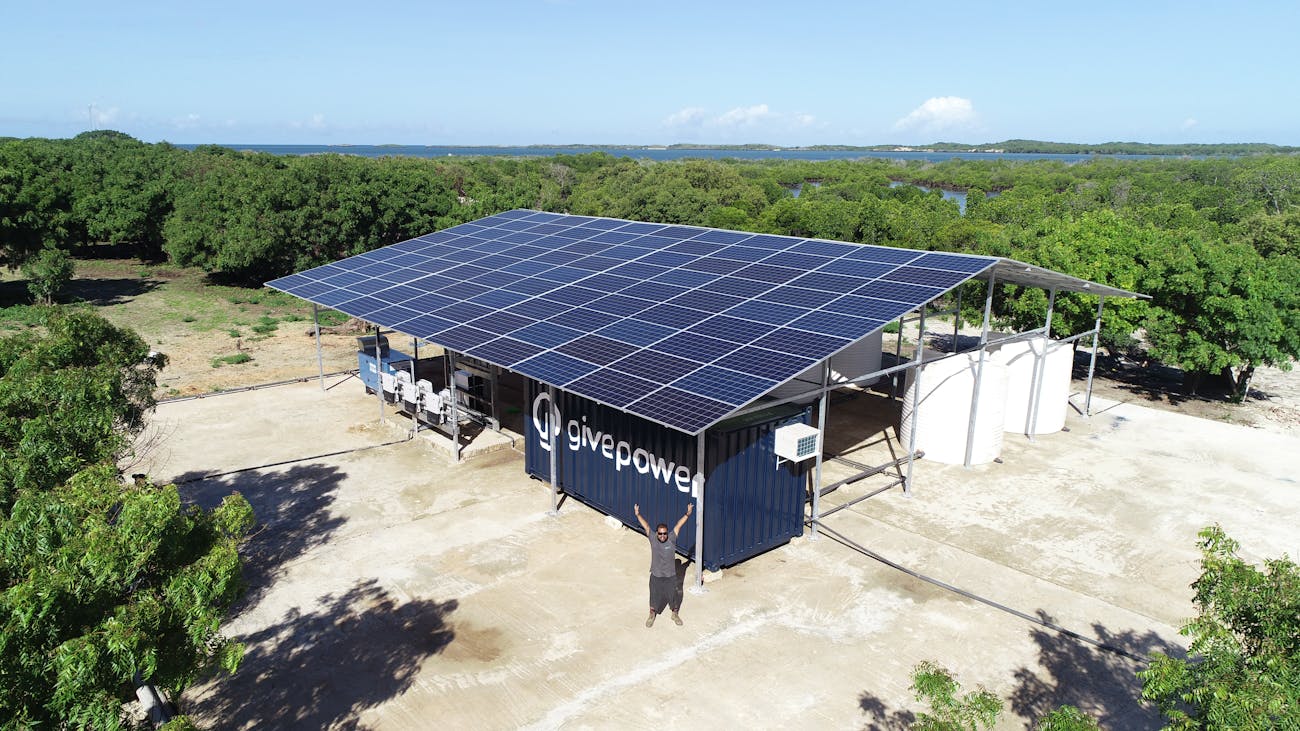
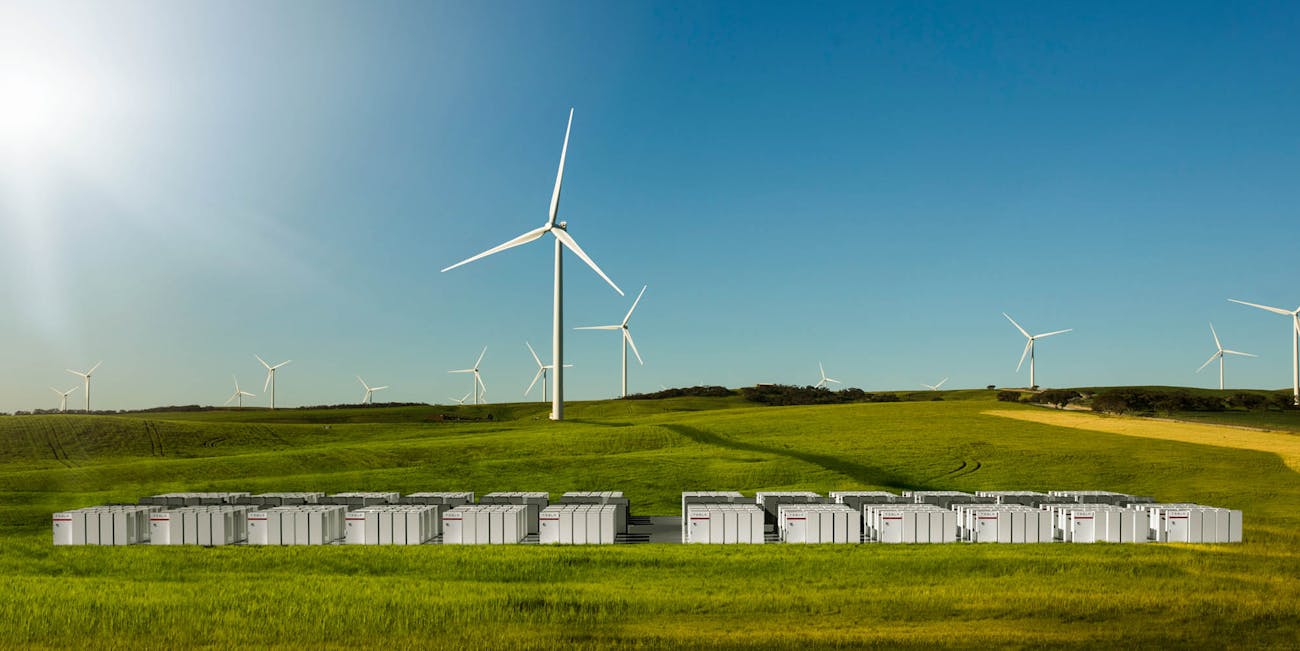
The Tesla-built Hornsdale battery in Australia, completed in November 2017, uses 129 megawatt-hours to store wind energy from nearby turbines and provide enough power for 30,000 homes. The Arsenal Football Club in London has a large enough battery to power the stadium for an entire 90-minute match, and GivePower is using batteries and solar to run a desalination plant 24 hours a day.

GivePower in Kiyunga.

In the wake of booming demand and a need for more capacity, battery production is soaring. Benchmark Minerals states that annual global production jumped from 19 gigawatt-hours in 2010 to 160 gigawatt-hours in 2019.

A staggering 68 plants could add a further 1.45 terawatt-hours to the mix by 2028.

There is still a long way to go: The IEA estimates that global electricity demand reached 23,000 terawatt-hours last year. Renewables accounted for around 24 percent of electricity in 2017, a figure that could reach 30 percent by 2023.

Of course, it’s not necessary to produce enough batteries to hold all of the world’s energy at once. Musk previously stated that 100 of his company’s Gigafactories could produce enough storage to transition the world onto sustainable energy. With Musk planning to send Tesla’s production skyrocketing, it could bring this goal within squinting distance.

The Tesla battery in South Australia.

Elon Musk’s Terawatt-Hour Plan: How It Currently Stacks Up

Tesla’s Gigafactory behemoth in the Nevada desert reached an annual production rate of 20 gigawatt-hours in August 2018. That in and of itself was an achievement, as it made the firm the largest producer of battery power in the world, and it meant that Tesla produces more capacity than all other automakers combined.

The Gigafactory now produces around 28 gigawatt-hours of battery capacity per year, Musk 

Work on the Gigafactory is not complete. The company is aiming to reach an annual production rate of 150 gigawatt-hours of battery pack production per year. This would be a rate that Musk has previously described as “faster than bullets leaving a machine gun.”

Musk has stated that 100 such factories would be enough to transition the world onto sustainable energy.

But none of this is enough for Musk, who now wants to see the company reach “multiple terawatt-hours per year.”

More information about this goal could come soon. Musk suggested that a battery day, similar to the autonomous driving day, could offer “a comprehensive review of cell chemistry, module and pack, architecture, and a manufacturing plan that has a clear roadmap to a terawatt-hour per year.” That could arrive sometime between February and March 2020.

Tesla is planning to launch new vehicles next year, like the second-generation Roadster, Model Y SUV, and Semi truck.

But beyond these new vehicles, Tesla’s batteries could be used to help shift the markets to ditch dirty energy sources once and for all.

Source: https://www.inverse.com/article/58024-tesla-how-elon-musk-s-terawatt-hour-plan-may-spark-shift-to-clean-energy

CLIENT FEATURE: Tartisan Nickel $TN.ca Kenbridge Property Hosts M&I Resource of 7.14 Million Tonnes at 0.62% Nickel, 0.33% Copper $ROX.ca $FF.ca $EDG.ca $AGL.ca $ANZ.ca

Posted by AGORACOM-JC at 9:30 PM on Sunday, July 28th, 2019

Investment Highlights

  • Kenbridge property has a measured and indicated resource of 7.14 million tonnes at 0.62% nickel, 0.33% copper
  • 17.5 (21.8 fully diluted) percent equity stake in Eloro Resources and 2 percent NSR in their La Victoria property
  • Signed Binding Letter of Intent to Purchase Sill Lake Lead-Silver Property, Ontario Read More

Kenbridge Ni Project (ON, Canada)

  • Advanced  stage  deposit  remains open  in  three  directions,  is  equipped with a 623m  deep  shaft  and  has  never  been  mined. 
  • Preliminary  Economic Assessment completed and updated returned robust project 
    economics and operating costs including  a  NPV  of  C$253M  and  cash costs of US$3.47/lb of nickel net of  
    copper credits.
  • Plans for Kenbridge include updating PEA, advancing the project through to feasibility and exploring the open mineralization at depth

Sill Lake Silver-Lead property, Sault Ste. Marie Mining Division, Ontario.

  • Closed the acquisition of the past-producing Sill Lake Silver-Lead property, Vankoughnet Twp, Sault Ste. Marie Mining Division, Ontario.
  • Acquisition includes 13 single-cell mining claims and four boundary-cell claims that total some 372.8 hectares.
  • Lead-zinc-silver mineralization was discovered at Sill Lake in 1892; since that time sufficient works have been completed so as to define a (historical) measured and indicated resource of 112,751 tonnes of 134 g/t silver, 0.62% lead, and 0.21% zinc.
  • A 60 g/t cutoff for silver was used, with no cutoff used for base metals content.
  • Some 7,000 tonnes was exploited from the Sill Lake Project to produce a lead-silver concentrate which was sold to nearby smelters.

FULL DISCLOSURE: Tartisan Nickel Corp. is an advertising client of AGORA Internet Relations Corp.

Tartisan #Nickel $TN.ca – Battery Metals Face Looming Supply Crunch $ROX.ca $FF.ca $EDG.ca $AGL.ca $ANZ.ca

Posted by AGORACOM-JC at 3:44 PM on Thursday, July 25th, 2019

SPONSOR: Tartisan Nickel (TN:CSE)  Kenbridge Property has a measured and indicated resource of 7.14 million tonnes at 0.62% nickel, 0.33% copper. Tartisan also has interests in Peru, including a 20 percent equity stake in Eloro Resources and 2 percent NSR in their La Victoria property. Click her for more information

Tc logo in black
TN: CSE
Fact Sheet
—————————-

Battery Metals Face Looming Supply Crunch

By Mining.com – Jul 25, 2019

  • Growing global demand for batteries that power electric vehicles (EVs) and high tech devices is set to cause a supply crunch of lithium, cobalt and nickel by the mid-2020s, global consultancy Wood Mackenzie predicts.

The firm’s latest research shows that sales of passenger EVs, including hybrid electric vehicles (HEV), jumped by more than 24% last year. And while HEVs had the smallest growth, they made up over 60% of EV sales.

WoodMac expects global sales of EVs to account for 7% of all passenger car demand by 2025, 14% by 2030 and 38% by 2040.

“Battery pack sizes continue to trend larger through the medium term, resulting in overall greater battery demand. We have seen the first announcements of the commercialization of NMC 811 cells in EVs,” says Gavin Montgomery, WoodMac research director.

Not surprisingly, Montgomery notes, China was the first market mover, but a number of other nations and companies are moving towards mass production of 811 cells before the end the year. 

South Korea’s SK Innovation is already in talks to set up separate battery-making joint ventures with Volkswagen AG and Chinese partners, as part of the petrochemicals producer’s aggressive plans to tap into the EV market.

“While still conservative on mass-market uptake for [811 cells], we are more optimistic in regards to adoption. As such, we expect to see an increased nickel demand at the expense of cobalt, and to a lesser extent, lithium,” the analyst says.

Most carmakers, including VolkswagenFord MotorToyota and BMW have already stated they would go completely electric by 2050. Related: Another Surprising Industry Falls Victim To Ongoing Trade War Chaos

WoodMac warns that, unless battery technology is developed, tested, commercialized, manufactured and integrated into EVs and their supply chains faster than ever before, it will be impossible for many EV targets and ICE (Internal Combustion Engines) bans to be achieved. “This will pose issues for current EV adoption rate projections,” Montgomery says.

Lithium prices to fall further

Over the past year, spot prices for lithium carbonate have fallen by just under $7,000 a tonne, affecting top producers and juniors alike.

“This is in an environment where the major brine producers in South America have failed to ramp up capacity. Clearly, the first responders to the lithium boom– Australian hard rock mines – have the capability to quickly deliver the required tonnages. Meanwhile, the bottleneck in Chinese conversion capacity that was supporting prices is giving way as China emerges as a net exporter of lithium chemicals to the region.

(Click to enlarge)

Expected strong lithium demand will not be able to offset a decline in prices, even though the need for the commodity from battery makers alone will jump 650% by 2027.

“It has only taken a few years for the battery sector to become the largest demand driver for lithium. Lithium’s use in every lithium-ion battery type means it will have double-digit annual growth, making up over 80% of total lithium demand by 2030,” Montgomery adds. The study also reveals that the cobalt market will see an oversupply of intermediate products such as hydroxide until at least 2024.

The firm also suggests that investment in new nickel projects are needed now as mines can take up to 10 years to develop.

By Mining.com

Source: https://safehaven.com/commodities/industrial-metals/Battery-Metals-Face-Looming-Supply-Crunch.html

Tartisan #Nickel $TN.ca – Can #Metals Supply Keep Up With Electric Vehicle #EV Demand? $ROX.ca $FF.ca $EDG.ca $AGL.ca $ANZ.ca

Posted by AGORACOM-JC at 10:54 AM on Wednesday, July 24th, 2019

SPONSOR: Tartisan Nickel (TN:CSE)  Kenbridge Property has a measured and indicated resource of 7.14 million tonnes at 0.62% nickel, 0.33% copper. Tartisan also has interests in Peru, including a 20 percent equity stake in Eloro Resources and 2 percent NSR in their La Victoria property. Click her for more information

Tc logo in black
TN: CSE
Fact Sheet
—————————-

Can Metals Supply Keep Up With Electric Vehicle Demand?

Wood Mackenzie

EVs and the energy transition

Battery raw materials could face a supply crunch by the mid-2020s. In every electric vehicle (EV) battery, there’s a complex chemistry of metals – cobalt, lithium, nickel and more. The electrification of transport is transforming the demand and supply of those battery raw materials. In fact, we expect to see double-digit growth for battery raw materials over the next decade. And our latest research suggests they could face a supply crunch by the mid-2020s, increasing the pressure on the raw material supply chain.

What does the long-term outlook for battery raw materials mean for electric vehicle penetration, the metals supply chain and those who invest in it?

What’s driving demand?

Retreat in lithium prices underway

Spot prices for lithium carbonate have fallen by just under US$7,000/t since June 2018.

We are seeing the same weakness in the realised prices of the majors and their expectations for H1 2019. And this is in an environment where the major brine producers in South America have failed to ramp up capacity. Clearly, the first responders to the lithium boom – Australian hard rock mines – have the capability to quickly deliver the required tonnages. Meanwhile, the bottleneck in Chinese conversion capacity that was supporting prices is giving way as China emerges as a net exporter of lithium chemicals to the region.

It has only taken a few years for the battery sector to become the largest demand driver for lithium. Lithium’s use in every lithium-ion battery type means it will have double-digit annual growth, making up over 80% of total lithium demand by 2030.

Cobalt prices have plummeted this year

Like lithium, cobalt prices have softened over H1 2019. The low prices may defer some mine projects and are likely to see reduced artisanal output from the DRC. However, the industry must still contend with an oversupply of intermediates until 2024. And the existence of swing supply in China is likely to keep a lid on any major price upside. Although cobalt looks challenging in the long-term, the adoption of high-nickel batteries in EVs means the emerging deficits look more achievable than previously expected.

Indonesia key for nickel

Although the battery sector share of nickel demand is much smaller than other metals, getting the quantity of nickel that EVs will need by the mid-2020s will be a challenge. A low nickel price has hindered any project development and with lead times often up to 10 years, investment needs to happen now.

While high-nickel ternary batteries will mean higher corresponding demand for nickel, like cobalt, our long-term deficits are becoming more feasible. Much of this is due to growing capacity in Indonesia, to serve both the stainless steel sector and emerging battery demand.

Business as usual for graphite

For graphite, there is little change in fundamentals. While the scale of demand is huge, we don’t expect any supply-side challenges in terms of natural graphite flake due to the growing supply out of East Africa. Synthetic graphite presents more of a challenge, given potential disruption to needle coke feedstock as a result of the new IMO 2020 regulations and growth in China’s steel sector.

Manganese central to NMC batteries

The manganese industry is overwhelmingly driven by the steel sector, something unlikely to change no matter how many EVs are on the road. While a steady supply of manganese sulphate will be crucial for NMC battery producers, we do not foresee any supply-side issues in this space.

What does this mean for investors in battery raw materials?

Despite strong growth in demand on the horizon, there’s not yet much for investors to get excited about. Meeting demand is not a challenge for key metals at present. In many cases supply is chasing demand. Increase electric vehicle penetration to 10% and above, and it is a different matter altogether. Are the current falling prices and weak sentiment setting the world up for a crunch down the road?

Unless battery technology can be developed, tested, commercialised, manufactured and integrated into EVs and their supply chains faster than ever before, it will be impossible for many EV targets and ICE (internal combustion engine) bans to be achieved – posing issues for current EV adoption rate projections.

Source: https://www.forbes.com/sites/woodmackenzie/2019/07/24/can-metals-supply-keep-up-with-electric-vehicle-demand/#39f095e56c9b

Tartisan #Nickel $TN.ca – Demand for electric vehicles #EV bodes well for nickel $ROX.ca $FF.ca $EDG.ca $AGL.ca $ANZ.ca

Posted by AGORACOM-JC at 4:58 PM on Tuesday, July 23rd, 2019

SPONSOR: Tartisan Nickel (TN:CSE)  Kenbridge Property has a measured and indicated resource of 7.14 million tonnes at 0.62% nickel, 0.33% copper. Tartisan also has interests in Peru, including a 20 percent equity stake in Eloro Resources and 2 percent NSR in their La Victoria property. Click her for more information

Tc logo in black
TN: CSE
Fact Sheet
—————————-

Demand for electric vehicles bodes well for nickel

  • The reason many are bullish on prices long-term is the expected demand for nickel for EVs, a key component in electric batteries.
  • Right now, two-thirds of the world’s nickel is used for stainless steel production, and three per cent for batteries.

By: Darren MacDonald

While nickel analysts expect the price of nickel to dip again despite the impressive gains it has made in recent weeks, demand for the metal is bright thanks to the increasing demand for electric vehicles.

Nickel was trading at US $6.40 on Monday afternoon on the London Metals Exchange (LME), down from last week’s high of US $6.85, but still up more than 20 per cent in the last two weeks.

Commonwealth Bank commodities analyst Vivek Dhar told the Financial Review that the reasons some have given for the recent surge – falling LME stockpiles and an impending export ban in Indonesia – are not new revelations, and are factors traders have known for a long time.

“That’s what’s got all of us scratching our heads,” Dhar said in the article. “It’s not like LME stockpiles have just fallen in July. They’ve been heading down for a while, so why would you see an acceleration in price like just now?

“In terms of how sustainable is it, we’re very bullish over the long run but in terms of the rise since the beginning of July, it’s come out of nowhere.”

The reason many are bullish on prices long-term is the expected demand for nickel for EVs, a key component in electric batteries. Right now, two-thirds of the world’s nickel is used for stainless steel production, and three per cent for batteries.

“Changes in battery technology that improve the longevity and cost profile of batteries are likely to lift the proportion of nickel used in batteries, which combined with significantly higher battery production, is expected to open new opportunities for nickel producers from the 2020s onward,” says a June analysis by the Australian government.

“World consumption is forecast to increase from 2.3 million tonnes in 2018 to 2.7 million tonnes in 2021, growing at an average rate of 4.7 per cent a year.”

Devin Arthur, president of the Electric Vehicle Society’s Greater Sudbury chapter, says car makers such as Ford and Volkswagen and Toyota are ramping up their capacity to build electric batteries, joining Tesla in the race to build fully electric cars.

“All that means is people are going to need more nickel,” Arthur said. “We have a lot of it, so it’s good for us.”

Up until now, car makers have usually contracted out production of batteries from companies with limited production capacity. Tesla decided it would make its own batteries, and other car makers are following suit.

“Volkswagen, for example, have kind of said ‘OK, we need make our own battery factories,’” Arthur said. “We’re going to do it all in-house. So right now we’re in this really large kind of transition period where all these companies are investing billions of dollars in battery plants.

“Once these plants are up and running, I think you’re going to see nickel prices just shoot through the roof.”

It’s not just Arthur saying that – according to the Australian government’s analysis, there is a chance it could “boom.

“There is potential for nickel consumption to boom, as electric vehicle battery manufacturing picks up and technological advances are married with market developments, supportive policy and changing consumer preferences,” the analysis said

The evolution of the batteries is important too, Arthur said. His Chevy Bolt can go as far as 400 kilometres between charges, depending on the temperature and other conditions. With improvements to battery and charging technology, longer and longer trips with shorter and shorter recharging times are on the way.

Porsche says a high-voltage charger it has developed can recharge a EV battery in eight minutes, Arthur said.

“So a typical charge stop would probably take as long as pumping gas – if not shorter,” he said.

And software can tell a driver how much they need to charge their car, depending on the length of the trip and the location of the next charging station.

“A lot of the newer vehicles, you’re looking at the 500-600 kilometre ranges on a full charge,” he said. “The technology is evolving so fast that you’re going to see is just massive updates every time they come up with new models. I think once Volkswagen and other major manufacturers start actually releasing their models, I think you’ll this ‘range anxiety’ isn’t going to be much of a problem anymore.”

With production ramping up, and EV production expected to take off beginning in 2021 and beyond, Arthur said groups like the Electric Vehicle Association – which has chapters across the province – is working to not only spread the EV message, but advocate for the charging infrastructure to be in place to meet the demand for new EV owners. In Sudbury, the number of EV owners has grown to about 170, up from 95 last year, with the growth rate expected to increase as more products hit the marketplace.

In addition to new companies developing charging stations, traditional companies such as Petro Canada have plans to build a national charging network from coast-to-coast.

“I guess even (fossil fuel companies) know that this is the future and if they don’t get get in now, you know, they’re kind of going to be left behind,” Arthur said. “So the future will see charging stations everywhere the way we see gas stations today.” 

Source: https://www.sudbury.com/local-news/demand-for-electric-vehicles-bodes-well-for-nickel-and-for-greater-sudbury-1599309