Posted by AGORACOM-JC
at 11:05 AM on Friday, August 30th, 2019
SPONSOR: CardioComm Solutions (EKG: TSX-V)
– The heartbeat of cardiovascular medicine and telemedicine. Patented
systems enable medical professionals, patients, and other healthcare
professionals, clinics, hospitals and call centres to access and manage
patient information in a secure and reliable environment.
EKG: TSX-V ———————-
How Digital is Accelerating Healthcare
A digital wave has swept the world. Technology advancements have transformed every aspect of life and healthcare isn’t far behind.
Digital healthcare aims to amplify the shortcomings of traditional healthcare systems.
The digitization of the entire healthcare ecosystem is underway. From
telemedicine to wearables to the remote patient monitoring device,
Integration of technology with healthcare helps in meeting the
unfulfilled challenges in the healthcare industry.
Digital healthcare aims to amplify the shortcomings of traditional
healthcare systems. Prevention, helping patients monitor and manage
chronic conditions, lowering the cost of healthcare provision, and
making medicine more tailored to individual needs – some of the areas
where applying technology to healthcare can immensely help.
Healthtech or Digital Health is a thriving market. Global Digital
Health Market value expected to surpass $504.4 billion by 2025;
according to a new research report by Global Market Insights, Inc.
Increasing demand for remote monitoring services due to rising
incidences of chronic diseases worldwide is a major factor propelling
the global market growth. This could be the reason why Tech giants are
betting big on healthcare with almost all the big firms be it Google or
Amazon are investing billions in healthcare. The most valuable company
in the world – Apple updated its Health app, last year, to display
medical records from 39 hospitals. The firm also added a new Apple
Watch feature called the electrocardiogram (EKG), a more advanced method
of heart monitoring. Apple received an FDA clearance for this.
Alphabet, Google’s parent company is also making a number of bets in healthcare and life sciences. Calico,
focuses on health and well-being, in particular, the challenge of
ageing and associated diseases. And Verily is developing tools to
collect and organize health data, then creating interventions and
platforms that put insights derived from that health data to use for
more holistic care management.
WHO’s push for Digital Health
In the April 2019, the World Health Organization (WHO) released new
recommendations on 10 ways countries can use digital health technology
to improve people’s health and essential services. The guideline
demonstrates that health systems need to respond to the increased
visibility and availability of information. People also must be assured
that their own data is safe and that they are not being put at risk
because they have accessed information on sensitive health topics, such
as sexual and reproductive health issues, a press release from the WHO
states. It further adds that Health workers need adequate training to
boost their motivation to transition to this new way of working and need
to use technology easily.
The guideline stresses the importance of providing supportive
environments for training, dealing with unstable infrastructure, as well
as policies to protect the privacy of individuals, and governance and
coordination to ensure these tools are not fragmented across the health
system.
The guideline encourages policy-makers to review and adapt to these
conditions if they want digital tools to drive tangible changes and
provides guidance on taking privacy considerations on access to patient
data.
WHO has issued a number of resources to strengthen digital health
research and implementation, including the mHealth Assessment and
Planning for Scale (MAPS) toolkit, a handbook for Monitoring and Evaluation of Digital Health, and mechanisms toharness digital health to end TB, eHealth Strategy Toolkit in collaboration with International Telecommunications Union (ITU) and the Digital Health Atlas, an online global repository where implementers can register their digital health activities
Digital Health in Asia
Digital Health is thriving in Asia. Last year, Investment in digital health was around $6.3 billion in
Asia, confirming it as the 2nd largest HealthTech ecosystem in the
world. Significantly exceeding 2017 in dollar size, and doubling 2016,
the Asia ecosystem is fast catching the US, says a report by HealthTech
Alpha, a Galen Growth Asia solution. The most number of news new
announcements and investments came from China and India.
Some other important initiatives include:
Big technology companies, such as Tencent and Alibaba, announced new healthcare ventures
In collaboration with the Food and Drug Administration of the
Philippines (FDA), mClinica introduced a new mobile app, Electronic
Logbook, to digitize prescriptions using cutting edge image recognition
and machine learning. With this, the Philippines became the first
country in Asia to use a nationwide mobile app to disrupt the pharmacy
prescription process
WeDoctor and Ping An Good Doctor – the “AI doctors†are increasingly becoming popular in China
BioTel CareTM(formally known as Telcare), a BioTelemetry company,
has developed a next-generation wireless blood glucose monitor for
diabetes management. It is the first FDA-cleared, cellular-enabled
glucometer which supports real-time transmission and consolidation of
patient data in an FDA-cleared cloud
Japan-based Omron Healthcare has developed a continuous, noninvasive
Beat By Beat®blood pressure monitoring technology. Omron says this is
the first of its kind in the world, uses Omron’s proprietary pressure
sensor to apply pressure in a way to partially flatten the radial
artery, thus enabling measurement of blood pressure for each heartbeat
simply by attaching the monitor unit on the wrist
Health tech is an unprecedented opportunity to solve Asia’s
healthcare woes. New technologies like Artificial Intelligence (AI),
cognitive computing, natural language processing, wearable technology,
virtual reality and augmented reality are providing new opportunities to
provide more personalized prevention, diagnostic, and treatment.
As digital health improves, it will, in turn, strengthen health
systems, enable universal health coverage, and improve health and
well-being for all.
Posted by AGORACOM-JC
at 10:51 PM on Thursday, August 29th, 2019
MONTREAL, Aug. 29, 2019 — PyroGenesis Canada Inc. (http://pyrogenesis.com) (TSX-V: PYR) (OTCQB: PYRNF) (FRA: 8PY), a high-tech company (the “Company”, the “Corporation†or “PyroGenesis”) that designs, develops, manufactures and commercializes plasma atomized metal powder, plasma waste-to-energy systems and plasma torch products, is pleased to announce today its financial and operational results for the second quarter ended June 30, 2019.
“As we have said in the past, 2018 was the year in which the Company
successfully positioned itself with unique and strategic partnerships,
geared to effectively accelerate commercialization, and we are in the
midst of benefiting from these efforts, and I would like to thank
investors for their patience,†said Mr. P. Peter Pascali, President and
CEO of PyroGenesis. “Recent results have been significantly affected by
management’s decisions in 2018 to pursue strategic partnerships at the
expense of revenues. However, as a result, we have press released
imminent contracts in excess of $32MM, with associated future revenues,
well in excess of that which, in my opinion, fully justified that
strategy. At the risk of repeating myself, let me remind readers of the
importance of reading 2019 results to date in the context of these
decisions and recent press releases.â€
Q2 2019 results reflect the following highlights:
Revenues of $913,769, a decrease from $1,421,352 posted in Q2 2018;
Gross margin of 20% a decrease of 15% over the same period in Q2 2018;
Fair value of investments decreased to $339,313, versus ($66,000) a decrease of $405,313;
Leasehold improvements of $227K were spent in building a clean room for plasma atomization system;
A Modified EBITDA loss of $1.4MM compared to a Modified EBITDA loss of $1MM over the same period in Q2 2018;
Backlog of signed contracts as of the date of this writing is $10.5MM;
Cash on hand at quarter end: $1.3MM (December 31, 2018: $645K).
The following is a summary of PyroGenesis’ main activities.
Outlook
2019 is turning into the year that bears the fruit of 2018
strategies, in which PyroGenesis successfully positioned itself with
unique and strategic partnerships, geared to effectively accelerate
commercialization in two of its three business segments.
In 2018, the Company successfully positioned each of its commercial
business lines for rapid growth by strategically partnering with
multi-billion-dollar entities who have identified PyroGenesis’ offerings
to be unique, in demand, and of such a commercial nature as to warrant
such unique relationships.
By the end of 2018 PyroGenesis could boast of a unique relationship
with a multi-billion-dollar entity in each of its three commercial
offerings:
1)
The US Navy within the Military/Environmental sector;
2)
A Japanese trading house within the DROSRITETM (tolling) offering;
3)
Aubert & Duval within the Additive Manufacturing/3D printing (“AMâ€) offering.
Most companies would be thankful for one such relationship, but PyroGenesis has successfully developed three.
It became readily apparent to management that partnering with the
right entity could significantly accelerate commercialization in each of
its new business lines. This, however, would come with a cost in 2018.
In order to succeed, PyroGenesis would have to dedicate significant
resources to demonstrating the value proposition, and capabilities, to
these entities. This meant that assets which should have been dedicated
to sales now had to be deployed to developing these relationships. This
not only impacted revenues, but it also increased costs of non-paying
projects. We have seen this effect continue into Q1 2019 which, as
expected, has continued into Q2, 2019.
To date, PyroGenesis has announced that it should be awarded a
two-ship build for its PAWDS unit, for approximately $13.5MM. Add to
this the recently announced potential contract with first year revenues
of $20MM (plus significant subsequent years revenues) and the impact of
this strategy is apparent: over $32MM in revenues over the next 18
months. Approximately 6x 2018 revenues.
2019 should also see the Company takes steps, outside of the ordinary
course of business, to unlock additional value for investors.
One such step that has been announced is the spin-off of the Company’s additive manufacturing capabilities.
Another step, which is likewise outside the ordinary course of
business, and is geared to unlocking shareholder value, is the
previously announced up-listing of the Company’s stock to a more senior
exchange other than the one the Company is currently on. This is
projected to commence in earnest once the contacts noted above are
successfully signed.
There are other steps, outside the ordinary course of business, that
the Company is considering, to further increase shareholder value.
In short, 2019 is playing out to be the first of many years which
will bear the fruit of strategic decisions made in the recent past.
Financial Summary
Revenue
PyroGenesis recorded revenue of $913,769 in the second quarter of
2019 (“Q2, 2019â€), representing a decrease of 36% compared with
$1,421,352 recorded in the second quarter of 2018 (“Q2, 2018â€).
Revenues recorded during the six months ended June 30, 2019 were generated primarily from:
(i)
PUREVAP™ related sales of $239,836 (2018 Q2 – $1,538,550);
(ii)
Torch related sales of $297,235 (2018 Q2 – $Nil);
(iii)
Support services related to PAWDS-Marine systems supplied to the US Navy $455,427 (2018 Q2 – $706,595).
Cost of Sales and Services and Gross Margins
Cost of sales and services before amortization of intangible assets
was $723,641 in Q2 2019, representing a decrease of 22% compared with
$924,954 in Q2 2018.
In Q2 2019, employee compensation, subcontracting, direct materials
and manufacturing overhead decreased to $750,114 compared to $955,392 in
Q2 2018.
The gross margin for Q2 2019 was $185,349 or 20.3% of revenue
compared to a gross margin of $496,398 or 34.9% of revenue for Q2 2018.
As a result of the type of contracts being executed, the nature of
the project activity had a significant impact on the gross margin and
the overall level of cost of sales and services reported in a period, as
well as the composition of the cost of sales and services, as the mix
between labour, materials and subcontracts may be significantly
different.
The amortization of intangible assets of $4,779 in Q2 2019 and $Nil
for Q2 2018 relates to patents and deferred development costs. Of note,
these expenses are non-cash items and will be amortized over the
duration of the patent lives.
Selling, General and Administrative Expenses
Included within Selling, General and Administrative expenses
(“SG&Aâ€) are costs associated with corporate administration,
business development, project proposals, operations administration,
investor relations and employee training.
SG&A expenses for Q2 2019 excluding the costs associated with
share-based compensation (a non-cash item in which options vest
principally over a four-year period), were $1,583,779, representing an
increase of 34% compared with $1,177,552 reported for Q2 2018.
The increase in SG&A expenses in Q2 2019 over the same period in 2018 is mainly attributable to the net effect of:
an increase of 16% in employee compensation due primarily to additional headcount,
an increase of 84% for professional fees, primarily due to an increase in legal fees and employee recruitment expenses,
a decrease of 18% in office and general expenses, is primarily due
to the reclassification of rent expense to depreciation right of use
assets,
travel costs increased by 104%, due to an increase in travel abroad,
depreciation on property and equipment increased by 21% due to higher amounts of property and equipment being depreciated,
depreciation on right of use assets increased by 100% due to
reclassification of rent expense to depreciation right of use assets,
investment tax credits increased by 100% due to the investment tax
credits being recorded against the respective expenses in cost of goods
sold, selling and general expenses and research and development expenses
versus all of the investment tax credits of Q2 2018 being recorded
against cost of goods sold only,
government grants increased by 16% due to a government grant
contribution for a maximum amount of $350,000 for the period 2018-2020,
other expenses decreased by 8%, primarily due to a decrease in
advertising expenses and in the reclassification of lease property taxes
to depreciation right of use assets.
Separately, share based payments decreased by 91% in Q2 2019 over the
same period in 2018 as a result of the vesting structure of the stock
option plan including the stock options granted in 2018.
Research and Development (“R&Dâ€) Costs
The Company incurred $212,645 of R&D costs, net of government
grants, on internal projects in Q2 2019, a decrease of 47% as compared
with $404,017 in Q2 2018. The decrease in Q2 2019 is related to a
reduction in eligible R&D costs.
In addition to internally funded R&D projects, the Company also
incurred R&D expenditures during the execution of client funded
projects. These expenses are eligible for Scientific Research and
Experimental Development (“SR&EDâ€) tax credits. SR&ED tax
credits on client funded projects are applied against cost of sales and
services (see “Cost of Sales†above).
Net Comprehensive Loss
The net comprehensive loss for Q2 2019 of $2,253,390 compared to a
loss of $1,534,890, in Q2 2018, represents an increase of 47%
year-over-year. The increase of $718,500 in the comprehensive loss in Q2
2019 is primarily attributable to the factors described above, which
have been summarized as follows:
(i)
a decrease in product and service-related revenue of $507,583 arising in Q2 2019,
(ii)
a decrease in cost
of sales and services totaling $196,534, primarily due to a decrease in
direct materials, a decrease in manufacturing overhead, and a decrease
in investment tax credits,
(iii)
an increase in
SG&A expenses of $138,270 arising in Q2 2019 primarily due to an
increase in professional fees, travel, and employee compensation,
(iv)
a decrease in
R&D expenses of $191,372 primarily due to a decrease in eligible
employee compensation and materials & equipment costs,
(v)
an increase in net finance costs of $460,553 in Q2 2019 primarily due to the fair value adjustment of investments.
EBITDA
The EBITDA loss in Q2 2019 was $1,814,832 compared with an EBITDA
loss of $1,274,183 for Q2 2018, representing an increase of 42%
year-over-year. The $540,649 increase in the EBITDA loss in Q2 2019
compared with Q2 2018 is due to the increase in comprehensive loss of
$718,500, an increase in depreciation on property and equipment of
$8,455, an increase in depreciation of right of use assets of $109,673,
an increase in amortization of intangible assets of $4,779 and an
increase in finance charges of $55,241.
Adjusted EBITDA loss in Q2 2019 was $1,787,248 compared with an
Adjusted EBITDA loss of $978,642 for Q2 2018. The increase of $808,606
in the Adjusted EBITDA loss in Q2 2019 is attributable to an increase in
EBITDA loss of $540,649, offset by a decrease of $267,957 in
share-based payments.
The Modified EBITDA loss in Q2 2019 was $1,447,935 compared with a
Modified EBITDA loss of $1,044,642 for Q2 2018, representing an increase
of 39%. The increase in the Modified EBITDA loss in Q2 2019 is
attributable to the increase as mentioned above in the Adjusted EBITDA
loss of $808,606 and a decrease in the change of fair value of
investments of $405,313.
Liquidity
The Company has incurred, in the last several years, operating losses
and negative cash flows from operations, resulting in an accumulated
deficit of $54,198,854 and a negative working capital of $7,297,972 as
at Q2 2019, (December 31, 2018 – $51,066,540 and $4,101,428
respectively). Furthermore, as at Q2 2019, the Company’s current
liabilities and expected level of expenses for the next twelve months
exceed cash on hand of $1,293,173 (December 31, 2018 – $644,981). The
Company has relied upon external financings to fund its operations in
the past, primarily through the issuance of equity, debt, and
convertible debentures, as well as from investment tax credits.
About PyroGenesis Canada Inc.
PyroGenesis Canada Inc., a high-tech company, is the world leader in
the design, development, manufacture and commercialization of advanced
plasma processes and products. We provide engineering and manufacturing
expertise, cutting-edge contract research, as well as turnkey process
equipment packages to the defense, metallurgical, mining, advanced
materials (including 3D printing), oil & gas, and environmental
industries. With a team of experienced engineers, scientists and
technicians working out of our Montreal office and our 3,800 m2
manufacturing facility, PyroGenesis maintains its competitive advantage
by remaining at the forefront of technology development and
commercialization. Our core competencies allow PyroGenesis to lead the
way in providing innovative plasma torches, plasma waste processes,
high-temperature metallurgical processes, and engineering services to
the global marketplace. Our operations are ISO 9001:2015 and AS9100D
certified, having been since 1997. PyroGenesis is a publicly-traded
Canadian Corporation on the TSX Venture Exchange (Ticker Symbol: PYR)
and on the OTCQB Marketplace. For more information, please visit www.pyrogenesis.com.
This press release contains certain forward-looking statements,
including, without limitation, statements containing the words “may”,
“plan”, “will”, “estimate”, “continue”, “anticipate”, “intend”,
“expect”, “in the process” and other similar expressions which
constitute “forward- looking information” within the meaning of
applicable securities laws. Forward-looking statements reflect the
Corporation’s current expectation and assumptions and are subject to a
number of risks and uncertainties that could cause actual results to
differ materially from those anticipated. These forward-looking
statements involve risks and uncertainties including, but not limited
to, our expectations regarding the acceptance of our products by the
market, our strategy to develop new products and enhance the
capabilities of existing products, our strategy with respect to research
and development, the impact of competitive products and pricing, new
product development, and uncertainties related to the regulatory
approval process. Such statements reflect the current views of the
Corporation with respect to future events and are subject to certain
risks and uncertainties and other risks detailed from time-to-time in
the Corporation’s ongoing filings with the securities regulatory
authorities, which filings can be found at www.sedar.com, or at www.otcmarkets.com.
Actual results, events, and performance may differ materially. Readers
are cautioned not to place undue reliance on these forward-looking
statements. The Corporation undertakes no obligation to publicly update
or revise any forward- looking statements either as a result of new
information, future events or otherwise, except as required by
applicable securities laws.
Neither the TSX Venture Exchange, its Regulation Services
Provider (as that term is defined in the policies of the TSX Venture
Exchange) nor the OTCQB accepts responsibility for the adequacy or
accuracy of this press release.
Tags: PyroGenesis, small cap stocks, stocks, tsx, tsx-v Posted in PyroGenesis Canada Inc. | Comments Off on PyroGenesis $PYR.ca Announces Q2 2019 Results: Current Backlog $10.5MM; Revenues of $914K; Gross Margin of 20% $LMT $RTN $NOC $UTX $HPQ.ca $DDD.ca $SSYS $PRLB
Posted by AGORACOM-JC
at 5:18 PM on Wednesday, August 28th, 2019
SPONSOR:ThreeD Capital Inc. (IDK:CSE)
Led by legendary financier, Sheldon Inwentash, ThreeD is a
Canadian-based venture capital firm that only invests in best of breed
small-cap companies which are both defensible and mass scalable. More
than just lip service, Inwentash has financed many of Canada’s biggest
small-cap exits. Click Here For More Information.
IDK: CSE
Why Some Executives See Crypto As A New Business Tool
Executives are leveraging blockchain-driven currency to axe business process friction or fuel innovative products and services.
Signals are building that more organizations recognize its alluring features as fuel for innovative products and services, or useful for axing friction in the business process behind a transaction.
By: Jason Abdilla, Unsplash
Many executives see blockchain-driven digital currency as a terribly clunky payment vehicle or speculative investment. But signals are building that more organizations recognize its alluring features as fuel for innovative products and services, or useful for axing friction in the business process behind a transaction.
Unlikely Bedfellows Align Around Feature-Rich Token Projects
For example, a group of 14 financial firms
led by UBS Group AG and including Barclays PLC, Nasdaq Inc., Credit
Suisse Group AG , Bank of New York Mellon Corp., and State Street Bank
& Trust Co have created a new company, Fnality International, to
control development of a bitcoin-like token that the firms plan to use
to settle cross-border trades. The token, called utility settlement coin
(USC), is designed so banks can settle transactions directly with each
other without having to involve a third-party intermediary, removing
layers of costs and inefficiency. JPMorgan Chase & Co. is taking a
similar approach, creating a network of more than 250 members that is
working on a token called JPM Coin. Twenty eight brands, led by Facebook
and including Mastercard, Visa, Uber, Spotify, PayPal, and eBay have
created the Libra Association
to develop a token, which is named Libra. In so doing, unlikely
bedfellows are coming together to take on the extremely difficult work
of forging a new financial infrastructure, pioneering challenging
territory in joint governance, and navigating regulatory uncertainty.
What Is So Compelling?
Blockchain-driven digital tokens have very attractive attributes that
make it possible to do something totally new: merge business and
operational activity with the movement of money. All of a sudden, money
can be programmable—terms and conditions could be directly
embedded into how money moves from one party to another. While this is
certainly possible in today’s financial world, the potential to reduce
the cost of doing so to writing a few lines of code is tantalizing.
For example, the USC token serves as a messenger that includes the
data needed to complete a trade along with payment, which could cut
transaction cost and time. A key feature of Facebook’s Libra is a
programming language called Move that can be used to customize
transaction logic and create “smart contracts†that dictate the
conditions under which value is moved—an element which could fuel a
range of financial innovations. Imagine a world in which a few lines of
code ensure a transaction doesn’t take place until certain other
conditions are met—an asset couldn’t be spent until a certain time in
the future, or until a certain number of parties have registered their
approval. While moving this logic to code comes with a new set of
challenges (including the possibility of bugs and the open question of
legal enforceability), pioneers imagine digital tokens flexibly embedded
into existing products, used to create innovative bundling, or develop
completely new financial products.
Digital tokens carry other attractive attributes as well. They are
designed to be interoperable (they are more useful the more widely
accepted they are, and so token development is a race to get the
flywheel turning on network effects). They are typically traceable, so
they provide clear auditability, and hold the potential to settle on a
near-immediate basis.
By cutting out intermediaries, they also offer the prospect of a
low-transaction cost global currency. According to Bloomberg, retailers
are paying $90 billion in swipe fees on credit and debit cards every year. On August 14, supermarket giant Kroger stopped accepting Visa at 21 supermarkets and five gas stations because of what the company called “excessive feesâ€.
Digital tokens could eventually also serve as an efficient way to
shape and align consumer or partner behavior, functioning as a high value rewards system,
like a supercharged loyalty point. This has the potential to exert
influence across a wide range of organizations and business objectives.
Regulators Are Taking These Signals Seriously
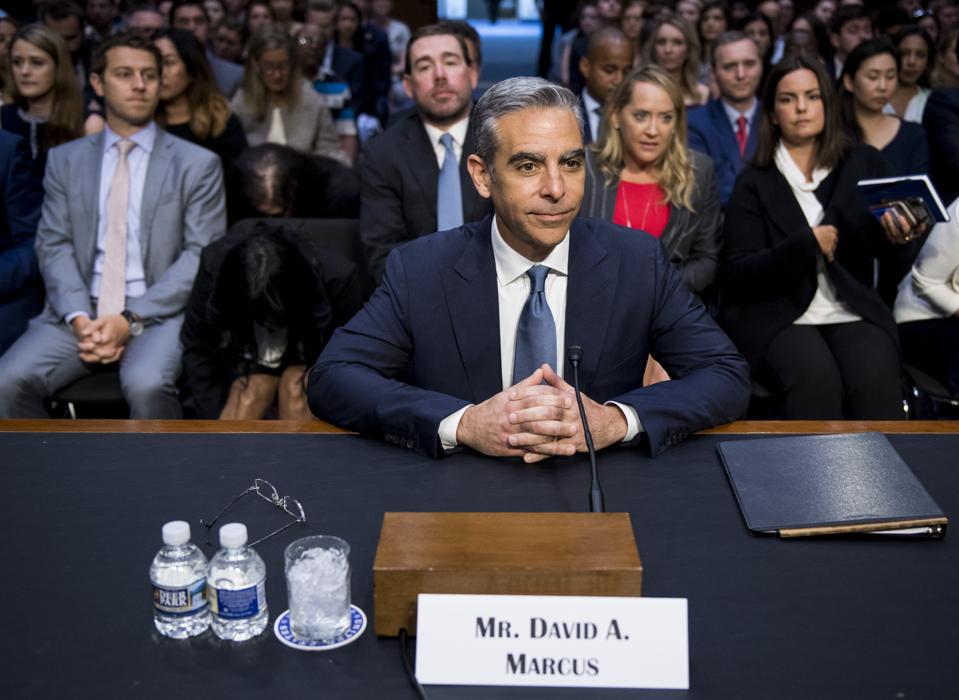
UNITED STATES – JULY 16: David Marcus, head of Facebook’s Calibra
digital wallet service, prepares to testify during the Senate Banking,
Housing and Urban Affairs Committee hearing on “Examining Facebook’s
Proposed Digital Currency and Data Privacy
CQ-Roll Call,Inc.
Momentum has been met with a heightened response from regulators and
lawmakers. Facebook’s announcement of Libra led to heated U.S. Senate
Banking Committee and the House Financial Services Committee held
hearings. At the hearings, Senate Banking Chairman Mike Crapo of Idaho
painted the complexity ahead, “Libra is based on a relatively new and
continually evolving technology in which it is not entirely clear how
existing laws and regulations apply.†The Financial Stability Oversight
Council, an umbrella group of regulators that includes the Fed, has
formed a working group to discuss oversight of digital assets. The Group
of Seven (G7) industrialized nations have elevated cryptocurrencies to a
priority issue, with finance ministers debating how global
cryptocurrency could impact financial markets. Bank of England Governor
Mark Carney even suggested central banks should consider joining forces to create a virtual currency
(based on a network of digital central-bank currencies) that could ease
the global economy’s reliance on the dollar and be used to facilitate
cross-border trade and international payments.
Suddenly, the prospect of whether this new form of money could
undermine the role of central banks or become a viable alternate to
national currencies had become serious debate. This acknowledges the
power and influence of the players exploring these new currencies as
well as the complexity of projecting how they would operate in the wild.
Canary In The Coal Mine?
Will these initial projects succeed or fail? It is too early to
project the outcome of such early work in the space, much less how it
could evolve as momentum builds. However, we are seeing clear signals
that there is hunger for the features and functionality
blockchain-driven digital tokens and currency make possible. And many in
the space are taking the position that it’s inevitable that something
like these early projects will ultimately come to market, even if the
initial attempts fail to make it through the regulatory gauntlet. It is
likely we will see a race for innovation in this space, one that could
blur the lines between the financial services industry and other
sectors, and even the role of nation-states versus corporations.
Posted by AGORACOM-JC
at 10:37 AM on Wednesday, August 28th, 2019
SPONSOR: Tartisan Nickel (TN:CSE)
Kenbridge Property has a measured and indicated resource of 7.14
million tonnes at 0.62% nickel, 0.33% copper. Tartisan also has
interests in Peru, including a 20 percent equity stake in Eloro
Resources and 2 percent NSR in their La Victoria property. Click her for more information
Nickel touches one-week high on Indonesia worries, inventories
Nickel prices hit their highest in a week on Wednesday as speculators bought on fears of shortages from major producer Indonesia, while at least half of London Metal Exchange inventories were under the control of one party.
Nickel, mainly used to make stainless steel, has shot up about 50% so far this year, fueled by concerns that Indonesia will move forward a mineral export ban due in 2022.
By: Eric Onstad
LONDON — Nickel prices hit their highest in a week on Wednesday as
speculators bought on fears of shortages from major producer Indonesia,
while at least half of London Metal Exchange inventories were under the
control of one party.
Nickel, mainly used to make stainless steel, has shot up about 50% so
far this year, fueled by concerns that Indonesia will move forward a
mineral export ban due in 2022.
“The price rise is exaggerated,†said Commerzbank analyst Daniel
Briesemann, adding that the price gains were not supported by supply and
demand fundamentals.
“Lower exports of nickel ore should at least in part be balanced by
higher exports of higher-value nickel products, so the impact would not
be as severe as appears at first glance.â€
Benchmark nickel was the strongest performer on the LME, advancing
1.5% to $15,930 a tonne in official open-outcry trading after touching
$16,000, the highest since Aug. 21.
The net speculative long position of nickel on the LME had expanded
to 20% as of Friday’s close, a fresh year-to-date high, Alastair Munro
at broker Marex Spectron said in a note.
* NICKEL STOCKS/TIME SPREAD: One party holds 50% to 80% of available
LME inventories, data showed, leading to tight supplies in the LME
system, traders said.
They said this also likely contributed to a jump in the premium of
cash LME nickel over the three-month contract to $79 a tonne by
Tuesday’s close, the highest in a decade.
* NICKEL WASTE: Waste from a nickel plant in Papua New Guinea owned
by Metallurgical Corporation of China spilled into the adjacent Basamuk
Bay over the weekend, three sources told Reuters on Wednesday.
* CHINA RATES: Deteriorating Sino-U.S. trade ties and interest rate
reforms are fueling speculation China will start cutting key rates from
next month, but bankers expect borrowing costs to come down only
gradually.
* CHALCO: Chinese aluminum giant Chalco’s, production of the metal
fell more than 8% in the first-half of 2019 from the same period a year
earlier, data showed, highlighting the impact of low prices on Chinese
smelters.
* PRICES: LME copper shed 0.2% to trade at $5,673 a tonne in official
rings, aluminum dipped 0.1% to $1,758.50, zinc lost 0.6% to $2,259.50,
lead fell 0.7% to $2,085, while tin gained 0.6% to $15,850.
* For the top stories in metals and other news, click or ($1 = 7.0928
Chinese yuan) (Reporting by Eric Onstad; Editing by Ken Ferris and
Edmund Blair)
Posted by AGORACOM-JC
at 12:00 PM on Tuesday, August 27th, 2019
SPONSOR: Tartisan Nickel (TN:CSE)
Kenbridge Property has a measured and indicated resource of 7.14
million tonnes at 0.62% nickel, 0.33% copper. Tartisan also has
interests in Peru, including a 20 percent equity stake in Eloro
Resources and 2 percent NSR in their La Victoria property. Click her for more information
Nickel on track to close above tin for the 1st time in 9 years
London nickel prices on Tuesday were on track to close higher than tin prices for the first time since September 2010, buoyed by a recent rally in nickel prices and declines in tin prices.
Nickel on the London Metal Exchange (LME) rose as much as 1.6% to $15,910 a tonne in early Asian trading, surpassing the tin contract, which hit a fresh three-year low of $15,765 a tonne.
By: Mai Nguyen and Tom Daly
SINGAPORE/BEIJING — London nickel prices on Tuesday were on track to
close higher than tin prices for the first time since September 2010,
buoyed by a recent rally in nickel prices and declines in tin prices.
Nickel on the London Metal Exchange (LME) rose as much as 1.6% to
$15,910 a tonne in early Asian trading, surpassing the tin contract,
which hit a fresh three-year low of $15,765 a tonne.
If nickel closes above tin on the LME, it would be the first time since Sept. 15, 2010, according to Refinitiv Eikon data.
Nickel has been a rising star in the base metals complex, soaring
nearly 50% so far this year on the LME, boosted by worries of supply
disruption, solid demand and technical trading.
LME tin, the worst performer among all base metals, has lost 19% so
far this year due to weak demand. China’s tin smelters recently cut
production due to sluggish sales, low processing fees and reduced
availability of ore.
“I have never seen this during my career. Finally. But it is by tin
price going down. It should be by nickel prices going up,†said Yim Suk
Jae, a manager at STX Corp, which handles supply from the Ambatovy
nickel and cobalt project.
FUNDAMENTALS
* PRICES: LME copper rose 0.1%, aluminum fell 0.3%, zinc decreased
0.3% and lead edged up 0.2%. Shanghai copper rose 0.7%, zinc advanced
1.4%, lead increased 1% and aluminum edged up 0.1%.
* TRADE DEAL: U.S. President Donald Trump on Monday predicted a trade
deal with China after positive gestures by Beijing, but gains in metals
were capped as the bruising trade war shown a tendency to quickly
reverse direction.
* COPPER: Germany’s Wieland, one of the world’s largest copper
product makers, said on Monday it would reduce working hours at a German
plant from next month because of the slowing global economy.
* CHINA: Profits at China’s industrial firms returned to growth in
July, helped by public works spending and improved margins in some
sectors, but an economic slowdown and the U.S. trade war are seen
weighing on business outlook.
* CHINA HOUSING: China’s housing market is expected to slow this year
with sales forecast to drop, as Beijing steps up efforts to scrutinize
banks and provincial governments to keep a lid on lending and prices, a
Reuters poll showed.
* YUAN: China’s yuan weakened for the ninth straight session on
Tuesday, plumbing new 11-1/2-year lows, as dramatic twists in the
Sino-U.S. trade war left investors skeptical of the chances of a
near-term deal.
A weaker yuan pressures dollar-priced metals by making them more expensive for Chinese buyers.
Posted by AGORACOM-JC
at 3:47 PM on Monday, August 26th, 2019
SPONSOR: CardioComm Solutions (EKG: TSX-V)
– The heartbeat of cardiovascular medicine and telemedicine. Patented
systems enable medical professionals, patients, and other healthcare
professionals, clinics, hospitals and call centres to access and manage
patient information in a secure and reliable environment.
EKG: TSX-V ———————-
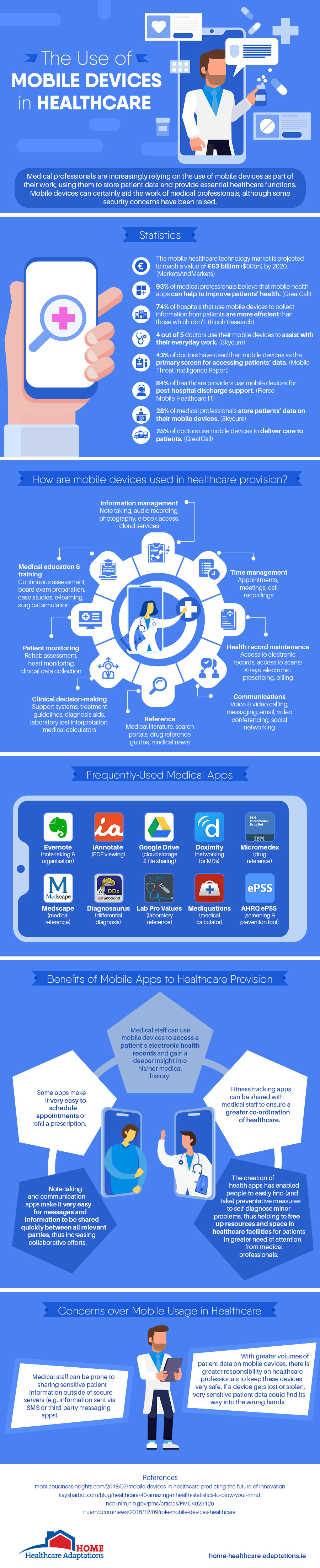
The use of mobile devices in healthcare
The past decade has seen mobile devices become ubiquitous across a range of professions, and the world of medicine is no exception to this.
In fact, the emergence of Mobile Health (usually shortened to mHealth) technology has enabled medical professionals around the world to deliver a better standard of care to their patients.
What is mHealth?
The World Health Organisation (WHO) defines mHealth as “medical
and public health practice supported by mobile devices, such as mobile
phones, patient monitoring devices, personal digital assistances and
other wireless devices.†This technology leverages many smartphone
functionalities such as SMS messaging, applications, web browsing, and
Bluetooth connectivity to deliver a diverse range of services.
The Rapid Rise of mHealth Technologies
The mHealth industry has shown impressive growth over the past
few years. Constant innovation and increasing global connectivity have
contributed to the widespread adaptation of this technology among
medical professionals and patients alike. In fact, experts predict that
this market will reach a global value of $60 billion by the year 2020.
How Are Healthcare Professionals Using Mobile Technology?
80% of healthcare professionals say that they employ mobile
devices daily as part of their work and 93% of these state that access
to health apps allows them to provide a better quality of care to their
patients. There are many ways that this technology could be used as part
of healthcare delivery; some examples of tasks that can be aided by
mHealth tech include patient monitoring, clinical decision-making, and
training.
Posted by AGORACOM-JC
at 10:19 AM on Monday, August 19th, 2019
SPONSOR: Tartisan Nickel (TN:CSE)
Kenbridge Property has a measured and indicated resource of 7.14
million tonnes at 0.62% nickel, 0.33% copper. Tartisan also has
interests in Peru, including a 20 percent equity stake in Eloro
Resources and 2 percent NSR in their La Victoria property. Click her for more information
After dropping below US$5 a pound at the end of 2018, metal reaches US$7.31 Friday
Worries about supply and expected demand for electric cars kept pushing up the price of nickel this week
Metal staying above US$7.31 a pound on the London Metals Exchange on Friday.
Prices are up by 50 per cent the start of the year, when nickel was
struggling to stay above US$5 a pound. Prices haven’t risen this fact in
a decade. Indonesia, one of the biggest suppliers in the world, plans
to ban exports in 2022, and rumours the ban could be imposed sooner has
accounted for some of nickel’s recent strength, analysts say.
Kieran Clancy, assistant commodities economist at UK-based Capital Economics, told Bnamericas on Friday that global supply shortages are expected to worsen since no major mines are coming into operation any time soon.
“What’s more, there are a number of tail risks, the most notable of
which being the prospect that Indonesia implements a ban on nickel ore
exports sooner than 2022, although they now have significant domestic
smelting capacity which would cushion the blow somewhat,” Clancy said.
And in a livewiremarkets.com
story Friday, Eddy Haegel of BHP said demand for high grade nickel
(which is mined in Sudbury) for electric car batteries will really take
off sometime next year.
“We do not expect to see a meaningful impact on the nickel market
from batteries until the mid – late 2020s,†Haegel said. “Only then, do
we expect to see serious industry investment by Class 1 nickel
producers.
“However, we will not rest waiting for that day to arrive. We are
actively developing options to position ourselves for this
once-in-a-generation opportunity.’’
Posted by AGORACOM-JC
at 9:11 PM on Sunday, August 18th, 2019
30 days ago, American Creek Resources (AMK:TSXV) was well known only amongst investors that believe in the Golden Triangle of Northern B.C. Then, it all changed overnight when Eric Sprott stated the following on July 19, 2019 about the Company’s Treaty Creek project:
“It’s drilling a monster play just like the GT Gold play … It’s in the perfect logistical place to develop it …. what we’re shooting for is to define a 10 or 20-million-ounce discovery, so you’re paying nothing for this discovery.â€
To add further fuel to the fire, the Company’s JV partner is Tudor Gold, whose CEO (Walter Storm) startup funded Osisko to a $4.5 BILLION market cap. Drill results were so good at the end of July that Tudor Gold brought in a second drill, while Eric Sprott personally invested $1,000,000 into AMK 8 days later. If 3rd party validation is important to you in the world of gold exploration, it doesn’t get better than having Eric Sprott and Walter Storm in your corner.
Grab your favourite cold beverage and watch this interview with CEO Darren Blaney and Investor Relations officer Kelvin Burton …. the laughter and smiles on their faces are priceless.