Posted by AGORACOM
at 4:32 PM on Monday, December 14th, 2020
Fabled Silver Gold Corp. (TSXV: FCO)The Santa María Property is an under-explored, high-grade silver-gold project with significant exploration potential to expand mineral resources and identify new discoveries.
Fabled Silver Gold Company Highlights:
Commenced drilling on 100% option at Santa Maria Mine in Mexico
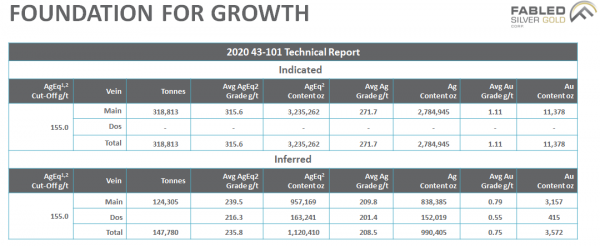
2020 NI 43-101 Resource of 3.2Moz Indicated and 1.1Moz Inferred in two primary veins
Two distinct Epithermal veins have been partially explored
Santa María Property is an under-explored, high-grade silver-gold project with significant exploration potential
19 significant vein structures exists within the property and provides future virgin exploration opportunities
Geophysical survey on the property and has successfully identified multiple targets for exploration and drilling
Santa Maria Deposit
High Grade silver-gold property located in mining friendly jurisdiction of Parrall, Mexico
The Parral mining district is situated in the center of the Mexican Silver belt, a district of epithermal silver gold mineralization
The belt has been recognized as producing more silver than any other equivalent are in the world
2018 PEA very supportive at current market prices
2 Mettalurgical Studies completed
Santa Maria vein structures provide many promising exploration and possibly future mining possibilities
The Santa Maria mine has never been systematically, or explored thoroughly with modern methods
The Asset: Santa Maria Mine 43-101
3.2Moz Indicated and 1.1Moz Inferred in two primary veins
High grade silver-gold property located in the mining friendly jurisdiction of Parrall, Chihuahua, Mexico.
The Parral mining district is situated in the centre of the Mexican silver belt epithermal silver-gold vein districts. The belt has been recognized as a significant metallogenic province, which has reportedly produced more silver than any other equivalent area in the world.
43-101 Technical Report completed on December 02, 2020 by Mineral Resources Engineering.
Significant vein structures within the property provides future exploration and mining opportunities.
Posted by AGORACOM
at 8:38 AM on Monday, December 14th, 2020
Toronto, Ontario–(Newsfile Corp. – December 14, 2020) – Red Light Holland Corp. (CSE: TRIP) (FSE: 4YX) (OTC: TRUFF) (“Red Light Holland“), and Disruptive Pharma, a Latin American focused pharmaceutical investment company, are pleased to announce they have entered into a non-binding letter of intent for the purposes of creating a joint venture to cultivate, manufacturer, and commercialize magic truffles for the Brazilian market and to explore other potential business opportunities, subject to compliance with all applicable laws and regulations of Brazil, home to more than 200 million people.
Disruptive Pharma is focused on developing innovative solutions for the health and wellness industry and is a principal investor in Mundihealth.com (MundiHealth), a US based company and the owner of MyPharma2GO.com (MyPharma2Go), a large prescribed medicines website distributing to Brazil and Latin America. MundiHealth.com also has exclusive distribution agreements with some of the largest and most well established vitamin and supplement brands in the world.
“Brazil’s market is huge and we are pleased to enter into this LOI with Disruptive Pharma, with the opportunity to leverage their entire portfolio of companies including MyPharma2Go.com, a large Brazilian online pharmaceutical and supplement distributor,” said Todd Shapiro, CEO and Director of Red Light Holland. “We look forward to bringing our knowledge in growing Magic Truffles for the purposes of cultivating, manufacturing, and distributing in Brazil, while we continue to build our Red Light Holland Brand, sell our iMicrodose packs, and expand our e-commerce strategies.”
Red Light Holland’s intention is to leverage Disruptive Pharma’s proven distribution and health technology experience with their proven knowledge in growing magic truffles. The two company’s visions align as both Red Light Holland and Disruptive Pharma believe in providing responsible access to products that have the potential to enhance quality of life, especially for those in need of innovative treatments and those who have not succeeded with traditional medicines. Red Light Holland and Disruptive Pharma will carefully explore the legalities of magic truffles and magic mushroom products in Brazil and further details of the proposed joint venture will be announced once available.
About MyPharma2GO
In Brazil and other LatAm countries, specific legislation permits consumers to import medicines, medical devices, OTCs and health products. Established in 2018 and headquartered in the US, Mundihealth / MyPharma2Go uses this legislation to bring HCP-focused pharmaceuticals and/or B2C supplements towards the region. By contracting MP2Go’s business services, companies can launch products within 30 days following agreement, legally sidestepping a 1-3 year registration process with Health Authorities, anticipating revenue and testing the market without committing high monetary investment. Once the prescription has been generated and the product purchased, MP2Go dispatches it from its FDA-approved warehouse in Florida, Netherlands or Israel via its proprietary courier service. This permits full tracking of the items, which are delivered directly to the consumer in 7-10 business days under full compliance of Health Authorities and Customs. Customer Care is also a priority for the company, covering all aspects of the HCP and patient/consumer journeys aiming recurrence and solid growth for all brands allied to great user experience.
About Red Light Holland Corp.
Red Light Holland is an Ontario-based corporation engaged in the production, growth and sale (through existing Smart Shops operators and an advanced e-commerce platform) of a premium brand of magic truffles to the legal market within the Netherlands, in accordance with the highest standards, in compliance with all applicable laws.
Posted by AGORACOM
at 8:33 AM on Monday, December 14th, 2020
Gratomic Inc. (“GRAT” or the “Company”) (TSXV:GRAT)(FSE:CB81)(WKN:A143MR)(OTCQB:CBULF) wishes to announce that its common shares have been approved for trading on the OTCQB Venture Market in the United States under the symbol (OTCQB:CBULF). Trading commences on Monday December 14, 2020. Investors in the US can find current financial disclosure and Real-Time Level 2 quotes in US currency for Gratomic on www.otcmarkets.com. The common shares of the Company are DTC eligible to facilitate trading, settlement and clearance in the US.
About Gratomic Inc. Established in 2014, Gratomic is an advanced materials company focused on low-cost mine to market commercialization of carbon-neutral, Eco-friendly, high purity vein graphite and is set to become a key player in EV and Renewable Resource supply chains. Gratomic Inc. is a leader among peers, anticipating full operational capabilities in late 2020 and aiming to transition to an open pit operation as early as the end of 2021.
Gratomic is in the process of solidifying its development plans for micronization and spheronization of its clean Aukam graphite. This significant milestone is a small, additional step in the Company’s existing Eco-friendly processing cycle and will allow its naturally high purity graphite to meet ideal North American battery grade standards for use in Li-ion battery anodes.
The Company promises to deliver mine-to-market traceability and guaranteed quality control. This will be accomplished by providing documented tracking on all graphite generated at its flagship Aukam Graphite Project. The tracking will begin at Aukam and will be verified at every stage during transport.
Two off-take purchase agreements are currently held for lump-vein graphite sourced from Gratomic’s Aukam Graphite Project in Namibia, Africa. Fulfillment of the contracts is slated to begin in 2021. The agreements exist with TODAQ and Phu Sumika.
TODAQ is an innovative tech company and will partner with Gratomic on its mine-to-market commodity tracking.
Phu Sumika is a large global graphite supplier to battery and lubrication companies.
Gratomic Inc. is listed on the TSX Venture Exchange under the symbol GRAT.
Neither TSX Venture Exchange nor its Regulation Services Provider (as that term is defined in the policies of the TSX Venture Exchange) accepts responsibility for the adequacy or accuracy of this release.
Posted by AGORACOM
at 8:25 AM on Monday, December 14th, 2020
Vancouver, British Columbia–(Newsfile Corp. – December 14, 2020) – Fabled Silver Gold Corp. (TSXV: FCO) (“Fabled” or the “Company“) is pleased to announce the completion of the first ever ground geophysical survey on the Santa Maria Property, in Parral, Mexico and subsequent commencement of drilling. Fabled’s management team strongly believes that the Santa María Property is an under-explored, high-grade silver-gold project with significant exploration potential to expand mineral resources and identify new discoveries.
The first phase of drilling will consist of a minimum of 8,000 meters of HQ size core with a Versadrill 1.4 mount track. Drilling is expected to define the Santa Maria veining at depth and to the east and west using the IP anomalies as a target. This will be followed by pure exploration to test virgin IP targets to the north of the property, as identified by the recent survey. Fabled has awarded the surface diamond drill contract to Maza Diamond Drilling SA DE CV.
Peter J. Hawley, CEO and President remarks: “This is the first ever detailed geophysical survey on the property and has successfully identified multiple targets for exploration and drilling, which continues to support our theory of not only multi phases of mineralization but the relationship to structural controls. The results have been incorporated into surfacing mapping, sampling and underground and surface drilling resulting in a new theory of mineralizing events which should enhance our exploration success. Over four years past owners have only drilled approximately 9,600 meters and we are embarking on an initial 8,000-meter program to determine the true potential of the property, which is expected to take five months to complete.”
A video summary of today’s news release is available here.
Geophysical Interpretation and Survey Results
A 3-Dimensional Instantaneous Potential, (“IP”) survey covered the entire property at 50-meter line spacing and was 16 blocks in size with penetration to -500 meters minimum. The complete survey resulted in pseudo sections with 2D inversion for each line, a property plan map for chargeability and resistivity; and interpretative map with axis of anomalies and a Voxel 3-Dimensional model.
In addition, 27 kilometers of ground magnetics was completed over the property resulting in a final product consisting of a topographic plan map, total field, first derivative and reduced to the pole and 3D inversion magnetics.
A total of 11 first priority IP targets have been delineated property wide (see Figure 1 below), which are in a generalized east – west direction. Anomaly IPSM-1 located 400 meters to the east of the last surface expression of the Santa Maria Veins is defined as sub-cropping, (very shallow) and an extension of the Santa Maria veining. All other IP anomalies define new trends in the northern sector and range from shallow in depth to deep seated, +/- 100-150 meters in depth. The deeper anomalies are described as wide bodies in the areas where they intersect the secondary mineralized north – south veining. The geological team has collected 26 surface samples over all anomalies, and these have been submitted to ALS Chihuahua Laboratory for analysis.
Fabled’s reinterpretation of the age and mineralizing events and structures on the Santa Maria property finds that the Santa Maria and Santa Maria dos veins are hosted in a primary generalized east – west trending rhyolite zone and mineralization consists of silver and gold only. Younger Parral formation, post mineralization, sediments overlay the vein trends to the west, east, and in the north of the property.
These sediments have been structurally stressed / sheared in a generalized north – south trend as a result of the San Rafael graben northeast of the property, a major tectonic feature that has a regional effect of the placement of mineralization. These structures not only slightly offset the east – west trending Santa Maria Veins but wide zones of hydrothermal breccias are encountered where the intersection occurs. These north – south trending structures are interfiled with calc silicate veining which surface sampling has determined they not only contain silver – gold values but also lead, zinc, and copper. This has been interpreted to be a second mineralizing event.
Structure on structure creating dialization zones consisting of hydrothermal breccias have been reported in drill hole SM18-03 which reported 43.35 meters grading 0.78 g/t Au, 232.89 g/t Ag including a section reporting 3.35 g/t Au, 1,1012.63 silver over 8.94 meters.
About Fabled Silver Gold Corp.
Fabled is focused on acquiring, exploring and operating properties that yield near-term metal production. The company has an experienced management team with multiple years of involvement in mining and exploration in Mexico. The company’s mandate is to focus on acquiring precious metal properties in Mexico with blue-sky exploration potential.
The company has entered into an agreement with Golden Minerals Company to acquire the Santa Maria project, a high-grade silver-gold property situated in the centre of the Mexican epithermal silver-gold belt. The belt has been recognized as a significant metallogenic province, which has reportedly produced more silver than any other equivalent area in the world.
For further information please contact:
Mr. Peter J. Hawley, President and C.E.O. Fabled Silver Gold Corp. Phone: (819) 316-0919 [email protected]
Posted by AGORACOM
at 2:00 PM on Friday, December 11th, 2020
Beauce Gold Fields is focused on placer to hard rock exploration and discovery in the Beauce region of Southern Quebec. The the St-Simon-les-Mines Gold project is home to Canada’s first gold rush that pre-dates the Yukon Klondike that produced the largest gold nuggets in Canadian mining history (50oz to 71oz). Hosted along a 6 kilometer long placer channel, Beauce has identified a major Fault Line that coincides with an interpreted fault structure across the property. Evidence suggests the erosion of the Fault Line as a probable source of the historical placer gold channel. Click Here for More Info
If you are trying to find gold it helps to know where it came from.
To start with there is only one kind of gold. Placer gold and lode gold both come from the same place and are made of the same stuff. Gold is not actually formed on earth it was formed millions of years ago in distant stars. In large stars, much larger than our sun elements are combined together in their cores through the process of nuclear fusion. Our sun like all stars runs on fusion too but it does not have enough mass to produce atoms larger than carbon or oxygen. Larger stars can generate the gravitational force and heat in their cores necessary to produce elements as heavy as iron. To create things like gold even more energy is required and that takes place in a supernova.
When a large star runs out of light matter the fusion reaction is no longer sustainable and the star begins to collapse on itself very rapidly. The supernova collapse takes place in a matter of seconds. While the star is collapsing it produces heat very rapidly and explodes in what is essentially a humongous nuclear bomb. Supernova events are so bright and powerful that they are brighter than then entire galaxy that hosts the star. This nuclear explosion allows for higher energy fusion reactions that can produce heavy elements like gold. The explosion also scatters the newly created material over great distances.
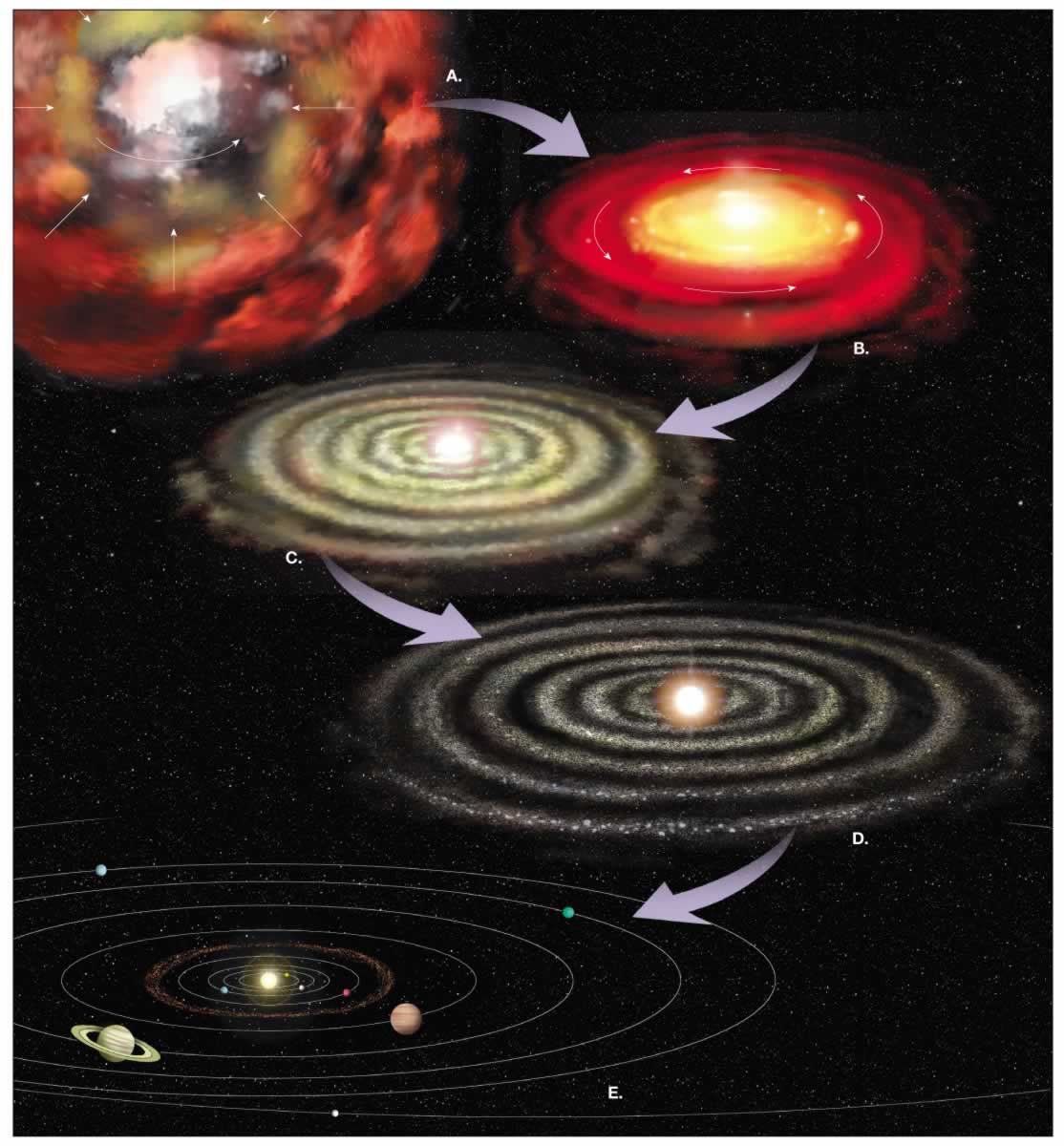
So how did the star dust make it into the mountains and rivers on earth? When our solar system began approximately 4.6 billion years ago it was a cloud of dust and gas called a nebula. This nebula was composed of the remains from older stars that had spread their guts around the universe in supernova explosions. The molecules of the nebula naturally pulled on each other by the force of gravity growing more and more dense. As the nebula was collapsing in on itself it also started to spin faster and faster. The condensing and spinning action formed the nebula into a disk, much like you spin dough into a pizza. In the center where the force of gravity is the strongest a new star was created, our sun. The swirling mass around the sun clumped together into the planets, moons, asteroid and comets that we see today.
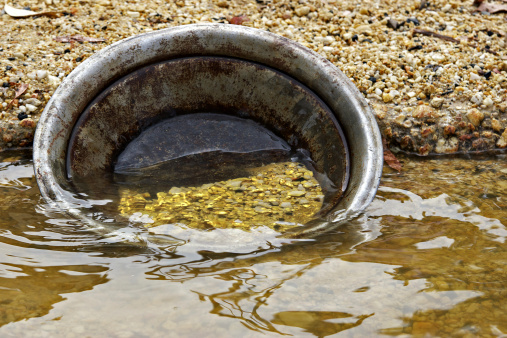
The early solar system was different that it is today. The big planets did not form all at once, it was a gradual process. Small plantoids formed first and crashed and coalesced into each other to form larger planets. In theory the distribution of gold was basically even in all the rocky material that made up the early solar system. In the early earth, while it was still completely molten the heavy material (such as iron and precious metals like gold) all sunk to the center of the planet to form the core. The process is similar to the way that dense material sinks to the bottom of your gold pan. If you could mine the core you would be very rich but it would be very difficult with current gold mining equipment. Current scientific theories estimate that there is enough gold in the core to cover the surface of the earth with a 4 meter thick layer of pure gold.
We can only reach gold that is trapped in the crust of the earth. The precious metals in the crust were put there by meteor bombardments that took place after the crust had formed. As these meteorites crashed into the surface of the earth they disintegrated and mixed their material into the upper mantle. The meteorite guts had the effect of enriching the amount of precious metals in the crust.
So we know where gold came from and how it was formed. Stay tuned for a future post to learn how the gold formed into deposits in the mountains and streams that we mine.
Posted by AGORACOM
at 1:47 PM on Friday, December 11th, 2020
Affinity Metals discusses rational for recently acquired Carscallen Extension property. The Carscallen Extension immediately adjoins the Melkior/Kirkland Lake Gold JV Carscallen Project located approximately 6 km west of Pan American Silver’s West Timmins Mine and approximately 25 KM West of Timmins. The company has recently announced the commencement of drilling on trend with the projected extension of the Shenkman-ZamZam gold system which has been the focus of the Melkior/Kirkland Lake Gold JV.
Posted by AGORACOM
at 1:30 PM on Friday, December 11th, 2020
SPONSOR: Thoughtful Brands is an established natural health products company focused in the CBD and psychedelic medicine sectors. Through their powerful eCommerce business Thoughtful is a leading direct-to-consumer provider of a wide range of natural health products throughout the United States and Europe. Click Here For More Info
Lawmakers took a step Monday to reduce penalties for possession of magic mushrooms, a criminal justice reform move that also brings them closer to passing a bill to guide the marijuana industry in New Jersey.
The Assembly Judiciary Committee voted 4-1 with one abstention to advance the bill (A5084). It does not decriminalize psilocybin, but makes possession of up to one ounce a disorderly persons offense rather than a third degree crime. That would drop penalties to a maximum of a $1,000 fine and six months in jail.
Currently, those convicted can face between three and five years in prison.
“It’s much simpler than what appears on the surface,” Assemblyman James Kennedy, D-Union, who sponsored the bill, said during Monday’s hearing. “This is really a downgrading of the charges.”
The move to legalize marijuana has been underway in New Jersey since 2014, but mushrooms only came up last month.
As lawmakers sought to pass a bill that would end arrests for up to six ounces of marijuana, Sen. Nicholas Scutari, D-Union, added a provision to downgrade penalties for psilocybin.
The measure passed the Senate by a vote of 29-4, but the Assembly did not put the amended bill for a full floor vote. The mushrooms came unexpectedly and took away from bill’s goal of ending tens of thousands of annual marijuana arrests that disproportionately involve minorities, some said.
Last week, Kennedy introduced the new bill to separate magic mushrooms. That cleared the way for conversations to resume on both the marijuana decriminalization bill and the bill that will establish rules and regulations for the legal industry.
Lawmakers came to a compromise on the setting rules for a new marijuana industry late Friday, and plan to hold a full vote on the legislation on Dec. 17. The Senate will have to repass its decriminalization bill without the mushroom provision and move on its own version.
New Jersey is not the first state to reconsider its laws on psychedelic mushrooms.
Colorado voted to decriminalize mushrooms in 2019 and Oregon voted this November to legalize their use for medicinal purposes. Several cities in California as well as Washington, D.C., have moved to end arrests over mushroom possession.
Some studies show promising medical benefits of psilocybin to treat depression and anxiety, particularly in cancer patients or others with chronic illnesses, like HIV, Mathew Johnson, a professor of psychiatry at and behavioral sciences at Johns Hopkins Medicine, said during the hearing.
He also said psilocybin carries no risk of an overdose, and the greatest risk comes from people making poor choices while impaired, or from people with certain psychological issues like schizophrenia having adverse reactions.
“When you include it even amongst a large group of legal and illegal drugs…psilocybin mushrooms always falls towards the bottom of the rankings in terms of harms to self or harms to others,” he said.
Some lawmakers remained hesitant.
“I think the bill sends the message to young people in our state that the recreational use and misuse of these substances is really not that big a deal,” said Christopher P. DePhillips, R-Bergen, who voted no on the bill.
Those in favor reiterated that the bill would not legalize or decriminalize the use of psilocybin, but would carry a punishment that more closely fit the crime.
“We open up job opportunities to so many folks who may have done this as a one-off, and then suffered with a life-long third degree indictable conviction,” said Assemblyman Raj Mukherji, D-Hudson.
“I think that public policy will be better served by treating this as a criminal act, but as a disorderly persons offense,” he said.
Posted by AGORACOM
at 12:42 PM on Friday, December 11th, 2020
SPONSOR: Arctic Star Exploration is currently exploiting the Diagras Diamond Property, NWT. Adjoined by both Diavik and Ekati Mines, Arctic has combined known data on Diagras with modern Gravity and EM geophysical survey techniques to delineate viable Kimberlite targets. Arctic Star is currently preparing a drill program. CLICK HERE FOR MORE INFO
We have seen how the industry has undergone significant changes over the past 20 years and how smaller companies have emerged to play an increasingly important role in supplying rough diamonds to the world.
These changes have come about at least partly due to the discovery of diamonds in locations outside of Southern Africa, which was where the vast majority of diamonds had been mined for nearly a century. South Africa is also where De Beers established its dominance of the industry. The discovery of diamonds elsewhere in the world has therefore been a key factor in the diamond giant’s gradual decline in market share.
According to Kimberley Process rough diamond statistics, 22 countries produced rough diamonds in 2014. The top six producing countries accounted for over 90% of production by value. A closer analysis of global diamond mining is key to learning more about the industry’s recent evolution, and to developing an image of where it might be heading in the future.
To start, I will focus on the top six producing nations, each of whose policies and methods of distribution shape the industry.
Russia
Diamonds were first discovered in Russia in the mid 1950s in the Sakha (Yakutia) Republic in northeastern Siberia. Interestingly, the search for diamonds in Russia, which began in 1947 following the end of World War Two, was not initiated for financial gain. Stalin understood that in order to rebuild the shattered Soviet Union after the war, he would need access to a large supply of industrial diamonds. These diamonds were required for a number of mechanical operations such as drilling, abrasive grit, precision cutting and other digging processes. However, at the time, De Beers controlled the sale of rough diamonds and Stalin knew that this left him precariously dependent.
Russian geologists had recognized as early as the 1930s that parts of Siberia exhibited very similar geological characteristics to the kimberlite-rich regions of South Africa. Teams of geologists were dispatched to Siberia and these expeditions did not disappoint. In 1955, the Mirny (Mir) kimberlite was discovered and mining commenced in 1957.
The purpose of searching for diamonds in Russia was to develop a supply of industrial stones for tools and equipment. Thus, when Mir produced a vast supply of gem quality stones, the state found itself in the grips of an unexpected predicament. By the mid 1960s, Russia had begun selling its gem diamond production to De Beers, a relationship that would remain intact for more than 40 years.
Today Russia maintains more than a dozen active open-pit diamond mines and is the world’s number one producer of rough diamonds by value and by carat volume. Russia’s known diamond reserves have long been shrouded in mystery, but according to state-owned miner ALROSA, which controls the vast majority of diamond mining in the country, its reserves exceed one billion carats. This should allow the country to maintain its position as a dominant player in the industry for several decades to come.
Botswana
Botswana officially gained independence from the UK on September 30, 1966. The country’s first kimberlite was identified just five months later. This initial discovery was followed shortly by numerous others which quickly established the nation as a diamond powerhouse and helped to propel its population out of crushing poverty.
Botswanan diamonds truly took to the skies when it was determined that the AK1 mine, now Orapa, could be seen from the sky and was frequently used as a landmark by South African pilots navigating their way to Europe.
Today, Botswana ranks second only to Russia in rough diamond production by value, driven primarily by the two richest mines in the world – Orapa and Jwaneng. However, it is the country’s recent efforts to leverage its diamond resources to further benefit its people that has earned the attention of the diamond world.
In 2011, the Botswanan government and De Beers announced a landmark deal that would eventually see De Beers’ entire sorting and sales operations moved from London to Gaborone – the capital of Botswana. Also as part of the deal, the government was given the opportunity to market a portion of local production through its own subsidiary company, now known as Okavango Diamond Company. In this way, Botswana has a solid mechanism for understanding the change in market prices for its resources.
By all accounts, Botswana’s diamond revenues have been put to very good use in helping lift the country out of poverty. In the late 1960s, Botswana was one of the poorest countries in the world with a GDP per capita of around $70. Today it ranks among the top African countries for per capita GDP, and consistently ranks near the top among Africa countries in terms of literacy, education, health care and low-levels of government corruption.
The Botswanan government has embarked on a bold experiment to extract maximum benefit from its natural resources by establishing Botswana as a diamond trading and manufacturing hub, in order to achieve stability for after its resources are depleted. Other nations are taking notice, and the Botswana model may be looked to in the future more and more frequently.
Canada
Though Canada’s history as a diamond-producing nation is short, it is now the world’s third largest producer by value. In fact, diamond deposits have been found scattered across the country’s vast expanses, and it offers much promise for continued exploration and development. Two large diamond projects are set to go into production as soon as late 2016 and early 2017 – the Renard and Gahcho Que projects.
Diamonds were first discovered in Canada in the early 1990s by two geologists who resisted the conventional wisdom that local geology would not support a diamond find. The discovery of the Ekati Diamond Mine triggered one of the most intense prospecting rushes in North American history, bringing teams from all over the world to scour the area. Geologists were literally staking their claims with wooden posts, so much so that local lumber suppliers could not keep up with the demand for wood.
It is said that the team of geologists who discovered the Diavik Diamond Mine initially planned to stake out a different location, but had to “settle” for what they were given because the person ahead of them in line at the mineral claims office took the area they were first interested in.
Most of Canada’s diamond projects are clustered in the far reaches of the northern Arctic region known locally as the Barren Lands. These barely hospitable tundra experience winter temperatures that average -35 degrees Celsius, often dipping below -50. This makes mining a challenge and the mining camps in these regions function more like enclosed cities, almost entirely sheltered from the harsh weather outside.
This region is also known for having been carved from the glacial movements of the last ice age. There are so many lakes in the area, numbering in the tens of thousands, that many remain unnamed to this day. In fact, some of the country’s most prolific diamond deposits have been found located beneath lakes. The Diavik Diamond Mine, located underneath 56 meters of water in Lac De Gras, necessitated the construction of a massive retaining wall and the removal of millions of liters of water to access the high-value kimberlite underneath the lake-bed.
Angola
Diamonds were first discovered in Angola’s Lunda Norte province near the border with Zaire in 1913. Angola is rich in both kimberlite deposits and alluvial diamonds washed out from their kimberlite hosts by ancient river systems.
The country has suffered from political instability for decades after gaining independence from Portugal in 1975. Shortly afterwards gaining independence, a civil war erupted that would last more than 25 years. As a result, large mining companies have been somewhat reluctant to invest in mining in Angola, and the country is believed to possess significant diamond resources that remain undiscovered.
In 2011, Angola introduced new legislation aimed at attracting foreign investment into its diamonds sector to help boost production. The plan has shown some early results. In 2015, ALROSA announced that it would invest $1.2 billion into the country to further develop producing assets and to increase exploration work in the country.
Keeping pace with the recent string of large diamond discoveries around the world, Australia-based Lucapa Diamonds announced in February that it had unearthed the 27th largest diamond ever from its Lulu mine in Angola. The gem was sold recently for $16 million.
South Africa
For decades South Africa was the epicenter of diamond mining. The discovery of the Eureka Diamond in 1866 by a young farmer named Erasmus Jacobs set off a prospecting rush unparalleled at that time. In a few short years, numerous alluvial and kimberlite operations were established. This new supply helped to replace the dwindling supplies from Brazil and India, and make diamonds accessible to vastly more people than ever before.
While South Africa still has more than ten producing diamond mines, its importance in the diamond world is slowly declining. Many mines have reached the end of their lifecycle and have moved to underground mining, which is often slow and more expensive than mining in an open pit. Although South Africa is still the fifth largest producer of diamonds in the world, with value in excess of $1 billion annually, in the absence of a major new mine discovery its importance will decline significantly over the coming decade.
Namibia
At number six in the diamond producing nations rankings, Namibia boasts the highest value per carat diamonds in the world. Namibian diamonds are mostly found in the ocean, along the country’s 1,570 kilometer coastline. Over millions of years, the area became a drainage basin covering the Kaapvaal Craton, which emptied water into the Atlantic Ocean. This water eroded diamond-bearing kimberlites and transported diamonds into the ocean. Over time, ocean currents churned up the area and deposited the diamonds in seabed trap sites as well as inland along the coast.
Because these diamonds travelled huge distances, often in rough conditions, only the strongest diamonds survived the journey. As a result, Namibian diamonds have exhibit the highest proportion of gem quality stones anywhere in the world, and this results in a very high average value per carat. These diamonds are mined mostly from boats and barges that drill and extract material from the seabed through long hoses.
Diamond production by country has changed significantly in recent years and this has had important implications on the industry and the power of companies within it. Next week I will look at some of the smaller producing nations, some of which are on the rise while others are in decline.
The views expressed here are solely those of the author in his private capacity. No one should act upon any opinion or information in this website without consulting a professional qualified adviser.
Posted by AGORACOM
at 8:57 AM on Wednesday, December 9th, 2020
Red Light Holland Corp. (CSE: TRIP) (FSE: 4YX) (OTC: TRUFF) (“Red Light Holland“) is pleased to announce it has entered into a non-binding letter of intent to acquire 51% of Psychedelic Insights in Amsterdam, the Netherlands. Psychedelic Insights currently provides psychedelic assistance to clients from all over the world, who are in need and wanting to try a safe and psychological guided experience. Psychedelic Insights’ dedicated and compassionate facilitators, including a team of psychiatrists, psychologists, therapists and scientists, provide psychological guidance of psychedelic experiences in many different categories including: (i) individuals or small groups (ii) psychedelic palliative care (iii) Re-connecting Veterans and (iv) provides global mental health screening. Psychedelic Insights portfolio also includes unique therapist training and psychedelic assisted leadership coaching.
As part of the expected 51% acquisition, a condition in the agreement will include: an exclusive supply agreement with Red Light Holland’s Truffles, grown from Red Light Holland’s facility in Horst, Netherlands with the intention to be used solely by Psychedelic Insights’ clients.
“I find it so interesting that behind the scenes we’ve been working on this deal for months in the Netherlands, and we just happened to agree to it on the same day Canada granted 17 healthcare professionals to possess and use psilocybin for professional training in psilocybin therapy,” said CEO Todd Shapiro. “Luc Van Poelje, CEO of Psychedelic Insights and his team have a very professional and compassionate business and we are looking forward to potentially helping it grow, because of the capital Red Light Holland can provide. There is a careful due diligence process, but we are very excited at this potential to create another alternative revenue stream as we stay true to our mission of helping people gain access to psilocybin via our Red Light Holland Truffles, responsibly.”
“Our team of psychiatrists, psychologists, therapists and scientists at Psychedelic Insights are all excited to potentially be partnering with Red Light Holland so we can continue to grow our psychedelic assisted service to clients from all over the world, who are in need and wanting to try a safe and psychologically guided experience. Our dedicated and compassionate facilitators are also pleased to potentially use Red Light Holland’s Truffles, exclusively and are pleased at this intention to grow our business so ultimately we can hopefully help more people in need,” added Luc Van Poelje, CEO Psychedelic Insights.
Recently, Red Light Holland announced a non-binding letter of intent with Halo Labs Inc. (“Halo“) for the purposes of creating a joint venture to become a licensed psilocybin manufacturer to supply psilocybin products to licensed service centers in the State of Oregon, and to explore other potential business opportunities in this new regulated market, subject to compliance with all applicable Oregon laws and regulations. The planned acquisition of a majority interest in Psychedelic Insights in The Netherlands keeps in line with the aforementioned theme and future plans of Red Light Holland’s potentially being involved (in multiple countries) in legal psilocybin-assisted initiatives.
In Canada on December 8th, 2020, 17 healthcare professionals were approved by the Canadian Federal Health Minister, Patty Hajdu, to possess and use psilocybin for professional training in psilocybin therapy. The approved healthcare professionals include psychologists, psychiatrists, clinical counselors, social workers, general practitioners, and nurses.
Further details will be announced once made available.
About Psychedelic Insights
Psychedelic Insights provides legal, safe and psychological guidance of magic (psilocybin) truffle experiences based in Amsterdam, The Netherlands.
Red Light Holland is an Ontario-based corporation positioning itself to engage in the production, growth and sale (through existing Smart Shops operators and an advanced e-commerce platform) of a premium brand of magic truffles to the legal market within the Netherlands, in accordance with the highest standards, in compliance with all applicable laws.
Posted by AGORACOM
at 11:05 AM on Tuesday, December 8th, 2020
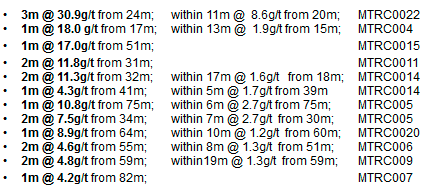
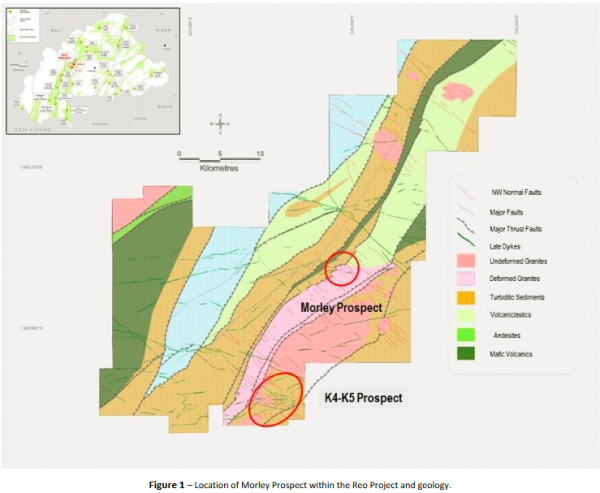
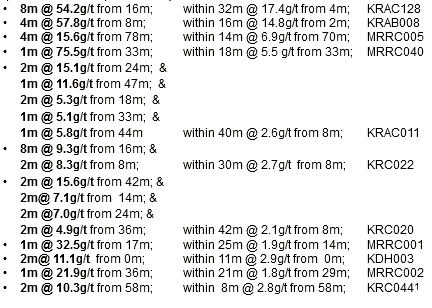
VANCOUVER, BC, Dec 8, 2020 /CNW/ – Tajiri Resources Corp. (the “Company”) (TSXV: TAJ) is delighted to report initial results from first pass RC drilling at the Morley Prospect situated within the Company’s 1,162km2 Reo Gold Project, located at the confluence of the prolific Hounde, Boromo and Goren Greenstone Belts, Burkina Faso (Figure 1). The shallow, 23 hole program intercepted consistent gold mineralization including:
Results of all drill holes are given in the Table at the end of this document and shown in Figure 2.
The results reported today are the product of a drill program designed as a first test of Tajiri’s new model for the orientation of mineralisation at Morley. These results, when combined with historic drill intersections, largely confirm the new model and opens new and hitherto sparsely to completely unexplored strike and dip directions to expand Morley. Historic results include:
1All historic intercepts are from drilling at a variety of azimuths and dips to mineralisation and individual intersections may not be representative of true widths and may vary ~ 20 to 80% from true width. New results are interpreted as being within 80-90% of true widths.
Summary
Tajiri’s maiden drill program, importantly, confirms a new orientation model for gold mineralisation at Morley which is situated in a belt scale deformed granite and lies within 800m of the northern and 1,000m of the western granite-greenstone contact (Figure 1).
Exploration at Morley is still at an early stage- historically it has returned high grades from drill holes over widths that make it a high priority target but a coherent model of the orientations and structural controls of mineralisation was never previously established.
Our drilling shows the main mineralised zone at Morley has a WNW strike and dips -50˚ northeast. Strike is subparallel to a set of crosscutting shear zones which occur over a width of about 2km at Morley and are axial to a major 40˚ flexure in the strike of the granite-greenstone belt from ENE to NNE (Figure 6).
Most Importantly confirmation of the new model opens-up on strike and down dip potential into very sparsely explored or totally unexplored areas both immediately and further along strike (Figures 4,5 & 6).
A very favourable target is now in play: only 1,000m WNW along strike, the “Morley structure” cross cuts the ENE trending sheared granite-greenstone contact of the Morley host granite. Empirically, granite-greenstone contacts are a favoured location for high grade gold deposits in Burkina such as M1 South, Siou and Yaramoko (Figure 6).
This target area is under alluvial cover and has never been sampled and represents a first order opportunity for Tajiri.
At Morley mineralisation presents as high-grade narrower veins within broader halos of low-grade sericite + carbonate +/- pyrite shearing. It is expected that veins may have an orientation oblique to shearing and there may be at least two sets (Figure 3).
While drilling has broadly confirmed the strike and dip of the model it requires further work on the details to explain grade and thickness variations within the mineralised zones. This is likely the influence of a second structural direction on vein set orientation within the shear zones and/or the presence of intersections with other structures of different orientations.
Several lines of evidence point to the second structural control being either NNE or ENE with a likely 50˚-60˚ north dip. Strike of the second structural control is therefore subparallel to the major belt scale shear zones in the area.
Balance of evidence suggests the high-grade intersections returned in KRAC128 (8m @ 54.2g/t) and MTRC 022 (3m @ 30.9g/t), which we drilled as a scissor hole, are from a NNE striking vein which dips 50˚ to 60˚ to the west or it is the intersection of ENE and NNE vein sets with ~50˚ degree dips to the west. ENE strike projections of this vein have been adequately tested by historic drilling but not NNE directions as most N-S oriented RC drillholes are subparallel to this direction. Significantly this vein in RC chips appears to have a different character to those of other vein zones drilled during the program appearing to be more of a laminated style.
Historic close spaced (50m x 50m) auger drilling to sample top of saprolite in the immediate vicinity of the Prospect confirmed WNW, as well as NNE and ENE trends as anomalous and the close spaced auger anomaly remains open in all of those directions (Figure 4)
Historic scout drilling oriented on NW-SE lines, intersected thin or low-grade mineralisation on ENE and possibly NNE trends (Figure 4).
There is a good potential for Morley to be a stacked lode system with gross strike controlled by ENE or NNE bounding shears and main lodes in crosscutting WNW strike and NE dip orientations. This possibility remains poorly tested but could lead to Morley becoming a substantial stand-alone deposit (Figure 5).
Prospect has excellent opportunities to host high grade intersection shoots, but suspected plunge directions and best intersection structures still need to be determined.
Demonstrating that WNW structures are mineralised has important implications for exploration elsewhere within the Reo Project as historic sampling patterns are orthogonal to the NE trending main belt structures and thus poorly oriented to test potentially WNW mineralised structures
Given the above potential two structural controls, drilling has been paused temporarily to gather more structural data to optimise drill directions. To this end the company will embark on a focussed deep trenching program to gather structural data and vein orientation data before re-commencing drilling at the prospect scale. Trenching will commence early Q1 2021 after a contracted excavator finishes work at the K4-K5 Prospect, 20km to the south.
Close space power auger drilling is being planned to step out along potential strike directions in the immediate vicinity of Morley prior to further work
RAB/ Aircore rig options being investigated to test granite greenstone contact target WNW of Morley.
Chairman’s Comment
Executive Chairman, Dominic O’Sullivan remarked:
“I am simply thrilled that with the Company’s first modest expenditure in Burkina of about USD200,000, we have not only returned some great results but have also established several fairways along which Morley might grow from a modest sized prospect into a potentially much larger one.
We are developing our understanding of the deposit, starting from a rather higgledy piggledy set of drilling with holes and grades going in all directions, into a geologically cogent framework that demonstrates potential for a lot more at Morley. It fits our philosophy – find a poorly understood or overlooked discovery, in a Tier one address and do the hard yakka, looking at all the data from every angle, then follow-up with smart prudent focused exploration.
I’m particularly enthused about the on-strike potential generated by confirming that WNW oriented structures at Morley host gold mineralisation, especially just west of Morley, where the “Morley Structure,” smashes an 800m sinistral displacement into a sheared granite-greenstone contact which itself has a dextral reverse sense of movement. This creates a WNW trending granite-greenstone contact, hugged by the Morley structure for about 800m of strike. That spells a lot of dilation on favourable structures and lithological contrasts. What’s not to like about that? As it’s under cover, never seen before, I feel it’s a bit like a little Chrissy prezzie for us- still under the tree, all wrapped up and we can’t wait to open it.”
Details of the Morley Drill Program
Results reported today are Tajiri’s first steps in our exploration at Morley and as a necessary first precedent to further work it has focused on defining the orientation of mineralisation. Historically, the orientation of mineralisation has been poorly constrained, and several equivocal interpretations could fit historic data due to the following:
Drilling was conducted blind because of a thin veneer (3-10m thick) of cover overlying the Prospect;
Morley is hosted by a single relatively undifferentiated granite lithology and a lack of other lithologies meant models could only be constructed by grade interpolation;
Morley lies in a zone of considerable structural complexity, near the focus of a change in the gross strike of the granite-greenstone belt of 40˚ from ENE to NNE, and major and lessor shears of both orientations together with numerous WNW, NNW, EW and minor N-S orientations transect the area (see Figure 6);
all structures or their intersections could be potential fairways for mineralisation and all structural orientations can be associated with some form of gold anomalism, though the ENE- NNE orientations appear to dominate the distribution of gold anomalism on a regional scale;
drilling to date has been suboptimal to test all possible mineralised orientations and drilling has mostly been oriented either:
North-south and predominantly drilled to the south or
On NW-SE oriented scout drill lines of 200-400m spacing with alternate lines drilled to either the SE or NW.
In our new model, gold mineralisation which occurs as sheeted high grade quartz veins, within low grade sericite + carbonate +/- pyrite altered shear zones hosted by a syntectonic belt scale granitoid is comprised of several 1-20m thick, NW-WNW striking lodes which dip between 40˚and 55˚ to the NE. The best historically drilled lode, “the Main Lode” where current drilling has focused, has a known strike length of about 300m.
Results announced today are highly supportive of our new model and intersections mostly occur where the model predicted. Drill results returned to date demonstrate good apparent down-dip coherence with our model and continuity of between 100m and 150m (100m vertically below surface- base of current drilled depth). Zones remain open down dip. On the other-hand strike direction has only been broadly confirmed but it is beginning to resolve into a WNW rather than NW strike. Further work is required because:
Access to drill the central part of the main lode was restricted as it is the site of a small forest (Figure 2) and permission was not granted by the local community to drill within its confines. Investigation of mineralisation in this area will require deeper drilling, later, as it is beyond the capability of the contracted RC rig.
Mineralisation is abruptly interrupted on the section line comprised of holes MTRC007, 008, 18 and 009. Hole MTRC009 intersected a vein zone grading 2m @ 4.8g/t within 19m @ 1.3g/t from 59m and on-strike from mineralisation intersected in hole MTRC006 to the south (2m @ 4.6g/t from 55m; within 8m @ 1.3g/t from 51m) but only weak anomalism was intersected up dip by MTRC0018 and MTRC008. Based on a feature visible in ground magnetics, it is possible that a post mineralisation fault striking NNW, displaces the Main lode with an with apparent dextral throw of 50m. This interpretation fits with a WNW strike.
As this was a first pass program and the exact strike of mineralisation was unknown at the time of planning- being modelled as between WNW to NW, several holes appear to have collared in the footwall of the Main lode and did not intersect the expected Main lode near surface. These holes are MTRC003, 7, 10, 13 and 19 and the lack of mineralisation in those holes up dip from mineralisation strongly suggest that strike is closer to WNW than to NW (Figure 2).
Variation in the grades and thickness intersected also suggest that there is a second structural orientation that influences the mineralisation at Morley. This second structural control may be an upshot of vein sets having an orientation which is oblique to the orientation of the host shear zone, a common feature of this style of mineralisation but we also believe, based on the overall architecture of all data, that mineralisation is developed preferentially within the WNW structures at their intersection with either ENE or NNE structures that are also evident in ground magnetic images. Evidence for a second significant structural control is:
At the known north end of Morley main lode, it thickens and high-grade vein densities increase (Figure 3) where it is inferred to be intersected by an ENE trending shear zone of weaker mineralisation that was drilled over 400m of strike going west and which returned a peak value of 14m @ 1.1g/ (Figure 4).
All three structural orientations align with the overall shape of a gold in saprolite geochemical anomaly that overlies the Prospect (Figure 4), suggesting all three alignments may be mineralised. With lobes and high values extending along WNW, ENE and NNE orientations. This data was derived from a Newmont 2008, 50m x 50m auger program down to 10 m depth that covered an area of 1,000 x 850m and was conducted after air-core scout drilling had located the prospect.
All three structural orientations align with anomalous gold values returned by regional reconnaissance saprolite sampling auger data which was conducted on lines spaced 400-800m apart and samples collected every 100m (Figure 6).
Several fine scale structures visible in ground magnetics especially 1VD, 2VD and tilt filtered images coincide with all three orientations and higher grades in drilling can be tentatively associated with the intersection of the WNW striking lodes with both ENE and NNE trending structures.
The above brings the possibility of repeats of WNW oriented mineralisation along ENE or NNE directions in effect forming a large-stacked lode system. The orientation of Historic scout drilling outside of the main area of drilling at Morley has poorly tested this concept with scout drill lines oriented subparallel to the WNW strike of mineralisation and lines alternating between down dip and across dip directions. Better oriented north south holes are confined to the norther margins of the prospect. Potential is illustrated in Figure 5
Next steps at Morley
Given the evidence for a second structural control on mineralisation, we have temporarily paused our drill program to undertake deep trenching and pitting to gather structural data and map dominant vein orientations within the shear zones. Once this is done drill direction/s which is currently on NE-SW lines drilling to SW can be optimised to intersect vein sets within the shear zones to give representative grades and investigate potentially higher-grade plunging intersection shoots.
It is expected that trenching will commence early Q1 2021 after a contract excavator completes its work at K4-K5.
Close spaced auger power auger drilling is being planned to extend the Morley footprint in favourable directions.
Finally, options to contract a RAB/Aircore rig to drill the covered granite greenstone contact in the area where the “Morley Structure” intersects it, are being investigated.
Other Exploration
In Burkina
We have commenced trenching at K4-K5 to investigate areas where cover is thinner – in artisanal workings or where drilling shows mineralisation close to surface. Purpose of the program is to collect structural and lithological data and examine mineralisation near surface as previous drilling has been wide spaced and we are not sure if dominant trends are NNE or NE striking. This 2,000m program is expected to be completed by very early next year after which RC drilling will be commenced.
We are also in the advanced stages of planning closer spaced deep auger drilling at K4-K5 to define drill targets within the larger area of K4-K5 outside planned drill areas. The geochemical anomaly at K4-K5 is huge and extends over 7 x 6 km. Part of that program will cover extensions of drilling by Arrow Minerals (ASX:AMD) announced early this year which shows the eastern contact of the regional granite which hosts Morley is prospective. This program is expected to commence shortly.
In Guyana
We have recently completed a small auger program at Epeius to investigate the strike extensions of good results produced by Troy Resources (ASX:TRY) just across the projects southern boundary. Troy’s results include drill intersections of 10m @ 6g/t Au, 17m @2.2g/t Au and trench intersections of 13m @ 2.3g/t Au, 8m @ 2.3g/t Au & 11m @ 1.47g/t Au. An announcement will be made shortly and a follow-up trench program is already underway with 600m linear metres excavated to date.