Agoracom Blog Home

Author Archive

Bank of America Calling for $3,000 Gold in 18 Months SPONSOR: Loncor Resources $LN.ca $ABX.ca $TECK.ca $RSG $NGT.to $GOLD $NEM

Posted by AGORACOM at 8:52 AM on Wednesday, April 22nd, 2020

Sponsor: Loncor, a Canadian gold explorer controlling over 2,400,000 high grade ounces outside of a Barrick JV. The Ngayu JV property is 200km southwest of the Kibali gold mine, operated by Barrick, which produced 800,000 ounces of gold in 2018. Barrick manages and funds exploration at the Ngayu project until the completion of a pre-feasibility study on any gold discovery meeting their Tier One investment criteria. Newmont $NGT $NEM owns 7.8%, Resolute $RSG owns 27% Click Here for More Info

This image has an empty alt attribute; its file name is Loncor-Small-Square.png
  • The analysts noted that the Federal Reserve: “Can’t print gold.”

(Kitco News) – Bank of America commodity analysts just keep getting more bullish on gold as the weeks go by.

The bank said in a report last week that gold ’s technical momentum could drive prices to an all-time high this year; in a new report published Tuesday, analysts have officially increased their bullish outlook, saying that gold prices could hit $3,000 within 18 months, a 50% increase from its previous forecast

Along with increasing its 18-month target, the bank said that it sees gold prices averaging $2,063 an ounce in 2021.

“As economic output contracts sharply, fiscal outlays surge, and central bank balance sheets double, fiat currencies could come under pressure. And investors will aim for gold,” the analysts said.

Although a strong U.S. dollar and weak physical jewelry demand in Asia could be headwinds for the gold market, the analysts said that the Federal Reserve has provided enough momentum to propel investment demand and prices higher.

Economists at Bank of America have warned that the Federal Reserve’s balance sheet as a percentage of GDP could rise 20% to 40% this year. According to reports last week, the Federal Reserve’s balance sheet hit a record high of $6.42 trillion, up more than 50% from levels reported during the first week of March.

The analysts noted that the Federal Reserve: “Can’t print gold.”

“Beyond traditional gold supply and demand fundamentals, financial repression is back on an extraordinary scale. Rates in the US and most G-10 economies will likely be at or below zero for a very long period of time as central banks attempt to push inflation back above their targets,” the analysts said.

Although investor sentiment has improved slightly during the last few weeks, the bank’s analysts said that there is still more bad news ahead. They noted that economists are forecasting a 30% decline in the U.S. GDP in the second quarter as the economy was grounded after all non-essential businesses were closed and citizens were requested to stay at home.

“As central banks rush to expand their balance sheets and backstop the economy, a lot of risks could effectively be socialized, boosting the appeal of gold,” the analysts said.

Weak economic growth does not bode well for equity markets, the analysts said, adding that this will be another factor supporting higher gold prices.

“The positive equity/gold correlations are a possible sign that equity markets may not have fully bottomed and that the gold market has further room to run, in our view. The trigger here could be an extension of lockdown restrictions over the next few weeks,” the analysts said.

Despite the strong bullish sentiment, Bank of America does see some risks in the marketplace. Along with weak physical demand, the analysts said that central bank gold purchases are expected to slow this year.

They also noted that lower market volatility could also weigh on gold prices.

Source:https://www.kitco.com/news/2020-04-21/Bank-of-America-calling-for-3-000-gold-in-18-months.html

Mota Ventures $MOTA.ca Raises $2.8 Million in Additional Private Placement $APH.ca $GBLX $PFE $ACG.ca $ACB.ca $WEED.ca $HIP.ca $WMD.ca $CGRW

Posted by AGORACOM at 8:03 AM on Wednesday, April 22nd, 2020
https://s3.amazonaws.com/s3.agoracom.com/public/companies/logos/564664/hub/MOTA_Large.png

VANCOUVER, BC / ACCESSWIRE / April 22, 2020 / Mota Ventures Corp. (CSE:MOTA)(FSE:1WZ:GR)(OTCPINK:PEMTF) (the “Company“) is pleased to announce that it has completed a further offering (the “Offering“) of 9,944,000 units (each, a “Unit“) by way of non-brokered private placement at a price of $0.28 per Unit for gross proceeds of $2,784,320. Each Unit consists of one common share of the Company, and one common share purchase warrant (each, a “Warrant“) exercisable to acquire an additional share at a price of $0.38 for a period of twenty-four months, expiring on April 21, 2022. When combined with the earlier offering completed by the Company on April 1, 2020, the Company has raised gross proceeds of $4,504,320.

The Company anticipates utilizing the proceeds of the Offering to further develop and market products in North America and Europe using its ecommerce sales channels, to satisfy compensation obligations owing to employees based on services provided to the Company and the satisfaction of performance metrics and for general working capital purposes. In connection with completion of the Offering, the Company has paid $75,120 and issued 262,857 common shares and 268,287 Warrants to certain arms-length parties who assisted in facilitating the Offering. The Company has also issued 142,857 Warrants to an arms-length consultant, as partial consideration for services provided to the Company.

All securities issued in connection with the Offering are subject to a four-month-and-one-day statutory hold period in accordance with applicable securities law.

About Mota Ventures Corp.

Mota Ventures is seeking to become a vertically integrated global CBD brand. Its plan is to cultivate and extract CBD into high-quality value-added products from its Latin American operations and distribute it both domestically and internationally. Its existing operations in Colombia consist of a 2.5-hectare site that has optimal year-round growing conditions and access to all necessary infrastructure. Mota is looking to establish sales channels and a distribution network internationally through the acquisition of the Sativida and First Class CBD brands. Low cost production, coupled with international, direct to customer sales channels will provide the foundation for the success of Mota Ventures.

ON BEHALF OF THE BOARD OF DIRECTORS
MOTA VENTURES CORP.

Joel Shacker
President

For further information, readers are encouraged to contact Joel Shacker, President, at +604.423.4733 or by email at [email protected] or www.motaventuresco.com

CBD In Medicine: Relief and Regulation SPONSOR: Mota Ventures $MOTA.ca $APH.ca $GBLX $PFE $ACG.ca $ACB.ca $WEED.ca $HIP.ca $WMD.ca $CGRW

Posted by AGORACOM at 11:40 AM on Tuesday, April 21st, 2020
  • Neuropharmacologist and Functional Medicine practitioner Dr Elisabeth Philipps tells MCN about the therapeutic benefits of CBD and talks about CBD regulation.

MCN speaks to Dr Philipps about the science behind the health benefits of CBD and the need for standardised regulation of CBD food supplements.

Dr Elisabeth Philipps is a neuropharmacologist and practitioner in Functional Medicine with over 18 years’ experience. She operates a thriving health consultancy in the UK specialising in CBD, brain and gut health; where she provides expert opinion for private clients, corporate business programmes, the national media, specialist healthcare publications and health companies.

How did you first become aware of the endocannabinoid system and the therapeutic benefits of cannabis?

I’m a neuropharmacologist by training, so I’ve been aware of the medicinal therapeutic benefits of cannabis for a number of years. The endocannabinoid system was only discovered in the 1990s so it’s actually a relatively recent system that we’ve known about in the body, but it’s only been in the last two to three years that my focus has become much more intense on the endocannabinoid system, medicinal cannabis and CBD oil supplements; because of the rise in profile of those products.

What are the potential dietary benefits of consuming CBD or hemp?

The two products are quite different: hemp is extract of the whole plant, so the dietary benefits of hemp normally come from the hemp seed – you could have the seeds ground or sprinkled on top of your food, for example; maybe hemp seed oil which makes a good salad dressing. Hemp oil extracts are rich in very beneficial omega-3 and omega-6 essential fatty acids; you also find things like protein and fibre as well as minerals and vitamins: magnesium and phosphorus, for example, are found within the hemp seeds themselves.

CBD is an even more refined extract from the hemp plant flowers rather than the seeds, so there’s not so much [in the way of] dietary benefit; but it contains the compounds such as the phytocannabinoids, and other compounds such as flavonoids and terpenes, which can confer health benefits; so you get the dietary benefits from hemp seeds and hemp seed oil and you get other health benefits from consuming CBD.

What kind of conditions and ailments do you find that people are using CBD for?

[There are] three primary areas that people find CBD works for them: the sleep area, to help improve the quality of sleep; people report being able to [get to] sleep more easily, stay asleep and feel more refreshed when they wake up. [The second area is] pain, which comes in many different forms – it can be nerve pain or neurogenic pain or inflammatory pain, so conditions such as arthritis, for example, or more acute conditions such as sporting injuries or general inflammatory injuries. People report taking CBD oil as helping to reduce the response to pain. What’s been very interesting in the study of CBD and phytocannabinoids in pain pathways is that not only is it blocking the pain pathways themselves in the spinal cord and brain, but also CBD acts within the parts of the brain that helps change our perception of pain. That’s really key, because it’s how we respond to the pain signals in our bodies that gives us the intensity of the experience; so CBD is an important component of a programme to help manage different types of pain.

The third area that I find CBD can really help is in mood, in particular [for patients who are] feeling anxious or stressed. CBD has this ability, through various pathways in the brain, to help balance the systems that help us feel better, to improve wellbeing, to improve our mood. CBD works at the neurotransmitter level, transmitting chemicals in the brain that send signals to help provide a balance. There are a number of studies coming in: they’re relatively small scale, but they’re looking at CBD oil for anxiety and for sleep and they have showed improvement in those areas; but the science is beginning to play catch-up now as well.

What is the science behind the effects of CBD on different symptoms?

CBD interacts with our own endocannabinoid system and I think that’s really key, because when you take a medicine it’s a very blunt tool: it either turns something on or turns something off; it blocks a response or it produces a response. CBD is lot more subtle than that within the body, because it works within the endocannabinoid system and that system is spread throughout our body – the endocannabinoid system is in the gut, the brain, in the immune cells, in the lungs, in the skin – so that’s why CBD can have such a diverse number of effects.

We produce our own cannabinoids within the body to stimulate and produce effects; and CBD helps balance the body’s production and the body’s ability to activate the endocannabinoid system through its own naturally produced mediators. There’s a lot of science showing how CBD acts within the endocannabinoid system and produces its responses.

What advice do you have for consumers when choosing a brand or product to ensure it is good quality and does not contain any unlisted ingredients?

This can be a very confusing area, because there are so many products that have hit the market. First of all, a CBD food supplement is legal in the UK if it contains less than 0.2% THC or tetrahydrocannabinol. That is the cannabinoid which causes the commonly associated high or buzz that you get from marijuana; it’s only present in hemp in very low levels anyway and it’s been stripped out of CBD oil. You need to ensure that you’re taking a legal product that contains less than 0.2% THC; and you can do that by asking the company for a certificate of analysis.

Every batch of CBD oil that a reputable company receives will have had a third-party laboratory testing [conducted] on that particular batch of oil, which will have a batch number so it can all be traced. That will show the breakdown of the different cannabinoids and the different constituents of that particular oil so you’ll be able to see not only that it contains the legal limit or less of THC, but the amount of CBD that it says on the label as well – that’s where the product can vary drastically, so you need to have a look at that certificate of analysis to show that it contains the CBD that you want. You will find some companies selling 0% THC products, which are very useful especially if you are drug tested for work or if you’re a professional athlete. The Banned Substances Control Group (BSCG) can test for THC and other banned substances and can provide a certificate to show that you don’t have any of those substances within your product. Reputable companies should have their certificates of analysis on their websites; or have a chat with them and they should provide that information for you.

How do you anticipate the market will evolve in over the next few years?

This is a very interesting time for CBD and medical cannabis: there’s obviously a lot going on and there’s a lot in the news. I think there needs to be more CBD regulation within the industry, because there’s a wide range of products on the market that differ in terms of their CBD content and what they purport to have in them; so there needs to be more CBD regulation, there’s no doubt about that. Equally [there is a question of] how that CBD regulation is brought in: the industry is playing catch-up in a way because the popularity of the product has grown exponentially in the last few years.

What we need to see is regulation, working with food standards agencies and [other regulators] at a government level. I think that will evolve over the next few months and years; and it’s going to be [because of] FourFive and other reputable companies that are working with the regulators, to help the industry in a way that protects it and still provides consumers with quality products.

Working on the assumption that further CBD regulation is likely to be introduced, do you expect this to impact patients using these products?

There is no doubt that the CBD regulation will change; and that it needs to protect the industry in terms of protection of products and protect consumers as well. I think it’s a case of companies and experts working with both agencies and the regulators: the impact on patients is our primary concern; and we are working towards avoiding any impact so there is seamless availability of quality products on the market. That is a goal that everyone is working to at the moment: every country is different and we’re just going to have to keep working together to make sure that high quality products [are going] to be readily available.

Do you anticipate Brexit having an impact, either positive or negative, on CBD regulation and medicinal cannabis regulation?

Brexit will potentially free up time and space for this topic to be higher up agendas. I believe that Brexit has possibly moved discussions of CBD and medical cannabis off the table or further down the list [of priorities]. I do think we’ll see more discussions happening in the next few weeks and months as Brexit resolves. At the moment we’re still working under European guidelines, in terms of the food supplement side at least, but it will be interesting to see how that pans out as we leave Europe; and as with many different areas of Brexit it’s still a bit of an unknown as to how EFTA’s [the European Free Trade Association] regulations and rules will affect the Food Standards Agency on the UK side. There will definitely be more discussion around this, certainly in the groups that I’m involved with; and we know that there are greater discussions to be had in the next few months.

Dr Elisabeth Philipps
Nutritional Therapist
www.hartwellnutrition.co.uk

SOURCE: https://www.healtheuropa.eu/cbd-in-medicine-relief-and-regulation/99418/

The Gold / Silver Ratio: It Will Keep On Climbing SPONSOR: Affinity Metals $AAF.ca $SII.ca $TUD.ca $GTT.ca $AMK.ca $OSK.ca $RKR.ca

Posted by AGORACOM at 10:31 AM on Tuesday, April 21st, 2020

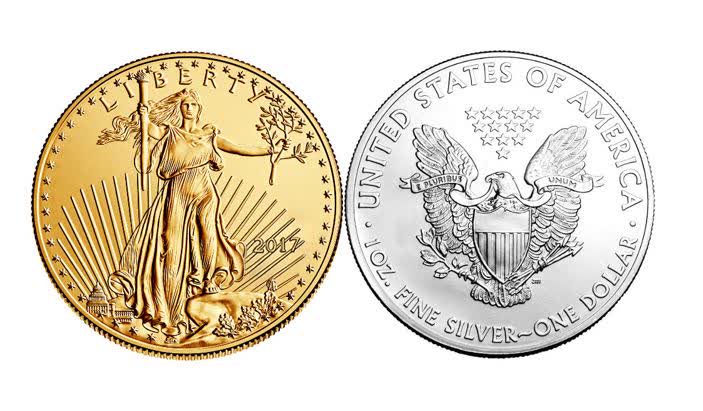
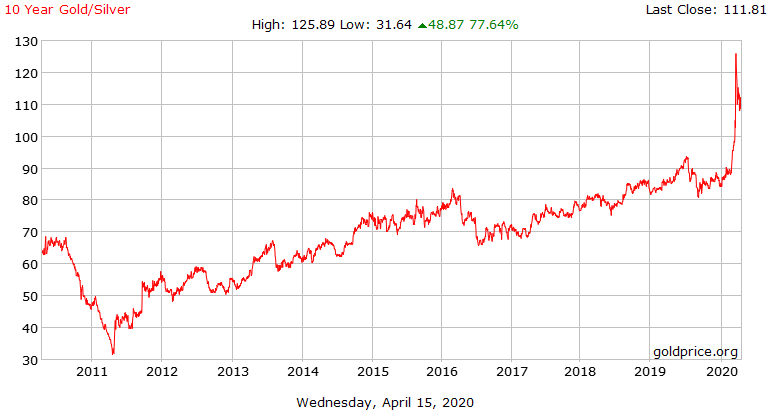
The gold silver ratio has been rising for nine years.

There are many commentators suggesting that the gold silver ratio is nearing a top at present. Here and here are good examples. I am not of that opinion and consider that it will keep climbing for the next 10 years at least. Below is a chart of the gold silver ratio (Source)

As you can see, the chart shows that the gold silver ratio hit a high of 125.89 on the 18th March 2020 and has since declined back to 111.81 (16/4/20). It is likely over time to retest and break the recent highs and then keep on climbing.

The analysis

To understand why the ratio is going to keep on climbing, we need to look at how gold and silver are used.

Silver

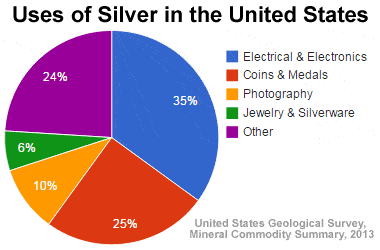
Below is the breakdown of the percentage usage of silver in the US:

Source

As you can see, 45% is used in photography and electrics. The other category (24%) is a mix of energy use, brazing and soldering, chemical production, mirror production and medicine (see link above). In total therefore 69% is used in industry. Only 31% is used in jewelry and coins (silver kept in circulation).

Gold

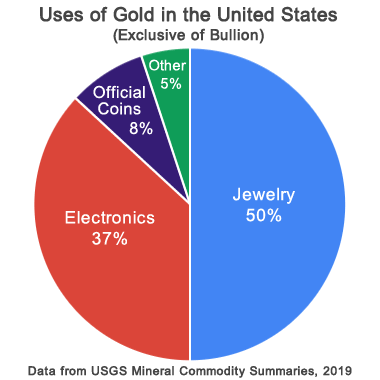
Below is a breakdown of the percentage uses of gold in the US:

Source

Industrial use of gold is only 37%, but 58% is used in coins and jewelry (gold kept in circulation).

Conclusion

As silver is 69% used in industry and gold only 35%, silver is much more sensitive to the strength of the economy than gold is. The last economic cycle in the US was the weakest in modern economic history. Real potential GDP was 1.6% from 2008 to 2018 (Source). This is the lowest 10-year rate since before the Second World War. The gold silver ratio is therefore doing exactly what you would expect it to do in a weak economic backdrop. It is steadily rising. If the economy remains weak after the present recession, I would expect that the gold silver ratio will continue to rise. So will it remain weak?

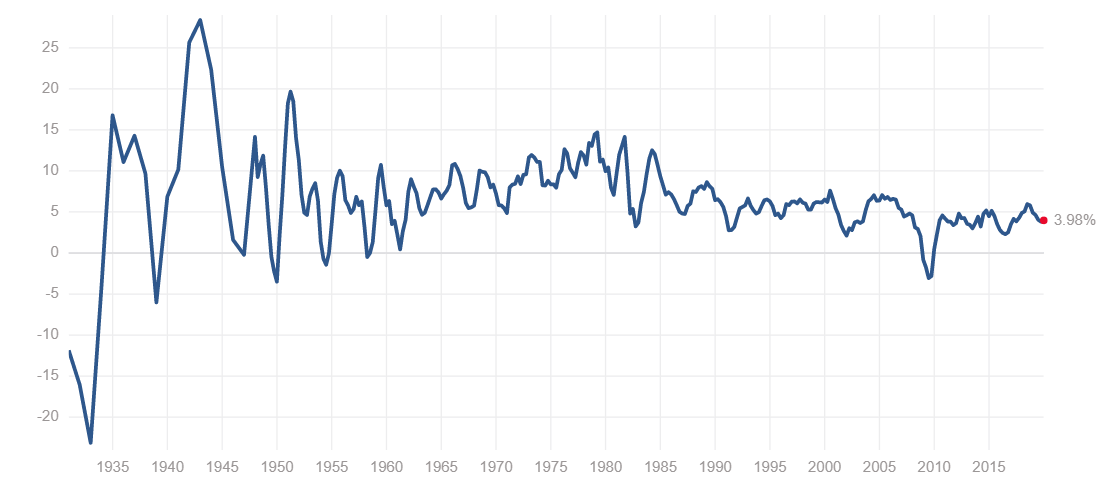
Here is a link to the latest Hoisington Investment Management March report. Their conclusion is that growth and inflation will remain weak, despite the massive money printing and stimulus presently being rolled out by the US government and Federal Reserve. I heartily agree with this analysis. Below is a long-term chart of US GDP:

Source

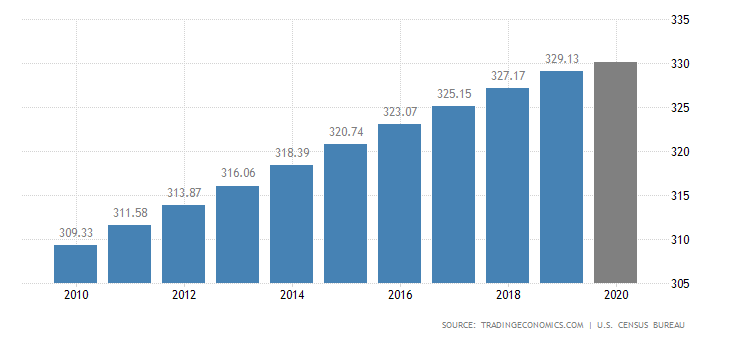
Growth peaked during the second world war and has been steadily falling since then. Since the war, average growth is falling at .7 of a percent every 10 years. As the US government and Federal Reserve are insistent on bailing out all industries and companies, productivity will remain low. This is because the weak companies will not be eliminated, allowing a re-allocation of the capital from the weak to the strong. Below is the population growth of the US economy for the last decade:

The 2019 growth rate was .6 of 1%. With slow population growth and slow productivity growth, the growth rate of the US economy must remain weak. GDP growth is the product of the change in population growth and the change in productivity growth. If both are weak, GDP must remain weak.

Implications

For investment (not trading) purposes, it is clear that if the gold silver ratio keeps climbing, gold will outperform silver on a long-term basis. If you like precious metals to diversify your portfolio, you should buy gold and not silver. It may well be that the gold silver ratio trades lower in the short term and is a good trade, but it is not the way to go if you are an investor. It is also clear that gold miners will outperform silver miners. I presently have no exposure to any silver mining stocks (although some of my gold miners produce silver as a byproduct). Don’t be fooled into thinking that just because the gold silver ratio has hit a high and is now falling that it will mean revert. We are in a low growth environment for the foreseeable future and the ratio will behave accordingly!

SOURCE: https://seekingalpha.com/article/4338404-gold-silver-ratio-will-keep-on-climbing

Battery Materials Developer to Collaborate On Battery Anode Plant SPONSOR: Gratomic $GRAT.ca $SRG.ca $NGC.ca $LLG.ca $GPH.ca $NOU.ca #TODAQ

Posted by AGORACOM at 6:35 PM on Monday, April 20th, 2020
http://blog.agoracom.com/wp-content/uploads/2019/09/GRAT-square2.png

SPONSOR: Gratomic Inc. (TSX-V: GRAT) Advanced materials company focused on mine to market commercialization of graphite products, most notably high value graphene based components for a range of mass market products. Collaborating with Perpetuus, Gratomic will use Aukam graphite to manufacture graphene products for commercialization on an industrial scale. For More Info Click Here

 â€œThe execution of this LOI is part of NextSource’s downstream growth plan and brings together one of the best global processors of graphite anode material and one of the most prominent suppliers of graphite anode material to automotive OEMs globally,” says NextSource Materials president and CEO Craig Scherba.

“This letter of intent to partnership on a SPG plant with such established partners positions NextSource to be a significant and dominant future supplier of high-quality flake graphite to major battery anode customers globally and simultaneously gaining an immediate foothold into the high-growth markets for electric vehicles, as well as the burgeoning energy storage market that will be reliant on graphite anode material,” he adds.

As announced in October 2018, NextSource Materials signed a 10-year offtake agreement with an unnamed Japanese trading company to purchase 20 000 tpa of Molo’s trademarked SuperFlake graphite for use in battery anode applications for electric and hybrid vehicles.

NextSource’s Japanese partner is a major supplier of SPG for anode material in lithium-ion batteries for electric vehicle and hybrid vehicle applications. Its electric vehicle and hybrid vehicle automotive anode customers are global and currently supply graphite anode material to the majority of Japanese automotive OEMs.

Since 2018, NextSource Materials and its Japanese partner have been in discussions regarding potential supply chain collaboration to supply value-added graphite material using SuperFlake graphite concentrate.

Meanwhile, NextSource Materials’Chinese partner is one of the top processors of spheronized and purified graphite for the electric vehicle and hybrid vehicle markets and has verified that NextSource’s SuperFlake graphite concentrate meets or exceeds all quality requirements for SPG material for electric vehicle and hybrid vehicle automotive applications.

Its electric vehicle and hybrid vehicle anode customers are global, including the North American market and its interest in the partnership with NextSource and the its Japanese partner is to have an additional SPG facility located outside of China and close to a high-quality mine source of flake graphite to supply international automotive OEM customers.

The Molo graphite project is a fully permitted, feasibility-stage project that ranks as one of the largest-known and highest quality flake graphite deposits in the world and is the only project with SuperFlake graphite.

SOURCE: https://www.miningreview.com/east-africa/battery-materials-developer-to-collaborate-on-battery-anode-plant/

Norway and the A-Ha Moment That Made Electric Cars The Answer SPONSOR: Lomiko Metals $LMR.ca $CJC.ca $SRG.ca $NGC.ca $LLG.ca $GPH.ca $NOU.ca

Posted by AGORACOM at 1:18 PM on Monday, April 20th, 2020

SPONSOR: Lomiko Metals is focused on the exploration and development of minerals for the new green economy such as lithium and graphite. Lomiko owns 80% of the high-grade La Loutre graphite Property, Lac Des Iles Graphite Property and the 100% owned Quatre Milles Graphite Property. Lomiko is uniquely poised to supply the growing EV battery market. Click Here For More Information

  • A country fuelled by hydropower has become the world’s electric vehicle leader

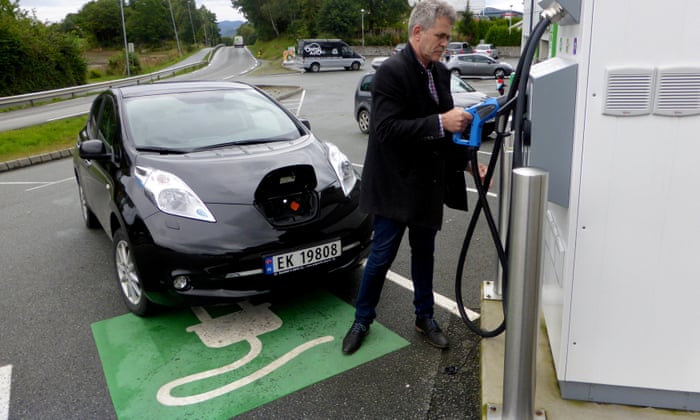
In 1995, the lead singer of the 1980s band A-ha and the head of the Norwegian environmental group Bellona climbed improbably into a converted electric Fiat Panda they had imported from Switzerland and set off on a road trip.

They drove around Oslo refusing to pay the city’s sky-high road tolls, parking illegally wherever they could, and ignoring every penalty notice they were given. Eventually, the authorities impounded their car and auctioned it off to cover the fines.

But the stunt attracted massive media attention, and the point was made. Soon after, electric vehicles were exempted from road tolls, one of a large raft of incentives that have, over the years, helped make Norway the country with the world’s highest per capita electric vehicle ownership.

Last month, in an economy hit by the coronavirus crisis, fully electric cars accounted for just under 60% of Norway’s new car market, and plug-in hybrids just over 15% – meaning three in four of all new cars sold were either wholly or partly electric.

It still has some way to go, but the country looks on course to meet a government target – set in 2016, with full cross-party parliamentary support – of phasing out the sale of all new fossil-fuel based cars and light commercial vehicles by 2025.

“It’s actually quite amazing how fast the mindset’s changed,” said Christina Bu of the Norwegian EV Electric Vehicle Association. “Even in 2013 or 2014, people were sceptical. Now, a majority of Norwegians will say: my next car will be electric.”

The story of how and why that has happened has a straightforward, if unexpected logic. First, despite being a major oil and gas producer, almost all of Norway’s domestic energy comes from a single, and renewable, source: hydropower.

That means switching to EVs is a much greener option for Norway than for countries whose power is generated mostly by coal plants – and that if it wants to significantly reduce its emission levels, it has little choice but to green its transport sector.

Driven by the environmental imperative, the government began offering incentives to buy and run electric cars as far back as 1990, first by introducing a temporary exemption from Norway’s exorbitant vehicle purchase tax, which became permanent six years later.

“This was an important step,” Bu said. “Norway was a very poor country before we discovered oil; cars were a luxury item. They’ve always been taxed very highly. Cars in Norway are a lot more expensive than elsewhere. Without the purchase tax, the cost of an electric car basically fell to that of an ordinary car.”

Since then, electric car drivers have been given the right to park for free in some municipal car parks, drive in bus lanes, take ferries without a ticket and, thanks to A-ha, drive toll-free. They are not required to pay VAT on their cars, or road tax, and company electric cars are taxed at a lower rate than petrol or diesel vehicles.

Some measures have changed over the years: to be allowed to drive in a bus lane, for example, you now need to be carrying a passenger. A so-called 50% rule was introduced in 2017, allowing local authorities to charge EV drivers up to 50% of the parking fees, road tolls and ferry rates applicable to fossil-fuel vehicles.

But overall, said Bu, the “combination of a big one-off saving when you buy the car, plus the substantially lower costs – fuel, tolls, parking, maintenance – of actually driving it, still adds up to a very powerful financial argument. Over its lifetime, you really save a lot of money with an electric car in Norway.”

That was certainly what persuaded Wenche Charlotte Egelund, 57, who bought a VW Golf Electric with her partner two years ago when they moved out of central Oslo. “The incentives were crucial,” she said. “The tax and VAT exemptions, free municipal parking, free toll roads that mean we avoid the rush-hour traffic jams.”

In fact, Egelund said, the incentives were so significant that she almost “felt the decision was imposed on me. Financially, it was like there was no other sensible option. I do wonder whether it really is as green as we are told. Is a car running on clean diesel really worse than the environmental impact of producing an EV battery?”

Rachel Ritman, 56, a postwoman living on the outskirts of Fredrikstad, bought her Opel Ampera two years ago and said she has not regretted her choice, even if she was “not sure we would have gone electric without the incentives”. The car’s range was good, she said: 250 miles (400km) in summer, 200 miles (320km) in winter and because she charges at home she does not suffer from “lade-angst”, or the fear of running out of juice.

Both Ritman and Egelund have a second, diesel-powered car for extra-long journeys, to country cabins or holidays. Sten Bråthen, 55, a media consultant, bought his Nissan Leaf as a second car “for taking the children around and driving to work. But there were so many advantages that when we were getting a new main car last year we didn’t think twice about going electric.”

Government incentives were vital in the decision to buy, Bråthen said: “I think we would have managed without the other incentives – free toll roads and parking – but the actual cost of buying was so much lower than ordinary cars here in Norway.” He warned, though, that Norway was going to need more charging stations.

Despite the incentives, EV sales in Norway remained low until about 2010, when a number of smaller, more affordable electric cars from makers such as Mitsubishi and Nissan came to market, and improved technology meant larger electric cars began to offer both the space and range to make them a sensible choice for families.

Bu said the incentives were so significant that “many people say they’ve bought the most expensive car they’ve ever had when they buy electric – Teslas, Jaguars, that kind of model – simply because they’ve calculated what kind of saving they’re going to be making over the coming years, and feel it makes sense”.

That has led to accusations that Norway’s encouragement of electric vehicles amounts to little more than tax cuts for the rich, or a cut-price second car. Many Norwegians on lower incomes can only dream of owning an electric car, and three out of four car purchases are on the secondhand market.

Bu – whose organisation represents consumers rather than producers – rejected this, arguing that “we have to change the cars we drive, and the only way to do that is to change the new cars. We can’t change used ones”. EVs will soon make up 10% of Norway’s passenger fleet, she said, and are slowly coming on to the used market. Advertisement

She said she was confident for the future of electric vehicles, even in countries without a big renewable power sector, and studies show that EVs running on power generated from fossil fuel are responsible for roughly the same level of overall CO2 emissions as petrol cars.

“As a society, we clearly have to do two things,” she said. “Produce more renewable energy and products – like cars – that can run on it,” she said. “We have to do both, as fast as possible. We can’t hang around until we’re producing 100% renewable energy.”

Electric cars are “never going to be truly environmentally friendly”, Bu said. “The main problem is making the batteries. We need clean battery producers in Europe. But look, we need transport. We need cars and vans, particularly outside our cities. And for us, electric is the answer.”

This story is a part of Covering Climate Now’s week of coverage focused on Climate Solutions, to mark the 50th anniversary of Earth Day. The Guardian is the lead partner in Covering Climate Now, a global journalism collaboration committed to strengthening coverage of the climate story.

SOURCE: https://www.theguardian.com/environment/2020/apr/19/norway-and-the-a-ha-moment-that-made-electric-cars-the-answer

MOTA Ventures $MOTA.ca Generates $4.29 Million in Revenue During March 2020 $APH.ca $GBLX $PFE $ACG.ca $ACB.ca $WEED.ca $HIP.ca $WMD.ca $CGRW

Posted by AGORACOM at 9:23 AM on Monday, April 20th, 2020
Mota large
  • Generated CAN$4,290,000 with related expenses of $4,240,000
  • The Immune Support product line experienced further positive growth contributing to First Class acquiring 20,959 new customers during the month of March

VANCOUVER, BC / ACCESSWIRE / April 18, 2020 / Mota Ventures Corp. (CSE:MOTA)(FSE:1WZ:GR)(OTCPINK:PEMTF) (the “Company“) is excited to announce that for the month of March 2020, its First Class CBD brand achieved sales of Cdn$4,290,000, with related expenses of Cdn$4,240,000. Customer acquisition expenses for March 2020 include one-time costs of approximately Cdn$1,160,000 associated with the introduction of the new line of Immune Support and CBD products. The Immune Support product line experienced further positive growth contributing to First Class acquiring 20,959 new customers during the month of March. The all-natural Immunity Blend is made from 100% pure essential oils, including cinnamon leaf, lemon, clove bud, lime, eucalyptus globulus, rosemary, peppermint, spearmint and oregano. The Company also launched an Immune CBD oil, along with an Elderberry Gummy product. The new Immune CBD product contains CBD, B3, B12, Vitamin C and Zinc. Sales for March 2020 compare to sales of Cdn$1,280,000 during the same period last year, representing an increase of 235%.

The Company also introduced a new brand, Nature’s Exclusive CBD, in the first week of April 2020. The Nature’s Exclusive CBD brand will offer a range of products, which include the new Immune CBD oil, Elderberry gummies, CBD oil drops, CBD gummies, CBD pain relief cream, CBD skin serum and CBD coffee.

First Class offers a CBD hemp-oil formulation intended to provide users with therapeutic benefits that hemp may offer. The hemp oil used in the products is derived from hemp grown and cultivated in the United States. The extraction process is designed to maintain all the beneficial qualities that hemp may offer. First Class offers a range of products, which include CBD oil drops, CBD gummies, CBD pain relief cream, CBD skin serum and CBD coffee. First Class plans to continue its significant growth in their U.S. operations over the balance of 2020, as well as an expansion into the European market.

“I am extremely pleased with the performance of our business during March 2020, a month where the world and the economy faced immeasurable challenges. Our ability to efficiently innovate and launch new products, is a perfect example of our primary competitive advantage, and what allows us to be a leader in the ecommerce space. We expect our investment in accelerated customer acquisition from February to March, including a one-time cost of Cdn$1,160,000, will continue to produce significant revenue growth, and are hopeful it will lead to increased profitability in the upcoming months,” stated Ryan Hoggan, CEO of the Company.

The Company cautions that figures for revenue, expenses and margin generated from the sale of First Class CBD products have not been audited, and are based on calculations prepared by management. Actual results may differ from those reported in this release once these figures have been audited. These figures were translated from US dollars into Canadian dollars using the Bank of Canada monthly average exchange rate of US$1.00:Cdn$1.3953 for March 2020 and US$1.00:Cdn$1.3368 for March 2019.

About Mota Ventures Corp.

Mota is an established ecommerce, direct to consumer provider of a wide range of CBD products in the United States and Europe. In the United States, the Company sells a CBD hemp-oil formulation derived from hemp grown and formulated in the US through its First Class CBD and Nature’s Exclusive brands. Within Europe, its Sativida brand of award winning 100% organic CBD oils and cosmetics are sold throughout Spain, Portugal, Austria, Germany, France, and the United Kingdom. Mota Ventures is also seeking to acquire additional revenue producing CBD brands and operations in both Europe and North America, with the goal of establishing an international distribution network for CBD products. Low cost production, coupled with international, direct to customer, sales channels will provide the foundation for the success of Mota Ventures.

ON BEHALF OF THE BOARD OF DIRECTORS

MOTA VENTURES CORP.

Ryan Hoggan
Chief Executive Officer

For further information, readers are encouraged to contact Joel Shacker, President at +604.423.4733 or by email at [email protected] or www.motaventuresco.com

LOMIKO $LMR.ca and Quebec Precious Metals Agree to Update 100% Option of La Loutre Flake Graphite Project $LMR.ca $CJC.ca $SRG.ca $NGC.ca $LLG.ca $GPH.ca $NOU.ca

Posted by AGORACOM at 5:28 PM on Friday, April 17th, 2020
http://blog.agoracom.com/wp-content/uploads/2019/09/Lomiko-Square-Logo-1.png
  • Lomiko Views Tesla at $750 per share as a bellwether for Electric Vehicle Industry

Vancouver, B.C. and Montreal, QC, April 17, 2020 (GLOBE NEWSWIRE) — Lomiko Metals Inc. (“Lomiko”) (TSX-V: LMR, OTC: LMRMF, FSE: DH8C) and Quebec Precious Metals (“QPM”) (TSX-V: QPM, OTC: CJCFD, FSE: YXEP)  announce that pursuant to the option agreement between Lomiko and QPM, the agreement regarding the La Loutre Flake Graphite Project has been amended as follows:

Lomiko will issue to QPM, within a period of five business days following the receipt of the required approval by the TSX Venture Exchange, 1,000,000 common shares of Lomiko.  Further, Lomiko will fund additional exploration expenditures totaling $1,125,000 on the La Loutre project, the Lac des ÃŽles project and/or other designated properties as mutually agreed to by the Lomiko and QPM by December 31, 2021.

The Project consists of contiguous claim blocks totaling 29 km2 situated approximately 53 km SE of the Lac-des-Îles mine, formerly known as the Timcal mine, North America’s only operating graphite mine currently owned by Imerys Carbon and Graphite. It is accessible by driving NW from Montreal for a distance of approximately 170 kilometres.

For more information on Lomiko Metals, review the website at www.lomiko.com, contact A. Paul Gill at 604-729-5312 or email: [email protected].

On Behalf of the Board,

“A. Paul Gill”

Chief Executive Officer 

A. Paul Gill
Lomiko Metals Inc. (TSX-V: LMR)
6047295312
[email protected]

CLIENT FEATURE: American Creek $AMK.ca Prepares for Fully Funded 2020 Exploration Season and Responds to Covid-19 Shareholder Inquiries $TUD.ca $SII.ca $GTT.ca $AFF.ca $SEA.ca $PVG.ca $AOT.ca $ESK.ca

Posted by AGORACOM at 12:28 PM on Friday, April 17th, 2020
http://blog.agoracom.com/wp-content/uploads/2019/12/American-Creek-Square-Logo-1.png

AMK: TSX-V, OTCBB: ACKRF

Treaty Creek Project is Fully Funded for the 2020 Exploration Season

Last year Eric Sprott became the largest external investor in Treaty Creek in B.C.’s Golden Triangle.  He stated “Treaty Creek has a great shot at having 20 million ounces of gold.”  A very successful program was run hitting wide intervals of gold in every drill hole.  This year we’ll see if Eric is right as the objective of this year’s program is to develop a resource calculation.

The Goldstorm Zone will host a significantly larger drilling program in 2020

  • 18,000 to 20,000 Meter Drill Program
  • 7-10 Drill Platforms
  • Four Diamond Drill Rigs

The drill program is designed to extend and to explore the limits of Goldstorm System

  • The current conceptual model for Goldstorm is 1 billion tonnes at close to 1 gram of gold
  • The system remains open in all directions and to depth
  • The best mineralization encountered to date is from the two consecutive 150m step-out holes to the Northeast:
    • GS-19-42 yield 0.849 g/t Au Eq over 780 m with 1.275 g/t Au Eq over 370.5m
    • GS-19-47 yield 0.697 g/t Au Eq over 1,081.5m with 0.867 g/t Au Eq over 301.5m
  • The best Southeast extension:
    • GS-19-52 yields 0.783 g/t Au Eq over 601.5m
      • Includes 1.062 g/t Au Eq over 336.0m (NR dated March 3rd, 2020)
https://orders.newsfilecorp.com/files/682/53763_07331b7734267a38_001full.jpg

The Sulphurets Hydrothermal System

More Information About The Treaty Creek Project Can Be Found Here

Treaty Creek JV Partnership

The Treaty Creek Project is a Joint Venture with Tudor Gold owning 3/5th and acting as operator. American Creek and Teuton Resources each have a 1/5th interest in the project. American Creek and Teuton are both fully carried until such time as a Production Notice is issued, at which time they are required to contribute their respective 20% share of development costs. Until such time, Tudor is required to fund all exploration and development costs while both American Creek and Teuton have “free rides”.

Treaty Creek Background

The Treaty Creek Project lies in the same hydrothermal system as Pretium’s Brucejack mine and Seabridge’s KSM deposits with far better logistics.


American Creeek Responds to Shareholder Questions Re: COVID-19:


American Creek has received numerous messages from our investor base asking similar questions.  We’ve compiled the most common questions with their answers for you below:

Q:  Has Covid 19 affected the ability of the office to keep running and will it affect the company’s ability to run programs this year?

  • The Canadian Minister of Public Safety and Emergency Preparedness has deemed exploration and mining essential services during the current COVID-19 outbreak.  This specifically includes mineral exploration and development.  At the same time, explorers, miners and those in related businesses need to be in compliance with local regulations with regard to health and safety practices in order to protect workers and others from the COVID-19 virus.

    Both American Creek and its JV Partner Tudor Gold are following these guidelines and fully expect to carry on operations in the office and in the field.

Q:  Does American Creek have enough money to carry on operations or will it have to raise money this year?

  •  The company raised sufficient money in 2019 to carry on operations through 2020.  This currently includes an exploration / drill program on the Dunwell Mine property and may include work on Gold Hill and other properties as well. 

Q:  How will Covid 19 and the resulting drop in the stock market and economy affect the precious metals industry?

  • As the stock market and the economy drop there are institutions, brokerage houses, and individuals who will sell everything right across the board to cover themselves.  Precious metals or stocks in precious metal companies are no exception.  We’ve already seen this taking place.  However, gold served its purpose in retaining value as its drop was very minimal compared to the stock markets.
    It’s governments reactions to the falling stock markets and economy that will have a profound effect on Gold.  We are reading that more money has been created out of thin air in the last few weeks than in any time in history.   All the gold in the world is worth approximately $9.5 trillion dollars and just the United States alone is creating $2 trillion, plus $4 trillion from the Fed, plus another $2 trillion plus in infrastructure spending (and that’s not counting the $2.5 trillion put into the repo markets).  The rest of the world is acting similarly.  Inflation (an increase of the monetary supply) does have a direct effect on gold (especially once money velocity increases).  We are already seeing the very early stages of this upward pressure as gold futures spiked to a 7.5-year high of $1,742.60 an ounce in overnight trading (April 6-7, 2020).  Gold will continue to be volatile but will have greater upward pressure the more governments try to help the economy. 

Q:  Why should people invest in American Creek when there are so many gold plays out there?

  • While there are a number of excellent projects out there, even within the Golden Triangle, I’m not aware of one with as much potential poised to be realized over the next two years.  Since he’s the expert I’ll refer to Eric Sprott’s comments concerning the Goldstorm on Treaty Creek: “They have a good shot at having 20 million ounces of gold.”“So that’s the sort of play that I like where man, if the price of gold goes to $1,700 or $2,000 these plays will look so economically viable and the stock will go up so much, and the analogy I use is Seabridge back in 2000.  I remember buying it at a dollar…and Seabridge went from $1 to $35 dollars!  That is what we are looking for – a dollar to $35 dollars, set you up for life!”  American Creek investors benefit through the development of Goldstorm while having no associated costs and while retaining a 1:3 ownership ratio with Tudor Gold.  The timing couldn’t be better for a project of this scale and quality.  Add to that the development of the Dunwell Mine along with the possibility of programs on our other high potential projects and we feel that we offer people the best possible investment. American Creek is in a position of strength as it has the ability to continue developing core assets and bring value to its shareholders amidst a world of economic uncertainty.  We will continue to do all we can to help our shareholders prosper.   

Q:  What opportunity do you see for the company moving forward?

  • While this pandemic, and our governments responses to it, will do irreparable damage to each of our finances and liberties, we are extremely optimistic about precious metals, the precious metals production and exploration industry, and specifically American Creek Resources.
       Rick Rule, CEO of Sprott US Global, was recently quoted saying:  

       Get ready for a “rip your face off” gold market.
     

Industry Experts Have Already Pointed Out That:

  • The drop in oil will lower the costs for producers at the same time that gold is going up.
  • As gold goes higher and producers start producing tremendous amounts of cash…they are going to want to deploy it back in their own sector…there will be a competing FEEDING FRENZY amongst the producers to go buy the best assets and eventually the worst assets of the gold sector

We believe that the Goldstorm deposit at Treaty Creek is quickly becoming one of most significant assets in the gold industry and will be highly sought after. 
  

About American Creek

American Creek is a Canadian junior mineral exploration company with a strong portfolio of gold and silver properties in British Columbia. Three of those properties are located in the prolific “Golden Triangle”; the Treaty Creek and Electrum joint venture projects with Tudor Gold/Walter Storm as well as the 100% owned past producing Dunwell Mine.

  • For further information please contact Kelvin Burton at: Phone: 403 752-4040 or Email: [email protected]. Information relating to the Corporation is available on its website at: www.americancreek.com

American Creek Prepares for Fully Funded 2020 Exploration Season and Responds to Covid-19 Shareholder Inquiries $AMK.ca $TUD.ca $SII.ca $GTT.ca $AFF.ca $SEA.ca $SA $PVG.ca $AOT.ca $ESK.ca

Posted by AGORACOM at 12:02 PM on Friday, April 17th, 2020
http://blog.agoracom.com/wp-content/uploads/2019/12/American-Creek-Square-Logo-1.png

AMK: TSX-V, OTCBB: ACKRF

Treaty Creek Project is Fully Funded for the 2020 Exploration Season

Last year Eric Sprott became the largest external investor in Treaty Creek in B.C.’s Golden Triangle.  He stated “Treaty Creek has a great shot at having 20 million ounces of gold.”  A very successful program was run hitting wide intervals of gold in every drill hole.  This year we’ll see if Eric is right as the objective of this year’s program is to develop a resource calculation.

The Goldstorm Zone will host a significantly larger drilling program in 2020

  • 18,000 to 20,000 Meter Drill Program
  • 7-10 Drill Platforms
  • Four Diamond Drill Rigs

The drill program is designed to extend and to explore the limits of Goldstorm System

  • The current conceptual model for Goldstorm is 1 billion tonnes at close to 1 gram of gold
  • The system remains open in all directions and to depth
  • The best mineralization encountered to date is from the two consecutive 150m step-out holes to the Northeast:
    • GS-19-42 yield 0.849 g/t Au Eq over 780 m with 1.275 g/t Au Eq over 370.5m
    • GS-19-47 yield 0.697 g/t Au Eq over 1,081.5m with 0.867 g/t Au Eq over 301.5m
  • The best southeast extension:
    • GS-19-52 yields 0.783 g/t Au Eq over 601.5m
      • Includes 1.062 g/t Au Eq over 336.0m (NR dated March 3rd, 2020)
https://orders.newsfilecorp.com/files/682/53763_07331b7734267a38_001full.jpg

The Sulphurets Hydrothermal System

More Information About The Treaty Creek Project Can Be Found Here

Treaty Creek JV Partnership

The Treaty Creek Project is a Joint Venture with Tudor Gold owning 3/5th and acting as operator. American Creek and Teuton Resources each have a 1/5th interest in the project. American Creek and Teuton are both fully carried until such time as a Production Notice is issued, at which time they are required to contribute their respective 20% share of development costs. Until such time, Tudor is required to fund all exploration and development costs while both American Creek and Teuton have “free rides”.

Treaty Creek Background

The Treaty Creek Project lies in the same hydrothermal system as Pretium’s Brucejack mine and Seabridge’s KSM deposits with far better logistics.


American Creeek Responds to Shareholder Questions Re: COVID-19:


American Creek has received numerous messages from our investor base asking similar questions.  We’ve compiled the most common questions with their answers for you below:

Q:  Has Covid 19 affected the ability of the office to keep running and will it affect the company’s ability to run programs this year?

  • The Canadian Minister of Public Safety and Emergency Preparedness has deemed exploration and mining essential services during the current COVID-19 outbreak.  This specifically includes mineral exploration and development.  At the same time, explorers, miners and those in related businesses need to be in compliance with local regulations with regard to health and safety practices in order to protect workers and others from the COVID-19 virus.

    Both American Creek and its JV Partner Tudor Gold are following these guidelines and fully expect to carry on operations in the office and in the field.

Q:  Does American Creek have enough money to carry on operations or will it have to raise money this year?

  •  The company raised sufficient money in 2019 to carry on operations through 2020.  This currently includes an exploration / drill program on the Dunwell Mine property and may include work on Gold Hill and other properties as well. 

Q:  How will Covid 19 and the resulting drop in the stock market and economy affect the precious metals industry?

  • As the stock market and the economy drop there are institutions, brokerage houses, and individuals who will sell everything right across the board to cover themselves.  Precious metals or stocks in precious metal companies are no exception.  We’ve already seen this taking place.  However, gold served its purpose in retaining value as its drop was very minimal compared to the stock markets.
    It’s governments reactions to the falling stock markets and economy that will have a profound effect on Gold.  We are reading that more money has been created out of thin air in the last few weeks than in any time in history.   All the gold in the world is worth approximately $9.5 trillion dollars and just the United States alone is creating $2 trillion, plus $4 trillion from the Fed, plus another $2 trillion plus in infrastructure spending (and that’s not counting the $2.5 trillion put into the repo markets).  The rest of the world is acting similarly.  Inflation (an increase of the monetary supply) does have a direct effect on gold (especially once money velocity increases).  We are already seeing the very early stages of this upward pressure as gold futures spiked to a 7.5-year high of $1,742.60 an ounce in overnight trading (April 6-7, 2020).  Gold will continue to be volatile but will have greater upward pressure the more governments try to help the economy. 

Q:  Why should people invest in American Creek when there are so many gold plays out there?

  • While there are a number of excellent projects out there, even within the Golden Triangle, I’m not aware of one with as much potential poised to be realized over the next two years.  Since he’s the expert I’ll refer to Eric Sprott’s comments concerning the Goldstorm on Treaty Creek: “They have a good shot at having 20 million ounces of gold.”“So that’s the sort of play that I like where man, if the price of gold goes to $1,700 or $2,000 these plays will look so economically viable and the stock will go up so much, and the analogy I use is Seabridge back in 2000.  I remember buying it at a dollar…and Seabridge went from $1 to $35 dollars!  That is what we are looking for – a dollar to $35 dollars, set you up for life!”  American Creek investors benefit through the development of Goldstorm while having no associated costs and while retaining a 1:3 ownership ratio with Tudor Gold.  The timing couldn’t be better for a project of this scale and quality.  Add to that the development of the Dunwell Mine along with the possibility of programs on our other high potential projects and we feel that we offer people the best possible investment. American Creek is in a position of strength as it has the ability to continue developing core assets and bring value to its shareholders amidst a world of economic uncertainty.  We will continue to do all we can to help our shareholders prosper.   

Q:  What opportunity do you see for the company moving forward?

  • While this pandemic, and our governments responses to it, will do irreparable damage to each of our finances and liberties, we are extremely optimistic about precious metals, the precious metals production and exploration industry, and specifically American Creek Resources.
       Rick Rule, CEO of Sprott US Global, was recently quoted saying:  

       Get ready for a “rip your face off” gold market.
     

Industry Experts Have Already Pointed Out That:

  • The drop in oil will lower the costs for producers at the same time that gold is going up.
  • As gold goes higher and producers start producing tremendous amounts of cash…they are going to want to deploy it back in their own sector…there will be a competing FEEDING FRENZY amongst the producers to go buy the best assets and eventually the worst assets of the gold sector

We believe that the Goldstorm deposit at Treaty Creek is quickly becoming one of most significant assets in the gold industry and will be highly sought after. 
  

About American Creek

American Creek is a Canadian junior mineral exploration company with a strong portfolio of gold and silver properties in British Columbia. Three of those properties are located in the prolific “Golden Triangle”; the Treaty Creek and Electrum joint venture projects with Tudor Gold/Walter Storm as well as the 100% owned past producing Dunwell Mine.

  • For further information please contact Kelvin Burton at: Phone: 403 752-4040 or Email: [email protected]. Information relating to the Corporation is available on its website at www.americancreek.com