Agoracom Blog Home

Author Archive

New Age Metals Inc. $NAM.ca – Huge demand for #lithium as EV uptake increases $WG.ca $XTM.ca $WM.ca $PDL.ca $GLEN

Posted by AGORACOM-JC at 9:45 PM on Sunday, March 17th, 2019

SPONSOR: New Age Metals Inc. (TSX-V: NAM) The company’s new Lithium Division has already made significant acquisitions in Canada and the USA. The company also owns one of North America’s largest primary platinum group metals deposit in Sudbury, Canada. Learn More.

NAM: TSX-V

———————

Huge demand for copper, cobalt, lithium and nickel in the offing as EV uptake increases


Purkiss’s presentation also emphasises an increasing amount of nickel content in lithium nickel manganese cobalt oxide (NMC) batteries, adding that nickel input primarily sourced from sulphides is a declining supply source.

By: Tracy Hancock

Creamer Media Senior Deputy Editor Contract Publishing and Sales

Investors focused on the mining sector may not fully appreciate how quickly the electric vehicle (EV) is being adopted globally, in light of the world pursuing a low-carbon emissions future, says battery metals investment vehicle Cobalt 27 Capital chairperson and CEO Anthony Milewski, who warns of a potential deficit in the supply of the metals critical to achieving this future.

Global management consultancy firm McKinsey & Company says 2017 marked the first time EV sales passed the one- million mark, noting in May 2018 that, by 2020, EV producers could be moving 4.5- million units, about 5% of the overall global light-vehicle market.

Also presenting at this year’s Mining Indaba was nickel-focused development vehicle Consolidated Nickel Mines (CNM) CEO Simon Purkiss, who provided an update on the restarting of the company’s Munali nickel mine, in southern Zambia.

Purkiss points to EV growth being an important factor in nickel’s demand-side development, noting a rapid increase in EV uptake, with financial services company Credit Suisse predicting EV growth to 3.1- million units by 2021 and 14.2-million units by 2025.

CNM identified Munali, where operations stopped in November 2011, owing to low nickel prices and poor operational performance by the previous owners, as key to its consolidation of nickel prospects in Southern Africa. Purkiss told delegates that financing of the restart was complete and, with the mine ramping up and the process plant being commissioned, first concentrates were expected in February and were on track to being transported to one of the nickel and copper smelters in the Southern Africa Development Community region in the first quarter of this year.

Purkiss says project economics were improved by changing the mining method, revising the metallurgical process and optimising the labour structure. Munali will produce low-cost nickel concentrate at $9 200/t of nickel, while, in the long term, CNM expects lower-cost nickel sulphate production of $5 000/t.

The company predicts global nickel stocks will decline until a trigger point is reached, at which time restocking will take place. Subsequently, says Purkiss, nickel prices will start rising, probably rapidly, and nickel pig iron production will restart, but only to fill Chinese stainless-steel demand, which will still be limited.

Purkiss’s presentation also emphasises an increasing amount of nickel content in lithium nickel manganese cobalt oxide (NMC) batteries, adding that nickel input primarily sourced from sulphides is a declining supply source.

Supporting his statement, a report on the lithium-ion battery market by Dublin-based market researcher Research & Markets foresees the market for NMC growing at a higher compound annual growth rate over 2018 to 2024.

EVs require high capacity and high power that can only be provided by using the NMC battery type, says the researcher. “The use of new electrolytes and additives support the charging of a cell up to 4.4 V/cell. The NMC cell is growing in its range as the three components involved are easy to blend together and can be made useful for a range of applications, from the automotive industry to energy storage systems.”

The lithium-ion battery market is estimated to grow exponentially from $37.4-billion in 2018 to $92.2-billion by 2024. Research & Markets attributes the growth of the market not only to increased demand for plug-in vehicles but also to the growing need for automation and battery-operated materials- handling equipment, the increasing demand for smart devices and other industrial goods, and the high requirement of lithium-ion batteries for various industrial applications.

“However, factors such as safety issues related to storage and the transport of spent batteries hinder the market growth,” adds Research and Markets.

Nonetheless, Milewski is adamant that the level of activity in the EV battery metals space is only the ‘tip of the iceberg’, with the broader uptake of EVs yet to be fully realised.

He says demand for cobalt really depends on EV penetration. A material increase in the production of cobalt, a by-product of copper and nickel mining, is foreseen once demand for the metal more than doubles when EVs account for 15% of the world’s car sales.

“Cobalt 27, which owns the world’s largest private stockpile of physical cobalt, is positioned to take advantage of the early stages of the battery metals upcycle, where large- scale base metals producers are actively seeking to leverage by-product metals, such as cobalt, to fund mine expansion and repay debt using alternative, nondilutive sources of capital,” he tells Mining Weekly.

Officially, 105 000 t of cobalt is supplied globally, but Milewski says the unofficial figure is closer to between 115 000 t and 125 000 t of cobalt. This discrepancy, he says, is due to production being skewed by supply from undocumented artisanal mining in the Democratic Republic of Congo (DRC), where as much as 70% to 75% of the world’s cobalt is produced.

The balance of the globe’s cobalt supply is derived as a by-product of nickel mining in Australia, Canada, Cuba and Russia, along with the only existing cobalt mine in the world, in Morocco. Owned by private-equity industrial and financial group Omnium Nord Africain subsidiary Compagnie de Tifnout Tiranimine, the Bouazar cobalt deposit, about 34 km from Taznakht, in the Ouarzazate governorate, is said to produce 2 000 t/y of cobalt.

“With 98% of global cobalt supply a relatively small by-product of nickel and copper mining, one of Cobalt 27’s core principles is to invest in geopolitically stable jurisdictions outside the DRC. We believe the primary issue facing cobalt supply is the major concentration of cobalt reserves and production in the DRC, and the underlying human rights, environmental issues and political uncertainty associated with the country,” he adds.

The ethical sourcing of cobalt from the DRC continues to challenge the sector’s supply chain, with Milewski highlighting the significant challenges faced by industry participants in their attempts to promote the adoption of solutions that may be highly impractical in terms of the DRC business environment. Although, he adds, not all artisanal mining is bad, addressing the operations that are unethical will take years and large amounts of money.

A second challenge artisanal mining poses to the growth of the EV market involves the environmentally unfriendly mining methods practised, contradicting the intentions of early EV adopters: people concerned about the environment. However, other metals, such as lithium, whose mining process is highly reliant on water, also face challenges. “Each commodity has its own set of particular challenges,” adds Milewski.

Supply and Demand

As the electrification story unfolds, in 2025 and beyond, this sector could account for between 13% and 15% of the current copper market. “This is a massive demand, relative to the size of the copper market. Electrification is the much bigger story, as batteries will make energy much more accessible, but the type of battery used is dependent on the application and metals available to specific countries,” notes Milewski.

Market research specialist BMI Research last year forecast global copper output to climb from 23.4-million tonnes in 2018 to 29.9-million tonnes by 2027, averaging yearly growth of 2.7%. The global refined copper balance was also forecast to register a deficit of 251 000 t in 2018 and remain undersupplied through 2023.

In terms of nickel, BMI Research expects global yearly production to reach 2.9-million tonnes by 2027, according to its ‘Strategic Metals and Rare Earths Market Outlook – Q32018’ report.

Milewski says the size of the copper and nickel markets will continue to dwarf that of cobalt, predicting greater focus on investment and development around these metals.

However, he sees a lag in satisfying the need for these “future metals” and building the mines required to fulfil that need.

The issue is not whether there are enough of these metals in the ground, but whether funding is being made available to miners for the development of the operations necessary to meet future demand. Other than diversified miner Rio Tinto or Australian mining giant BHP, “I can’t think of any other mining company that has developed a mine recently for over $2-billion”, states Milewski.

Noting that capital markets are generally efficient, he says directors can make their mining projects look as attractive as possible, but “if the markets are closed, they are closed”. Higher commodity prices could, however, spur investment in the cobalt, copper, lithium and nickel markets, Milewski adds.

Sadly, with two-thirds of the world’s cobalt originating from copper mining in the DRC, where cobalt was declared a strategic metal last year, a supply surge from the country has resulted in a price slump. Subsequently, some major miners, such as Glencore, have implemented cost-cutting procedures to compensate for the two-year low. At its Mutanda mine, Glencore has retrenched workers and decided against renewing contracts with external contractors.

In February, diversified natural resources producer Eurasian Resources Group (ERG) also stopped production at a copper and cobalt mine in the DRC, as it considers future investment in new production methods.

The suspension at ERG’s Boss Mining comes at a time of strained relations between the DRC and investors after the nation last year introduced a 10% levy on cobalt exports, owing to cobalt’s strategic metal status.

Future metals have the attention of investors, as they primarily impact the low-carbon future and awareness is growing among mining companies of the benefit of aligning with the delivery of a low-carbon emissions future, with Glencore, for example, over the last year having adjusted its marketing message, says Milewski.

“Where mining companies are able to raise money presently is in this space,” he explains, adding that Rio Tinto is also looking into low-carbon-emission-metals- related projects.

Copper, cobalt, lithium and nickel are the core metals that will be impacted on by the pursuit of the world’s low-carbon-emissions future and whether other metals will join the story, only time will tell. Besides these mainstream metals, Milewski highlights interest in graphene, vanadium and certain zinc chemistries. “These metals are sitting on the sidelines and only time will tell if the technology will develop to grow their demand,” he concludes. 

Even with South Africa’s electricity supply woes, automotive company Jaguar Land Rover South Africa forecast in January that South Africa could have 145 000 EVs on its roads, expecting yearly sales of new EVs to reach 43 000 units in the next six years.

The company based its prediction on the uptake of EVs locally matching the global average, which it says will account for up to 11% of all new-car sales in 2025.

“Actual EV car sales have far outpaced expectations and are going to have a tremendous impact on the demand for materials such as copper, cobalt, lithium and nickel,” says Milewski. Having recently spoken at the Investing in African Mining Indaba conference, which was held at the Cape Town International Convention Centre, in South Africa’s Western Cape, from February 4 to 7, Milewski highlights that most conversations at the event were around these metals.

Source: http://www.miningweekly.com/article/huge-demand-for-copper-cobalt-lithium-and-nickel-in-the-offing-as-ev-uptake-increases-2019-03-15/rep_id:3650



INTERVIEW: Jesse Dylan, CEO Discusses GLN’s $GOOD.ca Significant Growth Plans to Drive 2019 Projected Revenues of $67M $TTD $RUBI $AT.ca $TRMR $FUEL

Posted by AGORACOM-JC at 9:15 PM on Sunday, March 17th, 2019
https://youtu.be/lkYWl6n_dAs

Jesse Dylan, Founder & CEO of Good Life Networks (TSXV: GOOD) (FSE: 4G5) sits down with former Global TV anchor, Steve Darling of Proactive Investors to discuss GLN’s significant growth over the last year, how the company plans to drive 2019 projected revenues of $67M and the importance of brand safety and protecting consumers Personally Identifiable Information.

With the recent controversy around brands using PII and the implementation of new regulations designed to protect consumers, GLN prides itself on having built its patent pending technology from the ground up without using consumers private information to target advertisements. GLN continues to focus on the importance of brand integrity and consumer privacy.

Bougainville Ventures Inc $BOG.ca – The #marijuana industry looks like the fastest-growing job market in the U.S #weed $CROP.ca $VP.ca NF.ca $MCOA

Posted by AGORACOM-JC at 9:00 PM on Sunday, March 17th, 2019
SPONSOR:  Bougainville Ventures Inc (CSE: BOG) Converting irrigated farmland to greenhouse-equipped farmland. Bougainville does not “touch the plant” and only provides agricultural infrastructure as a landlord for licensed marijuana growers. Click here for more info.
BOG:CSE
—————————————

The marijuana industry looks like the fastest-growing job market in the U.S

  • The marijuana industry added 64,389 jobs in 2018, a 44 percent gain, according to industry experts Leafly and Whitney Economics.
  • Economists believe the U.S. job market overall is getting tight, evidenced by the 20,000 growth in payrolls for February
  • Job creation is expected to grow as more states legalize pot. Nick Colas at DataTrek Research said cannabis is the “fastest-growing labor market in the U.S.”

Jeff Cox | @JeffCoxCNBCcom

Published 19 Hours Ago Updated 17 Hours Ago CNBC.com

Tom Franck | CNBC Canopy Growth operations in Smiths Falls, Ontario.

At a time when the rest of the labor market appears to be tightening up, the marijuana industry is just getting started when it comes to job creation, according to a recent report.

Pot manufacturers and distributors, on both the recreational and medicinal sides, saw massive job creation in 2018, with 64,389 new positions added to the rolls. That brings to 211,000 the number of jobs directly related to the industry, part of a total of 296,000 in all related areas combined, industry site Leafly said in a report it compiled with Whitney Economics.

The U.S. economy in total created about 2.7 million new jobs in 2018, according to the Bureau of Labor Statistics, which does not count cannabis-related hiring because the substance is still considered a Schedule 1 narcotic at the federal level.

Hiring slowed to a crawl in February, with payrolls growing by just 20,000. That came even though the BLS said there were 7.3 million job openings against just 6.3 million considered unemployed in December, the most recent month for which data were available.

Aurora Cannabis chair talks Peltz appointment and the future of the cannabis industry   8:56 AM ET Wed, 13 March 2019 | 05:34

“Amid the roiling debate over American jobs, the legal cannabis industry remains a substantial and unrecognized engine of grassroots job creation,” the report’s authors wrote. “In 2019, America’s cannabis industry is one of the nation’s greatest economic success stories. That success deserves to be recognized and celebrated.”

The document was written by Bruce Barcott, Leafly’s deputy editor, and Whitney Economics founder Beau Whitney.

Because there is no official count the report had to use some unconventional methods to estimate the jobs total. They utilized state data, industry surveys, information from operators, proprietary data and other economic formulas.

What they found was stunning: a 44 percent gain in the workforce for 2018 that came on top of a 21 percent increase the previous year.

At 211,000, the total number of jobs compares favorably to other more mainstream occupations: there were 131,430 chefs in the country, for instance, along with 65,760 aerospace engineers and 40,000 computer operators, according to the most recent BLS counts.

“US marijuana legalization is a rare example of disruption creating jobs rather than destroying them,” Nick Colas, co-founder of DataTrek Research, said in a note Thursday that highlighted some of the cannabis jobs data. “With the US labor market recently showing signs of weakness and fears of an eventual recession in the wings, this is one industry that might soften the blow of an economic downturn.”

Colas expects pot-related job creation to continue as more states legalize the substance. He called cannabis “the fastest-growing labor market in the U.S.”

In recent days, New Jersey officials unveiled a plan that would legalize marijuana and set up a taxation structure. New York also has plans underway to add to the roster of 10 states that already have gone the legalization route. Sen. Cory Booker, a New Jersey Democrat and presidential candidate for the 2020 election, introduced a bill a few weeks ago that would legalize marijuana nationally.

Along with the bottom-line gains, the industry’s growth also offers an alternative to the push for young Americans to get a college degree, which has led to an explosion of student loan debt that now totals nearly $1.6 trillion.

“Americans with a college degree are basically at full employment, but most Americans do not have those credentials and their participation rates are lower than the former,” Colas wrote. “The marijuana industry offers solid paying positions at all levels of experience and educational attainment.”

Colas cited Glassdoor data showing that median pay in the cannabis industry is 11 percent above the median U.S. salary of $52,863. “Budtenders,” the staff members who work directly with customers, generally earn $12 to $16 an hour, according to the site that allows current and former employees to review their workplaces and list typical salaries.

At the other end of the spectrum, cultivation and extraction directors and outside sales representatives can earn well into six figures.

Source: https://www.cnbc.com/2019/03/14/the-marijuana-industry-looks-like-the-fastest-growing-job-market-in-the-country.html

Tokenise to launch KABN’s equity token issuance through its UK crowdfunding platform $HIVE.ca $BLOC.ca $CODE.ca

Posted by AGORACOM-JC at 7:14 AM on Friday, March 15th, 2019
  • Announced that KABN (Gibraltar) Limited will be the first client to launch on its platform to sell equity tokens, representing shares in the company.

United Kingdom / Gibraltar / Canada – March 14, 2019 –

Tokenise, a London based, FCA regulated leader in the creation and crowdfunding of tokenised securities, is pleased to announce that KABN (Gibraltar) Limited will be the first client to launch on its platform to sell equity tokens, representing shares in the company. KABN is a global financial services platform that has developed, among its suite of financial services products, a patent pending, blockchain based, GDPR compliant, ‘Always On’, global identification, KYC and AML support service for investors and clients. KABN will also be providing its services to Tokenise and its partners and participants.


Tokenisation of securities and other assets will transform the efficiency of capital markets. Removing inefficiencies, friction and barriers to participation will democratise the process of matching issuers and consumers of risk capital. This in turn will increase the flow of funds and investment opportunities for market participants. Tokenise intends to provide innovative capital market solutions for the SME sector with frictionless access to a global investor base.

KABN, a financial service platform offering neo banking type solutions, has received approval by Visa to launch its crypto-linked card and banking wallet program. KABN has partnered with European e-money institution Transact Payments Ltd, global processor GPS and platform technology provider Pannovate, to launch the program in the UK and subsequently the EU in the 2nd quarter of 2019.

Called the Pegasus Flyte Visa card, the KABN card program offers an “on/off ramp” conversion process for a variety of cryptocurrencies to fiat, together with multi-currency fiat transactions. Cardholders will be able to use their Pegasus Flyte Visa card to spend in-store, online, and at ATMs wherever Visa is accepted globally.

The Pegasus Flyte program will also offer a robust loyalty and customer engagement platform. The anchor of the program is KABN ID, a Blockchain and biometrically-based, “Always On” validation and verification process. This patent-pending, GDPR compliant process allows for efficient and frictionless customer acquisition and onboarding.

Mike Kessler (CEO of Tokenise) said “Tokenise is delighted that KABN has chosen to issue its equity token through our platform. Not only does this endorse the Tokenise model, it will also be amongst the first issuance of an equity token on a global basis, paving the way for the emergence of a new future in tokenised securities.”

Expected to launch on the Tokenise platform in April, the KABN Token (www.kabntoken.com) will allow the Tokenise community to purchase equity tokens representing preference shares in KABN. All investors that qualify as per the regulations will be eligible to participate in the equity token sale.

“We are excited to be partnering with Tokenise for both our crowdfunding equity token sale and for our services platform,” said Michael Konikoff, Chief Revenue Officer KABN. “The KABN Token represents an effective way for our stakeholders to participate in our success and benefit from the potential opportunity and liquidity that the Tokenise platform intends to provide to investors.”

For more information, please contact:

For Tokenise:

Mike Kessler, CEO

www.tokenise.io
[email protected]

For KABN:

Michael Konikoff, CRO

www.kabn.network
[email protected]

Tokenise is launching KABN’s equity token issuance through its UK crowdfunding platform

Tokenise: a London based, FCA regulated leader in the creation and crowdfunding of tokenised securities

KABN: a financial service platform offering neo banking type solutions

Tokenise
7th Floor Hyde House
The Hyde
London
NW9 6LH

INTERVIEW: Vertical Exploration $VERT.ca Discusses #Wollastonite As Beneficial Amendment for #Cannabis Production $TORR.ca $FA.ca

Posted by AGORACOM-JC at 3:12 PM on Thursday, March 14th, 2019

Esports Entertainment Group $GMBL – Ripple (XRP) and Forte Launch $100M Fund to Integrate Blockchain With the Gaming Industry $TECHF $ATVI $TTWO $GAME $EPY.ca $FDM.ca $TNA.ca

Posted by AGORACOM-JC at 2:00 PM on Thursday, March 14th, 2019
SPONSOR: Esports Entertainment $GMBL Esports audience is 350M, growing to 590M, Esports wagering is projected at $23 BILLION by 2020. The company has launched VIE.gg esports betting platform and has accelerated affiliate marketing agreements with 190 Esports teams. Click here for more information
GMBL: OTCQB

———————–

Ripple (XRP) and Forte Launch $100M Fund to Integrate Blockchain With the Gaming Industry

  • Ripple has announced that it will launch a $100 million fund in collaboration with Forte,
  • San Francisco-based startup that is aiming to leverage the economic models of blockchain systems to build better economies and marketplaces in the gaming industry.

By Abhimanyu Krishnan 0

Ripple has announced that it will launch a $100 million fund in collaboration with Forte, a San Francisco-based startup that is aiming to leverage the economic models of blockchain systems to build better economies and marketplaces in the gaming industry.

Forte will oversee the fund that will be allocated towards the integration of blockchain technology with in-game markets that will allow players to make transactions with each other more conveniently. In the past, users have often moved to third-party platforms to sell in-game items.

Speaking to Fortune, Ethan Beard, a senior executive at Ripple’s development division Xpring, is hopeful about blockchain making gaming economies more equitable:

Video games have long been quick to adopt new technology, from console to the PC to mobile. Now, blockchain will help game designers who’ve had a hard time facilitating an economy that can serve all types of players.

As the Fortune article notes, this is an expansion for Ripple, which have previously made a lot of progress in the cross-border payments niche. Should game developers get on board, the use of Ripple’s Interledger Protocol and the XRP token would give Ripple an enormous amount of exposure.

Forte was founded by Kevin Chou, an entrepreneur with experience in the gaming space. Chou was the Chief Executive Officer of mobile-focused Kabam and esports company Gen.G. Forte is backed by the likes of Andreesen Horowitz, Coinbase Ventures and Battery Ventures.

In Chou’s announcement post, he said of the direct interactions between stakeholders in the system:

I envision a future where players can transact with each other directly instead of only with the developer. A future where developers don’t need to figure out the maximum value they can extract from their player base, but instead are creatively and economically motivated to foster new types of peer-to-peer gameplay.

Blockchain in gaming is not a new idea.

Several projects and initiatives have been undertaken already, including the Enjin token (ENJ), which will be available on the Samsung Galaxy S10, and TRON’s $100 million funding for the gaming industry.

Source: https://www.investinblockchain.com/ripple-forte-100m-fund-integrate-blockchain-with-gaming/

BetterU Education Corp. $BTRU.ca – Online platforms a step towards democratizing the education sector $ARCL $CPLA $BPI $FC.ca

Posted by AGORACOM-JC at 2:00 PM on Thursday, March 14th, 2019
SPONSOR:  Betteru Education Corp. Connecting global leading educators to the mass population of India. BetterU Education has ability to reach 100 MILLION potential learners each week. Click here for more information.
BTRU: TSX-V

————————

Online platforms a step towards democratizing the education sector

  • Govt is urging colleges to offer online courses in rural India so that education reaches all
  • Online programmes are set to grow and we will see lots of innovation in the coming years

Updated: 13 Mar 2019, 12:49 AM IST Falguni Vasavada-Oza

From ordering vegetables online to ordering classes online, we have travelled a long way! The Internet of Things and digital transformations have given us shocks as well as pleasant surprises. Like any other industry, the wave of digital technology and improving bandwidths has affected the education sector as well. Both the demand and the supply side are witnessing an impact. Online education in India has seen active growth over the last decade. The factors that have led to this growth are better telecom and internet bandwidths across India leading to growth in the usage of smartphones and hand-held devices, advancement in video conferencing technologies, advent of technology platforms for seamless transfers, and an ever-increasing need for skill certification remotely and at the convenience of the student.

The consumer centricity that we have observed in conventional product/service marketing is now being seen in education through online programmes offered by reputed institutes in India. Online programmes can be paid or free (famously known as MOOC, as in massive open online courses). Online programmes can be live mode where faculty and students are online at the same time. There are also recorded versions where the participants can watch the class on the go at their convenience. Both these types have their merits and demerits. The biggest factors contributing to the growth of online programmes are its deep penetration, convenience of learning infrastructure, skill upgradation need, and career break gaps.

The government is encouraging colleges to offer online courses in rural India to ensure that education reaches all. Online programmes give an opportunity to all to learn from institutes of repute. For autonomous institutes, the deep penetration and reach of online programmes is a step towards democratization of education and equal opportunities for all, irrespective of their geographical location. The other factor contributing to the growth is the convenience that online courses offer to the participants where they can learn from any hand-held device at their time and without leaving their jobs. This is only getting easier with the improvement in bandwidths and penetration of smartphones and mobile services. The third factor that has led to the growth of online programmes is the element of constant change. Working professionals enrol in niche and domain-specific online programmes to upgrade their skills, learn new skills, or relearn conceptual areas of work. The most interesting segment that has emerged over the last few years is the segment of mostly women and some men who have taken career breaks. These are women who have taken a maternity break and after a few years want to get back to their professional life. For these people, online programmes are a blessing and help them fill the gap created and help them prepare for second term of their careers.

One more emerging segment is that of startups. Many startup owners’ sign up for online programmes as they lack certain skill sets and these courses are an easy and effective way to learn and get certification.

As we grow in this space, institutes are reinventing and upgrading online programmes in course content, delivery platforms, pedagogies, and innovation. In programmes that I offer, there is a lot of usage of videos, TED talks, in-class group exercise, and live discussions.

Online programmes are set to grow and we will see lots of innovation in the coming years. The biggest factor pushing the growth is technology infrastructure, cost, flexibility, and convenience. The advantage of this growth will be in reach of education and specialized skills reaching everywhere. Online programmes are here to stay!

Falguni Vasavada-Oza is a professor at MICA, Ahmedabad.

Source: https://www.livemint.com/

Tartisan Nickel Corp. $TN.ca – #Nickel demand growing thanks to EV boom $ROX.ca $FF.ca $EDG.ca $AGL.ca $ANZ.ca

Posted by AGORACOM-JC at 1:52 PM on Thursday, March 14th, 2019

Tartisan Nickel (TN:CSE) Kenbridge Property has a measured and indicated resource of 7.14 million tonnes at 0.62% nickel, 0.33% copper. Tartisan also has interests in Peru, including a 20 percent equity stake in Eloro Resources and 2 percent NSR in their La Victoria property. Click her for more information

TN:CSE

———————

Nickel demand growing thanks to EV boom

MINING.com Staff

  • One of Australia’s largest high-grade nickel producers
  • Western Areas (ASX: WSA), reported a significant increase in inbound off-take inquiries for nickel sulphide concentrate post current contract periods.

According to the company’s managing director, Dan Lougher, this new trend is primarily linked to the accelerating electric vehicle battery sector.

Addressing the second day of the Paydirt 2019 Battery Minerals Conference in Perth, Lougher said some of the new inquiry was driven in part by the company’s second largest offtake partner, China’s largest stainless steel producer, Tsingshan.

“Players looking to lock in new long-term contracts will be doing so at a time technological changes in the battery space are favouring the new NCM 811 classification (Nickel, Cobalt, Manganese) which research indicates will be the fastest growing battery combination by 2025,” Lougher said. “These battery cells offer better energy density, allowing fewer and/or lower weight batteries in cars â€” but they will require even more nickel.”

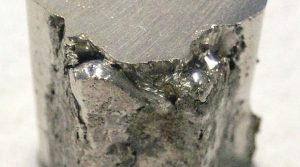
Nickel. Photo from Wikimedia Commons.

The executive noted that the need for nickel is starting to rise at a time when its price is too low to incentivize new project development, something that can take up to three years. In his view, this means that supply markets are likely to diverge and split between stainless steel, a sector that consumes 72% of global nickel production, and EV demand, which currently accounts for 4% of total global nickel consumption but has been growing by 30-40% a year.

“In addition, nickel supply pressure is being exacerbated by non-ferrous alloys which command 10% of total global markets but are booming due to strong growth in aerospace industries and a recovery in oil and gas investment internationally,” Lougher said.

According to the director, all these demand pressures should call for higher nickel prices. He said one particular force pushing for a higher price tag is the fact that the chemistry for lithium-ion batteries favours nickel sulphide styles but very little of the known nickel sulphide ore bodies worldwide are left to be developed.

“This lack of these ore bodies was already an issue for the nickel industry so if EVs are to become a reality in day-to-day motoring, then higher nickel prices will be required. The new demand nickel units will have to be sourced increasingly from nickel laterites which are victim to higher processing costs,” he said.

Source: http://www.mining.com/nickel-demand-growing-thanks-ev-boom-western-areas/

PyroGenesis $PYR.ca CEO to Present at the 5th Annual Gabelli & Company Waste Services Symposium in New York City

Posted by AGORACOM-JC at 9:17 AM on Thursday, March 14th, 2019
  • Announced that P. Peter Pascali, President and CEO of PyroGenesis, has been invited to present at the prestigious 5th Annual Gabelli & Company Waste Services Symposium
  • Held on Tuesday, March 26th at the Lotte New York Palace in New York City. Mr. Pascali will be presenting at 2:15 pm ET.

MONTREAL, March 14, 2019 — PyroGenesis Canada Inc. (http://pyrogenesis.com) (TSX-V: PYR) (OTCQB: PYRNF) (FRA: 8PY), a TSX Venture 50® high-tech company, (the “Company”, the “Corporation” or “PyroGenesis”) that designs, develops, manufactures and commercializes plasma atomized metal powder, plasma waste-to-energy systems and plasma torch  products, today announced that P. Peter Pascali, President and CEO of PyroGenesis, has been invited to present at the prestigious 5th Annual Gabelli & Company Waste Services Symposium being held on Tuesday, March 26th at the Lotte New York Palace in New York City. Mr. Pascali will be presenting at 2:15 pm ET.

For investors interested in attending, please email: [email protected].

About PyroGenesis Canada Inc.

PyroGenesis Canada Inc., a TSX Venture 50® high-tech company, is the world leader in the design, development, manufacture and commercialization of advanced plasma processes and products. We provide engineering and manufacturing expertise, cutting-edge contract research, as well as turnkey process equipment packages to the defense, metallurgical, mining, advanced materials (including 3D printing), oil & gas, and environmental industries. With a team of experienced engineers, scientists and technicians working out of our Montreal office and our 3,800 m2 manufacturing facility, PyroGenesis maintains its competitive advantage by remaining at the forefront of technology development and commercialization. Our core competencies allow PyroGenesis to lead the way in providing innovative plasma torches, plasma waste processes, high-temperature metallurgical processes, and engineering services to the global marketplace. Our operations are ISO 9001:2015 certified, and have been since 1997. PyroGenesis is a publicly-traded Canadian Corporation on the TSX Venture Exchange (Ticker Symbol: PYR) and on the OTCQB Marketplace. For more information, please visit www.pyrogenesis.com

This press release contains certain forward-looking statements, including, without limitation, statements containing the words “may”, “plan”, “will”, “estimate”, “continue”, “anticipate”, “intend”, “expect”, “in the process” and other similar expressions which constitute “forward- looking information” within the meaning of applicable securities laws. Forward-looking statements reflect the Corporation’s current expectation and assumptions and are subject to a number of risks and uncertainties that could cause actual results to differ materially from those anticipated. These forward-looking statements involve risks and uncertainties including, but not limited to, our expectations regarding the acceptance of our products by the market, our strategy to develop new products and enhance the capabilities of existing products, our strategy with respect to research and development, the impact of competitive products and pricing, new product development, and uncertainties related to the regulatory approval process. Such statements reflect the current views of the Corporation with respect to future events and are subject to certain risks and uncertainties and other risks detailed from time-to-time in the Corporation’s ongoing filings with the securities regulatory authorities, which filings can be found at www.sedar.com, or at www.otcmarkets.com. Actual results, events, and performance may differ materially. Readers are cautioned not to place undue reliance on these forward-looking statements. The Corporation undertakes no obligation to publicly update or revise any forward- looking statements either as a result of new information, future events or otherwise, except as required by applicable securities laws. Neither the TSX Venture Exchange, its Regulation Services Provider (as that term is defined in the policies of the TSX Venture Exchange) nor the OTCQB accepts responsibility for the adequacy or accuracy of this press release.

SOURCE PyroGenesis Canada Inc.

For further information please contact: Clémence Bertrand-Bourlaud, Marketing Manager/Investor Relations, Phone: (514) 937-0002, E-mail: [email protected]  

RELATED LINKS: http://www.pyrogenesis.com/

CLIENT FEATURE: Star Navigation $SNA.ca Real-Time Flight Tracking and Monitoring Technology

Posted by AGORACOM-JC at 9:00 AM on Thursday, March 14th, 2019

RECENT HIGHLIGHTS

SIGNED A COOPERATION AGREEMENT FOR THE EMERGENCY MEDICAL SERVICES MARKETS

  • Will enable them to provide real-time monitoring of patients while in transit on the ground or in the air.
  • CHUSJ is one of the top 10 mother-child hospitals in the World, with over 3500 births a year.
  • Has over 1500 nurses, over 500 Doctors and over 200 researchers on staff.

COMPLETED SALE OF FIVE STAR-A.D.S SYSTEMS TO ALMASRIA UNIVERSAL AIRLINES

  • Announced that AlMasria Universal Airlines of Egypt has decided to proceed with the installation and activation of the STAR-A.D.S.® System across all five (5) of its current aircraft fleet, which includes A-320, A-321, A330 and B737 aircraft.

BOMBARDER JOINT RESEARCH AND DEVELOPMENT PROGRAM

  • Joint research and development program with Bombardier and other industrials and universities of Canada is progressing very positively.
  • The STAR-A.D.S. ® system which is at the heart of the program, after having been validated and extensively used by the aircraft manufacturer, has now been transferred to another flight test vehicle to complete the flight testing and the data collection.

EMERGENCY MEDICAL SERVICES APPLICATIONS

  • Star’s Land System Aided Medical Monitoring system for ground ambulance applications has undergone a series of demonstrations by a care organization in North America.
  • Its airborne parent system, the In-Flight System Aided Medical Monitoring system (STAR-ISAMM™â€), has now been demonstrated to several stakeholders of the commercial and civil air ambulance market.

CHECK OUT OUR RECENT INTERVIEW

FULL DISCLOSURE: Star Navigation Systems Group Ltd. is an advertising client of AGORA Internet Relations Corp.