Posted by AGORACOM-JC
at 9:52 AM on Wednesday, January 2nd, 2019
SPONSOR: Esports
Entertainment $GMBL Connecting global leading educators to the mass
population of India. BetterU Education has ability to reach 100 MILLION
potential learners each week. Click here for more information
———————–
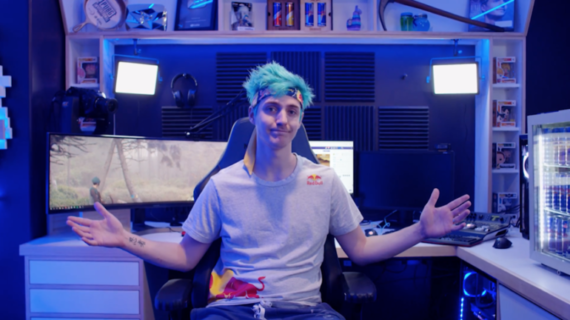
Ninja made almost $10 million in 2018 with Fortnite
He also made more than $500,000 “on a good month†of 2018.
Ninja is used to working in quantities of 10 million at this point. He became the first Twitch streamer to reach that number of followers in the platform in early August 2018, and has since amassed 2.8 million more.
He also has 20 million YouTube subscribers and said he has 60,000 Twitch subscribers in a recent video for Wired.
Fortnite streamer and gaming star Tyler “Ninja†Blevins earned almost $10 million in 2018, he told CNN reporter Dave Briggs.
The streamer also said he loses “tens of thousands of dollars†when
he’s not streaming, and that he earns “a lot more†than $500,000 “on a
good month.†Ninja’s interview was published on Dec. 31, which makes
these values the most accurate to assess the streamer’s financial
success in 2018.
Ninja said most of the revenue he gets from streaming comes from ads,
like the ones he rolls or the brands he shows on screen when he’s live
playing the game. His monthly revenue also takes Twitch subscriptions
into account, which vary between $4.99 to $24.99 per subscriber
depending on how much each one chooses to pay every month.
Ninja is used to working in quantities of 10 million at this point.
He became the first Twitch streamer to reach that number of followers in
the platform in early August 2018,
and has since amassed 2.8 million more. He also has 20 million YouTube
subscribers and said he has 60,000 Twitch subscribers in a recent video for Wired.
Ninja’s earnings are a consequence of his ever-increasing popularity. He streamed Fortnite in Times Square for the ball drop on New Year’s eve, went to several TV shows in the second half of 2018, and shattered a Twitch concurrent viewers record on an individual channel when streaming with rapper Drake.
Ninja refrained from detailing how much he makes from every source of
revenue he has today, but he said he has to be constantly streaming to
avoid losing viewers, subscribers, and money as a consequence.
He told CNN he streamed nearly 4,000 hours of Fortnite in 2018.
Ninja’s earnings and popularity are still dependent on Fortnite’s
popularity since it’s the only game he’s been streaming. Regardless of
what the future holds for Ninja, he’s one of the most financially
successful Twitch streamers of 2018.
Posted by AGORACOM-JC
at 9:09 AM on Wednesday, January 2nd, 2019
SPONSOR: ThreeD Capital Inc. (IDK:CSE) Led by
legendary financier, Sheldon Inwentash, ThreeD is a Canadian-based
venture capital firm that only invests in best of breed small-cap
companies which are both defensible and mass scalable. More than just
lip service, Inwentash has financed many of Canada’s biggest small-cap
exits. Click Here For More Information.
———————
Even as the hype surrounding blockchain reportedly subsides, it argues that their offerings of regulator-approved infrastructure for crypto are a major watershed in the sector becoming mainstream.
A further example, the Review continues, is the improvement in smart contract technology that will enable its use in multiple legal contexts — making the crypto adage “code is law†one step closer to becoming an accepted reality.
News
MIT Technology Review has published an article today, Jan. 2, arguing that 2019 is the year in which blockchain will become mundane. The Review is a magazine that is independent but wholly-owned by the United States Massachusetts Institute of Technology (MIT).
The article gives a laconic overview of its take on the recent
history of blockchain, claiming that the technology was “a revolution
that was supposed to disrupt the global financial system†in 2017, but
that it was a disappointment in 2018 — in light of the significant
decline in the valuations of virtually all blockchain-based crypto
assets and currencies.
Nonetheless, the Review argues, on the cusp of the new year, many
“innovative-sounding projects are still alive and even close to bearing
fruit.†Together with several large corporations’ plans to launch major
blockchain-based projects this year, 2019 is thus reportedly set to be
“the year that blockchain technology finally becomes normal.â€
As an example of the impending transformation of the sector, the Review cites the forthcoming entries of stalwart Wall Street players such as New York Stock Exchange (NYSE) owner Intercontinental Exchange (ICE) and investment giant Fidelity into the cryptocurrency business.
Even as the hype surrounding blockchain reportedly subsides, it
argues that their offerings of regulator-approved infrastructure for
crypto are a major watershed in the sector becoming mainstream.
A further example, the Review continues, is the improvement in smart
contract technology that will enable its use in multiple legal contexts —
making the crypto adage “code is law†one step closer to becoming an
accepted reality.
The article’s final argument is that this normalization of the
technology and the sector will entail a significant reshaping of the
ideology that gave cryptocurrencies and blockchain their first impetus.
Crypto’s roots as an anti-government movement is being upended, the
article claims, by the advent of national cryptocurrencies — whether
they be Venezuela’salready-launched controversial oil-backed cryptocurrency the Petro, or other states’ plans for their own state-backed coins.
A further example given is the endorsement of exploring the case for central bank-backed cryptocurrencies (CBDCs) by International Monetary Fund (IMF) head Christine Lagarde this fall.
Almost one year ago, in mid-January 2018, Cointelegraph published
an analysis of the heat surrounding the blockchain revolution —
encapsulated by the lucrative possibilities of businesses using the tech
as a buzzword in their name to cash in on the over-hyped market.
Posted by AGORACOM-JC
at 6:57 PM on Monday, December 31st, 2018
Mr. Vilhjalmur Vilhjalmsson, President and CEO of St-Georges, commented, “We are grateful for the continued support of our shareholders as well as from our multiple partners.
2018 has been a challenging year for the management of St-Georges, however we are pleased with the effort of the team and the results that has brought us. The management would like to thank all its supporting shareholders and wish everybody a happy new year.”
Montreal / December 31, 2018 – St-Georges Eco-Mining Corp. (CSE: SX)(OTC: SXOOF) (FSE: 85G1) is pleased to announce that, further to its press release dated December 20, 2018, today it issued 2,550,000 Units pursuant to its non-brokered private placement for total gross proceeds of $255,000.
Proceeds of this
Offering will be used to further finance the Corporation’s prospecting,
drilling and other exploration and development expenses and activities,
which qualify as eligible Canadian exploration expenses, as defined
under the Income Tax Act (Canada) (“Qualifying Expenditures“),
on or before December 31, 2019. The Corporation will renounce the
Qualifying Expenditures to investors with an effective date of no later
than December 31, 2018.
Each Unit issued under the Offering is comprised of one (1) common share in the capital of the company (a “Share“) issued on a flow-through basis, and one half of one (1/2) Share purchase warrant (each whole, a “Warrant“).
Each Warrant entitles the holder thereof to purchase one (1) Share at
an exercise price of: (i) $0.20 per Share until September 30, 2019 (the “Early Exercise Period“), and (ii), thereafter, at a $0.50 per Share until June 30, 2020 (together with the Early Exercise Period, the “Warrant Expiry Date“).
In the event that, during
the period following 4 months from the Closing Date, the volume-weighted
average trading price of the Shares on the Canadian Securities Exchange (“CSE“)
exceeds $0.25 per Share for any period of 10 consecutive trading days,
the Corporation may, at its option, following such 10-day period,
accelerate the Warrant Expiry Date by delivery of notice to the
registered holders (an “Acceleration Notice“) thereof and issuing a press release (a “Warrant Acceleration Press Release“, and, in such case, the Warrant Expiry Date shall be deemed to be 5:00 p.m. (Montreal time) on the 30th day following the date of issuance of the Warrant Acceleration Press Release.
The securities issued in connection with the Offering are subject to the applicable statutory hold period ending May 1, 2019. The Offering is subject to receipt of applicable regulatory approvals, including the approval of the CSE.
Icelandic Hydro Electric Dam Project Update
St-Georges also announces that, further to its press release dated October 11, 2018, today it issued 2,000,000 Shares to Spa
ehf following their conversion of the $200,000 debenture issued as
partial consideration to acquire a 15% equity interest in Islensk
Vatnsorka EHF.
Mr. Vilhjalmur
Vilhjalmsson, President and CEO of St-Georges, commented, “We are
grateful for the continued support of our shareholders as well as from
our multiple partners. 2018 has been a challenging year for the
management of St-Georges, however we are pleased with the effort of the
team and the results that has brought us. The management would like to
thank all its supporting shareholders and wish everybody a happy new
year.”
ON BEHALF OF THE BOARD OF DIRECTORS
“Vilhjalmur Thor Vilhjalmsson”
VILHJALMUR THOR VILHJALMSSON, PRESIDENT & CEO
About St-Georges
St-Georges is developing new technologies to solve the some of the most common environmental problems in the mining industry.
The Company controls
directly or indirectly, through rights of first refusal, all of the
active mineral tenures in Iceland. It also explores for nickel on the
Julie Nickel Project & for industrial minerals on Quebec’s North
Shore and for lithium and rare metals in Northern Quebec and in the
Abitibi region. Headquartered in Montreal, St-Georges’ stock is listed
on the CSE under the symbol SX, on the US OTC under the Symbol SXOOF and
on the Frankfurt Stock Exchange under the symbol 85G1
The
Canadian Securities Exchange (CSE) has not reviewed and does not accept
responsibility for the adequacy or the accuracy of the contents of this
release.
Copyright (c) 2018 TheNewswire – All rights reserved.
Tags: CSE, iceland, stocks, tsx Posted in St Georges Eco-Mining Technologies | Comments Off on St-Georges $SX.ca Announces the Closing of Flow-Through Placement Offering; Updates on Icelandic Hydro-Electric Project
Posted by AGORACOM-JC
at 6:52 PM on Monday, December 31st, 2018
FDA Removes Additional Clinical Testing Requirements for the HeartCheck CardiBeat
Reduced the scope of their request for additional information for the Company’s premarket notification 510(k), Class II medical device clearance application for the HeartCheck™ CardiBeat and GEMS™ Mobile Application.
Toronto, Ontario–(December 31, 2018) - CardioComm Solutions, Inc. (TSXV: EKG) (“CardioComm” or the “Company“), a leading global provider of consumer heart monitoring and electrocardiogram (“ECG“) acquisition and management software solutions, confirms the USA Food and Drug Administration (“FDA“) has reduced the scope of their request for additional information for the Company’s premarket notification 510(k), Class II medical device clearance application for the HeartCheck™ CardiBeat and GEMS™ Mobile Application.Â
CardioComm
submitted its most recent 510(k) application to the FDA for Class II
Medial device clearance on the HeartCheck™ CardiBeat as previously
reported. The Company was then requested by the FDA to provide
additional data that included clinical evaluations to confirm the
device’s ability to record ECGs equivalent to those using conventional
ECG electrode patches and ECG cables.
Subsequent to receiving the Company’s reply with additional data, the FDA provided guidance on two primary items. These were:
the Company no longer was required to support the request for extensive ECG electrode testing data; and,
additional data was requested related to Bluetooth wireless coexistence testing.
In
compliance to the FDA’s directive, the Company has submitted a letter
of revocation of their supplementary information submission which was
accepted by the FDA on December 26, 2018. The Company will provide the
FDA a restatement of their response for additional information to the
FDA by January 23, 2019 without clinical ECG testing data and with the
requested wireless coexistence data. The FDA will have 31 days to
complete the 510(k) review following receipt of CardioComm’s restated
submission.
The
Company will provide updates on this and future 510(k) applications. To
learn more about CardioComm’s products and for further updates
regarding HeartCheck™ ECG device integrations please visit the Company’s
websites at www.cardiocommsolutions.comand www.theheartcheck.com.
About CardioComm Solutions CardioComm Solutions’ patented and proprietary technology is used in products for recording, viewing, analyzing and storing electrocardiograms for diagnosis and management of cardiac patients. Products are sold worldwide through a combination of an external distribution network and a North American-based sales team. CardioComm Solutions has earned the ISO 13485:2016 certification, is HIPAA compliant and holds clearances from the European Union (CE Mark), the USA (FDA) and Canada (Health Canada).Â
Forward-looking statements This
release may contain certain forward-looking statements and
forward-looking information with respect to the financial condition,
results of operations and business of CardioComm Solutions and certain
of the plans and objectives of CardioComm Solutions with respect to
these items. Such statements and information reflect management’s
current beliefs and are based on information currently available to
management. By their nature, forward-looking statements and
forward-looking information involve risk and uncertainty because they
relate to events and depend on circumstances that will occur in the
future and there are many factors that could cause actual results and
developments to differ materially from those expressed or implied by
these forward-looking statements and forward-looking information.
In
evaluating these statements, readers should not place undue reliance on
forward-looking statements and forward-looking information. The Company
does not assume any obligation to update the forward-looking statements
and forward-looking information contained in this release other than as
required by applicable laws, including without limitation, Section
5.8(2) of National Instrument 51-102 (Continuous Disclosure Obligations).
Neither
TSX Venture Exchange nor its Regulation Services Provider (as that term
is defined in policies of the TSX Venture Exchange) accepts
responsibility for the adequacy or accuracy of this release.
Tags: EKG, stocks, tsx, tsx-v Posted in CardioComm Solutions | Comments Off on CardioComm Solutions’ $EKG.ca HeartCheck CardiBeat FDA 510(k) Review Extended
Posted by AGORACOM-JC
at 1:24 PM on Friday, December 28th, 2018
SPONSOR: Esports Entertainment $GMBL – Esports audience is 350M, growing to 590M, Esports wagering is projected at $23 BILLION by 2020. The company has launched VIE.gg esports betting platform and has accelerated affiliate marketing agreements with an additional 42 Esports teams, bringing total to 176 Esports teams. Click here for more information
————————-
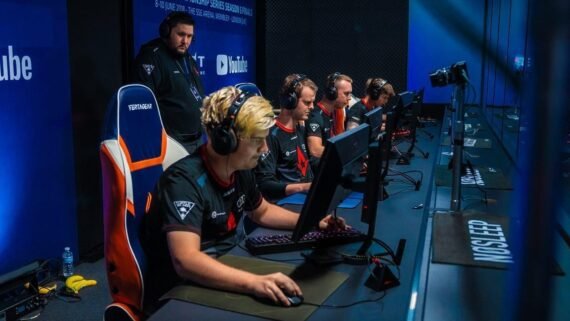
Unsurprisingly for some, the League of Legends World Championship was the biggest event of the year having attracted over 74.3 million viewers, which is 2.5 million more than last year’s iteration.
The most popular esports events of 2018 have been revealed by the ESC (Esports Charts), with many old and established tournaments retaining strong interest despite the emergence of new games.
The figures, which are based on hours watched on both YouTube and
Twitch, show which competitive esports games are more popular than
others right now in terms of viewers.
League of Legends, Dota 2 and Counter-Strike: Global Offensive
dominate the most watched games chart according to these statistics, all
boasting incredible numbers in various competitions.
LOL ESPORTS
The 2018 League of Legends World Championship stage.
Unsurprisingly for some, the League of Legends World Championship was
the biggest event of the year having attracted over 74.3 million
viewers, which is 2.5 million more than last year’s iteration.
Just behind that was Dota 2’s ‘The International’, which massively
grew in popularity in the space of a year – recording 52.8 million
views, seeing an increase of 9 million since 2017. In third place,
CS:GO’s ELEAGUE Major which was watched by 49.5 million across the
world.
“In my opinion, they’ve [Epic Games] realized that their game will
never be the most competitive, but it can be the most entertaining. So,
they’re sticking to their guns in that regard.”
Posted by AGORACOM-JC
at 10:27 AM on Friday, December 28th, 2018
SPONSOR: ThreeD Capital Inc. (IDK:CSE) Led by
legendary financier, Sheldon Inwentash, ThreeD is a Canadian-based
venture capital firm that only invests in best of breed small-cap
companies which are both defensible and mass scalable. More than just
lip service, Inwentash has financed many of Canada’s biggest small-cap
exits. Click Here For More Information.
———————
Do you know that Gartner
has predicted that “Blockchain’s business value-add will grow to
slightly over $360 billion by 2026, then surge to more than $3.1
trillion by 2030”?
Neeraj Sabharwal
Technologist at Xavient and hands-on leader with cloud and big data expertise. Exploring blockchain solutions.
I know that most of you have probably heard initial coin offerings and cryptocurrencies. But what about enterprise blockchain?
ICOs have made a significant impact — both in a positive sense and
in a negative one — across several industries thanks to blockchain. The
positive impact comes in the form of raising awareness about blockchain
technology, and the negative side of things stems from the misguided
conflation of blockchain and cryptocurrency.
Do you know that Gartner
has predicted that “Blockchain’s business value-add will grow to
slightly over $360 billion by 2026, then surge to more than $3.1
trillion by 2030”?
In a sense, we as technologists are betting on the future, and based
on my experience in the blockchain industry, there is a need for a
product or software to help businesses to get ready for a better future
by increasing revenue on their investments and reducing cost to deploy
smart contracts.
We are almost to 2019, and what’s the story now?
According to Accenture
research, 2015 was the year of blockchain exploration and investment,
which led to early adopters embracing the technology in 2016 and 2017.
Accenture’s prediction is that from 2018 to 2024, there will be
significant growth, as we will see more validated information from
lessons learned and new use cases, better software, service providers
and accurate clarity on all the hype of cryptocurrency. Maturity in
regard to blockchain adoption will kick in by 2025.
There is a need of simplicity when it comes to any new technology,
and I believe that once we have a simpler approach to deploy smart
contract and blockchain then it can open the door to more opportunities.
It’s also why I believe one of the top trends in 2019 to watch for is
blockchain as a service. Companies like Amazon, IBM and Microsoft stand
to benefit
from the potential widespread adoption of blockchain, indicating that
big players are likely working on figuring out the true implementation
of blockchain as an enterprise solution.
Also, there are lots of companies, particularly in the financial
sector, that have already either created their own blockchain projects
or are invested in blockchain startups. Visa, for example, released its B2B Connect
platform earlier this year to facilitate cross-border
business-to-business (B2B) payments via blockchain. And Goldman
Sachs and JPMorgan are among a group of companies that have invested $32 million in enterprise blockchain startup Axoni.
So what exactly is blockchain as a service?
It’s a platform that comprises multiple blockchain technologies and
enables developers to write and execute smart contracts without spending
time on deploying and managing the blockchain. To understand this in
detail, let me draw a picture for all of you to understand how
blockchain as a service and smart contract as a service can enable
businesses to use blockchain.
Let’s look at health care as an example, where you may just want to
share patient information between various health care providers. So,
let’s say in this context your application is based on
exchanging patient information between hospitals, insurance companies
and pharmacies. Your traditional application connects to software that
provides a blockchain-based gateway that lets you store and process
information from blockchain in the form of blockchain as a service,
which can then lead to the idea of smart contract templates. I won’t go
into the details of the smart contract, but just to provide some
background: A smart contract is a piece of code that runs on blockchain
and executes various business rules and logic to make sure that only
relevant information is being processed and exchanged. Also, if there is
a need of any checks or validations on the information before it’s
being published, then smart contract provides that, too.
There are a couple of options to get started with BaaS and SCaaS. You
can either build a blockchain team or center of excellence and create
your own BaaS or you can leverage cloud-based solutions, such as Microsft Azure, AWS or IBM. As of writing this article, Google is a little behind with its own offerings, but nevertheless, it too has its own blockchain initiative.
There are also various startups that are based on their own version
of blockchain as a service that use technologies covered either by the
above-listed cloud vendors or uses open source technologies.
While blockchain is still a nascent technology, that doesn’t mean
enterprises aren’t looking for ways to put it to good use. I think you
can expect to see more blockchain-as-a-service offerings in 2019.
Of course, there are a few reasons why brands are willing to bet on
programmatic AdTech despite the GDPR scare. Let’s look at 5 ways
programmatic advertising will evolve in 2019.
2019 will be the year where all disarray surrounding GDPR will be
clear. As publishers and advertisers gain more understanding of the law,
their activities will be in accordance with the regulation.
BlAdTech (Blockchain+AdTech)
is based on the principle of decentralization, and it aims to solve the
most common issues faced by advertisers and publishers. Blockchain
products have been able to tackle ad fraud by removing domain spoofing,
verifying the legitimacy of publishers and allowing transactions using
cryptocurrencies.
Another way ad fraud can be curtailed is by preventing unauthorized reselling of ad inventory. Publishers can now host ads.txt —
an Interactive Advertising Bureau-approved file on their servers that
lists all the companies allowed to sell the publisher’s inventory.
Amanda Martin, Director Enterprise Partnerships, at Goodway Group spoke to MTA on this subject:
“The maturing of programmatic AdTech will continue and most
likely intensify in 2019 with both the sell side and buy side raising
expectations and directly influencing the AdTech ecosystem. Programmatic
AdTech is going through its teenage years; while we move towards
maturity, we are still learning from our mistakes. Many facets of the
programmatic AdTech landscape have become commoditized making the
ability to differentiate oneself in the space harder. This will likely
bring about consolidation both from M&A and buyers/sellers narrowing
the number of partners they choose to work with. Transparency will
continue to be an industry buzzword, both pertaining to pricing and
methodology, black box solutions will/should face more scrutiny, and
buyers, brands, and agencies, should showcase their discretion via their
ad spend. The continued promise of TV dollars moving to programmatic
will drive innovation while programmatic audio and digital OOH will make
large strides in 2019, potentially beating TV to programmatic
saturation. Overall, choice will be the driving factor of 2019 from both
the buy and sell side of programmatic AdTech, how the industry
continues to adjust to those choices is to be determined.â€
Marketers are slowly moving to omnichannel from multi-channel marketing as they become more cognizant of their users. A digital user today owns 3.2 connected devices on average.
Advertisers therefore have to be present on smartphones, computers,
digital assistants, TVs and tablets to reach users wherever they are.
2019 is the year we will see omnichannel marketing at its peak potential.
Closing Words
We will let Will Margiloff, CEO, IgnitionOnehave the final word on AdTech in 2019. He stated to MTA that:
“Amazon’s second headquarters in NYC comes at a critical time
for the advertising business, one that can disrupt the ecosystem.
Amazon is sitting on tons of credible and relevant data, that rivals
intent data from Google and behavioral data captured on Facebook. The
platform specializes in consumers with the intent to shop, and have
created an ad strategy that caters to these needs. In 2019, we will
continue to see AdTech companies challenging the duopoly, with Amazon
leading the charge.â€
Despite the bumpy ride that’s been 2018, programmatic AdTech is set to go through a resurgence in 2019. We may not be able to see 5G gain prominence in 2019 itself, but AI, blockchain and omnichannel appear to be trends that will bring a change in programmatic advertising in 2019.
Posted by AGORACOM-JC
at 2:21 PM on Thursday, December 27th, 2018
EKG: TSX-V
The heartbeat of cardiovascular medicine and telemedicine
Specializing in the software engineering of computer based
electrocardiogram (heart monitoring) management and reporting software
Software permits physician interpretations of ECGs and supports private and public payer fee-for-service billings
ECGs are electrical recordings of the heart and performing an ECG is one of the most common diagnostic tests performed
Successfully launched technologies that enable the use of new
medical devices and communication portals utilizing internet and
cellular based technologies for the recording, transmission and viewing
of ECGs
Recent Highlights
CardioComm Solutions’ HeartCheck(TM) CardiBeat and Smart Phone App Enter Final Stage of FDA 510(k) Review Read More
Market Release of HeartCheck(TM) CardiBeat and GEMS(TM) Mobile Application Set For Early 2019
Completed its response to the USA Food and Drug Administration for
additional information following the Company’s filing of its premarket
notification 510(k)
Class II medical device clearance application for the HeartCheck™ CardiBeat and GEMS™ Mobile Application
HeartCheck™ CardiBeat is the second of several planned Bluetooth-enabled ECG recording devices to be marketed by the Company
Launched 12-Lead ECG Smart Wearable Garment Monitoring Solution Read More
Announced joint partnership sales plans for the commercial launch of
its newest software release designed to support an innovative and easy
to use wireless, 12 lead ECG, vital signs, arrhythmia and ischemia
monitoring wearable smart garment manufactured by Israel-based
HealthWatch Technologies Ltd.
Company to Receive Royalty Payments from Biotricity Read More
Confirmed progress on a royalty licencing agreement with Biotricty Inc.
Royalty payment phase became active following confirmation that all
necessary clearance and software development pre-conditions have been
achieved
Royalty fees are due from the use of the ECG software Cardiocomm
developed, or any derivative products, on a per patient monitored basis
First Company to Receive Approval for ECG Product Sales Direct to Consumers Read More
CardioComm was the first company to be approved to sell an ECG
product directly to consumers in North America as evidenced by OTC Class
II medical device clearances by both the United States Food and Drug
Adminstration and Health Canada in 2012
HeartCheck ECG PEN is currently available for OTC sales on the shelves of Canadian pharmacy chain Shoppers Drug Mart.
Completed HeartCheck(TM) Clinical Validation for Long-Term,
Self-Managed, Remote Monitoring of Atrial Fibrillation Patients
Post-Ablation Read More
Moved into routine clinical use following completion of a long-term, remote arrhythmia monitoring pilot in high risk patients.
PACE cardiologists have been prescribing use of the HeartCheck™ ECG
PEN and ECG Handheld Monitor to their patients to provide up to one year
of enhanced remote patient monitoring for arrhythmias in addition to
use of conventional but term-limited Holter and event monitoring.
Products
HeartCheck™ Pen
The HeartCheck™ PEN handheld ECG device is the only device of its kind cleared by the FDA for consumer use.
✓ Monitor For Arrhythmias Anywhere ✓ Web Access to a Qualified Physician ✓ No Prescription Required
The pocket-sized PEN allows you to take heart readings from anywhere, the moment symptoms appear.
The HeartCheck™ ECG Device
The FDA-cleared HeartCheck™ ECG device is portable, easy to use and can store up to 200 thirty second ECG readings.
Whether at home, the gym or at the office, the HeartCheck™ ECG Device
with SMART Monitoring can help detect and monitor arrhythmias from
wherever you are.
Features & Benefits ✓ SMART Monitoring ECG Interpretations ✓ Cleared by the Food and Drug Administration (FDA) ✓ Easy to use ✓ Accurate heart readings in only 30 seconds ✓ Store up to 200 ECGs
Posted by AGORACOM-JC
at 1:32 PM on Thursday, December 27th, 2018
Investment Highlights
Kenbridge property has a measured and indicated resource of 7.14 million tonnes at 0.62% nickel, 0.33% copper
17.5 (21.8 fully diluted) percent equity stake in Eloro Resources and 2 percent NSR in their La Victoria property
Kenbridge Ni Project (ON, Canada)
Advanced stage deposit remains open in three directions, is
equipped with a 623m deep shaft and has never been mined.
Preliminary Economic Assessment completed and updated returned robust project economics and operating costs including a NPV of C$253M and cash costs of US$3.47/lb of nickel net of copper credits.
Plans for Kenbridge include updating PEA,
advancing the project through to feasibility and exploring the open
mineralization at depth
FULL DISCLOSURE: Tartisan Nickel Corp. is an advertising client of AGORA Internet Relations Corp.
Posted in AGORACOM Client Feature, All Recent Posts, Tartisan Nickel | Comments Off on CLIENT FEATURE: Tartisan Nickel $TN.ca Kenbridge Property Hosts M&I Resource of 7.14 Million Tonnes at 0.62% Nickel, 0.33% Copper
Posted by AGORACOM-JC
at 12:57 PM on Thursday, December 27th, 2018
SPONSOR: Esports Entertainment $GMBL – Esports audience is 350M, growing to 590M, Esports wagering is projected at $23 BILLION by 2020. The company has launched VIE.gg esports betting platform and has accelerated affiliate marketing agreements with an additional 42 Esports teams, bringing total to 176 Esports teams. Click here for more information
————————-
In case you missed it, esports are big business now and competitive gamers spent 2018 continuing to capture the attention (and the money) of the traditional sports world.
Rapper Drake greets Golden State Warriors star Stephen Curry following an NBA game in 2015. Dave Sandford | NBAE via Getty Images
In case you missed it, esports are big business now and competitive
gamers spent 2018 continuing to capture the attention (and the money) of
the traditional sports world.
The esports industry is on pace to bring in more than $900 million in
revenue this year, and that number could reach as high as $2.4 billion
by 2020, according
to gaming research firm Newzoo. Competitive gaming has taken such a
leap into the mainstream in recent years that even Wall Street giant
Goldman Sachs is following the industry’s growth, with the firm recently
predicting that, by 2022, the audience for esports will grow to 276 million people, putting it on par with the most popular traditional sports, including the NFL.
Unsurprisingly, the rapid growth of esports, and the vast amounts of
money and exposure at stake, has attracted a great amount of interest
from investors who want to get in on the action. Even before this year,
several big names were already investing in esports companies and teams,
including celebrities and athletes from traditional sports. Among them:
Mark Cuban, NBA Hall of Famer Shaquille O’Neal, former MLB star Alex
Rodriguez, high-profile NFL owners Robert Kraft and Jerry Jones, and
celebrities like Ashton Kutcher, Tony Robbins, and Jennifer Lopez.
Those athletes, team owners and celebrities helped pave the way for
more big names to join the ranks of esports investors in 2018, when
everyone from Michael Jordan to Drake was looking to pump more money
into the industry.
Here’s a look at some of the biggest athletes and celebrities who invested in esports in 2018:
Michael Jordan
Jordan is a basketball legend and the current principal owner of the NBA’s Charlotte Hornets. With a fortune that Forbes estimates is worth nearly $1.7 billion, Jordan is an active investor in the worlds of sports and technology. He owns a minority stake in the MLB’s Miami Marlins and, in the past two years, he’s invested in tech startups like smart headphones company Muzik and Gigster, the online platform for freelance web designers.
In October, Jordan took his first leap into the world of esports by leading a group of investors that put $26 million into the competitive gaming company aXiomatic Gaming, which owns the popular esports organization Team Liquid.
(Jordan isn’t even aXiomatic’s only NBA connection, as the company’s
co-executive chairman is Ted Leonsis, owner of the Washington Wizards,
one of the teams Jordan played for during his NBA career.)
Jordan called esports “a fast-growing, international industry†in a statement at the time of his investment.
Drake
Drake gave away the entire $1 million budget for his new music video
The Canadian rapper (whose real name is Aubrey Graham) is not only a
Grammy-winning and charts-topping recording artist, he’s now also the
co-owner of an esports team. In October, Drake teamed up with Scooter Braun (the Hollywood manager who represents stars like Justin Bieber and Ariana Grande) to invest an undisclosed amount
of money in the esports organization 100 Thieves. With their
investment, Drake and Braun also became co-owners of 100 Thieves, which
fields esports teams that compete in games like “Call of Duty†and
“League of Legends.â€
Drake is no stranger to the gaming community, either. The rapper made
waves in March, when he played “Fortnite†online with the massively
popular gaming streamer Tyler “Ninja†Blevins — a live-streamed pairing that attracted more than 635,000 concurrent viewers on the Amazon-owned video game streaming platform Twitch.
Stephen Curry and Andre Iguodala
Golden State Warriors teammates Stephen Curry (L) and Andre Iguodala (R) high-five during a December 2018 game.
Scott Cunningham | NBAE via Getty Images
Curry might be a two-time NBA MVP, but his Golden State Warriors
teammate, Andre Iguodala, is the team’s star when it comes to investing
in startups. Iguodala, who Fast Company referred
to as “the NBA’s ambassador to Silicon Valley,†has invested in tech
startups like direct-to-consumer mattress company Casper while
introducing his teammates to Silicon Valley bigwigs like Salesforce CEO
Marc Benioff and venture capitalist Mary Meeker.
So, it’s no surprise that Iguodala and Curry both got involved in
esports together for the first time in 2018. In July, the pair was part
of a group that invested $37 million
in the esports organization TSM, which was founded by 26-year-old gamer
Andy Dinh and fields competitive gaming teams for games like “League of
Legends†and “Fortnite.â€
Steve Young
Hall of Fame quarterback Steve Young.
Leon Halip | Getty Images
NFL Hall of Fame quarterback Steve Young was also in on the $37 million TSM investment alongside Curry and Iguodala. (TSM said
part of the funding it raised in July will go toward building a new
15,000-to-20,000-square-foot esports facility in Los Angeles.) Young is a
prolific investor among ex-athletes, as the former 49ers star is a
managing director of private equity firm HGGC, which oversees over $4
billion in investments.
Sean “Diddy†Combs
Sean Combs is a rapper, known variously as Puff Daddy, P. Diddy,
Diddy, Puff and Puffy. He was born in Harlem and raised by his mother, a
schoolteacher living in public housing. , and the family relocated to
Mount Vernon, just outside of the Bronx.Combs attended Howard University
in Washington , D.C, while simultaneously interning at Uptown Records
in New York City. The internship won out, and he dropped out of college
to focus on Uptown, where he was instrumental in developing such R&B
artists
Getty Images
The rapper formerly known as Puff Daddy and P. Diddy jumped aboard
the esports trend in November, when Combs joined a group of investors
that provided $30.5 million in funding to PlayVS. Based in Los Angeles, PlayVS is an esports league that partners with high schools
around the US to create an infrastructure that allows high school
students to represent their schools in esports competitions while trying
to land some of the growing number of collegiate scholarships now available for competitive gamers. Combs served as an angel investor in the funding round for PlayVS.
The November fundraising round actually came on the heels of a $15 million investment
in PlayVS that the esports league picked up in June from a group of
investors that included the San Francisco 49ers, Twitch co-founder Kevin
Lin, and professional athletes such as former NBA player Baron Davis
and Los Angeles Chargers player Russell Okung.
Kevin Durant
Kevin Durant #35 of the Golden State Warriors
Gregory Shamus via Getty
Much like some of his Golden State Warriors teammates (Curry and
Iguodala, above), Durant is an active investor in Silicon Valley
startups. In fact, when Durant left Oklahoma City to sign with the
Warriors in 2016, he also launched the Durant Company, his own personal startup for managing his tech industry investments, which include scooter company Lime and Postmates.
In February, Durant added an esports venture to his growing
investment portfolio when he joined a group that invested $38 million in
Vision Esports, an esports investment fund and management company
co-founded by former NBA player and actor Rick Fox, MGM Resorts
executive Chris Nordling, and the NHL’s San Jose Sharks minority owner
Stratton Sclavos. Vision Esports owns the esports team Echo Fox as well
as esports content creator Vision Entertainment and the video game
record-tracking site Twin Galaxies. Other investors in Vision Esports
include the New York Yankees, the St. Louis Cardinals, and Durant’s
business partner, Rich Kleiman.
Odell Beckham Jr.
Odell Beckham Jr. of the New York Giants
Getty Images
The All-Pro New York Giants wide receiver also joined Durant in
contributing to the $38 million fundraising round for Vision Esports in
February. Beckham, who signed a record-breaking $95 million deal with the Giants in August, says he has been an avid gamer since childhood, and he even faced off against rapper A$AP Rocky in a marketing stunt for EA Sports’ “Fifa 19†recently.