
Agoracom Blog Home

Archive for the ‘Fobi AI’ Category

BEYOND THE MIC – Fobi AI Inc. Financing, Relisting Path, And An AI Agent Strategy Built For The Enterprise

Posted by Brittany McNabb at 12:43 PM on Friday, March 27th, 2026

In a recent long form video interview with AGORACOM (see link at the end of this article)…

Fobi AI Inc. (TSXV: FOBI, OTC: FOBIF) CEO Rob Anson sat down to discuss closing the third and final tranche of a $1.35 million financing while under a cease trade order, the remaining steps toward relisting, and how the company is positioning itself as an enterprise-grade provider of Agentic AI (autonomous AI software “agents” that can perform tasks and workflows without constant human input).

The discussion offers investors a view into two parallel tracks: navigating regulatory and filing requirements to get back to trading, and building out a lean, productized AI platform that aims to let businesses deploy their own AI “agents” without stitching together a patchwork of third‑party tools.

AGORACOM Beyond The Mic Feature Article

March 25, 2026

Background / Context

Fobi has been under a cease trade order (CTO) since November 2024. During that period, the company:

  • Generated multi‑million‑dollar revenue, according to Anson
  • Appointed a new Chief Technology Officer and Chief Financial Officer
  • Reduced its annual burn rate to roughly $1.1 million, helped by using its own AI across operations
  • Launched and deployed FIXYR, its Agentic AI customer service and technical support platform, as previously disclosed in company materials

Despite the trading halt and broader macro uncertainty, including geopolitical conflicts, Fobi completed the third and final tranche of a $1.35 million financing. Anson said several new high‑net‑worth investors participated, many of whom were attracted less by Fobi’s historical story and more by what the company is now evolving into—an AI‑native platform and consulting business built around its own intellectual property.

Anson characterizes the past 18 months as an “exercise of resilience and focus,” with management concentrating on building infrastructure and commercial products during a period when accessing capital markets was constrained.

Key Topics Discussed

1. Financing Under a Cease Trade Order

Anson framed the completed financing as both a practical requirement and a validation point:

  • Why it matters: The capital supports audit completion, regulatory processes, and relisting efforts.
  • Investor mix: Some traditional groups could not participate due to the CTO, but the round attracted new investors, including high‑net‑worth individuals, who focused on Fobi’s current AI roadmap rather than its past.
  • Sentiment shift: Anson described the process as “reinvigorating,” noting that the new direction—built around proprietary AI IP and consultancy—“100% resonated” with incoming investors.

He also acknowledged past missteps in capital strategy, saying he had historically been overly focused on minimizing dilution, which left the company underfunded. Going forward, he emphasized that capital decisions will prioritize what is best for the business over shorter‑term concerns.

2. Path To Relisting And Timeline

Investors pressed for clarity on when trading might resume. Anson outlined the remaining steps:

  • Filings: Management’s goal is to have all outstanding financial statements, including the annuals for 2025 and Q1 and Q2 2026, completed and posted by the end of the week.
  • Regulatory sequence: Once filed, the financials go to the British Columbia Securities Commission for review, then to the TSX Venture Exchange for their relisting checks.
  • Control vs. uncertainty: Fobi will have its side “done, produced, and published,” after which timing rests with regulators and exchange staff.

Anson avoided giving specific dates, but said he is “a thousand percent confident” in the company’s ability to file the required financials and complete its internal tasks.

3. From Early AI Story To Agentic AI Product Suite

Central to the interview is Fobi’s transition from an early‑stage AI narrative that many investors struggled to fully understand, to a more tangible suite of Agentic AI products.

Key points:

  • FIXYR and Agentic AI: Anson referenced FIXYR (often pronounced similarly to “Fixer”), Fobi’s Agentic AI platform for customer service and technical support. In a prior deployment, FIXYR handled approximately 20,000 digital tickets for an event with no frontline human intervention, according to Anson’s comments in the interview.
  • Education gap: Anson acknowledged that, in the past, Fobi’s message “flew over the head of most people.” The coming phase will emphasize education—webinars, demos, and letting users directly test the AI products—to make the model easier to grasp.
  • Product readiness: Unlike earlier periods when technology readiness and commercialization timing held back larger deals, Anson said Fobi now has commercial products “ready to go” that are already implemented or in implementation.

He linked this to the broader industry conversation around Agentic AI, noting that comments from leaders at OpenAI, NVIDIA, and Shopify have helped mainstream the concept of AI agents that perform end‑to‑end workflows.

4. “Deloitte Of The AI Era” – Integrated Tech Plus Consulting

Anson reiterated Fobi’s ambition to operate like a “Deloitte of the AI era,” with an important distinction:

  • Traditional consulting firms typically implement other companies’ technologies.
  • Fobi aims to advise on AI strategy and deploy its own IP—its Agentic AI infrastructure, FIXYR, and related tools.

He highlighted several investor‑relevant aspects of this approach:

  • Single accountable provider: Clients deal with one organization rather than a collection of point solutions, vendors, and support lines.
  • Integrated stack: Instead of adding another “silo” alongside systems like Salesforce, HubSpot, accounting software, and communications tools, Fobi’s goal is to provide a suite that connects these data sources and automates workflows end‑to‑end.
  • Risk tolerance: Large enterprises are typically risk‑averse with new technology. Having a single, accountable counterparty and a product that has already been stress‑tested in live environments is meant to reduce perceived implementation risk.

Anson contrasted this with standalone AI tools built by individuals or small teams, which can look impressive on paper but may raise questions about security, stability, integration, and support.

5. Low‑Touch, Subscription‑Led Business Model

A recurring theme was Fobi’s focus on building a low‑touch, highly automated business model:

  • Drag‑and‑drop deployment: Anson described an architecture where AI applications can be assembled “a la carte,” with components that can be dragged, dropped, and spun up with a click, similar in spirit to how integration platforms like Zapier make connections between apps—but with a stronger emphasis on autonomy and minimal manual setup.
  • Low headcount, high leverage: The company has reduced its burn rate substantially and Anson believes the business can scale with a very small core team, supported by AI agents and an extended developer network.
  • Revenue model: While specific pricing was not discussed in the interview, Anson referenced subscription fees and custom work, consistent with a Software‑as‑a‑Service model supplemented by consulting and integration services.

The plan is to make certain AI tools available directly via Fobi’s website in the coming weeks, giving businesses a way to test and adopt solutions without a lengthy sales cycle.

6. Competitive Landscape And Differentiation

Asked directly about competition—including the possibility of talented young developers around the world building similar Agentic AI tools—Anson framed Fobi’s differentiation along several dimensions:

  • Integrated, not one‑off: Many AI products today are stand‑alone offerings that become yet another disconnected system inside a business. Fobi is positioning its products as part of a coordinated suite, with data intelligence at the core.
  • Enterprise‑grade focus: Fobi is emphasizing data security, privacy, compliance, and auditability—requirements that are central for regulated or large enterprises but can be hard for small independent developers to meet.
  • Track record with large organizations: Anson pointed to Fobi’s history of working with well‑known companies and the lengthy security and privacy reviews that entails, which a high‑net‑worth investor in the placement highlighted as a differentiating factor.

He also noted that competition is ultimately constructive. In earlier years, the lack of clear comparable companies actually made it harder for institutional investors to benchmark Fobi’s valuation and potential. Today, a broader AI agent ecosystem provides context and potential strategic paths, including partnership and consolidation.

7. Investor Sentiment, Shareholder Base, And Lessons Learned

The interview spent considerable time on shareholder psychology and Anson’s own evolution as a public‑company CEO:

  • Sentiment cycle: Shareholders initially reacted to the CTO with anger and frustration, followed by resignation. Recent press releases have sparked a shift toward cautious optimism as investors anticipate a potential relisting.
  • Support vs. criticism: Anson said he focuses his energy on shareholders who remain engaged and constructive, while recognizing that negative sentiment often peaks near market bottoms.
  • Volume of outreach: Following the financing announcement, he received more than 1,200 emails, predominantly from investors expressing surprise that the company was able to navigate the regulatory process and complete the raise, and expressing renewed excitement.
  • Personal commitment: Anson acknowledged that he could have pursued new ventures, but chose to continue pushing Fobi through the regulatory and operational challenges. He cited loyalty to long‑term shareholders and belief in the technology stack as key motivators.

He also emphasized that the next phase will prioritize clarity and education. Rather than a high frequency of news releases, the focus will be on ensuring that both customers and investors understand how the products work, how they are deployed, and how they generate revenue.

Strategic Significance

From an investor’s perspective, the interview highlights several strategic themes:

  1. Execution During Constraint, Not Pause
    Even under a CTO, Fobi:
  • Continued to generate revenue
  • Reduced operating expenses materially
  • Advanced its Agentic AI platform, including FIXYR
  • Attracted new capital on the strength of its evolving model
  1. Relisting As An Inflection Point, Not Just A Return To Status Quo
    Management presents the anticipated relisting not as a simple resumption of a prior story, but as the continuation of what Anson has described as an updated phase for the company:
  • A leaner cost structure
  • A clearer, productized AI offering
  • A consulting‑plus‑platform model designed to generate both project and recurring revenue
  1. Agentic AI As Core To The Business Model
    Agentic AI—autonomous software agents that can perform tasks such as customer service, technical support, and back‑office workflows—is presented as central to Fobi’s differentiation and cost structure, and to the value proposition it offers clients.
  2. Focus On Risk‑Managed Adoption For Enterprises
    By emphasizing data control, integrated systems, and a single accountable vendor, Fobi is targeting organizations that want to adopt AI but are wary of fragmented point solutions and security risks. If successful, this positioning could help shorten sales cycles and increase deal sizes in sectors where risk management is paramount.
  3. Alignment Between Narrative And Infrastructure
    Anson invoked a fishing analogy: when fishermen cannot fish, they repair their nets. During the CTO, Fobi concentrated on building infrastructure—its AI stack, product suite, and internal processes—so that, upon relisting, it can focus more on scaling deployments and revenue rather than core rebuilds.

Conclusion

The Beyond The Mic interview with Fobi AI CEO Rob Anson gives investors a detailed look at a company that has spent its time under a cease trade order tightening operations, advancing its AI platform, and securing new capital, rather than waiting on the sidelines.

Key takeaways include:

  • The third and final tranche of a $1.35 million financing is complete, with new investors buying into Fobi’s Agentic AI strategy.
  • Management expects to file all outstanding financials imminently, after which the relisting process rests with regulators and the TSX Venture Exchange.
  • Fobi is positioning itself as an integrated AI platform and advisory firm—a “Deloitte of the AI era” that deploys its own IP, centered on products like FIXYR.
  • A lean cost structure, low‑touch deployment model, and emphasis on education are intended to make the story easier for both customers and shareholders to understand and evaluate.

For investors, the next catalysts are primarily regulatory: completion and posting of financial filings, the resulting reviews, and any subsequent decisions on relisting. Parallel to that, the commercialization of Fobi’s Agentic AI suite—and the degree to which customers adopt, scale, and renew these solutions—will determine how the story translates into financial performance if and when trading resumes.

TO WATCH THE FULL VIDEO GO TO: https://www.youtube.com/playlist?list=PLfL457LW0vdKRzZ61NXeYFyshLOXxNJO2

AGORACOM Beyond the Mic is Powered by AGORACOM’s AI Content Agents.

Fobi AI Inc. Is A Client Of AGORA Internet Relations Corp. https://agoracom.com/ir/Agoracomupdates/forums/discussion/topics/796135-DISCLAIMER-AND-DISCLOSURE/messages/2399000
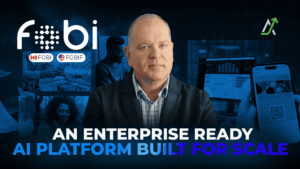
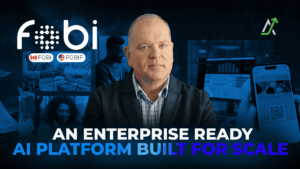
Fobi’s Relisting Push — A Potential Turning Point For Small‑Cap AI

Posted by Brittany McNabb at 7:02 PM on Wednesday, March 25th, 2026

When a company raises fresh capital while its stock is frozen and global markets are unsettled, it can indicate a level of conviction that’s hard to ignore. Fobi AI has now completed the third and final tranche of its non‑brokered private placement—27,084,000 units at $0.05 for total gross proceeds of $1,354,200 under a failure‑to‑file cease trade order—and is shifting its full attention to completing its Annual 2025 and Q1/Q2 2026 financial filings. As an AI and data intelligence company repositioning itself around a consulting‑driven model sometimes described internally as a “Deloitte of the AI era” approach, Fobi is using this financing to support its transition from regulatory constraint toward a potential return to active trading, backed by new high‑net‑worth investors who are buying into its Agentic AI and consulting‑driven model. The next phase is about working to clear the remaining regulatory requirements and then demonstrating whether its lean, AI‑native platform can scale in the public markets.

WHAT YOU NEED TO KNOW

  • CTO Financing: Fobi completed a three‑tranche, $1.354M private placement at $0.05 per unit while under a BC Securities Commission cease trade order.
  • New Capital: Proceeds are earmarked for sales and marketing, product expansion and integration, market expansion, and working capital.
  • Filing Sprint: Management’s stated goal is to have all Annual 2025 and Q1/Q2 2026 financials filed, then submit the file to regulators for CTO and relisting review.
  • Investor Rotation: The raise brought in new high‑net‑worth investors focused on Fobi’s Agentic AI IP and consulting strategy, not just its legacy story.
  • Lean Machine: Management highlights a reduced burn rate supported by its own Agentic AI stack, aiming for a more efficient relaunch.

STRATEGIC IMPLICATIONS

The core problem in enterprise AI today isn’t hype; it’s execution. Most businesses are working with siloed tools—Salesforce here, HubSpot there, a patchwork of point solutions and experimental AI agents that stakeholders may not fully trust. Add regulatory scrutiny, security concerns, and the fear of being the guinea pig for an unproven project, and adoption slows.

Fobi is addressing that friction as a full‑stack “AI systems integrator” that sells and supports its own IP end‑to‑end. Instead of being just another layer on top of ChatGPT, its FIXYR Agentic AI platform is designed to run on Fobi’s own enterprise LLM infrastructure, deployed on secure, Canadian‑hosted servers with an emphasis on data sovereignty. The model is intended to be simple for operators: one integrated AI and data stack, a single accountable vendor, and a consulting‑driven go‑to‑market that Fobi positions as closer to a Deloitte‑style services approach than a point‑solution startup vendor.

Timing matters. The Shopify CEO is encouraging founders to build the “AI version” of every software category, and leaders like Sam Altman and Jensen Huang are helping to push Agentic AI concepts into the mainstream. Fobi spent its CTO period focusing on foundational work—rebuilding finance functions, reducing burn, deploying FIXYR in production, and engaging with enterprise‑scale prospects. Returning to market with a live Agentic AI platform, documented 20,000‑ticket deployments, and a SaaS + consulting model represents a different company emphasis than the one investors last saw before the November 2024 cease trade order.

CEO ROB ANSON:

“We’ve taken our hits, but we’re still standing and now we believe the path is clearer. We went through the pain, rebuilt the infrastructure, closed the financing under a CTO, and now we’ll work to finish the filings and get back to building the business in public, subject to regulatory review. The second time around, we’re doing it our way—lean, focused, and with technology people can finally see and use.”

INVESTOR TAKEAWAY

For investors, this financing isn’t just about $1.35M of capital; it reflects support secured during a period of heightened stress for the company. The March 20, 2026 press release confirms Fobi closed its offering in full, under a partial revocation order, with proceeds allocated to growth initiatives as well as general working capital. That, combined with management’s stated confidence in completing the Annual 2025 and Q1/Q2 2026 filings, would position the company to apply for full CTO revocation and TSX Venture relisting, both of which remain subject to regulatory review and approval.

The story investors are re‑encountering is not presented as the same Fobi they left in 2024. Management is emphasizing a leaner, AI‑focused operation with a functioning Agentic AI platform (FIXYR), an integrated data and wallet stack, and a consulting‑driven approach designed to help reduce implementation risk for large, risk‑averse customers. If the remaining regulatory steps are completed as planned, the next phase will be about whether Fobi can translate current interest and its “Deloitte of AI”‑style positioning into sustainable, higher‑margin recurring revenue—this time with a balance sheet and cost base that management believes are better aligned to support growth rather than just survival.


Inside Fobi AI’s High-Pressure Build: Real-Time Systems, Lean Operations, and a Push Toward “Fobi 3.0”

Posted by Brittany McNabb at 11:02 AM on Tuesday, February 24th, 2026

Most public companies slow down when a trading halt disrupts routine operations. Fobi AI did not. Even while operating under a cease-trade order that began November 1, 2024, the company continued to run the business, report revenue, and reshape how it intends to serve enterprise clients—an unusual combination of constraint and execution that has become central to its current story.

In an AGORACOM interview, Fobi President and CEO Rob Anson and Chief Technology Officer Uddeshya Agrawal described a year defined by cost discipline, operational restructuring, and the launch of a new customer-service automation platform. The conversation also outlined a broader positioning shift the company refers to as “Fobi 3.0”—a model that aims to combine enterprise advisory work with implementation under one roof.

A Company Built Around Real-Time Data and Digital Transformation

Fobi AI describes itself as an AI and data-intelligence company focused on helping organizations digitally transform using real-time applications, automation, and mobile-wallet capabilities. The company’s leadership framed this focus as increasingly relevant as more organizations attempt to modernize customer engagement, identity, and operational workflows—often across fragmented systems.

A key theme from the interview was that many organizations still lack a cohesive mobile-wallet strategy, which the company views as a practical gap in the market. That gap, the CEO suggested, is part of why the company believes its technology stack and services approach are timely.

Milestones Under Constraint: Revenue, Restructuring, and Lower Operating Costs

During the interview, Fobi’s leadership pointed to several concrete outcomes from the period:

  • The company reported just under $3 million in revenue for 2024.

  • It reduced its annual operating cost base to about $1.1 million, describing this as enabled by AI-driven automation and internal process changes.

  • It continued building its next operating model while navigating the regulatory and audit work associated with the cease-trade order.

Anson described the last year as being consumed by legal, audit, and regulatory requirements, while the company simultaneously continued product and business development. He emphasized that management’s near-term focus was to complete the 2025 audit and proceed through the approvals required for a full revocation order and a relisting application process.

Moving Toward Trade Resumption: Audit Completion and Regulatory Steps

The interview discussed a recent announcement tied to a partial revocation order and a non-brokered private placement. Anson framed the timing as a practical step to help the company meet working-capital and process requirements connected to regulatory approvals.

He laid out a sequence of near-term milestones: completion of the audit, progression to a full revocation order, and the approvals required from the BCSC and the TSX Venture Exchange as part of the path back to trade resumption. While no fixed date was provided, he described the company as being near the end of the process, with legal and audit work in advanced stages.

“Fobi 3.0”: Combining Advisory and Implementation

A defining portion of the interview focused on what the company calls “Fobi 3.0,” which was described as a shift toward operating like an enterprise advisory partner that can also execute the solution—an approach Anson contrasted with large consulting models that often rely on third parties for implementation.

The positioning was summarized in plain terms: the company wants to advise on strategy, design the architecture, and implement programs—then measure outcomes. In the interview, this approach was compared to the enterprise footprint associated with large consulting firms, with the stated distinction that Fobi intends to be more integrated in execution rather than purely advisory.

Fixyr: A Launch Framed Around Automation and Service Continuity

The interview also highlighted the launch of Fixyr, which Fobi described as an AI-based customer service and technical support platform. The discussion avoided technical detail and instead focused on what the rollout looked like in practice and why the company built it.

The company cited performance metrics from an initial activation:

  • Over 20,000 digital tickets processed

  • Over 200 customer inquiries handled

  • 100% uptime

  • 100% satisfaction

  • Zero human intervention

The use case described was tied to a large event environment where customer service volumes and staffing requirements can be difficult and expensive to manage. Anson stated that the platform enabled a shift away from a 35-person staffing requirement for that operational function, and he characterized the cost impact as roughly a 90% savings for the organizer, based on the company’s measurement and attribution.

Data Control, Privacy, and the Case for Internal Models

Another thread running through the interview was data sovereignty—control over how enterprise data is handled, where it flows, and who can train on it. Anson described privacy and confidentiality concerns as a major driver of demand among large organizations and presented this as one reason the company emphasized training its own model and building internal systems rather than relying only on general-purpose external tools.

Agrawal echoed the same philosophy in simpler language: many AI providers wrap a general model, while Fobi’s approach is to build and train its own systems for specific uses, including customer support—aiming to deliver responses based on context and history rather than generic scripts.

What Comes Next: Execution, Visibility, and Enterprise Pipeline

Looking forward, management emphasized continued disclosure of use cases and the operational benefits of what it has built, while also pointing to enterprise areas where the company is seeing interest—digital identity, finance and compliance-oriented workflows, aviation and transportation, sports and entertainment, and healthcare.

The company’s leadership also described a long-term operational goal of remaining lean—suggesting the business model is designed to scale without building a large headcount, supported by automation.

A Leaner Company Focused on Measurable Outcomes

Fobi AI’s recent narrative is unusually execution-heavy for a period dominated by regulatory, audit, and trading-halt constraints. The company’s leadership used the interview to frame a clearer operating model—one built around real-time systems, lower overhead, and a service approach that aims to connect strategy to implementation, then measure the impact.

Whether the next phase is defined by broader enterprise adoption or deeper proof through disclosed use cases, the company’s stated direction is consistent: build systems that keep operating when pressure is highest—and make the results visible, measurable, and repeatable.

https://agoracom.com/ir/Agoracomupdates/forums/discussion/topics/796135-DISCLAIMER-AND-DISCLOSURE/messages/2399000

Fobi AI Nears Market Return After Rebuild Anchored by Autonomous Enterprise AI

Posted by Brittany McNabb at 2:06 PM on Wednesday, December 17th, 2025

In the world of public markets, few events are as disruptive—or as fatal—as a cease-trade order. Most companies slow to a crawl. Many never recover.
Fobi AI, however, appears to be an exception.

During a recent in-depth interview, Fobi AI President and CEO Rob Anson, joined by Chief Technology Officer Uddeshya Agrawal, detailed how the company used its time under a trading halt not to retreat, but to rebuild—emerging with a leaner cost structure, a redefined enterprise strategy, and a proprietary artificial-intelligence platform now operating at scale.

The discussion revealed a company approaching a pivotal moment: the completion of its 2025 audit, a partial revocation order already in hand, and preparations underway for a full trading resumption early in the new year.

A Rare Feat Under a Cease-Trade Order

Fobi AI has been under a cease-trade order since November 2024. Yet, unlike most companies in similar circumstances, it continued to operate—and even expand its capabilities.

According to the interview, the company generated just under $3 million in revenue in 2024 while simultaneously restructuring its entire operation. By applying AI-driven automation internally, Fobi reduced its projected annual operating costs to approximately $1.1 million, a figure Anson described as nearly unheard of for a public company.

This financial discipline coincided with the company’s transition to what it now calls Fobi AI 3.0—a model designed to unify consulting, implementation, and proprietary technology under one platform.

From Consultant to Solution Provider

At the core of Fobi’s evolution is a strategic repositioning.

Rather than acting solely as a technology vendor or data provider, Fobi is positioning itself as a full-stack enterprise partner—one that advises on digital strategy and delivers the solution at the same time.

Anson likened the approach to global consulting firms such as Deloitte or Accenture, but with a crucial distinction: Fobi builds and deploys its own technology.

“We’re not just handing over a plan,” Anson explained. “We’re architecting it and implementing it at the same time.”

This approach has resonated with enterprise clients, particularly those frustrated by fragmented systems, lengthy integrations, and rising costs.

The Role of Proprietary AI

That strategy is powered by Fobi’s internal AI architecture, built under the leadership of CTO Uddeshya Agrawal.

Agrawal, one of India’s youngest certified cybersecurity experts and an early Web3 builder, described how Fobi diverged from much of the AI industry by developing its own focused language models rather than relying solely on third-party systems.

“Most AI companies are renting someone else’s intelligence,” Agrawal said. “We built ours.”

Rather than attempting to create a general-purpose system, Fobi trained AI models for specific enterprise functions—allowing for tighter control, improved accuracy, and greater data privacy.

This architecture forms the backbone of Fobi AI 3.0 and supports applications across identity, transactions, data intelligence, and automation.

Fixer: A First Glimpse of Autonomous Operations

The interview coincided with the launch of Fixer, Fobi’s new agentic AI customer-service and technical-support platform.

In its first disclosed deployment, Fixer processed:

  • Over 20,000 digital tickets
  • More than 200 customer inquiries
  • 100% uptime
  • Zero human intervention
  • Reported 100% satisfaction 

For the client—a large-scale event organizer—the implications were immediate. A support operation that previously required roughly 35 staff members was replaced with an autonomous system, reducing costs by an estimated 90% while improving response speed and service quality.

“Real-time service isn’t a luxury anymore,” Anson noted. “It’s the expectation.”

Why This Matters to Enterprises

The Fixer use case highlights what Fobi believes is a broader enterprise shift: automation not as a replacement for value creation, but as an enabler of it.

By removing repetitive, low-value tasks, companies can redeploy human capital toward growth initiatives rather than overhead. At the same time, Fixer provides something executives increasingly demand—clear measurement.

Fobi’s platform tracks cost savings, performance, and return on investment in real time, giving decision-makers immediate visibility into results.

Preparing for a Return to Market

From a corporate perspective, the interview also clarified Fobi’s near-term regulatory path.

Anson confirmed that:

  • The company is nearing completion of its 2025 audit
  • A partial revocation order has been secured
  • A non-brokered private placement is underway to meet working-capital requirements
  • Applications for full revocation and relisting are being prepared

If approvals proceed as expected, management anticipates a return to trading in early January.

The ability to raise capital during a trading halt, Anson suggested, reflects investor confidence in both the relevance of Fobi’s technology and the work already completed behind the scenes.

Target Markets and Growth Strategy

Fobi’s technology is designed to be horizontal, but management identified several areas of active demand:

  • Digital identity and credentialing
  • Financial services and regulatory compliance
  • Aviation and transportation
  • Sports, entertainment, and large-scale events
  • Healthcare and public-sector applications

Rather than scaling headcount, Fobi intends to scale through automation, licensing, and joint ventures—maintaining a small core team while expanding reach through its platform.

Looking Ahead to 2026

Both executives framed 2025 as a year of rebuilding—and 2026 as a year of visibility.

Agrawal described success as reaching a point where Fobi’s technology becomes indispensable to daily operations. Anson echoed that sentiment, pointing to growing enterprise interest in future-proofing budgets and reallocating capital from legacy systems to AI-driven infrastructure.

“Most companies don’t survive a cease-trade order,” Anson said. “We used it to build.”

A Rebuild, Not a Return

Fobi AI’s story over the past year is not one of simple recovery. It is a case study in operational discipline, strategic refocusing, and long-term execution under pressure.

As the company approaches its anticipated return to the public markets, it does so with:

  • A significantly lower cost base
  • A proprietary AI platform already operating at scale
  • A consulting-plus-solution model aligned with enterprise demand
  • Early proof points in autonomous operations

For investors and business leaders alike, Fobi’s evolution suggests that the most important work sometimes happens out of view—and that when the curtain lifts, the result may be something entirely new.

https://agoracom.com/ir/FobiAI/forums/discussion/topics/815899-VIDEO—Fobi-AI-Introduces-FIXYR-and-Advances-Its-Transition-Into-a-Lean%2C-Enterprise-Focused-Artificial-Intelligence-Platform/messages/2451835

Fobi AI Introduces FIXYR and Advances Its Transition Into a Lean, Enterprise-Focused Artificial Intelligence Platform

Posted by Brittany McNabb at 9:39 PM on Monday, December 15th, 2025

Fobi AI CEO Rob Anson outlines how the company has progressed from internal restructuring to early commercial validation, marked by the live deployment of FIXYR, its first autonomous enterprise support platform. While operating under regulatory constraints, management continued executing on its strategy, preserving revenue, materially reducing costs through Artificial Intelligence automation, and moving from internal transformation to externally validated use cases.

The interview presents a business that differs meaningfully from the one investors last evaluated. Rather than pausing during a period of restricted trading, the focus remained on strengthening the company’s financial profile, advancing its technology stack, and building deployable Artificial Intelligence systems designed to deliver clear, measurable value for enterprise customers.

EXECUTION THROUGH CONSTRAINT, NOT PAUSE

A central theme of the discussion is how Fobi maintained momentum during a period of limited market visibility. In 2024, the company generated nearly $3 million in revenue while management reports annual operating costs were reduced to approximately $1.1 million through deeper integration of Artificial Intelligence across internal operations. This leaner cost structure materially improves operating leverage and positions the business for scalable growth as activity normalizes.

Fobi recently announced a $1.5 million non-brokered private placement to support audit completion and regulatory requirements. Management indicated that the audit process is nearing completion, positioning the company for a full revocation order, relisting, and a return to normal trading.

Fobi AI 3.0: FROM ADVISORY TO DEPLOYED SYSTEMS

The interview marks the company’s transition to what management describes as Fobi AI 3.0. Rather than operating primarily as a consultant, Fobi now delivers both the strategic architecture and the deployed Artificial Intelligence systems themselves. This integrated model is designed to reduce implementation risk, shorten deployment timelines, and lower total cost of ownership for enterprise customers.

A key differentiator highlighted is Fobi’s emphasis on building and training proprietary Artificial Intelligence models, rather than relying exclusively on third-party platforms. This focus on data control and sovereignty directly addresses a major adoption consideration for regulated, privacy-sensitive, and enterprise-scale organizations.

FIXYR: EARLY COMMERCIAL VALIDATION

At the center of the discussion is FIXYR, Fobi AI’s autonomous Artificial Intelligence customer service and technical support platform. FIXYR is designed to automate labor-intensive support workflows through real-time, self-resolving processes.

In its initial large-scale live deployment, management reported that FIXYR processed more than 20,000 digital tickets, handled over 200 customer inquiries, maintained reported 100 percent system uptime, achieved reported 100 percent customer satisfaction, and operated with no frontline human intervention.

Management noted that this deployment replaced the workload equivalent of a support operation of approximately 35 staff, translating into roughly 90 percent cost savings for the operator. For investors, FIXYR represents a meaningful step from concept to early, measurable return on investment.

BUILT FOR RELIABILITY, CONTROL, AND REPEATABILITY

Beyond FIXYR, Fobi emphasized its broader Artificial Intelligence infrastructure, designed for reliability and repeatability in enterprise environments. By training proprietary models in-house and using simulation-driven development to test outcomes prior to deployment, the company aims to reduce execution risk while improving consistency.

This approach is particularly relevant for regulated industries where data governance, auditability, and operational certainty are critical to adoption.

“We are focused on building autonomous systems that are measurable and profitable at scale. When customers can clearly see the return on investment, adoption follows.”
— Rob Anson, President and CEO

POSITIONED FOR THE NEXT PHASE

Fobi AI is currently engaged across multiple verticals, including digital identity, finance and compliance, healthcare, aviation, and sports and entertainment. The platform’s modular design allows customers to deploy targeted solutions today while preserving long-term expansion optionality.

As regulatory headwinds near resolution, the interview allows investors to evaluate Fobi AI based on fundamentals rather than circumstance. With revenue in place, a disciplined cost structure, proprietary Artificial Intelligence capabilities, and FIXYR delivering early commercial validation, Fobi AI appears positioned to enter its next phase from a position of strength rather than recovery.


FOBI AI Positions Itself for a 2026 Relaunch After a Year of Deep Transformation

Posted by Brittany McNabb at 2:44 PM on Monday, December 8th, 2025

Fobi AI, a company long associated with real-time data intelligence and mobile-wallet innovation, is preparing to reintroduce itself after one of the most challenging—and productive—periods in its history. Despite operating under a cease-trade order (CTO) since November 2024, the company delivered just under $3 million in annual revenue, executed a $2.2 million divestiture of its German subsidiary, restructured its operations from top to bottom, and filed its updated financials in pursuit of a trading resumption.

In an in-depth interview, CEO Rob Anson described a year defined by operational discipline, personal resolve, and a strategic reset that positions Fobi AI for the next decade of enterprise AI and Web3 adoption. As the company prepares to relaunch, Anson’s message is clear: Fobi is no longer simply a data-intelligence or wallet-tech provider. It is building the infrastructure and advisory muscle that organizations will require as digital identity, automation, and real-time systems become foundational.

A Reset Fueled by Determination—and Data-Driven Strategy

Though many expected Fobi to struggle under a CTO, the company instead embarked on what Anson calls “a wholesale change”—one that demanded difficult decisions, aggressive restructuring, and a reliance on AI automation to streamline operating costs to roughly $1.2 million.

A significant catalyst came through Fobi’s participation in Comcast SportsTech, where enterprise clients consistently asked the same question: How do we integrate our disconnected digital systems into something unified and actionable?

Fobi discovered a widespread gap:

  • Enterprises lacked coherent mobile-wallet strategies.

  • Systems were fragmented across dozens of applications.

  • Organizations needed partners who could advise strategically and implement solutions end-to-end.

This realization led to the foundation of Fobi 3.0—a model designed to blend advisory services, a sandbox testing environment, measurable ROI, and deployment operations under one structure. As one audit firm told Anson during Fobi’s 2024 filings, the business would be “much tidier” if its diverse activities were recognized as what they had become: professional services built atop proprietary technology.

Strategic Shifts, Auditor Transition, and a Return to Compliance

One headline development was Fobi’s decision to transition its auditor from MNP LLP to Can Partners LLP, effective November 17, 2025. Anson was emphatic that the change reflected systemic issues in the audit ecosystem—not deficiencies in MNP’s work.

The numbers underpinning this decision were striking: Fobi spent $1.12 million in audit fees over two years, a figure Anson called “egregious” and incompatible with long-term sustainability.

The shift is part of a broader effort to streamline governance, reduce financial burden, and accelerate the regulatory path toward lifting the CTO. Updated financials have been filed, with additional submissions underway—steps required for the anticipated revocation order and the company’s return to trading.

A Year of Operational Reinvention: “One Hour at a Time”

Anson describes 2025 as a year of “courageous change,” marked by layoffs, leadership transitions, and a relentless push to stabilize operations. At several points, he admits, the challenges felt “insurmountable.”

Yet the leadership team adopted a simple philosophy:

“One hour at a time.”

That discipline allowed Fobi to:

  • Reduce burn by 82%.

  • Transition to a new corporate structure focused on AI-enabled delivery.

  • Deploy its internal LLM system, Udasha, to support client engagements.

  • Attract joint-venture opportunities tied to enterprise problem-solving.

  • Retain and strengthen a core team capable of delivering under pressure.

The cumulative effect, Anson says, is an “unrecognizable” company—leaner, more focused, and built for scale.

Preparing for 2026: A Reintroduction, Not a Return

Several themes emerged as Anson discussed 2026:

1. A New Identity

Fobi AI is repositioning itself not as a niche tool provider but as a full-stack transformation partner—“the Deloitte or Accenture of the AI/Web3 era” according to CEO Rob Anson.
This means delivering:

  • High-level AI and data advisory

  • System architecture and integration

  • Wallet-based digital identity solutions

  • Real-time data platforms

  • End-to-end execution and managed services

2. A Scalable Operating Backbone

The company’s lean structure—including significant automation—enables sustainable execution without the overhead of legacy consultancies.

3. A Renewed Commitment to Transparency

With trading resumption efforts advancing, Anson pledged more structured engagement through centralized channels, including AGORACOM, to ensure consistent public communication.

4. A Team and CEO Who Refused to Quit

A recurring theme in the interview was resilience.

While some CEOs in similar situations might choose bankruptcy, privatization, or a complete reset under a new entity, Anson emphasized that he stayed for one reason:

“I’m here for the people who reached out over the years. That’s why I stayed in the game.”

Conclusion: A Company Poised for Reinvention

The Fobi AI that returns to the market—pending regulatory approval—is not the same company that entered a CTO in 2024. It is leaner, clearer in purpose, and architected for a digital economy that demands convergence between strategy, architecture, and execution.

Anson’s candid, emotionally charged interview reveals a leadership team that not only endured a high-pressure reset but converted it into a strategic turning point. As he put it, Fobi now stands “back in the game and running the bases”—with 2026 positioned as a defining year.

The company’s evolution toward an AI-native professional-services and deployment model signals its ambition to play a meaningful role in the next decade of enterprise transformation. And if its trajectory through adversity is any indication, its next chapter may be its most compelling yet.

YOUR NEXT STEPS 

Visit $FOBI HUB On AGORACOM: https://agoracom.com/ir/FobiAI

Visit $FOBI 5 Minute Research Profile On AGORACOM: https://agoracom.com/ir/FobiAI/profile

Visit $FOBI Official Verified Discussion Forum On AGORACOM:

https://agoracom.com/ir/FobiAI/forums/discussion

Watch $FOBI Videos On AGORACOM YouTube Channel:

https://www.youtube.com/playlist?list=PLfL457LW0vdKRzZ61NXeYFyshLOXxNJO2


DISCLAIMER AND DISCLOSURE

This record is published on behalf of the featured company or companies mentioned (Collectively “Clients”), which are paid clients of Agora Internet Relations Corp or AGORACOM Investor Relations Corp. (Collectively “AGORACOM”)

AGORACOM.com is a platform. AGORACOM is an online marketing agency that is compensated by public companies to provide online marketing, branding and awareness through Advertising in the form of content on AGORACOM.com, its related websites (smallcapepicenter.com; smallcappodcast.com; smallcapagora.com) and all of their social media sites (Collectively “AGORACOM Network”) .  As such please assume any of the companies mentioned above have paid for the creation, publication and dissemination of this article / post.

You understand that AGORACOM receives either monetary or securities compensation for our services, including creating, publishing and distributing content on behalf of Clients, which includes but is not limited to articles, press releases, videos, interview transcripts, industry bulletins, reports, GIFs, JPEGs, (Collectively “Records”) and other records by or on behalf of clients. Although AGORACOM compensation is not tied to the sale or appreciation of any securities, we stand to benefit from any volume or stock appreciation of our Clients.  In exchange for publishing services rendered by AGORACOM on behalf of Clients, AGORACOM receives annual cash and/or securities compensation of typically up to $125,000.

Facts relied upon by AGORACOM are generally provided by clients or gathered by AGORACOM from other public sources including press releases, SEDAR and/or EDGAR filings, website, powerpoint presentations.  These facts may be in error and if so, Records created by AGORACOM may be materially different. In our video interviews or video content, opinions are those of our guests or interviewees and do not necessarily reflect the opinion of AGORACOM.

VIDEO – Fobi AI Unveils a Fully Reset Model Built for the AI-Driven, Web3 Era

Posted by Brittany McNabb at 1:52 PM on Monday, December 1st, 2025

Fobi AI CEO Rob Anson outlines how the company maintained operational progress during the past year, streamlining its structure, modernizing internal systems with AI, reducing costs, and preparing for a more commercially focused relaunch. Instead of losing momentum, the company concentrated on building a stronger, more scalable foundation for its next phase of growth.

Fobi has transitioned from a collection of standalone technologies into a professional-services-driven platform built around AI-powered reporting, mobile wallet strategy, and Web3-ready applications.

REINVENTION THROUGH COST DISCIPLINE AND AI INFRASTRUCTURE

A major theme is how Fobi used this period to reset its cost base and refine its revenue model. The company narrowed its operational footprint, strengthened its data-reporting capabilities, and moved toward higher-margin service engagements supported by a proprietary LLM environment that accelerates internal analyses and client delivery.

A significant step involved optimizing the audit process to improve efficiency and predictability. Audit expenses had previously exceeded $1 million over two years, and the transition to a new auditor is expected to create a more streamlined path forward.

“We’ve put ourselves in a far more efficient position than we’ve ever been in — and at a fraction of the cost.” — Rob Anson, CEO

EARLY SIGNS OF COMMERCIAL MOMENTUM

While limited in what it can disclose, Anson indicates that the business continued progressing throughout 2025. Several dynamics appear to be strengthening Fobi’s market position:

  • Growing demand from enterprises seeking mobile wallet integration and data modernization
    • Increased use of Fobi’s AI-driven reporting automation
    • Rising joint-venture discussions combining licensing, IP, and professional services
    • A more scalable cost structure supported by a leaner operating model

PREPARING FOR A STRATEGIC MARKET RE-ENTRY

With major internal milestones nearing completion, Fobi has a full brand refresh ready — including updated products, corporate materials, and new client use cases — to deploy once the company is able to communicate more broadly. Many shareholders have not yet seen how extensively the business has transformed.

OUTLOOK: A LEANER, MORE FOCUSED ENTERPRISE SOLUTION PROVIDER

For investors evaluating turnaround narratives, the interview highlights decisive cost management, proprietary AI infrastructure, a pivot toward professional services, and continued commercial activity. As the company completes its remaining steps and begins its next phase, Fobi is positioning itself with a stronger foundation for long-term enterprise growth.

Fobi AI Unveils “Fobi AI 3.0” — A Unified Artificial Intelligence Platform Built for Real-World Enterprise Deployment

Posted by Brittany McNabb at 3:17 PM on Thursday, November 13th, 2025

Fobi AI Inc. (TSXV: FOBI | OTCQB: FOBIF), a data and artificial-intelligence technology company specializing in real-time customer engagement and mobile-wallet solutions, has announced the formal rollout of Fobi AI 3.0, a comprehensive strategic and operational framework designed to unify the company’s consulting, licensing, and subscription businesses under a single, AI-native model. The initiative marks a significant milestone in Fobi’s transformation into a full-service platform that integrates advisory expertise with the deployment of its proprietary AI and data-intelligence technologies.

From Real-Time Data to AI-Native Solutions

Founded in 2017, Fobi built its early reputation on providing real-time analytics and mobile-wallet activation tools that allow enterprises to create and manage digital passes, offers, and loyalty programs while capturing first-party customer data. Over time, these capabilities expanded to include broader data-intelligence and Web3-ready features, enabling the company to bridge traditional marketing systems with next-generation digital identity and automation frameworks.

The launch of Fobi AI 3.0 formalizes that progression. The company’s new structure aligns strategic advisory, technical architecture, and hands-on execution into one commercial framework—reflecting a broader industry trend where enterprises are seeking fewer handoffs between strategy consultants, system integrators, and software vendors. The approach is intended to help organizations shorten the distance between planning and measurable results.

Operational Discipline and Financial Progress

Recent filings highlight the company’s operational reset and financial resilience. For the fiscal year ended 2024, Fobi AI reported approximately $2.92 million in revenue, representing an increase of about 40% year-over-year. Alongside this growth, the company has introduced AI-enabled efficiency measures that reduced its operating burn rate by roughly 82%, setting a projected annualized run rate of approximately $1.3 million by 2026.

These actions underscore Fobi’s shift toward scalability and cost discipline, achieved while maintaining focus on client delivery and innovation. Chief Executive Officer Rob Anson stated that the company’s goal remains to “align our strategic advisory, technology, and execution capabilities under a single commercial framework” and to pursue cash-flow-positive operations by 2026.

The company has also completed the filing of its 2024 annual and 2025 interim financial statements, clearing a key regulatory hurdle and paving the way for the lifting of a previous cease-trade order. This reinstatement process restores full transparency to the market and reinforces Fobi’s commitment to regulatory compliance and corporate governance.

Fobi AI 3.0: Strategy, Architecture, and Execution

Under its new framework, Fobi AI is structured around three core pillars:

  • Strategy: Advisory services for executives focused on AI, data intelligence, mobile-wallet engagement, and Web3 readiness.

  • Technical Architecture: Design and implementation of secure, scalable systems that connect enterprise data, supply chains, and customer-intelligence tools.

  • Execution: Full deployment and optimization of programs across sectors such as retail, sports, healthcare, and events.

This model enables clients to bridge planning and deployment seamlessly—turning strategy into measurable business outcomes. The company continues to monetize through professional services, software licensing, and recurring subscriptions, supported by millions of digital-wallet interactions across its global customer base.

Positioning Within a Shifting Industry

As artificial intelligence and automation reshape enterprise operations, the consulting sector itself is evolving. Global firms are retooling to integrate AI into their offerings, yet many clients now demand partners who can not only advise but also implement. Fobi’s combination of advisory insight, proprietary AI technology, and deployment expertise positions it squarely within this emerging “execution-first” model of digital transformation.

The company’s participation in programs such as Comcast SportsTech 2024 and its active role in event, transportation, and digital-identity projects across North America illustrate how its technology stack is being applied to real-world, data-driven use cases.

Looking Ahead

Fobi AI’s evolution reflects a deliberate shift toward long-term sustainability and practical execution. With financial discipline, a streamlined cost base, and a renewed emphasis on outcome-driven AI deployment, the company is positioned to strengthen its foothold across multiple industries.

As enterprises accelerate their transition to intelligent, data-connected systems, Fobi AI 3.0 represents the company’s answer to the market’s most pressing demand—delivering not just roadmaps, but measurable results powered by real-time AI intelligence.

YOUR NEXT STEPS 

Visit $FOBI HUB On AGORACOM: https://agoracom.com/ir/FobiAI

Visit $FOBI 5 Minute Research Profile On AGORACOM: https://agoracom.com/ir/FobiAI/profile

Visit $FOBI Official Verified Discussion Forum On AGORACOM:

https://agoracom.com/ir/FobiAI/forums/discussion

Watch $FOBI Videos On AGORACOM YouTube Channel:

https://www.youtube.com/playlist?list=PLfL457LW0vdKRzZ61NXeYFyshLOXxNJO2


DISCLAIMER AND DISCLOSURE


This record is published on behalf of the featured company or companies mentioned (Collectively “Clients”), which are paid clients of Agora Internet Relations Corp or AGORACOM Investor Relations Corp. (Collectively “AGORACOM”)


AGORACOM.com is a platform. AGORACOM is an online marketing agency that is compensated by public companies to provide online marketing, branding and awareness through Advertising in the form of content on AGORACOM.com, its related websites (smallcapepicenter.com; smallcappodcast.com; smallcapagora.com) and all of their social media sites (Collectively “AGORACOM Network”) .  As such please assume any of the companies mentioned above have paid for the creation, publication and dissemination of this article / post.

You understand that AGORACOM receives either monetary or securities compensation for our services, including creating, publishing and distributing content on behalf of Clients, which includes but is not limited to articles, press releases, videos, interview transcripts, industry bulletins, reports, GIFs, JPEGs, (Collectively “Records”) and other records by or on behalf of clients. Although AGORACOM compensation is not tied to the sale or appreciation of any securities, we stand to benefit from any volume or stock appreciation of our Clients.  In exchange for publishing services rendered by AGORACOM on behalf of Clients, AGORACOM receives annual cash and/or securities compensation of typically up to $125,000.


Facts relied upon by AGORACOM are generally provided by clients or gathered by AGORACOM from other public sources including press releases, SEDAR and/or EDGAR filings, website, powerpoint presentations.  These facts may be in error and if so, Records created by AGORACOM may be materially different. In our video interviews or video content, opinions are those of our guests or interviewees and do not necessarily reflect the opinion of AGORACOM.

This Small Cap AI Company Is Building Toward the Deloitte of the AI + Web3 Era

Posted by Brittany McNabb at 3:56 PM on Thursday, October 16th, 2025

A RARE COMEBACK STORY

In a market where most halted small-cap companies never return, Fobi AI has defied expectations. Under a cease-trade order since November 2024, the company didn’t fade into obscurity—the company reported nearly $3 million in 2024 revenue, including approximately $2.2 million from the sale of its German subsidiary. As CEO Rob Anson put it: “Most companies would have folded under these circumstances. We fought through every obstacle legal, financial, and market-driven and we’re coming back stronger than ever.”

FROM SURVIVAL TO STRATEGY

Fobi turned a year of constraint into a year of transformation: Consolidated operations with an annual run rate under $1.3M, enabling scale with fewer than 10 employees Redirected capital from the Passcreator sale into next-gen AI-powered wallet platforms Positioned itself as a lean, execution-first company with live products in the market

ENTERING A MULTI-BILLION-DOLLAR ARENA

The company isn’t merely returning, it’s relaunching with sharper focus. Fobi’s ambition is to become the “Deloitte of the AI + Web3 era,” offering enterprises not just strategy, but real-time implementation through integrated wallets, identity verification, and automation platforms. With applications across stadiums, airports, healthcare, and finance, the addressable market spans multiple sectors.

WHY THIS MATTERS FOR INVESTORS

Clear Market Fit: Enterprise clients need AI integration that traditional consultants can’t deliver Execution Edge: Products are live, scalable, and already generating client interest

LOOKING AHEAD

Fobi’s comeback is more than a return to trading—it is a reset. With tangible revenues, streamlined operations, and a future-focused product suite, the company is positioning itself as one of the rare small-cap survivors with the potential to thrive in the AI and Web3 economy. For investors, this represents a strategic reset rather than just a recovery, as the company builds toward its next growth phase.

Fobi AI Is Building Toward The Deloitte Of The AI + Web3 Era

Posted by Brittany McNabb at 2:40 PM on Thursday, October 2nd, 2025


A RARE COMEBACK STORY

In a market where most halted small-cap companies never return, Fobi AI has defied expectations. Under a cease-trade order since November 2024, the company didn’t fade into obscurity—the company reported nearly $3 million in 2024 revenue, including approximately $2.2 million from the sale of its German subsidiary.

As CEO Rob Anson put it:

“Most companies would have folded under these circumstances. We fought through every obstacle legal, financial, and market-driven and we’re coming back stronger than ever.”

FROM SURVIVAL TO STRATEGY

Fobi turned a year of constraint into a year of transformation:

  • Consolidated operations with an annual run rate under $1.3M, enabling scale with fewer than 10 employees 
  • Redirected capital from the Passcreator sale into next-gen AI-powered wallet platforms 
  • Positioned itself as a lean, execution-first company with live products in the market

ENTERING A MULTI-BILLION-DOLLAR ARENA

The company isn’t merely returning, it’s relaunching with sharper focus. Fobi’s ambition is to become the “Deloitte of the AI + Web3 era,” offering enterprises not just strategy, but real-time implementation through integrated wallets, identity verification, and automation platforms. With applications across stadiums, airports, healthcare, and finance, the addressable market spans multiple sectors.

WHY THIS MATTERS FOR INVESTORS

  • Clear Market Fit: Enterprise clients need AI integration that traditional consultants can’t deliver 
  • Execution Edge: Products are live, scalable, and already generating client interest

LOOKING AHEAD

Fobi’s comeback is more than a return to trading—it is a reset. With tangible revenues, streamlined operations, and a future-focused product suite, the company is positioning itself as one of the rare small-cap survivors with the potential to thrive in the AI and Web3 economy. For investors, this represents a strategic reset rather than just a recovery, as the company builds toward its next growth phase.