Posted by AGORACOM-JC
at 10:50 AM on Thursday, August 8th, 2019
SPONSOR: Tartisan Nickel (TN:CSE)
Kenbridge Property has a measured and indicated resource of 7.14
million tonnes at 0.62% nickel, 0.33% copper. Tartisan also has
interests in Peru, including a 20 percent equity stake in Eloro
Resources and 2 percent NSR in their La Victoria property. Click her for more information
Nickel prices shot up on Thursday, with London nickel set for its biggest one-day gain in a decade
Three-month nickel on the London Metal Exchange rallied as much as 12.7%
SINGAPORE — Nickel prices shot up on Thursday, with London nickel set for its biggest one-day gain in a decade and Shanghai nickel touching a record high amid worries that major supplier Indonesia could soon ban exports of ore.
Three-month nickel on the London Metal Exchange rallied as much as
12.7%, its strongest one-day jump since 2009, while the most-traded
nickel contract on the Shanghai Futures Exchange rallied to 124,890 yuan
($17,736.53) a tonne, its highest on record.
Traders and analysts cited market chatter that major nickel ore
supplier Indonesia, which also supplies tin, would soon ban exports of
some ores.
“I just heard that there will be a regulation released in the near future, but details are unclear,†said a nickel analyst.
London tin rallied 2.3% and Shanghai tin jumped 2.1% by 0200 GMT.
“People believe the ban is coming,†said an executive at a major nickel producer in Indonesia.
Posted by AGORACOM
at 10:48 AM on Thursday, August 8th, 2019
SPONSOR: GGX Gold Corp (TSX-V: GGX) GGX’s Gold Drop Property resides within a multi-million ounce gold producing region in British Columbia. The property holds the C.O.D. Vein and recently discovered Everest Vein. GGX has initiated 2019 drilling at Gold Drop. Click Here for More Info
Beijing wants more gold in its reserves.
China’s central bank expanded gold reserves again in July, pressing on with a run that stretches back to December.
The People’s Bank of China raised holdings to 62.26 million ounces from 61.94 million a month earlier, according to data on its website.
In tonnage terms, the inflow was close to 10 tons, following the addition of about 84 tons in the seven months to June.
There’s a powerful constant amid the to-and-fro of the U.S.-China
trade war as currency policy gets dragged into the standoff between the
world’s two top economies: Beijing wants more gold in its reserves.
China’s central bank expanded gold reserves again in July, pressing
on with a run that stretches back to December. The People’s Bank of
China raised holdings to 62.26 million ounces from 61.94 million a month
earlier, according to data on its website. In tonnage terms, the inflow
was close to 10 tons, following the addition of about 84 tons in the
seven months to June.
Gold has rallied in 2019 to a hit a six-year high as global growth
stutters, central banks including the Federal Reserve eased policy, and
the festering trade war all combined to bolster demand. Increased
central-bank buying from China to Russia and Poland has helped to
buttress consumption at a time of rising prices. This week, the conflict
between Washington and Beijing worsened as the yuan was allowed to
breach a key level, reinforcing the case for havens.
“It is important for the country to diversify away from the U.S.
dollar,†Philip Klapwijk, managing director at consultant Precious
Metals Insights Ltd., said before the PBOC’s latest figure was released.
“Over the long run, even relatively small-scale gold purchases add up
and help to meet this objective.â€
Gold futures rose as much as 1.3% to $1,503.30 an ounce on Wednesday,
the highest since 2013, before trading at $1,500.70 at 11:26 a.m. in
London.
“This fits with China’s well established pattern of increasing gold
reserves month after month but not in a large enough volume to disrupt
the gold market,†said Ross Strachan, a senior commodities economist at
Capital Economics Ltd. “We expect them to continue this trend as part of
their long-term strategy to diversify their foreign exchange reserves.â€
Central banks continued to load up on gold this year,
helping push total bullion demand to a three-year high in the first
half, according to the World Gold Council. That trend is expected to
continue, with a survey of central banks showing 54% of respondents
expect holdings to climb in the next 12 months.
“Bear in mind that China is the largest mine producer of gold in the world,†Klapwijk added. “The state can always buy local mine production using†local currency, he said.
Key Management appointments, including Raymond W. Urbanski MD, PhD, former business unit Chief Medical Officer at Pfizer Inc., as Chief Executive Officer provides extensive industry leading expertise, strategic focus and discipline on the execution of corporate initiatives
Purposefully built strategic business units focused on leveraging science-driven cannabinoid research to address areas of significant unmet needs and access growing markets
Corporate Highlights
Renewed
strategy focused on leveraging endocannabinoid system to develop
high-value products across three separate business units, including:
Biopharmaceuticals:
goal to develop novel therapeutics to treat serious diseases across a
range of therapeutic areas, including metabolic, peripheral neuropathy
and progressive lung disease
CBD Products: multiple brands offering high-quality CBD products to the highest regulatory standards;
Bolstered
leadership team with highly qualified individuals including Raymond W.
Urbanski MD, PhD, as Chief Executive Officer, former business unit Chief
Medical Officer at Pfizer Inc. and well-established industry leading
expert with over 20 years of experience in clinical development,
research and pharmaceutical industry expertise across oncology,
cardiology, endocrinology, and immunology;
Appointed
Martin Schroeder to the Scientific Advisory Board and as President of
Applied BioPharma. Mr. Schroeder has over 30 years of experience in the
pharmaceutical and biotech industries and has helped many biotech and
pharmaceutical companies conduct search and evaluation of compounds and
molecules;
Launched
multiple new products and expanded into the Beverage and Health /
Wellness category with Remedi Spa and Remedi Beverage and Shot;
Commenced discussions regarding proposed scientific trials with two leading Universities specializing in Veterinary Medicine;
Announced
the acquisition of Trace Analytics with over 65 years of combined
experience in the global testing market for Cannabis and Hemp;
Partnered with Boxing Heavyweight Champion, Shannon “The Cannon†Briggs to launch Champ Organics,
an athlete-focused cannabidiol (“CBDâ€) based health and wellness
supplements product line that enhances training and recovery; and
Launched robust business development initiative to build biopharmaceuticals pipeline.
About Applied BioSciences Corp. Applied BioSciences Corp. (www.appliedbiocorp.com),
is a diversified company focused on multiple areas of the medical,
bioceutical and pet health industry. As a leading company in the CBD and
Pet health space, the company is currently shipping to the majority of
US states as well as to 5 International countries. The company is
focused on select investment, consumer brands, and partnership
opportunities in the recreational, health and wellness, nutraceutical,
and media industries.
About Trace Analytics Inc. Trace Analytics Inc.
is a leading cannabis science and technology company with significant
footprints in lab testing, research and development and licensing. Trace
Analytics was started by a group of scientists who specialized in
analytical chemistry, genetics and molecular biology. The focus of the
team is to ensure compliance with public safety standards and end user
safety. Trace Analytics is in the process of expanding throughout the
United States, and globally. With the goal of helping the rest of the
world adopt “best practices†in cannabis and hemp testing, the company
also provides expert consulting services to legislators and regulators
in many countries, states and municipalities around the world. For more
information, please visit: http://traceanalytics.com
Posted by AGORACOM
at 9:50 AM on Thursday, August 8th, 2019
SPONSOR: Labrador Gold – Two successful gold explorers lead the way in the Labrador gold rush targeting the under-explored gold potential of the province. Exploration has already outlined district scale gold on two projects, including over a 40km strike length of the Florence Lake greenstone belt, one of two greenstone belts covered by the Hopedale Project. Click Here for More Info
(TSX-V: LAB)
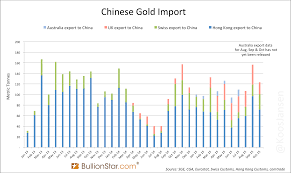
China has been quietly stockpiling gold for years now
No one knows just exactly how much gold China has amassed
Lots of other countries are rapidly buying up gold, too, including – Serbia, Greece, Ecuador, Mexico, Kazakhstan, Kyrgyzstan, and Tajikistan.
The Russian central bank has almost doubled its gold holdings within the last 5 years to 1,094.8 tonnes in June of this year
A larger global currency shift is underway… And it may be happening much more quickly than anyone has realized.
Things are definitely in motion. Call it a game of musical chairs, or
an exercise in rearranging chairs on the Titanic, or just that a
tilting balance of power. Just don’t make the mistake of thinking this
is all routine.
The absolutely stunning decision by the Swiss National Bank to decouple from the euro has triggered billions of dollars worth of losses all over the globe.
[…]
And these are just the losses that we know about so far.
It will be many months before the full scope of the financial
devastation caused by the Swiss National Bank is fully revealed. But
of course the same thing could be said about the crash in the price of
oil that we have witnessed in recent weeks. These two “black swan
events†have set financial dominoes in motion all over the globe. At this point we can only guess how bad the financial devastation will ultimately be.
The key to understanding how the hammer will fall may lie in: gold.
In the material world that governs politics and economics, there has
always been one golden rule: he who has the gold makes the rules.
Put China at the top of the next generation of rule makers, then.
China has been quietly stockpiling gold for years now. In fact, it is
stockpiling so much gold that many have speculated that it may be
building a gold-backed yuan currency that would make the Dollar pale in
comparison on the global market.
Bottom line: no one knows just exactly how much gold China has amassed:
Buying surreptitiously allows Beijing to buy bullion at bargain prices; if
the world knew how much gold China was really amassing, a run on gold
the likes of which the globe has never seen would likely ensue.
“We believe China is controlling the gold price because it is buying in
such a way so as not to push prices up.†That’s the opinion of
respected precious-metals analyst Julian Phillips of The Gold
Forecaster, along with a host of other informed sources. (source)
It is widely believed that China has accumulated larger – possibly much larger – reserves since. (source)
Lots of other countries are rapidly buying up gold, too, including –
Serbia, Greece, Ecuador, Mexico, Kazakhstan, Kyrgyzstan, and Tajikistan.
But reportedly no one is buying gold at a faster pace than Russia.
Russia’s increase is the most dramatic,
according to the recent report from the IMF. The Russian central bank
has almost doubled its gold holdings within the last 5 years to 1,094.8
tonnes in June of this year. China’s Central Bank followed with an increase of 75% from its holdings in 2009.
The country has tripled its gold reserves since 2005 and is holding the most since at least 1993, IMF data show.
There is little doubt that gold plays a major factor in Russia’s
posturing during a global showdown that involves proxy war and military
tensions in the Ukraine, Syria, Iraq and other parts of the globe.
Moscow’s purchase of bullion and the assault on
the bank can be seen as tactics of a single strategy designed to break
the monopoly of the dollar. Gold is Russia’s hedge against that hegemony; it can’t be hacked.
More than that, Putin has been positioning his motherland to team up
with China to solidify the emerging BRICS system which aims to thwart
decades of Anglo financial dominance with a un-dollar currency system
that will also include a development bank.
Russia’s response has been to buy gold and turn
east, cementing deals with China and, it would seem, firing the opening
salvos in a cyber currency war with the U.S. (source)
Warnings have sounded about a tipping of the global balance:
Russia is also increasing its gold reserves. China and
Russia have been exchanging their U.S. dollar reserves and buying
physical gold. Last year we speculated that this dynamic would create a
shortage in gold leading to much higher prices. Russia and China now
rank in the top ten countries by gold reserves.
With Russia now in what appears to be a currency war with the U.S.,
they may find a willing partner in China to create an alternative
international financial system that does not rely upon or use the
dollar. Irrespective of either country’s intentions, their physical gold
buying sprees continue unabated. (source)
To that end, Russia has been amassing as much gold as possible, in a
bid to outmaneuver its enemies in a silent economic war to hold onto its
independence and further project its status.
Nearly every bit of gas and oil that Russia sells to neighbors in
Europe and Asia is converted from dollars into gold reserves – and even
with the collapsing oil price, that amount could still be staggering.
Thus, the Western world, built on the hegemony of the
petrodollar, is in a catastrophic situation. In which it cannot survive
without oil and gas supplies from Russia. And Russia is now ready to
sell its oil and gas to the West only in exchange for physical gold! The
twist of Putin’s game is that the mechanism for the sale of Russian
energy to the West only for gold now works regardless of whether the
West agrees to pay for Russian oil and gas with its artificially cheap
gold, or not.
Posted by AGORACOM-JC
at 8:25 AM on Thursday, August 8th, 2019
Announced it’s Oregon State subsidiary, Empower Healthcare Corp. has been awarded it’s Hemp-Handlers License from the Oregon Department of Agriculture (ODA)
Under license number AG-R1062748IHH, allowing the Company to commence build-out and operate the new 5,000 sq. ft. extraction facility in Sandy, OR.
VANCOUVER, Aug. 8, 2019 – EMPOWER CLINICS INC. (CSE: CBDT) (Frankfurt 8EC) (OTC: EPWCF) (“Empower” or the “Company“), a vertically integrated and growth-oriented CBD life sciences company, and a multi-state operator of medical health & wellness clinics in the U.S., is pleased to announce it’s Oregon State subsidiary, Empower Healthcare Corp. has been awarded it’s Hemp-Handlers License from the Oregon Department of Agriculture (ODA) under license number AG-R1062748IHH, allowing the Company to commence build-out and operate the new 5,000 sq. ft. extraction facility in Sandy, OR.
The Company has also commenced the application process with the
Oregon Department of Agriculture for the Food Establishment Plan permit
that will allow the Company to manufacturer and produce a wide array of
edible products in the new facility or in an adjacent location. Popular
edible CBD products can include gummies, drinks & beverages,
chocolate, pantry items such as peanut butter and honey and baked goods.
“The ODA has strict requirements regarding the award of a
hemp-handlers license and/or a Food Establishment permit, to ensure that
extraction operators and CBD product producers operate to the highest
of standards.” said Steven McAuley, Empowers Chairman &
CEO. “The award of the hemp-handlers license is a significant milestone
for our company as we continue on our path of growth and vertical
integration.”
The Company, with the support of the team at Pathangay Architects www.pathangayarchitects.com
is now able to move into the next phase of facility design and building
permit applications based on the ODA license approval. Preliminary
security systems and IT networks have been installed and the Company
anticipates draft architectural drawings to be completed in Q3 2019 and
initial extraction equipment orders to be placed.
ABOUT EMPOWER
Empower is a vertically integrated and growth-oriented CBD life
sciences company, and a multi-state operator of medical health &
wellness clinics, operating the Sun Valley Health clinic brand www.sunvalleyhealth.com, for its nine corporate locations and for franchises in the United States.
As a CBD product manufacturer under the Solievo brand, the company
distributes its lines through clinics, online and through retail
partners. Extraction operations are currently being developed in the
Company’s new extraction facility in Oregon.
ON BEHALF OF THE BOARD OF DIRECTORS:
Steven McAuley Chief Executive Officer
DISCLAIMER FOR FORWARD-LOOKING STATEMENTS
This news release contains certain “forward-looking statements”
or “forward-looking information” (collectively “forward looking
statements”) within the meaning of applicable Canadian securities laws. All
statements, other than statements of historical fact, are
forward-looking statements and are based on expectations, estimates and
projections as at the date of this news release. Forward-looking statements
can frequently be identified by words such as “plans”, “continues”,
“expects”, “projects”, “intends”, “believes”, “anticipates”,
“estimates”, “may”, “will”, “potential”, “proposed” and other similar
words, or information that certain events or conditions “may” or “will”
occur. Forward-looking statements in this news release include
statements regarding; the Company’s intention to open a hemp-based CBD
extraction facility; the effectiveness of the extraction technology; the
expected benefits for Empower’s patient base and customers; the
benefits of CBD based products; the effect of the approval of the Farm
Bill; the growth of the Company’s patient list and that the Company will
be positioned to be a market-leading service provider for complex
patient requirements in 2019 and beyond. Such statements are only
projections, are based on assumptions known to management at this time,
and are subject to risks and uncertainties that may cause actual
results, performance or developments to differ materially from those
contained in the forward-looking statements, including; that the Company
may not open a hemp-based CBD extraction facility; that the hemp-based
CBD extraction facility may not be fully operation by Q3 2019 if at all;
that legislative changes may have an adverse effect on the Company’s
business and product development; that the Company may not be able to
obtain adequate financing to pursue its business plan; general business,
economic, competitive, political and social uncertainties; failure to
obtain any necessary approvals in connection with the proposed
acquisitions and partnerships; and other factors beyond the Company’s
control. No assurance can be given that any of the events anticipated by
the forward-looking statements will occur or, if they do occur, what
benefits the Company will obtain from them. Readers are cautioned not to
place undue reliance on the forward-looking statements in this release,
which are qualified in their entirety by these cautionary statements.
The Company is under no obligation, and expressly disclaims any
intention or obligation, to update or revise any forward-looking
statements in this release, whether as a result of new information,
future events or otherwise, except as expressly required by applicable
laws.
Investors: Steve Low, Boom Capital Markets, [email protected], 647-620-5101; Investors: Steven McAuley, CEO, [email protected], 604-789-2146; For French inquiries: Remy Scalabrini, Maricom Inc., E: [email protected], T: (888) 585-MARICopyright CNW Group 2019
Tags: CSE, Hemp, Marijuana, stocks, tsx, tsx-v, weed Posted in All Recent Posts, Empower Clinics Inc., Featured | Comments Off on Empower Clinics $CBDT.ca Receives its #Hemp-Handlers Licence from Oregon Department of Agriculture and Commences Food Establishment Application to Produce Edibles $WEED.ca $CGC $ACB $APH $CRON.ca $HEXO.ca $OGI.ca
Posted by AGORACOM
at 8:18 AM on Thursday, August 8th, 2019
April 25, 2019, ZEN announced that it had commenced work on the
environmental baseline studies to support the development of the Albany
Graphite Project directly related to graphite purification, graphene
production research, concrete additive research and large-scale
graphene-enhanced concrete testing on a quarterly reporting basis.
Received a $290,192.72 reimbursement payment for eligible expenses
Thunder Bay, Ontario–(Newsfile Corp. – August 8, 2019) – ZEN Graphene Solutions Ltd. (“ZEN” or the “Company“)
(TSXV:ZEN) is pleased to provide an update on recent activities
including the $1,000,000 reimbursement grant for graphene-Infused
concrete applications research and progress on the environmental
baseline study fieldwork.
ZEN recently received a $290,192.72 reimbursement payment for the
eligible expenses during the quarter ended June 30th 2019. This payment
is the first installment of the reimbursement grant for graphene-infused
concrete applications research that was awarded to ZEN on May 8, 2019.
The grantor will reimburse up to a maximum of $1,000,000 spent by ZEN
on eligible expenses directly related to graphite purification, graphene
production research, concrete additive research and large-scale
graphene-enhanced concrete testing on a quarterly reporting basis.
Additionally, on April 25, 2019, ZEN announced that it had commenced
work on the environmental baseline studies to support the development of
the Albany Graphite Project. The environmental and social baseline
studies will provide important input into continued advancement of
project development plans. ERM Canada Ltd. (“ERM”) is leading the
desktop and fieldwork associated with the baseline studies on behalf of
ZEN. ERM and ZEN have been actively collaborating with Constance Lake
First Nation (“CLFN”) in order to maximize opportunities for involvement
and incorporation of traditional knowledge. Three field campaigns have
been conducted by ERM, CLFN, and ZEN so far in 2019 to collect data on
hydrology (river levels and flow rates), water quality, fish and fish
habitat, vegetation, and wildlife habitat. Two additional field
campaigns are planned in 2019 to collect seasonal hydrology and water
quality data. Samples have also been collected from existing drill core
and reject material to initiate geochemical studies. ERM will be
analyzing and interpreting all the data that is collected in 2019 and
will provide a final report documenting the activities and results at
the end of the year.
About ZEN Graphene Solutions Ltd.
ZEN Graphene Solutions Ltd. is an emerging graphene technology
company with a focus on development of the unique Albany Graphite
Project. This precursor graphene material provides the company with a
competitive advantage in the potential graphene market as independent
labs in Japan, UK, Israel, USA and Canada have demonstrated that ZEN’s
Albany Graphite/Naturally PureTM easily converts (exfoliates) to
graphene, using a variety of simple mechanical and chemical methods.
To find out more on ZEN Graphene Solutions Ltd., please visit our website at www.ZENGraphene.com . A copy of this news release and all material documents in respect of the Company may be obtained on ZEN’s SEDAR profile at www.sedar.com
Posted by AGORACOM-JC
at 12:05 PM on Wednesday, August 7th, 2019
SPONSOR: Enthusiast Gaming Holdings Inc. (TSX-V: EGLX) Uniting gaming communities with 80 owned and affiliated websites, currently reaching over 75 million monthly visitors. The company exceeded 2018 target with $11.0 million in revenue. Learn More
EGLX: TSX-V
Esports Are Beginning to Eclipse Traditional Sports
More young people are dreaming of becoming professional gamers than professional athletes
In British Columbia and beyond, esports are booming. Many universities are forming esports teams for games like Overwatch, League of Legends, Rocket League, Counter-Strike, and Dota 2 to compete in collegiate leagues around the world.
by Alex Rodriguez
In 2018, esports had a total audience size of 380 million, and esports research firm Newzoo predicts that that number will increase to 557 million by 2021.
As a result, an increasing number of large brands will sponsor events and tournaments, which has lead Newszoo to believe that esports will reach a market value of $1.7 billion USD by 2021, overtaking the revenue generated by rugby.
If you think that sounds like a lot of money, this year Fortnight will become the first game to offer a prize pool of $39 million for the Fortnight
World Cup in July. With prize pools growing so large, it’s easy to see
why gaming as a whole is flourishing. Instead of simply playing for fun,
people are now seeing gaming as a possible investment in skills that
could win you prizes.
The grand opening of the Gaming Stadium
in Richmond on June 28 was a milestone for esports in British Columbia.
With its construction came the creation of Canada’s first dedicated
esports gaming stadium.
They host competitive events most
days of the week for various video games that either individuals or
teams can sign up for. All of their events are broadcasted on Twitch—the
leading live streaming platform for gamers and esports events—using
great production quality. The Gaming Stadium is sure to cultivate new
talent in the community as the local population will be able to go there
to practice, socialize, and get a sense of what being an esports player
feels like.
In 2018, esports had a total audience size of 380 million,
and esports research firm Newzoo predicts that that number will
increase to 557 million by 2021. As a result, an increasing number of
large brands will sponsor events and tournaments, which has lead Newszoo
to believe that esports will reach a market value of $1.7 billion USD by 2021,
overtaking the revenue generated by rugby. They also predict that, with
the help of esports, the global games market will generate over $180
billion USD.
As the life of a professional gamer
continues to look more and more lucrative, it may eventually become more
common for parents to push their children towards becoming a digital
athlete than it is to involve them in traditional sports.
Posted by AGORACOM-JC
at 10:13 AM on Wednesday, August 7th, 2019
SPONSOR: Betteru Education Corp.
aims to provide access to quality education from around the world. The
Company plans to bridge the prevailing gap in the education and job
industry and enhance the lives of its prospective learners by developing
an integrated ecosystem. Click here for more information.
BTRU: TSX-V
India’s Education Policy Updates After 30 Years: 4 Experts Share What It Really Means
On 31 May 2019, the Ministry of Human Resource Development (MHRD) released a draft of the National Education Policy (NEP).
This is the ï¬rst update to India’s education policy in nearly 30 years, and there has been plenty of debate on the recommendations, and it was open to the public for feedback and suggestions till July 31.
Central Square Foundation’s (CSF) monthly newsletter The EDge asked
eminent names from the education sector to share their thoughts on some
key aspects of the policy.
1. Ashish Dhawan, Founder and Chairman, Central Square Foundation
What is your initial response to the draft NEP? If implemented, how do you see the impact of the policy on our education system?
The draft NEP was a long time coming, but it has made some bold and
welcome recommendations to shift the focus of the education system
towards quality, and improving student learning outcomes. It takes a
long-term view in terms of the emphasis on flexibility and skills to
ensure that our children are equipped for a rapidly changing job
scenario.
When I read it, my immediate thought was that we now have a policy document, even though it’s a draft, that explicitly recognizes that we are currently in a severe learning crisis, and that this crisis starts in the early years. This is significant. If we were to focus and get this one thing right, i.e., ensure all children have foundational literacy and numeracy skills, this in itself would have a tremendous impact on the education system.
What are some of the key steps the government can take for
the successful implementation of the policy? How can the policy
translate into real action?
The challenge is that current state capacity to deliver quality
education is weak, and we do not have the resources to focus on so many
things at the same time. My one advice to the government would be that
they should almost ruthlessly prioritise–they should first focus on
ensuring that all children achieve foundational literacy and numeracy,
and then phase in other priorities, as needed.
Separately, I think it’s important to remember that implementation
rests with states. The centre’s role is primarily one of catalysing
demand for critical reforms with the states, setting broader policy
goals, providing funding to states, and so on. The centre cannot be too
prescriptive in terms of ‘how’ states need to implement. In fact, it
needs to give states the autonomy to choose the most cost-effective
pathways, while maintaining accountability for the right outcomes. The
centre should also think about enabling states to develop 3-5 year
plans, and not annual plans.
What, according to you, are the big misses of the draft NEP, if any?
One of the key concerns with the draft education policy is that like
many other policies, it may be attempting to do too much. As a system,
we first need to focus on getting the basics right–ensure that all our
children achieve foundational literacy and numeracy by class 3. Without
this prioritisation, the system will continue to grapple with multiple
competing priorities.
We cannot hope to achieve foundational learning for all our children
if we don’t measure it correctly. Therefore, one of the biggest areas of
reform in this regard, which is not adequately addressed by the policy
in its current form, is the need to ensure independent and reliable
learning data to measure early grade learning outcomes.
While the NEP does call out regular adaptive assessments, there is a
need to have a large-scale, independent, household-based,
government-backed assessment, which measures outcomes for children
attending public and private schools. This survey must be housed in and
administered by an autonomous institution, which is at arm’s length from
the delivery ministry, ensuring there is no conflict of interest. This
learning data is critical for the government to meaningfully hold the
system accountable and keep us honest.
Read CSF’s full interview with Ashish Dhawan, here.
2. Geeta Gandhi Kingdon, Professor, University College London and President, City Montessori School, Lucknow
The NEP refers to the creation of an independent agency to
gather and analyse data for the education system. What are crucial data
gaps on private schools that the government should strive to fill?
There is hardly any data on private schools
because they are rarely included in studies or surveys done by the
government. It is as if private school students belong to another
country. For example, the National Achievement Survey (NAS) is conducted
only in government and aided schools and excludes private unaided
schools. We need more information about private schools to get a fuller
picture of the education sector.
What do you think of the proposition to separate regulation,
provision, and policy-making in the NEP? How do overlapping interests
between these functions presently impact private schools?
The idea of separating roles is very good, because if the government
performs all the roles–funder, provider, regulator, policy maker,
assessor–it leads to many conflicts of interest. However, the NEP does
not go far enough because it does not separate funding and provision–the
government is both the funder and producer of education, i.e., it runs
schools itself.
The NEP does not consider public funding for privately produced
education (public-private partnerships). It is a myth that in
educationally developed countries, all schools are state-run. Actually,
they are only publicly funded, not publicly run. This is an important
distinction that many in government are unaware of.
In India, there is an entrenched belief that the government shouldn’t
just fund education, it must also produce it (i.e., run the
schools)–even when it has struggled to deliver quality. Our main focus
should be to ensure that all elementary education is publicly funded, so
that parents do not have to pay to send their children to school. But
the operation of the schools could be in private hands if they are
deemed to be more efficient, i.e., to deliver better child outcomes at
lower costs.
The NEP has also proposed the establishment of an independent State
School Regulatory Authority (SSRA) for each state, to handle all aspects
of school regulation and accreditation. It recommends reducing the
burden of over-regulation on private schools, and regulating public and
private schools within the same framework/benchmarks. These are welcome
proposals. Much depends, however, on how the SSRA will operate. Will it
subject public schools to accountability pressures? Will government
schools go through a process of recognition like private schools? And
will they also be closed down if they do not comply with the norms of
the RTE Act? The NEP doesn’t clarify this, leaving open the possibility
of the continuation of non-accountable public schools and resultant poor
learning outcomes.
Read CSF’s full interview with Geeta Gandhi Kingdon, here.
3. Rukmini Banerji, CEO, Pratham Education Foundation
The draft NEP includes pre-primary education as part of the
‘foundational stage’ (ages 3-8) and strongly recommends that this stage
must be a continuum. Do you agree? How should we approach this?
I welcome the strong focus on the early years. Building strong
foundations in the early years allows children to ‘leap forward’. The
widespread phenomena of ‘falling behind’ that we see today, happens
because the right things are not done at the right time.
The draft policy states that children in the 3-8 year age group
should receive a flexible, “play-based, activity-based, and
discovery-based†education. However, it is fair to say that the
educational establishment in India, including the government bodies at
the central, state, and district levels have little or no experience
with the preschool age group.
Pre-primary classes are often part of primary schools in the private
sector and much of the student intake happens in lower or upper
kindergarten. However, research studies show that most activities in
these institutions in the early age group are ‘school-like’ and do not
provide the flexible, play-based, and developmentally appropriate
activities that are suited for supporting the development of young
minds. So, despite several years of preschool education, such children
are still not ‘ready’ for class 1.
At the same time, the Integrated Child Development Services (ICDS)
system run by the Ministry of Women & Child Development (MWCD) is
typically overwhelmed by responsibilities in health, immunisation, and
nutrition. So, in the anganwadis, early childhood stimulation or
development has not received the high priority it needs.
Bringing these two ministries together, all the way from the centre
to the states, districts, and villages, will be a huge and challenging
task, but one that is certainly worth undertaking. Clear financial
calculations will be needed to support this convergence exercise in a
sustained way.
One of the objectives the draft NEP states is that every
child in grade 5 and beyond should achieve foundational literacy and
numeracy – can you talk about some of the specifics with regard to the
pedagogical and curricular changes that will be needed to achieve this
goal?
According to ASER data, only about 50 percent of class five children
are able to read in class 2 (or higher). The other half is spread across
several reading levels, starting from not being able to recognise
letters to just about coping with simple sentences. This is one of the
biggest challenges in primary schools, the wide dispersion of learning
levels. The teacher’s daily dilemma is to figure out what to teach and
to whom. To complete the curriculum guided by grade-level textbooks,
teachers usually choose to focus on the ‘top of the class’, leaving
others to catch up on their own. Even the RTE Act prescribes that
teachers “must complete entire curriculum within specified timeâ€.
The draft NEP highlights several causes for the learning crisis,
including the lack of school readiness, but it doesn’t address the
negative consequences of overambitious curricula or the common practice
of teaching to the top of the class. The real challenge is, therefore,
to schedule ‘catch-up’ routines into the regular school schedule. Given
the size, depth, and magnitude of the ‘catch-up’ required, we will need a
persistent and high-priority effort for at least five years or more.
The alignment of key elements of the school system such as teacher
training, teaching-learning material, ongoing teacher support,
mentoring-monitoring, assessment, and course correction towards
achieving stated goals is critical. Perhaps this alignment for
foundational learning will now be possible, given the overarching
direction of the new policy.
Read CSF’s full interview with Rukmini Banerji, here.
4. Sridhar Rajagopalan, President and Chief Learning Officer, Educational Initiatives
The draft NEP calls for the appropriate integration of technology
into all levels of education. What is your initial response to the
draft in terms of how it envisions the role of technology in education?
The draft policy mentions India’s unique leadership in the technology
space and acknowledges that the right policy and implementation can
help India become a global leader in EdTech. Overall, the policy seems
to have its heart in the right place, yet many challenges plague the
successful implementation of EdTech in our country.
For example, one of the most common issues with all EdTech projects
is the disproportionate focus on hardware as compared to the software or
content.
One big miss. without a doubt, is that it fails to recognise the role
of the private, for-profit players and their international experience.
It would have been useful to look into what has been tried already in
EdTech and the challenges those efforts faced. While the collective goal
should be to strengthen state resources and capacities and help curate
high-quality open resources, there should be an effort to learn from the
for-profit EdTech players and view them as providers of co-existing and
complementing solutions.
Again, for implementation of suggestions made in the policy,
do you think we have adequate infrastructure and capacity in our schools
and state systems? What could be the challenges in creating that
infrastructure and capacity?
The infrastructure and capacity do not exist, but like with anything
new, they can be developed over time as these projects expand. However,
problems arise if the approach tends to focus more on scaling than on
quality. Ironing out all possible issues at the scale of 20-100 schools
is very important, and a disproportionate focus at this scale will
ensure fewer challenges at a larger scale of say 1,000 or 2,000 schools.
What is important in all this is generating effective assessment
solutions and protocols to provide learning feedback. Again, this should
be done in a low-stake, quality-focused manner while gradually scaling
up and taking key players and partners along.
Read CSF’s full interview with Sridhar Rajagopalan, here.
Posted by AGORACOM-JC
at 9:56 AM on Wednesday, August 7th, 2019
SPONSOR: ThreeD Capital Inc. (IDK:CSE) Led by
legendary financier, Sheldon Inwentash, ThreeD is a Canadian-based
venture capital firm that only invests in best of breed small-cap
companies which are both defensible and mass scalable. More than just
lip service, Inwentash has financed many of Canada’s biggest small-cap
exits. Click Here For More Information.
IDK: CSE
Facebook’s Libra: It’s not the ‘crypto’ that’s the issue, it’s the organisation behind it
Libra is not a cryptocurrency—at least, not as they have been put into practice so far, where a distributed, decentralised community participates in transaction verification via a competitive process.
Libra is essentially a prepaid digital token, backed one-to-one with a basket of reserve currencies. It is “minted” when people put up state-issued currencies to buy it.
In all the hype that has surrounded its Libra currency, Facebook has been able to distract attention away from an important issue. Libra is being hyped as Facebook’s bitcoin but it’s really a proposal for a global payments system. And that system will be controlled by a small and exclusive club of private firms.
Since it was announced in June, politicians and regulators have attacked Libra, citing concerns about its being a cryptocurrency.
Libra is not a cryptocurrency—at least, not as they have been put into
practice so far, where a distributed, decentralised community
participates in transaction verification via a competitive process.
Libra is essentially a prepaid digital token, backed one-to-one with a
basket of reserve currencies. It is “minted” when people put up
state-issued currencies to buy it.
What’s important here is not the technological innovation. Facebook
is proposing, in Libra, a new form of organisation. We already have
payment systems controlled by private companies—Visa,
MasterCard, Venmo or PayPal, which provide the infrastructure or
“rails” for transferring value—and Libra might turn into another such
rail. But its promoters have greater ambitions for it.
Based on our research on the history and technology of payment infrastructures,
we see similarities between Libra and Visa. But it’s the differences
with the Visa network that raise the biggest warning flags.
Learning from Visa
Libra will be controlled and maintained by the Libra Association,
a membership-based group. Libra’s developers have voiced a commitment
to letting anyone become a member of the association, including users
like you and me. The Libra white paper
trumpets the importance of decentralisation. But it also admits that,
“as of today we do not believe that there is a proven solution that can
deliver the scale, stability, and security needed to support billions of
people and transactions across the globe” through a truly open,
decentralised system.
We believe Libra’s founders got the idea from the work of Visa’s founder, Dee Hock.
Hock was heralded as a visionary in his day, like Steve Jobs or Mark
Zuckerberg today. He realised that the problem facing payments between
banks was not technological, but organisational.
When setting up Visa, it was important for Hock that Visa would not
be owned by self-interested shareholders. Instead, it was the users,
banks and credit unions, who “owned” Visa as a cooperative membership
organisation. Ownership here did not entail the right to sell shares,
but an irrevocable right of participation—to jointly decide on the rules
of the game and Visa’s future.
The incentive was to create a malleable but durable payment
infrastructure from which all members would benefit in the long term. To
work, everyone had to give something up—including their own branding on
credit cards, subordinating their marks to Visa. This was a really big
deal. But Hock convinced the network’s initial members that the payoff
would come from the new market in payment services they would create. He
was right.
For most of its existence, until it went public in 2016, Visa was an
anomalous creature: a for-profit, non-stock corporation based on the
principle of self-organisation, embodying both chaos and order. Hock
even coined a term for it: “chaordic”.
Libra envisions a similar collaborative organisation among the
founding members of its Libra Association. But it turns Hock’s
principles upside down. The Libra Association is all about ownership and
control by its members as a club.
Big barriers to entry
And the Libra Association is a club with very high barriers to entry.
An entity has to invest at least US$10m in Libra or have more than US$1
billion in market value, among other criteria. The initial list of founding members tilts toward groups that have shown strong opposition to government interference
and oversight. Tellingly, there are no regulated financial
entities—like banks and fund managers—in the mix. The membership
represents a self-selecting crème de la crème of global tech and vulture capitalism.
Association membership guarantees a share of future profits
proportionate to a member’s stake in the system. Unlike Visa, members do
not compete with one another for market share. Instead, they will
passively collect rent from interest made on investing in the Libra
reserve basket. Plus, profits are not shared with users, and no interest
is paid on the balance held by individuals.
Being a club member also affords the right to vote—again, a lot like
Visa. But, unlike Visa, Libra gives voting right power based on
investment level, not participation. This is not democratic; it is a
plutocracy, where the wealthiest rule. And, as profits are linked solely
to interest on the association’s reserve funds, those managing it may
well become riskier and more speculative over time.
Libra’s white paper
outlines an organisation that could become a decentralised,
participatory system like Hock envisioned Visa would become. But Libra,
if it is successful, will likely become an undemocratic behemoth. Alarm
bells ring about a global currency’s de facto governance by a private,
exclusive club serving the purposes of its investor-owners, not the
public good.
Governments have long been suspicious of private currencies for good
reasons, and Libra is no exception. We must not be distracted by its
proposed technical complexity, and instead, focus on how this technology
is organised, put to work, and how its rewards are distributed. The
good news is that Facebook’s play for money may at last prompt
politicians to regulate tech giants to curb their impact on and
influence over society.
American Creek owns a 20% Carried Interest to
Production at the Treaty Creek Project in the Golden Triangle. 2019’s
first hole averaged 0.683 g/t Au over 780m
in a vertical intercept. The Treaty Creek property is located in the
same hydrothermal system as Pretivm and Seabridge’s KSM deposits.
Eric Sprott recently made a strategic 1$M investment in AMK
Lead by Shawn Ryan and Roger Moss, LAB has 2 district scale Gold
projects in Labrador that have never seen any modern exploration
techniques. Ashuanipi and Hopedale are being systematically explored for
gold potential utilizing the same techniques that created the White
Gold discoveries. At Ashuanipi , a 15km long by 2 to 6 km wide
north-south trend exists and a second 14 km long by 2 to 4 km wide
east-west trend exists. At Hopedale, 2019 exploration has discovered
two new mineralized showings.First showing extends potential strike
length by approximately 500 metres along strike of the Thurber Dog gold
occurrence; Second showing was discovered in the Misery North area
GGX gold has discovered high grade gold silver and tellurium in the
Greenwood-Republic mining camp, British Columbia. The current 2019 drill
program follows up on 2018 intercept of high grade gold-silver (129 g/t gold and 1,154 g/t silver over 7.28 meter) from the near surface COD vein which is projected to be 1.5 kms in length. In addition tellurium grades were announced with “up to 3,860 g/t telluriumâ€, including “823 g/t tellurium over 7.28-meter core length†and “640 g/t tellurium over 6.90-meter core length. 2019 drilling on COD North is currently underway.
Great Atlantic is situated between Marathon Gold and Sokoman in
Canada’s newest emerging gold district. The Company reported a NI
43-101mineral resource estimate for the JMZ in late 2018 on Golden
Promise and 2019 is focused on prospecting and geochemical sampling at
high priority targets within the property. Planned 24 hole program in
the northern half of the property at the gold-bearing Jaclyn Zone,
specifically at the Jaclyn Main Zone (JMZ) and Jaclyn North Zone (JNZ).