Agoracom Blog Home

Archive for the ‘All Recent Posts’ Category

ThreeD Capital Inc. $IDK.ca – Understanding #blockchain technology and its implications on the future of transactions $HIVE.ca $BLOC.ca $CODE.ca

Posted by AGORACOM-JC at 10:57 AM on Monday, July 22nd, 2019

SPONSOR: ThreeD Capital Inc. (IDK:CSE) Led by legendary financier, Sheldon Inwentash, ThreeD is a Canadian-based venture capital firm that only invests in best of breed small-cap companies which are both defensible and mass scalable. More than just lip service, Inwentash has financed many of Canada’s biggest small-cap exits. Click Here For More Information.

Idk large
————-

Understanding blockchain technology and its implications on the future of transactions

Blockchain technology will disrupt the way we write and enforce contracts, execute transactions and maintain records.

  • Since blockchain technology is at the heart of Bitcoin and other virtual currencies, it can at the very least be expected to power even more consequential mediums of exchange in the future.

Shaan Ray Jul 22, 2019
Blockchain technology is transformative, and several commentators expect that it will have a massive economic impact similar to the one the Internet has had in the past few decades.

Blockchain could be the future of the financial industry.

Since blockchain technology is at the heart of Bitcoin and other virtual currencies, it can at the very least be expected to power even more consequential mediums of exchange in the future. However, virtual currencies are merely the first use case of blockchain technology.

Blockchain fundamentals

The blockchain is an open and distributed ledger. It uses an append-only data structure, meaning new transactions and data can be added on to a blockchain, but past data cannot be erased.

This results in a verifiable and permanent record of data and transactions between two or more parties. This has the potential to increase transparency and accountability, and positively enhance our social and economic systems. A blockchain is built by running software and linking several nodes together.

The main chain (black) consists of the longest series of blocks from the genesis block (blue) to
the current block. Orphan blocks (red) exist outside of the main chain.

A blockchain is not one global entity — there are several blockchains. Imagine a network of connected computers inside a highly secure office, which are connected to each other, but not to the internet. A blockchain is similar to this: it can have numerous connected nodes, but remain totally separate and unique from other blockchains.

Institutions and banks can build internal blockchains with their own features for various organizational purposes. A consensus mechanism and a reward system are required to maintain the integrity and functionality of a blockchain.

In the Bitcoin blockchain, consensus is achieved by ‘mining’, and the reward system is a protocol awarding a miner some amount of Bitcoin upon successfully mining a block. Mining is undertaken by powerful computers solving complex mathematical puzzles. Once a transaction is verified and accepted as true by the entire network, miners start working on the next block. Thus, a blockchain keeps growing (linking each new block to the one before it).

Implications for transactions

Blockchain technology will disrupt the way we write and enforce contracts, execute transactions and maintain records. Keeping records of transactions is a core function of all businesses. These records are meant to track past performance and help with forecasting and planning for the future.

Most organizations’ records take a lot of time and effort to create, and often the creation and storage processes are prone to errors. Currently, transactions can be executed immediately, but settlement can take anywhere from several hours to several days. For example, someone selling stock in a corporation on a stock exchange can sell immediately, but settlement can take a few days.

Similarly, a deal to purchase a house or car can be negotiated and signed quickly, but the registration process (verifying and registering the change in property ownership) often takes days and may involve lawyers and government employees. In each of these examples, each party maintains its own ledger, and cannot access the ledgers of the other parties involved. On the blockchain, the process of transaction verification and recording is immediate and permanent.

The ledger is distributed across several nodes, meaning the data is replicated and stored instantaneously on each node across the system. When a transaction is recorded in the blockchain, details of the transaction such as price, asset, and ownership, are recorded, verified and settled within seconds across all nodes. A verified change registered on any one ledger is also simultaneously registered on all other copies of the ledger. Since each transaction is transparently and permanently recorded across all ledgers, open for anyone to see, there is no need for third-party verification.

From virtual currencies to enterprise

Use The blockchain underlying Bitcoin is currently the largest and best-known blockchain. Ethereum is a separate blockchain: while it supports the Ether currency, it also acts as a distributed computing platform that features smart contract functionality. Therefore, despite having a virtual currency element, it has many more uses than Bitcoin. For example, companies in various industries raising funds through ICOs use Ethereum for their projects.

The Hyperledger Project, by the Linux Foundation, aims to bring together a number of independent efforts to develop open protocols and standards in blockchain technology for enterprise use.

Here for the long term

Blockchain technology will disrupt the way we write Blockchain technology, but is still in an early, formative stage, and cryptocurrencies are only its first major use case.

Beyond cryptocurrency, blockchain technology will change how we transact, and how we record and verify transactions. This will revolutionise contracts and reduce friction in the exchange of assets.

Over the next few decades, blockchain technology will percolate through our organizations and institutions, and shape how we transact with one another. Just as the Internet continues to power emergent technologies, we can expect to see new use cases of blockchain technology across all industries.

Shaan Ray (MBA) is the head of Denver Hill, a group that uses emerging technologies like blockchain, artificial intelligence, additive manufacturing and the industrial internet to create new products and processes.

Source: https://www.firstpost.com/tech/news-analysis/understanding-blockchain-technology-and-its-implications-on-the-future-of-transactions-7033731.html

Spyder Cannabis $SPDR.ca Receives Approval on Development Permit for its Flagship #Cannabis Store in Calgary, Alberta $WEED.ca $CGC $ACB $APH $CRON.ca $HEXO.ca $OGI.ca

Posted by AGORACOM-JC at 8:54 AM on Monday, July 22nd, 2019
Spdr logo large
  • Announced that it has received approval on their development permit for a flagship retail location in the heart of Calgary
  • Spyder has now been accepted by Alberta Health Services and will begin construction in the coming weeks.

Vaughan, Ontario–(July 22, 2019) – Spyder Cannabis Inc.TSXV : SPDR) (“Spyder“), an established Canadian cannabis and vape retail operator, is pleased to announce that it has received approval on their development permit for a flagship retail location in the heart of Calgary.

In July 2018, Spyder acquired a lease for an approximately 8,000 square feet location in Calgary, Alberta, which Spyder intends to operate both as its flagship retail location, and as a central distribution hub for its product offerings. Spyder had received a municipal development and building permit in late 2018, subject to receiving a variance from the Province of Alberta. Spyder has now been accepted by Alberta Health Services and will begin construction in the coming weeks.

“We have built our Spyder retail brand to provide a superior customer experience and have focused on locations with high foot traffic in urban centres and destinations” said Dan Pelchovitz, Spyder President and CEO. “This will give us plenty of room to present an engaging retail experience, rooted in a customer centric retail concept with unique design, warm features, complete with well trained and knowledgeable staff”

This location brings Spyder’s total retail to 6 locations across Ontario and Alberta. This number is expected to grow over the coming months as the Spyder is currently negotiating additional leases with the intention of submitting applications for retail licenses. Spyder is executing an aggressive expansion plan to create a significant retail brand in the Canadian and U.S. adult use market. It is committed to acquiring and developing prime North American retail locations and continuing to expand the reach of its brand.

About Spyder

Founded in 2014 Spyder is an established chain of three high-end vape stores, and two cannabis accessory stores, in Ontario, with locations in Woodbridge, Scarborough, Burlington, Pickering and Niagara Falls. The Spyder brand is defined by its high-quality proprietary line of e-juice, liquids and exclusive retail deals, dispensed in uniquely designed stores creating the optimal customer experience. Spyder is building off this leading retail, distribution and branding eCig and vapes company and is pursuing expansion into the legal cannabis and hemp derived market. Spyder has developed a scalable retail model with plans to create a significant footprint with targeted and disciplined retail distribution strategy focusing on Canadian retail and U.S. boutique retail and kiosks in high traffic peripheral areas.

FOR ADDITIONAL INFORMATION, PLEASE CONTACT:

For more information, please contact:

Spyder Cannabis Inc.
Dan Pelchovitz
President & Chief Executive Officer
Telephone: (905) 265-8273
Email: [email protected]

Bullseye Corporate
Crystal Quast
Bullseye Corporate
[email protected]

Cautionary Statements

Neither the TSX Venture Exchange nor its Regulation Services Provider (as that term is defined in the policies of the TSX Venture Exchange) accepts responsibility for the adequacy or accuracy of this release.

This news release includes statements containing certain “forward-looking information” within the meaning of applicable securities laws (“forward-looking statements”). Forward-looking statements are frequently characterized by words such as “plan”, “continue”, “expect”, “project”, “intend”, “believe”, “anticipate”, “estimate”, “may”, “will”, “potential”, “proposed” and other similar words, or statements that certain events or conditions “may” or “will” occur..

These statements are only predictions. Various assumptions were used in drawing the conclusions or making the projections contained in the forward-looking statements throughout this news release. Forward-looking statements are based on the opinions and estimates of management at the date the statements are made. Any number of risks and uncertainties and other factors that could cause actual events or results to differ materially from those projected in the forward-looking statements.

To view the source version of this press release, please visit https://www.newsfilecorp.com/release/46417

ThreeD Capital Inc. $IDK.ca – As #Facebook $FB Struggles For #Blockchain Support, A Truly Decentralized Challenger Emerges $HIVE.ca $BLOC.ca $CODE.ca

Posted by AGORACOM-JC at 9:45 PM on Sunday, July 21st, 2019

SPONSOR: ThreeD Capital Inc. (IDK:CSE) Led by legendary financier, Sheldon Inwentash, ThreeD is a Canadian-based venture capital firm that only invests in best of breed small-cap companies which are both defensible and mass scalable. More than just lip service, Inwentash has financed many of Canada’s biggest small-cap exits. Click Here For More Information.

Idk large
————-

As Facebook Struggles For Blockchain Support, A Truly Decentralized Challenger Emerges

  • So, what is Celo? In a similar fashion to Libra, Celo is at its core a stablecoin platform
  • This means that the key value proposition of the assets running on top of the platform is that they are immune to the wide swings in volatility that have plagued leading crypto assets in recent years
  • Creates an opportunity for companies and projects like Celo, which are building pure blockchain-based financial services aimed at linking the nearly 2 billion people in the world that do not have access to bank accounts or the ability to verify their identity

As Facebook Blockchain Lead David Marcus tries to simultaneously use his testimony in front of U.S. lawmakers to restore trust in the company, and convince them that Facebook will not always be the driving force of its Libra project, it is easy to see why some of its key blockchain competitors are enthusiastic about the company’s entrance in the space.

The prevailing belief is that at some point the inherent contractions in Facebook’s blockchain strategy and the Libra project are going to become too much to overcome. Of course, this assumes that the project launches at all, which is not certain given the regulatory scrutiny it faces around the world.

This creates an opportunity for companies and projects like Celo, which are building pure blockchain-based financial services aimed at linking the nearly 2 billion people in the world that do not have access to bank accounts or the ability to verify their identity.

To the point, it is interesting that some of Libra’s first members, including venerated venture capital firm Andreessen Horowitz and crypto-unicorn Coinbase, have invested in Celo. Some of Celo’s other high-profile investors include LinkedIn founder Reid Hoffman and Twitter/Square CEO Jack Dorsey.

Understanding Celo

So, what is Celo? In a similar fashion to Libra, Celo is at its core a stablecoin platform. This means that the key value proposition of the assets running on top of the platform is that they are immune to the wide swings in volatility that have plagued leading crypto assets in recent years. Many are designed to mirror the price movements of traditional currency, and most have names that reflect their fiat brethren, such as the Gemini Dollar. This is a critical need for the industry, as no asset will be able to serve as a currency if it does not maintain a consistent price.

A man walks past signs advertising money transfer services and loans outside a business in Mexico City, Tuesday, April 5, 2016. (AP Photo/Rebecca Blackwell) ASSOCIATED PRESS

However, rather than being a centralized issuer that supports the price pegs with fiat held in banks, Celo has built a full-stack platform (meaning it developed the underlying blockchain and applications that run on top), that can offer an unlimited number of stablecoins all backed by cryptoassets held in reserve.

Furthermore, Celo is what is known as an algorithmic-based stablecoin provider. This distinction means that rather than being a centralized entity that controls issuances and redemptions, the company employs a smart-contract based stability protocol that automatically expands or contracts the supply of its collateral reserves in a fashion similar to how the Federal Reserve adjusts the U.S. monetary supply. In this vein, Celo co-founder Rene Reinsberg told me that the company actually “Maintains overcollaterization via a multi-asset crypto reserve composed of Celo’s native asset, Celo Gold, and a basket of other crypto assets, such as bitcoin.” This overcollateralization is important, and common in crypto lending and stablecoin platforms, because it serves as a buffer against potential volatility.

Additionally, a key differentiator for Celo from similar projects is that for the first time its blockchain platform allows users to send/receive money to a person’s phone number, IP address, email, as well as other identifiers. This feature will be critical to the long-term success for the network because it eliminates the need for counterparties in a transaction to share their public keys with each other prior to a transaction.

And now today, Celo is open-sourcing its entire codebase and design after two years of development. Additionally, the company is launching the first prototype of its platform, named the Alfajores Testnet, and Celo Wallet, an Android app that will allow users to manage their accounts and send/receive payments on the testnet.

This announcement and product is intended to be just the first of what will be a wide range of financial services applications designed to connect the world.

A Bright Outlook But Significant Question Remain

With all of that said, the company’s near and long-term success will depend on its ability to navigate and address some key hurdles. Three in particular immediately come to mind:

Stability of the Network. There are currently no algorithmic/smart-contract based stablecoins in circulation today that have seen widespread adoption. There are multiple reasons for this. First, it is simpler to issue stablecoins on a 1:1 basis for fiat kept in reserves. Second, it is nearly-impossible to design a complex system that can account for and overcome any threat or challenge. It is likely that at some point the future the network’s governance structure will be challenged or that a critical flaw will be discovered in the underlying code. The platform’s ability to rebound from these challenges without compromising its decentralized nature will be a key determinant of its future.

Ability to Adapt to Highly Volatile Fiat. A key differentiator between Celo and other stablecoin issuers is that anyone that participates in its governance function can propose a new currency. The intention is that the platform will support a wide range of global, national, and local currencies. Given that it is first targeting users in the developing world, where the currencies are notoriously volatile, there is a chance that the system could be strained as it seeks to maintain constant pegs across the network. It is worth noting that the company has given great thought and care to ensure that it is anti-fragile, and part of this strategy involves using a diverse basket of collateral to support all assets on the network.

Regulation. If the Libra hearings in front of Congress proved nothing else, lawmakers are very concerned about crypto being misappropriated for illicit uses. All issuers will need to comply with existing AML/KYC laws. I asked Rene about this challenge and whether or not their ability to comply will be hindered by the firms ability to onboard users with little more than a phone number or some other numerical identifier. His response was, “Yes, we’ve had conversations with regulators both in the US and around the world. We think regulation is critical for this space, particularly when it comes to protecting consumers. We will absolutely comply with US laws and laws around the world. We’re looking forward to sharing more on this at a later stage, closer to mainnet launch”

Conclusion

There is a saying “nothing worth having comes easy”, and that certainly applies to Celo and its diligent approach to development. Additionally, the irony of its launch’s juxtaposition with the Libra hearings underscores the need for a decentralized approach to connecting the world.

Source: https://www.forbes.com/sites/stevenehrlich/2019/07/17/as-facebook-struggles-for-blockchain-support-a-truly-decentralized-challenger-emerges/#3e22e26319eb

Enthusiast Gaming $EGLX.ca – The boom in #Egaming / #Esports $EPY.ca $FDM.ca $WINR $TCEHF $ATVI $TNA.ca

Posted by AGORACOM-JC at 9:00 PM on Sunday, July 21st, 2019

SPONSOR: Enthusiast Gaming Holdings Inc. (TSX-V: EGLX) Uniting gaming communities with 80 owned and affiliated websites, currently reaching over 75 million monthly visitors. The company exceeded 2018 target with $11.0 million in revenue. Learn More

Images
EGLX: TSX-V
———————————-

The boom in egaming/esports

  • Industry analytics house Newzoo forecasts esports (organised gaming at a professional level) to be worth $US1.1 billion in calendar 2019, rising to $US1.8 billion by 2022
  • The broader video games market is worth many billions more.

by Tim Boreham

For those who have never heard of Fortnite and are thus showing their advanced age, video gaming (egaming) has become a multi-billion dollar industry sector, which in its organised professional form is attracting serious sponsorship and advertising from mainstream consumer brands.

Egaming isn’t the preserve of vitamin D-deprived joystick jockeys in their dank bedrooms: it’s also a mass spectator sport with attendances at live tournaments eclipsing attendances at AFL football matches (the Adelaide and Essendon clubs have even acquired their own esports teams).

Professional esports teams tour the globe like rock stars, attracting a similar cult following as they pursue serious prize money. The site esportsearnings.com lists Germany’s Kuro Takhasomi as the sport’s biggest earner, having pocketed $6.2m in prize money from 98 tournaments.

Australia’s own Anathan Pham clocks in at number 11 on the esports rich list, reaping $4.15 million from 22 tournaments.

By the way, Fortnite is a Hunger Games style survival game that involves combatants dealing with adversaries such as zombies by, well, shooting them. While older game titles such as League of Legends and Dota2 remain popular, Fortnite’s popularity – especially among teenagers and even younger kids – is proving to be a game changer in heightening investor awareness.

Industry analytics house Newzoo forecasts esports (organised gaming at a professional level) to be worth $US1.1 billion in calendar 2019, rising to $US1.8 billion by 2022. The broader video games market is worth many billions more.

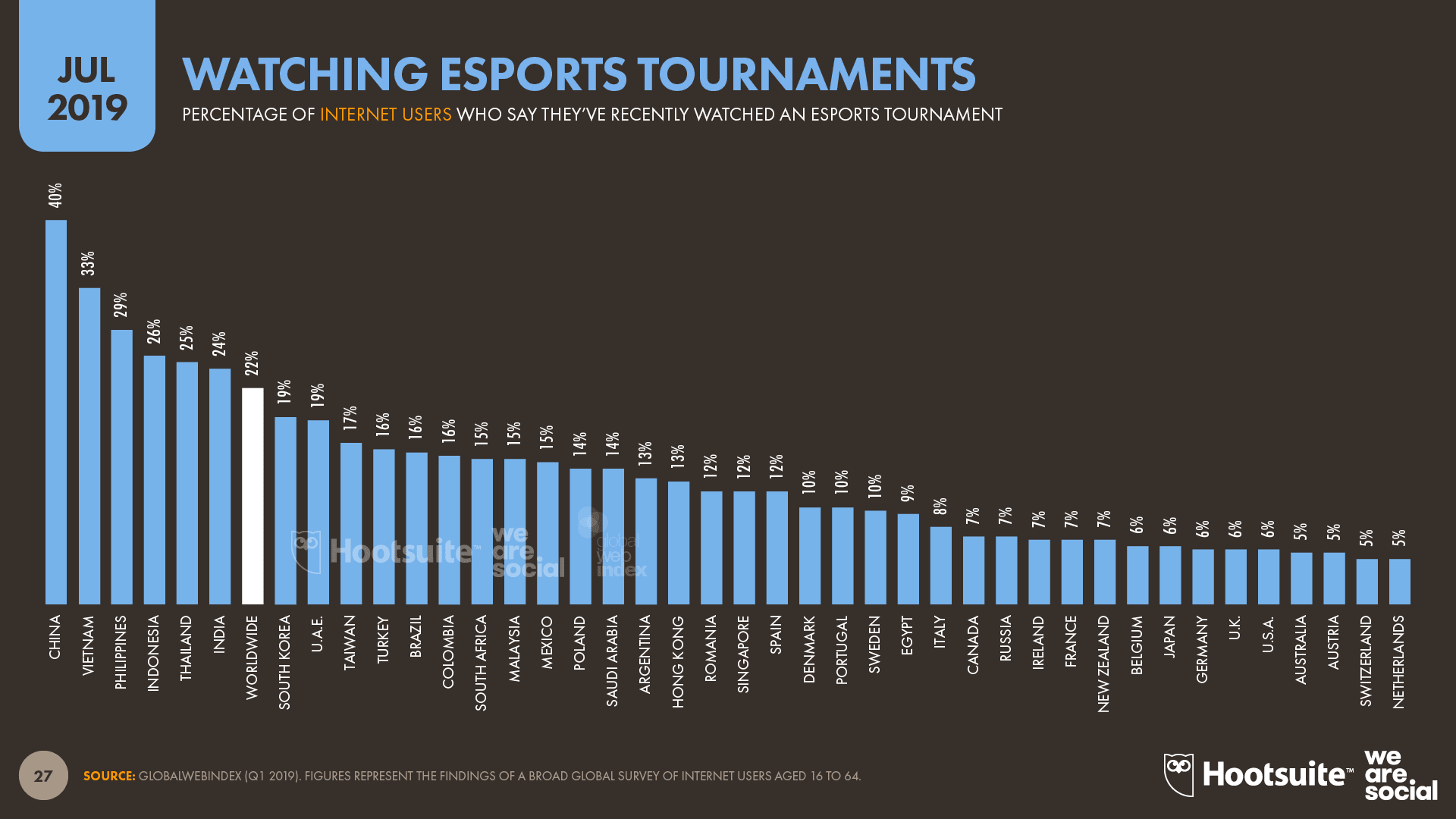
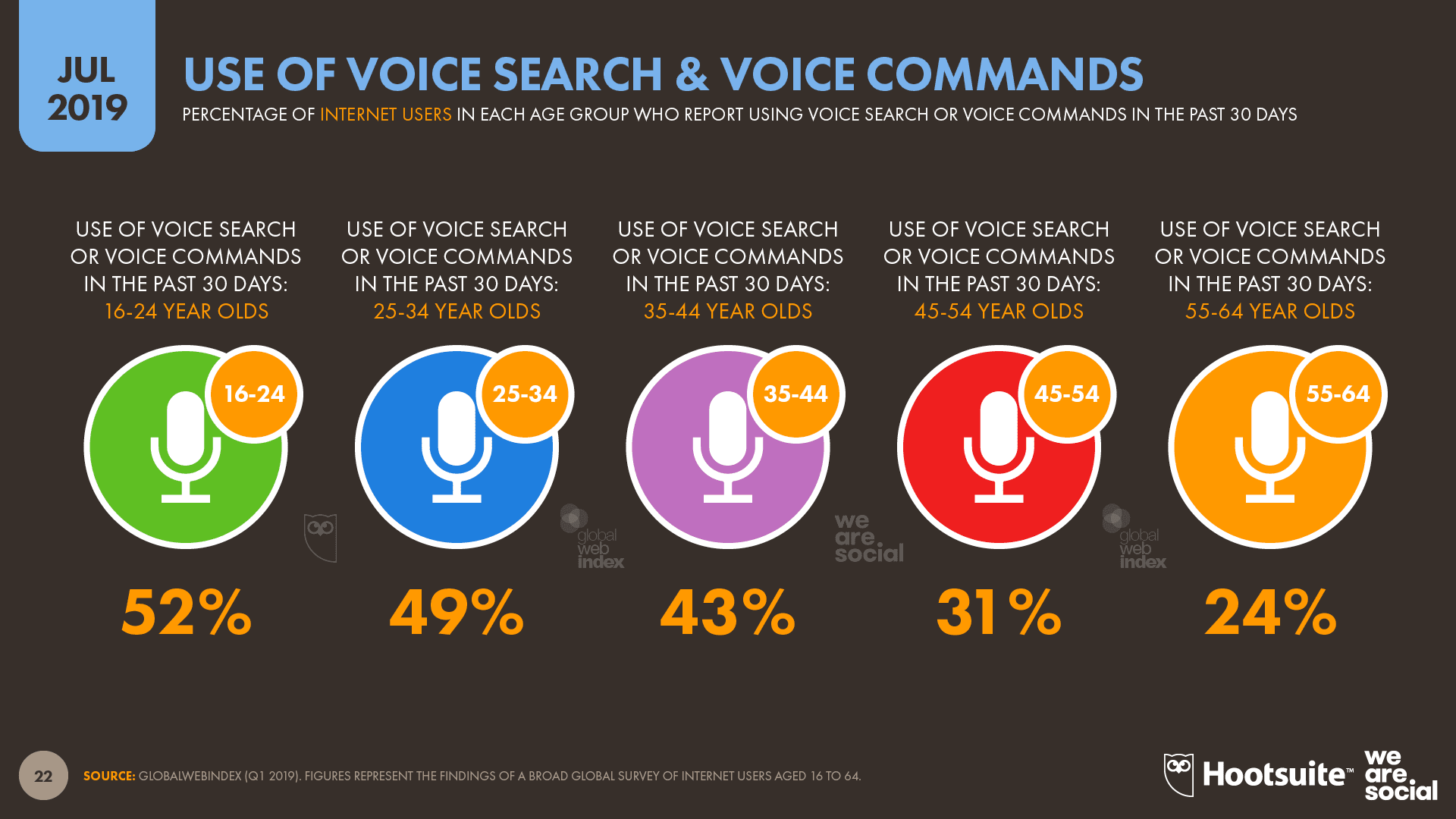
According to Esports Mogul (ESH, 1.3 cents) 20-25% of the broader population have played a mobile game. About half of 16-24s have watched esports and even in the crustier 45-65 year old bracket, 5% have done so.

 â€œIt’s evident the investment community is really only just coming to the fore of how big this sector is,” says Esports Mogul CEO Gernot Abl.

There’s also a strong element of ‘co-opetition’, with the companies executing a number of intertwined deals.  “We all know each other and support what we are doing,” Abl says.

Esports Mogul’s core focus is on a tournament platform called mogul.gg, which enables amateur gamers to hook up and test their wits out on each other.

The company this month hosted the Australian Apex Open Tournament on its platform, with 3850 gamers slugging it out for $35,000 or prize money.

Esports Mogul was also the exclusive platform provider for the Australian Esports League’s Girl Gamer festival, a global jamboree held in Sydney last month.

Meanwhile the South Africa based Emerge Gaming (EM1, 2.3 cents) has announced a string of collaborations, including  May’s memorandum of understanding with US games developer Digital Circus media to launch its products in North America.

These products include its GameCloud game streaming platform.

In June, Emerge teamed with Viacom International Media networks Africa to develop a kids-focused esports tournament platform called NickX, using Viacom’s Nickelodeon gaming content.

The company believes that as the professional market grows, so too will the market for amateur games based around a central hub.

 â€œMonetisation will be through brand take-up, premium subscriptions, in app subscriptions and advertising across the platform,” the company says.

In March, Emerge Gaming also signed a mobile gaming deal with ASX counterpart iCandy International (ICI, 3.8 cents), to broaden Emerge’s ArcadeX tournament platform. ArcadeX has been dubbed the “Netflix of gaming” in that it allows instant streaming of hundreds of 3D video games.

 iCandy will promote the offering to its 350 million global users. Separately, iCandy also plans to set up its own esports division, with first revenue by the end of 2019.

iCandy has also partnered with Animoca and Alibaba subsidiary 9Games to expand iCandy’s mobile game Groove Planet into the $29 billion mainland China market.

Perhaps not surprisingly, there’s a blockchain theme to the sectoral wheeling and dealing as well. In late June, Animoca said it would buy the US company Gamma Innovations, which enables gamers’ idle processing power to be used to ‘mine’ the cryptocurrency ethereum. The users are rewarded with loyalty-style points that that can be used to play their favourite games.

Despite the hype, the three smaller the ASX proponents have a long way to posting meaningful revenue. In the March quarter, Esports Hero turned over $20,000, “mainly by experimenting with subscription and sponsorship models.”

 iCandy generated $289,000, including from digital advertising and merchandising as well as the games themselves. Emerge had no revenue for the quarter but managed $129,600 of turnover in the December half, mainly from sponsorships of its online tournaments.

Animoca posted revenue from ordinary activities of $13.46 million in calendar 2018, up 107% and reduced its loss to $2.58 million from $8.26 million previously.

According to Esports chief commercial officer Jamie Skella, most of the value of the sector resides in sponsorship, advertising and media rights.

A professional Counter Strike and Cyberathlete League player, Skella sees emerging opportunities are in hosting micro tournaments (including merchandise) and holding ticketed live events.

Skella says egaming used to be the preserve of industry-focused advertisers such as hardware providers Razer Incorporated and Gigabyte Technology; now it’s attracting the interest of mainstream brands such as McDonald’s, Burger King, Coca Cola and the telcos.

 â€œThe 18-34 demographic is increasingly hard to reach but it’s a market segment of super high interest to advertisers,” he says.

All in all, the industry has gone a long way since the 1980s, when organised events for games such as Space Invaders, Pacman and Donkey Kong emerged. Online connectedness means combatants can play another competitor anywhere and at any time.

But for local investors, the reality is that the sector is in its infancy here.

At last glance, Esports Mogul, Emerge and iCandy had market capitalisations of $21 million, $15 million and $13 million respectively. Animoca is worth a less febrile $127 million and its shares have gained 75% since the start of the calendar year.

So while investors might be warming to the macro egaming story, it remains to be seen which stock will step up to the console with a serious winning manoeuvre.

Source: http://www.switzer.com.au/lifestyle/weekend-switzer/issue-188/the-boom-in-egamingesports/

Applied Biosciences $APPB: U.S. CBD Market to Grow 700% Through 2019 $WMD.ca $CGRW $APH.ca $GBLX $PFE $ACG.ca $ACB.ca $WEED.ca $HIP.ca

Posted by AGORACOM at 9:00 PM on Saturday, July 20th, 2019

SPONSOR: Applied Biosciences Corp. is a vertically integrated company focused on the development of science-driven cannabinoid therapeutics and biopharmaceuticals, as well as state-of-the-art testing and analytics.  As a leading company in the CBD, Pet and Health and Wellness space, the company is currently shipping to the majority of US states as well as to 5 International countries. Click Here for More Info

https://s3.amazonaws.com/s3.agoracom.com/public/companies/logos/564626/hub/APPB_logo.png
APPB : OTC
  • Brightfield Group 2019 U.S. CBD Market Report
  • Shifts across the U.S. CBD industry signal a seven-fold increase in the market
  • Bulk of growth coming from CVS, Walgreens, and Kroger entering the market and providing availability to consumers
  • 1.0% of CBD companies were in the top tier (with sales of $40+ million or being sold in greater than 1000 stores) while 92.9% of companies were in the low tier (with sales of <$1 million or being sold in 0-100 stores)

In their recent report, Brightfield Group, a leading market and consumer intelligence firm for the legal CBD and cannabis industries, uncovered numerous shifts across the U.S. CBD industry, signaling a seven-fold increase in the market. With hemp-derived CBD gaining in popularity – in line with health, wellness, and anti-pharma trends – and product availability and variety increasing, the market is on track to grow to $23.7 billion through 2023.

“The CBD market has been growing rapidly, but we will see unprecedented growth in 2019,” Brightfield Managing Director, Bethany Gomez, explains. “The bulk of this growth is coming from large retailers like CVS, Walgreens, and Kroger entering the market and providing that availability to consumers.”


Key highlights from the report:

  • Though they entered the market only this year, mass retail chains will eclipse all other channels in 2019, hosting 57% of sales this year
  • Although tinctures still dominate the market, driving 25% of sales, they are losing their lead as more mainstream consumer-friendly products surge
  • Topicals (17% of market) and skincare & beauty products (8%) have gained tremendous traction as mass retailers have signed on to carry these products first, since they are considered the safest bet under the current regulatory regime.
  • Natural food and smoke shop CBD revenues continue to grow and thrive – with increased uptake across the country and some level of saturation now that vendors feel more secure and confident carrying product. Notably, though the CBD market is no longer dominated by cannabis users, dispensaries and recreational shops have also seen an uptick in CBD-oriented traffic
  • 1.0% of CBD companies were in the top tier (with sales of $40+ million or being sold in greater than 1000 stores) while 92.9% of companies were in the low tier (with sales of <$1 million or being sold in 0-100 stores)

About Brightfield: Brightfield Group is a predictive market and consumer intelligence firm focused on the legal CBD and Cannabis industries. Their analytic solutions leverage data from millions of sources, enabling customers to get the most holistic view possible while drilling down into the fine details. They provide comprehensive, up-to-date, and actionable market and consumer insights that transform the best of research and technology into long-term business growth.
SOURCE: https://www.brightfieldgroup.com/press-releases/cbd-market-growth-2019

ZEN Graphene Solutions: The Potential of Graphene in Aerospace: $ZEN.ca $CVE.ca $DNI.ca $LLG.ca $FMS.ca $NGC.ca

Posted by AGORACOM at 9:47 AM on Friday, July 19th, 2019

SPONSOR: ZEN Graphene Solutions: An emerging advanced materials and graphene development company with a focus on new solutions using pure graphene and other two-dimensional materials. Our competitive advantage relies on the unique qualities of our multi-decade supply of precursor materials in the Albany Graphite Deposit. Independent labs in Japan, UK, Israel, USA and Canada confirm this. Click here for more information

https://s3.amazonaws.com/s3.agoracom.com/public/companies/logos/564424/hub/Zen_logo.jpg
ZEN – TSX:V

A new paper on the potential of graphene within the aerospace industry has been launched by Aerospace Technology Institute (ATI) and National Graphene Institute (NGI) at The University of Manchester in the UK.

Jointly prepared by ATI and NGI, the INSIGHT paper features a sector perspective on the benefits of working with graphene and its potential market opportunities available to aerospace companies based in the UK.

Various consultations were carried out with stakeholders before the paper was produced.

Graphene is a two-dimensional material that has the potential to improve aircraft performance, cost, and fuel efficiency. It was isolated from graphite for the first time in 2004.   “According to the paper, aircraft safety and performance could be significantly enhanced by including atom-thin graphene in the materials used to manufacture aircraft.”

According to the paper, aircraft safety and performance could be significantly enhanced by including atom-thin graphene in the materials used to manufacture aircraft.Use of graphene is also expected to reduce the weight of the material, contributing to improved aircraft fuel efficiency.

ATI Technology for Manufacturing, Materials and Structures head Mark Summers said: “The UK has pioneered the research and development of graphene. The material has the potential to bring exciting applications and efficiencies into the sector.

“Although its exploitation into the aerospace sector is still in its infancy, it is anticipated that the scope of potential applications will continue to expand.

“We will seek to accelerate the maturation of graphene technology opportunities through our R&T programme, in a bid for the UK to remain ahead of the challenge and continue leading on the research and exploitation of the material in aerospace.”

Both ATI and NGI expect to continue collaboration on accelerating the technology development for graphene applications in the UK aerospace sector.

SOURCE: https://www.aerospace-technology.com/news/new-study-potential-graphene-aerospace-unveiled/

Iconic Minerals $ICM.ca – #lithium deployment in passenger #EVs up 47% y-o-y in May 2019 $LI.ca $MGG.ca $PAC.ca $CYP.ca $NEV.ca $SX.ca

Posted by AGORACOM-JC at 5:04 PM on Thursday, July 18th, 2019

SPONSOR: Iconic Minerals Ltd. ICM:TSX-V Bonnie Claire Lithium Property hosts Inferred resource of 11.8 billion pounds of lithium carbonate equivalent and has the potential to be the largest lithium resource globally. Learn More.

ICM: TSX-V

—————————–

lithium deployment in passenger EVs up 47% y-o-y in May 2019

  • In May 2019, 47% more lithium carbonate equivalent (LCE) was deployed globally in batteries of passenger EVs than the same month the year prior, according to Adamas Intelligence’s latest subscription-based “EV Battery Lithium Monthly” report.
  • In total, 47% of LCE deployed globally in passenger EV batteries in May 2019 went into NCM 523 cells (primarily in the form of lithium carbonate), up from 43% the same month the year prior.

This increase in LCE deployment was driven primarily by two factors, Adamas said.

  1. Global sales of passenger HEVs, PHEVs and BEVs collectively increased by 12% in May 2019 versus May 2018, translating to an increase in deployment of li-ion batteries.
  2. Sales of high-capacity BEVs, such as the Tesla Model 3, BYD Yuan and Nissan Leaf PLUS/e+, made up a greater share of total passenger EV sales this year than they did last year, boosting the sales-weighted-average battery capacity of all EVs sold by 33% over the same period, translating to greater use of LCE per vehicle.

In total, 47% of LCE deployed globally in passenger EV batteries in May 2019 went into NCM 523 cells (primarily in the form of lithium carbonate), up from 43% the same month the year prior.

Similarly, 14% of LCE deployed globally in passenger EV batteries in May 2019 went into NCM 622 cells (primarily in the form of lithium hydroxide), up from 8% in May 2018.

Moreover, 2% of all LCE deployed globally in passenger EV batteries in May 2019 went into NCM 811 cells (primarily in the form of lithium hydroxide) versus near-negligible quantities deployed the same month the year prior.

In total, the collective market share of NCM 622 and NCM 811 cathodes (by capacity deployed) has doubled since May 2018, indicating increasingly heavy demand for lithium hydroxide and other precursors used in these chemistries. Source: https://www.greencarcongress.com/2019/07/20190717-adamas.html

Esports Entertainment Group $GMBL – #Esports industry to reach $3 billion by 2025 says market reseracher $TECHF $ATVI $TTWO $GAME $EPY.ca $FDM.ca $TNA.ca

Posted by AGORACOM-JC at 3:02 PM on Thursday, July 18th, 2019
SPONSOR: Esports Entertainment $GMBL Esports audience is 350M, growing to 590M, Esports wagering is projected at $23 BILLION by 2020. The company has launched VIE.gg esports betting platform and has accelerated affiliate marketing agreements with 190 Esports teams. Click here for more information
GMBL: OTCQB

———————–

Esports industry to reach $3 billion by 2025 says market reseracher

Marta J.

  • The esports business seems to be booming
  • Eports is expected to grow with a 20% compound annual growth rate between 2019 and 2025.
  • That should see the market grow to more than $3 billion by the end of 2025.

According to ResearchandMarkets.com, esports is expected to grow with a 20% compound annual growth rate between 2019 and 2025. That should see the market grow to more than $3 billion by the end of 2025. This doesn’t come as a surprise, since esports’ popularity and support have been steadily growing worldwide.

The global esports market is likely to exceed a total revenue of over $1 billion for the first time this year, as it’s experiencing year-on-year growth of over 25%. According to Statista, the market generated $865 million in 2018.

Broadcasting rights have become a key source of revenue in esports with television networks like ESPN and ABC airing esports events alongside social media platforms like Twitch and YouTube.

That growth has extended to sponsorships even moreso. The field is by far esports’ strongest revenue stream, as it contributes to almost half of the total market revenue. This has been helped along by the increased attention from non-endemic brands like Nike and Puma who have begun sponsoring esports organizations Furia Esports and Cloud9, respectively.

It’s forecasted that the audience and the number of tournaments will continue increasing over the next five years, opening up opportunities for many potential vendors.

A major share of revenue to the global esports market is generated by North America, specifically the United States. Asia Pacific is one of the fastest-growing markets, with esports flourishing in China, Japan, South Korea, and Australia.

The vast majority of esports’ audience is male viewers aged 20-35.

That said, ResearchandMarkets.com states that esports’ growth “is mainly driven by cloud gaming and mobile gaming.” This makes matters a bit cloudy in regards to how much of that $3 billion is actually being funneled towards esports organizations, players, and tournament organizers.

The topic of inflated valuations in esports has become a hot one in recent months as multiple firms have had their methods questioned for their liberal definition for what counts as “esports.”

Source: https://win.gg/news/1673/esports-industry-to-reach-dollar-3-billion-by-2025-says-market-reseracher

Applied Biosciences #CBD-based Functional Drinks Targeting Health Conscious Consumers $PFE $WMD.ca $CGRW $APH.ca $GBLX $ACG.ca $ACB.ca $WEED.ca $HIP.ca

Posted by AGORACOM at 2:10 PM on Wednesday, July 17th, 2019

SPONSOR: Applied Biosciences Corp. is a vertically integrated company focused on the development of science-driven cannabinoid therapeutics and biopharmaceuticals, as well as state-of-the-art testing and analytics capabilities to our customers.  As a leading company in the CBD, Pet and Health and Wellness space, the company is currently shipping to the majority of US states as well as to 5 International countries. Click Here for More Info

https://s3.amazonaws.com/s3.agoracom.com/public/companies/logos/564626/hub/APPB_logo.png
APPB : OTC
  • Cannabis-based concentrates, extracts, and edibles are becoming highly popular among consumers
  • Specifically, the edible and beverage marketplace is quickly gaining popularity due to the ease at which customers can use the products

NEW YORK, July 16, 2019 — Each year, more and more countries are moving towards approving cannabis use. In particular, medicinal cannabis is witnessing immense support as most of the countries looking to enter into the market space are more keen on the medical sector due to the therapeutic benefits associated with cannabis. However, several regions around the world have also either decriminalized or legalized the use of recreational cannabis in moderate amounts. For instance, Canada completely legalized adult-use cannabis in late 2018. On the other hand, countries such as Colombia and Spain have only decriminalized recreational use, allowing adults to possess up to a certain amount.

Moreover, the U.S. has given states the jurisdiction to legalize cannabis or keep the drug illicit. As a result, more than half the U.S. legalized cannabis for medical use, while a fifth of the nation, including the District of Columbia, allows for legal recreational usage. While the medical marketplace is much more globally prevalent, the recreational market is expected to overshadow the medical segment as the North American market continues to mature.

Additionally, as the recreational market continues to expand, consumers are also experiencing an influx of new products. Aside from traditional cannabis flower, consumers can now choose from a variety of products at dispensaries and retail stores. Now, cannabis-based concentrates, extracts, and edibles are becoming highly popular among consumers. Specifically, the edible and beverage marketplace is quickly gaining popularity due to the ease at which customers can use the products.

Furthermore, a large recreational user base exists for the edible and beverage market, and the industry is heavily being accelerated by the increasing demand for wellness products to treat a variety of health concerns. According to data compiled by Reports and Data, the global cannabis-based beverage market was valued at USD 1.57 Billion in 2018. By 2026, the market is expected to reach USD 5.04 Billion while exhibiting a CAGR of 15.4% during the forecast period.

The cannabis-infused edible and beverage market is expected to witness a strong increase in demand, particularly for beverages over the next several years. Canaccord Genuity analyst Bobby Burleson noted last year that beverages packed with CBD or THC ingredients can account for nearly 20% of the U.S. edible products markets by 2022, increasing from 6% in 2018. Burleson highlighted that the growing beverage industry is becoming an attractive investment opportunity for beer and soda makers and that data has shown that there is a direct correlation between alcohol and cannabis consumption.

A joint research conducted by the University of Connecticut, Georgia State University, and Universidad Del Pacifico discovered that counties located in medical marijuana states witnessed a 15% reduction in monthly alcohol sales. The conclusion of the study uncovered that cannabis and alcohol are both substitutes for one another, meaning that they share the same target audience. The study also indicates that as more countries move towards cannabis legalization, more users will be inclined to shift over to the cannabis market. The shift has even prompted alcohol producers to enter into the cannabis industry to maximize its consumer base reach.

While alcohol beverage producers may look towards developing THC beverages, soda producers are looking to leverage CBD for health and wellness beverages. Soda producers are specifically focusing on CBD because of the consumer shifts from sugary drinks to more functional options. Regardless of the market type, Canaccord expects both the THC and CBD-based beverage markets in the U.S. to experience growth, as by 2022, Canaccord expects the demand for CBD beverages to reach USD 260 Million, while THC beverages are projected to reach USD 34 Million. “Interest has spiked from the beer industry on mounting evidence of a substitution relationship between cannabis and alcohol, while large soda companies increasingly view CBD as a natural fit within their strategically important wellness offerings,” Burleson wrote.

Read More: https://www.prnewswire.com/news-releases/cbd-based-functional-drinks-charm-health-conscious-consumers-300885358.html

CLIENT FEATURE: The One Gold Report to Read – American Creek Resources $AMK.ca $SEA.ca $SA $SKE.ca $TUD.ca $PVG $MRO.ca $NGT.ca $SPMT.ca $GTT.ca $III.ca $GGI.ca

Posted by AGORACOM at 12:34 PM on Wednesday, July 17th, 2019
https://s3.amazonaws.com/s3.agoracom.com/public/companies/logos/562696/hub/HubLogoLarge2_copy.jpg

THE ONE GOLD REPORT TO READ
Perhaps the most comprehensive Gold Report on the planet, the “IN GOLD WE TRUST” 2019 annual report is now available for download from Incrementum.  For those new to the gold market there is a condensed (<100 pages) report and for those who want to go deeper, an expanded version (>300 Pages).

Click here for the free report:   IN GOLD WE TRUST 2019 Report

We also suggest watching the short introductory video with Ronald-Peter Stoeferle further down the download page.
 
If you have not yet read the 2019 REPORT ON TREATY CREEK (potential world-class deposit in B.C.’s GOLDEN TRIANGE) click on the image for the full report.

HUB on Agoracom
  FULL DISCLOSURE: American Creek is an advertising client of AGORA Internet Relations Corp.