Palladium is the main payable metal accounting for 65% of revenue stream based on 2019 PEA.
1:0.4 (Pd:Pt).
Excellent infrastructure and within 100 kilometers of the Sudbury Metallurgical Complex.
NI 43-101 Mineral Resource Estimation (Q1 2019)
PEA done Q3 2019.
2020 plan to follow up on PEA recommendations.
Preliminary Economic Assessment demonstrates positive economics for a large-scale open pit mining operation.
PEA Highlights (CDN$):
Life of mine (LOM) of 14 years, with 6 million tonnes annually of potential process plant feed at an average grade of 0.88 g/t Palladium Equivalent (PdEq) and process recovery rate of 80%, resulting in an annual average payable PdEq production of 119,000 ounces.
Pre-Production capital requirements: $495 M.
Undiscounted cash flow before income and mining taxes of $586M.
Undiscounted cash flow after income and mining taxes of $384M.
Average unit operating cost of $19.50/tonne over the life-of-mine.
Potential for up to 325 jobs at the peak of production.
Using March 11, 2020 spot Palladium price (US$2,275/oz) River Valley Project After-tax IRR is 30% and After-tax NPV (5%) is $C858M.
New Age Metals Inc. is an advertising client of AGORA Internet Relations Corp.
Posted by AGORACOM
at 5:06 PM on Friday, March 27th, 2020
Since March 14, 2020, Mota has acquired over 5,500 new customers
The product has yielded an average initial order value of $189.00 USD.
Mota Ventures Corp. (CSE:MOTA)(FSE:1WZ:GR)(OTCPINK:PEMTF) (the “Company” or “Mota“) is pleased to announce that since the launch of its Immune Support product line on March 14, 2020, the Company has acquired over 5,500 new customers seeking natural solutions to help support their family’s immune systems. The popularity of the primary product has yielded an average initial order value for immune support customers of $189.00 USD. Earlier this week the Company introduced an Immune CBD oil and Elderberry Gummies. The new Immune CBD product contains CBD, B3, B12, vitamin C and zinc and is made from 100% pure essential oils containing cinnamon leaf, lemon, clove bud, lime, eucalyptus, globulus, rosemary, peppermint, spearmint and oregano.
The Company has acquired over
50,000 new customer inquiries for Immune Support/CBD products since
March 14, 2020. The Immune Support line is gaining interest from
customers that historically were hesitant to purchase CBD, but are now
interested in the Immune products and the potential anti-inflammatory
benefits of CBD. In addition, traditional brick-and-mortar stores have
been affected due to social distancing requirements, driving consumers
to purchase online from the safety of their homes.
“The Immune
Support product launch has been the most successful product launch in
the history of our First Class brand. E-Commerce is a fast-moving
sector, especially during these very unique times we are facing today.
Our ability as a company to quickly develop and launch new products to
meet market demand is a testament to our expertise. I am very excited by
the reception we have received to date for our Immune Line of products.
I project demand for the line will continue through Q2 and be a
significant driver to our growth for 2020,” stated Ryan Hoggan, CEO of
the Company.
Additionally, the Company has entered into a 12 month
programmatic digital advertising campaign with Native Ads, Inc. for a
total cost of C$80,000; consisting of C$72,000 for digital advertising,
paid distribution, and media buying over the campaign period and,
C$8,000 for content creation, consulting, managed services and
management fees over the course of the campaign period. Native Ads is a
full-service advertising agency, that owns and operates a proprietary ad
exchange with over 80 integrated SSPs (supply side platforms) resulting
in access to 3-7 billion daily North American ad impressions. Neither
Native Ads nor any of its directors and officers own any securities of
the Company.
About Mota Ventures Corp.
Mota is
seeking to become a vertically integrated global CBD brand. Its plan is
to cultivate and extract CBD into high-quality value-added products from
its Latin American operations and distribute it both domestically and
internationally. Its existing operations in Colombia consist of a
2.5-hectare site that has optimal year-round growing conditions and
access to all necessary infrastructure. Mota is looking to establish
sales channels and a distribution network internationally through the
acquisition of the Sativida and First Class CBD brands. Low cost
production, coupled with international, direct to customer sales
channels will provide the foundation for the success of Mota.
ON BEHALF OF THE BOARD OF DIRECTORS MOTA VENTURES CORP.
Ryan Hoggan Chief Executive Officer
For
further information, readers are encouraged to contact the President of
the Company, Joel Shacker, at +604.423.4733 or by email at [email protected] or www.motaventuresco.com
Posted by AGORACOM-JC
at 3:55 PM on Friday, March 27th, 2020
SPONSOR: Tartisan Nickel (TN:CSE)
Kenbridge Property has a measured and indicated resource of 7.14
million tonnes at 0.62% nickel, 0.33% copper. Tartisan also has
interests in Peru, including a 20 percent equity stake in Eloro
Resources and 2 percent NSR in their La Victoria property. Click her for more information
The thematic case for nickel
Nickel has exciting long-term prospects as its use in electric vehicle batteries is expected to drive its demand growth in the future
This structural trend has, however, not immunised it against the recent headwinds facing industrial metals
By Mobeen Tahir, Associate Director, Research, WisdomTree.
Nickel has exciting long-term prospects as its use in electric
vehicle batteries is expected to drive its demand growth in the future.
This structural trend has, however, not immunised it against the recent
headwinds facing industrial metals. Industrial metals are cyclical
commodities and their performance is fuelled by global economic growth.
The sector has therefore been under pressure from trade wars and, more
recently, coronavirus. In this blog, we want to shift the focus back to
nickel’s strategic case. We remain cognizant that the current storm is
not over yet but expect a smoother sail once the existing headwinds
subside.
Analysing nickel’s recent history
Nickel has strongly outperformed the industrial metals basket
(composed of copper, zinc, aluminium and nickel) in the last 3 years
(Figure 1). The sector has faced challenges since the advent of trade
wars in 2018 both directly due to tariffs and indirectly via a resulting
slowdown in global economic activity. Nickel too has had its share of
price volatility during this time. The metal rallied sharply in July
2019 on the expectation that Indonesia, which produces a quarter of
global nickel supply, will bring forward its nickel ore export ban by 2
years to January 2020. Indonesia announced this decision soon
thereafter. Concerns of supply shortages drove the price in a market
which was already in a deficit. Nickel’s fortunes reversed in the last
quarter of 2019 as stainless-steel demand, which currently accounts for
nearly two-thirds of the metal’s use, dwindled. The dynamics of the
nickel market are however changing which is why we have an optimistic
view of the future.
Source: WisdomTree, Bloomberg. Monthly data from 01/01/2017 to
03/01/2020. Industrial metals basket refers to the Bloomberg Industrial
Metals Subindex.
Battery solutions to take a larger share of nickel
According to metal experts Wood Makenzie, battery solutions are
expected to account for more than 30% of the total demand for nickel by
2040, up from around 4% today (Figure 2). This is because electric
vehicles are forecasted to be around 50% of all passenger car sales by
2040, up from around 8% today. Batteries need to become more efficient
to enable this growth and nickel is expected to play a pivotal role.
According to the Nickel Institute, nickel-containing Lithium-ion
batteries are powering the electric vehicle revolution as nickel in
batteries helps deliver higher energy density and greater storage
capacity at a lower cost. This will allow electric cars to have both a
longer range, i.e. the ability to drive longer distances without
requiring a recharge, and lower cost promoting wider adoption.
Now, the impact on price from demand growth can, in theory, be offset
by an equal increase in supply. We, however, believe that supply growth
will be much slower as, according to Wood Mackenzie, the average time
for a new nickel mining project to start producing the metal is around 9
years. Miners will seek higher prices to be incentivised to undertake
such projects.
Source: WisdomTree, Wood Mackenzie. Forecasts (F) from 2019.
It is uncertain how quickly the current headwinds facing industrial
metals will dissipate. Having said that, the market dynamics of nickel
are changing and the long-term outlook appears promising for the metal
supported by a thematic shift towards electric vehicles which is being
powered by nickel-containing batteries. With the nickel market already
in a supply deficit, we expect growing demand to support its price in
the long-term.
Posted by AGORACOM-JC
at 12:45 PM on Friday, March 27th, 2020
SPONSOR: Datametrex AI Limited
(TSX-V: DM) A revenue generating small cap A.I. company that NATO and
Canadian Defence are using to fight fake news & social media
threats. The company announced three $1M contacts in Q3-2019. Click here for more info.
Covid-19 fake news hacks its way onto government blockchain website
On March 14, the government in Argentina disclosed that its system had effectively been hacked.
Perpetrator(s) uploaded false information regarding guidelines for public officials on handling the coronavirus (Covid-19) onto the country’s official bulletin website, which just so happens to use blockchain technology.Â
As a result, officials took the site temporarily offline.
Correspondingly, another issuance will be necessary to disclaim the false statements posted on its 34,239 editions.
Have the blockchain gods forsaken the government of Buenos Aires? Not exactly. Blockchain isn’t bullet-proof.
Hacked! Why Argentina’s case is a big deal
Perhaps you’re wondering, “what’s the big deal? It’s just a bulletin.â€
No, it’s not just a bulletin.
Many countries have their own official bulletin or gazette wherein
laws, notifications, or other big-deal, high-level government
information is formally announced.
In Argentina, it’s known as the BoletÃn Oficial. Mexico’s is christiend the Diario Oficial de la Federación. In the US it’s called the Federal Register.
And the fact that something of such substantial importance in
government communications was hacked is both alarming and interesting.
First off, blockchain-based systems are often hailed as more fool-proof to this type of manipulation.
And that’s because each block within the chain is supposed to have
its own unique cryptographic fingerprint and use what’s known as a
“consensus protocol.†Through this protocol, the nodes on the network
share and record transactional history.
Thanks to these mechanisms, in theory, not just any outsider can show up and manipulate the data.
But with some creativity and determination, hackers can bust through blockchain’s apparently impenetrable defenses.
Secondly, everyone is well aware of how fake news can make its way
onto social media. As a result, we’re consistently advised to only rely
on official sources, like government websites, for more information on
the pandemic.
The hacking of a government outlet like Buenos Aires’ means that no
source is 100 percent safe and fool-proof to being used as a platform to
broadcast false statements.
That’s why we should make an effort to consult additional sources for
more information. Especially for a topic as sensitive as healthcare.
And remember, if the government is hackable, so are you. So take the necessary precautions to protect your own data and systems.
Posted by AGORACOM-JC
at 12:13 PM on Friday, March 27th, 2020
SPONSOR: BetterU Education Corp.
aims to provide access to quality education from around the world. The
company plans to bridge the prevailing gap in the education and job
industry and enhance the lives of its prospective learners by developing
an integrated ecosystem. Click here for more information.
What Indian Edtech Leaders Are Saying About COVID-19 Pandemic
Employees of most IT companies have been directed to work from home
Furthermore, many of these organizations have taken various initiatives to extend their support to employees who have been struck by this pandemic
India has been going through a difficult time. COVID-19 has proven to be a bigger problem than what anyone could have anticipated. The pandemic has been spreading at an alarming rate and has impacted everything – from people’s daily lives, to operations in various industries.
Employees of most IT companies have been directed to work from home.
Furthermore, many of these organizations have taken various initiatives
to extend their support to employees who have been struck by this
pandemic.
Here are some of these initiatives led by business leaders as they get together to combat this disease collectively:
Vijay Shekar Sharma, Founder of Paytm
Vijay Shekar Sharma has pledged Rs 50 million for any medical
innovation related to COVID-19. His company has also launched an ‘India
Fights Corona’ campaign in partnership with consumer goods company
Hindustan Unilever’s Lifebuoy and Yuvraj Singh’s YouWeCan Foundation.
Paytm also plans to distribute one million soaps to those affected.
Paytm users can contribute to the ‘Donation’ section in the app, or on the website.
Innovators, research teams and doctors can also reach the company for support at [email protected].
Sridhar Vembu, Founder of Zoho
Sridhar Vembu recently announced a Small Business Emergency Subscription Assistance Program.
The plan is to waive three months’ fee for software that small
businesses have already been using. This move will benefit 20,000 of its
existing customers who have 25 or fewer employees.
These small businesses
will get a Zoho Wallet credit, which will be equivalent to three months
of their bill, and the business owners can choose to use the wallet
credits as they deem fit.
In addition to these efforts, Zoho is providing free access to its Zoho Remotely
suite of web and mobile apps to offer remote working options for all
businesses until July 1, 2020. This includes a set of 11 apps which
provide services like document management and video conferencing, among
others.
“You will see the impact on guidance and revenue growth (by Indian IT
companies) for next year. Next year, growth is going to be very
challenging for the Indian IT services industry.â€
Ex-CFO, Infosys Ltd V Balakrishnan in an interview.
Byju Raveendran, Founder of Byju’s
The popular edtech firm’s flagship app – Byju’s – will have free
access for users, and the offer stands until the end of April. It will
offer math and science lessons suitable for children from grades 2-4,
along with Disney Byju’s Early Learn app that offers math and English
lessons for students from grades 1-3. This app could help thousands of
students who have been stuck at home without the guidance of teachers.
Manoj Bubna, Gautam Gurtoo & Biren Shah (Nitrogen founders)
Nitrogen is a Mumbai-based SaaS company that announced free use of
its digital platform for three months for hospitals, grocery outlets and
pharmacies. The founders believe that the three industries –
healthcare, consumer products and pharma – could face a lot of traffic
during the 21-day lockdown. It can help websites handle peak traffic and
strengthen their security.
“The IT sector may see
some indirect impact in the medium to long term as some of the clients
have exposure to manufacturing in China.â€
Pravin Rao, NASSCOM vice-chairman, as well as COO of Infosys in an interview.
Mukesh Ambani, MD of Reliance Industries
Although not necessarily considered a tech leader, Ambani has
announced a multi-pronged plan that involves prevention, mitigation and
ongoing support related activities to stem the spread of COVID-19. His
foundation has set up India’s first dedicated COVID-19 centre with 100
beds and a fully equipped isolation facility in Lodhivali, Maharashtra.
As far as tech is concerned, the company’s telecom arm has increased its
data limits for its existing broadband users and waived charges for new
ones.
With Jio Haptik Technologies, the company’s digital unit has also
built a chatbot for free. This chatbot is built for Government
functionaries and is called MyGov Corona Helpdesk. The bot is created to
answer questions around the pandemic and provide accurate information
to curb false news.
Outlook
As India battles COVID-19, there has been an extended lockdown for
the entire country. This pandemic has disrupted all industries.
Moreover, many analysts say that these companies might not be able to
recover from the impact for many months to come.
The pandemic has put the IT sector’s ability to deliver services
on-site to test, and that is why the majority of them have been moving
towards working remotely. Many believe that this will cause a recession
that could be worse than 2008 one if the pandemic is not brought under
control fast.
Posted by AGORACOM-JC
at 5:53 PM on Thursday, March 26th, 2020
SPONSOR: Datametrex AI Limited (TSX-V: DM) A revenue generating small cap A.I. company that NATO and Canadian Defence are using to fight fake news & social media threats. The company announced three $1M contacts in Q3-2019. Click here for more info.
AI and deepfake: COVID-19 poses new challenges for detecting deceptive tech
With the rise of artificial intelligence and deepfake technology, incidents of widespread fraud around the world are showing us how easy it is to manipulate people in times of crisis
Shows the dangerous potential technology has to expand the boundaries of art until, at least, a control mechanism can be established
by Şule Güner
An elderly man wearing a face mask who collapsed and died lays on a
street near a hospital as another man rides a bicycle past him in
Wuhan, China, Jan. 30, 2020. (AFP Photo)
With the rise of artificial intelligence and deepfake technology,
incidents of widespread fraud around the world are showing us how easy
it is to manipulate people in times of crisis and shows in full the
dangerous potential technology has to expand the boundaries of art
until, at least, a control mechanism can be established
“Have
we come to a point whereby our recent technological developments have
greater enabled the spread of false information?” This question has been
a hot ethical topic over the last decade but unfortunately, examples
are plenty enough to guarantee most would answer a resounding “yes.” At
the moment, it seems we live in an age where the risk of digital manipulation is, in fact, a daily one.
News
covering the coronavirus, which has since December spread from China to
cover almost the entire world, is perhaps the most pertinent example.
Over the period between December and January, when China was caught in
the midst of an intense struggle against the outbreak, several pieces of
footage circulated around the country’s social media platforms,
seemingly showing people having collapsed in the middle of the street.
The videos left the Chinese public quite perplexed as to their authenticity, yet no sooner had the videos been shared than they had gone viral all over the world.
Meanwhile,
a few weeks ago, the world’s top political and economic elites were
similarly deceived by a rather old-fashioned trick.
Anthony Lasarevitsch (L) and Gilbert Chikli deceived their victims by
impersonating French Foreign Minister Jean-Yves Le Drian. (AFP Photo)
Deception via masks
Four
years ago, French and Israeli citizens Gilbert Chikli and Anthony
Lasarevitsch called a list of highly influential people, which included
King Philippe of Belgium, Gabon President Ali Bongo, the CEO of Lafarge,
various members of the clergy and charity bosses and tricked them by
posing as French Minister of Foreign Affairs Jean-Yves Le Drian. The
pair even managing to squeeze money out of a number of those on their
hit list at meetings arranged via Skype.
The
fraudsters sported a silicone mask of Le Drian and hung a picture of
the former French President François Hollande up on the wall behind
them, demanding money for an extraordinary and urgent situation. The duo
managed to pull the trick off a number of times, making a total of 55
million euros ($59.53 million) between 2016 and 2017. After fleeing to
Ukraine in 2017 before being sent back to France, they received prison
terms and fines at a hearing in France in early March. However, this
situation has proved that even something as cliche as a fake mask can be
enough to pull the wool over some.
President Nixon poses at his White House desk in this March 23, 1970 file photo. (AP Photo)
This being the case, just think what could be achieved with what is known as “deepfake technology,” which enables
fraudsters to deceive hundreds or even tens of thousands of people at
one time. Unfortunately, people will continue to suffer as a result of
these highly potent deception tactics, at least until we manage to
create new tech that can distinguish between what is real and what is
fake, or related measures are taken.
While
creators of deepfake videos make more and more incredibly realistic
videos every day, the latest example of this was the manipulation of
former U.S. President Richard Nixon’s historic moon landing speech. With
AI-manipulated deepfake tech, the president, who served between
1969-1974, was made to say the moon landing mission had failed. The
authenticity, life-likeness of the video, which was created by the MIT
Center for Advanced Virtuality, who joined up with machine learning
experts from Ukraine and Israel, deeply shocked everyone who witnessed
it while also raising concerns that this technology, if it were to fall
into the wrong hands, could manipulate millions.
News on the Turkish front
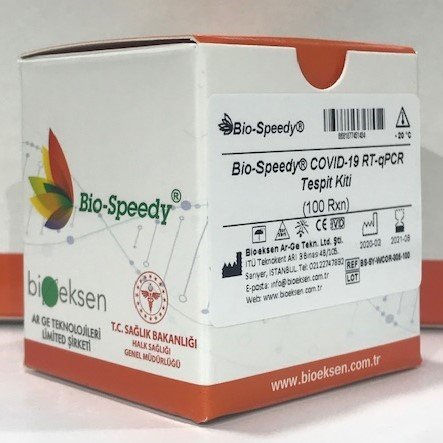
COVID-19 diagnostic kit gives results in 90 minutes
The pathogen kit needs only 90 minutes to see if the patient has contracted the coronavirus. (AA Photo)
In partnership with the Public Health General Directorate’s (HSGM)
Virology Laboratory, Bioeksen, a Turkish company within the Istanbul
Technical University (İTÜ) ARI Teknokent, has announced that it has
developed a pathogen kit that can detect the coronavirus in just 90
minutes. The kit has already entered mass production and is expected to
strengthen the hand of health personnel in the fight against the
coronavirus pandemic that continues to sweep the world.
Canan
Zöhre Ketre Kolukırık, the founder of Bioeksen, said when the
coronavirus outbreak first broke out, HSGM labs and Bioeksen took swift
action, coordinating efforts under the guidance of the World Health
Organization (WHO) and developing a kit to allow for the quick detection
of the coronavirus in just under two weeks. Bioeksen subsequently
launched production of the kit, she added.
Stating
that the group had contributed substantial amounts to the field of
innovative biotechnology, Kolukırık said: “Our innovative solutions,
which reduce the dayslong analysis of pathogen diagnosis to mere hours,
have enabled us to progress rapidly in our sector. Bioeksen has not only
remained the manufacturer of consumable products but has also become a
groundbreaker for Turkey as the developer and launcher of the first 100%
domestic robotic molecular analyzer.”
Tags: AI, bot, CSE, datametrex, fake news Posted in Datametrex AI Limited | Comments Off on #AI and #deepfake: #COVID19 poses new challenges for detecting deceptive tech – SPONSOR: Datametrex AI Limited $DM.ca
Posted by AGORACOM
at 2:13 PM on Thursday, March 26th, 2020
Ministry of Mines is prepared to grant Mining License 215 (ML215) for its Aukam Graphite Property in Namibia.
Gratomic can now produce a concentrate of up to 98% Cg
Management has subsequently decided to build a 20 000 tonne per annum processing plant.
Gratomic Inc. is pleased to announce, supplementary to its February 21, 2020 Press Release, that it has received a Notice from the Ministry of Mines and Energy of Namibia that the Minister is prepared to grant Mining License 215 (ML215) for its Aukam Graphite Property in Namibia. The License area falls within the proximity of the Aukam Processing Plant and the Graphite bearing shear zone for a total of 5002 hectares (5002 ha). Securing the mining license is a critical step towards moving the Aukam Mine into commercial production.
The
Company has completed 8 months of pilot testing on historically mined
product and conducted an internal study on the efficiency of the pilot
processing facility on this material. Through rigorous testing and
adjustments to the plant, Gratomic can now produce a concentrate of up
to 98% Cg. Management has subsequently decided to build a 20 000 tonne
per annum processing plant. To date, 90% of construction is complete.
Upon completion of the remaining 10%, the Company will initially start
processing material from historical workings left at the surface when
the mine last operated in 1974.
The
Company has recently appointed Dr. Ian Flint to complete a preliminary
economic assessment on the Aukam Processing plant. The study, its
recommendations, and their subsequent implementation, will ensure the
scale up of the existing pilot plant to a commercial scale processing
facility that will provide the desired concentrate grades and production
rates.
With
respect to site exploration, in the coming months diamond drilling will
resume at Aukam Graphite. The drilling will be conducted utilizing
Company owned drilling equipment, focusing on areas proximal to graphite
mineralization, depicted by previous diamond drilling, underground
excavation and surface outcrop sampling. The drill targeting will be
systematic with the expectation of producing an NI 43-101 resource
estimate.
Arno
Brand, President and CEO of the Company stated that “the Company will
be able to satisfy all of the conditions in the Notice and proceed to
commercialization of its Aukam Graphite Mine. This marks a significant
milestone for the Company.”
Risk Factors
No
mineral resources, let alone mineral reserves demonstrating economic
viability and technical feasibility, have been delineated on the Aukam
Property. The Company is not in a position to demonstrate or disclose
any capital and/or operating costs that may be associated with the
processing plant.
The
Company advises that it has not based its production decision on even
the existence of mineral resources let alone on a feasibility study of
mineral reserves, demonstrating economic and technical viability, and,
as a result, there may be an increased uncertainty of achieving any
particular level of recovery of minerals or the cost of such recovery,
including increased risks associated with developing a commercially
mineable deposit.
Historically,
such projects have a much higher risk of economic and technical
failure. There is no guarantee that production will begin as anticipated
or at all or that anticipated production costs will be achieved.
Failure
to commence production would have a material adverse impact on the
Company’s ability to generate revenue and cash flow to fund operations.
Failure to achieve the anticipated production costs would have a
material adverse impact on the Company’s cash flow and future
profitability.
Steve
Gray, P. Geo. has reviewed and approved the scientific and technical
information in this press release and is the Company’s “Qualified
Person” as defined by National Instrument 43-101 – Standards of
Disclosure for Mineral Projects.
About Gratomic Inc.
Gratomic
is an advanced materials company focused on mine to market
commercialization of graphite products most notably high value
graphene-based components for a range of mass market products. We have a
Joint Venture collaboration with Perpetuus Carbon Technology, a leading
European manufacturer of graphenes, to use Aukam graphite to
manufacture graphene products for commercialization on an industrial
scale. The Company is listed on the TSX Venture Exchange under the
symbol GRAT.
For more information: visit the website at www.gratomic.ca or contact:
Posted by AGORACOM
at 1:52 PM on Thursday, March 26th, 2020
SPONSOR: Lomiko Metals is focused on the exploration and development of minerals for the new green economy such as lithium and graphite. Lomiko owns 80% of the high-grade La Loutre graphite Property, Lac Des Iles Graphite Property and the 100% owned Quatre Milles Graphite Property. Lomiko is uniquely poised to supply the growing EV battery market. Click Here For More Information
Sutherland Avenue in the City of Westminster now has 24 streetlamp charging posts to top up electric vehicles overnight
Research conducted by Siemens found that over a third of British
motorists are planning to buy into an electric future by purchasing a
hybrid or full electric vehicle as their next car, with 40 percent
saying that they would have jumped in sooner if the charging
infrastructure was better.
In London, drivers believe that only 100 to 200 charging points are available in total, and many think that it’s just not possible to juice up an EV at home or at work. Berlin-based Ubitricity has been converting streetlamps to charging points in the UK’s capital since 2015, and together with project partner Siemens now have some 1,300 installations dotted throughout the city. Â
A cable featuring a smart meter is plugged into the electric vehicle and streetlamp for overnight charging Siemens
The technology is installed in existing streetlamp columns, and uses
already-available infrastructure, so there’s no digging up roads to lay
new cables. Electric vehicle users plug a SmartCable into the streetlamp
column and the other end is connected to the vehicle, allowing
battery-electric and plug-in hybrid vehicles to charge overnight outside
residences that don’t have driveways or garages. An in-cable meter box
registers how many kilowatt-hours are used and the customer is billed
accordingly.
The City of Westminster has a total of 296 streetlamp charging points
in service, but Sutherland Avenue is reported to be the first
residential avenue in the UK to have full conversion of its steetlamps.
And the two adjoining roads are due to be converted in the coming weeks
too. The city council is looking to have a thousand charging points in
the inner London borough within the next year.
“In a city that suffers from some of the worst air pollution in the
country, we need to be supporting the change to green technology as much
as we can,” said Councilor Andrew Smith. “Electric Avenue, W9 gives us a
glimpse into the future of streets in Westminster, where we hope to
provide the infrastructure needed for our residents to make the switch
to cleaner, greener transport.”
Posted by AGORACOM
at 10:56 AM on Thursday, March 26th, 2020
SPONSOR: American Creek owns a 20% Carried Interest to Production at the Treaty Creek Project in the Golden Triangle. 2019’s first hole averaged 0.683 g/t Au over 780m in a vertical intercept. 2020 drilling plans 18,000 to 20,000 metres from 7-10 drill platforms with four diamond drill rigs. The Treaty Creek property is located in the same hydrothermal system as the Pretivm and Seabridge’s KSM deposits and is fully funded for exploration in 2020. Click Here For More Info
If you think gold GC00, +1.85% has jumped about 10% in a couple of days to $1,638 an ounce, the official price quoted on Wall Street, think again.
The real price? Nearer $1,800. If you can get it.
“There’s no gold,†says Josh Strauss, partner at money manager Pekin
Hardy Strauss in Chicago (and a bullion fan). “There’s no gold. There’s
roughly a 10% premium to purchase physical gold for delivery. Usually
it’s like 2%. I can buy a one ounce American Eagle for $1,800,†said
Josh Strauss. “$1,800!â€
Major gold dealers have sold out of coins and gold bars amid panic
buying as the U.S. economy plunges and the government agreed to a record
$2 trillion emergency lifeline.
Kitco, the Canadian gold dealing giant, reported Wednesday that it was out of almost all standard one ounce gold coins.
American Eagles and Buffaloes, issued by the U.S. Mint, were out of
stock, it reported. Ditto Canadian “Maple Leafs,†issued by the Royal
Canadian Mint, “Britannias†issued by the Royal Mint of Great Britain,
and “Kangaroos†issued by Australia.
It was out of Krugerrands, issued by the South African government.
Those are by far the most widely traded gold coins in the world.
Kitco did not immediately return an email for comment.
“Due to extreme order volumes, please expect shipping delays of 15+ business days,†warned gold dealer JM Bullion.
Giant U.S. dealer Apmex admits Krugerrands are also out of stock.
Deliveries of other coins, including Maple Leafs and Eagles, are
delayed “due to extreme demand.†And it is charging a hefty premium for
physical gold.
For a one ounce American Eagle: $1,788.
Meanwhile, over at the U.S. Mint, customer service reports they have
Eagles available but to buy them direct will cost you $2,175. The media
relations team could not immediately be reached.
Almost nobody on Wall Street has noticed the full price surge for
actual gold bars and coins. That’s because financial traders mostly just
deal in paper “contracts†for gold. Those are basically gold IOUs—a
mere promise to deliver gold if the buyer ever wants.
Gold is among the most contentious financial topics around. It pits
passionate true believers against total skeptics. People get heated and
angry on both sides. Some say it is “the only true money.†Others call
it little better than an unproductive superstition. The late British
economist John Maynard Keynes called the gold standard, which pegged
paper currency to the value of gold, a “barbarous relic†of a bygone
age.
What should the average investor make of it? More critically, right
now: Is there a case for putting holding some of your retirement account
in gold? If so, how and how much?
“We’ve sold most of our gold as interest rates are rising and gold
hasn’t liked that for a long time,†says Dennis Nolte, a financial
adviser at Seacoast Bank. He adds: “As an asset class gold does best in
certain environments, like declining interest rates. We like to own it
tactically but not “all weather†as a core ETF (exchange-traded fund) or
mutual fund holding.â€
“We don’t view gold as a building block when constructing
portfolios,†says Rob Greenman, a financial planner at Vista Capital
Partners. “The hopes of appreciation are rooted in speculation—perhaps
somebody is willing to pay more per ounce in the future versus the price
per ounce today. Gold doesn’t produce any interest or earnings. We
believe in building portfolios with mix of productive asset classes like
stocks, real estate, and bonds around the globe.â€
On the other hand, Thomas McCarthy, a financial planner at McCarthy
& Cox, a firm that specializes in retirement planning and estates,
says putting some of your retirement portfolio into gold isn’t crazy.
“Gold can be a hedge against fear and holding a small 5% position of
gold in an IRA or 401(k) (very few offer it) is not a bad hedge,†he
says. “For clients looking to do so, we use a gold [exchange-traded
fund] as opposed to actually buying the physical gold because its
significantly less costly and easier to trade.â€
But, he warns, “Investors in gold need to remember that gold doesn’t
pay interest, doesn’t earn dividends and you make money only if the
demand pushes the price higher. Many gold bugs who invested heavily in
gold at its peak are still waiting many years later just to break even.â€
There is no perfect answer because investing in gold ultimately
requires someone else to want to buy it from you. It goes not generate
income, like a stock or bond. And it’s not useful either—like food or,
as people recently discovered, toilet paper.
Gold requires faith.
The good news? In this crisis you don’t have to choose one side definitely. You can be agnostic and keep your options open.
The events of the past month have upended the financial system. The
Federal Reserve—and central banks overseas—have promised to print as
much money as is needed to keep economies alive. The U.S. government has
agreed to spend $2 trillion propping up the economy, and unless the
crisis dissipates quickly that may not be the end of it.
Ordinarily, investors who wanted to protect their accounts from the
twin perils of depression and inflation would look to appropriate
Treasury bonds. But they are already extremely expensive by any historic
measure, so they may offer limited protection. So-called “nominal†or
regular Treasury bonds, the type most people own, now sport minuscule
interest rates. Even the longest dated, 30 year Treasurys, yield just
1.4%. That is below most expected rates of inflation. Meanwhile Treasury
inflation-protected securities or TIPS, a type of Treasury bond that is
designed specifically to protect your money against any rise in
consumer prices, now offer inflation-adjusted yields that are actually
slightly negative. In other words, you’re almost guaranteed to lose a
small amount of purchasing power over the life of the bond.
In these circumstances, gold ceases to look quite so crazy as portfolio insurance. There is genuine debate
about whether gold offers a “long term hedge†against inflation. And no
one actually knows what gold is “really†worth, if it is “really†worth
anything. Intelligent, sane financial experts can make plausible cases
for a range of values from a few hundred dollars an ounce to many
thousands.
But gold makes more sense when viewed, not as an investment, but as a
type of currency. It doesn’t produce anything, but it can be used as a
medium of exchange. And history strongly suggests that it has a low correlation with other assets. In other words, it tends to “zig†when everything else zags.
It’s certainly done that under the current administration. Gold has
risen by 38% since Donald Trump’s inauguration. Meanwhile the S&P
500 SPX, +3.85% index of large U.S. companies is up 13%, and the Russell 2000 RUT, +4.32% index of small U.S. companies is down 8%.
“The case for gold is simple,†says Strauss. “You want to own gold in
times of financial dislocation and or inflation. And that’s been the
case since time immemorial. And gold behaves well in those cases. In
those cases stocks behave poorly. It’s a great portfolio hedge. Gold
does poorly when you’ve got strong economic growth and low inflation.
Tell me when that’s going to happen. Gold held its value during 2008 and
after all that money printing it tripled over the next three years.â€
Strauss recommends Sprott Physical Gold, PHYS, +1.41%
an exchange-traded fund where shares are matched to actual bullion in a
vault. He says he holds 25% of his personal wealth in gold. For those
who are agnostics? “I think it’s criminal to go below 10%,†he joked,
“but start with 5%.â€