Agoracom Blog

Sprott Gold Report – Point of No Return SPONSOR: American Creek Resources $AMK.ca $TUD.ca $SII.ca $GTT.ca $AFF.ca $SEA.ca $SA $PVG.ca $AOT.ca

Posted by AGORACOM at 11:49 AM on Friday, March 20th, 2020

SPONSOR: American Creek owns a 20% Carried Interest to Production at the Treaty Creek Project in the Golden Triangle. 2019’s first hole averaged of 0.683 g/t Au over 780m in a vertical intercept. The Treaty Creek property is located in the same hydrothermal system as the Pretivm and Seabridge’s KSM deposits. Click Here For More Info

Credit Deflation and Gold

Gold and precious metals mining shares are casualties of panic selling across all financial markets. The scenario is similar to what happened in 2008 during the global financial crisis (GFC). When the general selling exhausted itself in late 2008, gold and mining shares delivered superior absolute and relative performance for the following three years. We believe that this pattern is likely to repeat following this sell-off.

While COVID-19 outbreak is grabbing the headlines, the far bigger story is the deflation of financial assets that it has triggered and the resulting loss of investment confidence. Markets that had been priced for perfection must now reckon with a likely recession, soaring fiscal deficits and the very real possibility of a sustained bear market.
In our opinion, even though the economy will recover from the downturn and the health scare will prove to be temporary, financial asset valuations are unlikely to return to pre-crash manic levels. In mid-February, the Wilshire 5000 Stock Index1 traded at approximately 145% to gross domestic product (GDP),2 its second highest level since 1950, and only slightly below the 2000 peak (see Figure 1). At this writing, the ratio has fallen to 114% (as of 3/17/2020), which is still very expensive by historical standards. Valuations are driven by investor psychology, leverage and the liquidity necessary to support leverage. All three may have been critically impaired for the near to intermediate term.

Figure 1. Total U.S. Corporate Equities and U.S. GDP (1950-2020)
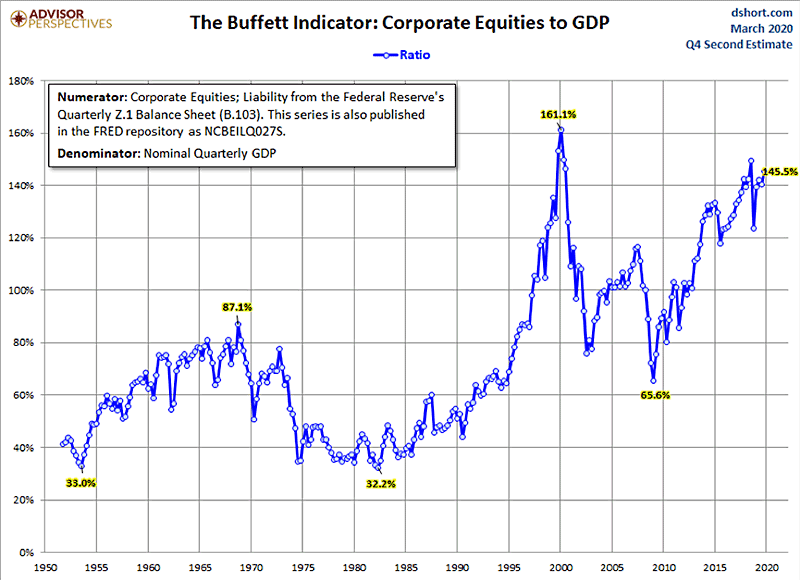
Source: AdvisorPerspectives.com. Data as of 3/3/2020.

Gold Will Continue to Do its Job

If financial assets struggle, interest in gold is very likely to widen. Gold may have been caught up in the recent stampede for liquidity, but it has delivered good relative performance on a year-to-date basis; gold bullion is up 0.73% as of March 17, compared to -25.17% for the S&P 500 Index.3 The 12-month figures (as of 3/17/2020) are even more impressive: gold has returned 17.19% vs. -8.54% for the S&P 500.

On a peak-to-trough basis for the last few weeks, gold has declined roughly 12%. Other safe haven assets have experienced the same pressure. For example, the yield on 30-year U.S. Treasury bond rose from less than 1.0% to 1.5% in only a few days, a drawdown of more than 30%. What this shows is that quality assets will be sold by portfolio managers desperate to reduce leverage. Low-grade assets cannot be sold quickly enough to meet margin calls.

It was leverage that inflated valuations, not fundamental economic growth and strong year-over-year earnings. In fact, corporate pre-tax profits have been declining since Q3 2014. Figure 2 shows pretax profits on a quarterly basis since 2014.

Figure 2. U.S. Corporate Pre-Tax Profits Have Been Declining ($Billions)
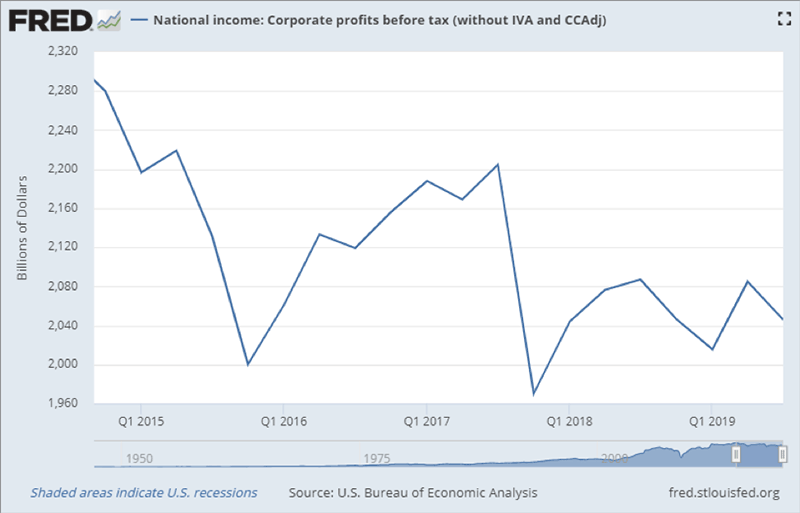
Source: Federal Reserve Bank of St. Louis Economic Research. Data as of 3/16/2020. 

The illusion of earnings growth that has captivated investor psychology was achieved through share buybacks and increased leverage. Growth of earnings per share, not the same as profit growth, has been juiced by financial engineering. The same can be said for returns on financial assets. The amount and location of leverage within the economy and financial markets is opaque but may well have reached high tide for many years. A post-recession economic recovery will not necessarily, and does not have to, translate into strong returns from investing in financial assets.

Global Debt Has Increased +100% Since 2007

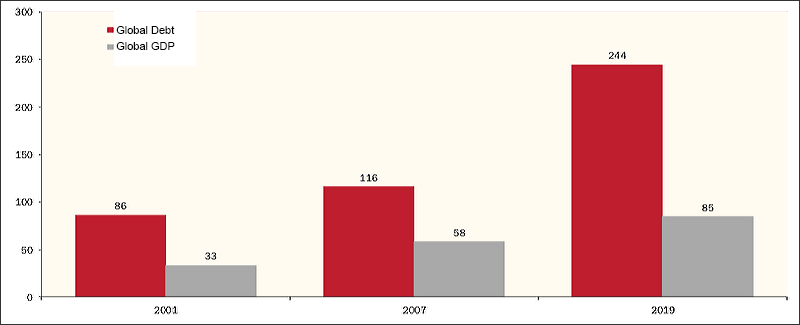
In popular thinking, the current U.S. administration, or the one that follows it, will pull every trick out of the bag to stimulate the economy. This belief will likely excite investors from time to time in anticipation of a rebound. Unfortunately, the financial markets are experiencing a deflationary bust that could spread to general economic activity. Public policy has all but exhausted the potential benefits of resorting to traditional monetary and fiscal solutions. The marginal benefit to economic growth from heaping on new layers of debt is capped by the law of diminishing returns, as shown by Figure 4 from Rosenberg Economics. Since 2007, global debt increased 110% vs. 46% for global GDP:

Figure 3. Global Debt vs. Global GDP ($ Trillions)
Source: Rosenberg Economics. Data as of 12/31/2019.

Central banks have few conventional tools remaining to combat credit deflation. An impotent response can be expected from new rounds of monetary stimulus, rate reductions or central bank balance sheet expansion. Global debt, public and private, measures 287% vs. global GDP ($244 trillion divided by $85 trillion). The debt burden will most assuredly grow, a post coronavirus rebound notwithstanding. The world’s debt structure is already incapable of withstanding even a minute rise in rates. More debt relative to GDP will only make matters worse. All that remains is currency destruction.

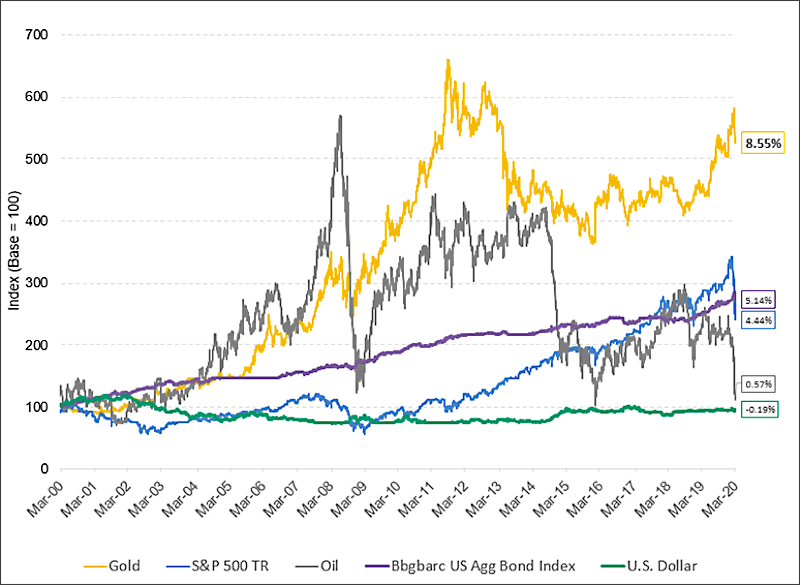
Gold has been rising for the past eighteen months side by side with a strong stock market and no inflation. Conventional wisdom said that wasn’t supposed to happen. As shown in Figure 4, gold has outperformed equities and bonds since 2000, the dawn of radical monetary experimentation by central bankers. We think gold has been sensing the endgame for Keynesian policy prescriptions, mainstream economic thinking and hyper-leveraged investment practices.

Figure 4. The Modern Era of Gold
Gold Bullion vs. Stocks, Bonds, Oil, USD (2000-2020)

For the period from 12/31/1999 to 3/16/2020, gold has provided posted an average annual return of 8.55%, compared to 5.44% for U.S. bonds, 4.44% for U.S. stocks, 0.57% for oil and -0.19% for the U.S. dollar. 
Source: Bloomberg. Period from 12/31/1999 –3/16/2020.4

Gold Miners are Poised to Perform

During the 1930s credit deflation, gold and gold mining stocks performed well in relative and absolute terms. When credit deflates, and counterparties cannot be trusted, gold is the ultimate safe asset. In the 1930s, the metal price rose, costs of producing gold declined and the miners generated strong earnings and paid handsome dividends. We believe that this is a sequence that will repeat.

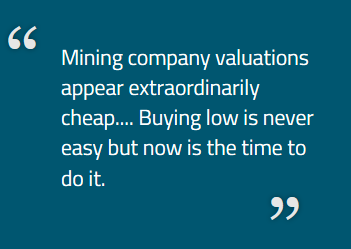
At the moment, mining company valuations appear extraordinarily cheap. It is one of the few industries that will report solid year-over-year earnings gains for the remainder of this year and perhaps into the next. 

Buying low is never easy but now is the time to do it.

https://sprott.com/insights/sprott-gold-report-point-of-no-return/?

Electric Cars Light Up the Screen SPONSOR: Lomiko Metals $LMR.ca $CJC.ca $SRG.ca $NGC.ca $LLG.ca $GPH.ca $NOU.ca

Posted by AGORACOM at 11:25 AM on Friday, March 20th, 2020

SPONSOR: Lomiko Metals is focused on the exploration and development of minerals for the new green economy such as lithium and graphite. Lomiko owns 80% of the high-grade La Loutre graphite Property, Lac Des Iles Graphite Property and the 100% owned Quatre Milles Graphite Property. Lomiko is uniquely poised to supply the growing EV battery market. Click Here For More Information

  • Nonprofit promotes documentary made by Tigard man, Ryan Hunter; it’s called ‘Electrified – The Current State of Electric Vehicles’

For most college students, adding more work to their plate sounds like a nightmare.

They spend long nights and early mornings focusing on their studies. But for University of Portland sophomore Ryan Hunter, directing his first documentary seemed like a fun challenge.

The movie, “Electrified — The Current State of Electric Vehicles,” brings together electric vehicle owners and industry professionals to break down misconceptions about the specialized cars. It’s now being promoted by nonprofits like Plug In America and Forth.

“The whole point of this movie was to explain some of the common things that people should know when getting an electric car and tell them some important things to consider before getting one,” said Hunter. “My main goal is to lead people to buy an electric car based on some of the stuff they learn from this film.”

Hunter started making the film last July. He became interested in the topic because he was thinking about buying an electric vehicle. He started looking into some of the high-tech features, such as Tesla’s autopilot hardware.

Tesla is an American company that specializes in electric vehicle manufacturing and battery energy storage.

From that beginning, Hunter decided to put his self-taught filmmaking skills to good use.

“It started off with just interviewing a couple of people who I know own electric cars,” Hunter said. “But as I started interviewing people and talking to more people, I was able to get connections to (Forth) in Portland. … And that kind of shifted the idea of a film from just owners’ impressions to also having these expert opinions dragging the narrative of the film.”

Zach Henkin, Forth’s deputy director, was happy to help Hunter once he learned about the film. The Portland-based nonprofit consults with cities, utilities and automakers to promote electric vehicles and shared transportation.“We’re seeing this as another way that we can continue to get the word out for folks who are curious or interested and want to know what’s going on with all these cars that don’t need gas,” Henkin said.

Forth is promoting the film through social media and newsletters. The nonprofit is considering hosting a screening of the movie to get the word out.

One of the biggest challenges is letting people know the benefits of electric vehicles, Henkin said.

“These cars are just simply better cars,” he said. “You can get tax credits from the (federal government), and you can get cash from the state. They’re also inexpensive, and you don’t have to pay gas.”

Henkin appreciates Hunter taking the time to research and inform others through a documentary. At the time of the interview, Henkin didn’t know Hunter’s age, and he was surprised to discover that the young director had an interest in the topic.

“It’s really telling about what we’re seeing with younger generations,” Henkin added. “They’re latching on to topics that are important (and) might not be getting the amount of attention that they could be.” He concluded, “It makes me wonder how maybe older generations, myself included, are approaching similar things and maybe missing stuff.”

Henkin hopes Hunter can leverage the documentary to bigger and better things. As for Hunter, he has other dreams.

“Computer science is kind of more of a thing I’d like to make a career out of,” he said. “But filmmaking is definitely something I like to do in my free time.”

Hunter remembers making short videos at 13 and having an overall interest in the craft.

“I took a filmmaking class in high school, but (it) was very basic, so it wasn’t a lot that contributed to my knowledge,” said Hunter, who graduated from Southridge High School in Beaverton two years ago. “Everything I know has been self-taught.”

Hunter doesn’t know if he’ll continue making films in the future, but he already is thinking about a possible sequel to his first documentary.

“People said that they’d love to see a follow-up to this where I look to see where electric cars are in a couple of years, because there are more changes that are coming,” Hunter said.

He expects the price of electric vehicles to continue going down. A market once dominated by Tesla and other luxury brands is now increasingly populated with somewhat less expensive models, like the Nissan Leaf and the Fiat 500e. As more and cheaper electric cars are introduced, Hunter said, that growing market will make owning an electric vehicle “more accessible to much more people than it currently is now.”

Despite having no intentions for his film to “make it big,” Hunter is glad his movie is helping others make informed decisions.

“If just one person gets an electric vehicle based on this movie, I would say that’s a win,” Hunter said. “Any change that I can help make with the environment is good.”

As for what Hunter learned from the film, he’s planning on getting a Tesla Model 3 — the automaker’s most popular (and affordable) car — in a couple of months.

“Electrified — The Current State of Electric Vehicles” is available to watch on YouTube and Amazon Prime Video

https://pamplinmedia.com/pt/11-features/457347-369378-electric-cars-light-up-the-screen

INTERVIEW: Empower $CBDT.ca #CBD Clinics Designated Essential Service – February Visits Climb 800% $WEED.ca $CGC $ACB $APH $CRON.ca $HEXO.ca $OGI.ca

Posted by AGORACOM-JC at 4:12 PM on Thursday, March 19th, 2020

With 165,000 patients, Empower Clinics (CBDT:CSE) (EPWCF:OTCQB) has a database that almost every medical cannabis and CBD company would kill for.  Patient visits increased 351% in Q4 and 800% in February.  But would Coronavirus social gathering imitations put the clinic network at risk?

No.  In fact, it has had the opposite effect, with the clinics being designated an essential service.  Moreover, Empower has had to actually increase operating hours.

Watch this interview with the Company’s CEO, Steven McAuley, who is Six Sigma certified under the quality initiative of legendary GE chairman Jack Welch. We’ve never seen a Six Sigma certified CEO in the Canadian small cap markets. Never …. which also explains how McAuley has been able to guide Empower Clinics through the most disruptive retail environment in recent history.  

Grab your favourite beverage and settle in to watch what may be your next great small cap investment.

How #Coronavirus is Impacting Cyberspace – SPONSOR: Datametrex AI Limited $DM.ca

Posted by AGORACOM-JC at 3:00 PM on Thursday, March 19th, 2020

SPONSOR: Datametrex AI Limited (TSX-V: DM) A revenue generating small cap A.I. company that NATO and Canadian Defence are using to fight fake news & social media threats. The company announced three $1M contacts in Q3-2019. Click here for more info.

How Coronavirus is Impacting Cyberspace

  • Hackers were also strategizing to spread fake news to create further confusion
  • By investigating the dark web marketplace, CYFIRMA uncovered illicit groups selling organic medicine claiming to cure and eradicate the COVID-19 virus
  • These discussions in the hackers’ communities were carried out in Mandarin, Japanese and English

By CISOMAG

These are interesting times – the world is witnessing an unprecedented onslaught of upheavals not just in the ‘real-world’ but also in the cyber world. We greeted 2020 gingerly knowing the trade war between the U.S. and China was going to bring about economic uncertainty but little did we know a global pandemic was upon us, with the Coronavirus having an impact even on cyberspace.

By CYFIRMA RESEARCH

While healthcare workers are battling the COVID-19 virus, countries are in lockdown mode, and the global economy hangs in the balance, another war is raging in cyberspace.

Cyber risks and threats have multiplied with many more attack vectors, and hackers’ techniques evolving faster than ever, blending technical prowess with sophisticated social engineering. The current challenge with the virus pandemic is a test of nations’ and businesses’ preparedness and resiliency on all fronts.

CYFIRMA’s threat visibility and intelligence research revealed a massive increase of over 600% of cyberthreat indicators related to the Coronavirus pandemic from February to early March.

Threat indicators are made up of conversations observed and uncovered in the dark web, hackers’ forums, and closed communities. What our researchers have seen and heard in these communities do not bode well for governments and businesses – hackers are hard at work, actively planning how to leverage this climate of fear and uncertainty to attain their political and financial objectives.

The United States Computer Emergency Readiness Team (US-CERT) has sent out alerts on scams tricking people into revealing personal information or donating to fraudulent charities, all under the pretext of helping to contain and manage the coronavirus. The Federal Trade Commission has also warned about similar scams.

CYFIRMA’s research team and multiple security vendors have reported that threat actors have used fear tactics to spread malware, including LokiBot, RemcosRAT, TrickBot, and FormBook.

These hackers’ communities span far and wide, communicating in Cantonese, Mandarin, Russian, English, and Korean, unleashing campaigns one after another to wreak havoc on unsuspecting nations and enterprises.

On Dark Web forums, a group from Hong Kong hatched a plan to create a new phishing campaign targeting the population from mainland China. The group aimed to create distrust and incite social unrest by assigning blame to the Chinese Communist Party.

A deeper analysis of hackers’ conversations also revealed groups from Taiwan discussing similar phishing and spam campaigns, specifically targeting influential persons in mainland China to cause further unrest.

Korean-speaking hackers were planning to make financial gains using sophisticated phishing campaigns, loaded with sensitive data exfiltration malware and creating a new variant of EMOTET virus (EMOTET is a malware strain that was first detected in 2014 and is one of the most prevalent threats in 2019). These hackers were planning to target Japan, Australia, Singapore, and the U.S.

CYFIRMA’s researchers also observed North Korean hackers targeting South Korean businesses. The phishing email had the Korean language title “Coronavirus Correspondence”, tricking recipients into opening them and launching malware into machines and networks.

With COVID-19, many hacker groups were observed to be using brand impersonation with fake emails claiming to represent authoritative bodies such as the Centers for Disease Control (CDC) and the World Health Organization (WHO). The subject line and content of these emails were very enticing, offering news updates and cures to the ailment.

We also noticed coronavirus-themed emails designed to look like emails from the organizations’ leadership team and sent to all employees.

Embedded with malware that would infect corporate networks, these phishing attacks deploy social engineering tactics to steal data and assets.

Other than unleashing cyberattacks to steal data, we also witnessed the planning of fake websites to sell face masks and other health apparatus using bitcoin in China, Japan, and the US.

To aggravate matters, hackers were also strategizing to spread fake news to create further confusion. By investigating the dark web marketplace, CYFIRMA uncovered illicit groups selling organic medicine claiming to cure and eradicate the COVID-19 virus. These discussions in the hackers’ communities were carried out in Mandarin, Japanese and English.

A new malware called ‘CoronaVP’ was being discussed by a Russian hacking community; this could lead to a new ransomware or EMOTET strain, designed to steal personal information.

Hackers leveraging on the COVID-19 pandemic are motivated by a combination of personal financial gain as well as political espionage to cause social upheavals. Threat actors in the world of cybercrimes are well-equipped with tools, technology, expertise and financing to further both commercial and political agendas. In our hyper-connected digital world, cyber-crime is a lucrative business, and we should expect attacks to be more frequent and more sophisticated as the pandemic continues to cast a shadow over the global economy.

What we have witnessed in the field of cyber-intelligence has taught us the importance of staying vigilant, and frequently, the most dangerous forces at work are those we cannot see.

The importance of relevant and timely threat intelligence cannot be over-emphasized as early detection of cyber threats could save organizations from hefty financial penalties and irreversible brand damage.

Source: https://www.cisomag.com/cyberthreats-due-to-coronavirus/

The #Tech That Could Be Our Best Hope for Fighting #COVID19 —and Future Outbreaks SPONSOR: CardioComm Solutions $EKG.ca – $ATE.ca $TLT.ca $OGI.ca $ACST.ca $IPA.ca

Posted by AGORACOM-JC at 2:45 PM on Thursday, March 19th, 2020

SPONSOR: CardioComm Solutions (EKG: TSX-V) – The heartbeat of cardiovascular medicine and telemedicine. Patented systems enable medical professionals, patients, and other healthcare professionals, clinics, hospitals and call centres to access and manage patient information in a secure and reliable environment.

The Tech That Could Be Our Best Hope for Fighting COVID-19—and Future Outbreaks

By Alice Park

  • Battling a pandemic as serious as COVID-19 requires drastic responses, and political leaders and public-health officials have turned to some of the most radical strategies available.
  • The key to early response lies in looking beyond centuries-old strategies and incorporating methods that are familiar to nearly every industry from banking to retail to manufacturing, but that are still slow to be adopted in public health
  • Smartphone apps, data analytics and artificial intelligence all make finding and treating people with an infectious disease far more efficient than ever before

What began with a lockdown of one city in China quickly expanded to the quarantine of an entire province, and now entire countries including Italy. While social isolation and curfews are among the most effective ways to break the chain of viral transmission, some health experts say it’s possible these draconian measures didn’t have to become a global phenomenon. “If health officials could have taken action earlier and contained the outbreak in Wuhan, where the first cases were reported, the global clampdown could have been at a much more local level,” says Richard Kuhn, a virologist and professor of science at -Purdue University.

The key to early response lies in looking beyond centuries-old strategies and incorporating methods that are familiar to nearly every industry from banking to retail to manufacturing, but that are still slow to be adopted in public health. Smartphone apps, data analytics and artificial intelligence all make finding and treating people with an infectious disease far more efficient than ever before.

“The connectivity we have today gives us ammunition to fight this pandemic in ways we never previously thought possible,” says Alain Labrique, director of the Johns Hopkins University Global -mHealth Initiative. And yet, to date, the global public–health response to COVID-19 has only scratched the surface of what these new containment tools offer. Building on them will be critical for ensuring that the next outbreak never gets the chance to explode from epidemic to global pandemic.

Consider how doctors currently detect new cases of COVID-19. Many people who develop the hallmark symptoms of the -disease—fever, cough and shortness of breath—-physically visit a primary-care doctor, a health care provider at an urgent-care center or an emergency room. But that’s the last thing people potentially infected with a highly contagious disease should do. Instead, health officials are urging them to connect remotely via an app to a doctor who can triage their symptoms while they’re still at home.

“The reality is that clinical brick-and-mortar medicine is rife with the possibility of virus exposure,” says Dr. Jonathan Wiesen, founder and chief medical officer of MediOrbis, a telehealth company. “The system we have in place is one in which everyone who is at risk is potentially transmitting infection. That is petrifying.” Instead, people could call a telemedicine center and describe their symptoms to a doctor who can then determine whether they need COVID-19 -testing—without exposing anyone else.

In Singapore, more than a million people have used a popular telehealth app called -MaNaDr, founded by family physician Dr. Siaw Tung Yeng, for virtual visits; 20% of the physicians in the island country offer some level of service via the app. In an effort to control escalating cases of coronavirus there, people with symptoms are getting prescreened by physicians on MaNaDr and advised to stay home if they don’t need intensive care. Patients then check in with their telehealth doctor every evening and report if their fever persists, if they have shortness of breath or if they are feeling worse. If they are getting sicker, the doctor orders an ambulance to take those people to the hospital. Siaw says the virtual monitoring makes people more comfortable about staying at home, where many cases can be treated, instead of flooding hospitals and doctors’ offices, straining limited resources and potentially making others sick. “This allows us to care across distance, monitor patients across distance and assess their progression across distance,” says Siaw. “There is no better time for remote care monitoring of our patients than now.”

Other at-home devices and services currently being used in the U.S. allow patients to measure dozens of health metrics like temperature, blood pressure and blood sugar several times a day, and the results are automatically stored on the cloud, from which doctors get alerts if the readings are abnormal.

Telemedicine also serves as a powerful communication tool for keeping hundreds of thousands of people in a specific region up to date with the latest advice about the risk in their communities and how best to protect themselves. That can go a long way toward reassuring people and preventing panic and runs on health centers and hospitals.

Beyond individual-level care, the data gathered by telemedicine services can be mined to predict the broader ebb and flow of an epidemic’s trajectory in a population. In the U.S., Kaiser Permanente’s tele-medicine call centers are now also serving as a bellwether for an anticipated surge in demand for health services. Dr. Stephen Parodi, national infectious–disease leader at Kaiser Permanente, was inspired by a Google project from a few years ago in which the company created an algorithm of users’ flu–related search terms to determine where clusters of cases were mounting. Parodi started tracking coronavirus–related calls from the health system’s 4.5 -million members in Northern California in February. “We went from 200 calls a day to 3,500 calls a day about symptoms of COVID-19, which was an early indicator of community–based transmission,” he says. “Our call volume was telling us several weeks before the country would have all of its testing online that we have got to plan for a surge in cases.”

On the basis of the swell in calls nationwide, the hospital system is considering suspending elective surgeries based on local circumstances, in part to ensure that ventilators and other critical equipment would be available for an anticipated influx of COVID-19 patients with severe symptoms. Kaiser doctors also postponed appointments for routine mammograms and other cancer–screening tests and cut back on in-person appointments by turning most noncritical visits into virtual visits.

The COVID-19 pandemic may be the trial by fire that telemedicine finally needs to prove its worth, especially in the U.S. Despite the fact that apps and technology for virtual health visits have existed for several decades, uptake in the country has been slow. Medicare only recently began reimbursing for telemedicine visits at rates comparable to in-person visits, and states have just begun to relax licensing regulations that prevent doctors in one state from -remotely treating patients in another state. “This -pandemic is almost like us crossing the Rubicon,” says Wiesen of MediOrbis. “It’s a clarion call for America and for the world on how important telemedicine is.” Parodi agrees. “I think this pandemic will bring in a fundamental change in the way we practice medicine and in the way the health care system functions in the U.S.,” he says. “We’re going to come out of this and -realize a lot of health care visits don’t have to be in person.”

Other tech innovations that haven’t fully made their way to the public-health sector could also play a critical role in controlling this -pandemic—and future outbreaks. Taking a closer look at health-related data, such as electronic health records or sales of over-the-counter medications, can provide valuable clues about how an infectious disease like COVID-19 is moving through a population. Retail drugstores track inventory and sales of nonprescription fever reducers, for example, and any trends in those data might serve as an early, albeit crude, harbinger of growing spread of disease in a community. And given the proliferation of health–tracking apps on smartphones, analyzing data trends like a rise in average body temperature in a given geographical area could provide clues to emerging clusters of cases.

Geotracking on phones, while controversial because of privacy issues, can also streamline the tedious task of contact tracing, in which scientists try to manually trace infected patients’ whereabouts to find as many people with whom they had direct contact and who could have been infected. In South Korea, this strategy helped identify many of the contacts of members of a Seoul church that formed the first major cluster of infections in the country. In countries with a less robust health care infrastructure, smartphones can be critical for gathering information about emerging infections on the ground. In Bangladesh, says Labrique, programs created to canvass for noncommunicable diseases like hyper-tension and diabetes are now being modified to include questions about COVID-19 symptoms. These types of real-time data can rapidly provide a snapshot of where and how fast the disease might be spreading, to distribute health care workers and -equipment where they’re needed most.

It’s all about catching these cases as early as possible, to minimize the peak of a pandemic so the health system doesn’t get overwhelmed. But it’s not just about seeing the trends. Flattening the surge of an infectious disease also requires action, and that’s where the advice gets -muddier—but also where Big Data and artificial intelligence (AI) can provide clarity.

By deeply analyzing the care that every COVID-19 patient receives, for example, AI can tease out the best treatment strategies. Jvion, a health care analytics company, is using AI to study 30 million patients in its data universe to identify people and communities at highest risk of COVID-19 on the basis of more than 5,000 variables that include not just medical history but also lifestyle and socioeconomic factors such as access to stable housing and transportation. Working with clients that include large hospital systems as well as small remote health centers, Jvion’s platform creates lists of people who should be contacted pro-actively to warn them about their vulnerability so health providers can create a care plan for them.

In the case of COVID-19, that might include social distancing and avoiding large public gatherings. To help public-health departments better prepare communities for this and future outbreaks, the company has communicated with the U.S. Centers for Disease Control and Prevention to share what it has learned.

Privacy issues, however, nest in every single byte of data about a person’s health. So the power of AI methods in controlling outbreaks depends on how effectively data can be anonymized. Only when people are assured of privacy can algorithms help to navigate the next big hurdle: predicting surges in cases that strain health care personnel and availability of supplies like ventilators, masks and gowns.

If COVID-19 teaches public-health officials one thing, it’s that there are now tools available to help contain an infectious disease before radical measures like quarantines and curfews are needed. “What we were doing 10 years ago and what we are doing now is vastly different,” says Wiesen. “There is a tremendous opportunity here, and hopefully by [the next pandemic], the use of technology and data analytics is going to be light-years ahead of where it is today.”

Source: https://time.com/5805622/coronavirus-pandemic-technology/

Focus On Survival Amid #Coronavirus: Lightspeed’s Lessons From #China For #Indian Startup Founders – SPONSOR: BetterU Education Corp. $BTRU.ca $ARCL $CPLA $BPI $FC.ca

Posted by AGORACOM-JC at 1:57 PM on Thursday, March 19th, 2020
SPONSOR:  BetterU Education Corp. aims to provide access to quality education from around the world. The company plans to bridge the prevailing gap in the education and job industry and enhance the lives of its prospective learners by developing an integrated ecosystem. Click here for more information.

Focus On Survival Amid Coronavirus: Lightspeed’s Lessons From China For Indian Startup Founders

By: Bhumika Khatri

  • The VC’s partners from China and India suggested startups work on reducing cash burn, spending
  • Lightspeed China’s James Mi said the Chinese ecosystem is focussing on extending runway through cost-cutting
  • Mi advised founders to have at least six months of runway

The Indian startup ecosystem has joined the fight against the coronavirus pandemic, as over 125 confirmed cases have emerged in India. With three deaths so far, India has not yet seen the worst of the outbreak. While many startups have advised employees to work from home, some are also offering medical support, while helping employees take up self-quarantine for Covid-19 and creating contingency plans — life has truly changed in the age of the pandemic for many people, startup founders included.

Many are saying that India is in the same place as China was almost 30-45 days back when the coronavirus had not yet been given the pandemic status. So startups may have a few lessons to learn from their Chinese counterparts. To make this happen Lightspeed India hosted a closed-door founders-only online session recently to facilitate interactions between Indian startup founders and venture capitalists in China so that each group can learn from their experiences.

The discussions were led by James Mi, partner, Lightspeed China, Udaan cofounder Amod Malviya with Lightspeed India partners’ Bejul Somaia and Hemant Mohapatra. The VC fund received over 200 questions from founders, with over 60 founders joining the session.

A founder who was part of the interaction told Inc42 that the session focused on fundraising, business environment and work from home. From the experience of China, James Mi noted that the strategy was first to focus on containment and as a result, hospitality businesses saw decline while businesses like grocery delivery grew. However, logistics was impacted negatively.

Other businesses that saw high adoption, traction and growth were digital content, video streaming, edtech among others. Mi also said that enterprise SaaS businesses saw some downturn due to the lack of face-to-face meetings, which are crucial for large sales contracts.

Shoring Up The Runway

In terms of fundraising, Mi advised founders to have at least six months of runway and first focus on optimising unit economics. However, if they don’t have such a runway, they should aim to reduce burn by cutting down unnecessary expenses on marketing and even reduce headcount if need be. Founders were also advised to find alternative financing options like bank loans.

Mi also urged startups to lock any existing offers and secure the funding to support the runway as VC funding is expected to slow down in the next quarter. He also suggested that businesses should go back to decisions taken at earlier stages to reduce burn and work on unit economics, rather than increasing market reach.

Lightspeed India’s Somaia shared a similar sentiment and said that fears in financial markets are similar to the consumer market as the capital gets scarce and selective. He said that even though financing won’t stop, it would now be more selective, focussing on quality and business fundamentals.

He noted that in such situations, reckless spending isn’t appreciated and that startups should plan in a way where they can spend 2020 without external funding. Somaia advised that the startups can top-up from the recent funding round as well if there is an interest. The trio emphasised that founders should focus on survival on priority.

The three experienced VCs also noted that the conditions are benign today but may become severe tomorrow. The impact on business from the pandemic is expected to last at least two quarters. The responsibility of businesses has changed from being equitable and fair employers to taking precautions ranging from temperature checks to masks and sanitisers.

Mi recollected that in China, even though factories were allowed to work, they didn’t have the infrastructure like masks and other sanitary needs set up to fulfil recommendations, which meant many workers couldn’t come in. So founders need to provision for all manner of things that they had not earlier.

Udaan cofounder Malviya shared the experience of work from home saying that it needs a planned approach and should be embraced correctly. He said that it becomes important to document decisions and startups should have well-defined touchpoints on a daily and weekly basis for different groups.

He said that work from home requirements are different for teams which are in operations and are on managerial work etc. Among the challenges with work from home for operational teams that Malviya noted was a drop in productivity. He advised founders to rely on products like Notion for documentation, Kettle.ai to track daily productivity and Hangouts and Zoom for video collaboration.

Source: https://inc42.com/buzz/focus-on-survival-amid-coronavirus-lightspeeds-lessons-from-china-for-indian-startup-founders/

CLIENT FEATURE: Mota Ventures Announces 832% Growth in February 2020 over the Same Period Last Year $APH.ca $GBLX $PFE $ACG.ca $ACB.ca $WEED.ca $HIP.ca $WMD.ca $CGRW

Posted by AGORACOM at 12:51 PM on Thursday, March 19th, 2020
https://s3.amazonaws.com/s3.agoracom.com/public/companies/logos/564664/hub/MOTA_Large.png

RECENT HIGHLIGHTS

  • First Class CBD brand achieved sales of Cdn$2,981,000 February 2020
  • Marketing efforts improved gross margins by 4.9% from January 2020 to February 2020.
  • February 2020 represents an increase of 832% over the same period last year.
  • Plans to continue growth of First Class in the United States over the balance of 2020, as well as an expansion into the European market.
  • Formalized Joint Venture With Bevcanna Enterprises: Read More
    • Will share equal ownership in the Joint Venture and will be jointly responsible for developing and funding its operations
    • Company will provide manufacturing, marketing and distribution infrastructure in the European market.
    • Parties have determined an initial product launch and will provide further details on specific regions and timing once finalize
  • Announced Collaboration for Sativida US Expansion Read More 
    • Unified Funding will provide assistance to Sativida with product sourcing, packaging, shipping, payment infrastructure and marketing
    • Sativida has become the number one search-ranked online retailer of CBD products in Spain and Mexico
  • Entered into Licensing Agreement with Phenome One Read More
    • A privately held full-service live genetic and seed preservation cannabis company.
    • Mota will have full access to Canada’s largest live genetic cannabis library with over 350 cultivars
    • Mota will have the right to propagate, cultivate, harvest and process a minimum of 10 selected cultivars

2 World Class Brands:

#1. FIRST CLASS CBD: ONE OF THE LARGEST US BASED ONLINE RETAILERS OF CBD PRODUCTS

HIGHLIGHTS:

  • Leader in online CBD sales in North America
  • Crop to package model: US grown CBD hemp
  • Acquired at a 1.5 times revenue valuation
  • Current customer base 142,000 customers -with additional leads of over 424,000 potential new customers
  • 2019 Sales of $19.2M USD/ EBITDA of 2.7M USD

  #2. SATIVIDA: ONLINE DIRECT TO CONSUMER RETAILER OF A VAST RANGE OF ORGANICE CBD OILS AND COSMETICS

HIGHLIGHTS:

  • Current distributor of CBD products in Spain, Portugal, Austria, Germany, France and the United Kingdom
  • Number one search-ranked online retailer in Spain and Mexico
  • Award winning product line known for its minimal heavy metal content and accurate CBD levels
  • 100% organic products

About Mota Ventures Corp.

Mota Ventures is seeking to become a vertically integrated global CBD brand. Its plan is to cultivate and extract CBD into high-quality value added products from its Latin American operations and distribute it both domestically and internationally. Mota has established distribution networks through the acquisition of First Class CBD in the United States and Sativida in Europe. Mota Ventures is also seeking to acquire revenue producing CBD brands and operations in both Europe and North America, with the goal of establishing an international distribution network for CBD products. Low cost production, coupled with international, direct to customer, sales channels will provide the foundation for the success of Mota Ventures.

Hub on Agoracom

FULL DISCLOSURE: Mota Ventures. is an advertising client of AGORA Internet Relations Corp.

Is There a Real Shortage of Physical Gold and Silver? SPONSOR: Affinity Metals $AAF.ca $SII.ca $TUD.ca $GTT.ca $AMK.ca $OSK.ca $RKR.ca

Posted by AGORACOM at 11:44 AM on Thursday, March 19th, 2020
This image has an empty alt attribute; its file name is Affinity_Metals_Corp_Logo.png

Sponsor: Affinity Metals Corp. (TSX-V: AFF) is a Canadian mineral exploration company building a strong portfolio of mineral projects in North America. The Corporation’s flagship property is the drill ready Regal Property near Revelstoke, BC where Affinity Metals is making preparations for a spring drill program to test two large Z-TEM anomalies. Click Here for More Info

Bob Moriarty
President: 321gold

Every time the price of gold and silver go down in a big way, the manipulation/conspiracy crowd come creeping out of their rat holes to start preaching about naked short selling and a disconnect between physical metals and paper markets. As you will see, both issues tend to reveal how little these guys understand about how markets and people work in the real world. And an utter display of their basic ability to think for themselves.

A little Econ 101 first.

Commodity markets go down because of an excess of motivated sellers. Anyone who actually knows how commodity markets work understands that for every contract there is one buyer and one seller. That’s why it is impossible for there to be anyone doing “naked short selling.” You can sell first or you can buy first but you will do both eventually. If somehow someone managed to dump trillions of dollars worth of commodity contracts “naked” on the market, at some point they would have to buy those contracts back.

A lot of people like to believe that commodity prices go down because there are more sellers than buyers but since every contract requires an equal and opposite party on the other side, if ten contracts are sold, someone has to buy ten contracts. There is never any other alternative. One buyer, one seller. Both margined or having the ability to fulfill the contract either as a supplier or a consumer.

So if the prices of gold and silver have plummeted, and they have, why are people reporting shortages of the physical metals? And let me remind my readers, there were people predicting this crash with great accuracy.

I’ll give you a hint; none of the manipulation/conspiracy crowd got it right. They never do call anything correctly but are always forgiven because they tell people what they want to hear, just like TV preachers and successful politicians.

To understand why there is an apparent shortage of physical metals, you have to try thinking for yourself if only this once.

Pretend you want to go into the business of buying and selling silver bars. You have rented a shop, hired an assistant, set up an accounting program. On the 6th of March a customer walked in, your first. He wanted to sell this nice shiny 100-ounce silver bar. You looked at either Kitco or the futures market to see what you should pay, there being zero difference between the physical and paper market at the time.

For the 6th of March the spot silver price varied between a low of $17.08 and a high of $17.55. Since as a businessman you have to make money you pay him $1700 for the bar. He’s thrilled; you’re thrilled with your first purchase.

Time passes and since you are new to the game you don’t do any business. After all it takes time to build a customer base. But the bell rings and another potential customer walks in. Lucky for you, he wants to buy a 100-ounce silver bar, shiny if possible, and you just happen to have one in stock.

The two of you go to Kitco or look at the spot price of silver on the futures market and it shows $12.27. What do you do? Do you sell it for $12.27 and a small premium or do you tell him you are out of stock? At this point, the price of physical and paper is the same.

Or alternatively do you point out that the “Experts” are saying customers are willing to pay a 50% premium. So you tell him that the price is $1800 for the bar. If you quote him $1800, just how likely do you think it is that he will bite?

If you charge him $12.27 an ounce, you go out of business. If he is willing to pay a 50% premium, give him my contact details because I have all the silver in the world at a 50% premium.

The price of silver went down because the sellers were more interested in dumping than buyers were in scarping it up. There is no shortage of silver and there is no disconnect between the price of physical and paper. If you really believe dealers are short of silver, take in a 100-ounce bar and see just how much the physical price varies from the paper price.

I can tell you. It’s zero. If you own gold or silver you paid for it with paper and if you sell gold or silver you are going to be paid based on the paper price.

Supply and demand really does work. If the price of silver bars stays low, all the people who rushed to buy at the top will be just thrilled to sell at the bottom. They always do.

http://www.321gold.com/editorials/moriarty/moriarty031920.html

betterU $BTRU.ca Trading Reinstated, Message from the CEO, Business Update and Annual General Meeting $ARCL $CPLA $BPI $FC.ca

Posted by AGORACOM-JC at 11:11 AM on Thursday, March 19th, 2020
  • Announced the reinstatement of BTRU to trading effective as of March 23rd , 2020
  • Company is providing an update on the business and notice of the Annual General Meeting of shareholders

OTTAWA, March 19, 2020 – betterU Education Corp. (TSX VENTURE: BTRU, Frankfurt: 5OGA) (the “Company” or “betterU”) has been working with the TSX Venture Exchange to file all necessary outstanding filings and is now pleased to announce the reinstatement of BTRU to trading effective as of March 23rd , 2020. The Company is providing an update on the business and notice of the Annual General Meeting of shareholders.

Message from the CEO –

“Our company has gone through a lot of turmoil over the last year, and I want to thank all of you – our shareholders and extended stakeholders – for weathering this storm with us. The good news is that we are emerging stronger – more operationally and commercially focused – than ever. While the company’s trading was suspended over the last six-months we redoubled our efforts to build value for the Company and our shareholders.

I am pleased to announce the official launch of our enterprise B2B SaaS platform for skills development called ‘Ready-To-Go”, which is the first mobile platform on the market to bring together everything an employer needs to continually assess and skill any employee from entry level to executive in an integrated manner. Ready-To-Go is proving valuable to corporate customers globally, and we will be announcing contracts with companies in Canada, US, India and beyond in the coming months.  Ready-To-Go completely aligns with our founding vision to provide best in class education-to-employment solutions for individuals and companies globally. What is different from the past was the realization while in stealth mode over the last few months, that we are not in the business of selling courses, we are in the business of building better people (hence our brand ‘betterU’). As such we have shifted our business model away from a pay-per-course (transactional) model to a pay-per-employee (software-as-a-service) model – whereby employers pay monthly subscriptions per employee for continual skills improvement and tracking.

This simple shift in framing – which is both on brand and on mission – is resonating strongly with public sector partners, private enterprise customers, and with individuals as end-user beneficiaries. While our focus has become more global in nature, we continue to maintain dedicated staff and skilling platforms for India, which inspired all of our hard work up to this point. There is still a lot of hard work ahead of us, but we now have a solid foundation to become a more sustainable company.”  Brad Loiselle, President and CEO betterU.

Business UpdateThe following are additional updates on the business:

  • Cancelled Shares for Debt – As previously reported on July 26th, 2019 and November 29, 2019 as part of ongoing efforts to reduce the Company’s debt and operational liabilities that its board of directors had approved the settlement of $125,000 of debt through the issuance of common shares of the Company (the “Debt Settlement”). The Company had since decided not to move forward with the Debt Settlement due to the downward pressure of the stock price and the level of dilution it would have created. The Company continues to look at debt reduction options.
     
  • Board approved restructuring plan – On December 2, 2019 betterU’s board of directors approved a plan to restructure the Company’s existing debts and liabilities in efforts to deleverage its balance sheet. The restructuring would take place over the course of 2020 i n connection with a planned subordinated secured convertible debenture offering and subsequent private equity placement to fund a global rollout of the Company’s Enterprise SaaS skilling platform and also convert or otherwise pay down the Company’s currently existing liabilities to a sustainable level.
     
  • betterU Enterprise SaaS Platform ‘Ready-To-Go’ – is fully operational and has been showcased to multiple corporate clients in Canada, USA, UK and India. The Company has begun contracting with several enterprise users, which will be announced in the week to come. betterU has built over the last several months a database from interested parties of 400+ Directors of Learning and Development, VPs and HR heads from companies around the world. To support such growing demand the Company would first have to raise additional capital through its planned subordinated secured debenture offering. For more details about betterU’s recently launched Enterprise SaaS ‘Ready-To-Go’ platform, please visit  https://readytogo.betteru.ca/
     
  • Partnerships – Adding to our existing content partnerships encompassing tens of thousands of courses from 100+ of the world’s leading online education and training providers, betterU has been expanding its offering of assessment tools required to support employers in determining their employee skill gaps.  We are pleased to announce the Company has entered a partnership with Cyprus firm Byrq to support betterU’s Enterprise SaaS Platform for pre-hiring candidates. With a proven I/O psychology framework that is scientifically validated and EEOC compliant, betterU will now be able to measure cognitive skills including numerical, verbal, problem solving and attention to detail as well as 16 personality traits. betterU is also pleased to announce they have entered a partnership with USA based firm eSkill, providing betterU with access to 600+ assessments across job roles, subject base and modular. This partnership enables betterU to support entire departments and job roles across organizations in determining the skills required per employee and mapping them to their skills on betterU’s Enterprise SaaS Platform Ready-To-Go.
  • Corporate Portal –  betterU has developed and launched a corporate website  https://corporate.betteru.ca/, that provides access to more details about betterU’s history, leadership, 2020 focus, Investor Relations and more information on the Company’s ongoing activities. betterU’s corporate website will support more visibility, transparency and access to current and relevant details about how the business is moving forward.  Please visit the site regularly so that you are kept current.
     
  • Stock Option Grants – The following stock options were issued to an insider on December 13th 2017, Positive Venture Group for 125,000 at an exercise price of $0.335 for a 5 year term, with 1/3rd allowed to exercise on the 1st, 2nd and 3rd anniversary date.
     
  • AGORA Internet Relations Corp. – The Company has issued the following number of shares in connection with settlement of $56,500 owed to Agoracom for marketing services according to the terms of the agreement disclosed on April 12, 2017.          
 
  Marketing ServicesPrice per ShareNumber of Shares  
 15-Mar-17$11,3000.4525,111 
 15-Jun-17$11,3000.5719,824 
 15-Sep-17$11,3000.3829,736 
 15-Dec-17$11,3000.3829,736 
 15-Mar-18$11,3000.7914,303 
 Total $56,500 118,710 
 
  • Annual General Meeting (“AGM”) Notice – Take notice that the annual general meeting (the “Meeting”) of shareholders of betterU Education Corporation (the “Corporation”) will be held at 1 Hunt Club Rd, Ottawa, ON K1V 1B9 on Thursday May 28th, 2020 at 11:00 a.m. (Ottawa time) for the following purposes:
  1. To receive the financial statements of the Corporation for its fiscal year ended March 31st 2019 and the report of the auditor thereon;
  2. To elect directors of the Corporation for the ensuing year;
  3. To appoint an auditor of the Corporation for the ensuing year;
  4. To consider and if thought fit to pass, with or without variation, an ordinary resolution to approve the Corporation’s Stock Option Plan allowing the granting of up to 10% of the Corporation’s issued and outstanding common shares at any time; and
  5. To transact such other business as may properly come before the Meeting or any adjournment thereof.

The Corporation has elected to use the notice-and-access (“Notice-and-Access”) provisions under National Instrument 54-101 Communications with Beneficial Owners of Securities of a Reporting Issuer and National Instrument 51-102 Continuous Disclosure Obligations to distribute Meeting materials to shareholders. Notice-and-Access is a new set of rules that allow issuers to post electronic versions of proxy-related materials on SEDAR and on one additional website, rather than mailing paper copies to shareholders. Shareholders have the right to request hard copies of any proxy-related materials posted online by the Corporation under Notice-and-Access.

Meeting materials, including the Circular, will be available under the Corporation’s profile at www.sedar.com and also at https://corporate.betteru.ca/ by April 29th 2020. The Corporation will provide to any shareholder, upon request to the Corporation’s transfer agent, a paper copy of the Circular and any financial statements or management discussion and analysis of the Corporation filed with the applicable securities regulatory authorities during the past year. In order to allow reasonable time for you to receive and review a paper copy of the Circular or other document prior to the proxy deadline, you should make your request for a paper copy by April 13th 2020.

A shareholder who is unable to attend the Meeting in person and who wishes to ensure that such shareholder’s shares will be voted at the Meeting is requested to complete, date and sign the form of proxy for the Meeting, or voting information form (“VIF”), and deliver the form of proxy, or VIF, in accordance with its instructions. 

About betterU Education Corp.

betterU is an education-to-employment technology company offering an end-to-end solution leveraging business intelligence to automate skilling, reskilling and upskilling for companies operating on domestic and global scales.

betterU has integrated into its platform the content, technology and support for tailored skills assessments, learning pathways and training modules from 100+ of the world’s leading online education providers. betterU’s eco-system includes detailed job, skill, employer, and educational profiles spanning 3,000+ standardized jobs. betterU’s integrated platform is the most efficient solution to address evolving skilling challenges for employers and employees through the employment lifecycle from entry level to executive. We don’t sell content, we help build better people.  

For more information, please visit https://corporate.betteru.ca/corporate-gov/

Contact:

Brad Loiselle, CEO
1-613-695-4100

betterU Education Corp.
Investor Relations
Email: [email protected]

Neither TSX Venture Exchange nor its Regulation Services Provider (as that term is defined in policies of the TSX Venture Exchange) accepts responsibility for the adequacy or accuracy of this release.

Vehicle-To-Grid Charger Maker Fermata Receives UL Certification SPONSOR: Lomiko Metals $LMR.ca $CJC.ca $SRG.ca $NGC.ca $LLG.ca $GPH.ca $NOU.ca

Posted by AGORACOM at 10:37 AM on Thursday, March 19th, 2020

SPONSOR: Lomiko Metals is focused on the exploration and development of minerals for the new green economy such as lithium and graphite. Lomiko owns 80% of the high-grade La Loutre graphite Property, Lac Des Iles Graphite Property and the 100% owned Quatre Milles Graphite Property. Lomiko is uniquely poised to supply the growing EV battery market. Click Here For More Information

Fermata’s bidirectional charger (pictured) has been the first to attain UL 9741 certification. Image: Fermata Energy.

An electric vehicle-to-grid (V2G) charging system which allows for bi-directional flows of power created by US maker Fermata Energy, has become the first to receive certification under a new standard introduced by UL.

UL 9741, ‘Investigation for bidirectional electric vehicle charging system equipment’, was first published on 18 March 2014. Almost six years to the day later Fermata – which has previously partnered with automakers including Nissan and received investment from backers such as Japanese utility company TEPCO – became certified under the North American safety standard.

Vehicle-to-grid, allowing parked cars to discharge as well as charge energy to and from the grid from their batteries means they can be used as a grid-balancing resource. Fermata Energy’s website states that the company was founded for two purposes: to accelerate the adoption of EVs and to accelerate the transition to renewable energy. By acting as stationary energy storage systems (ESS), EVs can provide services such as frequency regulation.

Thus far, while V2G technology has existed at least since the early 2000s, and been trialled on a commercial basis in the last five years or so, various barriers exist to widespread adoption. Last year, a research note from consultancy Apricum pointed some of these out, including potential reluctance of owners to allow aggregators access to their batteries, which may have an impact on battery lifetime through causing accelerated degradation of battery cells. Another possible barrier is that trials have only shown very limited commercial revenues being possible for using EV batteries for frequency regulation under most existing market structures.

From the carmakers’ point of view, only a few have given serious thought to enabling the function due to possible impact on warranties, with Nissan being the first to allow its Leaf EV to be used in this way. Earlier this month, Energy-Storage.news reported on a successful V2G ‘showcase’ project where Leaf EV batteries were used for storing locally generated renewable energy.

Despite the barriers that exist, V2G technology is likely to have a “bright future,” Apricum experts Florian Mayr and Stephanie Adam, who co-authored that earlier mentioned piece on the consultancy’s website, said. While acknowledging a survey held in Germany by digital association Bitkom that found only 37% of EV owners would be willing to allow their cars to be used for V2G participation, if one large electric mobility market such as China went for it, others might follow quickly.

“With increasing demand for the required components, standardization will improve and economies of scale will kick in. Due to falling costs for hardware, the economic case for a car owner participating in V2G will improve, increasingly outweighing potential disadvantages of a reduced battery lifetime or limitations in car availability,” the Apricum note said.

Meanwhile, Fermata Energy CEO and founder David Slutzky said that bidirectional energy solutions “play an important role in reducing energy costs, improving grid resilience and combating climate change. We’re excited to be the first company to receive UL 9741 certification and look forward to partnering with other organisations to advance V2G applications.”

https://www.energy-storage.news/news/vehicle-to-grid-charger-maker-fermata-receives-ul-certification