Agoracom Blog

$HPQ.ca Partners With Professor Lionel ROUÉ (INRS) to Evaluate the Potential of PUREVAP™ #Silicon for Li-ion Batteries $FSLR $SPWR $CSIQ $PYR.ca $XMG.ca

Posted by AGORACOM-JC at 9:08 AM on Thursday, October 31st, 2019
  • Announced its collaboration with Professor Lionel ROUÉ of the Institut National de Recherche Scientifique (INRS)
  • Aimed at evaluating the electrochemical performances of different materials produced by the HPQ PUREVAP™Quartz Reduction Reactor for Li-ion batteries

MONTREAL, Oct. 31, 2019 — HPQ Silicon Resources Inc. – TSX-V: HPQ; OTCPink: URAGF; FWB: UGE (“HPQ” or “the Company”) is pleased to announce its collaboration with Professor Lionel ROUÉ of the Institut National de Recherche Scientifique (INRS) within the scope of projects aimed at evaluating the electrochemical performances of different materials produced by the HPQ PUREVAP™ Quartz Reduction Reactor (“QRR”) for Li-ion batteries.

The Énergie Matériaux Télécommunications (Energy Materials Telecommunications) Research Centre is a centre of excellence in research, innovation, and graduate and postgraduate education in the fields of advanced materials, nanotechnology, photonics, telecommunications and sustainable energy.  The EMT Centre brings together about 40 professors.

Professor Lionel ROUÉ of the INRS-EMT has developed a scientific program focused on the study of new electrode materials for various applications of industrial interest (batteries, aluminium production, etc.).  In recent years, a significant part of its research activities has been devoted to the study of Si anodes for Li-ion batteries and the development of in-situ characterization methods applied to batteries.  He is the author of more than 150 publications, including twenty articles and 2 patents on Si-based anodes for Li-ion batteries.  He was awarded the Energia Prize by the Quebec Association for the Mastery of Energy for his work in this field.

EVALUATING WORLDWIDE BATTERY MARKET POTENTIAL OF MATERIALS PRODUCED BY PUREVAP™

The first goal of the association is determining the commercial potential of materials produced by the PUREVAPTM QRR as anode material for the Li-ion battery market and ascertaining whether their usage within Li-ion batteries could lead to a significant increase in their energy density, which is crucial for some applications, especially electric vehicles.

In the second phase, the electrochemical performance of PUREVAPTM silicon based porous silicon wafers made using Apollon Solar’s patented process will be tested.

“Silicon’s potential to meet energy storage demand is generating massive investmentsCollaborating with a world-class university center, HPQ will be able to validate the potential of silicon materials produced from the PUREVAP™QRR as high-capacity anode materials for Li-ion batteries” said Bernard Tourillon, President & CEO of HPQ Silicon Resources Inc.  Mr. Tourillon added: “HPQ, working with PyroGenesis, Apollon and the INRS Energy Materials Telecommunications (EMT) Research Centre, fully intends to use its Gen3 PUREVAP™ QRR to produce and market Silicon materials for batteries”.

GLOBAL ENERGY STORAGE MARKET READY TO EXPLODE

A recent report projects that energy storage deployments are estimated to grow 1,300% from a 12 Gigawatt-hour market in 2018 to a 158 Gigawatt-hour market in 2024.  An estimated US$71 billion in investments will be made into storage systems where batteries will make up the lion’s share of capital deployment. Research suggests that replacing graphite materials with Silicon anodes in Li-Ion Batteries promises an almost tenfold (10x) increase in the specific capacity of the anode, inducing a 20-40% gain in the energy density of Li-ion batteries.

About Silicon

Silicon (Si) is one of today’s strategic materials needed to fulfil the renewable energy revolution presently under way. Silicon does not exist in its pure state; it must be extracted from quartz, one of the most abundant minerals of the earth’s crust and other expensive raw materials in a carbothermic process.

About HPQ Silicon

HPQ Silicon Resources Inc. is a TSX-V listed company developing, in collaboration with industry leader PyroGenesis (TSX-V: PYR) the innovative PUREVAPTM “Quartz Reduction Reactors” (QRR), a truly 2.0 Carbothermic process (patent pending), which will permit the transformation and purification of quartz (SiO2) into Metallurgical Grade Silicon (Mg-Si) at prices that will propagate its significant renewable energy potential.

HPQ is also working with industry leader Apollon Solar to develop: Porous silicon wafers manufacturing using PUREVAP™ Silicon (PVAP Si) that can be used as anode for all-solid-state and Li-ion batteries; and a metallurgical pathway of producing Solar Grade Silicon Metal (SoG Si) that will take full advantage of the PUREVAPTM QRR one-step production of high purity silicon (Si) and significantly reduce the Capex and Opex associated with the transformation of quartz (SiO2) into SoG-Si.

HPQ focus is becoming the lowest cost producer of Silicon (Si), High Purity Silicon (Si), Porous Silicon Wafers and Solar Grade Silicon Metal (SoG-Si). The pilot plant equipment that will validate the commercial potential of the process is on schedule to start in 2019.

This News Release is available on the company’s CEO Verified Discussion Forum, a moderated social media platform that enables civilized discussion and Q&A between Management and Shareholders. 

Disclaimers:

The Corporation’s interest in developing the PUREVAP™ QRR and any projected capital or operating cost savings associated with its development should not be construed as being related to the establishing the economic viability or technical feasibility of the Company’s Roncevaux Quartz Project, Matapedia Area, in the Gaspe Region, Province of Quebec.

This press release contains certain forward-looking statements, including, without limitation, statements containing the words “may”, “plan”, “will”, “estimate”, “continue”, “anticipate”, “intend”, “expect”, “in the process” and other similar expressions which constitute “forward-looking information” within the meaning of applicable securities laws. Forward-looking statements reflect the Company’s current expectation and assumptions and are subject to a number of risks and uncertainties that could cause actual results to differ materially from those anticipated. These forward-looking statements involve risks and uncertainties including, but not limited to, our expectations regarding the acceptance of our products by the market, our strategy to develop new products and enhance the capabilities of existing products, our strategy with respect to research and development, the impact of competitive products and pricing, new product development, and uncertainties related to the regulatory approval process. Such statements reflect the current views of the Company with respect to future events and are subject to certain risks and uncertainties and other risks detailed from time-to-time in the Company’s on-going filings with the security’s regulatory authorities, which filings can be found at www.sedar.com. Actual results, events, and performance may differ materially. Readers are cautioned not to place undue reliance on these forward-looking statements. The Company undertakes no obligation to publicly update or revise any forward-looking statements either as a result of new information, future events or otherwise, except as required by applicable securities laws.

Neither the TSX Venture Exchange nor its Regulation Services Provider (as that term is defined in the policies of the TSX Venture Exchange) accepts responsibility for the adequacy or accuracy of this release.

For further information contact
Bernard J. Tourillon, Chairman, President and CEO Tel (514) 907-1011
Patrick Levasseur, Vice-President and COO Tel: (514) 262-9239
http://www.hpqsilicon.com Email: [email protected] 

LOMIKO Metals $LMR.ca – Graphite Prices Steady as Syrah Winds Down Production $CJC.ca $SRG.ca $NGC.ca $LLG.ca $GPH.ca $NOU.ca

Posted by AGORACOM at 12:02 PM on Wednesday, October 30th, 2019

SPONSOR: Lomiko Metals LMR:TSX-V – A Canadian exploration-stage company discovered high-grade graphite at its La Loutre Property in Quebec and is working toward a Pre-Economic Assessment (PEA) that will increase its current indicated resource of 4.1 Mt of 6.5% Cg to over 10 Mt of 10%+ Cg through a 21 hole program at the Refractory Zone. Click Here For More Information

http://blog.agoracom.com/wp-content/uploads/2019/09/Lomiko-Square-Logo-1.png
Tesla's New One Million Mile Battery
  • “An opportunity exists to develop a North American market.  
  • The new Electric Vehicle market supply of critical materials cannot be dictated by Chinese market conditions.  
  • Lomiko is in an excellent location and the timing is right to move forward.”, stated A. Paul Gill, CEO of Lomiko Metals

As the dust settles following Syrah Resources’ decision to slash production levels in September 20‌19, the industry looks for a new path to meet demand growth from the EV sector. Mozambican production recedes After increasing production levels at its Mozambican Balama project to 92kt in the first half of 20‌19, Syrah Resources made the decision to significantly lower production from more than 15ktpm (kilotonnes per month), to around 5ktpm. Could other graphite projects fill the supply gap? The removal of large tonnages of Mozambican material looks initially promising for other potential producers and there are many waiting in the wings across Africa as well as North America and Europe, at varying stages of development.

“An opportunity exists to develop a North American market.  This is imperative for the new Electric Vehicle market supply of critical materials cannot be dictated by the Chinese market conditions.  Lomiko is in an excellent location and the timing is right to move forward.”, stated A. Paul Gill, CEO of Lomiko Metals

However, there is now much concern in the industry that Syrah’s problems will inhibit future investment in graphite projects.  At the start of 20‌19, the average price of Chinese flake graphite (fob, 94% C across all flake sizes, as reported by FastMarkets) had fallen to US$787/t and had reached US$680/t in September where it has stayed through to late October 20‌19. Meanwhile, the Chinese supply chain will soon be affected by a new round of plant inspections and temporary closures, as confirmed by an official at the 70th anniversary of the founding of the People’s Republic of China. The pending nationwide probe into environmental compliance is expected to hit in late 20‌19/early 20‌20 and will have the performance of state-owned firms as one of its main priorities. In addition to pollution controls, the efficiency of state-owned plants has also improved during previous rounds of closures.

Prices are expected to remain steady in the short term with temporary closures eating into Chinese overcapacity. This situation could change, however, once EV growth begins to recover in China, especially if a weak appetite for investment has yet to encourage any additional new capacity outside of China by the time significant demand builds in the coming years. Longer-term pricing could, therefore, be more positive.

Tartisan #Nickel $TN.ca – A nickel for your thoughts – The price of nickel has run up to a five-year high of late $ROX.ca $FF.ca $EDG.ca $AGL.ca $ANZ.ca

Posted by AGORACOM-JC at 11:03 AM on Wednesday, October 30th, 2019

SPONSOR: Tartisan Nickel (TN:CSE)  Kenbridge Property has a measured and indicated resource of 7.14 million tonnes at 0.62% nickel, 0.33% copper. Tartisan also has interests in Peru, including a 20 percent equity stake in Eloro Resources and 2 percent NSR in their La Victoria property. Click her for more information

Tc logo in black
TN: CSE
—————————-

A nickel for your thoughts – The price of nickel has run up to a five-year high of late

By Gwen Preston

The price of nickel has run up to a five-year high of late, defying softness in the rest of the base metal complex.

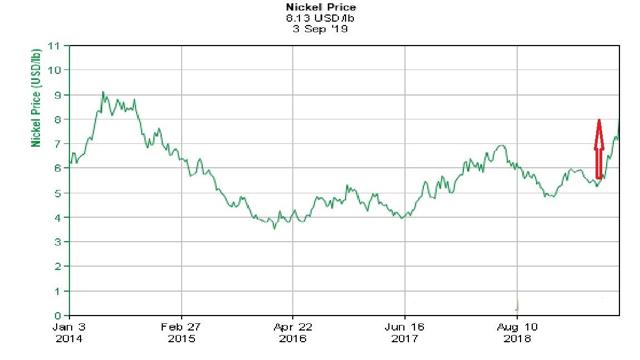
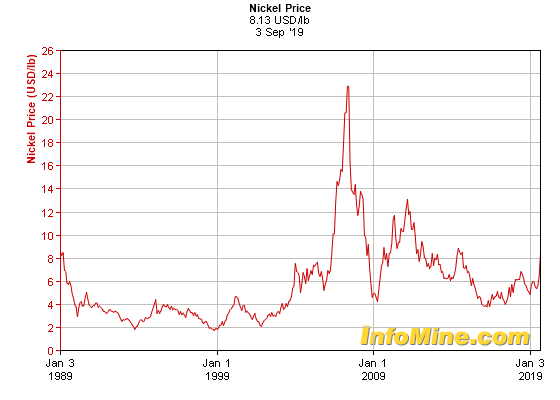
The reasons are both simple and complicated. The price of nickel doubled in two years, from US$4 per lb. in August 2017 to US$8 per lb. a few weeks ago. The reasons:

· Robust demand. Nickel is primarily used to make stainless steel. And despite slowing growth, stainless steel demand keeps marching up.

In the first half of 2019, for instance, Chinese stainless steel production was up 8.5% yearover-year. (As the chart suggests, forecasts predict softening of demand in the current quarter.)

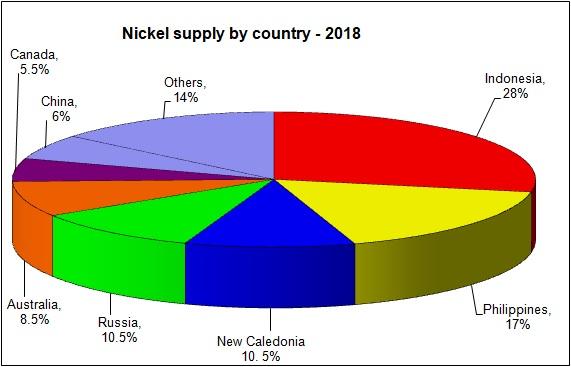
· China makes most of the world’s stainless steel. And China gets the nickel for that steel from its own mines as well as mines in Indonesia and the Philippines, many of which produce a lowgrade, high-impurity ore called nickel pig iron (NPI). NPI production has ballooned over the last decade, enough that as of 2020 the world will get more of its nickel from NPI than from conventional nickel ores. However, this reliance on NPI brings with it a few problems.

· Indonesia will implement a ban on nickel ore exports at the start of 2020. This has been in the works for some time but until a few months ago the ban was not scheduled to take effect until 2022. Indonesia produces roughly ~12% of global supply, so this ban is significant. The idea is to push the development of domestic smelters, which would keep more of the resource upside in country versus exporting raw ore. This is in the works – the country already has 11 nickel smelters and 25 more are planned or under construction – so Indonesian nickel supplies should slide in the near term but recover within about three years. However, the smelters in China that relied on Indonesia’s nickel pig iron (NPI) ore will have to find feed elsewhere; the main candidate is the Philippines, where ore is generally lower grade. The only other option is to upgrade to processing Class I ores. Either move would increase costs overall, which supports a higher nickel price.

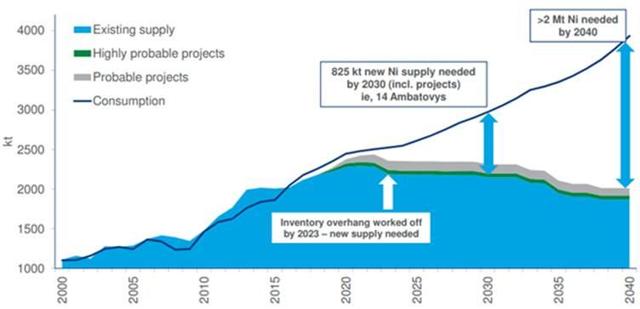
· Batteries. Eighty percent of the world’s nickel goes into stainless steel, so steel certainly drives the market. But many of the batteries that power laptops, electric vehicles, phones, and even power grids require nickel. This has transformed nickel from a one trick pony to a two trick market – and if electric cars take off then nickel’s battery market will take off right alongside. Right now batteries consume 5% of global nickel but demand is rising rapidly and is expected to reach 8% by 2020. Vice President of market analysis and economics for BHP, Dr Huw McKay, says he sees a future where batteries and stainless steel become “equally important” nickel consumers. Global nickel demand currently sits around 2 million tonnes per annum; it is expected to grow to 6 million tonnes per annum by 2035 with batteries accounting for almost half of demand growth.

· In addition, batteries cannot use nickel from NPI, as impurities are too high, so the battery factor has divided the nickel market into two parts – high purity Class I nickel and lower purity Class II. All of this has two important effects: it is bringing energy metal investors into the nickel space and it is underlining that NPI, which has been the dominant source of nickel growth for the last 10-plus years, will not solve the nickel supply gap going forward.

· To address that second point and boost production of Class I nickel, China is developing several mines tapping into nickel laterite deposits. Nickel laterite is easy to mine but very difficult to process, requiring high pressure acid leaching (HPAL). Most analysts are highly skeptical that China’s planned HPAL facilities will come online anywhere near their projected timelines or budgets, as these facilities are notoriously difficult and expensive.

· Because NPI has ballooned so in the last decade, explorers and developers have not looked for conventional nickel deposits. There is a true lack of development-stage nickel projects with conventional sulphide deposits that could be built to fill supply gaps.

· Current mine-specific supply issues. The biggest producer of NPI in the Philippines just ran out of ore. The Ramu project in Papua New Guinea is temporarily suspended, which removes 35,000 tonnes of annual nickel supply.

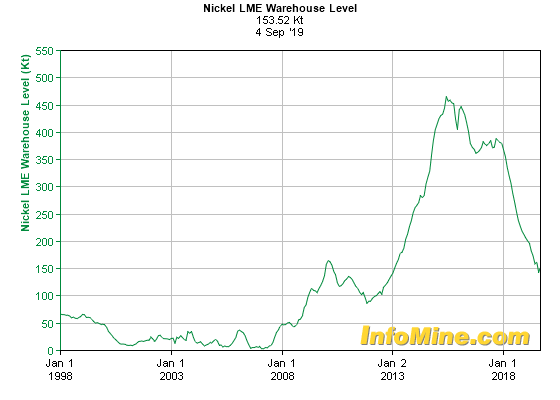
· Stockpiles are falling – and fast. Nickel stockpiles have been declining for five years.

This is what happens when a market is persistently undersupplied. But as you can see, the decline accelerated in the last two years…and stockpiles dropped off a cliff a few weeks ago.

The cliff is likely the result of panic buying and/or stockpiling ahead of the Indonesian ban.

I told you it was complicated!

Complicated is normal for nickel, which has a long track record of extreme price moves. In 2008 a supply shortage drove the price as high as US$22 per lb. before steel mills found substitutes, 7 including manganese, and within 18 months the price was back at US$4.50 per lb. (The Great Financial Crisis likely exacerbated the price decline.)

The Bear Case

The key question on this side is: to what extent is speculation driving nickel?

If speculators are pushing the price up, entering the space now is risky because (1) speculative tides turn fast and (2) that turn would likely transpire in the next 6 to 9 months. Indonesia’s ban comes into effect in January 1 so over the next six months the impacts start to play out.

It’s clear that stockpile drawdowns are at least in part because smelters and speculators have been stockpiling metal privately. That metal will be used or sold to ease any nickel price jumps.

If increased physical metal availability coincides with the absence of speculative upside pressure…nickel could turn down fast.

On top of all that, there are reasons to believe (1) stainless steel demand will weaken to end this year, (2) EV demand is taking longer to ramp than expected, (3) scrap usage is increasing, and (4) rising backwardation alongside falling physical premiums is a sign that actual demand is lower than perceived.

The fourth point above needs some explaining. In a tight market, limited stockpiles lead to backwardation – people paying more for metal today than in the future. Backwardation should only happen when the current physical market is very tight. If that’s the case, there should also be high physical premiums, which are extra amounts paid for actual metal now (rather than paper metal).

What weird about nickel is that premiums are down sharply, from $200 per tonne a few months ago to negative $50 per tonne today. It’s the first-time premiums have ever gone negative in China and something that is very rare across the metals complex. European nickel briquette premiums are also down 80% in recent months.

The dark blue line below shows physical premiums. The light blue line shows the difference between current and three-month nickel prices; a positive Cash-3M is backwardation.

<

This suggests:

· The physical market is not that tight

· Speculation in the paper market is driving the price

· Speculation is not simply investors; nickel users and producers are also playing games (stockpiling) to boost the price. When they stop, the price will lose ground rapidly.

The Bottom Line

Nickel may or may not continue its bull run from here. The fact the physical premiums are so low when prices have gained so much and the paper market is in backwardation is definitely concerning, enough that I am not ready to enter the space right now. The fact that nickel spot price recently stepped back almost 10% reinforces my outlook.

However, in the medium and long term this is a market that has good opportunity. Stainless steel demand growth is reliable. The battery space will need more and more Class I nickel with each year. The pipeline of new projects is very limited, especially if you (like me) see China struggling with its nickel laterite output mines and HPAL facilities.

I might be wrong and my hesitation on entering now may mean missing out on near term upside, but such decisions are common in this sector!

Source: https://www.kitco.com/commentaries/2019-10-28/A-nickel-for-your-thoughts.html

ThreeD Capital Inc. $IDK.ca – Twitter’s $TWTR #Dorsey puts another bet on #crypto #bitcoin #ether $HIVE.ca $BLOC.ca $CODE.ca

Posted by AGORACOM-JC at 10:29 AM on Wednesday, October 30th, 2019

SPONSOR: ThreeD Capital Inc. (IDK:CSE) Led by legendary financier, Sheldon Inwentash, ThreeD is a Canadian-based venture capital firm that only invests in best of breed small-cap companies which are both defensible and mass scalable. More than just lip service, Inwentash has financed many of Canada’s biggest small-cap exits. Click Here For More Information.

IDK: CSE

Twitter’s Dorsey puts another bet on crypto

  • Bitcoin proponent Twitter CEO Jack Dorsey continues to bet on crypto by investing in CoinList, a two-year-old venture that helps startups raise money through token sales.
  • The company says it connects investors with thoroughly vetted blockchain-related companies in compliance with crypto regulations.
  • CoinList has supported more than $800M of token offerings since August 2017.
  • Dorsey participated in a recent $10M funding round, the Wall Street Journal reports. The new capital will help with its plans to offer new services including a new exchange, CoinList Trade, and a crypto wallet.

Source: https://seekingalpha.com/news/3511491-twitters-dorsey-puts-another-bet-crypto

CLIENT FEATURE: Affinity Metals $AAF.ca Grab Samples Exceed Measurable Limits Prior to Drill Program $SII.ca $TUD.ca $GTT.ca $AMK.ca $OSK.ca

Posted by AGORACOM at 9:40 AM on Wednesday, October 30th, 2019


  • Sampled 4,410g/t Silver, 5.68g/t Gold, 26.4% Zinc, 2.27% Copper, and >20% Lead.
  • 22 samples collected from the Black Jacket and Allco areas of the Regal property located approximately 35 km northeast of Revelstoke, BC.
  • The majority contained bonanza grade silver, zinc, and lead with many samples reaching assay over-limits. 
  • Further assaying of over-limits has been initiated, results will be reported once received.
  • Drill Program to be initiated upon final sample results.
https://s3.amazonaws.com/s3.agoracom.com/public/photos/images/5789/thumb/Regal_Float.jpg

Property History & Background

The property hosts numerous mineral occurrences including the following past-producing mines:

Snowflake and Regal Silver (Stannex/Woolsey) Mines

The Snowflake and Regal Silver mines were two former producing mines that operated intermittently during the period 1936-1953. The last significant work on the property took place from 1967-1970, when Stannex Minerals completed 2,450 meters of underground development work and a feasibility study, but did not restart mining operations. In 1982, reported reserves were 590,703 tonnes grading 71.6 grams per tonne silver, 2.66 per cent lead, 1.26 per cent zinc, 1.1 per cent copper, 0.13 per cent tin and 0.015 per cent tungsten (Minfile No. 082N 004 – Prospectus, Gunsteel Resources Inc., April 29, 1986). It should be noted that the above resource and grades, although believed to be reliable, were prepared prior to the adoption of NI43-101 and are not compliant with current standards set out therein for calculating mineral resources or reserves. 

ALLCO Silver Mine

The Allco Silver Mine is situated 6.35 Kilometers northwest of the above described Snowflake/Regal Mine(s) and is also part of the Affinity claim group.

The Allco Silver Mine operated from 1936-1937 and produced 213 tonnes of concentrates containing 11 troy ounces of gold (1.55 g/t), 11,211 troy ounces of silver (1,637 g/t) and 173,159 lbs of lead (36.9%). 

Airborne Geophysics to Guide Future Exploration

An extensive airborne geophysics survey conducted by Geotech Ltd of Aurora, Ontario, for Northaven Resources Corp. in 2011, identified four well defined high potential linear targets correlating with the same structural orientation as the Allco, Snowflake and Regal Silver mines. Northaven also reported that the mineralogy and structural orientation of the Allco, Snowflake and Regal Silver appeared to be similar to that of Huakan’s J&L gold project located to the north, and on a similar geophysical trend line. The J&L is reportedly now one of western Canada’s largest undeveloped gold mineral resources.

After completing the airborne survey, Northaven failed in financing their company and conducting further exploration on the property and subsequently forfeited the claims without any of the follow up work ever being completed. Affinity Metals is in the fortunate position of benefitting from this significant and promising geophysics data and associated targets.

The aforementioned Northaven airborne geophysical survey conducted at a cost of $319,458.95 in August of 2011 is described in The BC Ministry of Energy, Mines and Petroleum Resources Assessment Report #33054. The results of the survey are competently explained and illustrated by professionals on You Tube at: https://www.youtube.com/watch?v=GX431eBY_t0

FULL DISCLOSURE: Affinity Metals is an advertising client of AGORA Internet Relations Corp

Affinity Hub on Agoracom

New Age Metals $NAM.ca Provides #Lithium Division Update: Drill Permit Issued at Lithium Two Project $LIC.ca $LIX.ca $LI.ca $ELR.ca $ATL.ca

Posted by AGORACOM-JC at 9:00 AM on Wednesday, October 30th, 2019
  • A drill permit has been issued by the Manitoba government for a drill program on the company’s Lithium Two Project.
  • NAM has 100% ownership of eight pegmatite hosted Lithium and Rare Element Projects in the Winnipeg River Pegmatite Field, located in southeast (SE) Manitoba.
  • Exploration in SE Manitoba is focused on Lithium-bearing pegmatites.
  • Archaeological Assessment in progress on Lithium One as part of the drill permit process.
  • The eight projects are strategically situated within the Winnipeg River Pegmatite Field, which hosts the world-class Tanco Pegmatite that has been mined for Tantalum, Cesium and Spodumene (one of the primary Lithium minerals) in varying capacities, since 1969.
  • NAM management is finalizing a plan for a 1,500-metre drill program on Lithium Two.

October 30th, 2019 – Rockport, Canada – New Age Metals Inc. (NAM) (TSX.V: NAM; OTCQB: NMTLF; FSE: P7J) New Age Metals is pleased to announce that a drill permit has been issued to the company’s wholly owned subsidiary, Lithium Canada Development by the Manitoba government for the company’s Lithium Two Project located in the Cat Lake area of southeast (SE) Manitoba.

The Winnipeg River Pegmatite Field

The Winnipeg River-Cat Lake Pegmatite Field in SE Manitoba is host to numerous pegmatite deposits and contains the world-class Tanco Pegmatite. The Tanco pegmatite has been mined since 1969 in varying capacities for spodumene (Li rich mineral), Tantalum and Cesium. The pegmatite field contains at least 10 pegmatite groups and hosts hundreds of pegmatite bodies. Many of the pegmatites are lithium bearing.

The Tanco Mine, which was owned by the Cabot Corporation, was recently sold to Sinomine Rare Metals Resources Co. Ltd. (Sinomine) at a purchase price of $130 million ($US). Sinomine is a joint stock public company based in China, principally engaged in the provision of geological exploration, mining investment and base metal chemical manufacturing. This transaction certainly adds new interest in the region as to the potential of the pegmatite field and lithium and/or rare element potential in the area. This sale should advance the Lithium production potential of the area as Lithium Ore feed may be required in the event that Sinomine commences lithium production.

Lithium Two Project

The Lithium Two Project is located approximately 20 kilometres north of the Tanco Mine and is an active area for Lithium exploration. Several companies are active in the immediate region, exploring for Lithium.

Surface exploration was carried out on the Lithium Two Project during the summer of 2018 (see News Release October 30th, 2018). The exploration work was designed to examine the known surface pegmatites to aid in the determination of drill targets. The field program also focussed on more detailed structural geological mapping and mapping of the westward extent of the Eagle Pegmatite. The Lithium Two Project has several historically known Spodumene bearing pegmatites (see Figure 2).


Click Image To View Full Size

Figure 1: Manitoba Lithium and Rare Element Projects 2019

The Eagle Pegmatite was drilled in 1947 with a historic (non 43-101 compliant) tonnage estimate of 544,460 tonnes with a grade of 1.4% Li2O to the 61-metre level. These historical estimates do not use categories that conform to current CIM Definition Standards on Mineral Resources and Mineral Reserves as outlined in National Instrument 43-101, Standards of Disclosure for Mineral Projects (“NI 43-101”) and have not been redefined to conform to current CIM Definition Standards. A qualified person has not done sufficient work to classify the historical estimates as current mineral resources and the Company is not treating the historical estimates as current mineral resources. Investors are cautioned that the historical estimates do not mean or imply that economic deposits exist on the properties. The Company has not undertaken any independent investigation of the historical estimates or other information contained in this press release nor has it independently analyzed the results of the previous exploration work in order to verify the accuracy of the information. The Company believes that these historical estimates and other information contained in this news release are relevant to continuing exploration on the properties as it identifies significant mineralization that will be the target of future exploration and development.

The Eagle Pegmatite was historically reported to remain open to depth. The FD5 Pegmatite, located east of the Eagle Pegmatite has never been drilled. Historic assessment reports revealed a Spodumene bearing pegmatite drilled in the late 1940’s, located approximately 500 metres southeast of the Eagle Pegmatite but is not exposed on surface. No assays were provided in the report at the time. This pegmatite, as well as the Eagle and FD5, will be tested during an upcoming recommended drill program.


Click Image To View Full Size

Figure 2: 2018 Lithium Assays at the Lithium Two Project, SE Manitoba

The Eagle Pegmatite has been mapped on surface for over 850 metres and has surface assays of 0.1 to 3.8% Li2O. The FD5 pegmatite had surface assays from 0.1 to 3.3% Li2O. In geological terms, the pegmatites encountered on the Lithium Two Project are LCT Type (Lithium-Cesium-Tantalum) Pegmatites and are in the Albite-Spodumene Subgroup. Spodumene is expressed in the pegmatites as small green blades up to 3 centimetres in length. The Eagle Pegmatite is a west-northwest to west-striking, vertically dipping, lenticular pegmatite dyke intruded into mafic volcanics. The widths of the pegmatite have been measured to be between 2 to 10 metres. The Eagle Pegmatite system appears to be a swarm of closely spaced pegmatite bodies.

Phase 1 Drill Program Planning in Progress

A drill program of 1,500 metres is planned to test three spodumene bearing pegmatite targets. A drill permit has recently been issued by the Manitoba government.

Lithium One Drill Program

Recently, NAM engaged White Spruce Archaeology as part of its Exploration Agreement with the Sagkeeng First Nation to conduct an archaeological assessment on the proposed drill sites for Lithium One as part of the drill permitting process. The assessment was completed in October and the report is pending. A 1,500 metre drill program is planned to test targets on the Silverleaf pegmatite ( News Release Sept 27, 1018) situated in the Lithium One project area.

NAM/AAZ Property Option Update

JV partner Azincourt Energy (AAZ) and NAM are in discussions regarding AAZ’s compliance for its contractual obligations as part of the option agreement with NAM. NAM and AAZ are in continuing talks regarding a revision to the existing option agreement or termination.

OPT-IN LIST

If you have not done so already, we encourage you to sign up on our website (www.newagemetals.com) to receive our updated news.

ABOUT NAM’S PGM DIVISION

NAM’s flagship project is its 100% owned River Valley PGM Project (NAM Website – River Valley Project) in the Sudbury Mining District of Northern Ontario (100 km east of Sudbury, Ontario). Recently the company announced the results of the first PEA (see News Release – June 27th, 2019) completed on the River Valley Project. The PEA has been developed by various independent consultants – P&E Mining Consultants Inc. (P&E) was responsible for the open pit mining, surface infrastructure, tailings facility, and project economics; DRA Americas Inc. (“DRA”) was responsible for all metallurgical test work and processing aspects of the Project; and WSP Canada Inc. (“WSP”) was responsible for the Mineral Resource Estimate. The PEA is a preliminary report but it has demonstrated that there are positive economics for a large-scale mining open pit operation, with 14 years of Palladium and Platinum production.

The Genesis project is a PGM-Cu-Ni property located in the northeastern Chugach Mountains, 75 paved road miles north of the all-season port city of Valdez, Alaska. The project is within 3 km of the all-season paved Richardson Highway and a high capacity electric power line. The project is covered by 4,144 hectares of State of Alaska mining claims owned 100% by New Age Metals. Past exploration has revealed the presence of chromite-associated platinum and palladium mineralization and stratabound Ni-Cu-PGM mineralization within magmatic layers of the Tonsina Ultramafic Complex. Pyrrhotite, pentlandite, and chalcopyrite occur in disseminations and net textured segregations associated with platinum and palladium sulfides. There has been limited exploration over the Genesis project and there has been no past exploration drilling on the project. NAM management is actively seeking an option/joint-venture partner for this road accessible PGM and Multiple Element Project.

QUALIFIED PERSON

The contents contained herein that relate to exploration results or geological aspects is based on information compiled, reviewed or prepared by Carey Galeschuk, P. Geo., a consulting geoscientist for New Age Metals. Mr. Galeschuk is the Qualified Person as defined by National Instrument 43-101 and has reviewed and approved the technical content of this news release.

On behalf of the Board of Directors

Harry Barr”

Harry G. Barr

Chairman and CEO

Neither the TSX Venture Exchange nor its Regulation Services Provider (as that term is defined in the policies of the TSX Venture Exchange) accepts responsibility for the adequacy or accuracy of this release.

Cautionary Note Regarding Forward Looking Statements: This release contains forward-looking statements that involve risks and uncertainties. These statements may differ materially from actual future events or results and are based on current expectations or beliefs. For this purpose, statements of historical fact may be deemed to be forward-looking statements. In addition, forward-looking statements include statements in which the Company uses words such as “continue”, “efforts”, “expect”, “believe”, “anticipate”, “confident”, “intend”, “strategy”, “plan”, “will”, “estimate”, “project”, “goal”, “target”, “prospects”, “optimistic” or similar expressions. These statements by their nature involve risks and uncertainties, and actual results may differ materially depending on a variety of important factors, including, among others, the Company’s ability and continuation of efforts to timely and completely make available adequate current public information, additional or different regulatory and legal requirements and restrictions that may be imposed, and other factors as may be discussed in the documents filed by the Company on SEDAR (www.sedar.com), including the most recent reports that identify important risk factors that could cause actual results to differ from those contained in the forward-looking statements. The Company does not undertake any obligation to review or confirm analysts’ expectations or estimates or to release publicly any revisions to any forward-looking statements to reflect events or circumstances after the date hereof or to reflect the occurrence of unanticipated events. Investors should not place undue reliance on forward-looking statements.

PRIMO Nutraceuticals Inc. $PROM.ca Harvests 13,000 lbs of Dried Bio-mass from Oregon Hemp Farm $CROP.ca $VP.ca NF.ca $MCOA

Posted by AGORACOM-JC at 8:24 AM on Wednesday, October 30th, 2019
  • Company has completed a harvest totaling 13,000 lbs of dried bio-mass of hemp from the Oregon hemp farm.
  • The dried bio-mass hemp is currently being stored at a local drying facility located near Eugene, Oregon.
  • The value for the crop in its current state is estimated to be worth $200,000 – $300,000 USD.

VANCOUVER, British Columbia, Oct. 30, 2019 — PRIMO NUTRACEUTICALS INC. (CSE: PRMO) (OTC: BUGVF) (FSE: 8BV) (DEU: 8BV) (MUN: 8BV) (STU: 8BV) (“Primo” or the “Company”)is pleased to announce that further to the Company news release dated October 1, 2019 the Company has completed a harvest totaling 13,000 lbs of dried bio-mass of hemp from the Oregon hemp farm. The dried bio-mass hemp is currently being stored at a local drying facility located near Eugene, Oregon. The value for the crop in its current state is estimated to be worth $200,000 – $300,000 USD. This will be added to the 28 kilo grams of crude oil currently in inventor from last year’s harvest. 

The completion of the 2019 harvest season is a major milestone for the company and for the hemp farm in Oregon, as this is the first year hemp has been federally legal since the Farm Bill was passed. This year in Oregon alone there are nearly 63,000 acres registered growing hemp compared to the 11,500 acres growing hemp registered in 2018. This is a significant increase in the amount of hemp being grown, which solidifies the Primo strategy of providing drying facilities to the ever growing hemp market in Oregon. Primo plans to have its first drying facility built and in operation by the end of the first quarter of next year.

President, Andy Jagpal Comments:

“I am very proud and excited with the amount of dried hemp that was harvested as it surpassed our expectations by a few thousand pounds. During a time in the cannabis market where companies have spent tens of millions of dollars building out facilities and cultivation infrastructure and have little to show for it, we have two harvests under our belt and product in inventory ready for sale. Together with this year’s harvest and last year’s inventory we estimate our inventory alone to be worth between $400,000 and $500,000 USD.”

VP Sales & Distribution, Andy Dhaliwal Comments:

“The on-hand inventory and quality of the hemp as starting material is a major advantage in the current marketplace. While the revenue opportunities from the harvest are extremely promising, the hemp processing infrastructure supports the expansion of our in-house product lines, and increases our white-label offering to the USA market as well. Both of which are tremendous assets for the company.”

About Primo Nutraceuticals, Inc.

Primo Nutraceuticals Inc. (“Primo” or the “Company”) provides strategic capital to the thriving cannabis cultivation sector through ownership and development of commercial real estate and farm friendly properties. Primo is dedicated to funding the rapid growth in production, processing, retail and branding of cannabis and cannabis related products in Canada and the United States. Primo provides fully built out turnkey facilities equipped with state-of-the-art growing infrastructure to cannabis growers and processors. In addition to the Company’s flagship hemp project in Oregon State and the Greenhouse campus in Washington State, Primo has invested in several brands and is pursuing partnerships with retailers and distribution companies in Canada and the United States. Primo’s management is in the process of building a corporate road map to further vertically integrate the Company, specifically by way of “Primo” branded retail outlets – offering “Thrive,” “Primo,” and a selection of curated partner brands. The Company possesses proprietary formulas for cannabis edibles, topical, and tinctures. Primo is focused on building a strong presence in the hemp industry with the objective of extracting and selling cannabinoids (CBD) products in both Canada and the United States.

On behalf of the Board of Directors
PRIMO NUTRACEUTICALS INC.

Andy Jagpal, President and Director

To learn more about what this news means to the shareholders visit https://marketnewsfirst.com/primo-nutraceuticals, as well as on the company’s site.

For further information, please contact Zoltan, IR Representative at: 604-722-0305 [email protected]. Or toll free at 1-877-517-7816.

http://primoceuticals.com/
https://twitter.com/prmonutra
www.thriveCBD.org

FORWARD LOOKING STATEMENTS: This news release contains certain forward-looking statements within the meaning of Canadian securities laws. Forward-looking statements are based on the expectations and opinions of the Company’s management on the date the statements are made. The assumptions used in the preparation of such statements, although considered reasonable at the time of preparation, may prove to be imprecise and, as such, undue reliance should not be placed on forward-looking statements. The Company expressly disclaims any intention or obligation to update or revise any forward-looking statements whether as a result of new information, future events or otherwise.

No regulatory authority has approved or disapproved the information contained in this news release.

A photo accompanying this announcement is available at https://www.globenewswire.com/NewsRoom/AttachmentNg/ddc63988-72ec-4630-a25d-5d418ba2ea1b

Gratomic $GRAT.ca -Surface Modified Graphenes Tires Outperform Globally Recognised Premium Tire Brands $SRG.ca $NGC.ca $LLG.ca $GPH.ca $NOU.ca

Posted by AGORACOM at 8:50 AM on Tuesday, October 29th, 2019

TORONTO, Oct. 29, 2019 /PRNewswire/ — Gratomic Inc. (“Gratomic” or the “Company”) (GRAT:TSXV) (CB81:FRA; WKN:A143MR) a vertically integrated graphite to graphenes, advanced materials development company announces the receipt of positive results from extensive testing of its graphene enhanced tires, versus globally recognized, premium brand tires. The Company believes these results represent a breakthrough in tire technology that warrants deployment into the global tire market.

Outperformance Categories: Rolling resistance, Braking/grip on wet and ice roads, and Abrasion resistance

THE TESTING PROGRAM

The 18 month development program included a 6-month terrain test in which graphenes enhanced tires (“Gratomic Tires”) and premium tires from a globally recognized ‘household name’ brand (“Brand Tires”) were fitted to high mileage, commercial light vehicles, which primarily travelled on A and B roads within the UK. Performance of the tires was data logged throughout the entire test period.

THE RESULTS

The results of the road test concluded the Gratomic Tires, enhanced with surface engineered graphenes, produced a greater than 30% increase in wear resistance over the competing Brand Tires, equating to an additional +30% mileage before the tire was needed to be replaced.

Furthermore, the results of testing carried out by industry experts employing industry standard dynamic mechanical analysis (DMA) showed a significant improvement in rolling resistance, which indicated a greater than 30% improvement in fuel economy (increased MPG).

Finally, the results showed a greater than a 40% improvement in both wet and ice braking.

“The initial 6-month competitive terrain testing program has demonstrated the economic benefits and advantages of including Gratomic’s graphite surface modified graphene fillers within tire elastomers,” said Ian Walters, COO Director of Perpetuus Carbon Technology (“Perpetuus”). Mr. Walters went on to say, “The Gratomic tires provided significantly improved performance when compared not only to mass market tires but also premium brand tires. I can confirm that Perpetuus scientists supervised all independent third-party industry expert performance analysis and also the data logged road testing exercise.”

MARKET IMPLICATIONS

“We see these results as a breakthrough in tire technology and safety. We look forward to deploying nano-engineered graphenes enhanced passenger and light commercial tires into the global tire market,” said Gratomic Chairman and Co-CEO, Sheldon Inwentash.

Mr. Ricketts, proprietor of the test vehicles stated, “We have a fleet of vans delivering parts, 6 days a week, in all weathers and on all types of roads. The data collected during the exercise surpassed our expectations and has shown that Gratomic tires outlasted the premier brand tires. Potentially, we could make a 40% saving on our annual tire budget, and that’s a lot of money.” Mr. Rickard is the proprietor of a fleet of light commercial vehicles who collaborated in the vehicle performance testing.

Further to the Company’s press release of January 16, 2019, Perpetuus and Gratomic have a collaboration agreement pursuant to which Gratomic provides graphite from its Aukam project for processing by Perpetuus at its dedicated facility, using its patented plasma process, to produce Hybrid Graphenes (less than 10 layers) to be included in elastomers for tire construction for the development of Graphene Ultra Fuel Efficient Tires (GUET).

About Gratomic Inc.

Gratomic is an advanced materials company focused on mine to market commercialization of graphite products most notably high value graphene based components for a range of mass market products. We have a JV collaborating with Perpetuus Carbon Technology, a leading European manufacturer of graphenes, to use Aukam graphite to manufacture graphene products for commercialization on an industrial scale. The Company is listed on the TSX Venture Exchange under the symbol GRAT.

Labrador Gold $LAB.ca – Gold Sector Poised For A Big Move As Fed Week Looms Large $RIO.ca $WHM.ca $SIC.ca $NXS.ca

Posted by AGORACOM at 7:42 PM on Monday, October 28th, 2019

SPONSOR: Labrador Gold – Two successful gold explorers lead the way in the Labrador gold rush targeting the under-explored gold potential of the province. Exploration has already outlined district scale gold on two projects, including over a 40km strike length of the Florence Lake greenstone belt, one of two greenstone belts covered by the Hopedale Project. Click Here for More Info

Gold miners are facing a key test of resistance as we enter a week that has at least two potentially major market moving events (FOMC on Wednesday afternoon, and non-farm payrolls Friday morning). The gold miners, as represented by the GDX exchange-traded fund, are attempting to break free from a range defined by roughly $26.20 on the downside and $28.30 on the upside:

GDX (Daily)

The gold miners experienced a bounce last week (+2.3%) after support near $26.20 held for the 2nd time in as many weeks. Historic seasonal trends indicate that the gold miners should have the wind at their back beginning next week and the tailwinds should persist through the end of the year (over the last 20 years the HUI Gold Bugs Index has averaged a 4.7% gain from the end of October through the end of December). 

In the above chart the GDX is on the verge of experiencing a bullish resolution (MACD bull cross and bullish RSI crossover above median line) if price can close above the red line on a weekly closing basis. A failure at the red resistance line next week could send the GDX tumbling back into the orange wedge for another test of support at the blue line. Bulls should not want to see support tested again so soon, and this is why next week is set up to be a critical test for the goldies. 

The Fed is expected to cut rates a quarter point on Wednesday afternoon, however, it will be the Chairman’s press conference at 2:30pm EST and any comments on QE or hints of further rate cuts that will hold the market’s focus. Friday morning’s US non-farm payrolls report also looms large with expectations lowered to a paltry 73,000 jobs created in October. 

Turning to the weekly chart of the GDX we can see the lowest weekly close since the correction began in early September has been $26.64:

GDX (Weekly)

Friday’s high tested the downtrend drawn off the tops since the early September high, which sets the stage for a potential breakout above this downtrend next week.  Sentiment is in neutral territory on the gold miners and seasonality will begin to offer tailwinds beginning next week. The stage is set for an upside breakout, however, in the event of another failure at resistance the stage is also set for a breakdown through support that has been tested multiple times in recent weeks. 

In the words, a big move is coming in the gold mining sector and it could happen as early as next week. 

Source: https://ceo.ca/@goldfinger/gold-sector-poised-for-a-big-move-as-fed-week-looms-large

Advance Gold $AAX.ca – Gold Eyes Further Gains as Rock-Bottom Rates Tempt Investors $SIL.ca $FA.ca $ANG.jo $ABX.ca $NGT.ca $MGG.ca $TECK.ca

Posted by AGORACOM at 5:56 PM on Monday, October 28th, 2019

SPONSOR: Advance Gold AAX.v – Advance Gold controls 100% interest in the Tabasquena Silver Mine in Zacatecas, Mexico. A cluster of 30 Epithermal veins have been discovered, with recent emphasis on exploring a large anomaly to drill. Advance also owns 15% of the Kakamega JV attached to Barrick Takeover Offer for Acacia Mining. Click Here For More Info

This image has an empty alt attribute; its file name is AAX-square-Logo.png

BENGALURU — Fragile global growth and the prospect of interest rates staying lower for longer, boosting gold’s appeal for nervous investors, are behind upward revisions to price forecasts for the yellow metal, a Reuters survey showed.

Spot gold will average $1,402 an ounce in 2019 and $1,537 an ounce next year, according to the median forecasts returned by the poll of 40 analysts and traders in mid-October.

Those numbers are sharply higher than predictions of $1,351 for 2019 and $1,433 for 2020 returned by a similar poll conducted three months ago. Gold has averaged around $1,375 an ounce so far this year.

Gold – traditionally seen as a safe place to invest in uncertain times – hit a more than six-year high of $1,557 in September and with gains of about 17% so far is set for its biggest yearly gain since 2010.

“Rate cuts by major central banks, a deteriorating global economic outlook and elevated geopolitical tensions are the key tailwinds for gold prices,” ANZ analyst Daniel Hynes said.

A U.S.-China trade war has sent a shiver through the global economy.

The U.S. Federal Reserve has meanwhile cut interest rates twice this year to stimulate growth, and other major central banks have followed suit.

Lower rates reduce the opportunity cost of holding non-yielding bullion, making it more attractive to investors.

Central banks have also steadily increased their gold reserves and private cash has flooded into gold-backed exchange traded funds (ETFs), boosting physical demand.

“If central banks and exchange-traded funds keep on buying and the Fed continues with lowering interest rates, we will talk about prices of $1,600 in the near future,” said LBBW analyst Frank Schallenberger.

For silver, poll respondents forecast average prices of $16.24 an ounce this year and $18.13 in 2020, up from predictions of $15.50 and $16.85 three months ago. In the year to date it has averaged $15.97 an ounce.

Silver will remain cheap relative to gold, with the gold/silver ratio averaging 86 in 2019 and 85 in 2020, not far from a more than two-decade high just above 93 reached in July.

Silver in September breached the $19 mark for the first time since 2016. It tends to move with gold, but around half of consumption comes from industry, and weaker economic growth would drag on demand and, potentially, prices.

Gold and silver prices have dipped in recent weeks as signs of progress in trade talks revived appetite for riskier assets. If reached, a trade deal could boost economic growth and hurt gold and silver, said ETF Securities analyst Nitesh Shah.

Speculative bets on price rises for gold on the COMEX exchange have eased slightly from record highs in September, while those for silver have also dipped from a near two-year peak in July. .

High prices have also dampened demand in Asia, the biggest gold-consuming region.

“The main negative factors (for gold) are the speculative overhang in the futures market and the lackluster demand from physical buyers in India, to some extent in China and amongst Western coin and bar purchasers,” said Ross Norman, an independent analyst.

“Gold is due a period of consolidation and perhaps even a temporary correction,” he said.

Source: Reporting by Brijesh Patel in Bengaluru; editing by Arpan Varghese, Peter Hobson and)