Posted by AGORACOM
at 10:53 AM on Friday, February 1st, 2019
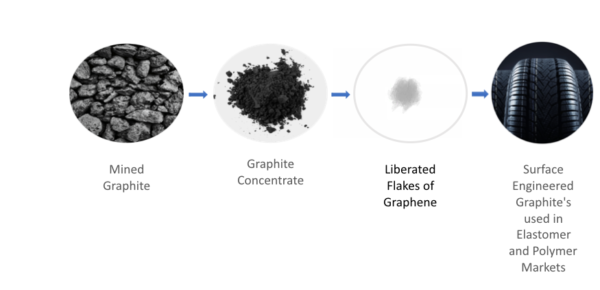
Launching Graphene Ultra Fuel Efficient Tires (GUET) toward the end of summer 2019
Gratomic certification and terrain testing targeted for completion in Q3, 2019
Gratomic anticipates GUET to be the first range of Graphene-enabled ultra fuel-efficient tires
Gratomic will now target mass market sales demand via Graphene Ultra Fuel Efficient Tires (GUET)
About Gratomic Inc.
Gratomic
is an advanced material company focused on mine to market
commercialization of graphite products, most notably high-value
graphene-based components for a range of mass market products.
FULL DISCLOSURE: Gratomic is an advertising client of AGORA Internet Relations Corp.
Tags: #Carbon, #graphite, #GRAT, #Gratomic, #Namibia, graphene Posted in Gratomic | Comments Off on CLIENT FEATURE: $GRAT Gratomic Making 1st Step toward Commercialization with Launch of Graphene Ultra Efficient Tires $DNI.ca $LLG.ca
Posted by AGORACOM-JC
at 9:54 AM on Friday, February 1st, 2019
Advises shareholders that it has received confirmation from the TSX Venture Exchange that effective at the opening on Monday, February 4, 2019,
the common shares of Beauce Gold Fields Inc. will commence trading on TSX Venture Exchange under the symbol BGF.
MONTREAL, Feb. 01, 2019 — HPQ Silicon Resources Inc. (HPQ) (TSX VENTURE:HPQ)(FRANKFURT:UGE)(OTC PINK:URAGF) is pleased to advise shareholders that it has received confirmation from the TSX Venture Exchange that effective at the opening on Monday, February 4, 2019, the common shares of Beauce Gold Fields Inc. (the “Company†or “BGFâ€) will commence trading on TSX Venture Exchange (the “Exchangeâ€) under the symbol BGF.
BGF was incorporated under the Canada Business Corporation Act on
August 1, 2016, primarily for the purpose of carrying out a spinout by
way of a plan of arrangement (the “Arrangementâ€) with HPQ Silicon
Resources Inc. (TSXV: HPQ) (“HPQâ€), of which the certificate of
arrangement was issued on November 23, 2018.
Pursuant to the Arrangement, HPQ completed the disposition of its
gold assets (the “Transferred Assetsâ€) to BGFI in consideration of the
issuance of an aggregate of 13,350,000 BGFI common shares (the “BGFI
Sharesâ€), of which 10,680,000 BGFI Shares were distributed to the
shareholders of HPQ. HPQ distribution notice was accepted pursuant to
the Exchange bulletin dated December 18, 2018.
On the day of listing, HPQ will own 2,870,133 shares of BGF, or 15.3% of the outstanding float of BGF.
Mr. Bernard Tourillon, President and CEO of HPQ Silicon Resources Inc stated, “The listing of Beauce Gold Fields on the TSX Venture Exchange is the final step in HPQ plan of arrangement spin out, and we are now happy to have completed this milestone that provided
HPQ shareholders shares in BGF, a Company created to showcase the
Beauce Gold project, a fantastic but overlooked historical placer gold
district. The Beauce is Canada’s last underexplored historical placer
mining camp. It’s similar to the White Gold projects in the Yukon or the
Cariboo district in B.C., that were both placer gold mining camps as
well, but recently had major gold discoveries as placer to hard rock
exploration projects.â€
For further information, please refer to the news releases of
HPQ-Silicon dated March 11, 2016, May 4, 2016, Sept. 7, 2016, Sept. 16,
2016, March 31, 2017, Feb. 8, 2018, June 13, 2018, Aug. 17, 2018, Oct.
4, 2018, Oct. 11, 2018, Dec. 12, 2018, Dec. 17, 2018, and Dec. 18, 2018.
This News Release is available on the company’s CEO Verified Discussion Forum, a moderated social media platform that enables civilized discussion and Q&A between Management and Shareholders.
About HPQ Silicon
HPQ Silicon Resources Inc. is a TSX-V listed resource company focuses on becoming a vertically integrated and diversified High Purity, Solar Grade Silicon Metal (SoG Si) producer and a manufacturer of multi and monocrystalline solar cells of the P and N types, required for production of high performance photovoltaic conversion.
HPQ’s goal is to develop, in collaboration with industry leaders,
PyroGenesis (TSX-V: PYR) and Apollon Solar, that are experts in their
fields of interest, the innovative PUREVAPTM “Quartz Reduction Reactors
(QRR)â€, a truly 2.0 Carbothermic process (patent pending), which will
permit the transformation and purification of quartz (SiO2) into high
purity silicon metal (Si) in one step and reduce by a factor of at least
two-thirds (2/3) the costs associated with the transformation of quartz
(SiO2) into SoG Si. The pilot plant equipment that will validate the
commercial potential of the process is on schedule to start mid-2019.
Disclaimers:
This press release contains certain forward-looking statements,
including, without limitation, statements containing the words “may”,
“plan”, “will”, “estimate”, “continue”, “anticipate”, “intend”,
“expect”, “in the process” and other similar expressions which
constitute “forward-looking information” within the meaning of
applicable securities laws. Forward-looking statements reflect the
Company’s current expectation and assumptions, and are subject to a
number of risks and uncertainties that could cause actual results to
differ materially from those anticipated. These forward-looking
statements involve risks and uncertainties including, but not limited
to, our expectations regarding the acceptance of our products by the
market, our strategy to develop new products and enhance the
capabilities of existing products, our strategy with respect to research
and development, the impact of competitive products and pricing, new
product development, and uncertainties related to the regulatory
approval process. Such statements reflect the current views of the
Company with respect to future events and are subject to certain risks
and uncertainties and other risks detailed from time-to-time in the
Company’s on-going filings with the securities regulatory authorities,
which filings can be found at www.sedar.com. Actual results, events, and
performance may differ materially. Readers are cautioned not to place
undue reliance on these forward-looking statements. The Company
undertakes no obligation to publicly update or revise any
forward-looking statements either as a result of new information, future
events or otherwise, except as required by applicable securities laws.
Neither the TSX Venture Exchange nor its Regulation Services
Provider (as that term is defined in the policies of the TSX Venture
Exchange) accepts responsibility for the adequacy or accuracy of this
release.
For further information, contact
Bernard J. Tourillon, Chairman and CEO Tel (514) 907-1011 Patrick Levasseur, President and COO Tel: (514) 262-9239 www.HPQSilicon.com
Shares outstanding: 222,284,053
Tags: Beauce, gold, Gold mining, stocks Posted in HPQ-Silicon Resources Inc. | Comments Off on $HPQ.ca Completes Beauce Gold Fields $BGF.c Plan of Arrangement Spin Out; BGF Shares to Start Trading on the TSX Venture Exchange on February 4, 2019
Posted by AGORACOM
at 9:17 AM on Friday, February 1st, 2019
JV partner Tudor Gold announced the designation of a new gold zone at Treaty Creek which has been named “Goldstorm”
The mineralization encountered to the northeast of Copper Belle has different characteristics, configuration and geometry.
“Goldstorm is a much larger system than Copper Belle at 300m wide and extends vertically for over 700m
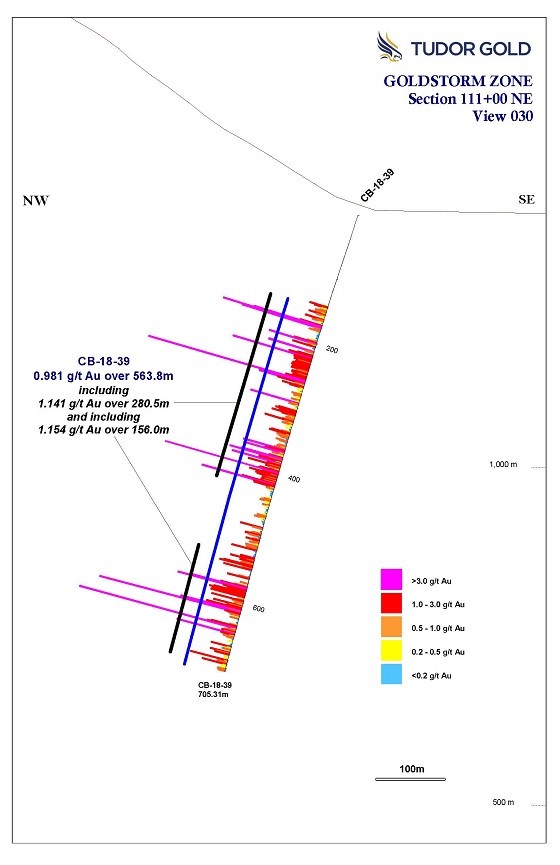
Gold appears to be continuing towards the northeast and southeast and clearly becomes stronger in the northernmost hole, CB18-39 which returned 563.8 meters of 0.981 grams per tonne gold
Cardston, Alberta–(Newsfile Corp. – February 1, 2019) – American Creek Resources Ltd.
(TSXV: AMK) (“the Corporation”) today reports that JV partner Tudor
Gold announced the designation of a new gold zone at Treaty Creek which
has been named “Goldstorm”. It was previously thought that gold
mineralization identified by drilling northeast of the Copper Belle Zone
was simply a northeast extension of that same zone, but after
evaluating drill hole data from holes completed in 2016, 2017 and 2018,
it appears that the mineralization encountered to the northeast of
Copper Belle has different characteristics, configuration and geometry.
While it is unclear whether the zones are genetically linked, these
zones are physically separate. The surface drill hole location map at
the end of this news release shows the location of both gold zones.
Tudor
Gold Exploration Manager, Ken Konkin explains: “Goldstorm is a much
larger system than Copper Belle, it is at least 300m wide and extends
vertically for over 700m. The zone has been traced for approximately 500
meters along a northeastern azimuth. Gold mineralization appears to be
continuing towards the northeast and southeast and clearly becomes
stronger in the northernmost hole, CB18-39 which returned 563.8 meters
of 0.981 grams per tonne gold. The upper portion of CB18-39 averaged
1.141 gpt gold over 280.5 meters and a lower zone in the same hole
averaged 1.154 grams per tonne gold over 156 meters. This hole bottomed
in mineralization and we will look at the option of re-entering the hole
this year in attempts to extend the mineralization deeper. But the
primary focus will be to extend the Goldstorm Zone along strike to the
northeast and to the southeast as well.
Over the coming months,
we hope to gain a better understanding of aspects that control gold
mineralization. Re-examination of drill hole information has revealed
the presence of a northwest dipping thrust fault that appears to define
the upper contact of the Goldstorm system. The relationship of this
fault to the formation of the mineral zone is an aspect of further
study, as are the various styles of sulphide mineralization,
silicification and alteration. Compilation and evaluation of this data
will help in planning for the drilling campaign to be undertaken in the
up-coming exploration season.”
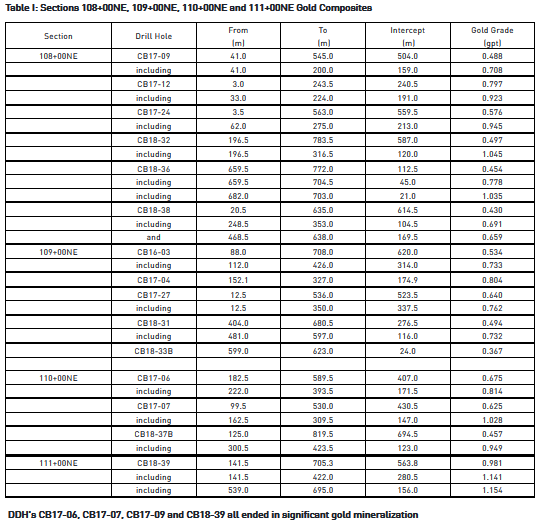
The following table gives gold
composite values over broad intervals from four drill hole sections that
cut the Goldstorm Zone, incorporating results from diamond drill holes
completed during 2016, 2017 and 2018. Low-grade gold mineralization
occurs as a broad envelope which contains a horizon of stronger gold
mineralization in the upper portion of the system. Furthermore, the
drill hole sections demonstrate what appears to be the presence of a
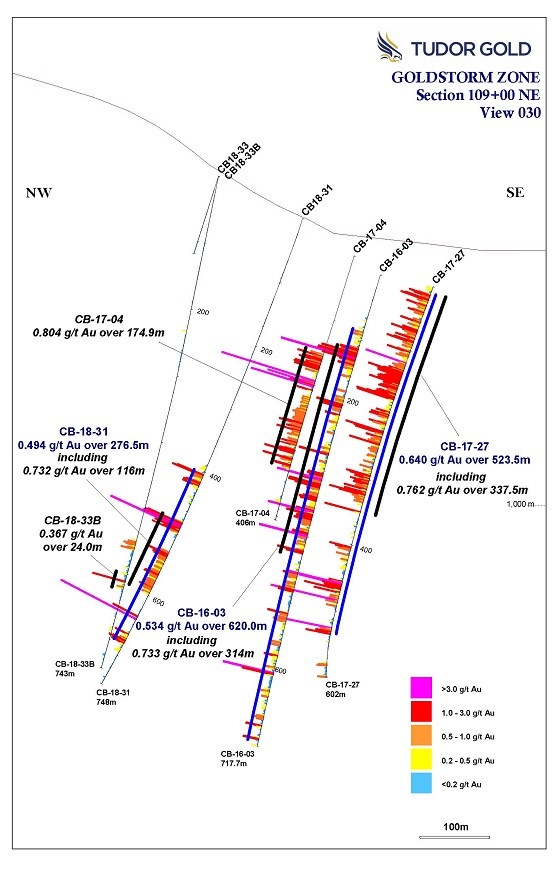
second, lower gold horizon. The corresponding sections 108+00 NE, 109+00
NE, 110+00 NE and 111+00 NE are displayed at the end of this news
release.
Table I: Sections 108+00NE, 109+00NE, 110+00NE and 111+00NE Gold Composites
* All assay values are uncut and intervals reflect drilled intercept lengths. * True widths of the mineralization have not been determined.
QA/QC
In
2016 and 2017, drill core samples were prepared and analyzed at
Activation Laboratories Ltd. in Kamloops, BC. In 2018, drill core
samples were prepared ALS Global’s Preparation Laboratory in Terrace, BC
and assayed at ALS Global’s Geochemical Laboratory in North Vancouver,
BC. Analytical accuracy and precision are monitored by the submission of
blanks, certified standards and duplicate samples inserted at regular
intervals into the sample stream by Tudor Gold personnel. Activation
Laboratories and ALS Global Laboratories quality systems comply with the
requirements for the International Standards ISO 17025: 2005.
QP
The
Qualified Person for this new release for the purposes of National
Instrument 43-101 is the Company’s Exploration Manager, Ken Konkin,
P.Geo. He has read and approved the scientific and technical information
that forms the basis for the disclosure contained in this news release.
Treaty Creek Joint Venture
The
Treaty Creek Project is a joint venture between Tudor Gold, Teuton
Resources Corp., and American Creek. Tudor is the operator and holds a
60% interest with both American Creek and Teuton each holding respective
20% carried interests in the property (fully carried until a production
notice is given).
For more information about Treaty Creek click here.
About American Creek
American
Creek is a mineral exploration company with a strong portfolio of gold
and silver properties in British Columbia. Three of those properties are
located in the prolific “Golden Triangle”; the Treaty Creek and
Electrum joint venture projects with Tudor Gold/Walter Storm as well as
the 100% owned past producing Dunwell Mine.
The Corporation recently completed a preliminary exploration program, including 2,000 meters of drilling, on its 100% owned Gold Hill project located in the Wild Horse River watershed of SE British Columbia. Assay results are pending.
The
Corporation also holds the Austruck-Bonanza, Ample Goldmax, Silver
Side, and Glitter King properties located in other prospective areas of
the province.
For further information please contact Kelvin Burton at: Phone: 403 752-4040 or Email: [email protected]. Information relating to the Corporation is available on its website at www.americancreek.com
Neither
the TSX Venture Exchange nor its Regulation Services Provider (as that
term is defined in the policies of the TSX Venture Exchange) accepts
responsibility for the adequacy or accuracy of this release.
Cautionary Statements regarding Forward-Looking Information
Certain
statements contained in this press release constitute forward-looking
information. These statements relate to future events or future
performance. The use of any of the words “could”, “intend”, “expect”,
“believe”, “will”, “projected”, “estimated” and similar expressions and
statements relating to matters that are not historical facts are
intended to identify forward-looking information and are based on the
Corporation’s current belief or assumptions as to the outcome and timing
of such future events. Actual future results may differ materially.
All
statements including, without limitation, statements relating to the
Goldstorm Zone as well as any other future plans, objectives or
expectations of the Corporation are forward-looking statements that
involve various risks and uncertainties. There can be no assurance that
such statements will prove to be accurate and actual results and future
events could differ materially from those anticipated in such
statements. Important factors that could cause actual results to differ
materially from the Corporation’s plans or expectations include risks
relating to the actual results of current exploration activities,
fluctuating gold prices, possibility of equipment breakdowns and delays,
exploration cost overruns, availability of capital and financing,
general economic, market or business conditions, regulatory changes,
timeliness of government or regulatory approvals and other risks
detailed herein and from time to time in the filings made by the
Corporation with securities regulators. The Corporation expressly
disclaims any intention or obligation to update or revise any
forward-looking statements whether as a result of new information,
future events or otherwise except as otherwise required by applicable
securities legislation.
Tags: #CopperBelle, #Discovery, #Tudor, gold, Seabridge Posted in American Creek Resources Ltd. | Comments Off on American Creek Reports That JV Partner Tudor Gold Confirmed the Presence of a Substantial New Gold Zone at the Treaty Creek Project, Golden Triangle $AMK.ca $TUE.ca $SEA.ca
Posted by AGORACOM-JC
at 8:07 AM on Friday, February 1st, 2019
Announce the launch of their Learner Assistant which supports learners as they explore and access educators’ content from around the world through a Google Chrome browser extension
betterU has been working to ensure that the learner’s user experience is properly guided, managed and supported for a life-time of learning.
OTTAWA, Ontario, Feb. 01, 2019 — betterU Education Corp. (the “Company” or “betterU”) is pleased to announce the launch of their Learner Assistant which supports learners as they explore and access educators’ content from around the world through a Google Chrome browser extension.
One of the challenges faced while building a solution that provides
access to global educators is the ability for the Company to support a
learner while they are working in different learning environments. With
thousands of global Ed-Tech providers, different learning technologies
and varying student registration processes, a learner may experience
multiple challenges as they move from educator to educator. betterU has
been working to ensure that the learner’s user experience is properly
guided, managed and supported for a life-time of learning. The Learner Assistant is just one of the many solutions betterU has been putting in place to support their vision providing access to Education for All.
With the new Learner Assistant, learners can access learning
content through betterU’s platform and seamlessly transition into a new
learning environment while still being able to:
Search and compare learning content provided through betterU
View purchase history, wish list, recommendations and job opportunities
Receive recommendations of courses based on their profile
Access and view saved jobs and additional employment recommendations
Rate courses immediately after completion
Communicate with betterU at any time through our live chat, email support and call centre
Receive notifications about new courses and exclusive offers
Manage global learning paths, access
study abroad opportunities, apply for internships, view corporate
opportunities, manage skills advancements, complete assessments and much
more (coming 2019)
The betterU Learner Assistant will be made available to each
learner who registers with betterU. The application (app) can also be
downloaded for free from Google’s Chrome Store
In parallel to acquiring content partnerships and building support technologies such as the Learner Assistant,
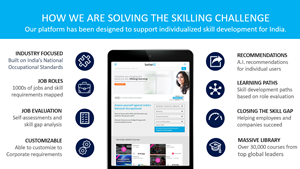
betterU has been working to solve for the skill shortage affecting 100s
of millions of people globally. There are thousands of jobs across
industries such as health care, hospitality, aerospace, telecom and
more. Each job carries multiple knowledge and skill requirements that
many are now realizing they do not meet. betterU’s
education-to-employment ecosystem brings together a collaboration of
global educators whose offerings support the acquisition of skills
required for employment. However, access to a massive global library of
content is only part of the solution. It is important to also integrate
the understanding of the education and skill requirements for every job
profile and connect those requirements and opportunities to learners in
need.
India’s National Occupational Standards (NOS) specify the standard of
performance an individual must achieve when carrying out a function in
the workplace, together with the knowledge and understanding they need
to meet a standard consistently.1 The NOSs were produced by each
industry Sector Skill Council (SSC) and are based on global standards.
Leveraging the efforts of the country, betterU extracted the profiles
which define the educational, professional, technical and generic skill
requirements, as well as other key details and set to work on a skilling
solution.
With use of technology, betterU has mapped all job profiles within
the major industries and created a massive database of course
recommendations which are connected to learning content offered by our
global partners. Through a simple and interactive learner assessment,
betterU can now analyse and recommend learning solutions to an
individual by understanding their job interests and assessing their
education and skill levels. After the assessment is complete, betterU
can guide a learner towards appropriate learning paths to help learners
achieve their goals for employment. The Company has been focused on the
skill shortage problem for years and is pleased to announce it has
completed the first prototype of their Upskill Tool. betterU expects to complete their Upskill Tool over the next quarter and be able to support India’s national skills shortages.
betterU, a global education to employment platform, aims to provide
access to quality education from around the world to foster growth and
opportunity to those who want to better their lives. The company plans
to bridge the prevailing gap in the education and job industry and
enhance the lives of its prospective learners by developing an
integrated education-to-employment ecosystem. betterU’s offerings can be
categorized into several broad functions: to compliment school programs
with flexible KG-12 programs preparing children for next stage of
education, to provide access to global educational opportunities from
leading educators, to foster an exceptional educational environment by
providing befitting skills that lead to a better career, to bridge the
gap between one’s existing education and prospective job requirement by
training them and lastly, to connect the end user to various job
opportunities.
Neither TSX Venture Exchange nor its Regulation Services Provider (as
that term is defined in policies of the TSX Venture Exchange) accepts
responsibility for the adequacy or accuracy of this release.
This press release may contain forward-looking statements and
information, which may involve risks and uncertainties. The results or
events predicted in these statements may differ materially from actual
results or events. Factors that might cause a difference include, but
are not limited to, competitive developments, risks associated with
betterU’s growth, the state of the financial markets, regulatory risks
and other factors. There can be no assurance or guarantees that any
statements of forward-looking information contained in this release will
prove to be accurate. Actual results and future events could differ
materially from those anticipated in such statements. These and all
subsequent written and oral statements containing forward-looking
information are based on the estimates and opinions of management on the
dates they are made and expressly qualified in their entirety by this
notice. Unless otherwise required by applicable securities laws, betterU
disclaims any intention or obligation to update or revise any
forward-looking statements, whether because of new information, future
events or otherwise. Readers should not place undue reliance on any
statements of forward-looking information that speak only as of the date
of this release. Further information on betterU’s public filings,
including their most recent audited consolidated financial statements,
are available at www.sedar.com.
Posted by AGORACOM-JC
at 3:41 PM on Thursday, January 31st, 2019
SPONSOR: Esports Entertainment
$GMBL Esports audience is 350M, growing to 590M, Esports wagering is
projected at $23 BILLION by 2020. The company has launched VIE.gg
esports betting platform and has accelerated affiliate marketing
agreements with 190 Esports teams. Click here for more information
GMBL: OTCQB
The top 10 competitors won more than $8 million in combined prizes in 2018, with 7 of the 10 rankings claimed by women.
The prizes earned by this year’s winners were three times larger than that earned by 2017’s top players.
SAN FRANCISCO, Jan. 31, 2019 –Â Skillz, the worldwide leader in mobile eSports, today announced the top mobile eSports athletes of 2018. The top 10 competitors won more than $8 million in combined prizes, with 7 of the 10 rankings claimed by women. The prizes earned by this year’s winners were three times larger than that earned by 2017’s top players.
Rankings
Username
State
Prizes Won
1
Kmamba1090
CA
$1,418,508
2
SirLastBit
OH
$1,321,255
3
HestiaX
NJ
$978,551
4
LegalEnormousPhds
NY
$976,269
5
yutourmaline
NY
$873,526
6
kk8245
VA
$681,863
7
Goinhiking
NC
$639,234
8
jpark87
MI
$627,191
9
zZzSleepyzZz
NY
$625,858
10
CaliCountry5
NJ
$618,005
“When I first started competing on the Skillz platform, I never
realized this was something I could do professionally,” says Jennifer
Park (jpark87), a college engineering student from Westland, Michigan.
“The prizes I’ve earned from playing Skillz games have helped put me
through college.”
The mobile gaming industry is projected to grow into a $70 billion market
in 2019, accounting for over half of the $138 billion gaming space. As
the industry’s revenue has increased, competitive gaming prize pools
have also grown in tandem. Prizes from eSports tournaments such as the
“Dota 2” International topped $25 million last year, now exceeding those
of prestigious offline sports events such as the Indy 500 andthe Masters.
According to eSportsEarnings.com, global eSports prize pools grew 31.5% from 2017 to 2018.
In comparison, the top 10 Skillz competitors generated over a 300% year
over year increase in prizes won, with the top player ranking #6 on the list of highest-earning 2018 athletes across the global eSports industry.
“Top mobile eSports athletes bring the same inspiring dedication you
see in world-class NBA or MLB players to our increasingly digital
world,” says Andrew Paradise, CEO and founder of Skillz. “Similar to how
radio and television revolutionized the future of sports, Skillz is
using mobile technology to do the same for eSports.”
The top Skillz competitors are ranked based upon total tournament
prizes won by each player, excluding any entry fees paid to enter those
tournaments. For more information on Skillz-enabled games and
implementing mobile eSports competitions, visit www.skillz.com or email [email protected].
About Skillz Skillz, the leading mobile eSports
platform, connects the world’s 2.6 billion mobile gamers through
competition. In 2018, Skillz was named to Entrepreneur Magazine’s 100 Brilliant Companies, Forbes’ Next Billion-Dollar Startups, and the Entrepreneur 360. Skillz has also been named the #1 fastest-growing private company in America by Inc. Magazine and a CNBC Disruptor 50.
Over 18 million gamers use Skillz to compete in mobile games across
13,000+ game studios. Founded in 2012, Skillz is headquartered in San
Francisco and backed by leading venture capitalists as well as the
owners of the New England Patriots, Milwaukee Bucks, New York Mets and
Sacramento Kings. To learn more, visit www.skillz.com.
Press Contact Roxie Bostwick Communications Lead Skillz Inc. [email protected]
Education Budget 2019: From tax-free education to an upskilling allowance, here’s what education experts want
By 2020, the average age of people will be 46 years in the US, 42 years in Europe, 48 years in Japan, but only 27 in India.
This means that India’s demographic dividend is a huge scope for us to capture the job market and can be a big boost for the country’s economy.
Roshni Chakrabarty  Here are the education budget expectations from education industry experts and professors for the interim Budget Session 2019.
By 2020, the average age of people will be 46 years in the US, 42 years in Europe, 48 years in Japan, but only 27 in India. This
means that India’s demographic dividend is a huge scope for us to
capture the job market and can be a big boost for the country’s economy.
But this can only happen if today’s youth and students are
provided with the correct skills to help them secure future jobs. For
that, we need a good education budget.
Ahead of the general elections, the government will present an
interim Budget tomorrow, February 1. The last Budget session 2019 of the
present NDA government is likely to be presented by interim Finance
Minister Piyush Goyal in the Lok Sabha, who was given additional charge
of the Finance Ministry as Arun Jaitley has gone to the US for
treatment.
The education budget of 2018 was one of the least valued at
just 3.5 percent. Here is what education experts are expecting from the
Budget session 2019:
1. All-over increase in Education Budget
India needs to increase its Education Budget in the Budget Session 2019.
Ravi Sreedharan, Founder and Director, Indian School of Development Management (ISDM):
“While it might sound ambitious, there is a need to double the
current levels of spending in the two areas of public education and
public health as a percentage of GDP. Spend on Education as a percentage
of GDP is still around 3% versus the aspirational goal of 6%. Lots of
developing and developed countries in the world have already been
earmarking and spending close to this ballpark (as a percentage of GDP)
on education.
Given the widespread inequality and poverty in India, education needs
to play a critical role in bringing about intergenerational social and
economic mobility with primary public education standing out as the most
important area of focus.
Without a good quality government schooling system, it’s
impossible to envision us moving towards a just, equitable, humane and
sustainable society. Without that the potential demographic dividend we
could benefit from is nothing but a pipe dream.”
Rohit Manglik, CEO, EduGorilla:
“The upcoming education budget needs to take initiatives such as
allocating bigger spending on education, provision for proper teacher
training along with higher pay and administrative incentives.
Incentives need to be provided to encourage research in all
disciplines and for augmenting the technical capacity of the central
educational institutions like NCERT, NUEPA, IGNOU and many more.
Furthermore, a comprehensive scheme on lines of Ayushman Bharat can be a great start to improve the quality of education.”
Prof. Indradeep Ghosh, Associate Professor & Dean (Faculty), Meghnad Desai Academy of Economics:
In an election year, it would be only appropriate to expect that the
government will release an optimistic picture of its finances, which is
to say that even though expenditures will be shown to increase on
account of various programmes being announced ahead of elections, the
revenue side will also appear buoyant and on the rise.
The truth of the matter may be more unpalatable, though. India’s
fiscal situation is well known to follow a political cycle, and there is
a real danger that FRBM mandates will not be respected in projections,
and that the signal picked up by foreign investors will be a largely
negative one, irrespective of what the budget actually says.
To allay such fears, the government should try to offer as
realistic a vision as possible of the future course of policy if it is
re-elected, and especially provide indications of how it proposes to
solve critical problems of the Indian economy such as insufficient job
creation and deficient infrastructure.
2. Tax-free education to boost ed-tech
Zishaan Hayath, CEO & Co-founder, Toppr:
“Two key steps need to be made – education needs more funding by the
government, and it must be tax-free. The budget reserved for education
reforms has been constantly declining over the last five years.
Currently, ed-tech is taxed at 18% GST which limits
affordability to high-income groups. Education is not a luxury. In fact,
online learning is the only way to cater to individual needs at a
fraction of the cost. This should be made tax-free to lower after-school
education costs for students.”
Shobhit Bhatnagar, Co-founder, Gradeup:
“In a country with over 200 million students, online education can
play a major role in improving learning outcomes at a large scale. The government needs to actively support early stage industries like ed-tech that can create impact at scale.
Today, the GST rate for all educational services outside of schools
and colleges is 18%, which is same rate bracket as discretionary items
such as perfumes, chocolates etc. The government should move educational services to a no GST or the 5% slab.”
Vineet Chaturvedi, Co-founder, Edureka:
“Speaking specifically of the ed-tech industry, a reduction in GST
would greatly help boost a culture of up-skilling among Indians and this
is indeed the need of the hour for India to maintain an edge in
technical skills.
Education and up-skilling is no luxury and it should not be taxed as such.
It’s said that India lags behind even Sudan when it comes to its
investments in education and healthcare mapped as a measurement of its
commitment to economic growth, according to Institute for Health Metrics
and Evaluation. It’s time to change that.”
Beas Dev Ralhan, CEO, and Founder, NextEducation India Pvt Ltd:
“With the General Budget around the corner, we have high hopes from
the government and expect that a substantial amount would be set aside
to the education sector so that we can lay a stronger foundation for
new-age learning strategies.
The prerequisite for quality education becoming available to
all is the free and easy access to quality e-learning resources. This
can be initiated by the government through technologies such as
artificial intelligence, virtual and augmented reality and cloud
computing.
It is also important to ensure that internet access provided to rural
areas is functional so that students from those parts can use it for
effective self-learning.”
Amol Arora, Vice Chairman & Managing Director – Shemford Group of Futuristic Schools:
“For any country, the most significant returns are those garnered from investments made in its children.
The next generation is going to enter a globalized world and
will be competing for jobs not just against other students but also
innovative technologies that are quickly replacing human jobs.
In order to keep our children in the competition, we need to ramp up
our ed-tech sector in the years to come. To that end, Budget 2019 should
give certain tax breaks to ed-tech startups to enable them to reach
sustainable levels.”
Sampreeth Reddy Samala, Founder and CEO, Worldview Education:
“For any education policy in India to make sense, it needs to address
issues and provide solutions at a scale. From that view, potentially
game-changing tax reforms in the education space are still pending.
There is possibly great potential for vast private energy to be tapped
into if tax reforms are brought into this space to make it attractive
and competitive for private enterprises to enter, innovate and thrive.
Today, every and any educational idea which falls out of the
traditional realm is taxed at par with some of the luxury products. This
has to change to make investments into innovative ideas in education’
attractive which is crucial to meet the larger and current needs of an
aspiring country like India.
This will also help the sector get rid of undesirable
practices of working around these taxation hurdles in the name of the
sector being and meant to be a novel, not for profit one. This is not
only reducing the efficiency of the space but also killing innovation in
education.”
Rohit Manglik, CEO, EduGorilla:
“While the Indian government has done much to safeguard the interests
of all stakeholders of education, including students, the upcoming
interim budget needs to address some important components of the
education sector. Undoubtedly, lowering the GST rates from an existing
18% to expected 5% will make education affordable to students.”
3. Better skill development initiatives
Divya Jain, CEO, and Founder, Safeducate:
“In the previous Budget 2018, the government took key steps in
skilling and also increased the funds. In this Budget session 2019, we
expect that the government should take key steps in raising the
quality of skills to levels demanded by a potential employer or even
required for a person to start one’s own business.
The focus should be on integrating strategies to increase
skilling outcomes and sustain economic growth. Current skill development
initiatives should be integrated with nation-building mission
programmes.
As an organization which provides skilling and get funded from the
government to execute the Skilling programme, we seek some tax benefits.
Constructing the skilling centre
requires a lot of physical material which is being charged along with
GST. We are not being able to reclaim the GST we had paid in the Inward
supplies. Also, we have various certification and degree
programmes in Logistics and Supply chain management where we are not
being exempted from GST.
Support in terms of medical allowance for students that are being trained in skilling programmes
is also required. As technology is changing, the Government needs to
allocate more funds to improve the quality and develop excellence in
Skilling centres. The government has promised and initiated schemes
in Skilling such as PMKVY 2.0, DDU-GKY, NAPS, Bharatmala and Sagarmala,
PMKK etc. These schemes have helped us to reach the rural parts of India
– ‘the real India’.”
Vineet Chaturvedi, Co-founder, Edureka:
“Skilling and continuous learning have become sufficiently important
requirements in today’s competitive professional landscape so much so
that even the Indian government has taken note of it and launched skill
development initiatives.
What could accelerate India’s skill development story even
further and provide fodder to corporate growth is a ‘skilling allowance’
for all tax-paying individuals. Such a rebate that rewards continuous
learning will go a long way in creating an industry relevant workforce
that can make India a skill hot spot.
Continuous learning is a necessity and not just an option anymore and
by treating it on par with necessary allowances such as HRA, LTA, DA
& others, GOI would be doing India a great service. After all,
India’s biggest strength is its human resource.
Such an allowance will also be beneficial to IT, ITes industries
which are subject to frequent skill churn and the ed-tech industry which
has been working towards addressing this skilling need on ground.”
Nikhil Barshikar, Founder and MD at Imarticus Learning:
“With technology disrupting jobs across sectors, it is important to bridge the skilling gap. The budget session 2019 should focus on skill development as it will directly impact the economy for the better.
We strongly feel the need for allocating more funds towards
specialization i.e. in higher and further education, with the vision of
enhancing the training and the research amenities for reskilling the
workforce.
Tax rebates and incentive schemes will encourage educational institutions to expand their operations in Tier 2 & 3 cities.”
Dr. Jamshed Bharucha, Vice Chancellor, SRM University AP, Amaravati:
“The need to invest in the soft skills development within the education sector
is highly important so that qualified, talented and gifted young
Indians are not handicapped in any way by communication abilities that
can impede their success on a national and international stage.”
Amol Arora, Vice Chairman & Managing Director – Shemford Group of Futuristic Schools:
“The government should grant financial incentives for organizations setting up educational institutes in rural and underserved areas.
Currently, the private sector in education is viewed with distrust
which is why concrete steps should be taken to show that public-private
partnerships can be a win-win for all — delivering quality without
fleecing the parents.”
4. Resolution of the angel tax for startups
Siraj Dhanani, Co-Founder and CEO, InnAccel Technologies:
“In the budget session 2019, the govt should continue the
focus on healthcare and invest substantially in upgrading the primary
and secondary health tiers in the country. This upgrade can
leverage the indigenous medical technologies developed specifically for
Indian healthcare needs, and thereby support the Make in India
initiative.
I hope the budget provides a comprehensive resolution to the
angel tax issue being faced by startups, especially ones based on
generating intellectual property like medical technology startups.
Raising capital for startups working on affordable healthcare is
already difficult- it is made more so by this angel tax, which is
effectively a tax on Indian innovation.”
5. Relief for Small and Medium-sized Enterprises (SMEs)
Ankit Gupta, Vice President and COO, Exportersindia.com:
“Despite making huge contributions to the economy, SMEs often face a multitude of challenges that restrict their growth.
Due to numerous issues like lack of sustainability, insufficient funds,
limited access to resources, heavy competition from large entities,
small enterprises often fail to meet their true potential.
Although the ongoing digital revolution has allowed better
connectivity while enabling MSMEs and SMEs to gain exposure to the
global market, the struggle is constant. However, with the 2019 Union
Budget approaching fast, the scenario may change.
Though the recent GST reform has given a huge relief to the
SME sector, easy availability of loans, allocation of money in the
digital lending sector and tax breaks would be our prime expectations
for SMEs from this Budget 2019.”
6. Better student guidance and career counselling
Prateek Bhargava, Founder & CEO, Mindler:
“We at Mindler believe that allocation for funds to drive career
counseling and guidance initiatives are a critical need at the ground
level. There is a big need to drive students towards careers which are
in sync with their abilities rather than blindly following a few career
domain.
While national boards have made the need for guidance services
mandatory, most schools have not implemented the same primarily due to
lack of digital infra to implement state of the art platforms or lack of
certified experts in this domain.
Identifying and mapping talent towards right domains is
critical for our country, which has the largest youth population
globally, if it wants to reap the demographic dividend. We hope the
government will enlarge focus on PPP in providing high-quality career
guidance to school students across India.
Lastly, in keeping with its recent declaration that it is open to
reconsider GST rates on certain components in the education sector, we hope the government will review GST on ancillary services in education.”
7. More research funds
Dr. Jamshed Bharucha, Vice Chancellor, SRM University AP, Amaravati:
“Quality education needs to be made available to all. If we have to
keep up with western nations and with regional neighbours in fields of
science and technology, our educational institutions need to step up
funding on research for a wide range of applications from health
sciences, bio-medical, genomics, data science, machine learning,
agriculture and food production, space and astrophysics.
University-led research can be an important bridge between
ideas and practical applicability in the industry. We need to put in a
greater focus on this and commit resources to centres of excellence that
will tackle the areas where research is most needed and of national
significance. This needs to be done with a sense of urgency on a
national scale.
Because university research needs and national priorities(such as
Defence Tech, Health & Sanitation, Nutrition & Food) are so
closely aligned, Budget 2019 should also focus on University Research
funding.”
8. More focus on teacher training and digital upgradation
Prateek Bhargava, Founder & CEO, Mindler:
“The government of the day’s efforts to drive growth, investment and
embrace technology in education are all steps in the right direction,
however, investment into technology upgradation and teachers training has been falling short.
While this is an interim budget, we hope that it will pave way for
higher allocation in these two critical elements as they will usher in
much-needed improvement in quality outcomes, allowing schools to
leverage the power of digital solutions that bring high quality,
personalization and focus on evaluation of outcomes.”
Zishaan Hayath, CEO & Co-founder, Toppr:
“The education budget should be used to digitise schools at a mass level so that every student can access quality education. It should also be used to upskill teachers and close the gap between the education system and current employer demands.“
Beas Dev Ralhan, CEO, and Founder, NextEducation India Pvt Ltd:
“Training teachers on the latest pedagogies and Information and
Communication Technology (ICT) is the need of the hour as they are
expected to employ innovative teaching methods and make use of digital
tools in the classrooms. However, there is a dearth of 11 lakh adequately qualified teachers in the K-12 segments.
Even though the government is trying to tackle the situation
with initiatives such as Teacher Professional Development courses on
the digital platform Diksha, this issue also needs prioritizing in the
upcoming budget.
We also hope that the government provides the right kind of
infrastructural support for a system of education that is on a par with
global standards, and help Indian students face the challenges of
tomorrow.”
Tags: edtech, india, tsx Posted in All Recent Posts, betterU Education Corp | Comments Off on BetterU Education Corp. $BTRU.ca – Education Budget 2019: From tax-free education to an upskilling allowance, here’s what education experts want $ARCL $CPLA $BPI $FC.ca
Posted by AGORACOM-JC
at 11:46 AM on Thursday, January 31st, 2019
Investment Highlights
Kenbridge property has a measured and indicated resource of 7.14 million tonnes at 0.62% nickel, 0.33% copper
17.5 (21.8 fully diluted) percent equity stake in Eloro Resources and 2 percent NSR in their La Victoria property
Kenbridge Ni Project (ON, Canada)
Advanced stage deposit remains open in three directions, is
equipped with a 623m deep shaft and has never been mined.
Preliminary Economic Assessment completed and updated returned robust project economics and operating costs including a NPV of C$253M and cash costs of US$3.47/lb of nickel net of copper credits.
Plans for Kenbridge include updating PEA,
advancing the project through to feasibility and exploring the open
mineralization at depth
FULL DISCLOSURE: Tartisan Nickel Corp. is an advertising client of AGORA Internet Relations Corp.
Posted by AGORACOM-JC
at 9:15 AM on Thursday, January 31st, 2019
SPONSOR: ThreeD Capital Inc. (IDK:CSE) Led by
legendary financier, Sheldon Inwentash, ThreeD is a Canadian-based
venture capital firm that only invests in best of breed small-cap
companies which are both defensible and mass scalable. More than just
lip service, Inwentash has financed many of Canada’s biggest small-cap
exits. Click Here For More Information.
——————-
Blockchain Technologists And Finance Veterans Collaborate To Bring Blockchain To Capital Market
Bridging old-world and new-world finance is something that blockchain technology has aimed to achieve since bitcoin was first released in January 2009.
Ten years later, this is coming to fruition as blockchain-based solutions designed to enable faster, more transparent, peer-to-peer financial transactions are coming to market.
According to Sam Tabar, co-founder of Fluidity, in order for capital markets to evolve, industry veterans need to join forces with blockchain technologists to truly bring blockchain’s fundamental technology to today’s financial markets. Â
“If you look at the industry
landscape, to date there has not been a comprehensive platform built by
blockchain technology professionals and structured finance veterans,â€
says Tabar.
In order to bridge this gap, Fluidity,
a company that provides technology services to registered
broker-dealers, issuers and financial institutions for tokenized
securities, has joined forces with Propellr,
an end-to-end solution for creating, managing, and servicing digitally
held assets with an integrated FINRA-registered broker dealer.
Announced today, Propellr and Fluidity have created “Fluidity Factora,â€
a new, out-of-stealth company that takes complex financial assets,
breaks them down into their basic factors, and encodes them to a
blockchain. This enables standardization, transparency, and liquidity,
making markets more efficient, while reducing the need for middlemen.
The company is unique because it was
built by finance and blockchain technology professionals with extensive
expertise in their respective fields. The joint team previously
published the Two Token Waterfall whitepaper, a liquidity optimized framework for private placement securities.
Propellr is a team of structured finance experts that continues to
create institutional grade deals. Factora and AirSwap are an excellent
complement of independent platforms, and are uniquely positioned as a
full-stack solution to tokenize and trade real-world assets,†says
Michael Oved, co-founder of AirSwap. “We’re excited to help push the
blockchain world into this forefront: using the fundamental technology
of blockchain to revolutionize the industries that need it.â€
Simply put, this team takes a new approach to blockchain, mainly by uniting it with structured finance.
Blockchain gives us a tremendous
opportunity to make financial information standardized, normalized, and
transparent across capital markets,†says Todd Lippiatt, Propellr’s
founder and CEO, and co-founder of Fluidity Factora. “We are not trying
to become capital raisers, but are focused on building technology with
institutional partners in order to establish easily adoptable
infrastructure. We’re thrilled to join forces with the minds behind
Fluidity.â€
Bringing Blockchain Technology With Traditional Capital Markets
In addition to the unique team behind Fluidity Factora, the company’s initial offerings are focused on tokenizing real estate assets. As regulated institutions increasingly move into the blockchain space, tokenizing digital assets is predicted to be a major trend for 2019.
“Tokenizing assets creates a clear,
instant, and elegant solution, simplifying complicated industries. Smart
contracts lower friction for investors and issuers, making everything
replicable and scalable, all while enabling a fluid digital
marketplace,†says venture capitalist Bill Tai.
Furthermore, tokenizing assets, such as real estate, could also help solve the problem of illiquidity.
“The private securities market is
historically opaque and illiquid; it is on the investor to vet the
quality of an investment vehicle, and once committed she/he holds it for
the life of the investment. With Factora, incorporating blockchain
technology presents the industry with an opportunity to take a
significant step forward,†says Lippiatt.
Additionally, trade settlement and
servicing are generally bespoke in nature. A blockchain-based solution
helps standardize these constructs, ensuring confidence in symmetrical
information and transparency.
“The infrastructure behind privately
placed securities has barely evolved in 25 years, which is staggering
for a constantly evolving market. This team is upgrading the
infrastructure in accordance with best practices from both the
blockchain and financial industries to create one cohesive framework,â€
says Donna Redel of the World Economic Forum.
Ultimately, blockchain technology
could push forward an industry that has not evolved in a generation,
finally creating a true bridge between traditional and new world
finance.
Subject to regulatory approval, Propellr is becoming Fluidity Factora.
You can follow Rachel Wolfson onTwitter andLinkedInto stay up to date on the latest cryptocurrency happenings.
Posted by AGORACOM-JC
at 7:18 PM on Wednesday, January 30th, 2019
The Proposed Transaction is expected to:
provide Tetra with the most robust Pharmaceutical and Natural Health Products pipeline of any Cannabinoid company;
provide Tetra with more pharmaceutical and natural health products;
allow Tetra to sell these products worldwide;
give Tetra access to Panag’s NHP portfolio which is not included in the present in-licensing agreement with Panag.
ORLEANS, ON, Jan. 30, 2019 - Tetra Bio-Pharma Inc. (“Tetra” or the “Company“), a leader in cannabinoid-based drug discovery and development (TSXV: TBP) (OTCQB: TBPMF), today announced it has entered into a definitive agreement (the “Agreement“) with the shareholders (the “Vendors“) of Panag Pharma Inc. (“Panag“) for the previously-announced acquisition by Tetra of all of the issued and outstanding shares in the capital of Panag (the “Proposed Transaction“).  Panag is a Canadian-based bio-tech company focused on the development of novel cannabinoid-based formulations for the treatment of pain and inflammation.  Panag has developed innovative and patented formulations for the treatment of ocular diseases and other pain conditions such as general neuropathic pain. Their significant formulation expertise in the wellness market will allow Tetra to expand its commercial operations.
Dr. Guy Chamberland, CEO and CSO of
Tetra stated, “In completing this acquisition of Panag Pharma we have
not only acquired a large portfolio of cannabinoid derived
pharmaceutical and natural health products but also a team of scientists
that have a substantial amount of expertise in the field. Tetra
Bio-Pharma looks forward to incorporating Panag into its operations and
accelerating its various drug development programs including our
second-generation inhaled program.”
Following the closing of the Proposed Transaction, it is expected
that Panag will remain a separate subsidiary owned 100% by Tetra and
provide Tetra with additional discovery and early phase drug development
capacity. With this robust product pipeline, Tetra intends to continue
to implement its out-licensing program to generate additional revenues
via upfront payments, milestone payments, and royalties and actively
pursue the clinical development of lead products.
According to Dr. Orlando Hung, a
co-founder of Panag, “The Panag team is very excited to have this
well-timed opportunity with Tetra Bio-Pharma, allowing us to continue
our decades of translational cannabinoid research. Utilizing the
expertise and support from Tetra Bio-Pharma, we are confident that our
partnership and combined skills will position us to bring effective and
safe cannabinoid-based medications, as well as more innovative
cannabinoid delivery systems to market to help managing patients with
pain and inflammation.”
Pursuant to the Agreement, Tetra would acquire 100% of the issued and
outstanding shares of Panag for an aggregate consideration of $12,000,000,
on a debt-free basis and subject to customary post-closing adjustments.
The purchase price would be payable by Tetra delivering to the Vendors,
on the closing date of the Proposed Transaction, (i) $3,000,000 in cash and (ii) $9,000,000 payable in common shares of Tetra (“Common Shares“),
at a price per Common Share equal to the lesser of (i) the 10-day
volume weighted average price of the Common Shares ending as of the date
of the Agreement and (ii) the Discounted Market Price (as that term is
defined in the policies of the TSX Venture Exchange (“TSXV“)) of
the Common Shares as at the date that is three business days prior to
the closing date of the Proposed Acquisition. The Agreement also
contemplates the payment by Tetra to the Vendors of an aggregate amount
of up to $15,000,000 in cash in milestone
payments upon the achievement of operational targets associated with
marketing approvals and commercialization of both human and veterinary
drug products by the U.S. Food and Drug Administration (FDA) and the
European Medicines Agency (EMA). Tetra is committed to fund Panag’s
research in an amount no less than $1,200,000
annually for a period of ten years after the closing date of the
Proposed Acquisition. The milestone payments would be accelerated in the
event of a bankruptcy, insolvency, failure of Tetra to make its funding
commitments to Panag, change of control or sale of all of the assets of
Tetra at any time until December 31, 2028.
In addition, in the event of a change of control of Tetra within 24
months of the closing date of the Proposed Acquisition, the Vendors
would be entitled to receive from Tetra an additional $10 million.
Two of the Vendors, Bill Cheliak and Gregory Drohan,
are non-arm’s length parties to Tetra within the meaning of the rules
of the TSXV. Mr. Cheliak is the Chairman of the board of directors of
the Company (the “Board“) and Mr. Drohan is a director of the
Company. The Proposed Transaction will not result in the issuance of
securities to non-arm’s length parties as a group as payment of the
purchase price exceeding 10% of the number of outstanding shares of the
Company on a non-diluted basis.
The Board formed a special committee (the “Special Committee“) for purposes of evaluating the Proposed Transaction. The Special Committee was composed of Benoit Chotard and Carl Merton, both of whom have no interest in Panag or the Proposed Transaction. On December 24, 2018, the Special Committee received a fairness opinion (the “Fairness Opinion“)
from Paradigm Capital stating that the purchase price under the
Proposed Transaction is fair, from a financial point of view, to the
shareholders of Tetra. In light of the Fairness Opinion and of other
considerations and upon the recommendation of the Special Committee, the
Board approved the Proposed Transaction. Because of their interests in
the Proposed Transaction, Mr. Cheliak and Mr. Drohan recused themselves
from all meetings and discussions of the Board relating to the Proposed
Transaction and abstained from voting on the resolutions of the Board
approving the Proposed Transaction.
The Company expects that the Proposed Transaction will be completed in February 2019.
Completion of the Proposed Transaction remains subject to a number of
conditions, including the receipt of the approval of the TSXV and such
other closing conditions as are customary in transactions of this
nature. There can be no assurance that such conditions will be
satisfied and that the Proposed Transaction will be completed as
described or at all.
Neither the TSXV nor its Regulation Services Provider (as that term
is defined in the policies of the TSXV) accepts responsibility for the
adequacy or accuracy of this release.
Tetra Bio-Pharma (TSX-V: TBP) (OTCQB: TBPMF) is a biopharmaceutical leader in cannabinoid-based drug discovery and development with a Health Canada approved, and FDA reviewed, clinical program aimed at bringing novel prescription drugs and treatments to patients and their healthcare providers. The Company has several subsidiaries engaged in the development of an advanced and growing pipeline of Bio Pharmaceuticals, Natural Health and Veterinary Products containing cannabis and other medicinal plant-based elements. With patients at the core of what we do, Tetra Bio-Pharma is focused on providing rigorous scientific validation and safety data required for inclusion into the existing bio pharma industry by regulators, physicians and insurance companies.
Panag Pharma Inc. is a Canadian based bio-tech company focused on the
development of novel cannabinoid-based formulations for the treatment
of pain and inflammation. Panag believes that pain relief should be
safe, non-addictive and above all; effective. The Panag Pharma team of
PhD scientists and medical doctors are among the world’s
leading researchers and clinicians in pain treatment and management.
They bring a combined experience of over 100 years in research and
clinical care of people dealing with chronic pain and inflammatory
conditions. Panag’s current pipeline of pain relief products include
formulations for the topical application to the skin, the eye and other
mucous membranes. Recently approved by Health Canada and currently
undergoing clinical trials, Panag Pharma’s Topical AOTC provides a new
approach to the treatment of chronic pain and inflammation.
Forward-looking statements
Some statements in this release may contain forward-looking
information. All statements, other than of historical fact, that address
activities, events or developments that the Companybelieves,
expects or anticipates will or may occur in the future (including,
without limitation, statements regarding: the anticipated benefits of
the Proposed Transaction for Tetra; completion and expected timing of
the Proposed Transaction; whether the terms of the Proposed Transaction
will be as described in this press release; whether the Proposed
Transaction will be successful; the receipt of the approval of the TSXV in
respect of the Proposed Transaction) are forward-looking statements.
Forward-looking statements are generally identifiable by use of the
words “may”, “will”, “should”, “continue”, “expect”, “anticipate”,
“estimate”, “believe”, “intend”, “plan” or “project” or the negative of
these words or other variations on these words or comparable
terminology. Forward-looking statements are subject to a number of risks
and uncertainties, many of which are beyond the Company’s ability to
control or predict, that may cause the actual results of the Company to
differ materially from those discussed in the forward-looking
statements. Factors that could cause actual results or events to differ
materially from current expectations include, among other things,
without limitation, the inability of the Company to obtain sufficient
financing to execute the Company’s business plan; competition;
regulation and anticipated and unanticipated costs and delays, the
success of the Company’s research and development strategies, including
the completion of the Proposed Transaction, the applicability of the
discoveries made therein, the successful and timely completion and
uncertainties related to the regulatory process including the
applications for Orphan Drug Designation, the timing of clinical trials,
the timing and outcomes of regulatory or intellectual property
decisions and other risks disclosed in the Company’s public disclosure
record on file with the relevant securities regulatory authorities.
Although the Company has attempted to identify important factors that
could cause actual results or events to differ materially from those
described in forward-looking statements, there may be other factors that
cause results or events not to be as anticipated, estimated or
intended. Readers should not place undue reliance on forward-looking
statements. No definitive documentation has yet been signed by the
parties and there is no certainty that such documentation will be
signed. The forward-looking statements included in this news release are
made as of the date of this news release and the Company does not
undertake an obligation to publicly update such forward-looking
statements to reflect new information, subsequent events or otherwise
unless required by applicable securities legislation.
please contact Tetra Bio-Pharma Inc.: Guy Chamberland, Ph.D., Chief
Executive Officer and Chief Scientific Officer, 514-220-9225,
[email protected]; Media Contact: Energi PR, Carol Levine,
514-288-8500 ext. 226, [email protected]; Stephanie Engel,
416-425-9143 ext. 209, [email protected] CNW Group
2019
Tags: Cannabinoid, tsx Posted in Tetra Bio-Pharma Inc. | Comments Off on Tetra Bio-Pharma $TBP.ca Enters into Definitive Agreement to Acquire Panag Pharma Inc.