Agoracom Blog Home

Posts Tagged ‘CSE’

North Bud Farms Inc. $NBUD.ca – Study Says Canadian Cannabis Market Could Reach $5.2B By 2024: 4 Provinces To Watch $WEED.ca $CGC $ACB $APH $CRON.ca $HEXO.ca $TRST.ca $OGI.ca

Posted by AGORACOM-JC at 5:13 PM on Tuesday, April 9th, 2019

SPONSOR: North Bud Farms Inc. (NBUD:CSE) Sustainable low cost, high quality cannabinoid production and procurement focusing on both bio-pharmaceutical development and Cannabinoid Infused Products. Click Here For More Information

NBUD: CSE

—————

Study Says Canadian Cannabis Market Could Reach $5.2B By 2024: 4 Provinces To Watch


Alex Oleinic , Benzinga Staff Writer  


  • In 2018, legal cannabis spending grew by 65 percent to $569 million.
  • Through legalizing adult-use cannabis, Canada created a market that covers nearly 30 million consumers.

On Oct. 17, 2018, Canada made history by becoming the first G7 country and the second country overall to legalize adult-use cannabis.

Yet the rollout of legal Canadian cannabis was fraught with shortages, a limited retail presence and poor product selection. 

In 2018, legal cannabis spending grew by 65 percent to $569 million. In the last two and a half months of 2018, adult-use sales reached $112.5 million, falling short of estimates.

Canadian spending on medical marijuana alone in 2017 grew by 84 percent to $330 million.

In a fairly short period of time, Canada has become the home to cannabis companies like Aurora Cannabis Inc. ACB 2.38%, Canopy Growth Corp CGC 2.17%, Tilray Inc. TLRY 0.56%, Cronos Group, Inc. CRON 0.8% that have risen to become the largest cannabis companies in capitalization terms. 

These firms are expanding their presence not just in Canada, but in other countries, either through exports or by establishing full-scale cultivation and distribution operations. No matter what occurs in the Canadian cannabis market, these companies have already established themselves as global leaders.

Provincial Rules, Regulations Are Key 

Through legalizing adult-use cannabis, Canada created a market that covers nearly 30 million consumers.

Shortages weren’t completely unexpected, given that the medical market had only included around 360,000 people.

The Canadian government allowed provinces to figure out how to deal with the legalization and consumption of cannabis.

Stricter rules in some provinces mean that overall cannabis spending might be affected, with more consumers continuing to access the illicit market and its lower prices.  

In a new report, Arcview Market Research and BDS Analytics project the legal cannabis market in Canada could reach $5.2 billion by 2024, with the bulk of the figure representing adult-use sales ($4.8 billion).

Arcview and BDS Analytics issued a province-by-province breakdown, to show that not only the role the population plays in the cannabis market’s size, but how regulations and the environment created by local government should also be taken into account.

Four Key Provinces

Arcview and BDS identified four main provinces that they project will dominate the market in spending in 2024: Ontario, Alberta, Quebec and British Columbia. These provinces will account for 85 percent of the market by 2024 versus around 82 percent in 2018, according to the report.

While Ontario is the largest market due to its high population and favorable business environment, Alberta is the second-largest, despite having the lowest population of the four provinces, the research firms said. 

Quebec is the second-largest province in terms of population, but ranks fourth in terms of market share. This figure is not only due to regulations, but also due to very low number of consumers.

Let’s take a closer look at how the cannabis market is projected to develop in each of these four provinces and the main factors affecting that growth. 

Ontario

Ontario is Canada’s most populous province, with 14.4 million people. At the same time, 26 percent of the population identifies themselves as cannabis consumers and 31 percent as acceptors, or people who would consider consuming in the future, according to BDS Analytics’ Consumer Insights. The Ontario cannabis market is expected to exceed $2 billion, with adult-use consumption accounting for $1.8 billion.

The province also has some of the more permissive rules regarding cannabis consumption. Smoking and vaping is allowed in public areas like parks and at designated rooms at hotels, motels and inns. Other than those provisions, public use is regulated in the same way as tobacco.

Another major factor that will help Ontario’s cannabis market growth: changes at the retail level. The government-run Ontario Cannabis Store is being replaced with private retailers, and officials have not set a cap on licenses, although they estimate between 500 and 1,000 locations will eventually open across the province.

Alberta

Alberta is Canada’s fourth-most populous province, with around 4.3 million people in 2018. Since legalization and through the end of 2018, the province registered 28 percent of the total cannabis sales in the country.

The province has a higher-than-average number of consumers (27 percent) and acceptors (32 percent), BDS and Arcview said.

In Alberta, adult-use cannabis is available to people above 18 years of age versus 19 years in Ontario and British Columbia.

The main factor helping Alberta’s cannabis market is the favorable business environment. Following legalization, regulators in Alberta quickly allowed private retailers to enter the market. Two hundred adult-use stores are expected in Alberta, compared to an average of 50 stores in other provinces.

Quebec

Quebec is expected to represent less than 14 percent of the Canadian cannabis market in 2024.

Even though it’s the second-largest province in terms of population, only 20 percent of residents are consumers and it is home to just 3 percent of registered medical patients. Quebec is reportedly considering raising the legal age of consumption fro 18 to 21. Total cannabis spending is expected to reach $704 million in 2024.

Quebec has stricter distribution regulations. Retail is conducted through Société Québécoise du cannabis, which initially opened just 12 stores and doesn’t conduct any advertising. To deal with shortages, SQDC limited the days of operation to Thursday through Saturday, although online sales remain open at all times.

British Columbia

Even though its population is much smaller than Quebec’s  —5 million vs. 8.3 million — British Columbia is projected to amass 14% of total Canadian cannabis spending in 2024, slightly more than in Quebec. Legal sales are expected to reach $722 million by 2024.

Retail sales in British Columbia are conducted both through province-run and private stores. Earlier this year, the British Columbia Liquor Distribution Branch, which is the sole wholesale distributor of non-medical cannabis, partnered with 31 large licensed producers, including Canopy Growth, which operates the largest cannabis greenhouse in the world in the province.

What To Keep In Mind

While provincial regulations may slow down cannabis market growth in Canada, it’s still poised to grow at at an impressive rate, as more products become available sometime later this year and more retailers are allowed to set up locations across provinces.

In the meantime, the legalization of adult-use cannabis in Canada and a regulatory system that gives some degree of leeway to provinces or even municipalities are providing a case study to the rest of the world to see which approaches work best at ensuring safety and quality — and which should be avoided.

Source: https://www.benzinga.com/markets/cannabis/19/04/13504767/study-says-canadian-cannabis-market-could-reach-5-2b-by-2024-4-provinces-to-watch


ThreeD Capital Inc. $IDK.ca – #Blockchain Could Be Used By At Least 50% Of All Companies Within 3 Years, Oracle $ORCL Exec Says $HIVE.ca $BLOC.ca $CODE.ca

Posted by AGORACOM-JC at 12:00 PM on Tuesday, April 9th, 2019

SPONSOR: ThreeD Capital Inc. (IDK:CSE) Led by legendary financier, Sheldon Inwentash, ThreeD is a Canadian-based venture capital firm that only invests in best of breed small-cap companies which are both defensible and mass scalable. More than just lip service, Inwentash has financed many of Canada’s biggest small-cap exits. Click Here For More Information.

Idk large
——————-

Blockchain Could Be Used By At Least 50% Of All Companies Within 3 Years, Oracle Exec Says

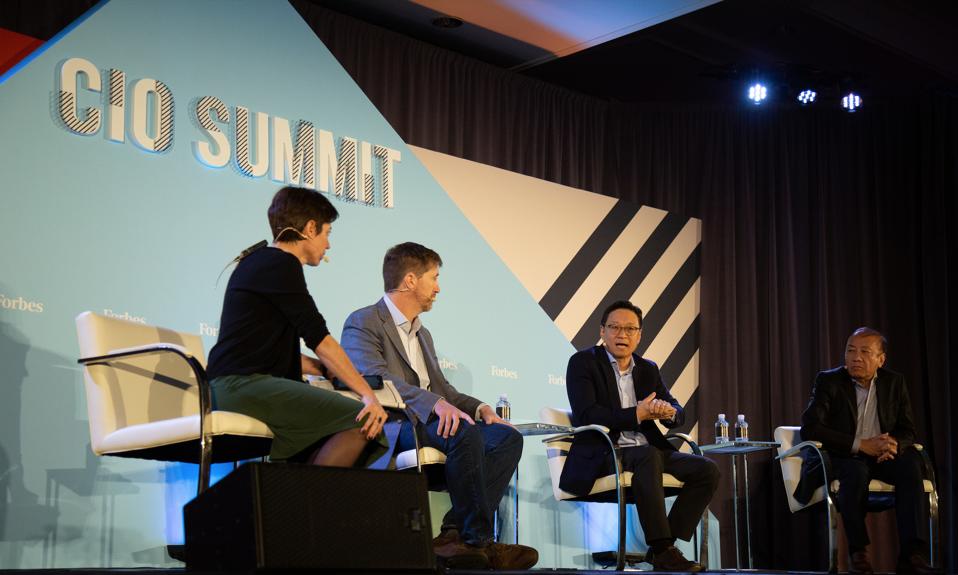
  • “My projection is that between 50%-60% of companies will use blockchain in the next few years,” said Frank Xiong, Oracle group vice president of blockchain product development at the Forbes CIO Summit in Half Moon Bay, California, Monday.

Monica Melton

Ten years after the idea of blockchain was conceived, the technology that underpins cryptocurrencies is starting to be used by large enterprises as a secure way to track goods. But mass utilization is still years away, and it won’t be for every company, said a panel of blockchain executives.

“My projection is that between 50%-60% of companies will use blockchain in the next few years,” said Frank Xiong, Oracle group vice president of blockchain product development at the Forbes CIO Summit in Half Moon Bay, California, Monday.

The enterprise software maker has more than 100 customers using its blockchain platform to track items for reasons such as ensuring the Italian olive oil you’re buying was really made in Italy, or that a manufacturer isn’t buying minerals that support armed conflicts. But it’s not a magic bullet. “We’re past the stage that blockchain can cure everything, so people are becoming more realistic about what’s good for their business model,” he said.

Blockchain is a kind of shared database that allows users to share identical copies of information on many computers. In the past few years, it’s gone from largely supporting virtual currencies like bitcoin to a tool used by companies to more closely and accurately track products or private information that pass through many hands.

Despite the buzz, uptake is still early. Large technology companies like IBM and shipping giant Maersk, and Oracle, have formed consortia around their blockchains, and many efforts are still in the pilot stage. Others, such as $3 billion logistics startup Flexport, say they’re waiting for global standards before they jump in.

In deciding whether to use blockchain, companies should do a pain point assessment, two executives said. Like any venture, they should figure out if it’s worth the cost.

“At the end of the day blockchain makes multipart collaboration more efficient, whether it’s having a consortium to track data on counterfeit getting into supply chains, or how much inventory you need to create a better forecast,” said Ted Kim, vice president in blockchain at Samsung SDS, a unit of the electronics manufacturer that provides IT services, including a pilot projects to track cargo from Korea to Europe using blockchain. He expects in three years, 20% of companies will be using blockchain. “There is tangible ROI in the blockchain.”

Yet even in a world where blockchain is much more widespread, some aspects may resemble today’s commerce system more than blockchain’s evangelists forecast.

“People are predicting that the blockchain will allow people to be decentralized, that everyone will have distributed trusted networks,” said Daniel Jones, CEO of bext360, a software startup that keeps track of commodities by identifying and making an electronic token. “I don’t think that’s possible —I think what we’re going to see is companies vertically integrating, the Amazons of the world are going to continue to vertically integrate to the farm level.”

From left: Laura Mandaro, Forbes Media, Jones, Bext360 Ted Kim, Samsung SDS America Frank Xiong, Oracle, CIO Summit 2019 Forbes Media

Source: https://www.forbes.com/sites/monicamelton/2019/04/09/blockchain-could-be-used-by-at-least-50-of-all-companies-within-3-years-oracle-exec-says/#4468f55355cf

Enthusiast Gaming $EGLX.ca Acquires Significant Interest in Waveform Entertainment, a Leading Esports Operator and Tournament Producer $EPY.ca $FDM.ca $WINR $TCEHF $ATVI $TNA.ca

Posted by AGORACOM-JC at 9:32 AM on Tuesday, April 9th, 2019
  • Producers of major esports events in Canada including Dreamhack, GOML, Cineplex, CNE, WESG (EGLX)
  • Partners with major brands and sponsors including Ubisoft, NXNE, AMD, CSL
  • Strategic partnership expands Enthusiast’s client services to include experiential advertising, esports tournaments, and broadcast and production capabilities

TORONTO, April 09, 2019 — Enthusiast Gaming Holdings Inc. (TSXV: EGLX) (OTCQB: EGHIF) (“Enthusiast” or the “Company”) is pleased to announce that it has, through a wholly-owned subsidiary, signed a definitive agreement to purchase 20% of the issued and outstanding shares (“Purchased Shares”) in Waveform Entertainment Inc. (“Waveform”) for an aggregate consideration of $1,680,000 (the “Subscription Price”). Waveform is a leading esports broadcast and production company specializing in the organization of premium esports tournaments world-wide. Enthusiast has also secured an irrevocable option, at its sole discretion, to acquire a 100% interest in Waveform. (the “Buy-Out Option”).

While Waveform was established in 2018, its team has been on the leading edge of esports event production and broadcast for several years, servicing some of the world’s most prestigious esports tournaments and events including Dreamhack, Cineplex WorldGaming, and Enthusiast owned, EGLX.

“Investing in Waveform will contribute greatly to the expansion of EGLX and our events business. Waveform’s infrastructure and expertise are key for the roll out of the Rising Star Series and upcoming esports tournaments at EGLX in the future,” commented Menashe Kestenbaum, CEO of Enthusiast. “We were very impressed by the organization of our esports tournaments at EGLX in October 2018 and we see significant growth potential as esports continue to soar.”

Waveform was responsible for the broadcast, production and execution of Canada’s largest esports tournament, WESG Canadian Finals at EGLX in October 2018. Enthusiast will continue to partner with Waveform as EGLX executes on its North American expansion plan and introduces the Rising Stars Series this summer.  Waveform will provide the infrastructure, broadcast and event support to drive the expansion and continued growth of EGLX in 2020.

As esports continues to grow with $1.1bn in projected revenues in 2019,(1) large brands are entering the industry by sponsoring esports teams and championing their own activations.  Waveform has partnered with major brands including Evil Geniuses, Virtus Pro, Ubisoft, AMD, Asus, Team Liquid and more.  The investment into Waveform will help Enthusiast’s mission to reach gamers both online and offline. The Company will provide digital advertising and experiential marketing opportunities to major brands and publishers, increasing visibility and event attendance.  The partnership enables Enthusiast’s event business to increase its client services portfolio to include event production, broadcast, streaming services and creative experiential brand ambassadorship programs. In turn, the partnership also allows Enthusiast’s platform to promote Waveform’s business and portfolio of large brands and help them drive new partnerships moving forward.

Terms of Transaction

The Purchased Shares will be purchased pursuant to the terms of a share subscription agreement (the “Agreement”), among Waveform and a wholly owned subsidiary of Enthusiast created for the purpose of the transaction. Pursuant to the Agreement, Enthusiast agreed to purchase the Purchased Shares in three tranches: (i) on April 4, 2019, Enthusiast purchased 40.5% of the Purchased Shares for a portion of the Subscription Price, being $680,000.00; (ii) Enthusiast agreed to purchase, on or before (as decided by Enthusiast) October 4, 2019, 29.75% of the Purchased Shares for a portion of the Subscription Price, being $500,000.00; and (iii) Enthusiast agreed to purchase, on or before (as decided by Enthusiast) June 3, 2020, 29.75% of the Purchased Shares for a portion of the Subscription Price, being $500,000.00. On the date Waveform and Enthusiast entered into the Agreement, they also entered into a Shareholders’ Agreement for Waveform (the “Shareholders’ Agreement”). The aggregate purchase price for all Waveform’s shares, if the Buy-Out Option is exercised by Enthusiast shall be equal to the greater of: (i) four (4) times Waveform’s gross revenue (as defined in the Shareholders’ Agreement), multiplied by eighty percent (80%); or (ii) $7,680,000 (the “Option Purchase Price”). The Option Purchase Price will be subject to agreed adjustments.

The purchase of the Purchased Shares on the two remaining tranches, as well as the exercise of the Buy-Out Option (if exercised by Enthusiast) are subject to obtainment of all applicable regulatory approvals (including by the TSX Venture Exchange).

About Enthusiast Gaming

Founded in 2014, Enthusiast is the fastest-growing online community of video gamers. Through the Company’s unique acquisition strategy, it has a platform of over 80 owned and affiliated websites and currently reaches over 75 million monthly visitors with its unique and curated content and over 50 million YouTube visitors. Enthusiast also owns and operates Canada’s largest gaming expo, Enthusiast Gaming Live Expo, EGLX, (eglx.ca) with over 55,000 people attending in 2018. For more information on the Company, visit www.enthusiastgaming.com.

(1) NewZoo: https://newzoo.com/insights/articles/newzoo-global-esports-economy-will-top-1-billion-for-the-first-time-in-2019 

CONTACT INFORMATION:

Investor Relations:
Julia Becker
Head of Investor Relations & Marketing
[email protected]
(604) 785.0850

This news release contains certain statements that may constitute forward-looking information under applicable securities laws. All statements, other than those of historical fact, which address activities, events, outcomes, results, developments, performance or achievements that Enthusiast anticipates or expects may or will occur in the future (in whole or in part) should be considered forward-looking information. Such information may involve, but is not limited to, comments with respect to strategies, expectations, planned operations and future actions of the Company. Often, but not always, forward-looking information can be identified by the use of words such as “plans”, “expects”, “is expected”, “budget”, “scheduled”, “estimates”, “forecasts”, “intends”, “anticipates”, or “believes” or variations (including negative variations) of such words and phrases, or statements formed in the future tense or indicating that certain actions, events or results “may”, “could”, “would”, “might” or “will” (or other variations of the forgoing) be taken, occur, be achieved, or come to pass. Forward-looking information is based on currently available competitive, financial and economic data and operating plans, strategies or beliefs as of the date of this news release, but involve known and unknown risks, uncertainties, assumptions and other factors that may cause the actual results, performance or achievements of Enthusiast to be materially different from any future results, performance or achievements expressed or implied by the forward-looking information. Such factors may be based on information currently available to Enthusiast, including information obtained from third-party industry analysts and other third-party sources, and are based on management’s current expectations or beliefs regarding future growth, results of operations, future capital (including the amount, nature and sources of funding thereof) and expenditures. Any and all forward-looking information contained in this press release is expressly qualified by this cautionary statement. Trading in the securities of the Company should be considered highly speculative.

Neither the TSX Venture Exchange nor its Regulation Services Provider (as that term is defined in the policies of the TSX Venture Exchange) accepts responsibility for the adequacy or accuracy of this release.

The securities of the Corporation have not been and will not be registered under the United States Securities Act of 1933, as amended and may not be offered or sold in the United States absent registration or an applicable exemption from the registration requirement. This press release shall not constitute an offer to sell or the solicitation of an offer to buy nor shall there be any sale of the securities in any jurisdiction in which such offer, solicitation or sale would be unlawful.

Enthusiast Gaming $EGLX.ca – The State Of #Esports: Why Investors Should Pay Attention $EPY.ca $FDM.ca $WINR $TCEHF $ATVI $TNA.ca

Posted by AGORACOM-JC at 4:00 PM on Monday, April 8th, 2019

SPONSOR: Enthusiast Gaming Holdings Inc. (TSX-V: EGLX) Uniting gaming communities with 80 owned and affiliated websites, currently reaching over 75 million monthly visitors. The company partial 2018 reported revenue of $7.4 million representing a 625% increase over the same period in 2017.

Images
EGLX: TSX-V
———————————-

The State Of eSports: Why Investors Should Pay Attention


  • Forget marijuana stocks and cryptocurrencies, one of the latest disruptive trends investors are looking to capitalize on in 2019 is professional video gaming.
  • “esports,” brings millions of spectators around the world together both online and on-location to watch competitive video gaming.
  • Now, 2019 is slated to be the first year the industry surpasses $1 billion in revenue, solidifying esports’ position as a serious contender on the world stage.

Luis Aureliano , Benzinga Contributor

Newzoo Global Esports Economy 2019

Market research firm Newzoo released its 2019 report on the global esports economy last month and projects revenue for the industry to reach $1.1 billion marking an impressive +26.7 percent growth year-on-year. Newzoo indicates the fastest growing revenue stream for the industry is the selling of media rights for viewing esports with an expected growth of 41.8 percent in 2019. 

Media Rights and Increased Viewership

When it comes to esports entertainment, popular streaming platform Twitch.tv, which was acquired by Amazon.com, Inc. AMZN 0.57% for $970 million in 2014, has been at the forefront. Earlier this year, Twitch and Activision Blizzard, Inc. ATVI 0.42% agreed on a two year, $90 million-minimum deal to grant the streaming platform broadcasting rights for one of Activision Blizzard’s most successful games and competition, the Overwatch League (OWL).

The expansion of media rights as a revenue stream fits with the explosive growth in viewership for esports as a whole. Compared to just years ago, viewership for esports has grown significantly, particularly for League of Legends, the most popular competitive game. During the 2018 Mid-Season Invitational, League of Legends attracted more than 60 million unique viewers. To put things into perspective, the most-watched NBA game since 1998 attracted roughly half that number in 2016 with a record 30.8 million viewers during game 7.

Number of Unique Viewers for Select Esports Competitions, Statista 

The Early Esports Advantage 

Perhaps the most attractive aspect of esports for investors isn’t just the size of the audiences but the state of the market. While esports has grown substantially since its inception, the industry is still mainly a nascent one. Consider Activision Blizzard’s Overwatch as an example again since the title was one of the first games launched with esports already in mind.

Since its launch in 2016, the company has franchised out geo-located teams for Season 1 of the OWL that began last year. Now, as Season 2 is underway, the league is beginning to look more like a traditional professional sport with teams like the “London Spitfire,” “LA Gladiators,” and many others spreading from New York all the way to China and South Korea. And yet, because the OWL is still so young, no teams have their own home arenas to play in as one would expect for a professional sports team — yet.

In Philadelphia, home to the OWL’s “Philadelphia Fusion,” Comcast Corporation CMCSA 0.41% is investing to build a $50 million esports-specific arena; the first in the league. Set to be placed directly in the center of the Philadelphia Sports Complex alongside the homes of the Eagles, Flyers, 76ers, and Phillies, the 60,000 square foot arena is expected to seat 3,500 spectators and include training and broadcasting facilities as well. 

Compared to the well-established world of professional sports, esports offers a unique opportunity for investors to still gain access during the industry’s infancy. 

Growing Pains 

Though esports has experienced impressive growth, that’s not to say it hasn’t come with some growing pains along the way. A major pain point is due to the decentralized nature of competitive play as the term “esports” encompasses a vast array of different game titles, playerbases, and various leagues. Because of the fractured nature of esports, it’s not uncommon for a title to have several unaffiliated leagues for professional players like Counter Strike:Global Offensive’s open circuit system.

However, there are efforts to reduce that confusion and forward the maturity of esports. After the success of the OWL, Activision Blizzard has hinted at the creation of a similar league for Call of Duty with geo-located franchised teams. Likewise, other actors are looking to meet the needs of standardization and legitimacy for esports as well. One of the largest platforms to-date with over a million users, DreamTeam, is creating standardization for professional players across many titles like League of Legends, CS:GO and Electronic Art’s EA 1.06% latest success, Apex Legends. The platform is aiming to bring players together with event organizers, team owners and sponsors to offer an all-in-one solution for professional gaming as a whole.

Amateur players can use the platform to create teams of their own to compete and work their way to the professional levels of play, drastically reducing the barrier to entry for many games. For some titles, that barrier to entry can be steep too. In the case of League of Legends, North American teams seeking a franchise spot had to pay a hefty $10 million fee — in Overwatch, that fee was $20 million per team and potentially doubling for expansion teams in the future. With a lower barrier to entry for players around the world and an easy-to-understand ecosystem, DreamTeam is working to bridge the gap for players forming a professional team.    

The Bottom Line 

With the advent of franchised teams, massive media rights deals and the attraction of big name sponsors like The Coca-Cola Co (NYSE: KO) and Red Bull, it’s clear that video games are no longer just a way for kids to kill time. Now, competitive gaming is one of the fastest growing industries and investors are quickly looking to get in. Whether buying a team of one’s own or investing in the endemic brands propelling esports forward, investors all over are recognizing the promising future of the industry. 

Image sourced from Pixabay

Source: https://www.benzinga.com/markets/cannabis/19/04/13488198/the-state-of-esports-why-investors-should-pay-attention

ThreeD Capital Inc. $IDK.ca – The Game Is On For #Bitcoin, #Ethereum, #Ripple And #Litecoin

Posted by AGORACOM-JC at 12:09 PM on Monday, April 8th, 2019

SPONSOR: ThreeD Capital Inc. (IDK:CSE) Led by legendary financier, Sheldon Inwentash, ThreeD is a Canadian-based venture capital firm that only invests in best of breed small-cap companies which are both defensible and mass scalable. More than just lip service, Inwentash has financed many of Canada’s biggest small-cap exits. Click Here For More Information.

Idk large
——————-

The Game Is On For Bitcoin, Ethereum, Ripple And Litecoin

  • Over the last seven days, Bitcoin has gained 25.74%, Ethereum 18.76%, Ripple 16.12%, and Litecoin 53.20%
  • Rally was extended across the cryptocurrency markets, with 94 out of the top 100 cryptocurrencies gaining in price

Panos Mourdoukoutas

Investors, traders, and speculators are jumping into the Bitcoin and cryptocurrency markets again, sending prices soaring across the board.

Over the last seven days, Bitcoin has gained 25.74%, Ethereum 18.76%, Ripple 16.12%, and Litecoin 53.20%–see table 1. The rally was extended across the cryptocurrency markets, with 94 out of the top 100 cryptocurrencies gaining in price-see table 2.

Table 1

7d Price Change For Major Cryptocurrencies

Cryptocurrency%7d
Bitcoin25.74
Ethereum18.76
Ripple16.12
Litecoin53.20

Source: Coinmarketcap.com 4/7/19 at 11 a.m.

Table 2

Number of Cryptocurrencies That Advanced/Declined In The Top 100 Ranks

Cryptocurrencies Advance/DeclineNumber
Advance6
Decline94

Source: Coinmarketcap.com 4/7/19 at 11 a.m

The recent Bitcoin rally has left left stocks, bonds, and the yellow metal in the dust, so far, in 2019-see chart.

Bitcoin Beats Stocks, Bonds, and Gold YTD

What could explain the rally?

Several factors. One of them is the renewed interest by big money. “The recent surge in Bitcoin has been sparked by a large buy order – rumored to be around $100 million – that sent BTC straight through technical resistance ($4,235) that had been in place since the start of December 2018,” says Nicholas Cawley from the DailyFX team.”  â€œThe lack of volatility in Bitcoin over the last few weeks has kept prices in-check, and low volume markets are always more susceptible to sharp moves than more liquid markets.”

Kirill Bensonoff, a technology advisor, agrees. “The surge was obviously fueled by a very large order, in the tens of millions of dollars,” says Bensonoff. “This is another sign that institutional players are coming into the market.”

Then there’s the prospect of lower interest rates, which turns risk on again for all sorts of speculative investments.

And there are the “market technicals.” Market volumes are up  3 to 4 times normal turnover, exacerbating the sharp rally,” observes Cawley. “In addition to the clean break of resistance, the move also broke through the 200-day moving average around $4,650 with ease, enabling the rally to continue.”

How far will the rally go? Will Bitcoin ever reach the $20,000 mark again? It all depends on whether regulators will approve financial instruments that allow for broad investor participation in the cryptocurrency markets, like Electronically Trading Funds (ETFs), according to Bensonoff. “For Bitcoin to hit $20,000 in 2019, we would need a major catalyst, and I believe the only one with this much force would be ETF approval,” says Bensonoff. “Without it, we are looking at a $10,000 best case scenario.”

While it’s unclear whether which of the two scenarios will come true, one thing is clear: volatility will continue in the cryptocurrency markets, creating new winners and losers.

[Ed. note: Investing in cryptocoins or tokens is highly speculative and the market is largely unregulated. Anyone considering it should be prepared to lose their entire investment. Disclosure: I don’t own any Bitcoin.]

Source: https://www.forbes.com/sites/panosmourdoukoutas/2019/04/07/the-game-is-on-for-bitcoin-ethereum-ripple-and-litecoin/#4481885519a6

BetterU Education Corp. $BTRU.ca – Incorporating missing digital elements in formal education in India $ARCL $CPLA $BPI $FC.ca

Posted by AGORACOM-JC at 10:34 AM on Wednesday, April 3rd, 2019
SPONSOR:  Betteru Education Corp. Connecting global leading educators to the mass population of India. BetterU Education has ability to reach 100 MILLION potential learners each week. Click here for more information.
BTRU: TSX-V

————————

Incorporating missing digital elements in formal education in India

  • A very essential part of the skills that are missing in Indian education system are digital skills.
  • In the digital world that we live in, most of the everyday tasks are done online or on a computer.
  • World is an extremely data driven world, writes Siddarth Bharwani, Vice President – Brand & Marketing, Jetking.

The Indian Economy is one the fastest growing economies in the world. With an expected growth rate of 7.3% in 2019-2020, experts believe that India will soon become the third largest economy in the world after US & China. However, the ground reality of this growth rate is quite different. If we look at the employment scenario in the country, we realise that India is not doing very well. The unemployment rate in the country is extremely disproportionate to the growth rate the country is witnessing. A closer look at the job market in the country will reveal that this paradox is due to a simple but major reason: the disconnect between formal education in India and the expectations of recruiters.

To make sense of that data and to get maximum utilisation of the plethora of opportunities that a business is getting these days, it is important to harness students with ways to make use of them to make them more employable. Let’s enumerate the 3 most essential skills that need to be an integral part of the curriculum today.

Search Engine Marketing

Search Engine Marketing (SEM) is an extremely influential aspect of marketing today. Students that have an understanding of SEM and know how to capitalise on it will be seen as a great asset for an organization to upgrade their online search visibility. Companies spend hours updating their website and their content to make sure that they can effectively capture a larger audience. While most companies train their employees on SEO & SEM, it is a great advantage for students to have a working knowledge of them while applying for jobs.

Data Analytics

Data has become the hot word in every organisation’s dictionary. With the digitised world, there is an excess of data available which is extremely difficult to sift through and make sense of. Data Analytics is the study of various analytic tools and processes through which you can derive relevant insights and information through the refinement of raw data. Students need to be equipped with at least a basic knowledge of data analytics so that they know how to read and understand large chunks of it in a faster and more efficient manner. Companies prefer being backed by data instead of just going by trends which is why it is an important function to include into the formal education system.

Social Media Analytics

Social Media has taken the world by storm. Brands across the globe spend a lot of manpower and budget on creating efficient social media strategies. It is constantly changing and coming up with new ways for companies to stay relevant to its customers. The fact that people now spend over 50% of their time online just goes to show how important it is to include something as seemingly simple as social media into formal education system in India.

Apart from enhancing digital capabilities, it is also important to imbibe in student certain other life skills to ensure employability. Most of the education imparted is in theoretical with little or no exposure to the practical implications of the theories learnt. Recruiters often find it hard to hire people due to the lack of an understanding of the outside world and how the industry works. Soft skills like flexibility, leadership, teamwork, etc. is missing in the education system. These skills are acquired from practical exposure and it is important to allow students to experience and learn them while they are a part of the system. Recruiters look for candidates who know how to think outside the box and are able to think on their feet. The notion that these traits are something that people are born with is a myth. With practice and learning innovative thinking methods, it is possible to learn to be a critical thinker and an all-round performer.

The key to bridge this gap is through digitisation of the education system and bringing in innovative teaching pedagogy into the curriculum. E-learning has gained great traction in recent times in the education industry. The rampant increase in internet connectivity and data consumption has led to e-learning a spot in the centre stage of the education industry. Apart from providing access to education from anywhere, e-learning also allows professors to individually attend to all students giving them a better and more effective way of bridging the gap in the education system. Additionally, the role of teachers needs to change to create the link between the missing elements of the system. They need to be facilitators and not the leaders in a classroom. Attention should shift from teachers talking to students engaging and participating to motivate them to grasp more information.

To conclude, India needs to be more aware of the skill-gap and find ways to address it. Government bodies like National Skill Development Corporation (NSDC) are created to deal with it but the awareness of this problem still exists. It is the duty of more educational institutes to create opportunities for its students to learn these important skills and make them job-ready. While corporates are making their own effort in skill-training by associating with various institutes to create specialised courses to suit their needs, educational institutes need to integrate these skills into the values of their organisation and curriculums. Only then will the country truly see the growth that it boasts of.

Source: https://digitallearning.eletsonline.com/2019/04/incorporating-missing-digital-elements-in-formal-education-in-india/

Kuuhubb $KUU.ca Announces the Successful Soft Launch of #Recolor By Numbers on #iOS $TCEHY $ATVI $CYOU

Posted by AGORACOM-JC at 10:00 AM on Wednesday, April 3rd, 2019
  • Announced that it has successfully soft-launched its new mobile game Recolor By Numbers
  • Recolor By Numbers is the most recent addition to Kuuhubb’s growing portfolio of female-focused gaming apps and aims to replicate the global success of its flagship app Recolor, with over fifty million downloads to date.  

TORONTO, April 03, 2019 — Kuuhubb Inc. (“Kuuhubb” or the “Company”) (TSXV: KUU), a mobile game development and publishing company targeting the female audience with bespoke mobile experiences, is pleased to announce that it has successfully soft-launched its new mobile game Recolor By Numbers.

Recolor By Numbers is the most recent addition to Kuuhubb’s growing portfolio of female-focused gaming apps and aims to replicate the global success of its flagship app Recolor, with over fifty million downloads to date.  

The color-by-numbers segment has traditionally focused on the children’s demographic, featuring simple, retro-style pixel designs.  In contrast, Kuuhubb’s Recolor By Numbers will appeal to an older audience, offering a significantly different experience. An extensive collection of rich and intricate designs and images, 2D and 3D objects will be available to paint in rich color palettes and numerous textures, all of which will be available in a subscription or ad-supported model. 

“Coloring apps have continued to be wildly popular for several years. We foresee that Recolor By Numbers will be a significant part of the newest number coloring craze. Our team can easily replicate the best hit features from our flagship title Recolor, enabling us to rapidly accelerate the update and development cycles,” stated Kristoffer Rosberg, General Manager, Apps & Games at Kuuhubb.

The soft launch sees Recolor By Numbers currently available on the App Store for iOS devices in Canada, the Netherlands, Finland and Croatia. Kuuhubb anticipates the global launch of Recolor By Numbers by the third quarter of 2019. 

Click to Visit Link:https://itunes.apple.com/fi/app/recolor-by-numbers/id1411398756?mt=8

Jouni Keränen, the CEO of Kuuhubb commented, “Our team continues to create fun and immersive apps focused on the female lifestyle gaming segment. Recolor By Numbers incorporates many of the innovative designs and beautiful artwork that our flagship brand Recolor is recognized for, while adding easy to use color-by-number features for a relaxing and creative gaming experience.”

The Recolor By Numbers team, located in the company headquarters in Helsinki, Finland, brings extensive experience developed in pioneering the work with Recolor. The team is comprised of industry veterans originating from Digital Chocolate, Armada and Rovio.

About Kuuhubb
Kuuhubb is a company active in the digital space that focuses mainly on lifestyle and mobile game applications for the female audience. Its strategy is to create sustainable shareholder value through acquisitions of proven, yet underappreciated, assets with robust long-term growth potential. Headquartered in Helsinki, Finland, Kuuhubb has a global presence with a strong focus on developing U.S. brand collaborations and Asian partnerships.

Cautionary Note Concerning Forward-Looking Information
This press release contains forward-looking information. All statements, other than statements of historical fact, that address activities, events or developments that the Company believes, expects or anticipates will or may occur in the future (including, without limitation, statements relating to the potential success of the Recolor By Numbers game, future revenue and products and the development and growth of the Company’s business) are forward-looking information. This forward-looking information reflects the current expectations or beliefs of the Company based on information currently available to the Company. Forward-looking information is subject to a number of risks and uncertainties that may cause the actual results of the Company to differ materially from those discussed in the forward-looking information, and even if such actual results are realized or substantially realized, there can be no assurance that they will have the expected consequences to, or effects on the Company. Factors that could cause actual results or events to differ materially from current expectations include, among other things, the possibility that results from the Recolor By Numbers  game will not be consistent with the Company’s expectations, risks related to the growth strategy of the Company, the possibility that results from the Company’s growth and development plans will not be consistent with the Company’s expectations, the early stage of the Company’s development, competition from companies in a number of industries, the ability of the Company to manage expansion and integrate acquisitions into its business, future business development of the Company and the other risks disclosed under the heading “Risk Factors” in the Company’s annual information form dated November 8, 2018 filed on SEDAR at www.sedar.com. Forward-looking information speaks only as of the date on which it is provided and, except as may be required by applicable securities laws, the Company disclaims any intent or obligation to update any forward-looking information, whether as a result of new information, future events or results or otherwise. Although the Company believes that the assumptions inherent in the forward-looking information are reasonable, forward-looking information is not a guarantee of future performance and accordingly undue reliance should not be put on such information due to the inherent uncertainty therein.

Neither TSX Venture Exchange nor its Regulation Services Provider (as that term is defined in the policies of the TSX Venture Exchange) accepts responsibility for the adequacy or accuracy of this release.

For further information contact:

Jouni Keränen
CEO – Kuuhubb Inc.
Email: [email protected]

Bill Mitoulas
Investor Relations – Kuuhubb Inc.
Tel: +1 (416) 479-9547
Email: [email protected]

A photo accompanying this announcement is available at http://www.globenewswire.com/NewsRoom/AttachmentNg/532cffac-ebfc-45d8-b982-51b51d60d296

Good Life Networks $GOOD.ca – Confused About What Makes Something Programmatic? It Needs These 3 Features $RUBI $AT.ca $TRMR $FUEL

Posted by AGORACOM-JC at 9:55 AM on Tuesday, April 2nd, 2019
SPONSOR: Good Life Networks (GOOD:TSX-V) Video advertising is the future! Company’s A.I. makes 80,000 calculations / second, targeting 750 million users to deliver higher prices and volume. Company announced combined trailing 12 month revenue at just over $40 Million, $7.9M EBITDA, $3 Million net income. Click here for more information.
GOOD: TSX-V

—————————

Confused About What Makes Something Programmatic? It Needs These 3 Features

  • Programmatic, an algorithmic approach to putting media placements in front of the right user, prioritizing reach over environment.
  • Programmatic gave new life to display advertising

By Kathleen Petersen

Display media—banner ads, specifically—has seen its share of ups and downs. In the mid-90s when digital advertising became a thing, banner ads were one of the first formats.

I can imagine those initial advertising agency media teams saying to clients, ” We ran this little box on our webpage and look how many clicks it got! Look how many people used this little box to visit your site!” But then, of course, consumers got used to banner ads. They were no longer a novelty, and people stopped clicking. Instead, they started saying things like, “Those ads are annoying,” or “I don’t even notice those ads” (although studies prove they do). Everyone hated them, and display advertising budgets started to dwindle.

Enter a new buying strategy: programmatic, an algorithmic approach to putting media placements in front of the right user, prioritizing reach over environment.

Programmatic gave new life to display advertising. Suddenly banners and video weren’t as expensive. They were more sophisticated in targeting and were easier to optimize based on an end goal (translation: better than running the impressions and assuming they do something good that can’t be proven). By 2010, sophisticated digital advertisers were funneling large amounts of their display media budgets to this approach. Today it’s all media teams talk about: programmatic banners, programmatic video, programmatic native, and now, programmatic TV, programmatic out of home and programmatic mail.

Hold up, though—that’s not programmatic. Programmatic has gone beyond what it is at its roots … to a buzzword for seemingly any media with a bit of data behind it.

Programmatic has gone beyond what it is at its roots—a modernized and automated approach to media buying—to a buzzword for seemingly any media with a bit of data behind it.

There are three pieces required to make something programmatic:

The ability to combine multiple layers of data

Demographics and interest targeting have been in digital media’s corner for a while. With a programmatic approach, you can slice and dice those targeting technologies, add others and stack them all on top of each other. This includes first-, second- and third-party data. The ability to determine if a person is within our target audience based on their demographics, what their interests are, where they are geographically, how often they travel, what type of credit card they use, how long they’ve owned their home and on and on is right up the programmatic alley.

Real-time bidding

Before programmatic buying was available, display buyers would identify sites with the highest reach against their target audience and buy a set number of impressions directly from said site. This isn’t the case with programmatic. Now we’re in an exchange, bidding to get the best placements in front of the most qualified users and paying only a penny more than the next advertiser we won the bid from. Buying programmatically is much more efficient and garners a far wider reach. You’re finding the best available user, regardless of the content they’re in. Not to say that premium environment prioritized in the days of old isn’t important. White lists and premium marketplaces can get you high-quality contextual placements while using a programmatic approach.

On the fly optimization

At one time, ads ran and we served X number of impressions or ads ran, we ran X number of impressions and Y people clicked on them was the furthest extent to which you could report on your display media performance. You could take this information and adjust your strategy for next time. But with programmatic, algorithms are getting continuously smarter, and you’re able to optimize based on a multitude of factors. So now your campaign can improve as time goes on instead of waiting until the end so you know what to do better next time. Budgets can be prioritized according to what users are doing post-exposure in real-time. For example, if placement A is performing better than placement B, the algorithm will shift bids to prioritize the better performer.

These three features are possible with digital media, but at this point, it isn’t possible for traditional media channels to pull all of them off. As time and technology goes on, traditional media channels will get closer to achieving this. Television, with the use of smart TVs and OTT devices is the closest.

Data available for television targeting has become much more sophisticated in recent years, but they are lacking in real-time bidding. Most TV being bought “programmatically” is still purchased two weeks ahead of time, not at the exact second exposure is available. And while we can now use data to identify high indexing programming, the targeting isn’t 1-to-1 unless it is addressable. Out of home is in second place, and will be easier to achieve on small digital boards (think ATM or gas station screens) where a user can be identified by their phone’s proximity to the screen.

So, when you hear a media channel being referred to as programmatic, make sure the term is being used correctly. Advances in technology in digital and traditional channels that allow our campaigns to be more precise are very exciting and enticing, but check against these three features to ensure you know how your media dollars are being used.

Source: https://www.adweek.com/programmatic/confused-about-what-makes-something-programmatic-it-needs-these-3-features/

St-Georges $SX $SX.ca $SXOOF Confirms Complete Recuperation of #Lithium in Leach $ICM.ca

Posted by AGORACOM-JC at 10:12 PM on Sunday, March 31st, 2019
  • Confirms that it has achieved complete and total recovery in leach of lithium from the bulk material provided by its partner Iconic Minerals (TSX-V: ICM)
  • St-Georges’ patent pending leaching technology achieved 100% leaching of lithium while not affecting the majority of the solids
  • 88% of the initial feed material is unleached which helps with chemicals consumption and tailings disposal.

Montreal, March 31, 2019 / St-Georges Eco-Mining Corp. (CSE: SX) (OTC: SXOOF) (FSE: 85G1) is pleased to inform its shareholders that it can confirm that it has achieved complete and total recovery in leach of lithium from the bulk material provided by its partner Iconic Minerals (TSX-V: ICM) originating from their Bonnie Claire lithium project in Nevada.

St-Georges’ patent pending leaching technology achieved 100% leaching of lithium while not affecting the majority of the solids. 88% of the initial feed material is unleached which helps with chemicals consumption and tailings disposal.

The patent pending mix of nitric and citric acids being used do not require high temperature and high pressure and no calcination is required. The objectives of the technology development was simply to have the lowest chemical cost impact.

The impacts on the Bonnie Claire Deposit of the first phase of the process that includes classification, concentration and leaching at atmospheric pressure and low temperature has shown an average concentration gain from 963 ppm Li to 8,025 ppm Li, or a gain of 8,333 percent.

St-Georges is currently testing different calibration and improving on its selective leaching in order to target only the recuperation in the leach of the lithium and magnesium and achieve better grades in the leach.

Potential Fertilizer By-Products

In addition to the lithium, the selective leaching collects mainly the salt family elements such as Sodium (Na), Magnesium (Mg), Calcium (Ca) and items like carbonates. The company believe that this could lead to-possible development of fertilizer by-products in the nitrate family that would potentially positively impact the economics of the Bonnie Claire project.

Current On-Going Developments

The next tests to be started this week will focus on reducing the total time of contact and we expect that the selectivity will be increased. In addition, St-Georges is in the process of purchasing a electrolysis unit to make LiOH to be added to the pilot plant with a further focus on using less chemicals. Work with various vendors of resins has been initiated to optimize the lithium purification steps prior to lithium hydroxide production.

Phase 1 Confidential Report

The phase 1 confidential report is currently being independently reviewed and a final public summary should be disseminated within 45 days. Detailed tests result and confidential information related to the process flow-sheet has been provided to Iconic management. For details and guidelines regulating the relation between Iconic and St-Georges, please read December 7, 2017 press release “Licensing Technology Agreement with Iconic Minerals”.

Summary of the proposed industrial process

Developmental testing has results in 100% of the lithium leached to be repeatedly recuperated using the patent pending leaching technology developed by St-Georges.

Below are the steps tested in the course of Phase 1 of the development of the process.

Step 1: Screening

The lithium material is being screened out to remove pebbles and other coarse material like calcium.

(Independent testing and review of this stage was performed during the course of the months of March and April 2018 by SGS Lakefield laboratory in Ontario)

Step 2: De- Agglomeration

The agglomerated material is being fed into a roll grinder to break down the feed into the original fine particles before drying.

This was also done and reviewed by SGS Laboratory. After these 2 initial steps review, SGS performed an XRD and chemical analysis for each of the elements and crystalline forms.

Step 3: Concentration

Two approaches were developed and tested. Air classification and flotation concentration. These co-exist as linear task A and B of the concentration step at this stage. St-Georges is currently working on eliminating one of the sub-tasks with the hopes of drastically reducing costs and processing time.

Task 3a: Air Classification

In this step the material is separated by density and particle size. In the particular case of the Bonnie Claire material, the lithium is contained in the superfine particles. These particles are too fine to be screened.

Independent review and testing of Task 3a were performed in the scope of the month of November 2018 by the laboratories of Netzsch Premier Technologies LLC of Exton, Pennsylvania. The resulting material was reduced by 55% with a cut-off at 5 microns.

The resulting material was sent by Netzsch for chemical analysis to the laboratories of the Centre de Technologie minerales et de plasturgie Inc. (CTMP) at Tedford-Mines in Quebec.

The lab results confirmed that 100% of the lithium remained in the resulting concentrate when properly de-agglomerated.

Task 3b: Floatation Concentration

The CTMP labs performed, at the demand of St-Georges, a traditional froth floatation with deionized water. These tests were unsuccessful forcing the company metallurgists to adopt a different approach.

St-Georges patent pending technology using a silicate salt saturated medium will be independently reviewed and tested with bulk material within the first part of the month of April by CTMP.

Step 4: Selective Leaching

Using St-Georges’ patent pending acid mix solution of nitric and citric acids, the CTMP reviewed and independently tested 2 batches of material from the Bonnie Claire lithium deposit.

Leach test 1:

Material from this initial test was passed through tasks 1 and 2 but skipped classification and concentration. The results are:

100% of the lithium was leached at atmosphere pressure and low temperature. The total leach time was of 1 hour resulting in 12% of the initial total mass. The company set-up and intends to improve on that result.

Leach test 2:

Material from this leach test was passed through tasks 1, 2 and 3a. 100% of the lithium was leached at atmosphere pressure and low temperature. The total leach time was of 1 hour resulting in 12% of the initial total mass.

Optimization of these tasks should yield results in industrial settings that would reduce the total mass to a target percentage below 5%

Joel Scodnick, P.Geo, St-Georges Vice-President Exploration is a qualified person under NI 43-101 and has reviewed and approved the technical content of this release.

ON BEHALF OF THE BOARD OF DIRECTORS

“Enrico Di Cesare”

ENRICO DI CESARE, DIRECTOR & VICE-PRESIDENT RESEARCH & DEVELOPMENT

The Canadian Securities Exchange (CSE) has not reviewed and does not accept responsibility for the adequacy or the accuracy of the contents of this release.

North Bud Farms Inc. $NBUD.ca – Legal #marijuana shortages persist in Canada $WEED.ca $CGC $ACB $APH $CRON.ca $HEXO.ca $TRST.ca $OGI.ca

Posted by AGORACOM-JC at 12:00 PM on Tuesday, March 26th, 2019

SPONSOR: North Bud Farms Inc. (NBUD:CSE) Sustainable low cost, high quality cannabinoid production and procurement focusing on both bio-pharmaceutical development and Cannabinoid Infused Products. Click Here For More Information

NBUD: CSE

—————

Legal marijuana shortages persist in Canada

  • Legal cannabis shortages were still a problem in Canada in early 2019, several months after the country began recreational sales to adults, says a report this morning by broker Cowen
  • Survey of five provinces’ online weed availability in January shows that nearly half of all items remained out-of-stock on marijuana e-commerce sites

From Bill Alpert: Legal cannabis shortages were still a problem in Canada in early 2019, several months after the country began recreational sales to adults, says a report this morning by broker Cowen. A survey of five provinces’ online weed availability in January shows that nearly half of all items remained out-of-stock on marijuana e-commerce sites. But in the relatively-populous Ontario, supplies were better, with 61% of listed products actually in-stock. In New Brunswick and Newfoundland & Labrador, however, out-of-stock rates increased.

“While it is difficult to assess how much of the change is demand versus supply driven,” wrote analyst Vivien Azer, in the note, “our view is that demand remains strong with an improving supply chain.” Cowen surveyed online shops in Ontario, British Columbia, Alberta, New Brunswick and Newfoundland & Labrador.

Among Canada’s large producers, Canopy Growth (ticker: CGC) had the largest share of in-stock product on e-commerce shelves, with a 21% share in Ontario, while Aurora Cannabis (ACB) had 12% of that province’s online market. Tilray(TLRY) and Cronos Group (CRON) each had 4%.

After a month when Canada’s pot stocks mostly wandered sideways, Canopy is flat this morning, at $44.44, while Aurora is up 9% to $9.37. Tilray is up 3%, to $69, while Cronos has jumped 6.3% to $20.21, a day before it reports December-quarter results.

Dry flower marijuana made up about three-fourths of all products at Canada’s online shops, noted Cowen, with the remaining offerings consisting of capsules, oils, and pre-roll smokes.

“We continue to believe that the category will look very different in late 2019,” the analyst wrote, “when vapor, beverages, edibles, and other form factors become available.”

Prices for dry flower held firm in January, according to Cowen, at $10.22 Canadian dollars per gram (or US$7.56). Pre-roll product commands a price premium, for its convenience, but Canadian consumers had cause to celebrate, as pre-roll’s average price fell 4% from December, to C$12.88 a gram.

Source: https://etfdailynews.com/2019/03/25/legal-marijuana-shortages-persist-in-canada/