Agoracom Blog Home

Posts Tagged ‘CSE’

eMarketer Releases Latest US #Programmatic Ad Spending Forecast #adtech $GOOD.ca $TTD $RUBI $AT.ca $TRMR $FUEL

Posted by AGORACOM-JC at 12:30 PM on Friday, October 12th, 2018

In the US, programmatic advertising is digital display advertising. eMarketer estimates that more than four of every five digital display ad dollars in the US today transact via programmatic means. More than four fifths of mobile display and video ad dollars also already flow through programmatic channels.

eMarketer’s latest forecast and report, “US Programmatic Ad Spending Forecast Update: Video Powers Significant Growth Through 2020,” expects the vast majority of US digital display ad dollars (86.3%) will transact programmatically by 2020, up from 82.5% this year.

Subscribe to the “Behind the Numbers” podcast on SoundCloud, Apple Podcasts, or Stitcher.

Digital advertising analysts Lauren Fisher and Nicole Perrin, and marketing technology writer Ross Benes discuss the programmatic advertising world. They explain how many programmatic ad dollars will go to video? How companies are thinking about first and second party data? And what the importance of private setups tells us?

eMarketer PRO subscribers can access the forecast, this infographic as well as another explaining programmatic options, and the full report now.
Source: https://www.emarketer.com/content/emarketer-releases-latest-us-programmatic-ad-spending-forecast

Toronto #Overwatch #esports franchise starts to fill front office and raise funds $GMBL $ATVI $TTWO $GAME $EPY.ca $TCEHF $Game.ca $EPY.ca

Posted by AGORACOM-JC at 12:15 PM on Friday, October 12th, 2018
  • Unveiled last month, Toronto’s Overwatch League esports expansion franchise now has a general manager, coach and $21.5 million in equity financing
  • OverActive Media Group Inc., the ownership group behind the Toronto franchise, says the $21.5 million is the largest financing in Canadian history for an esports-focused business.

TORONTO — Unveiled last month, Toronto’s Overwatch League esports expansion franchise now has a general manager, coach and $21.5 million in equity financing.

OverActive Media Group Inc., the ownership group behind the Toronto franchise, says the $21.5 million is the largest financing in Canadian history for an esports-focused business.

While a large chunk of change, more will likely be needed. The original cost of a franchise was pegged at US$20 million in its first year of operation in 2018 with reports suggesting the next round would go for a minimum of US$35 million.

“The financing is necessary to meet the schedule of payments that we have anticipated,” said OverActive Media CEO and president Chris Overholt, the former CEO of the Canadian Olympic Committee.

Some will go towards the franchise fee. The rest will help fund initial operations.

Overholt says the initial financing “signals to the market for sure that people are taking this space seriously.”

“Overwatch,” a team-based first-person shooter, has spawned a blue-chip esports league backed by big names and big money.

The Toronto equity financing was led by original investors including tech entrepreneur Sheldon Pollack and Michael Kimel, part-owner of the Pittsburgh Penguins and co-founder of the Chase Hospitality Group.

Others have joined the principal investors, who also included venture capitalist Adam Adamou and the Kimel family led by Michael Kimel as principal owner.

“We’re working every day here. It’s exciting,” said Overholt. “We’ve got good momentum.”

Jaesun Won has been named team general manager with Lee (Bishop) Beom-joon, formerly of the London Spitfire, appointed head coach.

The team is also sorting out its name, with input from fans. The season starts in early 2019.

Vancouver is also joining the league, with Canucks Sports & Entertainment chairman Francesco Aquilini at the helm.

There are currently 12 teams: Boston Uprising, Florida Mayhem, Houston Outlaws, London Spitfire, New York Excelsior and Philadelphia Fusion in the Atlantic Division and Dallas Fuel, Los Angeles Gladiators, Los Angeles Valiant, San Francisco Shock, Seoul Dynasty and Shanghai Dragons in the Pacific Division.

Other expansion franchises for 2019 are Washington, D.C., Paris, and Chengdu and Hangzhou, China. Atlanta and Guangzhou, China, joined the fold last month.

The London Spitfire won the inaugural league championship — and $1 million — in July, defeating Philadelphia 3-0 at a soldout Barclays Center in Brooklyn, N.Y. Philadelphia collected $400,000 as runner-up.

The league is the brainchild of Overwatch developer Blizzard Entertainment, whose gaming portfolio also includes “World of Warcraft” and “StarCraft.” Blizzard says Overwatch is the fastest of its titles to reach more than 30 million players.

The league plans to continue staging its games at Blizzard’s esports arena in Burbank, Calif., in 2019 with plans to stage games in the franchise cities in 2020.

OverActive Media Group used to be The Ledger Group, rebranding in April to “to reflect its focus on the ownership of esports platforms.”

The company has already invested in Splyce Inc., a professional esports team involved in “League of Legends,” “Call of Duty” and “Halo” leagues. It also has interests in Askott Entertainment Inc., a leading esports gaming company, and Enthusiast Gaming Inc., an esports media company.

“We’re going to build out a professional esports company that holds franchises on the inside,” said Overholt.

“We expect to be major players in acquiring franchises for Toronto,” he added.

Follow @NeilMDavidson on Twitter

Source: https://www.vancourier.com/toronto-overwatch-esports-franchise-starts-to-fill-front-office-and-raise-funds-1.23457694

No. 1 Wall Street #pot analyst says the #marijuana market will be much bigger than she first thought $BOG.ca $NBUD.ca $MCOA $APPB

Posted by AGORACOM-JC at 10:53 AM on Friday, October 12th, 2018
  • The cannabis industry’s rapid evolution and new strategic partnerships with mainstream brands reveal a far larger possible market for legal marijuana than investors and analysts first anticipated, according to Cowen.
  • Cowen’s Vivien Azer nearly triples her 12-month price forecast on Canadian marijuana producer Tilray this week to $172 from $62.
  • Recreational use of cannabis in Canada becomes legal Oct. 17, though each of the country’s 10 provinces will be able to regulate the market within their jurisdiction.

Wall Street’s top pot analyst says marijuana market will be much bigger than she first thought   23 Hours Ago | 00:58

With Canada about to legalize recreational use of marijuana, the industry’s rapid evolution and new strategic partnerships with mainstream brands reveal a far larger possible market for pot than investors and analysts first anticipated, according to Cowen.

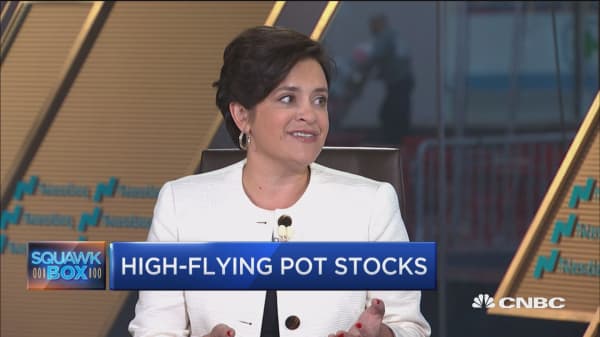
“With cannabis, you’re talking about this massive step change in terms of the addressable market,” Vivien Azer said on CNBC’s “Squawk Box” on Wednesday. “You’re bringing a $7 billion illicit market into the legal market and so it does require a different valuation framework.”

Azer, the only pot analyst from a major Wall Street research house, nearly tripled her 12-month price forecast on Canadian marijuana producer Tilray this week to $172 from $62. The new target for the stock, which trades in the U.S. on the Nasdaq, implies more than 30 percent upside from current levels. She also upped her forecast on Canadian pot company Canopy Growth.

Supply remains critical issues for cannabis companies, says analyst   8:17 AM ET Wed, 10 Oct 2018 | 01:51

Just how big the market will get is tough to put a number on right now, but Azer cites a cannabis executive who estimated the market could be one day worth $500 billion.

“Our broader, big picture view of cannabis goes beyond the adult use launch in Canada,” she wrote in a report this week. “Rather, we believe this is the first step toward the establishment of cannabis as a key functional ingredient touching multiple consumer categories with four key verticals: adult use, beauty and nutraceuticals, OTC pain and sleep, and pharmaceuticals.”

Recreational use of cannabis in Canada becomes legal Oct. 17, though each of the country’s 10 provinces will be able to regulate the market within their jurisdiction independent of Ottawa.

While it’s still early days for the marijuana business, the first signs of its broader applications are easily recognized.

Tilray shares, which are up more than 650 percent since their July IPO, posted one of their best days ever mid-September after the company announced approval from the Drug Enforcement Administration to import weed to the U.S. for medical research.

In a move likely foreshadowing broader pharmaceutical application, the company will work with the University of California San Diego Center for Medicinal Cannabis Research to study the safety, tolerability and efficacy of marijuana for a neurological disorder.

“If this study can identify cannabinoids as a potential treatment for patients suffering from essential tremor, we can conduct further research and potentially provide alternative effective methods of relief for the high numbers of patients with Essential Tremor,” said Catherine Jacobson, director of clinical research at Tilray.

The globe’s major alcohol companies have also wasted no time exploring joint ventures with a handful of lucky cannabis producers.

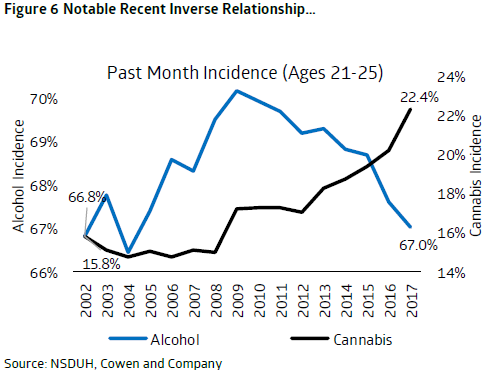
Alcohol vs. Cannabis use in the U.S.

Constellation Brands recently increased its investment in Canopy Growth with a 9.9 percent stake in the company, granting the Corona beer brewer a foothold in an industry it expects to soon be legal in the United States.

“We think that we’re by far the best company in the world — or in the best position in the world of any company — to capitalize on what is absolutely without a doubt going to be a huge market over the next 10 years, hundreds of billions of dollars,” Constellation CEO Robert Sands said in the company’s earnings call Thursday.

“We expect to reap the benefits of our cannabis investment, which we see as being incremental to our core beer, wine and spirits portfolio,” he added.

Richard Lautens | Toronto Star | Getty Images
Dried plants are processed and trimmed by hand. A a state-of-the-art fully automated medical marijuana production facility is in a nondescript building in Scarborough.

And while the upside for Constellation appears obvious, the benefit is two-fold. A check from one of the world’s largest brewers is a welcome influx of capital for a handful of companies whose success will likely be defined by their ability to raise capital and scale production.

“Given the nascent stage of global cannabis, we believe that revenue growth should serve as the primary valuation methodology,” Cowen’s Azer said in her note. Specifically, Azer said her primary measurement when drawing price estimates is enterprise value divided by sales, divided by revenue growth, akin to a traditional price/earnings growth ratio.

Some Wall Street firms cover the pot stocks, but none the size of Cowen. It’s still an emerging industry.

To be sure, the spike in certain pot stocks — combined with a limited count of floating shares for some companies — has left stocks like Tilray and Canopy with lofty valuations and rampant volatility.

Tilray has about 93 million shares outstanding, but the float — those shares actually available for trading — is just 21 million, according to FactSet.

Tilray’s 2020 P/E ratio, meanwhile, is currently 300; Canopy’s is 125. Tilray’s stock price has posted no less than 12 days of double-digit moves on percentage basis in the last month.

“There have been no shortage of recent catalysts to spur market and investor interest,” Azer said. “As such, volatility should be seen as a natural occurrence in the cannabis market, and not dissimilar to other nascent industries.”

https://www.cnbc.com/2018/10/10/top-pot-analyst-says-weed-market-bigger-than-first-thought.html

Emerging trends in #EdTech- A look at the EdTech landscape #betterU $BTRU.ca $ARCL $CPLA $BPI $FC.ca

Posted by AGORACOM-JC at 10:07 AM on Friday, October 12th, 2018
  • EdTech market is expected to touch $1.96 Bn by 2021, with close to 9.6 Mn users, from $247 Mn and over 1.6 Mn users in 2016
  • New innovative technologies are triggering a wave of transformation in the Indian education and learning sector – both regarding the content and the delivery
By: Anushree Sharma

For long, learning has been administered by traditional pedagogical techniques. However, the continuous changes in technology have changed the entire paradigm of learning and development at corporates. The rapid integration of technology in learning has made the educational technology sector (EdTech) as a promising market not only in the world but India too. A recent report by KPMG and Google highlights that the EdTech market is expected to touch $1.96 Bn by 2021, with close to 9.6 Mn users, from $247 Mn and over 1.6 Mn users in 2016.


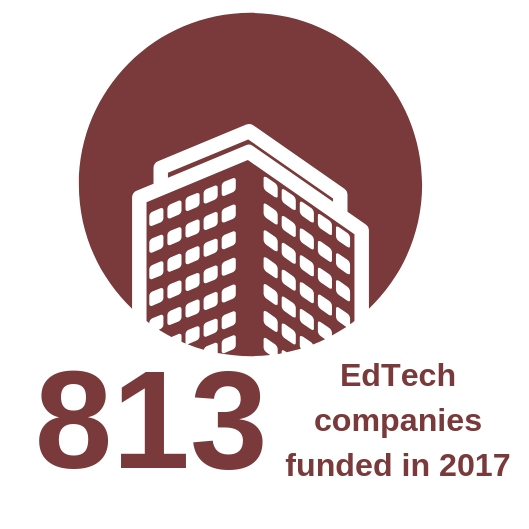
For several years now, innovations in EdTech have impacted how business professionals want to learn. EdTechs such as virtual classrooms, mobile devices, digital readers, on-demand video, online gaming, and cloud-based LMSs have fed the market that has been, and continues to be hungry for innovation. Traditionally, most investments for product innovation in EdTech were focused on the higher education market. But recently, investors have looked across the traditional market boundaries beyond higher education and toward corporate training.  In fact, according to a study, the global investments in educational EdTech in 2017 crossed $9 Bn, a 30 percent jump from 2016. It was also reported that 813 different EdTech companies received funding last in 2017. One of the critical drivers for rising interest in EdTech can be the adoption rate of new technologies by the millennial community. Millennials entering the job market bring a new set of expectations on how to learn and collaborate. Hence, investment is flowing into the EdTech market at an unprecedented level.


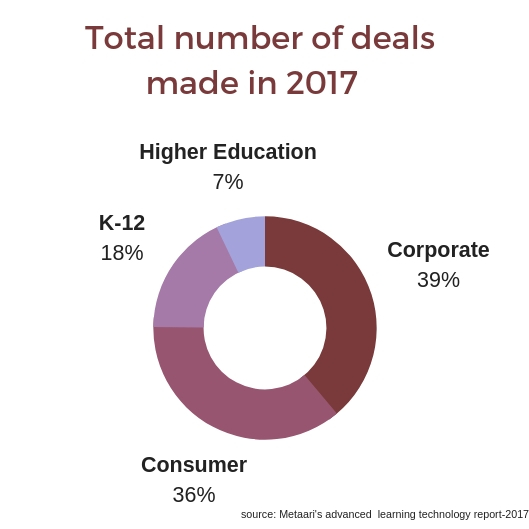
                                        According to Metaari advanced learning technology report 2017, over $3.79 Bn was invested in corporate-facing educational technology companies in 2017, trailing consumer-facing companies by $60 Mn. Corporate training and education buyers across the globe are migrating rapidly away from legacy products like self-paced courseware and are now avid buyers of psychometric Game-based Learning, AI-based Learning, Cognitive Learning, and Mixed Reality Learning (that includes both VR and AR-based products).

People Matters reached out to the leaders in the EdTech industry and understood the evolution, trends, and challenges in EdTech. Here are the key findings:

Evolution of Learning Technology

“Competency development and reskilling have become a way of life, not a stage in life.”


Raghav Gupta, Director – India and APAC at Coursera

Online learning has evolved significantly beyond its previous reputation for low-quality learning experiences from low tier institutions. The flexible, high quality and affordable nature of the content provided by online learning platforms today are changing the way people learn.

“From a one-for-all approach to the ability to construct one’s learning path.”


Nikhil Barshikar, Founder and MD at Imarticus Learning

Over the next few years, EdTech will experience a rapid change in its consumption pattern. From a one-for-all approach, EdTech is now on the brink of personalization to the extent where individual consumers will have the ability to construct their learning paths. AI and Machine Learning will play a significant role in defining this new approach with meaningful recommendations and customized learning journeys.

“EdTech has reinvented the way of delivering learning.”


Krishna Kumar, Founder & CEO, Simplilearn

Innovation in technology is changing the way we deliver online education. EdTech is not only making learning affordable and accessible to the deepest roots of the country but has also triggered the upskilling and reskilling phenomena among students and professionals. With the impact of online learning becoming evident, EdTech has gained credibility among the government, industry, and academia which is spurring further mass adoption of this medium of learning.

Emerging trends in EdTech Sector:

In an interview with Coursera, Imarticus Learning, and Simplilearn we found that new innovative technologies are triggering a wave of transformation in the Indian education and learning sector – both regarding the content and the delivery. Here are the key trends in the EdTech sector:

  • Use of emerging technologies like AI, ML, AR, VR:

AR/VR/AI and other emerging technologies will redefine the EdTech space and the online learning experience.

“With an emphasis on skill building across industries and professionals proactively upskilling themselves, trends like hands-on learning, byte-sized learning coupled with gamification, virtual reality, and AI are changing the online learning landscape. EdTech companies need to adopt these trends seamlessly into their learning programs to ensure learners are motivated and engaged to complete their courses targeted with specific outcomes,” says Kumar

Raghav shares, “With the integration of new age technologies like  AI, VR, ML, the learning experience will be more interactive and personalized; resulting in improved access and enhanced learner outcomes.”

  •  Bite-sized or micro-learning modules:

Nikhil shares, bite-sized or micro-learning modules which cater specifically to the content consumption habits of young digital consumers are increasingly gaining traction in the EdTech space. Also, mobile is the preferred channel among young students and professionals to consume online learning courses. Also, mobile is the favorite channel among young students and professionals to consume online learning courses. This is because it allows them the flexibility to access content anytime and anywhere through easy-to-use app interfaces.

  • Personalization: 

Personalization remains a top trend among EdTech firms offering their online learning platforms since it helps to drive maximum user engagement and deliver specially curated content to learners on a variety of subjects and topics.

No doubt, the EdTech industry is brimming with opportunities, but at the same, it is rife with challenges. The most common challenges faced by the EdTech companies and startups are:

Acquisition Cost – Since online training is not bound by geography, neither are its customers which means, the same set of training providers try to attract a specific set of candidates.  This increases the cost of acquiring leads, and therefore, acquisition becomes a significant challenge. “Maintaining a healthy bottom line is EdTech’s Holy Grail,” says Nikhil.

Engagement Rates – MOOCs typically have completion rates of less than 10%. A big challenge faced by all EdTech providers is keeping its learners engaged in the learning lifecycle. Several values added services like projects, coaching and mentoring and gamification techniques are used these days to ensure higher completion.

However, Raghav is of the view that the challenges with engagement rates are diminishing. Raghav says, “Introducing credible degrees continue to be the most transformative credential for career and economic mobility globally. Constantly broadening the portfolio to bring full-fledged online degrees in domains across Business, Data Science, Entrepreneurship, Public Health, and Computer Science would help in elevating the engagement among users.”

Kumar believes that this is the best time for players like them as EdTech is proliferating globally and in India. He shares that EdTech companies need to harness the potential of technology to close the skill gap by delivering training in the latest digital technologies with product excellence and a customer-centric approach.

Source: https://www.peoplematters.in/article/pmlnd/emerging-trends-in-edtech-a-look-at-the-edtech-landscape-19411?utm_source=peoplematters&utm_medium=interstitial&utm_campaign=learnings-of-the-day

#Gold jumps most in nearly 2 year on safe-haven demand $AMK.ca $EXS.ca $MQR.ca

Posted by AGORACOM-JC at 3:02 PM on Thursday, October 11th, 2018
  • Gold has finally woken up. The price of gold jumped 2.4 per cent on Thursday – the most in nearly 2 years – in a sign of safe haven buying amid a rout in global stock markets
  • The move is a sharp turnaround to gold’s recent performance

By: Henry Sanderson

Gold has finally woken up. The price of gold jumped 2.4 per cent on Thursday – the most in nearly 2 years – in a sign of safe haven buying amid a rout in global stock markets.

The move is a sharp turnaround to gold’s recent performance. Gold had fallen by 10 per cent before Thursday’s move higher, hit by a stronger dollar and rising US interest rates.

“As a stock market sell off continues gold is once again a desired destination in times of uncertainty,” Alfonso Esparza, senior market analyst at Oanda, a currency exchange, said. “The metal had lost some cache in minds of investors, but when there is no clear safe haven fonds are flowing to gold.”

US stocks turned sharply lower in morning trading on Thursday, with the S&P 500 down 0.6 per cent at 2769.35. Shares in London and Hong Kong also fell.

Gold last traded at $1,222 a troy ounce, its highest level since July 31.

Source: https://www.ft.com/content/ca08c226-cd78-11e8-b276-b9069bde0956

Canada to Open More Than 100 Pot Shops as It Becomes the Second Country to Legalize Marijuana $BOG.ca $NBUD.ca $MCOA $AERO $CBDS $CGRW $APH.ca $GBLX $ACG $ACB $WEED.ca $HIP.ca

Posted by AGORACOM-JC at 2:26 PM on Thursday, October 11th, 2018

  • On Oct. 17, Canada becomes the second and largest country with a legal national marijuana marketplace. Uruguay launched legal sales last year, after several years of planning.
  • It’s a profound social shift promised by Canadian Prime Minister Justin Trudeau and fueled by a desire to bring the black market into a regulated, taxed system after nearly a century of prohibition.

(DELTA, British Columbia) — Mat Beren and his friends used to drive by the vast greenhouses of southern British Columbia and joke about how much weed they could grow there.

Years later, it’s no joke. The tomato and pepper plants that once filled some of those greenhouses have been replaced with a new cash crop: marijuana. Beren and other formerly illicit growers are helping cultivate it. The buyers no longer are unlawful dealers or dubious medical dispensaries; it’s the Canadian government.

On Oct. 17, Canada becomes the second and largest country with a legal national marijuana marketplace. Uruguay launched legal sales last year, after several years of planning.

It’s a profound social shift promised by Canadian Prime Minister Justin Trudeau and fueled by a desire to bring the black market into a regulated, taxed system after nearly a century of prohibition.

It also stands in contrast to the United States, where the federal government outlaws marijuana while most states allow medical or recreational use for people 21 and older. Canada’s national approach has allowed for unfettered industry banking, inter-province shipments of cannabis, online ordering, postal delivery and billions of dollars in investment; national prohibition in the U.S. has stifled greater industry expansion there.

Hannah Hetzer, who tracks international marijuana policy for the New York-based Drug Policy Alliance, called Canada’s move “extremely significant,” given that about 25 countries have already legalized the medical use of marijuana or decriminalized possession of small amounts of pot. A few, including Mexico, have expressed an interest in regulating recreational use.

“It’s going to change the global debate on drug policy,” she said. “There’s no other country immediately considering legalizing the nonmedical use of cannabis, but I think Canada will provide almost the permission for other countries to move forward.”

At least 109 legal pot shops are expected to open across the nation of 37 million people next Wednesday, with many more to come, according to an Associated Press survey of the provinces. For now, they’ll offer dried flower, capsules, tinctures and seeds, with sales of marijuana-infused foods and concentrates expected to begin next year.

The provinces are tasked with overseeing marijuana distribution. For some, including British Columbia and Alberta, that means buying cannabis from licensed producers, storing it in warehouses and then shipping it to retail shops and online customers. Others, like Newfoundland, are having growers ship directly to stores or through the mail.

Federal taxes will total $1 per gram or 10 percent, whichever is more. The feds will keep one-fourth of that and return the rest to the provinces, which can add their own markups. Consumers also will pay local sales taxes.

Some provinces have chosen to operate their own stores, like state-run liquor stores in the U.S., while others have OK’d private outlets. Most are letting residents grow up to four plants at home.

Canada’s most populous province, Ontario, won’t have any stores open until next April, after the new conservative government scrapped a plan for state-owned stores in favor of privately run shops. Until then, the only legal option for Ontario residents will be mail delivery — a prospect that didn’t sit well with longtime pot fan Ryan Bose, 48, a Lyft driver.

“Potheads are notoriously very impatient. When they want their weed, they want their weed,” he said after buying a half-ounce at an illicit medical marijuana dispensary in Toronto. “Waiting one or two three days for it by mail, I’m not sure how many will want to do that.”

British Columbia, home of the “B.C. Bud” long cherished by American pot connoisseurs, has had a prevalent marijuana culture since the 1970s, after U.S. draft-dodgers from the Vietnam War settled on Vancouver Island and in the province’s southeastern mountains. But a change in government last year slowed cannabis distribution plans there, too, and it will have just one store ready next Wednesday: a state-run shop in Kamloops, a few hours’ drive northeast of Vancouver. By contrast, Alberta expects to open 17 next week and 250 within a year.

No immediate crackdown is expected for the dozens of illicit-but-tolerated medical marijuana dispensaries operating in British Columbia, though officials eventually plan to close any without a license. Many are expected to apply for private retail licenses, and some have sued, saying they have a right to remain open.

British Columbia’s ministry of public safety is forming a team of 44 inspectors to root out unlawful operations, seize product and issue fines. They’ll have responsibility for a province of 4.7 million people and an area twice as large as California, where the black market still dwarfs the legal market that arrived in January.

Chris Clay, a longtime Canadian medical marijuana activist, runs Warmland Centre dispensary in an old shopping mall in Mill Bay, on Vancouver Island. He is closing the store Monday until he gets a license; he feared continuing to operate post-legalization would jeopardize his chances. Some of his eight staff members will likely have to file for unemployment benefits in the meantime.

“That will be frustrating, but overall I’m thrilled,” Clay said. “I’ve been waiting decades for this.”

The federal government has licensed 120 growers, some of them enormous. Canopy Growth, which recently received an investment of $4 billion from Constellation Brands, whose holdings include Corona beer, Robert Mondavi wines and Black Velvet whiskey, is approved for 5.6 million square feet (520,000 square meters) of production space across Canada. Its two biggest greenhouses are near the U.S. border in British Columbia.

Beren, a 23-year cannabis grower, is a Canopy consultant.

“We used to joke around all the time when we’d go to Vancouver and drive by the big greenhouses on the highway,” he said. “Like, ‘Oh man, someday. It’d be so awesome if we could grow cannabis in one of these greenhouses.’ We drive by now, and we’re like, ‘Oh, we’re here.’”

Next to Canopy’s greenhouse in Delta is another huge facility, Pure Sunfarms, a joint venture between a longtime tomato grower, Village Farms International, and a licensed medical marijuana producer, Emerald Health Therapeutics. Workers pulled out the remaining tomato plants last winter and got to work renovating the greenhouse as a marijuana farm, installing equipment that includes lights and accordion-shaped charcoal vents to control the plant’s odor. By 2020, the venture expects to move more than 165,000 pounds (75,000 kg) of bud per year.

Some longtime illegal growers who operate on a much smaller scale worry they won’t get licensed or will get steamrolled by much larger producers. Provinces can issue “micro-producer” licenses. But in British Columbia, where small-time pot growers helped sustain rural economies as the mining and forestry industries cratered, the application period hasn’t opened yet.

Sarah Campbell of the Craft Cannabis Association of BC said many small operators envision a day when they can host visitors who can tour their operations and sample the product, as wineries do.

Officials say they intend to accommodate craft growers but first need to ensure there is enough cannabis to meet demand when legalization arrives. Hiccups are inevitable, they say, and tweaks will be needed.

“Leaving it to each province to decide what’s best for their communities and their citizens is something that’s good,” said Gene Makowsky, the Saskatchewan minister who oversees the province’s Liquor and Gaming Authority. “We’ll be able to see if each law is successful or where we can do better in certain areas.”

British Columbia safety minister Mike Farnworth said he learned two primary lessons by visiting Oregon and Washington, U.S. states with recreational marijuana. One was not to look at the industry as an immediate cash cow, as it will take time to displace the black market. The other was to start with relatively strict regulations and then loosen them as needed, because it’s much harder to tighten them after the fact.

Legalization will be a process more than a date, Farnworth said.

“Oct. 17th is actually not going to look much different than it does today,” he said.

Source: http://time.com/5421443/canada-legal-marijuana-sales/

$HPQ.ca Receives Final Court Approval for the #Beauce #Gold Fields Spin Out

Posted by AGORACOM-JC at 9:15 AM on Thursday, October 11th, 2018

Hpq large

ANOTHER MILESTONES REACHED TOWARD SPIN OUT, LISTING AND DIVIDEND

  • With the court approval and the conditional approval for a new listing from the TMX: TSX Venture Exchange now obtained, HPQ and BGF last key milestone is closing the ongoing BGF private placement. 

MONTREAL, Oct. 11, 2018 – HPQ Silicon Resources Inc (“HPQ”) (TSX VENTURE:HPQ) (FRANKFURT:UGE) (OTC PINK:URAGF) is pleased to inform shareholders that HPQ and its subsidiary, Beauce Gold Fields Inc, (“BGF”) have obtained the required final orders from the Superior Court of Quebec (commercial division) in connection with its ongoing proposed plan of arrangement.

ANOTHER MILESTONES REACHED TOWARD SPIN OUT, LISTING AND DIVIDEND

With the court approval and the conditional approval for a new listing from the TMX: TSX Venture Exchange (“Exchange”) now obtained, HPQ and BGF last key milestone is closing the ongoing BGF private placement.

Patrick Levasseur, President and CEO of HPQ Beauce Gold Fields stated, “Final Approval from the Court was one the key listing conditions for BGF.  We are getting closer to unlock the full potential value of the Beauce Gold property through a fresh new entity that is starting with a tight capital structure.” Mr. Levasseur also stated, “The Beauce is Canada’s last underexplored historical placer mining camp. It’s similar to the White Gold projects in the Yukon or the Cariboo district in BC, that were both placer gold mining camps as well, but recently had major gold discoveries.  Combining our large claims holding in St-Simon-Les-Mines together with our increasing knowledge of the geology, we believe we have narrowed the search in exploring for a hard rock gold deposit”

About Beauce Gold Fields

BGF is a wholly owned subsidiary of HPQ Silicon into which HPQ gold assets were transferred.   Subject to approval by TSX-V, HPQ is in the process of listing BGF as a new public junior gold company, following the approval by shareholders during HPQ AGM held on Aug. 10, 2018, of the proposed terms of the plan of arrangement.

The Beauce Gold Fields project is a unique, historically prolific gold property located in the municipality of Saint-Simon-les-Mines in the Beauce region of Southern Quebec. Comprising of a block of 152 claims 100% owned by HPQ, the project area hosts a six kilometre long unconsolidated gold-bearing sedimentary unit (a lower saprolite and an upper brown diamictite). Textural observations (angularity) of gold nuggets suggest a relatively proximal source and therefore a short transport distance. The gold in saprolite indicates a close proximity to a bedrock source of gold, providing possible further exploration discoveries.  The property was also hosts numerous historical gold mines that were active from 1860s to the 1960s (see HPQ SEDAR-filed report).

A Beauce Gold Fields presentation is available and can be downloaded via the following link. http://www.hpqsilicon.com/wp-content/uploads/2017/07/BGF-Presentation-V-Jul-2017.pdf

About HPQ Silicon

HPQ Silicon Resources Inc. is a TSX-V listed resource company planning to become a vertically integrated and diversified High Purity, Solar Grade Silicon Metal (SoG Si) producer and a manufacturer of multi and monocrystalline solar cells of the P and N types, required for production of high performance photovoltaic conversion.

HPQ’s goal is to develop, in collaboration with industry leaders, PyroGenesis (TSX-V: PYR) and Apollon Solar, that are experts in their fields of interest, the innovative PUREVAPTM “Quartz Reduction Reactors (QRR)”, a truly 2.0 Carbothermic process (patent pending), which will permit the transformation and purification of quartz (SiO2) into high purity silicon metal (Si) in one step and reduce by a factor of at least two-thirds (2/3) the costs associated with the transformation of quartz (SiO2) into SoG Si. The pilot plant equipment that will validate the commercial potential of the process is on schedule to start mid-2019.

Disclaimers:

This press release contains certain forward-looking statements, including, without limitation, statements containing the words “may”, “plan”, “will”, “estimate”, “continue”, “anticipate”, “intend”, “expect”, “in the process” and other similar expressions which constitute “forward-looking information” within the meaning of applicable securities laws. Forward-looking statements reflect the Company’s current expectation and assumptions, and are subject to a number of risks and uncertainties that could cause actual results to differ materially from those anticipated. These forward-looking statements involve risks and uncertainties including, but not limited to, our expectations regarding the acceptance of our products by the market, our strategy to develop new products and enhance the capabilities of existing products, our strategy with respect to research and development, the impact of competitive products and pricing, new product development, and uncertainties related to the regulatory approval process. Such statements reflect the current views of the Company with respect to future events and are subject to certain risks and uncertainties and other risks detailed from time-to-time in the Company’s on-going filings with the securities regulatory authorities, which filings can be found at www.sedar.com. Actual results, events, and performance may differ materially. Readers are cautioned not to place undue reliance on these forward-looking statements. The Company undertakes no obligation to publicly update or revise any forward-looking statements either as a result of new information, future events or otherwise, except as required by applicable securities laws. Neither the TSX Venture Exchange nor its Regulation Services Provider (as that term is defined in the policies of the TSX Venture Exchange) accepts responsibility for the adequacy or accuracy of this release.

For further information, contact

Bernard J. Tourillon, Chairman, President and CEO HPQ Tel (514) 907-1011
Patrick Levasseur, COO HPQ, President and CEO BGF Tel: (514) 262-9239
www.HPQSilicon.com

Shares outstanding: 222,284,053

Marijuana Company of America $MCOA Applies for Uplisting to OTCQB and Finalizes S1 Registration Statement for Anticipated Equity Financing; Announces New Independent Director and Chief Financial Officer $AERO $CBDS $CGRW $APH.ca $GBLX $ACG $ACB $WEED.ca $HIP.ca

Posted by AGORACOM-JC at 9:00 AM on Thursday, October 11th, 2018

15233 mcoa

  • Announced that the Company filed an application with the OTC Markets on October 3, 2018, to uplist from the OTC Pink to the OTCQB listing tier on the OTC Markets
  • Additionally, the Company is in the process of finalizing a registration statement on Form S-1 that the Company intends to file with the Securities and Exchange Commission (SEC), in conjunction with an anticipated equity line of financing that will allow the Company, once the S-1 is effective, to raise up to $10 million.

Escondido, California–(October 11, 2018) – Marijuana Company of America Inc. (OTC Pink: MCOA) (“MCOA” or the “Company“), an innovative hemp and cannabis corporation, is pleased to announce that the Company filed an application with the OTC Markets on October 3, 2018, to uplist from the OTC Pink to the OTCQB listing tier on the OTC Markets.

Additionally, the Company is in the process of finalizing a registration statement on Form S-1 that the Company intends to file with the Securities and Exchange Commission (SEC), in conjunction with an anticipated equity line of financing that will allow the Company, once the S-1 is effective, to raise up to $10 million. The Company’s application to uplist to the OTCQB tier is a condition for both the equity line of financing and for the Form S-1 registration statement.

Donald Steinberg, MCOA President and CEO commented: “Our goal is to obtain the necessary capital through our S1 to capitalize on the host of opportunities available in the cannabis and hemp industry right now. Also, moving to a higher OTC Markets reporting tier will help to provide better access to institutional investors, broaden our shareholder base, and provide greater credibility with the Company’s partners, clients, stakeholders, and customers, as well as with the wider investment community.”

The OTCQB tier increases transparency, reporting standards, management certification and compliance requirements. Further, the majority of broker dealers trade stocks on the OTCQB and historically this has resulted in greater liquidity and awareness for companies that reach the OTCQB tier.

On August 31, 2018, the Company engaged Mr. Jesus Quintero as its new Chief Financial Officer, and on September 19, 2018, appointed Robert Coale as an independent director.

Mr. Quintero has served as a financial consultant to several multi-million dollar businesses in South Florida. He has extensive experience in public company reporting and SEC/SOX compliance, and held senior finance positions with Avnet, Inc., Latin Node, Inc., Globetel Communications Corp. and Telefonica of Spain. His prior experience also includes tenure with Price Waterhouse and Deloitte & Touche. Mr. Quintero earned a B.S. in Accounting from St. John’s University and is a certified public accountant.

Mr. Coale brings years of experience in business consulting, private equity investments, financial and strategic joint venture facilitation, including telecommunications, banking, fund raising, non-profit, retirement, entertainment, licensing, gateway interface/merchant processing, real estate development, and strategic planning. Mr. Coale holds a Master’s in Business Administration, with an emphasis on International Marketing and Strategic Planning from Pepperdine University awarded in 1992; a Bachelor of Science with an emphasis in Finance from the University of Southern California awarded in 1982.

About Marijuana Company of America, Inc.
MCOA is a corporation which participates in: (1) product research and development of legal hemp-based consumer products under the brand name “hempSMART™”, that targets general health and well-being; (2) an affiliate marketing program to promote and sell its legal hemp-based consumer products containing CBD; (3) leasing of real property to separate business entities engaged in the growth and sale of cannabis in those states and jurisdictions where cannabis has been legalized and properly regulated for medicinal and recreations use; and, (4) the expansion of its business into ancillary areas of the legalized cannabis and hemp industry, as the legalized markets and opportunities in this segment mature and develop.

About Our hempSMART Products Containing CBD
The United States Food and Drug Administration (FDA) has not recognized CBD as a safe and effective drug for any indication. Our products containing CBD derived from industrial hemp are not marketed or sold based upon claims that their use is safe and effective treatment for any medical condition as drugs or dietary supplements subject to the FDA’s jurisdiction.

Forward Looking Statements
This news release contains “forward-looking statements” which are not purely historical and may include any statements regarding beliefs, plans, expectations or intentions regarding the future. Such forward-looking statements include, among other things, the development, costs and results of new business opportunities and words such as “anticipate”, “seek”, intend”, “believe”, “estimate”, “expect”, “project”, “plan”, or similar phrases may be deemed “forward-looking statements” within the meaning of the Private Securities Litigation Reform Act of 1995. Actual results could differ from those projected in any forward-looking statements due to numerous factors. Such factors include, among others, the inherent uncertainties associated with new projects, the future U.S. and global economies, the impact of competition, and the Company’s reliance on existing regulations regarding the use and development of cannabis-based products. These forward-looking statements are made as of the date of this news release, and we assume no obligation to update the forward-looking statements, or to update the reasons why actual results could differ from those projected in the forward-looking statements. Although we believe that any beliefs, plans, expectations and intentions contained in this press release are reasonable, there can be no assurance that any such beliefs, plans, expectations or intentions will prove to be accurate. Investors should consult all of the information set forth herein and should also refer to the risk factors disclosure outlined in our annual report on Form 10-12G, our quarterly reports on Form 10-Q and other periodic reports filed from time-to-time with the Securities and Exchange Commission. For more information, please visit www.sec.gov.

For more information, please visit the Company’s websites at:

MarijuanaCompanyofAmerica.com

hempSMART.com

NetworkNewsWires/MCOA

Corporate Communications Contact: 
NetworkNewsWire (NNW)
New York, New York
www.NetworkNewsWire.com
212.418.1217 Office
[email protected]

Food and Drug Administration #FDA confirms nonclinical and manufacturing requirements #Tetra $TBP.ca $AERO $CBDS $CGRW $APH.ca $GBLX

Posted by AGORACOM-JC at 8:56 AM on Thursday, October 11th, 2018

Logo tetrabiopharma rgb web

  • Received the response letter for a Type C meeting with the United States Food and Drug Administration (FDA) for PPP002, its dronabinol AdVersa™Â mucoadhesive product
  • Meeting was held to confirm that the proposed chemistry and manufacturing and non-clinical development plan for PPP002 for the 505(b)(2) is acceptable
  • The FDA established that Tetra Bio-Pharma’s proposed bridging strategy fulfilled all the requirements of the 505(b)(2) regulatory pathway for the product PPP002

ORLEANS, Ontario, Oct. 11, 2018 — Tetra Bio-Pharma Inc., a leader in cannabinoid-based drug discovery and development (TSX VENTURE: TBP) (OTCQB: TBPMF), today announced it received the response letter for a Type C meeting with the United States Food and Drug Administration (FDA) for PPP002, its dronabinol AdVersa™Â mucoadhesive product.   The meeting was held to confirm that the proposed chemistry and manufacturing and non-clinical development plan for PPP002 for the 505(b)(2) is acceptable.

The FDA established that Tetra Bio-Pharma’s proposed bridging strategy fulfilled all the requirements of the 505(b)(2) regulatory pathway for the product PPP002.  The FDA also provided feedback on the chemistry and manufacturing aspects of the drug development plan.  The FDA further confirmed that the product control strategy, ensuring the identity, potency, purity and quality of the PPP002 buccal tablets was acceptable thereby determining that Tetra Bio-Pharma’s plan is on track for drug approval.

“We have now completed our meetings with the U.S. FDA and Tetra is well on its way to finalizing the development plan to bring PPP002 to market,” said Guy Chamberland, M.Sc., Ph.D., Interim Chief Executive Officer and CSO of Tetra Bio-Pharma. “With both the Type B and C meetings now behind us, we are able to move forward with executing the clinical program for PPP002 and subsequently submit the New Drug Application to commercialize PPP002.”

Tetra, along with its partner IntelGenx Corp, is developing this product in the United States under the accelerated 505(b)(2) pathway for the indication of chemotherapy-induced nausea and vomiting, and anorexia and weight loss in people with AIDS. These are the same indications that have already been approved for Marinol®.  The 505(b)(2) speciality Contract Research Organization, Camargo, is guiding the regulatory submissions to the FDA. Tetra is also developing PPP002 in Canada as an adjunct therapy for opioid reduction in patients with chronic pain.

According to the International Agency for Research on Cancer, the global chemotherapy-induced nausea and vomiting (CINV) market will reach a valuation of US $1.88 billion by 2020, an increase from its 2013 valuation of US$1.28 billion. Based on the expected improved safety profile of delayed release dronabinol, Tetra expects that AdVersa™ can gain significant market share within three years of its launch in the USA.

About Tetra Bio-Pharma Inc.

Tetra Bio-Pharma (TSX-V: TBP) (OTCQB: TBPMF) is a biopharmaceutical leader in cannabinoid-based drug discovery and development with a Health Canada approved, and FDA reviewed, clinical program aimed at bringing novel prescription drugs and treatments to patients and their healthcare providers. The Company has several subsidiaries engaged in the development of an advanced and growing pipeline of Bio Pharmaceuticals, Natural Health and Veterinary Products containing cannabis and other medicinal plant-based elements. With patients at the core of what we do, Tetra Bio-Pharma is focused on providing rigorous scientific validation and safety data required for inclusion into the existing bio pharma industry by regulators, physicians and insurance companies.

For more information visit: www.tetrabiopharma.com

Source: Tetra Bio-Pharma

Neither the TSX Venture Exchange nor its Regulation Services Provider (as that term is defined in the policies of the TSX Venture Exchange) accepts responsibility for the adequacy or accuracy of this release.

Forward-looking statements
Some statements in this release may contain forward-looking information. All statements, other than of historical fact, that address activities, events or developments that the Company believes, expects or anticipates will or may occur in the future (including, without limitation, statements regarding potential acquisitions and financings) are forward-looking statements. Forward-looking statements are generally identifiable by use of the words “may”, “will”, “should”, “continue”, “expect”, “anticipate”, “estimate”, “believe”, “intend”, “plan” or “project” or the negative of these words or other variations on these words or comparable terminology. Forward-looking statements are subject to a number of risks and uncertainties, many of which are beyond the Company’s ability to control or predict, that may cause the actual results of the Company to differ materially from those discussed in the forward-looking statements. Factors that could cause actual results or events to differ materially from current expectations include, among other things, without limitation, the inability of the Company to obtain sufficient financing to execute the Company’s business plan; competition; regulation and anticipated and unanticipated costs and delays, the success of the Company’s research and development strategies, including the success of PPP002, the applicability of the discoveries made therein, the successful and timely completion and uncertainties related to the regulatory process including the applications for Orphan Drug Designation, the timing of clinical trials, the timing and outcomes of regulatory or intellectual property decisions and other risks disclosed in the Company’s public disclosure record on file with the relevant securities regulatory authorities. Although the Company has attempted to identify important factors that could cause actual results or events to differ materially from those described in forward-looking statements, there may be other factors that cause results or events not to be as anticipated, estimated or intended. Readers should not place undue reliance on forward-looking statements. While no definitive documentation has yet been signed by the parties and there is no certainty that such documentation will be signed. The forward-looking statements included in this news release are made as of the date of this news release and the Company does not undertake an obligation to publicly update such forward-looking statements to reflect new information, subsequent events or otherwise unless required by applicable securities legislation.

For further information, please contact Tetra Bio-Pharma Inc.
Robert Bechard
Executive Vice-President Corporate Development and Licensing
514-817-2514
[email protected]

Media Contact
Energi PR
Carol Levine Stephanie Engel
514-288-8500 ext. 226 416-425-9143 ext. 209
[email protected] [email protected]

The Top 7 Social Media Marketing Trends Going Into 2019 $PEEK.ca $IDK.ca $BCOV $AVID

Posted by AGORACOM-JC at 5:22 PM on Wednesday, October 10th, 2018

Live Streaming

  • Live streaming takes video channels to another level.
  • Instead of creating a video and worrying about developing it or needing to start over because it didn’t come out exactly as you planned, social media marketing managers can live stream what they’re doing to give potential customers an intimate, behind-the-scenes look at what’s going on around the office and how products are being made.
  • We all know by now how important of a role social media has on your business strategy
  • If you’re not on social media, you’re making things significantly harder on your business than they need to be

However, social media is constantly changing and it’s hard if you’re a social media marketing manager to understand how social media is changing the game. We’re going to break down the top eight social media marketing trends of 2018 that are completely changing how we look at social media.

1. Augmented Reality

Augmented reality is already being implemented in small ways, but it’s leaving a significant impact that will last well into the future. In fact, it’s estimated that the augmented reality and virtual reality markets will surpass $298 billion by 2023. The most obvious example are Snapchat’s facial filters.

A handful of them have sponsors in the corner of the screen, and people can create their own geofilters as well. Social media marketing managers can and should, if they’re not already, take advantage of these features that will continue to become more prevalent on other platforms to further their reach while personalizing interactions.

2. Focus on Generation Z

Generation Z is starting to enter the workforce, meaning they have money to spend. Marketers are starting to target the new generation early, which is a smart move. Retail businesses, for example, are offering clothes that are higher end while offering a wider range of styles.Retailers are also opening pop-up stores and hosting events that offer more intimate, personalized customer experiences, which will continue to be a major business trend for years to come. The reason pop-up stores and events are so popular is that they’re unique and are designed with the intention of being shared on social media. Generation Z was born surrounded by technology, which makes them and social media marketing a natural fit for each other.

3. Video

Video continues to be the dominant medium in social media. Instagram copied Snapchat by creating Instagram Stories, which work in exactly the same way. According to Entrepreneur, 200 million Instagram users use Instagram Stories each month. This makes Instagram a vital focus in your marketing efforts, and one you should give your best effort at. YouTube continues to grow in popularity due to the rise in YouTubers (we’ll get into that more a little later). Generation Z also uses social video platforms like Houseparty, where users can join group video chats and talk to each other online and on the go.

By making their presence known on all these video platforms, social media marketers will have a unique advantage in 2018 because video platforms, again, make it easier to offer personalized customer experiences, which is what customers — regardless of generation — want from businesses. People are visual learners by nature, and video goes beyond what pictures offer. Businesses are realizing this, realizing the popularity of video channels, and realizing the versatility of video.

4. Messenger Apps and Chatbots

Like video, messenger apps offer customers another channel to reach out to businesses and vice versa. We all know how popular Facebook Messenger is and how easy it is for people to reach out to each other without leaving Facebook. This is important because customers who are on Facebook aren’t always on it with the intention of buying a product.

If a customer does, however, land on a business page and see something they’re interested in, marketers can reach out to them via chatbot and initiate a conversation that could ultimately lead to a sale the customer never saw coming. This is a great way to increase engagement throughout the customer journey. Businesses can reach out on Messenger, WhatsApp, and Kik, which are all popular messaging apps Millennials and gen Z’ers are using regularly.

5. Live Streaming

Live streaming takes video channels to another level. Instead of creating a video and worrying about developing it or needing to start over because it didn’t come out exactly as you planned, social media marketing managers can live stream what they’re doing to give potential customers an intimate, behind-the-scenes look at what’s going on around the office and how products are being made.

We’ll repeat this over and over again: personalized customer experiences matter. Live streaming helps marketers to not just give potential customers an intimate look at what’s going on, but to offer a natural call-to-action. For example, marketers who want to offer a one-time promotion can start a live stream and announce on social media that the promotion is starting right now while interacting directly with customers who may or may not have questions and comments.

6. Influencer Marketing (YouTubers)

Remember when we mentioned YouTube? YouTubers are the best example of people who market products and businesses to viewers. Any time you see a sponsored video by anyone with hundreds of thousands of subscribers, you’re watching someone who’s considered an influencer. By reaching out to Influencers on YouTube and even other social media like Instagram, you’re getting other people who come off as normal, everyday people to promote your products.

Again, this comes down to offering personalized customer experiences. YouTubers gain fame by putting out content that relates to tons of people. When they talk about a product or service, they’re taking advantage of social engineering to give off the impression that the product or service they’re marketing plays a significant role in their life and that it can play a significant role in ours. They’re people we feel we can trust and that goes a long way in a market where customers are hesitant to trust big companies.

7. User-generated Content

User-generated content is content created by unpaid fans of businesses that businesses can use to promote their products. It can come in the form of photos, videos, or memes. Doing this is an extremely useful way of getting the customers involved with the business strategy, which — as you can probably guess — leads to a better, overall customer experience.

Word-of-mouth referrals still play a significant role in this technology-driven market. People no longer respond to simple marketing tactics anymore. It’s not enough to tell someone they need a product. They want a story behind the product. Like what we just mentioned about YouTubers playing a big role in social media marketing, people also want to see products being used in real life situations. User-generated content personalizes products in ways businesses simply can’t.

The Final Word

Social media marketing trends in 2018 are all catered to personalizing the customer experience by putting the customer in charge. Businesses understand that they’re now playing the role of navigator, guiding people to their products and letting them decide whether or not it’s right for them. Through social media, businesses can connect with their customers quickly and personally to help generate more revenue while rebuilding trust by becoming more transparent, public figures.

Source: https://www.business2community.com/social-media/the-top-7-social-media-marketing-trends-going-into-2019-02119776