Agoracom Blog Home

Posts Tagged ‘EV’

LOMIKO Metals $LMR.ca – Imerys and Lomiko Step Up Battery Materials Development As The Decade of the Electric Vehicle Revolution Begins $CJC.ca $SRG.ca $NGC.ca $LLG.ca $GPH.ca $NOU.ca

Posted by AGORACOM at 9:20 AM on Thursday, December 5th, 2019
  • Imerys and Lomiko Step Up Battery Materials Development As The Decade of the Electric Vehicle Revolution Begins

Lomiko Metals Inc. (TSX-V: LMR, OTC: LMRMF, FSE: DH8C) (Lomiko or the “Company”) has identified spherical graphite production as a key goal in plans to supply graphite anodes for Electric Vehicles (EV) Li-ion battery mega-factories in the North American market as  highlighted  in Lomiko’s  July 16th, 2019 release.  Testing for spherical graphite is to be included in the upcoming Lomiko Preliminary Economic Assessment (PEA) which is planned for the La Loutre graphite project located in Quebec, Canada. 

The development of a strategy that identifies a way to create value-added products is necessary to establish a long-term, profitable business model prior to extensive capital outlay and is crucial to the success of the company.  A large multinational conglomerate, Imerys Carbon and Graphite has also been working on new developments in the graphite space with innovative products for the EV Industry.

Imerys Graphite & Carbon has a strong history in the production of high-quality natural and synthetic graphite powders, conductive carbon blacks and water-based graphite dispersions with the parent company posting €4.6 billion in revenue and approximately 17,000 employees worldwide.

Imerys Graphite & Carbon’s fully owned natural graphite mine is located about 250 km north-west of Montréal, Canada, in the small town of Lac-des-ÃŽles [53 km north of Lomiko’s La Loutre Graphite Property]. Operations started in 1989. There, graphite ore is mined and refined into high-quality graphite products of various sizes and purities. These graphite concentrates are directly sold to various applications or further processed in its Terrebonne, Quebec plant [near Montreal].  In a news release dated November 18, 2019, Imerys stated:  

“New developments in automotive and in the consumer electronics markets are driving a need for improved performance of lithium-ion batteries in diverse operating conditions. QX products [graphite additive tradename] enable fast kinetics during charging and can significantly improve the performance of active materials.”

“We are at the beginning of the battery materials bull market with 100+ Lithium-ion, mega-factories built or scheduled to be built worldwide,” said Lomiko’s CEO A. Paul Gill.   â€œLomiko sees a tremendous opportunity in creating a stable and integrated North American value supply chain for North American EV manufacturers.  This opportunity represents a significant increase of confidence to the Quebec government, Lomiko, and other companies to see Imerys step into the EV field despite being close to closing their twenty-year operation at the Lac-des-ÃŽles facility.”

Graphite Sector Analysis

The price for 95% C (purity), 15 microns Spherical Graphite is $2,700-2,800 USD/tonne, far above the price of other forms of graphite as indicated by the Industrial Minerals.  Lomiko’s Preliminary Economic Assessment (PEA) will include costs and the potential market for this key product.  In order to start the PEA, Lomiko must first deliver its second resource prepared in compliance with NI 43-101 Regulations from La Loutre.

On November 4, 2019, Imerys announced: [Natural and synthetic graphite] subject to general inflationary pressures and will, therefore, be subject to some price increases to reflect those inflation effects.

On October 18, 2019, A recently opened mine in Mozambique owned by Syrah Resources, which primarily produces 94% C, -100 mesh material since 2017, significantly reduced their workforce and cut production targets for 2020.

The production cut will likely curtail the supply of natural flake graphite supporting a general conclusion that an uptrend in graphite prices may be imminent after a multi-year low in demand and price.

For more information on Lomiko Metals, review the website at www.lomiko.com, contact A. Paul Gill at 604-729-5312 or email: [email protected].

On Behalf of the Board,

“A. Paul Gill”

Chief Executive Officer 

We seek safe harbor. Neither TSX Venture Exchange nor its Regulation Services Provider (as that term is defined in the policies of the TSX Venture Exchange) accepts responsibility for the adequacy or accuracy of this release

Attachment

A. Paul Gill
Lomiko Metals Inc. (TSX-V: LMR)

LOMIKO Metals $LMR.ca: Annual Special Meeting Results – 99.76% of Shareholders Voting Approve Sale of Lomiko Technologies $CJC.ca $SRG.ca $NGC.ca $LLG.ca $GPH.ca $NOU.ca

Posted by AGORACOM at 9:14 AM on Monday, December 2nd, 2019

Lomiko Metals Inc. (the “Company”) (TSX-V: LMR, OTC: LMRMF, FSE: DH8C)   is pleased to announce that on November 29, 2019 it held its Annual General and Special Meeting of Shareholders (the “Meeting”).   A total of 32,423,014 common shares (43.23% of the outstanding common shares) were represented at the Meeting in person or proxy.  

1.      Number of Directors

The number of Directors to be set at four (4) was approved by resolution passed by a vote by ballot with 26,771,300 (98.07%) total votes cast “FOR” and 527,137 (1.93%) votes cast “AGAINST”.

 2.     Election of Directors 

 Each of the following individuals were elected as directors of the Company as approved by a vote by ballot, for a term expiring at the conclusion of the next annual meeting of shareholders of the Company or until their successors are elected or appointed, as follows: 

Name  Votes “For” (%)Votes “Withheld” (%)
A. Paul Gill 26,547,134 (98.07%)751,297 (2.75%)
Jacqueline Michael 26,963,004 (98.77%)335,427 (1.23%)
Julius Galik 27,048,046 (99.08%)250,385 (0.92%)
Gabriel Erdelyi 27,047,530 (99.08%)250,901 (0.92%)

3.            Appointment of Auditor 

The appointment of Dale Matheson Carr-Hilton Labonte LLP, Chartered Professional Accountants, as the auditors of the Company, the authorization for the directors to fix the remuneration to be paid to the auditors and the change of auditors from Galloway, Botteselle & Company, Chartered Professional Accountants, to Dale Matheson Carr-Hilton Labonte LLP, Chartered Professional Accountants which became effective February 8, 2018 was approved by a resolution passed by a vote by ballot, with 32,380,390 (99.88%) total votes cast “FOR” and 39,557 (0.12%) total votes “WITHHELD”. 

4.           2019 Stock Option Plan

The 2019 Stock Option Incentive Plan was approved by a resolution passed by a vote by ballot with 26,107,574 (95.64%) total votes cast “FOR” and 1,190,857 (4.36%) total votes cast “AGAINST”. 

5.           Sale of Subsidiary

 The sale of the Company’s wholly-owned subsidiary in accordance with the Business Corporations Act (BC) to Promethieus Technologies Inc was approved by a special resolution passed by a vote by ballot, with 21,079,430 (99.76%) total votes cast “FOR” and 51,463 (0.24%) total votes cast “AGAINST”.   The resolution was non-arm’s length transaction and 6,167,538 votes were excluded from voting. Further to the Company’s press release dated September 30, 2019 and November 25, 2019 shareholder approval has been obtained to the transaction.  The Company has been advised that the closing of the sale is subject to a financing to be completed by Promethieus Technologies Inc. of $3,670,750.  Promethieus has advised the Company that closing will be on or before December 31, 2019, subject to regulatory approval.

6.           Other Matters

 At the first meeting of the newly constituted Board of Directors held immediately after the Meeting, A. Paul Gill was elected to serve as President and Chief Executive Officer and Jacqueline Michael as Chief Financial Officer until the next annual general meeting of the Company.  The Board also elected Julius Galik, Gabriel Erdelyi and Jacqueline Michael to serve as the Company’s Audit Committee until the next annual general meeting of the Company.   

For more information on the Company, review the website at www.lomiko.com, contact A. Paul Gill at 604-729-5312 or email: [email protected]

On Behalf of the Board,

LOMIKO METALS INC.

A. Paul Gill,

Chief Executive Officer

LOMIKO Metals $LMR.ca – Imerys Graphite and Carbon Expands Portfolio with New QX Quick Charge Carbon Additives for Lithium-Ion Batteries $CJC.ca $SRG.ca $NGC.ca $LLG.ca $GPH.ca $NOU.ca

Posted by AGORACOM at 3:18 PM on Thursday, November 28th, 2019

SPONSOR: Lomiko Metals LMR:TSX-V – A Canadian exploration-stage company discovered high-grade graphite at its La Loutre Property in Quebec and is working toward a Pre-Economic Assessment (PEA) that will increase its current indicated resource of 4.1 Mt of 6.5% Cg to over 10 Mt of 10%+ Cg through a 21 hole program at the Refractory Zone. Click Here For More Information

http://blog.agoracom.com/wp-content/uploads/2019/09/Lomiko-Square-Logo-1.png
  • New​ graphite designed to rapidly increase charge rate of lithium-ion batteries

Bironico, Switzerland – IMERYS Graphite & Carbon announced today that it has expanded its current portfolio of high performance carbon solutions to include a new line of additives for lithium-ion batteries. Our QX line is a high performance specialty solution, which has been shown to significantly increase the charge rate. QX additives are Imerys Graphite & Carbon’s latest innovation in response to the demanding performance requirements of our customers for their next generation of lithium-ion batteries.

New developments in automotive and in the consumer electronics markets are driving a need for improved performance of lithium-ion batteries in diverse operating conditions. QX products enable fast kinetics during charging and can significantly improve the performance of active materials.

“​IMERYS Graphite & Carbon has long been on the cutting edge of rechargeable battery technology, and QX is the latest example of how we are leveraging our technical expertise and state of the art R&D facilities to pave the way in providing unparalleled solutions to our customers,” stated Frank Wittchen, General Manager & Vice President. “QX is a breakthrough solution for rapid charge capabilities.”​

For more information about IMERYS Graphite & Carbon’s QX line contact your local sales representative, visit our website, or speak with us in person at Battery Japan 2020.

About Imerys Graphite & Carbon 

Imerys Graphite & Carbon has a strong history in the production of high quality natural and synthetic graphite powders, conductive carbon blacks and water-based graphite dispersions.

Imerys Graphite & Carbon belongs to Imerys​ Group​, the world’s leading supplier in mineral-based specialties for industry. With €4.6 billion in revenue and approximately 17,000 employees in 2018, Imerys delivers high value-added, functional solutions to a great number of sectors, from processing industries to consumer goods. The Group draws on its understanding of applications, technological knowledge and expertise in material science to deliver solutions based on beneficiation of its mineral resources, synthetic minerals and formulations. These contribute essential properties to customers’ products and their performance, including heat resistance, hardness, conductivity, opacity, durability,

purity, lightness, filtration, absorption and water repellency. Imerys is determined to develop responsibly, in particular by fostering the emergence of environmentally-friendly products and processes.

More comprehensive information about Imerys Graphite & Carbon may be obtained from its website (www.imerys-graphite-and-carbon.com)

Contacts

Sara Eyvindson

Communications Specialist

[email protected]

Iconic Minerals $ICM.ca – Better #battery tech could boost #EV range, speed up charging $LI.ca $MGG.ca $PAC.ca $CYP.ca $NEV.ca

Posted by AGORACOM-JC at 5:06 PM on Wednesday, November 27th, 2019

SPONSOR: Iconic Minerals Ltd. ICM:TSX-V Bonnie Claire Lithium Property hosts Inferred resource of 11.8 billion pounds of lithium carbonate equivalent and has the potential to be the largest lithium resource globally. Learn More.

Better battery tech could boost EV range, speed up charging

At least if battery manufacturers can keep up with demand as electric power expands.

  • Battery demand is surging as conventional automakers catch EV religion
  • Along with US automakers, German giant Volkswagen now has a massive EV push
  • And Japan’s Toyota, taken by surprise when EV demand grew faster than it expected, is pushing battery-powered car development and working on battery supply deals.

Stephen Shankland November 25, 2019

Ford’s first electric SUV, the Mustang Mach-E, arrives next year, and it shows just how far we’ve come with EVs. Mainstream carmakers like Nissan, General Motors, BMW, Hyundai, Jaguar and Porsche are filling a field that once belonged to counterculture icon Tesla. And better batteries should keep the new models coming.

At the IDTechEx conference this week, startups showed off new battery technology that improves on today’s lithium-ion designs. The developments increase driving range, cut costs, extend useful lifespan, speed up charging and reduce fire risks. That’ll continue the kind of steady progress that’s more common in the computer industry than the car industry.

For now, the improvements are mostly in labs, and many of them won’t arrive until well into the next decade. But they’re an important foundation for the dreams of EV proponents, who want to see conventional cars that belch greenhouse gases replaced by cleaner, quieter electrics. Once passenger cars are plug-in, expect to see electric trucks, tractors, excavators, buses and even airplanes.

Burgeoning battery startups

The most important battery improvement is in energy density, the amount of kilowatt-hours of juice that can be stored in a given mass. That can extend range, cut battery costs and reduce vehicle weight, which in turn improves range. Startups are racing to achieve that and other improvements through changes to anodes, cathodes and other components.

Enevate, an Irvine, California-based startup whose investors include battery giant LG Chem, expects more storage capacity and dramatically faster charging. The company sees charging times dropping to just five minutes for a three-quarter charge. Conventional gas stations could be converted into “drive-through charging stations,” Executive Vice President Jarvis Tou said.

Another, Solid Battery, plans solid-state cells that do away with liquid elements and increase energy density by 50%, according to Chief Executive Douglas Campbell. His company’s approach has “the best blend of performance and manufacturability” and boosts safety, and BMW and Ford have development agreements with the company, he said.

Global Graphene Group also plans to improve batteries by encasing silicon in the anode with graphene, an exotic form of carbon sheets only one atom thick. The result, according to CEO Bor Jang, a longtime graphene researcher, will be batteries costing 30% less and powering EVs with a 700-mile range. Jang expects those batteries can be fully charged in five to 15 minutes.

Will EV demand mean battery shortages?

It all sounds promising, but burgeoning demand could cause battery costs to increase. Indeed, battery supply constraints mean Ford will make only 50,000 Mustang Mach-E vehicles in 2021.

“The demand is going to be enormous,” IDTechEx analyst Peter Harrop said of vehicle batteries. “We keep revising our forecasts upwards.”

Battery demand is surging as conventional automakers catch EV religion. Along with US automakers, German giant Volkswagen now has a massive EV push. And Japan’s Toyota, taken by surprise when EV demand grew faster than it expected, is pushing battery-powered car development and working on battery supply deals.

Electric vehicle sales should increase from 2 million in 2018 to 10 million in 2025, BloombergNEF forecasts. No wonder Tesla, which just announced its Cybertruck pickup on Thursday, is working on building its own batteries.

Analyst firm IDTechEx expects electric vehicles used for construction, agriculture and mining to outsell electric passenger cars. IDTechEx; photo by Stephen Shankland/CNET

Rising costs could slow the spread of electric power to all sorts of other industries, too, like construction, agriculture, mining, mass transit and aircraft.

Battery progress will help all these new industries become greener and quieter only if all that extra energy can be squeezed more tightly into cells without increasing risks of fires and explosions. Lithium-ion battery fires grounded Boeing’s early 787 Dreamliner aircraft, and there have been problems in large batteries for grid-scale energy storage because of insufficient testing, Harrop said.

“The industry is cutting corners in the race to get energy density, faster charging and longer cycle life,” Harrop said. “The fires will continue.”

Electric aircraft, too

Still, many companies, like French aerospace giant Airbus and US rival Boeing, believe batteries are coming.

Startup Ampaire is banking on a hybrid aircraft that marries conventional fuel-powered engines with battery-powered motors for propeller-powered aircraft common on short-haul routes. They’ll be much quieter at takeoff and will cut fuel use, a major constraint for short flights that are canceled when fuel costs increase, said Pete Savagian, the company’s senior vice president of engineering.

A larger scale hybrid due in 2021, the Airbus E-Fan X prototype jet will swap out one of its four conventional jet engines with a 2-megawatt electric motor, said Bruno Samaniego López, a power and electrical engineering leader at the company. A new single-aisle jet with 20MW of electrical power is planned after that, he adds.

“We are very committed to this ambitious path of electrification,” Samaniego López said. “It is happening, and it will be the future.”

Source: https://www.cnet.com/roadshow/news/better-battery-tech-could-boost-ev-range-speed-up-charging/

Iconic Minerals $ICM.ca – #Lithium Ion #Battery Market Growth Factors, Demand and Trends $LI.ca $MGG.ca $PAC.ca $CYP.ca $NEV.ca $SX.ca Forecast

Posted by AGORACOM-JC at 2:00 PM on Monday, November 25th, 2019

SPONSOR: Iconic Minerals Ltd. ICM:TSX-V Bonnie Claire Lithium Property hosts Inferred resource of 11.8 billion pounds of lithium carbonate equivalent and has the potential to be the largest lithium resource globally. Learn More.

Lithium Ion Battery Market Growth Factors, Demand and Trends Forecast

  • In recent years, the growth in the industrial automation has been highly eye-catching
  • This has been particularly beneficial for the development of the global lithium ion battery market for the application of material handling equipment
  • Global lithium ion battery market is driven by the growing penetration of smartphones, tablets, PCs, power tools, and digital cameras
  • Also witnessing an increase from the flourishing automobile industry

By: tmrresearch

Lithium Ion Battery Market – Snapshot

Lithium ion batteries are a type of rechargeable batteries that have high energy density. These batteries have a very wide range of application. However, primarily these lithium ion batteries are used in portable devices and equipment. The global lithium ion battery market is expected to witness a considerable growth over the course of the given forecast period with a considerable rise in the use of tablets, PC, smartphones, digital camera, and other power tools. These batteries have gained immense popularity in recent years, especially in the automobile production sector as they provide a solid alternative to the nickel metal batteries that are primarily used in manufacturing of electric cars. Another reason for their growing use is because of their light weight and small size that make them an ideal fit for a wide range of applications.

In recent years, the growth in the industrial automation has been highly eye-catching. This has been particularly beneficial for the development of the global lithium ion battery market for the application of material handling equipment. Over the years, several technological advancements have brought considerable growth in the material handling equipment sector. Some of the highly popular material handling equipment are automated guided vehicles, intralogistics systems, industrial trucks, and elevating equipment. Interestingly, all of these machine handling equipment are battery operated. With lithium ion’s stronger energy density, long lasting power, compact size, and light weight, these batteries are the most preferred option to be fitted across the equipment. Naturally, this has helped in the development of the global lithium ion battery market.

Lithium-ion batteries are rechargeable batteries that have high energy density and are used extensively in portable equipment. The global lithium ion battery market is driven by the growing penetration of smartphones, tablets, PCs, power tools, and digital cameras. The demand for Li-ion batteries is also witnessing an increase from the flourishing automobile industry. The demand for electric vehicles is increasing and with it, the demand for lithium ion batteries. The popularity of these batteries is increasing among automobile manufacturers as they are small in size and light in weight as compared to nickel metal batteries.

The lithium ion battery market is greatly fragmented with a large number of domestic players. These domestic players are accounting for a high share in the lithium ion battery market. There are small, medium, and large scale players in the industry and this is the reason behind the extreme competitive environment within the global lithium-ion battery market. The introduction of innovative and new technologies will help with the growth of the market. Many players are also investing in research and development and this will trigger increased competition among existing players. Product launches are a key strategy adopted by players in the industry. The lithium ion battery market players are also adopting the strategy of mergers and acquisitions so as to gain competitive edge and increase their customer base.

Global Lithium Ion Battery Market: Overview

Lithium-ion batteries are rechargeable batteries, in which lithium ions move from positive electrode to negative electrode during charging and back when discharging. These batteries are commonly used in consumer electronics. They make use of an intercalated lithium compound as an electrode material, compared to the metallic lithium used in a non-rechargeable lithium battery.  Besides that, their popularity is growing rapidly across sectors such as military, automotive, aerospace, and industrial.

Global Lithium Ion Battery Market: Key Trends

The various advantages offered by lithium ion batteries such as lightweight, rechargeable, environment-friendliness, high energy density, and no memory effect are boosting their adoption in smartphones, tablets, and automobiles. Hence, the proliferation of smartphones and tablets is providing a fillip to the global lithium ion battery market. Moreover, the escalating need for efficient and green solutions for power supply and energy storage is augmenting the market. Traditional batteries such as nickel-metal-hybrid, lead-acid, and sodium-sulfur have hazardous effects on the environment. In addition, the rising production of hybrid electric vehicles and electrical vehicles is creating a staggering volume of demand for these batteries in the automotive sector.

On the flip side, the higher cost of lithium ion batteries as compared to traditional batteries is limiting their widespread adoption. Furthermore, the risk of overheating and a subsequent fire associated with these batteries can pose a major threat to cars and other electronic devices, which in turn is restricting the lithium ion battery market from realizing its utmost potential.

Global Lithium Ion Battery Market: Market Potential

Several players in the global lithium-ion battery market are aiming at expanding their lithium ion battery facilities to enhance their visibility in the market. A case in point is Utility San Diego Gas and Electric (SDG&E) and AES Energy Storage, a subsidiary of Automotive Energy Supply Corporation, which in February 2017, inaugurated their new energy storage facility in Escondido, California, which they claim to be the world’s largest lithium-ion battery energy storage site. The capacity of this system is 30MW/120MWh and has the ability to store energy for the equivalent of 20,000 customers for four hours. Such steps taken by players are likely to scale up energy storage capacity and drive the market over the coming years.

Global Lithium Ion Battery Market: Regional Outlook

The segments covered in the lithium ion battery market report on the basis of geography are Asia Pacific, Latin America, North America, Europe, and the Middle East and Africa. Asia Pacific is expected to represent a sizeable share in the market throughout the review period. The domicile of a large number of key manufacturers is providing an edge to the region over other regions. Countries such as India, China, Singapore, Australia, and Japan will be sights of high growth in APAC. The growth of the lithium ion battery market in these countries can be attributed to the increasing regulations to reduce the carbon footprint and lead pollution.

North America will be a prominent lithium ion battery market during the same period. The increasing sales of electric vehicles along with the burgeoning demand for high-quality consumer electronics products are contributing to the growth of the region.

Global Lithium Ion Battery Market: Competitive Landscape

The global lithium ion battery market is highly consolidated in nature. Strict regulatory framework for the manufacturing of conventional batteries is attracting new players to invest in the market. The influx of new manufacturers is likely to make this market fragmented over the coming years. However, prominent players offer stiff competition to new entrants due to their competitive advantage in their terms of strong foothold and easy access to raw materials.

Research and development activities are expected to be the top priority for the majority of players to increase their shares in the market. Some of the key companies operating in the global lithium ion battery market are LG Chemical Power, Johnson Controls, Hitachi Chemical, Panasonic, Samsung, Toshiba, Sony, and AESC.

Source: https://statsflash.com/lithium-ion-battery-market-growth-factors-demand-and-trends-forecast-to-2025/420030/

LOMIKO Metals $LMR.ca – Provides Shareholders Update On The Sale Of Subsidiary LOMIKO Technologies Inc. $CJC.ca $SRG.ca $NGC.ca $LLG.ca $GPH.ca $NOU.ca

Posted by AGORACOM at 10:11 AM on Monday, November 25th, 2019

Lomiko Metals Inc. (“Lomiko Metals”) (TSX-V: LMR, OTC: LMRMF, FSE: DH8C)   At the request of the Ontario Securities Commission, Lomiko Metals is issuing this release in order to better inform shareholders of the transaction that will be presented at the Annual Special General Meeting scheduled for November 29, 2019 at 11:00 am (Vancouver time) at Suite 1400, 885 West Georgia Street, Vancouver, BC, V6C 3E8 (the “Meeting”).  Lomiko Metals encourages shareholders to read, in detail, the Information Circular mailed to shareholders dated October 25, 2019 and filed on SEDAR at www.sedar.com.

 Sale of Assets

By agreement dated July 31, 2019, Lomiko Metals has agreed to sell its wholly-owned subsidiary, Lomiko Technologies Inc. (‘LTI’) to Promethieus Technologies Inc. (the “Purchaser”) for $1,236,625 plus $193,614.32 representing reimbursement of expenses (the “Asset Sale Transaction”). The transaction is non-arm’s length as (1)  A. Paul Gill is a director and officer of Lomiko Metals, a director of LTI and a director of the Purchaser; (2) Satvinder (Sat) Samra is a director of Purchaser and a shareholder of Lomiko Metals; and (3) Lomiko Metals is a 20% shareholder of the Purchaser at present, prior to its IPO and financing.

 Lomiko Metals Inc.’s independent directors to this transaction are Julius Galik and Gabriel Erdelyi (the “Independent Directors”) which comprise a Review Committee (‘Committee’) reviewing the transaction.

 Assets of Lomiko Technologies

               Smart Home Devices Ltd. (“SHD”)

 SHD is a private company developing a series of energy saving, connected building automation and security products and is focused on developing smart home automation and security devices for homes, offices, industrial buildings and hotels. SHD was formed to commercialize intellectual property jointly under development at the Megahertz Power Systems innovation lab (the majority shareholder of SHD and the initial developer of the Spider Charger concept).  SHD technology focuses on power savings, connectivity and security. LTI holds 1,792,269 shares of SHD.

 Lomiko Metals previously accounted for the equity value of SHD through direct costs that were incurred and in particular, incorporation expenses, purchase of inventory parts, patents, website, and share value. Lomiko Metals shareholding in SHD was diluted to 18.25% which caused significant loss of control over the future of SHD.  Lomiko Metals was of the opinion that it should discontinue the accounting for SHD using the equity method.  As at July 31, 2018, Lomiko Metals assessed that the investment in SHD was impaired and recorded a write-down of $1,136,574 to the investment to $1.

               Graphene ESD Corp. (“G-ESD”)

 G-ESD is a private company developing energy storage-based graphene platelets. On December 12, 2014, LTI purchased 1,800 shares of G-ESD Series A Preferred Stock at a purchase price of $101.27 US per share for a total consideration of $182,281 US. Each Series A Preferred Stock held by LTI may be convertible to common stock at the option of LTI and without the payment of additional consideration. Dividends would be payable at the rate per annum of $4.05 per share; however, over the period of four years there has been no activity in G-ESD and G-ESD continued to accumulate losses. As of July 31, 2019, LTI equity value in G-ESD was $56,572 and management assessed that the value in G-ESD was impaired and should be written off. 

 Reasons for the Asset Sale Transaction

 Lomiko Metals has been unsuccessful in financing LTI and its assets.  Both SHD and G-ESD achieved progress and created prototypes with SHD achieving partial advancement to underwriter’s lab testing and patent filings. In 2018 it became apparent that Lomiko Metals could not make any further cash investments to the assets as Lomiko Metals’ primary focus was the graphite project and alternative financing was required for LTI. Without further funding, the assets were considered without value. 

 Lomiko Metals had been funding various tech start-ups as a way to create alternative income sources.  It had funded from 2014 to present Graphene 3D Lab, G-ESD, SHD and Promethieus Technologies Inc.  The idea was to create a revenue-generating subsidiary that could act as a hedge against the vagaries of the junior mining market where the ability to raise funds for projects was and is very inconsistent.  Despite some initial success with Graphene 3D Lab and recovery of some of the funds put forward, the other projects did not see commercial success and were taxing the treasury.  Further, the market capitalization of Lomiko Metals become smaller and smaller and the percentage of technology interest increased to the point in January 2018 that the BC Securities Commission requested Lomiko Metals provide comment on whether it should undergo a Change of Business to a technology issuer.  It was at that time the concept of spinning out or creating a technology vehicle was conceived.  In 2018 Management sought funding sources for the advancement and/or sale of technology assets and settled on a plan to change the focus of the subsidiary Promethieus to a technology incubator that could qualify for listing in Europe as disclosed in April 6, 2018 and June 26, 2018 news releases.  The process is currently ongoing and confirmation of listing approval on an EU Exchange is still pending but near completion.

An initial concept of a sale of the technology assets to Promethieus was proposed by Management as a way to separate the metals and technology.  In September 2018 Promethieus changed its name to Promethieus Technologies Inc.  It was clear that Lomiko Metals needed funding in 2018-19 to complete its option and drilling and administration would tax the treasury.  During the progress of the strategy, the Independent Directors were provided progress reports regarding the inability to complete funding for Promethieus, SHD, and G-ESD during Directors meetings.  In 2019, Lomiko Metals was approached by the management of the Purchaser which made an offer to purchase SHD for $ 350,000.  Negotiations then ensued among the parties. Promethieus also became interested in licenses to manufacture SHD technology which was held by LTI and they were included in the negotiations.  After examination, Promethieus then offered to acquire all the assets of LTI and that included G-ESD shares.  Lomiko Metals then arranged to transfer its direct holdings of SHD to LTI.  The negotiations culminated in July 2019 with Promethieus offering to purchase all of the shares of LTI.  The Committee worked hard to establish a fair value for LTI and its sale.  The Committee’s main focus was to recover Lomiko Metals’ initial investment which was achieved.

 In determining that the terms and conditions of the Asset Sale Transaction contemplated thereby are in the best interests of the shareholders of Lomiko Metals, the Committee considered and relied upon a number of factors, including, among other things, the following:

 It is apparent that the status-quo of Lomiko Metals funding LTI was not economically viable as the assets were not advancing;

  • the consideration to be paid pursuant to the Asset Sale Transaction is all cash;
  • the Asset Sale Transaction is the result of a strategic review process conducted by a Committee comprised of Lomiko Metals Independent Board of Directors, which included reviewing a broad range of strategic alternatives available to Lomiko Metals;
  • The Committee reviewed Management’s equity funding efforts for Lomiko Metals as a whole and the specific projects to discover any ways to fund LTI without a sale of the assets;
  • The Committee reviewed Management efforts to seek funding via a debenture or loan;
  • The Committee communicated with the CEO of Promethieus to discover if the maximum value had been attained by Lomiko Metals for the assets;
  • The Committee confirmed with Auditors the expenditures of Lomiko Metals to fund LTI in the past and found the sale price was equal to the costs incurred by Lomiko Metals;
  • The Committee reviewed Management’s effort to attract buyers and investors in the projects;
  • The Committee considered an evaluation for the projects but determined that it would not be cost-effective or beneficial for Lomiko Metals, as the buyer would not pay more than the negotiated price;
  • At the conclusion of this Strategic Review, the Committee unanimously determined that the Asset Sale Transaction was the best alternative among the limited opportunities available to Lomiko Metals to maximize shareholder value having regard to Lomiko Metals current financial and operational position; 
  • the resolution approving the Asset Sale Transaction must be approved by a special resolution by a majority of the common shares represented and voted at the Meeting after excluding the votes required to be excluded under MI 61-101 (as defined below);
  • the terms and conditions of the Asset Sale Transaction, including the parties’ respective representations, warranties and covenants, and the conditions to their respective obligations have been disclosed;
  • the Committee believes that it is likely that the limited conditions to complete the Asset Sale Transaction will be satisfied;
  • to the knowledge of the Committee, there are no material regulatory issues which are expected to arise in connection with the Asset Sale Transaction so as to prevent completion, and it is anticipated that all required regulatory clearances are obtained; and
  • after conducting a review of Lomiko Metals’ financing and strategic alternatives, the Committee has determined that Lomiko Metals subsidiaries could not continue to operate as going concerns and was not likely to create greater value for shareholders than the value obtained for shareholders pursuant to the Asset Sale Transaction.

 The foregoing summary of the information and factors considered by the Committee is not, and is not intended to be, exhaustive. In view of the variety of factors and the amount of information considered in connection with its evaluation of the Asset Sale Transaction, the Committee did not quantify or otherwise attempt to assign any relative weight to each specific factor considered in reaching its conclusion and recommendation. The Committee’s recommendations were made after consideration of all of the above-noted factors and in light of the Committee’s collective knowledge of the business, financial condition and prospects of Lomiko Metals.

 Summary of Terms

 The following summary of the Asset Sale Transaction is qualified in its entirety by the terms of the Share Purchase Agreement, a copy of which has been filed on SEDAR at www.sedar.com. Any capitalized terms and section reference not otherwise defined herein shall have the meanings set forth in the Share Purchase Agreement.

 the Purchaser will acquire all of the shares of LTI;

  • the purchase price for all of the common shares of LTI is Cdn. $1,236,625 plus $193,614.32 representing reimbursement of expenses;
  • pending approval of the Asset Sale Transaction at the meeting and satisfaction of all conditions to closing set forth in the Share Purchase Agreement, closing is scheduled to occur within five (5) business days after all closing conditions have been met, and in any event no later than December 31, 2019;
  • major conditions to closing are:  (1) the approval of the Asset Sale Transaction at the Meeting; (2) a financing to be completed by the Purchaser of $3,670,750; (3) the approval of the TSX Venture Exchange; and (4) the representations and warranties being correct at the time of closing and no material adverse change having occurred at the time of closing;
  • Lomiko Metals has made normal-course representations and warranties; and
  • both Lomiko Metals and the Purchaser will be responsible for the payment of their own transaction costs, including legal, accounting, tax and regulatory compliance costs.

 Independent Valuation

Lomiko Metals has relied on an exemption to a Formal Valuation based on MI 61-101 Section 5(5)(g).   Lomiko Metals CFO, Jacqueline Michael, has verified Lomiko Metals expenditures and expenses for the financial years 2015, 2016, 2017 and 2018 relating to LTI. 

 TSX Venture Exchange Application

Lomiko Metals has filed its application for approval of the Asset Sale Transaction with the TSX Venture Exchange and has received conditional approval. 

 Effect of the Asset Sale Transaction on the Corporation and Plans of the Corporation Post-Closing

Assuming that the Asset Sale Transaction is approved at the Meeting and subsequently completed according to the terms disclosed herein, Lomiko Metals will still continue its exploration in the mining sector. 

 Summary of Anticipated Tax Consequences of Asset Sale Transaction

Lomiko Metals did not retain any formal tax opinion on the transaction but is of the view that there are no anticipated tax consequences passed on to the shareholders.

 Anticipated Ramifications of Failure to Approve the Asset Sale Transaction

 If the Asset Sale Transaction resolution is not approved by shareholders at the meeting, Lomiko Metals shall continue with its current operations. The Committee will continue to evaluate and consider strategic alternatives going forward but has unanimously recommended that shareholders vote in favour of the Asset Sale Transaction as they believe it is in the best interests of  Lomiko Metals for the reasons set out herein.

Required Shareholder Approvals for the Asset Sale Transaction

               Canada Business Corporations Act

 Although the Asset Sale Transaction is in the ordinary course of business, it is a non-arm’s length transaction that requires that the Asset Sale Transaction resolution must be approved by disinterested shareholder approval. 

               TSX Venture Exchange Policy 5.9 and MI 61-101

 Multilateral Instrument 61-101 – Protection of Minority Security Holders in Special Transactions (“MI 61-101”) is intended to regulate certain transactions to ensure equality of treatment among security holders, generally requiring enhanced disclosure, approval by a majority of security holders (excluding interested or related parties), independent valuations and, in certain circumstances, approval and oversight of the transaction by a special committee of independent directors.

 Lomiko Metals is subject to the provisions of MI 61-101 because the common shares are listed on the TSX Venture Exchange and Policy 5.9 of the TSX-V Corporate Finance Manual (the “Policy 5.9”) incorporates MI 61-101 into the policies of the TSX Venture Exchange and Policy 5.9 applies to all issuers listed on the TSX Venture Exchange.

 Lomiko Metals is a 20% holder of the Purchaser and this creates a requirement for review under MI 61-101.  MI 61-101 states that a “related party transaction” means, for an issuer, a transaction between the issuer and a person that is a related party of the issuer at the time the transaction is agreed to, whether or not there are also other parties to the transaction, as a consequence of which, either through the transaction itself or together with connected transactions, the issuer directly or indirectly (a) purchases or acquires an asset from the related party for valuable consideration, (b) purchases or acquires, as a joint actor with the related party, an asset from a third party if the proportion of the asset acquired by the issuer is less than the proportion of the consideration paid by the issuer, (c) sells, transfers or disposes of an asset to the related party,….”.  Pursuant to MI 61-101 this is a “related party transaction” and minority approval will be sought at the Meeting.

 Further, the Purchaser’s directors are A. Paul Gill and Sat Samra. Mr. Gill is a director and officer of Lomiko Metals and LTI. Mr. Samra is a director and officer of SHD and a shareholder of Lomiko Metals.  Therefore, Mr. Gill’s and Mr. Samra’s common shares will be excluded from voting on such matters for purposes of determining whether the required “minority approval” has been obtained as provided by MI 61-101.  Mr. Gill currently holds 5,725,910 common shares of Lomiko Metals, directly and indirectly. Mr. Samra holds 1,976,474 common shares of Lomiko Metals, directly and indirectly. 

Based upon the Committee’s consideration of, among other things, the current market conditions and other relevant matters as set forth herein, the Committee has unanimously determined that the terms and conditions of the Asset Sale Transaction contemplated thereby are fair to the shareholders and in the best interests of Lomiko Metals and the shareholders. 

A resolution shall be placed before shareholders at the Meeting scheduled for November 29, 2019 at 11:00 am (Vancouver time) at Suite 1400, 885 West Georgia Street, Vancouver, BC, V6C 3E8.

For more information on this transaction please contact Gabriel Erdelyi at [email protected].

 On Behalf of the Board,

LOMIKO METALS INC.

 â€œGabriel Erdelyi”

 Gabriel Erdelyi

Director

LOMIKO Metals $LMR.ca – Installation Of The World’s First Wireless Electric Road For Trucks And Buses $CJC.ca $SRG.ca $NGC.ca $LLG.ca $GPH.ca $NOU.ca

Posted by AGORACOM at 4:10 PM on Tuesday, November 19th, 2019

SPONSOR: Lomiko Metals LMR:TSX-V – A Canadian exploration-stage company discovered high-grade graphite at its La Loutre Property in Quebec and is working toward a Pre-Economic Assessment (PEA) that will increase its current indicated resource of 4.1 Mt of 6.5% Cg to over 10 Mt of 10%+ Cg through a 21 hole program at the Refractory Zone. Click Here For More Information

The Smartroad Gotland project will today install the first section of the world’s first wireless electric road system (ERS) for trucks and buses on public roads. ERS supports electric power transfer to vehicle while in motion and have great potential to decarbonize the transport sector and to increase energy efficiency with a reduced need of batteries. Smartroad Gotland is supported and funded by the Swedish Road Administration and is led by ElectReon AB, a Swedish subsidiary of the Israeli company ElectReon Wireless. The goal of the project is to prove that ElectReon’s technology is ready for commercialization and to provide decision makers with knowledge necessary for large-scale ERS deployment.

Wireless ERS is based on coils installed below the road surface and transfer energy to a receiver that can be mounted on all types of electric vehicles such as trucks, buses, vans, and passenger cars, enabling them to charge on the go and use minimal batteries. 

The installation deployment process is simple: a 10 cm deep trench is created in the middle of the road lane in which copper coils embedded in rubber are placed and then the road is repaved with asphalt. Representatives from several countries are present on Gotland to evaluate the process as they consider a future deployment of the technology. 

The Smartroad Gotland project will start operations early 2020 with an electric truck and trailer. Before the summer the electric road will also charge and power an electric bus. Throughout the three year long project, the system performance and user experiences will be evaluated together with RISE Research Institute of Sweden. 

ElectReon has developed a unique technological design with a high efficiency suitable for both dynamic and static charing. The solution also includes a real-time communication system to ensure safety, access control, and energy metering, and which also can support autonomous vehicles. Thereby, the solution offers a smart and cost effective way of enabling a transition towards electric road transportation without any visual impacts or need for mechanical contact and heavy maintenance. 

“Today marks a very important milestone based on thorough preparations and a very dedicated team. A preparatory session was conducted on the ElectReon test site in Israel a month ago to train the team before this first deployment on public roads. I am glad that we are progressing according to plan and are now ready for Swedish climate and conditions.” â€“ HÃ¥kan Sundelin, Project Manager, Smartroad Gotland

“We are very excited to deploy our technology for a real world application for the first time after proving that it is fully functional in our test site. As part of the process we are also shifting to mass production of our coils on the way to full commercialization of our technology.” â€“ Oren Ezer, CEO, ElectReon Wireless

“So far this has been easier than we thought. It is great to be part of a project like this – the first of its kind. We are eager to learn and will bring all our best knowledge to make sure nothing goes wrong. This is an important project for Gotland, and we are happy to be part of this transition from the start.” – Dennis Silvén, COO, OSAB 

“We believe this technology has potential to become a standard for roads in the future, and we want to use our skills to take it there. NCC has experience from other ERS solutions that will benefit the construction of the smart road in Gotland. The technology has shown impressive results already.” – Stefan Hörnfeldt, affärschef eRoad, NCC Infrastructure

How it works

The system consists of three key elements; the Coil transferring energy to a Receiver on the vehicle and a Management Unit connected to the grid controlling the process. The Management Unit is connected to the electric grid and transfer energy to copper coils buried 8 cm below the lane when a valid vehicle is exactly above. The energy is wirelessly transferred from the coil to a receiver mounted underneath the vehicle. The system makes sure only valid vehicles receives energy and keeps track of how much in order to bill the right customer. A passenger car needs one receiver and a 40-ton truck would use five, but utilizing the same infrastructure.

Partners of the Smartroad Gotland project
Caverion, Dan transport, Eitech, Electreon AB, Flygbussarna, GEAB, Gotland GPe Circuit AB, Gotlands Bilfrakt, Hutchinson, Matters Group, Eksjö Maskin & Truck, Region Gotland, NCC, OSAB, RISE, Science Park Gotland, Swedavia, Trafikverket, World Ecological Forum.

https://news.cision.com/electreon-ab/r/installation-of-the-world-s-first-wireless-electric-road-for-trucks-and-buses-begins-today,c2959916

For more information, please visit www.smartroadgotland.com

LOMIKO Metals $LMR.ca – Graphene: The More You Bend It, The Softer It Gets $CJC.ca $SRG.ca $NGC.ca $LLG.ca $GPH.ca $NOU.ca

Posted by AGORACOM at 4:43 PM on Friday, November 15th, 2019

SPONSOR: Lomiko Metals LMR:TSX-V – A Canadian exploration-stage company discovered high-grade graphite at its La Loutre Property in Quebec and is working toward a Pre-Economic Assessment (PEA) that will increase its current indicated resource of 4.1 Mt of 6.5% Cg to over 10 Mt of 10%+ Cg through a 21 hole program at the Refractory Zone. Click Here For More Information

http://blog.agoracom.com/wp-content/uploads/2019/09/Lomiko-Square-Logo-1.png

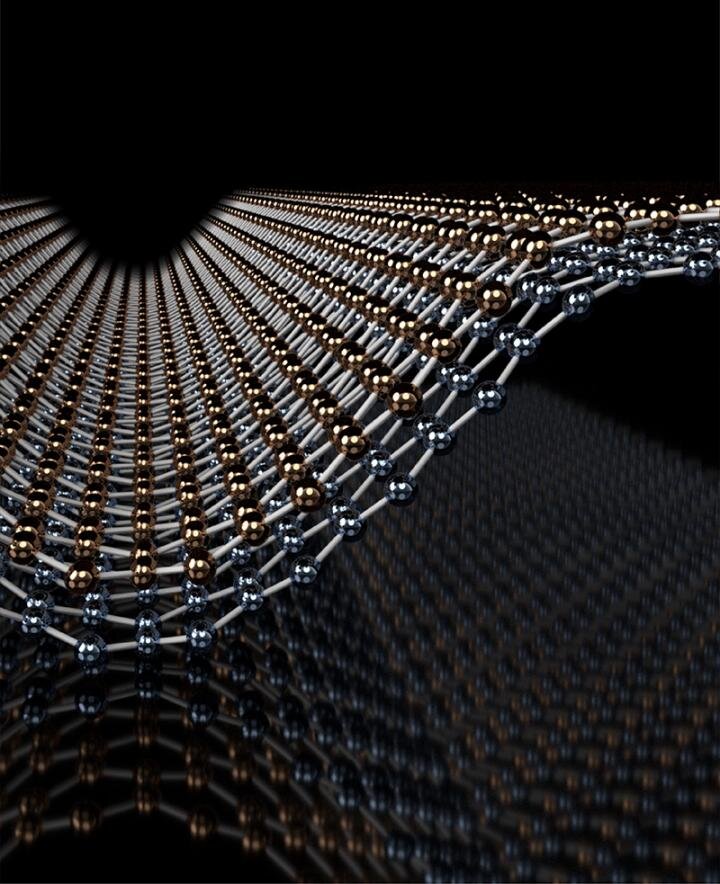
New research by engineers at the University of Illinois combines atomic-scale experimentation with computer modeling to determine how much energy it takes to bend multilayer graphene—a question that has eluded scientists since graphene was first isolated. The findings are reported in the journal Nature Materials.

Graphene—a single layer of carbon atoms arranged in a lattice—is the strongest material in the world and so thin that it is flexible, the researchers said. It is considered one of the key ingredients of future technologies.

Most of the current research on graphene targets the development of nanoscale electronic devices. Yet, researchers say that many technologies—from stretchable electronics to tiny robots so small that they cannot be seen with the naked eye—require an understanding of the mechanics of graphene, particularly how it flexes and bends, to unlock their potential.

“The bending stiffness of a material is one of its most fundamental mechanical properties,” said Edmund Han, a materials science and engineering graduate student and study co-author. “Even though we have been studying graphene for two decades, we have yet to resolve this very fundamental property. The reason is that different research groups have come up with different answers that span across orders of magnitude.”

The team discovered why previous research efforts disagreed. “They were either bending the material a little or bending it a lot,” said Jaehyung Yu, a mechanical science and engineering graduate student and study co-author. “But we found that graphene behaves differently in these two situations. When you bend multilayer graphene a little, it acts more like a stiff plate or a piece of wood. When you bend it a lot, it acts like a stack of papers where the atomic layers can slide past each other.”

“What is exciting about this work is that it shows that even though everyone disagreed, they were actually all correct,” said Arend van der Zande, a professor of mechanical science and engineering and study co-author. “Every group was measuring something different. What we have discovered is a model to explain all the disagreement by showing how they all relate together through different degrees of bending.”

To make the bent graphene, Yu fabricated individual atomic layers of hexagonal boron nitride, another 2-D material, into atomic-scale steps, then stamped the graphene over the top. Using a focused ion beam, Han cut a slice of material and imaged the atomic structure with an electron microscope to see where each graphene layer sat.

The team then developed a set of equations and simulations to calculate the bending stiffness using the shape of the graphene bend. Graduate student Edmund Han, left, professor Elif Ertekin, graduate student Jaehyung Yu, professor Pinshane Y. Huang, front, and professor Arend M. van der Zande have determined how much energy it takes to bend multilayer graphene – a question that has long eluded scientists. Credit: Stephanie Adams

By draping multiple layers of graphene over a step just one to five atoms high, the researchers created a controlled and precise way of measuring how the material would bend over the step in different configurations.

“In this simple structure, there are two kinds of forces involved in bending the graphene,” said Pinshane Huang, a materials science and engineering professor and study co-author. “Adhesion, or the attraction of atoms to the surface, tries to pull the material down. The stiffer the material, the more it will try to pop back up, resisting the pull of adhesion. The shape that the graphene takes over the atomic steps encodes all the information about the material’s stiffness.”

The study systematically controlled exactly how much the material bent and how the properties of the graphene changed.

“Because we studied graphene bent by different amounts, we were able to see the transition from one regime to another, from rigid to flexible and from plate to sheet behavior,” said mechanical science and engineering professor Elif Ertekin, who led the computer modeling portion of the research. “We built atomic-scale models to show that the reason this could happen is that the individual layers can slip over each other. Once we had this idea, we were able use the electron microscope to confirm the slip between the individual layers.”

The new results have implications for the creation of machines that are small and flexible enough to interact with cells or biological material, the researchers said.

“Cells can change shape and respond to their environment, and if we want to move in the direction of microrobots or systems that have the capabilities of biological systems, we need to have electronic systems that can change their shapes and be very soft as well,” van der Zande said. “By taking advantage of interlayer slip, we have shown that the graphene can be orders of magnitude softer than conventional materials of the same thickness.”

Source: https://phys.org/news/2019-11-graphene-softer.html

LOMIKO Metals $LMR.ca Lomiko’s Role in the Future Battery Materials $CJC.ca $SRG.ca $NGC.ca $LLG.ca $GPH.ca $NOU.ca

Posted by AGORACOM at 11:22 AM on Monday, November 11th, 2019
http://blog.agoracom.com/wp-content/uploads/2019/09/Lomiko-Square-Logo-1.png

Lomiko Metals Inc. – Interview with Paul Gill, CEO By Dr. Allen Alper, PhD Economic Geology  and Petrology, Columbia University, NYC, USA on 11/6/2019

Lomiko Metals Inc. (TSX-V: LMR, LMRMF, FSE: DH8B) is a Canadian-based, exploration-stage company, that discovered high-grade graphite at its La Loutre Property in Quebec and is working toward a Pre-Economic Assessment (PEA) that will increase its current indicated resource of 4.1 Mt of 6.5% Cg to over 10 Mt of 10%+ Cg. We learned from Paul Gill, CEO of Lomiko Metals, that the exploration has been completed and it is showing two different areas of deposits: the graphene battery zone and the refractory zone. The consolidated 43-101 resource estimate is expected soon. According to Mr. Gill, the material at Lomiko’s discovery is of similar or better quality than the material at the Imerys Carbon Graphite Mine, 53 km to the Northwest and 100 kilometers from the Imerys processing facility at the Port of Montreal. The Imerys mine has a mine closure plan for 2022 and needs replacement. Located near a producing mine, with an experienced workforce, with excellent infrastructure and year around working capability, La Loutre property has great potential to become the next graphite mine.

Lomiko Metals Inc.

Dr. Allen Alper: Could you give our readers/investors an overview of your Company, Paul, and tell them what differentiates your company from others?

Paul Gill: Right. Lomiko Metals has been working in the battery materials space for about six years now. We’ve focused on graphite because that is the material that makes up the anode of a lithium-ion battery, which is the main power source for most electric vehicles. We have discovered a very good deposit of material in Quebec and now with 170 drill holes, is showing two different areas of near surface mineralization. One is called the graphene battery zone and the other is the refractory zone. We just finished the refractory zone drilling in 2019 and we will be going to a consolidated 43-101 resource estimate shortly.

What makes us different from other companies in this particular sector is that we are located only 53 kilometers from the only operating graphite mine in North America, the Imerys Carbon and Graphite Mine. The discovery we’ve just made at the refractory zone is similar or of better quality than the material or the grades that are being mined at Imerys. This is very significant because everyone has an understanding that the Imerys Carbon Graphite Mine is shortly going to run out of mineable ore and needs replacement. So, we’re in a very good situation.

There are other very relevant companies in the space, Nouveau Monde, which is TSXV:NOU, Mason Graphite, which is TSXV:LLG, Graphite One, which is TSXV:GPH and Northern Graphite, TSXV:NGH. But all of those that are post pre-economic assessment and have major flaws. Mason needs to build infrastructure. Nouveau Monde has sulfur in their particular deposit, which adds cost. Graphite One is located in the Aleutians Islands in Alaska, which is a very difficult mining jurisdiction because of the weather and Northern Graphite has low grade which may hamper the economics

But Lomiko is in a Goldilocks zone, located just north of the Port of Montreal and just south of the Imerys Carbon Graphite Mines. We think we have a very distinct advantage because there is now a North American strategy being put in place for battery materials, which includes lithium, graphite and cobalt.

Dr. Allen Alper: Sounds excellent. Could you tell our readers/investors the highlights of 2019 and your plans for 2020?

Paul Gill: The highlight for Lomiko was finding one strike length was 110 meters, with grades of 14.5%, which are double what they are mining at the Imerys Carbon Graphite Mine. Imagine mineralization taller than the Statue of Liberty and obviously there’s not just one drill hole that’s only six inches wide there. It is probably indicative of a larger area of mineralization.

Of course, we have done many other drill holes and have confirmed a mineralization zone that extends for 900 meters, from the Northwest to the Southeast at the refractory zone and also a width of about 400 meters. So, we have a definite area of a high grade and of mining potential. We’re ready to do a 43-101 resource estimate and the preliminary economic assessment, which will put a dollar value on that particular deposit.

Dr. Allen Alper: Sounds excellent! Great results in 2019!

Paul Gill: It certainly is.

Dr. Allen Alper: Sounds very good! And where you’re located is fantastic. Excellent! It’s great to have high grade and high quality and also to be in a great location.

Paul Gill: Absolutely. It helps to have that infrastructure in place. There’s power all the way through, there’s road access all the way to the property. The only portion of it that’s gravel is about eight kilometers, which is really not that bad. We can surface that pretty easily and that’ll get us right to the site.

It has year-around working capability. Very important! Proximity to the Imerys Mine means that there are workers that are experienced in that particular area for the last little while. That workforce will be available to us. They don’t want to move to another location. We’ll be able to hire some of those people or in fact there may be a potential for a buyout of our company.

Dr. Allen Alper: Sounds excellent! Could you tell our readers/investors a little bit about graphite market and why it’s so important?

Paul Gill: Yes, absolutely. It’s a fascinating market. It is one of the few markets that does not have a many large multinational companies involved. Lithium has a secure niche with Albemarle, down in the States and a couple of large Chinese companies. There is Rio Tinto and BHP and Glencore all involved in the zinc, nickel and copper markets, which are all other relevant battery materials.

But in graphite, there is no one big producer except for the country of China. Now, the country of China has 50 of the world’s 91 lithium-ion mega factories. If you can wrap your head around that, 91 mega factories. The amount of factories, ready to produce li-ion batteries and being built, means that the demand for battery materials is really going to spike as electric vehicles get on the road and there’s more demand for them.

We want to be in place to supply that demand when it comes. We’re in a perfect spot now because even Bloomberg has predicted that in the next decade there’s going to be a five times increase, in demand for battery materials and specifically graphite.

Dr. Allen Alper: Oh, that sounds excellent. Could you tell our readers/investors about your background and your Team?

Paul Gill: Certainly. I have been involved in mining for 20 years. Our first company was Norsemont Mining in 2003, which started at 1 million market cap and subsequently built that to a point at which new directors became involved. We eventually sold that project for $512 million in 2011 to Hudbay Minerals. So, that was a great experience and we want to duplicate that. What I did was look for other materials that are going to be in high demand and have that exponential return potential.

That’s when I looked at graphite. Our CFO, Jacqueline Michael has been with The Company for many years and was part of a buyout of the previous iteration, which was Conac Software. Then she stayed on to be CFO. We have two very good independent Directors, Gabriel Erdelyi and Julius Galik, who help us with running the Company and a vast array of advisors that have come on in the last little while, Dean Nawata, Sandio Pereira, Jason Gregg, who have great connections in the mining market and Mike Patrina, who’s a professional engineer.


So, we’re really building up a team that can be put in place to develop this project once we get the preliminary economic assessment. I think by any estimate, the fact that we were at only 2 million market cap presently and the base concept of the project going to preliminary economic assessment, indicates a jump in value. It’s an opportunity that is very, very relevant right now in the markets with Lomiko trading on the TSX Venture with the symbol LMR and the OTCQB under the symbol LMRMF.

Dr. Allen Alper: Paul, could you summarize the reasons our readers, investors should consider investing in Lomiko.

Paul Gill: Number one, we’ve just finished drilling and are going to update a resource, which will increase our valuation and will go right to a preliminary economic assessment, which will provide a value for the project that will go right onto our audited financial statements. Number two, we are currently doing a financing in Canada at five cents per share Canadian, but the market is trading under that. So, there is an opportunity for buyers in the United States to play a bit of arbitrage and because the financing is not available in the United States.

Three, we think the battery materials market is going to be a great place to have a return on investment that is exponential, and four, we want to get involved in these markets as they’re moving. It’s nothing different from getting involved in computers in 1980 before they became universally used, getting involved in the internet in 1990 before it became universally used, or smartphone in the year 2000 before they became universally used.

It’s the same general trend and it’s a big trend that we need to recognize and realize that there’s a great opportunity for investors. We want to make a strong argument that now is the time for Lomiko.

Dr. Allen Alper: Sounds like extremely strong reasons for our readers/investors to consider investing in Lomiko. Paul, was there anything else you’d like to add?

Paul Gill: Just to thank you for interviewing me at Lomiko Metals Inc. for Metals News. I appreciate it.

Dr. Allen Alper: Thank you. I enjoyed hearing about everything you have been doing. I’m very impressed. We’ll publish your press releases as they come out so our readers/investors can follow your progress.

https://www.lomiko.com/

A. Paul Gill, President & CEO
604-729-5312
Email: [email protected]

New Age Metals $NAM.ca – The #Lithium Even #ElonMusk Couldn’t Buy $LIC.ca $LIX.ca $LI.ca $ELR.ca $ATL.ca

Posted by AGORACOM-JC at 1:36 PM on Tuesday, November 5th, 2019

SPONSOR: New Age Metals Inc. The company’s Lithium Division has already made significant acquisitions in Canada and the USA. The company also owns one of North America’s largest primary platinum group metals deposit in Sudbury, Canada. Updated NI 43-101 Mineral Resource Estimate 2,867,000 PdEq Measured and Indicated Ounces, with an additional 1,059,000 PdEq Ounces in the Inferred. Learn More.

The Lithium Even Elon Couldn’t Buy

  • Bloomberg NEF forecasts global demand for lithium will double by 2025 to about 800,000 tons. Electric vehicle batteries will make up the lion’s share of that demand, followed by consumer electronics and energy storage.
  • With this booming demand, the U.S. is desperate to dominate the lithium production market.

By Jon LeSage 

Demand for lithium will be booming over the next few years, and the US wants to increase its share in the global market for the metal used in electric vehicle and cell phone batteries, energy storage, and consumer products.

Bloomberg NEF forecasts global demand for lithium will double by 2025 to about 800,000 tons. Electric vehicle batteries will make up the lion’s share of that demand, followed by consumer electronics and energy storage. With this booming demand, the U.S. is desperate to dominate the lithium production market.

San Diego-based company EnergySource is taking on this challenge by bringing a new lithium extraction technique to market that can reduce lithium costs when compared to importing the metal from a small number of global markets capable of keeping the cost high. It also taps into a specific lithium supply that companies have been trying to access for decades.

This supply is nested beneath geothermal power plants that have been operating next to one of the world’s geothermal hot spots — the Salton Sea in the California desert, where the plants have been operating since the 1980s. It’s such a hot market that, not long ago, Tesla chief Elon Musk made a bid on a competitor — Simbol Materials — for $325 million. The company went bust shortly after and Tesla and its competitors have had to wait for another supplier from the rare metal market.

Major lithium projects underway in the US include Piedmont Lithium’s hard rock lithium project in North Carolina; Standard Lithium’s Arkansas Smackover lithium brine project; and Lithium Americas’ Thacker Pass lithium claystone project in Nevada. In addition, output last year came from a Nevada-based brine operation, most likely in the Clayton Valley, which hosts Albemarle’s Silver Peak mine.

The actual production in the US can only be estimated, with top lithium producers in the US choosing to withhold production numbers from Investment News to avoid disclosing proprietary company data. The US is one of the nine largest lithium producers in the world, with Australia, Chile, China, and Argentina leading the global industry.

It was the focus of a May conference in Washington featuring speakers from Tesla, the US Dept. of State and Dept. of Energy, as well as Standard Lithium Ltd. and other companies working to develop U.S. lithium mines.

Tesla, Volkswagen, other carmakers, and battery manufacturers are expanding their EV and lithium-ion battery output. They’re frustrated with being reliant on mineral imports without a major push to develop more domestic mines and processing facilities.

US Senator Lisa Murkowski, the Alaska Republican who is chair of the Senate’s Energy and Natural Resources Committee, said at the May conference that she would be introducing the American Mineral Security Act with Senator Joe Manchin, a West Virginia Democrat. The legislation was written to streamline regulation and permitting requirements for the development of mines for lithium, graphite, and other EV supply chain minerals. The senators see it as part of a plan to offset China’s dominance in the space. 

“Our challenge is still a failure to understand the vulnerability we are in as a nation when it comes to reliance on others for our minerals,” Murkowski said.

The Senate’s Committee on Energy and Natural Resources is looking at an amended version of the American Mineral Security Act. A similar version of the bill is now being considered in the House of Representatives.

Making electric vehicles has been costly mainly due to the battery packs and the precious lithium used in nearly all of them. Solid-state batteries and other options for EV batteries are being developed, yet lithium is expected to dominate the EV battery space for years. Harvesting that metal inside the US is expected to be a stepping stone to compete with the huge Chinese EV market.

While U.S. lithium production is slowly ramping up, breakthroughs like exploiting the Salton Sea could end up being a game-changer for the industry. The energy division of Berkshire Hathaway has been working with the US Dept. of Energy to resolve the challenges that have blocked lithium extraction at the Salton Sea, and one day soon we may see a true American lithium revolution.

Source: https://oilprice.com/Energy/Energy-General/The-Lithium-Even-Elon-Couldnt-Buy.html