Agoracom Blog Home

Posts Tagged ‘#smallcapstocks’

Atlanta Bought an #Overwatch #Esports Team. Here’s Why You Should Care As A $GMBL investor $ATVI $TTWO $GAME $EPY.ca $TCEHF $Game.ca $EPY.ca

Posted by AGORACOM-JC at 10:04 AM on Thursday, November 22nd, 2018

SPONSOR: Esports Entertainment Group (GMBL:OTCQB) The esports betting site trusted by over 176 esports teams from around the world. Click here for more information

Eeg logo black 01


Esports is one of the fastest growing sports in the world—and Atlanta is becoming its Southeast hub
By Joe Reisigl – November 15, 2018

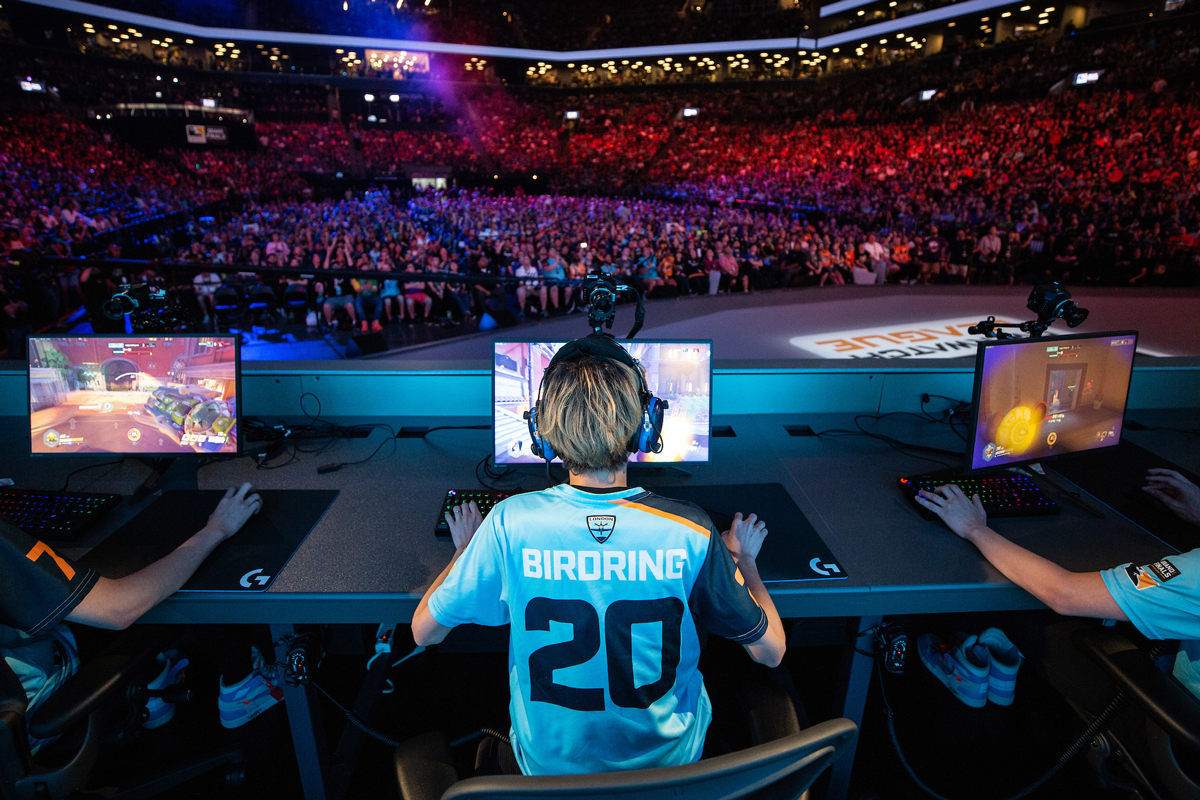
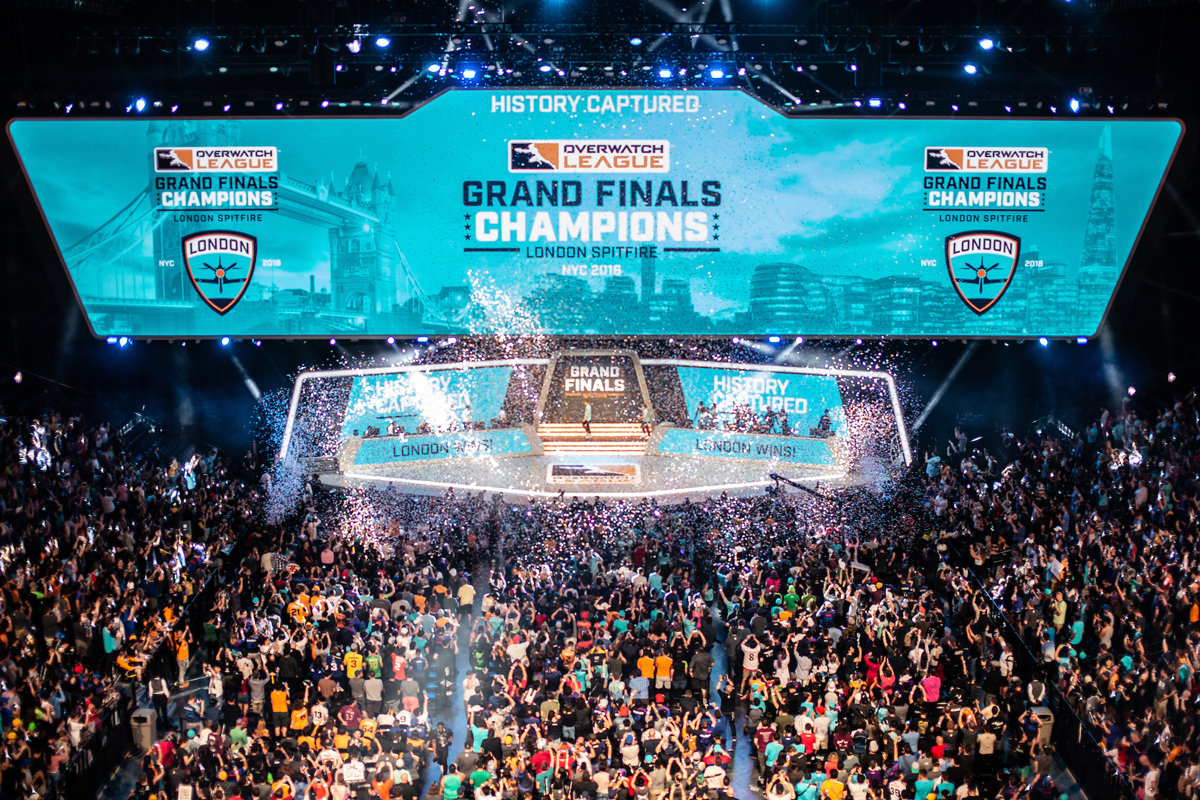
The London Spitfire won the championship in Overwatch League’s first season.Photograph courtesy of Overwatch League

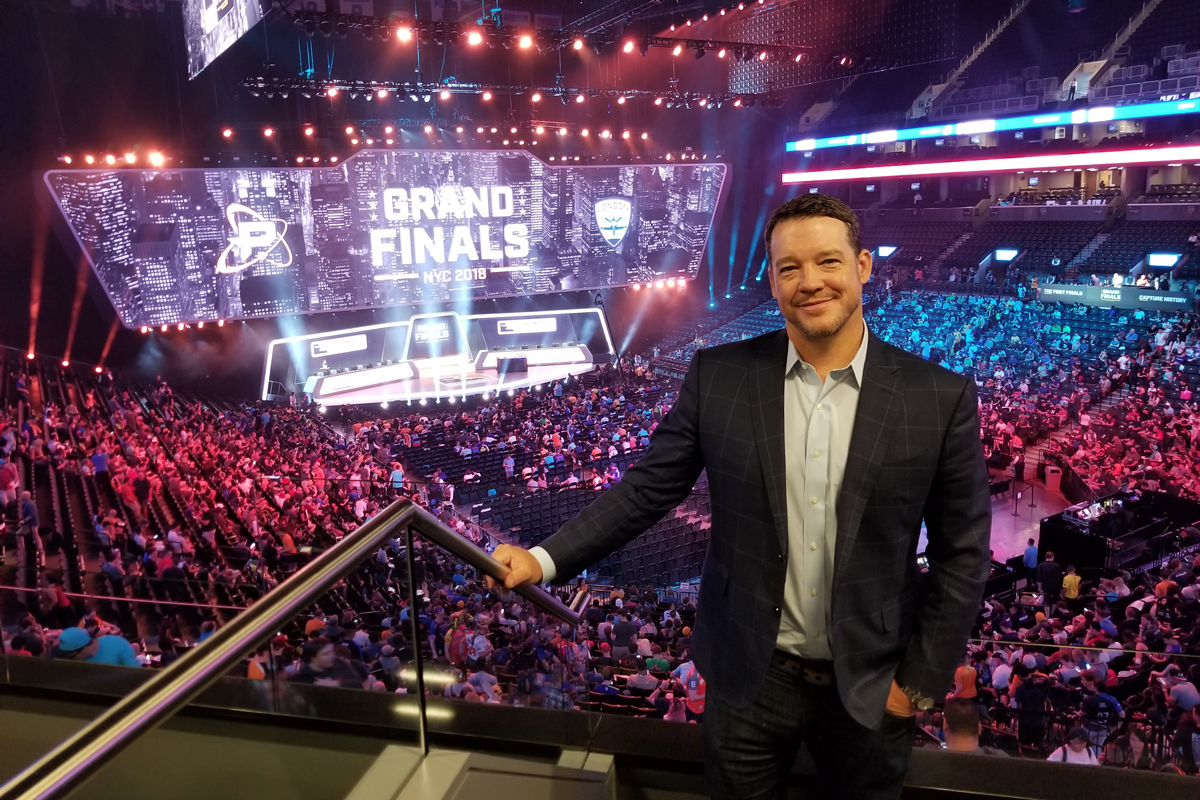
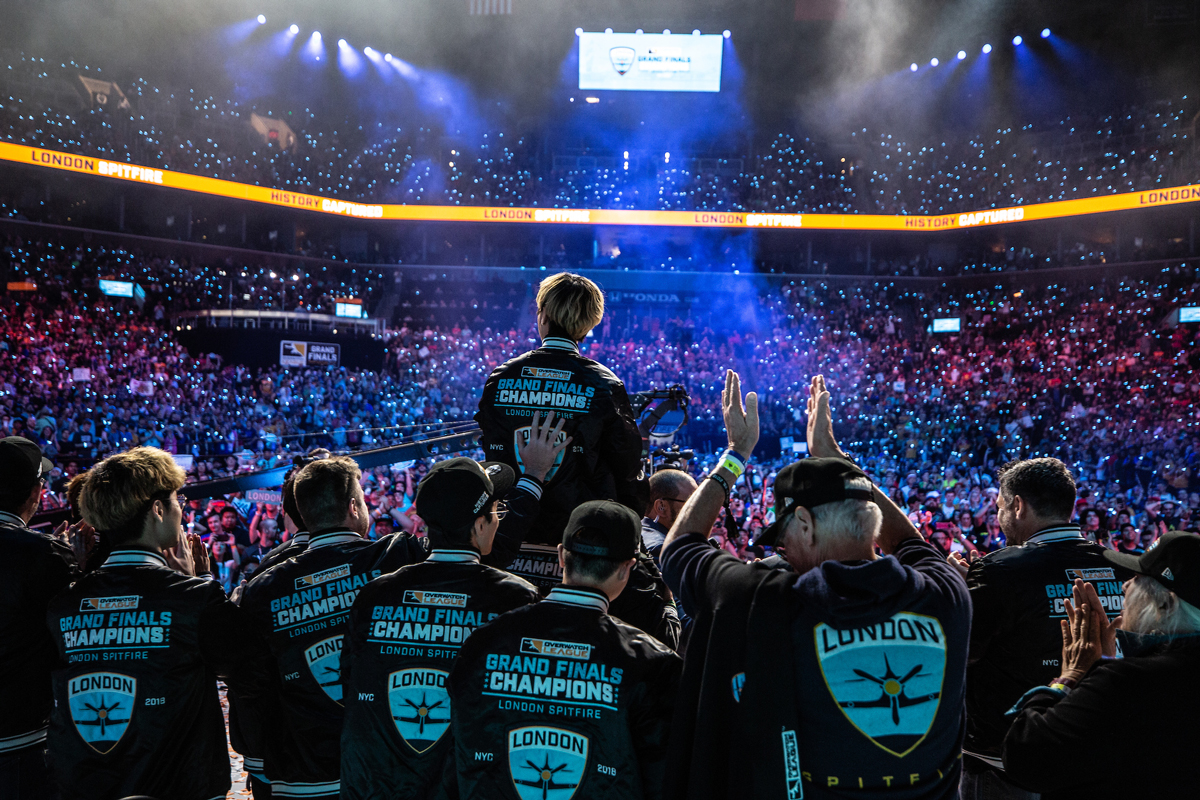
It was pure pandemonium in Brooklyn’s Barclays Center. Confetti sprinkled through the sky, a roar ran through a crowd of thousands, and a team of six, the London Spitfire, all took their hands off their keyboards and mice to embrace each other in celebration of their victory while their opponents, the Philadelphia Fusion, hung their heads in defeat.

The venue was sold out, with more than 20,000 tickets sold, while live TV and online streams from Disney XD, ABC, Twitch.tv, and, most notably, ESPN, brought in an additional 860,000 viewers per minute from around the globe.

All of this just to watch 12 millennials compete professionally in a video game called Overwatch. With ESPN airing the game during primetime television (7 p.m. on a Friday), the July 27-28 event was huge for showcasing the rise of eSports.

Atlanta is going all-in on the phenomenon. The city will soon have its own Overwatch League team, the first eSports team to officially represent Atlanta. The team was purchased in July by consulting firm Province, Inc. and Atlanta-headquartered Cox Enterprises. The two companies created a joint venture, Atlanta Esports Ventures, which is assembling the team, named the Atlanta Reign.

The official logo of Atlanta’s Overwatch League team, Atlanta Reign.Photograph courtesy of Atlanta Reign

Cool, you might say, but who cares about watching other people play video games? While many are still unaware of what eSports is or don’t take it seriously, the industry is more than YouTube personalities and Twitch streamers making millions of dollars a year for screaming at monitors and guzzling energy drinks—it’s a force to be reckoned with.

With more than $500 million dollars coming in from advertising and sponsorships this year, a projected $1 billion revenue in 2019, and a staggering 38 percent year-to-year revenue growth, eSports is one of the fastest growing sports in the world. And there’s a reason why: businesses want to appeal to young people.

“[Esports] is outpacing any other sport—traditional or not—by a wide margin,” says Paul Hamilton, president and CEO of Atlanta Esports Ventures. “You’re seeing a huge number of eyes in a demographic that, traditionally, has been hard to reach.”

Paul Hamilton, president and CEO of Atlanta Esports Ventures, went to the Overwatch League Grand Finals at Barclays Center. “I’m a total sports nut, and the energy in that room was as loud and energized as any championship in any sport I’d ever been to,” he says.Photograph courtesy of Cox Enterprises

However, eSports has had problems in its players lacking professionalism, making sponsors hesitant to invest in a league with improper behavior, or one with a lack of structure that makes it difficult for for casual viewers to follow along with their favorite games. That’s where Overwatch League comes in.

By copying the format of professional sports leagues, Overwatch League is the first eSports league that seems to be doing everything right. It franchises teams by city—from Los Angeles to London to Seoul to Shanghai—which increases local interest by giving fans a home team to rally around. It organizes games similar to the NBA and NHL with a preseason, regular season, all-star break, and playoffs, creating a format that’s easy to comprehend. It keeps the production value of its brand and events top-notch, with codes of conduct for its players and coaches (which it is enforcing), energetic announcers, enthusiastic fans, and primetime TV spots. And the league gets sponsorships and offers large sums of money to winning teams—$3.5 million was the prize pool in 2018.

What’s most important: Overwatch League is turning eSports into a financially viable option for businesses to invest.

“It helps [Cox Enterprises] align with a new demographic,” says Dallas Clement, executive vice president and chief financial officer of Cox Enterprises. “Young folks who are enormously enthusiastic about eSports and gaming will possibly think of Cox as a place to come and work.”

Photograph courtesy of Overwatch League

“Within the next two to three years, Atlanta will probably be the hub of eSports,” says Mustafa Aijaz, chief operating officer of SoaR Gaming, a gaming organization that’s housed in metro Atlanta because of its booming eSports potential.

The number of gaming companies and opportunities in Atlanta is astounding. Thanks to the same entertainment tax credits that apply to the film industry, hundreds of gaming companies have moved to the metro Atlanta area, including video game developer Hi-Rez Studios; Scuf Gaming, which creates custom game controllers and accessories; and KontrolFreek, which creates thumb grips for gaming controllers. In 2016, Turner Broadcasting opened ELEAGUE, which broadcasts competitive eSports on TBS on Fridays at 11 p.m. In August, the Atlanta Hawks announced they would be purchasing a franchise named Hawks Talon Gaming Club to join the NBA’s eSports league, the NBA 2K League. Georgia State University has joined the National Association of Collegiate Esports and the Georgia Esports League, where it’s providing scholarships and assembling a team to play League of Legends and Smite competitions. SCAD posted a job position for an eSports head coach to supervise its Overwatch and League of Legends teams. Every day, gamers go to bars like Battle & Brew or Joystick Gamebar and every year they pack the Georgia World Congress Center for expo and competition DreamHack. Even Atlanta’s culture icons are getting into gaming: Lil Yachty played the world’s most popular game at the moment, Fortnite, with Ninja, the game’s most popular player, to create a video that garnered 11 million views on YouTube. And Waka Flocka has performed at DreamHack and competed in a FIFA 18 tournament for this summer’s MLS All-Star Game.

With the world’s largest airport in its back pocket and the perfect geographical location to be a center point for gamers in the Southeast, Aijaz thinks Atlanta is the third largest area for eSports, behind California and Texas.
Photograph courtesy of Overwatch League

“There are so many opportunities in Atlanta, it’s only going to get bigger and bigger,” he says. “Starting with this Overwatch League, I’m only waiting to see what’s to come.”

“Esports is just something that needs to be culturally accepted, and time will be the only thing that will allow that,” says Michael “Makz” Maknojia, SoaR’s founder and CEO. “Being on top of these things first rather than waiting is huge, and it’s good that Atlanta got into it now.”

Source: https://www.atlantamagazine.com/news-culture-articles/atlanta-bought-an-overwatch-esports-team-heres-why-you-should-care/
#Solar A ‘New Backbone’ of Global Power, Bodes Well For $HPQ.ca -Silicon Resources $FSLR $SPWR $CSIQ $PYR.ca $XMG.ca

Posted by AGORACOM-JC at 6:13 PM on Wednesday, November 21st, 2018

SPONSOR: HPQ-Silicon Resources (HPQ:TSX-V) Exclusive global partnership puts HPQ-Silicon Resources in a position to turn Quartz project into lowest cost supplier to solar industry. Click Here For More Information

Related image

————

Vattenfall has co-located solar and wind at the Parc Cynog site in Wales (pictured). Image: Vattenfall.

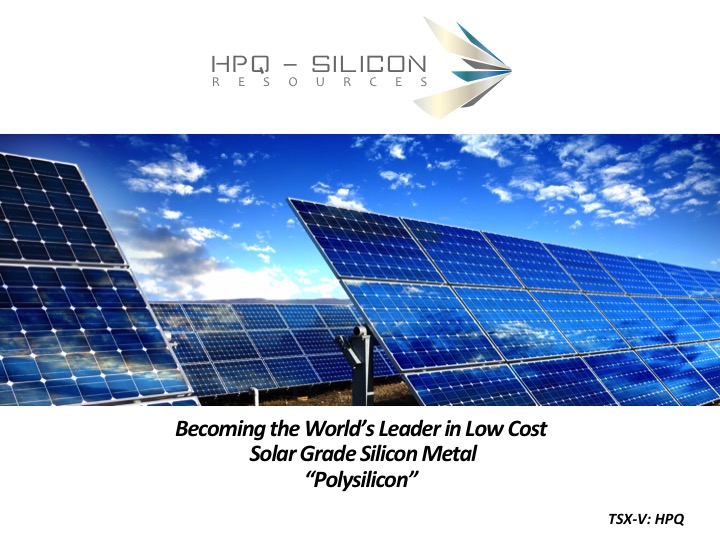
Solar stands to be a “new backbone” of the power sector as it cements its status as the world’s “dominant new build generation technology”, Vattenfall’s head of solar and battery storage has said.

Earlier this year the Swedish state-owned utility announced that it was to invest €100 million in European solar deployment over the next two years. That investment is to be predominantly made into utility-scale solar farms co-located with wind and/or storage due to the complementary nature of the technologies.

Speaking to Current±, Claus Wattendrup, head of solar and battery storage at Vattenfall, said the company feels that the “time is right” for solar as the technology is edging closer to grid parity in numerous markets.

“I see solar as a new backbone of the energy industry,” Wattendrup said, adding that continued price reductions in both the technology and other costs associated with deployment had resulted in the solar sector becoming a “different ball game” to how it was before.

And this maturation has resulted in other large energy incumbents – not just Vattenfall, but the likes of Shell and BP – picking up the PV mantle.

“It’s the price level, [solar] has been quite expensive and it has been small – just a few megawatts – and in the past our companies have thought mainly in gigawatts of conventional capacity. This paradigm was based on a mix of all kinds of different reasons,” Wattendrup said.

As this paradigm has shifted and solar deployed in the hundreds of megawatts, if not gigawatts, big energy majors have become increasingly attracted. Both BP and Shell have acquired stakes in developers – Europe’s Lightsource and US-based Silicon Ranch respectively – in order to increase their standing in the technology and its application.

Vattenfall considers that its experience in wind development lends it the necessary skillset to adapt to solar, but Wattendrup reserves particular criticism for any power player that doesn’t pick up PV.

“If you don’t manage [solar] as a serious player, you’re doing something wrong. Therefore everyone’s moving into this in a serious manner. There’s no greenwashing, this is serious,” he said.

Claus Wattendrup was speaking to Current± for a feature-length article published in this month’s edition of sister publication PV Tech Power, which can be read in full here.

Source: https://www.current-news.co.uk/news/solar-a-new-backbone-of-global-power-vattenfall-says

How Amazon $AMZN E-Commerce Giant Chose #Blockchain Over #Bitcoin $IDK.ca $HIVE.ca $BLOC.ca $CODE.ca

Posted by AGORACOM-JC at 4:57 PM on Wednesday, November 21st, 2018

SPONSOR: ThreeD Capital Inc. (IDK:CSE) Led by legendary financier, Sheldon Inwentash, ThreeD is a Canadian-based venture capital firm that only invests in best of breed small-cap companies which are both defensible and mass scalable. More than just lip service, Inwentash has financed many of Canada’s biggest small-cap exits. Click Here For More Information.

Idk large

———–


On November 13, Amazon was granted two crypto-related patents. While the American e-commerce pioneer, with a revenue of over $177 billion, has not chosen to accept Bitcoin (BTC) and major altcoins as a payment option despite public interest and competitors’ experience, it has not ignored the subject altogether. In fact, Amazon Web Services (AWS), the company’s cloud computing arm, has contributed to blockchain adoption.

Amazon and cryptocurrencies: refusal to accept BTC, unfulfilled plans for Amazon Coin

Amazon has a complex relationship with crypto. In April 2014, the e-commerce giant decided not to accept Bitcoin (BTC) citing customer preferences. Amazon payments head Tom Taylor told Recode in an interview:

“Obviously it gets a lot of press and we have considered it, […] but we’re not hearing from customers that it’s right for them and don’t have any plans within Amazon to engage Bitcoin.”

Curiously, the move came just few months after Overstock.com, one of Amazon’s rivals, became the first major retail company to introduce BTC as a payment option and found initial success, as its CEO Patrick Byrne claimed that Amazon would have to “follow suit.”

Taylor’s comment could have meant that the e-commerce giant would turn to cryptocurrencies once they see more exposure. However, the 2014 decision stays to date, regardless of the overall improved market capitalization and adoption, public petitions addressed to CEO Jeff Bezos, and some businesses being built around serving as the middlemen for Amazon customers willing to pay with digital currencies.

Nevertheless, Amazon has not distanced itself from engaging with crypto altogether. In May 2014, not long after announcing it had no plans for crypto, Amazon was awarded a Bitcoin-related patent for the use of digital currencies as payment for cloud computing services on Amazon Web Services (AWS). It is worth noting, however, that the patent was filed back in March 2012, and crypto was mentioned as only one possible form of payment there.

In November 2017, the e-commerce giant was reported purchasing a number of crypto-related domain names including “amazoncryptocurrencies.com,” “amazoncryptocurrency.com,” and “amazonethereum.com.” It was also noted at the time that “amazonbitcoin.com” redirects to the original Amazon URL.

However, it could have been an attempt to shield the Amazon brand or avoid confusion with Amazon Coin, the company’s digital currency that was introduced in 2013 for Kindle e-book owners. The coin has not seen extensive use despite the documented public interest.

In April 2018, Amazon won a patent for a subscription feed system described as a “streaming data marketplace.” Essentially, the company claimed, it could “identify [Bitcoin] transaction participants” for governments and law enforcement. The document was filled in June 2014 and showed that while the e-commerce giant might accept the idea of dealing with crypto, it put strong emphasis on the Know Your Customer (KYC) side of the business. That, in turn, would neglect a major part of Bitcoin’s ideology and design.

Thus, Amazon has not shown itself to be exactly a pro-Bitcoin company. Nevertheless, its relationship with the underlying technology, blockchain, has proven to be much more fruitful.

Amazon and blockchain: major collaborations, contribution to adoption

On December 5, Amazon Web Services (AWS) announced a partnership with R3 — a major blockchain consortium of over 200 members — to allow its Corda platform to become one of the first distributed ledger technology solutions (DLT) on the AWS marketplace. Corda is an open-source DLT platform designed to work within finance to operate complex transactions and restrict access to transaction data. Basically, it allowed users to deploy decentralized applications (dApps) onto the AWS platform and to create new apps directly.

The news came as a shock, granted that just a few days before the announcement, AWS CEO Andy Jassy essentially criticized blockchain for not having use cases “beyond the distributed ledger,” noting that even those had very limited capabilities. Moreover, he reiterated the company’s policy not to “build technology because we think it is cool.”

He did add, however, that AWS was interested in ways that blockchain could benefit their customers:

“We are very intrigued by what customers are ultimately going to do there.”

Still, there were at least three blockchain-based platforms on the AWS marketplace before Corda’s arrival and Jassy’s speech, which shows that Amazon’s initial interest in blockchain arose earlier in 2017.

On April 19, 2018, AWS’s journey into blockchain continued. The cloud platform introduced its blockchain framework for Ethereum (ETH) and Hyperledger Fabric, allowing users to build and manage their own blockchain-powered DApps. Called AWS CloudFormation Templates, the tool was designed to avoid the time-consuming manual setup of one’s own blockchain network.

Next month, in May, AWS partnered up with ConsenSys, a blockchain incubator started by Ethereum’s co-founder Joseph Lubin. Specifically, the e-commerce company collaborated with Kaleido — a blockchain business cloud that aims to help firms accelerate the “entire journey from experimentation and PoCs [proofs-of-concept] to pilots and production,” and is based on the Ethereum blockchain. Together, they aim to offer simplified blockchain cloud platforms for its clients so that they can “focus on their scenario, [without having] to become PhDs in cryptography,” as Kaleido co-founder Steve Cerveny explained to CNBC.

Kaleido has since expanded to a full-stack platform dubbed “Kaleido Marketplace.” It reportedly “eliminates 80 percent of the custom code” needed to build a given blockchain project by providing an array of tools and protocols that are “plug-and-play,” spanning needs from back-end development to front-end app user interfaces.

Currently, there are around 25 blockchain-oriented platforms hosted on the AWS platform, some of which are also reporting promising results. For instance, in September, a blockchain system developed by Australia’s national science agency (CSIRO) and Sydney University claimed to have set a benchmark of 40,000 transactions per second during a test on Amazon Cloud — for comparison, BTC infrastructure normally scales up to eight transactions per second, while ETH blockchain capability is set at 15 transactions per second.

Amazon’s blockchain experiments have attracted recognition from mainstream players: for example, “Big Four” audit and consulting firm Deloitte has emphasized Amazon’s blockchain-related efforts in its October report, arguing that the e-commerce giant had been helping to stimulate technology adoption and contributing to improving the costs of operations on blockchain. Additionally, Bank of America (BoA) research analyst, Kash Rangan, told CNBC that blockchain is well-suited to some of the world’s largest corporations, noting:

“Amazon will benefit from incremental cloud services demand from blockchain implementation, while improved supply chain tracking should make Amazon’s retail operations more efficient.”

Amazon’s latest advancement: more blockchain patents, crypto-related job ads

While Amazon has been acquiring both cryptocurrencies and blockchain-related patents, it is fair to take them with a grain of salt — as the industry is still young, a lot of players, like the aforementioned Bank of America (BoA), which currently has the most of such patents, are merely trying to mark the field before the others get there. Consequently, not all patents (blockchain-related or not) are going to be put to use any time soon. For instance, in 2016 Amazon was awarded a patent for a system to deliver goods through a chain of underground tunnels, a highly ambitious and costful goal that is probably not the company’s top priority.

On November 13, the U.S. Patent and Trademark Office (USPTO) published two more Amazon patents related to methods for protecting the integrity of digital signatures and improving distributed data storage, filed in April 2018 and December 2015 respectively.

The first patent document outlines a “signature delegation” method for “protecting the integrity of digital signatures and encrypted communications,” by allowing for the generation, distribution, validation, and revocation of one-time-use cryptographic keys. In the proposed system, these keys are arranged in what is known in cryptography as the so-called “Merkle Tree” structure, which is essentially a binary tree of hashes constructed from the bottom up.

Amazon’s second patent, is related to distributed data storage. The filing proposes a “grid encoding technique,” using groups of collected “shards,” where each shard represents a logical distribution of data items stored in a given grid. The patent filing suggests this method can help minimize storage redundancy.

While Amazon might be having more patents coming, the e-commerce giant is nowhere to be seen in the main part of patents, occupied by the likes of its Chinese counterpart Alibaba and IBM. Nevertheless, Amazon is set to continue its explanation of the technology, as the AWS platform continues hosting blockchain solutions, and the company is looking to expand its staff with more blockchain engineers.

Source: https://cointelegraph.com/news/amazon-how-e-commerce-giant-chose-blockchain-over-bitcoin

CLIENT FEATURE: North Bud Farms $NBUD.ca sustainable low cost, high quality cannabinoid production and procurement $ACB $WEED.ca $HIP.ca

Posted by AGORACOM-JC at 12:26 PM on Wednesday, November 21st, 2018

WHY NORTHBUD FARMS?

  • Canadian regulatory door for CIP (Cannabinoid Infused Products) is opening in 2019
    As shown in other legal jurisdictions (Colorado, Washington, Nevada, California)
  • Infused products sector has become the highest margin segment of the industry
  • Positioned to be a raw input producer for this space
  • Currently working with multiple food, beverage and science companies to provide safe standardized cannabinoid infused raw inputs for large scale GMP manufacturing of products
  • Announced Creation of “1017” Distribution and Signing of a LOI to Acquire Janey’s Cannabis Line

THE OPPORTUNITY

  • Acquired late stage ACMPR applicant GrowPros
    MMP from Tetra Bio-Pharma (TSXV: TBP)
  • GrowPros MMP application was submitted in November 2014 and is currently in the ‘Confirmation of Readiness’ stage.
  • Phase 1 is located on 95 acres of agricultural farmland in Low, Québec.
  • Option exists to acquire more land if needed
  • Facility will focus on GMP (higher production grade) pharma-grade cultivation and food-grade extracted inputs

 NORTHBUD October Construction Update. Everything is on schedule!

LOCATION

SITE DETAILS: LOW COST INFRASTRUCTURE

Construction of Facility

NORTHBUD and its team have been hard at work finalizing some minor design changes. NORTHBUD has received a detailed timeline for construction from our builder, NGA Construction Inc., and is on schedule to have the facility completed and an evidence package submitted to Health Canada in Q1 2019.

All infrastructure implementation has been completed and physical facility construction has begun.

ACMPR Application:

NORTHBUD, through its wholly-owned subsidiary GrowPros MMP Inc. which was acquired from Tetra Bio-Pharma Inc. in February 2018, is pursuing a license under the Access to Cannabis for Medical Purposes Regulations (ACMPR).  In this regard, NORTHBUD has engaged Cannabis Compliance Inc. to assist in the migration of the ACMPR application to the CLTS which went into effect after the implementation of the Cannabis Act on October 17, 2018. NORTHBUD will be making amendments in order to take advantage of favourable changes that have been implemented under the Cannabis Act.

Hub On AGORACOM

FULL DISCLOSURE: North Bud Farms is an advertising client of AGORA Internet Relations Corp.

‘Non-Intrusive’ #Programmatic Advertising: The Future of #AR & #VR Monetisation? $GOOD.ca $TTD $RUBI $AT.ca $TRMR $FUEL

Posted by AGORACOM-JC at 11:08 AM on Wednesday, November 21st, 2018


  • This week UK monetisation outfit Admix revealed that it had secured an impressive USD$2.1m (£1.63m) in funding to further develop its AR and VR advertising platform.

by Will Freeman

As reported by Tech.EU, Admix was only founded in 2017, with a focus on allowing developers to place advertisements programatically that sit contextually inside content.

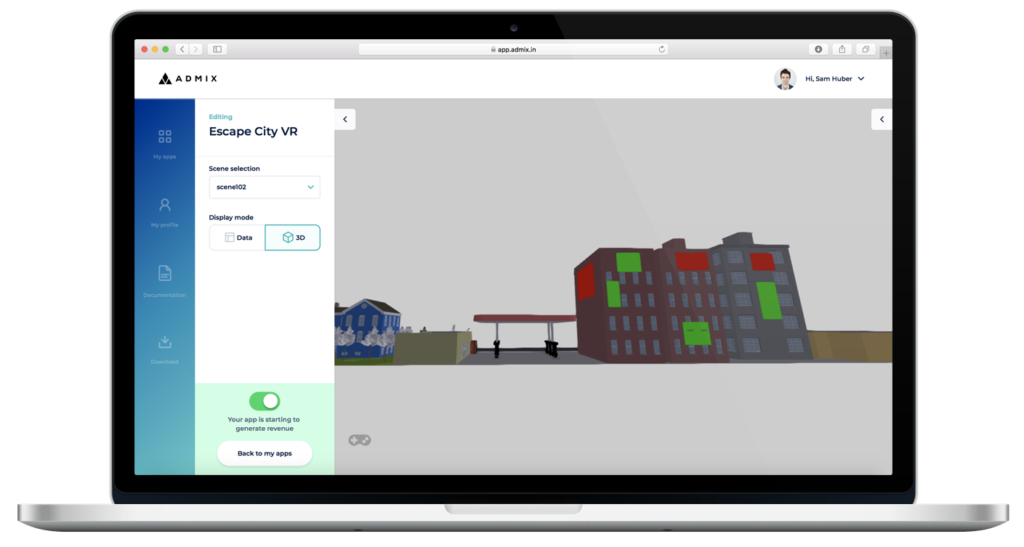
A simple, hypothetical example would a be a VR game set in a sprawling city. Admix’s platform could allow a developer to assure that programmatic ads appeared only as billboards on the side of a digital skyscraper within that city. Similarly, advertiser branding could be applied to existing in-game assets or IAP items. It allows advertisements that – as Admix puts it – are ‘non-intrusive’, and sit with context in a game world.

“Today, VR/AR developers have very few options to monetise their content: the few solutions that exist are intrusive and not adapted to VR/AR”, said Admix co-founder and CEO Samuel Huber in a statement. “This creates a lack of incentive for creators, which slows down the industry. Admix aims to grow the industry by creating the infrastructure to power a sustainable business model in VR/AR. Our non-intrusive advertising model respects the users, creates a sustainable economy for developers, and enables brands to stand out in a way that is impossible on existing, saturated channels.”

SpeedInvest led the funding round, collaborating with Founders Factory, Suir Valley, and Force Over Mass. The money will be spent primarily on doubling Admix’s 15-staff headcount across its London and San Francisco offices.

The technology works by providing a plug-in for the popular Unity and Unreal game engines, which are increasingly used not just to build video games, but interactive digital content more generally. Depending on which engine a developer is using, they download the relevant plug-in. That lets them define the areas of inventory they want to offer to advertisers, from within the same tool they use to build their content. Perhaps they might want to designate those hypothetical billboards as a place to run ads.

Admix’s solution equally enables devs to set how they want to use options like video, banners, or 3D placements. Admix users can then mange their apps, filter relevant advertisers, and so on, via the associated web platform. The inventory is sold programmatically, and the developer keeps 75% of the ad revenue.

The Unity plug-in is available now, while there is a waitlist for those keen to embrace the Unreal version.

The idea is that the adverts will not only be non-intrusive, but even add to the experience on offer. Consider a football game. Placing real-world ads on the siding boards that surround a football pitch would be to add realism to the world. In a social VR world, a player might be more engaged with the game if they can dress their avatar in real brands they identify with out here in reality.

The approach draws on something that has been a rule of thumb for in-game advertising for many years. Contextually relevant advertising can make a game world all the more convincing, while forced pop-ups with little relevance to a game’s setting can simply push players away. Advertising that can monetise while engaging and retaining? That’s something of a perfect storm for monetisation.

And, in VR and AR, Admix’s method is particularly powerful. Because there, presence is so important. ‘Presence’, with reference to VR and AR, refers to the sensation that you really do physically inhabit the worlds such display technologies take you to. That makes them all the more powerful and engaging; and it means that intrusive ads can really derail an experience. Anything intrusive or out-of-context can undermine the power of presence. Equally, thanks to importance of keeping users comfortable within VR in particular, unique confines with regard to displaying the likes of menus and text exist. A traditional pop up banner in a VR experience that clashes with the scene around it really could make a player feel unwell; that’s a great deal more serious than an advert simply irking a user.

Admix’s offering – bolstered by its Oasis tech, which seamlessly links distinct VR worlds – is certainly impressive. And the investment in the startup? It could be read as an assertion that non-invasive programmatic advertising with the additional capacity to engage and retain might emerge as the defining ad tech for VR and AR content.

Source: https://www.exchangewire.com/blog/2018/11/20/non-intrusive-programmatic-advertising-the-future-of-ar-and-vr-monetisation/

#Dota 2 tournament showed me the future of #Esports $GMBL $ATVI $TTWO $GAME $EPY.ca $TCEHF $Game.ca $EPY.ca

Posted by AGORACOM-JC at 10:26 AM on Wednesday, November 21st, 2018

The three-day event laid out why competitive gaming is in the future of entertainment, though the contest wasn’t without its flaws.

Aloysius Low/CNET

Despite being a huge fan of esports, and Dota 2 in particular, I’ve never actually sat down at an esports competition from beginning to end. I’m a journalist. I usually have a job to do: Running about, doing interviews and meeting executives to hear them talk about the future of competitive gaming.

Dota 2 is a multiplayer online battle arena (MOBA) game that pits two teams of five against each other. The aim of the game is not to kill the other team’s heroes, of which there are 115 to pick from, all with different skill sets, but to destroy the enemy’s main building. And with each hero sporting their own unique abilities, the game can often be confusing and chaotic for a new viewer. But I digress. Where were we?

Oh yes. The future of esports. I’m always talking about the future of esports.

This time, however, I committed to the present. At this year’s first competitive Dota 2 Major tournament in Kuala Lumpur, Malaysia, I found myself sitting down. Enjoying the experience. Instead of, you know, doing work.

Casters and analysts of the Dota 2 Major were celebrities in their own right.

Aloysius Low/CNETAnd it was then that I realised what I’ve been missing out the entire time I’ve been covering esports: The event itself. The exhilarating atmosphere that you’d only experience by sitting with a massive crowd and cheering for your favorite team. The present.

I’ve watched Dota 2 tournaments from home on my comfortable couch, with my two cats beside me, whooping as my team kicked butt. I found myself wondering if I had wasted time and money flying up from Singapore, unable to go through with my planned interviews.

Fans gather around the Dota 2 logo outside the arena for a photo.

Aloysius Low/CNETBut it was a lower-bracket game, a battle between two hot favorites, Evil Geniuses and Ninjas in Pyjamas, that had the crowd unified in excitement. Regional Southeast Asia teams had been eliminated, so with no local team to root for the crowd took the initiative and cheered everything. Every single play, every kill. They drowned the Axiata Arena in wild hoots of excitement. Watch the clip to hear just how hyped up the crowd was.

I sat up, fists pumping and screaming with the crowd as one team’s plays cancelled out the other team’s lead. Even though the in-game AI predicted a 97 percent win probability for NIP, things quickly turned around and EG took the lead.

Soon we were set for a third game. A toilet break and dinner beckoned, but no one wanted to give up their seats to the touch-and-go match. And go it went. NIP made yet another play, resetting the game. The crowd screamed as the tables were turned.

It ended in a loss for NIP in game three. The team was eliminated from the tournament but fans were satisfied, calling it the best series so far. And that was even before the grand finals were due to be played on the last day.

Malaysian player Yeik “MidOne” Nai Zheng (second from left) plays on Team Secret, which features an international lineup and is based in Europe.

Aloysius Low/CNETWith Russian team Virtus.pro beating Evil Geniuses in the semifinals, the crowd picked Team Secret by default to root for in the grand finals, as it featured star Malaysian player Yeik “MidOne” Nai Zheng. But Virtus.pro drew plenty of cheers for some amazing plays as well.

I was sitting next to a Malaysian blogger, who’d brought her husband along. She told me they had met through Dota, and that while she was rooting for Virtus.pro, her husband was cheering for Secret.

She laughed at her husband as Virtus.pro drew first blood, taking the first game. Her husband teased her as Secret took the lead, winning games two and three. With Virtus.pro winning game four in style, I jokingly told her the losing supporter had to sleep on the couch tonight — she told me he’d be sleeping there anyway.

Virtus.pro fought off Secret in style, clinching the top spot in a nail-biting match, and my newfound friend couldn’t be happier. And it’s memories like this that I found myself taking away from the event.

Russian team Virtus Pro celebrates on winning the first Dota 2 Major in this new Dota Pro Circuit season.

Aloysius Low/CNETIt was exactly the same atmosphere as you’d find at any other sporting event: Some crowd members glowed with delight, others were disappointed. People discussed the players’ mistakes as we streamed out of the arena. There’s been so much buzz about how esports is shaping up to be a multibillion dollar industry in the near future, but in terms of passion and excitement the future is already here, and we’re on track to watch it all unfold.

Fans of League of Legends, Overwatch and CS:GO’s competitive leagues will know exactly what I’m talking about, we’re already passionately devouring the content produced, lining up to meet players and talent, who have become stars and idols in their own right. We’ve developed our own memes and jokes, laughed or cried when our teams won or lost.

There’s no need to wait until esports becomes an official Olympic sport, or for the rest of the world to realise what it’s missing out on. Sure, games could be made more accessible — Dota 2 is complicated and somewhat hard to pick up — but I’d argue the same thing about cricket or football’s offside rule.

So take the plunge, head to one of the big events coming up in your area, and discover a whole new world.

Victory means $350,000 for the winning team, and an almost secure spot for the $25 million International next year.

Aloysius Low/CNETSource: https://www.cnet.com/news/dota-2-kuala-lumpur-major-virtus-pro-team-secret-evil-geniuses-nip/

Investment in Recreational #Marijuana on the Rise $BOG.ca $NBUD.ca $MCOA $AERO $CBDS $CGRW $APH.ca $GBLX $ACG $ACB $WEED.ca $HIP.ca

Posted by AGORACOM-JC at 1:58 PM on Tuesday, November 20th, 2018


  • Drink companies and other investors have begun making moves to profit from the cannabis industry through a series of M&A deals.
  • In Canada, the recent legislation of use of recreational cannabis use has given a boost to the adoption of the industry in North America, as well as the US midterms which saw Attorney General Jeff Sessions (opposed to legalization of cannabis) step down.

Jimmy Aki

In the United States, medical marijuana is currently legal in 30 states. Only nine states and Washington have legalized recreational marijuana for users above the age of 21 years.

Canada and America are very important for the growth of the industry as both countries currently contribute 90% of the global revenues. To take advantage of the sector, American companies have enlisted a little-known strategy known as ‘reverse merger’ to grow their operations.

Source: Shutterstock

Canadian Funds

Reverse Mergers, also known as Reverse Takeovers (RTO), are a speedy way of becoming a publicly traded company and have been on the increase due to the frenzy around the sector. They are used by private firms who acquire a publicly traded company (or a shell company), thereby becoming publicly traded without going through an Initial Public Offering (IPO).

For American firms, Canada remains a popular destination for raising capital, for an industry that is still federally illegal in the US. These firms going through this route can skip the troubles they would have faced if they had sought the traditional IPO route.

These include registration and vetting process from the Canadian Securities Administrators (Canada’s version of the SEC) and investment bankers, who will drill into the finances and barge the company with a ton of questions.

2018 has witnessed over 200 M&A deals in the cannabis sector, according to data from cannabis-focused analytical firm Virdian Capital Advisors. California based cannabis dispensary provider MedMen, whose high-end dispensaries have been compared to Apple stores, went public in May after purchasing Ladera Ventures—a Vancouver based oil and gas shell company, through an RTO.

The company also acquired PharmaCann in a $682 million stock transaction, doubling its market share overnight. MedMen’s competitor iAnthus has also been busy making deals, picking up Canadian diversified cannabis firm MPX Bioceutical in a major $640 million deal.

Entrant of Breweries

For an industry whose market cap was a little over $5 billion market in 2015, with an estimated projection expected to hit a conservative $20 billion by 2020, the market for the emerging cannabis sector can only get better.

The industry could witness an explosion when beverage companies make their long-expected entrance and replace part of their alcoholic content with cannabis. Last year, Constellation Brands, the makers of Corona beer, got into the action with a minority stake in Canadian marijuana producer Canopy Growth Corp.

Winnipeg brewery Fort Garry Brewing Co also joined forces with medical cannabis provider Delta 9 Cannabis to launch the “Legal Lager,” a beer filled with hemp seed.

According to the company’s press release at the time, the Legal Lager, which was released as “an ongoing research and development project to jointly produce a cannabis beer” that contains Tetrahydrocannabinol (THC), doesn’t contain:

“cannabis or any other psychoactive agent produced from the cannabis plant.”

Source: https://www.moneymakers.com/investment-in-recreational-marijuana-on-the-rise/

With investors knocking, #PlayVS opens the door to a $30M Series B #Esports $GMBL $ATVI $TTWO $GAME $EPY.ca $TCEHF $Game.ca $EPY.ca

Posted by AGORACOM-JC at 11:22 AM on Tuesday, November 20th, 2018

  • PlayVS, the company bringing esports infrastructure to high schools across the country, has today announced the close of a $30.5 million Series B financing.
  • The round was led by Elysian Park Ventures, the investment arm of the L.A. Dodgers, with participation from five existing investors including New Enterprise Associates, Science Inc., Crosscut Ventures, Coatue Management and WndrCo.

Jordan Crook

PlayVS, the company bringing esports infrastructure to high schools across the country, has today announced the close of a $30.5 million Series B financing. The round was led by Elysian Park Ventures, the investment arm of the L.A. Dodgers, with participation from five existing investors including New Enterprise Associates, Science Inc., Crosscut Ventures, Coatue Management and WndrCo.

New investors also joined in on the round, including Adidas (the company’s first esports investment), Samsung NEXT, Plexo Capital, as well as angel investors such as Sean “Diddy” Combs, David Drummond, DST Global partner Rahul Mehta, Michael Dubin and others.

It’s certainly worth noting that PlayVS raised a $15 million Series A just six short months ago. Founder and CEO Delane Parnell explained that this Series B was an opportunistic raise, as the company received a lot of inbound from investors to get a slice of the next round.

“This gives us much more stability and runway so that we can hire more senior employees and leadership,” said Parnell. “It also gives us a bit of a war chest to let the team go out and work their strategies.”

Alongside the raise, PlayVS also announced new game partnerships, bringing Rocket League and SMITE into the company’s portfolio. Rocket League and SMITE join League of Legends, which was added to the platform two months ago.

PlayVS launched early this year with a relatively novel approach to the esports world. Instead of focusing on the current esports space, PlayVS realized that there was a huge opportunity to bring infrastructure to the esports landscape in high school. As more and more esports careers are created through investment by colleges (via scholarships) and esports orgs, PlayVS gives students a place to show off their skills and get in front of recruiters.

The first step in the process was establishing a partnership between PlayVS and the NHFS, which is essentially the NCAA of high school sports. Through that partnership, PlayVS handles team schedules, district league schedules, coaching clinics, referees, and sets up an in-person live spectator event for the State Championship at the end of the year.

Right now, the company is in the midst of its Season Zero, testing out the platform with a small number of states — Connecticut, Georgia, Kentucky, Massachusetts, and Rhode Island — in preparation for the official Inaugural Season, which will begin in 2019. Today, PlayVS is adding Alabama (AHSAA), Mississippi (MISSHSAA), and parts of Texas (TCSAAL) to the program.

But the growth of the company is largely dependent on states and school districts, which is why PlayVS is announcing the launch of Club Leagues. Club Leagues is identical to the PlayVS sports league product, except there is no State Championship at the end. Still, students who do not yet have access to the official PlayVS sports league can create teams, join up, and play matches.

Eventually, Parnell says, the company will phase out Club Leagues as soon as official sport leagues are available to those players.

Source: https://techcrunch.com/2018/11/20/with-investors-knocking-playvs-opens-the-door-to-a-30m-series-b/

Marijuana Company of America $MCOA Announces Q3 Financial Results $AERO $CBDS $CGRW $APH.ca $GBLX $ACG $ACB $WEED.ca $HIP.ca

Posted by AGORACOM-JC at 9:30 AM on Tuesday, November 20th, 2018

15233 mcoa

  • Revenue up 2984% from Q3 2017 to Q3 2018
  • Company achieved a 1057% decrease in net loss from operations from Q3 2017 to Q3 2018
  • SG&A expenses decreased by 1007% from Q3 2017 to Q3 2018.
  • Total assets increased by 42% from Q3 2017 to Q3 2018.
  • Total liabilities decreased by 259% from Q3 2017 to Q3 2018.

Escondido, California–(November 20, 2018) – MARIJUANA COMPANY OF AMERICA INC. (OTC Pink: MCOA) (“MCOA” or the “Company”), an innovative hemp and cannabis corporation, is pleased to announce the financial results for the three and nine months ended September 30, 2018. Here are some of the notable highlights for the third quarter of FY2018:

• Total revenues were $90,276 for the three quarters ended September 30, 2018, as compared to $2,927 for the three quarters ended September 30, 2017, representing a 2984% increase quarter to quarter.

• The net loss from operations decreased by 1057% from $19,047,499 for the three quarters ended September 30, 2017, to $1,801,387 for the three quarters ended September 30, 2018.

• Gross profit for the third quarter of 2018 increased to $61,839 on gross sales of $90,276 (6.5% gross margin), compared to a gross margin for the third quarter of 2017 of $986.

• Including non-cash items and one-time transactional expenses, SG&A expenses for the third quarter of 2018 decreased substantially by $17,160,679 or 1007% to $1.89 million, compared to $17.2 million for the fourth quarter of 2017.

• For the third quarter ending September 30, 2018, the Company realized the following other one-time income items: Gain cancellation of debt of $1,500,000 and a gain of $1,175,000 from the change in value of its trading securities investment in Global Payout.

• Total assets increased by 42% from $1,129,958 for the three quarters ended September 30, 2017 to $2,694,929 for the three quarters ended September 30, 2018. This increase is due primarily to the increase in value of the Company’s investment in Global Payout’s stock, which is accounted for using the trading security method of accounting as well as an increase in inventory.

• Total liabilities decreased by 259% from $11,447,710 for the three quarters ended September 30, 2018 to $4,414,752 for the three quarters ended September 30, 2018. This decrease was largely due to the decrease in liabilities related to warrants and joint venture obligations.

• Cash used by operating activities for the three quarters ending September 30, 2018 was $1,010,520, compared to cash used for operating activities of $527,412 for the quarter ended September 30, 2017. Cash used by investing activities for the three quarters ending September 30, 2018 was $631,886, compared to $702,419 for the three quarters ended September 30, 2017. Cash provided by financing activities for the three quarters ending September 30, 2018 was $1,460,067, compared to $1,082,345 for the three quarters ended September 30, 2017.

“The third quarter marked an important milestone for MCOA, as our hempSMART sales have ramped up due to our multi-pronged marketing campaign and several newly launched products. We ended the quarter strong with a revenue trend that is now largely stabilized with the strong foundation that we built. We expect sales to continue to increase through Q4 with the holiday season and into next year with our European expansion,” said Don Steinberg, MCOA’s CEO.

Jesus Quintero, MCOA’s Chief Financial Officer, said, “The strength of the third quarter results including a substantial increase in consolidated revenue and achieving a stronger balance sheet illustrates execution of our strategic plan. MCOA is positioned to deliver on increasing levels of cash flow as we seek to stack profitable recurring revenue from our monthly autobill customers while seeking to streamline production and fulfillment costs for our products.”

Further details about the Company’s financial results are available in its annual report on Form 10K, which will be available in the investor relations section of the Company’s website at www.marijuanacompanyofamerica.com.

About Marijuana Company of America, Inc.

MCOA is a corporation which participates in: (1) product research and development of legal hemp-based consumer products under the brand name “hempSMART™”, that targets general health and well-being; (2) an affiliate marketing program to promote and sell its legal hemp-based consumer products containing CBD; (3) leasing of real property to separate business entities engaged in the growth and sale of cannabis in those states and jurisdictions where cannabis has been legalized and properly regulated for medicinal and recreations use; and, (4) the expansion of its business into ancillary areas of the legalized cannabis and hemp industry, as the legalized markets and opportunities in this segment mature and develop.

About Our hempSMART Products Containing CBD

The United States Food and Drug Administration (FDA) has not recognized CBD as a safe and effective drug for any indication. Our products containing CBD derived from industrial hemp are not marketed or sold based upon claims that their use is safe and effective treatment for any medical condition as drugs or dietary supplements subject to the FDA’s juridiction.

Forward Looking Statements

This news release contains “forward-looking statements” which are not purely historical and may include any statements regarding beliefs, plans, expectations or intentions regarding the future. Such forward-looking statements include, among other things, the development, costs and results of new business opportunities and words such as “anticipate”, “seek”, intend”, “believe”, “estimate”, “expect”, “project”, “plan”, or similar phrases may be deemed “forward-looking statements” within the meaning of the Private Securities Litigation Reform Act of 1995. Actual results could differ from those projected in any forward-looking statements due to numerous factors. Such factors include, among others, the inherent uncertainties associated with new projects, the future U.S. and global economies, the impact of competition, and the Company’s reliance on existing regulations regarding the use and development of cannabis-based products. These forward-looking statements are made as of the date of this news release, and we assume no obligation to update the forward-looking statements, or to update the reasons why actual results could differ from those projected in the forward-looking statements. Although we believe that any beliefs, plans, expectations and intentions contained in this press release are reasonable, there can be no assurance that any such beliefs, plans, expectations or intentions will prove to be accurate. Investors should consult all of the information set forth herein and should also refer to the risk factors disclosure outlined in our annual report on Form 10-12G, our quarterly reports on Form 10-Q and other periodic reports filed from time-to-time with the Securities and Exchange Commission. For more information, please visit www.sec.gov.

For more information, please visit the Company’s websites at:

MarijuanaCompanyofAmerica.com
hempSMART.com
NetworkNewsWires/MCOA

Corporate Communications Contact:
NetworkNewsWire (NNW)
New York, New York
www.NetworkNewsWire.com
212.418.1217 Office
[email protected]

Tetra Bio-Pharma $TBP.ca Enters into Binding Proposal with Quantum Pharma Inc. $AERO $CBDS $CGRW $APH.ca $GBLX

Posted by AGORACOM-JC at 9:18 AM on Tuesday, November 20th, 2018

Logo tetrabiopharma rgb web

  • Company takes a significant step forward to become a fully integrated drug development company
  • enables the company to produce cannabis and cannabinoid drug products for Tetra’s and Panag Pharma’s development activities including the ocular drug formulations
  • Quantum Pharma owned by Dr. Peter Ford was the GMP manufacturing division of Ford’s Family Pharmacy and Wellness Centre

ORLEANS, Ontario, Nov. 20, 2018 — Tetra Bio-Pharma Inc. (“Tetra” or “TBP”), (TSX VENTURE: TBP) (OTCQB: TBPMF), and Quantum Pharma Inc. (“Quantum”) today announced the signing of a binding proposal (the “Proposal“) for exclusive access to a Health Canada licensed facility (i.e., Drug Establishment License; DEL) that enables the company to produce cannabis and cannabinoid drug products for Tetra’s and Panag Pharma’s development activities including the ocular drug formulations.   Quantum Pharma owned by Dr. Peter Ford was the GMP manufacturing division of Ford’s Family Pharmacy and Wellness Centre.  Their formulation expertise will enable Tetra to develop innovative products for future clinical trials. 

The Proposed Transaction is expected to provide Tetra with:

  • Exclusive access to a Health Canada licensed facility (DEL) to fabricate cannabis and cannabinoid drug products for Tetra and Panag’s development activities;
  • Cannabis and cannabinoid drug product formulation expertise; and
  • The ability to manufacture products for all its clinical trials and commercial launches.

Dr. Guy Chamberland, CEO and CSO of Tetra Bio-Pharma stated, “We are very pleased to announce this important development to our shareholders.  We have been working with Ford’s Family Pharmacy and Wellness Centre since 2016.  Dr. Peter Ford and his team have created several innovative formulations and instruments for the fabrication of Tetra’s prescription drugs.  This exclusive agreement not only secures the innovations and production know-how developed for Tetra, but also protects these assets from an acquisition by a competitor.  Quantum Pharma will be an exclusive partner to Tetra and Panag enabling us to execute our future planned trials as well as prepare for our product launches.”

Dr. Chamberland further stated, “Tetra has already entered into various agreements to ensure the supply meets the demand for cannabis, THC and CBD-based products with partners including Aphria Inc., True North Cannabis, a USA-based synthetic cannabinoid manufacturer and a phytocannabinoid supplier.  With the expected completion of the Panag acquisition, Tetra will become vertically integrated with drug development capabilities that range from discovery all the way through to commercial launch.  Our partnerships with Genacol Corporation and Kombucha Baby Brewing Company and its partners provides Tetra with a global sales and distribution platform for the commercialization of OTC drug and wellness products.  In addition, Tetra has also established distribution and sales agreements with two pharmaceutical companies for its PPP001 prescription drug product.”

About Tetra Bio-Pharma
Tetra Bio-Pharma (TSX-V: TBP) (OTCQB: TBPMF) is a biopharmaceutical leader in cannabinoid-based drug discovery and development with a Health Canada approved, and FDA reviewed, clinical program aimed at bringing novel prescription drugs and treatments to patients and their healthcare providers. The Company has several subsidiaries engaged in the development of an advanced and growing pipeline of Bio Pharmaceuticals, Natural Health and Veterinary Health Products containing cannabis and other medicinal plant-based elements. With patients at the core of what we do, Tetra Bio-Pharma is focused on providing rigorous scientific validation and safety data required for inclusion into the existing bio pharma industry by regulators, physicians and insurance companies.

For more information visit: www.tetrabiopharma.com

Source: Tetra Bio-Pharma

Neither the TSX Venture Exchange nor its Regulation Services Provider (as that term is defined in the policies of the TSX Venture Exchange) accepts responsibility for the adequacy or accuracy of this release.

Forward-looking statements
Some statements in this release may contain forward-looking information. All statements, other than of historical fact, that address activities, events or developments that the Company believes, expects or anticipates will or may occur in the future (including, without limitation, statements regarding potential acquisitions and financings) are forward-looking statements. Forward-looking statements are generally identifiable by use of the words “may”, “will”, “should”, “continue”, “expect”, “anticipate”, “estimate”, “believe”, “intend”, “plan” or “project” or the negative of these words or other variations on these words or comparable terminology. Forward-looking statements are subject to a number of risks and uncertainties, many of which are beyond the Company’s ability to control or predict, that may cause the actual results of the Company to differ materially from those discussed in the forward-looking statements. Factors that could cause actual results or events to differ materially from current expectations include, among other things, without limitation, the inability of the Company to obtain sufficient financing to execute the Company’s business plan; competition; regulation and anticipated and unanticipated costs and delays, the success of the Company’s research and development strategies, the successful integration of this acquisition,  the ability to obtain orphan drug status, the applicability of the discoveries made therein, the successful and timely completion and uncertainties related to the regulatory process, the timing of clinical trials, the timing and outcomes of regulatory or intellectual property decisions and other risks disclosed in the Company’s public disclosure record on file with the relevant securities regulatory authorities. Although the Company has attempted to identify important factors that could cause actual results or events to differ materially from those described in forward-looking statements, there may be other factors that cause results or events not to be as anticipated, estimated or intended. Readers should not place undue reliance on forward-looking statements. While no definitive documentation has yet been signed by the parties and there is no certainty that such documentation will be signed. The forward-looking statements included in this news release are made as of the date of this news release and the Company does not undertake an obligation to publicly update such forward-looking statements to reflect new information, subsequent events or otherwise unless required by applicable securities legislation.

For further information, please contact Tetra Bio-Pharma Inc.
Robert Bechard
Executive Vice-President Corporate Development and Licensing
514-817-2514
[email protected]
Media Contact
energi PR
Carol Levine Stephanie Engel
514-288-8500 ext. 226 416-425-9143 ext. 209
[email protected] [email protected]