Agoracom Blog Home

Posts Tagged ‘#smallcapstocks’

Northern Graphite, Otis Gold and Iplayco Featured on Episode 10 of the Next Biggest Winner TV Show This Weekend

Posted by AGORACOM-JC at 11:32 AM on Thursday, June 20th, 2013

TORONTO, ONTARIO–(June 20, 2013) – The Next Biggest Winner, a leading and nationally televised investment show focusing on small-cap and mid-cap companies, is pleased to announce Episode 10 will be airing across Canada this weekend.

EPISODE 10 GUESTS

Northern Graphite Corporation (TSX VENTURE:NGC)

Otis Gold Corp. (TSX VENTURE:OOO)

Iplayco Corporation Ltd (TSX VENTURE:IPC)

Gregory Bowes, CEO and Director of Northern Graphite will discuss the overall graphite market and the advancement of the Bissett Creek mining lease and surrounding claims. Bissett Creek hosts NI 43-101 Measured and Indicated resources of 69.8 million tonnes grading 1.74% graphitic carbon (“Cg”) and 24 Million tonnes Inferred grading 1.65% graphitic carbon (“Cg”) based on a 1.02% Cg cutoff grade.

Craig Lindsay, President & CEO of Otis Gold Corp joins us to discuss the company’s Kilgore Gold deposit which contains a NI 43-101 Indicated Resource of 520,000 oz Au in 27.4 million tonnes at a grade of 0.59 g/t Au and an Inferred Resource of 300,000 oz Au in 20.2 million tonnes at a grade of 0.46 g/t Au.

Max Liszkowski, CFO of Iplayco Corporation Limited joins us to discuss the companies recently awarded $2.3M sales agreement as well as the operation of a family entertainment center.

PROUD SPONSORS

We are proud to announce that UC Resources (TSX VENTURE:UC) and Pacific Potash (TSX VENTURE:PP) will serve as anchor sponsors for all 30 episodes of Season 2. Both companies appeared in Episode 4 and will also be appearing on future episodes.

In addition, Marketwired is the official Media Partner of The Next Biggest Winner and distributor of this press release.

NEW SEASON, NEW HOST

Season 2 promises to be even better than Season 1 with the addition of our new host, George Tsiolis. As the Founder of AGORACOM.com George brings his significant knowledge and experience of small-cap markets to the show, insuring robust interviews and information for the benefit of our viewing audience.

Tsiolis stated “The Next Biggest Winner fills a significant void in Canadian Business Media by strictly focusing on emerging companies capable of becoming .. The Next Biggest Winner. Show creators Jamie Bailey and Metaphoria Productions smartly recognized there is no other nationally televised show of its kind and now provide small cap companies and investors everywhere with a great platform to connect. The production quality in our state of the art studio is second to none. I’m proud to be a Co-Producer for Season 2 and beyond!”

TELEVISION BROADCAST DETAILS

The show airs nationally on television via iChannel in prime time as follows:

WHEN: Saturday June 22nd 7:30 PM EST (Also 8:30 AM & 3:30 AM)
Sunday June 23rd 6:30PM EST (Also 7:30 AM & 2:30 AM)
WHERE: iChannel (See listing below or check iChannel for your local area)
http://www.ichannel.ca/the-next-biggest-winner/whats-on/
Bell Channel 514 Across Canada
Cogeco Channel 136 in Ontario and Quebec
MTS TV Channel 282 in Manitoba
Rogers Channel 197 in Ontario, Quebec, Nova Scotia, New Brunswick
Shaw Cable Channel 110 in BC / Channel 95 Everywhere Else
Shaw Direct Channel 593 (Classic) Channel 222 (Direct)
Source Cable Channel 174 Ontario
Telus TV Not Available Yet
Videotron Channel 146 in Quebec

About The Next Biggest Winner

The Next Biggest Winner is a television interview series for Canadian investors dedicated to identifying companies poised for growth. If your company believes it is The Next Biggest Winner and would like to appear on the show, please contact us below.

To watch a sneak peek of this episode, as well as, previous full episodes click here.

Contact Information


Metaphoria Productions
Jamie Bailey
Creator and Producer
[email protected]

AGORACOM
agoracom.com/services

Pacific Potash Corp and Capitalasia Investment Holdings Group Sign M.O.U for Potash Off-Take Agreement

Posted by AGORACOM-JC at 9:40 AM on Wednesday, June 19th, 2013

Pacific Potash Corp and Capitalasia Investment Holdings Group Sign M.O.U for Potash Off-Take Agreement

  • Sets out the initial terms and conditions for entering into a formal off-take agreement at such time as Pacific Potash’s Amazonas Potash Property goes into commercial production
  • If the Amazonas Potash Property is developed into a mine, the parties will enter into a formal off-take agreement pursuant to which Pacific Potash will sell and CapitalAsia Group or a purchaser designated by it will buy up to 1 million tones of potash per year
  • The off-take agreement will be for the lesser of 20 years or the life of the mine. 

DISCOVER THE POTENTIAL OF PACIFIC POTASH & VISIT THEIR HUB

*PACIFIC POTASH IS AN AGORACOM SPONSOR*

——————–

Pacific Potash Corp and Capitalasia Investment Holdings Group Sign M.O.U for Potash Off-Take Agreement

Vancouver, British Columbia – June 19th, 2013 – Pacific Potash Corporation (TSX-V: PP; OTCQX: PPOTF; FSE: P9P, “Pacific Potash”, “the Company”) and CapitalAsia Investment Holdings Group (“CapitalAsia Group”) are pleased to announce  the signing of a non-binding Memorandum of Understanding (“Memorandum”).  The Memorandum sets out the initial terms and conditions for entering into a formal off-take agreement at such time as Pacific Potash’s Amazonas Potash Property goes into commercial production.

It has been agreed in the Memorandum that if the Amazonas Potash Property is developed into a mine, the parties will enter into a formal off-take agreement pursuant to which Pacific Potash will sell and CapitalAsia Group or a purchaser designated by it will buy up to 1 million tones of potash per year produced from the Amazonas Property at the future world market price for potash.  The off-take agreement will be for the lesser of 20 years or the life of the mine.

Mr. Balbir Johal, Executive Co-Chairman and Director of Pacific Potash stated “This Memorandum of Understanding confirms we have a ready market for any future potash sales from our Amazonas Potash Project in Brazil, and strengthens the ties between our Company and CapitalAsia Group. Both parties believe in the future desirability of developing domestic sources of fertilizer products for the growing Brazilian market as well as, the potential to export a percentage of production to China.  With respect to potash, Brazil imported 7.5 million tones of potash in 2012 accounting for 93% of Brazilian consumption. This agreement symbolizes both parties commitment to fully develop the Amazonas Potash Property as quickly as possible. We are now positioned to have strong funding and support from our strategic partners to find, develop and sell potash.”

CapitalAsia Group commented “China ranks first in the global grain production with the largest population in the world. The improving living standards in the next decades will lead to a higher demand for grain production. The demand for potash will increase dramatically with potash being the basic raw material in agriculture. This agreement of 1 million tones will provide important guarantee for the huge future demand. It also represents a long-term, mutually beneficial strategic partnership between CapitalAsia and Pacific Potash. We are looking forward to working with Pacific Potash to bring the Amazon Potash Project through the various stages of exploration and development.”

About CapitalAsia Investment Holdings Group

CapitalAsia Group is a global investment firm including private equity and financial services, offering our core activities in Asia Pacific (specifically in China) and North America. The firm provides a diverse range of investments and services to a selective client base such as personal wealth families, corporations and financial institutions.

About Pacific Potash Corporation

Pacific Potash Corporation trades on the TSX Venture Exchange under the symbol: PP, as well on the OTCQX under the symbol: PPOTF and on the Frankfurt Stock Exchange under P9P. Pacific Potash is engaged in the exploration and development of the Amazonas Basin Project and the surrounding potash claims targeting the Middle Amazonas Potash Basin, currently the host to multiple new exploration campaigns for potash. The Company also is exploring the Provost Potash Property and the surrounding potash claims targeting the prolific Prairie Evaporite Formation, which is host to multiple conventional and solution potash mines.

We seek Safe Harbour.

On behalf of the Board,

Pacific Potash Corporation

Balbir Johal, LL.B

Executive Co-Chairman  & Director

For further information, please visit our website at www.pacificpotash.com or contact our V.P of Corporate Communications, Mike Blady:

Mike Blady

Office: 604.895.7446

Email: [email protected]

Neither the TSX Venture Exchange nor its Regulation Services Provider (as that term is defined in the policies of the TSX Venture Exchange) accepts responsibility for the adequacy or accuracy of this release.

Caution concerning forward-looking information

This press release contains “forward-looking information” and “forward-looking statements” within the meaning of applicable securities laws. This information and statements address future activities, events, plans, developments and projections. All statements, other than statements of historical fact, constitute forward-looking statements or forward-looking information. Such forward-looking information and statements are frequently identified by words such as “may,” “will,” “should,” “anticipate,” “plan,” “expect,” “believe,” “estimate,” “intend” and similar terminology, and reflect assumptions, estimates, opinions and analysis made by management of Pacific Potash in light of its experience, current conditions, expectations of future developments and other factors which it believes to be reasonable and relevant. Forward-looking information and statements involve known and unknown risks and uncertainties that may cause Pacific Potash’s actual results, performance and achievements to differ materially from those expressed or implied by the forward-looking information and statements and accordingly, undue reliance should not be placed thereon.

Risks and uncertainties that may cause actual results to vary include but are not limited to the availability of financing; fluctuations in commodity prices; changes to and compliance with applicable laws and regulations, including environmental laws and obtaining requisite permits; political, economic and other risks; as well as other risks and uncertainties which are more fully described in our annual and quarterly Management’s Discussion and Analysis and in other filings made by us with Canadian securities regulatory authorities and available at www.sedar.com. Pacific Potash disclaims any obligation to update or revise any forward-looking information or statements except as may be required.

FEATURE: Santo Mining (SANP:OTCQB) To Become Mexico’s Next Gold and Silver Producer

Posted by AGORACOM-JC at 4:23 PM on Tuesday, June 18th, 2013


                                                                                          SANP: OTCBB

THREE REASONS WHY SANTO MINING?

  1. Three claims next to Barrick Gold in the mineral rich Dominican Republic
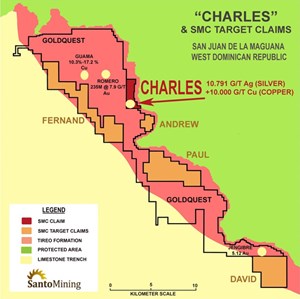
  2. Charles claim 1 mile from Goldquest’s 2012 monster gold discovery
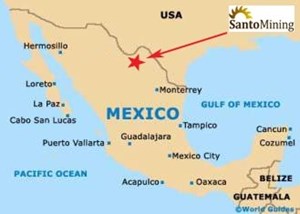
  3. Company to start producing gold and silver in Mexico
NEW GOLD AND SILVER MINING DEAL ANNOUNCED IN MEXICO
  • Entered into a definitive long-term license agreement to develop and mine its three metallic concessions located at Ocampo, Coahuila, Mexico
  • Inferred resource tonneage: 3M mt at 3.17 g/t gold and 57.3 g/t silver
  • Inferred resource ounces: 306K oz gold and 5.5 M oz silver
  • Open-pit mining with truck access to highway
  • Impressive grades up to 8.581 g/t Gold and 148.1 g/t Silver
  • Most entitlements are in place including the environmental permit.

DOMINICAN REPUBLIC OPERATIONS

To give a sense of the scale of the opportunity, consider the following:

  • Pueblo Viejo gold-silver deposit (Barrick/ Goldcorp JV), estimated to contain 23.7 million ounces of gold. There has been documented mining activity here going back to the Spaniards in 1505. Sulphide mining operations here produce more than 450 ounces of gold and 1,800 ounces of silver every day.
  • Falcondo ferronickel mine, which can produce 29,000 tons of nickel each year.
  • Perilya’s Cerro de Maimón copper-gold mine, which constitutes a 6 million ton open-pit copper/gold reserve.

$16 Million Equity Enhancement Program Underway

  • Program allows, but does not obligate, the Company to issue and sell up to $16 million of shares of common stock to the Investor Hanover Holdings NY from time to time over the 36-month period

Charles Claim

This highly prospective claim is located above San Juan in western Dominican Republic and planted in the heart of the mineral rich “Tireo Formation.”

  • Charles Claim borders Goldquest’s renowned La Escandalosa claim where in 2012 three bonanza drill intercepts were reported as being the largest gold discovery in the Dominican Republic in 20 years.
  • The Company continues its positive growth, adding yet another quality claim to its portfolio of exploration concession applications and its focus on near-term gold production opportunities.
  • Santo Mining finalizing due diligence on remaining four claims that immediately wrap around Goldquest.
  • Exploration team yielded a series of results up to 10.79 g/t Silver and +1.0% Copper


Richard Claim

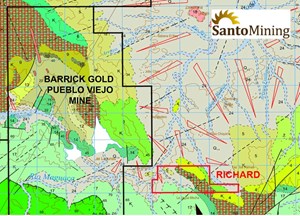
The company recently announced that it has signed a definite agreement to acquire 100% of the Richard gold exploration application.

  • located just 200 meters southeast of Barrick gold in the mineral-rich “Los Ranchos” geological formation of the Hispaniola Gold-Copper Back-Arc.
  • This definitive agreement is part of the Company’s aggressive expansion of its portfolio of precious and base metal exploration concession applications assets in its quest for near-term production opportunities.
  • Shallow Diamond Core Drilling Targets to sample the underlying bed rock awaiting permitting

During the last five months Santo Mining’s field exploration team led by Elpidio Moronta conducted due diligence on the Richard Claim consisting of property wide reconnaissance surveys, including stream sediment sampling and surface soil geochemistry. Early in 2013 the exploration team sent soil, sediment and rock samples to Acme Laboratories for multi-element trace analysis. The laboratory results have potentially identified two zones of gold, silver, and copper anomalies. The principal gold zone is located in the northwest quadrant of the Richard Claim, approximately 500 meters east of Barrick Gold’s Pueblo Viejo boundary. The exploration team is currently in the field conducting a “detailed” surface soil geochemistry survey and rock sampling to better define a series of shallow drill targets.

Hub On AGORACOM / Corporate Website

Pacific Potash Shareholders Approve Sino-Canada Natural Resources Fund as Control Group

Posted by AGORACOM-JC at 4:21 PM on Friday, June 7th, 2013

Vancouver, British Columbia – June 7th , 2013 – Pacific Potash Corporation (TSX-V: PP; OTCQX: PPOTF; FSE: P9P, “the Company”) is pleased to announce that on May 31st 2013 the Company’s shareholders gave 100% approval to Sino-Canada Natural Resources Fund (“Sino-Canada Fund”) to become a control group.

Pacific Potash has also closed its previously announced 20,000,000 units at $0.10 for gross proceeds of $2,000,000. Sino-Canada Fund participated in the $0.10 per unit private placement, subscribing for an additional 13,000,000 units.

Balbir Johal, Executive Co-Chairman and Director, stated: “This cements the business relationship between Pacific Potash and Sino-Canada Fund. We have been advised by CapitalAsia that future introductions may be made to additional funding groups such as the BRIC Development Bank. This Bank is capitalized with at least $50 billion in funding for developing projects in Brazil, Russia, India and China.”

Sino-Canada Fund, of the Cayman Islands has acquired ownership and control over 25,500,000 common shares and 25,500,000 warrants, representing approximately 28.6% of the current outstanding shares of the Company, for a total investment of $2,300,000 in the Company. Sino-Canada Fund has acquired the securities for investment purposes and has no present intention to acquire further securities of the Company, although it may in the future make additional investments in the Company, or acquire or dispose of securities as circumstances or market conditions warrant.

A copy of the early warning report filed with the applicable securities regulators regarding the above acquisition is available on the Company’s SEDAR profile (www.sedar.com).

In compliance with Canadian Securities law, all securities issued in connection with the closing of the private placement are subject to a hold period that will expire on October 7, 2013.

About Sino-Canada Natural Resources Fund

Sino-Canada Natural Resources Fund is a Cayman Islands registered private equity fund focused on investments in Canadian listed and private companies that develop and operate natural resources projects (mining, oil & gas, forestry) worldwide. Sino-Canada Fund is managed in Hong Kong on behalf of private and institutional investors from China.

About Pacific Potash Corporation

Pacific Potash Corporation trades on the TSX Venture Exchange under the symbol: PP, as well on the OTCQX under the symbol: PPOTF and on the Frankfurt Stock Exchange under P9P. Pacific Potash is engaged in the exploration and development of the Amazonas Basin Project and the surrounding potash claims targeting the Middle Amazonas Potash Basin, currently the host to multiple new exploration campaigns for potash. The Company also is exploring the Provost Potash Property and the surrounding potash claims targeting the prolific Prairie Evaporite Formation, which is host to multiple conventional and solution potash mines.

On behalf of the Board,

Pacific Potash Corporation

Balbir Johal, LL.B

Executive Co-Chairman & Director

For further information, please visit our website at www.pacificpotash.com or contact our V.P of Corporate Communications, Mike Blady:

Mike Blady

Office: 604.895.7446

Email: [email protected]

Neither the TSX Venture Exchange nor its Regulation Services Provider (as that term is defined in the policies of the TSX Venture Exchange) accepts responsibility for the adequacy or accuracy of this release.

Caution concerning forward-looking information

This press release contains “forward-looking information” and “forward-looking statements” within the meaning of applicable securities laws. This information and statements address future activities, events, plans, developments and projections. All statements, other than statements of historical fact, constitute forward-looking statements or forward-looking information. Such forward-looking information and statements are frequently identified by words such as “may,” “will,” “should,” “anticipate,” “plan,” “expect,” “believe,” “estimate,” “intend” and similar terminology, and reflect assumptions, estimates, opinions and analysis made by management of Pacific Potash in light of its experience, current conditions, expectations of future developments and other factors which it believes to be reasonable and relevant. Forward-looking information and statements involve known and unknown risks and uncertainties that may cause Pacific Potash’s actual results, performance and achievements to differ materially from those expressed or implied by the forward-looking information and statements and accordingly, undue reliance should not be placed thereon.

Risks and uncertainties that may cause actual results to vary include but are not limited to the availability of financing; fluctuations in commodity prices; changes to and compliance with applicable laws and regulations, including environmental laws and obtaining requisite permits; political, economic and other risks; as well as other risks and uncertainties which are more fully described in our annual and quarterly Management’s Discussion and Analysis and in other filings made by us with Canadian securities regulatory authorities and available at www.sedar.com. Pacific Potash disclaims any obligation to update or revise any forward-looking information or statements except as may be required.

Graphene Experts Dr. Polyakova and Dr. Stolyarov Added to Lomiko Team to Create Research and Development Department

Posted by AGORACOM-JC at 11:49 AM on Friday, June 7th, 2013

VANCOUVER, BRITISH COLUMBIA and NEW YORK, NEW YORK–( June 7, 2013) – Lomiko Metals Inc. (TSX VENTURE:LMR)(PINKSHEETS:LMRMF)(FRANKFURT:DH8B) (Europe: ISIN: CA54163Q1028, WKN: A0Q9W7) (the “Company” or “Lomiko”) reports that Dr. Elena Polyakova and Dr. Daniel Stolyarov have joined Lomiko Metals Inc. to create a Research and Development Department. Primary tasks for the Research and Development Department will be to oversee and coordinate the research activities on conversion of the graphite into graphene, which are currently underway. The department will also oversee end use projects in conjunction with customers of Graphene Laboratories Inc. which include leading universities, Fortune 500 as well as startup companies, world-wide.

“We’ve been working with Dr. Polyakova and Dr. Stolyarov to develop an action plan for Lomiko Metals. With their help Lomiko is positioned to participate in the graphene revolution.”, said Paul Gill, CEO of Lomiko, “Building an R&D capacity means Lomiko will have a head start on the commercial, end use applications which will drive the graphene-graphite business in the future.”

Dr. Elena Polyakova founded Graphene Laboratories in 2009 as President and Chief Executive Officer. Since founding Graphene Laboratories, the company has grown to be the leading manufacturer and supplier of graphene materials. Dr. Polyakova is an invited speaker at many international forums and conferences, and her input on the graphene industry is regularly published by journalists covering business and technology.

She received her Masters’ degree in Physics and Applied Mathematics with honors from the Moscow Institute of Physics and Technology, and her Ph.D. in Chemistry from the University of Southern California. During Dr. Polyakova’s post-doctoral work at Columbia University, her work on graphene was published in many leading peer-reviewed journals, which she co-authored with Nobel and Kalvi prize winners, as well as members of the National Academy of Sciences. It was then that she realized the commercial potential of graphene, which led to the founding of Graphene Laboratories, Inc.

Dr. Daniel Stolyarov co-founded Graphene Laboratories in 2009 and has since served as Chief Technology Officer. At Graphene Laboratories, he leads efforts to introduce new materials to the Graphene Supermarket product line. He also overviews all production efforts and leads all collaborative R&D projects of Graphene Labs. His work continues to play a critical role in securing Graphene Labs place as a leader in the manufacture and sale of 2D materials.

He received his Masters’ degree in Physics and Applied Mathematics with honors from the Moscow Institute of Physics and Technology, and his Ph.D. in Physical Chemistry from the University of Southern California. During his academic career, his work on graphene was published in many leading peer-reviewed journals, which he co-authored with Nobel and Kalvi prize winners, as well as members of the National Academy of Sciences.

Dr. Polyakova and Dr. Stolyarov will each receive $ 50,000 per year under a contract of service.

For more information, review the website at www.lomiko.com.

On Behalf of the Board

A. Paul Gill, Chief Executive Officer

We seek safe harbor.

Neither TSX Venture Exchange nor its Regulation Services Provider (as that term is defined in the policies of the TSX Venture Exchange) accepts responsibility for the adequacy or accuracy of this release.

Contact Information


Lomiko Metals Inc.
A. Paul Gill
Chief Executive Officer
604-729-5312
[email protected]
www.lomiko.com

UC Resources Discovers Additional Gold & Silver Veins at Xora *Sponsor*

Posted by AGORACOM-JC at 1:45 PM on Thursday, June 6th, 2013

  • Bx Vein which is at least 1.8 meters in width, returning up to 2 g/t in Au (gold) and up to 600 g/t in Ag (silver)

  • The Coral Vein Structure occurs in what is considered the south part of the property, immediately after the regional E-W Lyon Fault

  • Four samples were collected across the vein structure, 2 of them with decent numbers: 5-7 g/t in Au and around 80 g/t in Ag

VANCOUVER, BRITISH COLUMBIA–(Marketwired – June 6, 2013) – UC Resources Ltd. (“UC” or the “Company”) (TSX VENTURE:UC) is pleased to announce that it has discovered an additional two major Silver Vein structures within the XORA Concession adjacent to the Company La Yesca Mill site.

The Company’s Geologist, Gerardo Tarin, reports:

The Larissa Vein structure, is adjacent to fault N5ºW. This fault consists of heavy gouge material/shearing, with abundant clay accompanied by calcium carbonate plus minor silica – white and brown colored, moderately obliterated after oxidation. No significant numbers come from the fault structure itself, but values are seen in the adjacent Bx Vein which is at least 1.8 meters in width, returning up to 2 g/t in Au (gold) and up to 600 g/t in Ag (silver). This manifestation is located in section 1175, with the quartz networks appearing to drifting in a N60ºW direction with respect to the general strike of regional fault in the area. This zone is adjacent to sample 69384 and we have a new sample No. 69406 over 1.5 meters width. This sample runs 0.51 g/t in Au and 220 g/t in Ag. This gives us approx 3.3 meters of mineralized vein running up to 400 g/t in Ag and nearly 1.5 g/t in Au. This area is strongly recommended for further exploration.

Approximately 143 meters eastward in the same section, we have another manifestation of anomalous gold and up to 600 g/t in Ag (1 meter wide). As a result, there is good potential traced from the new Larissa Zone over to the Mirador Zone. A drill pad has been set up on the steep area adjacent to the Larissa Zone with the intention of drilling one or more holes to test this zone further.

The Mirador system also includes an impressive matrix supported breccia, adjacent to an andesitic dike, which is evident in over 100 meters in strike length, in a direction nearly N-S. This breccia did not return significant values, but returned anomalous gold such as 0.3 g/t Au in 3 locations.

Cuatas III is an intersection of structures striking N20ºE and N30ºW, located 90 meters westward from the Cuatas system. It is a small mineral occurrence, 3-4 meters in length and 1.5 meters wide. Sample No.69400 was taken over a width of 1.5 meters and returned a value of 123 g/t in Ag. Sample No. 69401 is a dump sample, returning random values between 0.232 g/t in Au and 242 g/t in Ag. This structure has the same strike and dip as the Cuatas I Vein.

The Coral Vein Structure occurs in what is considered the south part of the property, immediately after the regional E-W Lyon Fault. This vein drifts at N20ºE with respect to the predominant N-S structural control, and appears to be at least a 4 meter in width. Part of the footwall remains covered due to its dipping into the hillside.

Four samples were collected across the vein structure, 2 of them with decent numbers: 5-7 g/t in Au and around 80 g/t in Ag. Sample No.69377 is 1.30 meters in width and found in the footwall. Values were returned with 5.83 g/t in Au, 81.8 in Ag and an adjacent sample No. 69380 had the same width with 6.58 g/t in Au, 79 in Ag. This old work seems to have vertical development but is apparently covered and slumped in, after the extraction of mineral and vein materials were done in the past. Some more channel sampling is recommended along the fault in the vicinity of former Coral mine. We have made arrangements with the land owners to build a road on this side of the property, so we can drill test this are as well as second priority targets such as the Manguito, the Waterfall, and the Crucificado occurrences to south.

The Cuba Vein Structure is developed in highly argillized rock, amygdaloidal in composition, has a waxy material in open spaces but anomalous gold is scarce in the andesite outcrops around the Cuba vein. The Rita vein occurs approx. 70 meters west of the Waterfall I, in a N-S structure, 1.8 meters in width and perpendicular to an andesite dike of 4.20 meters width. No significant values were returned from sampling in this area as yet.

The Guacamaya Structure is approximately 130 meters west of the Rita structure – this is an E-W structure consistent with an andesite dike but has had no significant numbers in gold or silver as yet, but had a few anomalous gold results.

Between Cuatas and Mirador systems, some structures ranging from 1-1.5 meters in width. These are known as the Dominick 1, and Anita 1. We are awaiting results from sampling in this area.

The Xora deposit is an undeveloped epithermal system of narrow veins which occurs along 700 meters of strike length. Mapped and named as the Cuatas to Mirador-Colorada Systems with multiple en echelon sub parallel vein systems they are consistent and likely tied into the regional N-S fracturing transecting the region and occur as multiple mineral occurrences.

In Regional scale, we have mineralization hosted in both N-S and E-W fault structures. One example of this mineralization in an E-W system is the Leona Vein. Cuatas, Mirador and Colorada are hosted in N-S cross-cutting systems. Which is the more pervasive or controlling of the mineralizing fluids, we are yet to determine.

The above report from Gerardo Tarin supports the Companies’ plans to exploit XORA to ensure long term mill operation at La Yesca.

The assays were completed by accredited ALS Chemex Laboratories of Vancouver.

John Archibald, PGeo, a qualified person pursuant to NI 43-101, has reviewed and approved the technical information in this press release on behalf of the company.

The Company continues to evaluate its Commercial Production status. The Company believes it has adequate financial resources at this time, to not dilute shareholders and to reach its objectives.

“We believe our plans for Commercial production status and associated timing could possibly align with a positive price rebound for gold and silver” commented Gary Monaghan, CEO. “Everyone in the industry knows the difficulty in these times and production for us will be the key to our long term success in the future.”

The Company is carefully tracking gold and silver market pricing as these shifting trends affect the overall level of Company profitability.

On behalf of the Board of Directors,

Gary Monaghan, Chief Executive Officer

We seek safe harbour.

Investors or interested parties are invited to visit the UC Resources Website at http://www.ucresources.net – where they can choose to join the opt-in e-mail list to receive all future press releases and updates in real time.

This news release includes certain forward-looking statements or information. All statements other than statements of historical fact included in this release, including, without limitation, statements relating to the potential mineralization and geological merits of the La Yesca properties and other future plans, objectives or expectations of the Company are forward-looking statements that involve various risks and uncertainties. There can be no assurance that such statements will prove to be accurate and actual results and future events could differ materially from those anticipated in such statements. Important factors that could cause actual results to differ materially from the Company’s plans or expectations include risks relating to the actual results of current exploration activities, fluctuating gold prices, possibility of equipment breakdowns and delays, exploration cost overruns, availability of capital and financing, general economic, market or business conditions, regulatory changes, timeliness of government or regulatory approvals and other risks detailed herein and from time to time in the filings made by the Company with securities regulators. The Company expressly disclaims any intention or obligation to update or revise any forward-looking statements whether as a result of new information, future events or otherwise except as otherwise required by applicable securities legislation.

FOR FURTHER INFORMATION PLEASE CONTACT:


Neither TSX Venture Exchange nor its Regulation Services Provider (as that term is defined in policies of the TSX Venture Exchange) accepts responsibility for the adequacy or accuracy of this release.

 Contact Information: 
UC Resources Ltd.
Gary Monaghan
Chief Executive Officer
[email protected]
www.ucresources.net

National Graphite Signs Strategic Alliance With American Graphene LLC

Posted by AGORACOM-JC at 11:16 AM on Monday, June 3rd, 2013

LAS VEGAS, June 3, 2013  – National Graphite Corp. (OTCQB: NGRC) is pleased to announce that the Company has entered into an agreement with American Graphene LLC where National Graphite Corp, and American Graphene LLC will explore joint business opportunities in the fast growing graphene market. Graphene’s remarkable properties, including high conductivity, mechanical strength and high specific surface area make it an ideal material for electrochemical devices used in clean energy applications.

National Graphite Corp has supplied high grade graphite samples from the company’s 100% owned Chedic Graphite mine near Carson City Nevada to the laboratory facilities of American Graphene LLC near Phoenix Arizona. Through a sonication process the graphite ore from the Chedic mine has been reduced to a nano material that has subsequently been sent to a metallurgical facility to determine the grade and commercial viability of the graphene product. The sonication process was observed by an independent geologist, designated as a Qualified Person. The two companies will explore an exclusive supply agreement where NGRC will supply high grade graphite to American Graphene, cost effective and scaleable processing facilities and commercially viable markets for the graphene product.

Graphene is a newly discovered formation of carbon atoms which makes a material 200 times stronger than steel, a super-conductor at room temperature, flexible and heat resistant. There are over 7000 patents filed relating to graphene. Currently, the price of graphene ranges from $100 per gram to $1000 per gram. The Company believes it can mine, refine and convert our high purity graphite to graphene with a target cost of approximately $10 per gram.

National Graphite Corp. currently holds the rights to the Chedic Voltaire, past producing, graphite mine in NW Nevada near Carson City,

NGRC plans to advance the project through the exploration and development stages.

About National Graphite Corp.

National Graphite Corp. is an American based graphite development company focused on bringing the Chedic Graphite Mine back into commercial production to supply the fast growing graphite mineral market. The mineral is used in the manufacture of Lithium-ion batteries and is considered critical to U.S. industry sectors like Consumer Electronics, Green Technology and Alternative Energy. National Graphite is committed to long-term sustainable graphite production within the North American market.

“Safe Harbor” Statement: Under The Private Securities Litigation Reform Act of 1995: The statements in the press release that relate to the Company’s expectations with regard to the future impact on the Company’s results from new products in development are forward-looking statements, within the meaning of the Private Securities Litigation Reform Act of 1995. A complete “SAFE HARBOR: Disclosure” is listed on the Company’s Website www.NationalGraphiteCorp.com under “News”

CONTACT:
Kenneth B Liebscher
[email protected]

SOURCE National Graphite Corp.

RELATED LINKS
http://www.nationalgraphitecorp.com

Flake Graphite Prices Have Bottomed: Simon Moores

Posted by AGORACOM-JC at 1:56 PM on Thursday, May 30th, 2013

The Metals Report: Simon, the Chinese government says it is no longer willing to sacrifice the environment to mine and export commodities. You recently visited several graphite mining operations in China. Is this for real or just paying lip service?

Simon Moores: When you visit these mines and see how dated and wasteful some of their mining practices are, the environmental issues are apparent. But while this stance is partially to benefit the environment, it’s also about China wanting to retain raw materials and use them to manufacture higher-value products. China does have some leading graphite producers that are now investing in not only improving their products as well as their mining practices. This is something non-Chinese companies will have to keep track of.

TMR: If China is “going green,” what are the ripple effects that graphite investors in the West will feel?

SM: China’s “going green” is twofold. Green from the mining side means becoming more efficient with graphite mining and using less hazardous materials for processing the material. This will result in less material being available for export. Buyers outside of China have no choice but to eventually find supplies elsewhere.

From the market side, going green undoubtedly means expanding the electric vehicle market. The growth for batteries, especially lithium-ion batteries, could be explosive. This could transform demand for key raw materials, especially flake graphite.

TMR: What were the biggest takeaways from your visit to China?

SM: The biggest one was China’s willingness to control the industry. Its amorphous graphite industry has been consolidated. In Hunan province, the government consolidated close to 230 small-time mines into one company that now controls 50–60% of the production in that area. Another takeaway is that flake graphite is on China’s radar. Although it was the amorphous graphite mines that were consolidated, flake graphite, which is the bigger business, was being discussed.
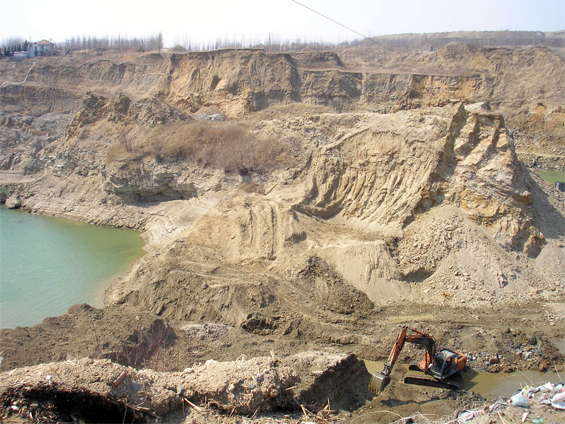
Black Dragon graphite mine China

The Black Dragon graphite Mine in China. Photo credit: Laura Syrett
TMR: Some people have speculated that the consolidation strategy in flake graphite could ultimately lead China to flood the market with graphite, much like it did in the mid-’90s, forcing some graphite miners out of business. You disagree. Tell us why.

SM: Today is a completely different situation from the mid-’90s. A generation ago, China was on its way up. It was getting its primary industries underway, growing as quickly as possible, taking in as much revenue as possible. Back then, China could mine cheaply, export cheaply, undercut everybody and get quick money. There was no competition. Now, China needs to move its economy to the next level, to the value-added level. It wants to compete with South Korea, Japan, Europe and the U.S. Cheap exports are not the way to do that.

Its challenge is to appease the mining companies through things like tax breaks on higher-value products to push these companies to develop value-added products such as battery-grade graphite and even the batteries themselves. The car industry is a perfect example. Ten years ago, China didn’t have one; now I expect to see Chinese cars on European and North American roads in the next three years.

TMR: China also has a source of flake graphite in North Korea. What is going on there?

SM: China has exported flake graphite from North Korea for the last decade from a mine that once was a joint venture between North and South Korea. It exported about 1,000 tonnes in 2012. The graphite goes to China, where it is blended with other products. This is a captive source for China that has historically been used internally.

TMR: Why is this Korean source being talked about more now?

SM: I am not sure. Our research indicates that China is not getting as much flake graphite from North Korea as previously thought. The problem is that bad information gets around really quickly, especially when it is free. Everyone thought North Korea was sending 30,000 tonnes per year (tpa) of flake graphite to China. We think it was actually less than 1,000 tonnes in 2012. North Korea was considered the fourth-largest producer in the world. If the data are wrong, that could indicate there is a lot less flake graphite in the market than people realized.

The same problem exists with India. The Indian production figures that are freely available for flake graphite indicated production of 140,000 tpa when, according to our research, in the last 12 months it was actually 35,000 tpa. If that is the case, the rest of world production could be well overestimated.

TMR: The price of flake graphite has been dropping since May 2012, mostly owing to softer demand from steel refractories and lubricant markets.How is this affecting the economics of flake graphite projects?

SM: Obviously, lower prices would have a negative effect on projects whose economics were done 12–18 months ago using the very high prices we saw then. Prices have come down about 50% on average from the 2011-2012 peak. On that basis, some companies are already reevaluating.

“Graphite buyers need supply security; the price volatility of the past five years has not been good for business.”

TMR: Does that invalidate their preliminary economic assessments and other economic studies?

SM: “Invalidate” is probably too strong a word, but the more responsible graphite juniors are revaluating their economics based on lower prices. Typically, these companies use price averages for their analyses. Predicting the future price of graphite price is always guesswork. Whether they take a 12-, 18- or 24-month average, it will be an average, and there will always be problems with that.

But understandably, miners have to use a price and this is where we come in, as the only independents pricing natural graphite.
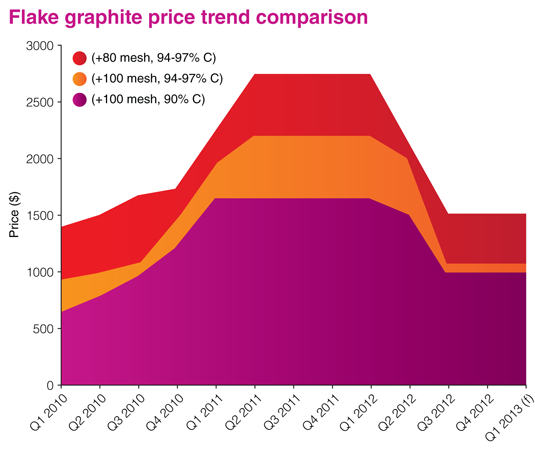
natural graphite price trends

Source: Industrial Minerals Data

TMR: What is the current price of flake graphite?

SM: Using our most commonly quoted grade, the +80 mesh, 94–97% carbon, the price is now $1,400/tonne. It has dropped about 50% since the highs of 2011 and 2012.

TMR: What price do you predict through 2015?

SM: I think the industry has seen the bottom of graphite prices and should expect a rise from here or in Q3/13. Flake graphite prices have settled higher than expected. They remain 60% higher than pre-recession levels in 2008-2009. Other commodities, especially fluorspar, have crashed and hit all-time lows. Graphite has not done that.

TMR: What is the path forward for companies developing graphite projects?

SM: It depends on the company, whether it is coming from an industry perspective or, like most of the juniors, from a stock market perspective. From an industry perspective, the hope is to move away from dependency on China. Graphite buyers need supply security; the price volatility of the past five years has not been good for business. For a company producing refractories, raw materials are by far the biggest input cost, and price volatility does not allow for long-term business planning. For long-term supply security, companies are looking away from China.

TMR: Does that make graphite a go-long play?

SM: Yes, because the fundamentals will not change any time soon.

TMR: The other great debate in this sector is whether graphene is worth talking about as part of an economic thesis.

SM: I do not think graphene will ever be a volume business for any graphite producers. The value for graphite companies going into graphene, which only a handful are doing, is the research and development (R&D) and new technology that will allow them to produce graphene from natural graphite. This technology will be a game changer for materials science, and the graphite industry will be pretty irrelevant in terms of global impact.

Some companies are experimenting with carbon sciences, merging carbon materials into their applications. Companies will never make money from selling large volumes of graphite to make graphene.

TMR: Realistically, how far away are we from producing graphene from mined graphite?

SM: A few companies are pioneering that technology. Grafoid Inc. has an R&D agreement with Focus Graphite Inc. (FMS:TSX.V) to investigate and develop a graphene-based composite for electrochemical energy storage for the automotive and/or portable electronics sectors. They have just launched the world’s first trademarked graphene product—MesoGraf. But this material is still in the R&D phase.

The value of these companies is their research into the best methods to produce graphene and finding applications for it. No one really knows how to use it—the graphene pioneers have to build an industry and convince people to use it. Everyone now knows the theory, but the reality—the real world application—is something that will take time.

“There have not been any new mines opened in a generation. When you have this kind of growth potential, matched with underinvestment on the supply side, it doesn’t take a genius to work out that something has to change.”

I went to a graphene event last month, and it struck me that people are not worried about how to produce it, they are more focused on developing the market, on getting end-users to try to make products that include graphene.

TMR: What will be the next graphite project to reach production?

SM: If the press releases are anything to go by, I would say Ontario Graphite Ltd. (private). But it is hard for us to analyze because it is a private company that does not put out much information. We look less at the tonnages in the ground and more at the flake distribution of the deposit. Ultimately, these companies will need to sell material. Flake fines, or smaller-flake graphite, is the hardest to sell, while large flake the easiest.

TMR: Suppose, just for the sake of argument, that Ontario Graphite did add the 20,000 tonnes it says it will to the market. With TIMCAL (a member of Imerys [NK:PA]) already operating at a roughly similar production rate, could both operations continue at a profit?

SM: No, I do not think those two mines could both operate at that rate for very long—not in today’s market conditions. The good news is that the production rate at TIMCAL’s Lac des Iles mine has always been falling, while costs have been rising for a while now. TIMCAL has been looking at other options and other mines, at other graphite juniors. You can pretty much assume that Lac des Iles is on its last legs, which is good news for graphite juniors.

TMR: What does that news from TIMCAL mean for a company like Northern Graphite Corporation (NGC:TSX.V; NGPHF:OTCQX), which also has an advanced-stage graphite project in Ontario?

SM: It is great news for companies like Northern Graphite. The TIMCAL mine is a generation old. Northern Graphite has been around for ages under a different name prior, but I think that will pay off because of the amount of information the company has on that deposit. I think everything it’s been working toward will pay off.

TMR: As a graphite deposit, what does Bissett Creek have going for it?

SM: The large flake size is the key attraction. The grade is very low, but that’s not much of a problem with graphite mining if you can economically extract it. Northern Graphite has a much higher distribution of large-flake material, which is what the industry wants.

TMR: What are the next steps for Northern Graphite?

SM: The next step is to redo the economics. The company released more drill information and increased its confirmed resource data. From there, it is a matter of riding out the storm until the market cycle comes around again. When that happens, it will be one of the strongest junior graphite companies.

TMR: In our last interview you talked about Energizer Resources Inc. (EGZ:TSX.V; ENZR:OTCBB) and its Green Giant project in Madagascar. Can you give us an update?

SM: Energizer Resources is doing something very similar to Northern Graphite. It has its asset, its project and a lot of information gathered already. Energizer has to get the word out and go to the market to get funding. I think management is focusing on that, because there is only so much drilling and reporting public companies can do. In other news, Energizer is planning on making an agreement with the nearby Sakoa Coal Field project that would allow Energizer to purchase “over-the-fence” power and share infrastructure, reducing its operating costs.

Logistics is a major factor, particularly in somewhere like Madagascar. If the company can team up with a much larger operation, then it will be a compelling project.

TMR: Can you share a couple of other graphite stories that have compelling narratives?

SM: Talga Resources Ltd. (ASX: TLG) has been working on a JORC-confirmed (Joint Ore Resources Committee) graphite resource in Sweden. In terms of volume, it is smaller than deposits in Canada or Africa, but in terms of quality it is up there. I would look out for it.

Syrah Resources Ltd. (ASX: SYR) is the leading graphite junior in Australia. It also is developing the Balama graphite project in Mozambique. Syrah had a great 12 months when everybody else struggled.

Zenyatta Ventures Ltd. (ZEN: TSX.V) has made a lot of headlines in recent months and enjoyed a high share price when everyone else has suffered. The company has a unique project with very high carbon purities. Zenyatta has been coy about allowing others to test this so far. The data it has released is very impressive on the carbon purities front, but because it’s so unique, the question is whether or not it can be used in the same markets as flake or synthetic graphite. Only time will tell.

TMR: What thoughts would you leave investors with for the rest of 2013?

SM: Look at the long-term basics in the graphite industry. Look at where graphite is used. Traditional volume markets include refractories, which is the steel industry. High-tech uses include electric vehicle batteries and portable electronics. Very few raw materials have this balance.

Look at the supply situation. China continues to dominate, and there have not been any new mines opened in a generation. When you have this kind of growth potential, matched with underinvestment on the supply side, it should not take a genius to work out that something has to change.

TMR: Simon, thank you for your time and your insights

Simon Moores is manager of Industrial Minerals Data, a business that sets prices for natural graphite and fluorspar industries from offices in London and Shanghai. He has been reporting on, researching and analyzing the non-metallic minerals sector since 2006, when he joined London-based publishing and research house Industrial Minerals. He has specialist knowledge in critical and strategic minerals including graphite, lithium, rare earths and titanium. He led the research and publication of the market study, “The Natural Graphite Report 2012: data, analysis and forecast for the next five years.” He has chaired conferences and given keynote presentations around the world. He has also been interviewed by international press including London’s Times regarding Chinese control on world graphite production, and The New York Times with regard to rare earths after breaking the story that China blocked exports to Japan in 2009.
Want to read more Metals Report interviews like this? Sign up for our free e-newsletter, and you’ll learn when new articles have been published. To see a list of recent interviews with industry analysts and commentators, visit our Streetwise Interviews page.


DISCLOSURE:

1) Brian Sylvester conducted this interview for The Metals Report and provides services to The Metals Report as an independent contractor. He or his family own shares of the following companies mentioned in this interview: None.

2) The following companies mentioned in the interview are sponsors of The Metals Report: Energizer Resources Inc. and Northern Graphite Corporation. Streetwise Reports does not accept stock in exchange for its services or as sponsorship payment.

3) Simon Moores: I or my family own shares of the following companies mentioned in this interview: None. I personally or my family am paid by the following companies mentioned in this interview: None. My company has a financial relationship with the following companies mentioned in this interview: None. I was not paid by Streetwise Reports for participating in this interview. Comments and opinions expressed are my own comments and opinions. I had the opportunity to review the interview for accuracy as of the date of the interview and am responsible for the content of the interview.

4) Interviews are edited for clarity. Streetwise Reports does not make editorial comments or change experts’ statements without their consent.

5) The interview does not constitute investment advice. Each reader is encouraged to consult with his or her individual financial professional and any action a reader takes as a result of information presented here is his or her own responsibility. By opening this page, each reader accepts and agrees to Streetwise Reports’ terms of use and full legal disclaimer.

6) From time to time, Streetwise Reports LLC and its directors, officers, employees or members of their families, as well as persons interviewed for articles and interviews on the site, may have a long or short position in securities mentioned and may make purchases and/or sales of those securities in the open market or otherwise.

( Companies Mentioned: EGZ:TSX.V; ENZR:OTCBB,
FMS:TSX.V,
NK:PA,
NGC:TSX.V; NGPHF:OTCQX,
ASX: SYR,
ASX: “TLG”,
ZEN: TSX.V,)

Lomiko, Graphene Labs and Stony Brook University Collaborate on Graphene Super-Capacitor and Next-Generation Battery Applications

Posted by AGORACOM-JC at 10:44 AM on Wednesday, May 29th, 2013

VANCOUVER, BRITISH COLUMBIA and NEW YORK, NEW YORK–(May 29, 2013) – LOMIKO METALS INC. (TSX VENTURE:LMR)(PINKSHEETS:LMRMF)(FRANKFURT:DH8B) (Europe: ISIN: CA54163Q1028, WKN: A0Q9W7) (the “Company”) announces that the SUNY Research Foundation at Stony Brook University (RF), Graphene Laboratories, Inc. (Graphene Labs) and Lomiko Metals, Inc. have agreed to investigate novel, energy-focused applications for graphene.

“This new agreement with Stony Brook University’s researchers means Lomiko is participating in the development of the technology graphene makes possible,” commented Paul Gill, CEO of Lomiko. “Using graphene to achieve very high energy densities in super capacitors and batteries is a transformative technology. Strategically, Lomiko needs to be participating in this vital research to achieve the goal of creating a vertically integrated graphite and graphene business.”

Under its Strategic Alliance Agreement with Lomiko, Graphene Labs — a leading graphene manufacturer — will process graphite samples from Lomiko’s Quatre Milles property into graphene. The Research Foundation, through Stony Brook University’s Advanced Energy Research and Technology Center (AERTC) and the Center for Advanced Sensor Technology (Sensor CAT), will then examine the most efficient methods of using this graphene for energy storage applications. There is no certainty the proposed operation will be economically viable.

Graphene’s remarkable properties, including its high conductivity, mechanical strength, and high specific surface area, make it an ideal electrode material for electrochemical devices used in clean energy applications. Graphene shows promise for super-capacitors and next-generation Li-ion batteries. Efficient energy storage is a cornerstone for a resilient and reliable energy transmission grid and graphene is a key element of the clean energy system.

For all parties involved, the goal of this collaboration is to map commercially viable routes for the fabrication of graphene-based energy storage devices. By participating in these projects, the partners will address the cost of graphene production, as well as how best to integrate the material into commercial energy storage devices.

The Lomiko and Graphene Labs Strategic Alliance

Lomiko and Graphene Labs have agreed to co-develop a vertically integrated supply chain that includes a secure supply of high-quality graphite, cost-effective and scalable processing, tight quality control and integration of graphene-based products in end-user products. The parties will capitalize on the secure supply of high quality graphite, provided by Lomiko, and the extensive customer database and expertise in graphene materials brought by Graphene Labs.

Lomiko has provided mineral samples from the Quatre Milles Project for natural high quality flake graphite for graphene conversion.

Under the Agreement, Graphene Labs will develop a feasible procedure for the purification of flake graphite for use in graphene production. They will also provide guidance on technologies tailored to the production of graphene and graphene-related materials.

The Agreement also calls for joint Research and Development and business, communications, and marketing strategy for end uses of the graphite and graphene products.

Lomiko also has the option to provide equity financing(s) to Graphene Labs on an exclusive basis for two years if it meets Graphene Labs funding requirement of raising at least $500,000 within eight months of the agreement, $1,000,000 within twelve (12) months and $2,000,000 within eighteen (18) months. If the requirements are not met, Lomiko loses exclusivity but maintains the right to participate in financings on a non-exclusive basis.

The Agreement is subject to approval by the TSX.

About Graphene Laboratories Inc.

Graphene Laboratories, Inc. primary focus is to apply fundamental science and technology to bring functional advanced materials and devices to market.

Graphene Laboratories Inc. operates the Graphene Supermarket® (www.graphene-supermarket.com), and is a leading supplier of advanced 2D materials to customers around the globe. In addition to the retail offering of advanced 2D materials, it offers analytical services, prototype development and consulting.

Located in Calverton NY, Graphene Labs benefits from the unique high tech community on Long Island. Efforts by Graphene Laboratories are supported by Brookhaven National Laboratory, Stony Brook Business Incubator, and the Clean Energy Business Incubator Program (CEBIP), hosted by the New York State Energy Research and Development Authority (NYSERDA).

For more information on Graphene Laboratories, Inc, visit www.graphenelabs.com or contact them at (516)-382-8649 or via email at [email protected].

About AERTC

Located in the Research and Development Park on the campus of Stony Brook University, the Advanced Energy Incubator is space that is home to companies within the Advanced Energy Center. The Advanced Energy Center (www.aertc.org), a New York Center of Excellence is a true partnership of academic institutions, research institutions, energy providers and companies. Its mission is innovative energy research, education and technology deployment with a focus on efficiency, conservation, renewable energy and nanotechnology applications for new and novel sources of energy.

About Sensor CAT

The New York State Center for Advanced Technology at Stony Brook University (http://www.usensors.com/SENSORCAT/), designated by the Empire State Development Corporation, Div. of Science Technology and Innovation (NYSTAR), provides intellectual, logistical, and material resources for the development of new product technologies – by facilitating R&D partnerships between New York companies with an in-state footprint and university researchers. The important outcomes are new jobs, new patents, training of students in company product matters, and improved competitiveness for New York State businesses.

About Lomiko Metals Inc.

Lomiko Metals Inc. is a Canadian based exploration-stage company. Its mineral properties include the Quatre Milles Graphite Property and the Vines Lake property which both have had recent major discoveries. On October 22 and November, 13 2012, Lomiko Metals Inc. announced 11 drill holes had intercepted high grade graphite at the 3,780 Ha Quatre Milles Property. On March 15, 2013 Lomiko reported 75.3% of graphite tested was >200 mesh and classified as graphite flake with 38.36% in the >80 mesh, large flake category. 85.3% of test results higher than the 94% carbon purity considered high carbon content, with the median test result being 98.35%.

The highlight of Lomiko’s testing was nine (9) sieve samples which captured flakes of varying sizes which tested 100.00% carbon. Both fine and flake material may be amenable to graphene conversion by Lomiko Metals Inc. partner Graphene Laboratories.

The project is located 175 km north of the Port of Montreal and 26 km from a major highway on a well-maintained gravel road.

On Behalf of the Board

A. Paul Gill, Chief Executive Officer

We seek safe harbor. Neither TSX Venture Exchange nor its Regulation Services Provider (as that term is defined in the policies of the TSX Venture Exchange) accepts responsibility for the adequacy or accuracy of this release.

Contact Information


Lomiko Metals Inc.
A. Paul Gill
604-729-5312
[email protected]
www.lomiko.com

Pacific Potash Strengthens Management and Exploration Team Appoints Andre Costa President and CEO

Posted by AGORACOM-JC at 11:38 AM on Tuesday, May 28th, 2013

Vancouver, British Columbia – May 28th, 2013 – Pacific Potash Corporation (TSX-V: PP; OTCQX: PPOTF; FSE: P9P, “the Company”) is pleased to announce Andre Costa M.Sc., P.Geo. has been appointed as President and CEO of the Company. Mr. Costa is a professional geologist with over 18 years of experience working in Canada and Brazil. Mr. Costa has worked for the Saskatchewan Geological Survey, provided project management in uranium and diamond exploration, and most recently was the chief geologist for Brazil Potash a private company with operations surrounding the majority of Pacific Potash’s Claims. Mr. Costa was responsible for the Potash exploration technical program in the Amazonas basin, Brazil. He provided project management, compiled all regional data and developed Potash Brazil’s successful drilling program on which a NI 43-101 compliant resource is currently being calculated by Ercosplan. Mr. Costa is a dual citizen of Canada and Brazil, and is fluent in English, Portuguese and Spanish.

Mr. Costa stated “Pacific Potash tenements in the Amazon Basin it is on-trend and surrounded by existing potash deposits and historical potash occurrences. Working on this basin for five years gave me strong understanding of the drilling program logistics, drilling methods, stratigraphycal correlations, depositional environments, structural constraints, mineralization spatial distribution and seismic correlations. This knowledge will be important to achieve positive potash intercepts and consequently advancing to the next stages. All the efforts will now be focused on the upcoming drilling program in order to confirm and evaluate the potash mineralization to be found on Pacific Potash claims that would be developed into potash resources on this new and already confirmed world class potash basin.”

Mr. Balbir Johal, Executive Chairman & Director commented: ” Balbir Johal, Executive Chairman commented: “Having a CEO and President with local ties to the country and to Pacific Potash’s project area will be a huge benefit for the Company. Mr. Costa’s vast knowledge of a previously almost non-explored basin will be invaluable to the Pacific Potash team. Over the last five years in the Amazonas basin, Mr. Costa has been instrumental in compiling historic data, unlocking the potash sequences and basin geometry for Potash Brazil. He has overseen the drilling of over 20 potash wells in the basin, supervised the compilation of data for Potash Brazil’s technical reports, and from a potash exploration perspective, he is one the most knowledgeable individuals regarding the basin. ”

Pacific Potash would also like to announce that Mr. Steve Butrenchuk has resigned as President & CEO but will remain with the Company as an Advisory Board member. Pacific Potash wished to thank Mr. Butrenchuk for his contribution as President & CEO, and are certain that his experience, and insight will continue to be beneficial to the Company in his new position.

About Pacific Potash Corporation

Pacific Potash Corporation trades on the TSX Venture Exchange under the symbol: PP, as well on the OTCQX under the symbol: PPOTF and on the Frankfurt Stock Exchange under P9P. Pacific Potash is engaged in the exploration and development of the Amazonas Basin Project and the surrounding potash claims targeting the Middle Amazonas Potash Basin, currently the host to multiple new exploration campaigns for potash. The Company also is exploring the Provost Potash Property and the surrounding potash claims targeting the prolific Prairie Evaporite Formation, which is host to multiple conventional and solution potash mines.

On behalf of the Board,

Pacific Potash Corporation

Balbir Johal, LL.B

Executive Chairman & Director

For further information, please visit our website at www.pacificpotash.com or contact our V.P of Corporate Communications, Mike Blady:

Mike Blady

Office: 604.895.7446

Email: [email protected]

Neither the TSX Venture Exchange nor its Regulation Services Provider (as that term is defined in the policies of the TSX Venture Exchange) accepts responsibility for the adequacy or accuracy of this release.