Agoracom Blog Home

Posts Tagged ‘#smallcapstocks’

What It’s Like Wagering 400k On #Esports $GMBL $ATVI $TTWO $GAME $EPY.ca $TCEHF $Game.ca $EPY.ca

Posted by AGORACOM-JC at 9:51 AM on Friday, June 22nd, 2018

With seemingly everyone trying to stake their claim in the burgeoning esports market, one Ottawa native offers his insight on how he’s invested nearly $400,000 CAD betting on games you may never have even heard of.

It’s a classic gambler’s trope that a true degenerate (a term we’ve grown to use lovingly) will bet on anything. With sports betting working its way into nearly every conversation even tangentially related to sports these days, the time is now to give it a full send on that “KSI to knock out Logan Paul” bet before their celebrity boxing match this August.

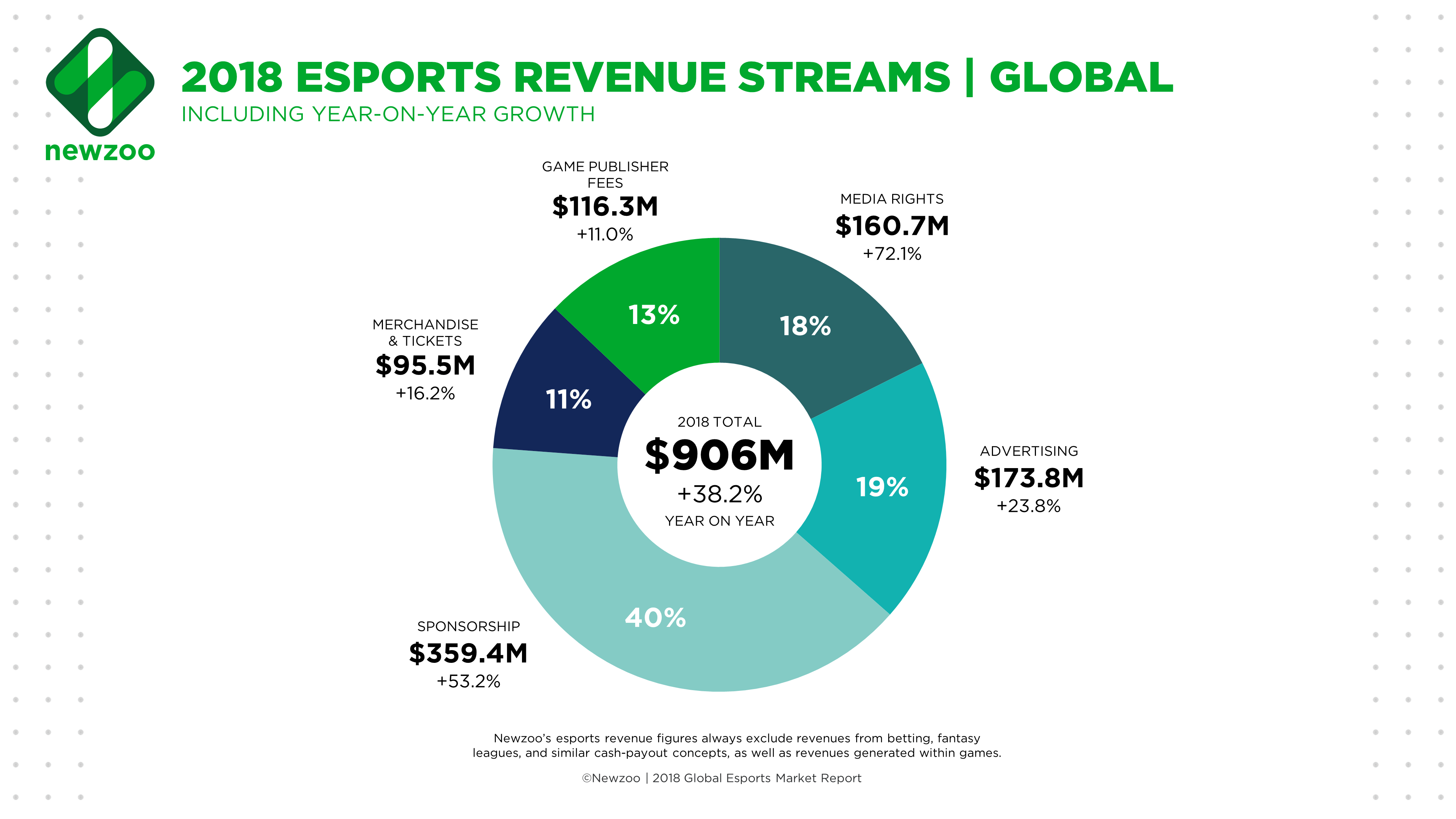
If you didn’t already know that bets like this were out there, the short answer is, it’s 2018. You can wager on everything from the results of individual at bats of a Mets game in real time, to the birth weight of the next relevant celebrity baby. And as competitive professional gaming leagues — also known as esports — have developed, more and more gamblers have come out of the woodwork to bet on them. With Business Insider conservatively estimating that the esports gambling market is worth $900 million as it stands in 2018, and Eilers & Krejcik Gaming estimating that value to double by 2020, unfortunately for the crotchety old folks in the comments of all of ESPN’s gaming-related Facebook posts, these contests are going to continue to be a topic of conversation.
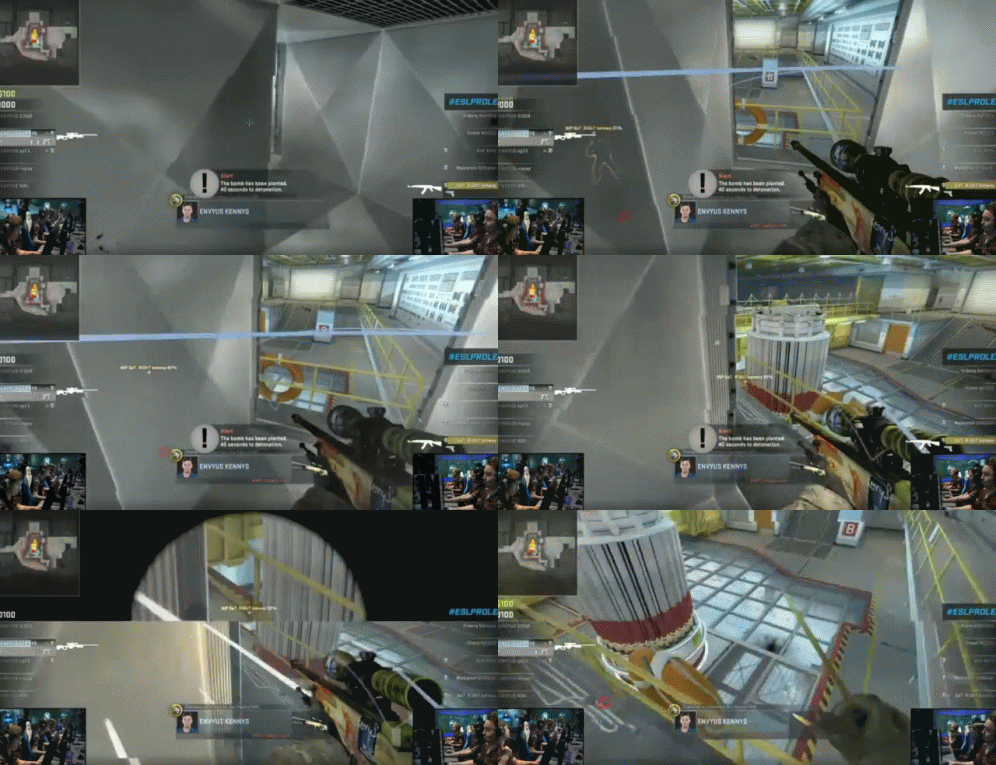
One of the most recognizable Counterstrike players of all-time, KennyS, shows off his world famous AWP skills to secure a round win.It makes sense that with esports viewership rising, so has the commotion around betting on them. Many games have had a long history of gambling internally that should have told us that this was going to be a thing sooner rather than later. Most notably, Counterstrike players have been gambling skins (purely cosmetic art for in game weapons) since random skin rewards were introduced in 2013. What began as the developers simply trying to bolster the game’s community became a thriving digital black market with the rarest skins often being worth in excess of $25,000 while trading hands over roulette and dice game results. So yeah, it’s that serious.

If you’re into wagering on your videogames the old-fashioned way (if there is one), online books offer the traditional odds where bettors can put their money down on the results of matches (the moneyline or spread), like you’d expect to see offered for any of the major sports. Bettors can also throw their hat in the ring on prop bets like character picks, who’ll get the first kill, and other game-specific events. These prop bet options (bets not concerned with or affected by the outcome of the game) are often limited to more high-profile matches, but if you’re willing to risk it on one of the shadier internet books, generally someone will take your money on just about anything, not unlike any other sport.
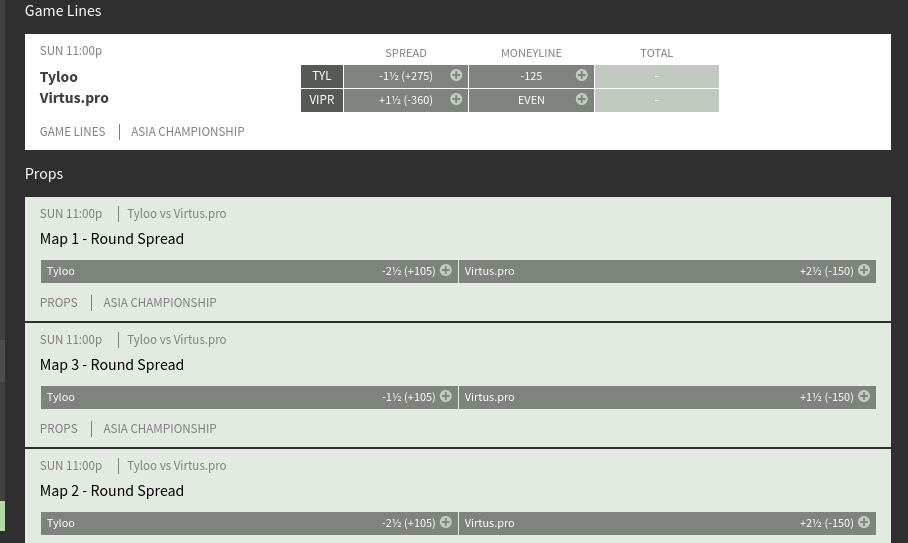
An example of what bookmakers like Bovada have to offer for betting on esports matches, in this case, Counterstrike.For Marcus “sixf0ur” Shea, founder of esportsforecasts.com, this market is worth playing, evidenced by the fact that he’s wagered nearly $400,000 CAD on it over the past two years. Shea got his start in finance, and then managed to, for lack of a better word, parlay, our adoration for shows like American Idol, and more importantly, our love for gambling, into a newfound career. Luckily for all of us, I was able to pick his brain and get the full story.

It starts in 2011. After earning his Master’s in Mathematics from the University of Waterloo, he landed what to many would be the job of a lifetime working for The Bank of Montreal as a quantitative analyst on Bay St, AKA he was the guy double-fisting espresso on the trading floor while somehow also yelling into his flip-phone and angrily snapping it closed every ten minutes. Once he started to apply that same expertise to betting, he found himself engulfed in a hobby that would steadily inch it’s way toward a career.

After 5 years of working for The Bank of Montreal, pricing billions worth of assets everyday, it proved to be just as stressful as you could expect. Considering I hyperventilate at the thought of losing the modest amounts I’m used to betting, I’ll take his word on how stressful life was as a quant if he was willing to become a professional gambler to escape that stress.

He built a bankroll using a program he had developed to shop odds on American Idol results offered on various online sportsbooks, namely Betfair and Pinnacle, and find arbitrage bets, or bets where he could still make a profit after betting all possible outcomes due to odds discrepancies between the books. These discrepancies generally arise most commonly within less popular betting events where books are more likely to offer significantly varying odds, or simply make a mistake in setting the market price. A word to the wise, and this should go without saying, this is easier said than done. Even if we’re talking American Idol odds, there’s a reason the house does so well in the big picture. Looking into the action around American Idol really strengthens the case that Sanjaya being a finalist was an inside job, but I’m going to leave that be for now.
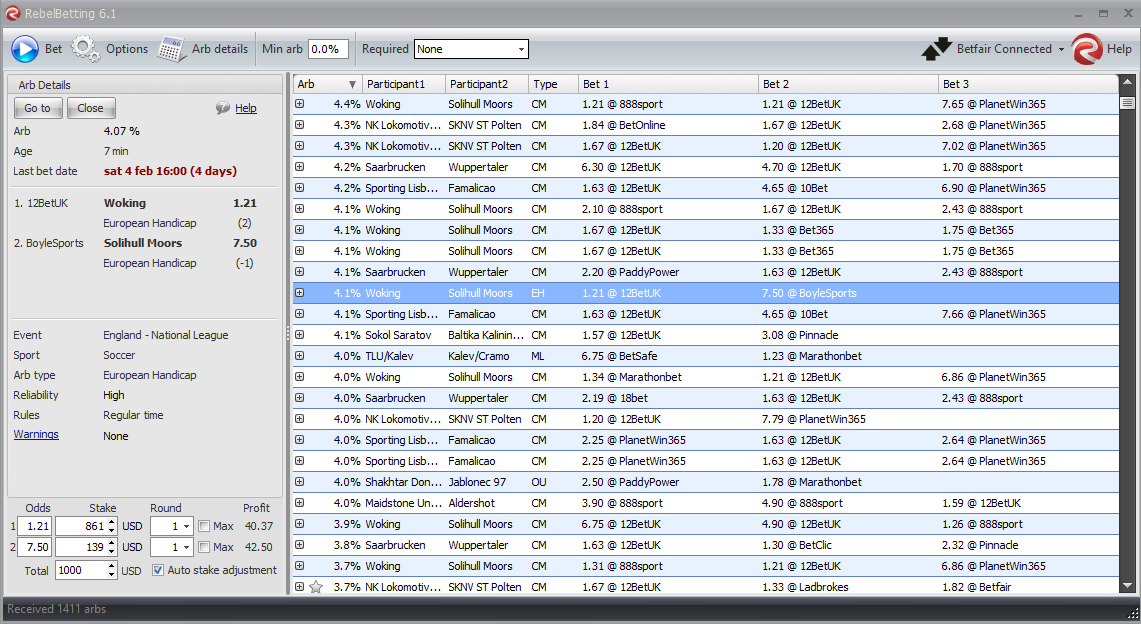
A screenshot from the popular arbitrage betting software RebelBettingWhen Betfair, a popular online sportsbook, closed the digital door on Canadian citizens after merging with Irish betting service Paddy Power in 2015, Shea needed to look for other options. Part of what makes esports betting so appealing is that many bettors, like Shea, still see it as a market with high edge potential (potential to beat the books betting on lines they may not put the proper time or expertise into setting accurately). It was the logical next step, oddly enough.

So, starting from a humble(ish) Excel spreadsheet model to help predict the outcome of DOTA 2 games, he began to shift his focus from finding surefire arbitrage bets, to bringing in as much esports results data as possible and betting according to conclusions he was able to draw from the trends defined in his model. Essentially, his model assigns each team a rating based on their performance history, compares that with the rating of their opponent, and offers bettors a percentage chance that Team A or Team B will win. While model betting still carries risk, modeling is designed to let you as a bettor know where the value bets are, and allow you to slowly build profit over time. Long story short, it’s definitely better than throwing darts at a dartboard and throwing some money around on those results.

After finding some much-needed success betting on DOTA with the help of the Reddit esports community, he expanded to a program of his own development that was capable of handling the raw results data from four more esports: League of Legends, Overwatch, Heroes of the Storm, and Counterstrike.
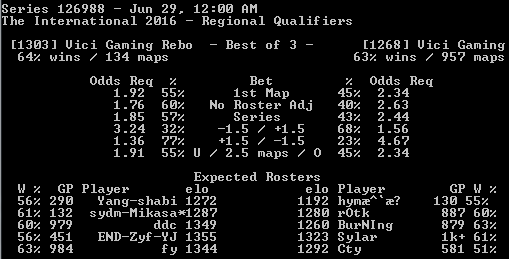
At this point in the story, Shea’s model looks something like this.In true Moneyball fashion, this is right about the time in the story where the house comes calling. But really, they did. You can’t make this shit up. In late 2016 Marco Blume, the President of Pinnacle, where he had been using for the bulk of his betting, reached out to Shea looking to talk shop about all things esports. According to Blume, esports were the fastest growing market in the world of sports betting, even overtaking hockey in terms of total volume wagered in their book, so it makes since they could stand to learn a thing or two from someone like Shea. But when they offered him what would essentially amount to an entry level position working in their sportsbook, he doubled down and rejected it, choosing to continue to be his own boss with Esportsforecasts. He might as well just return to Bay St. if now was the time to cash in all he’d worked for.

As for the model itself, look, I copied every math assignment I ever had to do in school, and I didn’t even bother to find the smart kids to copy them from. This is to say, none of it stuck. The intricacies of this model, or any other really for that matter, are lightyears beyond my comprehension. But, when there is a will (and money to be made) there is a way, so in talking with Marcus, combined with my research comparing the esportsforecasts.com model to other sports betting models, I was able to find that the key differences in betting esports as opposed to say, college football, can be attributed to their general increased volatility, and this creates a need for the model to be more malleable. Take a game like Counterstrike for example. The maps that the match will be played on aren’t decided until the pick/ban process that takes place right before each match. Teams perform better on some maps than others, prioritizing them in the pick phase, while banning maps the other team is known to perform well on. How this all shakes out can drastically change the outlook of the match, and this is what gives people like him time to react before the books can adjust their lines for live betting.
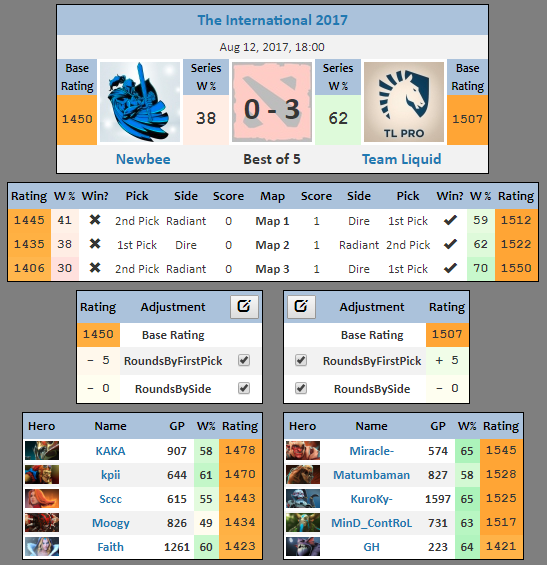
The esportsforecasts model projection from the Grand Finals of the 2017 International DOTA 2 tournamentWhile he can’t yet port in map picks in real time yet, he has left you the availability to do so at home and adjust your bets accordingly, hopefully allowing you to make value bets before the books can adjust their lines based on their projected performance of each team map to map. The model also makes similar adjustments for red vs blue side performance in League of Legends, first vs second pick performance in DOTA, etc, which are all facets an esports match bet that don’t really have a traditional sports analog. Esports sharps generally look to target these areas of volatility. The process of factoring these potential effects on the outcome of games is one he soon hopes to streamline, but for now bettors can foot the responsibility, or take to the Esportsforecasts Discord channel and see what other bettors following the model have to say.

But perhaps most importantly, Shea’s esports model is designed to rate the players on their own scale individually, in addition to generating team ratings. Esports contracts are fragile at best, to non-existent at worst, which leads to teams consistently dissolving and forming at a rate that drastically outpaces the four major sports, as well as a lot of expected turnover within a given roster. This, in combination with teams now carrying extra players on their roster more frequently, represents a need for the ability to quickly evaluate teams based on various lineups in order to find the value. So aside from the added wrinkle of giving a quantified take on who the best players around really are, rating the players individually also serves to stabilize the inherent volatility in Esports competition and isolate the bettor’s edge before the books adjust the lines. See a theme here?

One thing no model can account for however, is match fixing, a common problem bettors face when it comes to esports. Players are more easily convinced to throw matches given that the prize money on the table for winning tournaments, particularly smaller ones, often pales in comparison to what they could make throwing a game. In light of the recent Supreme Court decision allowing individual states the right to legalize sports gambling, expect to see the 18+ age restriction employed by most professional leagues become universal, as many have already raised concern that minors playing professionally could be seen as easy targets for match-fixers. Hopefully with rising prize pools, players won’t feel as though their hand is being forced and this eyesore on the community will be minimized, but fortunately for bettors, the books know that a match being fixed is a real possibility. Shea recalled multiple instances of Pinnacle in particular refunding/voiding bets he had placed on matches that had drawn suspicion. It’s like we’ve always said. Sportsbooks are nothing if not understanding!

By the time I got around to asking why he was posting all of this delicious content for us internet vultures to pick at for free instead of being in the business of selling picks, he replied swiftly, undoubtedly because he knew it was coming.

“Not yet.”

Betting north of $1,000 a night on esports based on his model’s projections has worked generally worked out for him, but even he doesn’t bet every series. Discipline and knowing value bets when he sees them is how he has turned his gambling from a hobby into a career he can rely on. Even still, Shea says hes looking to make some subtle improvements before rolling out a subscription service for some added risk-free income and return on his time investment. He does plans to leave a free version open to the public for the foreseeable future.

You can find Marcus on Twitter: @esportsforecast

Parker Goss is a senior correspondent for Grandstand Central, where he writes about gambling, gaming, and fan culture. You can follow him here.

Source: https://grandstandcentral.com/what-its-like-wagering-400k-on-esports-f93dc2afd427

The 3 Biggest Trends That Will Drive #Gold In The Next 30 Years $AMK.ca $EXS.ca $MQR.ca $GR.ca $GGX.ca $HPQ.ca $GZD.ca

Posted by AGORACOM-JC at 11:45 AM on Thursday, June 21st, 2018

Olivier Garret , Contributor Opinions expressed by Forbes Contributors are their own.

  • The World Gold Council recently released an insightful report titled, Gold 2048: The Next 30 Years for Gold.
  • Report looks at overarching demographic, technological, economic, political, and social trends around the world and their implications for the gold market.

The World Gold Council recently released an insightful report titled, Gold 2048: The Next 30 Years for Gold. This report looks at overarching demographic, technological, economic, political, and social trends around the world and their implications for the gold market.

The report has brought together top gold industry experts as well as world-renowned authors and economists who discuss the underlying macro forces that will drive gold in the next 30 years.

This is an eye-opening yet lengthy read that I highly recommend to all investors (find it here). To give you a glimpse of what’s inside the report, this short overview presents the highlights and takeaways from an investment perspective.

Trend #1: The Rise of the Middle Class in Emerging Markets

According to the report, in the next 30 years, demographics will play an increasingly important role in shaping the global economy.

The big story of the next quarter-century will be the rising middle class in emerging markets, particularly in China and India. Recent reports estimated that, over the next 17 years, 170 million Asians will enter the middle class every year.

India, the largest consumer of gold, is set to become the fastest-growing economy in the coming decades. If it manages to pull off its ambitious political and economic reforms, its middle class might soar from 19% to 73% of total population.

“Not only will the Indian middle class become a driving force within the Indian economy, but its aggregate purchasing power will result in the creation of one of the largest markets in the world,” says the report.

China’s middle class, too, is rapidly expanding. But unlike India, the Chinese are facing major demographic headwinds. Key among them is an aging population, which might curb economic growth despite the gains from the expanding middle class.

Takeaway for gold investors:

India and China are the biggest consumers of gold worldwide. As their middle class and aggregate purchasing power grow, gold demand is expected to soar.

Trend #2: A Shift in Gold Demand and Supply Dynamics

Jewelry and investment-grade bullion are not the only drivers of gold demand. Gold has wide industrial applications as well. Practically every piece of electronics has a little gold used as highly conductive and corrosion-resistant material. Unknown to many, gold is even effectively used in medicine.

Here’s a quick rundown of technological trends from the report that will spur industrial gold demand:

  • The adoption of the Internet of Things (IOT) will lead to an explosion of electronics (and gold) used in all consumer durable goods.
  • A shift to hybrid and electric vehicles demand far more high-end electronic components that use gold.
  • Gold compounds show promise in clinical testing and even drugs as a new class of antibiotic.
  • A booming solar panel industry will demand more gold as a core catalyst component.

There are many more gold applications, but industrial applications make up only a small part of aggregate gold demand. Investment demand has a much more profound impact on the gold price.

The experts who contributed to the report predict that the growing popularity of gold-backed ETFs as well as advancements in fintech will be some of the biggest drivers of gold demand in the coming years. The convenience and cost-effectiveness that technology brings will make gold attractive to more investors, including Millennials.

Meanwhile, gold supply is under major constraints due to rising operating costs, scant gold discoveries, and low gold prices.

The report sums up the current situation in gold supply:

We expect new mine supply to decline over the next 30 years, hit by rising costs. Metals Focus estimates that, even today, new gold mines need a price of about US$1,500/oz, and with costs having increased at a compound annual rate of 10% over the past 15 years, additional ESG costs are likely to mean that even higher gold prices will be required in the future.

Takeaway for gold investors:

Due to operating constraints, gold miners will struggle to keep up with the growing gold demand. This, in turn, will put upward pressure on gold prices in the long run.

Trend #3: A Volatile Future

The investment landscape itself will radically change in the next 30 years. A combination of demographic, technological, and macroeconomic trends is creating structural changes in the global economy that will have profound implications for investors.

  • Working-age populations are shrinking in the developed world. Labor scarcity will put a strain on economic growth and equity returns. A rise in wages due to constrained labor supply is likely to mark the end of the low inflation era.
  • The rise of automation and AI—displacing increasingly more workers—will elevate political and social tensions and bring more volatility to the markets. We might also expect Western politics to become more redistributive, which will put a greater financial burden on investors via rising taxes.
  • The impact of demographics will have a profound effect on the dynamics of global powers. The Western world will be increasingly burdened by aging populations, scarce labor, and stagnant economic growth. Conversely, India and China are set to reach their golden demographic spot in the coming decades. Since demographics have a direct effect on economic growth, we are likely to witness an unprecedented shift of economic power from West to East. As a result, geopolitical tensions will rise.
  • The widespread adoption of big data and artificial intelligence in investing will increase automated trading in liquid markets. Automation and fast data dissemination will make investment preferences more correlated, so true diversification will be hard to achieve.

Takeaway for gold investors:

The next 30 years are going to be highly unstable, both politically and financially. As history shows, gold performs best in volatile times—and is the best, time-tested hedge against any crisis.

Source: https://www.forbes.com/sites/oliviergarret/2018/06/20/the-3-biggest-trends-that-will-drive-gold-in-the-next-30-years/#26437bbc29bb

Nvidia $NVDA: #Esports To Catapult Growth $GMBL $KUU.ca $ATVI $TTWO $GAME $EPY.ca $TCEHF $Game.ca $EPY.ca

Posted by AGORACOM-JC at 10:49 AM on Thursday, June 21st, 2018
  • eSports is growing at an exceptional pace.
  • The advent of this gaming segment would boost sales for Nvidia
  • Besides, Nvidia’s GeForce Now would target users who don’t want to spend huge chunks of cash on industry-leading gaming hardware.
  • This is a win-win situation for Nvidia.

Nvidia (NVDA) has grown at an exceptional pace across all of its segments for many quarters now and its shares are up by about 75% over the past year alone. Interestingly, naysayers and some perma-bears have begun proclaiming of late that the chipmaker would enter a phase of consolidation over the course of 2018 but that’s not necessarily a done deal. There is reason to believe that the emergence of a new category within gaming, eSports, will act as a key growth driver for Nvidia in addition to AMD (AMD). Let’s take a closer look.

(Source: Bigstockphoto, Image license purchased by author)

The age of eSports

It seems like eSports is gaining traction at an impressive pace. Gamers would be familiar with the term but for those who are hearing it for the first time, eSports is basically gaming at a professional level and simultaneously streaming the gameplay (via Twitch, YouTube, TV channels etc.) for their audience.

The advent of eSports has no doubt morphed into a full-blown profession for gamers as they are now able to monetize their time, skills and gaming hardware. Additionally, it has also opened up various kinds of revenue streams for those organizing, hosting and powering these events.

Source: https://seekingalpha.com/article/4182933-nvidia-esports-catapult-growth

Online Education #edtech market in #India: From humble beginnings to a $2 billion industry $BTRU.ca $ARCL $CPLA $BPI $FC.ca

Posted by AGORACOM-JC at 9:57 AM on Thursday, June 21st, 2018

  • On a growth spree, the Indian online education market is presenting a lot of opportunities to ed-tech players in the arena
  • The industry is expected to achieve the growth benchmark of $2 billion by the year 2021, a joint report released last year by Google and KPMG stated
  • Also found that the paid user base for online education services will also grow at least by six times, if not more.

Ed-tech in India has had humble beginnings right from its inception. From the elementary smart classes by Educomp to the current shape and state of the education industry where several ed-tech startups and foreign players are vying for a slice of the education market in India.

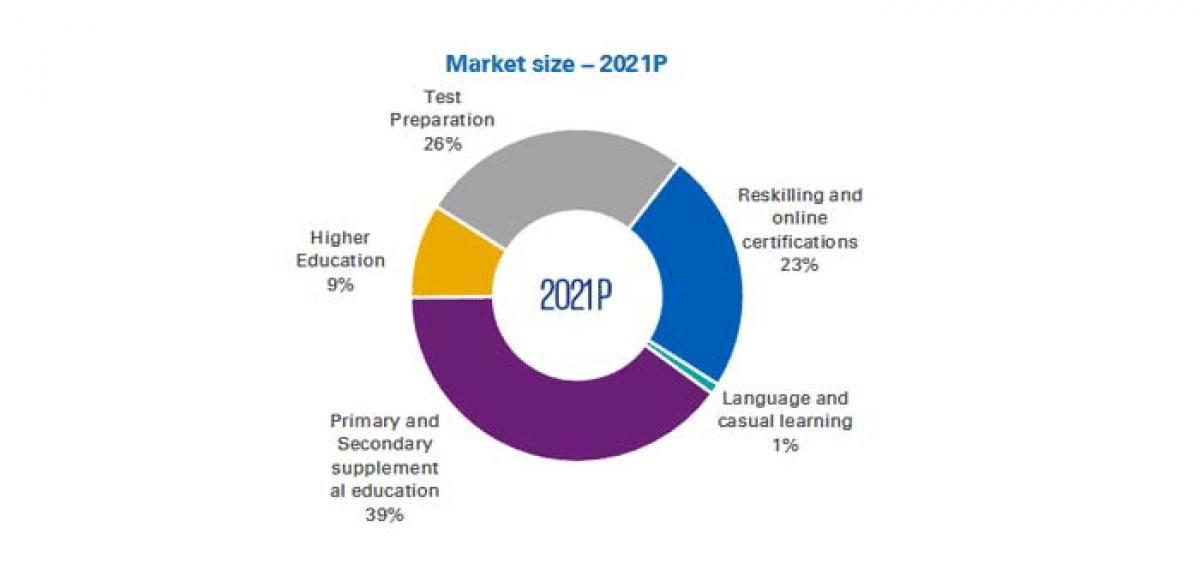
On a growth spree, the Indian online education market is presenting a lot of opportunities to ed-tech players in the arena. The industry is expected to achieve the growth benchmark of $2 billion by the year 2021, a joint report released last year by Google and KPMG stated. The report also found that the paid user base for online education services will also grow at least by six times, if not more.

While the report’s findings are quite impressive, the online education sector in India didn’t always possess the same grandeur or even garner the same interest that it does now. Initiated in the 1990s, Smart Class by Educomp launched by Shantanu Prakash was the first venture that brought a large scale change in the education sector.

Educomp Solutions started off with the business of setting up and maintaining computer labs in private schools till 1999. The company’s business grew in 1999, when founder Shantanu Prakash decided to expand the trading operations by including CD-ROMs and educational toys. However, the biggest milestone in the company’s decades-long journey remains the introduction of Educomp SmartClass – a ‘one of its kind’ model that revolutionized the way kids learn things at school.

Since then, the Indian education sector has seen quite some growth in terms of development and innovations. Ed-tech service providers and a few players in the industry are giving a makeover to ed-tech wherein the capital demands and investments have brought India to the forefront in the space.

While still nascent, India is home to thousands of companies providing education technology services to schools as well as individuals, with over 900 managing to come up in the past 2 years alone.

The innate efficacy of the tech-driven setup is still a hot topic for nationwide debates, the ground report says otherwise. Surveys conducted with several participating students have shown that the students aided with online education and smart class were able to achieve a more profound understanding of the subject matter, as compared to the students who stuck to conventional methods of learning.

The investors are surely past the over-stretched debate, with big names like the Chan Zuckerberg Initiative, Tencent Holdings, etc., having opened their coffers to Indian ed-tech honchos BYJU’s and AEON Learning. And that’s not it. The FinTech sector in India has also embraced its educational counterpart, with indigenous digital lending platforms like Zest Money and FinMomenta partnering with players like Upgrad and Edureka.

The use of technology in an already tech-driven world is not the only reason why investors are attracted to the online education sector in India. Another driving factor remains the large and rapidly growing consumer base. There are about 409 million Internet users in India, a country with 46 per cent of its population in the age group of 15-20 years.

Apart from the increasing Internet penetration, the low cost involved in pursuing an online course, as well as the convenience, flexibility and personalization also attribute to the popularity of ed-tech among students. This, in turn, amounts to growing interest from investors.

While some educators perceive online education as a looming threat to the very existence of offline education system, CEO of Embibe.com Aditi Awasthi believes that the ed-tech sector will remain a fringe play in the face of traditional methods of education until it hits at the heart of what matters to the students – outcomes. “There has to be a clear RoI from consuming education through high-tech channels beyond mere convenience. Data science-driven personalization can make that happen,” she says.

Source: http://www.thehansindia.com/posts/index/Education-&-Careers/2018-06-20/Online-Education-market-in-India-From-humble-beginnings-to-a-2-billion-industry/390846

Esports Entertainment Group $GMBL Signs Affiliate Marketing Agreements With Additional 10 #Esports Teams, Bringing Total To 60 Esports Teams $ATVI $TTWO $GAME $EPY.ca $TCEHF $Game.ca $EPY.ca

Posted by AGORACOM-JC at 7:37 AM on Thursday, June 21st, 2018

Esports large

  • Addition of these 10 esports teams brings the total number of esports team affiliates to 60 since the Company’s first announcement on April 5th
  • No other esports wagering site has ever signed an Affiliate Marketing Agreement with any esports team
  • The Company anticipates many more Affiliate Marketing Agreements with esports teams throughout 2018

ST. MARY’S, Antigua, June 21, 2018 – Esports Entertainment Group, Inc. (OTCQB:GMBL) (or the “Company”), a licensed online gambling company with a specific focus on esports wagering and 18+ gaming, is pleased to announce the signing of Affiliate Marketing Agreements with 10 additional esports teams as the Company ramps up affiliate marketing activities in support of its’ recent launch of VIE  (https://vie.gg),  the world’s safest, most secure and transparent esports wagering platform.

The addition of these 10 esports teams brings the total number of esports team affiliates to 60 since the Company’s first announcement on April 5th.  No other esports wagering site has ever signed an Affiliate Marketing Agreement with any esports team.  The Company anticipates many more Affiliate Marketing Agreements with esports teams throughout 2018.

NEWEST ESPORT TEAM AFFILIATES

Sweepr Gaming
Esi Pirmais eSports
Tschokusel E-Sports
Team Mysterious Ducks
Just1Life Gaming
Legion5 eSports
Essential Gaming e.V.
MightyWolves
Team Native
ORTiC

VIE offers bet exchange style wagering on esports events in a licensed, regulated and secured platform to the global esports audience, excluding jurisdictions that prohibit online gambling. VIE features wagering on the following esports games:

  • Counter-Strike: Global Offensive (CSGO)
  • Dota 2
  • Call of Duty
  • Hearthstone
  • StarCraft II

Grant Johnson, CEO of Esports Entertainment Group stated “This is an incredible accomplishment when you consider no other esports wagering site has ever signed affiliate marketing agreements with esports teams.  We expect to sign many more such agreements with esports teams over the summer, with Gamescom 2018 expected to be our biggest week at the end of August. The industry has sent us a loud and clear message – our transparent and trusted P2P esports wagering platform is exactly what the esports world has been waiting for. We are humbled and look forward to helping all of our esports teams and their fans succeed for many years to come.”

This press release is available on our Online Investor Relations Community for shareholders and potential shareholders to ask questions, receive answers and collaborate with management in a fully moderated forum at https://agoracom.com/ir/EsportsEntertainmentGroup

Redchip investor relations Esports Entertainment Group Investor Page:
http://www.gmblinfo.com

About Esports Entertainment Group

Esports Entertainment Group Inc. is a licensed online gambling company with a specific focus on esports wagering and 18+ gaming. Initially, Esports Entertainment intends to offer bet exchange style wagering on esports events in a licensed, regulated and secured platform to the global esports audience, excluding the US and EU. In addition, Esports Entertainment intends to offer users from around the world the ability to participate in multi-player mobile and PC video game tournaments for cash prizes. Esports Entertainment is led by a team of industry professionals and technical experts from the online gambling and the video game industries, and esports. The Company holds licenses to conduct online gambling and 18+ gaming on a global basis, excluding the US and EU, in Curacao, Kingdom of the Netherlands and the Kahnawake Gaming Commission in Canada. The Company maintains offices in Antigua and Poland. Esports Entertainment common stock is listed on the OTCQB under the symbol GMBL.  For more information visit www.esportsentertainmentgroup.com
.
FORWARD-LOOKING STATEMENTS
The information contained herein includes forward-looking statements. These statements relate to future events or to our future financial performance, and involve known and unknown risks, uncertainties and other factors that may cause our actual results, levels of activity, performance, or achievements to be materially different from any future results, levels of activity, performance or achievements expressed or implied by these forward-looking statements. You should not place undue reliance on forward-looking statements since they involve known and unknown risks, uncertainties and other factors which are, in some cases, beyond our control and which could, and likely will, materially affect actual results, levels of activity, performance or achievements. Any forward-looking statement reflects our current views with respect to future events and is subject to these and other risks, uncertainties and assumptions relating to our operations, results of operations, growth strategy and liquidity. We assume no obligation to publicly update or revise these forward-looking statements for any reason, or to update the reasons actual results could differ materially from those anticipated in these forward-looking statements, even if new information becomes available in the future. The safe harbor for forward-looking statements contained in the Securities Litigation Reform Act of 1995 protects companies from liability for their forward-looking statements if they comply with the requirements of the Act.

Contact:

Corporate Finance
1-268-562-9111
[email protected]

Media & Investor Relations Inquiries
AGORACOM Investor Relations
[email protected]
http://agoracom.com/ir/eSportsEntertainmentGroup

Senate passes #cannabis legalization bill in final vote #Canada $N.ca $NXTTF $TBP.ca $MCOA

Posted by AGORACOM-JC at 10:16 AM on Wednesday, June 20th, 2018
  • Senate has voted to pass Bill C-45, the government’s legislation to legalize cannabis, meaning that recreational marijuana will soon be legal across Canada
  • Some parliamentarians are calling it an “historic” moment in this country, while others are warning of the work left to be done: raising public awareness about the implications of this incoming major social policy change.

Rachel Aiello, Ottawa News Bureau Online Producer

Published Tuesday, June 19, 2018 4:21PM EDT

Last Updated Wednesday, June 20, 2018 9:45AM EDT

OTTAWA — The Senate has voted to pass Bill C-45, the government’s legislation to legalize cannabis, meaning that recreational marijuana will soon be legal across Canada.

Some parliamentarians are calling it an “historic” moment in this country, while others are warning of the work left to be done: raising public awareness about the implications of this incoming major social policy change.

After more than a year of intensive study in both the House and Senate, the bill cleared the final legislative hurdle Tuesday evening, passing by a vote of 52 to 29 with two abstentions from the Independent Senators from Quebec: Sen. Marie-Françoise Mégie and Sen. Rosa Galvez.

Complete coverage on CTVNews.ca

Sen. Claude Carignan, leader of the opposition in the Senate, speaks to reporters in the Senate foyer on Parliament Hill in Ottawa on Tuesday, June 19, 2018. THE CANADIAN PRESS/Justin Tang

The vote was on a motion from Sen. Peter Harder, the Government Representative in the Senate, to accept the government’s position on the Senate’s amendments and pass the bill as is. It was all that was left in a short round of legislative ping-pong spurred by the upper chamber amending the government legislation.

The House of Commons will be notified of the Senate’s decision. After that, all that is left will be Royal Assent to officially pass the bill and for the government to determine when the new law will come into force.

Leader of the Independent Senators Group Sen. Yuen Pau Woo told reporters after the vote that the mammoth study of Bill C-45 was “a bit of a stress test” for the increasingly Independent Senate.

He said now, the work will have to begin on implementing the legislation, and making sure Canadians understand what this new regime means.

“We are now moving where in the legalized industry we have the chance to push out the illicit elements, we have the chance to do research on cannabis, we have the chance to properly educate our young people on the harms of cannabis use, and all of this should be the focus of the whole country now,” Sen. Woo said.

The legislation — an electoral promise of Prime Minister Justin Trudeau and the Liberal Party –allows adults in Canada to legally possess and use small amounts of recreational cannabis. It sets out parameters around the production, possession, safety standards, distribution, and sale of the drug. It also creates new Criminal Code offences for selling marijuana to minors. The proposed federal law spells out that it will be illegal for anyone younger than 18 to buy pot, but allows for provinces and territories to set a higher minimum age.

In a tweet, Justice Minister Jody Wilson-Raybould, who was the bill’s sponsor, and first introduced the legislation in April 2017, said it was “an historic milestone for progressive policy in Canada.”

The federal government is expected to formally respond to the bill’s passage Wednesday morning in the House of Commons foyer.

Last week, the government announced it would be accepting most but not all of the Senate’s more than 40 proposed amendments to Bill C-45. Among the 13 amendments that the federal Liberals rejected were the proposal to allow the provinces and territories to ban home-grown marijuana, and a proposed change to prohibit pot producers from distributing branded merchandise.

Earlier in the evening, an attempt by Conservative Sen. Claude Carignan to insist on an amendment to let provinces ban marijuana home cultivation, failed.

Reacting to his effort to push back on the government’s rejection of the change, Carignan said his attempt was to give the provinces a right he believes they should have, in an effort to circumvent what is now likely: the matter winding up in court.

Senators spent much of Tuesday offering their final thoughts on the legislation, with some expressing disappointment and frustration over MPs not accepting the Senate’s changes, and raising remaining concerns with the legislation as it stands.

Others argued that the upper chamber had done its due diligence and that it was time to concede to the will of the elected House of Commons, and pass the legislation.

In calling the vote, Senate Speaker George Furey had a slip of the tongue and called “all those in flavour” instead of “all those in favour,” sending snickers through the chamber. “It’s getting late,” Sen. Furey said.

Speaking with reporters following the vote, Sen. Harder said he was finally pausing after the manoeuvrings and the procedural wrangling to acknowledge that after a very lengthy debate, Canada is on the cusp of legalization after nearly a century of prohibition.

“It is a step in the right direction and what we now need to do is to insure as we move forward in implementation, that everybody plays their role, that everybody understands the obligations that they have and uses the opportunity of the next number of weeks to inform themselves of what a legal cannabis market means for them, their family, their communities, and the opportunities and risks that it poses,” said Sen. Harder.

So is marijuana legal? No.

The bill still needs to receive Royal Assent, which is expected as soon as tomorrow. That is the final step — essentially the Crown approving the bill. It’s overseen by Canada’s representative, the Governor General.

Once it passes, the government is expected to declare the date that legalization will come into force and be applicable.

On CTV’s Question Period, parliamentary secretary and the federal government’s point-person on pot, Bill Blair said he expects the date to be some time this September.

That window of time between when the bill passes and when it becomes federal law is to allow for the provinces, territories, municipalities, police forces, and other stakeholders to make sure their piece of the pot pie is operating in accordance with the new rules.

Blair said the date they decide on will be informed by discussions with their provincial and territorial counterparts, which have been given the ability to set regulations in their jurisdictions as to how a legalized marijuana regime will operate.

What you need to know:

Many of the decisions around how legalized marijuana is sold and used will be up to the provinces and territories. Here is what you need to know about what will be allowed:

  • The federally mandated public possession limit of 30 grams of dried cannabis has been maintained across the country, with most jurisdictions opting to keep their legal marijuana-smoking ages in line with those for drinking alcohol.
  • Bill C-45 allows individuals to grow up to four marijuana plants per residence, though some provinces, like Manitoba and Quebec, plan to ban home cultivation.
  • Provincial and territorial plans vary widely on whether you’ll be able to smoke in public.
  • Provinces and territories also differ on whether pot shops will be publicly or privately owned. For those opting for publicly owned stores, these will be operated by provincial Crown corporations that sell liquor. In some cases, provinces have even created subsidiaries of these companies with names. Unless otherwise noted, these will be standalone stores wholly separate from those that sell alcohol.
  • While dried cannabis and cannabis oil — both of which will be sold in 2018 — can be used to make edible products at home, the federal government has said that packaged edible products won’t be commercially available.

For a comprehensive rundown of how each province is approaching legalized marijuana, click here.

Outcome of drug-impaired driving bill pending

Bill C-45 was introduced alongside Bill C-46 which specifically deals with impaired driving. The government has hoped throughout the process that the two bills would pass in close succession.

This legislation proposes changes to the impaired driving laws to give police new powers to conduct roadside intoxication tests, including oral fluid drug tests, and would make it illegal to drive within two hours of being over the legal limit.

However, the Senate amended Bill C-46 to remove the provision that allowed police to conduct random roadside alcohol tests. The Senate also sought to legally downgrade impaired driving offences so that they are not classified as “serious criminality” in order to protect foreign nationals and permanent residents from losing their statuses or becoming inadmissible to Canada after such a conviction.

On Monday, the government gave notice of its position on the Senate changes, stating that it “respectfully disagrees” with these two changes. However, in the motion the government indicates it is willing to accept a handful of other Senate amendments to the legislation.

The House has yet to send this message back to the Senate but once that occurs, Bill C-46 is in for a similar final debate and vote, as seen with Bill C-45, where senators will have to decide whether they insist, or accept and pass the bill.

The House of Commons is scheduled to adjourn for the summer on Friday, June 22, but the Senate is set to sit for a week longer. There is always the potential of an early adjournment, or the opportunity to sit longer in exceptional circumstances.

Source: https://www.ctvnews.ca/politics/senate-passes-cannabis-legalization-bill-in-final-vote-1.3980234

Monarques Gold $MQR.ca Estimates Pit-Constrained Resource on its Swanson Gold Project $MUX.ca $SII.ca

Posted by AGORACOM-JC at 8:56 AM on Wednesday, June 20th, 2018

Emerging gold producer in Abitibi (CNW Group/Monarques Gold Corporation)

  • The Swanson maiden mineral resource estimate for a combined pit-constrained and underground scenario is as follows:
    • A pit-constrained Indicated resource of 90,319 ounces and Inferred resource of 941 ounces, and an underground Indicated resource of 7,732 ounces and Inferred resource of 5,975 ounces.
  • The advantageous location of the Swanson deposit, some 100 metres from a railway track, provides easy access to the Beacon mill.
  • The Corporation holds a mining lease on the Swanson property, enabling it to put the deposit into production more rapidly.
  • Monarques Gold continues to increase its combined Measured and Indicated resources to more than 3.1 million ounces of gold (see table 3 at the end of press release).

MONTREAL, June 20, 2018 /CNW/ – MONARQUES GOLD CORPORATION (“Monarques”, “Monarques Gold” or the “Corporation”) (TSX-V:MQR) (OTCMKTS:MRQRF) (FRANKFURT:MR7) is pleased to report the results of a mineral resource estimate for its Swanson gold project, 65 kilometres north from its wholly-owned Beacon mill and 12 kilometres northeast of Barraute, Quebec. The CN railway line crosses the property, some 100 metres north of the Swanson deposit. Monarques acquired a 100% interest in the Swanson and McKenzie Break properties from Agnico Eagle Mines Limited (NYSE:AEM, TSX:AEM) (see press release dated December 21, 2017). The resource estimate was prepared by Christine Beausoleil, P.Geo. and Alain Carrier, P.Geo., M.Sc., of InnovExplo Inc., both qualified and independent persons as defined by NI 43-101. The effective date of the estimate is June 15, 2018.

“The great advantage of the Swanson project is that the railway track is directly on the property, which allows easy access to both our mills,” said Jean-Marc Lacoste, President and Chief Executive Officer of Monarques. “Much like for the McKenzie Break project, we are very pleased to have a pit-constrained resource for the Swanson project (see figure), as this could also mean additional feed for the Beacon mill.  In addition, Monarques holds a mining lease on the Swanson property, which could allow us to put the deposit into production more quickly. Our new strategy of targeting pit-constrained resources from our McKenzie Break and Swanson properties, together with the reopening of our Beacon Mill at the end of the year, could be a winning solution for all three projects.”

The 2018 maiden mineral resource estimate was prepared using Leapfrog GEO and GEOVIA GEMS software. Leapfrog was used for 3D modelling of the four mineralized zones while GEMS was used for grade estimation and block modelling. Statistical studies were done using Snowden Supervisor and Microsoft Excel software. The estimate was performed using 3D block modelling with the Ordinary Kriging interpolation method.

The diamond drilling database contains the results of 146 surface and 63 underground drill holes provided by Monarques. Basic univariate statistics were performed on datasets of individual raw gold assays for each zone and for the dilution envelope. The capping (30 g/t Au) was applied on raw assays before compositing at 1.5 m.

The estimate is reported for a potential scenario combining pit-constrained and underground resources at a cut-off grade of 0.8 g/t Au (pit constrained) and 2.7 g/t Au (underground). The cut-off grades were calculated using a gold price of USD1,296/oz, a CAD:USD exchange rate of 1.28 and the following parameters: (a) pit-constrained scenario: mining cost CAD4.94/t, processing cost CAD27.00/t, General and administrative CAD4.00/t, pit slope of 50 degrees used during Whittle optimization; (b) underground scenario: mining cost CAD90.00/t, processing cost CAD27.00/t, General and administrative CAD10.00/t.

The Swanson project mineral resource estimate for a potential scenario combining pit-constrained and underground resources at cut-off grades of 0.8 g/t Au (pit-constrained) and 2.7 g/t Au (underground) is summarized in the following table 1, whereas table 2 shows the sensitivity analysis of the Swanson maiden mineral resource estimate for the pit-constrained scenario.

Table 1 – Swanson Maiden Mineral Resource Estimate for a combined pit-constrained and underground scenario at a cut-off grade of 0.8 g/t Au (in pit) and 2.7 g/t Au (underground)

Indicated Resource

Inferred Resource

Zone

Tonnage

Grade
(g/t Au)

Ounces

Tonnage

Grade
(g/t Au)

Ounces

Pit-constrained  

1,568,000

1.79

90,319

12,000

2.44

941

Underground  

75,000

3.21

7,732

60,000

3.10

5,975

Total

1,643,000

1.86

98,051

72,000

2.99

6,917


Notes to the mineral resource table:

•

These mineral resources are not mineral reserves, as they do not have demonstrated economic viability.

•

The 2014 CIM definitions and guidelines for mineral resources have been followed.

•

Results are presented in situ and undiluted and considered to have reasonable prospects for economic extraction.

•

The estimation encompasses four zones with a minimum true thickness of 2.5 m using the grade of the adjacent material when assayed, or a value of zero when not assayed.

•

A high-grade capping of 30 g/t Au (4 g/t Au for the dilution envelope) was applied to assay grades prior to compositing grade for interpolation using an Ordinary Kriging interpolation method, based on 1.5 m composite for block size of 3 m x 3 m x 3 m.

•

Bulk density values were applied on the following lithological basis (g/cm3): I2 = 2.78; I4O, V3, V4 = 2.90, and OVB = 1.5.

•

The number of metric tons was rounded to the nearest thousand and the metal contents are presented in troy ounces (tonne x grade / 31.10348).

•

InnovExplo is not aware of any known environmental, permitting, legal, title-related, taxation, socio-political or marketing issues, or any other relevant issue not reported in this Technical Report that could materially affect the mineral resource estimate.


Table 2 – Sensitivity analysis of the Swanson Maiden Mineral Resource Estimate for the pit-constrained scenario

Indicated Resource

Inferred Resource

Cut off

Au (g/t)

Tonnes

Ounces

Cut off

Au (g/t)

Tonnes

Ounces

0.6

1.65

1,798,000

95,499

0.6

2.22

14,000

997

0.7

1.72

1,685,000

93,157

0.7

2.28

13,000

952

0.8

1.79

1,568,000

90,319

0.8

2.44

12,000

941

0.9

1.87

1,453,000

87,173

0.9

2.56

11,000

907

1

1.94

1,338,000

83,651

1

2.66

10,000

856


The NI 43-101 technical report will be delivered and filed on SEDAR within the next 45 days.

The technical and scientific content of this press release has been reviewed and approved by Marc-André Lavergne, Eng., the Corporation’s qualified person and by Christine Beausoleil, P.Geo. and Alain Carrier, P.Geo., M.Sc. of InnovExplo Inc., all of whom are qualified persons as defined by NI 43-101.

ABOUT MONARQUES GOLD CORPORATION

Monarques Gold Corporation (TSX.V:MQR) is an emerging gold producer focused on pursuing growth through its large portfolio of high-quality projects in the Abitibi mining camp in Quebec, Canada. The Corporation currently owns close to 300 km² of gold properties (see map), including the Beaufor Mine, the Croinor Gold (see video), Wasamac, McKenzie Break and Swanson advanced projects, and the Camflo and Beacon mills, as well as six promising exploration projects. It also offers custom milling services out of its 1,600 tonne-per-day Camflo mill. Monarques enjoys a strong financial position and has more than 150 skilled employees who oversee its operating, development and exploration activities.

Forward-Looking Statements

The forward-looking statements in this press release involve known and unknown risks, uncertainties and other factors that may cause Monarques’ actual results, performance and achievements to be materially different from the results, performance or achievements expressed or implied therein. Neither TSX Venture Exchange nor its Regulation Services Provider (as that term is defined in the policies of the TSX Venture Exchange) accepts responsibility for the adequacy or accuracy of this press release.

Table 3 – Monarques Gold Measured and Indicated Resources

Tonnes
(metric)

Grade
(g/t Au)

Ounces

Wasamac property1

Measured Resources

3.99 million

2.52

323,300

Indicated Resources

25.87 million

2.72

2,264,500

Total Measured & Indicated Resources

29.86 million

2.70

2,587,900

Beaufor Mine2

Measured Resources

74,400

6.71

16,100

Indicated Resources

271,700

7.93

69,300

Total Measured & Indicated Resources

346,200

7.67

85,400

Croinor Gold Mine3

Measured Resources

80,100

8.44

21,700

Indicated Resources

724,500

9.20

214,300

Total Measured & Indicated Resources

804,600

9.12

236,000

Swanson property4

Indicated Resources

1,643,000

1.86

98,051

McKenzie Break property5

Pit Constrained

Indicated Resources

939,860

1.59

48,133

Underground

Indicated Resources

281,739

5.90

53,448

Simkar Gold property6

Measured Resources

33,570

4.71

5,079

Indicated Resources

208,470

5.66

37,905

Total Measured & Indicated Resources

242,040

5.52

42,984

TOTAL

Measured & Indicated Resources

3,151,916

1 Source: Technical Report on the Wasamac Project, Rouyn-Noranda, Québec, Canada, Tudorel Ciuculescu, M.Sc.,

P.Geo., October 25, 2017, Roscoe Postle Associates Inc.

2 Source: NI-43-101 Technical Report on the Mineral Resource and Mineral Reserve Estimates of the Beaufor Mine

as at September 30, 2017, Val-d’Or, Québec, Canada, Carl Pelletier, P. Geo. and Laurent Roy, Eng.

3  Source: Monarques prefeasibility study (January 19, 2018) and resource estimate (January 8, 2016)

4 Source: NI 43‐101 Technical Report on the Swanson Project, June 15, 2018, Christine Beausoleil, P.Geo. and

Alain Carrier, P.Geo., M.Sc. of InnovExplo Inc.

5 Source: NI 43‐101 Technical Report on the McKenzie Break Project, April 17, 2018, Alain-Jean Beauregard,

P.Geo., and Daniel Gaudreault, Eng., of Geologica Groupe-Conseil Inc., and Christian D’Amours, P.Geo., of
GeoPointCom Inc.

6 Source: MRB et Associés (January 2015)


Cision View original content with multimedia:http://www.prnewswire.com/news-releases/monarques-gold-estimates-pit-constrained-resource-on-its-swanson-gold-project-300669001.html

SOURCE Monarques Gold Corporation

View original content with multimedia: http://www.newswire.ca/en/releases/archive/June2018/20/c8059.html
Jean-Marc Lacoste, President and Chief Executive Officer, 1-888-994-4465, [email protected], www.monarquesgold.com; Elisabeth Tremblay, Senior Geologist – Communications Specialist, 1-888-994-4465, [email protected], www.monarquesgold.comCopyright CNW Group 2018

How Big Will the Battery Boom Get? Try $548 Billion, BNEF Says #Lithium $NAM.ca

Posted by AGORACOM-JC at 11:34 AM on Tuesday, June 19th, 2018
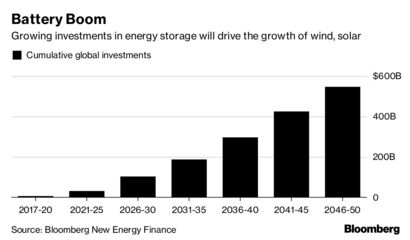
  • Batteries will attract $548 billion in investments by 2050 as costs fall and homes and businesses push to use more clean energy
  • One of the conclusions of the New Energy Outlook released Tuesday by analysts at Bloomberg New Energy Finance
  • Batteries will become increasingly viable on the grid as demand for electric cars spurs manufacturing of lithium-ion systems, driving down prices
(Bloomberg) — Batteries will attract $548 billion in investments by 2050 as costs fall and homes and businesses push to use more clean energy.

That’s one of the conclusions of the New Energy Outlook released Tuesday by analysts at Bloomberg New Energy Finance. Batteries will become increasingly viable on the grid as demand for electric cars spurs manufacturing of lithium-ion systems, driving down prices.

Batteries will allow more solar and wind to meet demand — even when the sun isn’t shining or wind isn’t blowing, helping end the era of fossil fuel dominance on the grid by mid-century, BNEF said. Battery prices are expected to fall to $70 a kilowatt-hour by 2030, down 67 percent from today, according to the report. BNEF expects 1,288 gigawatts of new batteries to be commissioned by 2050.

“It’s a matter of ‘when and how’ and not ‘if’ wind, solar and battery technologies will disrupt electricity delivery all over the world,” Seb Henbest, lead author the report, said in an interview.

©2018 Bloomberg L.P.

Source: https://www.bloombergquint.com/business/2018/06/19/how-big-will-the-battery-boom-get-try-548-billion-bnef-says

5 Industries Likely to Be Disrupted by #Blockchain $SX $SX.ca $SXOOF $IDK.ca #Blockstation

Posted by AGORACOM-JC at 10:49 AM on Tuesday, June 19th, 2018
  • Bitcoin, has the unique ability to change the world
  • Blockchain is an open, distributed database of transactions
  • think of it as an unhackable digital accounting book – and it has endless possibilities for making everything we do more secure, efficient and quick

Cynthia Johnson

Guest Writer
Co-founder and CEO of Bell + Ivy, marketer, speaker and author

In 2018, everyone seems to have a Bitcoin story. Remember that guy you read about who became a millionaire overnight? But the Bitcoin story is much more significant than this. Blockchain, the technology underlying and enabling Bitcoin, has the unique ability to change the world. Blockchain is an open, distributed database of transactions — think of it as an unhackable digital accounting book – and it has endless possibilities for making everything we do more secure, efficient and quick.

1. Energy grids.

What if you could replace America’s ancient, crumbling energy grids with automatically executing, efficient, green and affordable energy systems that could withstand the ravages of hurricanes and other climate change-triggered extreme weather events? Blockchain offers a path to that future. Already, in Brooklyn and in neighborhoods around the country, innovators are experimenting with blockchain-enabled smart grids that allow anyone with a solar panel to buy and sell energy, executed using automated “smart contracts” based on data gathered through smart meters installed in homes. All transactions all verified and secured by blockchain, and no middleman utility company is needed — cutting prices and increasing efficiency.

2. Real estate.

Anyone who’s ever purchased a home knows how many steps — and how much of a headache — that process entails. But blockchain offers the potential for doing the whole thing online, securely, and all at once. Sellers could securely transfer over the title and deed, while buyers would send money via cryptocurrency. Blockchain would also provide a way to send property records to the appropriate government agencies. I asked Rawad Rifai, cofounder of Taurus0x, exactly how blockchain applications impact real estate, and he responded, “Blockchain’s applications in real estate speak to the heart of the technology, its unparalleled and revolutionary potential to conduct instantaneous and completely secure transactions,” said Rifai. “There’s no reason this could not be expanded to retail, entertainment, tourism or any of our day-to-day transactions.”

Related: How Blockchain Will Help Small Businesses Challenge Even the Largest Rivals

3. Healthcare.

Blockchain could create a future in which all our health data — doctor visit records, prescriptions, emergency room visits, shots, X-rays and insurance data — is secured and can be easily shared from doctor to doctor. Nearly everyone changes doctors throughout their lifetime. Imagine having a seamless network of secured records that would ensure that your information travels with you, from birth to end of life.

This system could also save your life. Emergency room doctors could be authorized to access your information about allergies, blood type, and even genetic information, to make informed decisions about your care if you were incapacitated and unable to communicate. This system could also be revolutionary in improving health outcomes in developing countries that do not currently have a centralized or digitized health record database. Earlier this year, five healthcare groups started a pilot program surrounding blockchain and its uses in healthcare.

4. Transportation.

Blockchain could create the potential for the Internet of Things–enabled smart cities. Street signs, traffic lights, cars and other moving and static objects would be embedded with sensors, which would collect and send data to a system that would reroute buses, trams, emergency vehicles and other municipal vehicles to find the quickest routes and avoid traffic. The end result? Less congestion, faster commutes and lower carbon emissions. Blockchain-secured sensor data could also help drivers find open parking spots or charging terminals, pay traffic tickets, and report car crashes or maintenance issues.

Related: 12 Startups Utilizing Blockchain Technology in New Ways

5. Education.

As demand for MOOCs and distance education grows, we need a better system to verify graduates’ educational records. Blockchain could essentially act as a notary, ensuring that people can’t forge diplomas and fool prospective employers. Transcripts, diplomas and certificates could all be secured and stored by blockchain and could be easily sent out to employers and other academic institutions. This would help boost the credentials and reputation of nontraditional educational organizations, and help employers ensure they are hiring the right person for the job.

Many industries will feel the positive impact of blockchain. Some will move faster than others, but many industries will eventually need blockchain. The future is wide open, and the opportunities are endless. The most difficult part about blockchain won’t be growth; it will be human adaptation and the ability to hire great tech talent for these new companies.

Source: https://www.entrepreneur.com/article/314548

Marijuana Company of America $MCOA Launches New CBD-Infused Cosmetic Product hempSMART(TM) Face $AERO $CBDS $CGRW $APH.ca $GBLX

Posted by AGORACOM-JC at 9:34 AM on Tuesday, June 19th, 2018

15233 mcoa

  • Announced that the company’s hempSMART™ brand has launched its revolutionary new cosmetic product, hempSMART™ Face
  • Each bottle of hempSMART™ Face is formulated with 150mg of full spectrum, non-psychoactive Cannabidiol (CBD) oil derived from the industrial hemp plant

Escondido, California–(June 19, 2018) – Marijuana Company of America, Inc. (OTC Pink: MCOA) (“MCOA” or the “Company“), an innovative hemp and cannabis corporation, is pleased to announce that the company’s hempSMART™ brand has launched its revolutionary new cosmetic product, hempSMART Face.

Each bottle of hempSMART Face is formulated with 150mg of full spectrum, non-psychoactive Cannabidiol (CBD) oil derived from the industrial hemp plant. The newly developed hempSMART topical is a nourishing facial moisturizer that combines CBD oil with a unique blend of ayurvedic herbs and botanicals that is designed to refresh, replenish, and restore your skin cells on your face.

The innovative new formula is rich in Omega 3, 6, 7 and 9, along with naturally occurring ceramides and contains synergistic ingredients such as Organic Aloe, Sabi Inchi Oil, Argan Kernel Oil, Macademia Seed Oil, Rose Hip Seed Oil, Pomegranate Seed Oil, Tulsi, Turmeric Oil, Frankinsense, Ashwaganda, Sweet Potato Root Extract, Coconut Oil, and Sea Buckthorn Oil.

MCOA’s CEO, Donald Steinberg, commented, “Our team is excited to announce the expansion of the hempSMART brand into the world of cosmetic products. HempSMART will continue to build upon our already established and unique formulations to provide our customers and affiliates with the tools needed to succeed in the wellness industry.”

About Marijuana Company of America, Inc.

MCOA is a corporation which participates in: (1) product research and development of legal hemp-based consumer products under the brand name “hempSMART™”, that targets general health and well-being; (2) an affiliate marketing program to promote and sell its legal hemp-based consumer products containing CBD; (3) leasing of real property to separate business entities engaged in the growth and sale of cannabis in those states and jurisdictions where cannabis has been legalized and properly regulated for medicinal and recreations use; and, (4) the expansion of its business into ancillary areas of the legalized cannabis and hemp industry, as the legalized markets and opportunities in this segment mature and develop.

About Our hempSMART Products Containing CBD

The United States Food and Drug Administration (FDA) has not recognized CBD as a safe and effective drug for any indication. Our products containing CBD derived from industrial hemp are not marketed or sold based upon claims that their use is safe and effective treatment for any medical condition as drugs or dietary supplements subject to the FDA’s jurisdiction.

Forward Looking Statements

This news release contains “forward-looking statements” which are not purely historical and may include any statements regarding beliefs, plans, expectations or intentions regarding the future. Such forward-looking statements include, among other things, the development, costs and results of new business opportunities and words such as “anticipate”, “seek”, intend”, “believe”, “estimate”, “expect”, “project”, “plan”, or similar phrases may be deemed “forward-looking statements” within the meaning of the Private Securities Litigation Reform Act of 1995. Actual results could differ from those projected in any forward-looking statements due to numerous factors. Such factors include, among others, the inherent uncertainties associated with new projects, the future U.S. and global economies, the impact of competition, and the Company’s reliance on existing regulations regarding the use and development of cannabis-based products. These forward-looking statements are made as of the date of this news release, and we assume no obligation to update the forward-looking statements, or to update the reasons why actual results could differ from those projected in the forward-looking statements. Although we believe that any beliefs, plans, expectations and intentions contained in this press release are reasonable, there can be no assurance that any such beliefs, plans, expectations or intentions will prove to be accurate. Investors should consult all of the information set forth herein and should also refer to the risk factors disclosure outlined in our annual report on Form 10-12G, our quarterly reports on Form 10-Q and other periodic reports filed from time-to-time with the Securities and Exchange Commission. For more information, please visit www.sec.gov.

For more information, please visit the Company’s websites at:

MarijuanaCompanyofAmerica.com
hempSMART.com
NetworkNewsWires/MCOA

NNW Corporate Communications Contact:
NetworkNewsWire (NNW)
New York, New York
www.NetworkNewsWire.com
212.418.1217 Office
[email protected]