Agoracom Blog Home

Archive for the ‘All Recent Posts’ Category

#Edtech startup #InterviewBit secures $20m from #Sequoia India, others SPONSOR: BetterU Education Corp. $BTRU.ca $ARCL $CPLA $BPI $FC.ca

Posted by AGORACOM-JC at 2:45 PM on Tuesday, January 28th, 2020
SPONSOR:  BetterU Education Corp. aims to provide access to quality education from around the world. The company plans to bridge the prevailing gap in the education and job industry and enhance the lives of its prospective learners by developing an integrated ecosystem. Click here for more information.

Edtech startup InterviewBit secures $20m from Sequoia India, others

  • Indian edtech startup InterviewBit has raised US$20 million in a series A round led by Sequoia India and Tiger Global, along with other investors.
  • Founded in 2015 by Abhimanyu Saxena and Anshuman Singh, the Bengaluru-based startup offers computer science courses through live online classes. Students are mentored and taught by tech leaders and experts working with companies such as Facebook, Twitter, and Netflix, among others.

  By: Miguel Cordon

Founded in 2015 by Abhimanyu Saxena and Anshuman Singh, the Bengaluru-based startup offers computer science courses through live online classes. Students are mentored and taught by tech leaders and experts working with companies such as Facebook, Twitter, and Netflix, among others.

The company plans to use the new funds to scale up its enrollment efforts, launch in new markets, and invest in their curriculum and live-teaching products, according to a statement.

In April last year, InterviewBit launched an advanced online computer science program for college graduates and young professionals called Scaler Academy (rebranded from InterviewBit Academy). AD. Remove this ad space by subscribing. Support independent journalism.

The first batch from the program comprises of 200 students. Since then, six more cycles of the program have been initiated, with one being conducted in the US. The startup said it received a total of over 200,000 applications in nine months after the program’s debut.

According to a recent National Employability Report for Engineers, the employability of Indian engineers continues to be as low as 20%. With that in mind, InterviewBit said it designed the Scaler Academy to effectively enhance the coding skills of professionals through a modern curriculum that exposes them to the latest technologies.

“Within a short period of time, it has made a huge impact on the capabilities of our students who spend, on average, four to five hours per day on our online and live-learning platform,” said InterviewBit co-founder Abhimanyu Saxena.

InterviewBit was one of the 17 startups that formed the first batch of Surge, Sequoia India’s startup accelerator program. Surge invested US$1.5 million in seed money in each of the participating companies.

Source: https://www.techinasia.com/interviewbit-secures-20m-sequoia

12-Year Breakout in Mining Stocks Relative to Gold SPONSOR: American Creek Resources $AMK.ca $TUD.ca $SII.ca $GTT.ca $AFF.ca $SEA.ca $SA $PVG.ca $AOT.ca

Posted by AGORACOM at 2:07 PM on Tuesday, January 28th, 2020

SPONSOR: American Creek owns a 20% Carried Interest to Production at the Treaty Creek Project in the Golden Triangle. 2019’s first hole averaged of 0.683 g/t Au over 780m in a vertical intercept. The Treaty Creek property is located in the same hydrothermal system as the Pretivm and Seabridge’s KSM deposits. Click Here For More Info

Excerpts from Crescat Capital November Newsletter:

Precious Metals

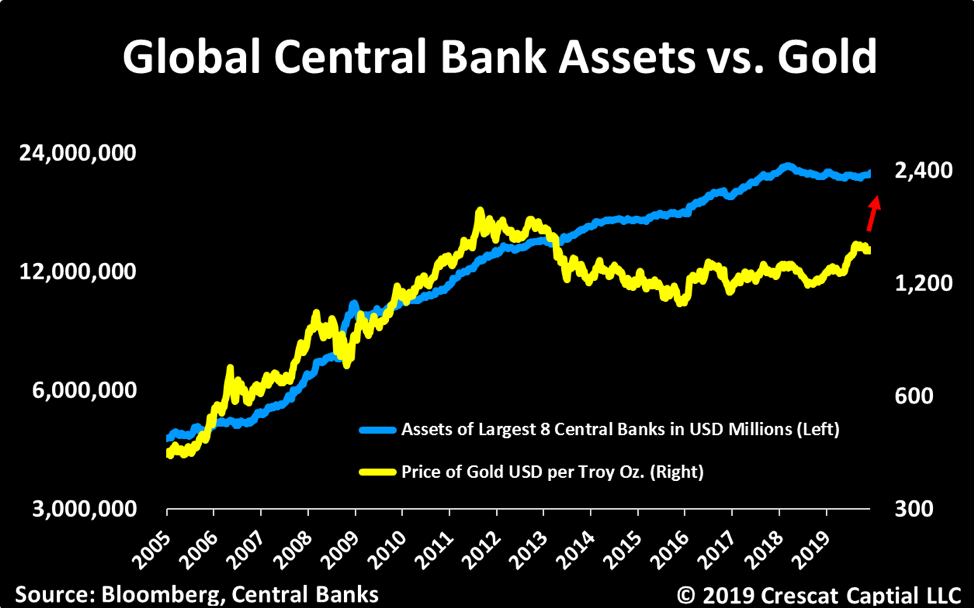
Precious metals are poised to benefit from what we consider to be the best macro set up we’ve seen in our careers. The stars are all aligning. We believe strongly that this time monetary policy will come at a cost. Look in the chart below at how the new wave of global money printing just initiated by the Fed in response to the Treasury market funding crisis is highly likely to pull depressed gold prices up with it.

The imbalance between historically depressed commodity prices relative to record overvalued US stocks remains at the core of our macro views. On the long side, we believe strongly commodities offer tremendous upside potential on many fronts. Precious metals remain our favorite. We view gold as the ultimate haven asset to likely outperform in an environment of either a downturn in the business cycle, rising global currency wars, implosion of fiat currencies backed by record indebted government, or even a full-blown inflationary set up. These scenarios are all possible. Our base case is that governments and central banks will keep their pedals to the metal to attempt to fend off credit implosion or to mop up after one has already occurred until inflation becomes a persistent problem.

The gold and silver mining industry is precisely where we see one of the greatest ways to express this investment thesis. These stocks have been in a severe bear market from 2011 to 2015 and have been formed a strong base over the last four years. They are offer and incredibly attractive deep-value opportunity and appear to be just starting to break out this year. We have done a deep dive in this sector and met with over 40 different management teams this year. Combining that work with our proprietary equity models, we are finding some of the greatest free-cash-flow growth and value opportunities in the market today unrivaled by any other industry. We have also found undervalued high-quality exploration assets that will make excellent buyout candidates.

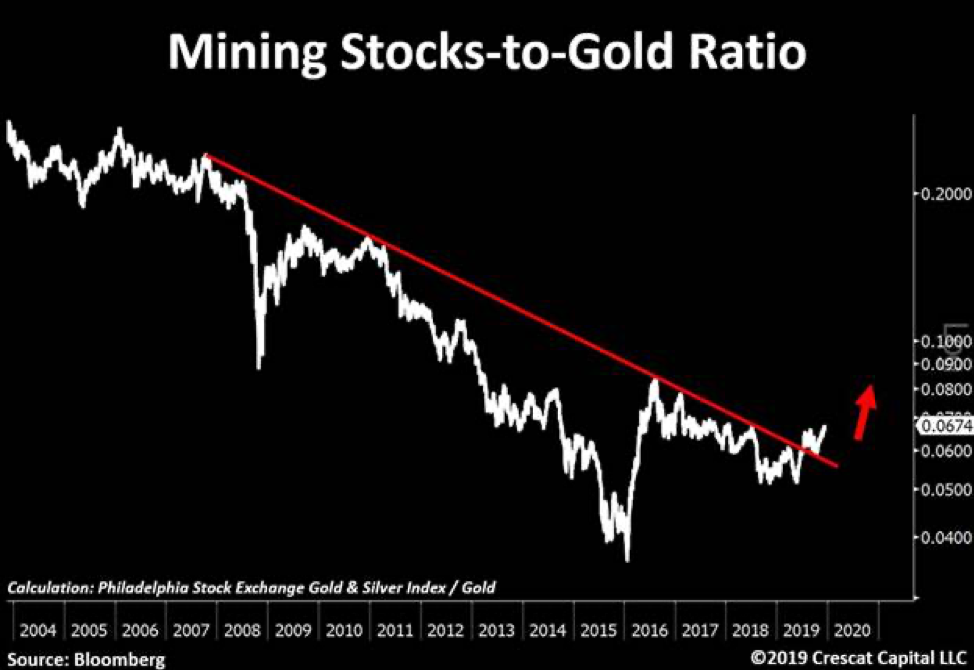
We recently point out this 12-year breakout in mining stocks relative to gold now looks as solid as a rock. In our view, this is just the beginning of a major bull market for this entire industry. We encourage investors to consider our new Crescat Precious Metals SMA strategy which is performing extremely well this year.

Zero Discounting for Inflation Risk Today

With historic Federal debt relative to GDP and large deficits into the future as far as the eye can see, if the global financial markets cannot absorb the increase in Treasury debt, the Fed will be forced to monetize it even more. The problem is that the Fed’s panic money printing at this point in the economic cycle may hasten the unwinding of the imbalances it is so desperate to maintain because it has perversely fed the last-gasp melt up of speculation in already record over-valued and extended equity and corporate credit markets. It is reminiscent of when the Fed injected emergency cash into the repo market at the peak of the tech bubble at the end of 1999 to fend off a potential Y2K computer glitch that led to that market and business cycle top.
After 40 years of declining inflation expectations in the US, there is a major disconnect today between portfolio positioning, valuation, and economic reality. Too much of the investment world is long the “risk parity” trade to one degree or another, long stocks paired with leveraged long bonds, a strategy that has back-tested great over the last 40 years, but one that would be a disaster in a secular rising inflation environment.

With historic Federal debt relative to GDP and large deficits into the future as far as the eye can see, rising long-term inflation, and the hidden tax thereon, is the default, bi-partisan plan for the US government’s future funding regardless of who is in the White House and Congress after the 2020 elections. The market could start discounting this sooner rather than later.
The Fed’s excessive money printing may only reinforce the unraveling of financial asset imbalances today as it leads to rising inflation expectations and thereby a sell-off in today’s highly over-valued long duration assets including Treasury bonds and US equities, particularly insanely overvalued growth stocks. We believe we are in the vicinity of a major US stock market and business cycle peak.

Source:”Running Hot”

Courtesy of Crescat Capital: https://www.crescat.net/running-hot/

Thanks to

Kevin C. Smith, CFA
Chief Investment Officer

Tavi Costa
Portfolio Manager

EV Buyers Can Expect Cheaper Batteries and More Chargers in 2020 SPONSOR: Lomiko Metals $LMR.ca $CJC.ca $SRG.ca $NGC.ca $LLG.ca $GPH.ca $NOU.ca

Posted by AGORACOM at 1:57 PM on Tuesday, January 28th, 2020

SPONSOR: Lomiko Metals is focused on the exploration and development of minerals for the new green economy such as lithium and graphite. Lomiko owns 80% of the high-grade La Loutre graphite Property , Lac Des Iles Graphite Property and the 100% owned Quatre Milles Graphite Property. Lomiko is uniquely poised to supply the growing EV battery market. Click Here For More Information

  • According to research by BloombergNEF, European automakers and governments will move toward helping curb global warming with stricter carbon emissions regulations, which could force an electric-vehicle revolution.

In the United States, electric vehicles are primarily being purchased by consumers that want to take action on their own. Fuel is cheap, the country doesn’t have a real climate change plan, and large vehicles like pickups are king. All of this means that there’s little incentive, beyond the $7,500 federal tax credit, to purchase an EV. That, though, isn’t the case in other countries like China and, soon to be Europe.

EV Revolution Coming This Year

According to a report by Bloomberg and a forecast from BloombergNEF, Europe will see an electric revolution in 2020. The outlet states that the country’s government will soon look to cut carbon emissions from vehicles as part of a plan to curb global warming. This, in turn, will force automakers to introduce electric vehicles.

Bloomberg claims that sales of electric cars are set to increase to 2.5 million units in 2020. That figure represents an increase of 20 percent from 2019.

Just like this year, China will continue to lead the way forward for sales. But the country recently decided to reduce subsidies for EV owners, which could help Europe gain a larger piece of the market. The outlet’s forecasting claims that Volkswagen’s push to become an electric-vehicle force will boost the number of electrified vehicles in Europe. In total, the outlet expects 800,000 electric cars to be sold in Europe in 2020.

“The long-term future is really bright, but in the short term we’re expecting growth to be relatively slow,” said Colin McKerracher, an analyst at BloombergNEF. “You’re still in the middle of this transition, from a market driven by direct subsidies toward one driven by a combination of real consumer demand and other big policy mechanisms.”

Better Prices, More Infrastructure Coming

Another important aspect of electric vehicles that will help sales increase in Europe are decreasing lithium-ion battery prices. The outlet states that prices per kilowatt-hour will hit roughly $135 – approximately 13 percent lower than in 2019. With the increase of battery production, better battery designs, and more sales, battery prices are expected to tumble.

All of these things mean that more chargers will be needed. Luckily, public chargers are expected to rise to 1.2 million, up from 880,000 last year. The increase in chargers will come in part from governments and energy companies looking to expand infrastructure to support the increase in demand for electric cars.

Another interesting trend to look at in 2020 include other forms of electrified transportation. A few companies, even automakers, showcased flying electric cars at CES. While it’s unlikely that one would come out in 2020, it’s likely something that more companies will pursue this year. Other forms of transportation, including boats could go electric in 2020, too.

SOURCE: https://www.futurecar.com/3749/EV-Buyers-Can-Expect-Cheaper-Batteries-and-More-Chargers-in-2020

Graphene for Physicists, Materials Scientists, and Engineers SPONSOR: Gratomic $GRAT.ca $SRG.ca $NGC.ca $LLG.ca $GPH.ca $NOU.ca #TODAQ

Posted by AGORACOM at 12:39 PM on Tuesday, January 28th, 2020
http://blog.agoracom.com/wp-content/uploads/2019/09/GRAT-square2.png

SPONSOR: Gratomic Inc. (TSX-V: GRAT) Advanced materials company focused on mine to market commercialization of graphite products, most notably high value graphene based components for a range of mass market products. Collaborating with Perpetuus, Gratomic will use Aukam graphite to manufacture graphene products for commercialization on an industrial scale. For More Info Click Here

In the weeks since the Physics World team kicked off the new year by testing a pair of graphene headphones, we’ve received a steady stream of comments about our review and a related segment on our weekly podcast. A few people have asked our opinion of other graphene headphones, and one man went so far as to question whether the “graphene” label he found on an inexpensive pair of headphones was anything more than “misleading click-bait”.

I can’t judge any product I haven’t tried, and I also can’t judge a product’s graphene content without taking it apart and getting experts to analyse it. However, with those two caveats firmly in place, here are two facts to consider should you happen to be in the market for graphene headphones (and, by extension, graphene anything).

First, a lot of things contribute to how a pair of headphones will sound. The physical composition of the headphone drivers (graphene, PET, cellulose, or whatever) is only one factor. Others include the method by which those drivers create sound (this blog post explains a few of the possibilities, and their trade-offs); the quality of the other electronics; and simple things like how well the headphones fit over/in your ears. Some of these things are more expensive to optimize than others. The graphene headphones I tested are a high-end product with, it appears, a high-end price, so I suspect they are pretty good at the non-graphene-related aspects of headphone design – and that much of their cost comes from that, not from the graphene.

Second, graphene exists in many forms, with many price points. A lot of physicists are interested in ultra-pure, single-layer graphene, which has amazing electronic properties. This “physicists’ graphene” is difficult (and expensive) to make in macroscopic quantities. However, others are more interested in graphene’s mechanical properties, such as strength and rigidity. To get these properties, you don’t need ultra-pure single-layer graphene. You can get by with a cheaper type, which for argument’s sake I will term “materials scientists’ graphene” (this is an oversimplification, but it conveys the right feel). The proprietary graphene-based material in the headphones I tested was most likely in this category.

But even this type of graphene is expensive relative to a third type of graphene, which is cheap enough to be added in bulk to substances like paint or resin to improve their heat transport and/or electrical conductivity. As I understand it, this “engineers’ graphene” functions like a superior version of graphite, and manufacturers are selling it by the kilo (and maybe, soon, by the tonne).

I’m not trying to start a three-way brawl between physicists, materials scientists and engineers about which type of graphene is better. They all have their uses, and they all qualify as graphene. But here’s the problem: a product can advertise itself, accurately, as containing graphene even if the graphene it contains is not of a type or quantity that’s going to make a difference to its performance. What’s more, if an unscrupulous manufacturer wants to put graphite in its product and call it “graphene”, it’s hard for ordinary consumers to know the difference. To the naked eye, graphene and graphite both look like gritty black powders. You need more sophisticated testing equipment to distinguish between them, and between the various grades of graphene.

Certification is a huge issue for the graphene industry, and a lot of people are working on it. However, until there’s a strong framework for regulation, the next best thing is probably to look for independent endorsements by people and organizations who know what they’re talking about. The headphones I tried were endorsed by the co-discoverer of graphene, Kostya Novoselov, as making good use of the material. Since then, I’ve learned of a different make of graphene headphones that has been endorsed by an industry body called the Graphene Council. However, until someone gives Physics World its own product-testing lab and qualified technicians to run it, that’s about all I can say – except to add that there are some graphene products I definitely won’t be testing with my colleagues.

SOURCE:https://physicsworld.com/a/graphene-for-physicists-materials-scientists-and-engineers/

Loncor Provides Update on Its Ngayu Project $LN.ca $ABX.ca $TECK.ca $RSG $NGT.to $GOLD

Posted by AGORACOM at 8:30 AM on Tuesday, January 28th, 2020
This image has an empty alt attribute; its file name is Loncor-Small-Square.png
  • Significant upside potential identified at 1,675,000 oz (20.78 Mt @ 2.5 g/t Au) Imbo Concession since 2014 resource estimate

TORONTO, Jan. 28, 2020 — Loncor Resources Inc. (“Loncor” or the “Company“) (TSX: “LN”; OTCQB: “LONCF”) is pleased to provide an update on its activities within the Ngayu Greenstone Belt, where the Company has a dominant foot-print through its joint venture with Barrick Gold (Congo) SARL (“Barrick”) and on its own majority-owned prospecting licences and exploitation concessions.

The Ngayu Archean Greenstone Belt of northeastern Democratic Republic of the Congo (the “DRC”) is geologically similar to the belts which host the world class gold mines of AngloGold Ashanti/Barrick’s Kibali mine in the DRC and AngloGold Ashanti’s Geita mine in Tanzania. Gold mineralization at Ngayu is spatially related to Banded Ironstone Formation (“BIF”), which is the case at both Kibali and Geita and is highlighted in Figures 1 and 2 below. The Ngayu belt is significantly larger in extent than the Geita belt.

Adumbi Deposit
Since the Company’s acquisition of 71.25% of the KGL-Somituri gold project from Kilo Goldmines Ltd. in September 2019, Loncor has focussed on the Imbo exploitation concession in the east of the Ngayu belt where an Inferred Mineral Resource of 1.675 million ounces of gold (20.78 million tonnes grading 2.5 g/t Au, with 71.25% of this Inferred Mineral Resource being attributable to Loncor via its 71.25% interest) was outlined in January 2014 by independent consultants Roscoe Postle Associates Inc (“RPA”) on three separate deposits, Adumbi, Kitenge and Manzako (see Figures 3 and 4 below).  In this study, RPA made a number of recommendations on Adumbi, which were subsequently undertaken during the period 2014-18. The Company’s geological consultants Minecon Resources and Services Limited (“Minecon”) has been assessing the implications of this additional exploration data on Adumbi, which are summarised below.

Additional Drilling
RPA recommended additional drilling at Adumbi to test the down dip/plunge extent of the mineralization. In 2017, four deeper core holes were drilled below the previously outlined RPA inferred resource over a strike length of 400 metres and to a maximum depth of 450 metres below surface. All four holes intersected significant gold mineralization in terms of widths and grade and are summarised below:

BoreholeFrom(m)To(m)Intercept Width(m)True Width(m)Grade (g/t) Au
SADD50434.73447.4212.6910.675.51
      
SADD51393.43402.729.296.544.09
      
SADD52389.72401.8712.157.013.24
 419.15428.759.605.545.04
      
SADD53346.36355.639.275.703.71
 391.72415.1723.4514.436.08

The above drilling results which are shown on the longtitudinal section (see Figure 5 below), indicate that the gold mineralization is open along strike and at depth. The drilling of an additional 12 core holes has the potential to significantly increase the Adumbi mineral resource as highlighted on the longitudinal section.

Survey and Georeferencing
The Adumbi drill hole collars, trenches, and accessible adits/portals have now been accurately surveyed and the data appropriately georeferenced. In addition, all accessible underground excavations and workings have been accurately surveyed. The new and improved quality of the exploration data will have positive implications on potential future classification of the mineral resources.

Re-logging of All Drill Holes
The re-logging of drill holes after the RPA study has defined the presence of five distinct geological domains in the central part of the Adumbi deposit where the BIF unit attains a thickness of up to 130 metres (see Figure 4 below). From northeast to southwest:

  • Hanging wall schists: dominantly quartz carbonate schist, with interbedded carbonaceous schist.
  • Upper BIF Sequence: an interbedded sequence of BIF and chlorite schist, 45 to 130 metres in thickness.
  • Carbonaceous Marker: a distinctive 3 to 17 metre thick unit of black carbonaceous schist with pale argillaceous bands.
  • Lower BIF Sequence: BIF interbedded with quartz carbonate, carbonaceous and/or chlorite schist in a zone 4 to 30 metres wide.
  • Footwall Schists: similar to the hanging wall schist sequence.

In the central part of Adumbi, three main zones of gold mineralization are present. These include mineralisation:

  • Within the Lower BIF Sequence.
  • In the lower part of the Upper BIF Sequence.  Zones 1 and 2 are separated by the Carbonaceous Marker, which is essentially unmineralized.
  • A weaker zone in the upper part of the Upper BIF Sequence.

The lack of a detailed geological model in the previous resource estimates resulted in wireframes being constructed using only assay values with little regard to geological domains. This has resulted in wireframes cross-cutting the geology which could have resulted in underestimating the previous resource estimate.

Relative Density (“RD”) Measurements
The increase in the sample population coupled with the application of a more rigid RD determination procedure based on recommendations from the RPA resource study, indicates that the new RD measurements from both mineralized and unmineralized material and from the various material types and lithologic units have improved the confidence in the relative RD determination to be applied to any future resource estimates. Relative to the 6 oxide RD measurements used for tonnage estimation in the RPA model, 297 oxide RD measurements within the mineralised domain were undertaken during the review work. For the transition and fresh material, equal number of determinations relative to the previous RD sample volumes were undertaken with the review process employing more rigid RD determination procedures. 

Table 1 below indicates significate positive variance between the previous model RD and the reviewed work for the oxide and transition materials.

Table 1: Summary of Previous and Reviewed Mineralised Average RD Measurements

Material
Type
RD used in
Previous RPA
Model
Additional RD
Determinations
RD Variance
(%)
Oxide1.802.4536.1
Transition2.202.8228.2
Fresh3.003.051.7

Oxidation and Fresh Rock Surfaces
The re-logging of the core as per the RPA recommendations identified major differences between the depths of Base of Complete Oxidation (BOCO) and Top of Fresh Rock (TOFR), and the depths used by RPA in the 2014 model. In the RPA model, the BOCO was negligible and the TOFR corresponded approximately to the re-logged BOCO. The deeper levels of oxidation that were observed during the re-logging exercise should have positive implications for the Adumbi project with respect to ore type classification and associated metallurgical recoveries and mining and processing cost estimates.

Adit Sampling and Georeferencing
Following the accurate surveying of the 10 historical adits and appropriately georeferencing, the 796 adit samples (1,121 metres in total) when applied should have positive implications on the data spacing and classification of any future mineral resources.

In summary, most of the previous recommendations from the 2014 RPA mineral resource study on Adumbi have been undertaken. In addition, the previously recommended LIDAR survey by RPA was completed this month over Adumbi by Southern Mapping of South Africa.

The results of all the above tasks coupled with the higher current gold price compared with the previous study in 2014 indicate significant upside at Adumbi. Minecon is undertaking further studies to better quantify this significant upside. At present and subject to the Company securing the necessary financing, the Company is planning to drill the additional 12 deeper holes at Adumbi and then commence a preliminary economic assessment when an updated mineral resource study will be undertaken.

Ongoing studies are also continuing by Minecon on further assessing the data elsewhere on the Imbo exploitation concession including Kitenge and Manzako.

As announced in November 2019, joint venture partner and operator Barrick has identified a number of priority drill targets within the 1,894 square kilometre joint venture land package (the “JV Areas”) at Ngayu and that are planned to be drilled during the current dry season. Drill targets include Bakpau, Lybie-Salisa and Itali in the Imva area as well as Anguluku in the southwest of the Ngayu belt and Yambenda in the north. As per the joint venture agreement signed in January 2016, Barrick manages and funds exploration on the JV Areas at the Ngayu project until the completion of a pre-feasibility study on any gold discovery meeting the investment criteria of Barrick. Subject to the DRC’s free carried interest requirements, Barrick would earn 65% of any discovery with Loncor holding the balance of 35%. Loncor will be required, from that point forward, to fund its pro-rata share in respect of the discovery in order to maintain its 35% interest or be diluted.  

About Loncor Resources Inc.
Loncor is a Canadian gold exploration company focused on two projects in the DRC – the Ngayu and North Kivu projects. Both projects have historic gold production. Exploration at the Ngayu project is currently being undertaken by Loncor’s joint venture partner Barrick Gold Corporation through its DRC subsidiary Barrick Gold (Congo) SARL (“Barrick”). The Ngayu project is 200 kilometres southwest of the Kibali gold mine, which is operated by Barrick and in 2018 produced approximately 800,000 ounces of gold. As per the joint venture agreement signed in January 2016, Barrick manages and funds exploration at the Ngayu project until the completion of a pre-feasibility study on any gold discovery meeting the investment criteria of Barrick. Subject to the DRC’s free carried interest requirements, Barrick would earn 65% of any discovery with Loncor holding the balance of 35%. Loncor will be required, from that point forward, to fund its pro-rata share in respect of the discovery in order to maintain its 35% interest or be diluted. 

Certain parcels of land within the Ngayu project surrounding and including the Makapela and Yindi prospects have been retained by Loncor and do not form part of the joint venture with Barrick. Barrick has certain pre-emptive rights over these two areas. Loncor’s Makapela prospect has an Indicated Mineral Resource of 614,200 ounces of gold (2.20 million tonnes grading 8.66 g/t Au) and an Inferred Mineral Resource of 549,600 ounces of gold (3.22 million tonnes grading 5.30 g/t Au). Loncor also recently acquired a 71.25% interest in the KGL-Somituri gold project in the Ngayu gold belt which has an Inferred Mineral Resource of 1.675 million ounces of gold (20.78 million tonnes grading 2.5 g/t Au), with 71.25% of this resource being attributable to Loncor via its 71.25% interest. 

Resolute Mining Limited (ASX/LSE: “RSG”) owns 27% of the outstanding shares of Loncor and holds a pre-emptive right to maintain its pro rata equity ownership interest in Loncor following the completion by Loncor of any proposed equity offering. Newmont Goldcorp Corporation (NYSE: “NEM”; TSX: “NGT”) owns 7.8% of Loncor’s outstanding shares

Additional information with respect to Loncor and its projects can be found on Loncor’s website at www.loncor.com. 

Qualified Person
Peter N. Cowley, who is President of Loncor and a “qualified person” as such term is defined in National Instrument 43-101, has reviewed and approved the technical information in this press release. 

Technical Reports
Certain additional information with respect to the Company’s Ngayu project is contained in the technical report of Venmyn Rand (Pty) Ltd dated May 29, 2012 and entitled “Updated National Instrument 43-101 Independent Technical Report on the Ngayu Gold Project, Orientale Province, Democratic Republic of the Congo”. A copy of the said report can be obtained from SEDAR at www.sedar.com and EDGAR at www.sec.gov

Certain additional information with respect to the Company’s recently acquired KGL-Somituri project is contained in the technical report of Roscoe Postle Associates Inc. dated February 28, 2014 and entitled “Technical Report on the Somituri Project Imbo Licence, Democratic Republic of the Congo”.  A copy of the said report, which was prepared for, and filed on SEDAR by, Kilo Goldmines Ltd., can be obtained from SEDAR at www.sedar.com. To the best of the Company’s knowledge, information and belief, there is no new material scientific or technical information that would make the disclosure of the KGL-Somituri mineral resource set out in this press release inaccurate or misleading. 

Cautionary Note to U.S. Investors
The United States Securities and Exchange Commission (the “SEC”) permits U.S. mining companies, in their filings with the SEC, to disclose only those mineral deposits that a company can economically and legally extract or produce. Certain terms are used by the Company, such as “Indicated” and “Inferred” “Resources”, that the SEC guidelines strictly prohibit U.S. registered companies from including in their filings with the SEC. U.S. Investors are urged to consider closely the disclosure in the Company’s Form 20-F annual report, File No. 001- 35124, which may be secured from the Company, or from the SEC’s website at http://www.sec.gov/edgar.shtml.

For further information, please visit our website at www.loncor.com, or contact: Arnold Kondrat, CEO, Toronto, Ontario, Tel: + 1 (416) 366 7300.

The 5 Figures referred to in this announcement are available at http://ml.globenewswire.com/Resource/Download/4788cf7b-48be-4e3c-b9a1-d56bcb1b5ad2

North Bud Farms $NBUD.ca Announces Proposed Terms for the Second Tranche of its Non-Brokered Private Placement and Provides a Corporate Update $CGC $ACB $APH $CRON.ca $OGI.ca

Posted by AGORACOM-JC at 6:11 PM on Monday, January 27th, 2020
  • First tranche of the Offering closed on November 6, 2019, at which time the Company issued an aggregate of 1,264 Units for gross proceeds of $1,264,000
  • Accordingly, the Company can issue up to an additional $2,736,000 of Units under the Second Tranche
  • In the context of a regular follow-up communication with Health Canada, representatives of the Company received verbal feedback that the application review is complete and the reviewers do not have any more questions.

TORONTO, Jan. 27, 2020 – North Bud Farms Inc. (CSE: NBUD) (OTCQB: NOBDF) (“NORTHBUD” or the “Company“) is pleased to announce that it is arranging a closing for the second tranche (the “Second Tranche“) of its non-brokered private placement of 10% secured convertible debenture units (the “Units“) of the Company at a price of C$1,000 for gross proceeds of up to C$4,000,000, originally announced on November 6, 2019 (the “Offering“). The first tranche of the Offering closed on November 6, 2019, at which time the Company issued an aggregate of 1,264 Units for gross proceeds of $1,264,000. Accordingly, the Company can issue up to an additional $2,736,000 of Units under the Second Tranche.

Each Unit issued in connection with the Second Tranche of the Offering is comprised of one C$1,000 principal amount of secured convertible debenture (a “Convertible Debenture“) accruing interest at 10.0% per annum, payable semi-annually in arrears until maturity, and 5,556 common share purchase warrants of the Company (each, a “Warrant“). The Convertible Debentures will have a maturity date of 36 months from the date of issuance. In addition, under the Second Tranche, the Company has the right to prepay an amount equal to the 1st year of interest to be earned by issuing common shares at a deemed price of $0.25 per common share (the “Prepaid Interest Shares”) on the 15th day following the Closing Date should the holders of the Convertible Debentures not elect to receive their 1st year interest paid in cash.

Each Convertible Debenture shall be convertible into common shares in the capital of the Company (each, a “Conversion Share“) at a price of $0.18 (the “Conversion Price“) per Conversion Share.

Each Warrant entitles the holder thereof to acquire one common share in the capital of the Company (each, a “Warrant Share“) for an exercise price of $0.30 per Warrant Share for a period of 36 months following the closing date.

The Convertible Debentures are direct secured obligations of the Company and rank pari passu in right of payment of principal and interest with all other Convertible Debentures issued under the Offering.

Certain directors of the Company have indicated that they may participate in the private placement. Any such purchase would constitute a “related party transaction” within the meaning of Multilateral Instrument 61-101 – Protection of Minority Security Holders in Special Transactions (“MI 61-101”). The proposed issuance to directors of the Company would be exempt from the formal valuation and minority shareholder approval requirements of MI 61-101 as the fair market value of any Units issued to or the consideration paid by such insiders would not exceed 25% of the Company’s market capitalization.

The Company may pay registered dealers (the “Finders“) a cash commission equal to up to 8% of the aggregate gross proceeds from the sale of the Units sold pursuant to the Offering to eligible investors introduced to the Company by such Finders. In addition, the Company will grant warrants (the “Compensation Warrants”) exercisable at the Conversion Price for a period of 24 months from the Closing Date to acquire in aggregate the number of Common Shares equal to 8% of the gross proceeds under the Offering divided by the Conversion Price.

The proceeds of the Second Tranche will be used by the Company for expansion of the Company’s facilities and for general corporate and working capital purposes.

The Convertible Debentures, Warrants, Prepaid Interest Shares (if any), and any Compensation Warrants issued pursuant to the Second Tranche of the Offering and any common shares in the capital of the Company issued on conversion of the Convertible Debentures or exercise of the Warrants or Compensation Warrants will be subject to a statutory hold period in Canada of four months and one day following the closing date in accordance with applicable securities laws. Additional resale restrictions may be applicable under the laws of other jurisdictions, if any.

The securities of the Company have not been and will not be registered under the United States Securities Act of 1933, as amended (the “U.S. Securities Act“) or any state securities laws. Accordingly, the securities of the Company may not be offered or sold within the United States unless registered under the U.S. Securities Act and applicable state securities laws or pursuant to an exemption from the registration requirements of the U.S. Securities Act and applicable state securities laws. This news release does not constitute an offer to sell or a solicitation of an offer to buy any of the securities of the Company in any jurisdiction in which such offer, solicitation or sale would be unlawful.

Amendment to Securities Issued in First Tranche of the Offering

The Company further announces that, in order to ensure equitable treatment of holders, it has decided to amend the terms of the debentures (the “First Tranche Debentures“) and warrants (the “First Tranche Warrants“) issued under the first tranche of the Offering, which closed on November 6, 2019. The Company has amended the First Tranche Debentures to reduce the conversion price to $0.18 per common share and has amended the terms of the First Tranche Warrants to: (a) increase the number of warrants issued per $1000 of principal amount of debenture from 2,000 to 5,556; (b) increase the exercise price from $0.25 to $0.30 per warrant; and (c) extend the expiry date of the warrants from 18 months following the closing date to 36 months following the closing date. The amendments are subject to the final approval of the Canadian Securities Exchange (CSE).

Corporate Update

The Company would also like to provide an update regarding the status of its standard cultivation licence application with Health Canada under the Cannabis Act. In the context of a regular follow-up communication with Health Canada, representatives of the Company received verbal feedback that the application review is complete and the reviewers do not have any more questions. Subject to the re-submission of a required foreign police certificate related to one of the foreign directors of the Company, the Company will be in the final queue for receiving its licence. The Company is confident that it will be able to file the certificate promptly; however, there can be no assurance as to the exact timing of the issuance of the licence by Health Canada or whether the Company will receive any final request from Health Canada.

Further to the Company’s announcement regarding its acquisition of certain California-based businesses on November 22, 2019, the Company has proceeded with the issuance of 1,716,000 common shares, at an issue price of $0.25 per share, to an arm’s length advisor to the Company. The shares, which are subject to a statutory hold period as required by applicable securities laws, are based upon the $429,000 cash value of the 3% M&A fee payable to such advisor in respect of the foregoing California acquisitions.

About North Bud Farms Inc.
North Bud Farms Inc., through its U.S. subsidiary Bonfire Brands USA, has acquired cannabis production facilities in California and in Nevada. The Salinas, California 11-acre farm is actively cultivating cannabis in its 60,000 sq. ft. of licensed greenhouse production space. The Reno, Nevada property is located on 3.2-acres of land which was acquired through the acquisition of Nevada Botanical Science, Inc. a world class cannabis production, research and development facility with 5,000 sq. ft. of indoor cultivation which holds medical and adult use licenses for cultivation, extraction and distribution. Through its wholly owned Canadian subsidiary, GrowPros MMP Inc., the company is pursuing a licence under The Cannabis Act, to cultivate in its state-of-the-art purpose-built cannabis production facility located on 135-acres of Agricultural Land in Low, Quebec, Canada.

For more information visit: www.northbud.com

Neither the Canadian Securities Exchange (the “CSE“) nor its Regulation Services Provider (as that term is defined in the policies of the CSE) accepts responsibility for the adequacy or accuracy of this release.

Forward-looking statements
Certain statements included in this press release constitute forward-looking information or statements (collectively, “forward-looking statements”), including those identified by the expressions “anticipate”, “believe”, “plan”, “estimate”, “expect”, “intend”, “may”, “should” and similar expressions to the extent they relate to the Company or its management. The forward-looking statements are not historical facts but reflect current expectations regarding future results or events. This press release contains forward- looking statements that include, but are not limited to, statements related to the intended use of proceeds from the Offering, and the status of the Company’s licence application with Health Canada under the Cannabis Act. These forward-looking statements are based on current expectations and various estimates, factors and assumptions and involve known and unknown risks, uncertainties and other factors. Such risks and uncertainties include, among others, the risk factors included in North Bud Farms Inc.’s final long form prospectus dated August 21, 2018, which is available under the issuer’s SEDAR profile at www.sedar.com. 

FOR ADDITIONAL INFORMATION, PLEASE CONTACT:
North Bud Farms Inc.
Edward Miller
VP, IR & Communications
Office: (855) 628-3420 ext. 3
[email protected]

Goodyear To Launch Bicycle Tires With Graphene Technology SPONSOR Gratomic $GRAT.ca $SRG.ca $NGC.ca $LLG.ca $GPH.ca $NOU.ca #TODAQ

Posted by AGORACOM at 5:17 PM on Monday, January 27th, 2020
http://blog.agoracom.com/wp-content/uploads/2019/09/GRAT-square2.png

SPONSOR: Gratomic Inc. (TSX-V: GRAT) Advanced materials company focused on mine to market commercialization of graphite products, most notably high value graphene based components for a range of mass market products. Collaborating with Perpetuus, Gratomic will use Aukam graphite to manufacture graphene products for commercialization on an industrial scale. For More Info Click Here

  • Goodyear developed a proprietary compound enhanced with graphene
  • The rubber is able to deliver low rolling resistance, improved grip in the dry and wet and long-term durability.

Famous tire and rubber company Goodyear has launched two new bicycle tyres, Eagle F1 and Eagle F1 Supersport utilizing graphene technology and weighing just 180g for a 23mm model.

Goodyear launches graphene-enhanced tires image

The new Eagle F1 is an “ultra-high-performance all-round road tire” and the Eagle F1 Supersport, which is even lighter, is aimed at the upper echelons of competition and will be suited to road racing, time trial and triathlon where speed trumps all other requirements.

In the tire world, Vittoria has become well-known for adding the wonder material to its tires for several years, and Goodyear has followed suit with its new rubber compound.

Goodyear has developed a proprietary compound enhanced with graphene and “next-generation amorphous (non-crystalline) spherical Silica” to create what it labels Dynamic:GSR. The result of this is said to be a rubber that is able to deliver low rolling resistance, improved grip in the dry and wet and long-term durability.

he Eagle F1 comes in five width options from 23 to 32mm, while the Eagle F1 Supersport comes in three widths from 23 to 28mm.

To produce the new tire Goodyear has invested in its own factory in Taiwan and has developed a process that allows much greater control over the construction of the tire. It didn’t share too many details, but it believes this enhanced precision contributes to significant weight savings.

Currently the new Eagle F1 and F1 Supersport are only available as clincher tube-type tires, but a tubeless tire is reportedly in the pipeline for a launch later this year.

The new tires will cost from £45 and be in shops in February.

SOURCE: https://www.graphene-info.com/goodyear-launch-bicycle-tires-graphene-technology

Researchers Develop A New Technique for Making Graphene Oxide and Implement it in Improved Supercapacitors SPONSOR – ZEN Graphene Solutions $ZEN.ca $LLG.ca $FMS.ca $NGC.ca $CVE.ca $DNI.ca

Posted by AGORACOM at 4:05 PM on Monday, January 27th, 2020

SPONSOR: ZEN Graphene Solutions: An emerging advanced materials and graphene development company with a focus on new solutions using pure graphene and other two-dimensional materials. Our competitive advantage relies on the unique qualities of our multi-decade supply of precursor materials in the Albany Graphite Deposit. Independent labs in Japan, UK, Israel, USA and Canada confirm this. Click here for more information

Researchers at the India-based Central Mechanical Engineering Research Institute (CMERI) are developing an economical graphene-based supercapacitor that can present an effective alternative to providing energy to various applications, including state-of-the-art military equipment, mobile devices and modern vehicles.

Graphene has been used in the newly developed ultra-capacitors to replace the expensive activated carbon, and the switch seems to have also reduced the supercapacitors’ weight and cost by ten times.

The team has developed a new technique for making graphene oxide, which is being used to produce new ultra-capacitors.

CMERI scientist Dr. Naresh Chandra Murmu stated that “scientists have developed a technique for producing graphene oxide. The production cost of one kilogram of graphene oxide using this technique comes to around ten thousand rupees, which is much lesser than the cost of activated carbon used in supercapacitors. We have modified the surface of graphene oxide in our research, due to which it has also succeeded in reducing its weight. We have now reached the advanced stage of making ultra-capacitors by using this graphene oxide, which can be useful in various sectors.”

Former Senior Defense Development Research Organization (DRDO) official M.H. Rahman said that such devices not only cater to civilian applications, but can be applicable in strategic and defense applications as well.

SOURCE: https://www.graphene-info.com/researchers-develop-new-technique-making-graphene-oxide-which-they-use-improving

Applied BioSciences $APPB: Innovative CBD System Balancing $APH.ca $GBLX $PFE $ACG.ca $ACB.ca $WEED.ca $HIP.ca $WMD.ca $CGRW

Posted by AGORACOM at 2:31 PM on Monday, January 27th, 2020

SPONSOR: Applied BioSciences is a vertically integrated company focused on the development and commercialization of novel, science-driven, synthetic cannabinoid therapeutics / biopharmaceuticals; targeting the endocannabinoid system to treat a wide-range of diseases across multiple therapeutic areas. Click Here for More Info

https://cdn.chiroeco.com/wp-content/uploads/2020/01/i1-20-digital4-1024x576.jpg
An endocannabinoid deficiency can result in a host of patient afflictions, but this innovative CBD balancing strategy can help patients

All cannabidiol (CBD) is not created equal in clinical practice in terms of implementation. The most frustrating thing for clinicians and also for patients is when an intended protocol doesn’t work. As I discuss later under the “With treatment, start low” section of this article, there are ways to use CBD most effectively.

You probably weren’t taught this in medical school, but CBD works on the endocannabinoid system (ECS). The ECS contains CB1 and CB2 receptors, in addition to other receptors that are activated by the naturally occurring endocannabinoids made in our bodies, called anandamide and 2-AG. We all have CB1 or CB2 receptors within our body — if you have a cat or dog, they have these receptors too. All mammals do. How could it be that we did not even know of the predominance of the ECS until 1992?

What the endocannabinoid system can do

Patients coming in worn out can be a sign of endocannabinoid deficiency and the inability to support their pathways optimally, much like adrenal fatigue. Phytocannabinoids like CBD obtained from hemp products can act on the same receptors as endocannabinoids made in the body. CBD receptors, much like opioid receptors, control pain, but via a different mechanism.

Patients arrive at our clinical practices fatigued, anxious, in pain, inflamed, and lots reach a point of adrenal burnout, adrenal fatigue. Indeed, that is often the case because they are suffering from an endocannabinoid deficiency. We see people who have low adrenal function at noon, and in the evening, they are tired, dragging, eat lunch, get a little spike, and then they start free falling again. They’re flat-lining. How is it that we wake up each morning anticipating with trepidation and run with go, go, go pace and finish the day glad to have survived another day? Life is meant for more than that; it is time to shift our goals from merely surviving to thriving mode!

Researchers observed approximately six years ago that people were more anxious and depressed in the middle of the summer than ever before, a new phenomenon. This goes against what we previously believed, that depression spiked mostly in the holiday season and Thanksgiving and after the winter solstice. But now we’re seeing people are worn out even in summer. Indeed, the endocannabinoid system plays a role here.

Anandamide is one of our endocannabinoids. When it becomes lower, patients are more anxious. There is less healing of the brain, less neurogenesis, and the hypothalamic-pituitary axis is triggered, causing a whole cascade of events to occur. What we now know is that the endocannabinoid system naturally, or with the use of CBD, alters our microbiome in our gut, beneficially affecting the gut-brain axis. The GI tract is the site of many receptors. We make about 70% of our serotonin, the happy-brain chemical, in the GI tract. About 70-80% of our immune system is in our GI tract, so is it any surprise that we have CB1, CB2 regulatory pathways in our GI tract that work via the endocannabinoid system to control inflammation? These same pathways can be regulated using an innovative CBD strategy.

Migraines and the endocannabinoid system

With endocannabinoid deficiency symptoms patients can get migraines. We thought migraines were just triggered by tyramine-rich foods, such as cheese, fermented foods, and salami and other such foods; along with other triggers as well.

However, the endocannabinoid pathway is designed to control pain and inflammation and also regulate the immune system to a large degree. I have found in my clinical practice that innovative CBD strategies can be useful in supporting the health of migraine sufferers.

Treat the brain, treat the pain

The body is designed with innate intelligence to sustain optimal performance. People ask, “Well, how is CBD metabolized?” It’s primarily metabolized through the liver, and as a result, it goes through the cytochrome 450 and other pathways.
Wellness is ultimately about homeostasis. We all know the term entropy, the tendency for the universe to move toward chaos. But our body exerts a phenomenal amount of energy to maintain order and wellness. However, if the endocannabinoid system becomes deficient, this will adversely affect wellness. This endocannabinoid deficiency, in turn, affects the microbiome, contributing to a less healthy endocannabinoidome.

CBD can conserve anandamide that is made by the body, and CBD can support anandamide conservation in an attempt to bring the body back into homeostasis. The endocannabinoid system supports brain health. By treating the brain, it addresses the pain, because if we didn’t have a brain, we wouldn’t feel the pain from a perception perspective.

Anxiety also is a biochemical process. It’s real. A lot of people say, “It’s all in my head.” No, stress is real because it’s a physiological effect. There is biochemistry involved in anxiety. We want to use innovative CBD strategies to support calming pathways and bring peace and harmony into the brain.

Endocannabinoid deficiency issues

If a patient has brain inflammation, neuroplasticity is not going to be as healthy or robust. And the fact is, on a typical day, we lose about 86,400 brain cells. CBD is an anti-inflammatory application. And from a neuropathic perspective, activation of cannabinoid receptors is essential. I’ve looked at research involving the endocannabinoid system relative to cancer medications and so forth. Not being an oncologist, I am not suggesting this is a treatment for cancer, but there are pain, stress and immune challenges that often need to be associated with this disease state, so visiting with one’s provider in this arena is vital.

We can start manifesting symptoms of migraines, fatigue, irritable bowel, whatever it might be, as a result of being subpar, insufficient or deficient of endocannabinoids. An endocannabinoid deficiency manifests itself as simply that the body has gotten worn down, much like low adrenal function, often called adrenal fatigue. So we need to support that pathway to bring it back on track like we would any other functional biochemistry, which our body is designed to do. And since we’re designed to make endocannabinoids, we need to bring those levels back up to par.

With treatment, start low

The goal is to start low and go slow, as a little bit can go a long way for many patients. More is not always better, as each person responds differently based on genetics, biochemistry and individual need.

Just like if you’re performing an adjustment, a little bit of a movement might get the job done. Work with gentle modulation of the endocannabinoid system. You’re working within the innate ability of the body.

Fifteen to 25 milligrams per day is what I start my patients on. In a week or two, if I need to move them up to 25 mg two to three times a day, I will. Once again, if a little bit gets the job done, why more? It is of paramount importance to respect the innate delicate balance physiology of the body. Some patients will need much higher doses because of their endocannabinoid insufficiency or potential genetic polymorphisms. You’re going to encounter genetic polymorphisms, or what I termed mutations of the CBD receptors and the CBD pathway.

I never go to high-milligram doses, especially on patients taking pharmaceutical drugs, without working with their pharmacists, because CBD can affect similar liver detoxification, as well as other biochemical pathways of how drugs are metabolized, much like grapefruit juice, can impact many of the same medications. We want to also support those drug-metabolizing pathways with diet and lifestyle.

CBD, when dosed properly, can positively supplement a health-promoting diet and lifestyle. It’s not a substitute for these things. So, we want to ensure we’re taking steps to support the body at a foundational level. Additionally, we always want to ensure the THC levels in the CBD you are using are less than 0.3%, or that the CBD contains no THC, when targeting hemp-derived CBD.

We all get broken or get older

Endocannabinoid deficiency is associated with low cortisol, stress and adrenal fatigue. We’re all getting older. Our mitochondria are wearing down. Our nitric oxide levels aren’t as robust as they used to be, and we need support at a fundamental level. In regards to the 65 potential molecular targets that are currently known for CBD, there is a lot of untapped potential here relative to stress and aging. Innovative CBD use is a new area; it can be a scary area, but remember, our bodies have been producing endocannabinoids for millennia. All we’re doing is supporting a natural pathway.

source: https://www.chiroeco.com/innovative-cbd/

Discerning fake or deceptive stories has become increasingly difficult over the last four years American Citizens say – SPONSOR: Datametrex AI Limited $DM.ca

Posted by AGORACOM-JC at 2:10 PM on Monday, January 27th, 2020

SPONSOR: Datametrex AI Limited (TSX-V: DM) A revenue generating small cap A.I. company that NATO and Canadian Defence are using to fight fake news & social media threats. The company announced three $1M contacts in Q3-2019. Click here for more info.

Discerning fake or deceptive stories has become increasingly difficult over the last four years American Citizens say

  • New polls found that 59 percent of Americans state it is difficult to recognize bogus data, deliberately deceptive and incorrect stories depicted as truth, via web-based networking media
  • Another 37 per cent deviated, saying it is anything but difficult to spot

by nitin198

Four years after Russia propelled a digital campaign to upset and impact the 2016 presidential crusade, about 33% of Americans state deceiving stories via web-based networking media represent the greatest risk to the wellbeing of U.S. elections. Half of the population thinks President Trump encourages political race impedance, as indicated by the most recent PBS NewsHour/NPR/Marist survey.

A larger part of the American populace says detecting the distinction among certainty and bogus data via web-based networking media is troublesome and gotten more prominent since 2016. Hardly any vibe assures them that tech companies will forestall the abuse of social media to impact the upcoming 2020 elections.

Is misinformation getting more difficult to spot?

The new polls found that 59 percent of Americans state it is difficult to recognize bogus data, deliberately deceptive and incorrect stories depicted as truth, via web-based networking media. Another 37 per cent deviated, saying it is anything but difficult to spot.

Moreover, with the 2020 presidential battle about to get going vigorously, the greater part of U.S. grown-ups said recognizing these phony or misleading stories has gotten progressively troublesome in the course of the most recent four years. That conclusion was shared by 58 per cent of Democrats, 55 per cent of independents and a somewhat lower extent of Republicans at 44 per cent.

The fact that Americans know about the risk of deception is significant. However, it is nonsensical to anticipate that a normal individual should truth check each snippet of data zooming past them as they look through their online networking feeds.

Research has indicated that bogus data disperses quicker than reality via social media. In 2018, an investigation from the Massachusetts Institute for Technology said deception moved multiple times quicker than the reality on Twitter.

Who does the public depend on to be truth’s guardian?

39 per cent of Americans state the news media is liable for reviewing deceiving data. Another 18 per cent state that organizations like Facebook, Twitter or Google are capable. Furthermore, 15 per cent state the government’s essential occupation is to diminish the public’s presentation to deception.

Are the web-based social networking organizations doing what’s needed?

Seventy-five per cent of U.S. grown-ups have little trust in Facebook, Twitter, Google, and YouTube to stop the spread of falsehood. Just 5 per cent of survey responders said they felt “extremely sure” these organizations would forestall the viral spread of bogus stories.

The populace lacks trust in significant social media organizations, notwithstanding tech goliaths; for example, Facebook and Twitter have vowed to find a way to forestall election impedance on their platforms. Facebook, one of the most famous social media platforms, has said it will make a superior showing of expelling deceiving political promotions before the 2020 presidential political decision. Twitter said it will boycott political advertisements inside and out.

Americans are wary that social media organizations will respect these guarantees. Americans additionally realize platforms aren’t doing what’s necessary to stop the spread of falsehood. In May 2018, Facebook made a political promotion file to distinguish and research possibly hazardous advertisements; however, that mechanized framework isn’t immaculate.

Source: https://techsprouts.com/discerning-fake-or-deceptive-stories-has-become-increasingly-difficult-over-the-last-four-years-american-citizens-say/