Agoracom Blog Home

Archive for the ‘All Recent Posts’ Category

Keep Your Eye on Raw Materials: A Bull Market Could Be Coming $LBSR $NAM.ca $TN.ca

Posted by AGORACOM-JC at 1:49 PM on Wednesday, November 7th, 2018

As one bull market appears to be nearing its end, another may soon be on the horizon. Following years of underinvestment and tepid growth, raw materials in the form of copper, aluminum and nickel could be poised for a dramatic rebound.

The Next Bull Market?

Stocks, cryptocurrencies and even energy have taken the shine away from primary metals in recent years, but that could be about to change as investors look for new market-beating revenue streams. According to The Wall Street Journal, prices of copper, aluminum and nickel could rise more than 40% in the coming years as markets grapple with a severe supply crunch following a prolonged period of underinvestment.

This year, spending among global mining companies is expected to fall to less than a third of 2013 levels, when investment in new mines topped $121 billion. The year before, spending reached $144.05 billion, according to data from Wood Mackenzie. In 2018, total spend on new mining projects is expected to reach $35.4 billion. For many analysts, this means a major supply crunch is on the horizon.

Demand Drivers

On the demand side, the growth and widespread adoption of electric vehicles will only exacerbate the supply gap as manufacturers raise order books for copper and aluminum. According to the International Energy Agency (IEA), the number of electric vehicles on the road is forecast to reach 125 million by 2030 compared with just 3.1 million in 2017. The surge in electric vehicles also means higher demand for lithium and cobalt, two key components in electric-car batteries.

A growing global economy also playing into the hands of raw materials. Although the International Monetary Fund (IMF) is forecasting slower growth over the next two years, the downbeat view is largely tied to U.S.-China trade relations. Emerging-market growth remains an important driver for commodities.

Assets to Consider

Market participants wishing to gain exposure to raw materials have several options to choose from. In addition to trading futures contracts, resource-rich exchange-traded funds (ETFs) are an easy way to play the market, especially for the long haul. Some of the most notable are SPDR S&P Metals & Mining ETF (XME), Global X Lithium & Battery Tech ETF (LIT), iShares MSCI Global Metals & Mining Producers ETF (PICK) and Global X Copper Miners ETF (COPX). The SPDR S&P Global Natural Resources ETF (GNR) is also an option for those looking for a higher concentration of energy companies.

In terms of individual stocks, large miners such as Glencore Plc (GLEN), Rio Tinto PLC (RIO) and Vale SA (VALE 3) also provide a good option for diversifying into the sector. In addition to being global mining heavyweights, these companies share something else in common: they have significantly reduced capital expenditure in recent years (once again, this plays into the narrative that supply constraints will drive up the value of raw materials).

Investors betting big on the electric-car revolution have no doubt placed Tesla Inc. (TSLA) on their radar. For all its recent troubles, Elon Musk’s company recently reported a massive earnings beat, including a return to profitability for the first time since Q3 2016.

In addition to Tesla, automotive suppliers are also poised for a major breakout should the electric-car revolution play out as expected. Some companies to put on the short list are Aptiv PLC (APTV), Delphi Technologies PLC (DLPH), Magna International Inc. (MGA) and TE Connectivity Ltd. (TEL).

Source: https://hacked.com/keep-your-eye-on-raw-materials-a-bull-market-could-be-coming/

Banks complete first syndicated loan on #blockchain $IDK.ca $HIVE.ca $BLOC.ca $CODE.ca

Posted by AGORACOM-JC at 10:08 AM on Wednesday, November 7th, 2018

  • Spain’s BBVA and two partner banks have completed the first syndicated loan on the blockchain, providing a working example of how transactions in the $4.6tn-a-year market can be simplified and made faster using technology that underpins cryptocurrencies
  • Syndicated loans were identified early on as a key use for blockchain in financial services, since banks rely on outdated and inefficient processes including faxes to share information between different parties who are structuring complex agreements.

Laura Noonan

Spain’s BBVA and two partner banks have completed the first syndicated loan on the blockchain, providing a working example of how transactions in the $4.6tn-a-year market can be simplified and made faster using technology that underpins cryptocurrencies.

Syndicated loans were identified early on as a key use for blockchain in financial services, since banks rely on outdated and inefficient processes including faxes to share information between different parties who are structuring complex agreements.

Combining shared databases and cryptography, blockchain technology is the basis for cryptocurrencies such as bitcoin. Banks have seized on the technology, which allows multiple parties to have simultaneous access to a constantly updated digital ledger that cannot be altered, as a way to cut costs and speed up many activities.

On Tuesday, BBVA used a private blockchain network to arrange a $150m syndicated loan for Red Electrica, the Spanish grid operator, with co-lenders MUFG of Japan and BNP Paribas of France. Legal advisers Linklaters and Herbert Smith Freehills also had access to the system which allowed all parties to exchange information instantly.

The information was time-stamped, to show exactly when each event occurred, and the network was secured with user codes. Once the contract was signed, it was given a unique identifier that was recorded on the Ethereum blockchain, preserving its authenticity.

BBVA says the blockchain technology, which is being rolled out on a pilot basis, simplifies and speeds up the process of completing syndicated loans from about two weeks to a day or two. Loan signing and documentation processing, which traditionally takes a few hours, can be done in minutes.

As well as the saving time, moving syndicated loans to the blockchain will also deliver a “huge reduction in internal costs” for clients, Ricardo Laiseca, BBVA’s head of global finance, told the FT. He said: “Everything is automatically recorded by the system, in terms of back office and operational costs.”

Mr Laiseca said that BBVA had a pipeline of “five or six” other syndicated loans that would be done over the blockchain in the coming months as the pilot continues.

“We are offering these technologies for collaboration with any other banks . . . This is not just for BBVA, we feel that as a second stage (we are) working on a new markets infrastructure which will be good for everyone.”

Another platform built by fintech group Finastra and pioneered by the UK’s NatWest is offering syndicated loan servicing over blockchain, using the Corda distributed ledger technology. which is due to go live on November 17. In the broader lending space, BBVA earlier this year issued the world’s first corporate loan by blockchain.

The banking industry’s single largest blockchain project remains the Interbank Information Network, where more than 75 banks led by JPMorgan, Royal Bank of Canada and ANZ are using distributed ledger technology for some interbank payments.

Source: https://www.ft.com/content/2b12d338-e1d1-11e8-a6e5-792428919cee

$APPB Applied Biosciences Enters the Vape Inhaler Market $HTIM

Posted by AGORACOM at 9:06 AM on Wednesday, November 7th, 2018

https://s3.amazonaws.com/s3.agoracom.com/public/companies/logos/564626/hub/APPB_logo.png

  • Expanded product line and launched an alternative vape inhaler technology using water vapor and natural flavors.
  • Products will be sold on the Remedi website (www.remedishop.com)
  • Global e-cig and vaporizer market has been recently valued at $9.0 billion
  • Applied BioSciences products are USDA NOP certified organic, non-GMO, vegan, paleo, gluten-free, sugar-free and THC-free.

LOS ANGELES, CA / ACCESSWIRE / November 7, 2018 / Applied BioSciences Corp. (OTCQB: APPB), a diversified cannabinoid therapeutics company focused on the medical,bioceutical and pet health industries, announced that it has expanded its product line and launched an alternative vape inhaler technology using water vapor and natural flavors. These products will be sold on the Remedi website (www.remedishop.com) and in select retail locations in the U.S. and internationally.

The global e-cig and vaporizer market is one of the fastest growing consumer markets and has been recently valued at $9.0 billion and expected to grow at a CAGR of 23.6% and reach $49 billion by the end of 2024, according to Research Nestor (www.researchnester.com).

The Remedi Plus Therapeutic Vapor Inhaler contains a revolutionary recipe of steam-distilled essential oils and flower essences uniquely blended with CBD Isolate. Generating a robust, yet smooth and clean, inhalable vapor, the aromatherapeutic effects are instantaneous, followed by a calming and effective dose of CBD. Watermelon, Mint, Rose & Ylang Ylang flower deliver a crisp and energetic, uplifting effect, while the Green Tea, Vanilla, Chamomile, Rose and Ginger offer the user a calming, anti-anxiety, sleep-aid effect. Free of additives such as MCT, PG or VG. The Remedi Plus product line has been crafted with just simple flavored waters by nature and blended with CBD in vapor form.

The hardware of the unit itself is comprised of 100% FDA-Approved materials. Applied Biosciences uses organic ingredients and formulations that were created to target common ailments in the health and wellness industry for anyone who is open to trying hemp derived products. The products use industrial hemp as an input to produce high-quality CBD for a variety of health and wellness products.

”Remedi continues to be at the forefront of the consumer and prosumer cannabinoid market, first using organically grown plants, without pesticides or herbicides as our main ingredient and now quickly and easily providing consumers with a variety of tinctures, topical creams and now an alternative vape technology. As Applied BioSciences continues to expand our product lines in select specialty and retail stores, people will also be able to visit remedishop.com to find a holistic health and wellness alternatives that best suit their lifestyle,” commented Chris Bridges, President of Applied BioSciences Corp.

Applied BioSciences products are USDA NOP certified organic, non-GMO, vegan, paleo, gluten-free, sugar-free and THC-free. The products are formulated with organic 99%+ pure cannabidiol along with our proprietary blend of certified organic botanicals, herbals, and essential oils to further optimize bioavailability.

About Applied BioSciences Corp.:

Applied BioSciences Corp. (www.appliedbiocorp.com), is a diversified company focused on multiple areas of the medical, bioceutical and pet health industry. As a leading company in the CBD and Pet health space, the company is currently shipping to the majority of US states as well as to 5 International countries. The company is focused on select investment, consumer brands, and partnership opportunities in the recreational, health and wellness, nutraceutical, and media industries.

The company has several strategic partnerships and investments currently in place and is actively pursuing additional partnerships and strategic growth opportunities.

Contact:

Email: [email protected] or [email protected]

To be added to the Applied BioSciences email distribution list, please email [email protected] with APPB in the subject line.

Official Website: www.appliedbiocorp.com

Brands:

www.remedishop.com

www.herbalpet.com

Follow us:

Facebook @remedicbd & @HerbalPetMeds

Instagram @remedishop & @herbal_pet

Twitter @remedishop & @herbal_pet


#Weed Wins on Election Day. So What Comes Next? $BOG.ca $NBUD.ca $MCOA $APPB$AERO $CBDS $CGRW $APH.ca $GBLX $ACG $ACB $WEED.ca $HIP.ca

Posted by AGORACOM-JC at 8:21 AM on Wednesday, November 7th, 2018

  • Michigan voted to legalize the recreational use of cannabis, while Utah and Missouri legalized it for medical use, according to projections made late Tuesday night. (A recreational measure in North Dakota failed, though medical cannabis remains legal there.)
  • They join 31 other states that have already gone the medical route, and nine others that have gone fully recreational
  • That’s a win for the citizens of these states—cannabis is far and away safer than alcohol and comes with a range of proven medical benefits, and still more that researchers are exploring

And so a few more dominoes fall. Michigan voted to legalize the recreational use of cannabis, while Utah and Missouri legalized it for medical use, according to projections made late Tuesday night. (A recreational measure in North Dakota failed, though medical cannabis remains legal there.) They join 31 other states that have already gone the medical route, and nine others that have gone fully recreational.

That’s a win for the citizens of these states—cannabis is far and away safer than alcohol and comes with a range of proven medical benefits, and still more that researchers are exploring. But it also may be a win for cannabis nationwide: The more states that legalize cannabis, the likelier it is that federal prohibition will topple soon.

“Momentum is gaining for change in Congress to allow states to determine their own marijuana policies,” says Morgan Fox, media relations director at the National Cannabis Industry Association. “Two thirds of the country wants marijuana to be legal, and politicians are ignoring that at their peril.”

This midterm election’s outcome is relevant to more than just the end game of dissolving the federal prohibition of cannabis. The momentum could also help the states that have already voted to legalize the drug but remain hamstrung by federal regulation. Over the summer, for instance, the Senate Appropriations Committee torpedoed an amendment that would have allowed banks to work with cannabis companies. This, of course, is a major headache for the industry: If a cultivator or distributor or dispensary can’t find a bank to work with, it’s kinda hard to do business.

States where marijuana is legal are also currently blocked from helping veterans gain better access to cannabis. In September, Congress stripped another amendment that would have allowed physicians affiliated with the Department of Veterans Affairs to recommend medical marijuana in states where it’s already legal.

So, the theory is that with more states voting to legalize, that attitude would trickle up to their representatives in Washington. And one particularly tall hurdle just fell. Republican Pete Sessions of Texas, the chairman of the House Rules Committee who’s been blocking votes on cannabis amendments, just lost to Democratic challenger Colin Allred. How serious is Allred about medical marijuana? It’s telling that he called Sessions out on the veterans amendment.

But then again, the cannabis momentum isn’t coming from politicians, but from the people. “One of the interesting political dynamics of cannabis legalization is that it’s happening in almost every state by ballot initiative,” says Ryan Stoa, author of the book Craft Weed: Family Farming and the Future of the Marijuana Industry. “Meaning, it’s not as if legislators are reading the tea leaves.”

Meaning, maybe we’re pinning too much hope on politicians to push for the federal reform their voters want. “For whatever reason, there still seems to be a lot of hesitation on behalf of politicians, even in the face of strong public support for legalization,” Stoa says.

It’s in a state’s best interest, though, to have cannabis legalized federally, because the economics of cannabis is nutso. Historically, California has provided perhaps three quarters of the domestically grown cannabis in the United States. That’s been over the black market, of course. But even though California has gone recreationally legal, that black market persists, both in-state (high taxes mean some patients skip the legal market) and across the country. Cultivators are “producing more supply than consumers are demanding in the state of California, which means a lot of that supply is going out of state on the black market,” says Stoa.

When a state goes legal, the cannabis sold in-state must be produced in-state (the feds don’t like interstate cannabis markets, for obvious reasons). But legalizing comes with severe growing pains. Small California growers, for instance, are buckling under the weight of new regulations meant to protect the environment and consumers. It’s mighty tempting, then, to skip selling to distributors (which in turn safety-test the product) and instead go black market and sell it all themselves out of state.

“The black market is thriving, and it’s going to continue to thrive,” says Swami Chaitanya, a (legal) grower in California’s legendary Mendocino County. “And the fact is that when it goes legal in those other states, then all of the persecution tends to drop down a level, until I imagine more black market will go to those states that are now legal.”

The fragmentation of the market could be especially acute in states that follow a similar, highly regulated legalization path as California, but that don’t have massive-scale local production of cannabis. Nevada had that problem, same with Colorado. But shortages would be less of a problem in the first place if cannabis were legal federally and producers could sell their products legitimately across state lines.

How Michigan, Utah, and Missouri settle into legal cannabis is to be seen, as is the pace with which Congress gets around to federal legalization. But a bit of bright news: we’ve got fresh faces. “With the new Congress,” says Chaitanya, “it’s almost a question of not so much, does it get legalized in most states, but are the congressional people elected going to be pro-cannabis?”

For the sake of their constituents, economies, prison systems, and the country in general, let’s hope so.

Source: https://www.wired.com/story/weed-wins-on-election-day-so-what-comes-next/?mbid=social_twitter

$AAX.ca Advance Reports On 7th Hole of Drilling at Tabasquena Project in Mexico

Posted by AGORACOM at 4:25 PM on Tuesday, November 6th, 2018
https://s3.amazonaws.com/s3.agoracom.com/public/companies/logos/564631/hub/advance-gold-large.png
  • Results for the 7th hole of drilling at the Tabasquena project, near Ojocaliente, Mexico
  • Over 30 epithermal veins have been discovered in the first 7 holes drilled
  • All but 2 of the veins discovered are blind
  • Phase 3 drilling is being planned to test deeper into the system in an attempt to locate the boiling zone of the various veins found to date.

Vancouver, British Columbia–(Newsfile Corp. – November 6, 2018) – Advance Gold Corp. (TSXV: AAX) (“Advance Gold” or “the Company”) reports results for the 7th hole of drilling at the Tabasquena project, near Ojocaliente, Mexico. Over 30 epithermal veins have been discovered in the first 7 holes drilled below the oxide zone at the Tabasquena mine.

All but 2 of the veins discovered are blind, with no geophysical anomaly, nor do they come to surface. They were discovered through drilling at depth for known veins discovered in phase 1 drilling. They are confined to a side to side area of approximately 200 metres and 125 metres of strike. They all remain open along strike in both directions as well as at depth.

Drilling to date suggests a large epithermal vein cluster, phase 3 drilling is being planned to test deeper into the system in an attempt to locate the boiling zone of the various veins found to date.

AGT-07 Hole location details:

Bearing: N 40° E; Dip: -78°; Total Depth:351.50m. Coordinates: N 2’497,290 E 785,922.

Collar elevation: 2,065mosl.

Note: All vein widths cut by drills holes are not true widths, they represent the intersection of the incline hole with the dip of the vein. Advance is in the process to estimate true widths for all the vein intersections.

Allan Barry Laboucan, President and CEO of Advance Gold Corp. commented: “Now that we have a handle on the size potential, we need to get a better understanding of the system with a view to locating the precious metal horizon. To date, we have hit anomalous to high-grade gold, and there was historical mining of silver by Penoles in the oxide zone of the Tabasquena vein. It is typical for precious metals to base metal zonation in these systems.

“Our exploration team looks forward to phase 3 drilling, our goal will be to test deeper into our cluster of epithermal veins. We are located in a world class region for epithermal vein mines, the cluster we have found holds good potential to reward our efforts.”

Drill core is logged and sampled in a secure core storage facility located near the Tabasquena claims by Ojocaliente, Mexico. Core samples from the program are cut in half, using a diamond cutting saw, and are sent to ALS Chemex in Zacatecas, Mexico, for sample preparation, then sent to ALS Chemex in Vancouver, Canada for assays. ALS Chemex is an accredited mineral analysis laboratory. All samples are analysed for gold using standard fire assay-AA (atomic absorption) techniques. The Company relies on ALS Chemex for QA/QC procedures and protocols for the assaying process.

Dr. Julio Pinto Linares is the qualified person for the Tabasquena project, since June 2018 when drilling began and throughout phase 2. Supervising drilling in the field for drill holes one through seven. He examined and reviewed core boxes in the field, supervised moving core boxes to the secure core storage facility located near the Tabasqueña mine. He was present during logging and sampling of the core, and kept control of all sample bags until delivered to the ALS Chemex Zacatecas, Mexico laboratory. He checked and was present during the QA/QC procedures and protocols during the preparation of the samples.

Julio Pinto Linares is a QP, Doctor in Geological Sciences with specialty in Economic Geology and Qualified Professional No. 01365 by MMSA., for Advance Gold and is the qualified person as defined by National Instrument 43-101 responsible for the accuracy of technical information contained in this news release.

About Advance Gold Corp. (TSXV: AAX)

Advance Gold is a TSX-V listed junior exploration company focused on acquiring and exploring mineral properties containing precious metals. The Company acquired a 100% interest in the Tabasquena Silver Mine in Zacatecas, Mexico in 2017, and the Venaditas project, also in Zacatecas state, in April, 2018.

The Tabasquena project is located near the Milagros silver mine near the city of Ojocaliente, Mexico. Benefits at Tabasquena include road access to the claims, power to the claims, a 100-metre underground shaft and underground workings, plus it is a fully permitted mine.

Venaditas is well located adjacent to Teck’s San Nicholas mine, a VMS deposit, and it is approximately 11km to the east of the Tabasquena project, along a paved road.

In addition, Advance Gold holds a 13.5% interest on strategic claims in the Liranda Corridor in Kenya, East Africa. The remaining 86.5% of the Kakamega project is held by Acacia Mining (63% owned by Barrick Gold).

For further information, please contact:
Allan Barry Laboucan,
President and CEO
Phone: (604) 505-4753
Email: [email protected]

Corporate website: www.advancegold.ca

Advance Hub on Agoracom

AMC partners with MASS Exchange for #Programmatic ad sales #adtech $BTRU.ca $TTD $RUBI $AT.ca $TRMR $FUEL

Posted by AGORACOM-JC at 2:52 PM on Tuesday, November 6th, 2018


  • AMC Networks, 4C Insights and VideoAmp have all teamed up with MASS Exchange (MX) to fire up a programmatic advertising capabilities for live linear television.
  • AMC is using MX to handle pricing, inventory management and sales strategies for its ad inventory.
For AMC, the programmatic ad plans arrive after a third quarter in which the company’s ad revenues stayed mostly flat. (AMC Networks).

AMC Networks, 4C Insights and VideoAmp have all teamed up with MASS Exchange (MX) to fire up a programmatic advertising capabilities for live linear television.

AMC is using MX to handle pricing, inventory management and sales strategies for its ad inventory.

“MASS Exchange equips AMC Networks to offer an end-to-end programmatic solution for TV,” said Adam Gaynor, vice president of AMCN Agility, in a statement. “Leveraging their dynamic inventory and pricing management tools to expose more inventory to advertisers, we’re able to offer our partners a new standard of accessibility that improves their ability to execute targeted media plans.”

MX said it will allow AMC Networks to offer specific spot-level inventory, accessible via the buyer’s planning tools or directly through MX’s buyer interface. The company also said it can offer automation by converting traffic logs into an inventory catalog, which is algorithmically priced and packaged according to the seller’s rules.

“The TV industry is going through significant transformation at the intersection of audience targeting, attribution and technology,” said Habib Khoury, CEO of MX, in a statement. “We are very excited to be playing such an important role in helping to reduce friction for content providers and deliver an efficient, automated market that allows smart brands to improve the return on their advertising dollars. With AMC Networks, 4C Insights and VideoAmp, we’re working with established industry leaders to move meaningfully closer to realizing the promise of addressable TV.”

For AMC, the programmatic ad plans arrive after a third quarter in which the company’s ad revenues stayed mostly flat. AMC’s national networks advertising revenues increased 0.9% to $200 million. The increase in advertising revenues principally related to higher pricing partially offset by lower delivery.

Source: https://www.fiercevideo.com/video/amc-partners-mass-exchange-for-programmatic-ad-sales

The world’s #Esports industry is growing at a massive rate, and Hong Kong is ready to catch up $ATVI $TTWO $GAME $EPY.ca $TCEHF $Game.ca $EPY.ca

Posted by AGORACOM-JC at 11:12 AM on Tuesday, November 6th, 2018

  • If you haven’t noticed by now, the eSports industry is on an exciting growth trajectory that won’t be slowing down anytime soon.
  • Less and less people on the outside looking in are seeing eSports as a niche interest or trend, but a legitimate, lucrative and very, very entertaining sport that could easily eclipse traditional sports given the time.

Chris Singh

If you haven’t noticed by now, the eSports industry is on an exciting growth trajectory that won’t be slowing down anytime soon. Less and less people on the outside looking in are seeing eSports as a niche interest or trend, but a legitimate, lucrative and very, very entertaining sport that could easily eclipse traditional sports given the time. The proliferation of eSports events around the world is certainly helping drive that growth, with even official tourism boards now recognising the potential for eSports to be a major draw for international and domestic visitors. Case in point: the Hong Kong e-Sports and Music Festival.

The three-day event, which was held towards the end of August for it’s second year, took place in Hall 3 of the Hong Kong Convention and Exhibition Centre and represented a major recognition of the industry by the city of Hong Kong. In fact, it was organised by Hong Kong Tourism Board, with the Industrial and Commercial Bank of China (Asia) Limited on board as the event’s major sponsor. As such, the prize pools were also remarkably large for such a young event of this size.

The tense CS:GO Grand Finals saw a record-breaking HK$2 million total prize pool, while the weekend’s highlight, the Hong Kong PUBG World Invitational, saw a pool of over HK$1 million – the largest amount ever in a local PUBG competition.

Throughout the weekend more than 26 eSports teams from around the world, and over 110 players, competed in the tournaments which were complemented by live music and an “Experience Zone” which filled an entire hall with eSports products, playable games, a large amount of VR titles, and a mini-stage hosting various other acts like a CLP x eSports Academy, KOL battles, and performances by local musicians.

With Hong Kong’s local eSports scene now boosted thanks to events like this, we thought it best to catch up with a big-name local to discuss competitive gaming, it’s growth, and what five things are required for someone to make it in this growing industry. That local just happened to be Hong Kong’s first League of Legends world champion, Toyz of professional eSports organization G-Rex and Emperor esports Stars.

Competitive gaming has come so far but there is still a long way to go for eSports, in terms of its popularity and recognition. Where has the major growth been in 2018 and what do you feel is driving this growth?

One of the significant growth factors in 2018 is definitely the legitimization of eSports as one of the demonstration sports in Asian Games, officially drawing the line between games and eSports. Asian Games attracts world-class players from different sports categories and audience from worldwide. Being one of the demonstration sports in Asian Games goes beyond a simple recognition but also drives public attentions towards eSports. Notably, eSports exclusively possessed over 60% of the viewership among all the sports in Asian Games; it shows the trend of future competitive entertainment and the growing mass public’s interest in eSports. From my perspective, this milestone is a recognition of youngsters’ interest and the penetration of eSports compared to traditional sports.

What is Hong Kong’s eSports scene like now? Is there any difference between the scene in Hong Kong and other Asian cities?

I think HK’s eSports is lagging behind compared to regions nearby. Even though we see HK officials are making more investment in eSports including EMF and a budget of $100M HKD for local eSports development; HK eSports has not yet been well recognized globally. One of the ways to truly accelerate HK’s eSports growth is to build an international eSports brand to compete in international matches and win international titles to acquire recognition on a global scale, and shape a better career path for eSports players as well as eSports related workers in HK.

What are five things you feel are necessary for someone to get into, and succeed in, the world of eSports?

Passion, persistence, talent, diligence, and high team spirit

How do you define your teams play style and what aspects of the play style remain consistent across games?

Our League of Legends team is more on defensive style with a late-game strategy. G-rex is strong in team fight and we keep this style as one of our signature.

Prize pools are getting bigger, like EMF in August, and there are now more new eSports events happening around the world. What do you feel will be the major trends in eSports in 2019? What would you like to see happen for the industry?

I think we can see more eSports stars in the market. We now see more eSports related entertainment supplementary to the traditional entertainment industry, and it’s great to see to see more and more big corporates join the market and help build a better and more supportive ecosystem for eSports in the future.

For more details on Hong Kong’s annual eSports & Music Festival head to their official website HERE.

Source: http://launch.theaureview.com/games/the-worlds-esports-industry-is-growing-at-a-massive-rate-and-hong-kong-is-ready-to-catch-up/

$GGX.ca Gold Completes First 3 Diamond Drill Holes of the 2018 Fall Program on the Gold Drop Property – Southern British Columbia $K.ca $TUSK.ca

Posted by AGORACOM at 7:13 AM on Tuesday, November 6th, 2018

https://s3.amazonaws.com/s3.agoracom.com/public/companies/logos/564602/hub/ggx_large.png

  • Initial 3 drill holes of the 2018 Fall diamond drilling program currently underway
  • 2017 and 2018 drill intersections (core length) of 50.1 g/t gold over 2.05 meters; 54.9 g/t gold over 1.47 meters; and 4.59g/t gold over 16.03 meters at the COD Vein.
  • Drilling is focusing on the area of drill holes COD18-45 and COD18-46. The objective is to trace the gold mineralization at depth.

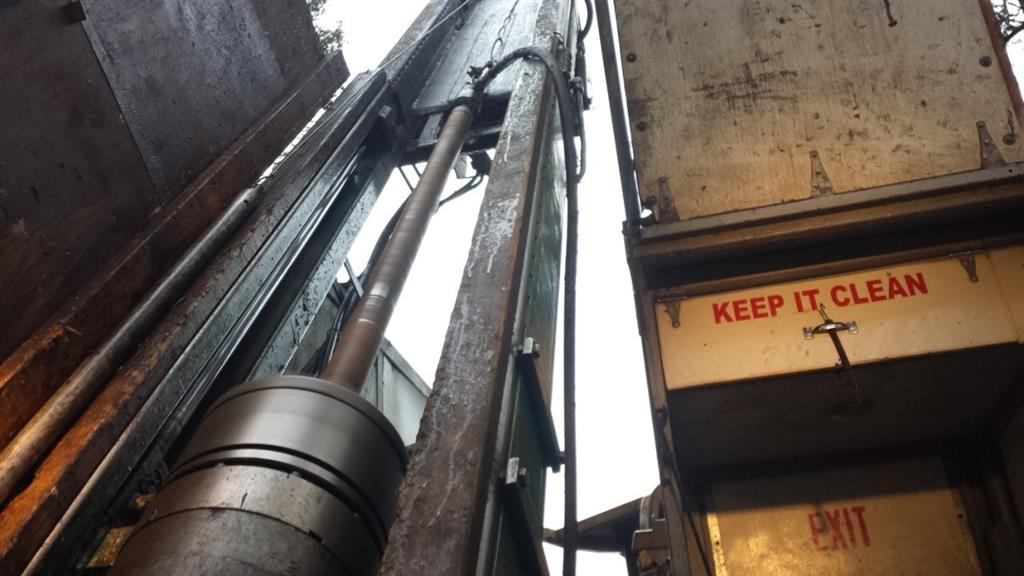
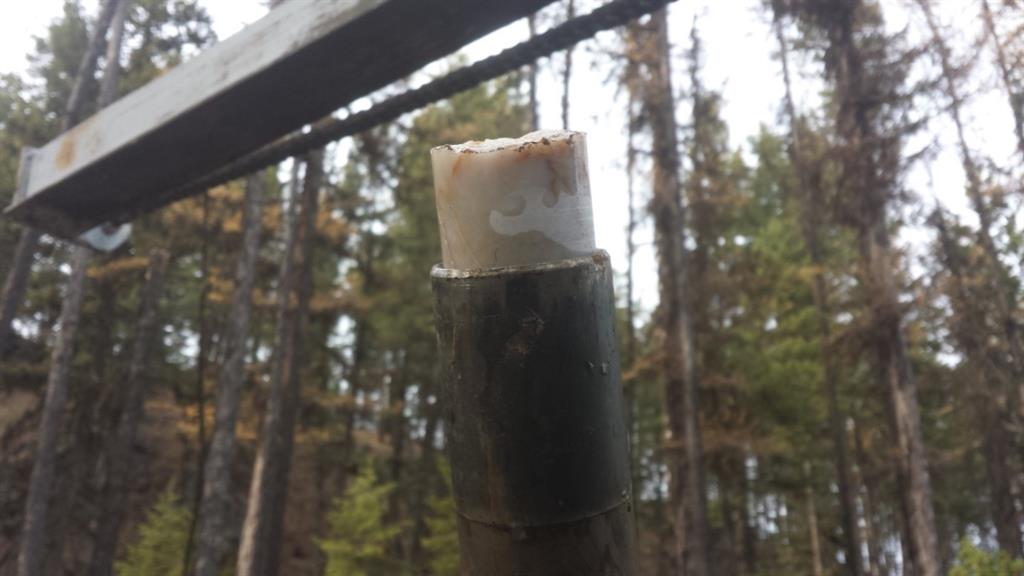
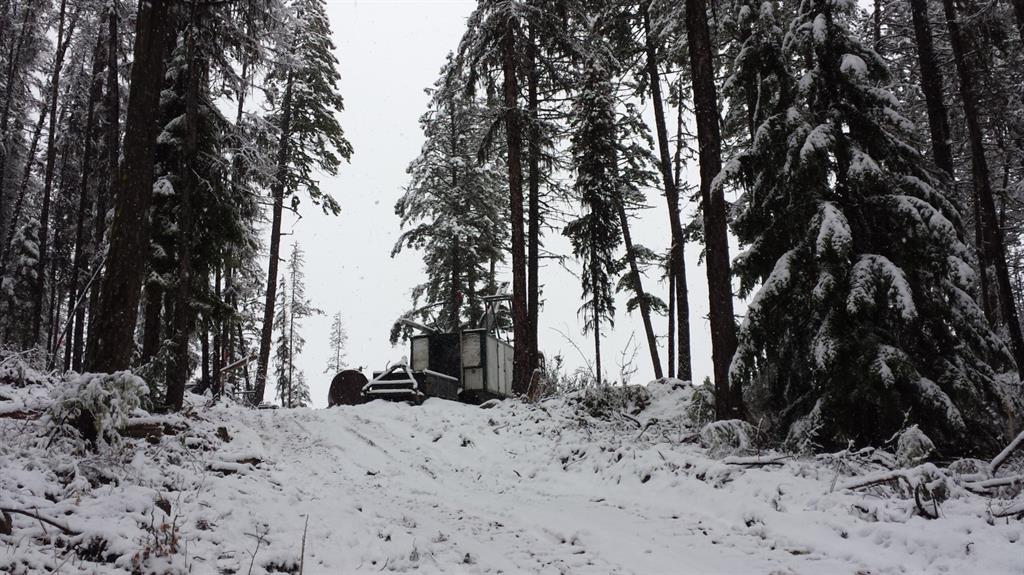
VANCOUVER,BRITISH COLUMBIA / November 6, 2018 / GGX Gold Corp. (TSX-V: GGX),(OTCQB: GGXXF), (FRA: 3SR2) (the “Company” or “GGX“) is pleased to announce it has completed the initial 3 drill holes of the 2018 Fall diamond drilling program currently underway at its Gold Drop Property, near Greenwood, southern British Columbia. The program is targeting the gold bearing COD Vein, with the focus being an area of previous high grade gold drill intercepts.Highlights for the Gold Drop Property, including COD Vein are:

  • 2017 and 2018 drill intersections (core length) of 50.1 g/t gold over 2.05 meters; 54.9 g/t gold over 1.47 meters; and 4.59g/t gold over 16.03 meters at the COD Vein.
  • Gold and silver bearing quartz veins in multiple regions of the property with high grade gold reported (samples exceeding 1 oz. / ton gold reported).
  • Historic gold and silver production at the Gold Drop, North Star, Amandy and Roderick Dhu vein systems.

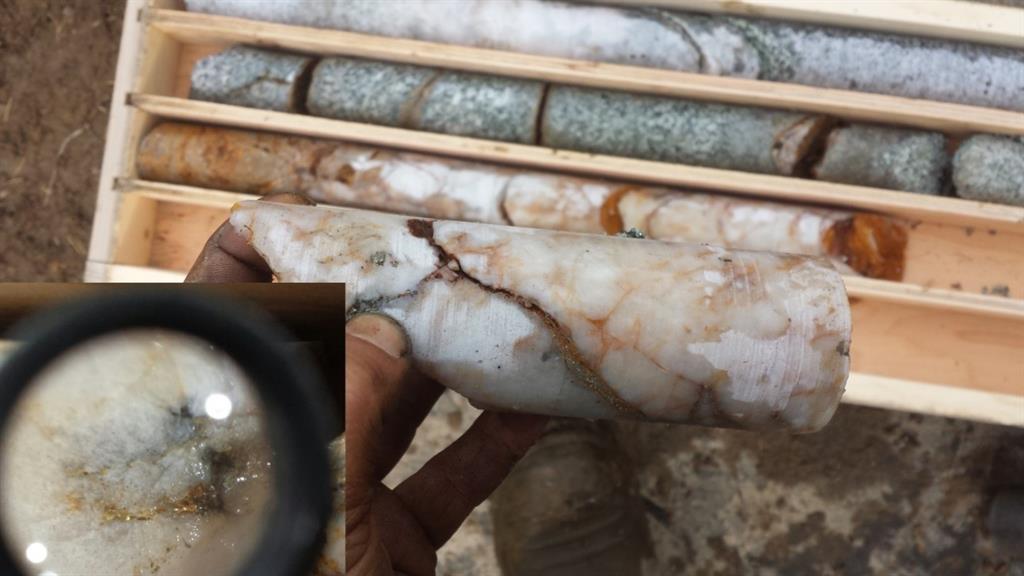
The diamond drilling program is underway testing the COD Vein. The program is following up on results from the 2018 Winter-Spring drill program which tested the southern extension of the COD Vein. Two of the southernmost holes, COD18-45 and COD18-46, intersected high grade gold. COD18-45intersected of 50.1 grams per tonne (g/t) gold and 375 g/t silver over 2.05 mete rcore length including 167.5 g/t gold, 1,370 g/t silver and >500 g/t tellurium over 0.46 meter core length (News Release of August 15, 2018).COD18-46 intersected 54.9 g/t gold and 379 g/t silver over a 1.47 meter core length, including 223 g/t gold, 1,535 g/t silver and greater than 500 g/t telluriu mover a 0.30 meter core length (News Release of August 22, 2018).

The drilling is focusing on the area of drill holes COD18-45 and COD18-46. The objective is to trace the gold mineralization at depth. Further holes are also planned to test for the vein to the south of these intercepts.

The drill core is currently being split and securely packaged for shipment to ALS laboratories in Vancouver, B.C. There the core will be analyzed for gold by Fire Assay and for 48 elements by Four Acidand ICP-MS. Quality control (QC) samples are being inserted at regular intervals.

David Martin, P.Geo., a Qualified Person as defined by NI 43-101, is responsible for the technical information contained in this News Release.

To view the Original News release with pictures please go to the website or contact the company.

On Behalf of the Board of Directors,

Barry Brown, Director
604-488-3900
[email protected]

InvestorRelations: Mr. Jack Singh,604-488-3900 [email protected]

” We don’t have to do this, we get to dothis ”

The Crew

GGX Hub on Agoracom

#Lithium Market Expected To Struggle To Meet Demand Through 2025 $NAM.ca $LIC.ca $LIX.ca

Posted by AGORACOM-JC at 4:14 PM on Monday, November 5th, 2018
  • For lithium producers, the inability to lift output fast enough to meet the demand for the most coveted material, essential for producing electric vehicle batteries, will undoubtedly cause some problems in the forthcoming years.
  • This was revealed earlier this week by the sector’s newest public company, Livent Corp who have expressed their worries about the greater risks imposed in the near future, thanks to the consistent deficit on the market.

OCT 24 2018 BY VANJA KLJAIC 

The production of the material that are essential in making batteries for electric vehicles will impact the market in the forthcoming years.

For lithium producers, the inability to lift output fast enough to meet the demand for the most coveted material, essential for producing electric vehicle batteries, will undoubtedly cause some problems in the forthcoming years. This was revealed earlier this week by the sector’s newest public company, Livent Corp who have expressed their worries about the greater risks imposed in the near future, thanks to the consistent deficit on the market.

“We think demand is going to grow almost five times larger in 2025 than it was in 2017,” CEO Paul Graves said in an interview Thursday in New York, as the supplier made its trading debut. “Our biggest challenge is producing enough to meet the demand — there’s a much greater risk that this market is consistently in a deficit in the near future.”

The long-term outlook considering the lithium demand from Livent, a spinoff from chemical maker FMC Corp., is shared by their competitors, like the Chinese-based company Jiangxi Ganfeng Lithium Co., which this week sold shares in Hong Kong for the first time. However, it seems that the investors haven’t been immediately swayed, focusing instead on concerns new supply may flood the market in the short term. Furthermore, the potential decline, coming after a rally that tripled prices in the three years through 2017, also causes concern for potential investors.

Hence, the shares of the Philadelphia-based Livent closed little changed Thursday, while Ganfeng plunged 29 percent on its Hong Kong debut.

“The poor performance reflects lack of confidence in the near-term lithium market,” Argonaut Securities (Asia) Ltd. analysts including Helen Lau said in a Friday note. “We think markets have indeed over-reacted to the current price performance and overlooked the demand growth prospects.”

There are several reasons behind the inability for these companies to lift output fast enough to meet the demand set forth by the world car industry. For some, it’s the capital they’re unable to raise that would fuel their expansion. Some others are faced with face regulatory hurdles, dimming the supply outlook. For Livent’s Graves, 47, who was FMC’s CFO and worked at Goldman Sachs Group Inc. for 12 years, including as co-head of natural resources in Asia, expansion into other countries is needed in order to meet the ever increasing demand for this material.

“Our next priority is to expand our Argentina production as quickly as we can to meet that downstream need,” he said.

Even more, according to Ganfeng’s Vice Chairman Wang Xiaoshen, giving an interview Tuesday, there is a potential risk of a lithium shortage longer term, particularly from around 2023 to 2024, when production of electric vehicles is set to accelerate even further. And that could cause additional problems. The world is gearing up for an electric revolution, but it seems that the lithium industry – the one supplying its core materials – may not yet be ready for it.

Source: https://insideevs.com/lithium-market-struggle-meet-demand-through-2025/

#Weed woes: Canada struggles to meet huge demand for legal #cannabis $BOG.ca $NBUD.ca $MCOA $AERO $CBDS $CGRW $APH.ca $GBLX $ACG $ACB $WEED.ca $HIP.ca

Posted by AGORACOM-JC at 3:12 PM on Monday, November 5th, 2018

  • Two weeks after Canada became the first G20 country to legalize cannabis amid much fanfare and celebration, numerous stores – both physical and digital – are struggling to meet unexpectedly high demand and in much of the country, the legal supply of marijuana has dried up.
  • “There is not enough legal marijuana to supply all of recreational demand in Canada,” said Rosalie Wyonch, a policy analyst at the CD Howe Institute. “The shortages are happening faster than I would have expected, but our research suggested quite strongly that there would be shortages in the first year of legalization.”

Leyland Cecco in Toronto

Sun 4 Nov 2018 08.00 GMT Last modified on Mon 5 Nov 2018 11.22 GMT

When Trevor Tobin opened one of Canada’s first legal cannabis stores last month, he had high hopes of playing a small part in a historic national experiment – and of making a tidy profit.

Brimming with optimism, he and his mother Brenda pooled $100,000 in savings to create High North, one of the few private retailers in Newfoundland and Labrador.

But the pair quickly found themselves staring at empty shelves – and watching the money they had invested slip away. Day after day, staff at Labrador City’s only cannabis shop have had to turn away customers due to scarce inventory and have even gone as far as temporarily shutting down the store.

“After a week of 100 apologies [to customers] each day, we’re tired of just saying sorry,” said Tobin. “We were told there would be bumps in the road. This isn’t a bump in the road. This is a pothole.”

Two weeks after Canada became the first G20 country to legalize cannabis amid much fanfare and celebration, numerous stores – both physical and digital – are struggling to meet unexpectedly high demand and in much of the country, the legal supply of marijuana has dried up.

“There is not enough legal marijuana to supply all of recreational demand in Canada,” said Rosalie Wyonch, a policy analyst at the CD Howe Institute. “The shortages are happening faster than I would have expected, but our research suggested quite strongly that there would be shortages in the first year of legalization.”

A mix of regulatory frameworks, retail chain distribution and logistical kinks – including rolling postal strikes across the country – have created fertile ground for the shortages.

When Colorado legalized recreational cannabis, it took three years for supply to finally catch up to demand, and Canada could expect a similar delay, said Wyonch.

In Quebec, the Société Québécoise du Cannabis – a government entity overseeing sales – has opted to close three days per week in order to better ration its limited supply.

Online sales make up a large component of the recreational cannabis market. In Ontario, where there are no physical retailers, residents are required to purchase products through a government-run web site.

Within the first 24 hours of legalization, the Ontario Cannabis Store website processed 100,000 orders – but few of them have been shipped to customers.

Because Ontario only allows online sales of cannabis, many residents have been left waiting two weeks for orders to arrive – and some report random cancellations of their orders.

University student Curtis Baller found out that his order had been cancelled after seeing a charge disappear from his credit card – not a notification from the OCS.“The most frustrating part to me is that the government forced a monopoly on both the supply and delivery on cannabis products, then failed to deliver,” Baller told the Guardian. Ontario’s ombudsmen has received more than 1,000 complaints about the site since it launched on 17 October.

Supply for retailers, either private or government, is dictated by contracts between the government and licensed suppliers, making shifting to new sources of cannabis to fill supply gaps a lengthy process.

“Health Canada is still licensing producers, existing producers are expanding facilities and at the end of the day, marijuana is a plant. It takes a certain amount of time to grow, process and package, ship and get tested,” said Wyonch.

The shortages are also likely to be costly for provincial and federal governments. In a policy paper developed with colleague Anindya Sen, Wyonch argues that the government could lose $800m in revenues to the black market – far outpacing the anticipated tax revenues of $300m-$600m in the first year of legalization.

For Tobin and his mother, one of the few private retailers with a retail licence, the shortage has turned what seemed like a lucrative business into a temporarily losing venture.

“I’m paying staff members to sit around with fingers crossed that we’ll receive [new stock]. We never do,” said Tobin. “I can’t keep operating the shop, losing money everyday paying staff with no product.”

Some see a potential silver lining to the shortage: the bottlenecks likely mean a large number of people have tried to shift from the black market to the legal space at a faster rate than anticipated.

But the risk remains that the move may be reversed if supply problems are not resolved.

“The government will likely be successful in eliminating the black market, as long as the legal supply comes online quickly. Otherwise, we risk potentially entrenching a black market,” said Wyonch.

But Tobin fears that the recent shortages have already pushed consumers away from the legal markets. Both new and prior cannabis users have expressed frustration that they can’t buy from his store, or any other retailer in the region.

“Now that we can’t supply them, they’re still going to find it,” he said. “There’s no shortage of weed in Labrador City. Just the legal stuff.”

Source: https://www.theguardian.com/world/2018/nov/04/cannabis-weed-marijuana-canada-high-demand