Agoracom Blog Home

Archive for the ‘All Recent Posts’ Category

Invested in Aurora Cannabis $ACB.ca ? Check out today’s news. Namaste $N.ca to commence Vape sales through Aurora website #vapes #vaping

Posted by AGORACOM-JC at 12:51 PM on Tuesday, November 7th, 2017

Nlogo

N:CSE

  • World’s Largest E-Commerce B2C Vaporizer Company
  • September ’17 Sales of C$1.2m Representing a 132% Year-On Increase
  • Revenue for AUG 31 2018 expected $24.9 million
  • Owns 26 e-commerce stores in 20 countries
  • Distribution centers in North America, South America, Europe and Asia Pacific
  • Aggressively expanding into manufacturing and wholesaling
  • Product acquisition agreement announced with Aphria Inc.
  • Announced Start of Vaporizer Sales through Aurora Website

Invested in Canadian Arrow Mines $CRO.ca ? Did you see the news? Company to be acquired by Tartisan Resources $TTC.ca

Posted by AGORACOM-JC at 11:08 AM on Tuesday, November 7th, 2017

Recently completed the acquisition of the Ichuña Copper-Silver property located in the Department of Moquegua in Southern Peru as well as Don Pancho Polymetallic Property in Huaral, Peru

READ RELEASE

  • Tartisan will acquire all of the issued and outstanding common shares of Canadian Arrow Mines Limited by way of a court-approved plan of arrangement
  • Tartisan would issue to Canadian Arrow Mines Limited shareholders one common share of Tartisan for every 17.5 common shares of Canadian Arrow, resulting in the issuance of approximately 8,000,000 common shares of Tartisan

Investment Highlights

  • 100% stake in the Don Pancho Zn-Pb-Ag project located in the Central Peru Polymetallic Belt with US$1.5M spent including 2,020m of diamond drilling and untested targets
  • 20% equity interest in Eloro Resources Ltd. which owns a 100% stake in the drill ready La Victoria Au-Ag project located in a gold belt that includes Pierina and Lagunas Norte
  • 100% stake in the Ichuña Cu-Ag Project located in a reemerging mining camp with exploration upside on an untested geophysical anomaly
  • Properties well located in an established mining country with high geological potential (only 1.34% of the country registers mining activity)

How #Cryptocurrencies And #Blockchain Are Taking #Esports $GMBL To The Next Level #Blockstation #ThreeD $IDK.ca

Posted by AGORACOM-JC at 9:40 AM on Tuesday, November 7th, 2017

Alexander Kokhanovskyy

Alex is the CEO/ Founder of DreamTeam, an Esports and gaming recruitment platform using blockchain to help gamers monetize their teams.

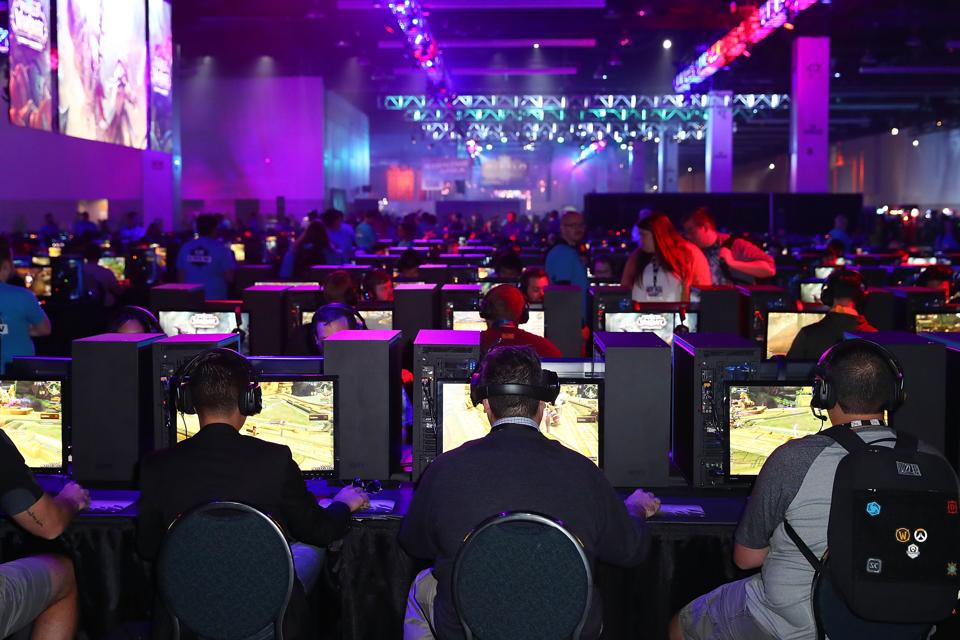
Team Method: Triforce compete with Team Grmbl at World of WarCraft at BlizzCon 2017. BlizzCon is the site of the Overwatch World Cup 2017 eSports tournament. (Joe Scarnici/Getty Images)

Revenue from eSports — or competitive video gaming – will grow to $700m in 2017, a 41.3% increase from 2016 , according to Newzoo research. The industry is forecast to reach $1.5 billion by 2020. Major investors, high-profile celebrities, big-brand sponsors and major tech companies are banking on eSports’ profitable trajectory.

DreamTeam

Study shows the Esports market has tremendous untapped potential

Blockchain-powered solutions are the latest trend to shake up transactions and data for the entire sector. To gamers, blockchains and digital currencies are nothing new, and this attitude enables the industry to adopt new technologies faster than other industries like banking or logistics. Part of that has to do with age. According to Newzoo‘s 2017 Global Esports Market Report, electronic gaming entertains a young and marketable demographic: Millennials. More than half of eSports enthusiasts globally are aged between 21 and 35, and they are often early adopters of technology, including blockchain.


Blockchain applications across eSports

Startups are leveraging the benefits of blockchain to deploy smart contracts, fuel betting, host tournaments, and ease the purchase virtual assets, all of which help grow the eSports ecosystem. Much has been written about blockchain startups tackling eSports betting and the purchasing or trading of skins (cosmetic items), but another important application is how this technology can help amateur gamers on their pathway to going pro though both tournament and team building platforms.

Guests demo the new World of WarCraft game at BlizzCon 2017 at Anaheim California Convention Center (Joe Scarnici/Getty Images)

Tournaments are a way of life for avid eSports gamers and online gaming platforms that have embraced blockchain are seeing the pay-off. FirstBlood, an eSports platform created on the Ethereum blockchain, decentralizes tournament setup and winnings distribution. It allows players to test their skills and to bet on games without being dependent on traditional money transfers, financial regulations and middleman corruption. With FirstBlood, players can game solo or with a team in order to improve their skill through games in a competitive environment. Other blockchain companies including Gilgam.es and EloPlay have entered the tournament space as well.

From amateur gamers to going pro 

While fostering a tournament environment can help players sharpen their skills, we believe there is an opportunity to take this one step further, by lessening the barrier of entry when it comes to building and managing teams.

DreamTeam

Majority of top competitive game titles are team-based

There are 1.4 billion registered gamers, and most of those players are concentrated around the most competitive eSports titles that include LoL, CS:GO, Dota2 and Overwatch.  One of the most loved esports titles, League of Legends, has 250 million players players who want to build, grow and manage their teams, but there are only 100 League of Legends clubs worldwide. Let’s compare that to football, a traditional sport, with more than 300 million players globally, with around 300,000 clubs. This discrepancy of players to clubs was the catalyst for our company, DreamTeam, to develop a dynamic platform to solve this problem.

Building teams to advance 

DreamTeam takes blockchain-powered tournaments one step further by creating a recruitment and management platform for amateur, novice, and pro teams. Blockchain-based smart contracts ensure contractual financial relations for all users without participation of third parties. One function of DreamTeam is to aid the development of small tournaments and secure payments. On the DreamTeam platform, when a team that participates in a tournament gets a winning place, the prize money automatically transfers to their account according to predefined rules (the data is taken from game API’s — application program interface and oracles, or a service that verifies the data independently). All players receive their share of the prize money without issues or delay. This is just one aspect; we envision the platform developing into a multi-billion dollar ecosystem built upon media right sales, sponsorships, players salaries, and prize money.

People watch the World Championships Final of League of Legends at the National Stadium ‘Bird’s Nest’ in Beijing, the national stadium built for the 2008 Olympic Games. (STR/AFP/Getty Images)

Blockchain has the potential to revolutionize a wide variety of industries, but with eSports’ audience made up of younger, tech savvy individuals, blockchain is more easily embraced. Every corner of eSports is ripe for rethinking. Aiding amateur gamers through team building and tournaments is only the beginning.

Source: https://www.forbes.com/sites/outofasia/2017/11/07/how-cryptocurrencies-and-blockchain-are-taking-esports-to-the-next-level/#4b962f364391

#BP, #Shell $RDS lead plan for #blockchain – based platform for energy trading #ThreeD $IDK.ca #Blockstation

Posted by AGORACOM-JC at 4:10 PM on Monday, November 6th, 2017

  • Consortium including energy companies BP and Royal Dutch Shell will develop a blockchain-based digital platform for energy commodities trading
  • Expected to start by end-2018

(Reuters) – A consortium including energy companies BP and Royal Dutch Shell will develop a blockchain-based digital platform for energy commodities trading expected to start by end-2018, the group said on Monday.

Other members of the consortium include Norwegian oil firm Statoil, trading houses Gunvor, Koch Supply & Trading, and Mercuria, and banks ABN Amro, ING and Societe Generale.

Blockchain technology, which first emerged as the architecture underpinning cryptocurrency bitcoin, uses a shared database that updates itself in real-time and can process and settle transactions in minutes using computer algorithms, with no need for third-party verification.

Mercuria has been a vocal advocate of implementing blockchain technology to significantly cut costs in oil trading.

“Ideally, it would help to eliminate any confusion over ownership of a cargo and potentially help to make managing risk more exact if there are accurate timestamps to each part of the trade,” said Edward Bell, commodities analyst at Dubai-based lender Emirates NBD PJSC.

Similar efforts for an energy trading platform have failed to take off, Bell said, but added this latest bid with backing from BP and Shell and the banks, “may have more success than if it were an independent party trying to convince oil and gas companies to make use of it.”

The new venture is seeking regulatory approvals and would be run as an independent entity, the consortium said in a statement.

“The platform aims to reduce administrative operational risks and costs of physical energy trading, and improve the reliability and efficiency of back-end trading operations…,” the statement said.

Source: https://www.reuters.com/article/us-energy-blockchain/bp-shell-lead-plan-for-blockchain-based-platform-for-energy-trading-idUSKBN1D612I

The Unbelievable #LeagueOfLegends World Championship 2017 Grand Final Stadium Crowd #Worlds2017 $GMBL

Posted by AGORACOM-JC at 12:57 PM on Monday, November 6th, 2017

The League of Legends World Championship 2017 was one of the biggest events in esports history.

  • League of Legends owes a significant part of its status as arguably the biggest esport in the world to China
  • Streams reportedly pull in millions of viewers for the biggest matches

While online viewership, production, and of course the games themselves, are always at the heart of what makes a great esports event, Riot’s World Championship has also produced some of the most epic live environments for matches in the industry. This year, the bar may well have been raised once again.

The 2017 League of Legends World Championship took a tour of China, playing its group stages in Wuhan, moving to Guangzhou for quarter-finals, Shanghai for the semi-finals before finally culminating in Beijing for the final showdown between SK Telecom T1 and Samsung Galaxy.

League of Legends owes a significant part of its status as arguably the biggest esport in the world to China, where streams reportedly pull in millions of viewers for the biggest matches. While some dispute the veracity of some of the numbers, which often come from sources that cannot be independently verified, the live crowds at the various stages certainly didn’t disappoint. Nothing quite compared, however, to the masses present for the grand final.

If there were concerns that the lack of a Chinese team in the finals might have impacted interest, there needn’t have been. The Beijing National Stadium was packed out, producing one of the most epic arenas for a showdown yet seen in esports.

The World Championship ultimately concluded with Samsung Galaxy dethroning Lee ‘Faker’ Sang-hyeok’s SK Telecom T1, sweeping them 3-0 to deny SKT a third consecutive win at the event.

x

x

x

x

PyroGenesis $PYR.ca Signs Non-Disclosure Agreement with a Global Engine Manufacturer $HPQ.ca $DDD $SSYS $ PRLB

Posted by AGORACOM-JC at 8:56 AM on Monday, November 6th, 2017

Pyr header 1

MONTREAL, QUEBEC–(November 6, 2017) – PyroGenesis Canada Inc. (http://pyrogenesis.com) (TSX-V: PYR) (OTCQB: PYRNF), a high-tech company (the “Company” or “PyroGenesis”) that designs, develops, manufactures and commercializes plasma waste-to-energy systems and plasma torch products, announces today that it has signed a non-disclosure agreement (“NDA”) with a global engine manufacturer.

“We are very happy to be in discussions with a global engine manufacturer and look forward, now that the NDA has been signed, to have more substantive discussions,” said P. Peter Pascali, President and CEO of PyroGenesis. “I must caution readers however, not to draw any premature conclusions from this announcement. Though it does signal the interest in our product, and that the interest comes from a very discerning, demanding, and sophisticated party, we are still at the very preliminary stages and there is no guarantee that anything, of any commercial value, will materialize form these efforts.”

PyroGenesis is the inventor of Plasma Atomization – a plasma-based process that produces small, spherical, metal powders for the Additive Manufacturing (“AM”) industry, particularly 3D printing, and for which has become a gold standard.

The Company recently announced the successful completion of the ramp-up of its first (1st) plasma atomization system since announcing, in 2015, that it would become a supplier of powders to the AM industry. During ramp-up, the Company not only received several sample orders, but also developed new Intellectual Property which effectively allowed to produce very narrow particle size distributions, at higher production rates, with little-to-no waste. The Company feels that this breakthrough could be even more game changing than its original Plasma Atomization patent.

Separately, the Company announces today that, further to a subsequent event reviewed in the Q3-2016 Management Discussion and Analysis, wherein it was noted that a director had refused 2,000,000 options at $0.18 per share, the Board of Directors, in accordance with its Stock Option Plan, has approved the grant of up to 2,400,000 incentive stock options (each an “Option”) to this same director, also President and CEO of the Company, to purchase up to an aggregate of 2,400,000 Common Shares of the Company, at a price of $0.58 per share. The Options will be exercisable for a period of five (5) years, commencing on the date of the grant. The grant remains subject to regulatory and Exchange approval.

About PyroGenesis Canada Inc.

PyroGenesis Canada Inc. is the world leader in the design, development, manufacture and commercialization of advanced plasma processes. PyroGenesis provides engineering and manufacturing expertise, cutting-edge contract research, as well as turnkey process equipment packages to the defense, metallurgical, mining, additive manufacturing (3D printing), oil & gas, and environmental industries. With a team of experienced engineers, scientists and technicians working out of our Montreal office and our 3,800 m2 manufacturing facility, PyroGenesis maintains its competitive advantage by remaining at the forefront of technology development and commercialization. Its core competencies allow PyroGenesis to lead the way in providing innovative plasma torches, plasma waste processes, high-temperature metallurgical processes, and engineering services to the global marketplace. Its operations are ISO 9001:2008 certified, and have been ISO certified since 1997. PyroGenesis is a publicly-traded Canadian company on the TSX Venture Exchange (Ticker Symbol: PYR) and on the OTCQB Marketplace (Ticker Symbol: PYRNF). For more information, please visit www.pyrogenesis.com

This press release contains certain forward-looking statements, including, without limitation, statements containing the words “may”, “plan”, “will”, “estimate”, “continue”, “anticipate”, “intend”, “expect”, “in the process” and other similar expressions which constitute “forward-looking information” within the meaning of applicable securities laws. Forward-looking statements reflect the Company’s current expectation and assumptions, and are subject to a number of risks and uncertainties that could cause actual results to differ materially from those anticipated. These forward-looking statements involve risks and uncertainties including, but not limited to, our expectations regarding the acceptance of our products by the market, our strategy to develop new products and enhance the capabilities of existing products, our strategy with respect to research and development, the impact of competitive products and pricing, new product development, and uncertainties related to the regulatory approval process. Such statements reflect the current views of the Company with respect to future events and are subject to certain risks and uncertainties and other risks detailed from time-to-time in the Company’s ongoing filings with the securities regulatory authorities, which filings can be found at www.sedar.com, or at www.otcmarkets.com. Actual results, events, and performance may differ materially. Readers are cautioned not to place undue reliance on these forward-looking statements. The Company undertakes no obligation to publicly update or revise any forward-looking statements either as a result of new information, future events or otherwise, except as required by applicable securities laws.

Neither the TSX Venture Exchange, its Regulation Services Provider (as that term is defined in the policies of the TSX Venture Exchange) nor the OTC Markets Group Inc. accepts responsibility for the adequacy or accuracy of this press release.

SOURCE PyroGenesis Canada Inc.

For further information: Rodayna Kafal, VP, Investor Relations and Communications, Phone: (514) 937-0002, E-mail: [email protected] or [email protected]

INTERVIEW: betterU $BTRU.ca Discusses Letter of Intent for US$100 Million, $3/Share Equity Investment From a Hong Kong Based Investment Group

Posted by AGORACOM-JC at 5:36 PM on Friday, November 3rd, 2017

#Blockchain and biometrics: The #tech disrupting banking #ThreeD $IDK.ca #Blockstation

Posted by AGORACOM-JC at 12:16 PM on Friday, November 3rd, 2017
  • As the banking industry changes at a rapid pace, one term is being used with increasing frequency — blockchain
  • blockchain refers to a tamper-proof, distributed digital ledger that records transactions.
Published 5 Hours Ago CNBC.com
A look at some of the tech disrupting banking   6 Hours Ago | 04:20

Put simply, blockchain refers to a tamper-proof, distributed digital ledger that records transactions.

Instead of different parties involved in a transaction keeping their own records of that transaction — which could potentially differ and cause confusion — blockchain creates one “master” record. This cannot be changed once a transaction has been recorded.

As technology giant IBM notes: “All parties must give consensus before a new transaction is added to the network.”

Dirk Haubrich is head of consumer protection, financial innovation and payments at the European Banking Authority (EBA). He told CNBC: “We’ve looked at blockchain… in one particular use case, which was virtual currencies, four years ago.”

At that time, the EBA had a “rather negative view,” Haubrich explained. “But there are lots of other use cases that have been emerging since then, like trade finance and… clearing of payments.”

This was “quite interesting,” he added. “Many of the risks that we’ve identified at the time for virtual currencies probably don’t arise for those use cases but we need to have a closer look, which we haven’t done yet.”

It could be argued that blockchain technology is still in its infancy, and that its potential is a long way from being fully realized.

PayPal’s Mark Brant told CNBC that blockchain would continue to evolve, “but for it to become widely used there need to be scale use cases on either the consumer side or the merchant side or both.”

“We’ll continue to follow that and experiment with it and keep abreast of it, and continue to look to see whether there is a clear gap in the market that we can exploit with it,” Brant, who is managing director at PayPal U.K., added.

While blockchain technology offers new ways of carrying out transactions, other innovations could help to boost the security of financial dealings.

One such development is the increasing use of biometrics in banking. Already, many of us use our fingerprints to unlock our smartphones, and there are a range of potential applications.

“There’s voice biometrics, there’s fingerprint biometrics, there’s iris biometrics, I think there’s going to be many more invented,” Niall Cameron, global head of corporate and institutional digital at HSBC, said.

Cameron went on to say that biometrics was probably one of the most important areas of new technology needed by the industry.

Source: https://www.cnbc.com/2017/11/03/blockchain-and-biometrics-the-tech-disrupting-banking.html

What is #blockchain ? The tech that underpins the biggest #cryptocurrency in the world is branching out #Bitcoin #ThreeD $IDK.ca #Blockstation #Blockamoto.io

Posted by AGORACOM-JC at 11:32 AM on Thursday, November 2nd, 2017

  • The tech that underpins the biggest cryptocurrency in the world is branching out
  • blockchain gives professionals a means to securely store data in ordered records that update in real time
  • blockchain is revolutionising the way vital information is stored and accessed

In 2017 we are not short of new concepts claiming to be innovations in technology and the next big thing. Despite that, few have made as much of an impact as blockchain. Often described as a distributed database, blockchain gives professionals a means to securely store data in ordered records that update in real time. While it is often overshadowed in the news by the technology it powers, such as Bitcoin, blockchain is revolutionising the way vital information is stored and accessed.

The rise of cryptocurrencies has allowed blockchain technology to flourish, and its role as a public ledger is proving fundamental to the success of Bitcoin. The peer-to-peer network and timestamping server that makes up Bitcoin’s blockchain allows it to track every transaction on the currency in real time. Digital currencies simply wouldn’t work without it.

New use cases

Blockchain first emerged as a ledger for Bitcoin in 2008, yet the original creator of the technology remains unknown. The individual widely cited as its creator is Satoshi Nakamoto, yet this is likely a pseudonym and possibly refers to more than one person.

It was primarily introduced to fix the issue of ‘double-spending’, a technical flaw that allowed people to transfer the same digital tokens multiple times. Yet it also allowed for a decentralised currency, free from government oversight and layers of bureaucracy.

Although it’s early years were tied to Bitcoin, it became quickly apparent that a public ledger could be applied to many other industries. It’s incredibly secure, fault tolerant systems are able to store data in a decentralised way, providing a ‘neutral’ place to house highly sensitive data, such as identity information and insurance records.

The rise of blocks

As the name suggests, Blockchain systems are organised into ‘blocks’, each one carrying a unique timestamp that can be linked back to an older block. That’s incredibly useful for industries where it’s essential to be able to track information by time and event.

Another great thing about blockchains is that they’re often highly resistant to editing. This means that once data has been recorded in a block, it can’t be retroactively changed. While normally this would be frustrating, it provides a means to accurately verify transactions. Creators of Blockchains are also able to configure them to trigger transactions automatically, increasing the efficiency and accuracy at which data is processed.

More affordable and efficient

As a decentralised type of public ledger, blockchains are commonly operated through thousands of global computers. Thanks to this, users are able to organise and audit information quickly and efficiently. In most scenarios, people running and using blockchain systems take collaborative approaches and may have common aims.

If you work in the financial services sector, for example, your main intention is to ensure that you have a safe, secure way to store and process customer transactions. A physical file room may have dominated in the past, but with technology like blockchain, you can process timely data more accurately.

Blockchain could also bode for more affordable financial processes and diminish the chance of fraudulent activity at the same time. Such systems are mainly in the experimental phase right now, but they’re always advancing and we’ll no doubt see more use cases come to light in the foreseeable future.

Public vs private

Much like the field of cloud computing, the function and implementation of blockchain can vary significantly depending on whether it’s designed to be public or private. The primary distinction between these types comes down to who can access a system.

Public

Public blockchains operate a shared network that allows anyone to maintain the ledger and participate in the execution of blockchain protocol – in other words, authorise the creation of blocks. It’s essential for services such as Bitcoin, which operates the largest public blockchain, as it needs to encourage as many users as possible to its ledger to ensure the currency grows.

Public blockchains are considered entirely decentralised, but in order to maintain trust, they typically employ economic incentives, such as cryptocurrencies, and cryptographic verification. This verification process requires every user, or ‘node’, to solve increasingly complex and resource intensive problems known as a ‘proof of work’, in order to stay in sync.

This means public blockchains often require immense computational power to maintain the ledger, which only worsens as more nodes are added, and predicting how much that will increase is difficult. Given the number of voices in the community, it’s also incredibly difficult to reach a consensus on any technical changes to a public blockchain – as demonstrated by Bitcoin’s two recent hard forks.

Private

Private blockchains arguably go against the spirit of the original concept. They’re entirely centralised within an organisation and enforce strict write permissions to only authorised users, although this may be in the form of existing members authorising a new entrant, or a regulatory body granting access.

They’re far more useful to a business over a shared public ledger, as they’re able to implement the technology into areas that require data to be hidden. They also typically offer permissioned based access, so that only those participating in a transaction will be able to see it recorded on the blockchain.

Having fewer users on the blockchain means transactions are typically much cheaper, as they require only a fraction of the computational power to fully verify. That smaller user base also ensures that any faults can be fixed almost immediately, and any technological improvements can be approved and implemented at a pace that fits the business.

Source: http://www.itpro.co.uk/security/28031/what-is-blockchain-4

The Best Long Term Blockchain SmallCap Stock? At $10 Million Market Cap and Backed By Sheldon Inwentash, ThreeD Capital $IDK.ca Is The One

Posted by AGORACOM-JC at 10:04 AM on Thursday, November 2nd, 2017

Threed capital

IDK: CSE

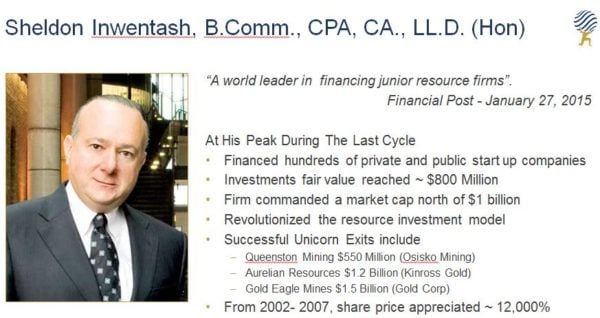
ThreeD Capital (IDK:CSE) Issued A Press Release Announcing It Had Revised It’s Investment Verticals, With A Hard Focus On Blockchain Themed Technologies.  Many of you don’t know ThreeD Capital – Just Yet – but you do know it’s Founder, Chairman and CEO, Sheldon Inwentash.  If you don’t, then you’re about to make your discovery of the year.

Highlights:

    • Announced the appointment of Aly Madhavji to its Advisory Board
    • Incorporated a wholly owned subsidiary named Blockamoto.io Corp
    • Blockamoto.io will build a diverse portfolio of global Blockchain assets

In short, when Sheldon Inwentash speaks, listeners stand to make a lot of money.  A lot.  He spoke today about why he’s set his sights on the Blockchain.  His most powerful words were his final two … “Stay Tuned”.