Posted by AGORACOM
at 10:00 AM on Friday, September 11th, 2020
The 3 Reasons Why Arctic Star Is A World Class, Small Cap Diamond Explorer
Arctic Star Exploration (ADD:TSXV / ASDZF:OTCQB / 82A1.F:FRA) is in the diamond finding business.
The Company owns 100% of its flagship Timantti Diamond Project in Finland, where Arctic Star has discovered three diamondiferous kimberlites that may represent the first finds in a large kimberlite field. If you don’t know what a kimberlite is, keep drilling down and see below because this is truly exciting.
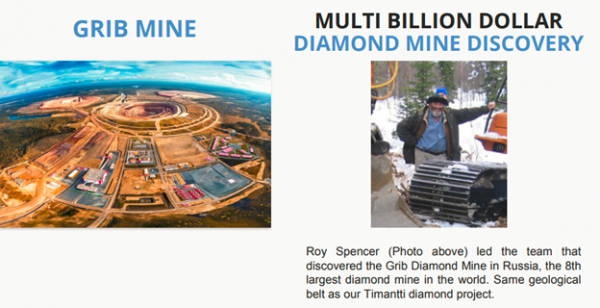
The project is located on the same geological belt as the Grib Diamond Mine in Russia, just 450 kms away. The Grib mine is one of the largest diamond mines in the world and was discovered by a team led by Arctic Star Director Roy Spencer. Keep drilling down to see more about him.
For those investors who have a little more experience and find themselves asking Why Finland? You should know that Finland was ranked as the World’s #2 mining jurisdiction in the world by the Fraser Institute 2020. In addition to its flagship project in Finland, the Company also controls diamond exploration properties in Nunavut (Stein) and the Northwest Territories of Canada (Diagras and Redemption).
But the real secret of Arctic Star is that it has tremendous potential to revolutionize the way in which Diamonds are discovered – and become a pioneer in the exploration industry – by finding diamonds in a place where no previous explorer has thought to do so. More than just a wild theory, Arctic Star has the team to back it up.
Here are the 3 things you need to know
1. World Class Diamond Finders
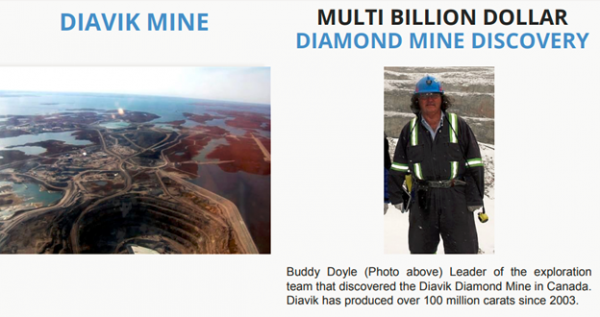
Arctic Star exploration has a highly experienced diamond exploration team previously responsible for numerous world class diamond mine discoveries. The team is led by Buddy Doyle who originally discovered Diavik Mine, Canada’s largest diamond mine in terms of carat production. Diavik’s exceptional grades make it one of the most valuable diamond mines in the world. Diavik is located in the Northwest Territories of Canada, where Arctic Star has 2 of their diamond properties.
Few geologists have seen 2 projects from discovery through to decision to mine. Mr. Doyle is recognized by his peers in the exploration industry as an authority on diamond exploration and kimberlite geology, and has authored/co-authored numerous papers on these subjects. He was awarded the 2007 Hugo Dummitt Award for excellence in Diamond exploration.
Roy Spencer – If that wasn’t enough, the geologist who discovered the multi-billion-dollar Grib Diamond Mine in Russia (see above). which is just 450 KMs away from Arctic Star’s project in Finland, has now joined Arctic’s Board of Directors! Clearly, the Arctic Star team has the credibility necessary to put forth a new thesis on how to find diamonds.
2. Brand New Exploration Model To Find Diamonds
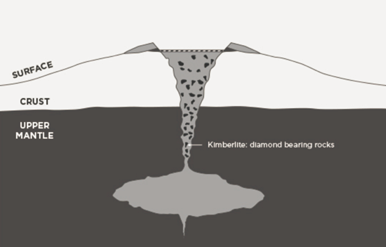
In order to find diamonds, you need to first find Kimberlites. What are Kimberlites? Essentially, they are the rocks which contain diamonds. These kimberlite rocks are found underground in vertical structures known as kimberlite pipes. To illustrate in simple terms, see this basic image of a kimberlite pipe with kimberlite rocks inside of it.
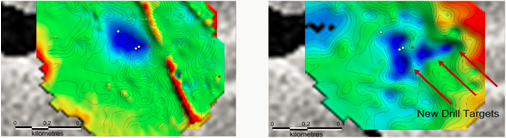
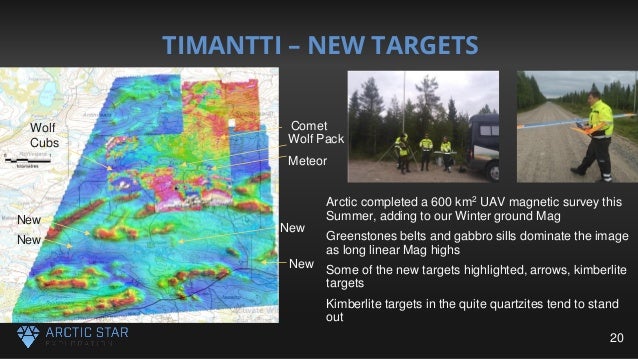
Kimberlite pipes are the biggest source of diamonds today. When exploration companies go looking for kimberlites, the industry standard for finding them is to look for magnetic signatures. This is done by taking a magnetic survey from the air and/or ground. with a device called a magnetometer. Now, most of you won’t understand what you are looking at – but here is an example of one of the company’s magnetic surveys on its Canadian Diagras property.
The most important thing to understand is that the industry looks for magnetic signatures ….. but Buddy Doyle and the accomplished Arctic Star team have developed a NON MAGNETIC THESIS. They believe they will find economic diamonds by locating Kimberlite that do not have a magnetic signature where previous explores sought not to look. Arctic in a sense is exploring for diamonds the opposite way the industry traditionally does. Arctic acquired property big mining company’s dropped, because they looked at them one way. Arctic is looking differently and success is occurring quickly for this small, yet accomplished exploration outfit. There are already multiple drill ready targets in 2 countries using this new way of looking for diamonds.
Arctic offers multiple opportunities in 2 countries to turn the Diamond Industry on notice with a discovery.
3. Arctic Star Has Two Diamond Projects Ready To Verify Its Non-Magnetic Theory
Arctic has 2 diamond projects on which to verify its theory: Diagras in Northwest Territories of Canada and Timantti in Finland, where early exploration searching for Non-Magnetic signatures has already yielded multiple new diamond target
A. Diagras is next to Diavik (Canada’s largest diamond mine) and is drill ready to prove Buddy’s theory. Arctic has plans to drill in 2020
B. Timantti in Finland has 3 separate target areas and 6 targets altogether identified through non-magnetic signatures as a means to find diamonds and further excel Buddy’s theory, it is the company’s goal to drill test in 2020
If Buddy Doyle and the Arctic Star team are correct it will create a new discovery process for understanding how diamonds are brought to surface in areas previous explorers cared not to look. Arctic Star has the potential to create multiple discoveries and copycat companies trying to duplicate their success.
However, there is only one Buddy Doyle and Roy Spencer, which is why Arctic Star is the one Diamond Exploration Company every investor should be aware of.
Posted by AGORACOM
at 9:38 AM on Friday, September 11th, 2020
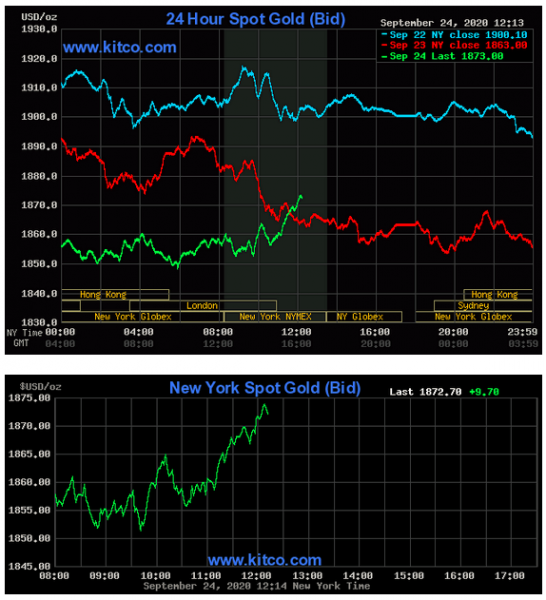
Gold’s bull rally is being challenged by strong U.S. dollar gains but this current pullback “is unlikely to turn into a rout,” according to TD Securities.
“Justice Ginsberg’s passing and its implications for a Phase 4 deal, rising Covid cases, and the upcoming election uncertainty have created vulnerabilities for the yellow-metal longs … [But] the secular bull market is intact, as long-term inflation expectations will likely continue to rise post-election, particularly if a fiscal deal can be agreed upon in the U.S.”
Gold’s late-longs are currently being punished as gold trades “nearly tick-for-tick with the broad dollar index.” TD Securities also points to a rise in ETF gold holdings in recent days, which shows that there is still investment appetite for gold. “The elevated hurdle rate for CTA liquidations further limits the extent of the liquidation for both gold and silver.
The risk for gold bugs is therefore limited to an extension of the global risk-off which catalyzed the dollar’s breakout,” TDS says.
Posted by AGORACOM
at 9:30 AM on Friday, September 11th, 2020
Phase I of its fall exploration program at Windfall Lake has discovered a sizable shear zone, quartz veining at surface and rusty till near the initial drill targets.
Durango Resources Inc.(TSXV:DGO) (Frankfurt:86A1) (OTC:ATOXF), (the “Company” or “Durango“) is pleased to report that further to its news release dated August 27, 2020, the exploration team has discovered a two metre wide shear zone at surface on its Trove Property while preparing the drill site for its exploration program at Windfall Lake, Quebec.
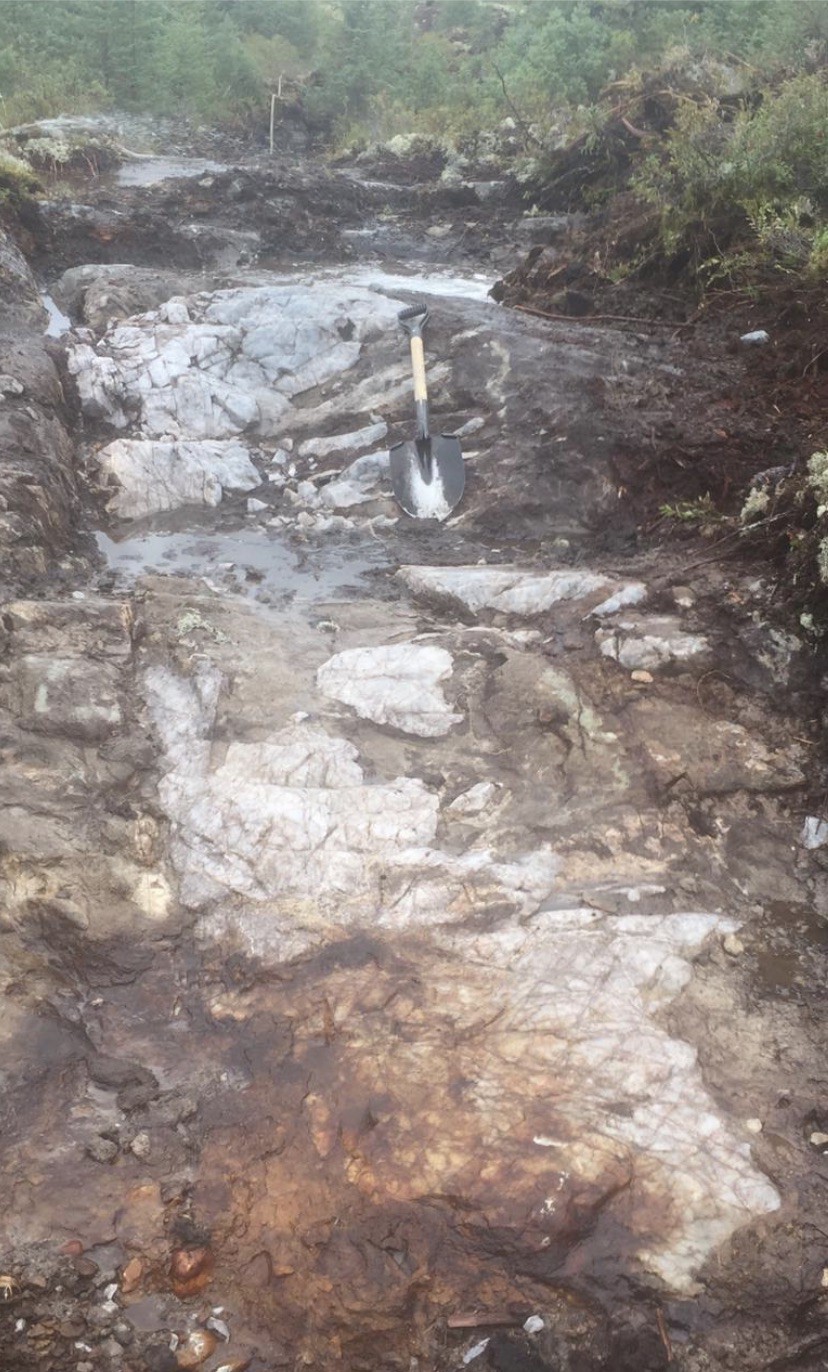
Mechanical stripping commenced on the northeast extremity of the Trove Property to level and widen the access for the drill, exposing a two metre wide shear zone near Durango’s high priority drill targets. The shear zone appears to correlate with the geophysical anomalies and favourable IP signatures discovered in Durango’s previous exploration campaigns.
The trenching commenced as announced on August 27, 2020 and uncovered quartz veins at surface of over one metre in width. In addition to the quartz veining, visible rusty-coloured till is evident, which warrants the collection and analysis of additional till samples in the area. A photo of the till can be seen on Durango’s website in the newly established photo gallery under the “Windfall Lake Property” tab. https://durangoresourcesinc.com/projects/windfall-lake-properties-quebec/#windfall-photos&gid=1&pid=2
Marcy Kiesman, CEO of Durango, stated, “Durango is off to a great start on Phase I of its fall exploration program at Windfall Lake. In the first week of the program, the geological team has discovered a sizable shear zone, quartz veining at surface and rusty till near the initial drill targets. We continue to be very optimistic for Durango’s program at Windfall Lake and believe the upside potential for the Trove and East Barry properties is high. As we move through this fall program we look forward to the analysis of the field data as it is our intention to continue drilling into the winter.”
The technical contents of this press release were approved by George Yordanov, professional geologist, an Independent Qualified Person as defined by National Instrument 43-101. The Trove and East Barry properties have not yet been subject to an NI-43-101 report.
The Board of Directors has approved the grant of 3,000,000 stock options to certain directors, officers and consultants of the Company. The options will be granted pursuant to the Company’s 10% rolling stock option plan with an exercise price of $0.125 per share for five years. The option grants are subject to final approval of the TSX Venture Exchange.
Trove, Quebec
Durango owns 100% interest in the Trove claims, which are surrounded by Osisko Mining Inc. (TSX: OSK), in the Windfall Lake area between Val d’Or and Chibougamau, Quebec. The 1,185 hectare property is compelling due to the coincidence of gold found in tills coinciding with magnetic highs, several Induced Polarization anomalies and two faults crosscutting the property. The fault systems north and south of the Trove, control gold mineralization elsewhere, indicating the Trove has excellent exploration potential. Durango received all the final drill permits for the Trove property in September 2019 and ready to undertake its inaugural drill program.
East Barry, Quebec
Durango owns 100% interest in the East Barry claims which run parallel to its Trove claims. The East Barry block is over 7,740 hectares in size and borders the eastern perimeter of Osisko’s holdings and the southern perimeter of Bonterra’s holdings and is less than 4km south of the Gladiator deposit. The East Barry claims host a gold trend which covers approximately 10km in length and is subparallel to the main Barry Fault held by Osisko. In 2018 a till sampling program was conducted and one of the till samples returned fourty-two (42) pristine gold grains with reported gold values of 2.184 g/t Au. A high count of pristine gold grains indicates that the gold has travelled a very short distance from its source. The East Barry block underwent an Induced Polarization survey in 2018 which identified a high priority target coincident with the high count of pristine gold grains.
About Durango
Durango is a natural resources company engaged in the acquisition and exploration of mineral properties. The Company is positioned for discovery with a 100% interest in a strategically located group of properties in the Windfall Lake gold camp in the Abitibi region of Quebec, Canada.
For further information on Durango, please refer to its SEDAR profile at www.sedar.com.
Posted by AGORACOM-JC
at 9:23 AM on Friday, September 11th, 2020
3 Golden Reasons Loncor Is A Top Small Cap Gold Explorer
Loncor Resources (LN: TSX / OTCQX: LONCF /) is a proven gold explorer focused 100% on Africa, a continent where the team has previously discovered over 27 million ounces of resources…. with plans to find even more.
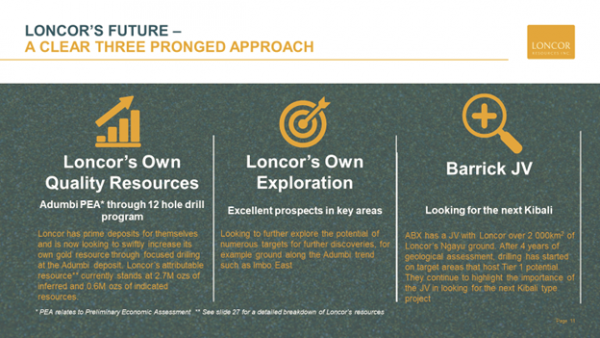
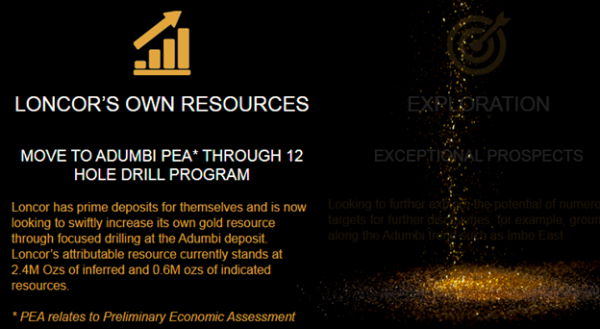
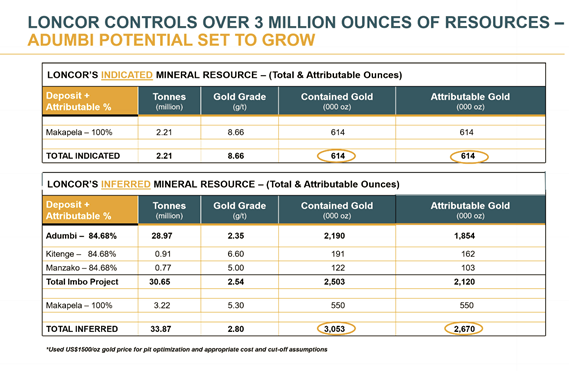
The Company controls its flagship Imbo Project in the Democratic Republic of the Congo, where it has already has 2.5 million ounces of inferred resources with 2.19M ozs at the Adumbi deposit alone. Loncor is looking to swiftly increase its gold resource through focused drilling at Adumbi, increasing its ounces toward production.
More than just lip service, Loncor has a billion-dollar gold miners as shareholders that also believe in the Company’s vision.
Resolute Mining of Australia has a market capitalization of $1.5 Billion and owns 27% of Loncor
Newmont continues to hold a position in Loncor with 7%
Moreover, Loncor’s CEO owns 26% of the Company. Taken all together, it adds up to a great deal of confidence in Loncor Resources, which should provide any current or potential new shareholder with even greater confidence considering the due diligence abilities of these large shareholders.
WAIT …… 1 MORE MULTI BILLION DOLLAR GOLD COMPANY BEHIND LONCOR … BARRICK GOLD
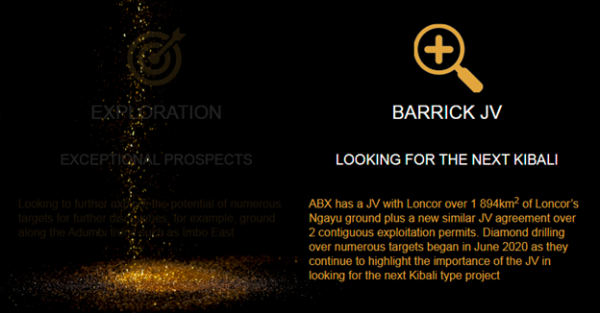
There is another element to the Loncor story that adds tremendous opportunity, a Joint Venture on all of Loncor’s remaining land with Barrick Gold, the $53 Billion Company whose mandate is to find “Tier 1 gold deposits” on Loncor’s ground. Barrick has commenced drilling on Loncor’s land looking for their target of a + 5,0 million ounce gold deposit.
But Barrick is focusing there for a reason.
Barrick operates their outstanding DRC mine – Kibali – in a JV with another multi-billion gold operator, Anglogold Ashanti, plus the Government of the DRC. The mine is situated 220kms from Loncor’s Ngayu ground. Kibali represents one of the world’s great new gold mines, producing a record breaking 814,027oz in 2019 at “all in sustaining costs” of just US$693/oz. Barrick, who owns a 45% share, has joined other major mining players like Ivanhoe Mines and Glencore in releasing the billions of dollars of potential mineral wealth in the DRC.
Loncor arguably offers the largest direct exposure to the gold potential of the DRC, backed up by individuals who know the DRC well (drill down below). With Barrick moving two rigs in to take a closer look at 6 high priority targets defined by them. You now know why Barrick has a JV with Loncor on their other DRC assets – they are looking for the next Kibali style project and nothing less.
Though Loncor’s Imbo project is not part of the Barrick JV it’s on the same huge geological belt, has grades similar to Kibali and has more than 2.5 million ounces of inferred gold resources already – with drilling ongoing- Loncor isn’t just wishful thinking that much more can possibly be found.
THE DEMOCRATIC REPUBLIC OF THE CONGO
As you may have guessed by now and contrary to layman perceptions, the Democratic Republic of the Congo is a significant player in the world’s production of resources, which are the Congo’s largest source of export income. An estimated $24 trillion in untapped deposits of raw mineral ores lie beneath the Congo’s incredibly vast lands. This is the equivalent to the combined Gross Domestic Product of Europe and the United States. Multi-billion dollar companies such as Tesla, Glencore, Samsung, Ivanhoe Mines, Zijn Mining Group, China Molybdenum Ltd, Barrick Gold and AngloGold Ashanti all have deals or projects in the DRC.
Finally, all junior resource investors know that in order to be successful, companies like Loncor must have a great exploration team with relevant knowledge and area expertise. In this regard, Loncor does not disappoint.
Loncor’s team has previously delineated +/-13 million ounces of gold resources in the 20 years many of the individuals have operated in the DRC, with the huge Ngayu Belt now the focus. In Africa, their record is more impressive with key individuals finding closer to 27 million ounces of total resources.
As an example, President Peter Cowley has over 40 years’ experience in the minerals industry and a history of major exploration successes in Africa, including the DRC. Among his major accomplishments, from 2004 to 2008 he led the exploration at Banro that delineated major gold resources at Twangiza and Namoya, also in the DRC.
Prior to joining Banro, Mr. Cowley was Managing Director of Ashanti Exploration, where he led the exploration team in the discovery and development of the Geita mine in Tanzania, a resource of over 17M ozs.
Prior to Ashanti, he was Technical Director of Cluff Resources which discovered and developed mines in Zimbabwe, Ghana and Tanzania.
Mr Cowley has found and knows where to find ounces in Africa, especially in the DRC.
Arnold Kondrat, is the founder and CEO of Loncor Resources with over 30 years’ experience in the public markets, primarily in the resource industry. His 25-year history in the Democratic Republic of the Congo has enabled the Company to secure a number of highly prospective gold assets. Arnold has repeatedly supported the company, often through difficult times, and now owns 26% of Loncor.
THE 3 REASONS WHY LONCOR IS A WORLD CLASS, SMALL CAP GOLD EXPLORER:-
1.Loncor’s Imbo Project looks like a potential company maker with 2.5 million ounces already outlined
Loncor is independently on its way to creating a world class gold project at Imbo. They control 84.68% of all gold discovered at Imbo and have a fully funded 12-hole drill program planned over the next 9 months where they believe they can readily add ounces to the 2.5 million inferred resource outlined to date. The Adumbi Deposit remains the focus and has 2.19M ounces and its sister deposits – Kitenge and Manzako – account for approximately 300,000 more ounces.
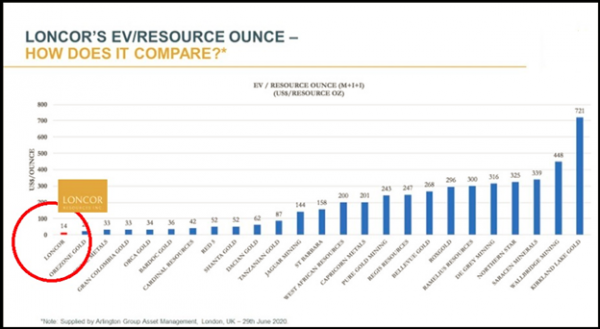
Enterprise Value to Ounces in the Ground currently approaches US$14/oz
For around US$14 an ounce you can currently buy an “option” on Loncor continuing to succeed in adding ounces through drilling at Adumbi, moving the project closer to the sort of economics displayed at Kibali.
2. Resolute and Barrick Relationships
There isn’t a junior resource explorer in the world who wouldn’t want to have just 1 supportive relationship with one of the major miners – and Loncor has 3:
Resolute Mining is a gold producer with multiple long life, high margin assets and a strong platform for growth and consolidation within Africa. Resolute sees its 2020 gold production at 500,000 oz. They own 27% of Loncor’s stock
Newmont continues to hold a 7% position in Loncor
Barrick Gold is a $53 Billion dollar major whose JV with Loncor in the DRC speaks for itself as they search for Kibali II.
If a new investor was looking for 3rd party validation to justify investing in a small-cap resources company, it simply doesn’t get much better than having these mining thoroughbreds supporting Loncor.
3. Management Expertise and Ownership
If you are looking for gold follow the people who have already found it. The old adage is true, and management is one of the best indicators of how far a company can exceed expectations. Loncor management has delineated 13 million ounces previously in the DRC and is looking to add more through drilling in 2020.
Add in the fact that key management own 26% of Loncor stock and it is clear they have put their money where their mouth is long before asking outside investors to do the same.
CONCLUSION – With gold prices trending aggressively higher, investors will be hard pressed to find a better company than Loncor Resources to participate in a bull market for gold.
Loncor is in a position few juniors could ever hope to achieve, with the combination of their own +3-million-ounce projects, a JV with Barrick and shareholders that include other major miners.
Posted by AGORACOM
at 8:38 AM on Friday, September 11th, 2020
American Creek Resources Ltd. (TSXV: AMK) (“the Corporation”) is pleased to report that it has now completed a 450 line km high-resolution magnetic survey in combination with a LIDAR survey at the company’s 100% owned Dunwell Mine gold and silver property located in the Golden Triangle of British Columbia.
Genesis Aviation Inc. was chosen to complete the High-Resolution Gradient Magnetometer survey in conjunction with a Three-Dimensional LIDAR survey over the property. This type of magnetic survey is flown by a low altitude helicopter and offers Measured Horizontal and Vertical Gradient data. This makes a significant difference to the magnetic inversion that provides a model at depth. The survey, which was conducted over the whole property, will allow the past, present and future geological and geophysical programs to be correlated with a much higher degree of accuracy than otherwise possible.
The geophysical instruments used were GEM Systems GSMP-35A Potassium Vapor Magnetometers mounted in a Tri-Axal array.
Darren Blaney, CEO and President stated: “We look forward to seeing the results of the recently completed magnetic and Lidar surveys as that new data, combined with our fall 2019 IP data, will greatly expand our understanding of the underground geology and enhance drill placement and targeting. We will also now be able to develop strong correlations between known mineralized zones and future untested targets thus potentially improving our hit ratio as we target these high-grade vein systems with the drill.
We have always thought that the numerous high-grade gold and silver showings associated with the Portland Canal Fissure Zone, that extends through the property for several kilometers down the valley, are related in some meaningful way and are likely part of the same geological event. We will soon be in position to begin proving this with the commencement of the Dunwell Phase II drill program planned for this fall.”
The Dunwell Mine is a high-grade past producing polymetallic mine located just 8 kilometers by road from the shipping town of Stewart, BC. The mine itself is one of dozens of high-grade gold / silver / lead / zinc occurrences that are primarily associated with the Portland Canal Fissure zone that extends for several kilometers through the property. The Dunwell Mine project boasts exceptional logistics and a rich mining history with potential for future development. It is located within the Bear River valley which was one of the first areas prospected in the Stewart camp because of its combination of rich veins and easy access due to the low elevation and close proximity to town.
Because of the property’s low elevation and heavy rainfall, it is completely covered with a heavy canopy of vegetation with exposed bedrock limited to gullies and stream beds. Notwithstanding this limited surface outcrop, there are over two dozen known high-grade showings on the property. As no modern exploration techniques or technologies had been employed on the Dunwell property prior to American Creek’s acquisition, careful consideration was given as to the best options and techniques that could lead to discovery. This analysis resulted in a decision to proceed with an extensive Induced Polarization (IP) survey in the fall of 2019 and, to further define targets, this just completed detailed Magnetic survey in 2020.
Alpha IP was chosen over a conventional IP survey because of its cutting-edge technology in detecting detailed high chargeability / low resistance anomalies in the ground. Specifically, the Alpha IP survey has far greater resolution and depth than standard IP’s and can provide the data in a 3D view. These are critical factors as the Dunwell Mine property contains numerous high-grade veins that are potentially more readily detected using a high-resolution survey.
Simcoe Geoscience, who performed the survey, was chosen because of their exceptional experience in this field and the in-depth interpretation they provide. Once the data provided by Genesis is processed, Simcoe will also be using their expertise to integrate the new 3D Magnetic Survey results with the existing IP results, the 2019 maiden drill program results, and all historic data in order to fine tune drill targets. Simcoe’s same Alpha IP system continues to achieve success locating high-grade veins at Ascot’s neighboring Silbak-Premier Mine (9km away).
The exploration objectives of the Alpha IP survey were to detect the source of potential high‐grade Au, Ag, Pb, Zn, Cu in quartz and detect quartz breccia vein systems hosted within thin bedded argillite, siltstone and greywacke of the Middle Jurassic Salmon River Formation (Hazelton Group). The Alpha IP system was used to provide the following benefits:
Detect and delineate zones and structures related to the emplacement of sulphide mineralization to depths of up to 400 meters with chargeability and resistivity.
Mapping the resistivity and chargeability features related to mineralization, alteration, faults and lithologies.
Results from the fall 2019 survey resulted in thirty-seven anomalous zones being identified and interpreted as significant targets for follow up from surface to ~300m+ depth. Out of thirty-seven anomalous zones, fifteen are considered first priority, sixteen second and six are third priority targets. The anomalous zones consist of strong to moderate chargeability related to associated conductive to resistive zones. These targets have a strong correlation with the Portland Canal Fissure Zone with the strongest targets running along the Dunwell Creek / Portland Canal Faults, the secondary targets running down each side of the primary target, and the tertiary targets running along the western edge of the fissure zone.
Property Description and History
The Dunwell property is located just 7 km east of the Silbak Premier Mine (Ascot Resources), 11 km west of the Red Mountain deposit (Ascot – formally IDM), and only 9 km north of the past producing Porter Idaho silver mine (Strikepoint Gold). Through a series of strategic acquisitions American Creek was able to purchase the past-producing Dunwell Mine as well as several adjoining very prospective properties, combining them into one large land package that encompasses the most promising gold and silver mineral occurrences and historic workings within the Bear River valley. The amalgamated property spans 2,222 hectares covering the majority of the Portland Canal Fissure Zone, an area first prospected in the late 1800’s and hosting some of the earliest producing gold and silver mines in the Stewart area.
Image of the Dunwell Mine Property located between Ascot’s Premier Mine and Red Mountain.
The Portland Canal Fissure Zone is the most significant geological feature in the Bear River valley. This zone of faulting and shearing trends north, dips steeply west, and hosts a vein system that extends southward for 6.5 kilometres from the Victoria/Dandy occurrence (on Dunwell) in the north, through the Dunwell mine itself, across Glacier Creek to the Ben Bolt occurrence (on Dunwell) in the south. With the recent acquisition of the Glacier Creek Crown Grants (south of Glacier Creek), American Creek now controls 5km of the 6.5km fissure zone which contains numerous high-grade polymetallic mineral occurrences including two past producing mines (Dunwell and Portland Canal).
The Dunwell project is located 8km northeast of Stewart and is road accessible with the Dunwell Mine adit itself located only 2km from Highway 37A and a major power line (both running through the property). Stewart hosts two deep sea ports including ore loading and shipping facilities. Unlike the majority of mineral properties located in the Golden Triangle near Stewart, the Dunwell Mine is located in low mountainous terrain (800m and lower elevation) with relatively moderate relief. These features allow for potential year-round work which typically isn’t the case for exploration programs conducted in the Stewart region where projects are typically at higher altitude, are accessible only by helicopter, and lack critical infrastructure such as roads and power. The Dunwell Mine project may very well have the best logistics of any project within the Golden Triangle.
According to historic records, the Dunwell Mine is the most significant mineral occurrence within the Portland Canal Fissure Zone. Production at the Dunwell occurred between 1926 and 1941. From historic production reports, it appears that a total of 45,657 tonnes averaging 6.63 g/t gold, 223.91 g/t silver, 1.83% lead, 2.43% zinc and 0.056% copper were produced.
American Creek’s Phase I maiden drill program on the Dunwell (which took place within the vicinity of the Dunwell Mine in the fall of 2019) produced many high-grade intercepts including:
For a table showing breakdown of metals and complete results please click here for the press release.
In addition to the Dunwell mine itself, the property package also contains over two dozen other high-grade gold and silver occurrences and historic small-scale gold/silver high-grading operations along a north/south trend that correlates to the fissure zone and major faulting. Some examples of the nine areas on the Dunwell property that produced ore historically are:
Ben Ali: 4,500 tons at 21.6 g/t gold
Lakeview 60 tons at 4.7 g/t gold, 2,734 g/t silver, and 11.5% lead
Victoria 11 tons at 20.15 g/t gold, 775 g/t silver, 25% lead
Tyee 8.2 tons at 124.4 g/t gold and 4,478.8 g/t silver
George E 12 tons at 13 g/t gold and 3,250 g/t silver, 23.3% lead
Each of these areas were producing during the 1930’s when exploration techniques and technology was very primitive. They were basically high-grading operations focused on vein systems that were exposed on surface.
The High-Resolution Gradient Magnetometer survey combined with the 3D Alpha IP survey represent the cutting edge in geophysical technology today and are designed to aid with understanding potential correlations between the multiple high-grade surface showings.
The Dunwell Phase II drill program is expected to commence in the near future once the data and interpretation from the geophysical survey is integrated with the IP data, last year’s drilling data, and all historical data.
The Qualified Person for this news release for the purposes of National Instrument 43-101 is Jim McRae, P.Geo. He has read and approved the scientific and technical information that forms the basis for the disclosure contained in this news release.
About American Creek
American Creek holds a strong portfolio of gold and silver properties in British Columbia.
The portfolio includes three Golden Triangle gold/silver properties; the Treaty Creek joint venture with Walter Storm/Tudor Gold, as well as the 100% owned D-1 McBride property and 100% owned past-producing Dunwell Mine.
Other properties held throughout BC include the Gold Hill, Austruck-Bonanza, Ample Goldmax, Silver Side, and Glitter King.
For further information please contact Kelvin Burton at: Phone: 403 752-4040 or Email: [email protected]. Information relating to the Corporation is available on its website at www.americancreek.com.
Posted by AGORACOM
at 5:01 PM on Thursday, September 10th, 2020
Candente Gold will be entitled to receive 70% of any potential profits that may be derived from mining and processing of ore from the Cocula Gold Project.
VANCOUVER, British Columbia, Sept. 10, 2020 (GLOBE NEWSWIRE) — Candente Gold Corp. (TSXV:CDG) (“Candente Gold” and/or the “Company”) is pleased to announce the signing of a Letter of Intent (“Agreement”) to enter into a profit sharing agreement on the Cocula Gold Project (“Cocula”) in Jalisco State, Mexico whereby Candente Gold will be entitled to receive 70% of any potential profits that may be derived from mining and processing of the deposit. The addition of Cocula to our asset base represents another critical step in the Company’s growth strategy for Western Mexico. In addition to untested exploration potential, the Project contains gold mineralization at surface, hosted in quartz veins, stockwork zones and oxidized, mineralized breccias.
Timmins Gold Corp. explored the Cocula property between 2007 and 2011 through a series of comprehensive exploration programs which included geological mapping, geochemical sampling, trenching and 1,974 meters (“m”) of Reverse Circulation (“RC”) drilling. Significant results included 54m grading 4.97 grams per tonne (“g/t”) gold in a trench across the center of the mineralized area. An RC hole drilled beneath this trench encountered 37.5m grading 1.3 g/t gold including 7.5m grading 5.8 g/t from surface to a 7.5 m depth. Near and at-surface, mineralization delineated by drilling and trenching has been traced for at least 800m along strike within a NW-SE trending fault zone.
To the Company’s knowledge, a NI 43-101 compliant mineral resource estimate has not been completed for the Cocula property however Timmins Gold Corp. conducted various in-house resource estimates. A qualified person has not done sufficient work to classify the historical estimates as current mineral resources and therefor the Company is not treating the historical estimates as current mineral resources. Historical reviews of the potential tonnes and the potential grades quoted below are conceptual in nature.
In December of 2008, consultant (Pedro Teran) contracted by Timmins Gold Corp., estimated an internal resource estimate for the portion of the deposit delineated by their RC drilling and trenching results, including assays from 1,552 surface samples. The geologist applied a geological model appropriate to the observed mineralization to build a MineSight block model and derived an estimate of 5,796,023 tonnes grading 0.58 g/t gold containing 108,081 ounces (“oz”) gold (the cutoff grade was not defined and CIM categories are not clear).
The Company has reviewed the above as well all reports and data available and considers there is potential for conceptual exploration targets including a lower grade bulk tonnage, potentially leachable deposit as well as a higher grade/lower tonnage core of the deposit. Based on all of the existing exploration data and previous resource estimates to date the Company believes the Conceptual Exploration Targets have potential for: 500,000 to 6,000,000 tonnes grading from 0.5 g/t Au to 2.75 g/t Au containing between 50,000 and 110,000 oz Au with secondary credits from silver, lead, zinc and copper. The above is based on exploration to date by Timmins and other and does not include additional exploration potential. The potential quantity and grade described above is conceptual in nature, that there has been insufficient exploration to define a mineral resource and it is uncertain if further exploration will result in the target being delineated as a mineral resource.
The Agreement provides for the following payments to be made by Candente Gold to the owners (the Lopez family) of the Cocula Gold Project:
1. $10,000 upon signing of the Letter of Intent; 2. $20,000 upon signing of a Definitive Agreement (“DA”) and completion of due diligence within 60 days; 3. $210,000 in staged payments to be made every 6 months over a 36 month period starting 6 months after signing the DA. 4. Upon commencement of production, the owner of the Property will receive a minimum consideration of $25,000 per quarter deductible from mining profits for each quarter.
It will be Candente Gold Corp.’s responsibility to put the Property into production and the Lopez Family will retain 25% of the profits derived from mining, processing and product sales. The Company has also agreed to pay 5% of profits to Mingeo International as a finder’s fee such that the Company will have the rights to retain 70% of all profits. Mingeo is a non-arms length party.
In addition, the Company welcomes Mr. Barney Lee to the team overseeing operations in Western Mexico. Barney has over 30 years of experience working in operations in Mexico with numerous companies including the El Sauzal Mine for Glamis Gold and Goldcorp; as Director for Premium Exploration operations in Nayarit and Jalisco and on the Cocula Property for Timmins Gold. Most recently Mr. Lee has been working on the Los Cardones Project for the Invecture Group and on the Guadalupe de los Reyes Project for Prime Mining. He has also worked for Barrick Gold, Kennecott and Excellon Resources. Additionally, Mr. Lee is skilled in dealing with Mexican land tenure, fiscal and accounting matters. His role going forward will be to manage operations in Western Mexico.
The Project area is located within the Ameca Mining District of Jalisco State which is home to Agnico Eagle’s El Barqueño Project and Endeavor Silver’s Terronera Project. It is hosted in a Mesozoic age volcano-sedimentary package of the Guerrero Terrane intruded by dioritic and granitic stocks. Mineralization is hosted in multi-lithic breccia within a NW-SE trending fault zone that has been traced for at least 800m in strike length. The fault zone coincides with the contact of andesites from the volcano-sedimentary package and a granodioritic stock. A younger sequence of Tertiary age andesites and basalts locally covers portions of the host units.
About Candente Gold
Candente Gold has launched a comprehensive growth strategy to build a cash flowing business platform and gain access to properties with near surface exploration potential while maintaining El Oro as its flagship asset and an integral part of the overall growth strategy. The acquisition of the SDA Plant and the El Dorado historic mines signifies an important first step.
The financial benefits from Western Mexico operations and the addition of specialized personnel will translate across platforms to strengthen our efforts to explore and potentially mine. The Company is currently evaluating properties that are complimentary to the SDA plant and El Dorado Property.
El Oro is a district scale gold project encompassing a well-known prolific high-grade gold dominant gold-silver epithermal vein system in Mexico. The project covers 20 veins with past production and more than 57 veins in total, from which approximately 6.4 million ounces of gold and 74 million ounces of silver were reported to have been produced from just two of these veins (Ref. Mexico Geological Service Bulletin No. 37, Mining of the El Oro and Tlapujahua Districts. 1920, T. Flores*)
Modern understanding of epithermal vein systems indicates that several of the El Oro district’s veins hold excellent discovery potential, particularly below and adjacent to the historic workings of the San Rafael Vein, which was mined to an average depth of only 200 metres.
Joanne C. Freeze, P.Geo., President, CEO and Director and Matthew Melnyk, CPG., Director Operations are Qualified Persons as defined by National Instrument 43-101 for the projects discussed above. Ms. Freeze and Mr. Melnyk have reviewed and approved the contents of this release.
Neither TSX Venture Exchange nor its Regulation Services Provider accepts responsibility for the adequacy or accuracy of this release.
On behalf of the Board of Candente Gold Corp. “Joanne Freeze” P.Geo. President, CEO and Director
For further information please contact: Joanne Freeze President & CEO Tel:+1(604)689-1957 [email protected]
Posted by AGORACOM-JC
at 3:55 PM on Thursday, September 10th, 2020
SPONSOR: Else Nutrition Holdings Inc. (TSX-V: BABY) The award winning, plant-based nutrition company for small cap investors. The company has a $7,000,000 cash balance for US product launch with International agreements coming soon. Learn More.
Plant-based diets shine when looking at the gut health
Microbiome of the gut is created at birth, the study notes, but continues to develop throughout infancy and is significantly affected throughout childhood by diet
There is a large shift in the composition of the gut as infants are weaned and begin consuming solid foods, with the makeup of the gut resembling that of adults by about age 3 years
A recent study investigating how foods impact gut health in children points to plant-based proteins, fresh fruits and vegetables, and grains as key to a diverse and healthy microbiome.
There has been a wealth of evidence collected on how important the gut microbiome is for health maintenance, but little research has been done on how diet habits are related to gut health in prepubescent children. A recent study took a closer look.
The study,1 published in the Journal of the Academy of Nutrition and Dietetics, reveals that gut health in young children and pre-pubescent teenagers is both dynamic and diverse, and is particularly responsive to certain food groups.
“The gut microbiome remains dynamic for children past 3 years of age and responds to dietary differences,” says lead author Dena Herman, PhD, MPH, RD, professor at California State University, Northridge and director of the MCH Nutrition Leadership Training Program at the UCLA Fielding School of Public Health. “This represents an opportunity to learn healthy habits early in life so that they can be sustained over the life course to maximize health.”
The health of the gut plays a vital role in maintaining health and supporting immune functions, the study notes. The microbiome is impacted by a number of factors, with individualized diets being one of the most important determinants of a diverse gut environment.
The microbiome of the gut is created at birth, the study notes, but continues to develop throughout infancy and is significantly affected throughout childhood by diet. There is a large shift in the composition of the gut as infants are weaned and begin consuming solid foods, with the makeup of the gut resembling that of adults by about age 3 years. Little research has been done on the makeup of the childhood gut between 3 years of age and the adolescent years, the study notes, but dietary patterns have been associated with significant differences in the guts of children in the age range of 4 to 8 years. As diets have shifted more toward a Western diet, heavily featuring highly processed foods and high-fat animal products, more and more diseases have been attributed to an imbalance in the microbial composition of the gut, the study reveals.
To examine how diet influenced gut health in the study group, researchers asked parents to collect fecal samples and quantitative 24-hour diet recalls, investigating each 3 times, each time about 6 days apart. The team examined how diet impacted gut health by splitting children into groups based on the types of food they consumed. Protein consumption—both animal- and plant-based—was the only food group that was associated with gut diversity. Total grain and vegetable consumption, on the other hand, heavily influenced the community makeup of the microbiome, the study notes. The research team noted some surprise here, in that yogurt was the only animal-derived food that was associated with the membership and structure of the microbiome. Instead, proteins were more closely linked to higher levels of diversity in the types of microorganisms found in the gut, the study states. The most abundant microorganisms found in the study groups were Bacteroides and Prevotella. The first was tied to Western diets, and the latter to fiber-rich diets.
Adequate diversity in the microbiome samples was noted, with results appropriate for the cohort’s age group. The research team found that older children in the study group had more diversity in their gut microbiomes, and that gender had no impact on the results. There were a number of trends noted with different food groups, such as lower diversity with a high non- whole-food grain consumption, and abundance of certain bacteria groups with higher consumption of fruit and fiber.
Overall, the study revealed that fresh fruits and vegetable consumption led to increased variation in the structure of the microbiome—with citrus, melon, and berries contributing most to gut diversity. Whole and non-whole grains were key to maintaining gut health, immune health, and glucose regulation, Herman stated. B-vitamins also played a big role in gut health, contributing to microbiome structure and composition, she says.
The 2- to 9-year-old group studied in this report is significant, because this represents a time when diets are becoming more diverse, and children begin to explore and become more independent in their eating habits. The study highlights the need to make this time count, the study notes, with guidance from adults on healthy eating habits to help promote good health and disease prevention in adulthood.
“Early and middle childhood may represent a crucial window when the gut microbiome might still be amenable to lasting manipulations through diet,” the study reveals.
The study emphasizes the importance of diet in the development of a healthy microbiome during the childhood years, with non-whole-grain foods enriched with vitamins and minerals being perhaps one of the largest contributors to gut health in this pilot sample.
“There are many benefits of a healthy gut for children. First and foremost, is an enhanced immune response. Young children are often more susceptible to upper respiratory tract infections and ear infections, especially if they are in childcare and as they enter school,” Herman explains. “By maintaining a diverse diet, children have a better chance of maximizing the healthy bacteria that can support immune health.”
The benefits of a healthy gut don’t end with physical health, she adds. Mental health effects were not the focus of the study, Herman says, but there has been prior research drawing a strong connection between gut health and brain health.
“For children this could translate into better focus in school allowing them to reach their academic potential. Unlike other studies, this study showed that children past 3 years of age are still able to change the structure and membership of their microbiome through the foods that they eat,” she says. “This is exciting and helps us extend the findings from studies in adults to children. The benefits described for children are similar for adults. However, as we age we have increased risk for inflammation, which can lead to higher rates of chronic diseases including cancers. That is why it is important to start healthy habits as early in life as possible.”
Although the study was small, it was more detailed than most previously conducted research examining gut health in children, she says. It highlights the benefits of plant-based diets, which Herman says she hopes will convince parents and clinicians to make changes—both for their children and themselves.
“I would hope that the results we have shared provide further support for the promotion of a plant-based diet—not only for young children, but also for adults. Parents are role models for their children’s eating habits and this study shows that we can actively engage in making positive changes to our gut health and overall health starting at a young age,” Herman says. “As a pediatric dietitian myself, I would hope that we could work together with the medical community, particularly pediatricians, to promote healthy habits including healthful eating habits and regular exercise through anticipatory guidance at all well-child visits. With the high rates of obesity in the United States, having children consume foods that support reduced risk for obesity may translate into lower risks for obesity-related diseases in adulthood such as cardiovascular disease and diabetes. Starting this practice as early as possible will ensure the most benefit for these children and generations to come.”
Reference
1. Herman D, Rhoades N, Mercado J, Argueta P, Lopez U, Flores G. Dietary habits of 2- to 9-year-old american children are associated with gut microbiome composition. J Acad Nutr Diet. 2020;120(4):517-534. doi:10.1016/j.jand.2019.07.024
Posted by AGORACOM-JC
at 3:29 PM on Thursday, September 10th, 2020
Kontrol BioCloud a Safe Space Technology™
Received positive lab results for BioCloud testing against the live virus that causes COVID-19
This positive result follows two successful tests against the dormant SARS-CoV-2 virus
“This technology can improve our surveillance of SARS-CoV-2 by monitoring air quality in multiple settings.”
Dr. Jimmy D. Dikeakos, Ph.D
“This technology will allow for measurement of many different viruses, bacteria, and fungi beyond the immediate need for the virus that causes COVID-19.”
Dr. David Heinrichs, Ph.D
TORONTO, ON / September 10, 2020 / Kontrol Energy Corp. (CSE:KNR)(OTCQB:KNRLF)(FSE:1K8) (“Kontrol” or “Company“) is pleased to provide an update on its Kontrol BioCloud (or “BioCloud“) technology.
Lab Testing with Live Virus
Kontrol has received positive lab results for BioCloud testing against the live virus that causes COVID-19. This positive result follows two successful tests against the dormant SARS-CoV-2 virus (see press release dated August 10th, 2020 and press release dated August 27th, 2020).
“We are very pleased that through a methodical approach we have been able to successfully test our technology with the live virus causing COVID-19 and will turn our focus to commercialization of BioCloud,” says Paul Ghezzi, CEO of Kontrol. “It has been a long journey to get to this point since the initial concept design in March 2020 and through the great efforts of our team we look forward to delivering a safe space technology solution.”
“This technology can improve our surveillance of SARS-CoV-2 by monitoring air quality in multiple settings.”
Dr. Jimmy D. Dikeakos, Ph.D
“This technology will allow for measurement of many different viruses, bacteria, and fungi beyond the immediate need for the virus that causes COVID-19.”
Dr. David Heinrichs, Ph.D
Commercialization
Kontrol will begin the commercialization process of BioCloud by initiating an application to the CSA Group. CSA is a leader in Standards Development and in Testing, Inspection and Certification around the world including Canada, the U.S., Europe and Asia. The CSA registered mark shows that a product has been independently tested and certified to meet recognized standards for safety or performance. Kontrol anticipates that a CSA approval can take from 30 to 45 days to complete and Kontrol has a history of working with CSA on various air quality and emission products. During the process of CSA approval, Kontrol will seek to establish lower detection limits of the COVID-19 virus. Lower detection limit specifications are part of the commercial specifications that Kontrol will deliver for a fully commercialized product.
“We are very pleased to start the process of sharing our technology with the market through the commencement of commercialization,” says Gary Saunders, VP of Kontrol. “We want to thank our lab partners for all of their expertise and dedication. The lab procedures involved significant planning and preparation to execute meticulous testing against the live COVID-19 virus. We look forward to sharing our results with all levels of Government in the coming days and weeks ahead.”
Manufacturing Capacity
Kontrol has commenced discussions with two global outsource contract manufacturers who can provide Kontrol with external manufacturing capacity. Kontrol is not making any statements or assumptions about potential revenues, however, Kontrol is planning for up to 20,000 BioCloud units per month as manufacturing capacity. This is part of Kontrol’s prudent overall planning and access to manufacturing capability.
About Kontrol BioCloud
BioCloud is a real-time analyzer designed to detect airborne viruses. It has been designed to operate as a safe space technology by sampling the air quality over time. With a proprietary detection chamber that can be replaced as needed, viruses are detected, and an alert system is created in the Cloud or over local intranet. BioCloud has been designed for spaces where individuals gather including classrooms, retirement homes, hospitals, mass transportation and others. It can be an important technology which supports the entire system of individual testing and contact tracing.
The Company is not making any express or implied claims that its product has the ability to eliminate, cure or contain the COVID-19 (or SARS-2 Coronavirus).
About Kontrol Energy
Kontrol Energy Corp. (CSE: KNR) (OTCQB: KNRLF) (FSE: 1K8) is a leader in the energy efficiency sector through IoT, Cloud and SaaS technology. With a disciplined mergers and acquisition strategy, combined with organic growth, Kontrol Energy Corp. provides market-based energy solutions to our customers designed to reduce their overall cost of energy while providing a corresponding reduction in greenhouse gas (GHG) emissions.
Kontrol Energy is one of Canada’s fastest growing companies in 2018 and 2019 as ranked by Canadian Business and Maclean’s.
Additional information about Kontrol Energy Corp. can be found on its website at www.kontrolenergy.com and by reviewing its profile on SEDAR at www.sedar.com.
For further information, contact:
Paul Ghezzi, Chief Executive Officer [email protected] or [email protected] Kontrol Energy Corp., 180 Jardin Drive, Unit 9, Vaughan, ON L4K 1X8 Tel: 905.766.0400, Toll free: 1.844.566.8123
Neither IIROC nor any stock exchange or other securities regulatory authority accepts responsibility for the adequacy or accuracy of this release.
Forward-Looking Statements
This news release contains “forward-looking information” within the meaning of applicable securities laws. All statements contained herein that are not clearly historical in nature may constitute forward-looking information. In some cases, forward-looking information can be identified by words or phrases such as “may”, “will”, “expect”, “likely”, “should”, “would”, “plan”, “anticipate”, “intend”, “potential”, “proposed”, “estimate”, “believe” or the negative of these terms, or other similar words, expressions and grammatical variations thereof, or statements that certain events or conditions “may” or “will” happen, or by discussions of strategy.
Where the Company expresses or implies an expectation or belief as to future events or results, such expectation or belief is based on assumptions made in good faith and believed to have a reasonable basis. Such assumptions include, without limitation, that sufficient capital will be available to the Company and that technology will be as effective as anticipated.
However, forward-looking statements are subject to risks, uncertainties, and other factors, which could cause actual results to differ materially from future results expressed, projected, or implied by such forward-looking statements. Such risks include, but are not limited to, that sufficient capital and financing cannot be obtained on reasonable terms, or at all, that technologies will not prove as effective as expected, that customers and potential customers will not be as accepting of the Company’s product and service offering as expected, and government and regulatory factors impacting the energy conservation industry. In particular, successful development and commercialization of the Kontrol BioCloud Analyzer are subject to the risk that the Kontrol BioCloud Analyzer may not prove to be successful in detecting the virus that causes COVID-19 effectively or at all, uncertainty of timing or availability of any regulatory approvals and Kontrol’s lack of track record in developing products for medical applications.
Accordingly, undue reliance should not be placed on forward-looking statements and the forward-looking statements contained in this press release are expressly qualified in their entirety by this cautionary statement. The forward-looking statements contained herein are made as at the date hereof and are based on the beliefs, estimates, expectations, and opinions of management on such date. Kontrol does not undertake any obligation to update publicly or revise any such forward-looking statements or any forward-looking statements contained in any other documents whether as a result of new information, future events or otherwise or to explain any material difference between subsequent actual events and such forward-looking information, except as required under applicable securities law. Readers are cautioned to consider these and other factors, uncertainties, and potential events carefully and not to put undue reliance on forward-looking information.
Posted by AGORACOM-JC
at 2:53 PM on Thursday, September 10th, 2020
SPONSOR: Loop Insights Inc. (MTRX:TSX-V) is levelling the playing field between online retail giants and brick & mortar businesses. What if you could receive the same personalization and experience you get from online shopping, but in brick and mortar stores? Loop Insights is doing just that. Brick and mortar retail isn’t going anywhere, but it does need to adapt to offer better in-store customer experiences. Loop Insights solves a significant problem for traditional retailers – big and small – who are losing customers to e-commerce retail. Learn more.
Why AI and IoT will play a big role in retail of tomorrow
While e-commerce’s growth has accelerated by “four to six years” according to a recent report published by Adobe indicated that on the ground retailers are now embracing digital-first approaches in order to acclimate to the new norms of social distancing and minimized contact
By enlisting artificial intelligence (AI) and Internet of Things (IoT) solutions, the retail sector is implementing new approaches to enhance customer experience, drive sales, and, most importantly, ensure the safety of employees and retailers in stores
The pandemic has left irreversible changes within the retail industry as consumer behavior during a time of limited and regulated movement evolved. A PYMNTS 2020 Remote Payments Study reported that mobile devices are the most popular device for online shopping, with up to 72% of consumers using their mobile devices to shop.
The explosion of online shopping saw an increase of 146% in online retail orders as of April 21, 2020 when compared to the same period last year. While e-commerce’s growth has accelerated by “four to six years” according to a recent report published by Adobe indicated that on the ground retailers are now embracing digital-first approaches in order to acclimate to the new norms of social distancing and minimized contact. By enlisting artificial intelligence (AI) and Internet of Things (IoT) solutions, the retail sector is implementing new approaches to enhance customer experience, drive sales, and, most importantly, ensure the safety of employees and retailers in stores.
AI
AI applications can accommodate multiple retail scenarios; AI in the retail market is set to hit US$19.9 billion by 2027, with leading brands already placing AI in storefronts.
Luxury department store Neiman Marcus makes it easier for customers to find items through visual search. The company’s Snap.find.shop. app is powered by AI, and it enables customers to seek items that match closely with photos they’ve taken.
At Macy’s, customers can seek the assistance of the company’s On Call app for a better shopping experience. Macy’s On Call app is tailored with answers for specific stores. Customers can chat with an AI-backed bot for inventory checking and directions to navigate around the store. Interestingly, the AI bot is able to detect if a customer is getting frustrated and alert a store associate for help.
These projects were already well in place before the pandemic but will play a bigger role post-COVID, serving as an example for other retailers seeking to incorporate technology. These AI-inspired solutions are customer-centric and could potentially take over the role of store associates, which helps reduce the risks for retail employees at this time.
IoT
If AI solutions are adopted for enhanced services and to ease the burden of store personnel, IoT is then famed for their data-driven approaches to turbocharge core operations in retail.
Recently, Auchan Retail Portugal, with a network of 34 supermarkets and hypermarkets across the European country, announced it would deploy a fleet of autonomous robots for optimized shelf monitoring.
These autonomous robots will circle around the stores up to three times daily to capture photos of every shelf and aisle. The captured photos are then digitized at scale with computer vision and IoT, and then converted into reports with actionable insights for store staff to act upon. The reports delivered through a mobile app will boost store employees’ efficiency in managing, prioritizing, and resolving shelf issues.Andre Vieira, Digital Director at Auchan Retail Portugal, noted that “innovation, through the search for digital strategies, focused on people and improving customer service is one of Auchan’s great bets. With the introduction of autonomous robots, Auchan wants to improve productivity in stores, and optimize the supply chain, freeing employees to focus 100% on the mission of providing a better customer experience.”
Investing in precious metals you would be forgiven for putting a very heavy focus on the popular names in the sector. Trading in gold and silver obviously attracts much more attention in this area, mainly due to the general level of awareness that most people have around these very common market choices. There are other precious metals that are definitely worth investing in though. One of these which is often forgotten about by retail traders, is palladium. Despite the fact this precious metal has grown strongly in recent years, and has displayed gains of more than 1,000% since 2008, it is often left aside by investors focused on the higher volume gold and silver markets.
Here we will show you what the palladium market is all about, how you can get into trading this precious metal, and why it may be a great addition to your portfolio.
The Basics – What Drives Palladium Prices?
At the present time, palladium is trading higher than gold, with both at record high points. This has shone a light on both like never before. So, what are the main factors which have driven the prices of palladium to put them at higher levels even than gold? Here are a few major ones to consider:
Auto Industry Demand – This is by far the number one influence on the prices of palladium around the world. The auto industry accounts for around three quarters of the global demand for palladium. This is due to the fact that palladium is a key component in the manufacturing of catalytic converters. This, and particularly the demand for vehicles in large markets like the US and China have a huge bearing on the price of palladium.
Geopolitical Concerns – This factor can be active on a number of fronts for palladium and is something you should investigate prior to investing. Much of the world’s palladium supply comes from Russia, and South Africa. This accounts for about 80% of the total supply worldwide. With that said, any interruptions to this supply or process, be it in the form of sanctions as Russia sometimes deals with, or power supply problems, can cause a fluctuation in prices.
Substitution – Substituting palladium for other metals within the auto industry is something which is coming under and increasing amount of scrutiny. This is in large due to the high price of palladium, and also the fact that a number of substitutes, including platinum can be used. With that in mind though, platinum is not a direct substitute that can be easily used, so car makers are still largely reliant on palladium.
US Dollar Strength – The US Dollar forex market is going through a tough time currently. This weakening dollar can certainly have an impact on palladium prices as it does on other precious metals, though the reasoning behind it may be different. Palladium is typically purchased from suppliers in US Dollars. Any downward movement in the Dollar has potential to act as a disincentive top suppliers. This can reduce the supply of the precious metal which in turn can lead to an upward price movement.
Ways to Invest in Palladium
Now that you know several of the key drivers behind the price of palladium, it puts you in a good position to get involved in buying and trading the market. There are several ways in which you can do this much trading gold or silver markets. The main points which will vary here are the liquidity, and how closely the investment is tied to the palladium price.
The most direct way to get involved in trading palladium is to purchase palladium bullion directly from a reputed mint or other trustworthy supply source. This physical purchase of the metal typically takes the form of coins, collectable coins, or bars of the metal which can be purchased at different weights. Naturally, this is absolutely tied to the palladium market prices, though you should be mindful that a small premium is generally added by the seller, and this can be a substantially more difficult palladium investment to resell quickly if the price changes.
Palladium stocks are another popular way to get involved in trading the market. This means buying stocks in palladium related companies through your broker. They are typically very closely connected to the demand and price for palladium, though you also have to be careful to understand the key metrics of the individual company performance too. If you are looking for an even higher volume market, you may choose to trade palladium options or futures contracts. These can be higher risk, but are certainly the most liquid in terms of your ability to quickly trade palladium.
Finally, if you are seeking a very well-balanced way to invest in palladium, ETFs may be a good choice for you. There are essentially baskets of stocks which you can invest in at one collective price. Investing in a thematic ETF related to palladium will give you good exposure to many of the main players in the sector, and should also hedge your risk to a certain extent if the prices do fall. These ETFs can often pay a healthy dividend too.
Who Should Invest in Palladium?
Although palladium is now at a higher price point than gold, it is still very much an investment that any type of trader can make. Like other precious metal investments, it is something you can use to add great diversity to your portfolio. It is also becoming very accessible to all retail traders thanks to being on offer from many of the top online brokers.
Your investment in palladium really depends on your risk profile. This will determine which method of palladium investment may be most suitable for you. If you are willing to take more risk and can withstand a degree of volatility, you may consider options, or futures, while a more conservative approach would be an investment in ETFs or certain index funds. With the growth in demand and price though, it is clear that more and more traders are becoming aware of the potential within trading palladium as much as other precious metals.